Tag Archives: DEATH

CLASSIC FILM REVIEW: ONCE UPON A TIME IN AMERICA (1984)

CLASSIC FILM REVIEW: ONCE UPON A TIME IN AMERICA (1984)

Directed by: Sergio Leone

Produced by: Arnon Milchan

Screenplay by: Sergio Leone, Leonardo Benvenuti, Piero De Bernardi, Enrico Medioli, Franco Arcalli, Franco Ferrini

Based on: The Hoods by Harry Grey

Cast: Robert De Niro, James Woods, William Forsythe, Jennifer Connelly, Elizabeth McGovern, Joe Pesci, Burt Young, Tuesday Weld, Treat Williams, William Forsythe, Richard Bright, James Hayden, Brian Bloom, William Forsythe, Adrian Curran, Darlanne Fluegel. Larry Rapp, Mike Monetti, Richard Foronji, Robert Harper, Dutch Miller, Gerard Murphy, Amy Ryder, Julie Cohen etc.  

Music: Ennio Morricone

Cinematography: Tonino Delli Colli


***CONTAINS PLOT SPOILERS***


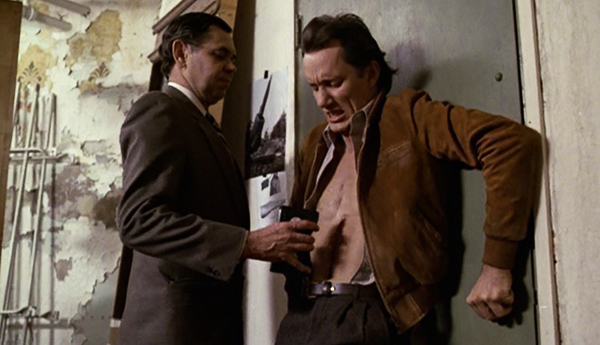
If you were, like me, thoroughly absorbed by Martin Scorsese’s recent directorial gangster epic, The Irishman (2019), you should definitely check out another incredible gangster drama, Once Upon A Time in America (1984). It is directed by acclaimed Italian filmmaker, Sergio Leone, he of “Spaghetti Western” fame. Indeed, Once Upon A Time in America (1984), was the first feature film he’d made since A Fistful of Dynamite (1971). Sadly, it was to be his final film.

With a director’s cut running at a behemoth 250 minutes and original theatrical release lasting 229 minutes, Once Upon A Time in America (1984), is certainly a marathon viewing experience and fitting epitaph to Leone’s cinematic craft. Yet, the film rarely feels over-long or slow because there are so many memorable scenes, fascinatingly complex characterisations, incredible intrigue and enough narrative density present to satisfy any audience member with the patience to let it absorb you. Structurally, the film is epic in nature too as it cross-cuts between three, arguably four, separate timelines in: 1918, the 1920’s, the 1930’s and 1968. Interestingly, I watched it via Amazon Prime in two sittings and is so long even the original ‘Intermission’ card remains.


Leone and his amazing production cast and crew took almost a year to film Once Upon A Time in America (1984). It’s reported to have had somewhere between eight to ten hours of footage on completion. He originally wanted to release it as a two-part epic, but the studio insisted it was distributed as one film. The almost-four hour theatrical release was received to great critical acclaim in Europe, however, a severely chopped down 139-minute version was put out in America. It was a critical and box office bomb. American critics however, lauded the European version, lamenting the non-release of Leone’s full cinematic vision.

For a filmmaker who was drawn to stories set in the America, Leone would generally film in European studios and locations. While some exteriors for Once Upon A Time in America (1984) were shot on location in Florida and New York, many of the interiors were recreated in Rome’s Cinecitta. Furthermore, a Manhattan restaurant was built in Venice, and incredibly, Grand Central Station was rendered at part of the Gare du Nord in Paris. Having said that, Once Upon A Time in America (1984), is so carefully and exquisitely designed and filmed, you would not notice. While possessing more than an air of European arthouse sensibilities, the film, based on a novel called The Hoods, represents Leone’s and his co-screenwriter’s tarnished vision of the American dream. Most significantly is the theme of a loss of innocence. 1920’s New York is presented through the eyes of these Jewish working-class children, many of them sons and daughter of migrants from Europe. These are tough times and the story explores the collision between young innocence and adult corruption by society and humanity. Once Upon A Time in America (1984) is also a story about friendship, loyalty, passion and crime.


The narrative revolves around the lives of young gang of Jewish friends growing up in Brooklyn called: Noodles, Max, Patsy, Cockeye and little Dominic. It’s majestic storytelling of the highest quality as we flit between past, present, now and future. Robert DeNiro’s older Noodles reminisces both from 1930 and 1968. There is a sense that he may be projecting from the hazy and drug-addled glow of an opium den. That is open to interpretation though. Thematically, the framework hangs a history of childhood friendships, juxtaposing it with the same people as adults and their victories, losses and betrayals. Further themes include: love, lust, greed, crime, broken relationships, Prohibition, union corruption; as well as focusing on the rise of mobsters in American society.

Noodles as portrayed by an imperious Robert DeNiro is calm on the outside, however, his often-rash actions show him as impetuous, emotional and wild on the inside. James Woods’ Max is much more careful, calculating and ice-cold in his business. But the two forge a friendship as teenagers which continues in adulthood. Their childhood gang subsequently becomes a renowned bootlegging and criminal outfit. Leone does not ask us to like or find sympathy for the characters, but rather respect that they are a product of a ruthless era. Sure, they could have got day jobs, but they decide to become criminals and very successful they are too. Even after Noodles gets out of jail for killing a rival, Max has saved a place for him in their illegal liquor trades. Only later does the true deception occur. Ultimately, while their stories are incredibly compelling, these men are violent lawbreakers who spill blood, bribe, threaten, kill and rape, all in an attempt to rise up the ladder of the American capitalist system.

I don’t want to spoil any more of the story, but safe to say the cast in this classic film are amazing. Along with DeNiro and Woods’ brutally convincing performances a whole host of young and older actors are directed beautifully by Leone’s careful hand. The standouts for me are Jennifer Connelly in a very early role. She portrays the younger Deborah, while Elizabeth McGovern is the older version of the same character. Connelly is a picture of angelic innocence and Noodles is smitten with her from the beginning. It’s sad therefore that when the adult Noodles’ is rejected by Deborah, his reaction is both toxic and unforgiveable.


Undeniably, sex and violence are powerful features in Once Upon A Time in America (1984). Sex especially is rarely, if at all, romantic or part of loving relationship. There are two brutal rape scenes in the adult years. Even when they are kids the character of younger Peggy is shown to use her promiscuity as a weapon to blackmail a police officer. There are some tender moments though, notably during the scene where young Patsy seeks to lose his virginity with Peggy. Her payment would be a cream cake, but Brian eats the cake and saves his innocence. Yet such scenes are fleeting as mob rule, violent robberies, fiery death and murder ultimately dominate the character’s bloody existences.

As I say, the actors all give memorable performances and the supporting cast including the likes of Treat Williams, Danny Aiello, Tuesday Weld and Joe Pesci are extremely strong too. A special mention to James Hayden who portrays the older Patsy. He doesn’t have the most dialogue compared to the characters of Max and Noodles; however, he has a quiet power which steals many scenes via strength of personality. The fact that Hayden died of a heroin overdose, in 1983, after completing filming only adds to the cult of tragedy. Dead at 30 years of age, James Hayden never got to see any completed version of Once Upon A Time in America (1984).

Given this review is getting near epic proportions itself I will begin to wrap up by heaping praise on the incredible production design. The costumes, locations, vehicles, props and era are slavishly and beautifully recreated. So much so you can almost smell the smoke as it drifts up from the Brooklyn streets. Moreover, the film is superbly photographed by Tonino Delli Colli. The music! I haven’t even mentioned the sumptuous score by the legendary Ennio Morricone. His score is a masterful symphony of haunting laments for loss of love, friendship, loyalty and life. Much indeed like Once Upon A Time in America (1984) itself, as a whole. In conclusion, if you haven’t seen it, I urge you to do so in the knowledge that Sergio Leone has transplanted that same brutally elegant vision of the Wild West to the American gangster genre with unforgettable emotional resonance and power.


CULT FILM REVIEW – VIDEODROME (1983)

CULT FILM REVIEW – VIDEODROME (1983)

Written and directed by: David Cronenberg

Produced by: Claude Herroux, Pierre David, Victor Solnicki

Cast: James Woods, Sonja Smits, Deborah Harry, Les Carlson, Jack Creley, Peter Divorsky etc.

Music: Howard Shore

***CONTAINS SPOILERS***


With the lack of cinema-going action, I am now looking at building other review ideas and articles into my blog. I have regular new release reviews, classic film reviews, great ensemble casts and under-rated film reviews. I suppose that’s enough really, but there are some films that don’t quite fit these categories and they are cult movies. How does one define a cult film? It could have been a box-office bomb or be a no-budget gem, be transgressive or have controversial subject matter. Conversely, it could be a video nasty or banned or even an ultra-arthouse film which defies classical filmmaking conventions. More importantly, I do not have to actually like the film for it to qualify as a cult film. It could be a difficult film I am evaluating or re-evaluating from a fan or academic perspective. Lastly, it could just simply be a film that is uncategorizable or so bad it’s bad or so bad it’s good.

My first review in this category is David Cronenberg’s body-horror film, Videodrome (1983). Now, it may fit the specific rules of an under-rated classic laid down in previous articles, however, Videodrome (1983) is not necessarily a film I love or believe is a classic. It is a remarkably original narrative descent into the hellish and surreal world of demented psychological snuff television. It contains amazing practical special effects by the legend Rick Baker, yet, having re-watched it last week I cannot say it’s a film one can enjoy from an entertainment perspective. Don’t get me wrong, David Cronenberg is a true auteur and genius filmmaker, it’s just Videodrome (1983) is a hallucinatory and disturbing nightmare of a film that works outside the boundaries of usual image systems and narrative conventions. Basically, it’s more a powerful set of concepts and scenarios rather than a simple and satisfying story.

The story opens with anti-heroic, Max Renn (James Woods) as president of CIVIC-TV, seeking new content for his Toronto-based TV channel. Despite Woods’ charisma as an actor he is an expert at playing dominant alpha male types who challenge the audiences’ empathy. He portrays Max with a sleazy charm hunting for, what one may consider, soft-pornographic shows for his station. He’s basically an addict looking to push the walls of taste for his sex-hungry viewers. Max then discovers a channel, via a grainy satellite feed, called Videodrome. It shows unfiltered torture and sexual aggression, and Max becomes determined to tap into that market. At the same time, he begins a sado-masochistic sexual relationship with a radio host, Nikki Brand (Deborah Harry). Soon, these two intense narrative strands entwine and threaten Max’s mind, body and very existence.


Videodrome (1983) is a highly intelligent shocker which explores the nature of television violence, notions of taste and censorship, fears of technological programming, and the mental damage caused by over-exposure to violent pornography. It is an extremely psychologically and physically graphic film to watch. Nevertheless, it is also full of incredible imagery involving on-screen murder, Renn being swallowed by his TV; and also literally transforming into a human video cassette player. While an audience may not like Max Renn as a person, his journey is one that grips with magnetic shock and disgust. As he gets ever closer to the Videodrome channel his downward spiral plays out like a demented morality story, with Max representing the journey of those audience members who lose themselves in the illusory realities of television product. As he begins to lose touch with reality, Max experiences a complete lack of control over his mind and desires, all seemingly controlled by a heinous corporation led by insidious suit, Barry Convex (Leslie Carlson).

Incredibly, David Cronenberg apparently turned down directing The Return of the Jedi (1983) to write and direct this more personal vision of cinema. Could there be two more different films? Nonetheless, while it may not be a film I can easily recommend to those of a sensitive disposition or those who like their horror to have tidy conclusions, Videodrome (1983), retains its relevance and power to this day as a shocking critique of modern media. Hence qualifying it as a cult horror film which pushes all the wrong buttons in the right way.


UNDER-RATED CLASSICS #7 – SECONDS (1966)

UNDER-RATED CLASSICS #7 – SECONDS (1966)

Directed by: John Frankenheimer

Produced by: Edward Lewis

Screenplay by: Lewis John Carlino – based on the novel, Seconds, by David Ely

Cast: Rock Hudson, Salome Jens, John Randolph, Richard Anderson, Will Geer, Karl Swenson, Jeff Corey etc.

Music by: Jerry Goldsmith


***MAY CONTAIN SPOILERS***


So, I continue my articles on films which have perhaps fallen off the radar and deserve more recognition. The rules are simple. An under-rated classic can be a film I love, plus satisfy the following criteria:

  1. Must not have won an Oscar.
  2. Must not have won a BAFTA.
  3. Must not appear in the AFI Top 100 list.
  4. Must not appear in the IMDB Top 250 list.
  5. Must not appear in the BFI 100 Great British films.
  6. Must not appear in the all-time highest grossing movies of list.

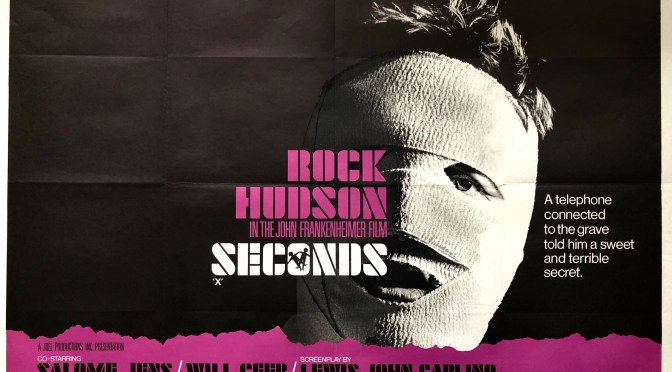
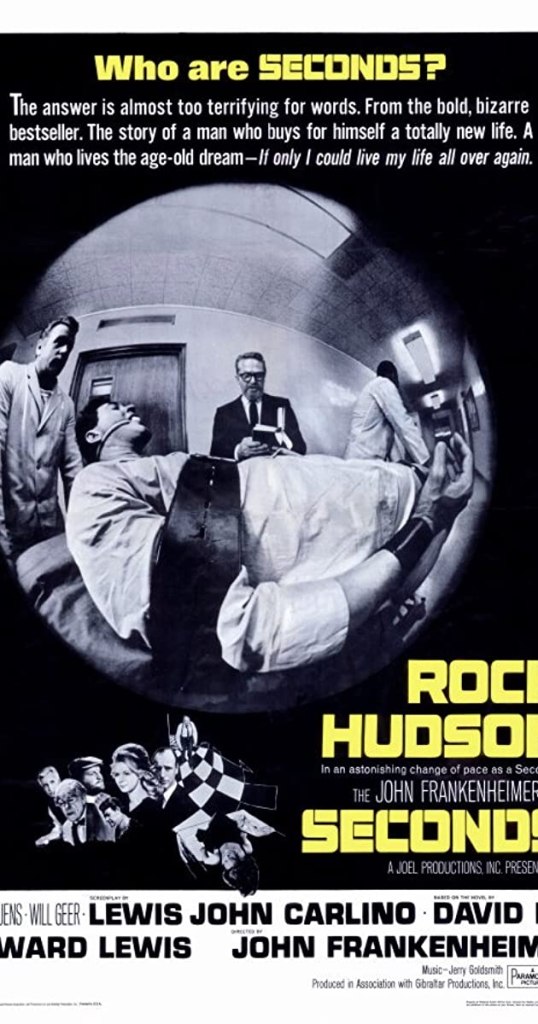
Seconds (1966) is a science fiction drama which is very much of its time, but also truly relevant today. It deals with identity and lifestyle transplants. The film explores notions of escaping one’s everyday existence and living out one’s dreams through plastic surgery and scientific procedure. However, it also contains an important message, that whatever physical, social and personal changes you make there are no guarantees your life will be better. Perhaps, it is best to accept what you have and work with what nature gave you. Make positive changes to your mind and body, but know that there is no such thing as a quick fix.

The character of Arthur Hamilton (John Randolph) certainly finds this out to his cost in the narrative of Seconds (1966). His life is reasonably good, but he is dissatisfied with his job, and love for his wife has dissipated. He discovers an outfit called ‘The Company’ can, at a price, exchange his body and life, allowing him to be reborn a new man. After the procedure that man happens to be called Tony Wilson, who has the movie star looks of Rock Hudson. Hamilton/Wilson settles into a creative and hedonistic life by the beach. Yet, the sand is always softer on the other side. Soon, holes begin to show in Hamilton/Wilson’s new life.

Seconds (1966), is a psychologically eerie body-swap-sci-fi-horror film. It’s shot in crisp black and white by influential cinematographer, James Wong Howe, and contains some psychedelic visuals, weird angles, mirrored images, fish-eye lens shots, and images of actual rhinoplasty during the transformation sequence. Brilliantly directed by John Frankenheimer, it is also thematically very powerful. Aside from the dystopic warnings about plastic surgery, it also explores the nature of cults and closed communities. Rock Hudson gives a career best performance as Tony Wilson. His desperate and paranoiac scramblings in the second half of the film are painfully stressful as the character realises he has not only lost his identity, but possibly also his mind. Overall, it’s important to reiterate that organic change in itself is a positive thing, however, as Seconds (1966) demonstrates, there are no shortcuts to happiness or success.


NETFLIX FILM REVIEW: EXTRACTION (2020)

NETFLIX FILM REVIEW: EXTRACTION (2020)

Directed by Sam Hargrave

Produced: Antony Russo, Joe Russo, Mike Larocca, Chris Hemsworth, Eric Gitter, Peter Schwern

Screenplay by: Joe Russo – based on Ciudad by Ande Parks, Joe Russo, Fernando Leon Gonzalez

Cast: Chris Hemsworth, Rudhraksh Jaiswal, Randeep Hooda, Golshifteh Farahani, Pankaj Tripathi, David Harbour, etc.

Distribution: Netflix


***MAY CONTAIN SPOILERS***


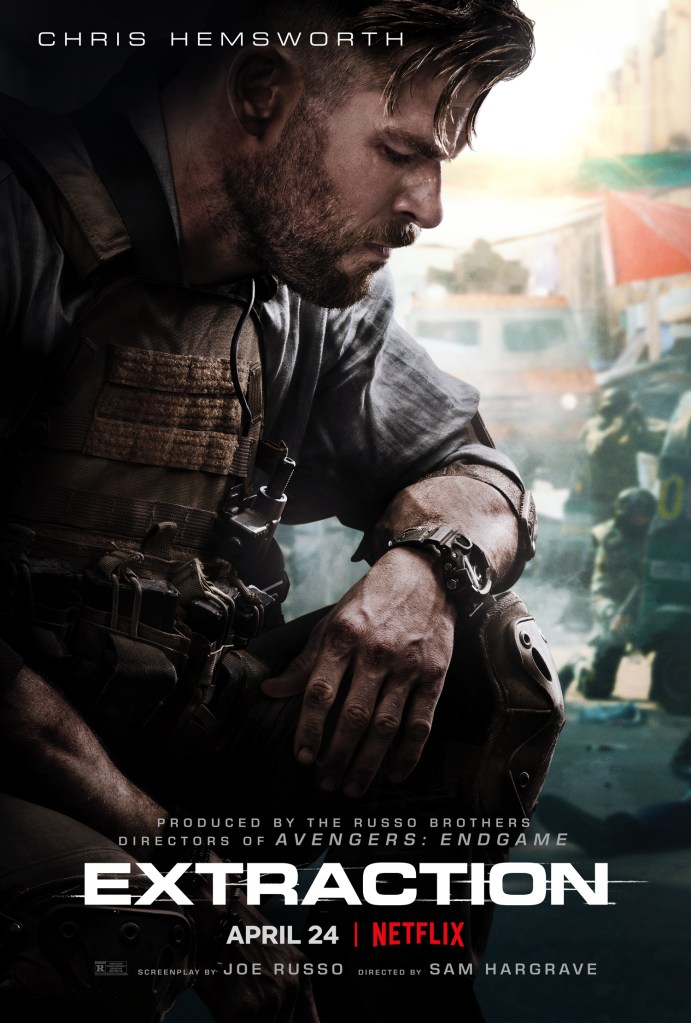
Do you remember when action heroes used to be larger than life, filling up the screens with muscles, charisma, and wise-cracking one-liners. I am old, so I certainly do. The likes of Arnold Schwarzenegger, Steven Seagal, Bruce Willis, Jean Claude Van Damme and of course, Sylvester Stallone were just some of the leading men crunching and blowing up the cinema screens. Okay, they may have been reactionary 1980s and 1990s masculine archetypes, and arguably nationalistic, sexist, militarist and incredibly over-the-top characters, but I kind of miss them. Because today’s action heroes, while equally talented at killing and delivering mayhem, are somewhat less colourful.

Don’t get me wrong, I still enjoy the technically excellent and brutally realised fight scenes and stunts of today. However, John Wick, Bryan Mills of Taken (2008), Lorraine Broughton of Atomic Blonde (2017), Jason Bourne, and now Chris Hemsworth’s mercenary, Tyler Rake in Extraction (2020), are individuals of fewer words and even less humour. I guess Jason Statham isn’t too bad, but he’s still quite serious. Lastly, while one can certainly rely on the sanitized fun of the Marvel Universe for some humour and personality within the action, it’s still not the same as a good old Arnie action flick. The more adult oriented superhero, Deadpool (2016), can be relied on for X-rated violence and constant verbal quips. But, he wears a suit and it’s just not as good as the action heroes I grew up watching. Ah, but that’s nostalgia for you.

Why the trip down memory lane, Paul? What about the kinetic and explosive action of Extraction (2020)? Yes, the well-choreographed manoeuvres are extremely exciting. They are also bone-crushingly relentless from the moment Tyler Rake enters Bangladesh to extract an imprisoned Indian gangster’s teenage son, Ovi Mahajan (Rudhraksh Jaiswal). Hemsworth and director Sam Hargrave get you in and out of hand-to-hand fights, car chases, leaps and falls from buildings, and constant gun battles with stunning brilliance throughout. The camera and editing work present virtuoso work, capped by an almost seamless eleven minute long take involving all manner of mayhem. While Ovi and Tyler kind of bond later in the film, I found myself needing more emotional or political subtext to narrative. Even John Wick (2014) created its own mythology and universe, where this relies on fast-paced movement, military tropes and lazy stereotypes. Ultimately, Extraction (2020) was like an explosive fireworks display. Great to watch while it lasted, but ultimately forgettable. Man on Fire (2004) did this story way better and with way more feeling.

Mark 7 out of 11


“CINEMA” REVIEW – THE ASSISTANT (2020)

“CINEMA” REVIEW – THE ASSISTANT (2020)

Written and Directed by: Kitty Green

Produced by: Kitty Green, James Schamus, Scott Macauley, P. Jennifer Dana, Ross Jacobson

Cinematography: Michael Latham

Cast: Julia Garner, Matthew Macfadyen, Mackenzie Leigh, Kristine Froseth, Noah Robbins etc.

*** MAY CONTAIN SPOILERS ***


The Assistant poster.jpeg

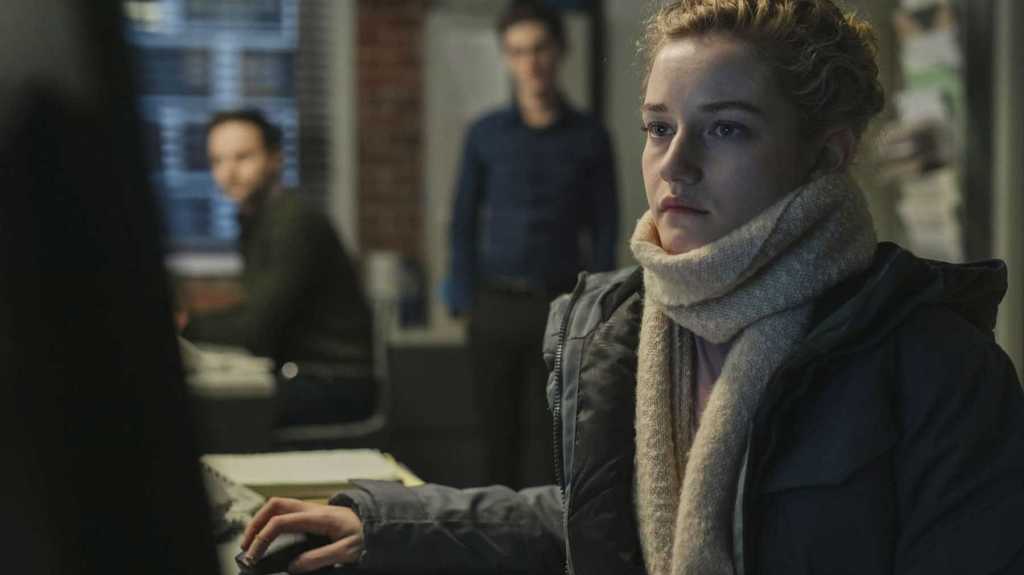
Having worked initially in the documentary genre, Kitty Green now presents her first fictional film, The Assistant (2019), with the ever-impressive Julia Garner in the lead. Garner portrays the titular assistant, Jane, a PA in an unnamed New York based film production company. However, while the characters may be fictional, the events reflected are very much based in reality, as the film explores endemic sexism within the film industry and office workplaces more generally. This isn’t a sensationalist #MeToo expose or revenge story, but rather a subtle narrative which conveys it’s criticisms with hushed and damning power.

The film is structured over one day. I’m a big fan of such a convention and wrote about the positives of single day narratives here. Anyway, The Assistant (2019), begins with Jane first in the office, and ends with her being one of the last there at night. In the middle we get a succession of expertly composed scenes which find Jane working for a big-shot movie producer. The fact that we never see him, but hear him and experience the aftermath of his behaviour through Jane is an ingenious concept. By showing rather telling us directly about his covert sexist exploitation, one is truly brought into Jane’s painful situation. She is told she is lucky to have this job and it presents a great opportunity to eventually become a film producer. Yet, to do so requires her to turn a blind eye to events which other employees horrifically consider to be the norm in a media company.


This image has an empty alt attribute; its file name is assistant-1.jpg

Weinstein’s name is never mentioned. It doesn’t have to be. He is the sexual predator in the room and probably among many film producers who have utilised the casting couch to have their disgusting way with budding actors and actresses. That is why Kitty Green deserves so much praise because she chose a directorial style that really works for the story. Green and her cinematographer suck all of the colour out of the film industry, making it grey and beige and stark and unglamorous. Via the character of Jane, and Garner’s exquisitely reserved performance, we learn that such bullying cultures exist, and the character must choose to accept it or move on. Garner’s scene with the HR Executive, played by Matthew Macfadyen, is superb in conveying the difficult choice Jane faces.

Lastly, as well as making important points about the patriarchal corruption within the film industry, I enjoyed that it also captured the repetitive nature of administration work. Photocopiers hum, phones ring, paper flaps, printers and faxes whir, while florescent strip lights glow amidst the drudge of the daily office grind. Jane is a prisoner within a myriad of shadowy walls and filing cabinets. Further, Jane is also torn between being a just person and following her dream of working in the movies. But, at the end of another exceptionally exhausting day, that dream is soured by the insidious lust of human behaviour. Thus, The Assistant (2019) asks, will things ever change? Go watch it and decide if you think they will.

Mark: 8.5 out of 11


MEMORABLE FILM CHARACTERS #4 – WITHNAIL

MEMORABLE FILM CHARACTERS #4 – WITHNAIL

Written and directed by: Bruce Robinson

Produced by: Paul Heller

Cast: Richard E. Grant, Paul McGann, Ralph Brown, Richard Griffiths


***CONTAINS SPOILERS***


“We want the finest wines available to humanity. And we want them here, and we want them now!” Withnail


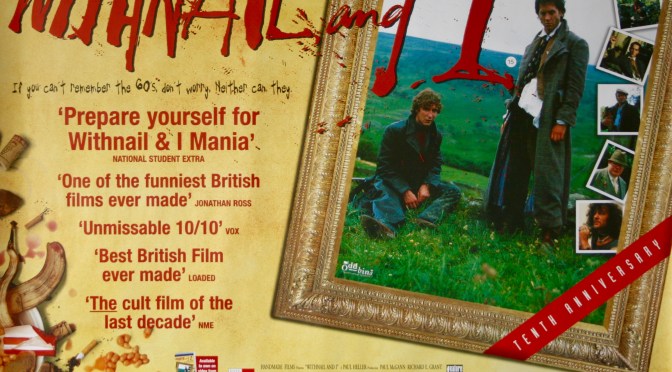
I am not one to believe in fate, but there has to be something magical about the random moment, at the age of seventeen, I was perusing my local video shop looking for a film to rent, and the cover of low-budget, British independent character drama, Withnail and I (1987), shone amidst the variety of Hollywood produced fodder. I picked up the box and for some reason the story of two unemployed actors mooching about at the fag end of the 1960s called to me. Perhaps it was the front cover featuring the debauched and worse-for-wear looking character of Withnail which drew me in? Or was it the casting of Paul McGann as the eponymous ‘I’, an actor I recognised from excellent TV drama, The Monocled Mutineer. Whatever the reasons, I rented the film and a special bond was formed forthwith. It lasts to this day.

Firmly in my top-ten-line-for-line-best-dialogue-ever-movies, Withnail and I (1987) simply bursts with memorable spats, insults, one-liners, and speeches. Another major strength of Bruce Robinson’s elegantly profane screenplay is the relationship between permanently inebriated and cowardly ‘thespian’, Withnail (Richard E. Grant) and his buddy, ‘I’ (McGann). It is a strange friendship full of mutual disrespect, petty bickering, and envy, but by the end of the film a kindly form of love is revealed. Withnail may seem an angry man, but ultimately, he’s using that ire to hide pain, sadness, and disappointment.


“I feel like a pig shat in my head.” Withnail


Richard E. Grant is incredible as the paralytic, pathetic and cowardly Withnail, who, along with ‘I’, laments a lack of career opportunities. Such bitterness, jealousy and ranting make him hugely obnoxious. However, Robinson’s exquisite writing and Grant’s subtly empathetic performance actually create an incredibly poignant character. Well, that and he’s absolutely hilarious, Indeed, it’s a hedonistic joy witnessing Withnail drinking every liquid known to humanity as he attempts to obliterate the now and tomorrow. Unbelievably, Richard E. Grant was teetotal, so director Bruce Robinson had to get him very, very drunk in preparation for a role he never bettered in his whole career.

Bruce Robinson, arguably, never reached the heights of Withnail and I (1987) again, although he does have other impressive writing credits. But this screenplay is one of the greatest ever written; conversely making it one of the funniest and tragic films of all time. Lastly, his often quoted but rarely bettered work is one of the greatest I have ever read, brimming with towering poetry, bilious insults, and drunken repartee. I mean there is little plot to the story of two actors getting drunk, going to the country, getting drunk and coming back. However, it remains one of my favourite films of all time, with one of the most memorable characters in Withnail.


HBO REVIEW – CURB YOUR ENTHUSIASM – SEASON 10 – another stream of comedic offence, farce and genius!

HBO REVIEW – CURB YOUR ENTHUSIASM – SEASON 10

Created by: Larry David

Executive producer(s): Larry David, Jeff Garlin, Robert B. Weide, Larry Charles, Erin O’Malley, Alec Berg etc.

Writers: Larry David, Jeff Schaffer, Justin Hurwitz, Steve Leff, Carol Leifer

Directors: Jeff Schaffer, Cheryl Hines, Erin O’Malley

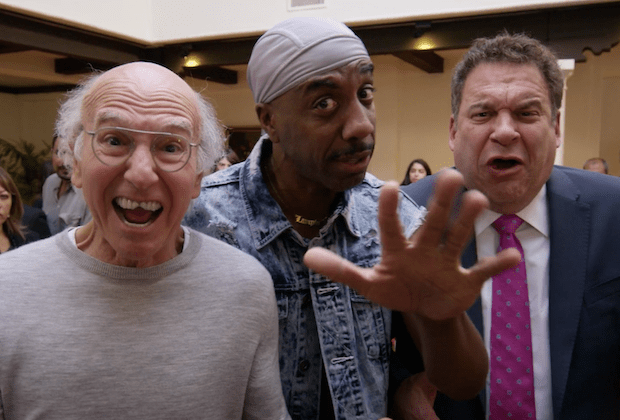
Main Cast: Larry David, Jeff Garlin, Cheryl Hines, Susie Essman, J. B. Smoove, Ted Danson, Richard Lewis, Vince Vaughan, Kaitlin Olson etc.

Guests: Mila Kunis, Clive Owen, Laverne Cox, Chris Martin, Sean Penn, Jonah Hill, Jon Hamm, Philip Rosenthal and many more.

Distribution Platform: HBO (USA) – SKY (UK)

**CONTAINS MASSIVE SPOILERS**


“AH! INTERESTING. . . “

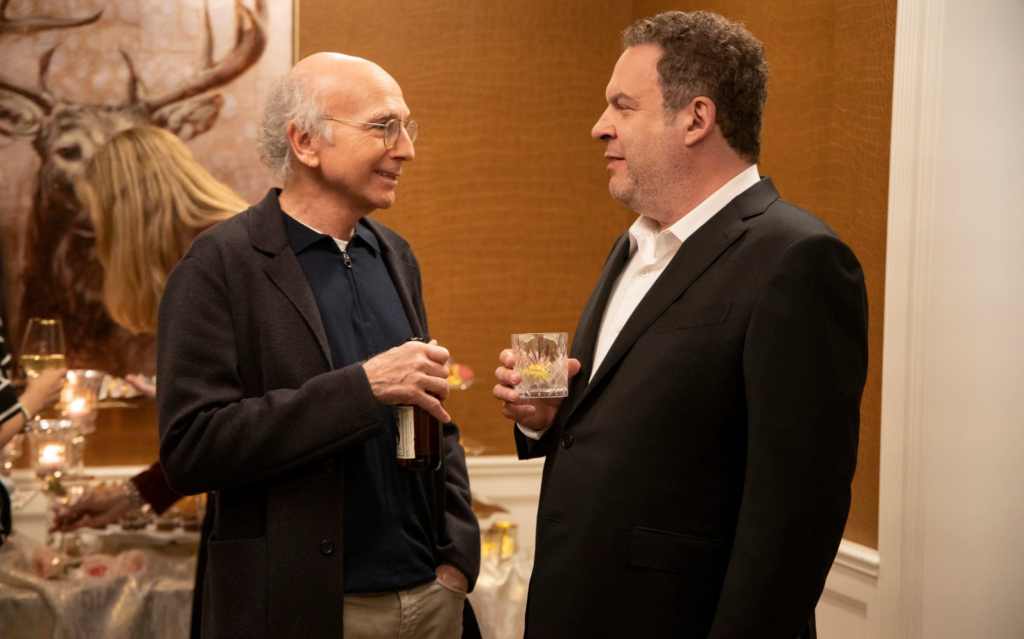
During a lengthy hiatus from 2011 to 2017, fans of Curb Your Enthusiasm were left bereft of their dose of Larry David’s inimitable and eccentric behaviour. The multi-millionaire writer of Seinfeld had carved out a wonderfully politically incorrect comedy series, full of misunderstanding, farce and hilariously embarrassing situations. Thankfully, he returned with season 9, and it was absolutely brilliant. Larry managed to get himself a death sentence, having written a musical called Fatwa, along with all manner of other comedic shenanigans. Season 10 has now followed and, once again, anti-heroic Larry delivers ten more fantastically offensive and funny episodes. More often than not we find his behaviour abhorrent as he goes about upsetting friends, family members, celebrities, and strangers on a daily basis. However, sometimes we are with Larry and his actions have merit and reason. Furthermore, due to the wonderful writing, improvising, cast and situations the humour is always more than pretty, pretty good!


NARRATIVE ARC (OF THE COVENANT)

Usually, Curb Your Enthusiasm episodes can stand alone due to the richness of the narrative strands Larry David and his writers create. But most seasons will have a very solid narrative arc running through it to provide looping rejoinders, a structural spine and a fitting conclusion. In season 10, there were echoes of storylines from prior seasons. Larry wanted to get back with Cheryl and they even committed divorced adultery, cuckolding Ted Danson in the process. However, the main arc revolved around the return of coffee store owner, Mocha Joe (Saverio Guerra). Larry pisses Mocha Joe off because he complains about “cold” coffee, wobbly tables and weak scones. Following Larry’s customary banishing he swears revenge on Mocha Joe. This takes the form of the wonderfully named ‘spite store’ he sets up next door. Thus, Latte Larry’s is born, and ten episodes of fast-paced, tit-for-tat, vengeful and hilarious scenes ensue.


“THE GOLDEN RULE” – STYLE AND THEMES

Curb Your Enthusiasm is not just funny because of the situations, dialogue, observations, guest stars and acting performances. It is also very sophisticated and stupid, combining a variety of comedy styles to fuel the humour. Earlier seasons could be argued to be more based in reality per se. The interactions between the characters felt more natural, in keeping with the pilot episode which was shot as a mockumentary about Larry returning to stand-up. Later seasons, especially seasons 9 and 10, upped the gag rate and one could even say felt slicker. Don’t get me wrong, the jokes have always come thick and fast in Curb Your Enthusiasm, but in the last two seasons there is not only a reliance on the usual comedy of embarrassment, observations and satire, but farce, slapstick and gross-out humour too have been added to the palette. Lastly, the show has always skated close to the edge in regard to non-PC humour and causing offence. Evidently, Larry David has now fully thrown himself over that edge and is happy to offend everyone in a two-fingered salute to so-called snowflakes or liberals out there.

In regard to thematics, Larry David clearly has his finger on the pulse relating to contemporary society, politics and human behaviour. Much of the humour and funny scenarios derive from what is acceptable behaviour and certain “rules” within everyday living. In season 10, Larry finds himself questioning, among other things: the behaviour of a pregnant woman; the merits of artificial fruit; what is and what isn’t’ sufficient praise; usage of disable parking badges; whether he should be in a restaurant’s ‘ugly section’; whether sex with Cheryl’s sister is post-relationship cheating; and the overall benefits of running a spite store. These elements, the running feuds with Ted Danson, Mocha Joe and Larry’s assistant, Alice, and themes relating to the Harvey Weinstein scandal and #MeToo movement; Larry and Leon’s continued chats about the nature of being black/white; Donald Trump’s presidency; fat shaming; suicide; Susie’s alleged plot to murder Jeff; nationalist ridicule; egotistic actor types; and transgender issues, all connectedly make this season a very rich product, full of ideas and challenging storylines.


“PRETTY GOOD. . . ” – EPISODE RATINGS

Episode 1 – Happy New Year – (8.5 out of 10)

Larry goes to war with Mocha Joe and reignites his romance with Cheryl. His relationship with his assistant also descends into accusations of sexual harassment.

Highlight: Larry wearing his Donald Trump, “Make America Great Again!” and ensuring no one wants to be seen with him.


Episode 2 – Side Sitting – (8.5 out of 10)

Larry’s relationship with his assistant, Alice, is possibly going to court unless he settles and makes amends. His attempts to get back with Cheryl are rebuked, so he dates his lawyer’s assistant.

Highlight: Larry gives Susie a portrait of herself as a birthday present. She loves it – but Jeff doesn’t.


Episode 3 – Artificial Fruit – (9 out of 10)

Larry’s donation to a charity fails to bring forward redemption when he refuses to hug Laverne Cox at an event, because she has a cold. Meanwhile, Richard and Larry argue over who is paying a lunch bill, leading to a very embarrassing escapade at a Spanish funeral.

Highlights: Larry is unsure if the Heimlich manoeuvre is appropriate when his assistant is choking. Plus, Larry’s doodle debate with Christine Lahti blows up into a serious disagreement.


Episode 4 – You’re not going to get me to say anything bad About! – (9 out of 10)

Larry, Donna (his new girlfriend), Cheryl, Jeff, Susie and Leon go to Cabo San Lucas for a friend’s wedding. Larry becomes fixated with Donna’s yo-yo dieting, but he and Leon do find some incredible coffee beans for Latte Larry’s.

Highlight: Larry’s determination to locate a toothbrush descends into a farcical conclusion. Later, at the wedding, Ted discovers Larry and Cheryl’s infidelity in a hilarious fashion.


Episode 5 – Insufficient Praise! – (9 out of 10)

Preparations for Latte Larry’s gather pace as Larry asks for a specific urinal type. Larry also gets a new housekeeper and is given a sex doll by Freddy Funkhouser. Meanwhile, Larry clashes with actor Clive Owen and Richard Lewis’ new girlfriend; a professional “crier”.

Highlights: Larry’s frantic battle with the sex doll resulting in his housekeeper and Cheryl catching him. Also, Clive Owen’s brilliantly pretentious send-up of narcissistic acting types.


Episode 6 – The Surprise Party! – (8.5 out of 10)

Larry meets a German inventor who has an anti-Semitic Alsatian called Adolf, and he gains joy from the use of a disabled parking badge. He also clashes with Susie over the surprise party she intends to throw for Jeff.

Highlight: Despite not having an appointment, Larry uses his cardiologist’s reception area to wait, because it’s a “waiting room”.


Episode 7 – The Ugly Section! – (9.5 out of 10)

Larry consistently keeps getting placed in the “ugly section” at the back of a restaurant. Simultaneously, he attempts to woo the widow of his friend who recently committed suicide.

Highlights: Larry asking Jane Krakowski’s character where she got the handles for her husband’s coffin. Later, Larry ruins a possible sexual liaison with her by arguing about the New York Jets. Lastly, Larry insults Susie as she should be in the restaurant “ugly section”.


Episode 8 – Elizabeth, Margaret and Larry! – (10 out of 10)

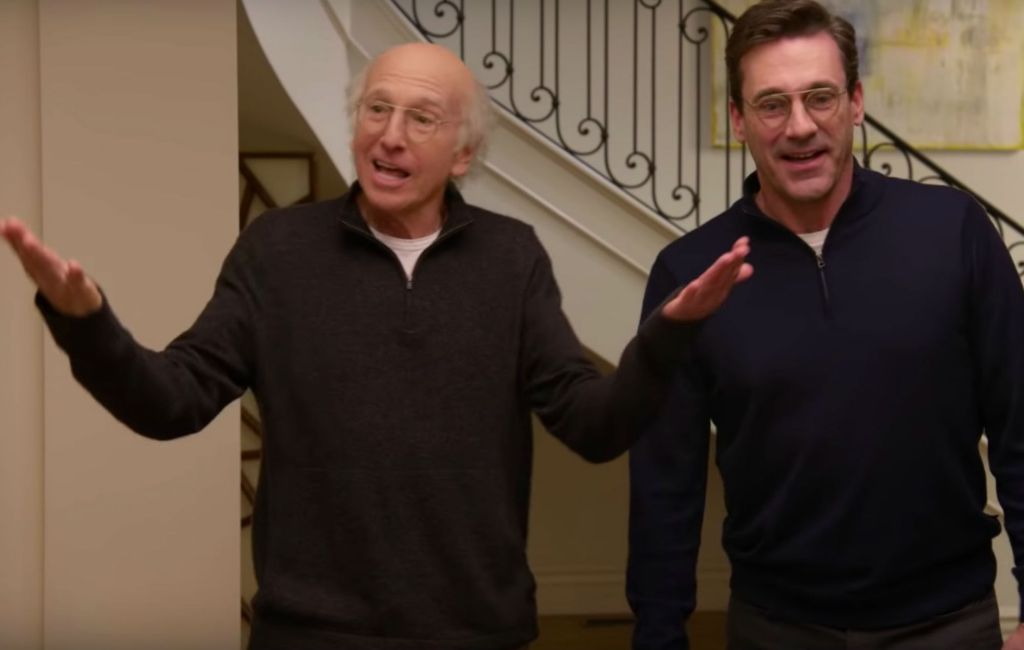
Actor, Jon Hamm, shadows Larry as he prepares to play a character like him in a film. Larry and Leon start a new business venture which initially proves profitable. Cheryl is angered when Larry spontaneously begins a relationship with her sister, Becky.

Highlights: Jon Hamm slowly turning into Larry throughout the episode, culminating in them both being ejected from a dinner party. Also, Kaitlin Olson returning as Becky and the surprising sex with Larry.


Episode 9 – Beep Panic! – (9 out of 10)

Larry strikes up a friendship with a waitress that dripped sweat into his soup. He also becomes obsessed with the liqorice at his car showroom. Meanwhile, Mocha Joe plots his own revenge using DVD film screeners.

Highlights: Leon and Larry succumb to the severe laxative effect of the liqorice in a silly bit of toilet humour.


Episode 10 – The Spite Store! – (10 out of 10)

Latte Larry’s is well and truly open, and it inspires other celebrities to open similar spite stores. Larry is irked by siren abusers and gives a job to Joey Funkhouser, but his big penis causes the store no end of issues.

Highlights: Sean Penn’s opening a spite-driven pet store. All Larry’s innovations at the coffee store ultimately lead to a very explosive downfall.


“NO GOOD?” – CONCLUSION

In preparing for this review I rewatched season 9 and watched season 10 twice. So, it’s obvious to say that I love, Curb Your Enthusiasm. Overall, I found the latest season to be a wonderful mix of old-fashioned slapstick and farce, combined with Larry David’s original and skewed vision of humanity. What was also impressive was the structural coherence of juggling so many comedy plots and situations. Plus, Larry behaves appallingly, and this is very appealing in an ever-increasingly politically correct world. Many times, throughout the season Larry is shown to be a provocative arsehole, but on occasions he very much has a valid point. Larry’s issues are very much first world problems, but because of the skilled writing and consistently high joke rate I related greatly to this season. Plus, Larry doesn’t win. His spiteful plotting and perpetual disagreements with those around him mostly fail. Indeed, ultimately, the joke is always on him.

Overall Mark: 9 out of 10


CLASSIC HORROR FILM DOUBLE BILL REVIEW – BLACK SUNDAY (1960) & BLACK SABBATH (1963)

CLASSIC HORROR FILM REVIEWS – BLACK SUNDAY (1960) & BLACK SABBATH (1963)

What better way to distance oneself from the horror of real life than by watching some classic horror films? Not that my life is that bad as I am alive and healthy and doing very well in the lockdown circumstances. Thankfully I am not having to deal with the sick people like those in the NHS and medical facilities across the world. Kudos to those individuals trying to save lives and cure the sick. Who could have predicted that these events could unfold? It’s like society has been cursed.

Talking of curses, the horror genre is one of my favourites. Although, to be honest, I do love most genres of film. Indeed, while I’m not a massive fan of romance or musicals, if the film itself is well made, then I will watch and most likely enjoy it. However, if I want to be sure to favour a film, then horror will be one of my go to genres. One such legendary filmmaker of horror movies was Italian director, Mario Bava. I’m ashamed to admit I had not seen many of his releases, if any. Shocking really as he was known by many as the ‘Master of Italian horror’. Thus, I corrected that by recently watching both Black Sunday/Mask of Satan (1960) and Black Sabbath (1963). Here are two short reviews of these atmospheric horror classics.


Best Horror Movies of the 1960s: From Psycho to Blind Beast | Collider
Black Sunday (1960)

BLACK SUNDAY (1960)

Director: Mario Bava

Cast: Barbara Steele, John Richardson, Andrea Checchi, Ivo Garrani

Given Mario Bava was a talented cinematographer who worked on many Italian film productions it’s no surprise that Black Sunday (1960) looks incredible. The transfer I watched on Blu-ray was pristine with the black and white photography really shimmering on the screen. The lighting is all shards and jagged amidst the foreboding darkness and shadows. The story itself is a creepy gothic tale of curses, witchcraft and revenge. It starts with a grim opening scene as Asa, a witch (Barbara Steele), and her lover being punished by her brother for sorcery. This involves placing a spiked mask on their faces and burying them alive. She damns them to hell with the promise she will return one day to wreak retribution. Guess what happens centuries later? While it runs out of story toward the end the opening hour is full of scary imagery and chilling moments. While it may seem mild by today’s standards, Black Sunday (1960), was in fact heavily censored on release and was even banned in the United Kingdom until 1968. While today’s horror films rely much on cheap jump scares, this one is a good old-fashioned creepfest, spreading a pervading aura of fear from start to finish.

Mark: 8 out of 11


BLACK SABBATH (1963)

Director: Mario Bava

Cast: Boris Karloff, Mark Damon, Michele Mercier, Susy Anderson, Jacqueline Pierreux etc.

The original title of this film was The Three Faces of Fear and this is a much more compelling title than the one we got. Don’t get me wrong Black Sabbath (1960) works, but given this is an anthology featuring three short horror films relating to fear, it seems like a marketing ploy echoing previous horror Black Sunday (1960). Anyway, the three stories are very different in setting and tone but all work well with Boris Karloff introducing them. The first is a pre-Giallo style contemporary murder story called The Telephone. Here a glamorous call-girl is stalked by an unknown person via constant telephone calls. It’s a slow burn build up of fear, as silence then sudden ringing raises the heartrate before the fine twist at the end. The second story is called The Wurdalak. A more traditional vampire story, it finds a handsome nobleman falling in love with a rural village girl, whose family are threatened by a bloodsucking Wurdalak. This was so creepy as we get severed heads and vampiric children in a story which reminded me of Stephen King’s Salem’s Lot. The final story, The Drop of Water is arguably the best. With more than a hint of The Tell-Tale Heart about it, the story finds a nurse stealing something from a dead woman, only for the vengeful ghost (or her guilty conscience) to take exception. Overall, this is a brilliant anthology horror film, which is still scary now and definitely stands the test of time.

Mark: 9 out of 11


AMAZON PRIME REVIEWS FEATURING: THE BOYS (S1), THE EXPANSE (S1) and PREACHER (S1)

REVIEWS OF THE BOYS (2019), THE EXPANSE (2016) & PREACHER (2016)

So, we are now a few weeks into the lockdown scenario caused by the COVID-19 virus and I have been off work for around that amount of time too. Tragically people are dying, and we owe it to be responsible by continuing to follow the rules laid down that will prevent the spread of the infection. It’s tough for everyone including families, employees and businesses. The capitalist system has taken a massive hit, and some will not survive in terms of life and work. I am not a religious person, but I pray to everyone’s God, whoever that may be, society comes through this. We are digging tunnels, looking for light and an escape. It cannot come soon enough.

In terms of escape it has never been easier to find both the time and formats with which to fill the gap. Thankfully the internet is still up and running, thus I have been filling my time in — aside from some minor administrative work-from-home stuff — writing my film reviews, editing and posting short videos, exercising and watching quite a lot of television and film content. Anything to stop me from becoming a beer monster or functioning alcoholic – AGAIN! The latest focussed viewing has been of Amazon Prime, and the many boxsets they have. So, here are mini reviews of three shows I have seen recently. All with the usual marks out of eleven.

***MAY CONTAIN SPOILERS***


THE BOYS (2019) – SEASON 1 – PRIME VIDEO

Based on the comic book series created by Garth Ennis and Darick Robertson, this violent superhero comedy is the complete antithesis of the Marvel Universe. Taking savage satirical swipes at huge corporations and United States foreign policy, it features a group of vigilantes, led by Billy Butcher (Karl Urban) called ‘The Boys.’ For a variety of reasons, including good old-fashioned revenge, they have targeted the most powerful business in the world, Vought International. Vought control and monetize ‘The Seven’, a group of all-powerful superheroes who happen to mostly be narcissistic, unstable and psychotic arseholes.

The initial episodes started slowly for me and I found it difficult to warm to any of the characters. This could simply be superhero fatigue or certain weaknesses in the writing throughout. However, the spikes of tremendous action, vicious humour and spectacular violence kept me on board. Elisabeth Shue and Antony Starr impress as the nefarious villains, while Erin Moriarty shone as the one decent superhero, Starlight. The least said about the shockingly bad English accent Karl Urban delivers the better. I mean his acting is impressive, but mate – come on!!

Mark: 8.5 out of 11


THE EXPANSE (2015) – SEASON 1 – SYFY/AMAZON PRIME

Usually when I see something is on the Syfy channel I baulk slightly. I mean the shows are pretty decent as a rule, but some right old fantasy schlock can get dumped there. So, with a saturated streaming market offering a plethora of U.S. cable shows, sometimes the Syfy channel shows get short shrift. It’s a shame because The Expanse is a really good science-fiction programme which began airing on Syfy, but is now on Amazon Prime. The sci-fi show hangs tonally between Alien (1979), Blade Runner (1982) and the Philip K. Dick-style “Mars v Terra” stories I have read. Indeed, while it doesn’t contain actual aliens or Dick’s surreal explorations of the psyche, it is, in fact, a fantastically plotted and styled industrial, political and humanistic set of narratives.

Based on James S. A. Corey’s (a pseudonym I believe for two writers), The Expanse (Season 1), is set hundreds of years into the Earth’s future and space has been colonized. But it’s not a utopia. Mars, Earth and an outer-planetary system of space stations called ‘The Belt’ are all conflicted on the brink of civil or galactic war. The multiple narratives follow the likes of the always-excellent, Thomas Jane, as a grizzled cop investigating a missing person and a space freighter gang led by Stephen Strait. The latter’s crew go from episode to episode finding life-threatening situations throughout. It’s a space-rock solid production full of twists, action and conspiracies; retaining a cynical, noir and unglamorous edge which makes me want to watch further seasons.

Mark: 8.5 out of 11


PREACHER (2016) – SEASON 1 – AMC/AMAZON PRIME

Developed by Hollywood players Seth Rogen and Evan Goldberg, along with Breaking Bad writer, Sam Catlin, this darkly comedic post-modern vision of heaven and hell is based on a comic book by Garth Ennis (that man again) and Steve Dillon. Starring the very reliable Dominic Cooper as hard drinking and former career criminal-turned Preacher, Jesse Custer, we find him losing faith in a small Texan town and a dwindling set of hopeless parishioners. That is until one day he is struck by some twisted divine interpretation. Then, literally, all hell breaks loose as Custer battles his inner demons and the local slaughterhouse baron portrayed with callous joy by Jackie Earle Haley.

Like The Boys, I initially found Preacher a little bit slow in terms of setting up the story and characters. But I think that was deliberate as there are so many crazy concepts relating to religion and the afterlife in here, a balance had to be given to combining the fantastic and more realistic elements. I’m not sure they’re wholly successful, however, Cooper is great, and he is ably supported by the effervescent Ruth Negga as his tough-talking ex-girlfriend, Tulip. Moreover, English actor Joseph Gilgun steals the show as the Irish sidekick with a dark secret. While the narrative moves steadily, with arguably too many secondary characters, the bloody gore levels during the fight scenes are absolutely spectacular. If, like me, you enjoy irreverent bible-black comedy which offends most religions and contains lashings of ultra-violence, then Preacher is definitely one to pray to the lords of television for.

Mark: 8 out of 11 (but 10 out of 11 for the gore)

AMAZON TV REVIEW – THE ACT (2019) – another shocking American drama based on true events!

AMAZON TV REVIEW – THE ACT (2019)

Created by: Nick Antosca & Michelle Dean

Writers: Nick Antosca & Michelle Dean, Dan Dietz, Robin Veitch, Lisa Long, Heather Marion

Directors: Laure DeClermont-Tonnerre, Adam Arkin, Christina Choe, Steven Piet, Hannah Fidell, etc.

Cast: Joey King, Patricia Arquette, Chloe Sevigny, AnnaSophia Robb, Calum Worthy, Dean Norris, Denitra Isler, Margo Martindale etc.

Original Network: Hulu (US) – Starz/Amazon (UK)

*** CONTAINS SPOILERS ***


Film & Television Photographer Brownie Harris

The capacity for human beings to lie and fake and forge simply knows no bounds. Clearly lying is bad, as it disintegrates trust in families, relationships and society in general. We should all strive for truth. But before one judges and jumps to conclusions there can be mitigating circumstances for lies. It could be a good lie. A lie that protects someone from the horrors of reality or a bad situation. It could be a falsehood which is worth denying in order to circumnavigate a tricky moment. This last example is a subjective decision though. But what if you’re not in your right mind? What if you have a mental illness? Does this forgive the darkest lies you tell or present? No, but it does explain why you’ve told such untruths.

Hulu’s exceptional true-life drama, The Act (2019), centres on a character who is both a liar and mentally disturbed. You would not know from the outside but Dee Dee Blanchard (Patricia Arquette) was a very troubled person. A seemingly loving single mother to a teenage daughter, Gypsy Blanchard (Joey King), Dee Dee unfortunately has to cope with Gypsy’s myriad of medical issues which leave her in a wheelchair and unable to feed herself. But Gypsy is actually incredibly healthy. Her mother has in fact been drugging and faking and benefiting financially from harming her daughter for years. Clingy, controlling and manipulative of her daughter’s every movement, routine and personal interactions, Dee Dee never wants her daughter to grow up. She wants a permanently powerless child and vicariously feeds off all the sympathy this brings. Yet Gypsy is growing up and she wants to do her own thing. Her body is changing and so are her desires. Something had to give.

Over eight brilliantly written and directed episodes, The Act (2019), unfolds as a powerful human tragedy. The story begins in 2015 with a serious crime; someone has been hurt. It then flashes back to when Dee Dee and Gypsy moved from hurricane hit New Orleans to Springfield, Missouri in 2008. Moving consummately back and forth in time the structure builds the drama very well. I genuinely couldn’t believe that someone would do that to their own child. Then, just when you think the story cannot twist any further the events take an even stranger and darker fall. Unsurprisingly, Patricia Arquette won an Emmy for her performance as the tragic faker, Dee Dee. Arquette inhabits the skin of this unhinged mother chillingly. But she’s not a scary monster, more one that subtly gets right under the skin. Joey King as Gypsy is equally brilliant as the co-dependent daughter, ultimately driven to extreme and shocking behaviour by her mother’s lies and twisted vision of love.

Mark: 9 out of 11