Produced by: Sara Murphy, Adam Somner, Paul Thomas Anderson
Cast: Alana Haim, Cooper Hoffman, Sean Penn, Tom Waits, Bradley Cooper, Benny Safdie etc.
Cinematography: Michael Bauman and Paul Thomas Anderson
Edited by Andy Jurgensen
*** MAY CONTAIN SPOILERS ***
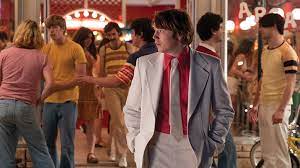
Any film from Paul Thomas Anderson will certainly receive high critical praise and Licorice Pizza (2021) is certainly no different. Not only do I think this is his most over-rated film. I don’t even think it is a good one. Not for any technical reasons. Because as usual Anderson’s filmic skills as a director, the scintillating cinematographic style, the evocative rendition of early 1970’s Californian suburbs, plus two star-making turns within a formidable cast, ensure Licorice Pizza (2021) is deservedly going to win many plaudits. But I just did not get the story about pretty much nothing and did not connect with the lead romance.
Set in 1973, Licorice Pizza (2021), is part slice-of-life period drama and part character comedy, with a spine consisting of an odd romance between entrepreneurial fifteen-year-old, Gary Valentine (Cooper Hoffman) and twenty-five-year-old, Alana Kane (Alana Haim). While containing many brilliantly directed scenes, the film is a hot mess of indulgent rooting through Paul Thomas Anderson’s historical research and anecdotal events inspired by real-life film producer, Gary Goetzman.
Being asked to root for a relationship which is dubious on the surface and extremely complex to say the least is not beyond me. But Licorice Pizza (2021) doesn’t address the age difference, aside from a couple of moments in the script. I know Cooper Valentine is an old head on young shoulders, but why Alana doesn’t hang out with people her own age was weird for me. I’m not being politically correct or a prude, but is Anderson asking for us to root for what could end up being statutory rape. Am I over-thinking this? Well, all I can say is it impacted my emotions of a major aspect of the story.
Licorice Pizza‘s (2021) worst crime is it’s virtually plotless and I could not identify with the characters. I liked Gary to a certain extent as he ducks and dives to make a living, but what was at stake? Nothing really. Yeah, I get it is art but I found Anderson’s vision boring. Sure, the actors are great, especially the effervescent Alana Haim. Virtual cameos from Sean Penn, Bradley Cooper and Tom Waits failed for me though, with Cooper’s coke-addled and womanising impression of Jon Peters about as funny as an enema. Of course, the cinematography, period design, soundtrack and costumes are exquisitely presented, but they exist in an emotional vacuum. Finally, Licorice Pizza (2021) made me want to watch Paul Thomas Anderson’s previous 1970s masterpiece, Boogie Nights (1997). Now, that film deserved all the critical praise that came its way.
THE CINEMA FIX PRESENTS: 10 FAVOURITE FILMS OF 2021!
Following on from the extremely tricky global issues of 2020, the cinema saw further transitions amidst lockdowns and the rise of even more streaming platforms. Traditional timetables for film releases remain all over the place due to the effects of the pandemic on our culture. Plus, big budget productions are now going straight to the living room more often than not. Especially if the proposed cinema release date is postponed on several occasions. What studios lose in terms of cinema release profits, they are now looking to claw back with reduced marketing budgets and subscriptions to their own respective channels.
In the past my favourite film of the year lists were all films I saw at the cinema. Now they are a mixture of cinema and online releases. There is some overlap too in the given year when I watched such films due to the scheduling changes. I’m really not a fan of this as I don’t like change to routine as a rule. But if it means I still get to see my favourite films online or at the cinema then it’s hardly a trial or major issue to adjust.
List Notes
There are LOADS of films I have NOT SEEN! Please comment below MUST-SEE films not on the list.
The Bond film is not on here. It was fantastic entertainment, but NOT a good Bond movie.
There are no MARVEL/DC films on the list as I have not watched them all. Plus, I have superhero film formula fatigue.
Nomadland (2020), while good, was completely over-rated.
White Tiger (2021) would be on this list, but I only watched it yesterday. So, it qualifies for assessment in 2022.
For comparison here is my list of favourite films in 2020. A starter if you will, before the main cinematic course.
Happy New Year – have a great 2022!
TWELVE FAVOURITE FILMS of 2020!
1917 (2019) DARK WATERS (2019) DA 5 BLOODS (2020) I’M THINKING OF ENDING THINGS (2020) THE INVISIBLE MAN (2020) MANGROVE (2020) PARASITE (2019) PORTRAIT OF A LADY ON FIRE (2019) SAINT MAUD (2019) TENET (2020) THE TRIAL OF THE CHICAGO SEVEN (2020) UNCUT GEMS (2019)
“… with Thomas Vinterberg’s expert direction, evocative natural cinematography, and Mads Mikkelsen giving yet another acting masterclass, the humorous narrative soon leaves the laughs behind to become a bittersweet, yet still uplifting, work of Nordic cinema.”
“… David Lowery is an original thinking talent, and someone I categorise as an alternative genre filmmaker… The Green Knight (2021) certainly has scale and magic and astounding cinematic power.”
“… Edgar Wright has delivered one of the most thrilling and spectacularly energetic films of the year. The nostalgic and heavenly soundtrack is to die for, with so many songs I recall growing up listening to. Likewise, the cinematography and lighting design sparkle in hues of black, fluorescence, shadow and neon.”
“… Levee Green does not see the bigger picture and is sucked in by the promise of money, women and fame. He is blinded by the bright city lights and the closer he gets to them the easier it is for the record producers to pick his pocket. In such a tragic character August Wilson has created a memorably complex persona, perfectly rendered by the acting genius, Chadwick Boseman. R.I.P.”
“… the scenes where David antagonises his unconventional grandmother are hilarious. Youn Yuh-jung as the elderly matriarch is fantastic, deservedly winning a best supporting actress role at the Oscars. Moreover, Lee Isaac Chung gets a miraculous performance from child actor, Alan Kim.”
“… The loss of a child is never going to be an easy experience and it is something an individual will never get over. As I followed Martha’s journey intensely the smallest incremental shift in her personality is felt massively. Vanessa Kirby, in particular, is stunning as a woman cut-off from the world by this devastating grief.”
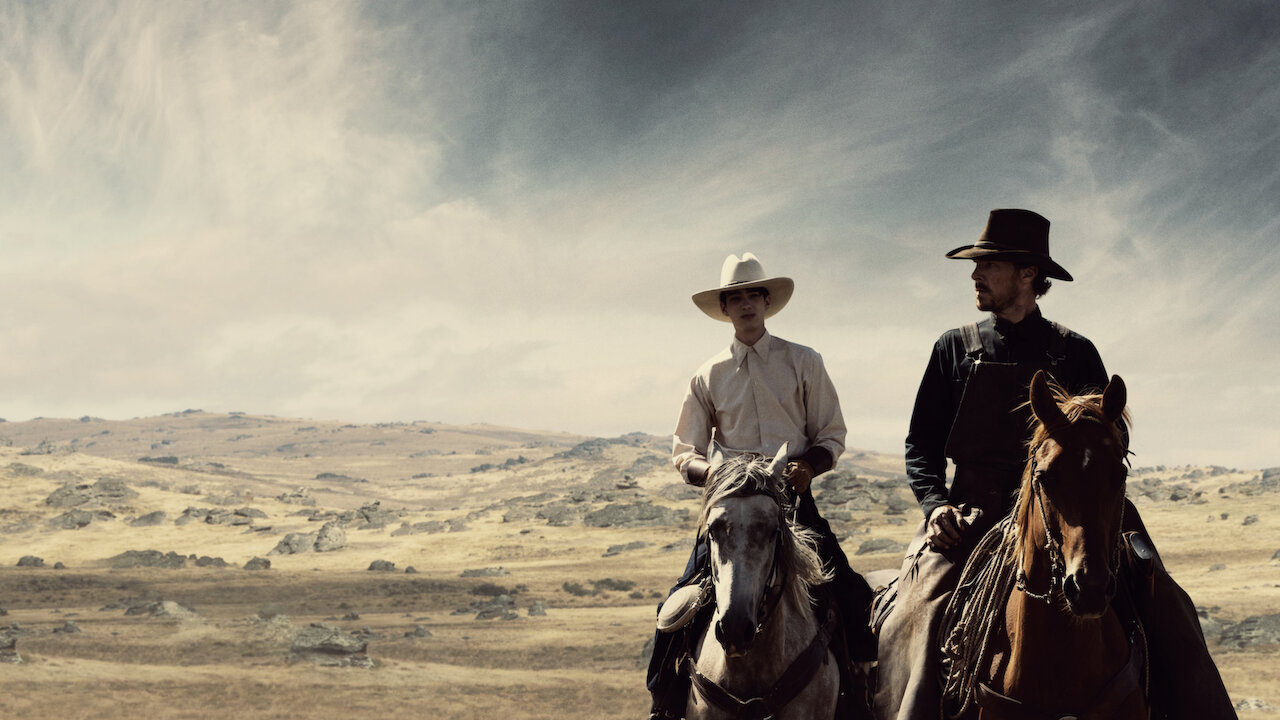
“… I’m not always a fan of poetic cinema, especially within a narrative presented as a quasi-Western. Mostly I like to be punched in the gut, not branded slowly from the inside out. Yet Jane Campion’s expert adaptation of Thomas Savage’s novel, The Power of the Dog (2021), contains some bite. You just don’t see when and how it happens.”
“… I’ve seen some so-so reviews for The Rental (2020), but it’s the kind of tightly plotted suspense thriller I really thrive on. What starts as an idyllic getaway for two relatively wealthy couples is carefully unravelled by Dave Franco’s well-paced direction, complimented by Brie and Steven’s committed performances, has wonderful locations and a seriously proper killer ending.”
“… Sound of Metal (2019) beats along steadily but with incredible purpose and rhythm. It teaches us that losing a major sense need not be the end of one’s life, but rather the beginning of an altogether different one.”
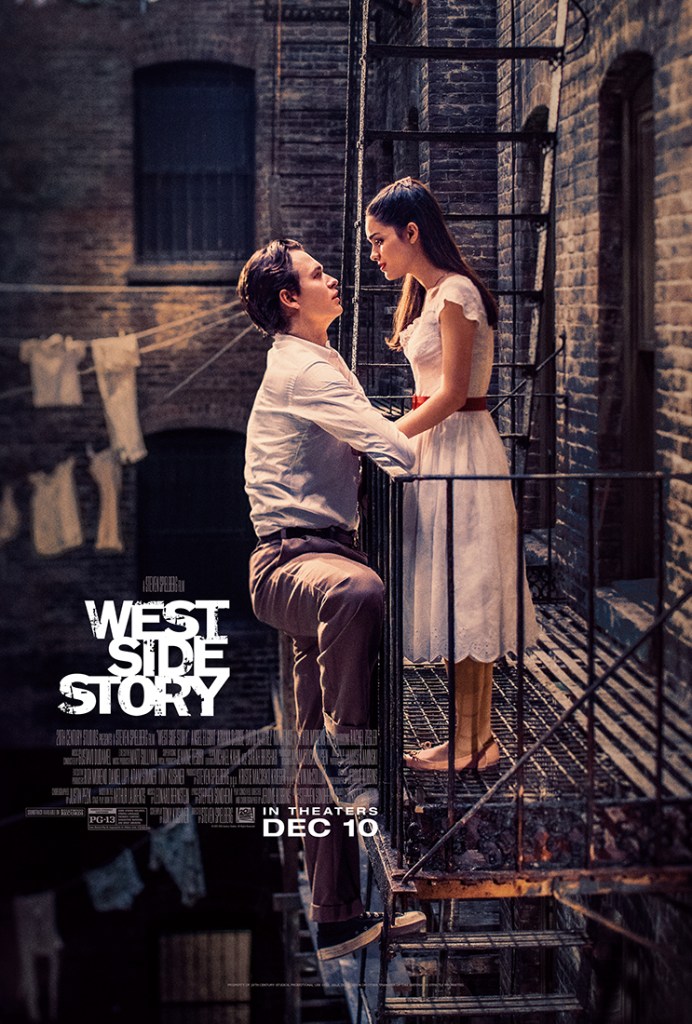
“… Everything about the film screams colour, energy and movement. The dancing and editing and swinging beats take you on a breathless journey through the romance and street war. West Side Story (2021) keeps all the memorably catchy songs… and if there is a better directed, choreographed and edited set-piece all year in the Gee, Officer Krupke number then I haven’t seen it.“
Based on: The House of Gucci: A Sensational Story of Murder, Madness, Glamour, and Greed by Sara Gay Forden
Produced by: Ridley Scott, Giannina Scott, Kevin J. Walsh, Mark Huffam
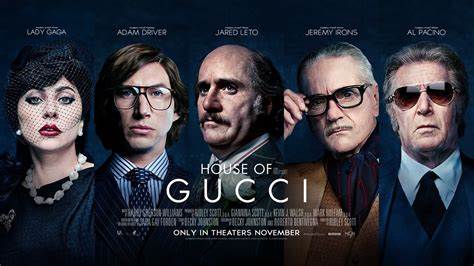
Cast: Lady Gaga, Adam Driver, Jared Leto, Jeremy Irons, Salma Hayek, Al Pacino etc.
Cinematography: Dariusz Wolski
*** MAY CONTAIN SPOILERS***
I’m not a fan of fashion. I wear clothes obviously and like to be smart and clean. Yet, the idea of believing one’s garments, shoes and accessories mean you are important, superior or worthy of adulation sickens me to be honest. However, fashion is a multi-billionaire industry and I get that people of variant social standing love it as a cultural phenomena. People either own or aspire to own over-valued garments and objects to inflate their ego or sense of importance is beyond me. Then again, I passionately enjoy watching human beings kick a ball into a net, so everyone has irrational passions. C’est la vie!
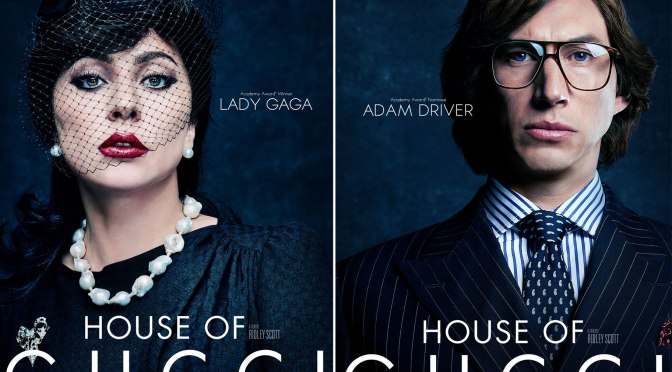
I didn’t go to see House of Gucci (2021) to look at the clothes though. My interest in this star-studded, big budget crime drama directed by the legend, Ridley Scott, was more because I did not know anything about the lives and personalities within the Gucci empire. Who would have thought that a wealthy family unit could have turned out so poisoned by greed and envy?
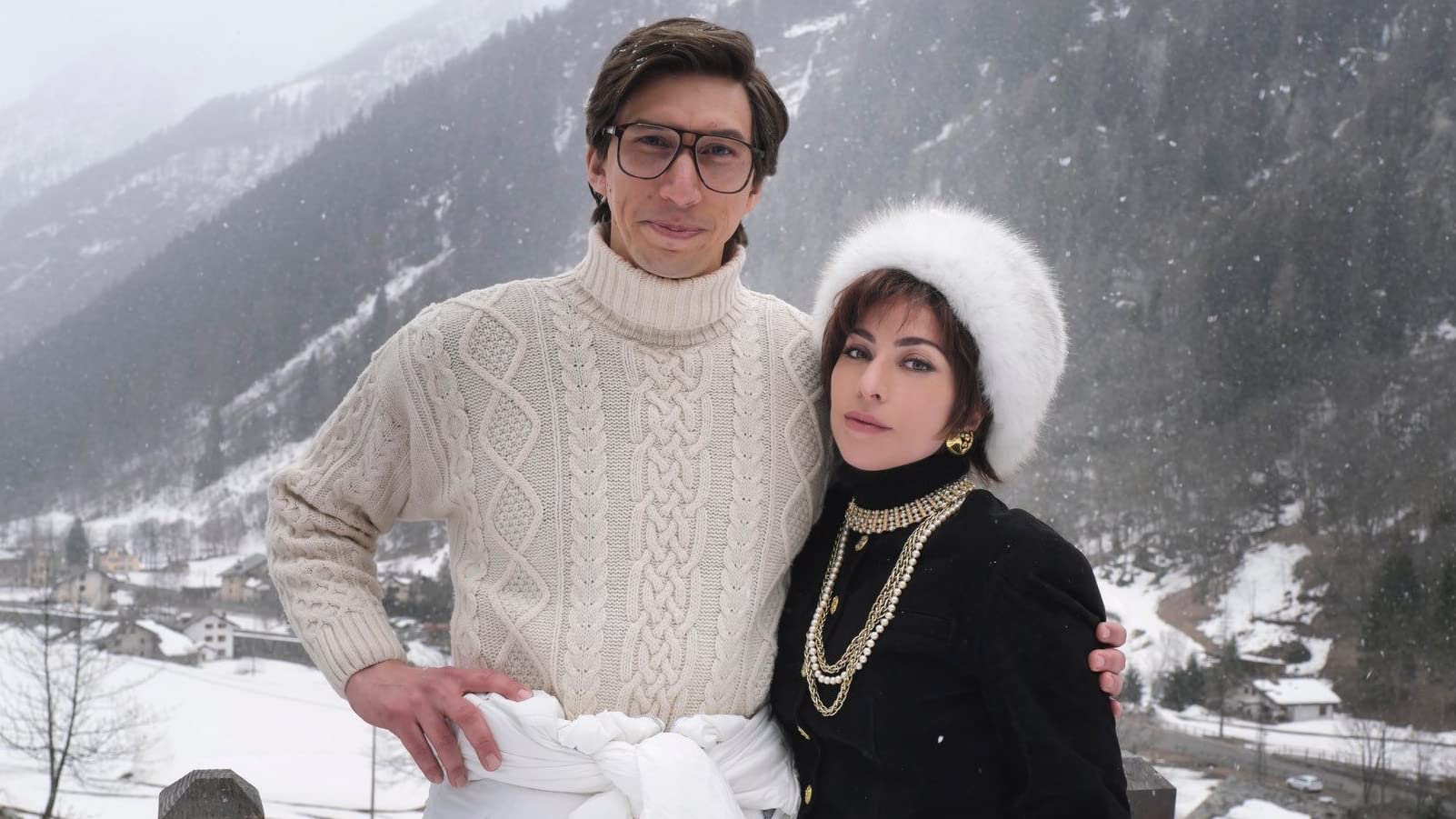
Covering a period of twenty or so years from the late 1970s into the 1990s, the story is structured around the relationship between Patrizia Reggiani (Lady Gaga) and Maurizio Gucci (Adam Driver). They fall passionately is lust, much to the chagrin of his spiteful father (Jeremy Irons) and marry against his will. Patrizia genuinely loves the sensitive Maurizio, but also has green eyes for the Gucci empire and the power that can bring. As her desire for influence in the family business grows, then so does cracks in their marriage. Crumbling relationships, business chicanery and family treachery dominate the narrative, all coming to a head with tragic results.
As a morality tale about how greed corrupts and drives human beings toward unnecessary tragedy, The House of Gucci (2021) is certainly worth a watch. Is there a sense the Gucci family were cursed by there wealth. Perhaps? But the film and screenplay as a whole present this theme without really drawing them out to full dramatic effect. However, the cast are absolutely fantastic throughout with Al Pacino, Adam Driver, and Lady Gaga on particularly exceptional form. Jared Leto dominates many scenes with his bald head, extra weight and screechy voice. While entertaining, the director could have reigned Leto in slightly to extract more pathos from the sad clown that is represented in Paulo Gucci.
I had a few issues with The House of Gucci (2021) inasmuch as it felt incomplete. At times it was as though I was watching a test screening version. The transitions between years were often confusing. What year is it, Ridley? Adam Driver’s arc from likeable young academic to selfish adulterer was rushed and unearned. I got the evocation of a Fredo and Michael Corleone dynamic between Maurizio and Paulo, but this really could have been developed further. The cinematography was grey and dull with the natural lighting style working against the expected colour and vibrancy of the 1980s era. I also wondered if the film had been graded?
While watching The House of Gucci (2021) I just kept thinking of more superior crime and gangster films. It is also mildly disrespectful to a genius like Ridley Scott to say Martin Scorsese would have knocked this story out of the park. I truly felt, while Lady Gaga was excellent in her role, her character could have been written and given a voice-over up there with that of Henry Hill’s. Nonetheless, I still enjoyed the film but wonder if there is a director’s cut out there which doesn’t feel rush released. Or even the possibility HBO or Showtime may adapt it into a longer drama series in time. Yet, does one want to spend more time with such avaricious and vain characters? Depends who is telling the story I guess.
Produced by: Dede Gardner, Jeremy Kleiner, Christina Oh
Cast: Steven Yeun, Han Ye-ri, Alan Kim, Noel Kate Cho, Youn Yuh-jung, Will Patton, etc.
Cinematography: Lachlan Milne
Music by: Emile Messeri
*** MAY CONTAIN SPOILERS ***
I missed Minari (2020) at the cinema. Which is a shame because out of all the Oscar-nominated films from earlier in the year it is now my favourite. Further, it should certainly have won the best film award. (Note: I have yet to see The Father (2020).) It has the heart and warmth and realistic hope that eventual winner, Nomadland (2020) lacked. Chloe Zhao’s powerful character study was arguably too meditative and glacially paced, without any real diversion from the plodding repetition of monotonous existence. I love slice-of-life and character-driven work, but I want some drama too. While Minari (2020) has certain meditative qualities, writer-director Lee Isaac Chung has crafted a supeb cinematic memoir of tender power and emotion.
Set in 1983, Minari (2020), centres around the Yi family. They had been working in California, but have moved to Arkansas to farm the land. The father, Jacob (Steven Yuen) dreams of growing produce to sell to fellow Korean businesses. However, the farm and static caravan he has purchased is remote with no guarantee of water to ripen the fruits and vegetables. Jacob must either pay exorbitant prices from the water company or find a natural spring underground. Alas, rain rarely threatens the Arkansas plains.
Jacob’s wife, Monica (Han Ye-ri) hates the caravan and does not share his farming dream. This marital conflict drives the much of the narrative as the two argue constantly. Monica is especially angry that her young son, David (Alan Kim) is so far from a hospital. The boy has a heart condition and like any good mother she consistently worries. Their teenage daughter, Anne (Noel Kate Cho) is too young to be a full-time caregiver to David while Jacob and Monica support themselves working at a local chicken factory. To placate Monica, Jacob brings grandmother, Soon-ja (Youn Yuh-jung) to the farm for support. Here a beautiful and funny parallel plot begins as David and his grandmother’s relationship comes to the fore.
I watched Minari (2020) on a Sunday morning at home, relaxed and cosy, filled with breakfast and coffee. I loved experiencing the film. The music wondrously supports the beautiful photography that illuminates the green and wheats that fill the lens’ gorgeous palette. Like the masterpiece, Parasite (2019), Minari (2020) represents a working-class family striving to stay together and survive in difficult times. The main difference though is the Yi family were doing it with honest hard graft rather that grifting, ducking and diving. The Yi’s connect with nature and the land rather than skimming the city and the rich. I really rooted for the Yi’s. Jacob’s desires and battles to find water reminded me of the equally moving French classic,Jean De Florette (1986).
Minari (2020) doesn’t take the obvious route of making the Arkansas locals racists who rail against the Yi’s. While there are some scenes involving cultural clashes, much of the drama and humour derives from the families interactions with each other. Indeed, the scenes where David antagonises his unconventional grandmother are hilarious. Youn Yuh-jung as the elderly matriarch is fantastic, deservedly winning a best supporting actress role at the Oscars. Moreover, Lee Isaac Chung gets a miraculous performance from child actor, Alan Kim. Special mention for a busy, but nuanced portrayal of a troubled but helpful worker, Paul, by Will Patton. His deeply pious character could have easily been made an antagonist, but Chung ensures he is another relatable human being in a film full of them.
SIX OF THE BEST #34 – AMAZING FILMS I DO NOT LIKE!
Are there box office hits, cinematic phenomena and damned fine films loved by critics which you DO NOT like? That isn’t to say they aren’t great films, but subjectively you just don’t enjoy them? I mean some people dislike much of Christopher Nolan’s work! What!? Okay, Interstellar (2014), was not his best, but hey that’s just my opinion. It’s all just opinions.
Now, I like to be positive on this blog and have critical balance when writing my reviews. In fact, some films I choose not to review because I don’t want to slag something off which is just not for me. I also generally avoid reviewing films I consider terrible because I prefer to avoid negativity.
Thus, this article is not about having a pop at classic films or saying they are over-rated for attention. The truth is – I AM IN THE WRONG HERE! But I think it’s interesting to examine why I don’t like these six excellent films. After all, many talented people have worked passionately on them, so in no way do I want to disrespect their craft. Which is why, I repeat, I am wrong!
*** CONTAINS SPOILERS ***
AVATAR (2009)
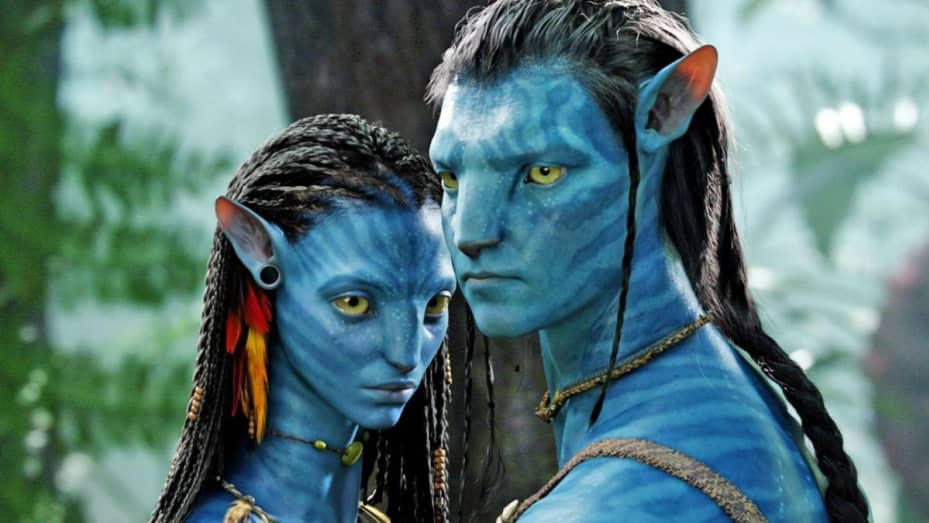
James Cameron is one of the greatest genre filmmakers of all time. He is also a technological innovator and genius. In Avatar (2009), he truly topped himself in regard to creating not only the beautiful world and inhabitants of Pandora, but by using never-seen-before motion-capture cinematic techniques. Moreover, the film would go on to make over $2 billion at the box office, so I’m not worthy enough to criticise Avatar (2009). But the script is incredibly flat and derivative. The lead characters are mostly unlikable and I genuinely found the amount of blue on show irritating to the eye. Worst of all is the hypocrisy that a film this expensive, and with a carbon footprint this big, is critiquing capitalist corporations who destroy the natural world.
THE BLAIR WITCH PROJECT (1999)
Yes, this horror film had one of the smartest and ingenious marketing campaigns of all time. Yes, I should be praising it because I love horror films and also get excited when indie filmmakers hit the big time with low budget films. But, The Blair Witch Project (1999) has no real story as it just a clever series of jump scare set-ups. More importantly, it has no characters you can root for as they are so stupid and obnoxious. Worst of all it wasn’t scary or suspenseful. That’s because I wanted the bickering trio to die. I mean, who throws away a map. They were morons! Plus, this expertly crafted movie committed the worst crime of all – bringing back the found footage film! Now, don’t get me started on THAT cinematically moribund subgenre!
CLOSE ENCOUNTERS OF THE THIRD KIND (1977)
What’s not to like about an award winning, box office smash directed by arguably the most brilliant director of a generation? Furthermore, Close Encounters of the Third Kind (1977) also contains some of the most breath-taking and ground-breaking special effects. So, with the Oscar winning cinematography and majestic score, why don’t I enjoy this Steven Spielberg sci-fi masterpiece? In short, I cannot stand the choices Richard Dreyfus’ character makes. I did not believe his journey. Why would you want to go to space and connect with aliens? Why would you abandon your family and head off on some frantic search for something from the sky? Eat the mash potato! Don’t make mini-mountains out of it. I get that there is pseudo-religious metaphors going on, but why were we meant to care? Amazing spectacle, but devoid of emotional connection and an ending that didn’t make much logical sense to me.
THE MASTER (2012)
I really love films and documentaries about cults. Especially where religion is used to control human beings and make them do crazy things. What possesses another person to want to control others? They are often extremely charismatic and talented people too, so always fascinating to explore. In Paul Thomas Anderson’s The Master (2012), and while this has been denied, he studies the relationship between a lost soul drawn to a movement that may or may not be a reflection of Scientology. Freddie Quell (Joaquin Phoenix), a World War II veteran is pulled toward Lancaster Dodd (Hoffman), a leader of a cult known as “The Cause”. But not much happens other than Quell having a series of breakdowns amidst post-traumatic stress and alcoholism. Anderson is one of the great humanist and existential filmmakers working today, but The Master (2012) was too impenetrable and alienating for me.
MULHOLLAND DRIVE (2001)
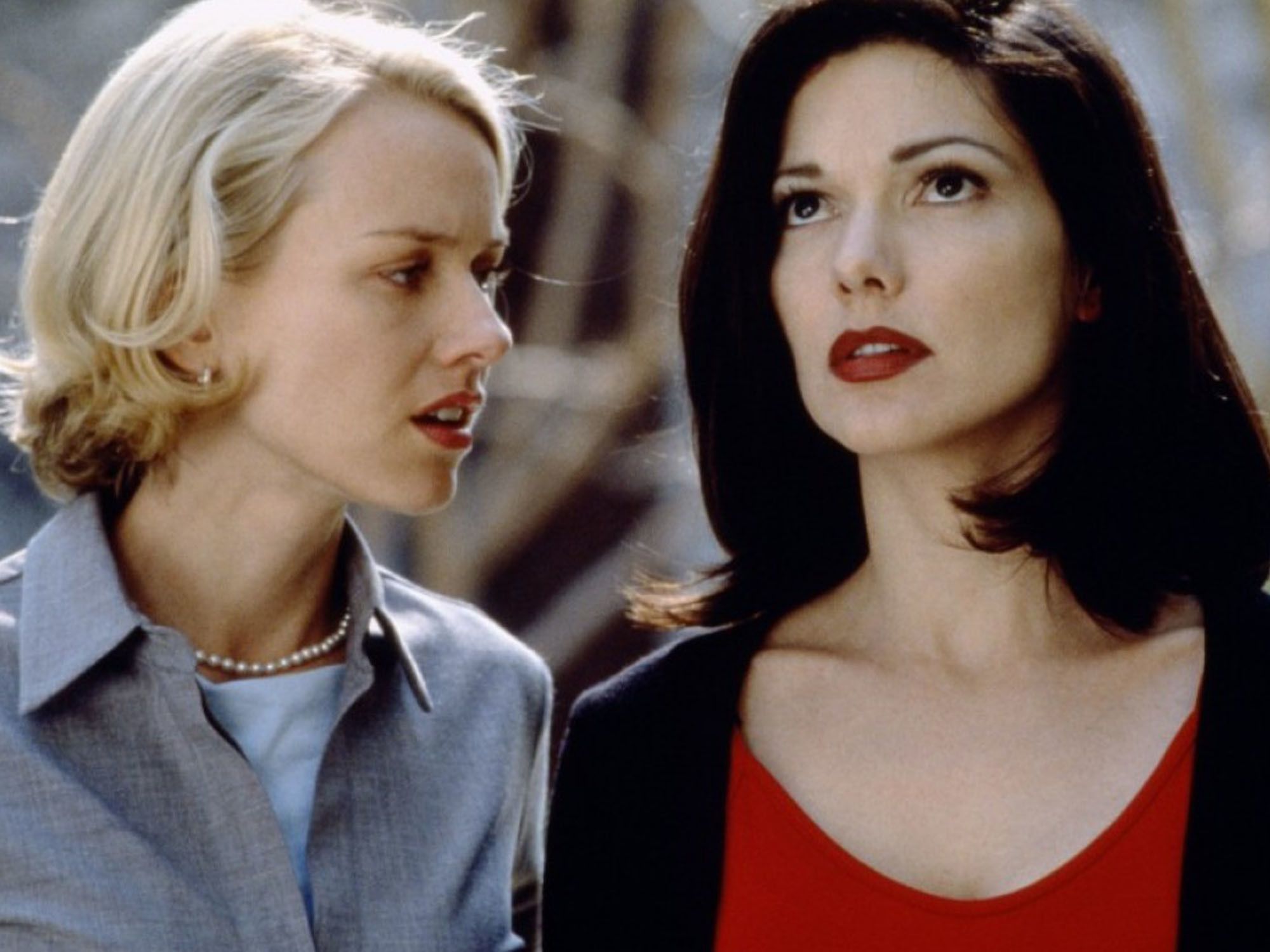
I am a massive fan of David Lynch’s oeuvre. He is one of the most incredibly idiosyncratic and original voices is cinema. Lynch is visually, aurally and cinematically able to deliver both coherent and surreal narratives that blow your mind and heart out. After bamboozling audiences with Lost Highway (1997) he delivered an emotionally moving road movie in The Straight Story (1999). After that I’m not sure what was in his damn fine coffee when Mulholland Drive (2001) was devised. My understanding was it was a rejected filmed pilot which transmuted into a feature film. Crossing many genres including thriller, detective, horror and romance, the narrative splinters via many characters in Hollywood, notably Naomi Watts portraying an actress experiencing a career and identity crisis. That’s just the tip of an extremely enigmatic iceberg and the bottom line was I just didn’t care. Critics love Mulholland Drive (2001) and it often tops best film lists. I have absolutely no idea why.
THE WITCH (2015)
My filmmaking and screenwriting career is more a hobbling hobby these days. Other than not getting on the right career train, or getting lost in the smoke of an overcrowded creative platform, one main reason I may not have succeeded is because I arguably don’t have an original vision. Maybe I am just too generic. One cannot say that about Robert Eggers. This is one truly talented filmmaker. His debut film The Witch (2015) was a low budget folk horror masterpiece which became a sleeper hit at the box office. Set in 1630s New England, it is an authentically designed and brilliantly acted period drama with Anya Taylor Joy standing out. But aside from the historical accuracy of the language, locations and costumes the story was SO slow. I realise The Witch (2015) is an arthouse classic, but I just did not connect with the characters and was bored all the way through. There are some occasional scares, but it’s more a film which draws horror from underlying dread and enigma rather than the classic horror style I prefer.
Screenplay by: Edgar Wright and Krysty Wilson-Cairns
Produced by: Nira Park, Tim Bevan, Eric Fellner and Edgar Wright
Cast: Thomasin McKenzie, Anya Taylor-Joy, Matt Smith, Michael Ajao, Terence Stamp, Diana Rigg, Rita Tushingham, etc.
Cinematography: Chung-hoon Chung
*** MAY CONTAIN SPOILERS ***
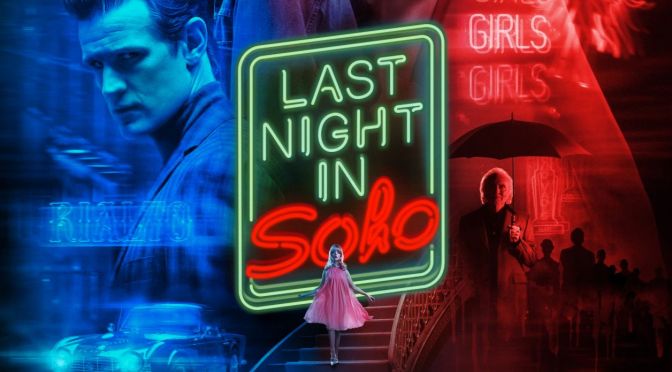
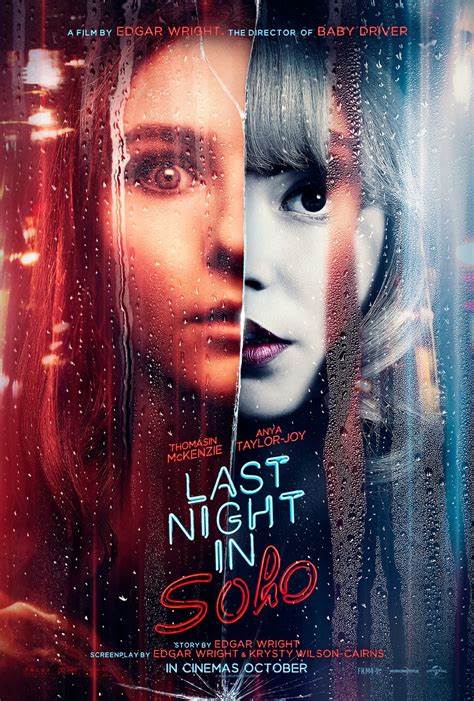
Edgar Wright is one of my favourite directors working today. His films possess an endless series of cinematic techniques such: long takes, quick cuts, swooping camera moves, canted frames, Steadicam, camera holds, frame switches, pans, scans, tilts, low-angles, metronomic editing, blurred dissolves, point-of-view and god’s-eye view shots. Moreover, Wright’s use of humour, music, colour, casting choices, and cross-genre collisions are spectacularly imaginative and entertaining. His latest film Last Night in Soho (2021) is no different. I was enthralled and excited throughout this ripping big-budget exploitation film, which juxtaposes influences such as Stephen King, Brian DePalma and Doctor Who, with a suggestion of Dario Argento and giallo cinema.
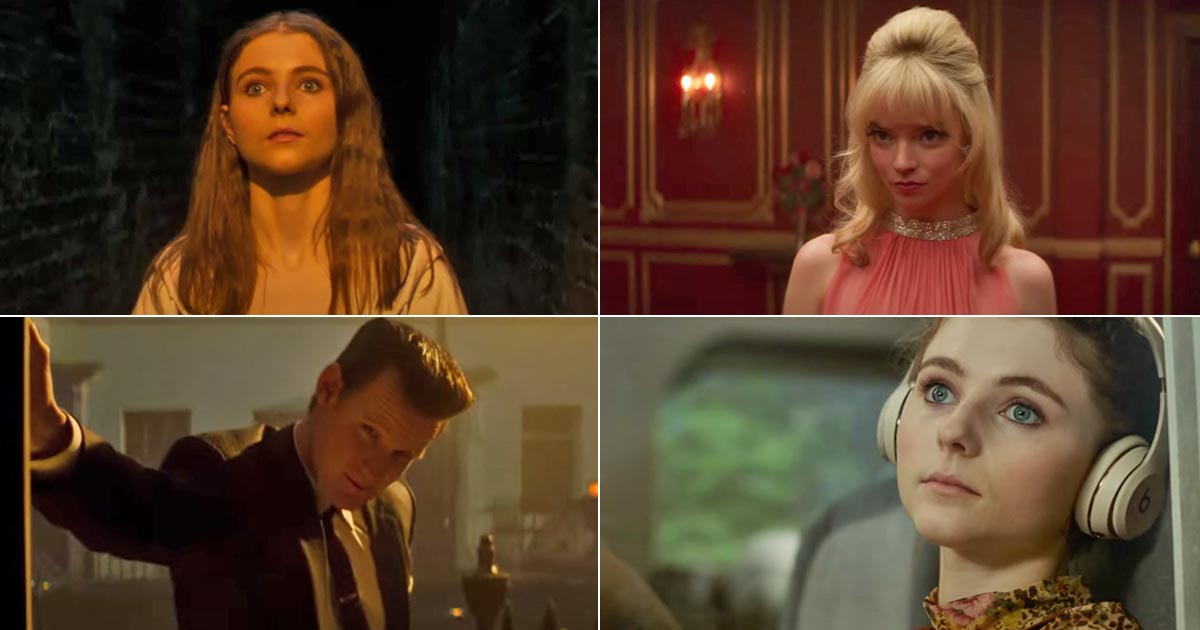
Last Night in Soho (2021) is both a love and hate letter to the Soho area of central London in the 1960’s and the now. If hate is too strong a word then at the very least the myriad of storylines collide to create a cautionary tale of one young person’s move from Cornwall to London to study fashion at the University of Arts. Major acting talent Thomasin Mackenzie is Ellie Turner, a passionate young woman who loves the sixties music and style, but also mourns the loss of her mother at an early age. Leaving her comfortable home she shares with her Grandmother (Rita Tushingham), Ellie experiences London and student life with initially mixed results. Finding it difficult to connect with her obnoxious room-mate, Jocasta, she moves into an antiquated bedsit, with imperious Diana Rigg as her landlady no less. All of a sudden her incredible journey into the glamorous and seedy past of Soho begins.
As with many of his films Wright establishes several storylines simultaneously. He brilliantly crosses rites-of-passage with period drama, romance, musical, detective and finally the horror genre. Ellie finds her feet at University, gets a job in a bar, receives praise for her initial designs and starts a budding romance with fellow student, John (Michael Ajao). At the same time her life becomes entwined in a surreal twist with that of Sandie (Anya Taylor-Joy), an engaging character desiring showbiz stardom who happens to live in Soho, but in the 1960’s. Ellie’s psychic link with Sandie brings her vivid dreams, but a striking empathic connection.
While Ellie is nervous and insecure within her London experiences, Sandie is the opposite. The theme of duality in their polar characters is both emotionally and visually breathtaking as their twin journey brings positive change and developing confidence in Ellie’s character. Yet, when Sandie’s career desires are exploited for nefarious gain by a local face called Jack (Matt Smith), both woman head for darker spaces in the shadows and smoke of the capital. Here the issue of mental health is intriguingly explored too. As Ellie is drawn further into Sandie’s nightmarish existence, she struggles to hold on to reality and the present.
Despite some minor wrinkles in the narrative and geographical London liberties taken, Edgar Wright has delivered one of the most thrilling and spectacularly energetic films of the year. The nostalgic and heavenly soundtrack is to die for, with so many songs I recall growing up listening to. Likewise, the cinematography and lighting design sparkle in hues of black, fluorescence, shadow and neon. Sure, Edgar Wright has his cake and eats it with mild virtue signalling relating to the “Me Too” movement. The male gaze eats up Anya Taylor Joy’s stunning charisma on screen, making us complicit in her downfall. Nonetheless, with issues relating to grief, mental health, sexual exploitation, identity, doppelgängers, urban breakdown and many more all enveloped into a craftily structured plot, you won’t find a more breathless cinematic experience all year.
Cast: Jason Schwartzman, Olivia Williams, Bill Murray, Brian Cox, Seymour Cassel, Mason Gamble, etc.
*** CONTAINS SPOILERS ***
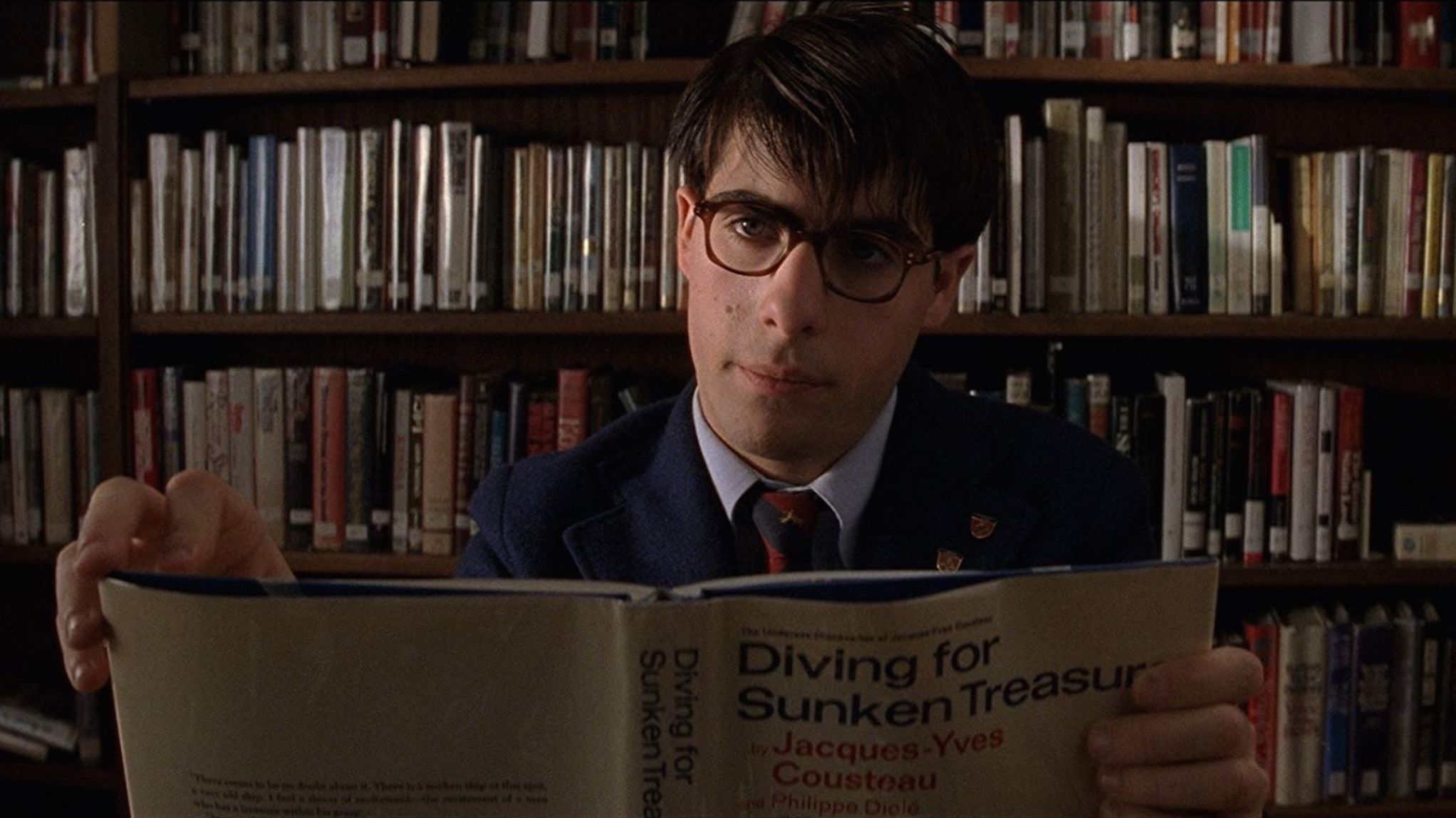
Having recently written positively about my favourite films of Wes Anderson I was spurred to revisit my favourite work of his, Rushmore (1998). It’s a smart, funny and poignant rites-of-passage narrative which spins off from the classic Hollywood teen films of John Hughes to deliver an esoterically beautiful set of empathetic characters. Like Hughes’ best work it is witty, warm and highly memorable.
At the heart of the story is Max Fischer (Jason Swartzman), a fifteen-year-old boy who attends Rushmore Academy. Like Ferris Bueller, he’s a maverick who drives his tutors up the wall with his rebellious behaviour. But Max is not all about looking cool, driving fast cars and singing to a crowded Chicago parade. He is far from the slacker that Ferris is, in fact he has started virtually all of the Rushmore clubs including: karate, fencing, French, and the ‘Max Fischer Players’. Their version of the film Serpico (1973), is absolutely hilarious. However, all such activities have impacted his grades causing Max to be placed on probation by the exasperated Principal, Nelson Guggenheim (Brian Cox).
Max is arrogant, confident, determined and forthright in his belief he is better than everyone, including the adults around him. But it’s a long-developed defence mechanism against one of the integral themes of Anderson’s film, grief. All the main characters including Max, Herman Blume (Bill Murray) and Rosemary Cross (Olivia Williams) are grieving the loss of a loved one. Amidst the quirky comedy Anderson therefore gives the film an air of mournful pathos, bringing us ever closer to the characters. With the theme of loss in play the Oedipal love triangle which plays out in the middle act is all the more humorous and sadder.
Max is a flawed character, but so driven that one cannot help but find him appealing. He hides his socio-economic situation, perhaps not ashamed of his working class background, but more a projection of where he wants to be. His Dad (Seymour Cassel) is a barber, not the surgeon Max tells everyone he is. Yet, there is love and respect between the two as they have clearly suffered loss together. As with Williams and Murray, Cassel gives a wonderful supporting performance.
Over the course of Rushmore (1998), amidst Max’s unrequited love for Rosemary, vengeful attacks on Herman, crazy schemes, school expulsion and hilarious plays, Max matures slowly, makes friends and finds his place in the world. Max also forges relationships with teenagers his own age and slowly releases his shield of grief. Jason Schwartzman is perfect as Max, delivering a winning combination of pathos, intellectualism and deft humour. Incredible to think it was his film debut beating, according to IMDB, 1800 auditionees to the role.
Screenplay by: Jon Spaihts, Denis Villeneuve, Eric Roth
Based on: Dune by Frank Herbert
Produced by: Denis Villeneuve, Mary Parent, Cale Boyter, Joe Caracciolo Jr.
Cast: Timothée Chalamet, Rebecca Ferguson, Oscar Isaac, Josh Brolin, Stellan Skarsgård, Dave Bautista, Stephen McKinley Henderson, Zendaya, Chang Chen, Sharon Duncan-Brewster, Charlotte Rampling, Jason Momoa, Javier Bardem, etc.
Cinematography: Greig Fraser
***MAY CONTAIN SPOILERS***
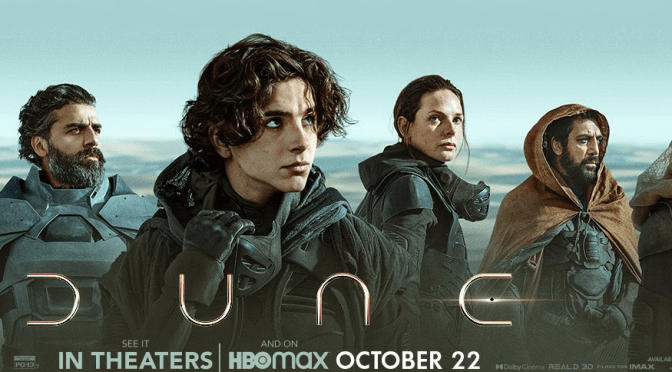
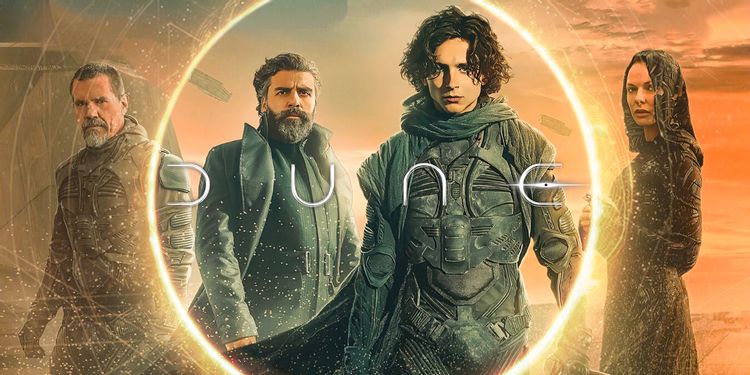
I truly hope Dune: Part One (2021), an epic adaptation of Frank Herbert’s legendary Dune literary series, has a second part, otherwise I would have wasted well over two hours of my life watching the Denis Villeneuve helmed film version. Having said that, there were times where I felt the glacial pace of the narrative caused time to stand still, boring me in the process. But, I get it. It’s part one and setting all the major players up and building a strange world both visually and imaginatively. As such perhaps Herbert’s books may have suited a HBO TV adaptation rather than a cinematic version.
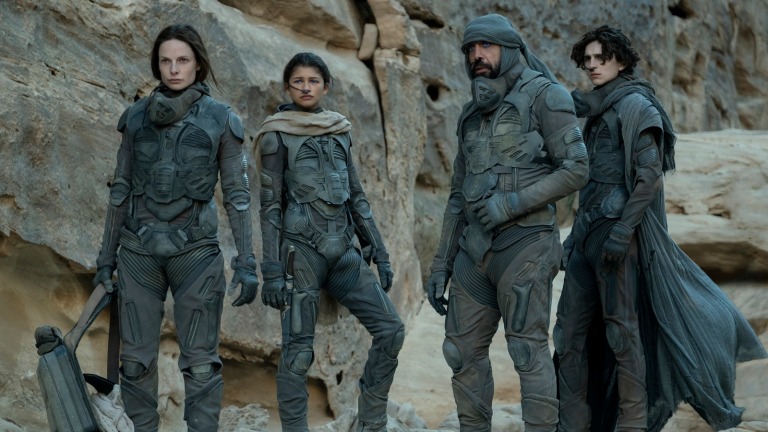
Maybe I’m jaded and cynical though. Have I seen too many films and stories? Is Dune: Part One (2021) even worth the journey and perhaps it’s too old-fashioned a sci-fi story to create resonance for myself and these times? Well, it absolutely looks amazing. The special effects, sandy landscapes, behemoth buildings, underground monsters and space vessels are rendered with such believable authenticity they genuinely looked real on the screen. Frank Herbert’s (I haven’t read the books) vision is astoundingly realised as this futuristic world in a far, far galaxy felt like a moving work of art. But, it was extremely beige and brown and sandy looking on Arrakis, so much so that I was glad of the dark contrast in the scenes involving House of Harkonnen. By the way, I’m not often a fan of the natural cinematography style used here where during big action scenes at night I could hardly see anything. Moan over.
The story of Dune (2021) felt a bit old-fashioned as a classic hero’s journey. It didn’t help that the in-the-sand screenplay and Denis Villeneuve’s meditative, confident direction was too subtle for this story. I mean why do we care about Timothee Chalamet’s Paul Atreides and his family’s inheritance of the spice world’s of Arrakis? Without giving anything away it becomes a poisoned chalice politically in this world and Paul’s, his parents, and the House of Atreides’ lives all become endangered. So, while Frank Herbert’s novel was originally released to powerful acclaim in 1965 and five other novels would follow year’s later, a film version of Dune (2021) now feels outdated in terms of subtext. Villeneuve is a genius filmmaker, but I’m not sure, aside from the beautiful look of the locations, sets and actors there is much of a narrative to get our teeth into. Just another ‘white saviour’ quest, which is so drawn out in terms of the interminable slow pace at times.
Of course, the cast are wonderful to look at, but Chalamet is miscast for me. He is an incredibly talented young actor, but he is not given any character to get his teeth into. Villeneuve does a less-is-more style that I love and he’s obviously playing the long game withDune (2021), yet he really needed a young Ryan Gosling to carry Paul Atreides as Chalamet isn’t given enough to do in terms of acting. Yes, there are massive worms and big explosions and floating fat men, but the story dragged. Thankfully, Jason Momoa injected some movie star charisma in his action sequences, while Rebecca Ferguson and Javier Bardem sprinkled some of their own spice amidst the over-controlled Villeneuve design.
I really wanted to like Dune (2021). I won’t see a more attractive and technically perfect rendition of a sci-fi world in the cinema in years. But, I could not connect with the narrative or drama. I mean, Paul is possibly the chosen one or something or other but why do we care? His mother is connected to some weird cultish sect — with the “Force” — and there are big worms which made me want to watch Tremors (1990); a far superior and shorter version of the hero’s journey. Watch that instead.
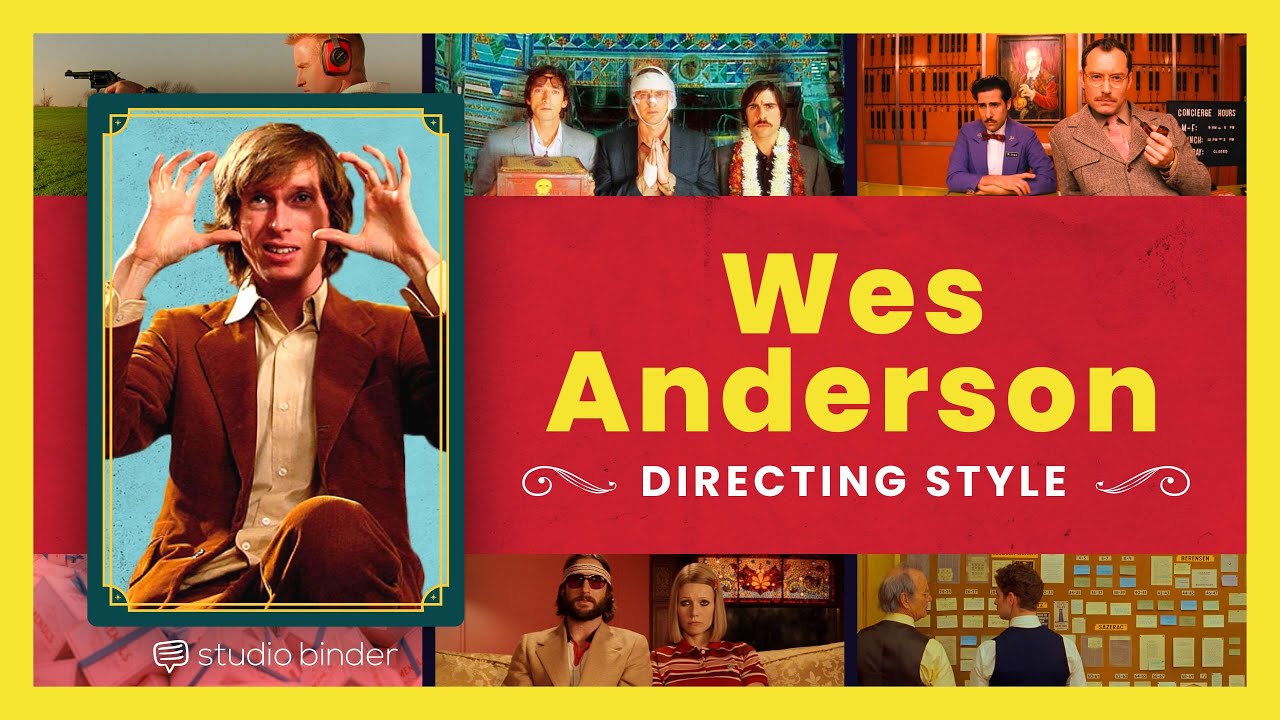
I thought I’d save myself a lot of time using the above variant words in one go. Because they, and the word auteur, are utterly inevitable while writing a short article in praise of the Wes Anderson films I rate. It’s intriguing to write about Anderson though. While many of the pieces in the My Cinematic Romance series concentrate on people in cinema I absolutely adore, he is more a filmmaker who I respect rather than have an undying emotional connection with.
Wes Anderson is a phenomenal filmmaker with an imaginative set of style and narrative conceits. Everyone one of his releases is a rich tapestry containing memorable ensemble casts, adjacent framing, effervescent use of colour, geographical pertinence, intellectual humour and subjects situated in the far left field of genre cinema. Yet, I don’t enjoy ALL of his films. Often they veer too far into eccentric pretentiousness. Indeed, I was going to write a review of The French Dispatch (2021), but I found it frustratingly dull and, other than the tremendous story set in the asylum with the mad artist (Benicio Del Toro) disconnected with it on the whole. But, I must say, it was another admirable work of cinema, but one I did not enjoy as a paying punter.
So, rather than write a middling review about a genius filmmaker’s latest work, here is a piece about my favourite five films of Wes Anderson.
***MAY CONTAIN SPOILERS ***
BOTTLE ROCKET (1996)
Anderson’s debut feature film is based on his short film of the same name. Co-written with Owen Wilson, it is a freewheeling take on the heist movie which eschews hard-boiled professionals for a group of hapless losers led by the positively loopy Dignan (Wilson again). Shot way before Anderson got his ruler and set square out, it’s a naturally filmed, hilarious character comedy that destabilises crime genre conventions with charming effect. Launching the acting careers of the Wilson brothers it is an oddly charming filmic treat.
RUSHMORE (1998)
This is still my favourite Wes Anderson film because it combines a perfect combination of uncommon humour and prevailing verisimilitude. What I mean is I did not feel I was watching a showcase of artistic flourishes, but a true human story full of empathetic characters, feeling and emotion. It is also incredibly funny as we follow the rites of passage story of school maverick, Max Fischer (Jason Schwartzman), a working class kid rebelling against the adults he believes are beneath him. Bill Murray’s career renaissance began here and his character’s vengeful battles with Max are one of the film’s many highlights.
THE ROYAL TENENBAUMS (2001)
The first Wes Anderson film that saw the stylistic devices and themes so prevalent in his later work to truly come to the fore. The ensemble cast crammed with famous names, the omnipotent narrator, symmetrical framing, consistent and complimentary colour palettes, typography, fantastic use of nostalgic music, distinctive costumes and stories structured in chapters of the literary kind. The Royal Tenenbaums (2001) contains many absurd comedic moments, but has several tragic scenes too. This demonstrates Anderson’s growing maturity and remains a confident vision of a dysfunctional American family of geniuses and misfits.
THE GRAND BUDAPEST HOTEL (2014)
While Rushmore (1998) is my favourite film of Wes Anderson, his best is the tour-de-force comedy, The Grand Budapest Hotel (2014). It’s the pinnacle of bravura style and well-honed narrative competence, confidently presenting the rags-to-riches story of Zero Moustafa beginning in 1930s. Europe. Moustafa’s story takes in his first love, his job at the opulent hotel and his moving friendship with the prideful Gustave, an amazing Ralph Fiennes. It’s a film packed with invention, colour, humour, sadness and romance all wrapped in themes of the rise of fascism, loss, love and the wonder of friendship.
ISLE OF DOGS (2018)
Put aside ridiculous millennial online accusations of cultural appropriation and submerge yourself within Anderson’s rich canine narrative and stop-motion tapestry. As aforementioned, I’m not always a fan of his story subjects but he is a master of style and form. Isle of Dogs(2018) is no different and is a wonderful cinematic experience. Set in Japan we concentrate on, hence the title, a bunch of stray dogs dumped on a wasteland left to die and their subsequent adventures. This is much darker than prior Anderson films, but full of the imagination, wit, colour and brilliant technique, containing funny gags and twisting drama throughout. I preferred this to his version of the Roald Dahl classic, Fantastic Mr Fox (2009), as Bryan Cranston and the marvellous cast breathe life into the Anderson’s visionary animated box of tricks.
Halloween is slowly creeping out of the fog and shadows. It’s a time of the year where horror films come to the fore. Personally, I watch horror all the year round, but it’s always fun when the genre pulls focus on the cultural calendar.
Rather than concentrate on current horror film releases, I thought it would be interesting to seek out chillers that are a tad less known. So, I had a scan through Amazon and Shudder screening platforms and unearthed several cult horror gems worth catching.
Some of these films come from the 1980’s period which encompassed the “video-nasty” era in the United Kingdom. With the advent of home video technology, the government suddenly got frightened about bloody and exploitational films and desired control. Censoring seventy-two titles and banning a flurry of films actually made people want to watch them more. This caused the government’s policy to backfire as people clamoured to watch “pirate” video versions of such films. In fact, it was in the living room watching forbidden films and the old Universal black-and-white classics where my true love of horror cinema began.
The following films may not have been banned at the time, but I was intrigued by how many of the titles I missed seeing on first release. Aside from Ben (1972), When A Stranger Calls (1979) and Phantasm (1979), I hadn’t seen the other titles. Therefore, if you’re looking for obscure horror films to watch then delve deep into the Amazon library. They have a fine feast of 1970’s and 1980’s fear inducing fare, many of them which were on the infamous “video-nasty” list. Dare you watch them!?
THE CAT OF NINE TAILS (1971)
An early Dario Argento giallo finds a blind puzzle-maker (Karl Malden) and dogged reporter (James Franciscus) investigating murders at a genetics lab. Aside from a couple of scary set-pieces, notably in a graveyard, it neither works as a detective nor horror story. It is however beautifully filmed with a vibrant restoration. (Mark: 6 out of 11)
CHUD (1984)
As the Nuclear Regulatory Commission track down missing toxic waste the New York homeless population are becoming victims to something monstrous in the sewers. An energetic sci-fi-horror hybrid combining a schlocky plot with socio-environmental themes. It’s not bad and actually quite funny, with early roles for John Heard and Daniel Stern whose acting raises the overall quality. (Mark: 6 out of 11)
CLASS OF 1984 (1982)
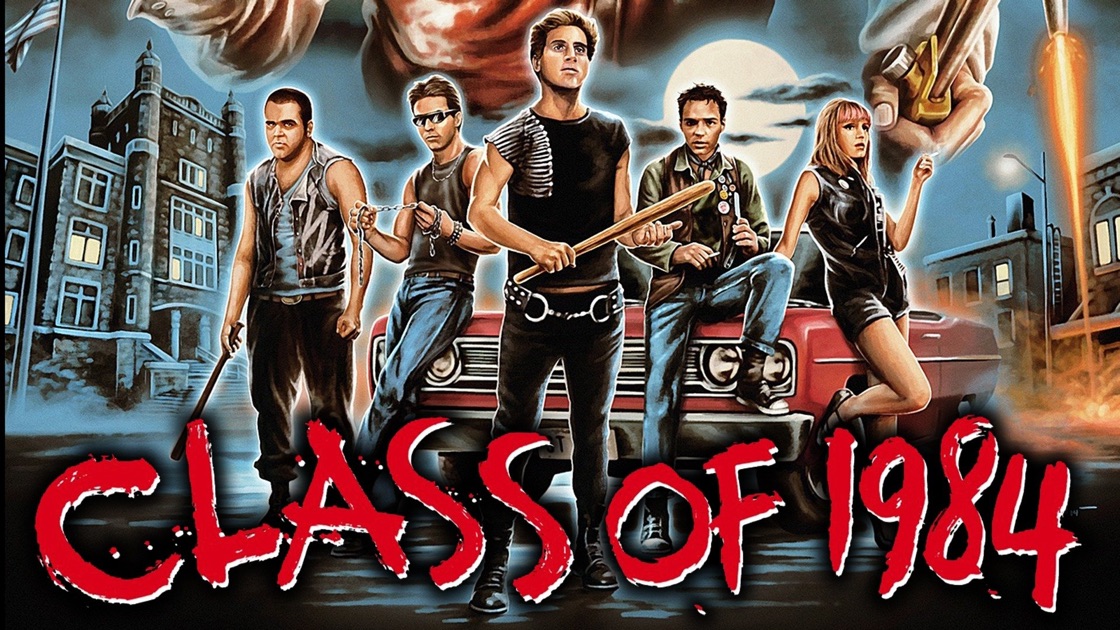
I remember school kids raving about this film when I was twelve. I really wanted to see it, but could never find it in the video shop or from the “pirate” video guy. The plot merges The Blackboard Jungle (1955) with Death Wish (1974), as Perry King’s music teacher attempts to soothe the savage beast of a gang of nasty punk students. He fails and the final act revenge-driven rampage is fantastically inventive and gory. Latterly famous director, a young Tim Van Patten, portrays the psychotic, Peter Stegman, with vicious zeal. A true exploitational classic. (Mark: 8 out of 11).
HELL NIGHT (1981)
This is one of those films I had never even heard of. With a sizeable budget of $1.4 million dollars for a slasher film, it concerns four college students, including a grown-up Linda Blair, spending the night in a creepy house as part of an initiation ritual. Unfortunately, there’s a psychotic killer about hellbent on hunting them down. We’ve seen it all before, but it was nicely filmed and had decent humour. Overlong but way better than I thought it would be. (Mark: 7 out of 11)
PHANTASM II (1988)
I reviewed the remastered version of Don Coscarelli’s low-budget masterpiece here, but only just got round to watching the sequel. Phantasm II (1988) had a bigger budget and suffers from some stodgy plotting. The re-casting of Mike with James Le Gros in the role throws you. Yet, once Mike and Reggie fight with the Tall Man (inimitable Angus Scrimm), the razor-sharp spheres and the hooded monsters, the film finds real pace. Coscarelli blows-up a lot of stuff and ramps up the weaponry, but the sequel lacks the twisted magic of the original must-watch horror fantasy, Phantasm (1979). (Mark: 6.5 out of 11)
TERROR TRAIN (1980)
Another unknown mini-gem I found on Amazon. This Canadian slasher film is, you guessed it, set on a train and finds, yes you guessed it again, college students getting picked off one-by-one by a vengeful psycho. Notable for a really good plot which gives the killer empathy and understandable motivation, it also stars everyone’s favourite final girl, Jamie Lee Curtis. With disguise and magic prevalent in the themes, David Copperfield also appears in a neat role. Highly entertaining with a killer twist. (Mark: 8 out of 11)
WHEN A STRANGER CALLS (1979)
Inspired by a famous urban legend, Fred Walton’s chilling suspense thriller has one of the most nail-biting opening twenty minutes in horror cinema. Carol Kane is the babysitter terrorized by a series of tense phone calls from a mystery ringer. From that terrifying start the story falters slightly as it focusses on Charles Durning’s obsessive search for the unhinged man. Only when Kane rejoins the film some years later does the horror rise up again in a truly frightening denouement. (Mark: 8.5 out of 11)
WILLARD (1971) / BEN (1972)
This was an odd one because I knew and seen the sequelBen (1972) when I was a younger. Little did I realise the original Willard (1971) had been released the year before and became a sleeper box-office hit. Bruce Davison is excellent as the introvert, Willard, who is bullied at work by his aggressive boss, Ernest Borgnine. Only when, and take a deep breath here, Willard trains an army of rats does he gain confidence to take on the world. It’s a weird film that actually works because of Willard’s fascinating character arc and Davison’s nuanced performance. (Mark: 8 out of 11)
The follow-up Ben (1972) focusses on Willard’s alpha rat, Ben, and his friendship with lonely kid, Danny. The sequel really raises the rat count and there appears to be thousands of them in their dirty lair. Danny is a likeable kid who suffers from a serious illness that prevents him from going out. Why he would make friends with a killer rat though is still frankly nuts! A lack of thrills and goofy premise make it difficult to recommend, and is more famous for the classic Michael Jackson hit called, surprisingly enough, Ben.(Mark: 6 out of 11)














 The Cinema Fix presents