Tag Archives: Movies

Horror film review round-up including: Black Phone 2 (2025), Companion (2025), Good Boy (2024), Presence (2025), Together (2025) and others. . .

Autumn Horror Film Reviews

In the languid drift of autumn, when Halloween’s shadow lengthens and winter begins its slow, expectant inhale, the world seems to slip into a more suggestive register—one where every rustling leaf feels like a whispered omen. It is, of course, the most appropriate season to surrender to the year’s latest horror releases, as though communing with these cinematic phantoms might prepare us—spiritually, aesthetically—for the deeper darkness to come.

Which basically means I have been catching up with some 2025 horror film releases I missed at the cinema during autumn. A couple of these probably warrant more in depth solo reviews, but as I edge closer to old age and the reaper’s scythe, I am economizing somewhat.

*** MAY CONTAIN SPOILERS ***


Black Phone 2 (2025)

Scott Derrickson and co-writer C. Robert Cargill deliver a sequel to The Black Phone (2021) with Mason Thames, Madeleine McGraw, Jeremy Davies, and Ethan Hawke reprising their roles from the first chiller. I actually enjoyed this one more than the original, which despite the clunky set-up, finds the siblings and others trapped in a teen camp hit by a blizzard. They find themselves hunted and haunted by both The Grabber (Hawke) and other ghostly spirits haunting the area. Derrikson throws a lot of horror tropes and the characters (literally in certain scenes) at the walls, and much of it sticks. Having said that, I still don’t think The Grabber is the scariest villain ever committed to screen, despite Hawke’s presence. (Mark: 7.5 out of 11)


Companion (2025)

Companion (2025) feels like Garland’s Ex Machina (2014) colliding elegantly with Fargeat’s feral Revenge (2017)—a sunny day-horror fable that hides its nastiest surprises in plain sight. Its twists are sharp, its aesthetic confident, and its ideas far more ambitious than its modest surface first suggests. I would have admired it even more were it not, on occasions, completely dumb. Plus, the occasional drift into a comedic register undercuts its more incisive moments. The beautiful Sophie Thatcher once again commands the screen with the same riveting presence she brought to Heretic (2024). Mark: 8 out of 11.


Graduation Day (1981)

Thanks to Bobby Carroll’s site for reminding me about slasher film, Graduation Day (1981), as I had completely forgotten about it. High quality kills and gore mask a screenplay which has more nudity than character development. Yet, I am a sucker for these 1980’s exploitation flicks and this is a watchable one. Mark: 6 out of 11


Good Boy (2025)

An low-budget horror film triumph with Ben Leonberg directing his own dog, Indy, a Nova Scotia Duck Tolling Retriever, as the only witness to nasty spirits threatening his owner. The film emerges as a formal tour-de-force, whose meticulous composition and deliberate pacing elevate its simple premise into something unexpectedly resonant. Its visual precision and rhythmic control shape an atmosphere of dread that feels more sculpted than sensational, grounding the film in an emotionally impactful narrative about loyalty, vulnerability, and the unsettling spaces between trust and fear. For all its craft, and impressive animal direction, the film doesn’t quite sustain a relentless menace throughout. But, it remains a memorable feature debut from Leonberg and Indy the dog. Mark: 8.5 out of 11.


Presence (2025)

In Presence (2024), David Koepp and Steven Soderbergh demonstrate just how potent a one-location horror film can be when discipline and imagination converge. The entire piece unfolds like a controlled exhale: a slow-build structure that trusts the audience to lean in, and a drifting, almost contemplative camera that adopts the ghost’s POV to quietly—sometimes imperceptibly—reveal fragments of the story. Instead of overplaying its hand, the film slow-drips its plot elements with an elegance that keeps tension suspended in the air, letting unease pool in the corners of an otherwise ordinary space. By the time it reaches its finale, Presence (2024) delivers not only a surge of emotional and thematic clarity but two genuinely surprising twists—earned, unsettling, and executed with the kind of precision that affirms both writer and directors’ mastery of the form. Mark: 8.5 out of 11.


Restless (2024)

Really good independent British thriller with Lyndsey Marshal as a nurse, Nicky, who finds herself terrorized by 24-hour partying thug neighbours. Writer-director Jed Hart creates great empathy and identification with the situation and it’s a shame decent British films like this get short shrift at the multiplexes. Nicky’s spiral into insomnia-driven madness is compelling as her desperate attempts to sleep give way to vengeance. But the film’s final act tonal turn denies us a full-on descent into suburban hell, for something amenable but unfortunately less twisted. Mark: 7.5 out of 11


The Rule of Jenny Pen (2025)

The Rule of Jenny Pen is an original, weird, and powerful shock of a film — a mash-up of psychological thriller and nursing-home horror that lands far more often than it stumbles. Its greatest strength is, without question, the towering performances at its centre. Geoffrey Rush and John Lithgow, two masters of calibrated gravitas, turn the film’s cat-and-mouse mind game into a gripping acting showcase. Together, they elevate the film’s themes of aging, vulnerability, and institutional neglect into something both unsettling and strangely beautiful. The plotting, however, does get a bit sticky toward the end. The final act jars slightly, causing me confusion in an otherwise tight psychological narrative. Still, even as the story wobbles a tad, the film’s originality, eerie tone, and powerhouse acting keep it compelling. Mark: 8 out of 11


The Woman in the Yard (2025)

The Woman in the Yard (2025) rises on the strength of Danielle Deadwyler’s commanding lead performance. As a mother trying to protect her two children from a funereal spirit lingering in their backyard, Deadwyler grounds the supernatural dread with raw emotional honesty. The child actors match her with a believable, lived-in family dynamic that makes the haunting feel all the more personal. Where the film falters is in its structure. The script leans heavily on crow-barred flashbacks that interrupt rather than enrich the unfolding tension. A more linear approach could have built a stronger emotional momentum, allowing the story’s grief, guilt, and mental illness to accumulate naturally instead of stuttering backward at key moments. (Mark: 6 out of 11)


Together (2025)

Together (2025) gets an immediate boost from the casting of real-life couple Alison Brie and Dave Franco, whose natural chemistry gives the film an authentic emotional core. As a pair trying to rebuild their relationship after moving from the city to a rural small town, they convincingly inhabit the tensions, resentments, and unspoken fears that surface long before the horror does. Their incompatible expectations feel lived-in — and once they tumble into a sinkhole and the strange bodily transformations begin, that emotional groundwork makes the nightmare hit harder.

I loved the trailer for this film, which promised a truly skin-crawling descent into body-horror chaos. The final product, while atmospheric and often engrossing, doesn’t fully deliver on that promise. It pulls back when it could push further, leaving some of the more disgusting, surreal possibilities off-screen. But the ending — bold, surprising and unexpectedly poignant — is a fantastic payoff. Even if the film doesn’t always reach the extremes it teases, Together still manages to leave a memorably twisted impression. Mark: 8.5 out of 11


To Boldly Review #16 – Star Trek: Enterprise (2001 – 2005) – Seasons 1-4

To Boldly Review #16 – Star Trek: Enterprise (2001 – 2005) – Seasons 1-4

Created by Rick Berman & Brannon Braga

Based on Star Trek by Gene Roddenberry

Showrunners: Brannon Braga (2001-2004) & Manny Coto (2004-2005)

Production companies: Paramount Network Television, Braga Productions & Rick Berman Productions

Selected writers: Brannon Braga, Rick Berman, Manny Coto, Mike Sussman, Phyllis Strong, Judith Reeves-Stevens, Garfield Reeves-Stevens, André Bormanis, Chris Black, David A. Goodman, Fred Dekker, and more.

Selected directors: Roxann Dawson, LeVar Burton, Robert Duncan McNeill, Allan Kroeker, David Livingston, Winrich Kolbe, James L. Conway, Mike Vejar, Michael Grossman, Marita Grabiak, Brennan Spencer, Michael S. Watkins, Vincenzo Natali, and more.

Main cast: Scott Bakula, John Billingsley, Jolene Blalock, Dominic Keating, Anthony Montgomery, Linda Park, Connor Trinneer etc.

Notable guest actors: Jeffrey Combs, Vaughn Armstrong , Gary Graham, Matt Winston, Randy Oglesby, James Cromwell, Brent Spiner, Daniel Dae Kim, Fionnula Flanagan, Robert Picardo, Tony Todd, Bruce Davison, Seth MacFarlane, Steven Culp, Noa Tishby, Rene Auberjonois, Peter Weller, Dean Stockwell etc.

Composer(s): Dennis McCarthy, Jay Chattaway, Brian Tyler, John Frizzell, Mark McKenzie, David Bell, Velton Ray Bunch, Kevin Kiner &
Paul Baillargeon

*** MAY CONTAIN SPOILERS ***


It’s been a while since I reviewed Star Trek on the site. But I have now finally completed the task I set myself to watch and review all the legacy Star Trek series. I am currently on the fence regarding the more recent Star Trek offerings. Anyway, having reviewed Voyager (see below) last year, I can now provide a detailed report back on Enterprise.


Star Trek: Enterprise occupies a fascinating corner of the franchise’s sprawling canon. Set a century before Kirk and more than a century after humanity’s first steps into spaceflight, the series charts the formative years of Starfleet—before there even was a “Starfleet” in the sense fans recognize. Its premise alone is rich: a pre-Federation frontier where humanity is inexperienced, unsteady, and often outmatched, yet eager to join a much larger galactic community. In this sense, Enterprise is both a prologue and a missing link, retrofitting the swaggering optimism of The Original Series with a more grounded, early-21st-century sensibility.

The show’s commitment to exploring those transitional years is what secures its place in canon. Enterprise seeds the diplomacy, technology, and interspecies tensions that future shows build upon—from the first warp-5 engine, to early encounters with Vulcans, Andorians, and the ever-shadowy Temporal Cold War. Watching Captain Jonathan Archer and his crew stumble toward the ideals later embodied by the Federation gives the series a distinctive historical weight. It doesn’t merely fit into Star Trek continuity; it actively sculpts the bedrock beneath it.

Central to the show’s appeal is Scott Bakula, whose performance as Captain Archer blends warmth, stubbornness, and a palpable sense of moral growing pains. Bakula gives Archer a grounded humanity that stands apart from the polished command styles of Picard or the passionate Sisko, yet his sincerity and resolve make him every bit their equal. When the writing rises to meet his talent—as in standout episodes like “Cogenitor,” “The Andorian Incident,” “Carbon Creek,” or the Xindi arc’s best moments—the show can reach the emotional and thematic heights of The Original Series and The Next Generation.


But Enterprise is also a series defined by uneven execution. For every episode that lands with classic-Trek resonance, there are others hampered by muddled plotting, bland direction, or creative decisions that feel more reactive than visionary. The show often struggled to decide whether it wanted to be a rough-edged prequel, a 2000s-era action drama, or a traditional episodic Trek—frequently trying to be all three at once. While it contains genuinely excellent science-fiction storytelling, its overall writing and directorial cohesion never consistently matched the clarity, ambition, or confidence of its most celebrated predecessors.

Yet despite its flaws, Star Trek: Enterprise remains an essential and often underrated part of the canon—a show whose best moments remind us exactly why Trek endures, and whose imperfections make its aspirations feel all the more human. Here are eight of the best episodes I watched – two per series.


Series 1 – The Andorian Incident (Episode 7)

This episode is the first truly great hour of Enterprise—the point where the show proves it can handle nuanced political storytelling within the Trek universe. The introduction of Jeffrey Combs as Shran is a masterstroke; he immediately brings depth, wit, and volatility to the Andorians. The plot, centered on Archer and his crew discovering that a supposedly pacifist Vulcan monastery is hiding darker secrets, reshapes our understanding of Vulcan–Andorian tensions. Strong direction, tight pacing, and a morally thorny reveal make this the first episode that feels essential to larger Star Trek canon.


Series 1 – Dear Doctor (Episode 13)

A thoughtful, character-driven story told through Dr. Phlox’s personal logs, “Dear Doctor” represents Enterprise at its most philosophically ambitious. It confronts the ethics of medical intervention, cultural evolution, and the limits of humanitarian aid—classic Trek territory handled with sensitivity and restraint. John Billingsley delivers one of the best performances of the season, infusing Phlox with curiosity, compassion, and unsettling pragmatism. The episode’s controversial ending also resonates, sparking debate among fans and critics alike. It’s a quietly powerful hour that demonstrates the series’ potential for moral complexity.


Series 2 – Carbon Creek (Episode 2)

Widely regarded as the highlight of Season 2—and for many, the best Enterprise episode of its first two years—“Carbon Creek” is a charming, unexpectedly heartfelt detour into Trek history. Told by T’Pol as a possibly-true, possibly-mythic story, it follows a stranded Vulcan survey team living incognito in 1950s Pennsylvania. The fish-out-of-water premise is handled with warmth, humour, and subtle social commentary, while Jolene Blalock shines in a dual role that lets her explore a softer, more playful Vulcan persona. It’s imaginative, character-rich, and quietly profound—the kind of tonal experiment that pays off beautifully.


Series 2 – Regeneration – (Episode 23)

A tense, surprisingly effective prequel to The Next Generation’s Borg storyline, “Regeneration” threads a tricky needle: introducing Borg elements without breaking canon. The episode smartly uses the wreckage from Star Trek: First Contact as its entry point, turning the narrative into a chilling, atmospheric thriller. The direction is sharp, the pacing taut, and the danger feels unusually real for this era of Trek. The crew’s desperation—fighting an enemy they can’t possibly understand—creates some of the season’s most gripping moments. It’s both fan-pleasing and genuinely suspenseful.


Series 3 – Twilight – (Episode 8)

Often cited as the masterpiece of Season 3, “Twilight” is a time-bending character drama that blends emotional storytelling with classic Trek sci-fi ingenuity. When Archer becomes afflicted with a neurological condition that erases his short-term memory, the episode jumps forward into an alternate future where humanity has been nearly wiped out by the Xindi. What follows is a surprisingly intimate exploration of Archer and T’Pol’s relationship, played with sincerity and restraint by Scott Bakula and Jolene Blalock. The script balances tragedy, hope, and big ideas without feeling gimmicky. It’s moving, tightly written, and stands alongside the franchise’s finest “what-if” stories.


Series 3 – Azati Prime – (Episode 18)

“Azati Prime” is the moment Season 3’s slow-burn storytelling snaps into urgent, high-stakes clarity. The episode follows Archer’s attempted suicide mission to destroy the Xindi superweapon, giving Scott Bakula one of his strongest performances in the entire series. The moral weight is heavy, the action tense, and the pacing relentless. Crucially, this is where the Xindi cease being abstract antagonists and become three-dimensional political factions torn between fear and diplomacy. The episode’s final act—Enterprise under brutal assault—is among the most cinematic sequences the series ever produced, setting up the endgame of the season with real emotional gravity.


Series 4 – United – (Episode 13)

“United” is Enterprise finally fulfilling its prequel potential—showing the messy, reluctant, and hard-fought beginnings of what will eventually become the United Federation of Planets. The political maneuvering is smart and grounded, the Andorian–Tellarite tension is played with grit and humor, and Jeffrey Combs delivers another magnetic performance as Shran. The episode’s centerpiece—the Andorian duel where Archer must fight to prevent a larger war—is tense, dramatic, and deeply character-driven. It’s classic Trek diplomacy mixed with riveting conflict, all while pushing the franchise’s history forward in meaningful ways.


Series 4 – In a Mirror, Darkly – (Episodes 18–19)

One of the most stylish and purely fun stories Enterprise ever told, this two-parter fully embraces the decadent brutality of the Mirror Universe. The production team goes all-in: redesigned sets, re-imagined uniforms, a pulpy remixed title sequence, and a stunning recreation of the USS Defiant from The Original Series. The cast seems to relish the opportunity to play villainous, unhinged versions of their characters—especially Jolene Blalock and Connor Trinneer. Visually bold, lore-rich, and brimming with dark humour, “In a Mirror, Darkly” is a love letter to both TOS and long-time Trek fans.


Cult Film Review: Entertainment (2015) at The Nickel Cinema, London

Cult Film Review: Entertainment (2015) at The Nickel Cinema


The Nickel Cinema in Clerkenwell feels like a hidden temple for London’s true film obsessives — a grindhouse gem tucked into the city’s polished heart. It’s the kind of place where the air hums with cigarette ghosts and celluloid dreams, where the screen flickers with everything from outlaw art films to midnight slashers and sleazy euro-thrillers. The décor has that lived-in, clandestine vibe — red velvet worn thin, neon bleeding through the dark, and an underground bar serving the kind of cocktails that taste like trouble.

It’s not just a cinema — it’s a refuge for the subversive, the cultish, the weird and the wonderful. You’ll find Anger next to Fassbinder, Fulci, Lynch, Jodorowsky, Korine, Ferrara, Argento, Waters, Kern, Miike, Ferrara, Korine Noe, Cohen, Breillat, Refn and many more bleeding into audiences who actually cheer when the projector rattles. The Nickel doesn’t chase trends; it worships the offbeat, the forgotten, and the dangerous. While feeling still quite new, the place somehow still feels gloriously dirty — and absolutely right up your alley. If not there is a strip club next door if that kind of business takes your fancy.

Check out their website for the latest screenings here: https://thenickel.co.uk/


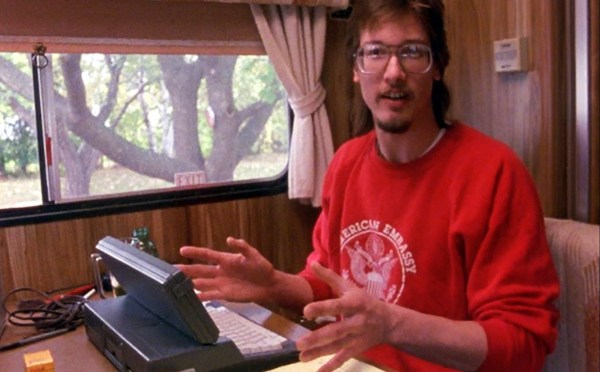
Last month I watched Rick Alverson’s Entertainment (2015) at The Nickel Cinema.

Entertainment is like watching the American dream rot in real time — a hypnotic, desolate odyssey through the dust and despair of the open road. Gregg Turkington is excellent as he plays “The Comedian,” a hollowed-out version of his Neil Hamburger persona, trudging through a series of soul-scorching stand-up gigs in half-empty bars, bowling alleys, and desert motels. Each performance is a small act of self-immolation — jokes that fall flat, laughter that curdles, a man dissolving behind the microphone as his identity blurs into the toxic sludge of showbiz delusion.

Director Rick Alverson shoots it all with a slow, clinical beauty — wide, frozen frames that turn America’s forgotten corners into alien landscapes. “The Comedian” drifts from neon-soaked diners to sulfurous desert plains, to prisons, to dead Western towns. Further, it contains some incredible locations including an unforgettable sequence at an aircraft graveyard — rows of dead machines basking in the sun, like monuments to ambition and decay. While low in budget the film makes use of such stunning locales, plus impactful acting interludes from John C. Reilly, Michael Cera and Tye Sheridan.

The film is not a comedy, not really — more anti-comedy or like an autopsy of one. Entertainment (2015) is a brutal, mesmeric study of loneliness, alienation, and the sick joke at the heart of performance itself. It’s the road movie as existential purgatory — unbearably awkward, strangely poetic, and utterly unforgettable. It doesn’t so much as have a beginning, middle and end, but a series of events which we are dropped into and experience until the credits suddenly roll. I like to ponder “The Comedian” is still out there, living and dying, on and off stage.

Mark: 8 out of 11


Halloween Review Special: Werewolf Films – Part #2

Halloween Review Special: Werewolf Films – Part #2

Happy Halloween again! Part 1 of my Werewolf film reviews can be found here on this link. So, on with Part #2 with all films marked out of 11!

*** CONTAINS SPOILERS ***


Ginger Snaps (2000)

Ginger Snaps (2000) is a rare and refreshing take on the werewolf myth, shifting the focus to the female experience with wit and bite. As the awkward Bridget, Emily Perkins gives a wonderfully grounded performance, desperately trying to save her sister Ginger after a fateful wolf attack. Cleverly linking the lunar and menstrual cycles, the film transforms body horror into a sharp coming-of-age allegory. Smart, sexy, and darkly funny, it’s packed with gallows humour, fantastic gore, and a subversive energy that makes it one of the standout horror films of its era. Mark: 9 out of 11


Howl (2015)

Howl (2015) is an underrated British werewolf gem that feels like Dog Soldiers (2002) set on a train — claustrophobic, gritty, and laced with dark humour. Ed Speleers plays a weary, beta-male guard whose routine night shift derails into a fight for survival when the train breaks down in the woods. As tensions rise among the stranded passengers, he’s forced to find his courage against something far more terrifying than “leaves on the line.” Mark: 8.5 out of 11


The Howling (1981)

Joe Dante’s The Howling (1981) may now feel almost plotless in retrospect, but it remains a deliriously inventive slice of horror cinema. The film thrives on unforgettable set-pieces and grotesque energy — from a chillingly unrecognisable Robert Picardo as the predatory Eddie Quist to Elisabeth Brooks’ hypnotic, sensual menace. Dee Wallace delivers a strong turn as the quintessential scream queen, leading to an unintentionally funny change at the end, while Rob Bottin’s groundbreaking transformation effects still stand among the genre’s finest. Mark: 8 out of 11


Red Riding Hood (2011)

A messy yet oddly entertaining blend of Twilight-style romance, fairy-tale gothic, and werewolf whodunnit. Amanda Seyfried glows at the center of the melodrama, giving the film more heart than it deserves, while Gary Oldman chews through his lines — and the scenery — with the gusto of a man earning a very comfortable Hollywood paycheck. Mark: 5.5 out of 11


Silver Bullet (1985)

Silver Bullet (1985) carries many of the familiar hallmarks of Stephen King’s storytelling — small-town paranoia, moral rot beneath the surface, and a sense of homespun Americana under siege — but lacks the sharpness of stronger King adaptations. While it holds a nostalgic charm for 1980’s horror fans, thanks to its mix of pulp, sentimentality, Gary Busey-on-butane, and Corey Haim’s spirited performance, it’s far from essential and not one of my go-to werewolf films. Mark 6.5 out of 11


Teen Wolf (1985)

I’m ashamed to admit I’d never seen Teen Wolf (1985) until now — but it’s a charming coming-of-age comedy that finds Michael J. Fox as Scott Howard, a teenager who discovers a very hairy family secret. Scott juggles puberty, romance, bullies, and basketball glory. The adults are enjoyably eccentric, but it’s James Hampton as Scott’s warm, understanding father who grounds the film with genuine heart. Mark 7 out of 11


Werewolves (2024)

Werewolves (2024) boasts an intriguing premise — scientists racing to cure humanity of a wolf-mutant virus unleashed under a supermoon — and delivers plenty of muscular action-horror energy. Frank Grillo anchors the nocturnal mayhem with his trademark grit, like a U.S. Statham. It’s entertaining, but the world-building feels rushed, as if we’ve dropped into the sequel to an origin story that doesn’t exist yet. Mark 6 out of 11


Werewolves: The Beast Amongst Us (2012)

Werewolves: The Beast Amongst Us (2012) is an entertaining but clearly made-for-TV creature feature that feels like a bargain-bin mashup of Stephen Sommers’ The Mummy and Van Helsing — all gothic flair and monster mayhem, but without the budget, stars, or polish. Still, its pulpy enthusiasm and old-school monster-hunting energy make it a mildly fun watch for fans of B-movie beast action. Mark 6 out of 11


Werewolves Within (2021)

Werewolves Within (2021) has a sharp, witty script packed with humour and clever twists, but its over-the-top direction and eccentric ensemble make it hard to fully connect with. Sam Richardson shines as the affable Forest Ranger caught amid a group of oddball townsfolk — and a monster on the loose. Fast-paced, funny, and gory, it plays like Tremors set in the snow — just without the magic that made that classic so effortlessly great. Mark 7 out of 11


Wolf (1994)

Wolf (1994) suffers from an under cooked corporate-werewolf concept that never quite decides if it wants to be a horror film, a romance, or a satire — and ends up failing at all three. Jack Nicholson and Michelle Pfeiffer, both usually magnetic, seem oddly disengaged under Mike Nichols’ overly restrained direction. The film has flashes of intrigue and style, but it lacks bite; James Spader, simmering with sleaze and menace, could have stolen the show if only he’d been let off the leash. Mark: 6 out of 11


Wolfcop (2014)

WolfCop (2014) is a gloriously bonkers B-movie romp about an alcoholic small-town cop, Lou Garou (Leo Fafard), who becomes a werewolf and stumbles into a plot of witchcraft and sacrifice. Director Lowell Dean brings wild energy and gleeful chaos to the mix, delivering gory action and sharp humor that far outshine the film’s modest budget. It’s ridiculous, rowdy, and an absolute blast from start to finish. Mark: 7.5 out of 11


The Wolf Man (2010)

The Wolfman (2010) is a stylish, brooding gothic remake elevated by Rick Baker’s stunning creature effects and an atmosphere dripping with fog, blood, and tragedy. On rewatch, it’s far more enjoyable than it first seemed, with Benicio Del Toro and Emily Blunt grounding the film’s emotional heart while Anthony Hopkins bellows through his expositional monologues with Shakespearean gravitas. The production design, lighting, and Danny Elfman’s sweeping score are all superb, but the film’s flaws are clear — studio meddling and re-shoots leave the opening character setup feeling rushed and the narrative uneven, hinting at a richer version lost to the editing room. Mark: 7 out of 11


Wolf Man (2025)

For fans of Upgrade (2018) and The Invisible Man (2020), Wolf Man may feel like a missed opportunity. Those films balanced high-concept storytelling with sharp social commentary, whereas Leigh Whannell’s latest effort feels more like a half-formed howl in the night. See my full review here. Mark: 6.5 out of 11


The Wolf of Snow Hollow (2020)

The Wolf of Snow Hollow (2020) delivers an effective monster story filtered through Jim Cummings’ uniquely neurotic, darkly comedic lens. Cummings stars as a frazzled small-town cop juggling alcoholism, a dementia-stricken father, and a teenage daughter — all while a vicious creature tears through the community. It’s an offbeat, entertaining indie horror with sharp writing, emotional bite, and a fantastic twist buried in the chaotic narrative pile-up of its finale. Mark 8 out of 11


The Wolfman (1941) / Frankenstein meets The Wolfman (1943)

Lon Chaney Jr. has always been my favorite tragic werewolf — a figure of deep sadness and empathy rather than pure monstrosity. I grew up watching those classic Universal horror films, and his portrayal of Larry Talbot still resonates as one of cinema’s most heartbreaking depictions of the cursed outsider. There’s a weary humanity to Chaney’s performance, a sense of a man doomed to repeat his suffering under the full moon, forever torn between guilt and fate.

While the scripts in those early Wolf Man films are often simple and melodramatic, their emotional weight endures thanks to Chaney’s sincerity and Jack Pierce’s groundbreaking makeup effects. Pierce’s work transformed the genre, creating an iconic design that remains unmatched in its tactile, hand-crafted artistry. Together, Chaney and Pierce gave the werewolf myth its soul — one that was less about savagery, and more about the tragedy of being human within a cursed lunar cycle. Mark: 9 out of 11


Halloween Review Special: Werewolf Films – Part #1

Halloween Review Special: Werewolf Films – Part #1

Happy Halloween! As loyal readers of this blog will know I am a massive horror film fan. Therefore I have focused August’s viewing on the Werewolf sub-genre and present some short reviews of some of my favourites and some not so good. As usual all marked out of 11!

Werewolf films have long captivated both filmmakers and audiences because they tap into primal fears and psychological complexities that transcend genre. At their core, these stories explore the theme of transformation—both physical and psychological—which resonates deeply with viewers. The metamorphosis from human to beast is not just a spectacle of horror; it’s a metaphor for the loss of control, the unleashing of suppressed desires, and the tension between civilization and instinct. This duality offers rich narrative terrain for directors and screenwriters to explore identity, morality, and the boundaries of human nature.

Psychologically, the werewolf embodies the Freudian concept of the id—the raw, instinctual part of the psyche driven by aggression and desire. The human persona represents the ego, trying to mediate between the id and the constraints of society, or the superego. When the transformation occurs, the id overwhelms the ego, resulting in violent, animalistic behavior that defies social norms. This internal conflict is dramatized through the werewolf’s struggle to reconcile their human conscience with their monstrous impulses, making the character both terrifying and tragically relatable.

The tension between animal and human also reflects broader cultural anxieties. Werewolf films often surface during times of social upheaval, when questions about identity, repression, and conformity are especially potent. The creature’s split identity—man or woman by day, beast by night—mirrors the psychological fragmentation many experience in modern life. For filmmakers, this duality offers a visual and thematic playground: the grotesque transformation scenes, the haunting aftermath, and the moral ambiguity of the protagonist all contribute to a compelling cinematic experience. For audiences, the werewolf is not just a monster—it’s a mirror, reflecting the parts of ourselves we fear, repress, and sometimes secretly crave to unleash.


American Werewolf in London (1981)

One of the greatest lycanthrope films of all time. Full of iconic scenes, scares, gore, jokes, sex and an incredible lunar-inspired soundtrack. John Landis, in a directorial purple patch at the time, managed to combine horror, comedy, mystery and a moving love story to memorable impact. Rick Baker’s make-up effects literally transformed further the art and craft of practical special effects going forward. Mark: 10 out of 11


Bad Moon (1996)

Truly dreadful film with a script that fails on most levels, notably logic. The beast is not only the werewolf in the guise of Michael Paré’s Uncle Ted, but also toxic masculinity. Single mum, Mariel Hemingway and her son spend most of the film failing to guess who the big bad wolf is until it is nearly too late. Mark: 3 out of 11


The Beast Must Die (1974)

So bad it’s almost good! The British studio, Amicus Productions, wolf-dunnit, even has the audience take a “werewolf break” where they get 30-seconds to work out who the monster is. Calvin Lockhart, Michael Gambon, and Tom Chadbon et al chew up the scenery, washing it down with bloody terrible effects. The budget was so low they had to use German Shepherd’s with mock fur as the werewolves. Mark 6 out of 11.


The Company of Wolves (1984)

Neil Jordan’s artful adaptation of Angela Carter’s short stories is a richly atmospheric triumph of mood. Though the film’s episodic structure and bookending narrative can feel a touch uneven, Jordan’s poetic direction and Carter’s dreamlike sensibility merge into something intoxicatingly strange. An excellent ensemble of character actors brings the fable-like vignettes to life, with Angela Lansbury delivering a particularly commanding and memorable turn. Mark 8 out of 11


Cursed (2005)

Wes Craven’s 2005 film The Cursed is a case where the behind-the-scenes turmoil proves far more frightening than the movie itself. A troubled production that saw Craven effectively abandon ship midway through, and it bears the scars of hasty reshoots and studio meddling. What emerges is a patchy, uneven werewolf tale with flashes of potential buried beneath the chaos. Still, a young Jesse Eisenberg lends surprising depth to the material, offering a glimpse of quality amid the hairy dross. Mark: 4 out of 11


The Cursed (2021)

Sean Ellis’s The Cursed (2021) delivers a potent blend of gothic grandeur and visceral horror, transforming familiar werewolf and Gypsy tropes into something deeply atmospheric and unsettling. With its striking visuals, meticulous period detail, and haunting score, the film conjures an eerie, painterly world where the sins of the past literally come back to bite. Beneath the blood and fog lies a thoughtful allegory about greed and the gentry’s theft of land, lending the stylish horror a surprising moral weight and emotional resonance. Mark: 8 out of 11


The Curse of the Werewolf (1961)

Hammer’s The Curse of the Werewolf (1961), is anchored by a powerful, brooding performance from Oliver Reed in his breakout role. A staple of my childhood viewing, it’s a film that surprises with its thoughtful set-up—using its Spanish setting to critique class divisions while evoking real empathy for Reed’s tragic, cursed Wolfman. The gothic atmosphere and emotional depth elevate it above typical monster fare, and Warren Mitchell’s turn as a Spanish watchman adds an unexpected and delightful touch of humour amid the savage murders. Mark: 7.5 out of 11


Dog Soldiers (2002)

Neil Marshall’s Dog Soldiers (2002) is an absolute gem of British horror and easily one of my favourites of the genre. Set in the misty isolation of the Scottish Highlands, it combines gritty military camaraderie with ferocious werewolf mayhem to brilliant effect. Kevin McKidd, Sean Pertwee, and Liam Cunningham are all superb, grounding the film with sharp performances that balance humour, heart, and genuine terror. Funny, moving, bloody, and properly scary, Dog Soldiers is a masterclass in doing a lot with a little—its creature effects and atmosphere are astonishing given the budget. A true modern classic that respects the genre with intelligently terrifying monsters and the film still howls with lunar power. Mark: 10 out of 11


To be continued. . .

Apple TV+ Film Review: Highest 2 Lowest (2025) – a vibrant, musical and pacy, if unnecessary, remake.

Apple TV+ Film Review: Highest 2 Lowest (2025)

Directed by Spike Lee

Screenplay by Alan Fox

Based on High and Low (1963 film) by Akira Kurosawa, Hideo Oguni,
Ryūzō Kikushima, Eijirō Hisaita, and King’s Ransom (1959 novel) by Ed McBain.


Produced by Todd Black and Jason Michael Berman

Main cast: Denzel Washington, Jeffrey Wright, Ilfenesh Hadera, ASAP Rocky, John Douglas Thompson , Dean Winters, LaChanze, Aubrey Joseph, etc.

Cinematography by Matthew Libatique


Spike Lee’s Highest 2 Lowest (2025) is a kinetic, vividly modern reimagining of Akira Kurosawa’s High and Low (1963), transplanting the Japanese master’s class-conscious thriller into the bustling, chaotic pulse of contemporary New York City. As expected from Lee, the film bursts with visual flair and political verve — the camera rarely rests, and the city itself becomes a character, glowing with heat, colour, and tension. The streets hum with energy, from glassy penthouses to subway platforms, creating a dynamic canvas on which the moral dilemmas unfold.

Denzel Washington, as usual, delivers a commanding performance as David King, a renowned independent producer and record label owner, torn between his conscience and his ambition when the kidnapping of his son occurs. Washington captures both the quiet torment and moral exhaustion of a man staring down the gulf between his privilege and his humanity. Jeffrey Wright, offers great support as his friend and chauffeur. The narrative navigates class and corporate tensions, bringing a soulful intelligence to every scene, grounding the film’s intensity with empathy and authority.


The film moves at a thrilling pace, carried by a propulsive soundtrack that fuses hip-hop, jazz, and gospel with Lee’s trademark flair for musical storytelling. Nowhere is this energy more palpable than in the ransom handover sequence — a masterclass in direction and editing — cutting feverishly across New York’s boroughs and metro trains, while the Puerto Rican Day Parade swells in a euphoric, near-operatic crescendo. It’s a breathtaking montage that exemplifies Lee’s command of rhythm, geography, and social texture. It proves to be Highest 2 Lowest (2025)’s biggest high.

Where Highest 2 Lowest (2025) falters is in the handling of its central moral crisis, which in turns undermines the all-to-rapid ending too. Indeed, it seemed to be missing a betrayal twist for me. The decision David King must make — the film’s spiritual core — arrives and resolves too swiftly around the midpoint, leaving the second half conflict, after the exhilarating Puerto Rican Day Parade, more focused on wrapping up loose ends quickly than psychological reckoning. It’s a missed opportunity for the deeper character study that Kurosawa’s original sustained so brilliantly.

Still, as an adaptation, Lee’s film is an entertaining piece of work — bold, stylish, and alive with the contradictions of the modern city. While Kurosawa’s High and Low (1963) remains the more compelling exploration of social class and moral responsibility, Highest 2 Lowest (2025) finds its own voice: vibrant, urgent, and unmistakably Spike Lee.

Mark: 7 out of 11


Cinema Review: The Smashing Machine (2025) – an authentic portrait of a MMA fighter that hits big!

Cinema Review: The Smashing Machine (2025)

Directed by Benny Safdie

Written by Benny Safdie

Based on documentary The Smashing Machine: The Life and Times of Extreme Fighter – Mark Kerr by John Hyams

Produced by Benny Safdie, Dwayne Johnson, Eli Bush, Hiram Garcia, Dany Garcia & David Koplan

Main cast: Dwayne Johnson, Emily Blunt, Ryan Bader, Bas Rutten, Oleksandr Usyk etc.

*** MAY CONTAIN SPOILERS ***


Benny Safdie’s The Smashing Machine (2025) is a bruising, compassionate, and unvarnished portrait of a man torn between physical dominance and emotional fragility. Centered on a three-year stretch (early 2000s) in the dramatic life of MMA pioneer Mark Kerr, the film captures both the bone-rattling intensity of the ring and the private turmoil of a fighter whose greatest battles unfold far from the crowd’s roar.

Dwayne Johnson delivers a revelatory performance as Kerr, casting aside his blockbuster charisma to reveal deep vulnerability and conflict. His portrayal is raw, unguarded, and humane—showing a man both addicted to the high of combat and trapped by the pain that follows. The film traces Kerr’s tumultuous relationship with Dawn Staples (played with nuance and sensitivity by Emily Blunt.) Together they find emotional truth in every scene, exploring the strain that MMA fighting, addiction, mental health, fear-of-losing, obsession and self-doubt place on intimacy.


The fight sequences are stunningly authentic, shot with kinetic immediacy and documentary realism. Safdie immerses the audience in the grit and chaos of early MMA, where glory was fleeting and paydays were meager compared to the sport’s modern era. Supporting performances from real fighters Ryan Bader and Oleksandr Usyk lend further credibility, grounding the film in the texture of lived experience.

Safdie’s direction is as intense and uncompromising as his subject. He resists the traditional rise-and-fall sports narrative, opting instead for a slice-of-life, near-documentary approach that prizes authenticity over heart-pounding drama. If the conflict surrounding Kerr’s addiction, rehab, and Dawn’s own mental health struggles feels under-explored, that restraint is also what makes the film feel so painfully real.

Inspired by the documentary, The Life and Times of Extreme Fighter – Mark Kerr by John Hyams, The Smashing Machine (2025) isn’t a conventional sports movie—it’s a portrait of survival, identity, addiction and the brutal intersection of ambition and vulnerability. Unflinching and deeply human, it cements Johnson’s performance as the best of his career, and confirms Safdie’s gift for finding poetry in the MMA fight scene. Ultimately, the film works best as a tribute to the trailblazing strength and passion of the fighter, Mark Kerr. The fight game is a crazy, tough business and it’s heartening to see, especially in the final scenes, that Kerr survived such battles and lived to breathe another day.

Mark: 8 out of 11


Cinema Review: The Long Walk (2025) – a compelling adaptation of Stephen King’s anti-war allegory!

Cinema Review: The Long Walk (2025)

Directed by Francis Lawrence

Screenplay by JT Mollner

Based on The Long Walk by Stephen King

Produced by Roy Lee, Steven Schneider, Francis Lawrence, Cameron MacConomy

Main Cast: Cooper Hoffman, David Jonsson, Garrett Wareing, Tut Nyuot, Charlie Plummer, Ben Wang, Roman Griffin Davis, Joshua Odjick, Judy Greer, Mark Hamill etc.

Cinematography by Jo Willems

*** MAY CONTAIN SPOILERS ***


This compelling and moving anti-war film was adapted from the Stephen King novel, The Long Walk (1979), originally published under his pseudonym, Richard Bachman. The story is set in a dystopian alternative version of the United States ruled by a totalitarian regime; a new military-driven world order. The plot follows the fifty young male contestants of a gruelling annual walking contest, who must follow a set of rules or face the grim consequences. Ultimately, most of their fates are doomed as only the last boy standing gains the prize.

As an aside, I often wondered why King published under a pseudonym and after a quick net search I found that the author was limited to publishing one book per year, since publishing more would be “unacceptable” to the public. King therefore wanted to write under another name in order to increase his publication without saturating the market for the King “brand”. So, there you go. But what of The Long Walk (2025)? How does it compare to the plethora of other King film adaptations?


Grim, unrelenting, and devastatingly poignant, The Long Walk (2025) transforms a brutal endurance contest into an unmistakable anti-war allegory. Fifty young men, each plucked from a different state, march forward under the banner of national pride and promised glory — but what unfolds is the slow annihilation of their bodies and spirits. The premise, simple on the surface, becomes a searing critique of how nations sacrifice youth for power, money, and hollow ideals.

The film thrives on the camaraderie and conflict between the boys: fleeting alliances form, bitter rivalries crack open, and in moments of exhaustion or terror, we glimpse the fragile humanity beneath their forced bravado. Echoes of The Hunger Games franchise, also directed by Francis Lawrence, are impossible to miss. However, this story clearly influenced The Hunger Games and other examples of survivalist literature. Yet, The Long Walk (2025) is way more rawer, more intimate, and ultimately more scathing in its indictment of systemic cruelty.

Among the excellent ensemble cast, Cooper Hoffman as Ray and David Jonsson as Peter emerge with standout performances. Their characters, drawn together in unlikely connection, add emotional depth to the carnage, grounding the relentless attrition in genuine feeling. As their bond develops, the horror of the “Walk” feels sharper, the futility more unbearable. Overall, aside from slight repetition of action and an ending I’d have preferred to have gone a different way, The Long Walk (2025) carries hypnotic and bloody power. It is both a war story without a battlefield and a coming-of-age tale without the promise of adulthood — a haunting testament to how societies can destroy their own sons in pursuit of an impossible prize.

Mark: 8.5 out of 11


Cinema Review: Dangerous Animals (2025) sprays ‘Jaws’-dropping and bloody thrills!

Cinema Review: Dangerous Animals (2025)

Directed by Sean Byrne

Written by Nick Lepard

Produced by Troy Lum, Andrew Mason, Pete Shilaimon, Mickey Liddell, Chris Ferguson & Brian Kavanaugh-Jones

Main Cast: Hassie Harrison, Josh Heuston, Rob Carlton, Ella Newton, Liam Greinke, Jai Courtney etc.

Cinematography by Shelley Farthing-Dawe

*** MAY CONTAIN SPOILERS ***


Set amidst the golden beaches and deep blue sea of the Gold Coast, Australia, the film begins with boat captain, Tucker (Jai Courtney) springing a shocking and literal tourist trap. The film then moves onto establishing a fledgling romance between surf drifter, Zephr (Hassie Harrison) and local office clerk, Moses, (Josh Heuston). What then follows is a brutal and gory thriller which had me on the edge-of-my-popcorn throughout. It also once again proves that human beings are more of a threat than the actual big fish in the sea.

Dangerous Animals (2025) consistently delivers thrills thanks to Nick Lepard’s witty, nasty script and two standout performances. Hassie Harrison shines as a gutsy fighter who refuses to play the victim, while Jai Courtney both embodies and skewers the Aussie male stereotype in a scenery-chewing turn sharper than a shark’s jaws. His hulking frame, blunt verbals and piercing looks emulate a predatory fearfulness throughout creating one of the most memorable screen villains in recent years.

After watching the trippy Kafkaesque Nicolas Cage beach thriller not long ago, The Surfer (2024), I found Australian toxic masculinity once again raising its head with blood and bite in the Jaws-meets-Silence of the Lambs suspense thriller. Dangerous Animals (2025) isn’t without minor plot snags, but ultimately Lepard’s twisted script ensures we care about the leads, weaving a believable romance amid tense shark attacks and sea-sprayed suspense. Director, Sean Byrne, orchestrates the shark and human action brilliantly on a relatively low budget, ensuring the result is a lean, bloody, and entertaining ride that bites down hard and doesn’t let go.

Mark: 8 out of 11


Sky Cinema Review: A Different Man (2024) – a multi-faceted character study on inner and outer identity.

SKY CINEMA REVIEW: A DIFFERENT MAN (2024)

Directed by Aaron Schimberg

Written by Aaron Schimberg

Produced by Christine Vachon, Vanessa McDonnell & Gabriel Mayers

Main cast: Sebastian Stan, Renate Reinsve, and Adam Pearson.

Cinematography by Wyatt Garfield

*** MAY CONTAIN SPOILERS ***


Few films in recent years feel as startlingly original as A Different Man (2024) —and yet, paradoxically, it’s a film made almost entirely from borrowed pieces. Aaron Schimberg’s latest begins as a bracing character study, anchored by Sebastian Stan’s Edward Lemuel, a socially awkward, struggling actor whose neurofibromatosis manifests in a disfiguring facial condition. These early passages are its strongest: Edward’s halting existence, his quiet desperation, disintegrating ceiling and the unnerving, tactile authenticity of his world call to mind the seedy New York grit of Abel Ferrara and Frank Henenlotter.

But just as the viewer settles into this world, the film veers via a sci-fi twist. An experimental procedure transforms Edward’s face, and with it, the narrative mutates. Suddenly we’re in a Woody Allenesque romantic entanglement—wry, neurotic, and tinged with irony—as Edward’s new identity draws him into a triangular relationship with Renate Reinsve as Ingrid and Adam Pearson as Oswald. Oswald also has neurofibromatosis, but has a confidence and popularity that Edward envies. As Oswald usurps Edward’s place in the off-Broadway play Ingrid is directing the film’s tone teeters between comedy and cruelty.


From there, A Different Man (2024) shape-shifts yet again. The third act discards linearity for a fragmented, Charlie Kaufmanesque unraveling: episodic bursts, narrative cul-de-sacs, and surreal detours that question not just Edward’s identity but the film’s own. It’s at once exhilarating and frustrating. Schimberg seems intent on deconstructing his own story midstream, leaving us with shards of multiple films rather than one fully integrated work. The ending works artistically but could, for me, have been way more dramatic with Edward confronting Oswald for, in his neurotic mind, stealing his life and identity.

That tension—between raw originality and homage—defines A Different Man (2024). It begins with remarkable clarity and empathy, only to succumb to a kind of cinematic identity crisis. Nonetheless, the film is very funny and moving and the themes are also very thought-provoking. Further, the script, direction and performances, especially from Sebastian Stan and Adam Pearson, make the film consistently compelling. Indeed, even in its unevenness, it remains one of the most daring and distinctive works of the past few years: a film that refuses to be just one thing, even if that refusal undermines certain dramatic potential.

Mark: 8.5 out of 11