Romford Horror Film Festival & The Cannibal Man (1972) review
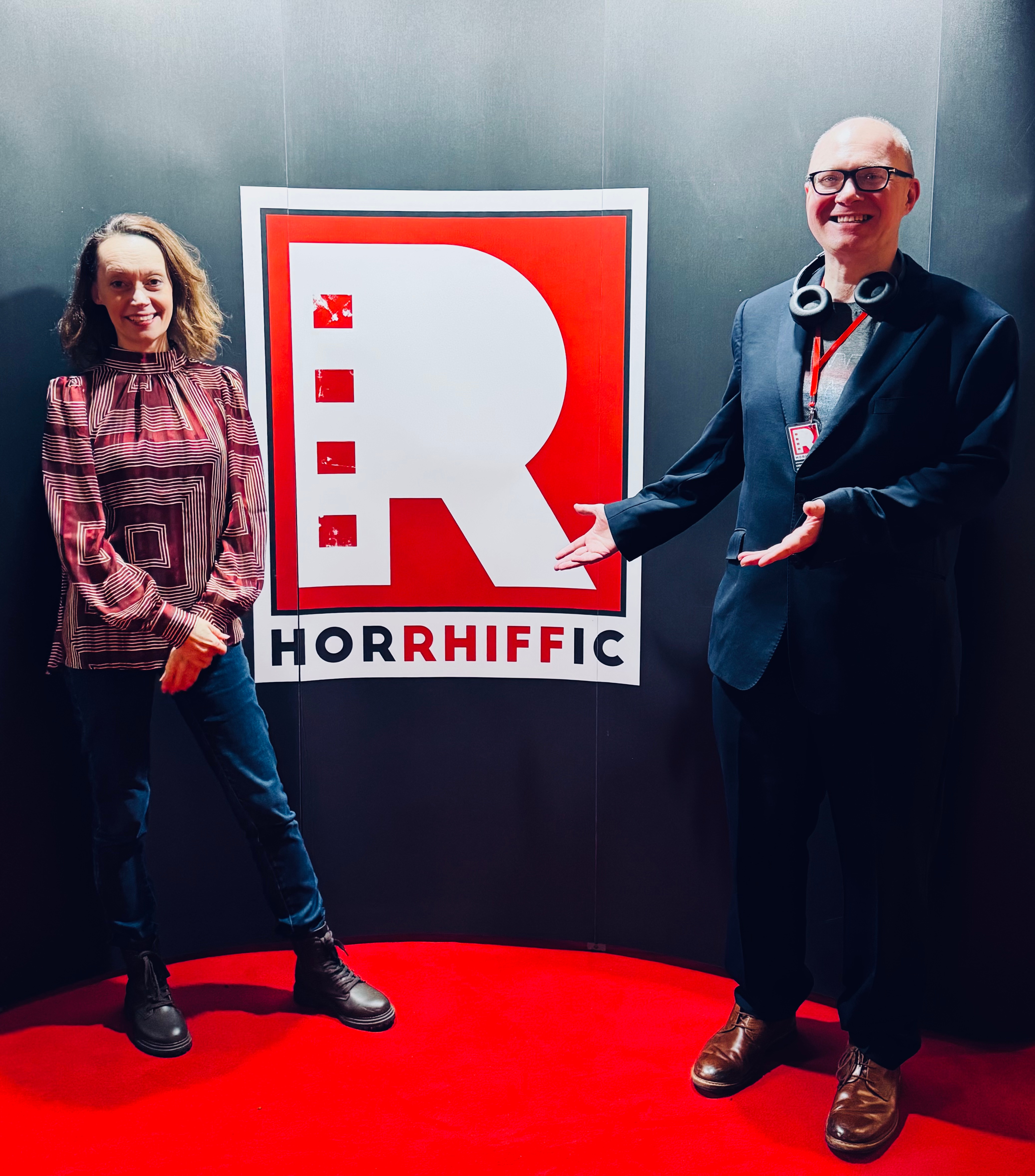
From 19th–22nd February 2026, Romford, Essex emerged not just as a venue, but as a creative crucible for genre storytelling as the Romford Horror International Film Festival — affectionately dubbed HorRHIFFic — returned to the Lumiere Cinema with its most ambitious programme yet – details can be found here: https://www.romfordhorrorfestival.com
This four-day celebration of horror cinema is rooted in the independent filmmaking spirit: championing works from emerging voices around the world, blending them alongside classic cult favourites, and generating an atmosphere of passion, community, and shared reverence for the genre. What makes this festival truly special isn’t just the size of its programme — though over 130 films certainly made for a thrilling schedule — but its wholehearted dedication to independent filmmakers who bring new ideas, daring vision, and personal passion to every frame.
Across its programme, the festival showcased a thrilling mix of guests and films that honour horror’s breadth including: Classic Retro Treats, Special Guests and Actors from Horror, New Independent Features & Shorts from countries such as South Korea, Canada, Spain, USA, and Italy, plus Creative Diversity — with screenings that embraced psychological depth, gory slashers, ghost stories, off-beat genre hybrids, and boundary-pushing work from both early-career filmmakers and seasoned indie pros.
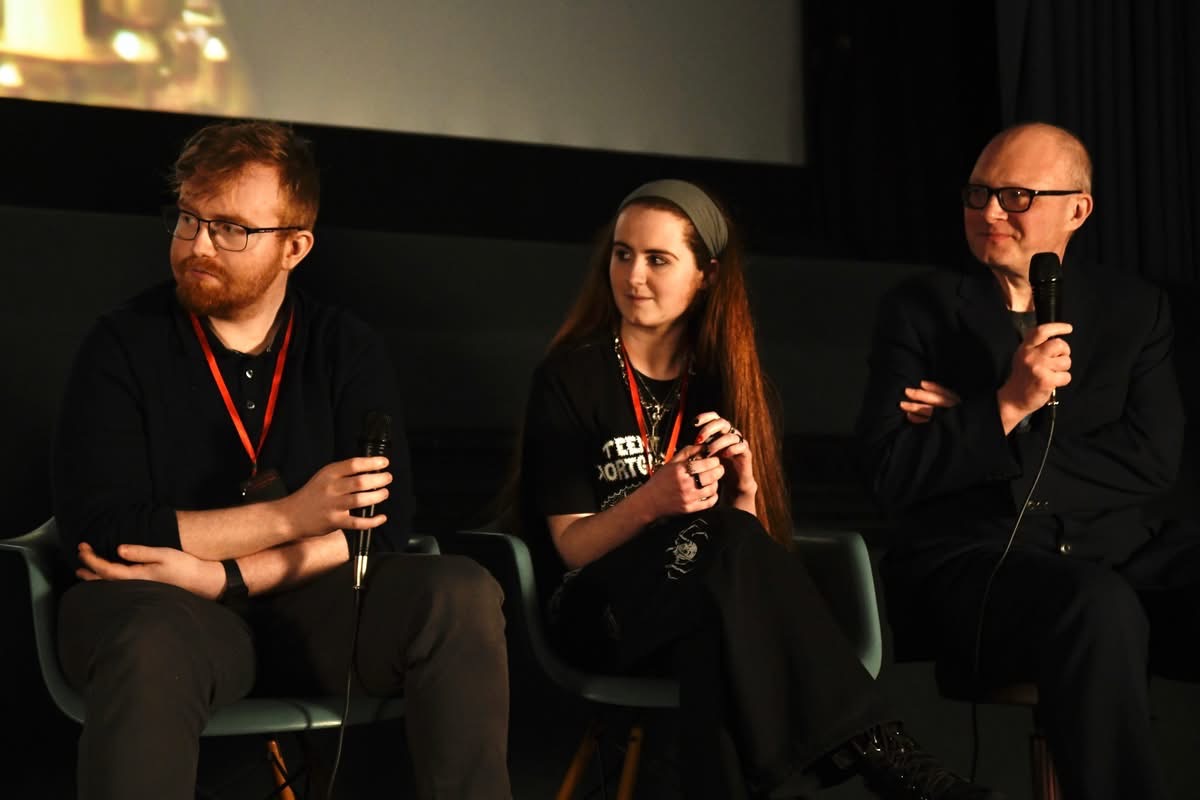
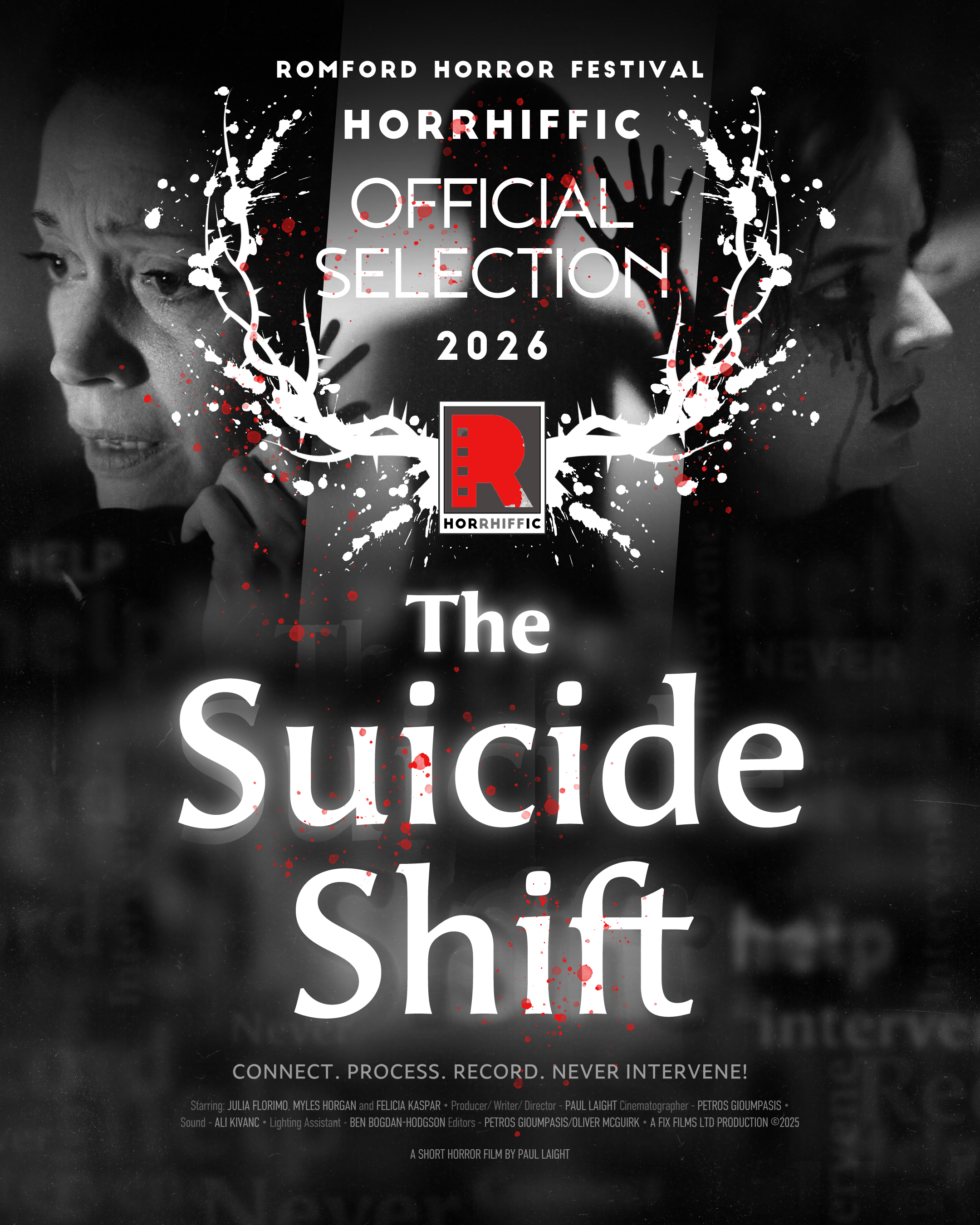
Romford Horror Festival is also renowned for the community it builds. Horror fans come together not just to watch films, but to share experiences, meet creators, and feel at home in an environment that values innovation over commercialism. The Lumiere Cinema, itself a community-saved venue, became a home for filmmakers and fans alike — proving that in Romford, horror isn’t just screened… it’s commemorated. I for one am so grateful they screened my short horror film The Suicide Shift (2026).
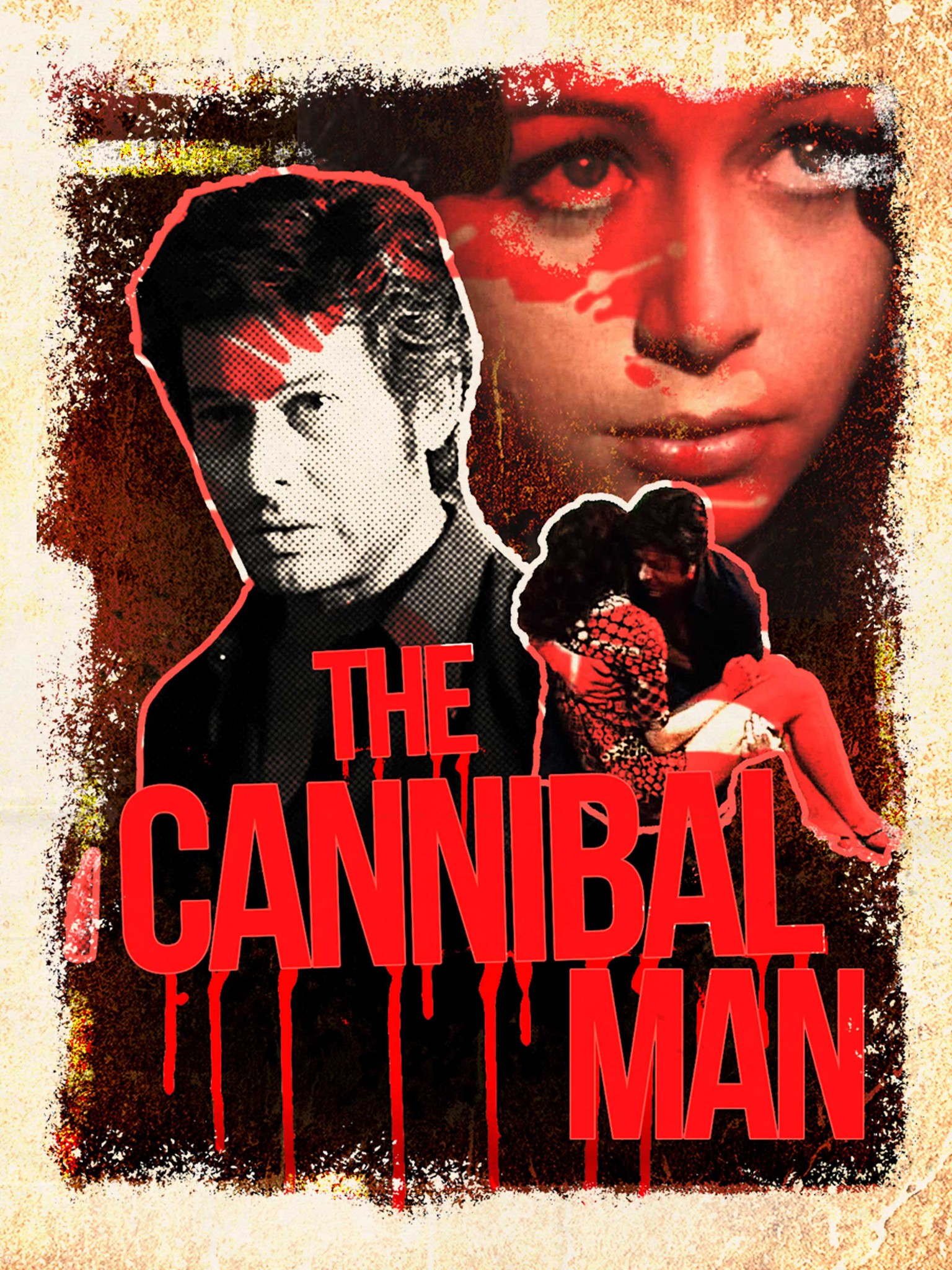
As well as the short film showcases I watched a few retro classics including The Cannibal Man (1972) – (original title: La semana del asesino), directed by Eloy de la Iglesia. It is less a horror film than a slow, suffocating moral collapse. What begins as an unfortunate act of violence spirals into a weeklong descent into hell for Marcos, played with haunted fragility by Vicente Parra. Each subsequent killing feels less like cruelty and more like inevitability — the grinding machinery of fate closing in on a man already spiritually trapped.
Set against the decaying outskirts of Madrid in the final years of the Franco regime, The Cannibal Man (1972) doubles as a bleak portrait of a society rotting from repression. The slaughterhouse where Marcos works becomes an unsubtle but potent metaphor: under Francoism, bodies are processed, identities erased, dissent quietly carved up and discarded.
What makes the film especially daring is its undercurrent of homoerotic tension. Marcos’ wealthy, enigmatic neighbour Néstor hovers at the edges of the carnage, offering protection and silent understanding. Their charged glances and coded conversations suggest a longing that cannot safely speak its name under Franco’s moral authoritarianism. In this reading, Marcos’ spiral is not only about guilt but about internalized repression — desire twisted inward until it manifests as self-destruction. The horror is as much psychological as physical.
And yes, the gore is blunt and ugly. Bodies are dismembered with the same cold pragmatism as livestock. But de la Iglesia never lets the blood eclipse the tragedy. Marcos is not a monster in the conventional sense; he is a man cornered by circumstance, class stagnation, and a society that offers no mercy to the weak. By the end, his descent feels preordained — less a fall from grace than a revelation that grace was never available to him.
So, if you love horror films do check out indie film festivals such as – HorRHIFFic– whether it’s the electrifying surprises in the indie showcases or the nostalgic thrill of classic screenings, the Romford Horror Film Festival 2026 made it clear: independent horror cinema is alive, vibrant, and boldly inventive. This festival is a testament to the creativity and ingenuity of filmmakers who refuse to be confined by convention — and to the audiences who cheer them on.
Cult Film Review: Thriller – A Cruel Picture (1974)
Directed by Alex Fridolinski
Screenplay by Alex Fridolinski
Produced by Bo Arne Vibenius
Main cast: Christina Lindberg, Heinz Hopf, Despina Tomazani, etc.
Cinematography by Andreas Bellis
Edited by Brian Wikström
**Viewer discretion is advised – this film contains scenes that many will find disturbing**
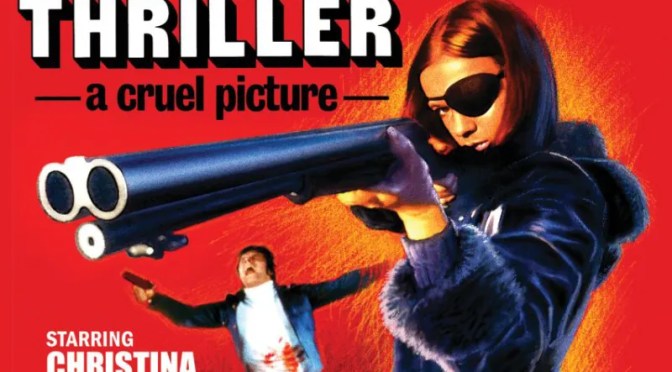
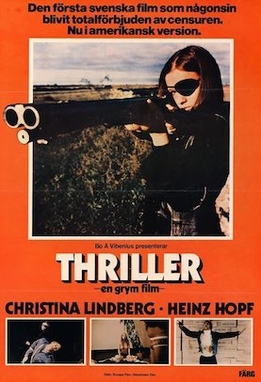
Thriller – A Cruel Picture (1973) (Swedish: Thriller – en grym film) is a 1973 Swedish exploitation film from writer-director Bo Arne Vibenius, working under the pseudonym Alex Fridolinski, starring Christina Lindberg and Heinz Hopf. Infamous for its unflinching depictions of sexual violence, drug abuse, and degradation, the film charts the ordeal of a mute young woman who is coerced into heroin addiction and forced into prostitution before embarking on a brutal campaign of revenge against her tormentors.
Released in the United States in a heavily cut version by American International Pictures—under lurid alternate titles such as They Call Her One Eye, Hooker’s Revenge, and The Swedish Vice-Girl—the film has earned a reputation as a deeply disturbing and confrontational work. Its graphic content and relentless tone make it a challenging and potentially distressing viewing experience, best avoided by those sensitive to extreme subject matter.
Unsurprisingly, due to the violent scenes, on-screen drug use, nudity and also inclusion of hardcore pornography, Thriller – A Cruel Picture (1973) was either banned outright or heavily censored on release. I had heard so much about this film on various YouTube videos expounding the shocking nature of the themes and scenes. Allied to this, Quentin Tarantino has also “championed” the movie and it’s star, Christina Lindberg. With this in mind the film I got tempted and purchased the recent Blu Ray version released in the UK. This version DOES NOT, thankfully, include the pornographic scenes which were filmed by the director with a Swedish couple who did live sex shows.
So, is Thriller – A Cruel Picture (1973) actually any good? Well, it is safe to say that it is a relentlessly harsh watch. That said, it would be unfair to dismiss the film outright as mere grindhouse provocation. Vibenius employs striking stylistic flourishes that elevate certain sequences into something oddly hypnotic. Most famously, the extended slow-motion shotgun reprisals—henchmen blasted backwards in balletic, almost operatic fashion—are staged with a visual patience that borders on the surreal. These, as well as the lengthy final act car pursuit sequence, are technically memorable, even as their brutality remains confronting.
Where the film becomes almost nightmarish is in its internal logic. Once Madeline (Christina Lindberg) is captured and brutalized by the sadistic drug dealer Tony (Heinz Hopf), the narrative takes on a dreamlike, disjointed quality. Despite being forcibly addicted to heroin, she somehow manages to train herself in hand-to-hand combat, driving, and sharpshooting—preparing an elaborate revenge while still under the grip of addiction. The plotting feels less realistic than hallucinatory, as though the film operates on the logic of trauma and fantasy rather than grounded cause and effect.
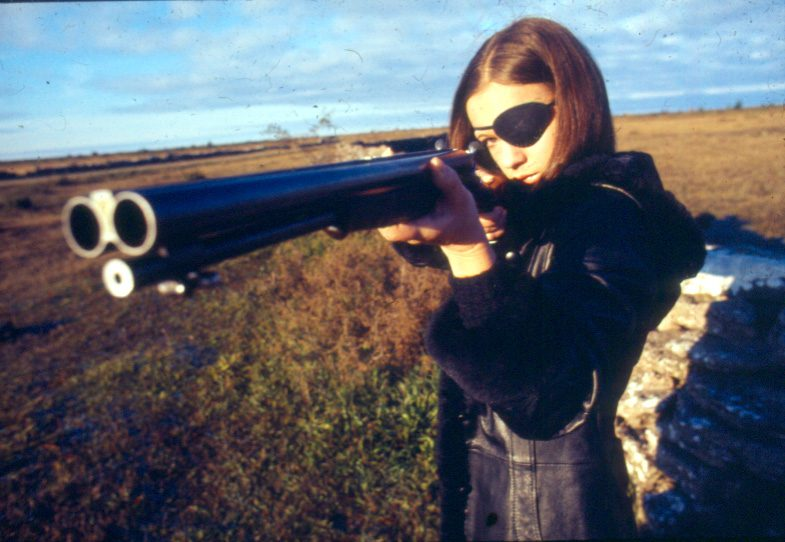
A great deal of the film’s lasting impact rests on the striking screen presence of Christina Lindberg, as well as her character’s grim journey.Already known internationally in the late 1960s and early 1970s for her work as an erotic actress and glamour model, Lindberg brings an arresting, almost statuesque quality to the role. Her icy stare—especially once framed by the now-iconic eyepatch—gives the character a mythic, comic-book intensity. At the same time, the creative decision to render her character mute inevitably shapes how that performance is perceived. Silence becomes a stylistic device, amplifying the film’s cold and detached tone. The director’s choice to sidestep the demands of more dialogue-heavy dramatic scenes actually works in the film’s favour.
Overall, Thriller – A Cruel Picture (1973) is a film that oscillates between exploitation rawness and stark, almost avant-garde stylization. For hardened genre enthusiasts, it may be a grim curiosity with undeniable visual audacity. For many others, however, its graphic content and relentless tone will make it a deeply uncomfortable, even distressing experience. Proceed carefully.
Directed by Harry Lighton Written by Harry Lighton – Based on Box Hill by Adam Mars-Jones
Produced by Emma Norton, Lee Groombridge, Ed Guiney & Andrew Lowe
Main cast: Harry Melling, Alexander Skarsgård, Douglas Hodge, Lesley Sharp, Jake Shears, etc.
Cinematography by Nick Morris
Edited by Gareth C. Scales
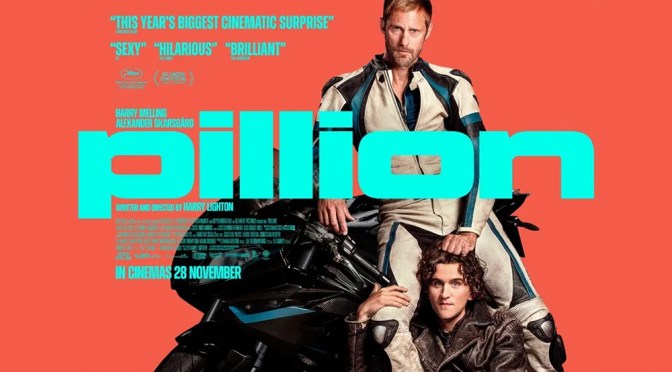
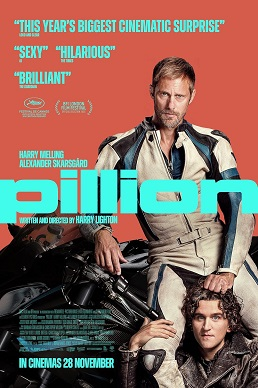
There’s a tender audacity to Pillion (2025), an erotic rom-dom-com that sneaks up on you with the gentleness of a confession. What begins as an off-kilter meet-cute blooms into something far more vulnerable: a rites-of-passage story about sexual awakening, self-recognition, and the courage it takes to accept pleasure without apology.
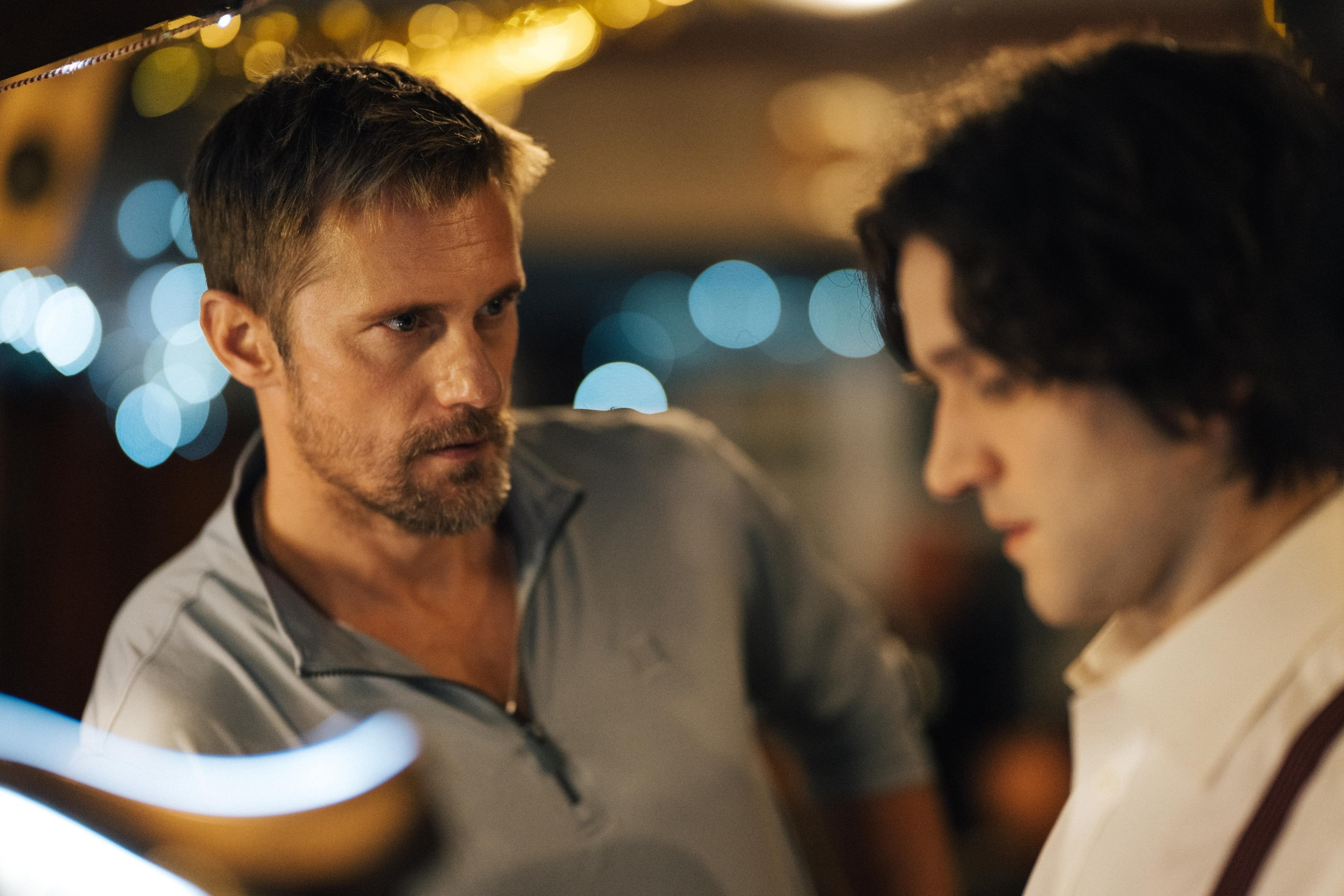
At its heart is Colin, played with exquisite restraint by Harry Melling. Melling has always been an actor of intelligence, but here he finds a new register—soft-spoken, watchful, quietly aching. His performance never reaches for easy beats; instead, it accumulates detail. A look held a fraction too long. A smile that arrives late. Colin’s desire isn’t announced; it’s discovered, moment by moment, and the effect is deeply empathetic.
Opposite him, Alexander Skarsgård’s Ray is all smoulder and swagger on first impression—an insouciant masculinity that seems effortless, almost cocky. But Skarsgård is doing something more interesting beneath the surface. The sexuality is undeniable, yes, but it’s armoured. Pain leaks through the cracks, giving Ray a bruised romanticism that complicates the dominant energy he projects. The push and pull between the two men becomes the film’s most potent charge.
Director Harry Lighton deserves enormous credit for navigating this tonal tightrope. His direction is fantastically nuanced, allowing intimacy and humour to coexist without deflating either. The film understands that eroticism can be funny, awkward, even faintly ridiculous—especially when it’s new—while still honouring its emotional stakes. The explicit moments are handled with confidence rather than coyness, lacing the heartfelt beats with risqué shocks that provoke gasps, laughter, and the occasional wince. The physical opposites of Harry’s mild-mannered traffic warden versus Ray’s macho biker also add characterful humour to the mix.
The contemporary setting, rooted in the London suburb of Bromley, is another inspired choice. This is not a glossy, aspirational London; it’s resolutely unglamorous, familiar, and quietly stifling. That ordinariness makes Colin’s awakening feel all the more radical, a private revolution unfolding in plain sight. Furthermore, strong support comes from Lesley Sharp and Douglas Hodge as Colin’s parents, whose love is real but imperfect, shaped by generational discomfort and unspoken fears. Their scenes add texture rather than judgment, grounding the film in a recognisable family dynamic.
Be warned: Pillion (2025) doesn’t shy away from explicit sex scenes or moments of leather-adorned domination (including BDSM), and those elements may provoke strong reactions. But they’re not there for provocation alone. Lighton uses them as part of the emotional grammar of the film, insisting that tenderness and risk, humour and heat, can occupy the same frame. Ultimately, Pillion (2025) reveals itself as something quietly radical—a deeply touching romantic comedy that treats sexual self-discovery with empathy, intelligence, and a disarming lack of shame. It lingers not because of what it shows, but because of how carefully it listens to its characters while they learn who they are.
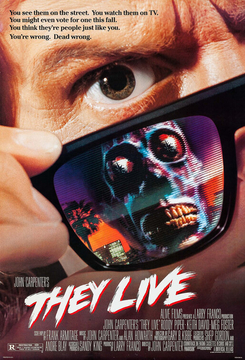
Classic Movie Scenes #16- They Live (1988) – the really long fight scene!
Directed by John Carpenter
Screenplay by John Carpenter
Based on: “Eight O’Clock in the Morning” by Ray Nelson
Produced by Larry Franco
Main cast: Roddy Piper, Keith David, Meg Foster, etc.
Cinematography by Gary B. Kibbe
Music by John Carpenter & Alan Howarth
** CONTAINS SPOILERS **
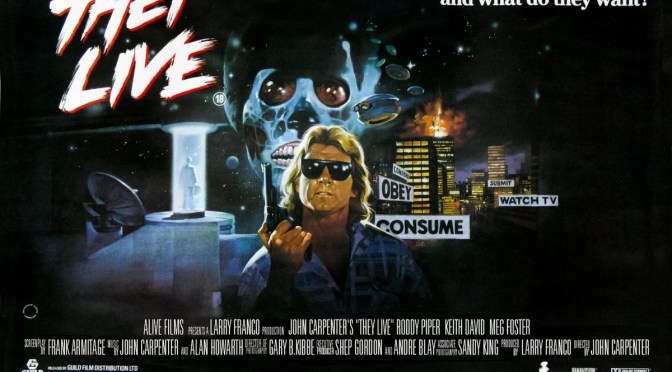
They Live (1988) is the kind of action sci-fi film that only John Carpenter could turn into a cult classic. On paper, it’s gloriously bizarre: a nameless drifter called Nada—Spanish for nothing—wanders into Los Angeles looking for work and instead stumbles into a hidden alien occupation. The key to the whole rotten system? A pair of hacked sunglasses that reveal the truth behind billboards, TV, and smiling authority figures. OBEY. CONSUME. CONFORM. No metaphor required.
Nada is played by professional wrestler Roddy Piper, whose performance is all flint-eyed suspicion and working-class fury. He’s not a chosen one or a scientist or a cop—he’s a guy at the bottom of the ladder who starts noticing the ladder itself is rigged. When Nada puts on the glasses, the world drains of colour and illusion, revealing a bleak black-and-white nightmare of propaganda and skull-faced elites hiding in plain sight. It’s one of Carpenter’s smartest tricks: truth isn’t glamorous, it’s ugly and exhausting.
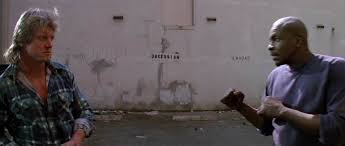
The film’s low budget sometimes shows—rubber masks, stripped-down sets, and a finale that feels like Carpenter had to sprint to the finish line before the money ran out. But that rawness is also part of They Live’s (1988) charm. It plays like a B-movie manifesto, a midnight scream against a world quietly selling your soul back to you at retail prices. And yes, the legendary alleyway fistfight is absurdly long, but it also feels like the point: waking someone up hurts, takes effort, and nobody thanks you for it.
Carpenter has been clear that They Live (1988) is a critique of consumerism, Reagan-era greed, and the way capitalism anesthetizes resistance. But watching it today, the film has mutated—like all good cult cinema—into something more unstable and more dangerous. In the age of culture wars, algorithmic outrage, and weaponized paranoia, They Live (1988) can be read in a dozen conflicting ways. Is it anti-corporate? Anti-elite? A warning about media manipulation? A Rorschach test for conspiracy culture itself? That ambiguity is why it endures.
They Live (1988) doesn’t tell you what to think—it hands you the glasses and dares you to look. And once you do, it’s hard not to feel a little like Nada: broke, angry, awake, and deeply suspicious of anyone telling you everything is just fine. As someone who has recently been researching a lot about conspiracy theories or apparent truther activists, I have my feet dangling above the rabbit hole while simultaneously holding a red pill in my hand. Yet, I am hesitant to jump in. How do I know the so-called “truthers” are not lying or serving their own agenda or career too? Which is why the fight scene is so good. Because, it shows the struggle one can have as to what to believe and who to trust. In this case, Nada is telling the truth and he is prepared to fight to reveal it.
According to IMDb “the big fight sequence was designed, rehearsed and choreographed in the back-yard of director John Carpenter’s production office. The fight between Nada (Roddy Piper) and Frank (Keith David) was only supposed to last twenty seconds, but Piper and David decided to fight it out for real, only faking the hits to the face and groin. They rehearsed the fight for three weeks. Carpenter was so impressed he kept the scene intact, which runs five minutes, twenty seconds. David recounted the event, smiling giddily as he said, “It was good fun! I never felt safer in any fight,” as Piper, a professional wrestler, coached David on how to sell the look of the punches and savage moves in exaggerated form, making it appear more brutal than it actually was.”
Written by Craig Brewer – Based on Song Sung Blue – documentary by Greg Kohs
Produced by John Davis, John Fox, Craig Brewer
Main cast: Hugh Jackman, Kate Hudson, Michael Imperioli, Ella Anderson, Mustafa Shakir, Fisher Stevens, Jim Belushi, King Princess, etc.
Cinematography by Amy Vincent
** MAY CONTAIN SPOILERS **
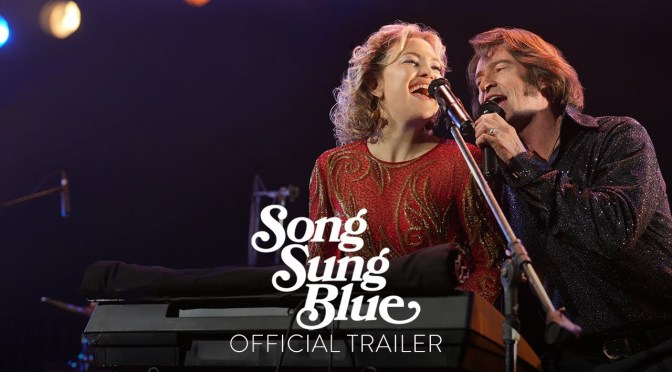
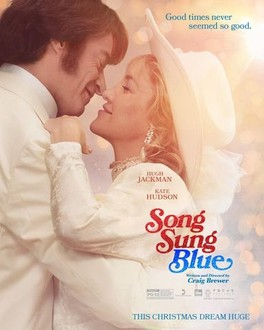
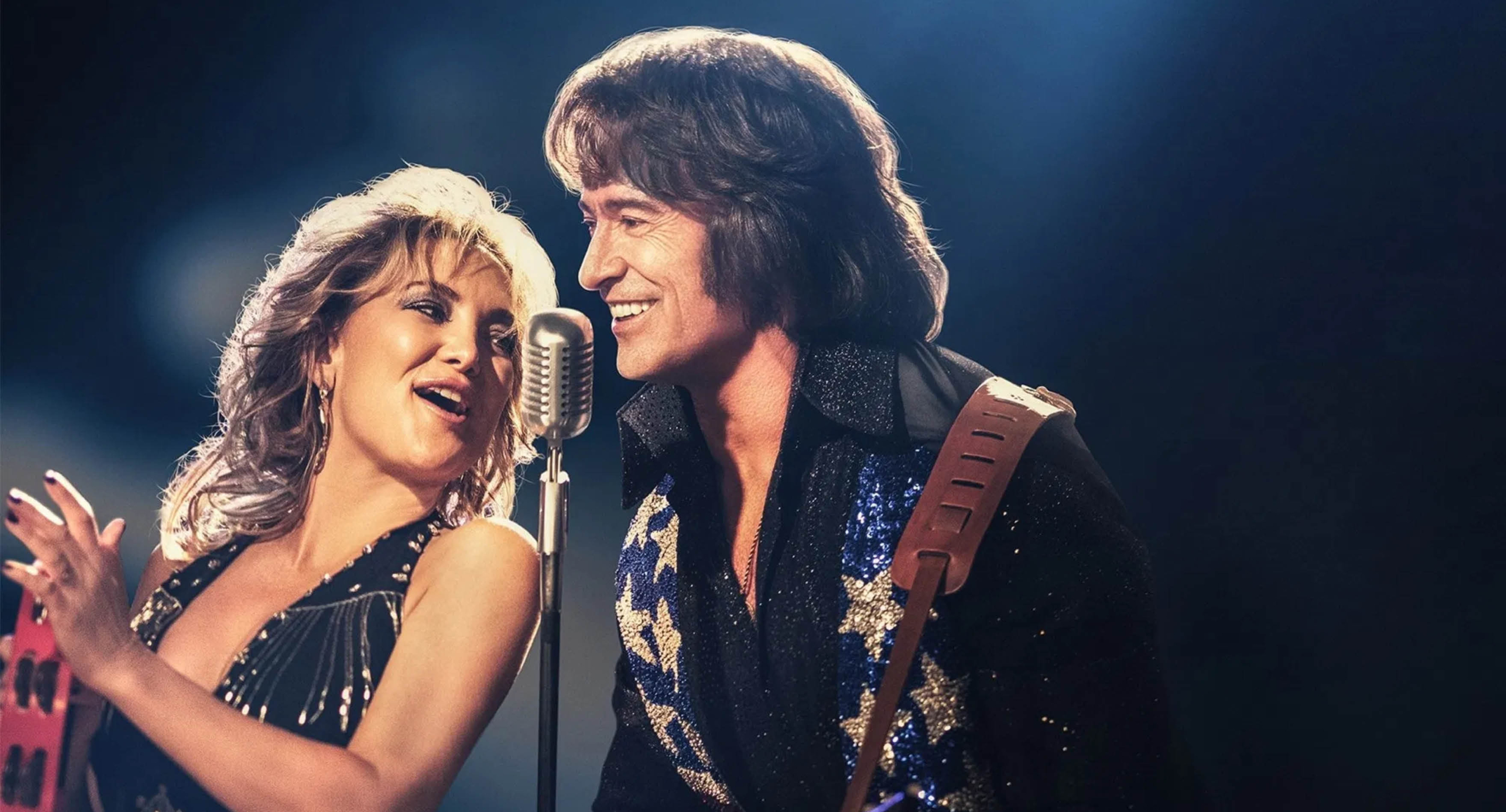
Song Sung Blue (2025) is a warm, big-hearted musical drama that wears its love for music—and for people—proudly on its sleeve. Based on the 2008 documentary of the same name, the film arrives as a crowd-pleasing celebration of performance, devotion, and the quietly heroic act of expressing emotion through song. Under Craig Brewer’s direction, the film hums with sincerity, lifted by a strong ensemble cast and the enduring power of Neil Diamond’s music.
At the centre of the story are Mike and Claire Sardina, known on stage as Thunder and Lightning from Milwaukee. They are not presented as mere lookalikes or imitators, but as fully formed performers who carry the Neil Diamond torch with genuine artistry and respect. Their performances are less about mimicry and more about connection—channeling Diamond’s songs as emotional vessels for love, longing, and resilience. The film is at its best when it allows music to speak where words fall short, and Thunder and Lightning embody that truth beautifully.
The acting across the board is excellent. Hugh Jackman and Kate Hudson bring warmth, vulnerability, and an easy chemistry that grounds the film’s emotional core. Their characters feel lived-in and deeply human, making their shared journey feel earned rather than sentimental. Supporting turns from Michael Imperioli, Fisher Stevens, Jim Belushi, Ella Anderson, King Princess, and Mustafa Shakir add texture and personality, giving the film a rich, communal feel that mirrors the supportive world of local performance and fandom it portrays.
Craig Brewer’s vibrant direction leans into the idea that music is not just entertainment, but a lifeline. The film’s big-hearted characters use performance as a way to communicate love, heal wounds, and navigate life’s many trials and tribulations. In that sense, Song Sung Blue (2025) doubles as a loving tribute to Neil Diamond’s songwriting genius—his songs serving as emotional shorthand for feelings that are often too large or too complicated to articulate otherwise.
The film is incredibly dramatic too dealing with life themes relating addiction, depression, debt, disability and family trauma. Arguably it tries to cover too much in the two-or-so-hours finding topics such as the adoption subplot skimmed over in favour of maintaining pace and momentum. While this keeps the film buoyant and accessible, it occasionally feels like a missed opportunity to explore those themes with greater depth.
Still, these minor shortcomings do little to diminish the overall impact. Jackman and Hudson just fly throughout, making Song Sung Blue (2025), a heartfelt, affirming experience—one that understands how music can bind people together and how love, expressed through song, can carry us through even the most difficult chapters of life. It’s a film that leaves you smiling, misty-eyed, and humming a Neil Diamond tune on the way out of the theatre.
The Cinema Fix presents: 12 Favourite Films of 2025!
Happy 2026! I feel like I have watched even more films last year at the cinema and the many streaming platforms.
My instinct is it’s been a decent year overall of quality films, especially from independent or what one would class as indie-minded filmmakers. The bigger budgeted films or traditional blockbusters have been mainly not great or I just didn’t enjoy them. Aside from perhaps the entertaining Mission: Impossible finale.
Of all the genres, horror has really risen to the top in terms of overall quality the last few years, doing big box office and being recognised at awards ceremonies too. Having said that, and this could be my age and is nostalgia-driven, I find myself enjoying older, cult and more obscure film releases than the today’s modern film releases.
Anyway, here my my 12 FAVOURITE films of 2025. Not the BEST films, but the ones I enjoyed the most. There’s a few high quality, critically acclaimed films which do not make the list including Train Dreams (2025), Sorry, Baby (2025), Eddington (2025), Warfare (2025), Good Boy (2025), The Brutalist (2024) andI’m Still Here (2024), but remember these are my FAVOURITE films of the year.
For reference my favourite films of 2024 are below and here.
ALL OF US STRANGERS (2023) AMERICAN FICTION (2023) HERETIC (2024) THE HOLDOVERS (2023) THE IRON CLAW (2023) LATE NIGHT WITH THE DEVIL (2023) MONSTER (2023) POOR THINGS (2023) THE QUIET GIRL (2023) SPEAK NO EVIL (2024) THE SUBSTANCE (2024) THE ZONE OF INTEREST (2023)
Netflix’s auteur-driven cinema push has seen the platform hand enormous creative freedom—and budgets—to filmmakers like Noah Baumbach, Rian Johnson, Kathryn Bigelow, Edward Berger, and Guillermo del Toro, pairing them with world-class casts and top-tier crews to produce works of unmistakably cinematic ambition.
The paradox is that many of these films—designed with theatrical scale, craft, and seriousness—ultimately premiere to mass audiences via Netflix’s online platform rather than traditional movie theatres, reflecting a fundamental shift in how prestige cinema is financed, distributed, and culturally consumed in the streaming era.
What can you do? Well, pay the Netflix subscription and watch them from the comfort of one’s living room. Here are my reviews with usual marks out of eleven. Happy 2026!
A House of Dynamite (2025)
Kathryn Bigelow’s A House of Dynamite (2025) is an expertly directed and intriguingly structured disaster movie, unfolding across three interlocking chapters that chart a nuclear attack on the United States by an unknown enemy. Each section reframes the same escalating crisis through a different lens—the White House intelligence apparatus, the military response, and the political sphere—culminating in the perspective of the President, played with sensitivity and gravitas by Idris Elba.
As events overlap and repeat, the script cleverly ratchets up tension, revealing new information through subtle shifts in context, while Bigelow’s command of pacing and scale, combined with sterling filmmaking and a who’s-who ensemble cast, keeps the film gripping on a moment-to-moment level. Yet for all its craft, the film ultimately plays like a fear-mongering piece of propaganda and an implicit recruitment advert for the U.S. government and military. Its refusal to name a perpetrator suggest the U.S. has many enemies thus justifying huge spending on defence and weapons. The abrupt ending could be interpreted as brave storytelling, but for me it undercut the suspense, leaving the experience feeling oddly hollow and non-plussed rather than provocatively unresolved.
Mark: 6 out of 11
Ballad of a Small Player (2025)
The Ballad of a Small Player (2025) follows Lord Doyle, played by a magnetic Colin Farrell, as he lies low in Macau, numbing himself on casino floors with deep debt, bad bets, and the stubborn hope that the next hand will fix everything. Farrell is phenomenal here, turning compulsive gambling into a form of slow self-harm, his performance layered with exhaustion, bravado, and quiet panic. When he’s offered a fragile lifeline by the enigmatic Dao Ming, played with poised restraint by Fala Chen, the film hints at redemption.
Director Edward Berger and his production team deliver a ravishingly beautiful film, capturing Macau’s neon glow and claustrophobic interiors as both seduction and trap. At its best, the film is a melancholy character study about addiction for a protagonist who is often deeply annoying and morally bankrupt. However, the final act falters, introducing fuzzy, unearned twists that soften the film’s harder truths and dilute its emotional impact. While the journey is engrossing and Farrell’s performance alone makes the film worth seeing, the conclusion ultimately cheats the audience out of a powerful Uncut Gems (2019)-style denouement.
Mark: 7 out of 11
Frankenstein (2025)
Is Guillermo Del Toro’s big budget adaptation of Mary Shelley’s classic gothic novel really necessary? There are much better versions out there, yet, Netflix and Del Toro certainly thought so. Oscar Isaac is a great actor but miscast or misdirected here for me. Then again, even in Shelley’s seminal novel Dr Frankenstein is a colossal whinger! Thankfully, Jacob Elordi gives a hearty and emotional rendition of the tragic creature, who again is the most interesting character. Safe to say the majestic production values provide a visual and aural feast, but, aside from a scintillating opening in the North Pole, Del Toro’s slog of a script ultimately fails to bring Shelley’s story to life in a sustained enjoyable fashion. Don’t get me wrong, the production and design is of the highest order but I just didn’t connect emotionally or philosophically or even as a horror fan.
Mark: 6 out of 11
Jay Kelly (2025)
Jay Kelly (2025) is a mild, reflective comedy drama that sees George Clooney doing what he’s long perfected: playing a famous film star grappling with past and present relationships while barely appearing to break a sweat. As Kelly travels to Tuscany to collect a lifetime achievement award, the film drifts between memories, regrets, and professional compromises, offering Clooney ample opportunity to deploy his trademark charm—stretching his range (not), but doing so with effortless ease. The more grounded emotional texture comes from Adam Sandler, who is quietly excellent as Kelly’s long-suffering manager, bringing a lived-in, humane quality that feels more emotionally honest.
Director Noah Baumbach has delivered far sharper and more incisive work and Jay Kelly (2025) never quite pushes its Hollywood satire of spoiled first-world creatives as far as it could. Still, there’s an undeniable pleasure in Baumbach’s dialogue and structure, with clear echoes of Wild Strawberries (1957) and 8½ (1963) filtering through in its introspective, memory-haunted moments. The film ultimately has its cake and eats it—content to indulge its characters rather than interrogate them—but it remains a very pleasant cake all the same: soft, well-made, and easy to enjoy.
Mark: 7 out of 11
Wake Up Dead Man: A Knives Out Mystery (2025)
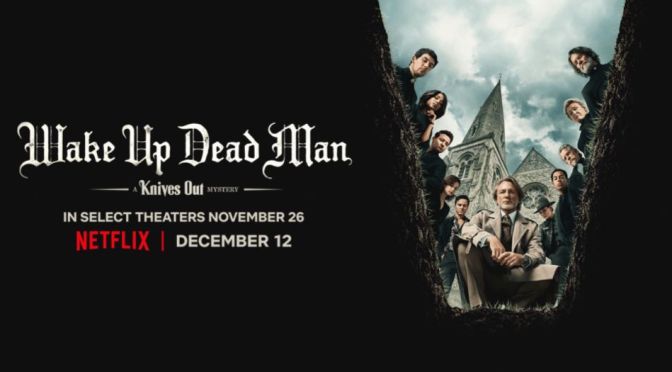
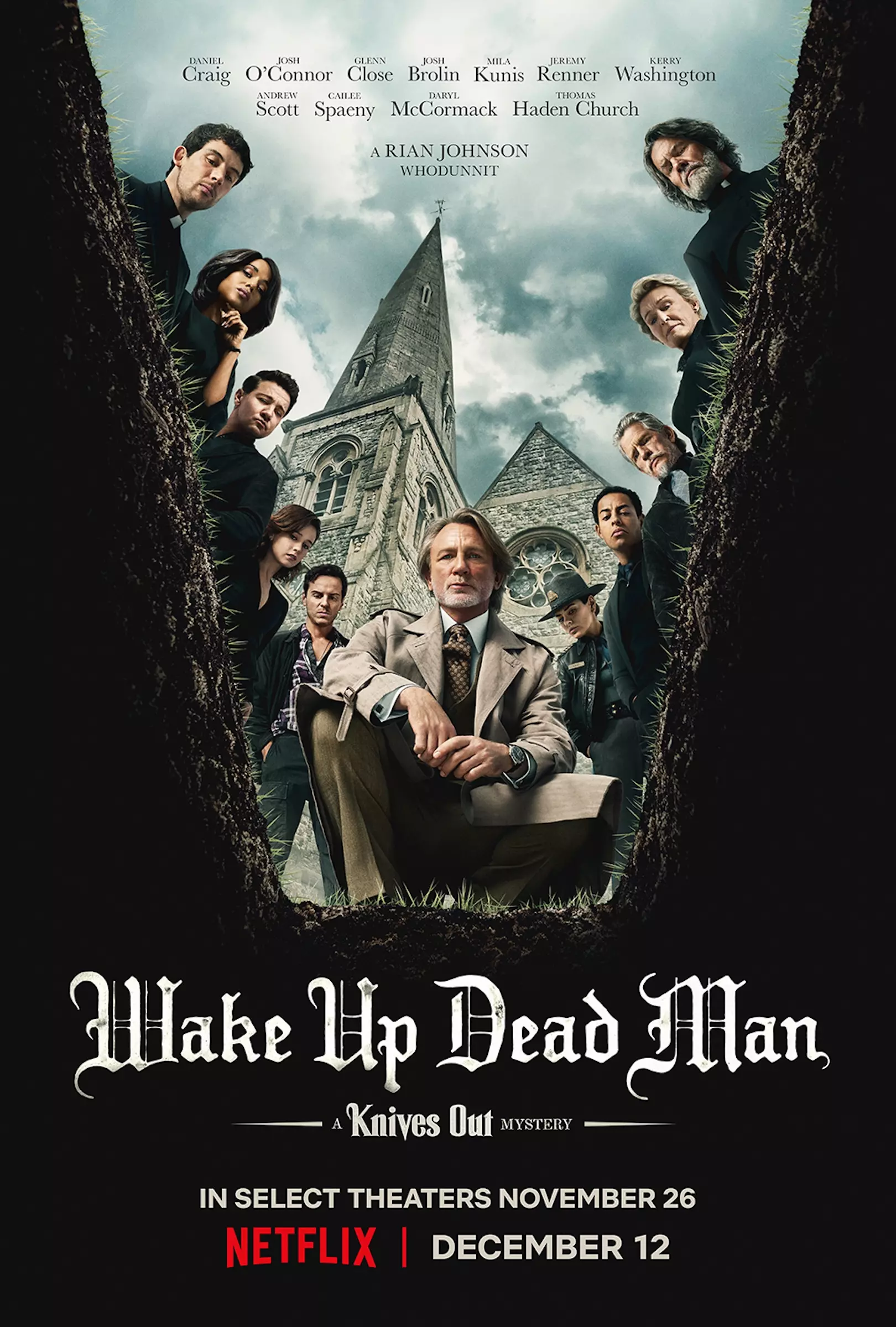
Wake Up Dead Man (2025) stands as the clear high point of Netflix’s auteur-driven releases from November and December 2025, confirming Rian Johnson as a post-modern master of the classical whodunnit. Once again drawing from the elegant clockwork of Agatha Christie’s works, Johnson constructs a devilishly complicated mystery centred on the murder of the tyrannical Monsignor Wicks, played with thunderous menace by Josh Brolin. The suspect list is gloriously stacked—church staff and parishioners portrayed by Glenn Close, Jeremy Renner, Kerry Washington, Andrew Scott, Cailee Spaeny, Daryl McCormack, Thomas Haden Church, and a young visiting priest, Jud Duplenticy (Josh O’Connor)—each performance feeding into a puzzle that’s as playful as it is precise.
What elevates the film beyond genre excellence is its sharply observed character work, particularly in the portrayal of Wicks as a Trump-like authoritarian figure ruling his congregation through fear and humiliation. Johnson smartly frames the mystery as a moral clash between Old Testament wrath and New Testament compassion, allowing the film to interrogate power, faith, and hypocrisy without ever losing its entertainment value. The script crackles with brilliant one-liners and sly, witty exchanges, especially when Daniel Craig’s Poirot-style detective peels back layers of deceit with theatrical relish. Among the ensemble, Josh O’Connor delivers a superbly nuanced performance, injecting emotional specificity and intelligence that rise above what could have been more generic material. Clever, funny, thematically sharp, and immaculately engineered, Wake Up Dead Man isn’t just Netflix’s best auteur offering of the season—it’s one of Johnson’s most satisfying achievements to date.
Produced by Josh Safdie, Ronald Bronstein, Eli Bush, Anthony Katagas and Timothée Chalamet
Main cast: Timothée Chalamet, Gwyneth Paltrow, Odessa A’zion, Kevin O’Leary, Tyler Okonma, Abel Ferrara, Fran Drescher, Sandra Bernhard, etc.
Cinematography Darius Khondji
Music by: Daniel Lopatin
Anxiety cinema, though always a part of film history, has seen a surge in prominence in recent years, with directors like Gaspar Noé, the Safdie brothers, Sean Baker and Ari Aster leading the charge. These filmmakers specialize in creating films that push audiences to their emotional limits, heightening tension and discomfort without offering the cathartic release often found in more traditional thrillers or suspense films by the likes of DePalma, Hitchcock, and Spielberg. Rather than resolving the anxiety with a tidy ending or a moment of relief, these films leave viewers on edge, their blood pressure elevated, and their minds unsettled, reflecting the growing cultural sense of unease and existential dread.
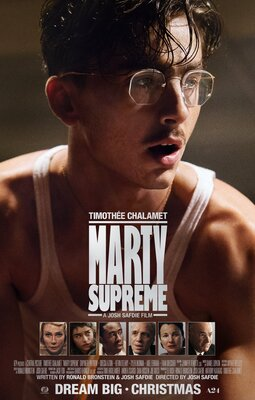
It’s important to note that it would appear, with the release of the frantic Marty Supreme (2025), it is Josh Safdie and Ronald Bronstein, not Benny Safdie, who could be seen to be the driving forces behind the anxiety-driven films like Good Time (2017) and Uncut Gems (2019). Their collaborative work has come to define the frantic, high-pressure style of modern anxiety cinema. In contrast, Benny Safdie’s more recent work, The Smashing Machine (2025), highlights a shift toward more authentic and subtle character development, offering a quieter, more understated take on human drama. While Josh and Bronstein continue to escalate tension to dizzying heights, Benny’s approach focuses on exploring deeper, more introspective emotional journeys.
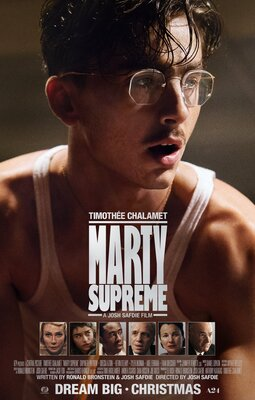
So, Marty Supreme (2025), is it any good? Let’s just say that this isn’t a Christmas or feelgood film, so I can only think the marketing team are being ironic with the poster tagline ‘Dream Big – Christmas!’ This is a 1952 period set anti-heroic-rites-of-passage rollercoaster journey profiling Marty Mauser (Timothée Chalamet), a New York shoe salesman with dreams of hitting the big time as a world champion table-tennis player. But rather than being characterised as a Rocky-style underdog sporting personality who the audience can root for, Marty (loosely based on real-life Marty Reisman), is in fact a fast-talking-arrogant-crisis-addicted-confidence-trickster and womaniser who is not averse to “friendly” armed robbery to get what he wants. Oh, by the way, Marty is also a phenomenal table-tennis player.
Having previously cast Robert Pattinson in Good Time (2017) and Adam Sandler in Uncut Gems (2019) as their disaster-prone, masculine leads, Josh Safdie and Ronald Bronstein took a new direction in Marty Supreme (2025) by casting Timothée Chalamet. Known for his charisma and commitment, as showcased most recently in Wonka (2023) and A Complete Unknown (2024), Chalamet brings an entirely new energy to the table. As Marty, he is nothing short of a force of nature—physically commanding as a table tennis player, yet intellectually and verbally dominating the screen. His performance captivates with a magnetic presence, delivering lines with such intensity and precision that he becomes impossible to look away from. Chalamet’s portrayal of Marty is both memorable and transformative, showcasing his versatility as an actor who can take on the manic, chaotic energy required by a character in a Safdie-Bronstein film while adding a unique layer of depth and intrigue.
Marty’s journey represents a fascinating emotional dialectic, one that leaves the audience both drawn to and repelled by his behaviour. While I didn’t necessarily enjoy his character arc, that’s exactly what makes Chalamet’s portrayal so compelling. Marty is, in many ways, his own worst enemy—he can’t follow rules, he’s a liar, and he cheats to get ahead. Yet, his raw talent and unwavering sense of purpose give him an undeniable charisma, pulling the audience in even as his decisions spiral into reckless, life-threatening situations. The character’s hustle, constant scheming, and pursuit of personal gain lead him into a series of humiliating, violent confrontations that highlight his self-destructive tendencies.
Marty’s a deeply flawed person desperately trying to make something of himself. But he also makes his own bad luck through poor decision-making. Whether it’s falling through a hotel ceiling in a bath; retrieving a missing dog for a psychopathic gangster; locking horns with the table tennis authorities and the uber-businessman he’s seeking patronship from; fighting a cuckolded neighbour whose wife, Rachel Mizler (Odessa A’zion) he possibly loves – not forgetting the scintillating table tennis games – the film is a litany of combative and panic-attack inducing set-pieces. The emotional tension lies in watching Marty repeatedly sabotage his own potential, a cycle of ups and downs that plays out as a cautionary tale. Marty’s journey doesn’t just depict failure; it explores the emotional complexity of someone trapped in their own worst impulses.
Marty Supreme (2025) stands as a masterpiece of filmmaking, with creative choices that not only subvert expectations but elevate the entire storytelling experience. From its striking cinematography to the anachronistic 1980s soundtrack, every visual and auditory detail feels meticulously crafted to immerse the audience in the world of Marty Mauser. The gritty, authentic production design brings a raw realism that grounds the film, while the ensemble cast—many of whom are quirky non-actors—brings an undeniable energy and authenticity to the narrative. In conclusion, the collaboration between Chalamet, Josh Safdie and Ronald Bronstein, and the entire cast and crew gave me both a nervous breakdown and an unforgettable cinematic experience.
In the languid drift of autumn, when Halloween’s shadow lengthens and winter begins its slow, expectant inhale, the world seems to slip into a more suggestive register—one where every rustling leaf feels like a whispered omen. It is, of course, the most appropriate season to surrender to the year’s latest horror releases, as though communing with these cinematic phantoms might prepare us—spiritually, aesthetically—for the deeper darkness to come.
Which basically means I have been catching up with some 2025 horror film releases I missed at the cinema during autumn. A couple of these probably warrant more in depth solo reviews, but as I edge closer to old age and the reaper’s scythe, I am economizing somewhat.
*** MAY CONTAIN SPOILERS ***
Black Phone 2 (2025)
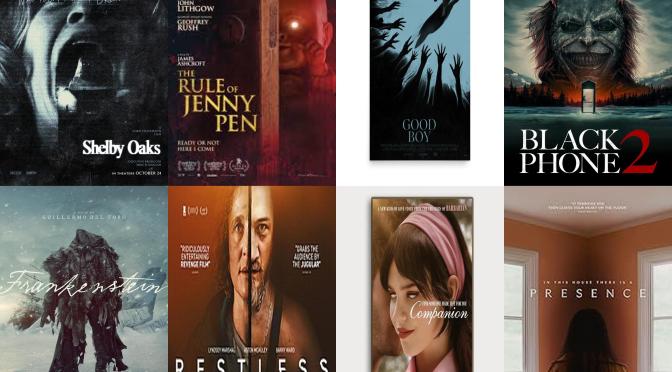
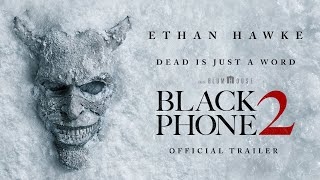
Scott Derrickson and co-writer C. Robert Cargill deliver a sequel to The Black Phone (2021) with Mason Thames, Madeleine McGraw, Jeremy Davies, and Ethan Hawke reprising their roles from the first chiller. I actually enjoyed this one more than the original, which despite the clunky set-up, finds the siblings and others trapped in a teen camp hit by a blizzard. They find themselves hunted and haunted by both The Grabber (Hawke) and other ghostly spirits haunting the area. Derrikson throws a lot of horror tropes and the characters (literally in certain scenes) at the walls, and much of it sticks. Having said that, I still don’t think The Grabber is the scariest villain ever committed to screen, despite Hawke’s presence. (Mark: 7.5 out of 11)
Companion (2025)
Companion (2025) feels like Garland’s Ex Machina (2014) colliding elegantly with Fargeat’s feral Revenge (2017)—a sunny day-horror fable that hides its nastiest surprises in plain sight. Its twists are sharp, its aesthetic confident, and its ideas far more ambitious than its modest surface first suggests. I would have admired it even more were it not, on occasions, completely dumb. Plus, the occasional drift into a comedic register undercuts its more incisive moments. The beautiful Sophie Thatcher once again commands the screen with the same riveting presence she brought to Heretic (2024). Mark: 8 out of 11.
Graduation Day (1981)
Thanks to Bobby Carroll’s site for reminding me about slasher film, Graduation Day (1981), as I had completely forgotten about it. High quality kills and gore mask a screenplay which has more nudity than character development. Yet, I am a sucker for these 1980’s exploitation flicks and this is a watchable one. Mark: 6 out of 11
Good Boy (2025)
An low-budget horror film triumph with Ben Leonberg directing his own dog, Indy, a Nova Scotia Duck Tolling Retriever, as the only witness to nasty spirits threatening his owner. The film emerges as a formal tour-de-force, whose meticulous composition and deliberate pacing elevate its simple premise into something unexpectedly resonant. Its visual precision and rhythmic control shape an atmosphere of dread that feels more sculpted than sensational, grounding the film in an emotionally impactful narrative about loyalty, vulnerability, and the unsettling spaces between trust and fear. For all its craft, and impressive animal direction, the film doesn’t quite sustain a relentless menace throughout. But, it remains a memorable feature debut from Leonberg and Indy the dog. Mark: 8.5 out of 11.
Presence (2025)
In Presence (2024), David Koepp and Steven Soderbergh demonstrate just how potent a one-location horror film can be when discipline and imagination converge. The entire piece unfolds like a controlled exhale: a slow-build structure that trusts the audience to lean in, and a drifting, almost contemplative camera that adopts the ghost’s POV to quietly—sometimes imperceptibly—reveal fragments of the story. Instead of overplaying its hand, the film slow-drips its plot elements with an elegance that keeps tension suspended in the air, letting unease pool in the corners of an otherwise ordinary space. By the time it reaches its finale, Presence (2024) delivers not only a surge of emotional and thematic clarity but two genuinely surprising twists—earned, unsettling, and executed with the kind of precision that affirms both writer and directors’ mastery of the form. Mark: 8.5 out of 11.
Restless (2024)
Really good independent British thriller with Lyndsey Marshal as a nurse, Nicky, who finds herself terrorized by 24-hour partying thug neighbours. Writer-director Jed Hart creates great empathy and identification with the situation and it’s a shame decent British films like this get short shrift at the multiplexes. Nicky’s spiral into insomnia-driven madness is compelling as her desperate attempts to sleep give way to vengeance. But the film’s final act tonal turn denies us a full-on descent into suburban hell, for something amenable but unfortunately less twisted. Mark: 7.5 out of 11
The Rule of Jenny Pen (2025)
The Rule of Jenny Pen is an original, weird, and powerful shock of a film — a mash-up of psychological thriller and nursing-home horror that lands far more often than it stumbles. Its greatest strength is, without question, the towering performances at its centre. Geoffrey Rush and John Lithgow, two masters of calibrated gravitas, turn the film’s cat-and-mouse mind game into a gripping acting showcase. Together, they elevate the film’s themes of aging, vulnerability, and institutional neglect into something both unsettling and strangely beautiful. The plotting, however, does get a bit sticky toward the end. The final act jars slightly, causing me confusion in an otherwise tight psychological narrative. Still, even as the story wobbles a tad, the film’s originality, eerie tone, and powerhouse acting keep it compelling. Mark: 8 out of 11
The Woman in the Yard (2025)
The Woman in the Yard (2025) rises on the strength of Danielle Deadwyler’s commanding lead performance. As a mother trying to protect her two children from a funereal spirit lingering in their backyard, Deadwyler grounds the supernatural dread with raw emotional honesty. The child actors match her with a believable, lived-in family dynamic that makes the haunting feel all the more personal. Where the film falters is in its structure. The script leans heavily on crow-barred flashbacks that interrupt rather than enrich the unfolding tension. A more linear approach could have built a stronger emotional momentum, allowing the story’s grief, guilt, and mental illness to accumulate naturally instead of stuttering backward at key moments. (Mark: 6 out of 11)
Together (2025)
Together (2025) gets an immediate boost from the casting of real-life couple Alison Brie and Dave Franco, whose natural chemistry gives the film an authentic emotional core. As a pair trying to rebuild their relationship after moving from the city to a rural small town, they convincingly inhabit the tensions, resentments, and unspoken fears that surface long before the horror does. Their incompatible expectations feel lived-in — and once they tumble into a sinkhole and the strange bodily transformations begin, that emotional groundwork makes the nightmare hit harder.
I loved the trailer for this film, which promised a truly skin-crawling descent into body-horror chaos. The final product, while atmospheric and often engrossing, doesn’t fully deliver on that promise. It pulls back when it could push further, leaving some of the more disgusting, surreal possibilities off-screen. But the ending — bold, surprising and unexpectedly poignant — is a fantastic payoff. Even if the film doesn’t always reach the extremes it teases, Together still manages to leave a memorably twisted impression. Mark: 8.5 out of 11
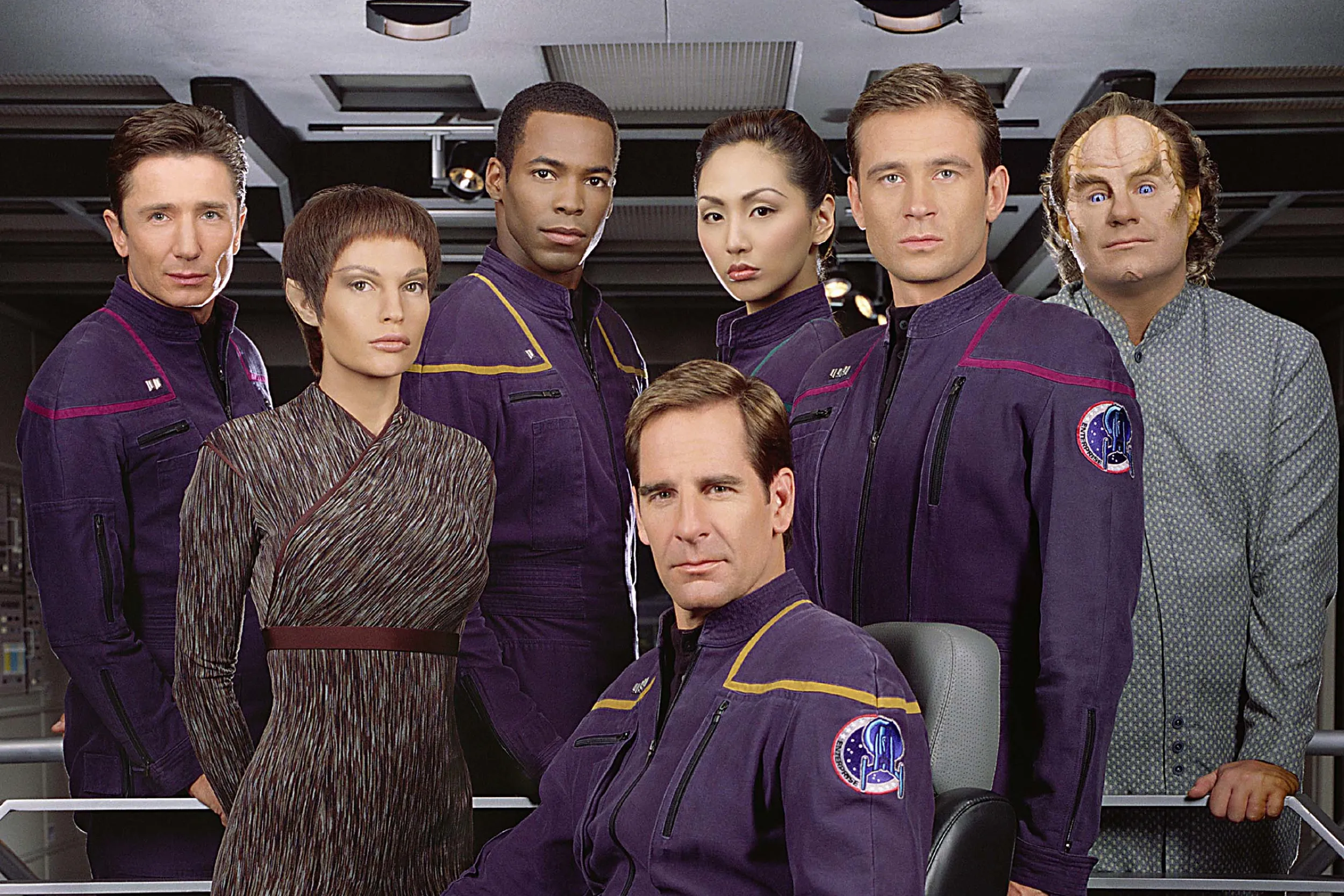
Production companies: Paramount Network Television, Braga Productions & Rick Berman Productions
Selected writers: Brannon Braga, Rick Berman, Manny Coto, Mike Sussman, Phyllis Strong, Judith Reeves-Stevens, Garfield Reeves-Stevens, André Bormanis, Chris Black, David A. Goodman, Fred Dekker, and more.
Selected directors: Roxann Dawson, LeVar Burton, Robert Duncan McNeill, Allan Kroeker, David Livingston, Winrich Kolbe, James L. Conway, Mike Vejar, Michael Grossman, Marita Grabiak, Brennan Spencer, Michael S. Watkins, Vincenzo Natali, and more.
Main cast: Scott Bakula, John Billingsley, Jolene Blalock, Dominic Keating, Anthony Montgomery, Linda Park, Connor Trinneeretc.
Notable guest actors: Jeffrey Combs, Vaughn Armstrong , Gary Graham, Matt Winston, Randy Oglesby, James Cromwell, Brent Spiner, Daniel Dae Kim, Fionnula Flanagan, Robert Picardo, Tony Todd, Bruce Davison, Seth MacFarlane, Steven Culp, Noa Tishby, Rene Auberjonois, Peter Weller, Dean Stockwell etc.
Composer(s): Dennis McCarthy, Jay Chattaway, Brian Tyler, John Frizzell, Mark McKenzie, David Bell, Velton Ray Bunch, Kevin Kiner & Paul Baillargeon
*** MAY CONTAIN SPOILERS ***
It’s been a while since I reviewed Star Trek on the site. But I have now finally completed the task I set myself to watch and review all the legacy Star Trek series. I am currently on the fence regarding the more recent Star Trek offerings. Anyway, having reviewed Voyager (see below) last year, I can now provide a detailed report back on Enterprise.
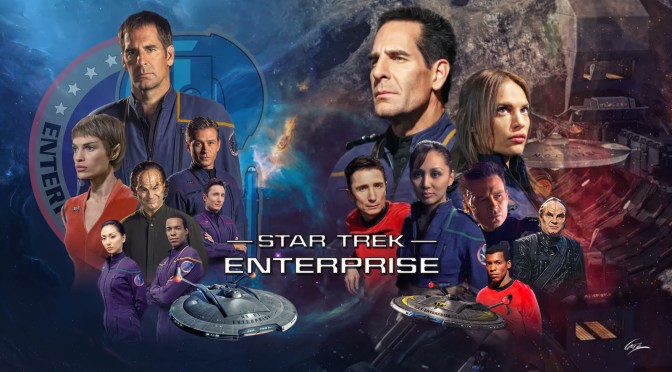
Star Trek: Enterpriseoccupies a fascinating corner of the franchise’s sprawling canon. Set a century before Kirk and more than a century after humanity’s first steps into spaceflight, the series charts the formative years of Starfleet—before there even was a “Starfleet” in the sense fans recognize. Its premise alone is rich: a pre-Federation frontier where humanity is inexperienced, unsteady, and often outmatched, yet eager to join a much larger galactic community. In this sense, Enterprise is both a prologue and a missing link, retrofitting the swaggering optimism of The Original Series with a more grounded, early-21st-century sensibility.
The show’s commitment to exploring those transitional years is what secures its place in canon. Enterprise seeds the diplomacy, technology, and interspecies tensions that future shows build upon—from the first warp-5 engine, to early encounters with Vulcans, Andorians, and the ever-shadowy Temporal Cold War. Watching Captain Jonathan Archer and his crew stumble toward the ideals later embodied by the Federation gives the series a distinctive historical weight. It doesn’t merely fit into Star Trek continuity; it actively sculpts the bedrock beneath it.
Central to the show’s appeal is Scott Bakula, whose performance as Captain Archer blends warmth, stubbornness, and a palpable sense of moral growing pains. Bakula gives Archer a grounded humanity that stands apart from the polished command styles of Picard or the passionate Sisko, yet his sincerity and resolve make him every bit their equal. When the writing rises to meet his talent—as in standout episodes like “Cogenitor,” “The Andorian Incident,” “Carbon Creek,” or the Xindi arc’s best moments—the show can reach the emotional and thematic heights of The Original Seriesand The Next Generation.
But Enterprise is also a series defined by uneven execution. For every episode that lands with classic-Trek resonance, there are others hampered by muddled plotting, bland direction, or creative decisions that feel more reactive than visionary. The show often struggled to decide whether it wanted to be a rough-edged prequel, a 2000s-era action drama, or a traditional episodic Trek—frequently trying to be all three at once. While it contains genuinely excellent science-fiction storytelling, its overall writing and directorial cohesion never consistently matched the clarity, ambition, or confidence of its most celebrated predecessors.
Yet despite its flaws, Star Trek: Enterprise remains an essential and often underrated part of the canon—a show whose best moments remind us exactly why Trek endures, and whose imperfections make its aspirations feel all the more human. Here are eight of the best episodes I watched – two per series.
Series 1 – The Andorian Incident (Episode 7)
This episode is the first truly great hour of Enterprise—the point where the show proves it can handle nuanced political storytelling within the Trek universe. The introduction of Jeffrey Combs as Shran is a masterstroke; he immediately brings depth, wit, and volatility to the Andorians. The plot, centered on Archer and his crew discovering that a supposedly pacifist Vulcan monastery is hiding darker secrets, reshapes our understanding of Vulcan–Andorian tensions. Strong direction, tight pacing, and a morally thorny reveal make this the first episode that feels essential to larger Star Trek canon.
Series 1 – Dear Doctor (Episode 13)
A thoughtful, character-driven story told through Dr. Phlox’s personal logs, “Dear Doctor” represents Enterprise at its most philosophically ambitious. It confronts the ethics of medical intervention, cultural evolution, and the limits of humanitarian aid—classic Trek territory handled with sensitivity and restraint. John Billingsley delivers one of the best performances of the season, infusing Phlox with curiosity, compassion, and unsettling pragmatism. The episode’s controversial ending also resonates, sparking debate among fans and critics alike. It’s a quietly powerful hour that demonstrates the series’ potential for moral complexity.
Series 2 – Carbon Creek (Episode 2)
Widely regarded as the highlight of Season 2—and for many, the best Enterprise episode of its first two years—“Carbon Creek” is a charming, unexpectedly heartfelt detour into Trek history. Told by T’Pol as a possibly-true, possibly-mythic story, it follows a stranded Vulcan survey team living incognito in 1950s Pennsylvania. The fish-out-of-water premise is handled with warmth, humour, and subtle social commentary, while Jolene Blalock shines in a dual role that lets her explore a softer, more playful Vulcan persona. It’s imaginative, character-rich, and quietly profound—the kind of tonal experiment that pays off beautifully.
Series 2 – Regeneration – (Episode 23)
A tense, surprisingly effective prequel to The Next Generation’s Borg storyline, “Regeneration” threads a tricky needle: introducing Borg elements without breaking canon. The episode smartly uses the wreckage from Star Trek: First Contact as its entry point, turning the narrative into a chilling, atmospheric thriller. The direction is sharp, the pacing taut, and the danger feels unusually real for this era of Trek. The crew’s desperation—fighting an enemy they can’t possibly understand—creates some of the season’s most gripping moments. It’s both fan-pleasing and genuinely suspenseful.
Series 3 – Twilight – (Episode 8)
Often cited as the masterpiece of Season 3, “Twilight” is a time-bending character drama that blends emotional storytelling with classic Trek sci-fi ingenuity. When Archer becomes afflicted with a neurological condition that erases his short-term memory, the episode jumps forward into an alternate future where humanity has been nearly wiped out by the Xindi. What follows is a surprisingly intimate exploration of Archer and T’Pol’s relationship, played with sincerity and restraint by Scott Bakula and Jolene Blalock. The script balances tragedy, hope, and big ideas without feeling gimmicky. It’s moving, tightly written, and stands alongside the franchise’s finest “what-if” stories.
Series 3 – Azati Prime – (Episode 18)
“Azati Prime” is the moment Season 3’s slow-burn storytelling snaps into urgent, high-stakes clarity. The episode follows Archer’s attempted suicide mission to destroy the Xindi superweapon, giving Scott Bakula one of his strongest performances in the entire series. The moral weight is heavy, the action tense, and the pacing relentless. Crucially, this is where the Xindi cease being abstract antagonists and become three-dimensional political factions torn between fear and diplomacy. The episode’s final act—Enterprise under brutal assault—is among the most cinematic sequences the series ever produced, setting up the endgame of the season with real emotional gravity.
Series 4 – United – (Episode 13)
“United” is Enterprise finally fulfilling its prequel potential—showing the messy, reluctant, and hard-fought beginnings of what will eventually become the United Federation of Planets. The political maneuvering is smart and grounded, the Andorian–Tellarite tension is played with grit and humor, and Jeffrey Combs delivers another magnetic performance as Shran. The episode’s centerpiece—the Andorian duel where Archer must fight to prevent a larger war—is tense, dramatic, and deeply character-driven. It’s classic Trek diplomacy mixed with riveting conflict, all while pushing the franchise’s history forward in meaningful ways.
Series 4 – In a Mirror, Darkly – (Episodes 18–19)
One of the most stylish and purely fun stories Enterprise ever told, this two-parter fully embraces the decadent brutality of the Mirror Universe. The production team goes all-in: redesigned sets, re-imagined uniforms, a pulpy remixed title sequence, and a stunning recreation of the USS Defiant from The Original Series. The cast seems to relish the opportunity to play villainous, unhinged versions of their characters—especially Jolene Blalock and Connor Trinneer. Visually bold, lore-rich, and brimming with dark humour, “In a Mirror, Darkly” is a love letter to both TOS and long-time Trek fans.