Tag Archives: New York

Cult Film Review: Ms. 45 / Angel of Vengeance (1981) – a beautiful looking yet grisly exploitation classic!

Cult Film Review: Ms. 45 / Angel of Vengeance (1981)

Directed by Abel Ferrara

Written by Nicholas St. John

Produced by: Richard Howorth, Mary Kane

Main cast: Zoë Tamerlis (Lund), Albert Sinkys, Steve Singer, Jack Thibeau, Peter Yellen, Darlene Stuto, Helen McGara etc.

Cinematography by James Momel
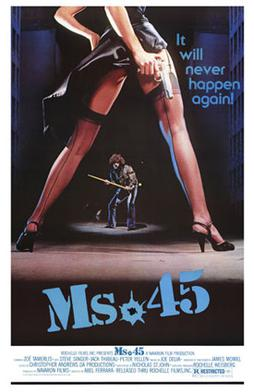


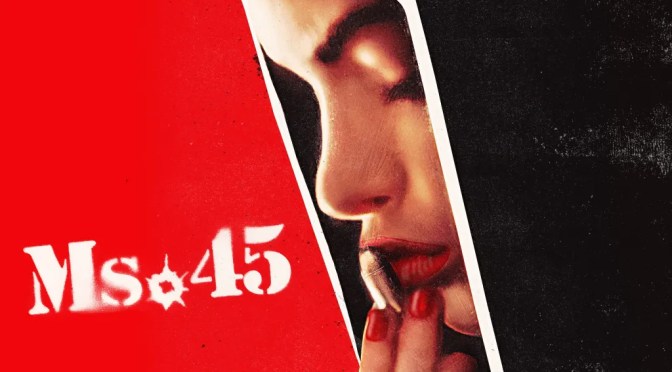
In its latest 4K restoration, Ms. 45—Abel Ferrara’s 1981 revenge thriller—has never looked more electrifying, or more disturbing. A stunning new rendering of Ferrara’s gritty vision, Ms. 45 showcases New York City in all its stark, seething chaos: a place of beautiful ugliness, where the streets pulse with danger, desperation, and decay. The film, originally shot on 16mm, feels both of its time and eerily timeless, especially now in ultra-high-definition, where every grainy detail of Ferrara’s oppressive, neon-lit streets shines in a raw, unapologetic manner.

At the heart of this urban nightmare is Thana (Zoë Lund, credited as Zoë Tamerlis), a mute seamstress whose world shatters after she is brutally assaulted by a man on her way home, then attacked again in her home. Her muteness is both a powerful thematic element and an artistic choice, amplifying her trauma, her rage, and her vengeance in a way that spoken words never could. Thana’s descent into violence is stark, visceral, and unrelenting, making her a strange kind of anti-hero in this world of moral decay. Ferrara’s direction is clinical, cold, and absolutely uncompromising—each frame holds a sharp, almost surgical precision, magnifying the madness of her mind and the city itself.

What truly elevates Ms. 45 beyond its genre limitations is the electric performance of Zoë Tamerlis/Lund. At just 17 years old when the film was made, Lund’s portrayal of Thana is nothing short of revelatory. She is the beating heart of this disturbing narrative, lighting up the screen with a fierce, magnetic presence that could have easily made her a Hollywood star—had the industry been ready for her. While many of the supporting cast either cannot act or over-act, Lund’s both vulnerable and terrifying, her expression often the only indication of her character’s state of mind. Her journey from victim to vengeful force is tragic, yet always compelling.
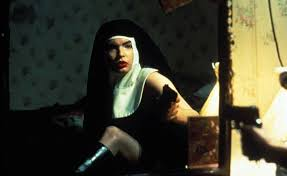

Had Lund chosen to pursue a more conventional career, she would likely have ascended to Hollywood’s A-list—her look was captivating, her screen presence undeniable—but the indie, underground scene was where she truly thrived. In Ms. 45, she is a tragic figure of youth lost to the violence of the world around her, and in the midst of it all, she shines, her performance capturing the raw, cathartic essence of a girl pushed too far. Further, Lund’s performance peaks in one of the most iconic sequences of the film—Thana’s nun fancy-dress shootout. Drenched in blood and surrounded by chaos, she dissects the partygoers in slow-motion with a terrifying calm, her eyes wide with cold sorrow. It’s a juxtaposition of innocence and savagery, like a child playing with fire and discovering its destructive power. Kudos to the deranged soundtrack here which really ramps up Ferrara’s nightmarish vision.

Ms. 45 is NOT a film for the faint of heart or the easily offended. It’s violent, raw, and unapologetically brutal, with moments that will leave you questioning your own reaction to Thana’s vengeful spree. There is something deeply primal about the film—the way it feeds off its viewers’ discomfort, forcing them to confront Thana’s rage. It’s a film that revels in its own madness, and yet somehow, Ferrara and Lund manage to make revenge feel like an art form. It’s as stylish as it is savage, as haunting as it is exhilarating.

In conclusion, Ms. 45 is a genre-defining thriller, a masterpiece of violent cinema that has lost none of its power with time. The 4K restoration is a perfect showcase for Ferrara’s vision, and Zoë Lund’s performance is a revelation—her beauty and intensity burn through the screen, making you wonder what might have been had she chosen a different path. But for those of us lucky enough to witness this film in all its gritty glory, it’s impossible not to see her as a true underground legend. Whether or not you’re ready for it, Ms. 45 is visceral, stylish, and uncompromising cinema—one that will stay with you long after the credits roll and that evil saxophone soundtrack beat fades out.
Mark: 9 out of 11


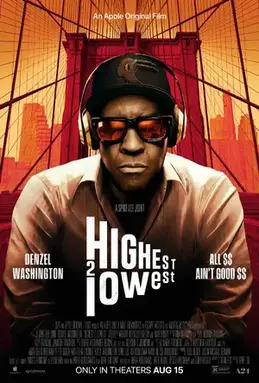
Apple TV+ Film Review: Highest 2 Lowest (2025) – a vibrant, musical and pacy, if unnecessary, remake.

Apple TV+ Film Review: Highest 2 Lowest (2025)

Directed by Spike Lee

Screenplay by Alan Fox

Based on High and Low (1963 film) by Akira Kurosawa, Hideo Oguni,
Ryūzō Kikushima, Eijirō Hisaita, and King’s Ransom (1959 novel) by Ed McBain.


Produced by Todd Black and Jason Michael Berman

Main cast: Denzel Washington, Jeffrey Wright, Ilfenesh Hadera, ASAP Rocky, John Douglas Thompson , Dean Winters, LaChanze, Aubrey Joseph, etc.

Cinematography by Matthew Libatique


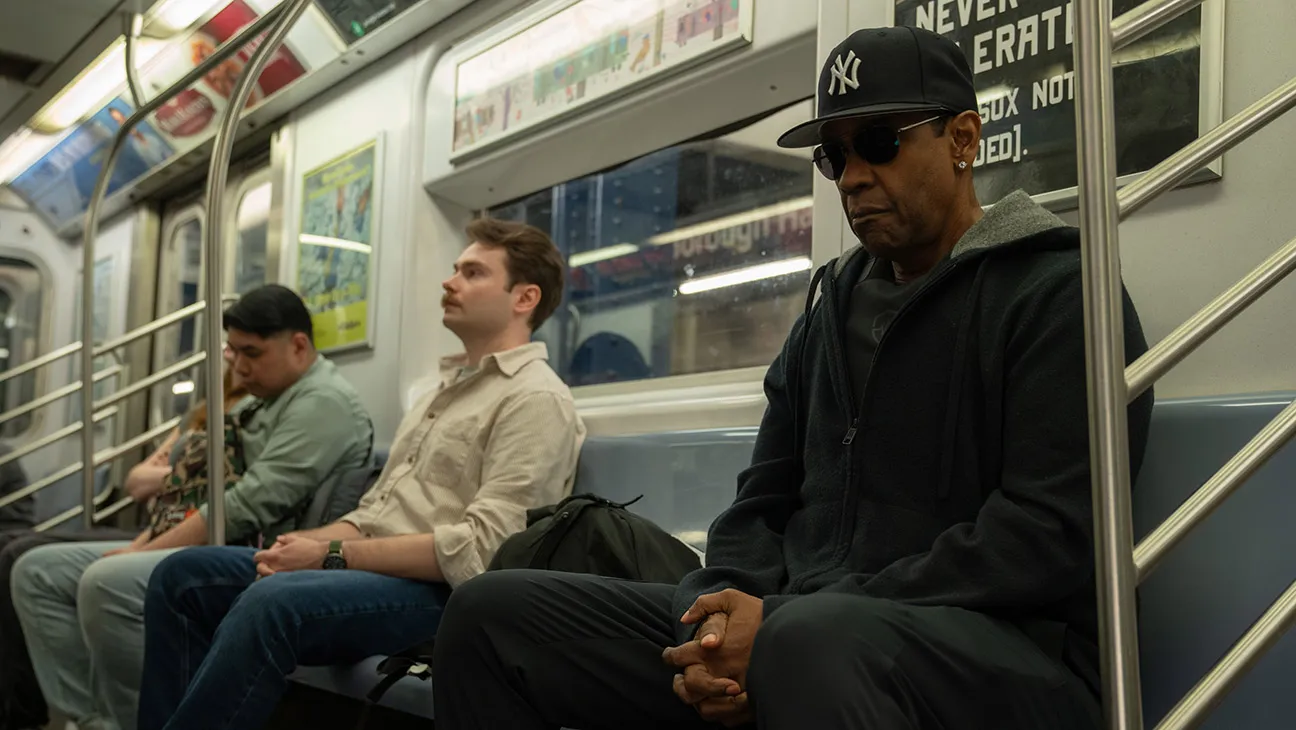
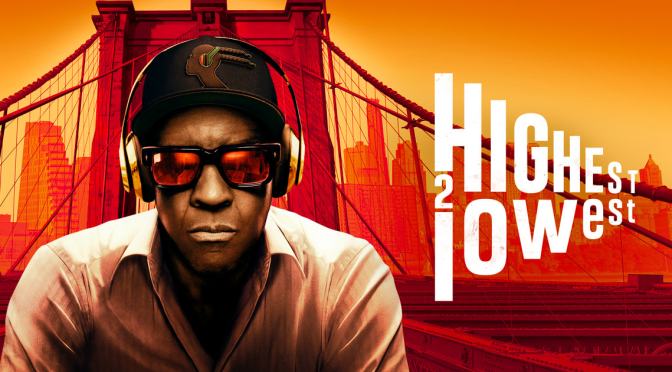
Spike Lee’s Highest 2 Lowest (2025) is a kinetic, vividly modern reimagining of Akira Kurosawa’s High and Low (1963), transplanting the Japanese master’s class-conscious thriller into the bustling, chaotic pulse of contemporary New York City. As expected from Lee, the film bursts with visual flair and political verve — the camera rarely rests, and the city itself becomes a character, glowing with heat, colour, and tension. The streets hum with energy, from glassy penthouses to subway platforms, creating a dynamic canvas on which the moral dilemmas unfold.

Denzel Washington, as usual, delivers a commanding performance as David King, a renowned independent producer and record label owner, torn between his conscience and his ambition when the kidnapping of his son occurs. Washington captures both the quiet torment and moral exhaustion of a man staring down the gulf between his privilege and his humanity. Jeffrey Wright, offers great support as his friend and chauffeur. The narrative navigates class and corporate tensions, bringing a soulful intelligence to every scene, grounding the film’s intensity with empathy and authority.


The film moves at a thrilling pace, carried by a propulsive soundtrack that fuses hip-hop, jazz, and gospel with Lee’s trademark flair for musical storytelling. Nowhere is this energy more palpable than in the ransom handover sequence — a masterclass in direction and editing — cutting feverishly across New York’s boroughs and metro trains, while the Puerto Rican Day Parade swells in a euphoric, near-operatic crescendo. It’s a breathtaking montage that exemplifies Lee’s command of rhythm, geography, and social texture. It proves to be Highest 2 Lowest (2025)’s biggest high.

Where Highest 2 Lowest (2025) falters is in the handling of its central moral crisis, which in turns undermines the all-to-rapid ending too. Indeed, it seemed to be missing a betrayal twist for me. The decision David King must make — the film’s spiritual core — arrives and resolves too swiftly around the midpoint, leaving the second half conflict, after the exhilarating Puerto Rican Day Parade, more focused on wrapping up loose ends quickly than psychological reckoning. It’s a missed opportunity for the deeper character study that Kurosawa’s original sustained so brilliantly.

Still, as an adaptation, Lee’s film is an entertaining piece of work — bold, stylish, and alive with the contradictions of the modern city. While Kurosawa’s High and Low (1963) remains the more compelling exploration of social class and moral responsibility, Highest 2 Lowest (2025) finds its own voice: vibrant, urgent, and unmistakably Spike Lee.

Mark: 7 out of 11


Cinema Review – Exploring Music and Madness in Joker: Folie à Deux (2024)

Cinema Review: Joker: Folie à Deux (2024)

Directed by Todd Phillips

Written by Scott Silver and Todd Phillips (Based on Characters by DC Comics)

Produced byTodd Phillips, Emma Tillinger Koskoff & Joseph Garner


Main cast: Joaquin Phoenix, Lady Gaga, Brendan Gleeson, Catherine Keener and Zazie Beetz etc.

Cinematography by Lawrence Sher

Music by Hildur Guðnadóttir

*** MAY CONTAIN SPOILERS ***


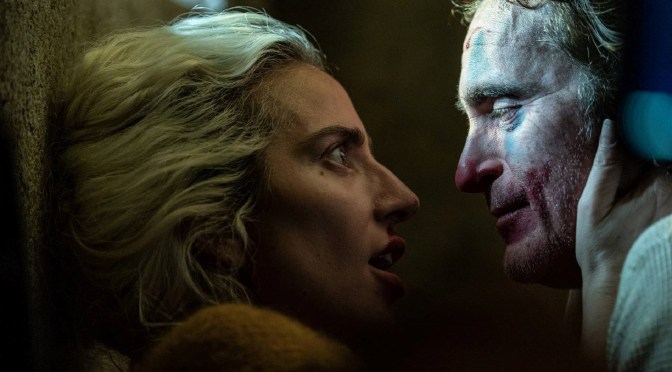
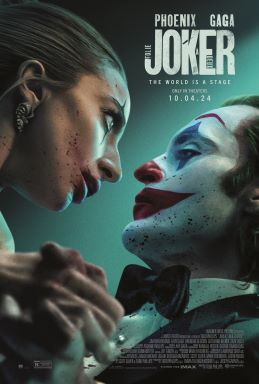
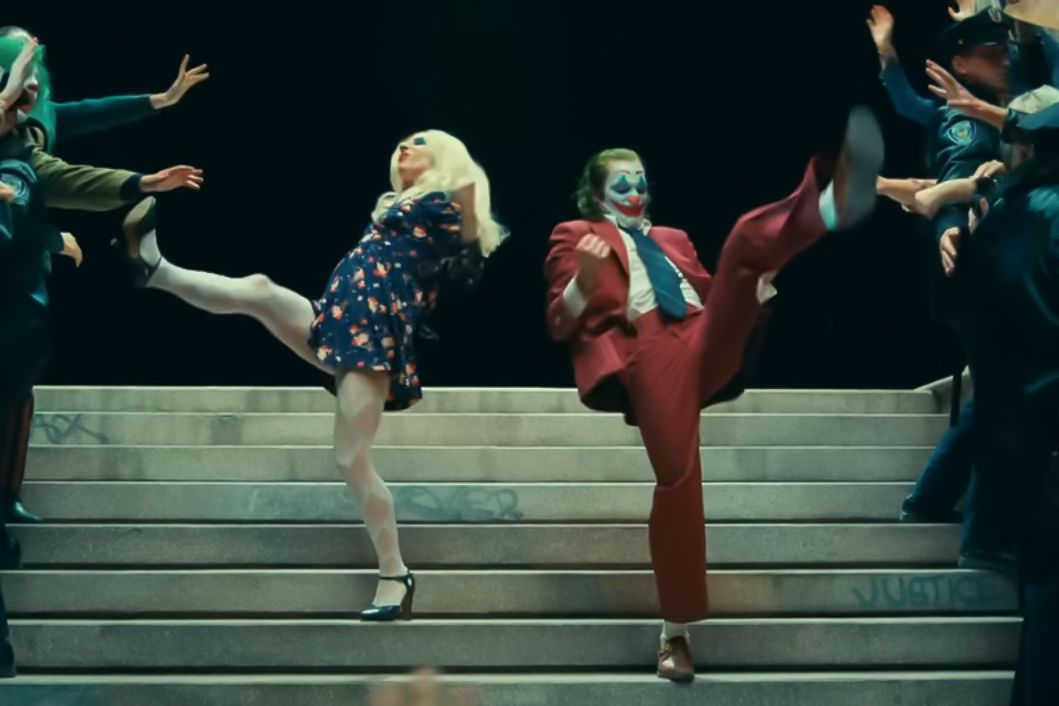
In 2019, Todd Phillips and Joaquin Phoenix, as director and lead actor, unleashed Joker (2019) on the cinema public. It became an enormous critical and commercial hit, with Phoenix winning the ‘Best Actor’ award at the Academy Awards. Unsurprisingly, a sequel now reaches us. While the original 1980’s set period drama worked superbly, echoing the structure and themes of Scorsese’s King of Comedy (1982) and Taxi Driver (1976), the follow-up Joker: Folie à Deux (2024) is altogether different. In fact, given it experiments with musical, romance, crime, court-room and psychological horror genres, it is an altogether riskier film, which while compelling and fascinating, doesn’t always connect to a satisfactory whole. But perhaps that is the point. It is intended to reflect an inconsistent mind and unreliable narrator, a fractured soul in Arthur Fleck.

For me, in Joker: Folie à Deux (2024), Todd Phillips masterfully employs cinematic techniques of fragmentation and ambiguity to deepen the exploration of mental illness, echoing the disorienting and fractured experience of his protagonists. The film, much like its predecessor, blurs the lines between reality and delusion, but this time the ambiguity is intensified through musical elements, dreamlike sequences, and multiple perspectives. Phillips’ use of disjointed timelines and unreliable narratives immerses the audience in the chaos of Arthur Fleck’s (Phoenix) and Harley Quinn’s (Lady Gaga) unraveling psyches.


The musical numbers, set against stark, gritty environments, feel both fantastical and unnerving, reinforcing the characters’ distorted perceptions of the world. Moments of quiet introspection are suddenly broken by violent outbursts or surreal interludes, mimicking the unpredictability of their mental states. The film’s visual style shifts between stark realism and surreal imagery, reflecting the internal fragmentation of Arthur and Harley’s minds, keeping viewers on edge and questioning what is real.

Phillips’ direction ensures that the story remains rooted in ambiguity—much like the first film—inviting viewers to interpret the characters’ mental states without offering clear answers. This cracked narrative style doesn’t just illustrate their mental illness; it pulls the audience into it, making Joker: Folie à Deux a bold and unsettling exploration of madness through form as much as story. As such there isn’t much plot to speak of as Arthur’s journey essentially follows him from Arkham Asylum to court, with episodic splashes of song and dance in between, before we get to the climactic court room scenes.

As aforementioned, in Joker (2019), Todd Phillips drew heavily from Martin Scorsese’s The King of Comedy (1982), particularly in its portrayal of a lonely, unstable man seeking fame and validation in a world that cruelly rejects him. Arthur Fleck’s obsession with talk show host Murray Franklin mirrors Rupert Pupkin’s fixation on becoming a comedy star, and both films explore the dangerous consequences of societal alienation and delusional aspirations. The gritty, urban backdrop and character-driven narrative made Joker a powerful homage to Scorsese’s psychological explorations of fame and madness.


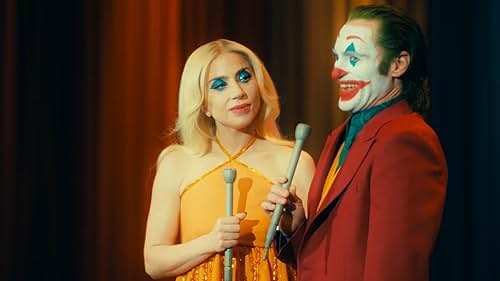
With Joker: Folie à Deux (2024), Phillips shifts toward a different Scorsese film for inspiration: New York, New York (1977). Much like Scorsese’s semi-musical about a turbulent romance between two performers, Folie à Deux integrates musical elements and centres on the chaotic relationship between Arthur and Harley Quinn (Lady Gaga). The film’s blending of harsh realism with the stylized, dreamlike sequences of musical numbers echoes New York, New York’s mix of glitzy performance and dark personal struggle. Thematically, both films explore how dreams of stardom can clash with mental instability, but Folie à Deux takes it a step further by embedding this conflict within its characters’ delusions, making the musical sequences feel like an escape from—or reflection of—their psychotic minds. This potential homage to New York, New York allows Phillips to expand Joker‘s cinematic language, fusing psychological drama with surreal musical spectacle.

Joker: Folie à Deux (2024), at time of writing, has polarized critics and cinema-goers. As someone who watches a lot of “art-house” and European cinema, I can see why this film is dividing opinion. This is what happens if Jacques Demy, by way of Bergman, were given $200 million to make a DC comic-book film. Todd Phillips takes many risks in form and structure, most notably denying the audience catharsis at the bleak finale. It is truly downbeat and it felt like Phillips and Phoenix were finally done with this clownish killer and anti-hero.

As a cinematic experience the musical score is striking. Moreover, the production is grey and oppressive and claustrophobic, set in enclosed cells and shadowed court rooms. There is little light in this film nor even a shadow at the end of the tunnel for Arthur and Harley. Phoenix is fantastic again, while Gaga’s romantic partner-in-crime is under-cooked as a character. Nonetheless, Gaga still sparkles amidst this gloomy, musical, existential journey into the mouth and down the throat of madness.

Mark: 8.5 out of 11


FILMS THAT GOT AWAY #14 – BASKET CASE (1982)

FILMS THAT GOT AWAY #14 – BASKET CASE (1982)

Directed by: Frank Henenlotter

Screenplay by: Frank Henenlotter

Produced by: Arnold H. Bruck, Edgar Ievins, Tom Kaye

Cast: Kevin Van Hentenryck, Terri Susan Smith, Beverly Bonner

Cinematography: Bruce Torbet

Edited by: Frank Henenlotter

*** REVIEW CONTAINS SPOILERS ***


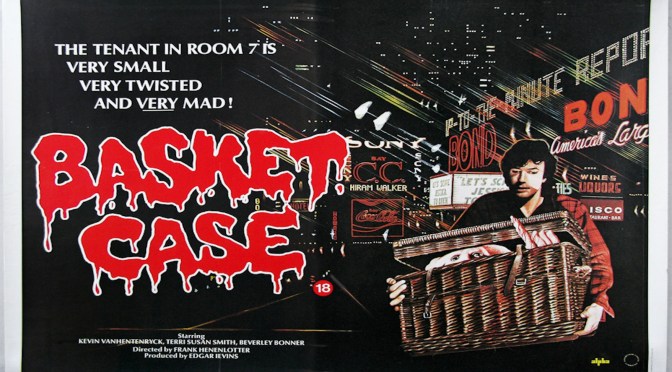
Being a massive fan of horror and cult movies, it is quite incredible that I had never seen Frank Henenlotter’s low-budget exploitation film, Basket Case (1982). So, when I saw it available via my Shudder subscription I dived straight into the basket, and found the insane premise, bad acting, zero-cash lighting style, lo-fi stop motion and monster effects, all combining to deliriously horrific and hilarious effect. Because, what it lacks in polished performances and filming style, it makes up for in riotous bad taste and shocking entertainment.

Henenlotter’s debut film was shot on grainy 16mm film and for a budget of around $35,000. The story finds the enthusiastic Duane (Kevin Van Hentenryck), visiting New York and staying at the low-rent fleapit called the Hotel Broslin. What makes Kevin so intriguing is he carries around a basket. What’s in the basket I hear you ask? Well, you soon find out that it is something quite disgusting and despicable. A grotesque freak which, when you learn it and Duane’s backstory, takes on a bizarre kind of empathy. As Duane begins to make friends, both with a prostitute neighbour and Doctor’s receptionist, his grisly telepathic and physical connection with the monster pushes him to the brink of insanity. Because the demon is driving Duane to assist him on a vengeful journey of bloodlust and murder.

While the story is certainly nuts and much of the acting is woeful, Kevin Van Hentenryck’s energetic performance makes Duane a likeable protagonist. You really root for him when he begins to fall in love, but the monster becomes jealous, wreaking havoc on Duane’s romance. Further, Henenlotter deserves so much credit for making the insanity on the screen work. I think he does this because he gives us a tragic lead character, moves the story along at a whip-crack pace, has a fantastic monster and devises many memorably gruesome deaths. All throughout I was both laughing and feeling sick at the same time. Lastly, I also just love that Henenlotter made up many of the names in the credits because only a handful of people were in the crew. Indeed, Basket Case (1982) is a true independently made gonzo-horror classic, which makes the most of the dirty-porno-sleazy New York streets it is set on. Dare YOU open the basket?

Mark 8.5 out of 11


DISNEY + FILM REVIEW: SOUL (2020)

DISNEY + FILM REVIEW: SOUL (2020)

Directed by: Pete Docter

Produced by: Dana Murray

Written by: Pete Doctor, Mike Jones, Kemp Powers

Cast: Jamie Foxx, Tina Fey, Graham Norton, Rachel House, Alice Braga, Richard Ayoade, Phylicia Rashad, Donnell Rawlings, Questlove, Angela Bassett etc.

Music by: Trent Reznor, Atticus Ross, Jon Batiste[a]

Cinematography: Matt Aspbury, Ian Megibben

*** MAY CONTAIN SPOILERS ***


Death, the loss of childhood innocence, grief, mid-life crises, missing children, the end of the word due to human greed, ghosts, female emancipation within patriarchal society, the afterlife, use of fear as energy, neuropsychological exploration of emotions, oh, and death again are all heavy themes and subjects for a film. But they are not just from the works of heavyweight filmmakers such as Werner Herzog, Akira Kurosawa, Ingmar Bergman or Stanley Kubrick. They are subjects investigated and probed and rendered entertainment in a fantastic style by the ever-impressive Pixar studio. Their latest film Soul (2020) is yet another extravaganza of high concepts, existential themes, and scintillating visual world-building.

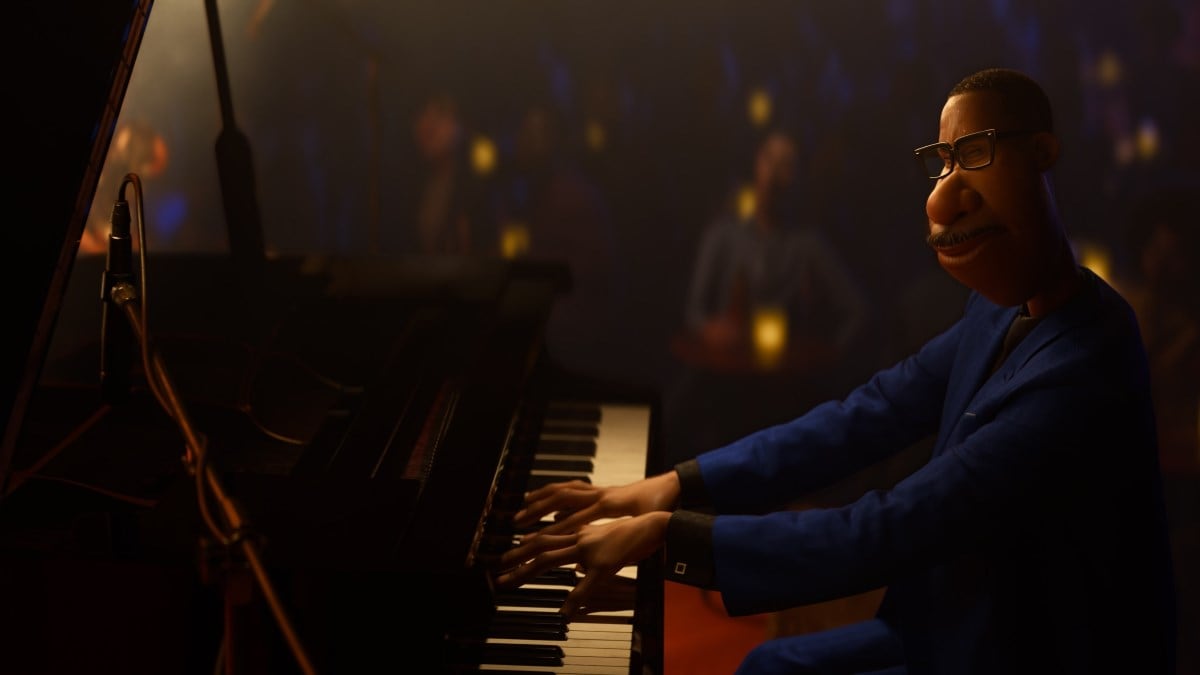
Soul (2020) centres around Joe Gardner (Jamie Foxx), a music teacher who longs to immerse himself in a career as a jazz musician. It’s not necessarily suggested in the opening scenes as to why Joe hasn’t made it as he clearly has musical talent. However, his dominant mother Libby (Phylicia Rashad) objects to his frivolous desire to play piano, plus Joe, like many artists out there just cannot get a break. A chance arises though when he gets an opportunity to audition for esteemed singer, Dorothea Williams (Angela Bassett). Joe’s exquisite piano playing wins over Dorothea, but then tragedy strikes as an excited Joe falls down a manhole and dies. Being a Pixar film committed to venturing into the afterlife, as it did previously with Coco (2017), Joe finds himself, not in the ‘Land of the Dead’ but rather the ‘Great Before/Beyond’ instead.


As Joe moves toward the light with the many other souls he refuses to accept this is the end. He rejects the unknown glowing light of the ‘Great Beyond’ and escapes to a world full of young, old and lost souls called the ‘Great Before’. Here he meets a cynical soul called 22 (Tina Fey), who is refusing to claim the badges required to begin her own life on Earth. This is where the story gets a bit sticky for me. I mean I enjoy narratives about life, death and the afterlife including the brilliant A Matter of Life and Death (1946) and both excellent versions of Heaven Can Wait (1943 / 1978). However, Soul (2020) I think tries to do too much as 22’s story threatens to dominate Joe’s pursuit to get his life and career back. Moreover, the ridiculous sight of Joe’s soul ending up in a therapy cat also felt like a contrived lean toward giving the kids something to laugh at. Indeed, I felt this water-and-oil decision, while funny, undermined the more intrinsically vital themes within the narrative.

Ultimately though, having succumbed to the cultural pressure of signing up to Disney +, I did thoroughly enjoy Pixar’s Soul (2020). Jamie Foxx and Tina Fey create a fine double act with their brilliant comedic timing and performances. Moreover, Graham Norton and Richard Ayoade provide humorous voice support, and of course, the animation is incredible. Although I would actually have preferred to stay on the exquisitely drawn streets of New York more than the ‘Fantasiaeque’ lysergic acid look of the afterlife. Still, once again, Pixar have been clinical in delivering an intelligent film that delves into existential themes relating to the meaning of life. Joe’s journey, like his music, is full of verve, beauty and many surprising twists, ensuring his soul is certainly one that is worth saving.

Mark: 9 out of 11


NETFLIX FILM REVIEW: DA 5 BLOODS (2020)

NETFLIX FILM REVIEW: DA 5 BLOODS (2020)

Directed by: Spike Lee

Produced by: Jon Kilik, Spike Lee, Beatriz Levin, Lloyd Levin

Written by: Danny Bilson, Paul De Meo, Spike Lee, Kevin Willmott

Cast: Delroy Lindo, Jonathan Majors, Clarke Peters, Norm Lewis, Isiah Whitlock Jr., Mélanie Thierry, Paul Walter Hauser, Jasper Pääkkönen, Jean Reno, Chadwick Boseman etc.

Music by: Terence Blanchard, Marvin Gaye

Cinematography: Newton Thomas Sigel

Distribution: Netflix

***MAY CONTAIN SPOILERS***


Shelton Jackson “Spike” Lee has been a prolific actor, director, producer and polemicist for some time now. An ultra-talented and outspoken cinematic artist, he has directed thirty fiction and documentary films since his debut feature film She’s Gotta Have It (1986). Plus, all manner of promos, commercials, music videos, short films and television series. An energetic firebrand of a director he has made films in many genres and is a risk-taker in subject, theme and style. Whether you agree with what he has to say he is a filmmaker who is always creating situations and characters who must be heard.  

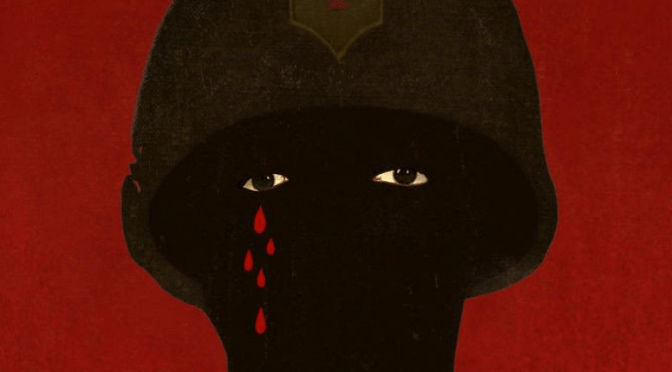
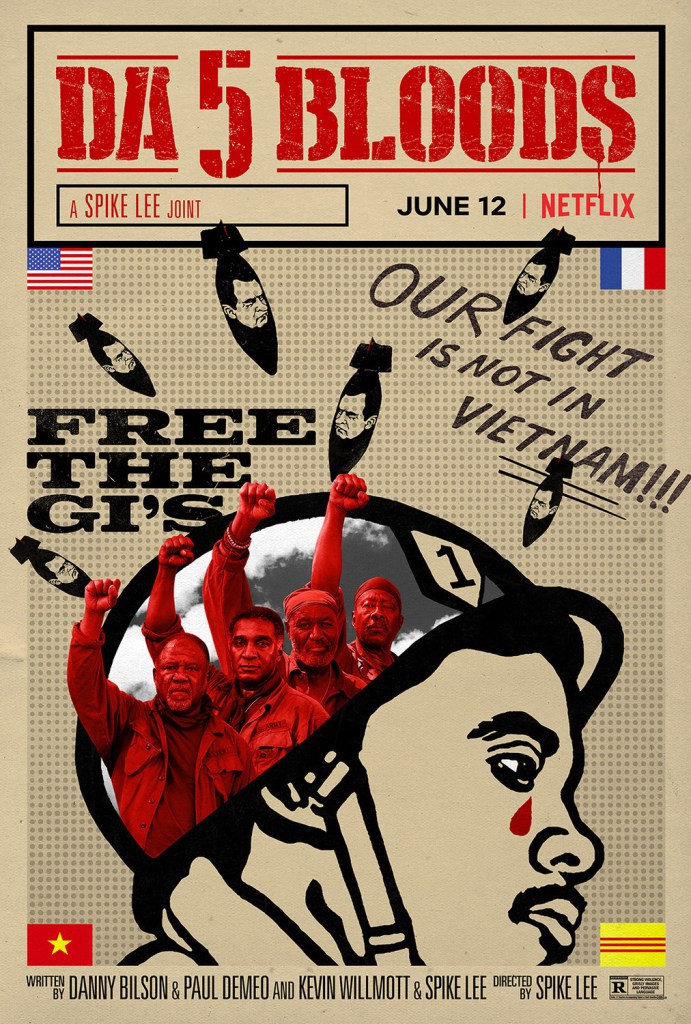
His latest film, Da 5 Bloods (2020), is a timely Netflix film release which encapsulates crime, heist, political, war, drama, Blaxploitation, comedy, documentary, love and experimental film genres. Lee has never been afraid of taking risks and sometimes his films have not worked because of it. However, with BlacKKKlansman (2018) he succeeded in making one of the best films of 2018 and should have won Best Film Oscar in my view. Da 5 Bloods (2020) grabs the power baton of Lee’s prior film and runs with it, delivering an entertaining, funny, thought-provoking, stylish and brilliant genre-blending story full of sustainable socio-political arguments in the era of the Black Lives Matter movement.


The narrative begins by establishing four aging Vietnam veterans, portrayed by the magnetic ensemble of Delroy Lindo, Clarke Peters, Norm Lewis and Isiah Whitlock Jr. They meet in Ho Chi Minh City in order to venture into the jungle and locate the remains of their squad leader. During some very stylised, richly colour-saturated and impactful flashbacks, it is revealed their friend, “Stormin Norman” (the charismatic, Chadwick Boseman), was killed in combat. Furthermore, and this is the money reason they are back in ‘Nam – there is army gold in those hills. Thus, the comrades set out to locate their friend’s body, and the gold, in order to find reparation and hopefully some form of redemption.

The film begins warmly as we enjoy the company of these great actors portraying reunited friends on an old boys outing. However, the film, as it introduces further subplots involving Jean Reno’s suspicious businessmen, Desroche and Delroy Lindo’s Paul crumbling mental state, moves into far darker territory the further the men get into the jungle. Lindo himself gives arguably the best performance of his career as a soldier grieving for his lost friend and desperate to get compensation for the unjust loss of so many lives in Vietnam. His character’s downward mental trajectory is one of the most powerful elements of Da 5 Bloods (2020). No doubt Lindo will be nominated come awards time and so he should be.

The cinematic excellence on show too from Spike Lee and his production crew is to be applauded too. Lee’s box of magic tricks includes: jump cuts, aspect ratio switches, colour saturation, Shakespearean soliloquies, documentary footage, flashbacks, conveyor-belt camera tracks, stills photography, slow-motion, direct address and many other devices. The exceptional cinematography is drenched in an opulent score from Terence Blanchard and the incredible voice of Marvin Gaye. I guess my main reservations about the film would be the elongated running time, with some scenes indulgently over-running. Moreover, there were also a couple of convenient plot coincidences which could have been ironed out. Nonetheless, with Da 5 Bloods (2020), Spike Lee has delivered another bravura mix of genre and socio-political filmmaking which, like classics such as The Treasure of Sierra Madre (1948) and Apocalypse Now (1979), stare into the dark heart of humanity and find greed, war and death there. Unlike those two films though, Da 5 Bloods (2020), also contains hope, light in the tunnel, and the idea that togetherness brings strength in the face of adversity.

Mark: 9 out 11


CLASSIC FILM REVIEW: ONCE UPON A TIME IN AMERICA (1984)

CLASSIC FILM REVIEW: ONCE UPON A TIME IN AMERICA (1984)

Directed by: Sergio Leone

Produced by: Arnon Milchan

Screenplay by: Sergio Leone, Leonardo Benvenuti, Piero De Bernardi, Enrico Medioli, Franco Arcalli, Franco Ferrini

Based on: The Hoods by Harry Grey

Cast: Robert De Niro, James Woods, William Forsythe, Jennifer Connelly, Elizabeth McGovern, Joe Pesci, Burt Young, Tuesday Weld, Treat Williams, William Forsythe, Richard Bright, James Hayden, Brian Bloom, William Forsythe, Adrian Curran, Darlanne Fluegel. Larry Rapp, Mike Monetti, Richard Foronji, Robert Harper, Dutch Miller, Gerard Murphy, Amy Ryder, Julie Cohen etc.  

Music: Ennio Morricone

Cinematography: Tonino Delli Colli


***CONTAINS PLOT SPOILERS***


If you were, like me, thoroughly absorbed by Martin Scorsese’s recent directorial gangster epic, The Irishman (2019), you should definitely check out another incredible gangster drama, Once Upon A Time in America (1984). It is directed by acclaimed Italian filmmaker, Sergio Leone, he of “Spaghetti Western” fame. Indeed, Once Upon A Time in America (1984), was the first feature film he’d made since A Fistful of Dynamite (1971). Sadly, it was to be his final film.

With a director’s cut running at a behemoth 250 minutes and original theatrical release lasting 229 minutes, Once Upon A Time in America (1984), is certainly a marathon viewing experience and fitting epitaph to Leone’s cinematic craft. Yet, the film rarely feels over-long or slow because there are so many memorable scenes, fascinatingly complex characterisations, incredible intrigue and enough narrative density present to satisfy any audience member with the patience to let it absorb you. Structurally, the film is epic in nature too as it cross-cuts between three, arguably four, separate timelines in: 1918, the 1920’s, the 1930’s and 1968. Interestingly, I watched it via Amazon Prime in two sittings and is so long even the original ‘Intermission’ card remains.


Leone and his amazing production cast and crew took almost a year to film Once Upon A Time in America (1984). It’s reported to have had somewhere between eight to ten hours of footage on completion. He originally wanted to release it as a two-part epic, but the studio insisted it was distributed as one film. The almost-four hour theatrical release was received to great critical acclaim in Europe, however, a severely chopped down 139-minute version was put out in America. It was a critical and box office bomb. American critics however, lauded the European version, lamenting the non-release of Leone’s full cinematic vision.

For a filmmaker who was drawn to stories set in the America, Leone would generally film in European studios and locations. While some exteriors for Once Upon A Time in America (1984) were shot on location in Florida and New York, many of the interiors were recreated in Rome’s Cinecitta. Furthermore, a Manhattan restaurant was built in Venice, and incredibly, Grand Central Station was rendered at part of the Gare du Nord in Paris. Having said that, Once Upon A Time in America (1984), is so carefully and exquisitely designed and filmed, you would not notice. While possessing more than an air of European arthouse sensibilities, the film, based on a novel called The Hoods, represents Leone’s and his co-screenwriter’s tarnished vision of the American dream. Most significantly is the theme of a loss of innocence. 1920’s New York is presented through the eyes of these Jewish working-class children, many of them sons and daughter of migrants from Europe. These are tough times and the story explores the collision between young innocence and adult corruption by society and humanity. Once Upon A Time in America (1984) is also a story about friendship, loyalty, passion and crime.


The narrative revolves around the lives of young gang of Jewish friends growing up in Brooklyn called: Noodles, Max, Patsy, Cockeye and little Dominic. It’s majestic storytelling of the highest quality as we flit between past, present, now and future. Robert DeNiro’s older Noodles reminisces both from 1930 and 1968. There is a sense that he may be projecting from the hazy and drug-addled glow of an opium den. That is open to interpretation though. Thematically, the framework hangs a history of childhood friendships, juxtaposing it with the same people as adults and their victories, losses and betrayals. Further themes include: love, lust, greed, crime, broken relationships, Prohibition, union corruption; as well as focusing on the rise of mobsters in American society.

Noodles as portrayed by an imperious Robert DeNiro is calm on the outside, however, his often-rash actions show him as impetuous, emotional and wild on the inside. James Woods’ Max is much more careful, calculating and ice-cold in his business. But the two forge a friendship as teenagers which continues in adulthood. Their childhood gang subsequently becomes a renowned bootlegging and criminal outfit. Leone does not ask us to like or find sympathy for the characters, but rather respect that they are a product of a ruthless era. Sure, they could have got day jobs, but they decide to become criminals and very successful they are too. Even after Noodles gets out of jail for killing a rival, Max has saved a place for him in their illegal liquor trades. Only later does the true deception occur. Ultimately, while their stories are incredibly compelling, these men are violent lawbreakers who spill blood, bribe, threaten, kill and rape, all in an attempt to rise up the ladder of the American capitalist system.

I don’t want to spoil any more of the story, but safe to say the cast in this classic film are amazing. Along with DeNiro and Woods’ brutally convincing performances a whole host of young and older actors are directed beautifully by Leone’s careful hand. The standouts for me are Jennifer Connelly in a very early role. She portrays the younger Deborah, while Elizabeth McGovern is the older version of the same character. Connelly is a picture of angelic innocence and Noodles is smitten with her from the beginning. It’s sad therefore that when the adult Noodles’ is rejected by Deborah, his reaction is both toxic and unforgiveable.


Undeniably, sex and violence are powerful features in Once Upon A Time in America (1984). Sex especially is rarely, if at all, romantic or part of loving relationship. There are two brutal rape scenes in the adult years. Even when they are kids the character of younger Peggy is shown to use her promiscuity as a weapon to blackmail a police officer. There are some tender moments though, notably during the scene where young Patsy seeks to lose his virginity with Peggy. Her payment would be a cream cake, but Brian eats the cake and saves his innocence. Yet such scenes are fleeting as mob rule, violent robberies, fiery death and murder ultimately dominate the character’s bloody existences.

As I say, the actors all give memorable performances and the supporting cast including the likes of Treat Williams, Danny Aiello, Tuesday Weld and Joe Pesci are extremely strong too. A special mention to James Hayden who portrays the older Patsy. He doesn’t have the most dialogue compared to the characters of Max and Noodles; however, he has a quiet power which steals many scenes via strength of personality. The fact that Hayden died of a heroin overdose, in 1983, after completing filming only adds to the cult of tragedy. Dead at 30 years of age, James Hayden never got to see any completed version of Once Upon A Time in America (1984).

Given this review is getting near epic proportions itself I will begin to wrap up by heaping praise on the incredible production design. The costumes, locations, vehicles, props and era are slavishly and beautifully recreated. So much so you can almost smell the smoke as it drifts up from the Brooklyn streets. Moreover, the film is superbly photographed by Tonino Delli Colli. The music! I haven’t even mentioned the sumptuous score by the legendary Ennio Morricone. His score is a masterful symphony of haunting laments for loss of love, friendship, loyalty and life. Much indeed like Once Upon A Time in America (1984) itself, as a whole. In conclusion, if you haven’t seen it, I urge you to do so in the knowledge that Sergio Leone has transplanted that same brutally elegant vision of the Wild West to the American gangster genre with unforgettable emotional resonance and power.


MY CINEMATIC ROMANCE #19 – DENZEL WASHINGTON

MY CINEMATIC ROMANCE #19 – DENZEL WASHINGTON

In all the excitement, I seemed to have forgotten about this feature, but will reignite it here. Essentially, I pick a favourite film actor or director or writer or composer or film craftsperson, who I have followed and admired for some time, and pick out five of their works which resonate with me. Usually it is difficult to stick to just five selections, however, I find writing with a rule or discipline sharpens the critical mind. Today’s choice is one of the greatest actors to have walked the boards, appeared on the box, and graced the silver screen. His name is of course, Denzel Washington.

Born in Mount Vernon, New York and having initially attended a military academy, Washington would later gain a BA in Drama and Journalism from Fordham University. He began by acting in Summer Stock theatre, but his first major break was in the television series, St Elsewhere. His performances as Dr Philip Chandler would lead to castings in prominent film roles, notably as Steve Biko in Cry Freedom (1987). In that film he would receive his first Academy award nomination. From then on Washington would go from strength to strength traversing stage and screen roles with incredible range and skill. As writer, director and actor he is an artist who can span genres and disciplines, equally brilliant in commercial projects and more arthouse productions. Here are just five roles which I very much think he excelled. But to be honest, there are many, many more I could have included.


GLORY (1989)

Glory (1989) was the first major Hollywood film to profile the fight of black soldiers to free themselves from slavery in the context of the U.S. Civil War. It is an excellent drama with some brutal battle scenes and memorable characters. None more so that Washington’s portrayal of Private Silas Trip. He is quite understandably an angry man determined to fight all the way against oppressors. Washington delivered a searing performance which would earn him a Best Actor in a Supporting role award. It is an outstanding portrayal full of power and strength.


MALCOLM X (1992)

Washington worked with Spike Lee on many film productions and Malcolm X (1992), is arguably their most significant and impressive film. It charts the life and death of a man born Malcolm Little who would grow to be anything but. After a troubled childhood he became a drug dealer and criminal in order to survive. Having converted to Islam he rejected his slave roots, going on to become one of the most outspoken voices against black oppression the world has ever known. Both Lee and Washington should have won Oscars for their work, and Washington’s intense performance stands as a fine cinematic tribute to a true spokesperson for a generation.


TRAINING DAY (2001)

Washington has played his fair share of heroic and complex anti-heroes trying to find their way in the world, but in David Ayer’s brilliant cop drama Training Day (2001), he revels in the role of bad-ass corrupt cop, Alonzo Harris. Washington and Ethan Hawke are both brilliant as the mentor and apprentice narcotics officers who are about to have a very intense day of plots and double-crosses. Washington spits and chews up Ayer’s meaty dialogue as Harris, who has a devilish plan up his dirty sleeves. Ultimately, the respect between the two erodes and a violent power game ensues with surprising twists ahead. Washington won the Best Actor award at the Academy Awards, and while it was well earned, it was arguably more for his body of incredible film performances overall.


MAN ON FIRE (2004)

While not necessarily the best film on Denzel Washington’s amazing acting C.V., Man on Fire (2004) is one of the more memorable films he made with uber-Hollywood genre filmmaker, Tony Scott. Washington clearly respected Scott as a man and director, and while Scott’s flashy and bombastic style could drown his actors, Washington’s talent always shone through. As John Creasy, Washington’s characterisation is that of a broken ex-military man who has killed for his country, and now realised it was all for nothing as he lost and alone. Alcoholic and suicidal, Creasy finds redemption in the guise of a young girl, portrayed brilliantly by Dakota Fanning, who following her kidnapping, goes on a vengeful kill-crazy-rampage-search-for-justice. Washington’s acting is both muscular and tender in equal measure as Scott delivers an explosive genre film of the highest quality.


FENCES (2016)

Denzel Washington’s honest, down-to-earth and heart-cracking drama is a formidable character piece and acting tour-de-force. Adapted from August Wilson’s prize-winning play, the narrative bristles with authentic working-class lives of 1950s Pittsburgh, and is littered with some wonderful stories and dialogue. At the heart of the drama are Denzel Washington’s complex character, Troy Maxson, and his long-suffering wife, Rose; portrayed with significant humility by Viola Davis. Troy’s character is charismatic, and he delivers some hearty yarns from his past, but he’s also bullies everyone around him. Moreover, Washington directs brilliantly, “fencing” in the characters to create a sense of claustrophobia and intensity. By keeping the players mainly in the yard and the house we feel as trapped as they are by society, social status and their life decisions. It’s an intimate film about proper characters and real lives and overall, the performances alone make the film feel cinematic.


fences

NETFLIX TV REVIEW – UNORTHODOX (2020)

NETFLIX TV REVIEW – UNORTHODOX (2020)

Directed by Maria Schrader

Written by: Anna Winger, Alexa Karolinski, Daniel Hendler

Based on: Unorthodox: The Scandalous Rejection of My Hasidic Roots
by Deborah Feldman

Cast: Shira Haas, Amit Rahav, Jeff Wilbusch, Alex Reid, Aaron Altaras, Ronit Asheri, Dina Doron, Gera Sandler, and more.

Original Network: Netflix

**** MAY CONTAIN SPOILERS ****


When one watches a memoir based on true events such as Netflix’s Unorthodox (2020), you realise how lucky you are in regard to the freedom you have. This isn’t about an individual going through social lockdown for good reason, but someone who is trapped by their strict religious and family traditions. Such traditions in themselves could be deemed acceptable as we must respect different ways of living. However, what if that person wants to leave their life and is not allowed? This is called incarceration of the soul and body. This is wrong. People must be allowed to choose their own way in life and not be tethered by dogma or ideology. I repeat, I respect people’s belief systems, but not if it has a negative effect on that person.

Based on Deborah Feldman’s bestselling autobiography, Unorthodox, is an impressive four-part drama which focusses on Esty Shapiro, portrayed with provocative emotion and vulnerability by Shira Haas. Esty is an unhappy Jewish woman, who finds herself trapped in a traditional ultra-Orthodox marriage in Williamsburg, Brooklyn. She is denied many things such as a control, position, voice, personality, expression and her love of music. The compelling episodes go back and forth in time between the build up to her marriage to inexperienced, Yanky (Amit Rahav), and Esty’s escape to Berlin, where she explores the world outside her religion for the first time.

While Yanky is shown to be kindly, he is committed, some may say brainwashed, to his faith. Therefore, the marriage process is one of suppression and control. Every moment of Esty’s life is plotted, from the shaving of her hair prior to the wedding, and after, the days they are meant to have sex. The intercourse, however, proves anxious for the young couple. Rather embarrassingly though, this private matter becomes a huge issue with other family members. Privacy, it seems, is secondary as Esty is treated no better than a brood mare. Even after she escapes to Berlin, Esty is pursued by her husband and brutish cousin, Moishe (Jeff Wilbusch). Sadly, there seems to be more control in the Hasidic community than love. Of course, this is a representation of Deborah Feldman’s experience, thus, I cannot begin to understand the nature of the Hasidic Jewish community in full. For many it is probably a safe space and designed to protect individuals from the often rotten world outside. Faith and family can be great protectors, however, in this story, for one person, that life became a living hell.

In the character of Esty we are introduced to a fascinating world, and her riveting struggle to become an individual rather than follow patriarchal doctrine. While the narrative takes a slight left turn in the final episode, I can heartily recommend this mini-series. Lastly, I cannot judge if the representation of the Samtar movement is realistic, yet the setting, costumes and culture feels authentic. The actors speak, on the main, Yiddish, and in Shira Haas’s commanding performance Unorthodox we get a very realistic encapsulation of a desire to escape oppression. Haas may be diminutive in size, but her rendition of Esty Shapiro is mighty in heart and soul.

Mark: 9 out of 11


UNCUT GEMS (2019) – CINEMA REVIEW

UNCUT GEMS (2019) – CINEMA REVIEW

Directors: Benny Safdie & Josh Safdie

Produced by: Scott Rudin, Eli Bush, Sebastian Bear-McClard

Written by: Ronald Bronstein, Josh Safdie, Benny Safdie

Cast: Adam Sandler, Lakeith Stanfield, Julia Fox, Kevin Garnett, Idina Menzel, Eric Bogosian, Judd Hirsh etc.

Cinematography: Darius Khondji

**MAY CONTAIN SPOILERS**


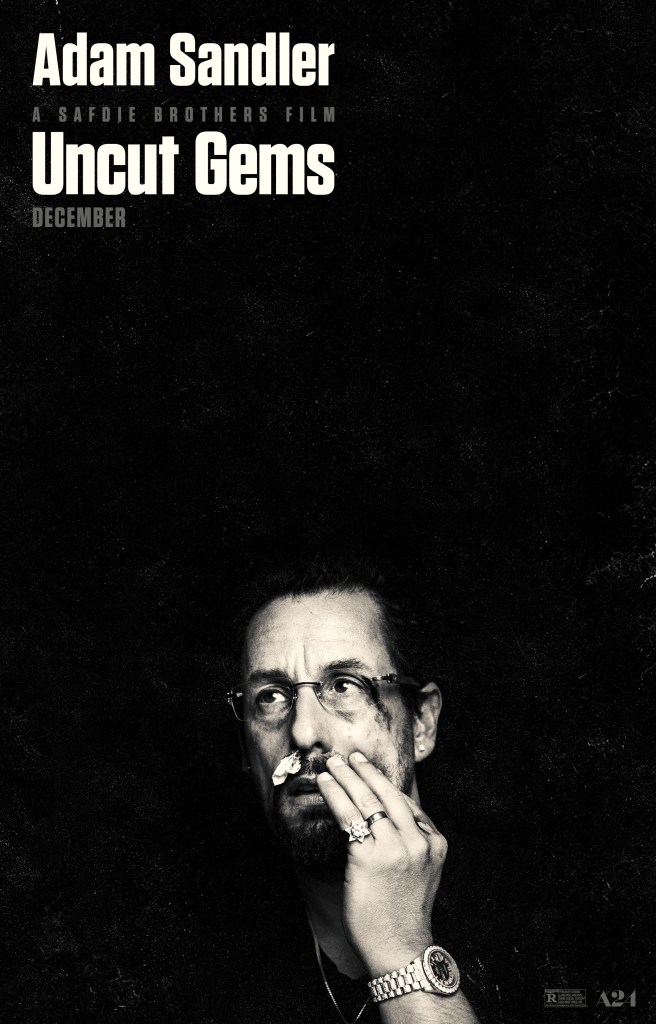
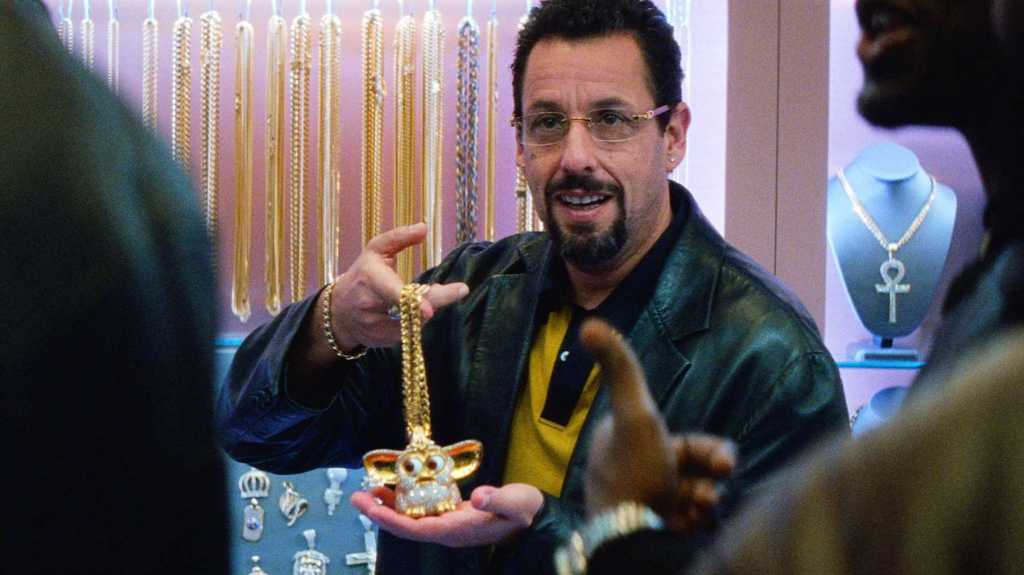
This is a film about an arsehole. Aptly enough we are introduced to the main protagonist, Howard Ratner (Adam Sandler), as he has a rectal examination of his colon and other extremities. From here on we descend into the mired cesspool that is Howard’s dysfunctional business, family, love and extra-curricular activities. He is, on the surface, a successful businessman selling jewellery, watches and gems within New York’s Diamond district. Alas, he is also a degenerate gambler who is being chased by all manner of shark-like money lenders. Most hungry of all is Eric Bogosian’s Arno, who also happens to be Howard’s brother-in-law.

So, we find ourselves in the company of a thoroughly unedifying character such as Howard. Yet, in Adam Sandler’s brilliant performance and searing direction by the Safdie Brothers, you get caught up in his latest cynical money-making plan to sell an uncut opal rock from Ethiopia at auction. The rock itself becomes — reminiscent of Guy Ritchie’s Snatch (2000) — a metaphorically blood-stained McGuffin that drags us into the underbelly of New York’s sports, pawnbroker, bookmaker, entertainment and loan shark territories. Aside from Howard’s wife and children everyone is looking for luck and a buck. Everyone’s a hustler. Everyone talks and shouts and swears over each other, creating a sense of panic throughout many scenes of deal-making and deal-breaking.


Opening with two visually very different internal examinations that involve “mining”, the Safdie brothers film Uncut Gems (2019), is a stylish and rampant anxiety inducing character study and thriller. The plot, which in itself, is quite straightforward, is wrapped in a series of heart-sweating gambles, twists and double-crosses. Supporting Sandler’s fine central performance, the Safdie Brothers find acting gold with Lakeith Stanfield’s memorable supporting turn, plus basketball legend, Kevin Garnett brilliantly playing himself! Allied to this, you also get a rogue’s gallery of personalities straight out of the local New York jewellery area itself. These characters add a further dirty authenticity to the already chaotic urban environment.

Like the Safdie Brothers previous film, the ironically titled, Good Time (2017), we are once again introduced to a set of morally repugnant characters who, rather than root for, you are dragged down into their disturbing lifestyle choices and increasingly poor decisions. Howard himself is an unrelenting addict, his own worst enemy and a whirlwind of broken promises. But, I must admit I was gripped throughout due to overwhelmingly brilliant style, cinematography, editing, direction, darkly funny script and acting performances. My only criticism is that for all the black humour, bone-breaking violence and heart-sweating suspense, the film could have easily been 15 minutes shorter. I like a lot of plot and action, but at times the narrative was over-loaded with characters and scenes that could have been chopped. Lastly, it’s great to witness Adam Sandler taking another risky role, even if Howard Ratner is fundamentally an arsehole from the probing start to the very bitter end.

Mark: 8.5 out of 11