Produced by Andrew Macdonald, Peter Rice, Bernie Bellew, Danny Boyle, Alex Garland, etc.
Main cast: Ralph Fiennes, Jack O’Connell, Alfie Williams, Erin Kellyman, Chi Lewis-Parry, etc.
Cinematography by Sean Bobbitt
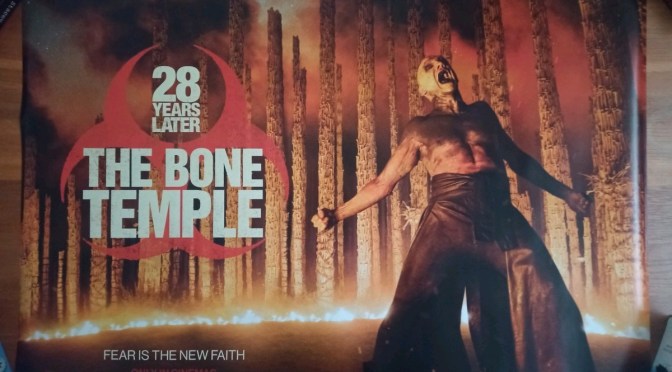
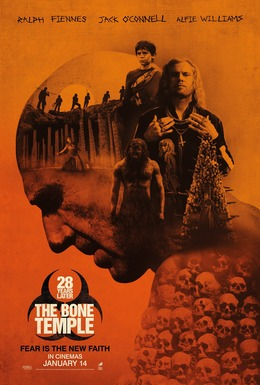
28 Years Later: Bone Temple (2025) is not a film that eases you in. It grabs you by the throat and refuses to let go, piling atrocity upon atrocity until meaning begins to seep through the blood. This is apocalyptic cinema as ritual punishment, and under Nia DaCosta’s direction, it becomes something ferociously alive.
At the calm, moral centre of the chaos standsRalph Fiennes, delivering a performance of astonishing gravitas and unexpected tenderness as Dr. Ian Kelson. In a world rotted by infection and cruelty, Kelson represents something almost radical: goodness without irony. Fiennes plays him not as a saint, but as a weary human being who still believes care, cure and compassion matter, even when the world insists otherwise. His presence anchors the film, giving its excess a conscience.
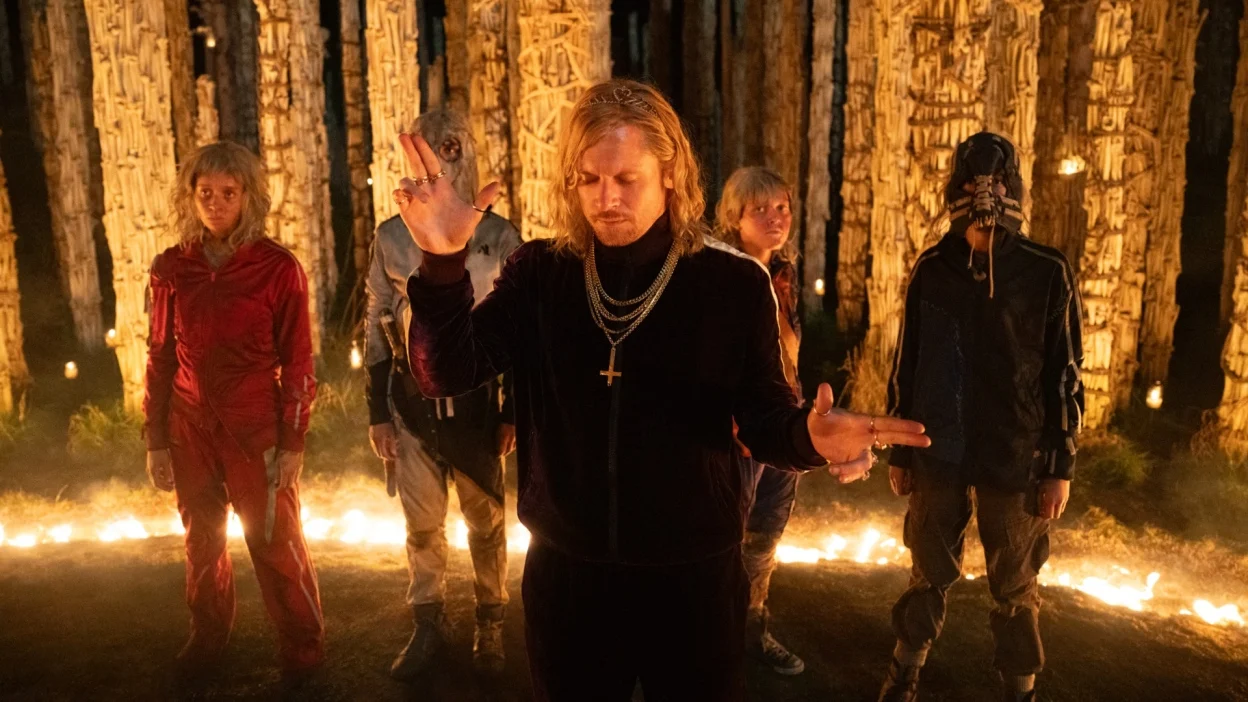
Opposing him is Jack O’Connell’s Jimmy Crystal, a vicious cult leader whose charisma curdles into something genuinely frightening. Crystal preaches violent “charity” in the name of Satan, offering salvation through brutality, and O’Connell leans hard into the performance’s ugliness. Leading his young, droogy, Savile-esque followers, he wages war not just on human survivors, but on the infected as well, collapsing any moral distinction between mercy and massacre. It’s a performance that feels designed to make your skin crawl—and it succeeds. Alas, Spike (Alfie Williams) gets caught up in Jimmy’s insanity and the sense of fear for him reigns throughout.
DaCosta directs with visceral energy, staging sequences that are frequently jaw-dropping in their gore and sadism. This is not a film particularly interested in an actual plot, clean narrative arcs or deep psychological excavation. Instead, Bone Temple unfolds as a succession of brutal set-pieces, each more punishing than the last. Some viewers will undoubtedly find it too much—too loud, too violent, too relentless.
But that relentlessness is also the point. What makes 28 Years Later: Bone Templeso compelling is how it mashes thematic power with B-movie exploitation ultra-violence. Beneath the spray of blood and bone is a furious meditation on false charity, moral absolutism, and the terrifying ease with which cruelty dresses itself up as righteousness. It’s ugly, abrasive, and often overwhelming—but it’s never empty. Indeed, if there is a more stylish and powerful scene in cinema all year than the ‘Number of the Beast’- Iron Maiden-soundtracked-fiery-ritual-sequence then I can’t wait to see it.
Ultimately, this is apocalypse horror as endurance test and sermon, and while it won’t be for everyone, I found it exhilarating. In its refusal to soften its blows, 28 Years Later: Bone Temple (2025)earns its place as one the most savage entries in the franchise, so far.
Produced by Tessa Ross, Juliette Howell, Michael Jackman, Alice Dawson and Robert Harris
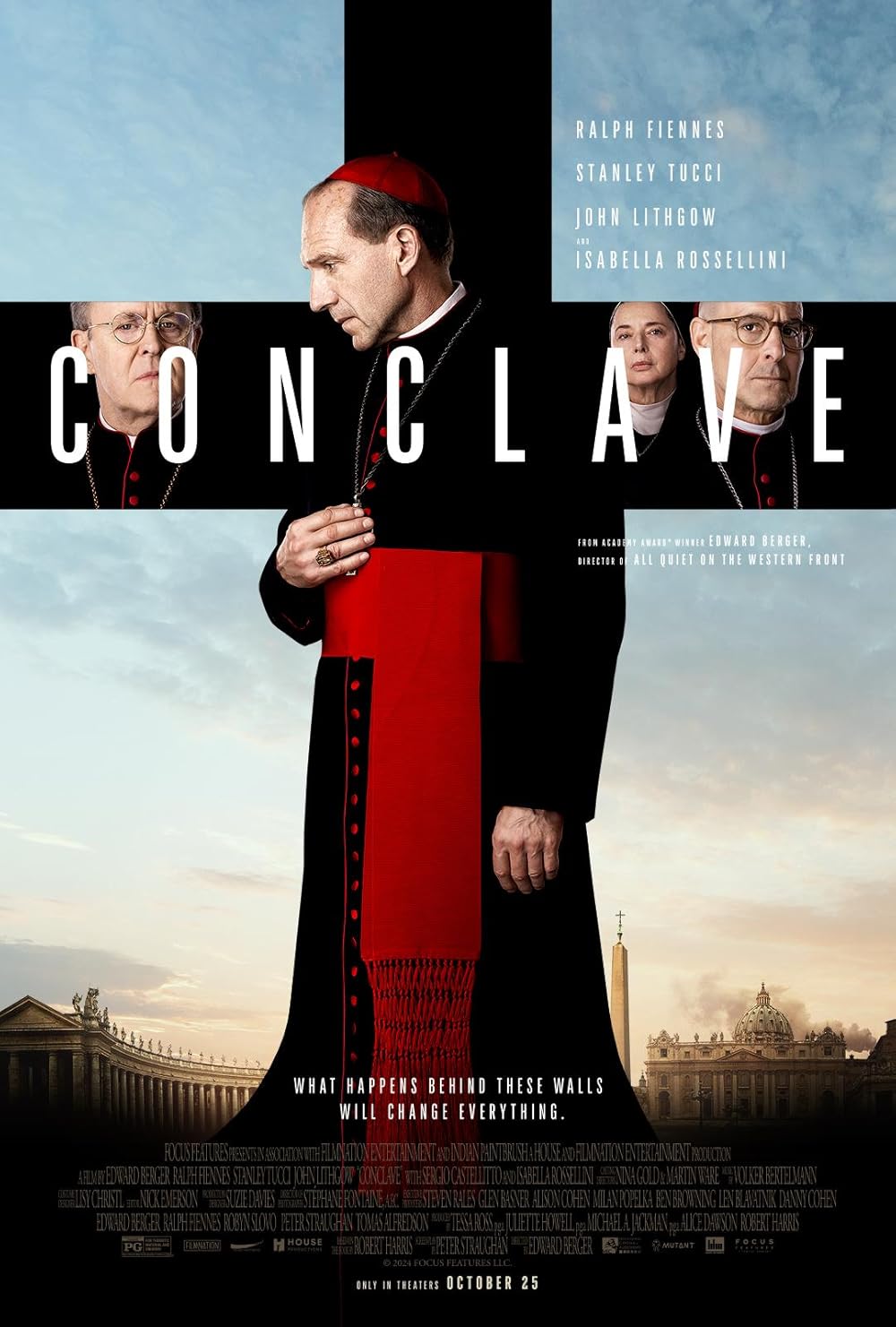
Main cast: Ralph Fiennes, Stanley Tucci, John Lithgow, Sergio Castellitto, Isabella Rossellini, Lucian Msamati, Carlos Diehz, etc. Cinematography by Stéphane Fontaine
Music by Hauschka
*** MAY CONTAIN SPOILERS ***
When you think about organized crime families, images of the Sopranos or Godfather-esque figures probably come to mind. But, if we’re playing with definitions one might allege the Catholic Church—an ancient institution with global influence—is one of the biggest crime organisations ever historically and in the present. I mean, organized crime families are notorious for their code of silence. The Church has had its fair share of. . . shall we say, discretion? From the Vatican’s secret archives to a several public scandals they’d rather we not dwell on, there’s certainly a flair for keeping things in the family.
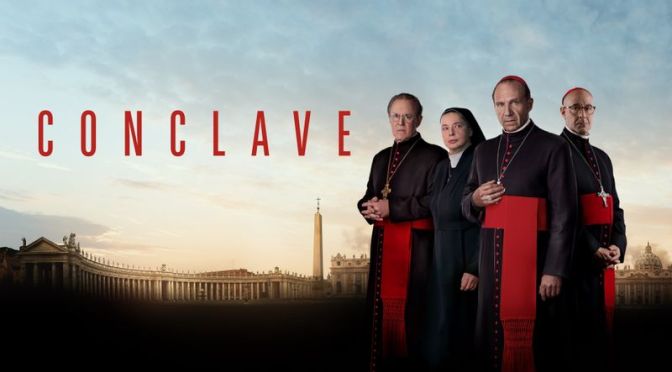
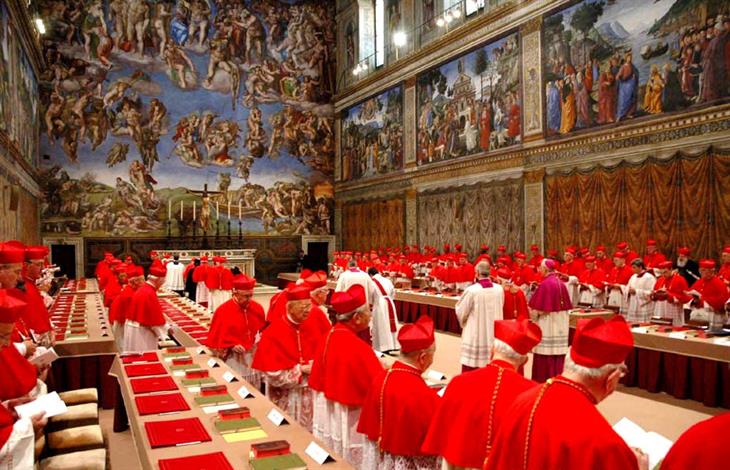
The Pope, aka the Holy Father, wears white, sits on a throne, and apparently has a direct line to the big “man” upstairs. Replace “Vatican” with “Sicily,” and suddenly, the resemblance to the Mafia is uncanny. Moreover, crime families thrive on wealth accumulation. The Vatican’s art collection, gold reserves, and prime real estate make even the most successful mobster green with envy. Not to forget, from Rome to Rio, the Catholic Church has an unparalleled network. Mobsters may have their territories, but the Church claims everywhere. With over a billion followers worldwide, even Don Corleone would bow to that reach. Thus, power struggles ensue within many organisations with coups and betrayals and internal competitions occur, including who is going to be the new boss. Welcome to the cinematic adaptation of Robert Harris’ novel, Conclave (2024); a beautifully constructed, serious and ultimately quite silly story.
Ralph Fiennes is majestic as Cardinal-Dean Thomas Lawrence, the individual tasked with finding a successor after the Pope dies of a heart attack. Fiennes anchors this serious faith-based drama with an intellectual depth as a series of potential candidates throw their zuchettos into the ring including:
Aldo Bellini (Stanley Tucci) of the United States, a liberal spirit echoing the compassionate legacy of the late pontiff.
Joseph Tremblay (John Lithgow) of Canada, a voice of moderation, bridging the Church’s timeless values and modern sensibilities.
Joshua Adeyemi (Lucian Msamati) of Nigeria, a steadfast advocate of social conservatism, grounded in enduring traditions.
Goffredo Tedesco (Sergio Castellitto) of Italy, an unwavering traditionalist, fiercely loyal to the ancient rites of faith.
With a narrative based on a book by Robert Harris, it is certain that the powerful developments and twists will grip the audience. Furthermore, Edward Berger’s direction is undeniably captivating, as is Stéphane Fontaine’s cinematography, which paints each scene with a reverence befitting the Vatican’s grandeur. Their collaboration crafts a visually stunning vision, pulling viewers into the cloistered rituals of electing a new Pope. Yet, for all its technical brilliance, the process itself feels devoid of emotional resonance.
Why should we, the audience, care about who becomes the next Pope? Unless one is deeply invested in the Catholic Church or its doctrine, the stakes remain distant. The election of a spiritual leader for over a billion followers is, of course, significant—but the film offers little to make this significance tangible for those outside that fold. Harris’ story spices things up with a provocative, irreverent twist in its final act. Yet, this narrative grenade lands with a thud rather than an explosion. Yes, it’s shocking, even subversive, but it doesn’t pack enough weight to unsettle an institution as colossal and entrenched as the Catholic Church.
Ultimately, Conclave (2024) is a masterclass in craft but a missed opportunity in damning the status quo of this alleged criminal organisation. Berger, Fontaine, Fiennes, plus the production design, score and sound-mixing artistry elevate the film, making it an incredibly effective cinematic version of the proverbial page-turner. But the story’s failure to connect on a deeper, emotional level found me losing my religion; what little I have left.
Produced by: Wes Anderson, Steven Rales, Jeremy Dawson
Ensemble Cast: Jason Schwartzman, Scarlett Johansson, Tom Hanks, Jeffrey Wright, Tilda Swinton, Bryan Cranston, Edward Norton, Adrien Brody, Liev Schreiber, Hope Davis, Stephen Park, Rupert Friend, Maya Hawke, Steve Carell, Matt Dillon, Hong Chau, Willem Dafoe etc.
Cinematography Robert Yeoman
*** MAY CONTAIN SPOILERS ***
Wes Anderson is a phenomenal filmmaker with an imaginative set of style and narrative conceits. Everyone one of his releases is a rich tapestry containing memorable ensemble casts, adjacent framing, effervescent use of colour, geographical pertinence, intellectual humour and subjects situated in the far-left field of genre cinema. Yet, I do not enjoy ALL his films. Often, they veer too far into eccentric pretentiousness. Indeed, I found The French Dispatch (2021), frustrating and, other than the tremendous story set in the asylum with the mad artist (Benicio Del Toro), disconnected with it overall. While it was another admirable work of cinema, I did not enjoy it as a paying punter.
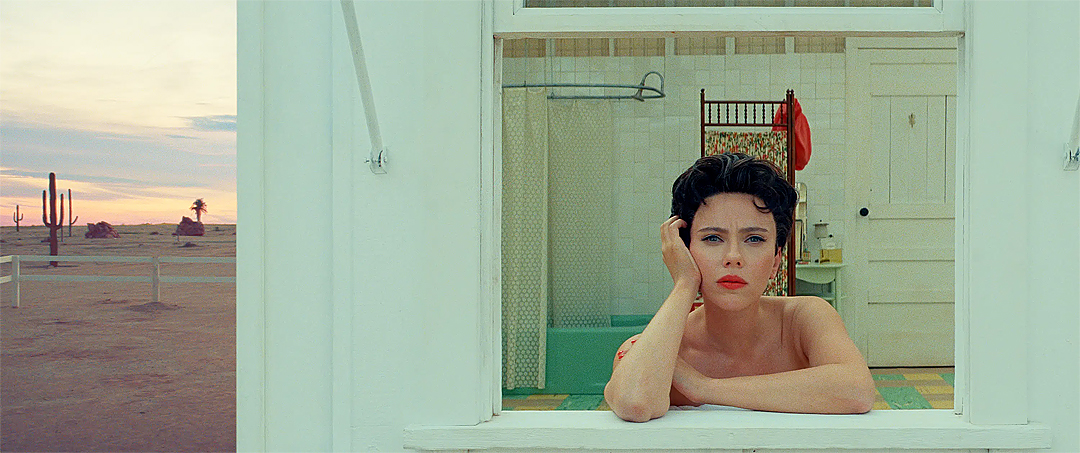
Asteroid City (2023), however, is a film I enjoyed greatly. The famous actors immersed within the ensemble, the cinematic artifice, the clever meta-narrative structure, symmetrical shot composition, beautiful use of colour, offbeat characters, specific era and geographical setting, imaginative props and costume design, and witty humour are all present as per Anderson’s impressive body of work. But Asteroid City (2023) had a larger emotional heart than his recent films, and is my favourite since the superb, The Grand Budapest Hotel (2014).
A heady combination of genres, one could describe, Asteroid City (2023), as a hyper-sci-fi-Western-retro-romantic-futuristic-comedy and study of grief set in 1950s, America. Despite filming taking place in Spain. Anyway, Anderson establishes the characters through the structure of a film within a play. Bryan Cranston’s narrator introduces us to the various middle-class, working class, military and scientific personalities who become trapped in the town of Asteroid City by a series of unlikely but hilarious misfortunes. Throughout the chapter inter-titles the scenes return us to our narrator as Anderson cleverly comments on the process of creating a story while delivering the narrative events.
Anderson delves into familiar themes of grief via the story of war photographer, Augie Steenbeck (Jason Schwartzmann) and his four kids, one of whom is a genius, Woodrow (Jake Ryan). He is there for a Junior Stargazer competition amidst the setting of the gigantic meteorite bunker. Again, the theme of prodigious children is mined for great humour and intellectual wit by Anderson. The futuristic inventions created by the children are especially fantastic. The plot strand of the science geniuses being exploited by the military and corporate sharks is deftly done. Yet, the main emotional heft is delivered within Augie and Hollywood actress, Midge Palmer’s (Scarlett Johansson) budding relationship. Johansson is especially compelling in the role, anchoring the film in welcome pathos, amidst the flurry of idiosyncratic absurdities Anderson throws at us. His framing of Augie and Midge between the their chalets is aesthetically memorable, visually augmenting their growing human connection.
Asteroid City (2023) proves once again Wes Anderson is one of the most original filmmakers of this generation. Will he gain some more converts to his particular set of cinematic bag of tricks? Who knows. What I do know is that I was completely immersed in the colour, movement, pace, humour, aesthetics, performances and themes with the film. I must say though, while it was necessary, the “Area 51” style — and I don’t want to give it away — absurd plot-turn halfway through was not my favourite aspect of the piece. But I realise it was narratively integral to the story. The meta-framing also seemed to get in the way at times of the main action effecting the occupants of Asteroid City. But these are minor gripes at a thoroughly artistic, beautifully immersive, and technically impressive cinematic achievement.
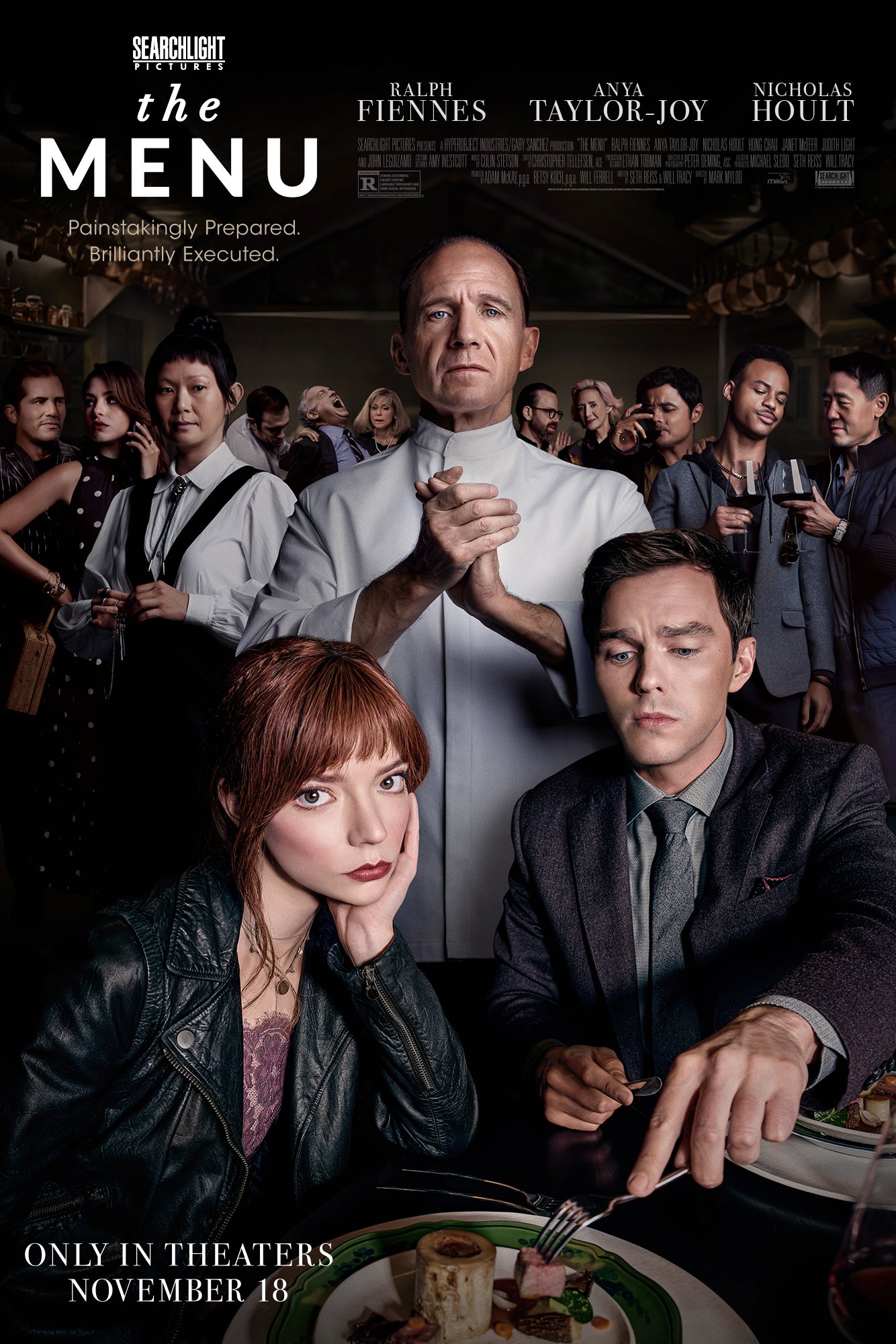
Cast: Ralph Fiennes, Anya Taylor-Joy, Nicholas Hoult, Hong Chau, Janet McTeer, Reed Birney, Judith Light, John Leguizamo, etc.
Cinematography Peter Deming
*** MAY CONTAIN SPOILERS ***
I love cinema and films like The Menu (2022), as much as I love food and drink. Wow, some of the food shown on screen looked absolutely delicious, while some of it was that weird cuisine so gorged on by the pompous moneyed folk of this world. I must admit that I have had an unhealthy relationship with food. I have been an overeater and also overweight. I am a food addict, notably sugar and alcohol. I have attempted to control it with various dietary ventures. Low calorie, low carbohydrate, low sugar, running, gym, fasting, temperance and other (un)successful attempts at moderation have ensued. Presently, I am pretty fit from a cardio perspective, and twenty kilos lighter than I was ten years ago. But I could do much better.
I’ve always strived to eat healthily, but fine dining was never really for me. It was only when I met my wife eight years ago that I was introduced to gourmet dining and the dreaded tasting menu. Aside from the over-priced food, I just find those posh restaurants too pretentious for a working-class boy from Battersea. Yet, I would go out with my wife for a treat and eat at some wonderful restaurants in Edinburgh, Copenhagen, Cornwall, London and many more. Some were amazing and some I found were not really value for money. The personality cult of the celebrity chef continues to thrive also. Aside from enjoying Ramsay’s Kitchen Nightmares they’ve never really interested me. Yet, I was onboard while imbibing the skewered satire of The Menu (2022). Because it’s a sharply scripted horror film which comes to the boil slowly before delivering a killer set of courses throughout.
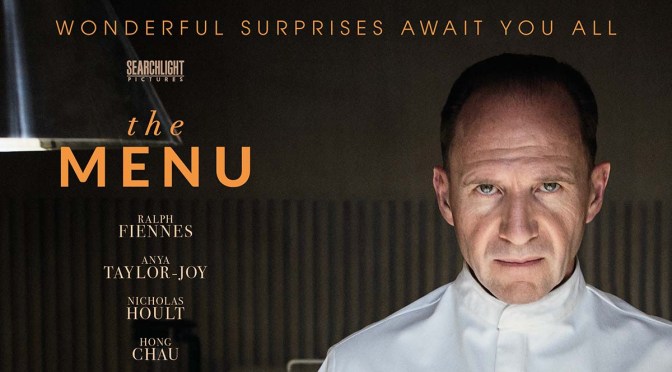
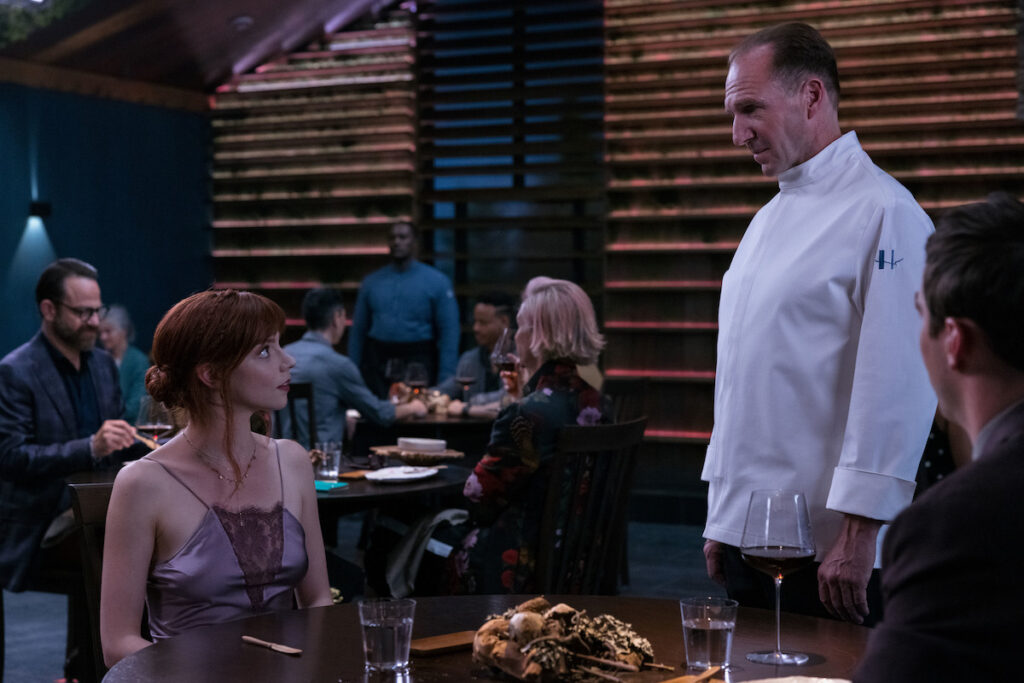
It’s best to experience The Menu (2022) without knowing too much. The surprises in the inventive script are a constant joy. The setting is an exclusive and expensive restaurant on a remote island called Hawthorne. The host, menu architect and epicurean is celebrity chef, Julian Slowik. Chef is portrayed with intense control and focus by Ralph Fiennes. Slowik finds himself worshipped by his kitchen acolytes, who adhere to his every demand. He is brilliant and to be feared, like many a charismatic cult leader before him. Eat your heart out, Gordon Ramsay.
Arriving by boat to the blighted isle are twelve restaurant-goers such as a team of rich finance guys, a once famous Hollywood actor (John Leguizamo) and his PA, a wealthy middle-aged couple, a food critic (Janet McTeer) and her yes-man assistant, plus the mis-matched couple, Margot (Anya Taylor-Joy) and Tyler (Nicholas Hoult). Tyler is a sycophantic fanboy of Slowik’s food and career, something that later comes to horrifying catharsis. Indeed, as well as the mysterious menu, many of the guests are harbouring a secret that this hell’s kitchen is more than prepared to burn.
Structured, unsurprisingly, around the courses of a tasting menu with titles separating each dish, the food delivered is both imaginative and beautifully presented. Margot’s character pushes back on what she considers to be both ostentatious and insubstantial food, much to Tyler’s annoyance. Their conflict intersperses the rising suspense that derives from Julian’s menu, which raises the stakes gradually, before events truly reach boiling point. In Slowik’s restaurant the customer is definitely NEVER right. Similar toReady or Not (2019), The Menu (2022) is a fantastically twisted and funny genre film. Fiennes, Taylor-Joy, Hoult and Hong Chau are on terrific acting form. Further, the production design and cinematography make the visuals succulent and palatable. Ultimately, for those who love food, fear and vengeance, this film is certainly best served hot!
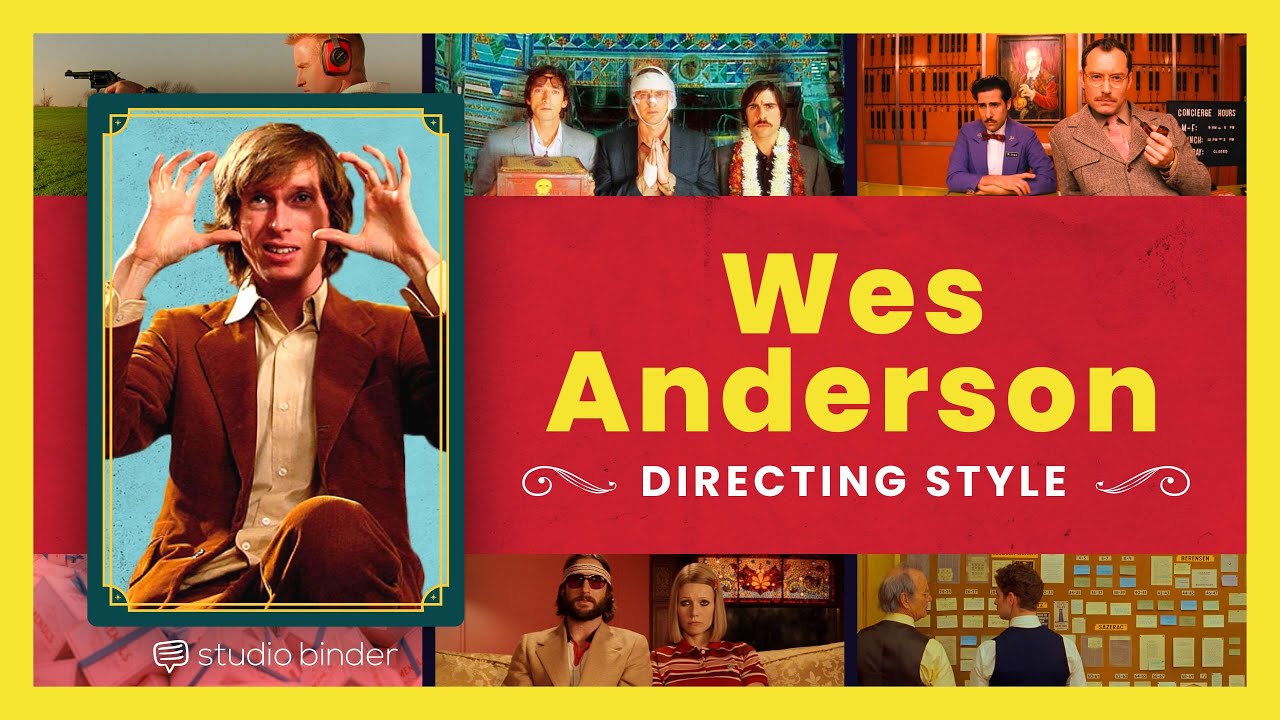
I thought I’d save myself a lot of time using the above variant words in one go. Because they, and the word auteur, are utterly inevitable while writing a short article in praise of the Wes Anderson films I rate. It’s intriguing to write about Anderson though. While many of the pieces in the My Cinematic Romance series concentrate on people in cinema I absolutely adore, he is more a filmmaker who I respect rather than have an undying emotional connection with.
Wes Anderson is a phenomenal filmmaker with an imaginative set of style and narrative conceits. Everyone one of his releases is a rich tapestry containing memorable ensemble casts, adjacent framing, effervescent use of colour, geographical pertinence, intellectual humour and subjects situated in the far left field of genre cinema. Yet, I don’t enjoy ALL of his films. Often they veer too far into eccentric pretentiousness. Indeed, I was going to write a review of The French Dispatch (2021), but I found it frustratingly dull and, other than the tremendous story set in the asylum with the mad artist (Benicio Del Toro) disconnected with it on the whole. But, I must say, it was another admirable work of cinema, but one I did not enjoy as a paying punter.
So, rather than write a middling review about a genius filmmaker’s latest work, here is a piece about my favourite five films of Wes Anderson.
***MAY CONTAIN SPOILERS ***
BOTTLE ROCKET (1996)
Anderson’s debut feature film is based on his short film of the same name. Co-written with Owen Wilson, it is a freewheeling take on the heist movie which eschews hard-boiled professionals for a group of hapless losers led by the positively loopy Dignan (Wilson again). Shot way before Anderson got his ruler and set square out, it’s a naturally filmed, hilarious character comedy that destabilises crime genre conventions with charming effect. Launching the acting careers of the Wilson brothers it is an oddly charming filmic treat.
RUSHMORE (1998)
This is still my favourite Wes Anderson film because it combines a perfect combination of uncommon humour and prevailing verisimilitude. What I mean is I did not feel I was watching a showcase of artistic flourishes, but a true human story full of empathetic characters, feeling and emotion. It is also incredibly funny as we follow the rites of passage story of school maverick, Max Fischer (Jason Schwartzman), a working class kid rebelling against the adults he believes are beneath him. Bill Murray’s career renaissance began here and his character’s vengeful battles with Max are one of the film’s many highlights.
THE ROYAL TENENBAUMS (2001)
The first Wes Anderson film that saw the stylistic devices and themes so prevalent in his later work to truly come to the fore. The ensemble cast crammed with famous names, the omnipotent narrator, symmetrical framing, consistent and complimentary colour palettes, typography, fantastic use of nostalgic music, distinctive costumes and stories structured in chapters of the literary kind. The Royal Tenenbaums (2001) contains many absurd comedic moments, but has several tragic scenes too. This demonstrates Anderson’s growing maturity and remains a confident vision of a dysfunctional American family of geniuses and misfits.
THE GRAND BUDAPEST HOTEL (2014)
While Rushmore (1998) is my favourite film of Wes Anderson, his best is the tour-de-force comedy, The Grand Budapest Hotel (2014). It’s the pinnacle of bravura style and well-honed narrative competence, confidently presenting the rags-to-riches story of Zero Moustafa beginning in 1930s. Europe. Moustafa’s story takes in his first love, his job at the opulent hotel and his moving friendship with the prideful Gustave, an amazing Ralph Fiennes. It’s a film packed with invention, colour, humour, sadness and romance all wrapped in themes of the rise of fascism, loss, love and the wonder of friendship.
ISLE OF DOGS (2018)
Put aside ridiculous millennial online accusations of cultural appropriation and submerge yourself within Anderson’s rich canine narrative and stop-motion tapestry. As aforementioned, I’m not always a fan of his story subjects but he is a master of style and form. Isle of Dogs(2018) is no different and is a wonderful cinematic experience. Set in Japan we concentrate on, hence the title, a bunch of stray dogs dumped on a wasteland left to die and their subsequent adventures. This is much darker than prior Anderson films, but full of the imagination, wit, colour and brilliant technique, containing funny gags and twisting drama throughout. I preferred this to his version of the Roald Dahl classic, Fantastic Mr Fox (2009), as Bryan Cranston and the marvellous cast breathe life into the Anderson’s visionary animated box of tricks.
Story by: Neal Purvis, Robert Wade, Cary Joji Fukunaga
Based on: James Bond by Ian Fleming
Produced by Michael G. Wilson, Barbara Broccoli
Cast: Daniel Craig, Rami Malek, Léa Seydoux, Lashana Lynch, Ben Whishaw, Naomie Harris, Jeffrey Wright, Christoph Waltz, Ralph Fiennes, Billy Magnusson, Ana De Armas etc.
Cinematography: Linus Sandgren
Edited by: Elliot Graham, Tom Cross,
Music by: Hans Zimmer
Production companies: Metro-Goldwyn-Mayer, Eon Productions
*** NO MAJOR SPOILERS ***
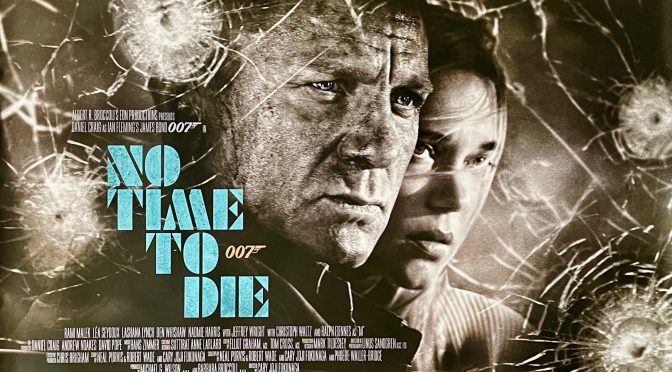
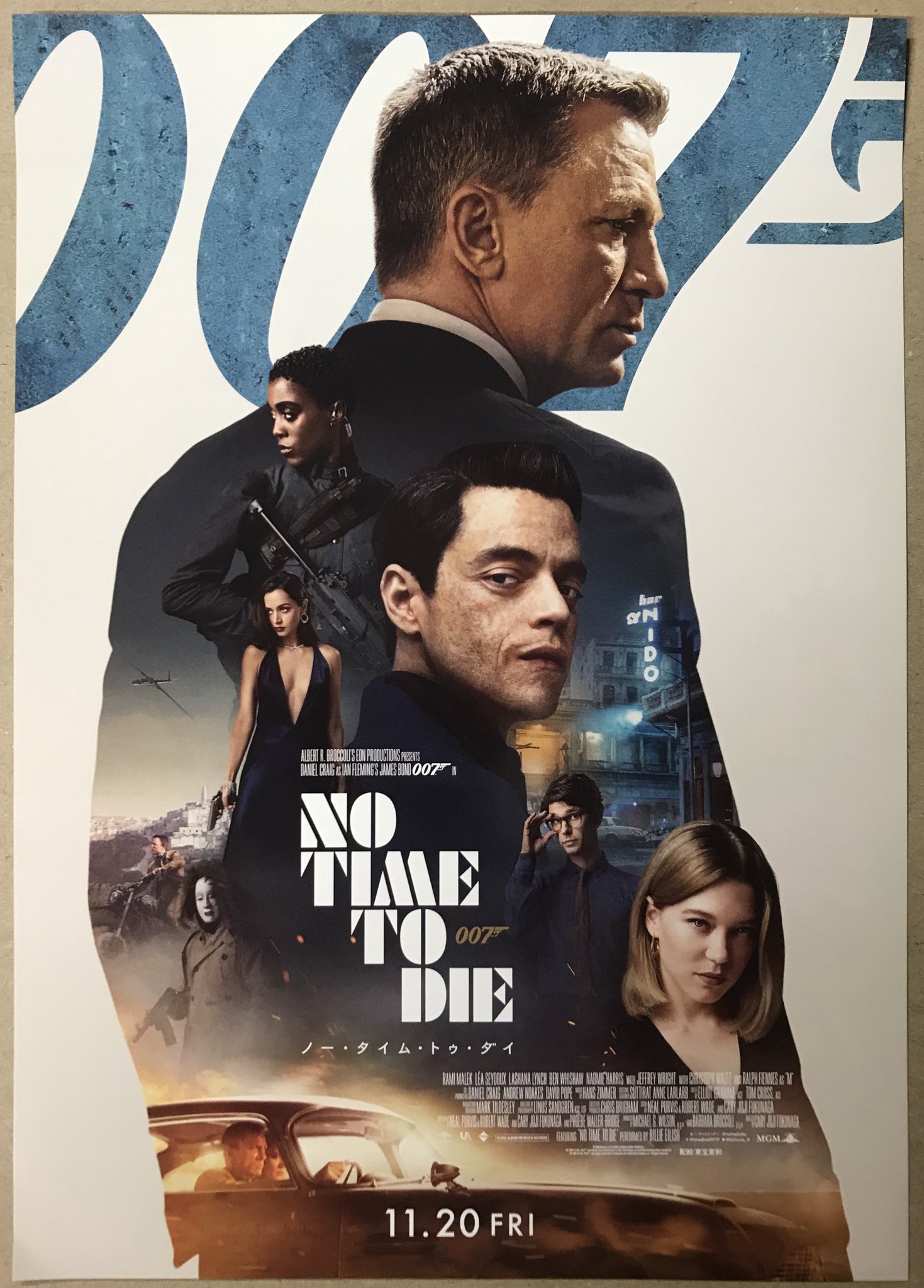
As a Bond swansong, No Time To Die (2021) gives Daniel Craig’s earthy and human characterisation of the famous spy a tremendous finale. Indeed, it was a powerfully entertaining work of cinema, but was it a great Bond film? Not for me. Don’t get me wrong, all the creatives here from the director, art department, cinematographer, location scouts, costume design, scintillating cast, stunt team, production crew, the army of screenwriters and so on, have all worked prodigiously to create a wonderful example of blockbuster genre cinema. But it has many story and legacy issues that stop it from being a memorably pure Bond film in my opinion. However, I am not going to be critical in this review, but rather celebrate what is great about No Time To Die (2021). Thus, it’s time to revel in the fact Fleming’s fictional formula continues providing sensational diversion from everyday existence.
The choice to make No Time To Die (2021) a direct sequel toSpectre (2015), would not have been my preferred route for this narrative. Spectre (2015) is entertaining. It was fine. Was it a good Bond film though? Not particularly. I should qualify this by saying I thought Skyfall (2012) was a cracking film; a fantastic action thriller with fine characterisation and a formidably nasty, yet playful, villain in Javier Bardem. Thematically, it was strong with Bond’s orphan background and relationship with M (other) providing depth and subtext. Skyfall (2012) was also lusciously shot by Roger Deakins with fantastic direction from Sam Mendes. But neither Spectre (2015) or Skyfall (2012) are great Bond espionage adventures like From Russia With Love (1963) or The Living Daylights (1987), or a devastatingly plotted, romantic action adventure like Casino Royale (2006). Skyfall (2012) was an Oedipal soap opera with bells on, as ghosts of the past avenge the present. Spectre (2015) and No Time To Die (2021) continue the theme of vengeful and dysfunctional family ties bringing strife to Bond. But, nowhere near as successfully as Craig’s first outing, Casino Royale (2006). That remains one of the best Bond films ever.
Like Quantum of Solace (2008), No Time To Die (2021) is, as aforementioned a sequel, but the main difference is No Time To Die (2021) is way longer than Quantum of Solace (2008). The pace rarely dips in No Time To Die (2021), but it could certainly have been trimmed in places because at times I felt the screen was stuffed with too many characters and subplots. I must point out I’m aware that Quantum of Solace (2008)is not rated highly in the Bond canon, but I like it. I feel there are some incredibly filmed sequences in it. Notably, the opening car and foot chase, the opera shootout, a spectacular air conflict and the fiery desert lair denouement. While the villain was weak and it failed in terms of narrative, Quantum of Solace (2008)succeeded for me as a fast-paced and exquisite, if choppy, spectacle that tied up the loose ends from the far superior, Casino Royale (2006). Quantum of Solace (2008) infamously had no writers re-working it due to the ongoing strike, No Time To Die (2021), arguably has too many cooks and ingredients occurring simultaneously. Having said that Cary Joji Fukunaga brings a confident energy to the film throughout, connecting the emotions of the script and explosive box of tricks together in a neatly packaged presentation.
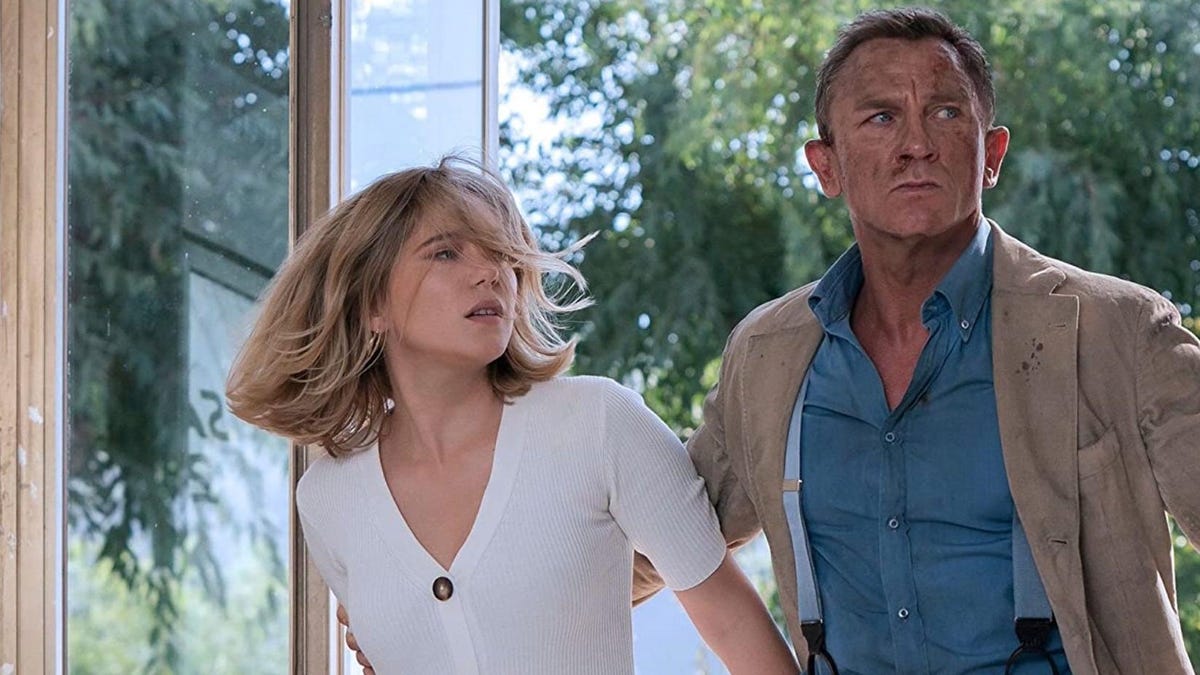
Daniel Craig is phenomenal in No Time To Die (2021). While he is always a strong actor, he has also grown into a bona fide movie star too. Even when going through the motions in Spectre (2015) he was good, but in No Time To Die (2021), he blows the doors off. While he does look too old for the role now, from getting blown up in Italy, to almost drowning in Cuba and facing off against Rami Malek’s malevolent poisoner on an island near Russia, nobody does almost-dying better than Craig. Moreover, as well as the constant threats on his life, crazy new technology that delivers instant death, and a litany of evil henchmen trying to take him down, Bond must contend retirement and having his place usurped at MI6 by the confident Nomi (Lashana Lynch). Having been set-up as a major story player, Nomi and this spy-versus-spy story pivot ultimately peters out for more melodramatic plotlines which I will not divulge. In fact, Nomi’s thunder is ultimately stolen by the CIA agent, Paloma, with Ana De Armas absolute dynamite in the smashing Cuban section of the film.
As with Spectre (2015), where there wasn’t nearly enough of Christoph Waltz, Rami Malek’s villain Safin is not utilised enough. Malek gives a haunting performance in a few creepy scenes, yet I felt cheated. I would have loved more exchanges between him and David Dencik’s eccentrically dangerous scientist. More scenes in the imaginatively designed island lair where all manner of deadly poisons were being concocted would have been brilliant, and further developed Safin’s intriguing backstory and fiendish plotting.
No Time To Die (2021) belongs to Bond and Daniel Craig of course, and they get into some barnstorming scrapes. The opening action involving motorcycle stunts and the iconic Aston Martin blasting the Spectre goons is an early highlight. The Cuban nightclub murders and subsequent gunplay really raise the pulse too. After the explosive boat sequence where Bond has a moving parting of the ways from an old friend, the action arguably becomes more generic and not as memorable. That is, THAT IS, until the unforgettable end set-piece where Craig’s 007 faces an insurmountable set of physical and emotional challenges. Lastly, some might say Daniel Craig goes out on an all time high, and no doubt No Time To Die (2021) is destined to knock the living daylights out of all prior Bond box office records.
We live in a spectacular society, that is, our whole life is surrounded by an immense accumulation of spectacles. Things that were once directly lived are now lived by proxy. Once an experience is taken out of the real world it becomes a commodity. . . It becomes a substitute for experience. (Larry Law, Images and Everyday Life)
**CONTAINS MASSIVE SPOILERS**
Life is all about managing expectations. I mean we don’t why we’re here on this planet and we don’t know why we’re alive. Is there a point to life? Perhaps there is no point? If that’s the case then why carry on living? Why not kill yourself or go berserk and do what the hell you want and be damned to the consequences. Well, it doesn’t really bear thinking about does it? Thus, generally, we block out such existential questions – well I do – by filling our life and times with things we enjoy doing, seeing, feeling, and eating, hearing and experiencing.
One of the major things I use to distract me from the inquisitions of life is going to the cinema. I am obsessed with films. I could perhaps, rather than watch films, raise a people’s army and seize control of the state? But what system would I put into place instead of the necessary evil of capitalism? I could eschew society and live off the land growing my own vegetables; but whose land? All land is now owned by some person, persons or shadowy corporations. I could become a criminal and finagle the law in order to avoid the punch-clock drudgery of life; but I’d like to sleep guilt-free at night and hurting others does not sit well with me. I could train a pack of ants to perform tricks for money in an Ant Circus; but that would just be silly. I could go on…
What I am saying is films and television are helpful in drawing a big thick line between the sane and insane shit in life. They are a big deal for me. Not as bigger deal as my loved ones but pretty close. So, when a new series of a current show I love such as Doctor Who or South Park or It’s Always Sunny in Philadelphia or Game of Thrones is released I am very happy. Life is good. That thing called hope rear its head and says, “Hi, it’s me again!” The same goes with film releases from my favourite directors or movie franchises or series. It happened at the fag-end of the 90s with the new Star Wars trilogy and also when the new Indiana Jones film was released; hope came a knocking and expectations were raised. Unfortunately the Lucas’ space opera prequels were pretty bad and least said about Indiana Clones and The Kingdom of Crystal Dulls the better!
So, what I am saying is, AND I realise this is a sad thing to admit, A JAMES BOND FILM IS A BIG DEAL TO ME! I know Karl Marx, Guy Debord and Edward Bernays are all correct in that the media is corrupting the proletariat, BUT WHO CARES – IT IS JAMES BOND and CHRISTOPH WALTZ IS THE BAD GUY! I got my hopes up! I was really looking forward to it! It stopped me from thinking about reality! I failed to lower my expectations. So, what I am saying is I liked Daniel Craig’s fourth outing as Bond but not as much as I’d hoped. I shall explain why.
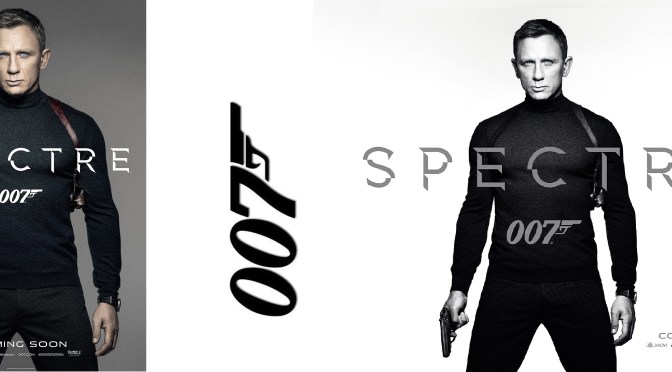
I have seen Spectre twice now and it is very entertaining. Was it was good film? Yes – it was fine. Was it a good Bond film though? Yes and no I would say. I should qualify this by saying I thought Skyfall (2012) was a cracking film in its own right; a fantastic action thriller with fine characterisation and a formidably nasty, yet playful, villain in Javier Bardem. Thematically it was very strong with Bond’s orphan background and relationship with M (other) providing a fulcrum to the narrative. Skyfall was also lusciously shot with fantastic set-pieces and direction but it wasn’t necessarily a great Bond espionage adventure like From Russia With Love (1963) or The Living Daylights (1987) or a combustible boy’s own adventure like Casino Royale (2006). It was an Oedipal soap opera with explosions and the past destroying the present. Spectre is very similar in fact although the destruction is much larger in scale.
I would also compare Spectre to Quantum of Solace (2008) in the context that it is a kind of sequel to the previous outing and links back to Bond’s past. The main difference is Spectre is over fifty minutes longer than Quantum of Solace and certainly feels slow in places. I’m aware that Quantum of Solace is not rated highly in the Bond canon. However, I feel there are some incredible action sequences in there; notably the Opera shootout, great Plane chase and explosive desert hotel/hide-out denouement. While the villain was weak and it failed in terms of narrative, Quantum of Solace succeeded for me as a spectacle and by tying up the loose ends from Casino Royale.
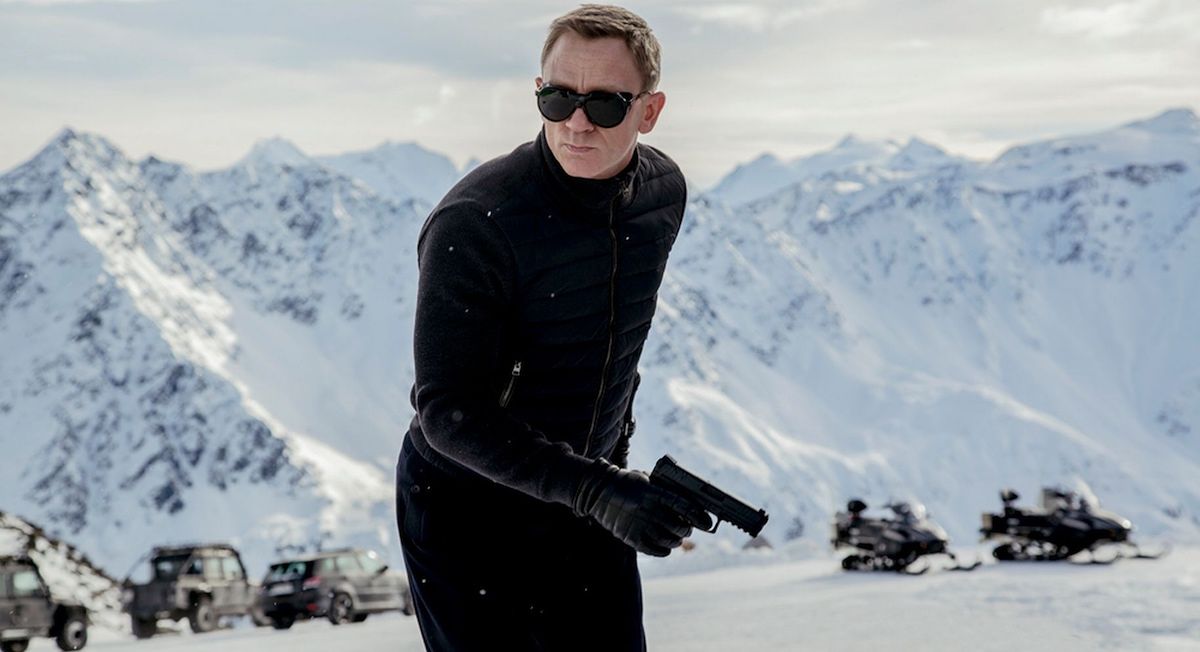
Similarly, Spectre has some breathtakingly cinematic moments. Indeed, the first hour was sensational in terms of pace, action, mood and atmosphere. It’s a film about death and the past and opening at the massive Day of the Dead festival in Mexico City was a masterstroke in symbolism. Bond is an assassin; a hired killer used by the British government to take out the bad guys and where better to do it at a carnival celebrating those that have kicked the bucket. The opening chase, building demolition and helicopter fight is classic Bond and really kicks the film off in style. A spurious plot twist then gets Bond to Rome where he then meets – in the shadows – his nemesis, and the childhood ‘friend’ he thought dead, Franz Oberhauser played by Christoph Waltz. Waltz is one of my favourite actors but is criminally underused in Spectre. Aside from one particularly brilliant torture scene he is not allowed to express that wicked wit and devilish smile witnessed so adroitly in Django Unchained (2012) and Inglourious Basterds (2009).
The Oberhauser backstory does offer an interesting subplot to the main action and a very fun Bond revelation; however, it is similar to the Skyfall revenge-plot with touches of Cain and Abel thrown in. Arguably too it doesn’t quite gel alongside other aspects of the script such as the global “Big Brother” programme to connect ALL the security and CCTV systems across the world which would make the 007 programme obsolete. So, with Bond under threat physically, emotionally AND politically we have an ambitious story with a thin plot that gets soggy at times. Thematically Spectre is strong but Bond feels very reactive in some respects and not always making the decisions. Indeed, there is a scene where a RAT assists him; not torture or cunning or sheer violence but an actual rodent. This moment and the anorexic characterisation of Madeline Swann (Lea Seydoux) were very much weaknesses in the script.
Sam Mendes and his production team have produced much for Bond fans to revel in. The opening credit sequence is stunning and I loved the Octopus imagery and motifs throughout. It also manages to mask the soporific non-entity which is Sam Smith’s theme song Writing on the Wall. Hinx (Dave Bautista) is a brute of a henchmen and his Rome car chase, Austrian snow pursuit and train punch-up were all brilliant action set-plays. Q (Ben Wishaw), M (Ralph Fiennes) and Moneypenny (Naomie Harris) all brought fine dramatic and comedic qualities to the film although, again, with SO many characters involved it took away screen time from Christoph Waltz. Finally, the “ticking-time” bomb denouement was well-executed but the film had run out of steam a bit by then.
Spectre is a technical tour-de-force and in Daniel Craig we have an actor who absolutely nails the role. He rocks the action, driving, shooting, running, falling, crashing with a coolness, toughness and insouciance which will be a hard act to follow. Indeed, the way they tied in the strands from previous films tells me this is probably his final Bond. Overall, the first hour-and-a-half of Spectre writes a spectacular cheque the final act cannot quite cash. The big-bad-wolf reveal is not as surprising as I would have hoped and the Orwellian supporting story didn’t feel that deadly to me. And while our villain’s revenge on James was believable I didn’t quite buy the fact that Oberhauser was the architect of ALL Bond’s woes in the previous three films.
I realise it is a very big responsibility to maintain quality in a big movie franchise and Spectre does so but the long running time does it no favours. Paradoxically too by trying to give it more depth in respect of the familial backstory it again lost the espionage stuff I love. We do indeed live in the Society of the Spectacle and this film offered up some solace away from the daily grind. But I must learn to manage expectations and perhaps stop living my life by proxy through fictitious cinematic spies and face the spectre of existence a bit more realistically. (Mark: 008 out of 11)




 The Cinema Fix presents