Produced by Amy Pascal, Ryan Gosling, Phil Lord, Christopher Miller, Aditya Sood, Rachel O’Connor, Andy Weir, etc.
Main Cast: Ryan Gosling, Sandra Hüller, James Ortiz, Lionel Boyce, Ken Leung, Malachi Kirby, etc.
Cinematography by Greig Fraser
*** MAY CONTAIN SPOILERS ***
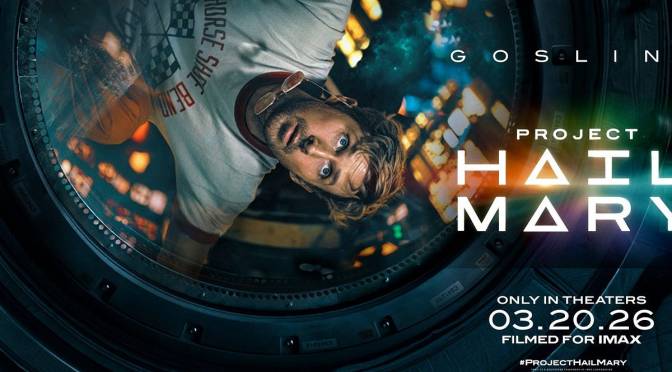
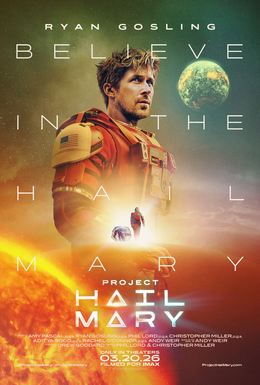
There’s a version of Project Hail Mary (2026) that could have been cold, clinical, and overly procedural—a hard sci-fi puzzle box drifting in the vacuum of its own cleverness. Instead, what Christopher Miller and Phil Lord deliver is something far more disarming: a big-hearted, funny, surprisingly emotional crowd-pleaser that turns the apocalypse into an oddly uplifting experience.
Adapted by Drew Goddard from Andy Weir’s novel, the film follows Ryland Grace (a perfectly cast Ryan Gosling), who awakens alone aboard a spacecraft with no memory of who he is or why he’s there. The early stretches lean into disorientation—Gosling playing confusion with a twitchy, almost comic anxiety—but as Grace pieces together his past, the film cleverly shifts into a dual-track narrative: one part interstellar survival story, one part Earthbound scientific scramble to stop a cosmic catastrophe.
Gosling is the film’s main weapon. He plays Grace not as a conventional hero, but as a reluctant participant—anxious, self-deprecating, and often hilariously out of his depth. His charm keeps the exposition buoyant, especially as the film dives into dense scientific concepts. Where the story could feel heavy, Gosling makes it breezy and Project Hail Mary (2026) is certainly more emotionally stimulating than the dreadful action thriller The Gray Man (2022) and the weak remake, The Fall Guy (2024).
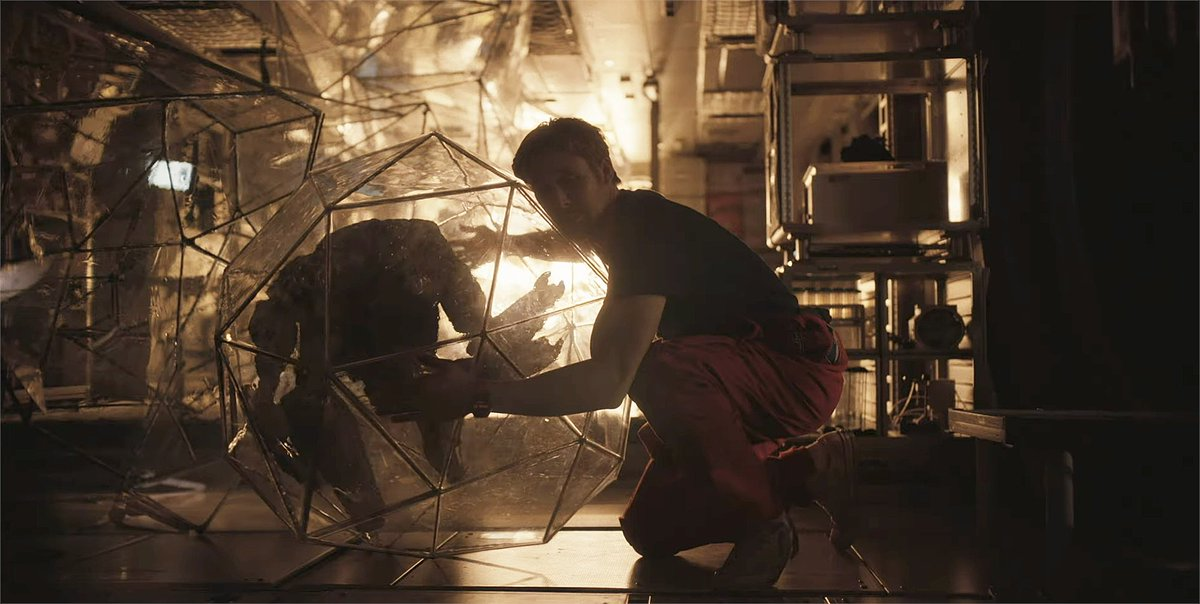
But the film’s most unexpected triumph is its central relationship: a deeply entertaining and genuinely moving “bromance” between Grace and an alien Xeonite – christened Rocky – he encounters in deep space. What begins as cautious interaction evolves into one of the most delightful interspecies friendships in recent sci-fi. Their communication—built from math, sound, and trial-and-error—becomes a source of both comedy and emotional resonance. It’s rare to see a blockbuster hinge so successfully on companionship rather than conflict, and the film is all the better for it.
Visually, Project Hail Mary (2026) is spectacular without being overwhelming. Lord and Miller balance scale with clarity; the vastness of space never drowns the intimacy of the story. The alien design is inventive, the astrophysical phenomena are rendered with awe-inspiring detail, and yet the film always remains grounded in character. It’s science-forward filmmaking that never forgets to entertain. Back on Earth, Sandra Hüller provides the film’s emotional anchor. Her performance carries a quiet intensity, grounding the global stakes in something human and immediate. Where the space sequences soar, her scenes remind us what’s at risk—and why it matters.
Goddard’s script is sharp, witty, and structurally satisfactory. It juggles timelines, scientific jargon, and character development with impressive ease, finding humour in the bleakest situations without undercutting the stakes. There’s a rhythmic confidence to the storytelling that keeps the film propulsive even as it pauses for introspection. What ultimately makes Project Hail Mary (2026) stand out, though, is its tone. This is, unmistakably, a feel-good end-of-the-world movie. It finds optimism not in denying catastrophe, but in confronting it with curiosity, cooperation, and friendship. By the time the credits roll, what lingers isn’t just the spectacle or the science—it’s the warmth. A book and film about extinction becomes, improbably, a story about connection.
Based on Frankenstein; or, The Modern Prometheus by Mary Shelley
Produced by: Maggie Gyllenhaal, Emma Tillinger Koskoff, Talia Kleinhendler, Osnat Handelsman-Keren, etc.
Main cast: Jessie Buckley, Christian Bale, Peter Sarsgaard, Annette Bening, Penelope Cruz, Jake Gyllenhaal, etc.
Cinematography by Lawrence Sher
** May Contain Spoilers **
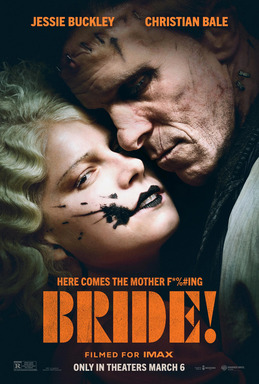
Maggie Gyllenhaal’s THE BRIDE! (2026) is a film bursting with ideas—sometimes thrillingly so, sometimes to its own detriment. Drawing inspiration from Bride of Frankenstein (1935) and ultimately Mary Shelley’s seminal novel, Frankenstein, Gyllenhaal transplants the myth into a Gothic vision of 1930s Depression-era America, filtered through the anarchic spirit of outlaw cinema like Bonnie and Clyde (1967) and Natural Born Killers (1994). The result is frequently intoxicating. The film opens with an inspired flourish—Mary Shelley herself narrating from beyond the grave—immediately signalling the director’s playful ambition. Visually, the film is extraordinary: lavish period design, smoky Gothic textures, and a lurid romanticism that feels both classic Hollywood and defiantly post-modern.
At the centre of the mayhem is Jessie Buckley, delivering yet another unforgettable performance. Her ‘Bride’ is feral, seductive, and volatile—an electrifying feminist creature of impulses and contradictions. Buckley plays her with a kind of joyous unpredictability, veering between danger, sexuality, and sudden jolts of manic dialogue that feel almost Tourette-like in their intensity. Opposite her, Christian Bale lends gravitas as her monstrous partner, and together they rampage across a mythicised America in a lovers-on-the-run narrative that often feels gleefully unhinged.
Yet for all its invention, THE BRIDE! (2026) often collapses under the sheer weight of its ambitions. Gyllenhaal’s screenplay seems determined to juggle too many ideas at once—meta-narration, Gothic tragedy, outlaw romance, and genre pastiche—without giving any one of them the structural discipline they require. The direction follows suit, veering between tones so abruptly that the film begins to feel atonal rather than daring. Key twists arrive with little groundwork, leaving major emotional beats feeling strangely hollow.
By the final act, the film’s wild energy begins to resemble narrative confusion. Plot holes emerge, character motivations blur, and revelations arrive as pure payoff without the careful setup that might have made them land. It leaves an odd lingering question: was this an $80 million piece of audacious cinematic art, or an extravagant misfire? Perhaps it is a little of both—a fascinating, chaotic vision whose brilliance flashes intermittently through the fog of its own excess.
Production companies: Paramount Network Television, Braga Productions & Rick Berman Productions
Selected writers: Brannon Braga, Rick Berman, Manny Coto, Mike Sussman, Phyllis Strong, Judith Reeves-Stevens, Garfield Reeves-Stevens, André Bormanis, Chris Black, David A. Goodman, Fred Dekker, and more.
Selected directors: Roxann Dawson, LeVar Burton, Robert Duncan McNeill, Allan Kroeker, David Livingston, Winrich Kolbe, James L. Conway, Mike Vejar, Michael Grossman, Marita Grabiak, Brennan Spencer, Michael S. Watkins, Vincenzo Natali, and more.
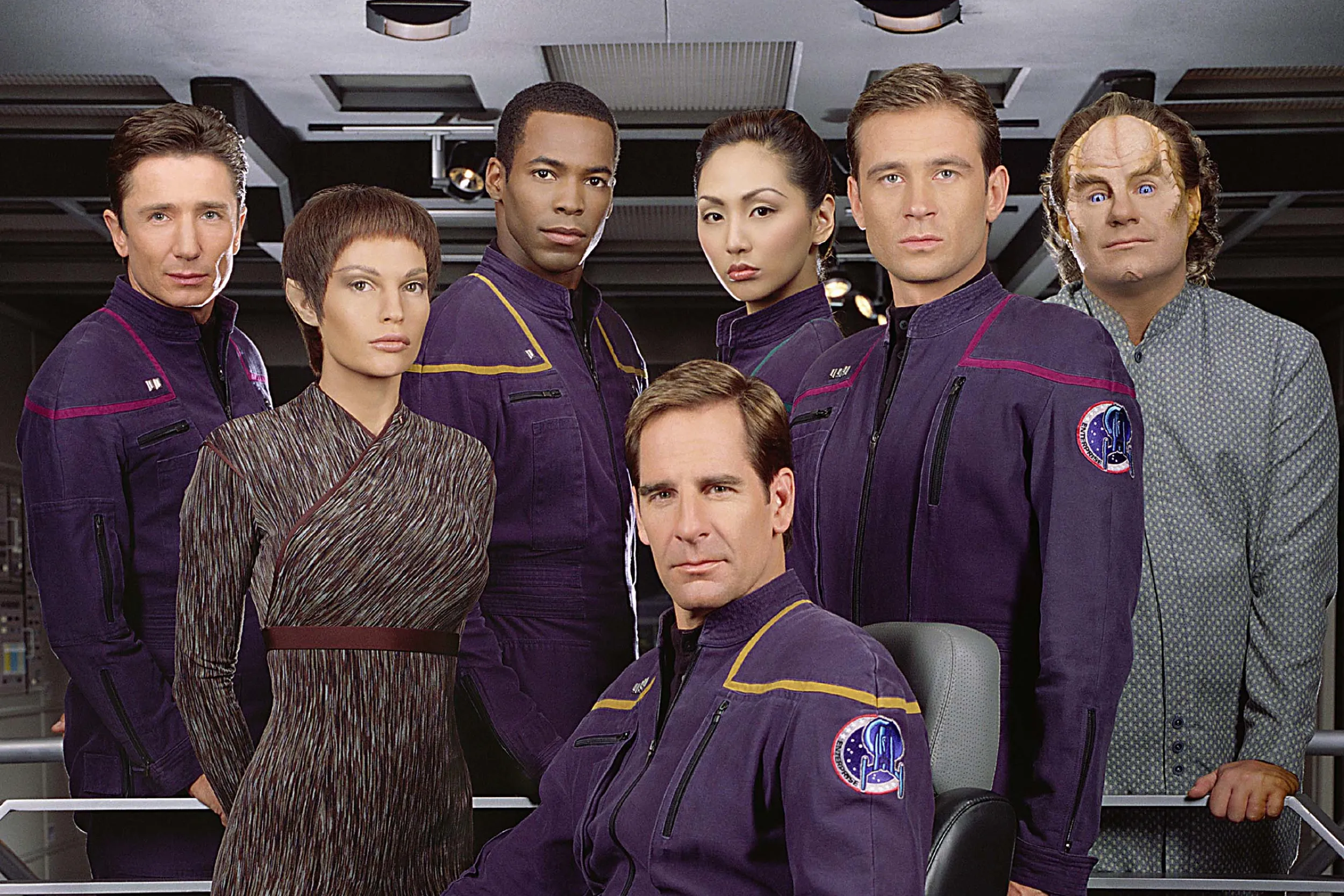
Main cast: Scott Bakula, John Billingsley, Jolene Blalock, Dominic Keating, Anthony Montgomery, Linda Park, Connor Trinneeretc.
Notable guest actors: Jeffrey Combs, Vaughn Armstrong , Gary Graham, Matt Winston, Randy Oglesby, James Cromwell, Brent Spiner, Daniel Dae Kim, Fionnula Flanagan, Robert Picardo, Tony Todd, Bruce Davison, Seth MacFarlane, Steven Culp, Noa Tishby, Rene Auberjonois, Peter Weller, Dean Stockwell etc.
Composer(s): Dennis McCarthy, Jay Chattaway, Brian Tyler, John Frizzell, Mark McKenzie, David Bell, Velton Ray Bunch, Kevin Kiner & Paul Baillargeon
*** MAY CONTAIN SPOILERS ***
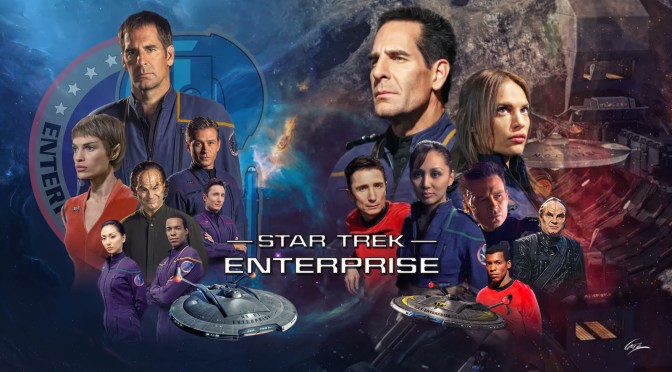
It’s been a while since I reviewed Star Trek on the site. But I have now finally completed the task I set myself to watch and review all the legacy Star Trek series. I am currently on the fence regarding the more recent Star Trek offerings. Anyway, having reviewed Voyager (see below) last year, I can now provide a detailed report back on Enterprise.
Star Trek: Enterpriseoccupies a fascinating corner of the franchise’s sprawling canon. Set a century before Kirk and more than a century after humanity’s first steps into spaceflight, the series charts the formative years of Starfleet—before there even was a “Starfleet” in the sense fans recognize. Its premise alone is rich: a pre-Federation frontier where humanity is inexperienced, unsteady, and often outmatched, yet eager to join a much larger galactic community. In this sense, Enterprise is both a prologue and a missing link, retrofitting the swaggering optimism of The Original Series with a more grounded, early-21st-century sensibility.
The show’s commitment to exploring those transitional years is what secures its place in canon. Enterprise seeds the diplomacy, technology, and interspecies tensions that future shows build upon—from the first warp-5 engine, to early encounters with Vulcans, Andorians, and the ever-shadowy Temporal Cold War. Watching Captain Jonathan Archer and his crew stumble toward the ideals later embodied by the Federation gives the series a distinctive historical weight. It doesn’t merely fit into Star Trek continuity; it actively sculpts the bedrock beneath it.
Central to the show’s appeal is Scott Bakula, whose performance as Captain Archer blends warmth, stubbornness, and a palpable sense of moral growing pains. Bakula gives Archer a grounded humanity that stands apart from the polished command styles of Picard or the passionate Sisko, yet his sincerity and resolve make him every bit their equal. When the writing rises to meet his talent—as in standout episodes like “Cogenitor,” “The Andorian Incident,” “Carbon Creek,” or the Xindi arc’s best moments—the show can reach the emotional and thematic heights of The Original Seriesand The Next Generation.
But Enterprise is also a series defined by uneven execution. For every episode that lands with classic-Trek resonance, there are others hampered by muddled plotting, bland direction, or creative decisions that feel more reactive than visionary. The show often struggled to decide whether it wanted to be a rough-edged prequel, a 2000s-era action drama, or a traditional episodic Trek—frequently trying to be all three at once. While it contains genuinely excellent science-fiction storytelling, its overall writing and directorial cohesion never consistently matched the clarity, ambition, or confidence of its most celebrated predecessors.
Yet despite its flaws, Star Trek: Enterprise remains an essential and often underrated part of the canon—a show whose best moments remind us exactly why Trek endures, and whose imperfections make its aspirations feel all the more human. Here are eight of the best episodes I watched – two per series.
Series 1 – The Andorian Incident (Episode 7)
This episode is the first truly great hour of Enterprise—the point where the show proves it can handle nuanced political storytelling within the Trek universe. The introduction of Jeffrey Combs as Shran is a masterstroke; he immediately brings depth, wit, and volatility to the Andorians. The plot, centered on Archer and his crew discovering that a supposedly pacifist Vulcan monastery is hiding darker secrets, reshapes our understanding of Vulcan–Andorian tensions. Strong direction, tight pacing, and a morally thorny reveal make this the first episode that feels essential to larger Star Trek canon.
Series 1 – Dear Doctor (Episode 13)
A thoughtful, character-driven story told through Dr. Phlox’s personal logs, “Dear Doctor” represents Enterprise at its most philosophically ambitious. It confronts the ethics of medical intervention, cultural evolution, and the limits of humanitarian aid—classic Trek territory handled with sensitivity and restraint. John Billingsley delivers one of the best performances of the season, infusing Phlox with curiosity, compassion, and unsettling pragmatism. The episode’s controversial ending also resonates, sparking debate among fans and critics alike. It’s a quietly powerful hour that demonstrates the series’ potential for moral complexity.
Series 2 – Carbon Creek (Episode 2)
Widely regarded as the highlight of Season 2—and for many, the best Enterprise episode of its first two years—“Carbon Creek” is a charming, unexpectedly heartfelt detour into Trek history. Told by T’Pol as a possibly-true, possibly-mythic story, it follows a stranded Vulcan survey team living incognito in 1950s Pennsylvania. The fish-out-of-water premise is handled with warmth, humour, and subtle social commentary, while Jolene Blalock shines in a dual role that lets her explore a softer, more playful Vulcan persona. It’s imaginative, character-rich, and quietly profound—the kind of tonal experiment that pays off beautifully.
Series 2 – Regeneration – (Episode 23)
A tense, surprisingly effective prequel to The Next Generation’s Borg storyline, “Regeneration” threads a tricky needle: introducing Borg elements without breaking canon. The episode smartly uses the wreckage from Star Trek: First Contact as its entry point, turning the narrative into a chilling, atmospheric thriller. The direction is sharp, the pacing taut, and the danger feels unusually real for this era of Trek. The crew’s desperation—fighting an enemy they can’t possibly understand—creates some of the season’s most gripping moments. It’s both fan-pleasing and genuinely suspenseful.
Series 3 – Twilight – (Episode 8)
Often cited as the masterpiece of Season 3, “Twilight” is a time-bending character drama that blends emotional storytelling with classic Trek sci-fi ingenuity. When Archer becomes afflicted with a neurological condition that erases his short-term memory, the episode jumps forward into an alternate future where humanity has been nearly wiped out by the Xindi. What follows is a surprisingly intimate exploration of Archer and T’Pol’s relationship, played with sincerity and restraint by Scott Bakula and Jolene Blalock. The script balances tragedy, hope, and big ideas without feeling gimmicky. It’s moving, tightly written, and stands alongside the franchise’s finest “what-if” stories.
Series 3 – Azati Prime – (Episode 18)
“Azati Prime” is the moment Season 3’s slow-burn storytelling snaps into urgent, high-stakes clarity. The episode follows Archer’s attempted suicide mission to destroy the Xindi superweapon, giving Scott Bakula one of his strongest performances in the entire series. The moral weight is heavy, the action tense, and the pacing relentless. Crucially, this is where the Xindi cease being abstract antagonists and become three-dimensional political factions torn between fear and diplomacy. The episode’s final act—Enterprise under brutal assault—is among the most cinematic sequences the series ever produced, setting up the endgame of the season with real emotional gravity.
Series 4 – United – (Episode 13)
“United” is Enterprise finally fulfilling its prequel potential—showing the messy, reluctant, and hard-fought beginnings of what will eventually become the United Federation of Planets. The political maneuvering is smart and grounded, the Andorian–Tellarite tension is played with grit and humor, and Jeffrey Combs delivers another magnetic performance as Shran. The episode’s centerpiece—the Andorian duel where Archer must fight to prevent a larger war—is tense, dramatic, and deeply character-driven. It’s classic Trek diplomacy mixed with riveting conflict, all while pushing the franchise’s history forward in meaningful ways.
Series 4 – In a Mirror, Darkly – (Episodes 18–19)
One of the most stylish and purely fun stories Enterprise ever told, this two-parter fully embraces the decadent brutality of the Mirror Universe. The production team goes all-in: redesigned sets, re-imagined uniforms, a pulpy remixed title sequence, and a stunning recreation of the USS Defiant from The Original Series. The cast seems to relish the opportunity to play villainous, unhinged versions of their characters—especially Jolene Blalock and Connor Trinneer. Visually bold, lore-rich, and brimming with dark humour, “In a Mirror, Darkly” is a love letter to both TOS and long-time Trek fans.
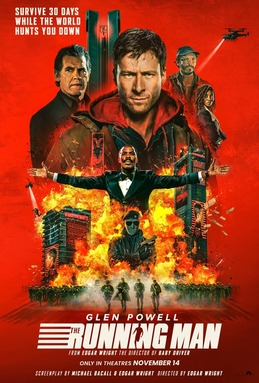
Screenplay by Michael Bacall & Edgar Wright – Based on The Running Man by Stephen King
Produced by Simon Kinberg, Nira Park & Edgar Wright
Main Cast: Glen Powell, William H. Macy, Lee Pace, Michael Cera, Emilia Jones, Daniel Ezra, Jayme Lawson, Sean Hayes, Colman Domingo and Josh Brolin, etc.
Cinematography by Chung-hoon Chung
*** MAY CONTAIN SPOILERS ***
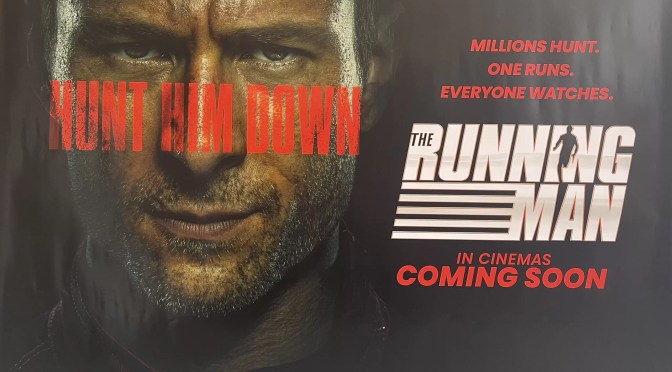
As a fan of Edgar Wright’s stylish, kinetic direction, the camp cult charm of the original Arnold Schwarzenegger 1980’s action romp, and of course Stephen King’s sharp literary concepts, I went into The Running Man (2025) with high hopes. The film certainly starts brilliantly where Wright unloads a barrage of inventive visual gags, flashy transitions, and razor-clean action choreography. The set-pieces are spectacular from the outset, and when the film is firing on all cylinders, it’s exactly the sort of propulsive, high-concept entertainment you’d expect from this creative cocktail.
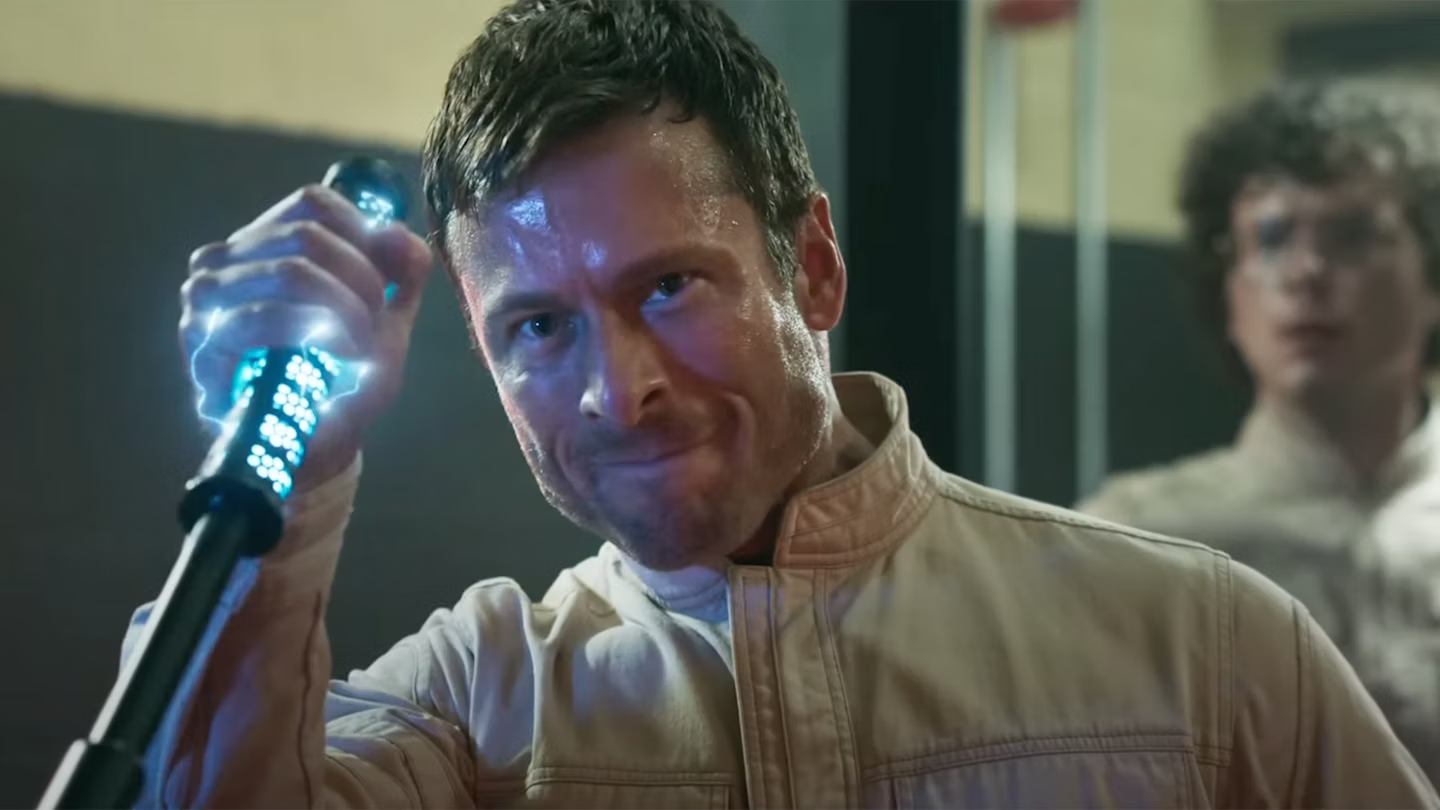
It remains a fantastic concept with a near-future game-show rewarding contestants with great wealth as long as they survive a month on the run and are not killed by all manner of uber-mercenaries chasing them. But as a whole the script and tone never quite settle. As such, the film wavers between being a comedy-actioner and a revolutionary dystopic thriller. It can be both, but here the shifts feel abrupt and under-cooked. The last forty-five minutes and final act especially drag, weighed down by a new character who is introduced mainly to witness Richards (Glen Powell) strike back at his foes, without adding much thematic or emotional heft. Emilia Jones does okay but her character should’ve entered the story much earlier—ideally as one of the contestants—so her eventual role feels earned rather than tacked on.
Powell is solid, charming, and physically believable in the role, but he’s not (at least yet) a true blockbuster star—more a handsome, reliable leading actor as demonstrated in the excellent, Hit Man (2024). I couldn’t help but imagine someone like Lee Pace in the part. Instead he is playing the lead henchmen. Pace is an actor with the gravitas and presence to anchor the story’s darker undercurrents and sell the rebellion with more weight. Indeed, Pace, Michael Cera, Colman Domingo, and Josh Brolin bring depth and texture to The Running Man (2025), each grounding the film’s wild energy with sharply defined performances. Pace delivers charismatic menace, while the underused Cera adds an unexpected nervy humour that sharpens the satire. Domingo, as always, lends personality as the show host, and Brolin rounds it out with rugged corporate authority that makes the world feel dangerous.
Ultimately, even Wright’s trademark ADHD-fueled visual dynamism can’t fully rescue a script that overreaches in ambition. Thus, The Running Man (2025) could have been truly great if it had taken just a little more time to breathe—letting its world, its fears, and its people settle in before the chaos kicked off. Beneath the neon splatter and bombastic satire is a sharp idea about media, violence, voyeurism, and manipulation, but the film races past its own potential. With a touch more patience to build tension, deepen the stakes, and let us actually care about the characters caught in the spectacle, its dystopia might have hit harder, felt richer, and lingered longer after the credits rolled. Still, the craft and energy make it an intermittently thrilling ride—just one that needed sharper focus to become the definitive The Running Man (2025) adaptation fans were hoping for.
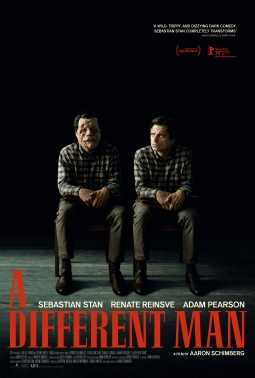
Produced by Christine Vachon, Vanessa McDonnell & Gabriel Mayers
Main cast: Sebastian Stan, Renate Reinsve, and Adam Pearson.
Cinematography by Wyatt Garfield
*** MAY CONTAIN SPOILERS ***
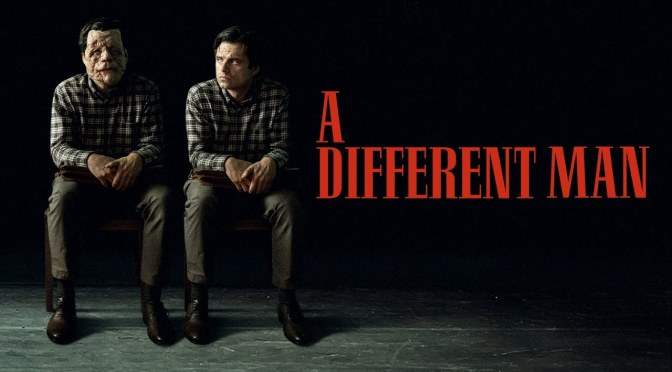
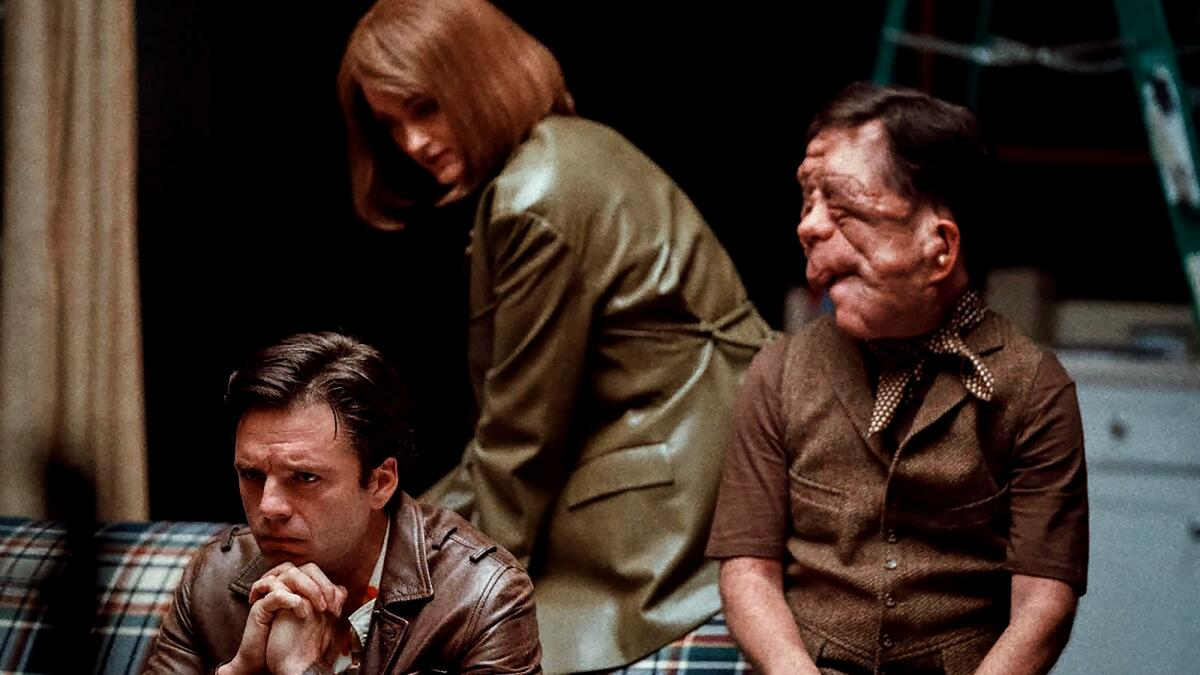
Few films in recent years feel as startlingly original as A Different Man(2024) —and yet, paradoxically, it’s a film made almost entirely from borrowed pieces. Aaron Schimberg’s latest begins as a bracing character study, anchored by Sebastian Stan’s Edward Lemuel, a socially awkward, struggling actor whose neurofibromatosis manifests in a disfiguring facial condition. These early passages are its strongest: Edward’s halting existence, his quiet desperation, disintegrating ceiling and the unnerving, tactile authenticity of his world call to mind the seedy New York grit of Abel Ferrara and Frank Henenlotter.
But just as the viewer settles into this world, the film veers via a sci-fi twist. An experimental procedure transforms Edward’s face, and with it, the narrative mutates. Suddenly we’re in a Woody Allenesque romantic entanglement—wry, neurotic, and tinged with irony—as Edward’s new identity draws him into a triangular relationship with Renate Reinsve as Ingrid and Adam Pearson as Oswald. Oswald also has neurofibromatosis, but has a confidence and popularity that Edward envies. As Oswald usurps Edward’s place in the off-Broadway play Ingrid is directing the film’s tone teeters between comedy and cruelty.
From there, A Different Man (2024) shape-shifts yet again. The third act discards linearity for a fragmented, Charlie Kaufmanesque unraveling: episodic bursts, narrative cul-de-sacs, and surreal detours that question not just Edward’s identity but the film’s own. It’s at once exhilarating and frustrating. Schimberg seems intent on deconstructing his own story midstream, leaving us with shards of multiple films rather than one fully integrated work. The ending works artistically but could, for me, have been way more dramatic with Edward confronting Oswald for, in his neurotic mind, stealing his life and identity.
That tension—between raw originality and homage—defines A Different Man(2024). It begins with remarkable clarity and empathy, only to succumb to a kind of cinematic identity crisis. Nonetheless, the film is very funny and moving and the themes are also very thought-provoking. Further, the script, direction and performances, especially from Sebastian Stan and Adam Pearson, make the film consistently compelling. Indeed, even in its unevenness, it remains one of the most daring and distinctive works of the past few years: a film that refuses to be just one thing, even if that refusal undermines certain dramatic potential.
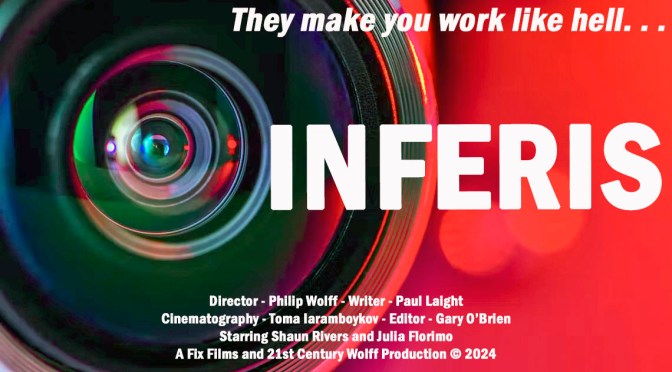
INFERIS (2024) – a short psychological horror film!
Just a quick update to say I am really pleased the low budget film I wrote and produced did really well at various festivals throughout 2024. I’m still waiting for responses from a few more festivals, but here are some of the events it was screened at:
Inferis (2024) is an eerie, unsettling and psychological no budget short horror film. A mood piece relying on atmosphere, creative lighting and impactful sound design.
Recent prison leaver, Joseph Mann, begins a new job at Inferis Security. Hoping for a fresh start he finds himself drawn toward a mysterious door that leads to god knows where.
TO BOLDLY REVIEW #15 – STAR TREK: VOYAGER (1995 -2001) – SEASONS 1 – 7
Created by: Rick Berman, Michael Piller and Jeri Taylor
Based on Star Trek: by Gene Roddenberry
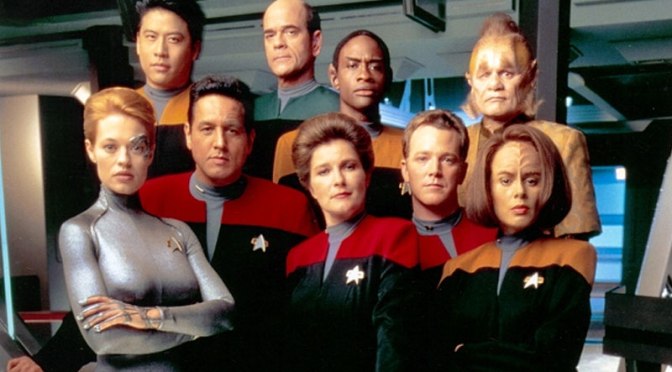
Main Cast: Kate Mulgrew, Robert Beltran, Roxann Dawson, Jennifer Lien, Robert Duncan McNeill, Ethan Phillips, Robert Picardo, Tim Russ, Garrett Wang, Jeri Ryan etc.
Notable guest stars: Kurtwood Smith, Marina Sirkis, Dwight Schultz, Joel Grey, Sarah Silverman, John De Lancie, The Rock, Michael McKean, Jason Alexander, Virginia Madsen, Tom Morello etc.
Theme music composer: Jerry Goldsmith
It’s been over a year since I reviewed the Star Trek: Deep Space Ninehere. Thus, much of 2023 was spent watching the seven series of Star Trek: Voyager. The main concern with this cultural project of watching every Star Trek show and film released is that I could get serious franchise fatigue. However, Voyager was a fantastic series with some of my favourite ever Trek episodes experienced within the seven seasons.
Paramount Pictures commissioned the series after the cancellation of Star Trek: The Next Generation to run alongside Deep Space Nine in the schedules and launch their new UPN network. Created and developed by Rick Berman, Michael Piller and Jeri Taylor, Voyager uses the template of a Federation crew exploring new worlds and making contact with unknown species, but with a serious goal in place – to return home.
Because in the first episode, The Caretaker, Voyager is enveloped by a powerful energy wave that strands it in the galaxy’s Delta Quadrant, more than 70,000 light-years from Earth. I think this critical narrative drive raises the stakes and sense of jeopardy throughout the series and also gave the writers the opportunity to introduce alien species as recurring characters, namely the Kazon, Vidiians, Hirogen, and Species 8472. Having said that, the main nemesis ultimately ended up being the Borg.
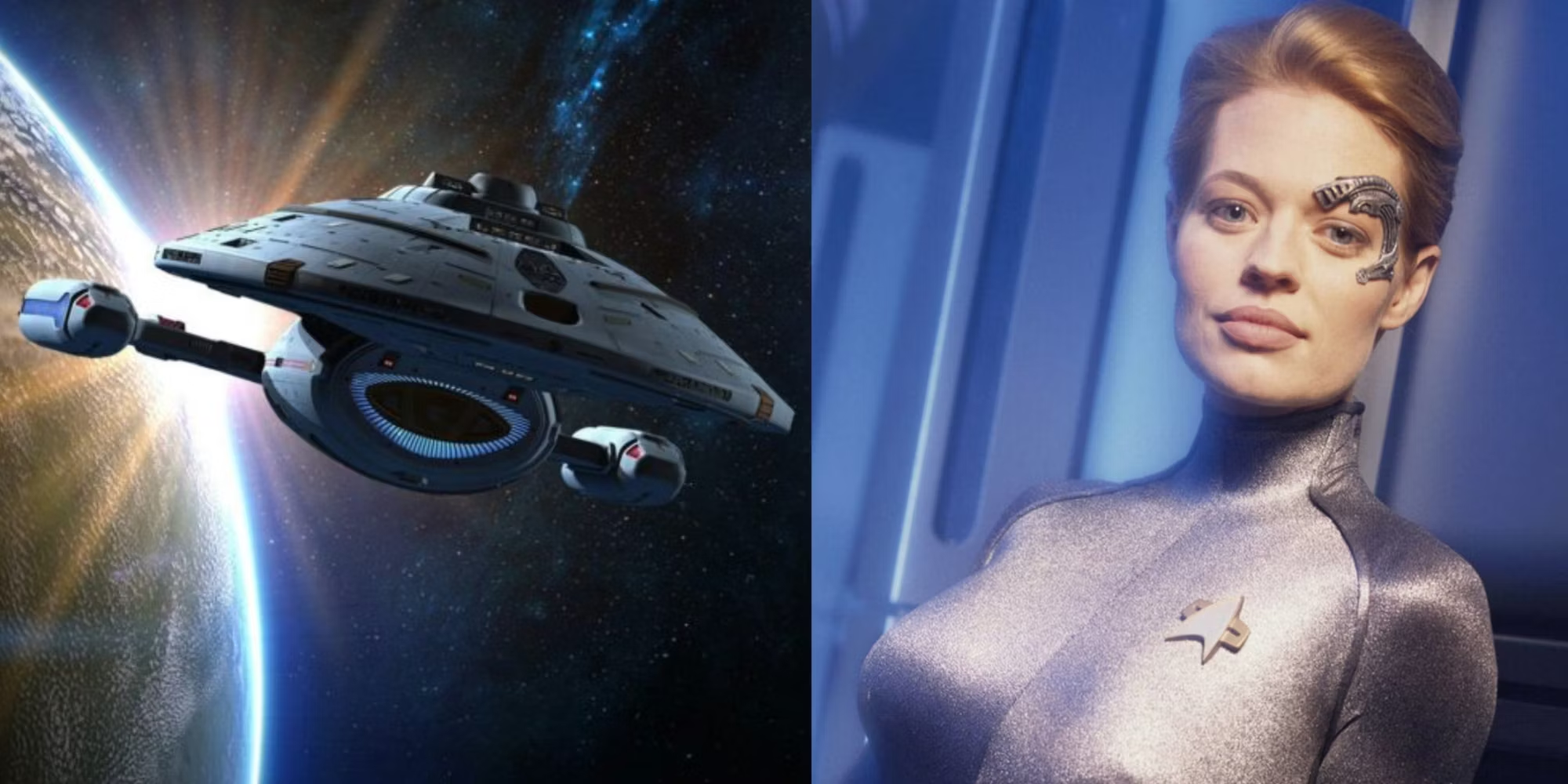
Voyager was the first Star Trek series to feature a female commanding officer, Captain Kathryn Janeway (Kate Mulgrew), as the lead. Mulgrew is a terrific actor and provided formidable characterisation throughout. Interestingly, Geneviève Bujold, was originally cast as Janeway, but quit a day and a half into shooting the pilot and was replaced. Mulgrew is notably supported in the ensemble cast by Robert Beltrani, Robert Picardo, Tim Russ, and the later introduction of fan favourite, Borg designation ‘Seven-of-Nine’ portrayed by Jeri Ryan. Robert Picardo as the hologram Doctor was also especially entertaining with many fine storylines.
I enjoyed the dynamic set-up of Starfleet officers having to work with rebels such as the Maquis, and that conflict provided much drama, pathos and joy throughout the series as their relationships developed. Further, important new Trek discoveries were introduced during the show such as: holo-emitters (so the doctor leave the ship and participate in more episodes), a tachyon core, trans-warp coil, Astrometrics lab, detailed information on the Borg and Delta Quadrant inhabitants, quantum slipstream drive, nano-viruses and access to the Borg’s Transwarp hub.
So, to end this summary I’d like to pick SEVEN of my favourite episodes – one from each season. They represent some of the best examples of Voyager, an often brilliantly written, well acted, funny and moving science fiction series.
** MAY CONTAIN SPOILERS **
VOYAGER – SEVEN GREAT EPISODES (FROM EACH SEASON)
SEASON 1 – CARETAKER
The opening two hour pilot is a terrific introduction to the players and storylines which will inhabit the next seven seasons. On the hunt for Maquis rebels finds the Voyager crew dragged into the Delta Quadrant, where they lock horns with the omnipotent power that is the ‘Caretaker.’ As well as establishing all the main players from Starfleet, the show successfully welcomes series mainstays Kes and Neelix.
SEASON 2 – TUVIX
What is essentially a version ofThe Fly(1989) in space, Neelix and Tuvok get combined at a molecular level to create a new character called Tuvix (Tom Wright.) What initially seems quite goofy is in fact a heartfelt exploration of morality and ethics. Janeway has an almost impossible decision to make with character actor, Wright, excelling and imposing pathos as the tragic Tuvix.
SEASON 3 – SCORPION – PART 1 and 2
Just when you thought things couldn’t get worse for Voyager they meet a foe even the Borg are fearful of, namely Species 8472. In this brilliant two-parter, Janeway and her intrepid crew find themselves caught in the middle of a war between the Borg and Species 8472. These thrilling episodes also saw the first appearance of ‘7 of 9’ (Jeri Ryan.)
SEASON 4 – YEAR OF HELL – PART 1 and 2
A truly epic two-parter with a story that could easily have made an incredible feature film. The abuse of power via time travel is at the core of the story as Kurtwood Smith’s Annorax obsessively changes his time to his own will as part of the Krenim Imperium. Janeway are enslaved under threat of being wiped from existence but fight back with tremendous resilience as the writing, directing and acting reach a peak for the series as a whole.
SEASON 5 – COURSE: OBLIVION
A direct sequel to Episode 24 from Series 4, Demon, Course: Oblivion is a brave episode for a number of reasons. It has a dreamy, surreal and latterly nightmarish quality to the style and the storyline, notably the ending, is one of the bleakest in Trek history. What is so clever is that as the writing and performances make us care for the characters when they begin to perish, even though we know nothing is what it seems.
SEASON 6 – BARGE OF THE DEAD
‘7 of 9’ (Jeri Ryan) took a lot of the character development plaudits during the last three seasons, but Roxann Dawson as B’Elanna Torres had some terrific episodes too such as this and Lineage in season 7. She is brilliant in this episode as her psyche is breached by a near-death experience and has to confront her family’s past and the heft of Klingon lore and history.
SEASON 7 – BODY AND SOUL
Obviously Star Trek contains episodes that are very serious and dramatic, but it has its fair share of comedic shows too. This re-imagining of gender swap comedy, All of Me (1984), finds ‘7 of 9’ (Jeri Ryan) switching bodies and mind with the Doctor (Robert Picardo) to hilarious effect. Now Picardo has always demonstrated sharp wit throughout Voyager, but Jeri Ryan is particularly impressive as she successfully mimics the Doctor’s mannerisms to hilarious effect, contrasting her usual deadpan and stoic Borg personality.
Produced by: Gareth Edwards, Kiri Hart, Jim Spencer, Arnon Milchan
Main Cast: John David Washington, Madeleine Yuna Voyles, Gemma Chan, Ken Watanabe, Sturgill Simpson, Allison Janney, Ralph Ineson and Marc Menchaca.
Cinematography: Greig Fraser and Oren Soffer
*** MAY CONTAIN SPOILERS ***
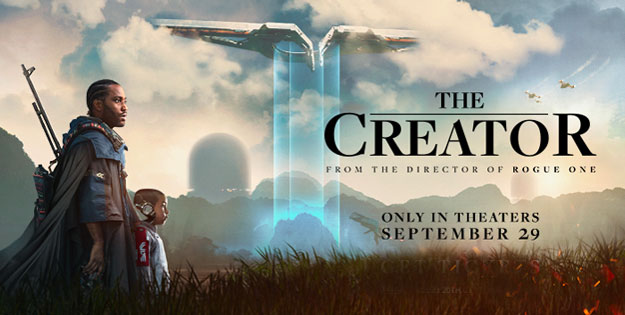
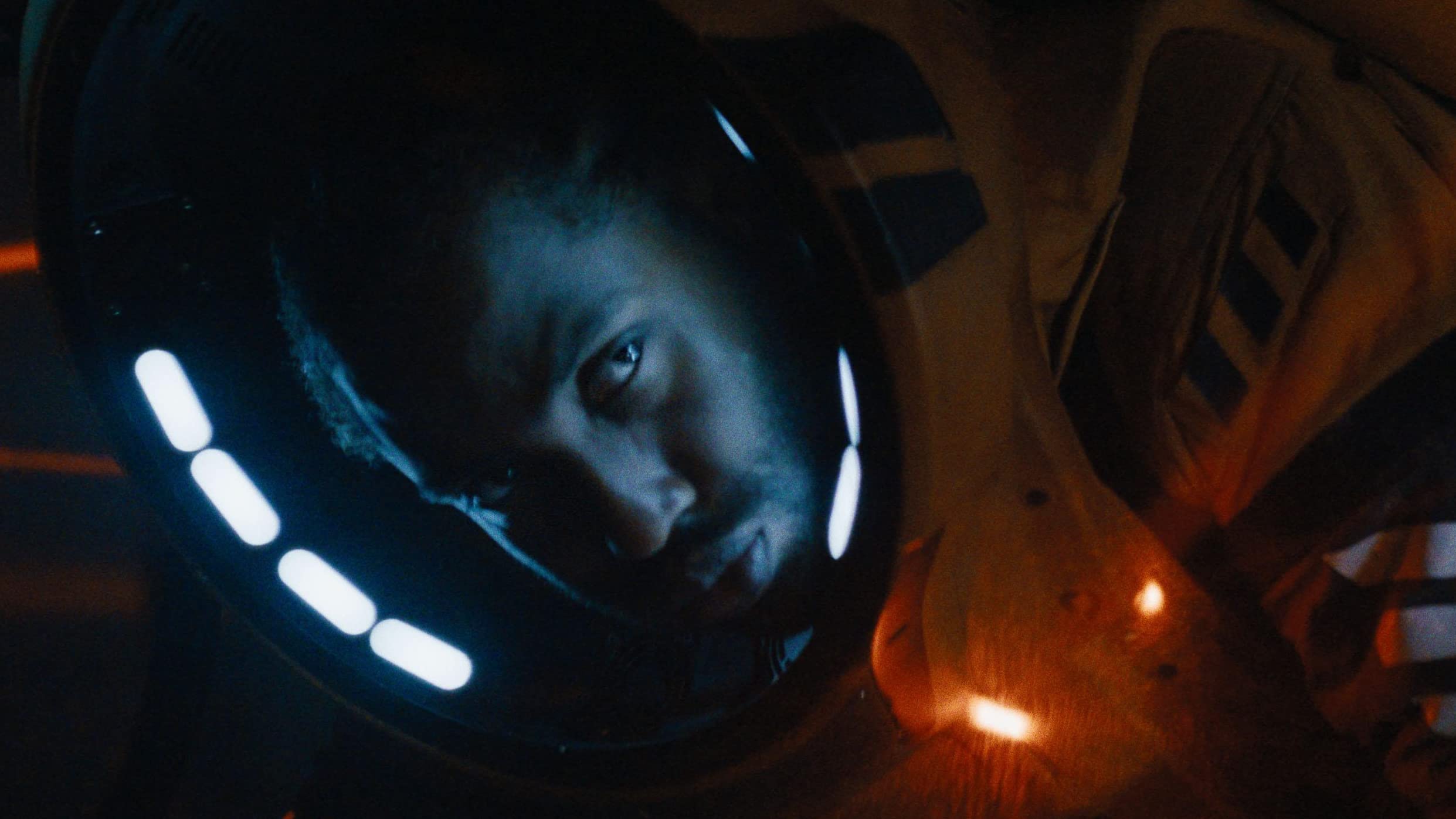
The Creator (2023) is Gareth Edwards first directorial release since the tremendous Star Wars prequel Rogue One (2016). Of all the Disney-funded Star Wars products that remains my favourite. Overall, Rogue One (2016) is not just a great Star Wars film but a brilliant movie too, as it transcended the franchise while delivering a pulsating, heroic, nostalgic and emotional film experience. It also had an influence on the stunning visual look, action, and effects of The Creator (2023) too. So much so, The Creator (2023), in terms of style, often felt like a Star Wars film in all but name.
With The Creator (2023), Gareth Edwards and his talented production and effects team have invented a continually innovative futuristic look based around Artificially Intelligent robots and technologically modified humans. Indeed, based on all his directorial works, jaw-dropping visuals and themes of humans overcoming machines and monsters are always very much to the fore. But in The Creator (2023) one of the major themes poses the question – who are the real monsters? The humans or their computerised creations? As the narrative begins, in 2055, with the machines detonating a nuclear attack on Los Angeles the Americans declare war on the robots. More specifically, Southeast Asia, who still utilise A: I technology. Fast forward several years and John David Washington’s Joshua, remains part of the U.S. military plans, as they attempt to finish off the A: I threat for once and for all.
As Joshua is manipulated by the US Government, through a past romantic connection with Gemma Chan’s Maya, he is dropped behind “enemy” lines in Asia to destroy the A: I’s secret weapon called, “Alpha-O.” Along, with a paper-thin characterised group of U.S soldiers, Joshua finds the mission going south and ultimately goes on the run with “Alpha-O.” Edwards and his writers humanize the dangerous processor by giving it the body of a young girl portrayed by Madeleine Yuna Voyles. Despite the powerful visuals of the film, I found The Creator (2023) buckling under the wright of over-used ideas from other films. The cute “genius” kid being just one of those.
It’s The Terminator (1984) meetsArtificial: Intelligence (2001) meets Avatar (2009) meets any number of action-hero-saves-young-child narratives. I mean can at least one film TRY and make the American warmongers more nuanced? Yes, the action, cinematography and sound design are especially impressive and thrilling and there is certain emotion on screen. However, I personally did not feel much emotion in my heart, unfortunately. Watch it on the biggest screen you can, because what The Creator (2023) lacks in original narrative and character elements, it more than makes up in nifty robotic concepts and visual cinematic grandeur.
Screenplay by: Katie Silberman – Story by Carey Van Dyke, Shane Van Dyke and Katie Silberman
Produced by: Olivia Wilde, Katie Silberman, Miri Yoon, Roy Lee
MainCast: Florence Pugh, Harry Styles, Olivia Wilde, Gemma Chan, KiKi Layne, Nick Kroll, Chris Pine etc.
Cinematography Matthew Libatique
*** MAY CONTAIN SPOILERS ***
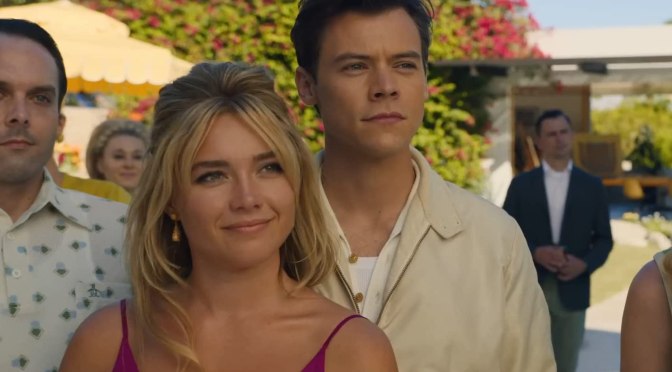
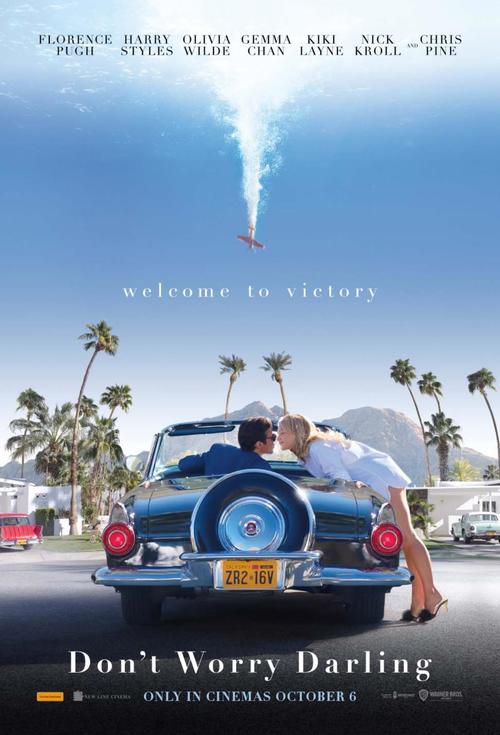
Part arthouse character study, part science fiction social satire and eventually a rushed concertinaed thriller, the Olivia Wilde directed, Don’t Worry Darling (2022) is a visual feast, anchored by Florence Pugh’s devastatingly brilliant performance. However, the ambition of the themes remains hamstrung by pacing and structure which fails to serve the story to its full potential.
Set within a utopian 1950’s sun blanched town called Victory, Wilde and her writers throw us straight into the hedonistic lives of a set of youthful and dynamic couples, drinking, partying and sexing. They work and play hard. Well, the husbands work as the dutiful women stay at home cleaning and churning out kids. So far-so-Stepford Wives! At the heart of Don’t Worry Darling (2022) is Pugh as the loyal but inquisitive, Alice. Her husband, Jack (Harry Styles) is ambitious, seeking the approval of big boss, the hubristic Frank (Chris Pine). When Alice begins to experience Kafkaesque dreams of feeling trapped by her daily life, she slowly realises all is not quite perfect in paradise.
No one does anguish and anxiety on screen like Florence Pugh. As Alice falls deeper down the rabbit hole of despair, Pugh produces true cinematic power once again. Olivia Wilde also brings a compelling image system to fully visualise Alice’s hellish descent. In comparison, the male characters are far less developed and the exchanges between Pugh and Styles, especially in the final act, are really lacking in dramatic punch. Styles himself I felt was miscast, but he does have an engaging screen presence. It’s just I didn’t feel enough threat from him.
Structurally, Don’t Worry Darling (2022) is also flawed. The major reveal comes way too late to assuage the pacing issues. While the narrative contains some striking visual set-pieces there are too many parties, barbecues and social events getting in the way of the potential thrills that could have occurred if Alice had discovered her plight much earlier. Overall, there is too much set-up and not enough punch. The longer you wait to reveal the twist, the bigger the revelation needs to be. The Outer Limits and The Twilight Zone have done this style of story with more emotional impact and better economy. Pugh and Wilde though prove once again they are major talents and thematically speaking it’s good that men get another kick in. Men are fast becoming the go-to villains of this century and long may it continue.
Screenplay by: Harry Bromley Davenport, Michel Perry, Iain Cassie, Robert Smith
Story by: Harry Bromley Davenport, Michel Perry
Produced by: Mark Forstater
Cast: Bernice Stegers, Philip Sayer, Simon Nash, Maryam d’Abo, Danny Brainin etc.
Cinematography: John Metcalfe
*** MAY CONTAIN SPOILERS ***
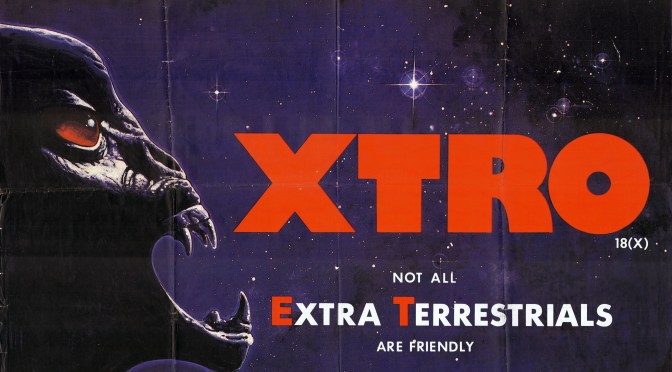
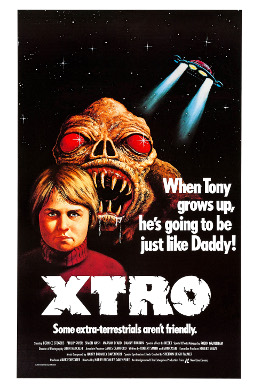
Being a fan of the horror genre never fails to spring surprises, especially if you also love trashy-B-movie-exploitation-video-nasties too. Because what often occurs is a hidden or buried or previously banned film will reanimate and be located on one of the many streaming platforms we have today. I am both surprised and even more joyous if I find I have never even seen the said film. This is certainly the case with low-budget alien monster film, XTRO (1982).
There I was pressing play via Amazon Prime, thinking it was another schlocky American indie I had missed from yesteryear, only to discover Xtro (1982) is actually a bizarre British film which twists and riffs on the box office hit that was ET: Extra Terrestrial (1982). Xtro (1982), directed by Harry Bromley Davenport, is not a comforting family science fiction drama like its more famous counterpart though. Instead, it is a gory sci-fi shocker with many outrageously violent set-pieces and a budget lower than E.T.’s lunch bill.
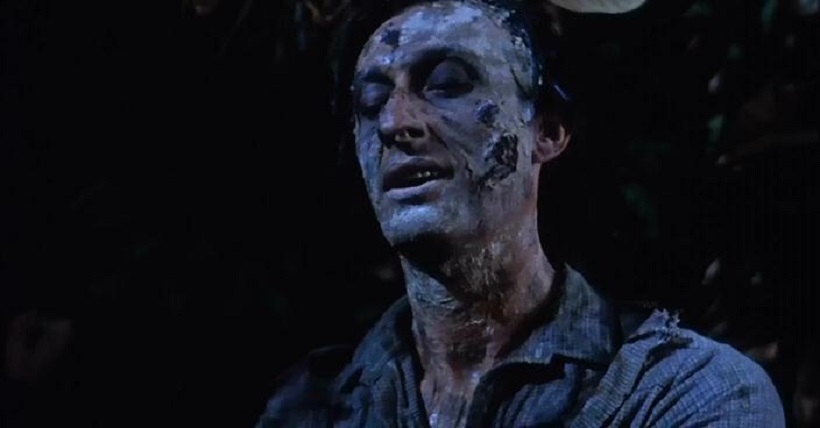
Critically damned at the time, Xtro (1982), when released on home video in 1983, was subject to a prosecution case in relation to British obscenity laws and labelled a “video-nasty”. Watching it now I have to admit it is quite shocking still, but the practical effects are so gloriously over-the-top they are more humorous than sickening. Having said that there are some memorably gruesome moments involving alien births, crazy clowns, a live “Action Man” doll, weird space eggs, and transformative man-into-monster effects.
The film doesn’t hang about establishing character but propels, from the opening scene of a father playing in the garden with his son, straight into the disappearing parent plot. The father (Philip Sayers) vanishes without a trace and three years later his wife (Bernice Stegers) and son are attempting to repair their lives. Yet, the boy is suffering horrific nightmares when suddenly his father reappears attempting to reconcile. The familial drama within the script itself could have been further developed to some emotional impact. However, while Bernice Stegers gives a decent dramatic performance, the film soon descends into a mix of surreal and insane set-pieces, combined with the father’s metamorphosis into something from another world.
There’s much to like and much to loathe about, Xtro (1982), notably the gratuitous nudity sprinkled throughout. Yet, if you are drawn to exploitational B-movies there is much sick entertainment to be found in the blend of impressive practical effects and creature moments. Philip Sayer and Bernice Stegers keep the shlocky elements of the plot in check with sane acting performances and despite some eccentric writing throughout Harry Bromley Davenport and his team have delivered an out-of-this-world bona fide B-movie cult classic.





 The Cinema Fix presents