
Tag Archives: Robert Shaw

My Cinematic Romance #26 – Robert Shaw

My Cinematic Romance #26 – Robert Shaw

I often plan my reviews and retrospective pieces around thematically linked film subjects and on other occasions it can become a random or serendipitous process. Of late, the cultural gods have nudged me towards watching and rewatching works by Harold Pinter, including the Joseph Losey directed films, The Servant (1963) and Accident (1967). I then recalled that several of Pinter’s plays had been adapted for film and were readily available on YouTube to watch for “free.”

Moreover, as I have also been on a mild William Friedkin retrospective rewatch, I saw his adaptation of The Birthday Party (1968) which led me to an earlier Pinter adaptation called The Caretaker (1963) directed by Clive Donner. Both are oblique, ambiguous renditions of human nature with dark existential absurdity and an almost impenetrable subtext. Pinter’s works are highly acclaimed, attracting a litany of incredibly talented actors and directors. One such is Robert Shaw. His haunting and magnetic performances in Pinter’s work reminded of what an incredible talent he was.
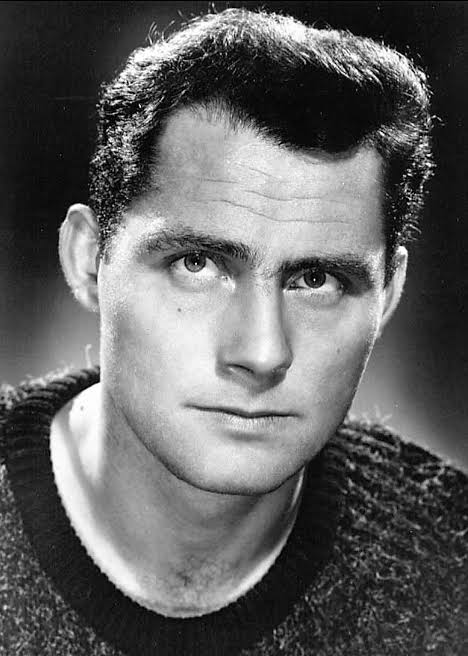


Sadly passing away aged fifty-two of a heart attack, Shaw had a tremendously varied career on stage and screen. If you were not aware he was also a successful author and playwright. Indeed, his 1968 play, The Man in the Glass Booth ran in London and Broadway to critical acclaim, later being adapted for a film in 1975. It’s reported that Pinter assisted with the adaptation of Shaw’s novel for the stage, although Shaw retains the writing credit. Therefore their collaborative connection remained resolute.

This piece highlights five of Robert Shaw’s best performances. Shaw was famously known to favour the stage and his writing over the commercial grind of Hollywood. While big-budget films brought him money, international fame and financial security, he openly disliked celebrity culture and many of his co-stars. In interviews he is often stated he viewed genre movie paydays as a way to provide for his family and fund his true passion: writing novels and plays. So, apologies to Robert Shaw’s legacy for choosing some of those Hollywood roles he’s known for. Safe to say though he is a true artist who passed away way too soon.


The Birthday Party (1968)

I was going to choose Shaw’s memorable tough guy gangster performance in The Sting (1973), but it’s too easy. Instead, I have selected his intensely complex role as Stanley in The Birthday Party. His character is one of the most tortured souls out there, full of sweat, guilt, regret and paranoia. We do not know what he may or may not of done, but I drew parallels with characters such as Josef K from The Trial and No. 6 from The Prisoner. Arguably, these works are more accessible than Pinter’s “comedy of menace,” but Shaw’s Stanley is painfully mesmerising. The two men who come for him possibly represent death. At the same time his bizarre exchanges with Dandy Nichols’ landlady, Meg, add sex to the mix, making the whole thing a painfully uncomfortable watch.


The Caretaker (1963)

A quietly strange and devastating film adaptation containing three fantastic performances from Alan Bates, Donald Pleasance and Robert Shaw. It’s mostly a character study of mental illness, loneliness, bullying and hiearchal-driven power dynamics. Pleasance is a vagrant, Mac, taken in by Shaw’s quiet soul, Aston, as an act of apparent kindness. However, Alan Bates mischievous and verbose brother, Mick, enters the fray and spies and torments. Mac. The quietly spoken, Aston, seems unaware of his brothers’ negative behaviour. Like much of Pinter’s work, a lot is left unexplained, yet the monologue Shaw delivers describing his treatment in a mental institution is one of the most subtle and powerful speeches I have witnessed on the screen.


From Russia with Love (1963)

While Shaw was known for his intelligent mind, his appearance as the nemesis, Red Grant in the second Bond film, requires him to demonstrate his considerable muscle too. From Russia with Love (1963) is one of my favourite Bond films as it retains that gritty Cold War spy style and Sean Connery is in prime form too. One could argue the villains are often more interesting than Bond, and Shaw’s steely assassin certainly matches Bond for physicality and charisma. Indeed, they are effectively mirrored characters on opposing teams. The fight-to-the-death on the train remains one of the most iconic battles in all of the Bond franchise.


Jaws (1975)

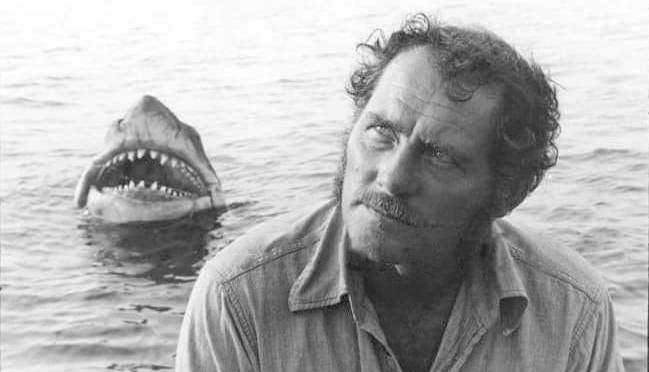
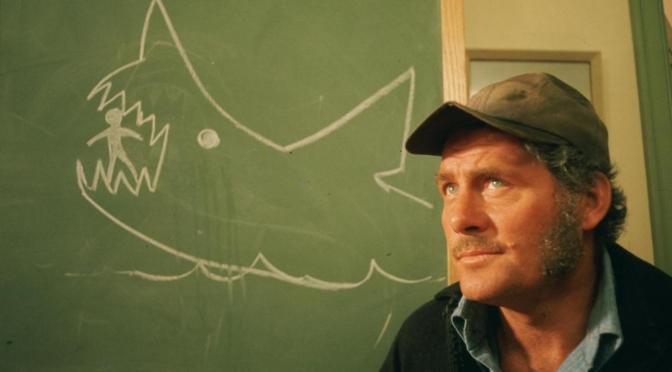
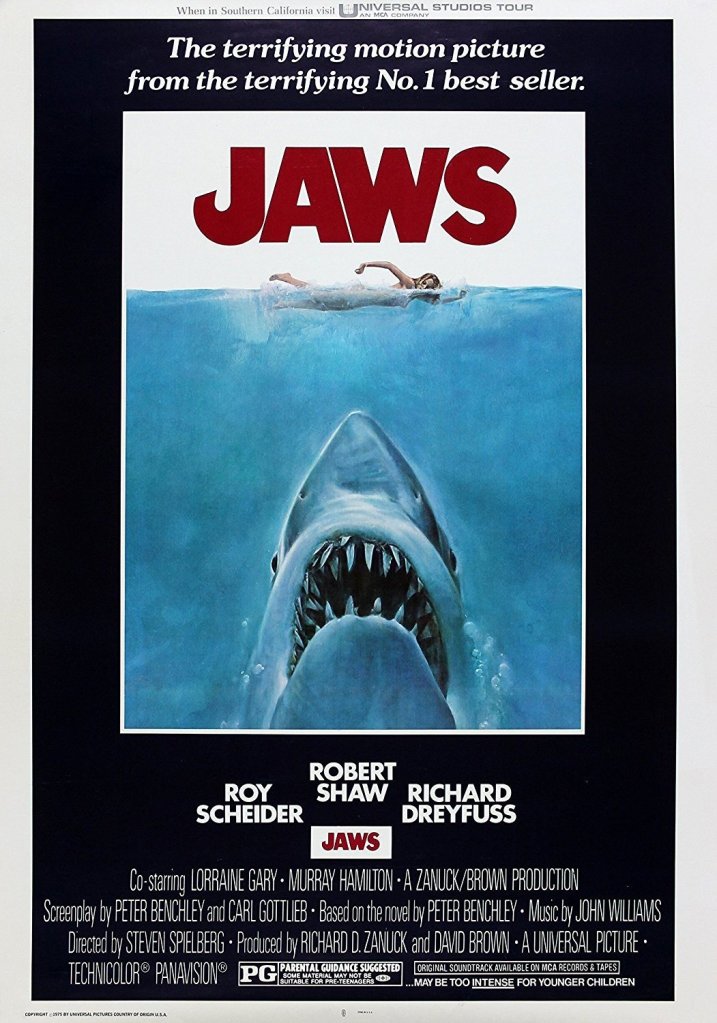
One of the greatest characters in one of the greatest films of all time. Not only that, Quint, has one of the greatest character introductions and greatest monologues in film ever too. How Shaw wasn’t nominated for best supporting actor at the Academy Awards I will never know. It’s a big performance and you could say, over-the-top, but to me it is so authentic in physical and verbal delivery, even Shaw’s sweat could have been given an award on its own.

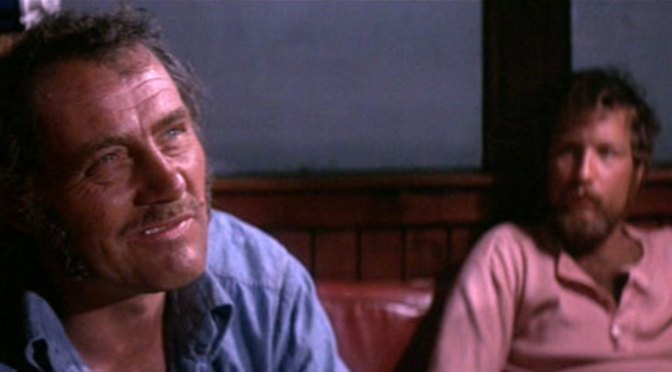
The monologue itself comes as Quint and Hooper share “war stories” from their past experiences at sea. The men share a laugh before Brody asks Quint about a particularly nasty scar. Then the mood darkens and the old sea dog recounts a story about the U.S.S Indianapolis on which he was aboard when it sank in 1945. The chilling tale of a sinking ship and over one thousand men at the mercy of the sea, hunger, dehydration and shark attacks, is eerily recounted by Quint; loss and bitterness in his eyes. Shaw is incredible during this classic monologue as he not only establishes why Quint hates sharks, but also builds palpable suspense prior to the frenzied final shark attack on the doomed Orca.


The Taking of Pelham 123 (1974)

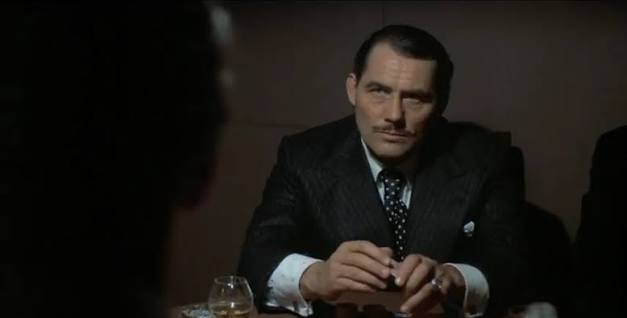
Another 1970s classic and again, Shaw, plays another memorable antagonist. His ‘Mr Blue’ is military, battle-hardened with a disciplined plan of action. His fierce precision and icy delivery finds a perfect counterpart in Walter Matthau’s more congenial and witty transit cop, Zachary Garber. Their exchanges are tense but laced with hard-boiled, sardonic humour, which add a hint of colour to the grim and grey New York underground sequences. While the well-constructed plot and rapid action raises the pulse, the film’s quality is critically raised by Matthau’s and Shaw’s committed performances.

SIX OF THE BEST #32 – CINEMATIC STATEMENTS OF INTENT!

SIX OF THE BEST #32 – CINEMATIC STATEMENTS OF INTENT!

This is a dive into the world of punchy dialogue that sums up a film or character or a relationship in a few key words. Because sometimes you just don’t want to think and sometimes you don’t want subtle hints to a character’s intentions. On occasions you want the whole plot and cinematic situation summed up succinctly and in an emotionally impactful way. I like ambiguous or complex characters, but from time to time I just gots to know, in a few words, what the character wants or their plans or capabilities. How do they do that? Well, through a good old-fashioned statement of intent.

I would categorise a statement of intent as generally involving the words “I” or “me” and has a character telling another character or group, plus the audience, what they intend to do or how they feel about a particular moment in their life. Or indeed their life as a whole. There is no ambiguity, but rather a direct proclamation of where the character stands and what he or she wants. Actually, I should say this is an extremely masculine list, but la-di-da, it is what is and so it goes. Thus, here are six of the best, of what I call statements of intent from film.


*** CONTAINS SPOILERS ***


QUINT – JAWS (1975)

“I’ll catch this bird for yer – but it ain’t gonna be easy. . . bad fish!”

One of the great character introductions of all time and an incredible statement of intent too. In a way Quint did catch the “bird”, but that big bird caught up with Quint too! What a speech! What a film!


HOWARD BEALE – NETWORK (1976)

“I’m as mad as hell and I’m not going to take this anymore!”

Acclaimed playwright Paddy Chayefsky arguably wrote one of the greatest cinema speeches of all time with Peter Finch’s newscaster, Howard Beale, reaching the end of his tether with society and life! The saddest thing about this statement of intent is that NOTHING has changed – the world is still nuts and it gets crazier by the day!


T101 / T800 – THE TERMINATOR (1984)

“I’ll be back!”

Sometimes three simple words can say more than a lengthy monologue, as James Cameron and Arnold Schwarzenegger combined to amazing impact in this classic sci-fi action film! Arnie lived up to his promise too, coming back again and again in a series of sequels and prequels and, aside from Terminator 2: Judgement Day (1992), rarely equalled follow-up films.


MARTIN RIGGS – LETHAL WEAPON (1987)

“Do you really wanna jump… Well, that’s fine by me!”

Amidst all the mullets, bullets and B-movie baddies of Shane Black’s over-the-top 1980’s script, there is in fact a moving buddy relationship in here too. There is also a compelling character arc of a suicidal man finding a reason to live through an adopted family. Mel Gibson’s Riggs has so many great scenes to demonstrate his wild-man acting style and the “jumper” scene is probably the best of them.


HAWKEYE – THE LAST OF THE MOHICANS (1992)

“You stay alive no matter what occurs – I will find you!”

This statement of intent comes later than they usually might in a film. But, under the fall of water and with the majestic score swelling Daniel Day Lewis’ Hawkeye powerfully declares his love and intentions to Madeline Stowe’s Cora Munro in Michael Mann’s incredible romantic war drama.


BRYAN MILLS – TAKEN (2008)

“I have a particular set of skills… I will look for you. I will find you. And I will kill you!”

Despite the xenophobic undertones within Pierre Morel and Liam Neeson’s rapid-paced action thriller, it does have one of the most iconic statements of intent in recent film history. Neeson delivers it brilliantly and what’s great is he does find the kidnappers and he does kill them! Just like he said he would! Nothing I like more than a man who keeps his word!

CLASSIC MOVIE SCENES #11 – JAWS (1975) – QUINT’S U.S.S. INDIANAPOLIS SPEECH

CLASSIC MOVIE SCENES #11 – JAWS (1975) – QUINT’S U.S.S. INDIANAPOLIS SPEECH

Directed by: Steven Spielberg

Produced by: Richard D. Zanuck, David Brown

Written by: Peter Benchley, Carl Gottlieb, Howard Sackler (uncredited)

Based on the novel by Peter Benchley

Main cast: Roy Schieder, Robert Shaw, Richard Dreyfuss, Lorraine Gary

**CONTAINS SPOILERS**


I have genuinely lost count the amount of times I have watched Jaws (1975). It is one of my favourite films and has one of the tightest written screenplays of all time. There is not an ounce of fat in the lean human versus monster thriller. The story as everyone knows finds a gigantic great white shark attacking beachgoers, tourists and locals at a New England summer resort town. Sheriff Martin Brody (Roy Schieder) is tasked with stopping the shark, but due to pressure from business owners and the Mayor he cannot close the beaches.

Spielberg, in only his second feature film cinema release, directed this classic thriller amazingly, filling it with a series of gripping set-pieces, fearful jump-scares and bloody carnage. He’s ably assisted by John Williams iconic score, Bill Butler’s impeccable cinematography, and sterling character acting from Robert Shaw, Richard Dreyfuss and Roy Schieder. However, amidst the suspense and heart-pounding scenes, arguably the best moment of the film is Quint’s speech that related to his experiences on the U.S.S Indianapolis.

The monologue itself comes as Quint and Hooper share “war stories” from their past experiences at sea. The men share a laugh before Brody asks Quint about a particularly nasty scar. Then the mood darkens and the old sea dog recounts a story about the U.S.S Indianapolis on which he was aboard when it sank in 1945. The chilling tale of a sinking ship and over one thousand men at the mercy of the sea, hunger, dehydration and shark attacks, is eerily recounted by Quint; loss and bitterness in his eyes. Shaw is incredible during this classic monologue as he not only establishes why Quint hates sharks, but also builds palpable suspense prior to the frenzied final shark attack on the doomed Orca.

Lastly, many writers have sought to take credit for the amazing monologue and the debate is almost as famous as the scene itself. An excellent article outlining who wrote the speech can be found here.