Tag Archives: The Cinema Fix

NETFLIX FILM REVIEW: HIS HOUSE (2020)

NETFLIX FILM REVIEW: HIS HOUSE (2020)

Directed by: Remi Weekes

Produced by: Aidan Elliott, Martin Gentles, Arnon Milchan, Ed King, Roy Lee

Screenplay by: Remi Weekes

Story by: Felicity Evans, Toby Venables

Cast: Wunmi Mosaku, Sope Dirisu, Matt Smith, etc.

Cinematography: Jo Willems

***MAY CONTAIN SPOILERS***


Similar in spirit to the Jacques Audiard directed film, Dheepan (2015), the latest Netflix film release, His House (2020), takes the migrant experience as a key narrative driver, then filters it through exciting genre style. While Dheepan (2015) started as a story of survival before crossing over into thriller territory, His House (2020) superbly combines social commentary with the horror genre. Moreover, a key plot reveal later in His House (2020) is extremely similar to that found in Dheepan (2015). Nonetheless, it is a powerful film, both unnerving and thought-provoking in equal measure.

His House (2020) introduces us to Bol (Sope Dirisu) and Rial (Wunmi Mosaku), a refugee husband and wife seeking asylum in Britain from South Sudan. Having survived a treacherous journey from this war-torn part of the world, their young daughter is not so lucky. Alas, Nyagak (Malaika Agibaka) dies during a stormy boat journey. This incident and their social status immediately garners sympathy and empathy for the protagonists. Allied to this, on achieving probational asylum status their jaded case worker, Mark (Matt Smith), brings them to a rundown council estate to live in. It is to Bol and Rial’s credit that they accept their new abode with gratitude. Bol especially is keen to mix with the locals and fit into the British way of living. However, the two soon encounter indifference, racism and prejudice.

This image has an empty alt attribute; its file name is 1024px-his_house_film_poster-1.png

As the narrative continues Bol and Rial have more to contend with than ignorant locals. Rial is resistant to integration as she desperately holds onto her Sudanese clothes and customs. While Bol is clearly trying to distract himself from the tragedy, Rial’s grieving takes the form of clinging onto the memory of her daughter and their Sudanese ways. This familial division is exacerbated by disturbing supernatural phenomena, as a strange dark spirit and the ghost of Nyagak both appear. Could it be grief and guilt manifesting such spectres? Or are they suffering from post-traumatic stress following their harrowing journey to Britain? Or has a genuinely evil spirit hijacked their attempts to build a home and find peace?

Declaring himself as a director to keep tabs on, Remi Weekes, has written and directed an excellent first feature film in, His House (2020). The pacing of the story is excellent as we get flashes of Bol and Rial’s past in Sudan, juxtaposed with their attempts to acclimatise in Britain. As someone whose life is extremely privileged when compared to that of such characters, I was both moved and fearful for the protagonists. This is not only down to an excellent script full of subtext, symbolism and dread, but also due to Sope Dirisu and Wunmi Mosaku’s compelling performances. Furthermore, you really feel the pain of the couple’s loss and suspense created by that which lurks within the stained walls of their apartment. While there are many tense moments, my one reservation with His House (2020) was there arguably wasn’t enough true horror moments. Having said that, the actual reality of Bol and Rial’s situation in losing a daughter, suffering British administrative red-tape and living amidst everyday prejudice, is far scarier than ghosts and monsters can ever be.

Mark: 8.5 out of 11

CLASSIC MOVIE SCENES #14 – RAIDERS OF THE LOST ARK (1981) – GUN VERSUS SWORD!

CLASSIC MOVIE SCENES #14 – RAIDERS OF THE LOST ARK (1981) – GUN VERSUS SWORD!

Directed by: Steven Spielberg

Produced by: Frank Marshall

Screenplay by: Lawrence Kasdan

Story by: George Lucas, Philip Kaufman

Cast: Harrison Ford, Karen Allen, Paul Freeman, Ronald Lacey, John Rhys-Davies, Denholm Elliott etc.

Music by: John Williams

Cinematography: Douglas Slocombe

*** CONTAINS MASSIVE SPOILERS ***


It’s Saturday morning in London, so what better than to conjure up memories of classic weekend film entertainment. Because I recall, one Saturday, watching the monumental adventure classic, Raiders of the Lost Ark (1981), when I was eleven at the ABC Cinema in Fulham with my nine-year old brother. Nothing like a great film to bring back happy memories. After the film ended, we were exhilarated and hungry. We decided that rather than spend our remaining money on bus fare, we’d prefer to walk home to Battersea and share a bag of chips in the rain.

The three mile walk lasted no time at all as we were full of excitement about the incredible film we’d just witnessed. Gigantic rolling balls, snakes in cockpits, treacherous monkeys, villainous Germans, a hard-drinking heroine, unforgettable fights, shootouts, chase scenes galore, and a whip-cracking, charismatic, never-say-die archaeology Professor as our leading protagonist. Those Nazis never stood a chance chasing the ultimate McGuffin in the lost Ark of the Covenant.

With a film like Raiders of the Lost Ark (1981), you essentially have one classic scene after another. So much so you could do a top twenty easily. I have chosen to focus on an earlier middle act chase sequence which ends with one of the greatest punchlines ever committed to celluloid. Indiana Jones (Harrison Ford) is chasing baskets around the marketplace searching for Marion (Karen Allen). It’s an incredibly well directed and edited scene. Moreover, it’s funny, exciting and full of twists; including that darned monkey! John Williams music is utterly wonderful to boot. Mid chase Indy is faced with a swordfighter from his pursuers. The fighter displays an amazing set of skills and we wonder how our hero will escape certain death. Well, Indy just shoots him!

The story goes that a massive battle was planned but Harrison Ford had food poisoning, thus the scene was rewritten. Thus, movie magic was conjured, not from expert planning, but from having dodgy guts! They should have stuck to sharing a bag of chips. But then we wouldn’t have this amazing end to a magnificent movie sequence.


NETFLIX FILM REVIEW: THE DEVIL ALL THE TIME (2020)

NETFLIX FILM REVIEW: THE DEVIL ALL THE TIME (2020)

Directed by: Antonio Campos

Produced by: Jake Gyllenhaal, Riva Marker, Randall Poster, Max Born

Screenplay by: Antonio Campos, Paulo Campos

Based on: The Devil All the Time by Donald Ray Pollock

Cast: Tom Holland, Bill Skarsgård, Riley Keough, Jason Clarke, Sebastian Stan, Haley Bennett, Eliza Scanlen, Mia Wasikowska, Robert Pattinson, Harry Melling, etc.

Narrated by: Donald Ray Pollock

Music by: Danny Bensi, Saunder Jurriaans

Cinematography: Lol Crawley

***MAY CONTAIN SPOILERS***


Netflix’s latest major film release is a literary adaptation of Donald Ray Pollock’s psychological thriller, The Devil All the Time (2020). One has to believe it is a pretty faithful adaptation because the novelist himself narrates the tale to us via voiceover. Set in the years after World War II, the grim events unfold in the states of Ohio and West Virginia, respectively. While the action is not located in the deep South, the story has many of the tropes synonymous with the Southern Gothic genre, notably: religious fanaticism, explicit sexuality, flawed characters, sickening violence, poverty and human alienation.

The film, directed by Antonio Campos — who helmed the under-rated character study, Christine (2016) — starts extremely purposefully. Returning soldier, Miller Jones (Bill Skarsgard), meets a waitress on his bus journey home and eventually marries her. Both Skarsgard and Hayley Bennett, portraying his wife, inhabit empathetic characters working hard to bring up their son and saving for their own place. Jones, however, is haunted by a traumatic incident in the Pacific, and strives for solace in God and family. Indeed, the corrupt force of religious mania spreads like a cancer throughout The Devil All the Time (2020), becoming a constant threat and reason for many of the characters downfall.


Just as I was connecting with Jones’ life and becoming absorbed by Bill Skarsgard’s commanding performance, tragedy strikes and the narrative takes one of several jarring switches between characters. As such the film does not really have a strong plot, meandering from one character to another witnessing all manner of horrific events fate throws at them. Because, let’s be honest, The Devil All the Time (2020), is no way close to being a feelgood film. In fact, it revels in representing the evil acts of so-called human beings. Thus, throughout I felt a constant sense of dread and anxiety. Barely had Skarsgard misery ended and we are then introduced to the tragedies of characters portrayed by Harry Melling and Mia Wasikowska. Simultaneously, Jason Clarke and Riley Keough join the fray as two violent and sex-driven thrill-seekers. Yet, they are weakly written characters who again drive the mood of the film into pitch blackness.

The film gathers some strength and momentum n the middle act when Tom Holland’s son of Miller Jones comes of age. By focussing on his story we get more drama and emotion, especially where his relationship with his step-sister (Eliza Scanlan) is concerned. Holland gives an excellent performance as the young man attempting to make his way in this filthy and ungodly world. Similarly, Robert Pattinson’s oily Preacher oozes repugnant charm in another sterling piece of acting work. Alas, Sebastian Stan’s Sheriff and Douglas Hodge’s rural gangster are given short shrift in another crime subplot which goes nowhere.

Overall, Antonio Campos delivers an extremely solid thriller from an acting and thematic standpoint. Unfortunately, the fragmented screenplay should arguably have been given a more committed plotline. Of course, it has most likely shadowed the structure of the source novel so therein lies the rub. Having said that, despite the structural shortcomings, there are many shocking and violent set-pieces to satisfy horror fans. Ultimately though, The Devil All the Time (2020) lacks redemption, catharsis and even some decent suspense. By the end we are given few characters to care about and delivered the pessimistic vision that life is a belt of misery. Even a suggestion of sugar helps the poison go down and this film offers very little in the way of sweetness or light.

Mark: 7.5 out of 11


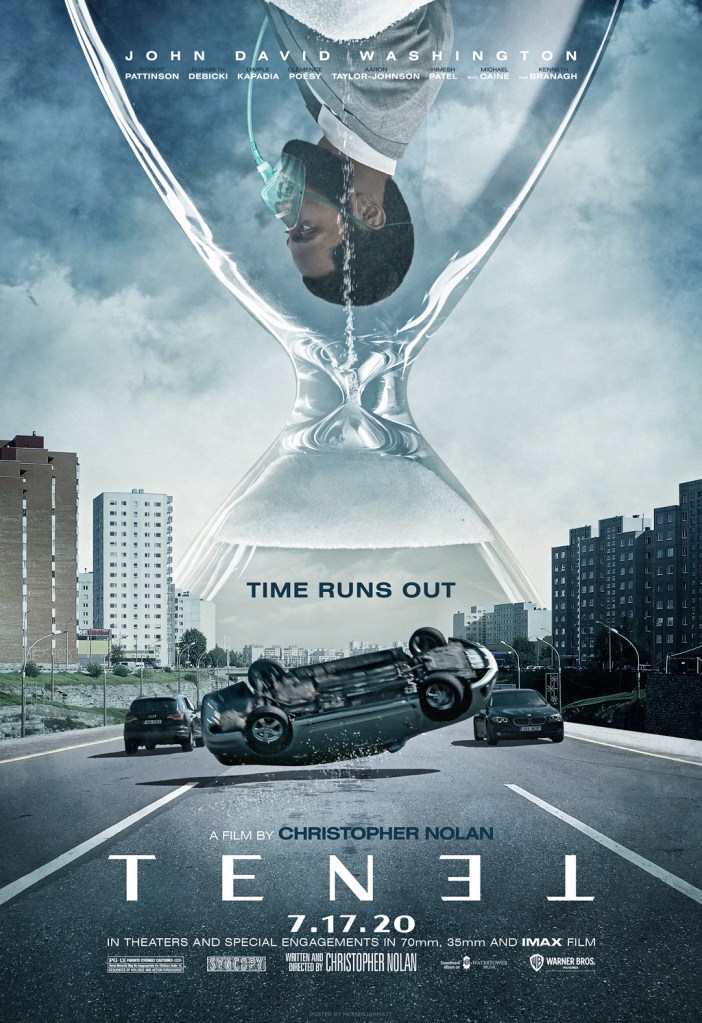
CINEMA REVIEW: TENET (2020)

CINEMA REVIEW: TENET (2020)

Directed by: Christopher Nolan

Produced by: Emma Thomas, Christopher Nolan

Written by: Christopher Nolan

Cast: John David Washington, Robert Pattinson, Elizabeth Debicki, Dimple Kapadia, Michael Caine, Kenneth Branagh, Martin Donovan, Clement Poesy, etc.

Music by: Ludwig Göransson

Cinematography: Hoyte van Hoytema

***MAY CONTAIN SPOILERS***


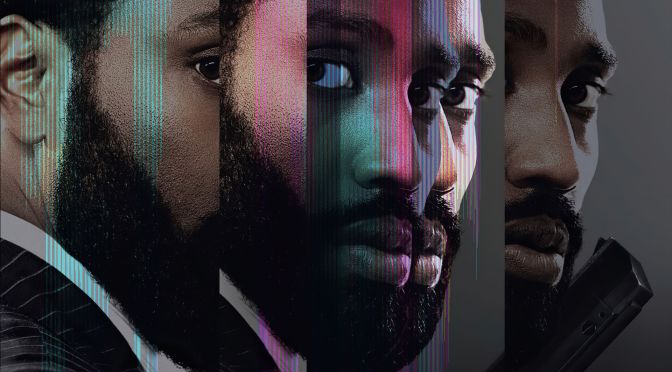
I am writing this review from the future while travelling backwards to the past to try and alter events which have yet to occur in the present. Confused yet? Jokes aside, Christopher Nolan’s latest temporally challenging and narratively inverted blockbuster, TENET (2020), is actually not as complicated as some would lead you to believe. However, that’s because I’ve been training my brain with such mind-boggling adventures in time, space and dimensions while watching the third season of the ingenious German sci-fi drama, DARK (2020), this week. Safe to say however, TENET is still rather complex and probably unnecessarily so. Yet, Christopher Nolan is a filmmaker who loves exploring challenging scientific concepts and marrying them to hugely involving plots and stylish spectacular action. All credit to him too for pushing himself and the audience!

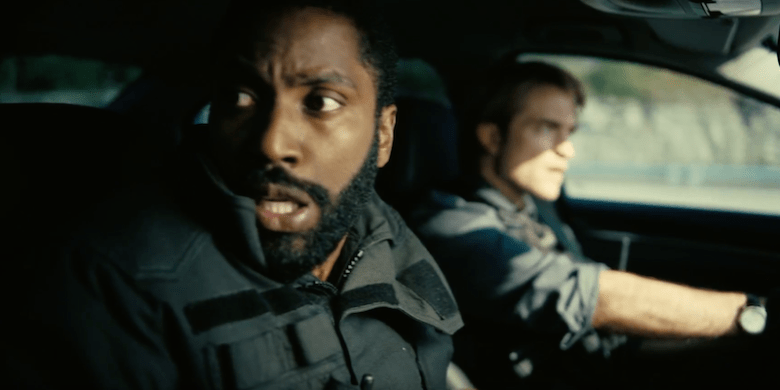
TENET opens with a fast-paced set-piece located at a Ukrainian opera house. A SWAT team, that includes our unnamed hero, (John David Washington), is there to save a spy and obtain an unidentified object, which will of course become an integral part of the plot later or earlier on in the story. From then on, ‘The Protagonist’, as he later becomes known, becomes embroiled in stopping the megalomaniacal plans of Russian oligarch, Andrei Sator (Kenneth Branagh). In order to do so he attempts to infiltrate and stop Sator via his bullied wife, Kat (Elizabeth Debicki). Here the Protagonist builds a bond to Kat and this provides the emotional glue of the film. Although, I’ll be honest, I was too busy thinking about the machinations of Nolan’s head-twirling approach to temporal structure, than actually feel much for the characters.


What the film lacks in emotional depth it more than makes up with spectacular action. There are at least six incredible set-pieces that involve hand-to-hand combat, fast-paced vehicle pursuit, bungee-jumping and all-out combat between various government and mercenary factions. Nolan and his production team twist the action with a visually mirrored trick which, well I won’t say anymore. Moreover, the grandiose style and cinematography are eye-popping. Sharp suits, sharper knives and futuristic masks are adorned by the characters giving the spy thriller a hyperreal edge. Similarly, the stunts and editing are superbly orchestrated and executed. Having said that, the sound design and dialogue could have been better. Far be it from me to criticize, but in striving for verisimilitude in the sound, the constant wearing of masks meant important dialogue lacked clarity. Likewise, in the final amazing set-piece I was lost amidst the bodies and explosions as to who was who and why and what and how. Clearly a second and third watch of TENET (2020) is in order.

While the action was pretty much flawless throughout, the screenplay, unlike say Nolan’s prior high-concept masterpiece, INCEPTION (2010), did lack character depth for me. While I realise this was Nolan’s intention, hardly any time is given setting up the characters. So much so they become cyphers within the plot. Nonetheless, the charisma of the cast, notably John David Washington and the impressive Robert Pattinson, dominates the screen and the two bounce off each other magnetically. Elizabeth Debicki and Kenneth Branagh also bring much to their roles, however their subplot involving domestic abuse felt out of place in such a post-modern spectacle. Moreover, Branagh’s oligarch was, in certain scenes, verging on parodic cliche. I wondered if the villain of the piece could have been a little less B-movie heavy at times and possibly more cultured. This is a minor gripe though. After all, he is the bad guy!

Ultimately, TENET (2020) is a big, brash and confident Bond-type film with bells on. Sure, the rules of the world could have been excavated and presented somewhat clearer. But, Nolan favours a breakneck pace and be damned if you cannot keep up. Indeed, I am certain he has covered all the plot-holes (or paradoxes) I thought I saw and numerous questions I had by the end. While it is not without flaws, on first watch, I once again have to congratulate Christopher Nolan for striving for original thinking and fascinating concepts within a genre film. One may even argue that there are too many ideas here and simplification could have created a more emotionally satisfying film. However, there are many moments of cinematic genius in TENET (2020), notably in the Sisyphean payoffs within the inverted plot structure. Finally, one won’t see a more shiny and beautiful looking film all year. The future is bright: the future is Christopher Nolan.

Mark: 9.5 out of 11


FIFTY NOT OUT! 50 FAVOURITE FILMS IN 5 MINUTES!

FIFTY NOT OUT! 50 FAVOURITE FILMS IN 5 MINUTES!

I celebrated my fiftieth birthday last week. So, for a bit of fun I set myself a cinema game involving the theme of fifty. I gave myself no more than five minutes to list fifty favourite films. The rules are simple:

  • Pick 50 favourite films off the top of your head.
  • Take no longer than 5 minutes.
  • No checking Imdb.com or other cinema sites.
  • One film per franchise.
  • Go with your instinct – don’t overthink it!
  • Once you have written fifty down – you cannot change any.

Of course, these aren’t necessarily the best films ever, but instinctively films I love. Obviously, I am now kicking myself for the many great works of cinema I have missed. But, it’s just a bit of fun! So, here we go! In alphabetical order – FIFTY FAVOURITE FILMS chosen in FIVE MINUTES to celebrate FIFTY YEARS alive!


A GHOST STORY (2017)

AMERICAN BEAUTY (1999)

ANCHORMAN: THE LEGEND OF RON BURGUNDY (2004)

AU REVOIR LES ENFANTS (1987)

THE BIG LEBOWSKI (1998)

CAPTAIN AMERICA: THE WINTER SOLDIER (2014)

CASABLANCA (1942)

CASINO ROYALE (2006)

DAWN OF THE DEAD (1978)

DEAD MAN’S SHOES (2004)


THE EXORCIST (1973)

FARGO (1996)

FIGHT CLUB (1999)

FOUR LIONS (2010)

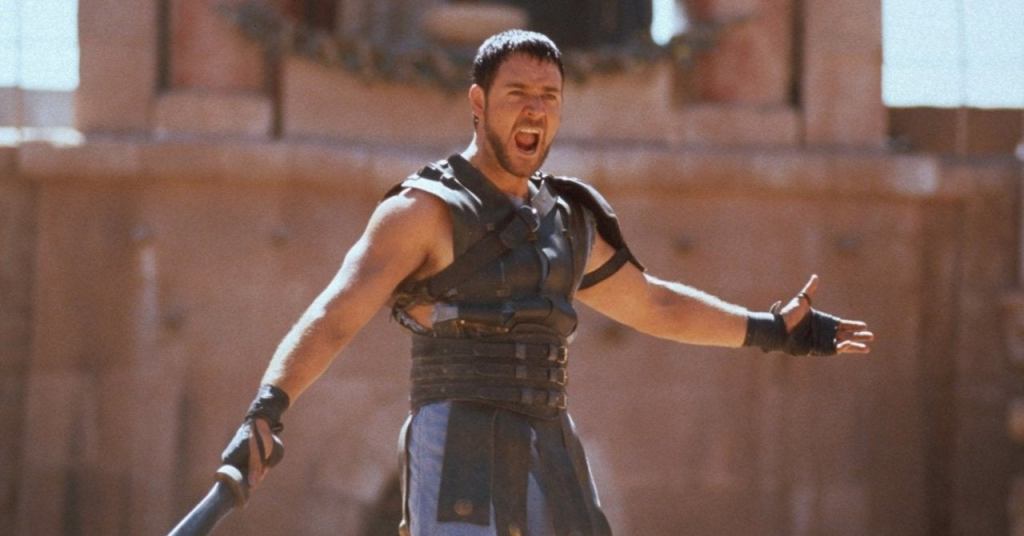
GLADIATOR (2000)

THE GODFATHER: PART II (1974)

GOODFELLAS (1990)

THE GOOD THE BAD AND THE UGLY (1966)

THE GREAT ESCAPE (1963)

HALLOWEEN (1978)


INGLOURIOUS BASTERDS (2009)

JAWS (1975)

KES (1969)

LORD OF THE RINGS: THE RETURN OF THE KING (2003)

THE MAGNIFICENT SEVEN (1960)

MAN ON FIRE (2004)

MEMENTO (2000)

MILLER’S CROSSING (1990)

MISSION IMPOSSIBLE (1996)

NETWORK (1976)


THE NINTH CONFIGURATION (1980)

NOSFERATU (1922)

ONCE UPON A TIME IN AMERICA (1984)

PSYCHO (1960)

RAGING BULL (1980)

RAIDERS OF THE LOST ARK (1981)

RESERVOIR DOGS (1992)

ROBOCOP (1987)

ROCKY (1976)

SCARFACE (1983)


SECRETS AND LIES (1996)

THE SEARCHERS (1956)

THE SEVEN SAMOURAI (1954)

STAR WARS (1977)

THE TERMINATOR (1984)

THE THING (1982)

TREMORS (1990)

TRUE GRIT (1969)

WHEN HARRY MET SALLY (1989)

WITHNAIL AND I (1986)


SHUDDER HORROR FILM REVIEWS – VIRAL

SHUDDER HORROR FILM REVIEWS – VIRAL

The horror genre is a fantastic medium with which to explore social, cultural and political events. Thus, with the COVID-19 pandemic still threatening the world’s health, wealth and societal structures, it will not surprise anyone when we get a raft of future films, songs, shorts and television programmes influenced by pandemics, viruses and lockdowns. Yet, there have already been, since the dawn of time, many horror, drama and science fiction films and series which have dealt with the end of the world due to some unknown or man-made virus.

For example, George A. Romero’s seminal low-budget masterpiece, Night of the Living Dead (1968), influenced an eruption of cannibalistic zombie movies after release. Indeed, the wave of undead genre films show no sign of stopping either. It makes sense therefore to focus my latest Shudder reviews on virus-based films and this category is obviously called Viral! Here I review four movies I watched on Shudder which all encompass some form of infection, disease or virus which impacts the living and the dead. As usual, all marks are out of eleven with the highest-rated film first.


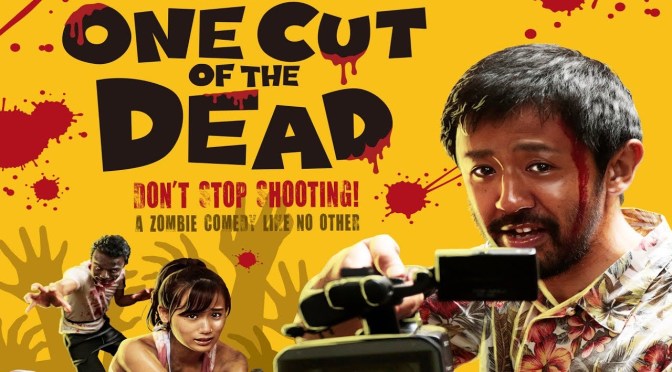
ONE CUT OF THE DEAD (2017) – DIRECTED BY SHIN’ICHIRO UEDA

This film has both an amazing story on and off the screen. The budget of the One Cut of the Dead (2017) has been reported to be as low as $25,000. The film went on to be a massive hit in Japan, making over $25,000,000 at the box office there and abroad. Personally speaking, I am not a fan of indulgent one-take movies, but the sheer energy and invention of the initial thirty-seven minute take, followed by the hilarious scenes later, make this zombie-film-within-a-film-within-a-film a terrific watch. The lengthy set-up makes the furious splattering of punchlines in the film’s second half an absolute scream. To think it started out as part of an acting/filmmaking course makes the creative achievement all the more incredible. If you like zombie comedies and films about filmmaking too, this genuinely breathes new life into both sub-genres.

Mark: 9 out of 11


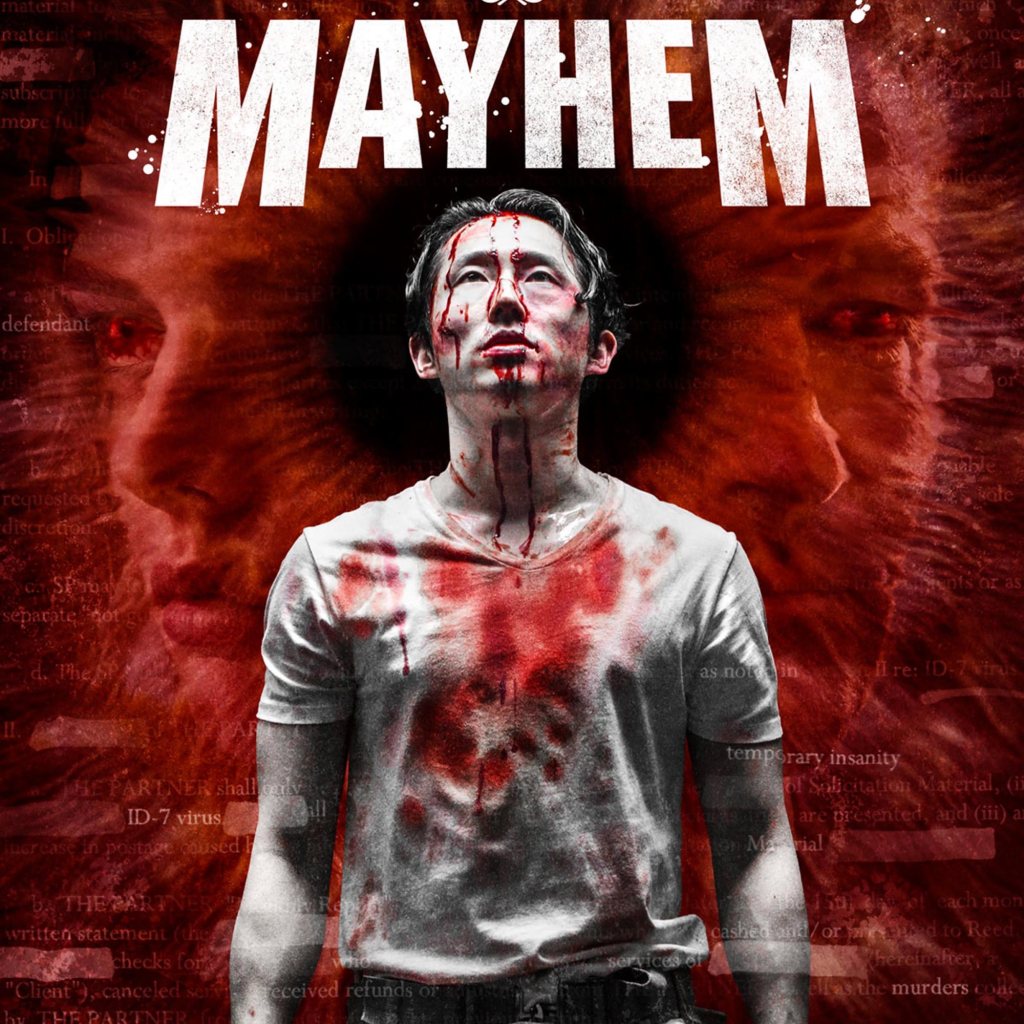
MAYHEM (2017) – DIRECTED BY JOE LYNCH

This office-based killer-thriller-horror-comedy resonated with me, as I myself have been trapped working in the corporate world. Steven Yuen is the jaded business attorney, Derek Cho, working for a law firm that regular screws over the less wealthy. When Derek is framed and fired, he plots revenge. However, his plans go sideways quickly when a nasty virus causes his office to be quarantined. The virus itself doesn’t kill, but it is capable of making people act out their wildest impulses – which tend to involve extreme sexual, verbal and violent behaviour. Mayhem (2017) uses a geographical structure similar to The Raid (2011) and Dredd (2012), where Derek must fight his way up from the ground floor to the corporate suits at the top. Steven Yuen is fantastic in the lead and he is ably supported by movie-star-in-waiting, Samara Weaving. The action, fighting and gore are well executed, and the script contains some great twists in this fast-paced horror gem.

Mark: 8.5 out of 11


THE CRAZIES (1973) – DIRECTED BY GEORGE A. ROMERO

Arguably, one of George Romero’s lesser known films is called The Crazies (1973). The narrative finds residents of a small American town accidentally infected by a darned biological weapon. The subsequent lockdown, quarantine and heavy-handed military invasion causes a small band of townspeople to fight back and attempt escape. As the soldier’s net closes in on them their lives are threatened by both the military and the virus. Overall, watching The Crazies is a dramatic, but chaotic experience. The ideas are strong, but Romero’s story is hamstrung by the low budget, choppy editing and some bad acting. Having said that, The Crazies echoes a lot of the issues our world has been experiencing lately. Although the deaths are more gruesome in Romero’s film and his characters don’t stockpile as much toilet roll as we have.

Mark: 7 out of 11


BLOOD QUANTUM (2019) – DIRECTED BY JEFF BARNABY

As well as providing a portal with which to watch older horror films, Shudder is also producing and buying up its own exclusive productions for streaming. One such release is Jeff Barnaby’s Blood Quantum (2019). Set in 1981, on the Red Crow Indian Reservation in Quebec, Canada, it’s an entertaining addition to the zombie genre, that perhaps would have been better served as a longer series. The story set-up is simple, as local sheriff, Traylor (Michael Greyeyes), is mystified when dead animals start to reanimate. Skip forward six months and a full-on viral assault has caused the dead to come back to life. The neat twist is that the indigenous American population is immune to the disease, but white people aren’t. Traylor and his community fight the dead (and living), attempting to keep safe from those that threaten their existence. Thematically, Blood Quantum (2019) is very powerful. The subtext of racial tension within the zombie genre is dramatically explored. Moreover, there are some explosively gory deaths and decent action. My main issue was with a script that laboured in places, as the film’s pace was slowed by overlong dialogues scenes.

Mark: 7 out of 11


MY CINEMATIC ROMANCE #20 – KATHRYN BIGELOW

MY CINEMATIC ROMANCE #20 – KATHRYN BIGELOW

If there’s specific resistance to women making movies, I just choose to ignore that as an obstacle for two reasons: I can’t change my gender, and I refuse to stop making movies. It’s irrelevant who or what directed a movie, the important thing is that you either respond to it or you don’t. There should be more women directing; I think there’s just not the awareness that it’s really possible. It is.“— Kathryn Bigelow in 1990


Having most recently directed the searing period drama, Detroit (2017), Bigelow has been making feature films, since her debut, The Loveless (1981), for over thirty-nine years. With a strong academic background, having studied at the San Francisco Art Institute and Columbia University, it’s fascinating to review a career which has eschewed arthouse cinema and essentially been spent working mainly on big-budget genre films. However, one can see in her directorial canon that Bigelow, while striving for commercial success, is constantly testing the boundaries of genre storytelling.

Along with a powerful visual style that attains symbiosis with the core material, she intelligently explores themes relating to violence, individual freedom versus the system, masculinity in crisis, gender representations and socio-political corruption. Lastly, her characters are often outsiders, morally complex and dealing with deep personal trauma. In short: Bigelow’s worldview is one of both healthy scepticism and cynicism, but also an element of hope within the longing for control. So, here are five of Kathryn Bigelow’s most impactful cinematic releases.

***ARTICLE CONTAINS FILM SPOILERS***


NEAR DARK (1987)

While The Lost Boys (1987) is rightly regarded as a very entertaining 80’s vampire film, Near Dark (1987) is way, way superior. Despite not catching fire at the box office, this neo-horror-western contains a fantastic cast of James Cameron alumni, including: Lance Henriksen, Bill Paxton and Jenette Goldstein. These great character actors inhabit this snarling gang of vampires perfectly as the film contains shockingly brutal violence and hard-bitten dialogue amidst a tender love story.


BLUE STEEL (1990)

While Jamie Lee Curtis is generally better known for her horror and comedy film performances, Kathryn Bigelow made excellent use of her dramatic acting ability as a rookie police officer caught up with Ron Silver’s psychotic commodities trader. Blue Steel (1990) is a variegated genre film which takes a standard police procedural narrative and twists it into something far more psychologically compelling. Lee Curtis excels, as does vicious bad-guy Silver, aptly named Eugene Hunt!


POINT BREAK (1991)

This classic heist meets surfing movie meets gay subtext bromance is jam-packed with classic action scenes and faux-deep philosophical musings. Keanu Reeves is the daftly named cop, Johnny Utah, who goes undercover, amidst the beach brigade to find a bunch of bank robbers. His suspicions fall on Patrick Swayze’s elemental surfer-dude-god and a dangerous “bromantic” game of cat-and-mouse ensues. Bigelow scored her first major hit with Point Break (1991), infusing it with some incredibly visceral stunt, surfing, robbery and chase sequences in an exhilarating film experience.


THE HURT LOCKER (2008)

After the box office failures of her previous three films, the under-rated sci-fi thriller, Strange Days (1995), enigmatic mystery, The Weight of Water (2000), and stodgy cold war film, K-19: The Widowmaker (2002), Bigelow’s seemingly took a career break. She would, however, come back with her most critically acclaimed and Oscar-winning film, The Hurt Locker (2008). From a brilliant script by Mark Boal and led by Jeremy Renner’s standout lead performance, The Hurt Locker (2008), put the audience right at the heart of a bomb disposal unit in Iraq. Putting aside the politics for a moment, the film is full of incredibly tense and superbly edited scenes which have your heart in your mouth. Simultaneously too, the film also shows the devastating emotional, physical and mental effect war has on the people of Iraq and the soldiers sent to fight this horrifically unjust conflict.


ZERO DARK THIRTY (2012)

Whereas The Hurt Locker (2008) had highly emotional and empathetic protagonists, Bigelow and Boal’s next film Zero Dark Thirty (2012), is a much more clinical and technically efficient cinematic experience. In parts, both a war drama and espionage thriller, the story also has a feel of an old-fashioned Western as American military and CIA operatives, led by the excellent Jessica Chastain and Jason Clarke, hunt down Osama Bin Laden. Politically speaking this is a film which makes me feel very uncomfortable for a number of reasons. It plays out like a revenge story. It also seems to both criticize and vindicate torture in the early scenes. This makes me uneasy as I understand the 9/11 attacks were just horrific, yet they seemed to get used as a motive for many more atrocities by the United States government. I guess that was what Bigelow and Boal were going for. They attempted to create a morally and emotionally complex war thriller that lets you interpret the events yourself and conclude one’s own judgements.


CULT FILM REVIEW – VIDEODROME (1983)

CULT FILM REVIEW – VIDEODROME (1983)

Written and directed by: David Cronenberg

Produced by: Claude Herroux, Pierre David, Victor Solnicki

Cast: James Woods, Sonja Smits, Deborah Harry, Les Carlson, Jack Creley, Peter Divorsky etc.

Music: Howard Shore

***CONTAINS SPOILERS***


With the lack of cinema-going action, I am now looking at building other review ideas and articles into my blog. I have regular new release reviews, classic film reviews, great ensemble casts and under-rated film reviews. I suppose that’s enough really, but there are some films that don’t quite fit these categories and they are cult movies. How does one define a cult film? It could have been a box-office bomb or be a no-budget gem, be transgressive or have controversial subject matter. Conversely, it could be a video nasty or banned or even an ultra-arthouse film which defies classical filmmaking conventions. More importantly, I do not have to actually like the film for it to qualify as a cult film. It could be a difficult film I am evaluating or re-evaluating from a fan or academic perspective. Lastly, it could just simply be a film that is uncategorizable or so bad it’s bad or so bad it’s good.

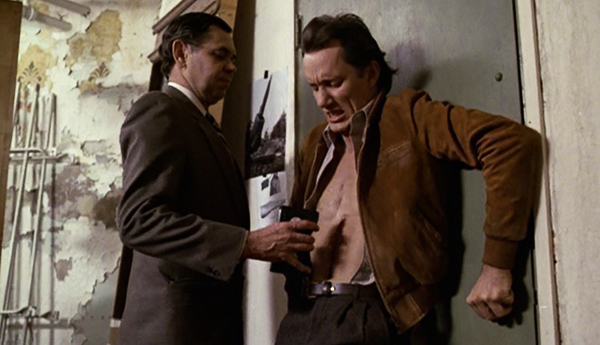
My first review in this category is David Cronenberg’s body-horror film, Videodrome (1983). Now, it may fit the specific rules of an under-rated classic laid down in previous articles, however, Videodrome (1983) is not necessarily a film I love or believe is a classic. It is a remarkably original narrative descent into the hellish and surreal world of demented psychological snuff television. It contains amazing practical special effects by the legend Rick Baker, yet, having re-watched it last week I cannot say it’s a film one can enjoy from an entertainment perspective. Don’t get me wrong, David Cronenberg is a true auteur and genius filmmaker, it’s just Videodrome (1983) is a hallucinatory and disturbing nightmare of a film that works outside the boundaries of usual image systems and narrative conventions. Basically, it’s more a powerful set of concepts and scenarios rather than a simple and satisfying story.

The story opens with anti-heroic, Max Renn (James Woods) as president of CIVIC-TV, seeking new content for his Toronto-based TV channel. Despite Woods’ charisma as an actor he is an expert at playing dominant alpha male types who challenge the audiences’ empathy. He portrays Max with a sleazy charm hunting for, what one may consider, soft-pornographic shows for his station. He’s basically an addict looking to push the walls of taste for his sex-hungry viewers. Max then discovers a channel, via a grainy satellite feed, called Videodrome. It shows unfiltered torture and sexual aggression, and Max becomes determined to tap into that market. At the same time, he begins a sado-masochistic sexual relationship with a radio host, Nikki Brand (Deborah Harry). Soon, these two intense narrative strands entwine and threaten Max’s mind, body and very existence.


Videodrome (1983) is a highly intelligent shocker which explores the nature of television violence, notions of taste and censorship, fears of technological programming, and the mental damage caused by over-exposure to violent pornography. It is an extremely psychologically and physically graphic film to watch. Nevertheless, it is also full of incredible imagery involving on-screen murder, Renn being swallowed by his TV; and also literally transforming into a human video cassette player. While an audience may not like Max Renn as a person, his journey is one that grips with magnetic shock and disgust. As he gets ever closer to the Videodrome channel his downward spiral plays out like a demented morality story, with Max representing the journey of those audience members who lose themselves in the illusory realities of television product. As he begins to lose touch with reality, Max experiences a complete lack of control over his mind and desires, all seemingly controlled by a heinous corporation led by insidious suit, Barry Convex (Leslie Carlson).

Incredibly, David Cronenberg apparently turned down directing The Return of the Jedi (1983) to write and direct this more personal vision of cinema. Could there be two more different films? Nonetheless, while it may not be a film I can easily recommend to those of a sensitive disposition or those who like their horror to have tidy conclusions, Videodrome (1983), retains its relevance and power to this day as a shocking critique of modern media. Hence qualifying it as a cult horror film which pushes all the wrong buttons in the right way.


FILMS THAT GOT AWAY #9 – ONCE (2007)

FILMS THAT GOT AWAY #9 – ONCE (2007)

Written and directed by: John Carney

Produced by: Martina Niland

Cast: Glenn Hansard, Marketa Irglova

Original songs by: Glenn Hansard, Marketa Irglova and Interference.

Cinematography: Tim Fleming


**** MAY CONTAIN SPOILERS ****


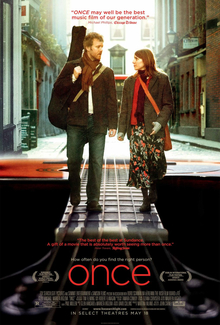
I am not sure why I missed this film first time around, however, it’s most likely due to prior prejudices against musical or music-based films. Yet, since I married in 2016, I have began to watch and enjoy more musicals. This is mainly due to my wife being a massive fan of musical cinema and theatre. While it’s still not necessarily my favourite genre, every now and then an utter gem of a musical will emerge. John Carney’s beautifully moving love story between a hoover repair guy and a flower-selling girl, Once (2007), is certainly one of those.

John Carney is an honest filmmaker who is attracted to outsiders and people with real emotional turmoil. They tend to be at crossroads in their lives and are struggling either with their dreams or their relationships. He also loves musicians, flaws and all. In Begin Again (2013), a washed-up musical executive, portrayed by Mark Ruffalo, meets unhappy singer-songwriter, Keira Knightley and their first-world romance is played out to bittersweet consequences. Similarly, in Sing Street (2016), a troubled teenager comes of age through his 1980’s pop band and bittersweet romance with a rebellious and equally-troubled schoolgirl. Notice a pattern? Well, this style of music, gritty city backdrops and salty romances were established in Carney’s breakout hit, Once (2007).

Made for a ridiculously low budget of around $150,000, this ultra-realistic musical contains songs that burst with love and pain from the characters of Guy (Glenn Hansard) and Girl (Marketa Irglova). The two meet and connect, but this is no conventional romance as they both have powerful emotional histories between them. It’s the beautiful music and their authentic dialogue exchanges which drive the story. Hansard’s singing and guitar playing are so powerful and moving. Their duet in the music shop of the song, Falling Slowly is a tour-de-force. I was not surprised when I saw it had won the Oscar for best original film. Overall, Once (2007) is a surprisingly brilliant no-budget feature, shot on the streets of Dublin, which deservedly became a big hit.

Mark: 9 out of 11


SIX OF THE BEST #25 – FILM PLOT-HOLES!

SIX OF THE BEST #25 – FILM PLOT-HOLES!

One of the main reasons I watch films is because I love a good story. I especially like working out the ins and outs of the plot lines too. So, it stands to reason that some films may have inconsistencies in their story or even plot holes. I would define a plot hole as a gap in the story which remains unexplained by the writer or writers. Sometimes these can spoil the film, but more often than not it can add to the enjoyment. They may in fact be known to the writers, however, they may have left it as an enigma for the audience to work out. Either that or the writers made a mistake or they could not be bothered to, or were unable to close the hole. In fact, they may be hoping we don’t notice or care.

There are so many films out there and I’m sure one could nitpick holes in most stories. Here I have picked out six of my favourites. I have chosen well known films so as to differentiate between good and just plain bad storytelling. Moreover, I have also omitted horror films where people just make stupid decisions. Likewise fantastical, surreal and dream logic narratives are avoided. Lastly, the major Marvel franchise plot hole is skimmed. You know the narrative hole that occurs in the stand alone entries. E.g. in Spiderman: Far From Home (2019), if the world is being threatened why don’t the other Avengers help poor Peter Parker? Oh, they’re conveniently busy. . . hmmm. Anyway, here are six of the best plot holes I like. If you can think of more please let me know.

***CONTAINS MASSIVE SPOILERS***


KING KONG (1933 / 1978 / 2005) – how did they get King Kong back to New York?

This question is not always one that is brought up as an obvious plot hole. However, think about it. Kong is captured on Skull Island, but is suddenly revealed in New York. How did they manage to find a boat big enough to carry him to America? And what if he woke up? He would destroy any ship carrying him with a yawn and stretch. Plus, because we do not SEE him being transported a massive hole in the narrative occurs.


How King Kong quadrupled in size since 1933

HALLOWEEN (1978) – who taught Michael Myers how to drive?

It chills the bones when Donald Pleasance’s Dr Samuel Loomis finds on a dark evening on October 30th, the day before Halloween, his most feared patient, Michael Myers has escaped from a maximum security facility. Myers has stolen a car and sped off into the night. The big question is, given Michael was six when he committed the murder, how the hell did he learn to drive? Obviously given Myers is a manifestation of pure evil, he somehow mastered driving through psychic force.


STAR TREK: THE MOTION PICTURE (1979) – the V’Ger probe would be coded as Voyager!

Talking of William Shatner masks, Star Trek is a wonderful science fiction television series and film franchise. It’s loved by many and given the numerous narratives involving time travel and alien species there are no doubt more plot holes in there. I mean the number of aliens who talk English and look human is quite something. However, in Star Trek: The Motion Picture (1979), there is a major plot hole involving the “V-Ger” probe. Indeed, the entire twist of the plot centers around “V-Ger” actually being “Voyager,” as demonstrated by the corroded name plate on the probe. It seems weird though that nowhere in its programming (or anywhere else) did Voyager have its name recorded. It would be like if a label of a computer, say “Dell”, had the “D” covered up, the boot-up screen would not read, “ell” during post, it would still read, “Dell”! Thus, the plot hole is entirely illogical, Captain.


THE TERMINATOR (1984) – why not just destroy the time machine and stop Kyle Reese going back?

There are loads of plot queries in James Cameron’s classic sci-fi thriller. The one I like the most is more paradoxical than plot hole, but similarly this illustrates flaws in Skynet’s overall plan. Given Skynet and The Terminator have detailed files on everyone, why didn’t they know Kyle Reese was John Connor’s father? If so, just destroy the time machine to stop him going back. If killing Sarah Connor in the past stops John from ever being born, perhaps killing Kyle or stopping him time travelling would have the same effect.


SHAWSHANK REDEMPTION (1994) – when Andy escapes, how does he put the poster back so perfectly?

This is one plot hole I love and is in fact, given Andy Dufresne’s incredible struggle to escape, one you can certainly understand. I mean, thematically speaking, Andy is coded as a spiritual Christ-like figure throughout the film. It’s very subtle, but it is there. Thus, perhaps, he had some divine intervention during his escape. He definitely earned it. Lastly, I also love that it is literally a plot hole and Andy escaped right through it.


SIGNS (2002) – why did the Aliens raid a water-based planet when it hurt them?

While the director has had his fair share of critics, I generally enjoy most of his early films and some of the more recent ones. Signs (2002) is a fantastic sci-fi thriller with themes of faith, family and alien incursion. The major hole is the aliens have to be incredibly stupid to want to invade a planet that is 70% their biggest weakness. However, as some have pointed out, it wasn’t an invasion, but a raid to get some people. However, given people are made up of water and water is in Earth’s atmosphere, perhaps Shyamalan should have made their weakness alcohol or even actual acid. Still a very entertaining film though.