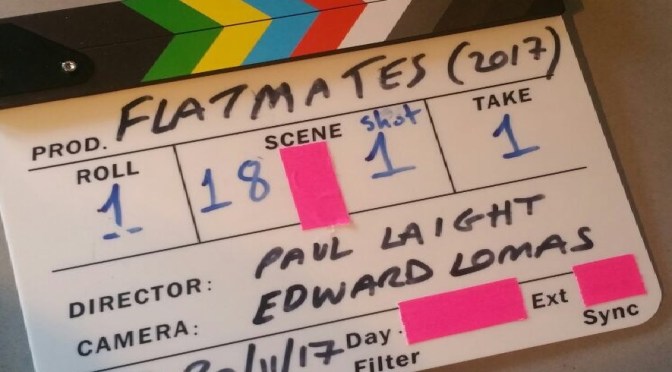
Paul is a writer and filmmaker. He has been committed to a writing career from a very early age. In 1997, he graduated from Staffordshire University with a first class degree in Film, TV and Radio Studies. His 2nd year short film project THE ARTS FILE won a Stoke-on-Trent Young Filmmaker's award. Subsequently, he worked as a Production Assistant on a number of promos and successfully completed a work placement at Sky Movies. In 2002, he gained an MA in Feature Film Screenwriting from Royal Holloway College of London and since graduation has written several feature and many short film scripts. In 2005, he formed FIX FILMS and has written and produced many shorts to date. He has also had several short screenplays commissioned by the Mountview Film Academy and film director Jonathan Wolff. His work can be found here - https://www.youtube.com/c/FixFilmsLtd Most recently Paul wrote, produced and directed his own short horror film called FLATMATES (2018). He has subsequently written and directed the films: MISDIRECTION (2019), TOLERANCE (2019) and YOU HAVE A NEW FOLLOWER (2020). His short films have had screenings worldwide at many film festivals. His latest works are the horror, INFERIS (2024), a set of short film monologues called SIN (2024) and THE SUICIDE SHIFT (2026). PAUL is a versatile and prolific writer with ideas in abundance and a very strong feel for structure, characterisation and dialogue. He favours thought-provoking and entertaining narratives with memorable characters, images and scenes. While he values all styles of film he tends toward genre movies as opposed to overtly "arty" cinema. Moreover, being involved in the producing, casting and crewing of low budget shorts has given him great experience and insight into the filmmaking process; improving his writing no end. From 2008 until 2020, Paul had been on the exciting merry-go-round that is the stand-up comedy circuit. He has done over 1000+ gigs. Venues included: Downstairs at the King's Head, The Comedy Pit, The Comedy Cafe, Soho Comedy, London Comedy Store, Electric Mouse Comedy, Streatham Comedy Club, Mirth Control, Comedy Heat, Lion's Den Comedy etc. He also ran two comedy nights: West End Comedy @ The Comedy Pub and West End Comedy @ The Brazen Head. He used to be the resident MC at Electric Mouse's show at The Fox, Palmers Green and got regular paid bookings as a comic and MC in and out of town. In 2014 and 2016 he performed at the Brighton Fringe Festival and Camden Fringe Festival in 2014. He performed open spots for the Banana Cabaret, The Comedy Store and Up the Creek comedy clubs in London. He is also a keen film and television seer and has a love for all genres of movies from art-house to low-budget z-movies. He also loves television of all kinds notably great comedies and dramas. He is an essayist expressing passionate analysis for all elements of cinema. Links Blog: www.thecinemafix.com YouTube: www.youtube.com/c/FixFilmsLtd
“Through me you go into a city of weeping; through me you go into eternal pain; through me you go amongst the lost people.” ― Dante Alighieri, The Inferno
**CONTAINS MINIMAL SPOILERS**
The concept of Katabasis is a descent of some kind, such as moving downhill, or a military retreat, or in this context, a violent journey into the underworld. The term has multiple related meanings in poetry, psychology and Greek Mythology. Heroes such as: Orpheus, Odysseus and Lazarus went down into the depths of Hades to locate lost loved ones, collect information and battle their demons. Conversely, writer-director S. Craig Waller has produced something akin to Sam Peckinpah reinventing the story of Orpheus. But instead of employing beautiful music to crush the enemy, Waller’s anti-hero Bradley Thomas, uses his fists, head, body, bats, bars, guns, and hulking power to defeat his foes.
The story opens with a stunning shot from behind of Vince Vaughn’s bald, bulking head emblazoned with a startling crucifix tattoo. As a means of establishing character and showing us the world we’re in it is emphatic, visceral and deviously economic. You know immediately not to mess with Bradley Thomas as he is a coiled spring of masculine power, yet he also has a strong moral compass. Finding himself out-of-work and in difficult financial times, Thomas takes up drug courier work to support his pregnant wife portrayed by Jennifer Carpenter. All is going smoothly until a deal with a Mexican drug cartel goes awry and, from when Thomas enters prison, all manner of sickening and brutal hell breaks loose.
The film is shot on a low budget but the style is impressive. The cinematographer, Benji Bakshi, along with the director Waller, are brave in their choices; utilising natural light, drained colours, shadows and darkness. Often Thomas’ is lit by a slit or shaft or box of light as his character finds himself trapped in corridors and cells as well as his own life choices. Much will also be made of the ultra-violence which includes some impressive bone-crunching Foley sound work. But, the hyper-real violence, while reminiscent of the cartoon horror gore of early Peter Jackson and Sam Raimi’s Evil Dead series, is paradoxically not exploitative. This is because it is contextualised within the brutal crime setting and driven by Thomas’ powerful desire to save the people he loves.
The screenplay, also written by Waller, is full of witty one-liners and deadpan repartee between hard-bitten, desperate criminals and jailers who look as though they have been transported right out of hard-pipe thrillers such as: John Carpenter’s Assault on Precinct 13 (1976), Sam Peckinpah’s Bring Me the Head of Alfredo Garcia (1974) and Don Siegel’s crime gem Charley Varrick (1973). While over two hours long the plot moves pretty quickly, yet Waller takes his time deliberately building character, suspense and tension before busting out into spectacular violence. Having previously directed the stunning B-movie Western Bone Tomahawk (2015), S. Craig Waller is certainly making a name for himself as an independent film director of some note.
Waller finds a compelling cinematic partner-in-crime in Vince Vaughn too. Vaughn, who burst on the scene with a hilarious performance in brilliant indie-hit Swingers (1996), could be argued to have not lived up to his full acting potential. While he has performed in some excellent movies his CV is also peppered with unfunny comedies, soporific romances and bland family films. Don’t get me wrong, we have to pay the mortgage but there’s always been a nagging sense Vaughn was not utilising his meaty acting ability. Having said that in Hacksaw Ridge (2016) and now Brawl in Cell Block 99, he proves himself to be a character actor of some force. Indeed, his natural comedic timing, muscular frame and searing intensity are all utilised here to mesmeric impact in a career-best performance.
Katabasis, as aforementioned, is about descent; but the archetypal hero will usually return triumphant in victory. Brawl in Cell Block 99 offers an alternative vision of moral redemption though within Bradley Thomas’ avenging-angel-versus-the-devil narrative. As such, Brawl in Cell Block 99 joins a list of recent lower-budgeted-independent-minded movies such as: Cold in July (2014), Green Room (2015), Out of the Furnace (2013) and Hell or High Water (2016), which rip into the dark underbelly of United States’ industrial and criminal landscape leaving us in no doubt to the destructive nature of the American dream.
As I’ve written before I’m an avid short film viewer and maker. To tell an impactful story in a lesser period of time to a feature film can be a very difficult but ultimately rewarding experience. Plus, as a member of the audience and filmmaker myself I love seeing the different ways other creatives tell their stories in this medium.
‘Thrill of the Chase’ was curated by the London Film Festival and featured five shorts from Europe and I must say they were of the highest quality. I mean some of the budgets on these must have been very good because they were shot, acted and edited to an exceptionally brilliant standard.The first short, 1745, was a period pursuit drama. Two slaves, wearing big, colourful, tartan, traditional and unwieldy dresses of the Jacobean era, have escaped from a nearby castle and are chased by a steely Scottish Laird, hell bent on recovering his “property”. It’s incredibly well shot as the colour of the costumes countered the misty, green and vast mountainous landscapes up close and from a spectacular god’s-eye view. Overall, it’s a commendable story of two women escaping patriarchal oppression and abuse, set amidst an exquisite looking but harsh Scottish Highlands.
Next up was Oksijan. Set in the harsh contemporary now it also involved a set of characters escaping an oppressive regime. This time is was a group of Asylum seekers, adults and children, encased in the potential moving tomb of an articulated lorry transporting them from a refugee camp. Their deadly journey from Calais to the United Kingdom was made perilous by the air running out. A thrilling and suspenseful short it both raised the pulse and important issues in regard to the plight of human beings fleeing war torn countries.
After Scottish and English film productions we next had Hot and Cold from Poland. This was a very harsh film, thirty-five minutes long, and all shot in one take. Technically, it was incredible as the camera follows a young junkie mother throughout her day and her encounter with woman looking to get revenge on her husband. It’s a towering study of motherhood, grief and addiction which creates a claustrophobic nightmarish drama with the colour-bled bleakness of Polish council estates. I wasn’t sure the one-take was actually necessary as the narrative could’ve been pruned but it was very powerful nonetheless.
The final two films came from France and Germany respectively. Both reminded me of mini-versions of excellent feature films. The French film Les Miserables (not the Victor Hugo version) concerned cops on a dangerous estate and their heavy-handed dealings with gang-members. It’s well filmed and acted, containing the bruising feel of the classic French movie La Haine (1995).
Similarly, the final short was another drama but this time of the romantic kind. Till One Cries concerned two drug-addled millennials sharing a crazy night within an urban German milieu. It reminded me somewhat, without the shot-all-in-one-take business, of the brilliant crime-romance Victoria (2015) and showed the hedonistic highs and lows of two free-wheeling characters.
Overall, the programme was full of gripping drama and thought-provoking subject matter. I’d say the ‘Thrill of the Chase’ title was slightly misleading in my mind, as the films tended toward, not your classic genre thrillers, but rather more social realism and cinema verité than movie artifice. Indeed, it may have benefited throwing in a shorter, punchier thriller with an element of comedy to break up the incredibly heavy themes of the films presented. Nevertheless, this was a set of Premier League short films, in terms of production, performance and storytelling quality.
SCREENWASH CINEMA REVIEWS – SEPTEMBER 2017 – including: IT, WIND RIVER and KINGSMAN 2
**MINIMAL SPOILERS**
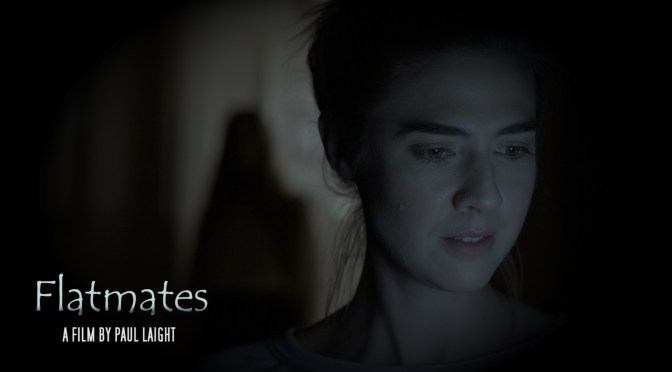
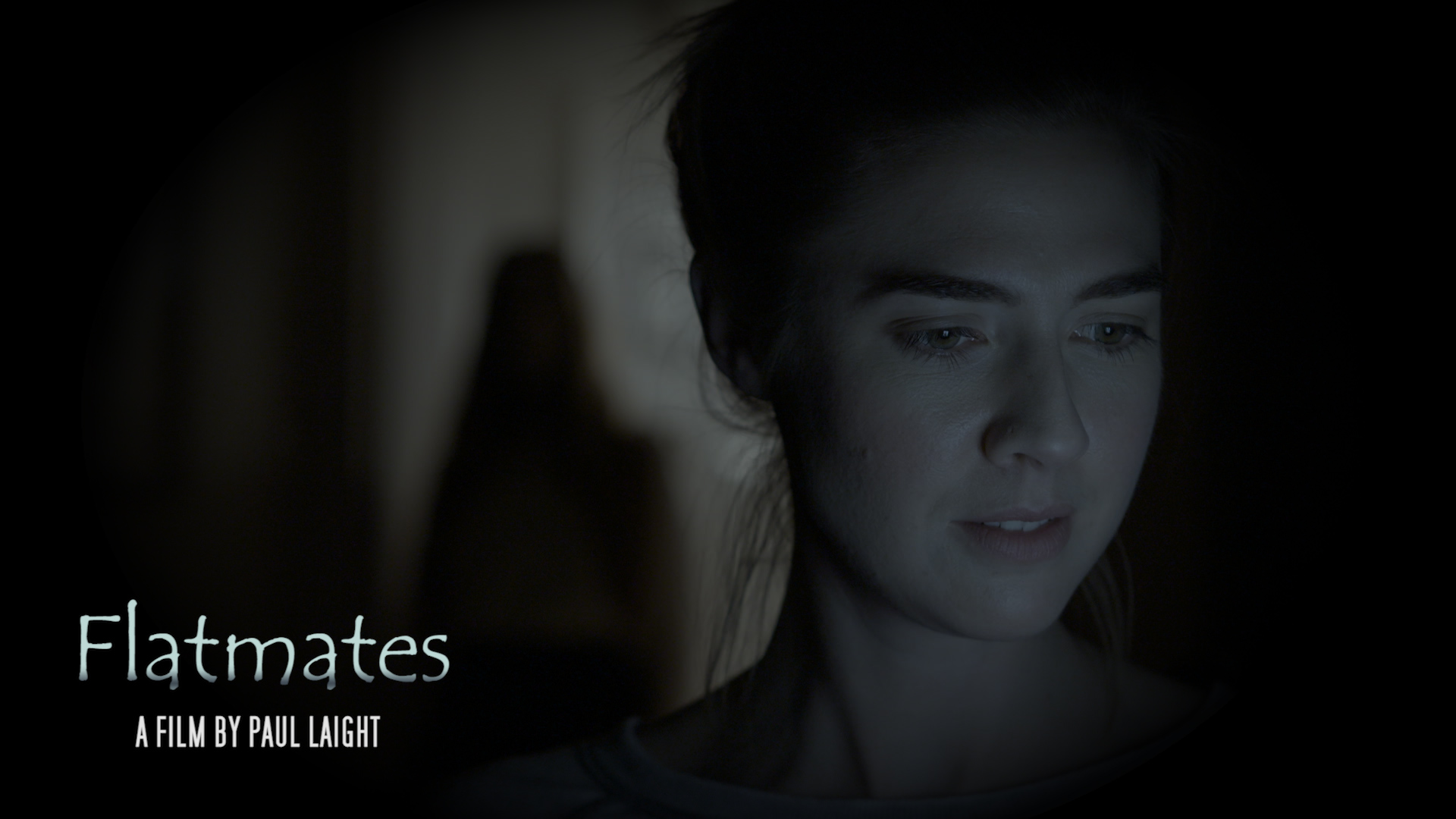
I’m a tad tardy on my cinema reviews for last month mainly because I have been writing a couple of short script projects to be filmed. One is a sharp little horror story called Flatmates and I’m looking to shoot in November. The casting has been going well, after which I will rehearse and film on HD video. The other is a follow-up to our Star Trek fan film Chance Encounter (2017) released earlier this year online, which has now has over 40,000 views on YouTube!! Not quite Gangnam Style or dancing cats on a piano but pretty good nonetheless to have one’s work viewed that much.
Anyway, enough of the filmmaking hobby momentarily to switch back to the film reviewing pastime. Below are reviews of three excellent genre films, plus a little reprise of my opinions on Aronofsky’s two hours of hell that was Mother (2017). As usual they are marked out of eleven in tribute to This is Spinal Tap!
IT (2017)
Stephen King is clearly a genius. To be able to maintain creativity and longevity as a writer, plus give birth, as it were, to any number of iconic narratives, characters and events is a testament to his massive energy and talent. When I was young one of the scariest things I ever saw on TV was the horror serial Salem’s Lot (1979), which was about vampires taking over a small town. His book Carrie (1976) was also adapted into one of the best horror films of the seventies too. Moreover, the ‘80s TV and cinema screens were peppered with King’s work notably: The Shining (1980), Stand by Me (1986) and the under-rated Pet Semetary (1989). In 1990, Tommy Lee Wallace directed a mini-series of IT, with the terrifying Tim Curry as Pennywise the Clown. IT proved to be an excellent horror story until the – faithfully sticking to the novel of course – ridiculously silly ending.
Flash forward twenty-seven years and Pennywise is back to haunt the dreams, drains and sewer pipes of Derry, Maine, using manipulation and fear to lure teenagers to their death. Developed by, among others Cary Fukunaga, the film was eventually directed by Andy Muschietti and has deservedly become a big box office hit. I say deservedly because, while it is not a particularly amazing cinema offering, it is a highly entertaining genre horror film. As an experienced Stephen King cinema and TV viewer all the staples are there such as: geeky-small-town-outsider-kids; abusive tough-guy-bully types; negligent parents or appropriate adult; monstrous beings hidden in the shadows; plus coming-of-age teenage friendship and love.
The clown in this case is portrayed with fiendish joy by Bill Skarsgard and there are some fantastic stand-out scares. My only criticism is, and this is my fault being over-familiar with King’s work, is that with the recent Super 8 (2011) and over-hyped Stranger Things (2016), I felt as if I had seen it all this before. I also felt they crammed too much into the two hours and some of the character emotion was lost at times. However, the cast of kids are excellent in their respective roles, the horror set-pieces are brilliantly staged and King’s iconic bad guy Pennywise makes it well worth the cinema admission fee alone.
(Mark: 8 out of 11)
KINGSMAN: THE GOLDEN CIRCLE (2017)
The first Kingsman: The Secret Service (2014) film was one of my favourite genre films of the past couple of years. It showed a clean pair of spy heels to the, occasionally brilliant but overlong Bond disappointment Spectre (2015); while at the same time confirming Taron Egerton as an actor with great star potential. Having done the business at the box office then Jane Goldman and Matthew Vaughan have once again written and directed an explosive, funny, pacey and adrenaline-filled spy spoof sequel.
In this story, Eggsy / Galahad is back with Merlin (Mark Strong), battling with the United States counterparts The Statesmen, against Julianne Moore’s perky, yet deranged, Americana obsessed drug baroness. The Statesmen are represented by such heavyweight acting talent in Jeff Bridges and a cracking turn from Pedro Pascal as the hilariously named Jack Daniels. Channing Tatum pops up too but he is lightweight compared to the effervescent Pascal. Poppy’s fiendish plot is actually quite a decent motivation for the story and the subplot involving a Lazarus-type-return from a major character from the first film is well developed.
To be honest the story is just the bare bones to hang a series of fantastic set-pieces, car chases, shoot-outs and fights, as Eggsy and his kick-ass team once again attempt to thwart the end-of-civilisation as we know it. My main criticism is the film is probably too long with an unnecessary gratuitous sex-driven sequence set in the Glastonbury Festival. It also lacks that sense of characterisation from the first film which had the working class underdog Eggsy battling the upper-class sneers of the over-privileged. Nonetheless, Matthew Vaughan is a great gag-heavy-action-director and the plot has some decent twists and turns throughout making it well worth a watch.
(Mark: 8 out of 11)
MOTHER (2017)
While Darren Aronofsky is a cinematic artist of the highest level, I connected badly with this two-hours-of-hell-excuse-for-entertainment. My full review can be found here but, in a nutshell, this is what I thought of it:
“It was an awful, pretentious heap of a film which exists as an entertainment void both nihilistic and dull. Because this film abuses the privilege and patience of the audience delivering a technically brilliant but overall clichéd, first-world-problems-poet-with-writer’s-block-world-murdering-art-fan-hating two hours I will never get back.”
Mark: 5 out of 11 (for the film) Mark: 9.5 out of 11 (for Darren Aronofsky)
WIND RIVER (2017)
Taylor Sheridan has carved himself a fine reputation for writing very solid character driven genre films such as Sicario (2015) and Hell or High Water (2016). Wind River (2017) is his first writer-director effort and it is a fascinating study of: grief, murder, racial tension and dark humanity. Sheridan is adept at choosing specific areas of America with which to place his stories. Sicario reflected on the war on drugs, located betwixt the violent border of Mexico and the U.S.A. Hell and High Water illustrated the financial ruin of the sub-prime mortgage crash and its effect on West Texas. In his latest screenplay Sheridan focusses on the Indian Reservation territories of Wyoming and the people who inhabit the stark wintry landscapes.
The quietly impressive Jeremy Renner, as Cory Lambert, takes most of the acting plaudits as the respected, expert tracker and estranged family man. He is an individual who, while in perpetual control on the external Reservations and snowy terrain, finds himself crumbling internally due a horrific event from his past. Renner is ably supported by his Avengers co-star, Elizabeth Olsen, who imbues the rookie FBI agent with a steely determination, despite her lack of experience and confidence. The portrayal of the Native Americans I feel was sensitively presented as their lives are further marginalized by corporate America as its venal greed destroys the environment and humanity within the area. While this is a beautifully looking film there is a dark murderous heart within the stunning vistas and natural beauty.
Sheridan again confirms he is adept at combining social commentary with an impressive crime plot. Moreover, throughout the film he also bleeds in a compelling study of grief as well as a subtle critique of patriarchal capitalism and its’ destruction of the Native American’s land and people. Yet, the message could arguably have gone further in its criticism; however, as he proved with his prior screenplays Sheridan prefers subtext and a rising tension rather than polemics. Quietly, Sheridan is building an impressive filmic body of work and Wind River manages to be a thrilling police procedural drama, empathetic character study and socio-political examination of American corruption; all amidst the cold, harsh and white-washed landscapes of Wyoming.
Stanley Kubrick is the greatest filmmaker who ever lived. That is a fact. He made films in all genres but indelibly stamped his own genius on the war, comedy, thriller, horror, satire, crime, science-fiction, historical and drama films he adapted and created for the big screen. His work contains a litany of iconic images, searing soundtracks, stupendous performances, great intelligence and provocative thought which ensures his films linger in the memory of those who have witnessed them. All hail a true cinematic master.
But, while Kubrick is famous – or infamous depending on your point-of-view – for his meticulous perfection and incredible cinematic vision he did not work alone. He had an array of film technicians, cinematographers, designers, researchers, editors and assistants who slaved for him on his various projects. One such individual was self-confessed ‘filmworker’ Leon Vitali. He was a rising star in the acting profession and subsequently cast in Kubrick’s classic period drama Barry Lyndon (1975). Yet, having seemingly fallen under the spell of Kubrick’s omnipotent charisma and incredible vision he offered his assistance on Kubrick’s next production. So taken was he with the great man he was prepared to take any role available. Turning his back on acting – save for the occasional supporting role in the director’s work – Leon would become a faithful servant to the all-powerful Master.
Director, Tony Zierra, has crafted a very insightful, informative and touching documentary about both Leon Vitali and the filmmaking process. It reaches beyond the lights, camera and action of movie-making to dig deep into the dark recesses of Kubrick’s creative work which involved, for many: long sleepless nights, obsessive attention to detail, Sisyphean research and the occasional nervous breakdown. Vitali, himself, lived on the edge of insomnia while contributing to such film classics as: The Shining (1980), Full Metal Jacket (1987), and Eyes Wide Shut (1999).
Vitali proves a fascinating character who, during his interviews, reveals a dedication, poignancy, love and sense of grief in regard to his working relationship with Kubrick. Indeed, Vitali seems to not have recovered from Kubrick’s passing following the completion of Eyes Wide Shut (1999); due to a seeming lack of recognition for Vitali’s contribution from Warner Brothers and the Kubrick Estate. Overall, I was completely drawn into this sensitive soul’s story of a man who seemed lost without his Master.
But this is not a negative or tragic documentary. It is instead a celebration of creative arts and the Vitali’s contribution to Kubrick’s life-work. His tasks were legion and included assisting with: casting, print transference, overseeing artwork, Film Festival releases, pre-production, stills photography; and acting as Kubrick’s studio conduit when he wanted to lambast someone. The film features many interviews, notably from Vitali but also: Ryan O’Neal, Matthew Modine, R. Lee Ermey, Phil Rosenthal, Pernilla August, Stellan Skarsgard, Danny Lloyd (all grown-up) and many, many more interesting people. They provide rounded commentary to Vitali’s contribution and their experience within the film industry; and more importantly the working process of Stanley Kubrick. Indeed, many of these anecdotes were very humorous and provided a real insight into the director’s way of working.
Filmworker’sdirector Tony Zierra spoke eruditely after the screening too revealing his desire to represent the unheralded under-dogs within the film industry. He is very successful in doing so as he presents a touching tribute to one such under-dog in Leon Vitali. Ultimately, Filmworker is a documentary about filmmaking, obsession and the lesser known people working behind the camera. It is highly recommended for fans of Stanley Kubrick and people who are intrigued by the filmmaking process. Most of all it stands as a fine tribute to the dedication of Leon Vitali; bringing him out of the shadows and into the light, giving him the credit he deserves for his excellent film work.
I recently wrote a little personal review on stuff I love about life which can be found here. BUT then I thought ah, why not continue my Ten Things I Hate About. . . series which to date includes reasons why I hate:Zach Snyder’s Man Of Steel, the Cinema, Found Footage films, Politics and Movie Hair!? Therefore, I thought why not write about things in LIFE I hate too!
Here I’m just saying that this is for fun and not a cry for help, as my life is pretty good I have a job, a roof-over-my-head, good family and I have my health. Compared to those in war-torn countries and those hit by horrific tsunamis and hurricanes I CANNOT COMPLAIN!! Still, there’s no harm in having a little bit of a moan now and then. So, here are ten things that really get on my nerves most days whilst living and breathing on Earth.
#1 – ONLINE HATERS OR TROLLS!
Why are people so over-the-top with their reactions online I ask myself? Maybe they are channelling their life disappointments or existential anger by way of dissociative behaviour. Criticizing things is one thing but venturing into petty online spite could be a way of distancing themselves from the pain of life or just a means to attack others in an offensive way. Moreover, sport, politics, novels, schools, pop videos and even cakes give rise to the most ridiculous hate-filled crap online. Even worse is that many people are cowards and use anonymity too. Why can’t we all just get along?
#2 – GU: GLASS POTS
This is a bit of a niche pet-hate! But I once shared a flat with a very decent person but they kept, every day, purchasing GU Pot desserts. They would eat them, clean the glass pots and place them in the cupboard. Soon we were infested with GU Pots! I thought maybe he was to recycle them at the glass bank but he left the tenancy and I was the one who had to get rid of these damned pesky pots. I’d given up smoking so couldn’t even use them as an ashtray!
#3 – PEOPLE WHO DON’T INDICATE WHEN DRIVING
Come on drivers please let me know which way you’re going?!? It’s the lever on the steering wheel; just flick it and THEN I KNOW!! Also, if you’re changing lanes don’t just lurch left or right without warning you bastards!! Please use the indicator!! I’m a bit anal when it comes to this but just have a bit of decency please? Oh, and while you’re at it stop driving so close to my back bumper! THAT’S HOW CRASHES OCCUR YOU MUPPETS!
#4 – ADULTS ON SCOOTERS
What is it with this most recent of irritating phenomena!? If it isn’t bad enough pedestrians having to battle regular traffic and hate-filled cyclists failing to stop at red lights while riding on pavements; we now have morons over the age of 18 riding kid’s scooters too. It may get you from A to Z in an environmentally safe fashion but you are dangerous and look like a dick! Just stop it please!
#5 – PEOPLE WHO SAY, “YOU KNOW WHAT I’M LIKE!
I do this all the time and it is bloody annoying. For example, I am very pedantic and annoy people with this – especially my wife. But when I do it I often utter the above words: “Well, you know what I’m like – it’s what I’m like!” No, it doesn’t work as a catchall defence mechanism so must be rejected. You wouldn’t get jury’s in court finding you innocent of murder because it’s “what I’m like!” Just don’t do it to start off with!
#6 – PROFESSIONAL CRITICS
Everyone’s a critic! Everyone has an opinion or a view and the Internet has caused a mass proliferation and gaping spew of words and views and brain-thoughts in extremis. I am just part of that continued global globule of opinionated ephemera which litters the clouds or servers or wherever the hell it is online. However, I do it for fun and to stop me thinking about death. If you earn a living as a critic then you are Satan! Would I do it for a living, well, yes I would but I’d rather create than dictate. I’d rather be the failed artist trying than the trying failed artist.
#7 – WHITE MIDDLE-CLASS KIDS WHO TRY AND RAP!!
Again, it’s a freedom of choice to dress to behave the way you choose, however, the absorption of urban culture by middle-class white kids to me is very grating. I’m not saying don’t appreciate the music, style and fashion styles but dreadlocks, urban-speak and bad rapping should not be tolerated. Most annoying is appropriating other people’s look or behaviour when much has been borne out from a certain social standing. But most of all it’s the terrible rapping. Look at this c**t from M. Night Shymalan’s The Visit (2015)!
#8 – OVER-INFLATED PRICES PAID FOR ART!
Picture the scene: a starving child in Africa passively stares at a camera while a fly irritates their big sad eyes, and they do not know when their next meal is coming from. Meanwhile, in a New York auction house a painting by Cezanne or Gauguin or Picasso is selling for over $200 million dollars! What the f**k is wrong with the world?! I’m not saying these paintings aren’t great art it’s just that there is NO WAY that amount of money should be paid for a painting when there is starvation, disease, and poverty in the world. It’s just an indictment of the sickness of humanity that we place such value on what effectively amounts to canvas and paint placed in a particular manner by some dead guy. It’s utter madness!!
#9 – PEOPLE WHO DON’T LET YOU GET OFF THE TRAIN FIRST!
Honestly, it’s bad enough being crammed like sardines in a space not fit for cattle going to market. However, when you try and get off a stacked tube and the passengers on the platform block your way then you can seriously lose your cool. There should be a bigger space and line to allow more room to get off. I mean: what’s the hurry though? We’re just too much in a hurry I guess to have some empathy and feelings for others’. Damned shame!
#10 – TALKING AT THE MOVIES!
I mean why are you talking during a movie? There’s a FILM on!! People who chat during the film SHOULD BE banned forever! In fact a law should be introduced that there’s NO talking from the trailers onwards. If you do you are forcibly removed from the screening room. I go to the cinema to escape reality; YOU or YOUR MATE’S voice-words are reality so SHUT THE HELL UP! If you want to have a conversation piss-off to a pub or a shop or a busy road and PLAY IN THE TRAFFIC. Anywhere but the cinema!
RAINDANCE FILM FESTIVAL 2017 – BEST OF BRITISH SHORTS SCREENING
Just a quick heads up or shout out to the brilliant independent film festival that occurs in the UK every year called the Raindance Film Festival. Raindance are a terrific organisation who run film courses and support filmmakers from all backgrounds, as well as running their annual film festival – now in its 25th year!
If you are seriously interested in filmmaking and have no clue where to start you should definitely check out their website here. Filmmaking is bloody hard work and having made a number of short films myself — which can be viewed at my website here — I can safely say it is easier to review them than make a good one.
Anyway, given my love of cinema and short films I checked out the ‘Best of British’ short film programme at the Raindance Film Festival this weekend. There were eight original productions, all of which were very well produced, written and acted. The programme included: low, middle and upper budgeted productions ranging from purely independent filmmakers to films backed by the BBC, BFI, National Film and Television School and Film 4.
Short films are a fascinating format and can be very challenging to make. They can encompass traditional linear and genre narratives but can also present character pieces dependent on a mood or a theme. Short films can of course experiment with form and be represented as documentaries as well as narratives. They can also act as calling cards for filmmakers cutting their teeth before they move onto feature or TV productions.
Making films or, short or otherwise, is nowhere near as romantic as one would think. They are bloody hard work. So, I have much respect for anyone embarking on short film productions. Often, you will have NO money as funding is limited in the UK, but that should not stop you if you have an idea you are passionate about. Film on your phone if you have or if you need help get in touch with an organisation such as Raindance.
I watched eight films of varying length at the Vue Cinema on Saturday and they included: a brilliant comedy thriller about the threat of gentrification called CLA’AMdirected by Nathaniel Martello-White. The hilarious horror shortSMEAR had me chuckling, while the harsh drama 46.0, about a friendship that goes awry, unsettled me greatly. The short dramas CLEARED, WORK and SKIPPEDpresented fascinating short journeys from diverse perspectives.
Meanwhile, WILD HORSES presented an off-centre mix of live action and animation concerning a young girl suffering fatigue-inducing condition M.E. Finally, the film DIAGNOSIS arguably featured (along with Joel Fry in CLA’AM) the finest performance of the night from actress Charlotte Spencer. In the film she brilliant portrayed an actor working on medical role-play whose emotions are slowly coming apart from the inside.
Overall, it was a short film programme of the highest quality and I can certainly recommend taking a break from the Hollywood productions and supporting independent filmmaking. Many well-known writers and directors today cut their teeth making short films, using the terrific resources places like Raindance offer. So, if you get a chance do check out such nights as they are very much worth your while.
CAST: JENNIFER LAWRENCE, JAVIER BARDEM, ED HARRIS, MICHELLE PFEIFFER
**GENERALLY SPOILER FREE**
Darren Aronofsky’s psychological horror stars Jennifer Lawrence and Javier Bardem as a couple in not so much a narrative but a descent into what-the-fuck? They portray conduits of hellish pursuit dictated by a filmmaker on the edge of a nervous breakdown, vengefully striking out at his ego, superego and the world around him. I mean, you know when someone tells you their dreams in nightmarish details and it’s more interesting to them than you: well, this is two hours of that.
While this is technically a bravura tour-de-force in design, composition, cinematic experimentation and delivery I was utterly bored by, what is essentially, an indulgent, pretentious and nihilistic void of a film. Darren Aronofsky’s prior work such as Requiem for a Dream (2000), Pi (1998), The Wrestler (2008) and Black Swan (2010) combined cinematic style and protagonist emotion superbly. Mother, in its critiques of Hollywood, fame and some kind of biblical allegory stuff wildly missed the mark for me. I wasn’t even shocked by the horrific denouement as it all happened in a surreal vacuum where I could not care less about any person or anything.
Christopher Nolan used cinematic form to powerful effect in Dunkirk (2017) and moved me immensely but Mother just bludgeoned me into dull submission. I wonder if Aronofsky’s experience on Noah (2014) had somehow warped his mind and the film is a creative and therapeutic cry for help, while at the same time damning the executives who possibly killed his film baby. He certainly throws a lot of toys from his pram in this violent, bloody, fiery, misogynistic and misanthropic misfire!
Lawrence was incredible as the battered lead while Bardem just felt confused and off-the-pace-at-times to me. While it is the work of a filmmaker I would certainly call an artist and generally I love the surrealist films of Luis Bunuel and David Lynch, the nightmarish logic narrative did not work for me as the cyclical parlour trick in closing the story is mere sleight-of-hand to fool the audience into thinking the film is deeper than it is.
Ultimately, Darren Aronofsky, based on his prior films, is a risk-taking, boundary-pushing genius and some will adore this brave and courageous misadventure. However, for me it was an awful, pretentious heap of a film which exists as an entertainment void both nihilistic and dull. I mean I’m just a lowly office drone but I paid my money and earned my opinion. Because this film abuses the privilege and patience of the audience delivering a technically brilliant but overall clichéd, first-world-problems-poet-with-writer’s-block-world-murdering-art-fan-hating two hours I will never get back.
MY BLOODY VALENTINE: ALTERNATIVE VISIONS OF LOVE IN THE HORROR GENRE
“Love is giving something you don’t have to someone who doesn’t want it.”
― Jacques Lacan
I continue to write articles for the excellent So The Theory Goes website and here once again is a slightly more academic approach to film analysis. You can read it here or below.
An eternal question in our society still remains: what is love? Is it the joining together of two people forever committed to a relationship built on respect and trust? Or is it the emotion you feel for a family member or person you have bonded with over time? Is it nature’s way of tricking us into the act of pro-creation? Perhaps it’s an abstract and emotional concept created by a higher power to ensure we act positively? For some it could be a dark force which enlivens obsession and stalking and violence or maybe it’s a marketing delusion forced upon us by greedy advertisers, florists and chocolate vendors? Maybe it’s simply all of the above!?
Studies by Helen Fisher of Rutgers University propose that we fall in love in three stages involving a different set of chemicals. They are: lust, attraction and attachment. Indeed, the events occurring in our mind when we fall in love are akin to mental illness. Chemicals such as: testosterone, oestrogen, dopamine, serotonin all conflict and combine to change our emotions when we’re attracted to someone. Further studies show that when choosing a partner we are at the mercy of our subconscious and inner sexual desires as proffered in psychoanalytical studies.
Love and sexual desire are a big part of everybody’s lives whether it’s the positive or negative and indeed the continuance of the species is very much reliant on it. Moreover, love or the lack of love has provided the springboard for millions of stories, films, plays, songs, poems, slogans, TV show and adverts! Conversely the horror film genre, while not synonymous with romantic love, often explores the darker side of relationships and sexuality. Indeed, as a cultural phenomenon the horror genre is wholly malleable in its narrative omni-presentation; criss-crossing literary, theatrical, dance and televisual culture offerings.
Horror intends to elicit a physiological reaction through stress and shock while presenting: monsters, ghosts, aliens, the fantastic, the supernatural, murderers, bloody gore, kidnappings, mutilation, witches, zombies, psychopaths, natural and unnatural phenomenon, demons and many more aspects which draw on our inner, societal and global fears. But what of love and how is it represented in the horror genre? For this article I would like explore notions of love and sexuality within horror cinema. I will draw on genre, gender, feminist and psychoanalytic theories and how they can be applied within the chosen films. So, if you want an alternative to the usual Valentines-clichéd-cosy-rose-petal-drenched-chocolate-card-Love-Actually-type-movies, then these films are ones you should consider.
**CONTAINS SPOILERS**
AUDITION (1999) – DIRECTOR: TAKASHI MIIKE
It would be unfair to label Miike’s gory shocker a simplistic example of ‘torture porn’. It is in fact an incredibly scary and inventive revenge satire. In her highly influential essay, Visual Pleasure and Narrative Cinema, Laura Mulvey commits the powerful theory that cinema is coded via the “Male Gaze”. According to Mulvey, “. . . pleasure in looking has been split between active/male and passive/female.”
Yet, while beginning with this dynamic, Audition turns it around with the female anti-heroine Asami reversing the gaze on her male contemporaries. What starts as one man’s attempt to find a wife, via his own creepy version of the casting couch, is turned into a violent proto-feminist-carve-up-par-excellence as Asami cuts and slices her male victims with vicious aplomb.
DEAD RINGERS (1988) – DIRECTOR: DAVID CRONENBERG
Freud’s work on the unconscious, dreams, repression and psychosexual stages is, of course, incredibly influential on both psychology, psychoanalysis and film theory. His concept of the unconscious feeding our everyday and the idea that repressed emotions drive our motivations is none more prevalent than in Cronenberg’s exquisite Dead Ringers.
In this psycho-incestuous-ménage-a-trois-love story, twin gynaecologists portrayed by Jeremy Irons, literally split and repress their identities in order to “romance” the same women. The film is a masterwork and encapsulates many of Freud’s theories relating to the Id, ego and superego; while the doppelganger theme also looms heavily over a dark, psychosexual and twisted narrative.
HAROLD & MAUDE (1971) – DIRCTOR: HAL ASHBY
While not technically a horror film as such Harold and Maude is a wonderful off-centre, gothic love story. The eponymous anti-hero cannot connect with his family and the world at large and through constant fake suicides he tortures his mother to the point of breakdown. It is only when Harold (Bud Cort) meets an eccentric older lady Maude (Ruth Gordon) does he begin to find some maturation. The film could be argued to embody many of the Freudian aspects of the Oedipal Complex.
Trevor Pedersen opines, “The Oedipus complex, in narcissistic terms, represents that an individual can lose the ability to take a parental-substitute into his ego ideal without ambivalence.” Indeed, through his unconventional relationship with Maude, who represents both love and death, Harold locates a maternal replacement, friend and platonic lover who brings him out of his depressed state.
IT FOLLOWS (2014) – DIRECTOR: DAVID ROBERT MITCHELL
Mitchell’s low budget psychological horror gem contains many of the hallmarks of the ‘slasher’ subgenre which can be enshrined with the general trope, according to scholar Robin Wood, that teenagers, invariably female, are hunted down for their promiscuity. What makes It Follows such an intriguing anti-date movie is that we never see the actual evil force propelling the murders.
Maika Monroe’s heroine, Jay, finds herself in a chain of deathly sexuality which she can only break through further intercourse. Jay therefore becomes an epitome of what Carol Clover calls ‘The Final Girl’ in her marvellously titled book, Men, Women and Chainsaws. Ultimately, It Follows subverts the ‘slasher’ tropes with a symbolic metaphysical force rather than a physical monster, as the “killer” ultimately represents sexual hysteria, guilt and the malevolent force of youthful sexual abandon.
LET THE RIGHT ONE IN (2008) – TOMAS ALFREDSON
Ever since Bram Stoker’s classic novel Dracula was published we have welcomed, with fear and excitement, the vampire into our culture. Stoker’s Count Dracula was viewed as an inhuman force of destruction; as well as a metaphoric representation of sexual fervour. The vampire character is never more mesmeric and complex than in Let the Right One In. This is a sophisticated rites-of-passage-romance where a teenage boy, marginalised by his peers and family life, falls in love with a young female vampire.
However, the girl is clearly older than her looks, as the narrative bears the hallmarks of a Freudian sexual awakening for our protagonist Oskar (Kåre Hedebrant). In Eli (Lina Leandersson) Oskar finds a combination of: maternal protector, platonic companion and potential sexual partner within a complex psycho-sexual drama with hints of latent paedophilia. Of course, despite these sensitive themes under the surface, the film ultimately triumphs as a beautifully rendered story of innocence, love and friendship.
PSYCHO (1961) – DIRECTOR: ALFRED HITCHCOCK
Arguably one of the greatest horror films of all time is Psycho. From a Freudian and psychoanalytical perspective, it is an absolute goldmine. The story begins with an robbery by Marion Crane (Janet Leigh) but twists into something altogether nightmarish when she hides out at the Bates Motel. The manager Norman Bates (Anthony Perkins) takes a shine to Marion, only for his “mother” to murder her. Norman’s character is the archetypal representation of the Oedipal Complex. Having killed both his mother and her boyfriend some years before the guilt he feels causes him to “become” Norma Crane in order to disassociate him from his crimes and absorb her identity.
Marion causes Norman’s sexual feelings to arise thus Norma/Norman suddenly appears to repress these desires by murder. Charles E. Bakeland opines that if an individual is unable to reconcile a love-hostility-identification relationship with parents there will be strong desires which will weigh negatively on their relationships. This thematic dynamic makes Psycho’s narrative a psychoanalytical minefield as Norma/Norman battle over her/his mind, causing havoc for those characters they come into contact with.
TEETH (2007) – DIRECTOR: MITCHELL LICHTENSTEIN
In his excellent book Genre, Stephen Neale argues horror monsters are predominantly defined as male with women as their primary victims. He continues with the idea that, “… it could be maintained that is it women’s sexuality which constitutes the real problem that horror cinema exists to explore.” One such film which reverses these notions in the excellent body horror film Teeth. Mixing body, horror, comedy with coming-of-age movies the main protagonist is a Christian virgin called Dawn (Jess Weixler). During a sexual assault by a college boy she fends him off via “Vagina dentata”; barbed teeth in her reproductive organ.
Played for shock and humour the story presents valid confirmation and subversion of Laura Mulvey’s proposal that women’s absence of a penis threatens male castration and therefore must be disavowed. Offering impressive gender satire within the sexual revenge narrative, Jess’ character refuses to be assimilated by the patriarchal order and comes of age within both her body, personality and sexuality.
CONCLUSION
In my view many of the films mentioned above demonstrate the horror genre is rich with possibilities in regard to representations of love, romance, relationships and sexuality. Through theories relating to psychoanalysis, feminism and genre theory we can begin to dip beneath the surface of the darkness of love and humanity. Both masculine and feminine sexuality and identity are constantly in crisis and under threat of death and disease, demonstrating that the path to true love is never straight but more often than not, wholly twisted.
SCREENWASH – SUMMER 2017 – TV DRAMA REVIEW ROUND-UP
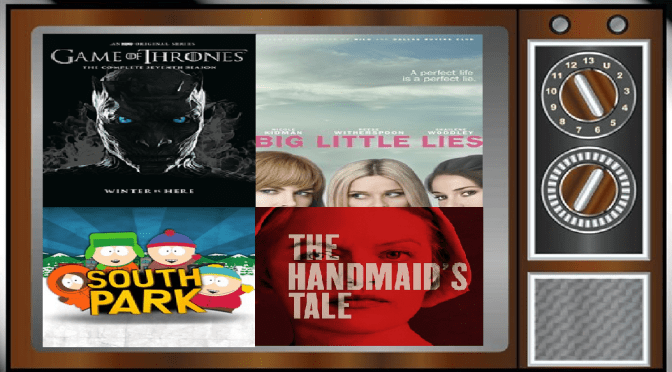
I’ve been watching some excellent dramas over the last few months so here’s a few bitesize reviews with the usual marks out of eleven!
BROADCHURCH (2017) – SEASON 3 – ITV
Chris Chibnall’s compelling investigative-crime-coastal-set drama continues as Police Officers Hardy (David Tennant) and Miller (Olivia Coleman) get to grips with a horrific sexual attack. The chemistry between the two leads is, as usual, the glue that holds the show together as does the suspenseful narrative. It’s a very well-crafted human drama too with many well-rounded characters driving the story. The excellent supporting cast including: Jodie Whittaker, Andrew Buchan, Lenny Henry, Julie Hesmondhalgh etc. make this another very watchable drama. (Mark: 8.5 out of 11)
FARGO (2017) – SEASON 3 – MGM / FX
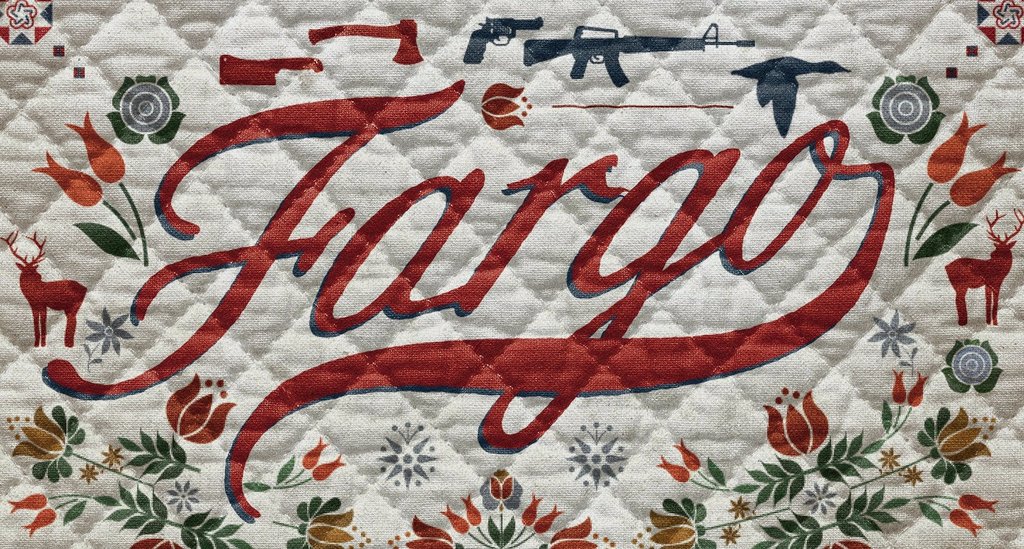
Noah Hawley continues to emulate the Coen Brothers’ oeuvre with pitch perfect expertise. This story of stoic cops, dumb criminals, ultra-violence and random acts of fate amidst the snowy landscapes of Minnesota is highly recommended. Ewan McGregor brilliantly plays TWO warring brothers whose feud escalates out of control while corporate crime also gets a poke as McGregor’s Emmet Stussy car-lot business gets swooped on by shysters. Slyly satirising the police procedural drama with off-centre plot twists and dark humour, David Thewlis’s scumbag businessman and Mary Elizabeth Winstead crafty femme fatale steal the show in ten brilliant-could’ve-watched-it-all-day-violent-but-hilarious episodes. (Mark: 9 out of 11)
GENIUS (2017) – SEASON 1 – NATIONAL GEOGRAPHIC
This beautifully shot and well-written educational drama is based on Walter Isaacson’s book Einstein: His Life and Universe (2007). It examines Einstein’s early life as a struggling clerk and events which saw him become one of the most famous scientists. Johnny Flynn portrays young Einstein with a fine energy while Geoffrey Rush excels as the mad-haired genius we have come to recognise. I’m definitely not a science buff, however there was much to be engrossed by in Einstein’s story, not least his dysfunctional family and marital issues. Both informative and enlightening in regard to science and history it’s fascinating throughout. (Mark: 7.5 out of 11)
THE HANDMAID’S TALE (2017) – SEASON 1 – HULU / C4
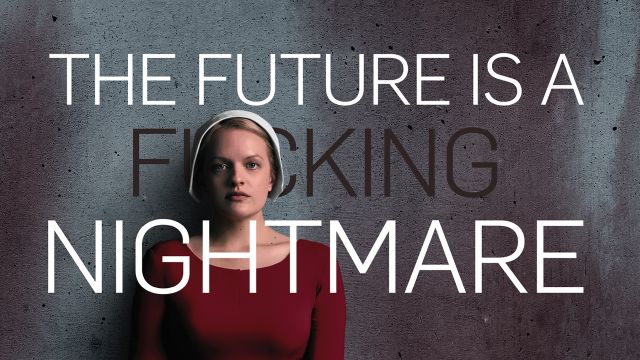
Based on Margaret Attwood’s novel, it is set in a dystopian (is there any other kind) near future where the United States has now become split following a societal breakdown and coup. Having moved to more religious-based dictatorial rule, women on the main are now barren and unable to have children; there are however a select few who can still get pregnant. Rather than herald these individuals they are herded up and given to the ruling elite as brood slaves. Elisabeth Moss is mesmerizing as the lead “Handmaid” Offred/June who must survive oppression following her husband and daughter’s apparent death. This hard-hitting drama is definitely one of the best I have seen during 2017. It moves slowly and is very bleak but, like Children of Men (2006), it contains suggestions of hope, light, rebellion and solidarity in a grim, patriarchal world which crushes life and colour. Impressively directed, acted and shot it had me transfixed and disturbed and I very much look forward to a 2nd season. (Mark: 9.5 out of 11)
HOMELAND (2014) – SEASON 4 – SHOWTIME / C4
Claire Danes deserves so much praise for her role as Carrie Mathison. She owns the screen with her single-handed determination to fight against both bi-polar and “enemies” of the USA. Set in Kabul this season eschews the more romantic intensity of the previous seasons for some thrilling spy twists. Rupert Friend excels too as the burnt out CIA Operative as the story moves more toward 24esque territory. It’s sad that the political landscape gives rise to shows such as this but it remains compelling if slightly generic viewing compared to the other seasons. (Mark: 8 out of 11)
IRON FIST (2017) – SEASON 1 – MARVEL / NETFLIX
Danny Rand (Finn Jones) – previously believed dead – comes back to claim his family business and takes on both corporate and mystical villains in this contemporary superhero drama. Jones is okay and David Wenham is excellent as one of the bad guys but I really struggled with this. I enjoyed Daredevil and Jessica Jones and thought Luke Cage, while a bit slow, had some excellent moments. Iron Fist, however, had a thin repetitive narrative and the fight scenes, characters and dialogue lacked the fizz of Marvel’s best TV work. (Mark: 6 out of 11)
THE NIGHT OF… (2016) – HBO/SKY
A shy young student Naz portrayed by Riz Ahmed makes several poor life decisions and finds himself in jail for the murder of a young woman. Ambulance-chasing-psoriasis-suffering lawyer John Stone (John Turturro) takes his case as all the evidence points to his guilt. Created by Richard Price and Steve Zaillian and starring Riz Ahmed, John Turturro, Michael Kenneth Williams and Bill Camp this exquisite noir-crime drama carries the confidence and style of the very best cinematic offerings. Moreover, the rich characterisation and performances raise it well above the usual police/lawyer procedural dramas on television. Award winning drama of the highest quality with a superlative cast. (Mark: 9 out of 11)
GAME OF THRONES – SEASON 7 REVIEW & RANDOM THOUGHTS
**ABSOLUTELY NO SPOILERS**
I’ll be honest: in my younger days of arrogance or confidence or know-it-all-prideful-youth – whatever you want to call it – I used to be an ultra-critical, negative and a bit of a spoilt moaner. But, as my time ticks away ever so slowly and I crawl closer to death, I believe I have grown more mature and reasonable. I remain analytical and active in my viewing and while I am someone who mildly obsesses about certain movies, TV shows, sports and other cultural stuff, I still recoil with embarrassment at the negative hysteria you get online and in social media in regard to life, politics, celebrities, pop videos and more specifically TV programmes or films.
Of late the fury of the Internet “haters” or “trolls” was aimed with fundamental ire at the all-female-led-cast Ghostbusters movie. Who really cared?!? It was an okay film; not great. My main problem was that it was not particularly well written or directed despite the excellent efforts of the cast. In another sexist tirade the online public hacks also attacked the casting of excellent actress Jodie Whittaker as the new Doctor Who. I mean the Doctor is a shape-shifting alien who changes bodies and heaven forbid that, after thirteen men (including John Hurt’s War Doctor) in the role, a woman suddenly be cast!
Why are people so over-the-top with their reactions I ask myself? Maybe they are channelling their life disappointments or existential anger by way of dissociative behaviour. Criticizing these casting decisions could be a way of distancing themselves from the pain of life. Or perhaps the more socially-charged analysts could argue that filmmakers and TV showrunners are cowering to the liberal left and changing such roles to be more PC! Or maybe they are simply just nuts!?
I guess everyone is entitled to an opinion and the Internet, for better or worse, has given power to those opinions. I just don’t understand why people get so angry though! I mean some of the criticisms aimed at the latest season of Game of Thrones were admittedly erudite and thoughtful; however, much of the wrath toward the writers ranged from the silly to the furious to nit-picking pedantry of the highest order. It’s as if the online villagers of YouTube, Facebook and Twitter had been sharpening their pitchforks and lighting their torches before the show had even aired.
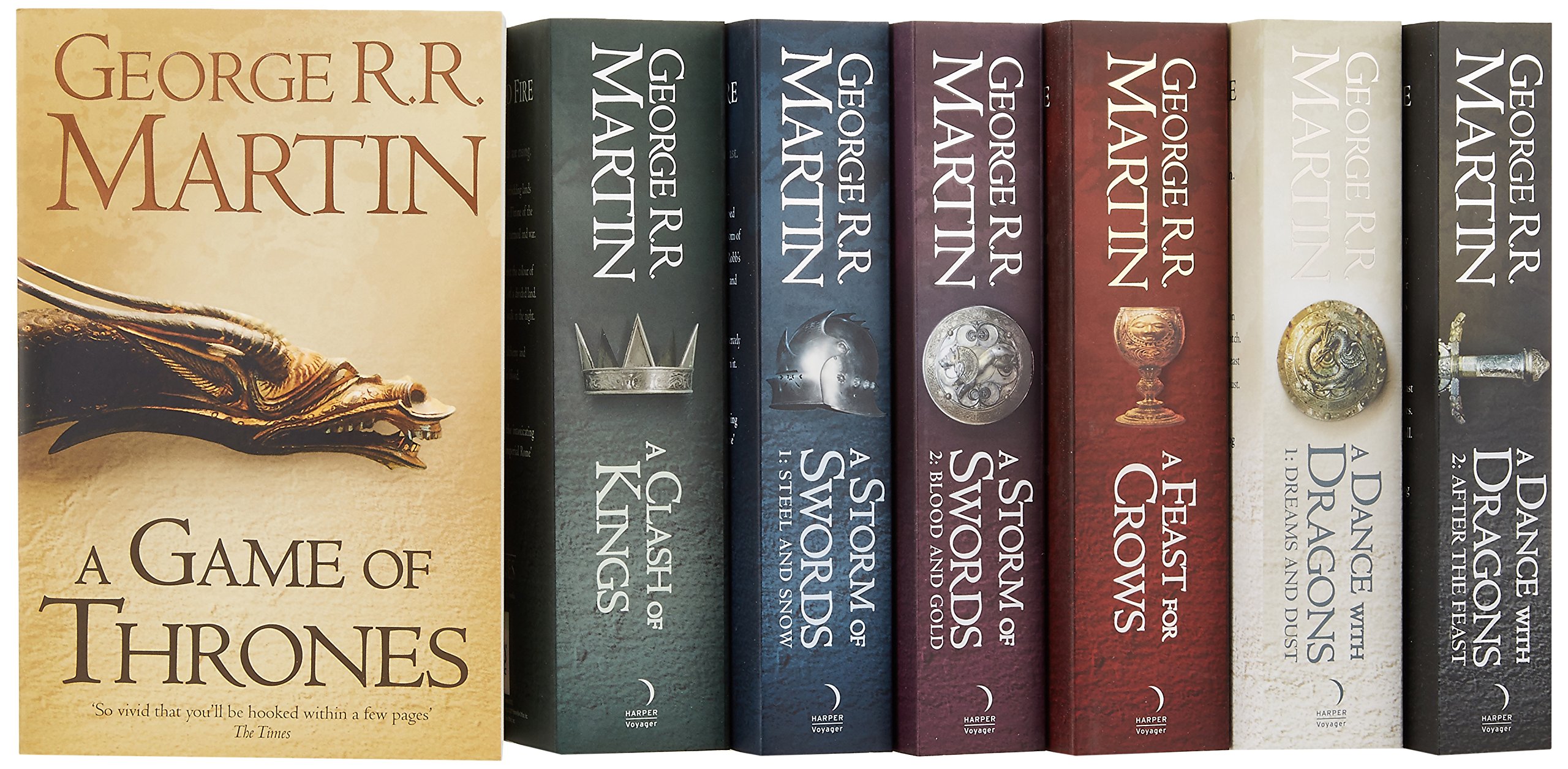
My view of Game of Thrones is simple. The first six seasons gave me some of the greatest televisual enjoyment I have ever experienced. In terms of character, plotting, dialogue, action, reversals, twists, shocks, romance, performance, political intrigue, editing, direction and jaw-dropping-heart-pounding-tension it is ONE OF THE GREATEST TV SHOWS EVER!
Thus, Season 7 had a lot to live up to and in some ways it has been a victim of its own success. When you raise the bar that high it is of no surprise if such heights dip on occasions. Having said that I thought Season 7 was fantastic TV; and I’m not the only one. It was seven episodes of brilliant entertainment with too many wonderful moments to mention. But the online village hordes were quick to complain with vehement cries of “Burn the Writers!” Moans included:
The writing’s not as good as the earlier Seasons!
George R. R. Martin’s careful characterisation and plots have gone!
The pace is TOO quick compared to the prior Seasons!
Too many character reunions!
The map has been compressed and characters seem to teleport!
Too many plot-holes and character inconsistencies.
The White Walkers / Night King enemy are too one-dimensional.
It’s just not as good as the books!
It’s become too predictable!
Show-runners D.B. Weiss and David Benioff are the Anti-Christ!
While I agree in regard to the geographical shifts of characters and speeding up of the plot points is different to the previous Seasons, I don’t believe the entertainment value has been lost; in fact it has been heightened. I also don’t agree that the writing is bad. The show, having built up much good faith in the earlier more politically charged Seasons has now shifted to a faster more cinematic pace rather than the steady literary tread of George R. R. Martin’s work. Of course, the book is ALWAYS better than the film or show as a rule but it’s a different medium altogether. We’re reaching the end of the show and the characters’ arcs are peaking toward denouement so the increased pace is understandable. In regard to predictability, well, there’s only one way the whole show was going and the battle between Ice and Fire has been on the cards since the first episode! WINTER IS HERE!! I realise many are disappointed in this shift having committed many hours to watching the show; but I honestly think the show remains as powerful as ever.
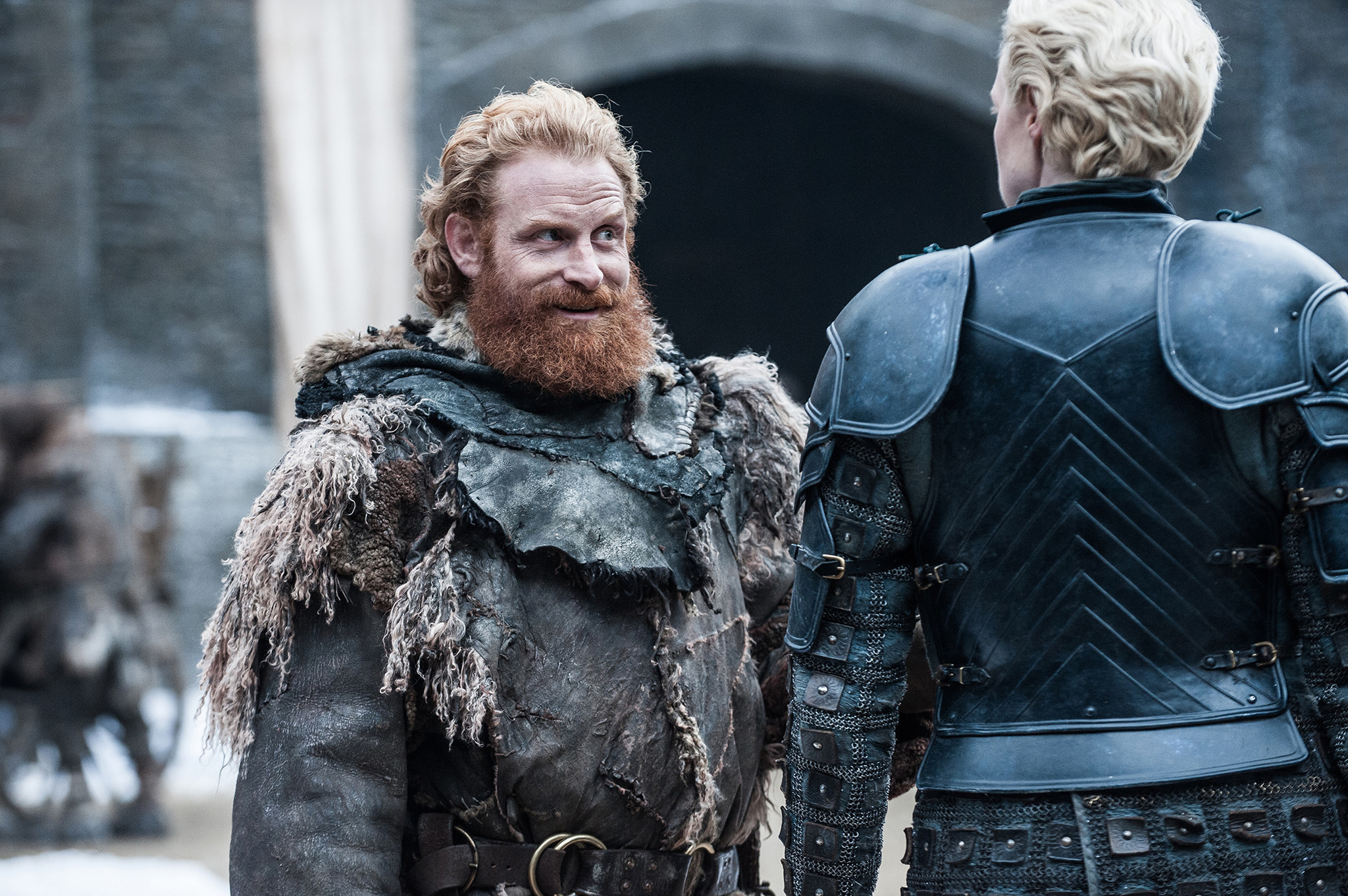
EVERYONE is now a screenwriter and while it is much fun to decide how you want the characters you love to behave, just because they do something slightly different to what you, or George R.R. Martin would do, it doesn’t mean it is bad writing or illogical. On the contrary Season 7 contained some exciting writing and an incredible amount of memorable moments. These included: Daenerys’ dragons wreaking havoc; the magnificent masculine mission beyond the Wall; Oleanna and Jamie’s words; Cersei’s continued despotic mania; a summit meeting between many of our major characters; the Hound; Jorah’s redemption; Arya’s special set of skills;the Night King and his horde; Jamie’s doubts; Brienne’s loyalty; the weirdo Bran; and all manner of incredible battle scenes on sea, air, ice and land.
These sequences plus many more and the great direction, acting, design and character twists throughout meant that I was transfixed from start to finish. I do agree that at times it felt rushed in places and ten episodes would have fleshed out some of the more temporal issues. But hey, it was still amazing from my perspective.
Game of Thrones, ultimately is a TV programmes with dragons and zombies and in between human beings attempting to out-plot and out-kill each other. I agree there was a more Shakespearean feel to the earlier episodes and we have experienced a shift from a literary style to the cinematic. However, I couldn’t care less and would advise the armchair screenwriters, clickbait critics and online trolls to cease bitching and stop watching the show if you don’t enjoy it any more. Because unlike this highly entertaining show YOU ARE GETTING VERY BORING!