Category Archives: Reviews

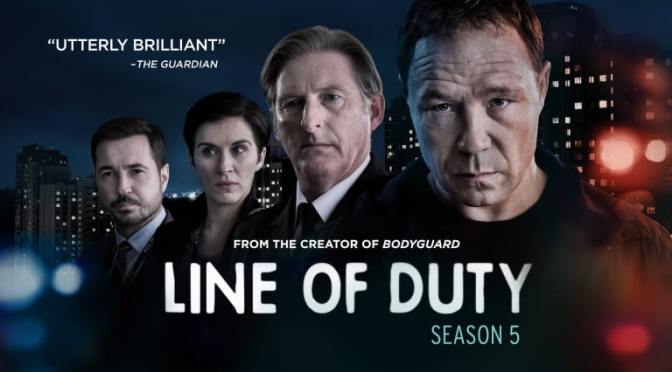
IN PRAISE OF BBC’S LINE OF DUTY + SEASON 5 – TV REVIEW

BBC’S LINE OF DUTY & SEASON 5 REVIEW

Created and Written by Jed Mercurio

Directors (Season 5): John Strickland and Sue Tully

Cast (Season 5): Taj Atwal, Martin Compston, Adrian Dunbar, Stephen Graham, Anna Maxwell Martin, Vicky McClure, Rochenda Sandall, Polly Walker etc.

I was slightly late to the Line of Duty corrupt police drama party. Thankfully, I caught up with it by watching the first four seasons on Netflix. The fifth season has just completed a run over the last six weeks on BBC1 and thoroughly thrilling it was too. Creator and writer Mercurio is a bulletproof show-runner; a genre writer with a proven hit rate whose work almost always brings commercial, critical and audience success.

Having achieved early TV writing acclaim with dark medical comedy, Cardiac Arrest (1994-1996), Mercurio’s subsequent drama Bodies (2004 – 2005) was another critical hit. Latterly, Bodyguard (2018) and Line of Duty (2012 – present) have also proved highly successful. Undeniably, Line of Duty is a massive hit for the BBC. It has received awards and nominations from: the Royal TV Society, the Writers’ Guild and BAFTA. Moreover, it was also voted in the top BBC shows of all time. Therefore, after the success of Season 4 on BBC1, Season 5 was awaited with great anticipation.

THE LANGUAGE OF LINE OF DUTY

If you haven’t seen Line of Duty then it is highly recommended as quality genre storytelling. Over five seasons it has received much media attention and a strong fan following. It’s also fun looking out for the tropes, genre expections and language built into the classic cop drama. So, a game of Line of Duty bingo would certainly include:

  • AC12’s lead characters: DS Steve Arnott, DI Kate Fleming and Superintendent Ted Hastings will be committed to nicking bent coppers.
  • Massive and unexpected plot twists.
  • Untimely deaths of major characters.
  • Police Officers being bigger criminals than actual crooks.
  • The main antagonist will likely be revealed early on to the audience like an episode of Columbo.
  • Brilliantly written and lengthy police interview scenes often dominate whole episodes.
  • The main antagonist can at any time be superseded by a bigger antagonist like an episode of ‘24‘.
  • Main antagonists will be played by well known actors such as: Lennie James, Keeley Hawes, Daniel Mays and Thandie Newton.
  • Minor sub-plots will often blow up into being the main plot.
  • Red herrings galore with misdirection and cliff-hanger writing tricks becoming legion.
  • Line of Duty language and catchphrases have become culturally familiar including: “Fella”; “Mother of God”; “Bent Coppers”; and my favourite: “DCI. . . has the right to be questioned by an officer at least one rank senior.”
  • Fantastic hard-boiled one-liners and dialogue that Raymond Chandler would be proud of.

I could go on but I can highly recommend all five seasons of the show. While it exists within the police drama genre the lead characters are well written. Not simply basic binary heroes, they are complicated humans, yet highly determined and professional. The plots are serpentine and often become very complex, threatening to swallow their own tail at times. Nonetheless, if Alfred Hitchcock created a long running crime drama then Line of Duty would be it.

LINE OF DUTY – SEASON 5 REVIEW (WITH MINOR SPOILERS)

Season 5 began with an all action and breathless opening couple of episodes. Yet, by the end it transformed into a claustrophobic, theatrical and tense police interview showdown. While Season 4 found Thandie Newton desperately trying to evade capture using her intelligence and guile, Season 5 was more explosive. Opening with a pulsating robbery, with an OCG (Organised Crime Group), raiding a police vehicle convoy carrying confiscated drugs and weapons; AC12 were soon hunting armed robbers and investigating the death of several Police Officers.

The head of the crime gang is, or so we think, John Clayton. He is portrayed by fine character actor, Stephen Graham. It soon turns out Clayton is not what he seems and is playing a very dangerous game as an undercover cop. But, is Clayton still undercover or has he gone rogue? Clayton’s gang are not to be crossed and their boss is an anonymous high-ranking corrupt Police Officer referred to only as ‘H’. They communicate via computer text software, thus creating a fog of invisibility and suspicion.

As the various plot strands ravel and unravel further robberies and murders occur, with Mercurio creating a series of tense stand-offs and action set-pieces. The stakes get higher and higher until our very own Ted Hastings becomes number one suspect in the chase for ‘H’. Adrian Dunbar as Hastings is especially brilliant in this season. His character finds his whole life and history turned upside down and in freefall. I mean, could this beloved character be the arch-nemesis? The conflict created by Mercurio is totally absorbing until the very final reveal.

Overall, one could argue that Season 5 goes too far to attempt to out do the previous seasons. However, I loved both the complexity and familiarity of what I was watching. The action, suspense, twists, doubt, shocks and ‘whodunit’ plot were played to perfection. We also got a bit of characterisation amidst the heavy plotting as we found out about: Hastings’ history in Northern Ireland; Fleming’s family issues; and the impact of Arnott’s spinal injury (from a violent attack in Season 4). We also got some new characters such as the formidable DCS Carmichael featuring a stand-out performance from Anna Maxwell Martin.

Ultimately, this is a cops and robbers show which plays the numbers very well. Furthermore, like a game of bingo you never know the order the numbers will come out, who’ll win or lose and whether the game is, in fact, rigged so no one really profits in the end.

Mark: 9 out of 11

THE CINEMA FIX PRESENTS APRIL FILM ROUND-UP INC. REVIEWS OF: GRETA, LOVE, DEATH & ROBOTS, TRIPLE FRONTIER ETC.

THE CINEMA FIX PRESENTS: APRIL FILM REVIEW ROUND-UP

With Avengers: Endgame (2019) dominating the cinemas at the moment, I thought I’d let Marvel’s magic dust settle BEFORE seeing that blockbuster this weekend. However, during April I caught a few other newer releases at the cinema and online via Netflix. Thus, here are some mini-reviews with the usual marks out of eleven.

**MAY CONTAIN SPOILERS**

GRETA (2018) – CINEMA – DIRECTOR: NEIL JORDAN

Neil Jordan has an impressive directorial curriculum vitae, including genuine classics such as: Mona Lisa (1986), The Crying Game (1992) and The End of the Affair (1999). Greta is arguably not a patch on them; however, I really enjoyed this B-movie stalker narrative. This is mainly due to a fine cast headed by Isabelle Huppert, Chloe Grace Moretz and Maika Monroe.

Huppert exudes Gallic charm and quiet menace as the obsessive and lonely Greta. Furthermore, as her behaviour becomes more unhinged Jordan wrings every bit of tension from the lean and thrilling script. Seamus McGarvey’s cinematography also adds class to a very entertaining ninety-eight minutes.

Mark: 8 out of 11

LOVE, DEATH & ROBOTS (2019) – NETFLIX – DIRECTOR(S): VARIOUS

This anthology of eighteen animated short films was curated by Joshua Donen, David Fincher, Jennifer Miller and Tim Miller. Produced by various crews from a range of countries, the series is a re-imagining of Fincher and Miller’s long-planned reboot of animated sci-fi film Heavy Metal (1981). Firstly, I love short films and have watched a lot over the last ten years, and I don’t mind animated stuff either.

In Love, Death and Robots the animation, graphics, action, editing, composition and imagery on show here are incredible. The stories themselves are hit and miss; with some actually feeling over-sexualised and retrogressive. Nonetheless, the production values on show raise the bar so high it masks some of the generic writing and weak characterisation. Lastly, there are some brilliant shorts and my favourites include: Three Robots, Shape Shifters, Zima Blue, Ice Age and the very funny Alternate Histories.

Mark: 8 out of 11 (averaged score)

OUTLAW / KING (2019) – NETFLIX – DIRECTOR: DAVID MACKENZIE

According to Wikipedia this historical epic about Scottish nobleman, Robert the Bruce, cost $120 million to make. It’s a shame so much money was wasted because technically speaking the production is an absolute tour de force. It’s a pity the script and narrative are so bereft of intrigue, suspense and character relatability. Yes, I get that the English are bad and the Scottish must stand up to defeat their nefarious “landlords”, but unlike the far more theatrical and entertaining, Braveheart (1995), this all felt irrelevant.

I thought Chris Pine, who is a charismatic movie star, lacked personality in the lead, and Florence Pugh, as his wife, was given little to do apart from run away then get kidnapped. Aaron Taylor-Johnson was fantastic as a bloody revenging Scottish rebel-lord; as was David Mackenzie’s incredible direction of the impressive battle scenes. I have read that the film was hacked to pieces and what is on show is a hung-drawn-and-quartered cut of a longer film. Perhaps, one day we will see a true version of Outlaw / King and Mackenzie’s vision will be properly represented.

Mark: 6 out of 11

TRIPLE FRONTIER (2019) – NETFLIX – DIRECTOR: J.C. CHANDOR

Not quite a dirty dozen but a filthy five as former soldiers and military contractors including: Oscar Isaac, Ben Affleck, Charlie Hunnam, Garrett Hedlund and Pedro Pascal, gang together to rob a drug baron’s fortress holed up deep in the South American jungle.
The story has all the hallmarks of a testosterone-driven-men-on-a-mission-genre classic, but just when I thought it was going in a certain direction, the ending under-mined much of the previous compelling action.

The cast are very impressive though and they more than make up for any deficiencies in the thin characterisations. Similarly, while it starts slowly, once we get into the heist J.C. Chandor’s methodical directorial style really comes into its’ own. Chandor creates a lot of tension during and after the robbery as events twist out of control. Thematically, I thought this was going to become a modern day version of 1948 masterpiece, The Treasure of Sierra Madre. Indeed, if the drug money they steal had become a true threat to test the friends’ loyalty and courage under fire, I would have marked this thrilling film higher.

Mark: 8 out of 11

UNICORN STORE (2018) – NETFLIX – DIRECTOR: BRIE LARSON

This is a very odd film. However, if you pick through the bones of the whimsical script, the rainbow-baubled art direction and Brie Larson’s eccentric child-woman, you’ll find a rites-of-passage genre film in there somewhere. Larson directs herself as the immature narcissist, who having been kicked out of Art College begins a dead end temp job to try and appease her parents. So far so relatable.

However, the film twists into symbolic fantasy when she is offered,
by Samuel L. Jackson’s enigmatic ‘Salesman’, the dream opportunity of owning a Unicorn. WTF!!?! I enjoyed a lot about the film, notably the Napoleon Dynamite (2004) style humour; plus Larson and Mamadou Athie’s performances stand out. Overall though, I got that the Unicorn was an allegory for human maturation but I personally felt the narrative was slow and stretched despite fine work from the very talented Larson.

Mark: 6 out of 11

TO BOLDLY REVIEW #5 – STAR TREK – ‘ORIGINAL SERIES’ MOTION PICTURES

TO BOLDLY REVIEW #5 – STAR TREK – ‘ORIGINAL SERIES’ MOTION PICTURES

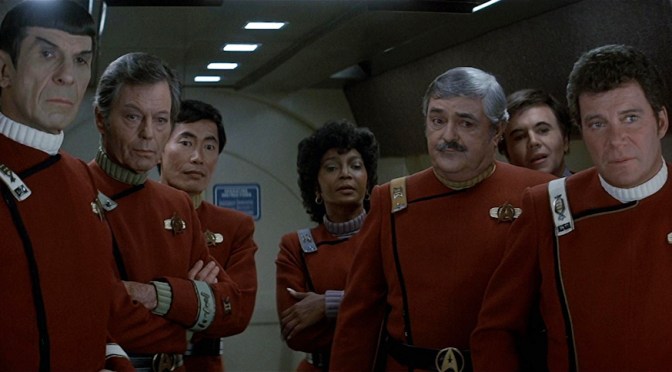
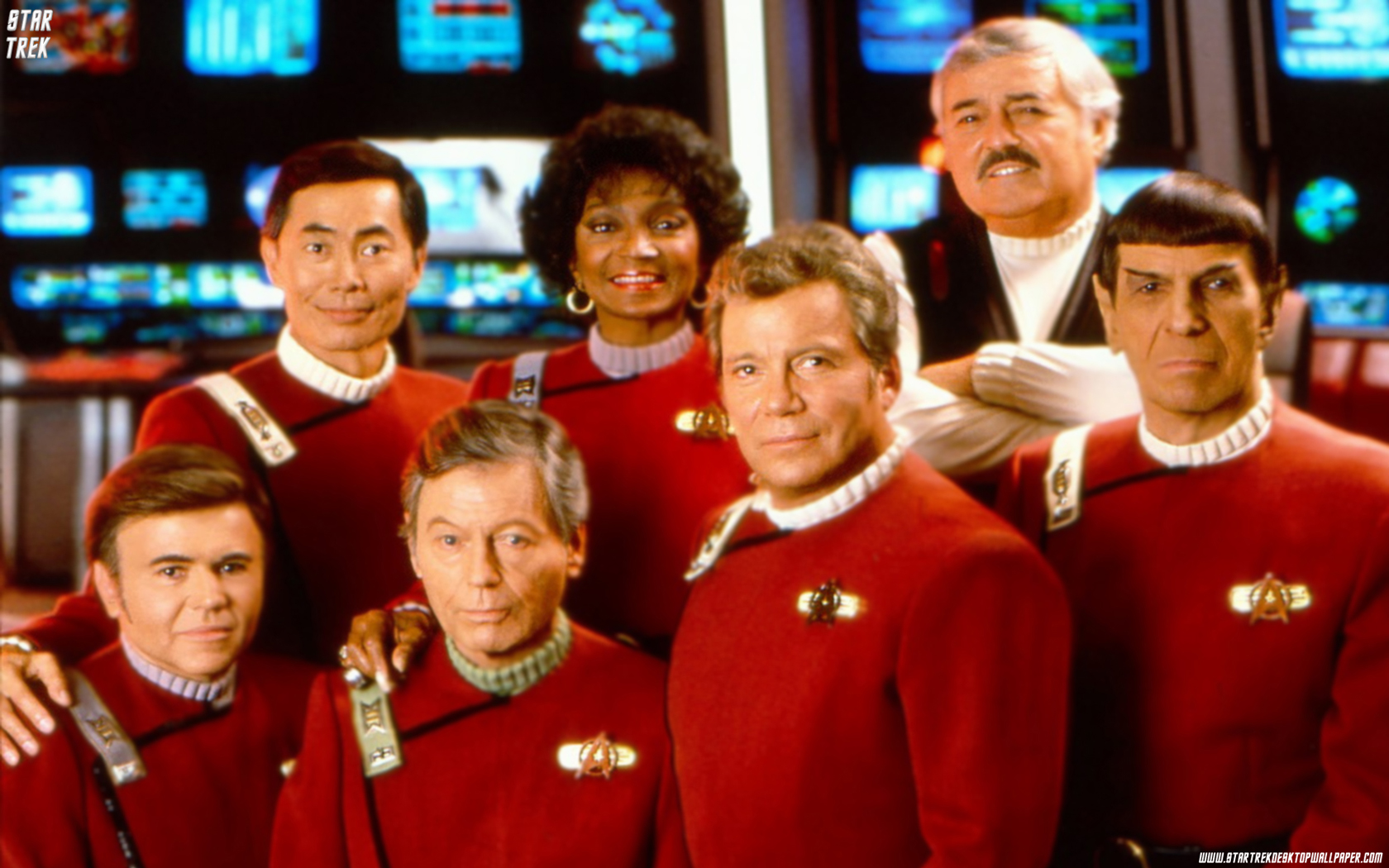
After watching and reviewing the first three original Star Trek series and the 1970s animated show on my blog, I moved straight onto the first season of Star Trek: Next Generation. I then realised I had forgotten the original series film franchise; six films which were released between 1979 and 1986.

Safe to say they were hugely popular among the army of Trek fans worldwide, especially for those desperate for the original show to return. The films were welcomed with a combination of critical acclaim and commercial success; plus a mixture of positive and some negative reviews. Anyway, here are my mini-reviews of each film with marks up to warp drive 11!

**THIS ARTICLE CONTAINS SPOILERS**

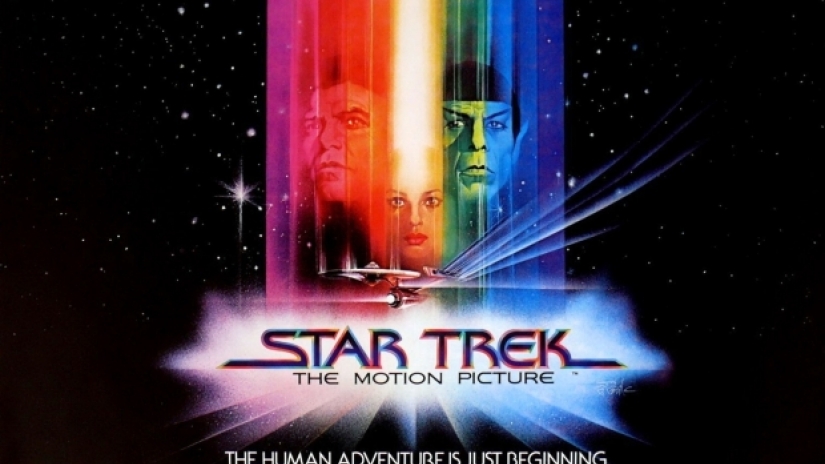
Star Trek: The Motion Picture (1979) – Director: Robert Wise

Unfortunately, time has not been kind to Star Trek: The Motion Picture, as it suffers when compared to other more successful sci-fi films of the era. While Robert Wise was an excellent film director he was arguably not quite right for the film and the script lacks warmth and humour also. Lastly, despite the story moving at a snail’s pace the film has some decent moments, with Jerry Goldsmith’s majestic score shining brightly too.

Mark: 6.5 out of 11

Star Trek II: The Wrath of Khan (1982) – Director: Nicholas Meyer

This is a direct sequel to the fantastic orginal series episode Space Seed. In it we find Ricardo Montalban’s uber-villain Khan Noonien Singh, relentlessly pursuing revenge against Kirk and the Enterprise crew. Meyer’s screenplay and direction capture the classic Trek approach to characterisation and sci-fi concepts, making this film great fun. Montalban and Meyer’s sharp script steal the show, with the allusions to sea-faring classics such as Moby Dick and Hornblower adding compelling thematic texture.

Mark: 8.5 out of 11

Star Trek III: The Search for Spock (1984) – Director: Leonard Nimoy

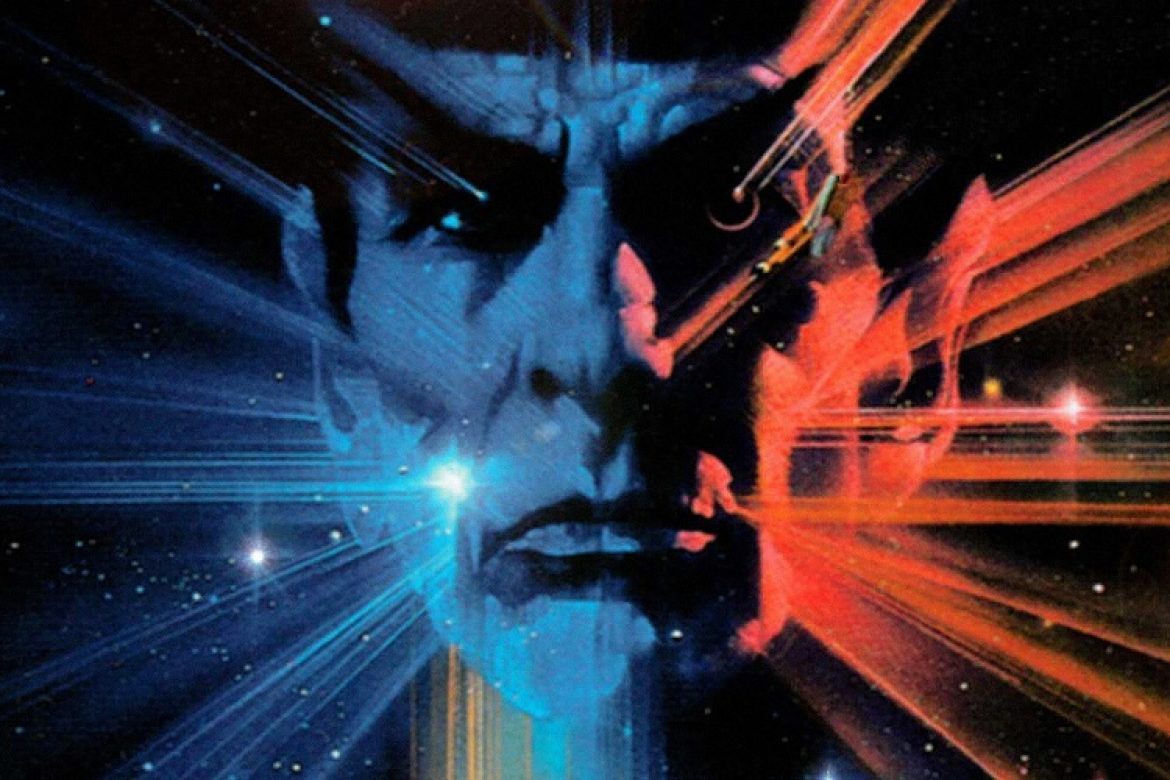
With Meyer having killed off Spock so heroically in the Wrath of Khan, this direct sequel spends most of its time trying to get out of that narrative black hole. With a terra-forming planet on the verge of destruction and those pesky Klingons wreaking havoc with their devious cloaking device, there’s a lot to keep the crew of the Enterprise busy. Chuck in Kirk’s secret son for emotional depth, plus seven ages of Spock (from baby to fully grown Vulcan), and overall you get a solid Trek yarn that has some memorable elements throughout.

Mark: 7 out of 11

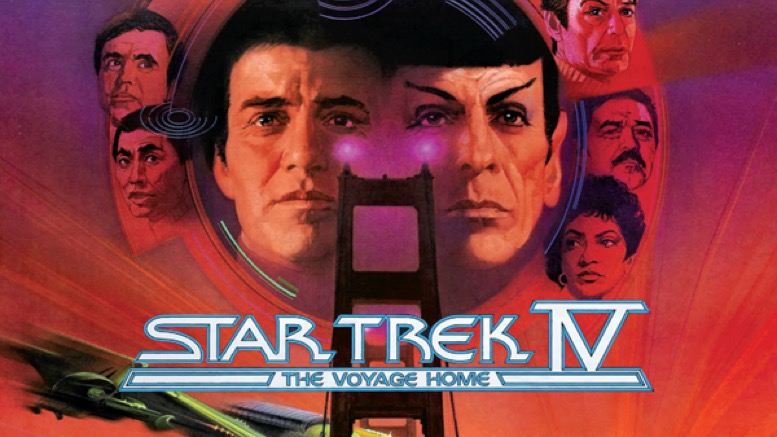
Star Trek IV: The Voyage Home (1986) – Director: Leonard Nimoy

This sci-fi romp is basically a Trek comedy which finds the Enterprise sling-shotting back in time to 1980s San Francisco, in order to rescue whales which can save Earth from destruction in the present/ future. How the Tribble they worked out whales were so vital is something only the screenwriters can explain, but clearly they are environmental symbols in the narrative. Indeed, Star Trek as allegory, has always been a major strength of the show. Overall, while the plotting is a little crazy, the film spins its time-travel-fish-out-of-water plots with enough energy, jokes and action to keep everyone entertained.

Mark: 7.5 out of 11

Star Trek V: The Final Frontier (1989) – Director: William Shatner

This film is often cited as the worst of the franchise due to a muddled story and tonal confusion throughout. Also, for all his star quality and iconic character work as Kirk, William Shatner probably took on too much to act and direct in the troubled production. Nonetheless, the themes of the film are very interesting. Kirk, McCoy and Spock et al are faced with the messianic plans of an evangelistic Vulcan called Sybok. His plan is to capture the Enterprise and take his followers on a mission to find God; as you do.

Lawrence Luckinbill stands out as Sybok, delivering a charismatic performance as the intergalactic cult leader. Moreover, much emotional power is derived from his scenes where he manipulates those to follow his will; McCoy’s scenes are particulartly memorable. If only they’d stuck to the seriousness of such themes instead of veering into patchy comedy throughout, then the film may have been, while incredibly dark, way more satisfying.

Mark: 6.5 out of 11

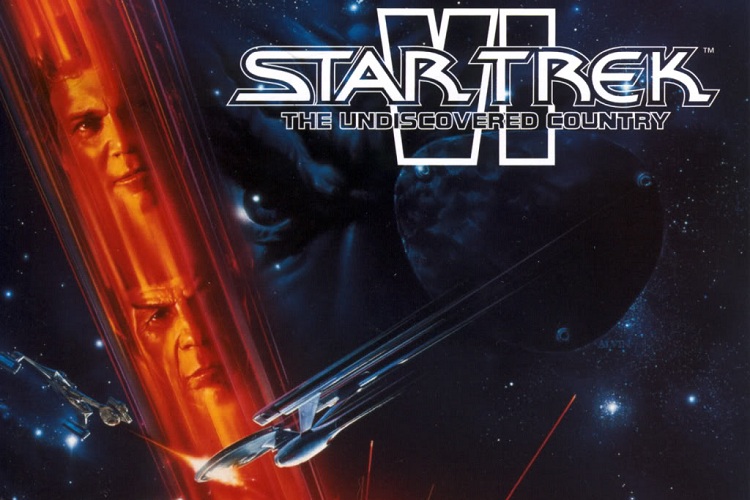
Star Trek VI: The Undiscovered Country (1991) – Director: Nicholas Meyer

Meyer returned to write and direct the final film in the franchise and very good it is too. Arguably it is the most satisfying of the series in term of complexity of plot, characters and action. With the Klingon Empire under threat an uneasy truce is declared between them and the Federation. Unsurprisingly there are those on both sides, including Kirk, who do not feel peace can ever be achieved. Thus, murder, intrigue, sabotage and treachery follow in a compelling narrative.

With the Shakespeare-favoured dialogue and ‘Cold War’ subtext there is a real political depth to the film. Plus, Kirk is back to his heroic best. Indeed, the scenes where he must escape from a Klingon jail are very enjoyable from a genre perspective. Best of all though is a cast that includes brilliant actors such as: Christopher Plummer, David Warner and Kirstie Alley. Plummer, especially, exudes consummate class as Kirk’s Klingon adversary, stealing every scene he’s in.

Mark: 8.5 out of 11

FLEABAG – SEASONS 1 & 2 – BBC TV REVIEW

FLEABAG – SEASONS 1 & 2 – BBC TV REVIEW

Created and Written by: Phoebe Waller-Bridge

Directed by: Harry Bradbeer

Producers: Lydia Hampson, Sarah Hammond

Starring: Phoebe Waller-Bridge, Sian Clifford, Olivia Colman, Brett Gelman, Hugh Skinner, Bill Paterson, Jamie Demetriou, Jenny Rainsford, Hugh Dennis etc.

Composer: Isobel Waller-Bridge

Cinematography: Tony Miller, Laurie Rose

**MAY CONTAIN SPOILERS**

This melancholic, painful and chaotic home for middle-class grotesques and excruciatingly awkward comedy situations involving, Phoebe Waller-Bridge’s barely-surviving-human being-the-titular-‘Fleabag’, shouldn’t really work as entertainment. Yet, it does because of: brilliant writing, dark, honest humour, existential depth, almost-cinematic production values; genuine star quality from Waller-Bridge; and a cast on top of their game.

First-world-very-white yet universal human problems are legion in two seasons of twelve breathless episodes. We join our nameless anti-hero scraping through life in the midst of doubling grief, following the recent deaths of her mother and close friend/business partner. No doubt the chattering twenty-something classes are full with “I’m just like Fleabag!” recognition. Nonetheless, there’s something to enjoy for those who love to experience raw, human frailty on screen too.

‘Fleabag’ fights flailing moods, business and family issues in contemporary status-symbol London. Using sex to block out her pain in the first season, ‘Arsehole Guy’ and ‘Bus Rodent’ are two such crutch-like paramours who, along with on-off-ex-boyfriend, Harry, are given the physical and emotional run-around. In the less bawdy second season she falls for an uber-cool Catholic Priest (Andrew Scott). Thus, the lashings of sex from the first season gives way to more interesting abstinence and romantic torture for ‘Fleabag’.

With her best mate dead from a tragic accident ‘Fleabag’s’ sword and shield against life is gone and attempts at bridge-building with her family are fraught with strained agony. Her sister Claire (Sian Clifford), is tighter than a snare drum, existing solely on neurosis and a never-ending workaholic mission drive. The scenes between ‘Fleabag’ and her sister range from touching to hilarious to fractious dread. Meanwhile, their beta-male Father (Bill Paterson), is also grieving and a full-on emotional trainwreck. He finds himself a rabbit-in-the-headlights of Olivia Colman’s ‘Godmother’; a genius at passive aggressivity and unlikely arch-villain, quietly stealing the father away from his daughters.

Many hilarious and painful scenes play out around dinner tables, art exhibitions, parties, funerals, seminars, retreats and weddings. ‘Fleabag’ vainly attempts normality but understandbly fails. In addition to her family she also conflicts with other characters, notably Claire’s horrendous-alcoholic-overgrown-man-child-husband, Martin. I was genuinely shouting bile at the TV screen every time I saw him. Thankfully, Fleabag also features fine supporting roles from more likeable characters portrayed by the ultra-talented Fiona Shaw, Kristin Scott-Thomas and aforementioned Andrew Scott.

From Hancock to Steptoe and Son to Fawlty Towers to Blackadder to The Office to Spaced and to the most recent Gervais show After Life, British comedy has been replete with idiosyncratic and anti-heroic characters we root for. Indeed, it takes special writing and performances to get such shades of grey to work on stage and screen. Overall, Waller-Bridge takes familiar themes and situations and spins comedy and dramatic gold from them. Formally, she smashes the fourth wall with Brechtian direct address, welcoming us into her tumultuous reality, speaking to us and asking us to laugh and cry and love and hate and do what humans do: somehow just get through the day.

Season 1 – Mark: 9 out of 11
Season 2 – Mark: 9.5 out of 11

MY CINEMATIC ROMANCE #15 – JACQUES AUDIARD – WITH: THE SISTERS BROTHERS (2018) – CINEMA REVIEW

MY CINEMATIC ROMANCE #15 – JACQUES AUDIARD

Experienced French filmmaker Jacques Audiard, makes what I call proper films. I mean, have you watched the cinema of yesteryear, notably the 1970s, with stories about characters that are deeply flawed and even possibly unlikeable. Well, Audiard still makes those kind of films. He takes risks representing human beings on the edge of society and perhaps struggling with life; people who often make left-field decisions to improve or escape their existential plight.

For my latest piece in the My Cinematic Romance series, I will look at some key Audiard films well worth watching. I will also incorporate a mini-review of his most recent release, tragi-comedy Western, The Sisters Brothers. If you haven’t seen much of Audiard’s work and are drawn to intense human character studies with absorbing narratives, then I highly recommend it.

**MAY CONTAIN SPOILERS**

THE SISTERS BROTHERS (2018) – CINEMA REVIEW

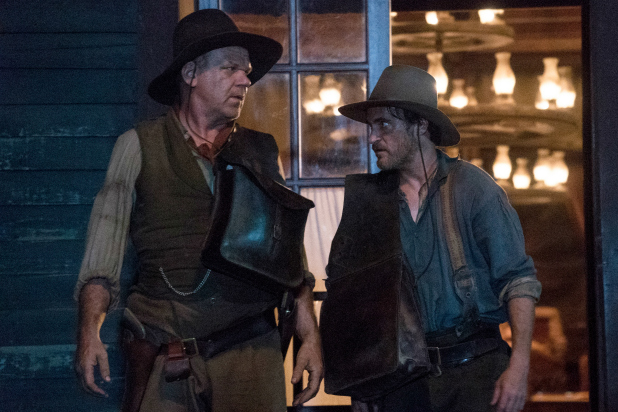
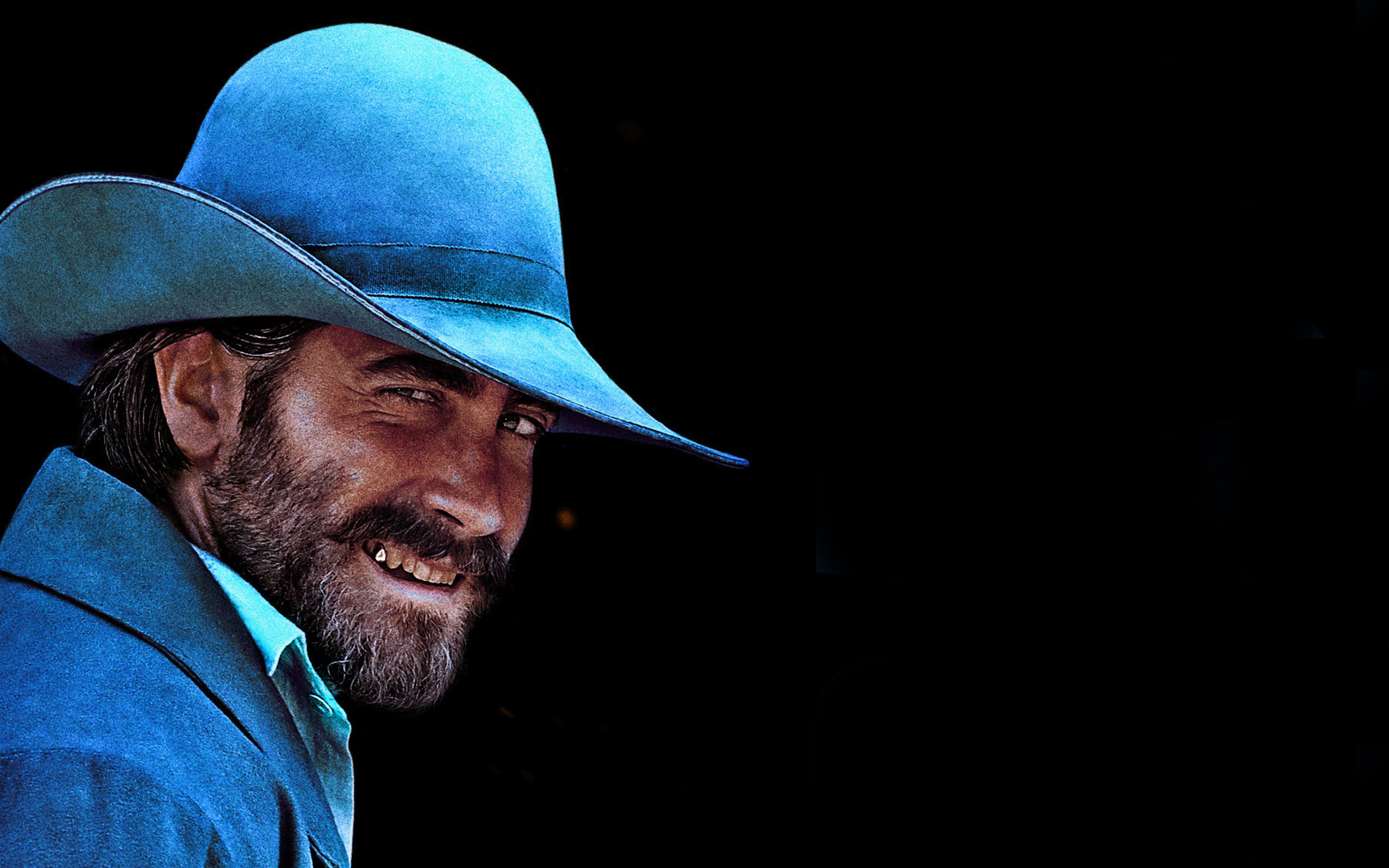
Starring a quartet of fantastic scene-stealing actors in: Riz Ahmed, Jake Gyllenhaal, Joaquin Phoenix and John C. Reilly, this Western bends the genres between drama, comedy and tragedy. Based on Patrick DeWitt’s critically acclaimed novel, the film is set in the 1850s during the Californian Gold Rush. It centres on the titular brethren, easier-going, Eli (Reilly), and drunken Charlie (Phoenix); hired bounty hunters who kill mainly for an enigmatic individual called the Commodore.

The film unfolds in what I would call a curious romp fashion; and it is certainly guaranteed to attain future cult status. Moreover, it also echoes the tone and eccentricity of recent Westerns like: The Ballad of Buster Scruggs (2018) and Slow West (2015). While Reilly and Phoenix’ characters form a humorous double-act in terms of verbal exchanges, their actions betray the fact they are cynical, hard-bitten and murderous. A product of their amoral milieu they remain the antithesis of the stylish and charming outlaws Butch Cassidy and the Sundance Kid.

Their latest quarry and target for the Commodore is Ahmed’s idealistic chemist, Herbert Warm. Assisting them is Gyllenhaal’s likeable tracker, John Morris. The brothers’ haphazard pursuit of Warm is a fun and bloody journey replete with: chaotic shootouts, barnstorming brawls, hilarious bickering and right-turn narrative twists. Overall, it’s probably too idiosyncratic to impact the box office, yet, Audiard directs with his usual love for morally ambiguous characters. Lastly, the natural lighting and colour scheme is beautifully shot throughout; while Alexandre Desplat’s score resonates impeccably. Thus, these elements plus Phoenix and Reilly’s tremenodous on-screen sparring make this a very enjoyable picaresque Western tale.

Mark: 8.5 out of 11

OTHER RECOMMENDED AUDIARD FILMS

READ MY LIPS (2001)

This Audiard thriller centres on Emmanuelle Devos’ office worker, Carla, and has echoes of Hitchcock and Coppola’s paranoiac classic The Conversation (1974). Hiding her deafness from colleagues, Carla enters into a robbery plot with Vincent Cassel’s ex-con and a fascinating serpentine double-crossing narrative ensues.

A PROPHET (2009)

This is one of the best prison films I have ever seen. It is a perfect example of the emotional power of linear filmmaking. As we follow Tahar Rahim’s lowly prisoner rise through the prison ranks using: violence, luck, cunning and smarts, we feel every emotion and tension he does during an incredibly compelling journey.

RUST AND BONE (2012)

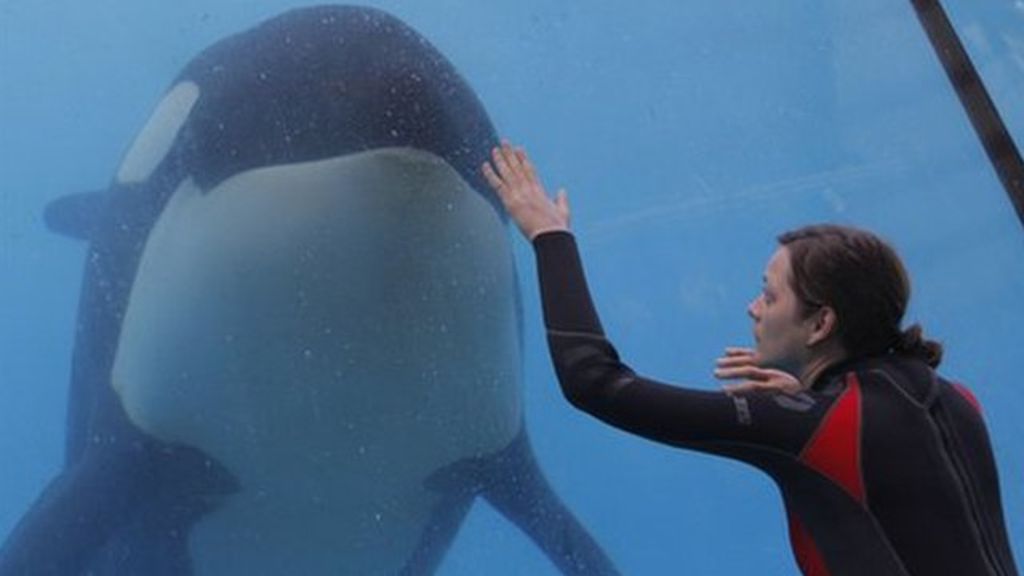
Marion Cotillard and Matthias Schoenaerts fizz with passion, star quality and brute sexuality in this “opposites-attract” romance drama. Cotillard is a Marine Park employee who falls for Schoenaerts low level criminal but obviously the path of love is a jagged one. Full of beautiful imagery and brutal violence, it’s a memorable character drama full of bitterness, redemption and pain.

DHEEPAN (2015)

Dheepan starts as a humane story of survival and the immigrant experience, before crossing over into explosive thriller territory by the end. Further, Audiard casts his leads with unknown actors and wrings every ounce of feeling from the sympathetic characters. As the Sri Lankan Tamil, Dheepan, and his “wife”, struggle with life on a Paris council estate, what may seem small in scale is in fact emotionally very epic.

THE NETFLIX MEMORANDUM – INCLUDING REVIEWS OF: AFTERLIFE, THE SINNER (S2), RUSSIAN DOLL, DAREDEVIL (s3) ETC.

THE NETFLIX MEMORANDUM – INCLUDING REVIEWS OF: AFTERLIFE, THE DIRT, RUSSIAN DOLL, DAREDEVIL ETC.

For some insane reason I have given up alcohol for the year and the weight of reality and time burdens my everyday existence. First world problems abide. Anyway, while my liver breathes a huge sigh of relief, my mind still desires stimulus. Thus, I have, in my constant sobriety, had even more time to stream and watch even more films and television. These bitesize reviews look at the latest stuff I’ve seen on the behemoth streamer Netflix; with the usual marks out of eleven.

**MAY CONTAIN SPOILERS**

Image result for netflix

AFTERLIFE (2019)

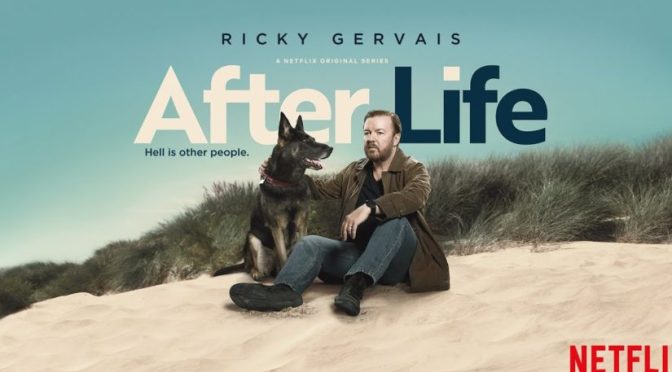
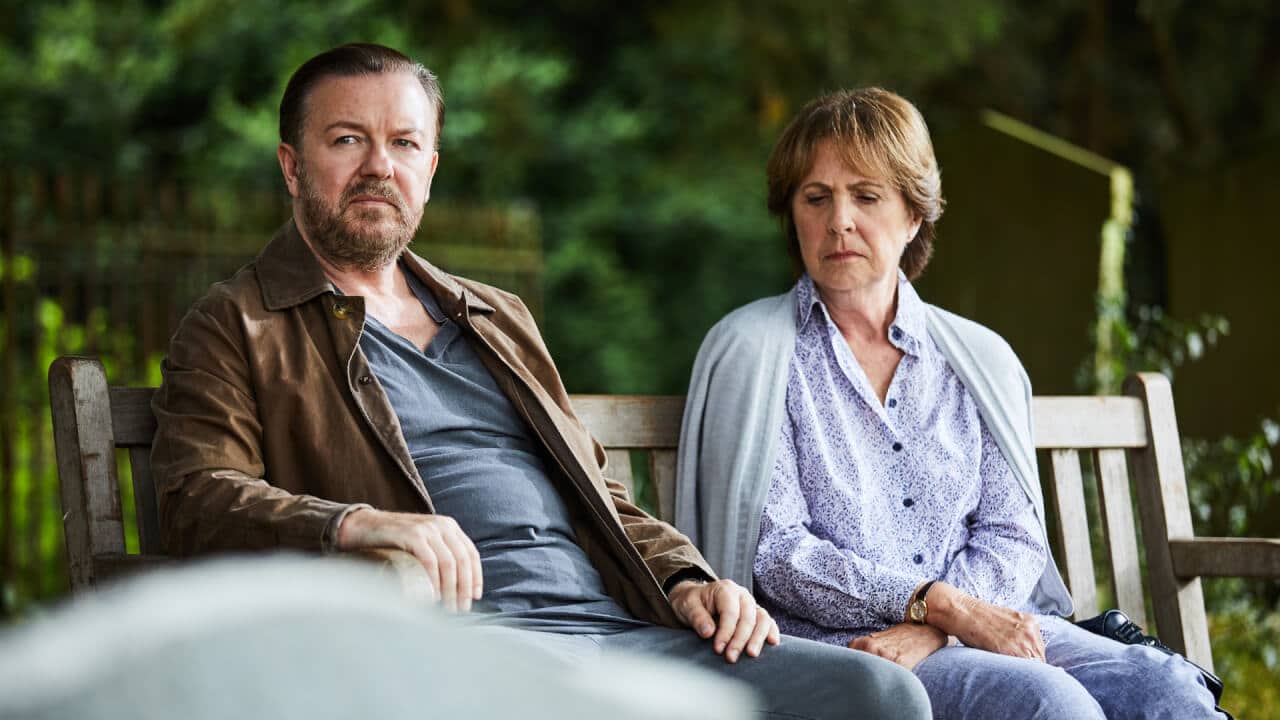
Ricky Gervais’ latest fictional piece is a really enjoyable tragi-comedy. His everyman, Tony, is suffering severe grief following the passing of his wife. Sadly he allows misanthropy and suicidal thoughts to overcome his daily existence in the fictional town of Tambury. The comedy is founded on dark materials but filled with deep humanity as we watch Tony wrestle with his demons.

I especially loved the eccentric characters and jokes concerning Tony’s job as a reporter with the local newspaper. The supporting cast are a joy too and include brilliant comedians like: David Earl, Kerry Godliman, Joe Wilkinson, Tom Basden and Diane Morgan. The ensemble cast and fine writing combine to create a simple, funny and emotional journey through one’s man’s fight with depression and grief. (Mark: 9 out of 11)

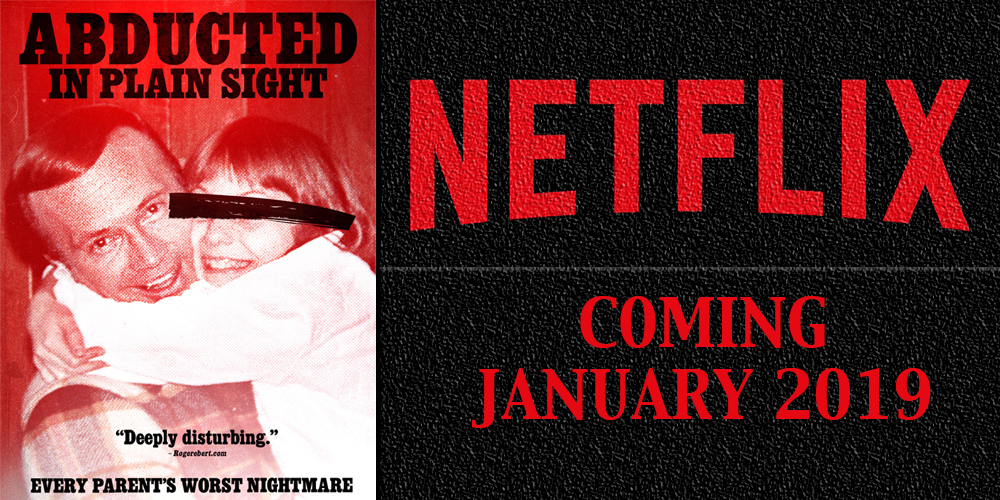
ABDUCTED IN PLAIN SIGHT (2019)

I keep telling myself not to watch such true crime documentaries as they make me feel really sad about the state of human behaviour. This story from the United States was in documentary film form so I got pulled back in by not having to sit through ten episodes of horror. Also, I’d heard it was a pretty incredible story too so my interest was piqued by that.

Safe to say this grim tale of grooming, paedophilia and abduction that one family suffered at the hands of a human monster in the 1970s, is something you wish you could un-see. As a documentary film it is very well made but it does make you lament the gullibility of some people and sickness of others. (Mark: 6 out of 11)

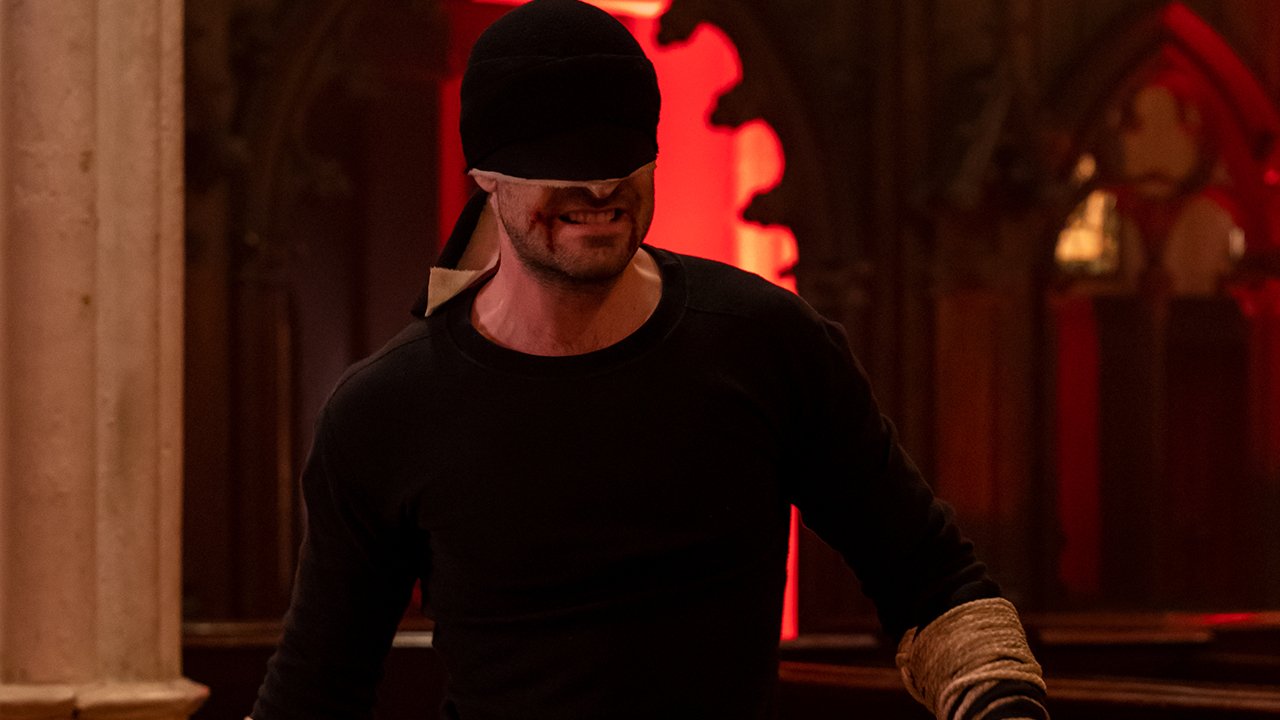
DAREDEVIL (2018) – SEASON 3

I’d say Matt Murdoch’s Daredevil is my favourite of the Marvel/Netflix streamed offerings. Charlie Cox is a fine actor and the drama, fighting and villainous rendition of Wilson Fisk by Vincent D’Onofrio, make it essential viewing. While it takes a huge gulp to believe that a blind guy could be that great at fighting criminals with sight, once you buy into that premise the show offers a lot of fun.

While not scaling the heights of Season 1, and lacking the brutal Punisher (John Bernthal) side-plot of Season 2, this latest Season 3 finds Murdoch up against Fisk again and a new psychopath in rogue FBI agent, Ben Poindexter. Like other Marvel adaptations on Netflix it’s still five episodes too long and bogged down with plodding angst and lengthy dialogue scenes, so doesn’t quite hit the bulls-eye throughout. Nonetheless, it’s still compelling drama and the hand-to-hand fight scenes are an absolute sensation. (Mark: 8 out of 11)

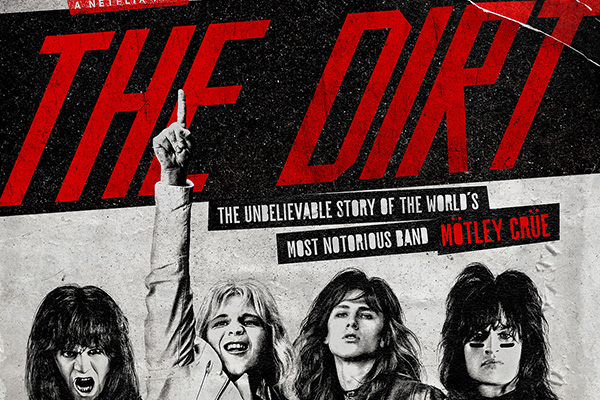
THE DIRT (2019)

Crazed rock stars take drugs, smash up hotel rooms, screw groupies and almost die due to their excess is the unsurprising narrative ups and downs of this Motley Crue biopic. It’s not a bad watch but is essentially like a poorer version of This is Spinal Tap, without the incredible gag-rate. The film fleshes out the caricature members of the band showing their human side; Douglas Booth and Iwan Rheon bringing depth to their paper-thin roles. Moreover, while the era and stadium shows are really well emulated the direction lacks alot of imagination.

I mean, there was an intense film about addiction and human excess in here, and while we do get some moving scenes, notably with singer Vince Neil’s life struggles and Nikki Sixx’s heroin dependancy; ultimately the film did not dig deep enough into their characters. Still, fans of the band and their energetic rock music will love it no doubt. (Mark: 6 out of 11)

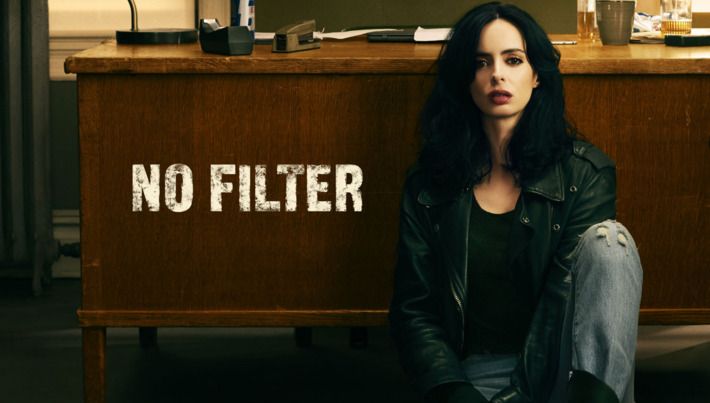
JESSICA JONES (2018) – SEASON 2

Kristen Ritter is back as Marvel’s hard-drinking, misanthropic and super-powered private investigator; and she remains very pissed off. Season 1 of Jessica Jones was absolutely brilliant due to David Tennant’s incredible villain, Kilgrave, and Jones’ character arc reflecting the damaging nature of controlling relationships.

Season 2, alas, is a plodding let-down full of filler episodes and weak sub-plots which quite frankly bored me. While Ritter holds the season together, the investigation into her past gets dragged down by soap operatics and a severe lack of pace and action. Mark: 6 out of 11

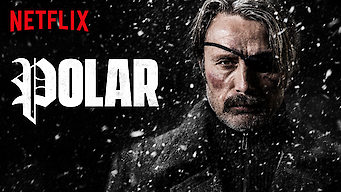
POLAR (2019)

Mads Mikkelsen is one of my favourite actors and he is on good form as a crack hit-man daubed ‘The Black Kaiser’. There’s a decent B-movie in here somewhere but the attention-deficient and showy direction detract from a potentially interesting story of regret and redemption. Moreover, while the action scenes are deftly realised the stupid characterisation, exploitative sex scenes and amoral violence drag the film into the unwatchable territory.

The least said about Matt Lucas’ performance as the amoral ‘Mr Big’ the better; here a usually excellent comic actor is given appalling direction that, like most of the film, lacks subtlety, tone and emotion. (Mark: 3 out of 11)

RUSSIAN DOLL (2019)

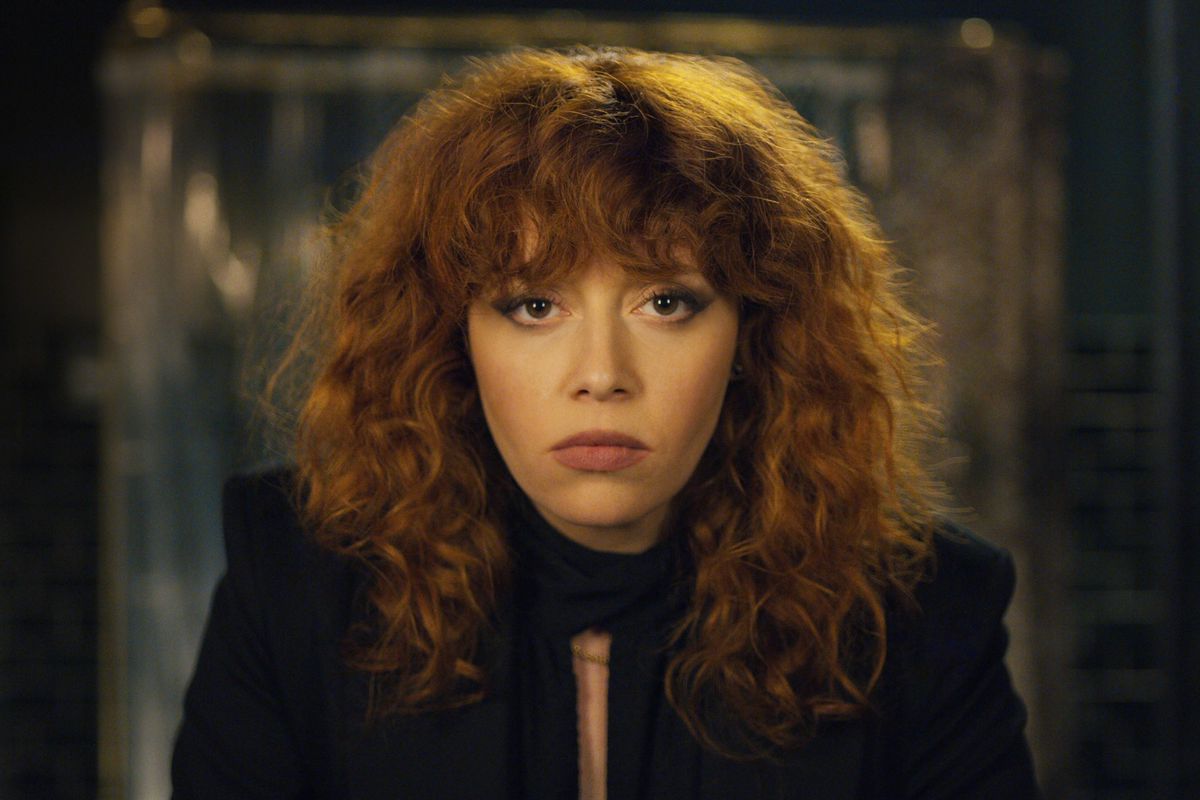
Another Groundhog Day copy gets a run out with Natasha Lyonne’s sassy computer programmer finding herself living out the same day over and over with various insane diversions along the way. It starts off really interestingly with lots of crazy deaths, character revelations and existential suffering. However, it soon runs out of steam, adding up to eight dramatically paper-thin episodes, more style than content.

Lyonne, is a fine actor who I like very much, delivers every line like New York comedian Andrew Dice Clay and this grated on me in the end as I felt I was watching a stand-up performance rather than a fully-rounded character searching for the meaning of life. (Mark: 6.5 out of 11)

THE SINNER (2018) – SEASON 2

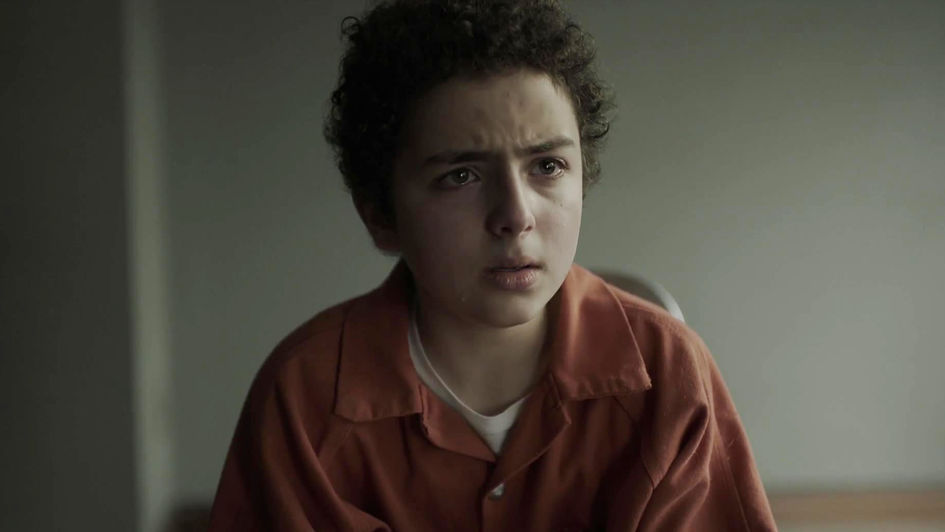
After the surprisingly excellent Season 1 of The Sinner, I was really looking forward to the second season. The cop show format is twisted in a really interesting way as we see the accused commit the crime, yet find the cop, in this case the impressive Bill Pullman, empathising with the criminal. Pullman’s Harry Ambrose is a brilliant creation. He’s not flashy or loquacious but a determined and dogged cop with his own personal demons.

Drawn to the troubled or underdog Ambrose digs for justice and redemption. In this story he sees his own past in the crimes of a 13 year-old boy accused of murder and is determined to find answers. Here the boy in question is given a compelling performance by Elisha Henig; and his characters’ commune existence and family history had me gripped throughout. A supporting cast including Carrie Coon and Tracy Letts also add real quality to this stirring psychological drama with themes relating to: physical and psychological abuse; religious cults; family tragedy; mental illness; and the darkness of the human spirit. (Mark: 9 out of 11)

US (2019) – CINEMA REVIEW

US (2019) – CINEMA REVIEW

Directed by: Jordan Peele

Produced by: Jason Blum, Ian Cooper, Sean McKittrick, Jordan Peele

Written by: Jordan Peele

Starring: Lupita Nyong’o, Winston Duke, Elisabeth Moss, Tim Heidecker, Shahadi Wright Joseph, Evan Alex etc.

Music: Michael Abels

Cinematography: Mike Gioulakis

**MAY CONTAIN SPOILERS**

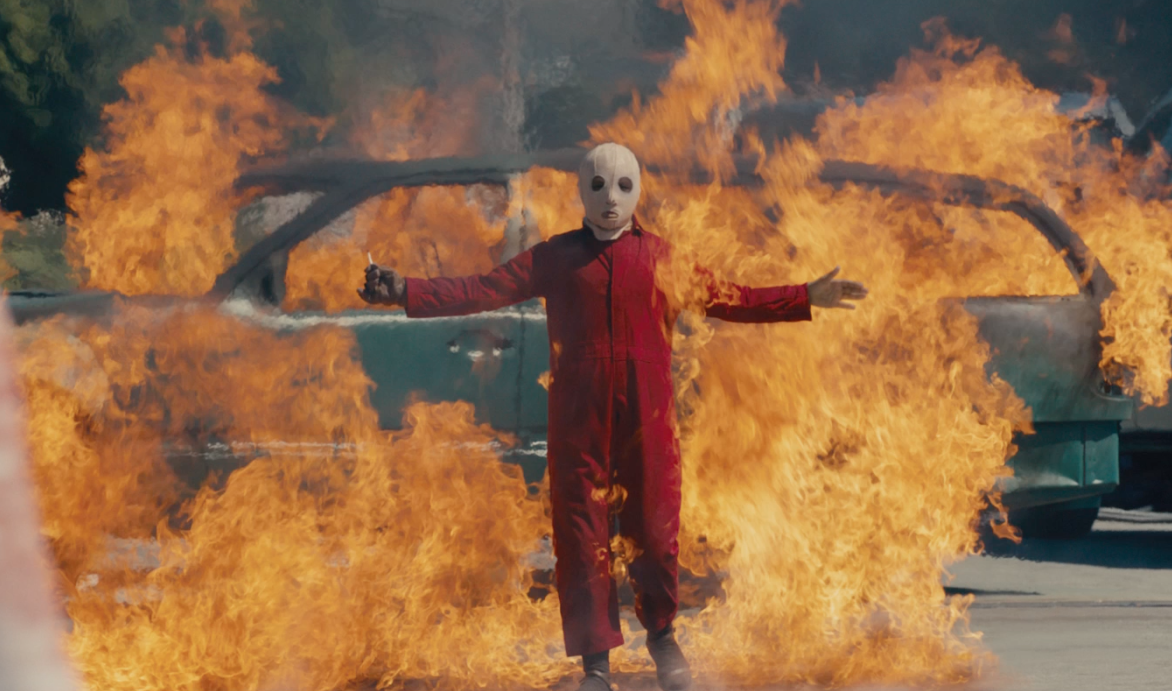
Orson Welles is reportedly quoted as saying, “A movie in production is the greatest train set a boy could ever have.” Thus, Jordan Peele proves this point with an unstoppable cinematic train ride in Us (2019); that while threatening to career off the rails on occasions, proves to be a thrilling work of horror-meets-social-satire entertainment.

The film centres on an everyday normal family of four — the Wilsons: Adelaide (Lupita Nyong’o), Gabe (Winston Duke), and their two children — as they visit their summer home by the beach. Haunted by a scary incident in a hall of mirrors when a child, Adelaide is afraid to return to the beach where it occurred, until her husband’s goofy enthusiasm wins her over.

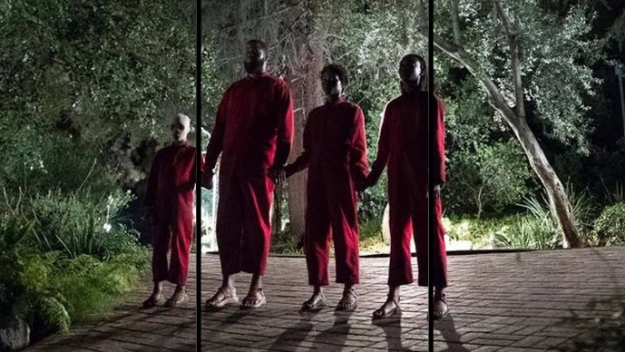
Events begin to turn and twist askew when their son, Jason, seems to go missing for a while. Even though he returns, paranoia and fear sneaks into Adelaide’s psyche. Things become even stranger when a mysterious family of four appear in the Wilsons’ drive in the dead of night. This is when the true face of horror surfaces and a pulsating home invasion and prolonged chase sequence ensues.

Peele has clearly seen a lot of horror films. As such the early scenes build tension perfectly with: stormy weather; a strange drifter with biblical sign haunting the boardwalk; creepy hall of mirrors; the choral soundtrack reminiscent of Rosemary’s Baby (1968); the son, Jason wearing a Jaws (1975) movie t-shirt; the flock of seagulls on the beach echoing Hitchcock’s The Birds (1963); and so it goes.

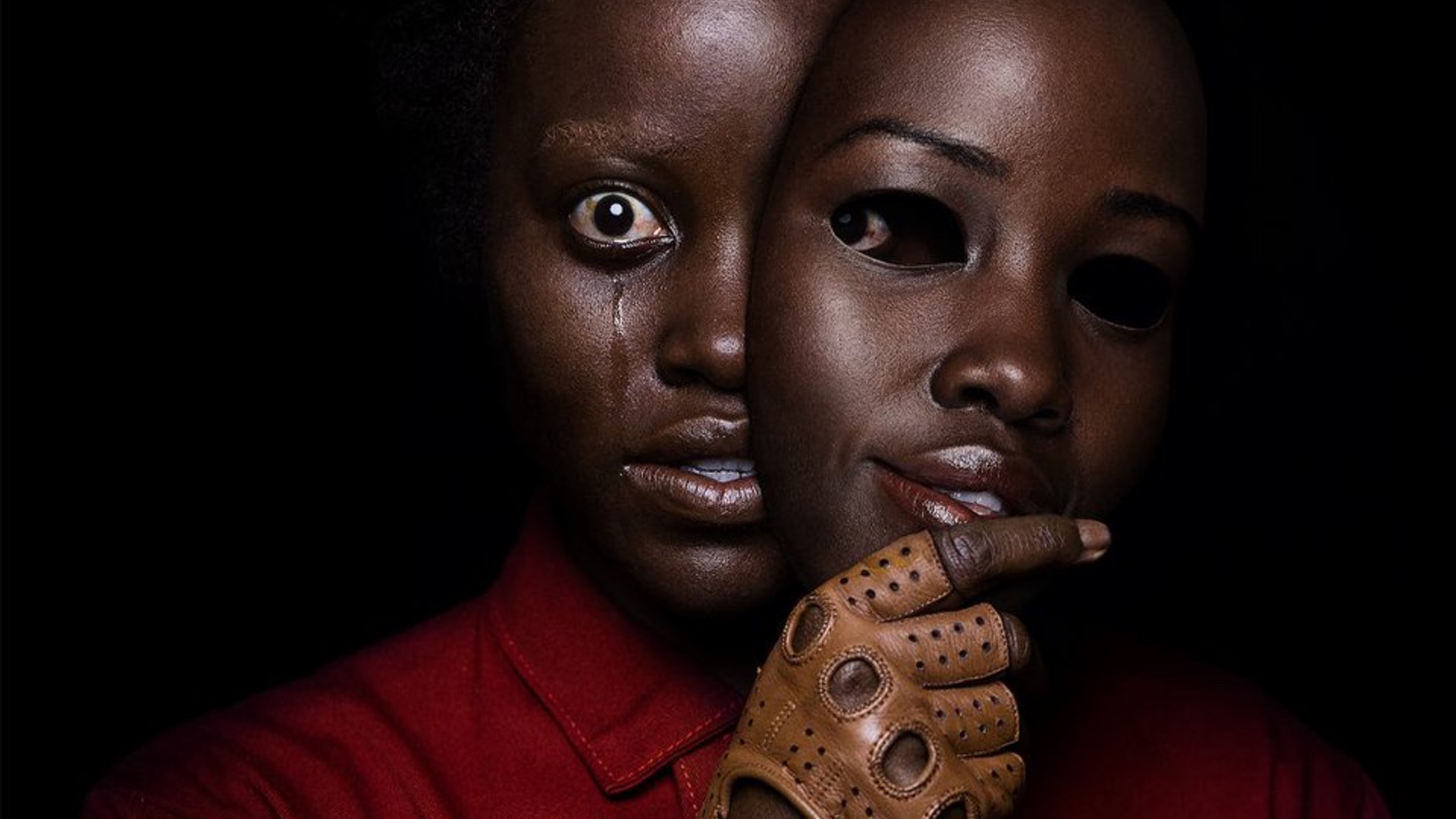
Such horror tropes build a huge wall of tension so effectively it’s almost a relief when released during the big doppelganger reveal. Subsequently, the blood-letting ensues in some meaty fights and exchanges involving weapons, such as: baseball bats, metal pokers, ornaments and golf clubs. The doppelgangers themselves are clearly a reflection of the self; twisted visions of humanity turning against the characters, as they literally become their own worst enemies.

The cast are expertly marshalled by Peele, as he gets doubly great performances from all the actors. The logistics of shooting doubles must have been tough, especially so many at a time. The featured cast are very good, notably Winston Duke as Gabe Wilson. He offers some light, comedic and physical humour amidst the gore. Meanwhile, Lupita Nyong’o steals the show in the dominant twin roles of Adelaide and the nefarious Red.

It’s Adelaide’s personal journey of double/split identity which provides the spine of the film. As she fights to save her family she must also literally battle the demon inside and outside herself. This thematic is the most powerful of the film for me, as Nyong’o’s acting is full of emotional resonance.

Perhaps, not as successful, when compared to Get Out, is the attempt to marry the personal conflict to the socio-political landscape. While Peele’s first film was an overt satire of slavery and white America oppression and exploitation, Us’ targets are intellectually more ambiguous and open to interpretation. I mean take your pick from: class, capitalism, consumerism, race, de-politicization, narcissism, over-population, split personalities, government conspiracies; and over-arching fear of ‘the other’.

These and many more themes are on Peele’s radar, as is his overall critique of the United States (U.S. = US – geddit!). That they don’t quite gel coherently is not a criticism but a positive indictment of his ambition. Conversely, while I felt the underlying power of Peele’s call-to-arms and desire for human unity in Us, one could argue the fire, smoke and mirrors of these ideas subtract from the power of the families’ personal struggle. Moreover, what is the solution to the government copying us or burying our doubles underground? Is it to kill the others and hold hands in unity? Who knows? What I can say is such naive idealism in horror has never been so entertaining.

After the success of the slavery-soul-swapping and genre bending thriller, Get Out, Jordan Peele has tasked himself with trying to top that fine movie. Well, if Get Out was the starter, Us is the main meal. In fact, one could argue the film is so full of ideas that it threatens to fail due to sensory overload. However, Peele is such a multi-talented storyteller he skilfully delivers, wholly thanks to great writing, masterful film production, an exceptional soundtrack and an incredible cast.

Mark: 9.5 out of 11

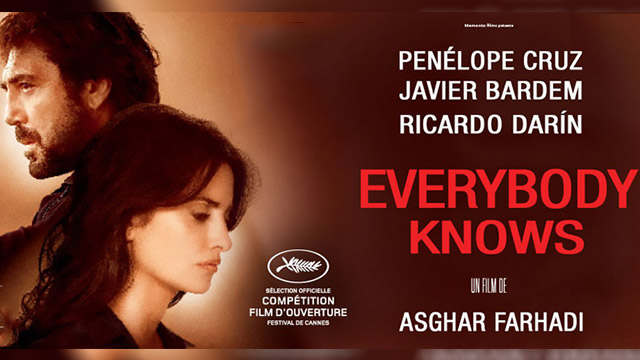
EVERYBODY KNOWS (2018) – CINEMA REVIEW

EVERYBODY KNOWS (2018) – CINEMA REVIEW

Directed by: Asghar Farhadi

Produced by: Alexandre Mallet-Guy, Alvaro Longoria

Written by: Asghar Farhadi

Starring: Javier Bardem, Penelope Cruz, Ricardo Darin, Barbara Lennie etc.

Cinematography: Jose Luis Alcaine

**MAY CONTAIN SPOILERS**

Asghar Farhadi is one of those filmmakers whose work is always of the highest quality. For some reason I actually missed seeing his prior film The Salesman (2016), so definitely need to catch up with that. However, The Past (2013) and A Separation (2011) were both compelling human dramas. A Separation, in fact, was one of the best films I have seen in the last decade. It took everyday scenarios involving as divorce and class conflict and spun a heartfelt, intense and intelligent narrative which was emotionally very powerful. While Farhadi was born in Iran and his early works are based there, his oeuvre transcends geography; projecting visions of humanity which stay with you way after the film has ended.

Farhadi’s eighth feature as a director is arguably his most accessible and while not reaching the dramatic heights of his previous films, remains a very solid personal drama. Everybody Knows concerns a large family unit converging for a wedding celebration in Spain. The setting is a small town set amidst beautiful countryside just outside Madrid. It’s the kind of place where everybody knows each others’ business and the community, while seemingly convivial on the outside, carries class, family and business conflicts under the surface.

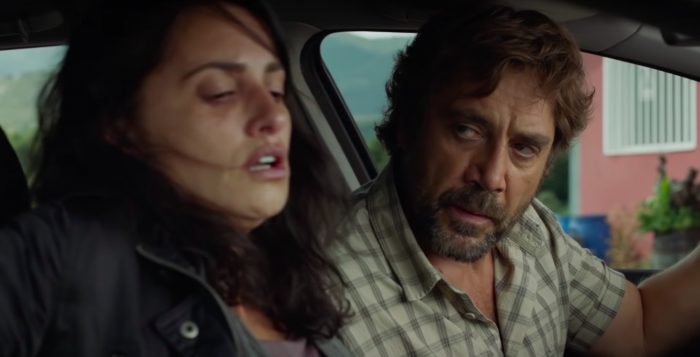
The film begins with Laura driving her children, notably teenage Irene, back to the town where she was born. The wedding celebrations ensue until terror strikes and Irene is stolen in the night by unknown assailants. Forbidden from contacting the police by the kidnappers, Laura, her family and former childhood boyfriend, Paco (Javier Bardem), desperately seek to find Irene before tragedy occurs. It isn’t long before history converges on the drama and past events involving stolen land and romantic affairs threaten to destabilise the whole town.

With Penelope Cruz and Javier Bardem cast as your leading protagonists, and the brilliant Ricardo Darin in support, you’re always guaranteed an enthralling screen experience. Nonetheless, what is so impressive in the performances and direction is they feel like real people with proper emotions, not simply starry versions of themselves emulating reality. Moreover, Farhadi concentrates on the human aspects of the story rather than the crime, as the characters, relationships and town itself begin to unravel. Further, while the film may lack his usual socio-political subtext, Farhadi really pulls you into the drama, as secrets and revelations are unearthed throughout. Overall, this is a consistently watchable piece of cinema that keeps up Farhadi’s impressive hit-rate, while perhaps feeling more familiar and generic compared to the other films of his I have seen.

Mark: 8 out of 11

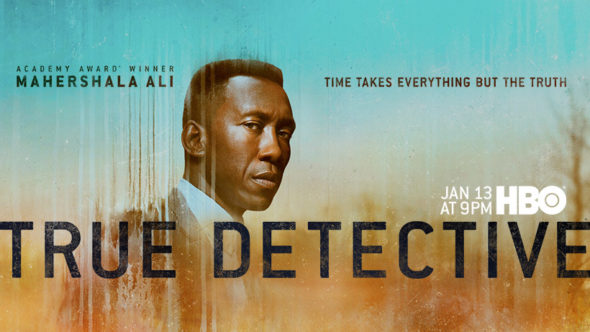
TRUE DETECTIVE (2019) – SEASON 3 – HBO TV REVIEW

TRUE DETECTIVE (2019) – SEASON 3 – HBO TV REVIEW

Created by: Nic Pizzolatto

Writers: Nic Pizzolatto, David Milch, Graham Gordy

Directors: Jeremy Saulnier, Daniel Sackheim, Nic Pizzolatto

Starring: Mahershala Ali, Carmen Egogo, Stephen Dorff, Scoot McNairy, Ray Fisher etc.

No. of episodes: 8

**MAY CONTAIN SPOILERS**

Time is an unforgiving concept. It marches on and absolutely never stops until we are dust. While young we believe we have more time, but deep down we can see our own death. That fear will either drive us forward positively or send us insane. Old age is perhaps the bitterest turn in time we must suffer. If we live long enough to collect a litany of fine memories, the mind disintegrates them, cruelly disallowing us from recalling such happy moments. There is also regret. If you have a conscience you are likely to suffer regret. Regret of what you have done wrong, not done right and been simply incapable of doing. Lastly, it is said time and tide wait for no man or woman. But it is waiting; waiting for us to die.

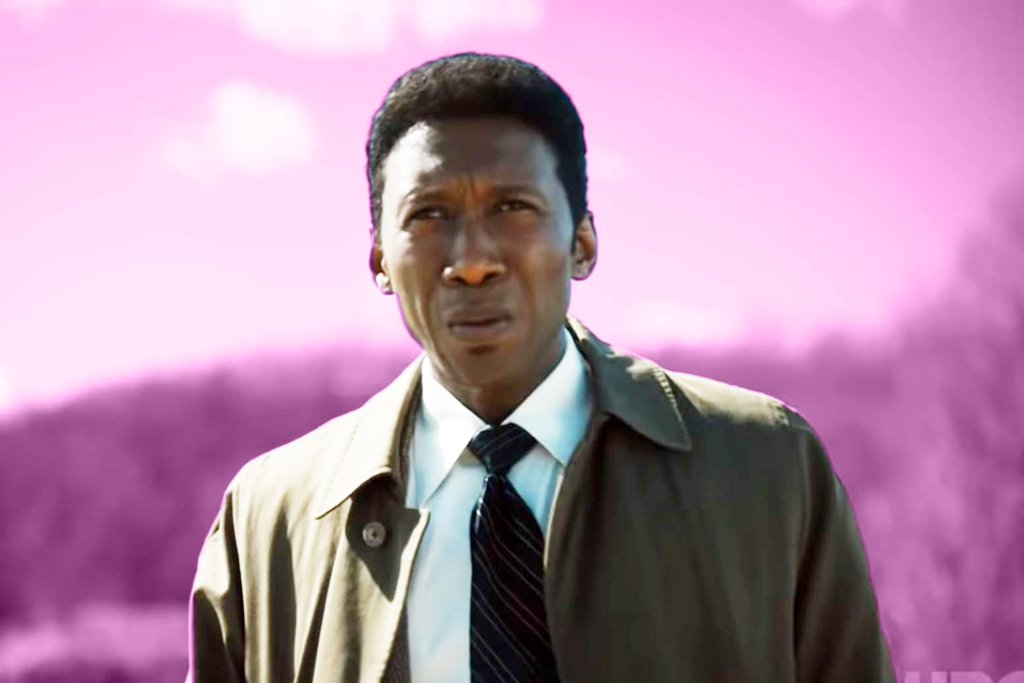
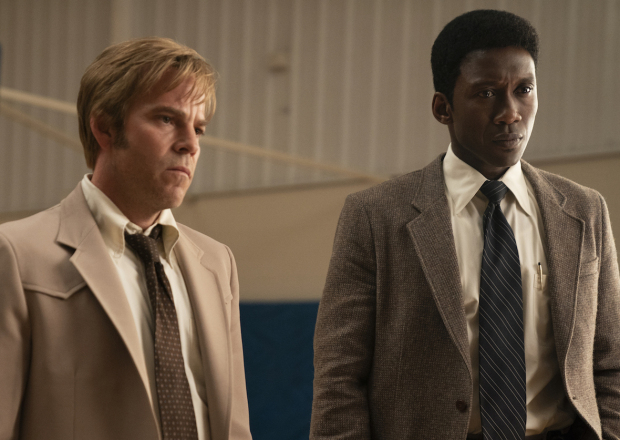
Existential police procedural drama, True Detective, is back for a third season and very good it is too. Starring Mahershala Ali and Stephen Dorff as the, as usual, mismatched cops; it concerns the hunt for two missing children in the Ozarks, Arkansas. Further, the supporting cast include the impressive Carmen Egogo and always compelling Scoot McNairy. Set over eight compelling episodes we criss-cross three separate timelines that centre on the said case. Events unfold circa 1980 (when the crime occurred); circa 1990 (when the investigation is re-opened); and the present with the characters aged and withering from time’s unrelenting march. The complex structure really enhances the genre plot as the intriguing timelines over-lap and bleed into one another, thickening the mystery and heightening suspense.

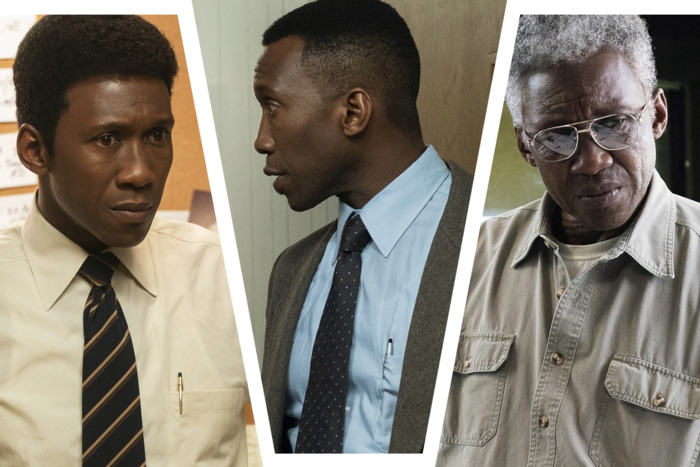
While the criminal case is central to the conventions of the genre, writer Nic Pizzolatto is as much interested in the character development and themes pertaining to: love, time, regret, guilt, aging, memory and death. The character of lead detective, Wayne Hays (Ali) is fascinating. A former U.S. soldier who served in Vietnam, he is a complex soul striving for meaning and trying to do the righteous thing. Consistently, however, he finds his race and social standing a barrier to solving the crime. Through his trio of timelines we feel his sense of loss, love, isolation, anger, happiness and confusion. The confusion especially worsens when his older self is hit by Alzheimer’s. Indeed, it is incredibly heartfelt while he attempts to piece together events from memories past including: the crimes, his actions, violent events, and the romantic moments he had with his wife (Egogo.)

Once again, Mahershala Ali proves he is pound-for-pound one of the best actors around. He gives an incredibly nuanced and intelligent performance as Hays. To inhabit the same character in three different guises takes a particular skillset and the subtle differences in performance are a joy to behold. He is assisted by uniformly excellent direction and production design. Indeed, some of the editing is sublime as the images switch between the young Hays and older Hays brilliantly; dissolves, reflections and over-lapping montage effects used imaginatively throughout. Lastly, it’s was also great to see Stephen Dorff too in a prominent role as Hays’ no-nonsense partner, Roland West. Dorff provides ebullient support during the investigation and their friendship is a mainstay of the show.

After the scintillating first season which had Matthew McConaughey and Woody Harrelson burning the plasma off the TV screen with their intense performances, the unfocussed second season contained star acting power but a confused narrative. However, Season 3 is a fine return to form and if you love your cop shows: dark, existential, meditative, violent and intelligent, then this is definitely worth your time.

MOUNTVIEW FILM ACADEMY SHORT FILM RETROSPECTIVE #2 – 2009!

MOUNTVIEW FILM ACADEMY SHORT FILM RETROSPECTIVE #2 – 2009!

Continuing my indulgent posts looking back at some of the writing I did for the Mountview Film Academy years ago.

The year is 2009. Matt Smith was made the new Doctor Who. Cristiano Ronaldo wrote off his new Ferrari. The UK had the worst snowfall for twenty years and Natasha Richardson tragically died in a skiing accident. Swine flu spread across the UK and Michael Jackson passed away too. Alistair Darling was taking a political battering as the Chancellor, while Rage Against the Machine surprisingly hit number one in the pop charts at Christmas.

While these were some of the most read stories of the year, I was doing a lowly-paid temp job in Canary Wharf while following my hollow dream of becoming a paid writer. I took a small step toward that by being shuttled into the Mountview Film Academy to provide two short scripts for their students to act in. These are the said films.

THE DAMASCUS ROAD (2009)

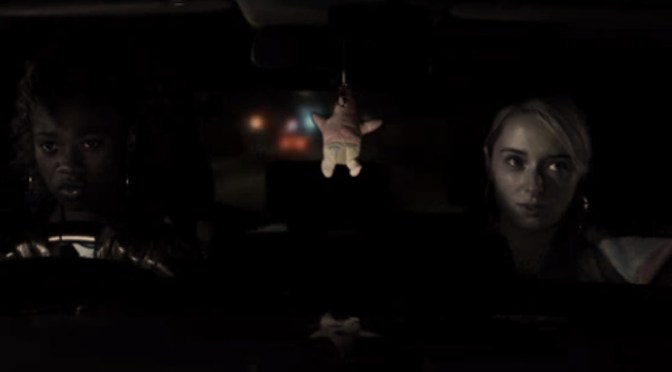
This drama concerns two car thieves out on a job with very different agendas.

Looking back I think this is one of the best scripts I wrote for them. The characters have very different personalities and clash both dramatically and comedically. The pay-off at the end is also very satisfying and the dialogue pings along nicely. It was written with two male leads in mind but switched to female protagonists and overall it works due to excellent acting and direction.

THE CUT (2009)

This short dramatic scene concerns a relationship breakdown and love triangle during a power cut.

Looking back this is one of the worst scripts I wrote for Mountview. The idea of a lover attempting to creep out during a power-cut when the husband returns is a solid premise. However, the writing is weak and ponderous throughout. In the end the scene fizzles out to nothing despite the best work of the actors and director.