Tag Archives: Rob Hardy

Cinema Review: Clayface (2026) | Beauty is skin deep – revenge goes much deeper in this entertainingly gruesome DC anti-hero movie!

Cinema Review: Clayface (2026)

Directed by James Watkins

Screenplay by Mike Flanagan and Hossein Amini

Story by Mike Flanagan – Based on Characters from DC

Produced by Matt Reeves, Lynn Harris, James Gunn & Peter Safran

Main cast: Tom Rhys Harries, Naomi Ackie, David Dencik, Max Minghella, Eddie Marsan, Rob Brydon, etc.

Cinematography by Rob Hardy
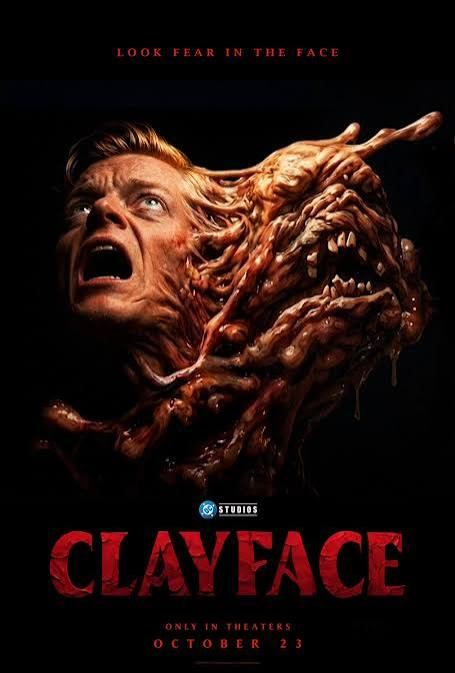


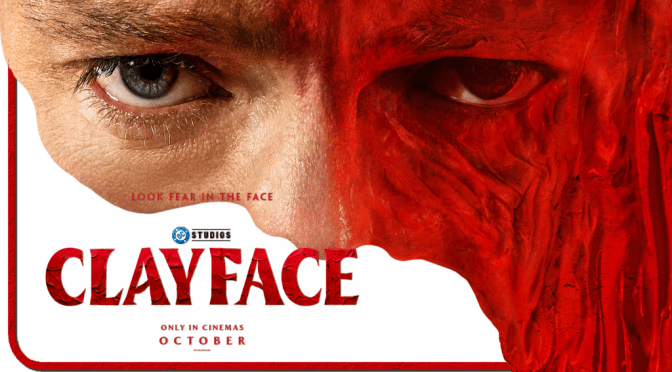
Based on the DC Comics character, Clayface (2026) is a surprisingly effective slice of body horror that successfully channels the spirit of classic films such as Frankenstein (1931), The Phantom of the Opera (1925) and Eyes Without a Face (1960), alongside more contemporary offerings like Darkman (1990), Upgrade (2018) and The Substance (2024).

The story follows an up-and-coming actor Matt Hagen (Tom Rhys Harries) whose promising career takes a horrific turn after he sleeps with the wrong woman and ends up brutally disfigured at the hands of a generic gangster (David Dencik). Enter Naomi Ackie as a scientist who offers him a second chance, using AI-driven nanotechnology to reconstruct his face. Unfortunately, as with all good mad-scientist experiments, things don’t quite go according to FDA regulations, and the results are predictably gruesome.

What makes Clayface (2026) work is that it takes time to establish its characters before plunging them into what is, essentially, a fairly generic revenge story. The narrative doesn’t exactly break new ground, but the character development gives the ensuing carnage some emotional weight. There are some wonderfully grotesque moments of body horror, effective kills, impressive gore and some decent performances that help elevate the material beyond your average comic-book adaptation.



Further, the thematic exploration of the pursuit of narcissistic perfection inherently destabilizing the character of Matt Hagen, is extremely prescient. Given society’s ongoing obsession with surgical and pharmaceutical “enhancements” being employed, his character arc provides some mild thought provocation. The weight-loss drugs and cosmetic surgery photos of skeletal and puffy-faced celebrities that adorn social media today make them look more like the monstrous painting in the attic of Dorian Gray, rather than being the peak of attraction.

My main criticism of Clayface (2026) is the rather jarring use of a 1970s/80s soundtrack, particularly the disco dancing inexplicably interspersed with the climactic fight sequences. It’s a strange tonal choice that occasionally undermines the horror and tension, as though the filmmakers couldn’t decide whether they were making a tragic monster movie or a tongue-in-cheek superhero romp. Basically, James Watkins, a very capable director, could not override the influence of James Gunn’s obsession with pop-culture-trailer-bait nonsense.

Nevertheless, Clayface (2026) is an entertaining, suitably nasty and surprisingly character-driven addition to the DC universe. Harries and Ackie give excellent performances amidst the CGI and practical effects, also sharing great on-screen chemistry. Ultimately, the film wears its literary, comic-book and cinematic influences proudly, delivering some terrific gore and, refreshingly, remembers that even monsters need a little humanity. And, notwithstanding the disco dancing, I actually really enjoyed a DC comic book adaptation for the first time in quite a while.

Mark: 8 out of 11


CINEMA REVIEW: CIVIL WAR (2024)

CINEMA REVIEW: CIVIL WAR (2024)

Directed by Alex Garland

Written by Alex Garland

Produced by Andrew Macdonald, Allon Reich, Gregory Goodman

Main Cast: Kirsten Dunst, Wagner Moura, Cailee Spaeny, Stephen McKinley Henderson, Sonoya Mizuno, Nick Offerman, etc.

Cinematography by Rob Hardy

*** MAY CONTAIN SPOILERS ***


Alex Garland has an impressive literary, cinema and televisual curriculum vitae. He gained acclaim as the writer of the novel, The Beach, before moving onto screenwriting duties with fine films such as: 28 Days Later (2002), Sunshine (2007), Never Let Me Go (2010), and under-rated Dredd (2012). He made his directorial debut with Ex Machina (2014), which earned him an Academy Award nomination for Best Original Screenplay. His second film, Annihilation (2018), garnered further acclaim, so much so, FX bypassed a pilot and went straight to series for his science fiction TV narrative, Devs (2020).

While I am a massive fan of Garland’s work, I wasn’t too enamoured of Annihilation (2018). I found it brilliantly made with some fantastic concepts and incredible moments, yet overall it was too slowly paced. With eight superlative episodes of Devs (2020), Garland delivered a story which really connected with me by merging a compelling technological espionage plot to an intelligent exploration of philosophical thought and human behaviour. Where Devs (2020) presciently examined the impact of artificial intelligence, Garland’s new political thriller, Civil War (2024), prophetically imagines an apocalyptic America in the throes of war between combined California and Texas state rebel forces and the current President’s (Nick Offerman) retreating army.

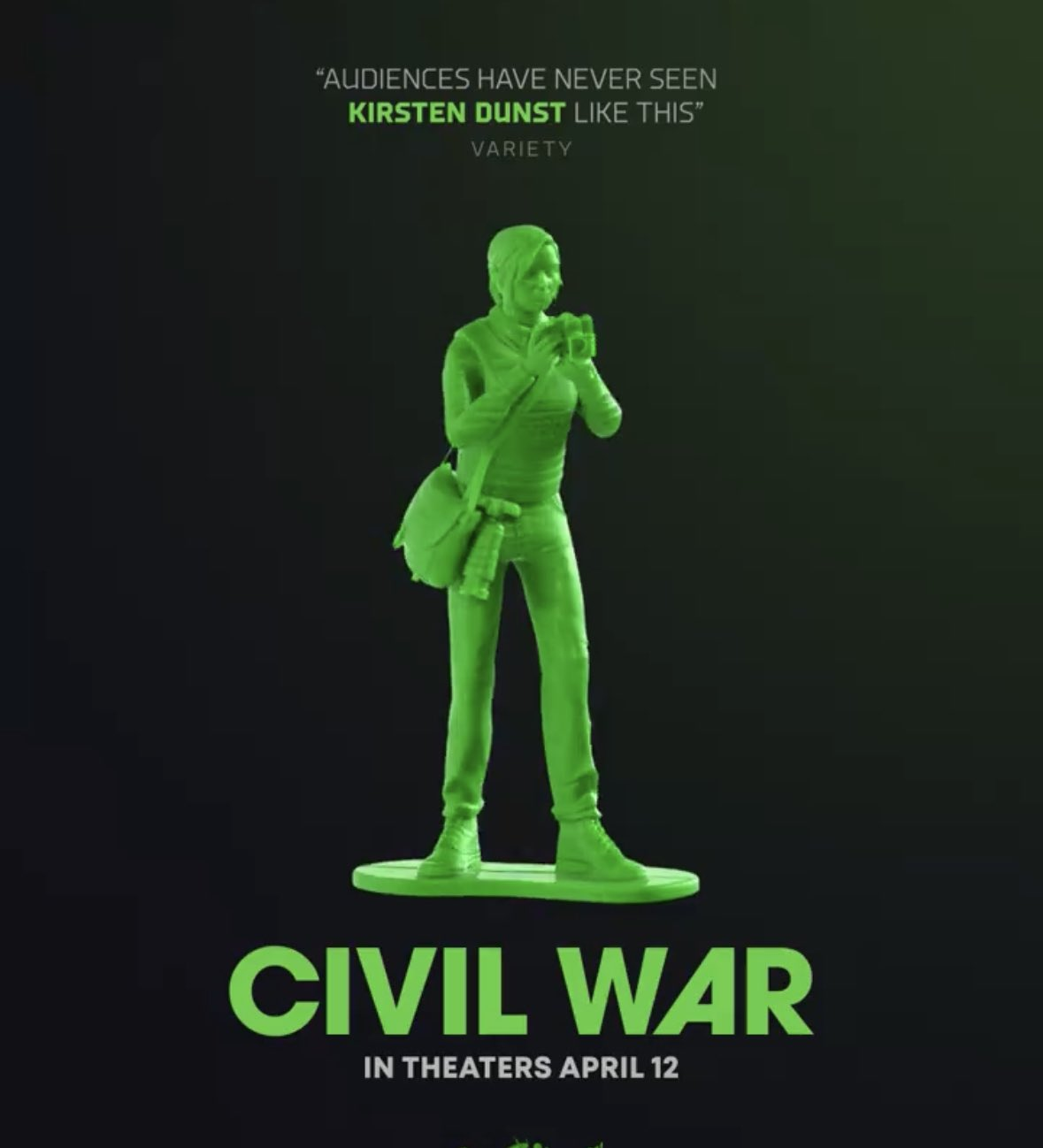
With the ‘January 6 United States Capitol attack’ in mind, Garland opens up a “what if” narrative where the whole of America is conflicted and consuming itself from within. At the heart of the violence is the war photographer, represented by Lee Smith (Kirsten Dunst) and Reuters journalist, Joel (Wagner Moura). Their journey to Washington to photograph the President reveals confusion, destruction and further bloodshed. Generically speaking, a road movie meets dystopian thriller, Civil War (2024) contains thought-provoking themes and incredible cinematography, but with shaky writing in places.


Films about war photographers and/or journalists can be problematic for me. Such characters lend themselves to heroic and the anti-heroic. The writing has to be right because I can lose empathy between such crusading journos and the narcissistic adrenaline junkies looking to deflect their own loathing and self-destructive tendencies. Civil War (2024) struggled to get me onside with the lead characters, although Dunst’s characterisation of Lee Smith is superb. However, her mentor-apprentice relationship with Cailee Spaeny, Jessie Cullen, was under-developed. Spaeny’s “innocent” being used more as a suspense device as opposed to learning the true horrors of humanity and war. Perhaps Garland intended for her to be a sociopath without depth just looking for blood? She finds it!

Moreover, Jessie’s journey from a political perspective was weak as there was no real sense of development in her character. That’s where the decision not to overtly take political sides causes a lack of sociological depth. War films such as Salvador (1986) and The Killing Fields (1984) are more successful as Civil War (2024) loses political impact by not choosing precise sides. But I guess whether they are Democratic or Republican is the whole point. Garland is saying that political parties are all as bad as each other, with human beings their own worst enemy. Politics, like football, gender, sexuality, and religion, are propellants for humans to fight each other.

For a film about photographers, the images on show are incredible and Rob Hardy’s work is genius. Fire, blood and war have never looked so brutal and aesthetically impressive. As well as Dunst, Wagner Moura and Stephen McKinlay Henderson are terrific in their respective roles. Further, there are some nail-biting and suspenseful scenes, notably one involving a film-stealing performance from Jesse Plemons. However, many of the characters’ decisions were weakly written for me. This is surprising given Garland’s prodigious literary and screenwriting talent. Civil War (2024), however, remains another stunning addition to his oeuvre and for all my perceived script weaknesses, the hell of war has never been so artistic and artful.

Mark: 8 out of 11