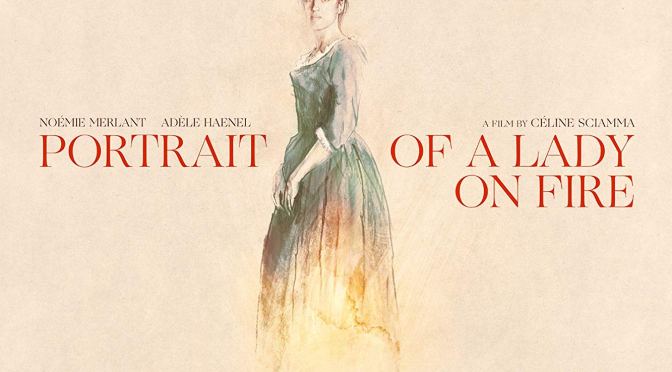
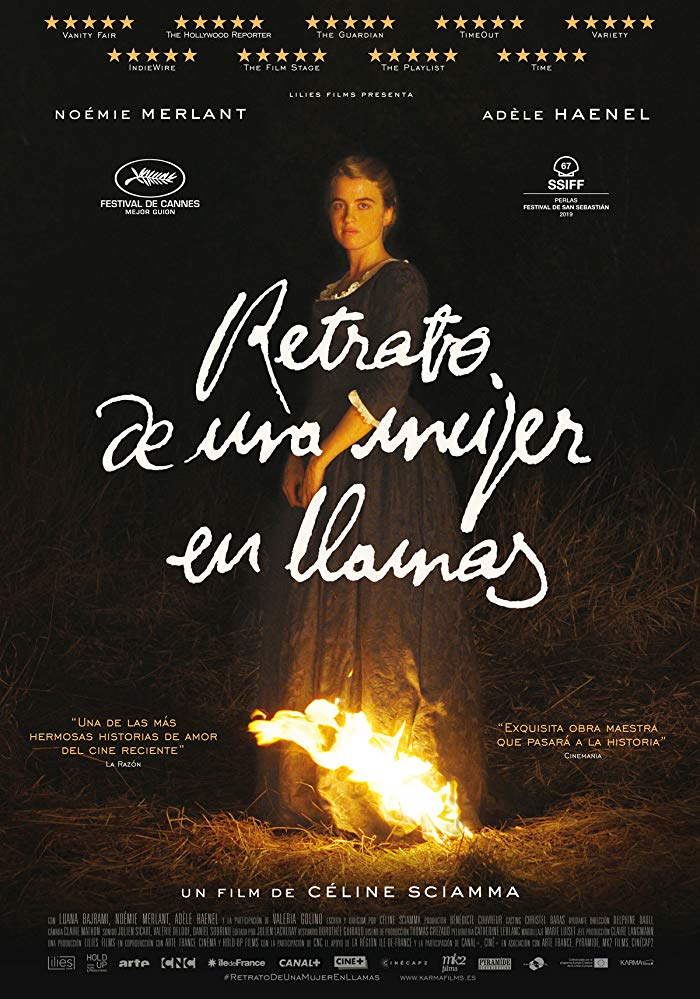
I haven’t seen any of Celine Sciamma’s previous films, but based on the romantic drama, Portrait of a Lady on Fire (2019), she is a filmmaker of formidable power and vision. I believe this is her fourth feature film directorial release and it is as sumptuous, moving, exquisitely shot and constructed a love story as you are going to witness. Moreover, it is proof that the art of screenwriting, compared to many by-the-numbers Hollywood film productions, is NOT dead.
The story is very simple. At the end of the 18th century, a young painter, Marianne, (Noemie Merlant) is commissioned to create a portrait of a young woman, Heloise (Adele Haenel). Heloise is, as is the tradition of the time, required by her mother (Valeria Golino), to marry a Milanese nobleman. He needs to see the portrait in advance in order to agree to the wedding. The only catch is, the insular Heloise, does not want to be painted for all manner of understandable reasons. What this establishes is two very intriguing characters, both with different emotions and desires.
Following the beautifully rendered story foundation, what follows is a magnetic series of scenes which subtly push these two empathetic characters together. Marianne is the artist who, at first keeps her distance, spying and analysing Heloise. Heloise is cool, sensitive and a prisoner on the Brittany island, trapped by the waves of the sea and her mother’s insistence on a society wedding. Over the space of a few days the walking companions become drawn to each other both artistically and emotionally. But, it’s no sordid desire for lust, rather a respectful and honest joining in romance. We, as the audience, literally see love grow before us thanks to some incredible acting from the leads.
Often the cinema critics will heap praise on a film and I will wonder what they have been watching. However, in regard to both Parasite (2019) and Portrait of a Lady on Fire (2019), the plaudits are so well deserved. Both are brilliantly written and shot works of cinema, that in the past may have been consigned to just the arthouse circuit. Further, given the film is about painting, it is unsurprisingly Portrait of a Lady on Fire (2019) is framed, lit and composed with an eye for the artistic. Yet, it isn’t just the look and colour of the film that impresses. Sciamma and her cinematographer, Claire Mathon, also create a series of haunting shots which will be indelibly scorched on my mind.
In terms of the themes, the film is very powerful too. As well the notion of art as a means of representing love, the narrative explores concepts of female equality and solidarity. There is an interesting subplot involving a member of the household staff, which adds to the thematic texture. Furthermore, the performances by all the actresses are superb too as Sciamma directs with such confidence. I also liked that the critique of patriarchal society was implicit rather than didactic. Also subtly realised are the tasteful love scenes, which never feel exploitational. My only minor criticism is that the opening hour could, arguably, have been trimmed slightly. However, what do you leave out of a film as beautifully composed, delicately written and emotionally compelling as Portrait of a Lady on Fire (2019)? I, a mere mortal, am not qualified to say in the face of such mesmerizing cinema.
I started this blog in October 2013 with a review of a low budget sci-fi film called Arrival of Wang (2013). 500 posts later and I am still going. I, like many, don’t make any money out of writing this blog, but I really enjoy it. I have also made connections with other bloggers and film fans all over the world and I find that brilliant too.
I thought it may be interesting to look at the TOP TEN most viewed reviews or articles I have written. So, excluding views for the Home page/Archives clicks, here are the top ten articles with links in the heading.
HBO’s adaptation of George R. R. Martin is one of the greatest television narratives ever. Full of action, intrigue, treachery, quests, sex and murder, it also had some great dialogue. Here I listed six great speeches from the show.
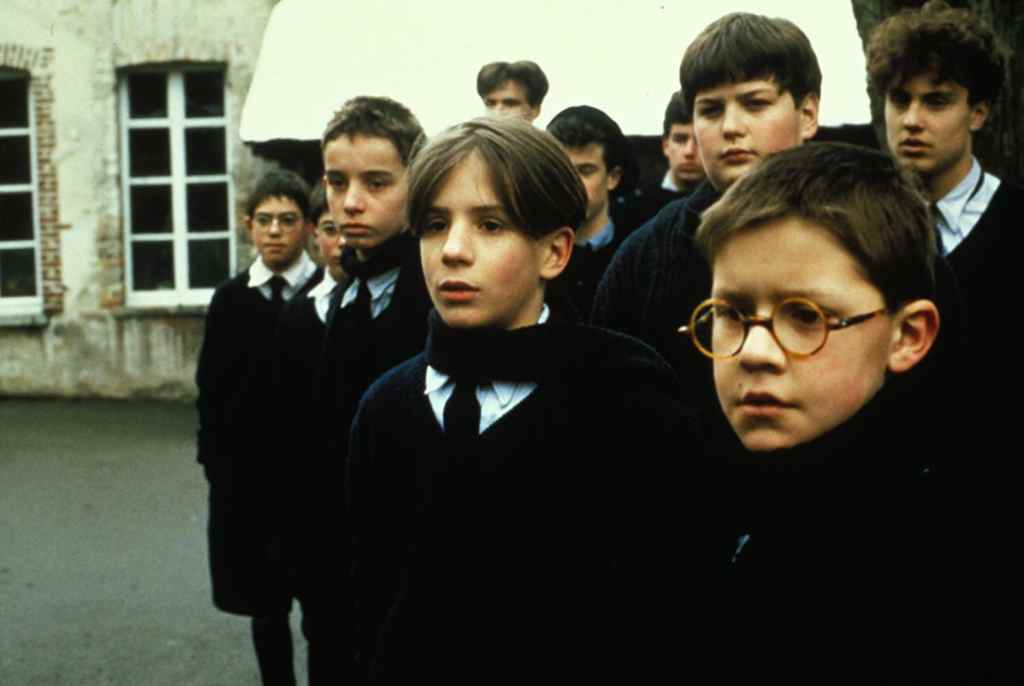
Another classic European film review gets decent numbers. This is an academic essay more than a review, but a worthy analysis of Louis Malle’s brilliant wartime set drama.
I still cannot believe that Rik Mayall is dead. He was such a hero of mine growing up and genuinely one of the funniest people that ever existed. R.I.P Rik Mayall! This article is a tribute to both his genius and my love of one of his hilarious TV comedies: Mr Jolly Lives Next Door.
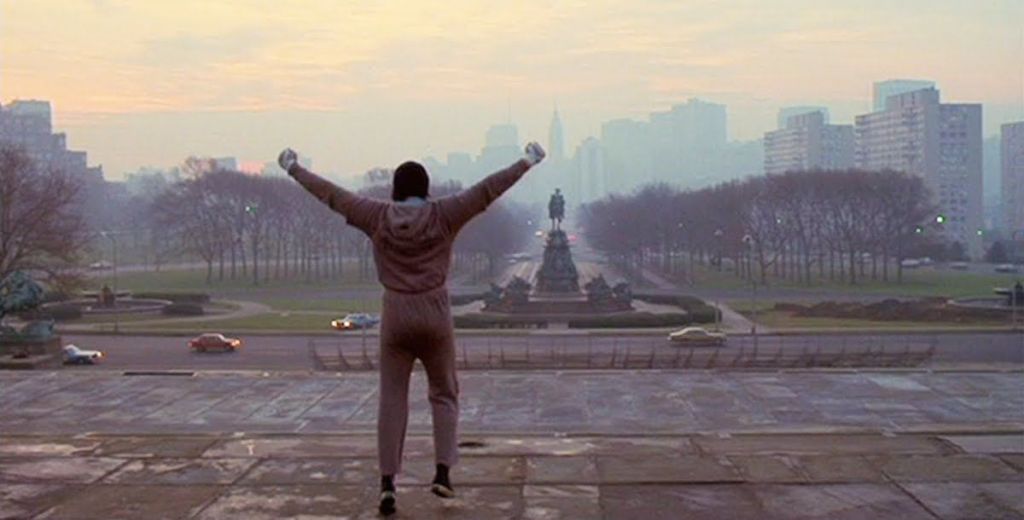
Another classic film scene from another classic film gets into the top ten! I should probably write more of these!! Sergio Leone’s gangster epic is rarely screened on television but it is as amazing as it is long.
Ken Loach is one of my favourite filmmakers in terms of both quality and consistency of cinematic output. His incredibly raw depiction of Northern life in Kes (1969) gave us many memorable scenes, including this one about the injustices of the education system.
Aside from reviews of past and present films and TV shows, I occasionally do more focused articles. This one picked some great films that tell their story in one hundred minutes or less. Maybe I should do one about classic films over one hundred and eighty minutes too?
Perhaps it’s because “sex” is included in the tags of this review of Park Chan-Wook’s erotically charged crime noir, or because it is brilliantly written, who knows! Anyway, it’s the highest seen new release review so it must be of some interest to some people.
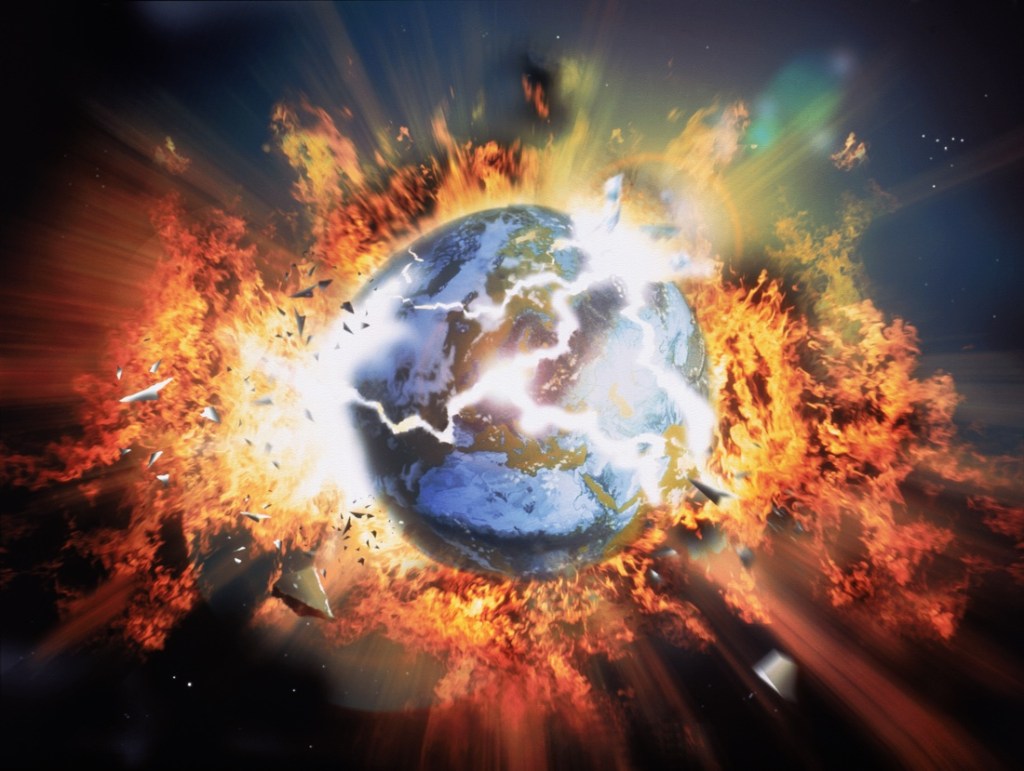
THE END OF THE WORLD
Well, that’s the top ten most viewed articles out of the five hundred I have posted. For the record, the LEAST viewed article with only SEVEN VIEWS is this one: APOCALYPSE WHEN? VISIONS OF FUTURE EARTH! It goes to show that no one is interested in reading about filmic visions of the end of the world. C’est la vie!
Now I would like to broaden the subject and have a go at defining some basic film character archetypes. My definition of this has some crossover with personas, but archetypes are not necessarily the component which make up the character – they ARE the character!
Archetypes are a common or typical shorthand; a tool writers, directors and actors can use to define character during the creative process. They are not stereotyping though. They are standardized models and structures that can be built upon to fully flesh out a character.
The archetypes I would like to consider are: Everyman/Woman, Hero, Super-Hero, Anti-Hero, Nemesis, Mentor, Sidekick and Lover/Romantic Interest. Obviously, many of these archetypes can combine, especially in more complex films, plus I’m sure there are loads of others. However, I will limit myself to these for now.
EVERYMAN / WOMAN
The staple for many, many movies is an everyman or woman or boy or girl (or gender fluid) character who is easy to relate to for the audience. It could be Tom Hanks in Castaway (2000), or Tom Hanks in Sully (2016), or Tom Hanks in basically everything – even Toy Story (1995). They tend toward the working or ordinary class with regular jobs and family units. Their stories will be everyday, or they will find themselves facing incredible situations. Alfred Hitchcock favoured everyman and woman characters who would be thrown into dangerous situations. Actors who excel in such roles include: Hanks, James Stewart, Meryl Streep, Amy Adams, Francis McDormand, Jack Lemmon and many more.
HERO
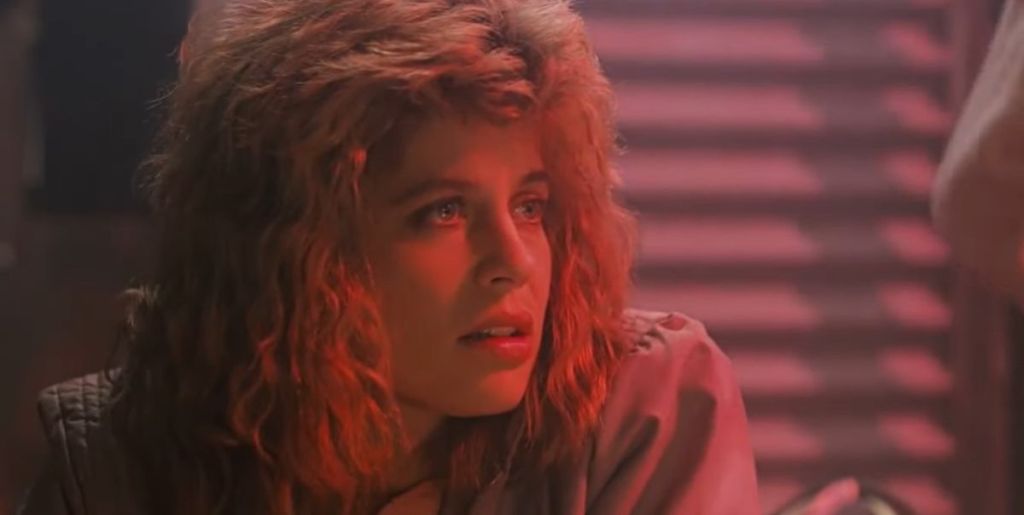
Many characters can begin ordinary or everyday, but over the course of a film become heroes. Luke Skywalker for instance is an bright farm kid with dreams of joining the academy. A series of contrasting events then cause his rise to discovery and heroism. On the other hand, some heroes are fully formed such as James Bond and Indiana Jones. The everyman character and hero are often combined, like with John McCLane or underdog characters such as Rocky Balboa. My favourite hero arcs are stories where the character starts in lower status such as The Terminator (1984), Django Unchained (2012) and Harriet (2019).
SUPER-HERO
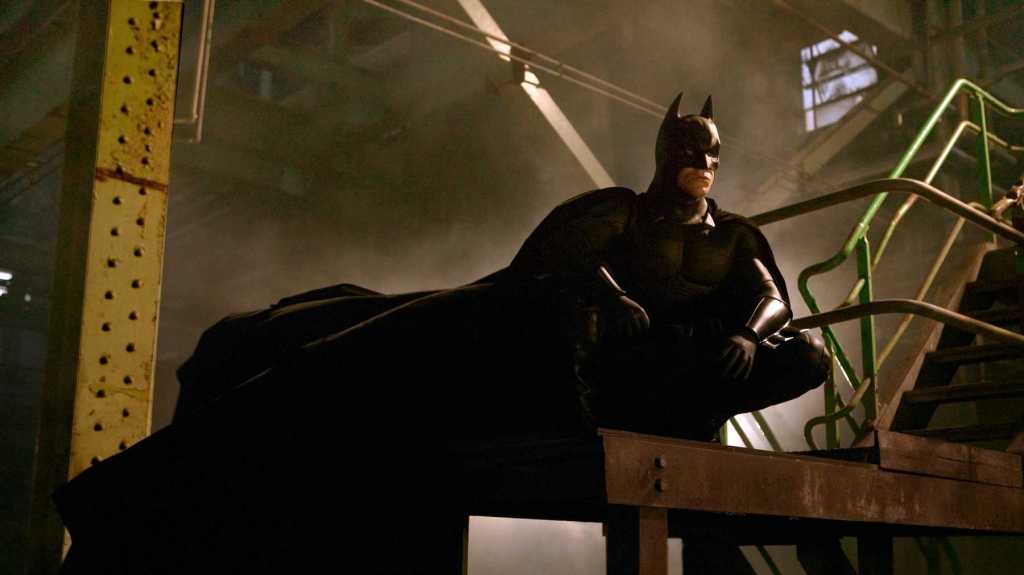
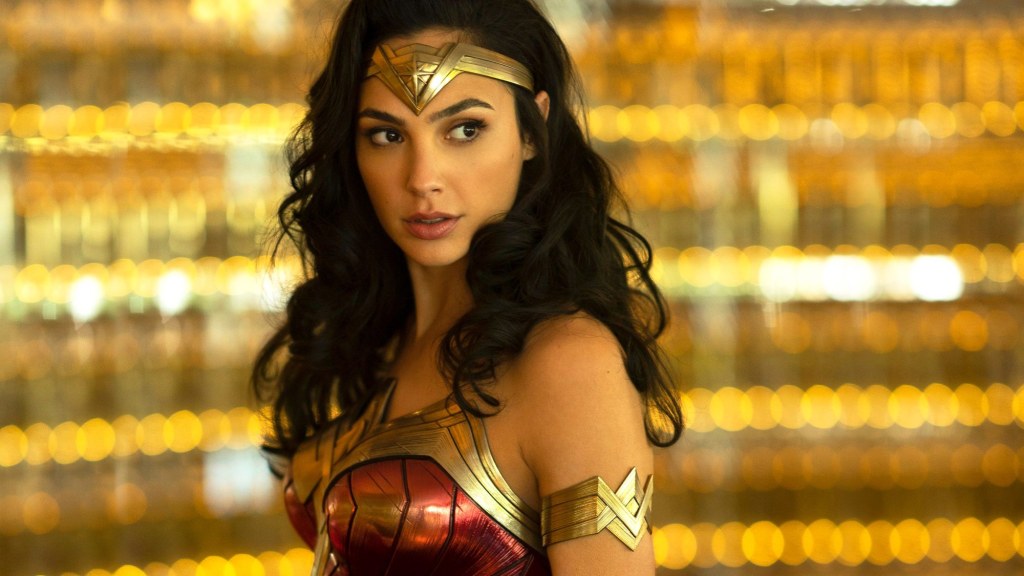
So what’s the difference between a hero and a super-hero? For me the hero may be capable of incredible feats of action and endeavour, yet he or she is ultimately mortal. Thus, while they may be a super-hero on the surface, Batman and Iron Man are heroes to me; albeit mechanically improved ones. Superman, Wonder Woman and Thor, for example, have god-like powers, thus defining them as SUPER! Obviously, there are crossovers as illustrated by Peter Parker, Captain America and Captain Marvel. All of them begin as everyboy/man/woman characters and become super-heroes due to military experimentation or being impacted by incredible events which cause physical transformation.
ANTI-HERO
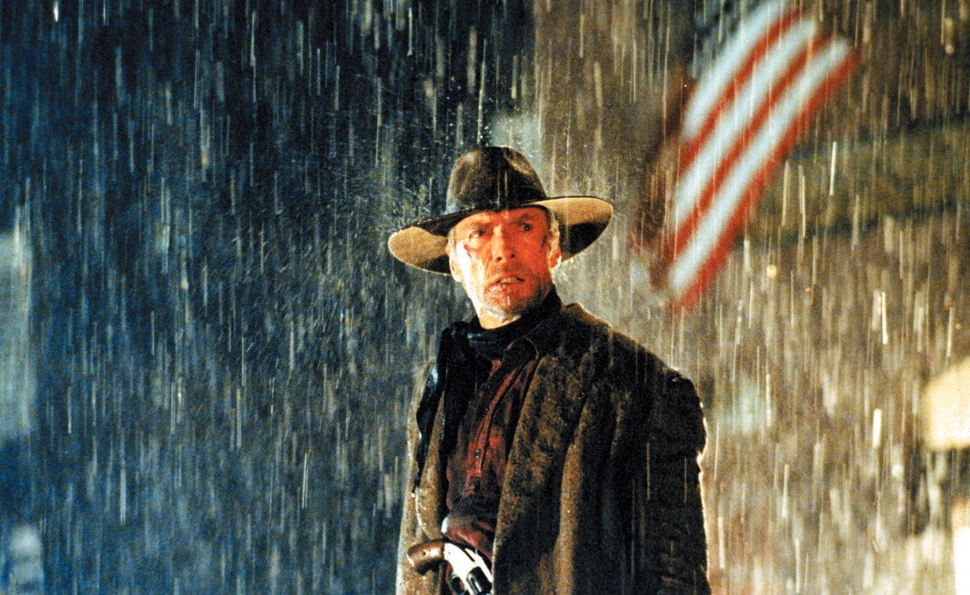
I love a good anti-hero. I think they are my favourite character archetype. They can be charismatic and just on the side of the righteous, but misanthropic and sarcastic like say, Wolverine or Blade. They can be on the wrong side of the law, but redeem themselves at the end of a film like Danny Archer and Han Solo. They can be outsiders or loners like Travis Bickle. They can be hard on the outside and soft on the inner like Juno. Moreover, certain actors have cornered the market on anti-heroes such as Jack Nicholson, Ellen Page, Leonardo DiCaprio and Clint Eastwood. My favourite anti-heroes are often cursed with supernatural forces causing them to be trapped by certain powers. The ‘Wolfman’, Lawrence Talbot, and Carrie White are fine instances of this.
NEMESIS
Given it is pantomime season there’s no harm is looking at villains! For me the greatest villains are the ones which actually have a valid cause or point. Of course, I don’t agree with their actions as they will generally involve killing people or destroying the Earth or Universe. However, villains such as Robert DeNiro’s heinous Max Cady had valid motivation. Likewise, Thanos’ plan to wipe out half of everyone was founded on sound environmental ideology. This doesn’t make it right though. Sympathetic nemeses are also interesting like Marvel’s Erik Killmonger. Moreover, King Kong for example, begins life as a threatening monster, but ultimately ends up being sympathetic compared to man. Nonetheless, you cannot beat a good old fashioned baddie like Hannibal Lecter, The Terminator, Hans Gruber, Nurse Ratched and one of my favourites, The Wicked Witch of the West.
MENTOR
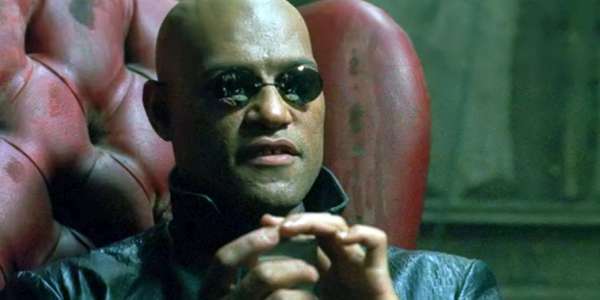
The Mentor character can take many forms. They are very valuable in supporting a hero or heroine on their adventures, plus providing vital exposition or the rules of the world information. The archetypal mentor archetype is a wise, older character like Morpheus, Alfred Pennyworth, Gandalf, Mr Miyagi, or Obi Wan Kenobi. Moreover, they will often have powers and magically assist those around them. The wonderfully helpful Mary Poppins is a great example of this. Every so often mentoring is rejected by the younger partner. A case in point being Brad Pitt’s Detective Mills eschewing Morgan Freeman’s Somerset’s sage advice with deadly results. Then again, mentoring can take a more twisted and controlling turn as seen with The Devil Wears Prada’s (2006), Miranda Priestly, and in Paul Thomas Anderson’s recent arthouse classic, The Phantom Thread (2017).
SIDEKICK
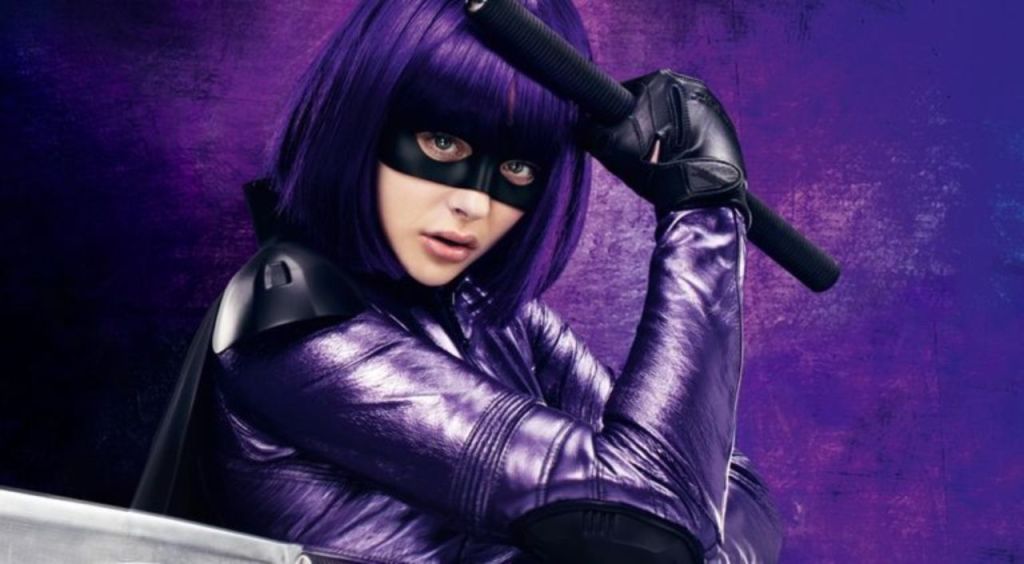
The sidekick is a lower status character that can be an ally, helper, friend or even enemy that also provides comic relief or dramatic tension. Different from the bromance or traditional buddy character, because that double-act dynamic is on an equal level of status. Great sidekicks include: Hermione Granger, Short Round, Robin, Chewbacca, Dr Watson and many more. Often, the sidekick actually becomes more interesting, funny and memorable than the lead protagonist. Examples of this include the brilliant Hit Girl, Igor, Donkey and the aforementioned Hermione. Sometimes the sidekick takes a darker route such as Loki and Lady Macbeth, who use their influence for evil rather than good.
THE LOVER / ROMANTIC INTEREST
So, the love interest can be a romantic extension of the sidekick but can also be a mentor and even a villain. I would differentiate the love interest character from traditional romantic comedies or dramas. For instance, in When Harry Met Sally (1989), Sally and Harry are of equal status and classed as everyman and woman archetypes. However, in James Bond films the love interest is traditionally a female conquest. More in depth love interest characters are those that are not just trophies; they become equal in the story. Princess Leia is a heroine and love interest, likewise Marion Ravenwood in Raiders of the Lost Ark (1981). Most recently, and a reflection of our progressive times, Diana Prince/Wonder Woman found a fine love interest in Chris Pine’s heroic Steve Trevor. Thankfully, the outdated “damsel in distress” stereotype is being consigned to the past and now we have characters of all backgrounds and gender represented on an equal basis.
CONCLUSION
As I said earlier this list is just an exploration of archetypes. There are a number I could have included. That stock character the wife or husband is one which always appears regularly in films. Often, they are waiting by the phone or television screen as some disaster befalls their partner. Lastly, I could have included the double-act, the team or the ensemble archetype; where one or more characters combine to create a whole. But, I think I’ll save that for another essay.
Series Producers: Mark Herbert, Derrin Schlesinger, Rebekah Wray-Rogers
Cast: Thomas Turgoose, Vicky McClure, Joseph Gilgun, Stephen Graham, Andrew Shim, Stephen Graham, Andrew Ellis, Rosamund Hanson, Danielle James, Kriss Dosanjh, Chanel Cresswell, Johnny Harris, Michael Socha, George Newton, Jo Hartley, Katherine Dow Blyton, Stacey Sampson etc.
Cinematography: Danny Cohen
Music by: Ludovico Einaudi
**CONTAINS SPOILERS**
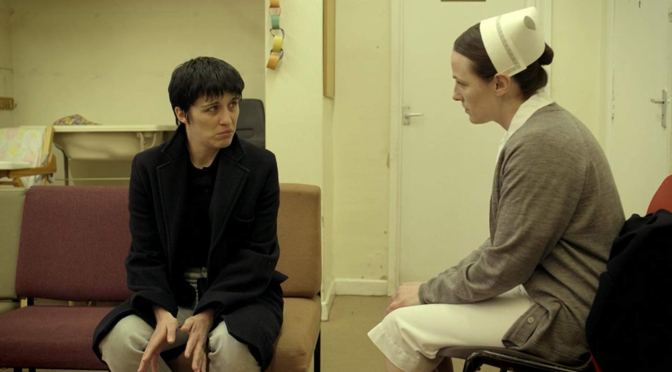
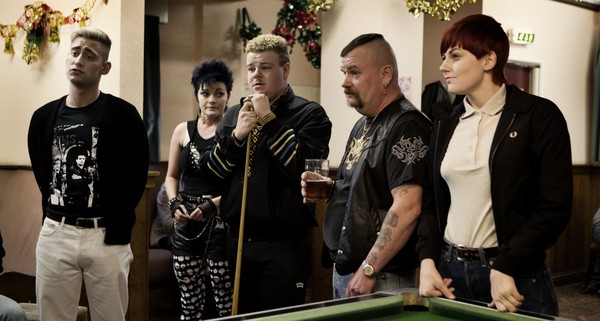
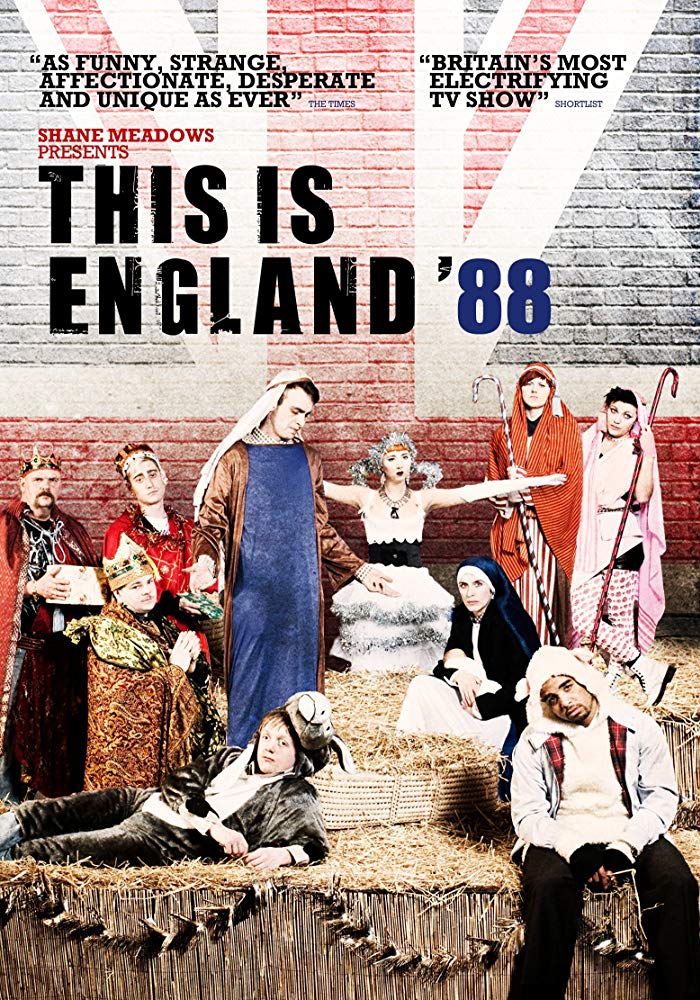
Shane Meadows’ Midlands-based drama classic continued two-and-a-half years after the tragic events of its predecessor, This is England ’86 (2010). While obviously harking back to the late 1980’s and infused with nostalgia, it is arguably even darker and keenly focused than the previous series. Dealing mainly with the aftermath of Lol (Vicky McClure) and Woody’s (Joe Gilgun) relationship breakdown, it also explores Shaun’s (Thomas Turgoose) misadventures attending drama school.
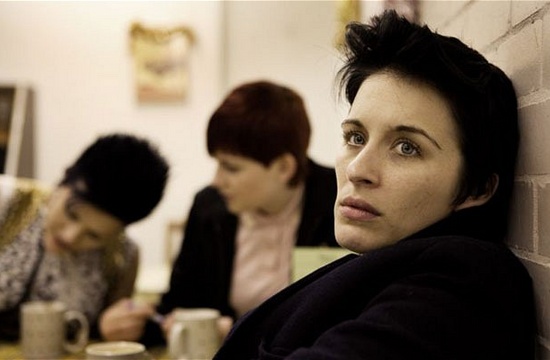
While there is a lot of humorous situations in these three episodes, Meadows and co-writer Jack Thorne essentially structure around Lol’s heart of darkness descent into depression. They present a devastating character study as she struggles with single parenthood following her self-destructive affair with Milky (Andrew Shim) and subsequent split from Woody. Lol is crushed with guilt over this and her father’s death; an act she committed in self-defence and Combo (Stephen Graham) took the blame for.
Vicky McClure as Lol gives a devastating performance. She wears her grief as a second skin, with the weight of her world pushing her deeper and deeper into the mire. Moreover, as Lol confronts her difficult life choices head on, she is literally haunted by the ghost of her father. Meadows and McClure deserve such praise for presenting depression and the disintegration of a characters’ mind so convincingly and sensitively. Lol is a lost soul and her story felt so real to me when watching.
Woody, on the other hand, is living with a new girlfriend, Jennifer, at his parents. Things are going well for him on the surface but you feel he’s lost without Lol. Indeed, Lol and Woody are one of television’s iconic couples. It’s strange not seeing them together. Joe Gilgun’s performance as Woody is excellent too. It’s clear he’s putting on a brave face and using humour to direct his pain. However, heartache is never too far away from his crooked smile.
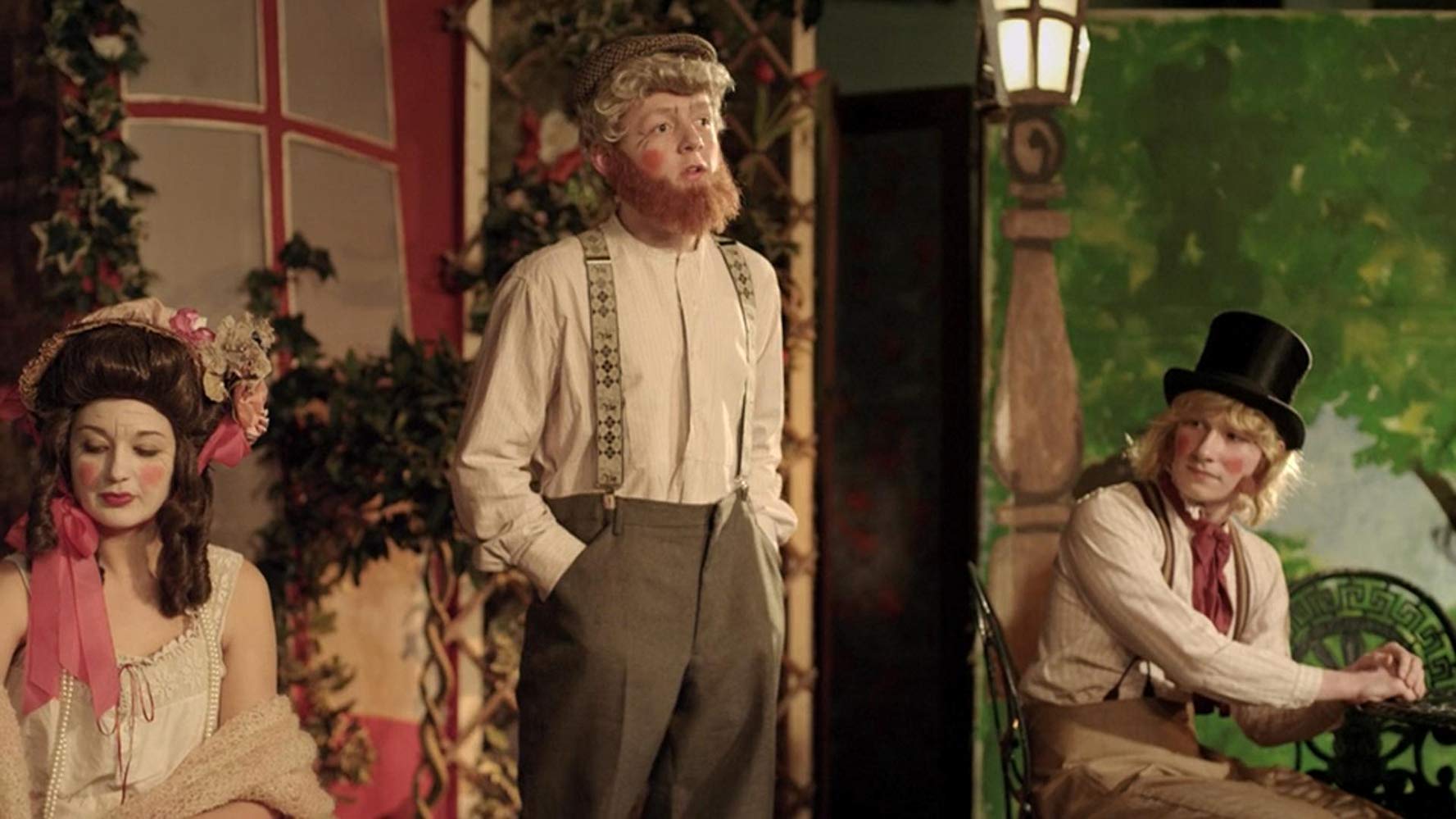
Meanwhile, Shaun’s excursion into six-form acting provides some light relief but also personal trauma. It’s very funny when the gang, high on speed, almost ruin his opening night with constant laughter. To be honest the play is pretty awful so I don’t blame them. Furthermore, Shaun’s hormones are bouncing round like a squash ball, as he finds himself attracted to one of girls in the class. The scene where he’s caught with his trousers down by girlfriend Smell is both funny and sad. Quirky actress Rosamund Hanson, in her role as Smell/Michelle, impresses with a mix of punk and hysterical rage here.
Yet, the main theme of the narrative is one of overcoming loss through community and togetherness. While Woody eventually confronts the gang and more specifically Milky over perceived treachery, Lol sinks deeper into a downward spiral. Here Shane Meadows is able to present isolation and loneliness very powerfully. Indeed, the series captures raw and human emotions in a very convincing way. Through these characters we experience trauma and tragedy but through love and unity we also find hope.
Cast: Florence Pugh, Jack Reynor, William Jackson Harper, Vilhelm Blomgren, Will Poulter etc.
Music: The Haxen Cloak
Cinematography: Pawel Pogorzelski
**MAY CONTAIN SPOILERS**
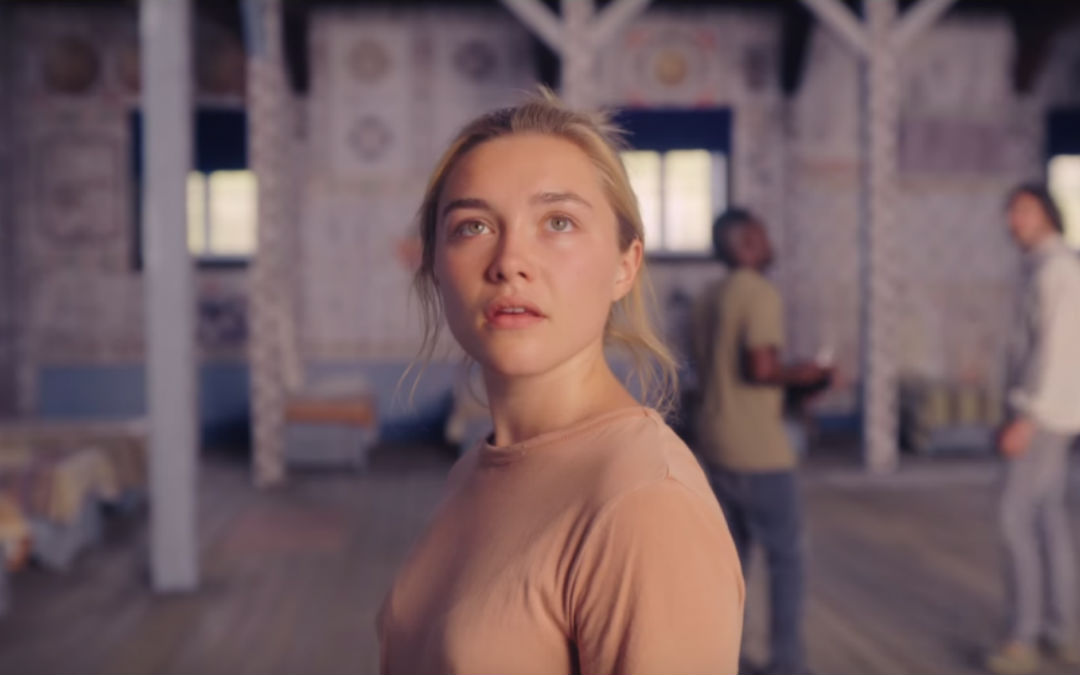
Midsommar (2019), is ultra-talented filmmaker Ari Aster’s second feature film. His first Hereditary (2018), was two-thirds domestic horror masterpiece and one-third insane, symbolic, nonsensical and demonic denouement. Both films have a lot in common. Both have communes or cults at the centre led by strong matriarchal figures. Both find seemingly innocent characters suffering from grief being lured to a fateful demise. Both have incredibly rich visual systems full of striking imagery, sudden violence and mythological folklore. Both, especially Midsommar (2019), are overlong, pretentious and indulgent B-movie stories masquerading as art.
I have to say, and I am not coming from simply a mainstream perspective, Ari Aster is a film artist. However, unlike many great film artists he has, in my opinion, not managed to marry his vision with coherent and emotionally powerful storytelling. Midsommar, for example, takes an age to kick its narrative into gear and when it finally gets started it drags and drags and drags. How many long, drifting tracking master shots can you abide? How many drawn-out-so-pleased-with-myself takes do you have the patience for? Well, get a strong coffee because when the story cries out for pace, Aster puts the brakes on, marvelling in his own indulgent genius. I might add that a plethora of characters screaming and crying does not make good drama either, unless there is sufficient context.
The narrative is very simple. In a nutshell, it’s Eli Roth’s Hostel (2005) meets British horror classic The Wicker Man (1973). Florence Pugh, Jack Reynor, William Jackson Harper and Will Poulter are college students who take a summer break to experience a communal pageant in rural Sweden. While they are PHD students they are not particularly intelligent given the choices they make later in the film.
Moreover, aside from Pugh’s grief-stricken Dani, the script doesn’t particularly imbue them with much in the way of empathetic characterisation. Indeed, the film relies on Pugh’s dominant performance to create emotion for our protagonists. Aside from providing some comic relief there is no actual point to Will Poulter’s character at all. Lastly, there is some absolutely terrible dialogue throughout this film too.
As the film crawls along slowly, it’s reliant on the music to inform us we’re meant to be scared. Then when the gore does kick in during a particularly shocking ritual, I was almost falling asleep. Don’t get me wrong the production design is flawless with an amazing setting and incredible concepts from Aster. The death and torture scenes are particularly memorable. However, the overall pace and rhythm of the film is so bloody slow I just did not care about anyone by the end.
I don’t mind methodical films establishing dread and psychological fear, but I think Aster has been watching too many Kubrick films. Aster seems to believe slow equals art. What Kubrick did though was usually to have characters that were engaging. They may not have been likeable, but Kubrick’s characters hit you in the heart and mind. Not since The Blair Witch Project (1999) have I wanted such dumb characters (Pugh aside) to die so painfully in a horror film. Likewise, the characters in the Swedish commune are mere ciphers of Aster’s fantasy horror and two-dimensional at best.
Visually stunning Midsommar (2019), will no doubt impress critics and other reviewers. However, at nearly two-and-a-half hours it’s an indulgent-arty-collage-of-film-masquerading-as-therapy. The ending was so loopy that the audience I was with were laughing at how ridiculous it was. Perhaps that was the filmmakers’ aim, but I’m not so sure. Yes, I get that this is meant to be allegorical and symbolic about grief and guilt and religion and a relationship break-up and fate and cultural differences. Furthermore, I get the intellectual depth of the themes on show, but Aster tortures the audience as much as his characters. Mostly, it just doesn’t take so long to tell this kind of derivative narrative, however beautiful and artistic the film is presented.
Starring: Jake Gyllenhaal, Rene Russo, Toni Collette, Tom Sturridge, John Malcovich, Zawe Ashton, Daveed Diggs, Billy Magnussen, Natalia Dyer etc.
Picture the scene: a starving child in Africa passively stares at a camera while a fly irritates their big sad eyes, and they do not know when their next meal is coming from. Meanwhile, in a New York auction house a painting by Cezanne or Gauguin or Picasso is selling for over $200 million dollars! What the fuck is wrong with the world?! I’m not saying these paintings aren’t great art it’s just that there is NO WAY that amount of money should be paid for a painting when there is starvation, disease, and poverty in the world. It’s just an indictment of the sickness of humanity, that we place such value on what effectively amounts to canvas and paint placed in a particular manner by some dead person. It’s utter madness!!
DON’T GET ME STARTED ON SO-CALLED MODERN ART!!
Yeah, sure, maybe I DON’T GET IT!! Maybe one should be allowed to express themselves from a creative and emotional perspective but THEY ALSO WANT PRAISE FOR IT!!! And MONEY! And adulation! Of course, certain painters, sculptors and creative types expressing themselves can become a transcendental experience but mostly it’s a bunch of pretentious wankers conning us into thinking what they are doing is important. Come the fictitious revolution occuring in my imagination, most modern artists will be on the hypothetical spikes adorning the made-up barricades.
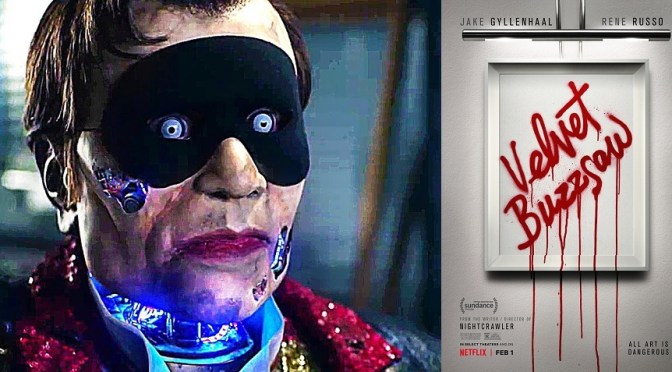
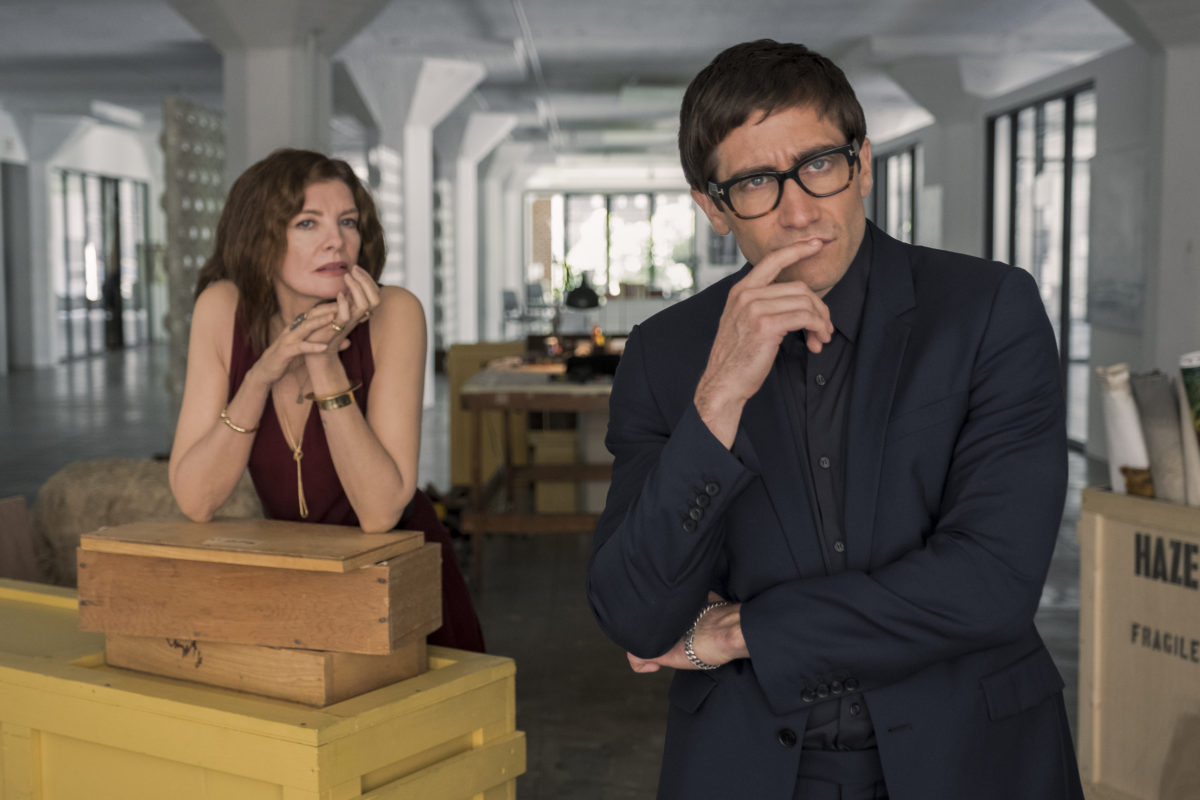
Tony Gilroy’s third film Velvet Buzzsaw (2019) taps into some of the ire I feel for the art world. It’s full of fake plastic and unlikable characters who spend their days stabbing and fucking each other in the back, all trying to sell us the next big fat artistic lie. When a never-famous painter dies his work becomes a cause celebre and further in-fighting ensues in an attempt to monetize his apparent genius. Jake Gyllenhaal leads an impressive ensemble cast as arsehole critic, Morf Vandewalt; while Rene Russo, Toni Collette, Tom Sturridge, John Malcovich and Zawe Ashton revel in their narcissitic and parasitic roles as agents, artists and art-whores.
Ultimately, this is a very broad comedic satire with some decent horror deaths thrown in. At times I felt like it should have been shot with a cast of unknowns on 16mm film, rather than the A-list hi-definition gloss presented. Firmly in the B-movie territory of say Final Destination and Driller Killer, it’s neither scary or bloody enough to make a convincing horror or gorefest. Having said that there are some fantastic deaths, very witty dialogue and memorable images throughout. Lastly, Gilroy’s work has kind of gone backwards since his phenomenal debut Nightcrawler, and this, without wishing to sound like a pretentious critic, is certainly a very minor work. Overall, though I enjoyed the coruscating digs at the modern art-world and all the arseholes who inhabit it; so that made it well worth a watch.
Produced by: Kristian Brodie, Lauren Dark, Ivana MacKinnon
Written by: Michael Pearce
Starring: Jessie Buckley, Johnny Flynn, Geraldine James
Cinematography: Benjamin Kracun
With Marvel’s juggernaut Infinity War (2018) smashing through the Cineplexes this week it takes a brave distributor to release a low budget British thriller at the same time. Nonetheless, Beast (2017) is here secreting paranoia, sexual tension and animal magnetism amidst the super-hero saturation. Beast is the debut directorial feature of Michael Pearce and he certainly demonstrates a lot of talent in the writing and filmmaking stakes. He also gives us arguably one, if not two, film acting breakthrough roles in the casting of the incredible Jessie Buckley and equally alluring Johnny Flynn.
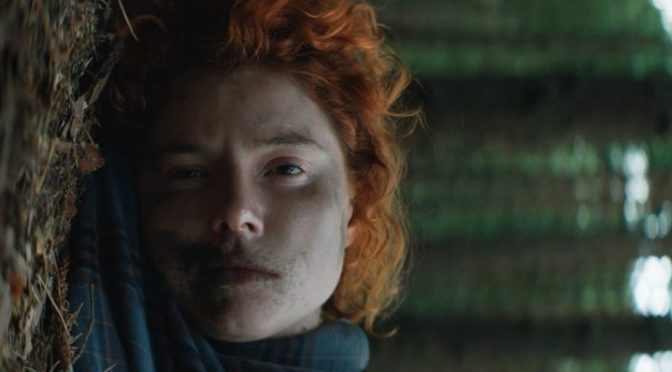
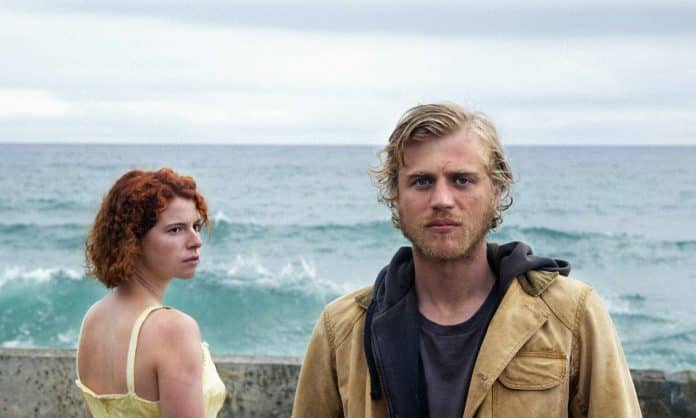
Beast is a slow-burner of a film. It moves at its own pace and quite often this works to heighten the suspense and on other occasions it perhaps slows the story too much. The central character is Buckley’s Moll Huntington, a coach tour guide living on the island of Jersey. Her middle-class life seems safe and comfortable but beneath the surface her controlling Mother (Geraldine James) and religious background make her feel trapped and isolated. Beneath Moll’s quiet surface is an anger and sexual energy waiting to break out. When she meets Johnny Flynn’s handsome “bit of rough” Pascal Renouf, Moll’s rebellious nature is released as she fights against her mother and her middle-class upbringing.
Simultaneously, Jersey is under threat from a serial killer who is brutally murdering teenage girls. Thus, the film presents two main plots: a coming-of-age romantic drama, plus a police thriller full of suspense. Writer-director Michael Pearce weaves these strands, on the main, very successfully as the police become more and more certain Pascal is the murderer. Moll’s love and loyalty to Pascal then becomes twisted and her turmoil drives the story into very dark places. I would say, however, the police investigation side was not as successful as Moll’s character study. In fact, there were a couple of plot-holes which let the story down, as did a tad long running time. Yet, these are minor gripes in a beautifully shot and rendered cinema release that makes the most of the Jersey shore, dirt and forestation.
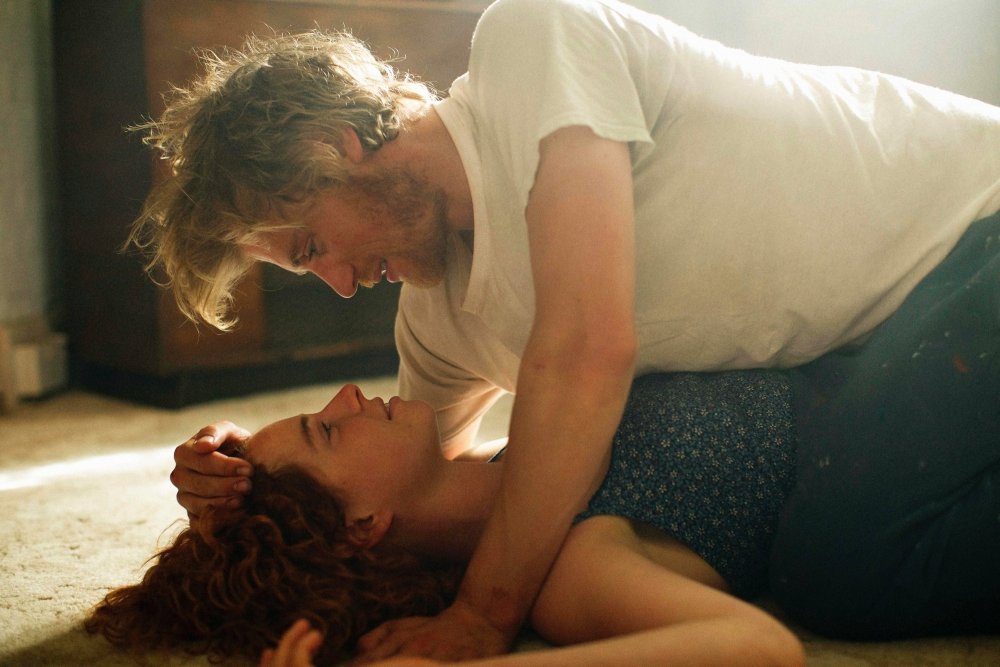
Overall, Beast deserves a lot of praise for the intense acting of Buckley and Flynn. Their relationship crackles with sexuality on the screen and Buckley excels in many scenes when the rage inside her just explodes. Flynn, who was unrecognizable from his role as young Albert Einstein in the show Genius (2017), has an off-centre charm which captures the outsider perfectly. Geraldine James, as Moll’s mother is also on formidable form too. Yet, Jesse Buckley’s owns this film as the complex protagonist; while filmmaker Pearce must be commended for creating a slow-burning and intelligent psychological thriller which stays with you once the credits have rolled.
Producer(s): Barney Reisz, Charlie Brooker, Annabel Jones
Distributors: Endemol UK – Netflix
Season 4: 6 Episodes
Writer(s): Charlie Brooker plus William Bridges (USS Callister)
Directors: Toby Haynes, Jodie Foster, John Hillcoat, Tim Van Patten, David Slade, Colm McCarthy
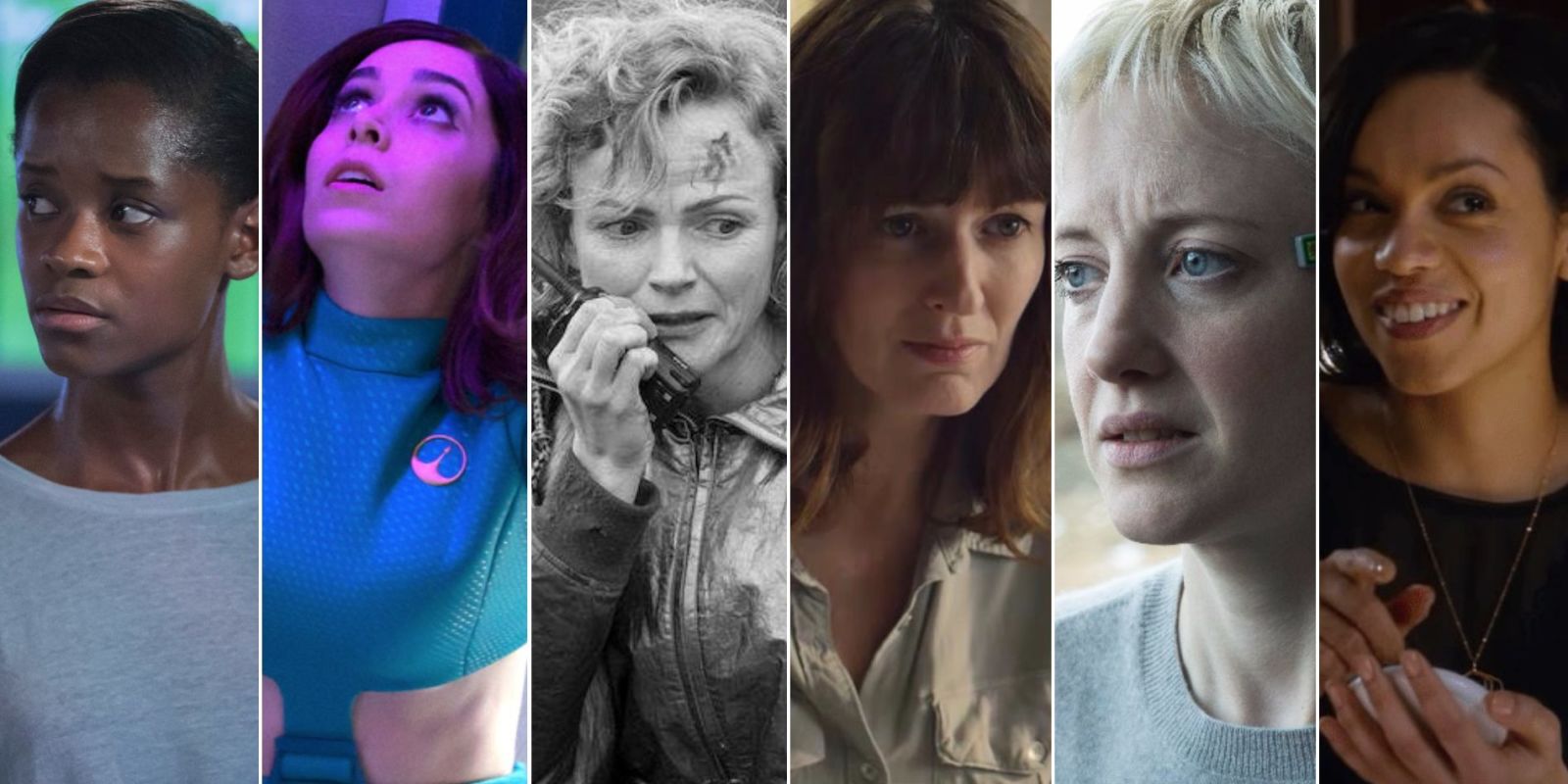
Cast: Jesse Plemons, Cristin Milioti, Jimmi Simpson, Michaela Coel, Billy Magnussen, Rosemarie DeWitt, Brenna Harding, Andrea Riseborough, Kiran Sonia Sawar, Andrew Gower, Georgina Campbell, Joe Cole, Maxine Peake, Douglas Hodge, Letitia Wright etc.
Technology: the final frontier; allowing humans to boldly go where no human has gone before. Indeed, one of the most incredible elements of our world is the technological breakthroughs we have made over the past century or so. We have: electricity, nuclear power, robots, driverless vehicles, television screens, computers, mobile phones, satellites, GPS tracking, drones, 3D printing, smart home air-conditioning, Hadron Colliders, huge space-ships which travel beyond the stars, WI-FI, the world-wide-web connecting everyone with anyone, holograms, the social media phenomenon, virtual reality head-sets, software algorithms, x-rays, gamma knifes, DNA, cloning, MRI scans, Hyperloop tube trains, Sat-Nav, Google, immersive video-games; plus many more medical, military and industrial inventions which make our lives so easy today.
But with such wonderful and fantastic discoveries there is always a dark side. While we may create a medical breakthrough which cures on the one hand we’ll ultimately invent some new weapon or means with which to kill ourselves. So while technology is mainstay of our existence it also can feed our obsessions and thus become an extension of our poor choices, violence and insanity. The scariest thing is we think technology is absolutely necessary and we cannot live without it. I mean, all we really need to survive is water, air, food, shelter and perhaps, as The Beatles sang, love. For all its’ positives, technology is an addiction and can be used to do wrong and cause harm.
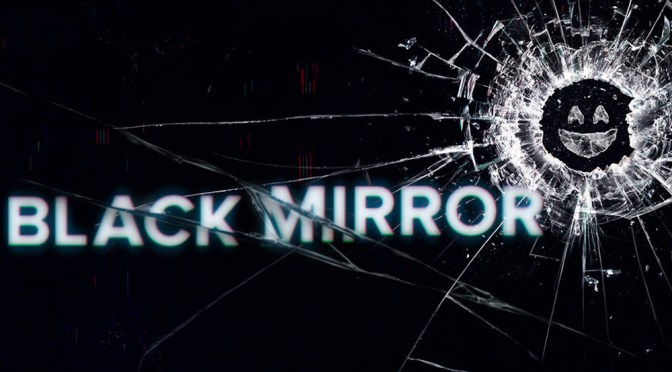
Charlie Brooker’s sublime anthology series Black Mirror is now in its 4th Season (2nd on Netflix). It taps into the fear factor technology brings and presents nightmare scenarios that more often than not possess a prescient twist. Who can forget the very first episode of BM which had Rory Kinnear’s Prime Minister having to fuck a pig as a means to pay a hostage ransom? The subsequent tabloid news that our then former Prime Minister David Cameron had, allegedly, stuck his member in a pig’s mouth suddenly made BM incredibly prophetic. This season is another televisual triumph with an incredible array of acting, directing and production talent with each episode offering the feel and scope of a cinema release. I’ll be honest being a massive Charlie Brooker fan I would probably enjoy a video of him dancing in a tutu whilst juggling tomatoes; however, I can confirm these six episodes were beyond brilliant too.
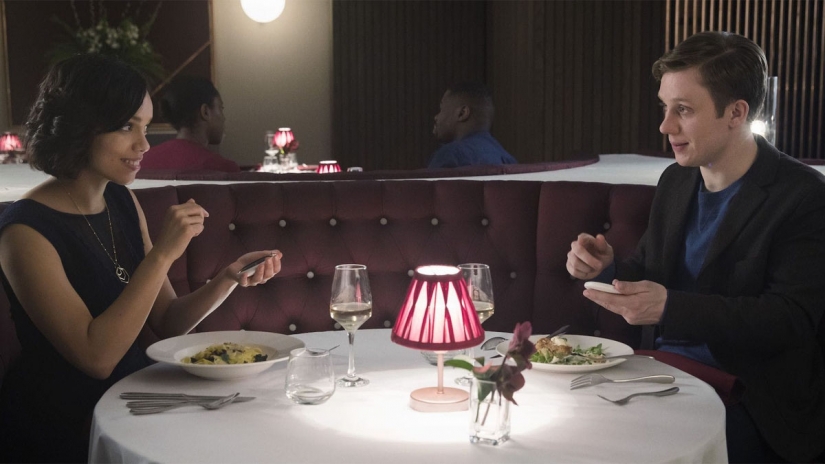
Within the fabric of each episode Brooker holds a mirror up to the future and invariably it will come back black. However, the touching love story of San Junipero (from Season 3) offered some light in the BM universe and similarly Hang the DJ (officially 3rd in the Season 4 list) contained a wonderful love story at its’ heart with Georgina Campbell and Joe Cole giving humorous and touching performances. It also contains a Truman Show (1998) style ending and a twist that I thought was absolutely fantastic. Indeed, what appears to reflect the dystopic controlling techno-world of romance apps becomes something entirely real and beautiful by the end.
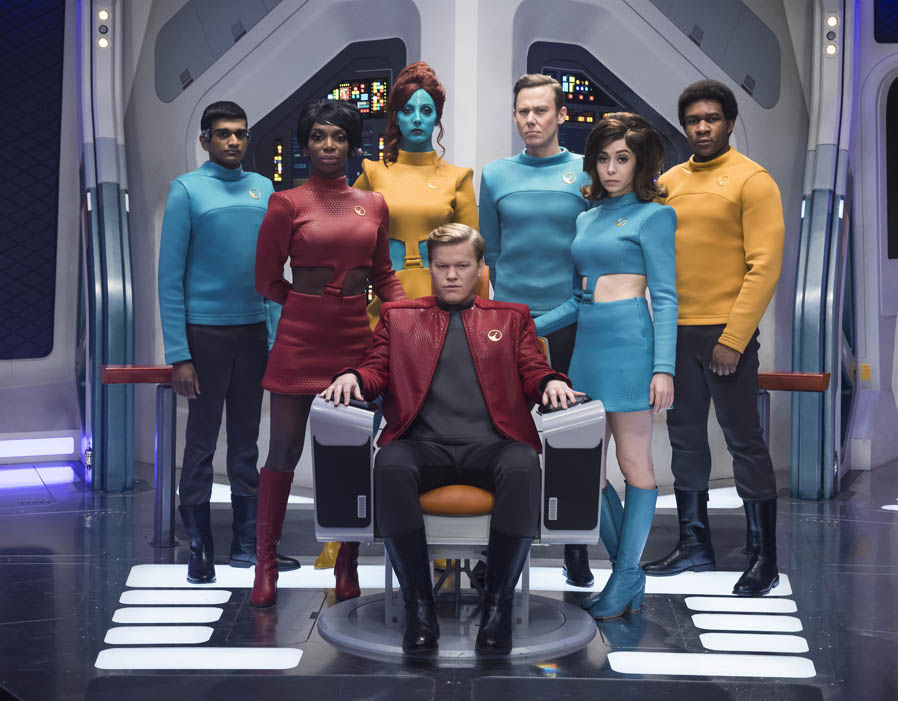
While Hang the DJ offers hope, the remainder of the episodes are bittersweet, brutal and unforgiving in their rendering. Actually, I suppose the Star Trek pastiche USS Callister has a kind of optimistic ending and is bloody funny in its affectionate satire of Trek archetypes and monsters. However, Jesse Plemons downtrodden Silicon Valley programmer holds a dark secret during his immersive Virtual Reality gaming experiences. Full of Star Trek references and themes, the clever script merges ideas relating to gaming and DNA technology with fantastic sci-fi meta-textual moments.
Arkangel also has an element of brain implanted software which enables a neurotic mother (Rosemarie DeWitt) to track and view her daughter’s every move on a computer screen. Despite the revolutionary software used this story is based wholly in familial reality as the relationship between mother and daughter becomes strained as she enters her rebellious teenage years. The danger of “helicopter” or overbearing parenting becomes too apparent in satisfying soap operatic story.
Brooker relates many of his scripts in genre territory so the more outlandish or fantastic ideas are grounded with an identifiable cultural identity. The horrific murder plot of Crocodile unfolds in true Hitchockian fashion as an insurance adjuster tracks down the details relating to a vehicle accident but tragically stumbles on something altogether more deadly. The ending of this story is particularly far-fetched, as Andrea Riseborough’s architect gets deeper and deeper in the mire, however, Brooker must be praised for taking risks with his twists.
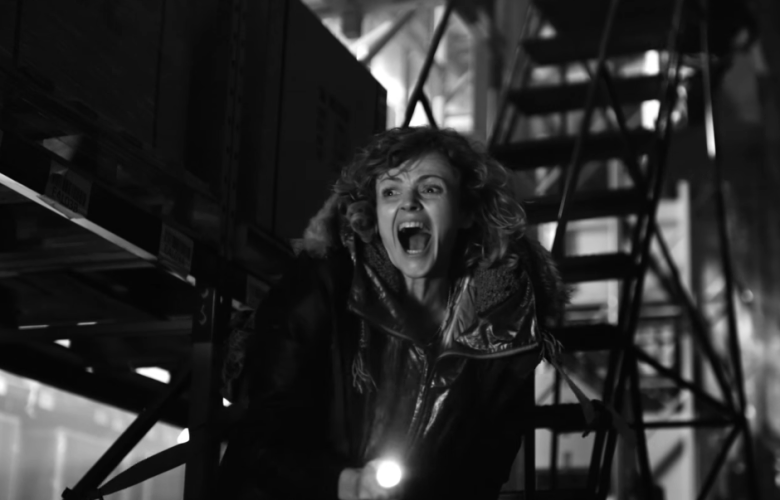
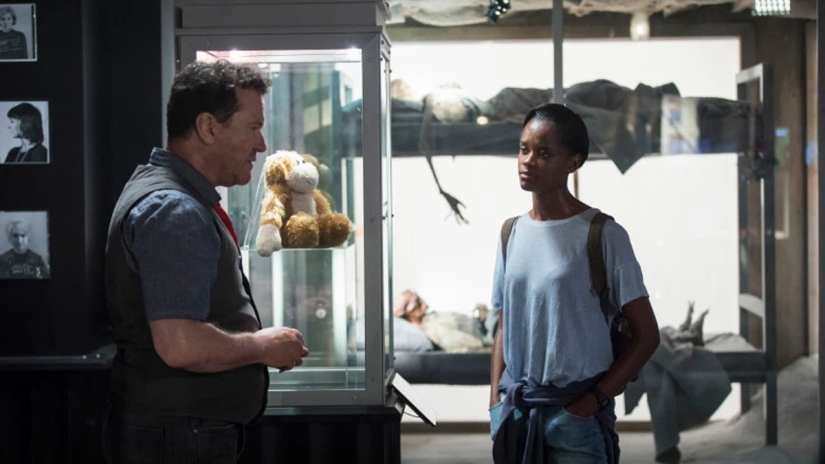
Rather simpler is the pursuit thriller Metalhead, presented in crisp black and white, as a woman (the brilliant Maxine Peake) attempts to survive in a dangerous land full of robotic guard-dogs. It’s mainly a tense one-hander and the future never looked so drained of hope and colour. The final episode Black Museum was even more grisly as Douglas Hodge shows Letitia Wright’s tourist around his grim parade of exhibits. Brooker’s writing is as strong as ever and the horrors of the entwining anthology stories are shocking and powerful. It’s a dark, dark episode which contains the fantastic idea of uploading one’s digital soul into a loved one’s to share their consciousness. This plays out with both horror and humour in a compelling end to the season.
Being a total Charlie Brooker and Black Mirror fan; a big lover anthology stories; plus a fanatic of horror and tales with a twist it’s obvious to say I loved this seasons offerings. They are clever, dark, funny, sickening, silly, romantic, scary, twisted stories full of satire and warnings about the dangers of technological progress. Ultimately, though it is not science or computers or mechanics which are the danger; but rather humans use and abuse of said technology. Because, for all our ingenuity and invention we more often than not use machines negatively and Black Mirror reflects that (im)perfectly.
ORIGINAL NETWORK: HBO – CURRENT NETWORK: SKY ATLANTIC
CREATED BY: David Milch
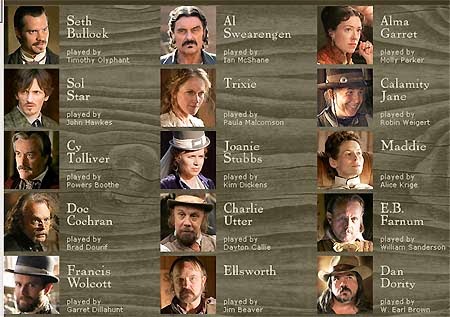
STARRING: Timothy Olyphant, Ian McShane, Molly Parker, Powers Boothe, Dayton Callie, Kim Dickens, Brad Dourif, John Hawkes, and Robin Weigert etc.
SEASONS: 3 – EPISODES: 36
ORIGINAL RELEASE: March 21, 2004 – August 27, 2006
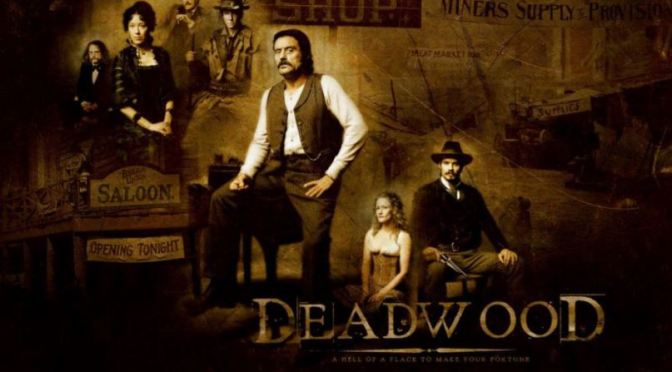
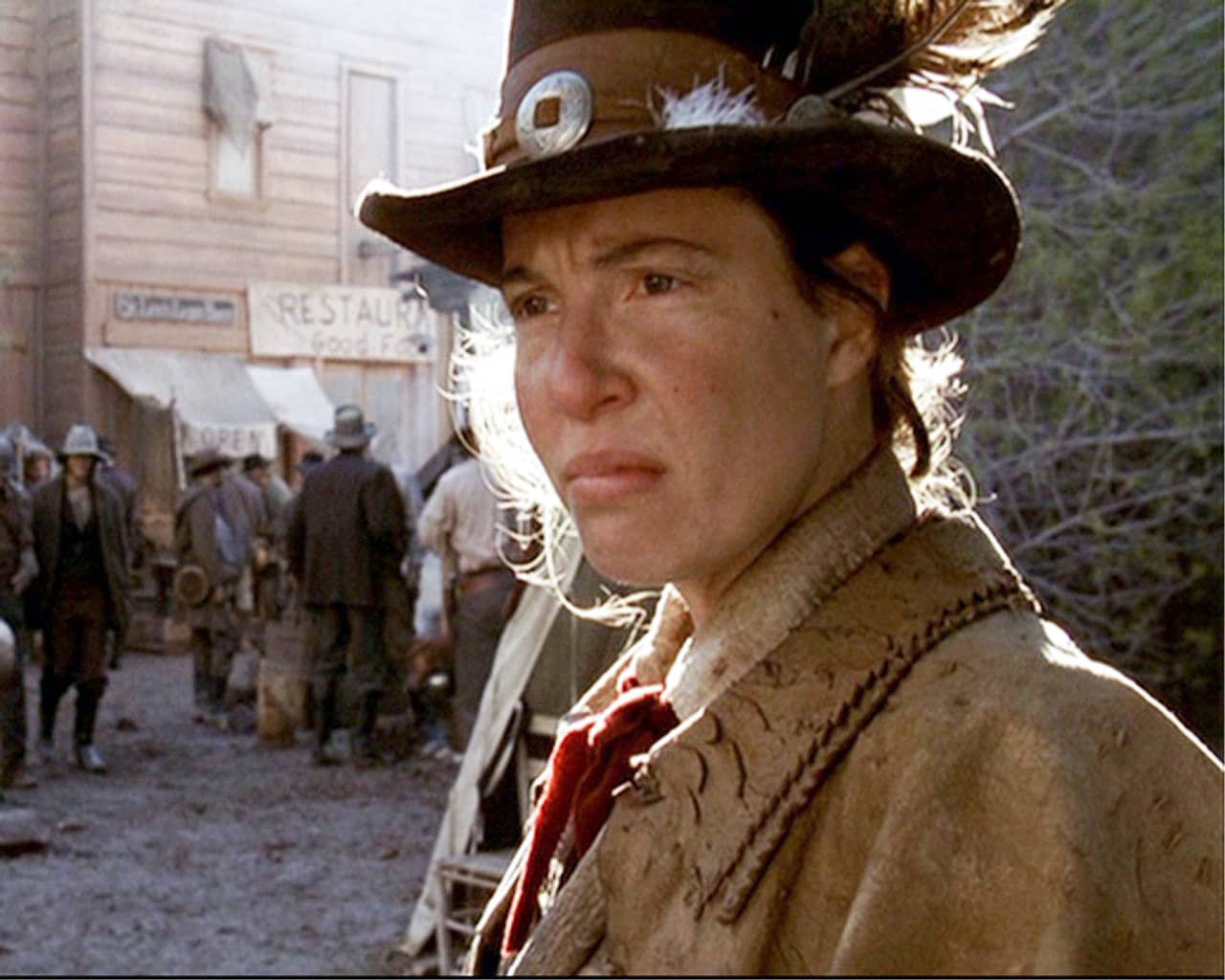
The blood and sweat and liquor seep into muddy earth as wood creaks, leather cracks and barrels roll within the midst of morning in Deadwood town. Horses cry readying themselves for the work ahead as the hangover of alcohol, greed and necessity fill men, women and children’s hearts not knowing how the day will end. They could be destitute, broke or worse; six feet under from a gunshot or plague or had their throat cut during a game of poker. Or they could be richer than a King or Queen having struck lucky in the goldmines of Montana. These are desperate times brimming with whores, bandits, con-artists, killers and unbelievably twisted optimism. There’s hope that striking gold will change lives forever and bring about fortune and prosperity. More often than not though it simply brings about death.
David Milch’s formidably researched Western TV classic was a show I’d never ever seen so I took great pleasure drinking in its’ flavours and palette at the end of 2017. I recall when released the tabloid newspapers were forever reporting the controversy of the colourful industrial language. While the language is indeed profane and sometimes enough to make a football referee blush it is the stand-out element of the scripts. Because Deadwood is one of the most brilliantly written shows I’ve seen; and while the dialogue is clearly anachronistic it feels paradoxically authentic. Throughout the thirty-six episodes the monologues sing from the screen as a litany of character actors drawl and deliver words of filth, comedy and great tragedy. At times the dialogue is so dense it reaches sonorous Shakespearean heights.
The narratives of each season feature characters based on real people from history (Calamity Jane, Wild Bill Hickok, Al Swearengen, Seth Bullock et al); all presented via a daily slice of mining camp life through an incredible ensemble cast. There are no heroes to hang our desires on but rather a rag-tag clan of flawed human beings presented as: killers, cowards, thugs, addicts, prostitutes, card sharks, immigrants, gold-diggers, crooked politicians and morally dubious law representatives. The amazing cast, led with frightening acting acumen by: Ian McShane, Timothy Olyphant, Molly Parker, John Hawkes, Robin Weigert, Brian Cox and Powers Boothe spit words as weapons, while the glint of gold drives humanity, creating a hard-bitten early representation of the American dream.
Here the early realms of civilization and society are shown to be full of issues relating to: race, capitalism, prostitution, misogyny, violence, politics, and immigration. Thankfully, things have changed now and we live in a near-perfect society with no problems today. NOT! Deadwood may represent a series of distant Wild West memories but its’ grizzled and bloody vision of humanity is just as valid today. The streets of society now may have pavement and tarmac and skyscrapers but they are still besmirched with blood and greed and alas that will never change.
HEARING STORIES: SOME THOUGHTS AND REVIEWS ON AUDIO-BOOKS
Six months ago I was reading a physical book of Joseph Heller’s Catch 22 and I was just not feeling it. Not the actual book as it is a classic novel of our time but the actual activity of reading itself. I just did not want to read anymore. Of course, I can do it but my mind just didn’t have the desire or energy. What did this mean?
Had I been dumbed down and rendered attention deficient by virtue of the constant viewing of films, TV and the barrage of internet viewing. Perhaps my brain had been become punch-drunk and distorted my mind, like an over-the-hill boxer who’d just had one too many fights. It was confusing. I’ve always loved reading and did not want to stop.
So, I thought why not try out the Audio-book route? What’s the worst that could happen? I could LISTEN to someone reading the book to me and experience the literature from an aural perspective. I have to be honest – I’m glad I did! Because I have been listening to a number of audio-book productions and they have been very rewarding from all manner of dramatic, artistic, comical and emotional directions. Moreover, I listen to these books while walking and at the gym so my “reading” has become a very pleasing mobile pursuit.
Anyhow, here are some reviews of the books I have been listening to over the past months. If you also listen to audiobooks please feel free to suggest any good “reads” or narrations.
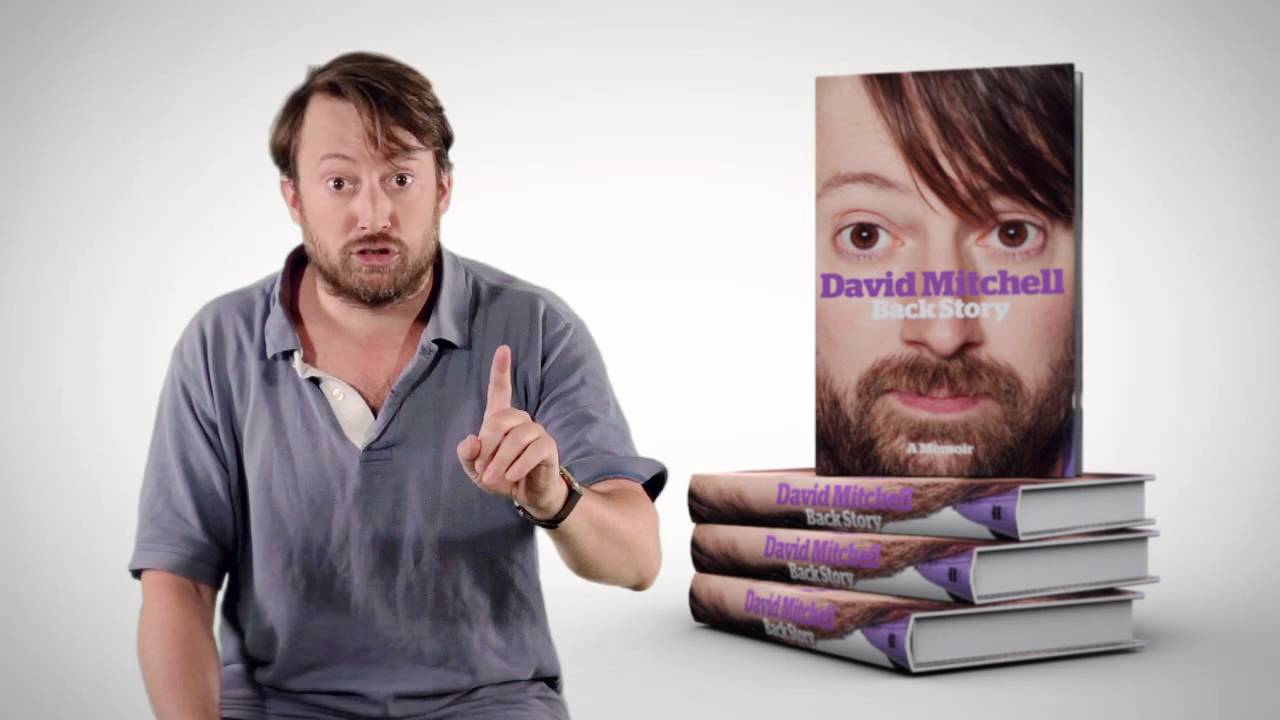
BACK STORY – DAVID MITCHELL (narrated by David Mitchell)
Comedian, actor, panel-show humourist and writer David Mitchell takes us on a literal walk of London landmarks and streets, while also wandering down his own personal memory lanes and avenues. Pedantic, neurotic, angry and insightful in equal measures this is an entertaining and intelligent journey full of hilarious rants and stories relating to Mitchell’s life; one which is blighted, not by personal tragedy, but rather a very painful bad back. His narration too is very funny and listening to him speak is like having your very own personal version of the brilliant comedy show Peep Show in your head. I especially, from a creative point-of-view, enjoyed his analysis of comedy past, present and the actualities of writing sketches, jokes and performing too.
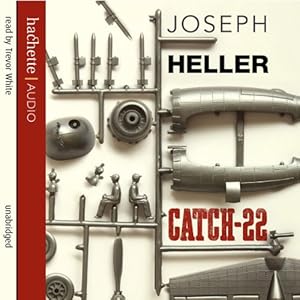
CATCH 22 – JOSEPH HELLER (narrated by Trevor White)
The novel which began my whole diversification into the audiobook territories is a startling anti-war character drama full of tragedy and black comedy, highlighting the folly of humanity during conflict. I was both laughing out loud and crying inside as Heller’s seminal work crashes us into the heart of madness during World War II. Featuring any number of crazed pilots either being killed or trying not to be killed while flying over Italy, this novel expertly takes you up and down and up and down. Heller does this with a meticulously acute writing style and via characters such as the wonderfully named: Yossarian, Milo Minderbinder, Doc Daneeka, Snowden, Nately, Nurse Cramer, Captain Aardvark, Colonel Cathcart and many more lunatics. This is a sprawling insane war-set epic which satirizes and laments the folly and destructive behaviour of mankind, and is all the more relevant today because we still can’t fucking learn to stop killing each other over ridiculous things like money, land, God and love.
DO ANDROIDS DREAM OF ELECTRIC SHEEP – PHILIP K. DICK (narrated by Scott Brick)
Dick’s classic science-fiction novel is better known now as Blade Runner and the film versions are incredibly stylish and powerful genre works. Yet, Scott Brick’s narration of Dick’s source novel is absolutely perfect in its rendition, creating a haunting pathos beyond that featured in the film. The story covers one day in the life of Rick Deckard – an “Andy” or android bounty hunter who must track down a series of superior robots of the Nexus Six variety. The original Blade Runner (1982) film did well to distil and simplify the narrative but it only touched the sides where the complex themes are concerned. The novel is far more involved with subtext relating to: simulations; animal husbandry; Artificial Intelligence; Virtual-reality religious fervour; and the existential pain or humans and robots, being explored within the rotting dystopic, Earth setting.
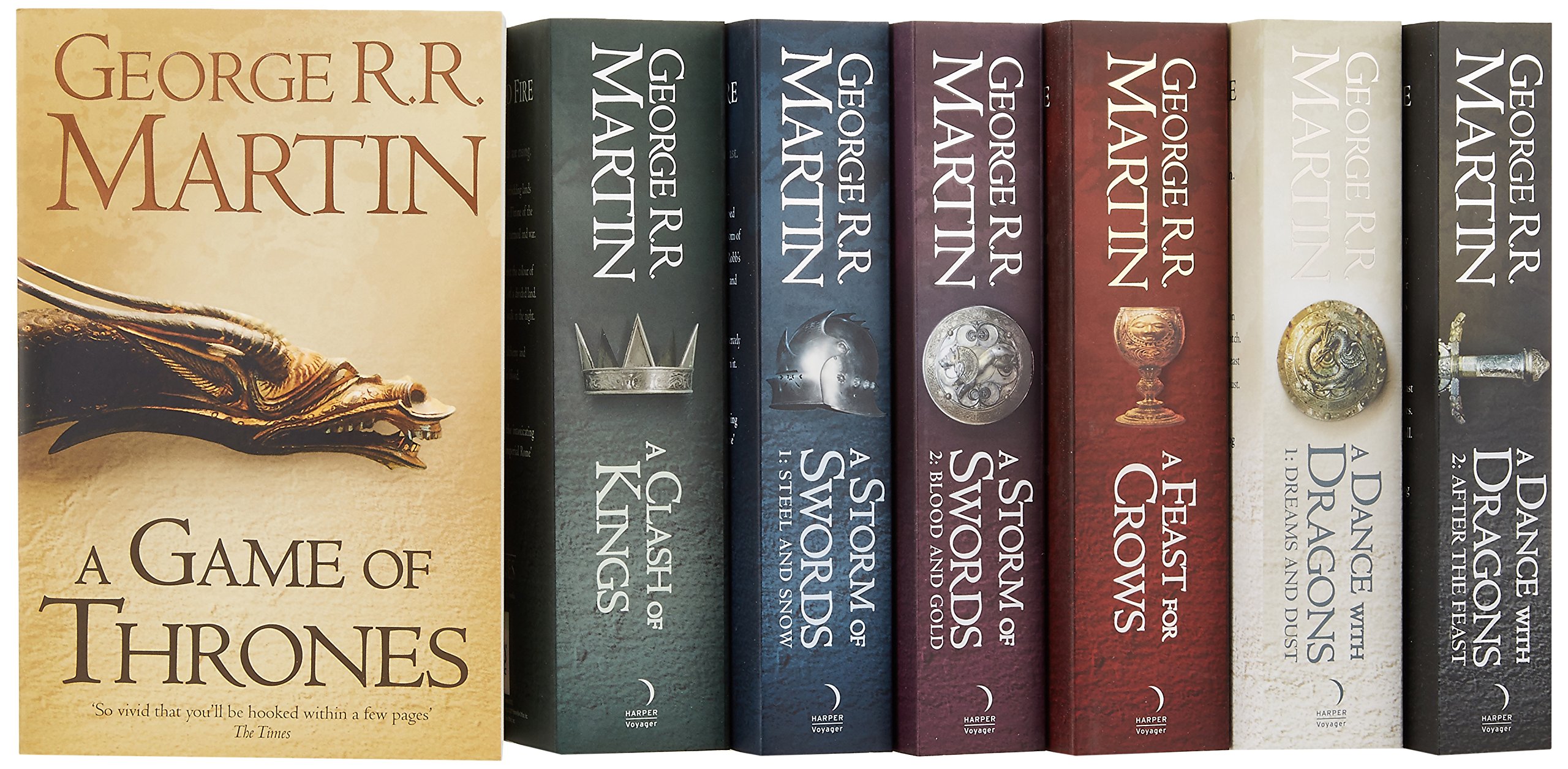
GAME OF THRONES – GEORGE R.R. MARTIN (narrated by Roy Dotrice)
George R. R. Martin’s North-versus-South-Westerosian fantasy epic has provided hours of entertainment via HBO’s massive hit TV adaptation. The original source novel is a literary monster of a book with an over 33 hours running time, so kudos to the talented, yet ageing actor, Roy Dotrice for staying alive during the recording and finding the energy to narrate it. If you don’t know the Game of Thrones TV show, it has become an iconic narrative of Starks versus Lannister’s versus Targaryen’s versus zombies versus dragons and all manner of: lords, ladies, monsters, whores, hordes, henchmen, sorcerers, warriors, Kings, Queens and peasant scum; all fighting and spitting hate at each other for a baying public’s bloodthirsty satisfaction.
The book, of which Game of Thrones is based, is an intricately plotted, brilliantly characterised and action-packed joy. Not for the faint-hearted it is explicit from a violence and erotic perspective and Martin’s writing is believable unbelievability of the highest order. While it may be fantastic in regard to many of the concepts it is grounded in a raw and human reality as the flawed characters conflict with each other in all manner of familial jousting, hearty battling and political chicanery. The book has all the greatest qualities of the television show and much more besides and well worth the many hours it took me to “read”.
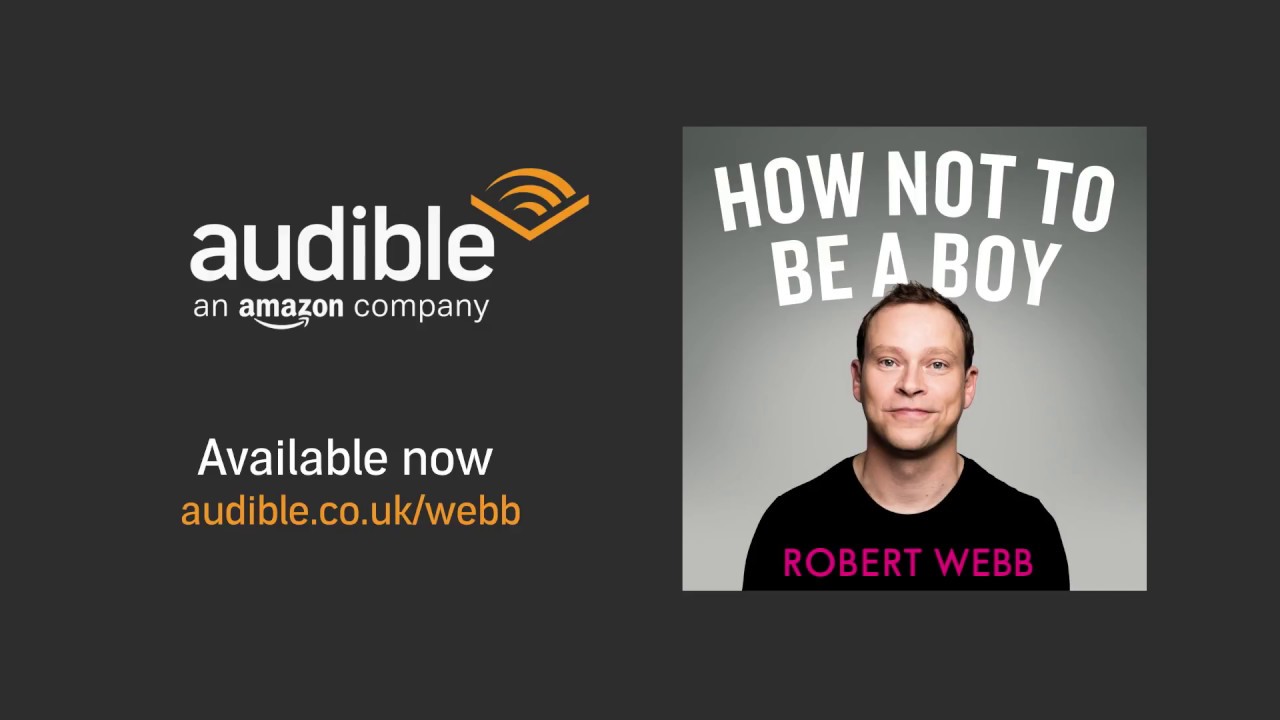
HOW NOT TO BE A BOY – ROBERT WEBB (narrated by Robert Webb)
The other half of the Mitchell and Webb double-act, Robert, narrates his own story with an adept sarcasm, intelligence and over-riding sense of grief throughout. As a big fan of Peepshow, his brilliance as an actor is playing unlikeable-selfish-man-boys with devilish charisma. He’s obviously very funny too and his anecdotes and memories of growing up in a Lincolnshire town and overcoming family heartache before joining the so-called Cambridge academic elite are very honest and personable. I would have liked a bit more detail about his creative process but reading between the lines I felt that it all came very naturally and unpretentiously to Webb. Overall, this is a terrific listen, full of funny and tragic moments; plus given I’m the same age as Webb, his references to televisual, pop, film and comedy culture were immediately recognisable to me, only adding to the book’s enjoyment.
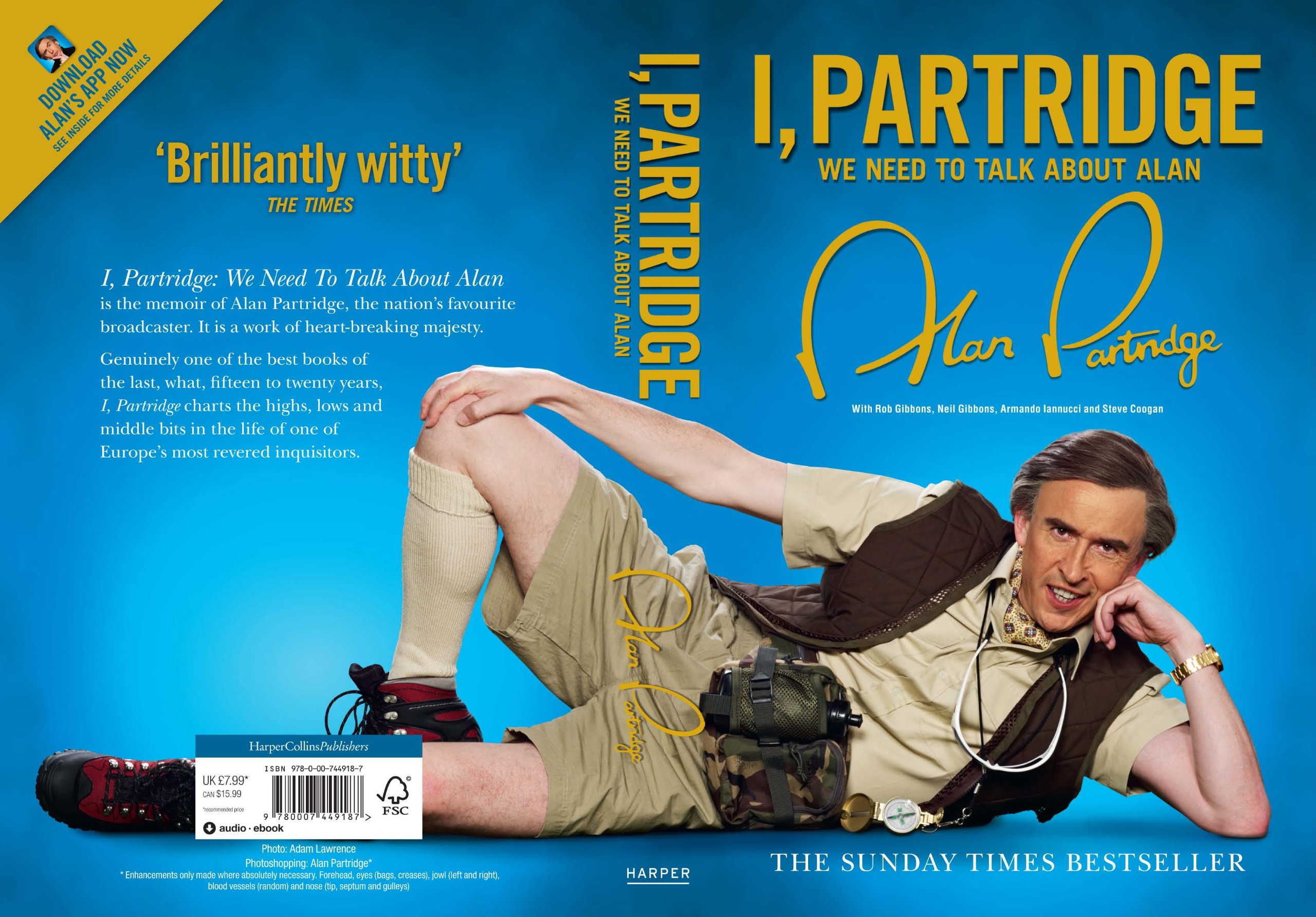
I, PARTRIDGE: WE NEED TO TALK ABOUT ALAN – ALAN PARTRIDGE (read by Alan Partridge)
Steve Coogan’s genius comedy creation Alan Partridge has been part of my life since the 1990s when I first saw him on the brilliant satire show The Day Today. There he presented the sports and would subsequently go on to a kind of greatness as a chat show host on Knowing Me, Knowing You and starring in one of the best sitcoms of all time, I’m Alan Partridge. It is a testament to the acting ability, quality of writing and sheer stamina of Coogan that he continues to mine comedy gold from the hills of Partridge, as it were. Coogan narrates (in the glorious character of Partridge) a fictional autobiography from actual cradle to career grave. It also hilariously covers how he bounced back from the precipice of a chocolate-driven-frenzied-nervous-breakdown-suicide-attempt in Dundee. I have never laughed so much as six hours of comedic gold entered my brain and left me in stitches throughout. This is one of the funniest things I have had the pleasure to listen too; full of bitter rants, vengeful asides, over-elaborate similes and a litany of what I can only call Partridgeisms! Is that a word: well it is now!











 The Cinema Fix presents