Tag Archives: Cinema Fix

TO BOLDLY REVIEW #6 – STAR TREK: NEXT GENERATION – SEASON 1 (1987 – 1988)

TO BOLDLY REVIEW #6 – STAR TREK: NEXT GENERATION – SEASON 1

Based on Star Trek & Created by: Gene Roddenberry

Season 1 writers (selected): John F. Black, Diane Duane, D.C. Fontana, Maurice Hurley, Robert Lewin, Richard Manning, Kathryn Powers, Gene Roddenberry, Joseph Stefano, Tracy Torme etc.

Season 1 directors (selected): Colin Bucksey, Rob Bowman, Cliff Bole, Les Landau, Kim Manners, Win Phelps, Mike Vejar etc.

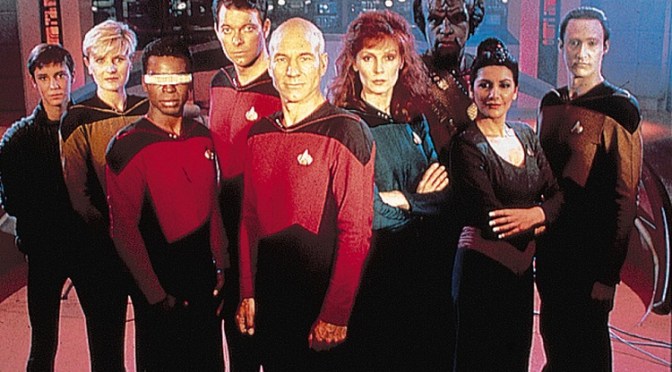
Main Cast: Patrick Stewart, Jonathan Frakes, LeVar Burton, Denise Crosby, Michael Dorn, Gates McFadden, Marina Sirtis, Brent Spiner, Wil Wheaton etc.

Music/Composers: Alexander Courage, Jerry Goldsmith, Dennis McCarthy, Ron Jones, Jay Chattaway

Production Company(s): Paramount Television, CBS Television

**THIS ARTICLE CONTAINS SPOILERS**
“MAKE IT SO. . .”

So, my cultural journey beyond the stars continues with a review of the first season of Star Trek: Next Generation. It took some serious time for what was originally known as Phase II to take off. Indeed, they finally hit warp speed during the late 1980’s. Roddenberry, the original Enterprise crew, plus swarms of Paramount employees had kept themselves busy with the ‘Original Series’ cinema releases, but, in 1986, a new TV series was announced.

Then, almost a year later in September 1987, Star Trek: Next Generation was released. TNG featured: a new crew, a more advanced class of Enterprise, and a variety of new aliens, planets and galaxies to boldly explore. While there was an initial decree to avoid all the old enemies from the original series, the Klingons, Romulans and more, slowly bled into the show as it was further developed.

FIRST CONTACT

Much has been written about Star Trek in general and the internet is brimming with articles, features, interviews, podcasts, fan films and documentaries which would take an immortal’s lifetime to read. So, my approach to this piece is to concentrate on the characters, narratives, themes and concepts which leapt out while watching it.

Overall, I really enjoyed most of Star Trek: Next Generation – Season 1. I have read that die-hard fans were resistant to the idea their favourite show from the 1960’s was getting a makeover. However, Paramount/CBS Studios chucked $1.3 million at each episode and shot on 35MM film, thus demonstrating a commitment to a quality product.

Even watching it now I am impressed by the production values, cast, direction and science fiction concepts. Obviously some of the effects are a bit dated compared to what we experience today but I always prefer in-camera effects and prosthesis, anyway. Having said that Star Trek has always been about strong ideas and themes for me.

In terms of story and character there are some very strong episodes and some pretty weak ones. Gene Roddenberry, his producers and raft of writers were, reported to be consistently at loggerheads throughout the production. So much so very few of the original TNG writing team remained by the end. It’s a testament to the rock-solid formula of the show that such issues did not hinder the ultimate consistency of entertainment while I was watching.

My main criticism is that some episodes felt like first drafts. Plus, there was, on occasions, a few episodes which were top heavy in set-up and rushed toward the end. Nonetheless, Roddenberry’s original format is always fascinating and you could certainly feel that when they successfully married: the science fiction concepts, characters, tone and dialogue you got many great episodes.
THE FAMILY UNIT

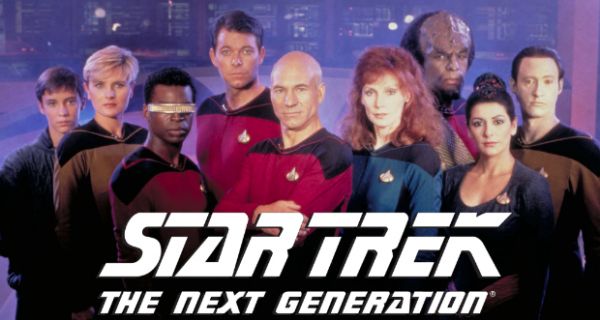
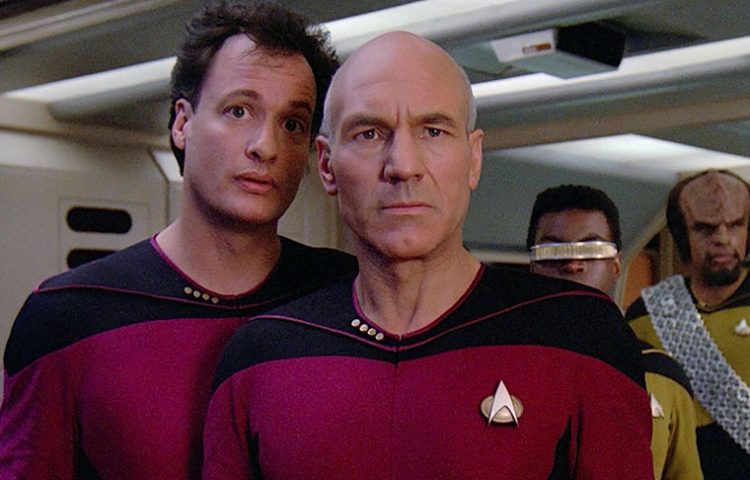
Holding the narratives and show together was an exceptionally brilliant set of actors. I mean, in the cold light of space, Star Trek: Next Generation could be deemed just men, women and aliens in silly outfits. Of course, we know it’s much more intelligent than that. So with acting heavyweight Patrick Stewart leading the way, all the cast were committed to their roles formidably. They had to be for it to work so well.

To me TNG was structured around a quasi-family unit, as opposed to the naval/military hierarchy of the ‘Original Series’. Captain Jean-Luc Picard majestically leads from the front with authority and a keen sense of fair play. Dr Beverly Crusher is the pseudo-matriarch, both professional and caring. Further, the other main members of the crew are, very loosely speaking, the children.

Riker I’d suggest is the first son and heir apparent, closely followed in the hierarchy by Geordi. The likes of data and Wesley are the younger, gifted children, full of intelligence and enquiry. The sensitive, Troi and tougher Yasha represent the older daughters, while I’m not quite sure how the Klingon, Worf, fits in. Perhaps, he’s a bastard son or long lost cousin seeking affirmation of the family unit. Thus, these characters as a ‘family’ support the spine of the show, all combining with varying strength and characteristics to form a whole that propels both drama and emotion.
THE REST IS HISTORY. . .

Star Trek: Next Generation consisted of TWENTY-SIX episodes!! While no doubt well paid, this remains an incredible workload for the cast and crew. Initially, the season got off to a difficult start in terms of ratings and reviews. Nonetheless, by the end of the season , the class of the production and format shone through. Furthermore, it would be nominated for seven Emmy TV awards. Ratings would also improve and it became the highest rated syndication series by the end of the run. To conclude, I would like to look at six episodes from season 1 which I felt stood out while I watched them.
THE BIG GOODBYE – EPISODE 12

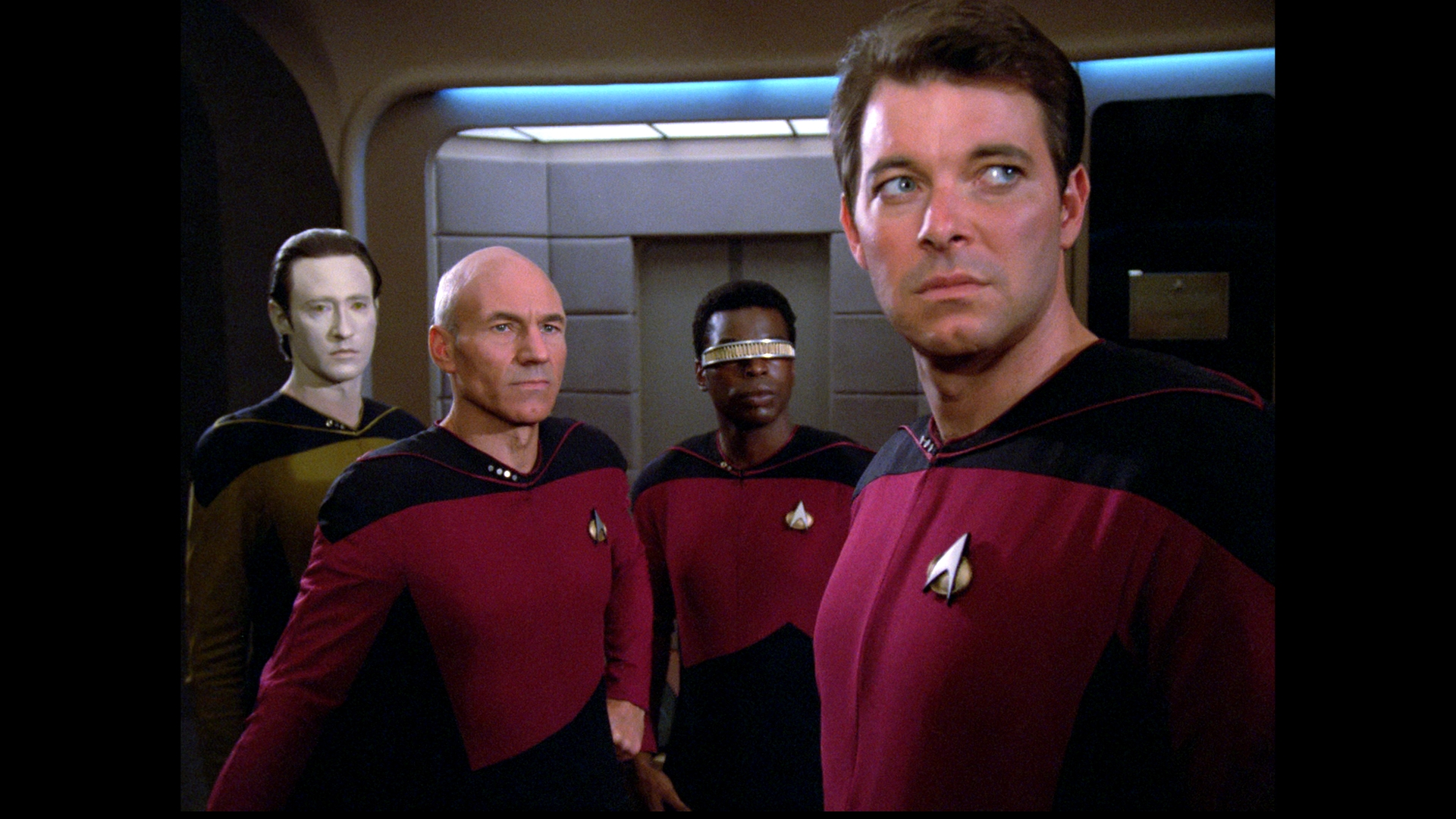
The ‘Holodeck‘ plays a huge part in the series as a whole. It’s a fantastic way to marry the past and future together. In this clever episode Picard attempts to escape into one of his favourite film noir simulations but gets more than he bargained for. Then when the holodeck malfunctions, Picard and his crew find themselves in the midst of a simulated “real-life” and perilous gangster mystery.

DATALORE – EPISODE 13

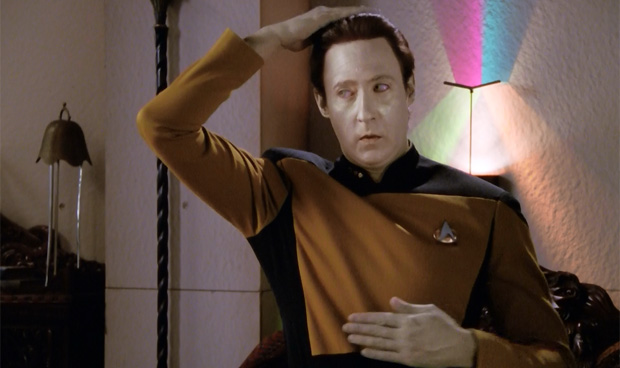
I love a good Jekyll and Hyde story and this one explores the origin of much respected android, Data. Brett Spiner is such a good television actor and he nails both roles as Data and his “brother” Lore, who, as genre conventions require, is basically bad Data and hell-bent on taking control of the Enterprise.
HEART OF GLORY – EPISODE 20

Obviously the stories involving the Federation are always interesting but often I really enjoy the more personal narratives. In this episode Michael Dorn as Worf finds his allegiances between the Enterprise and fellow Klingons tested. It’s a fine character exploration as we get to see Worf’s warrior persona versus the more reasoned Starfleet side.

THE ARSENAL OF FREEDOM – EPISODE 21

War, or threat of war has always been at the heart of many great episodes. The concept that a planet of arms dealers who are killed by their own hi-tech product was a great idea. It also gave the crew and Enterprise major threats on the planet they visit and in space. The action, character development and suspense make this a very thrilling episode all-round.
SYMBIOSIS – EPISODE 22

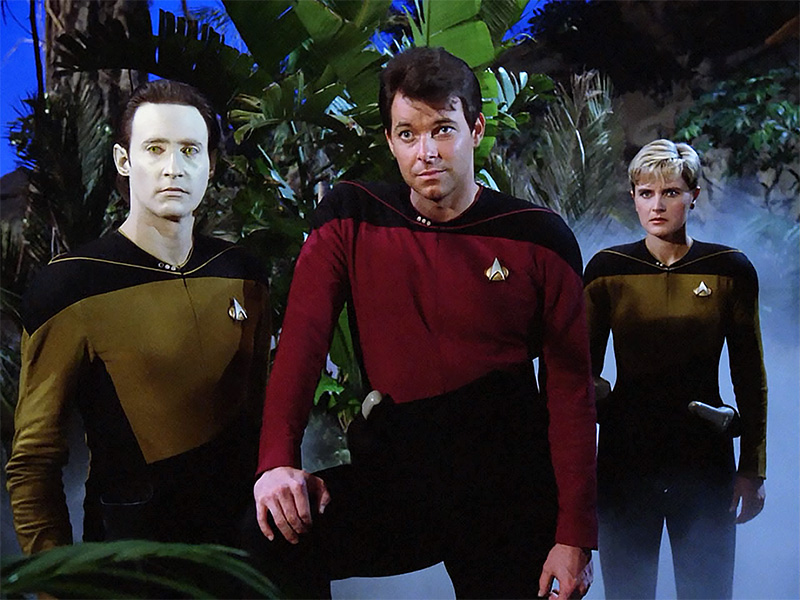
Social commentary was a key component of the ‘Original Series’. Many episodes tapped into the zeitgeist of the 1960’s issues relating to war, race, religion and gender etc. TNG continued this tradition with Symbiosis which expertly explores the nature of narcotic addiction and how it can be exploited to negative effect by an alien race. I especially enjoyed the grey ending where the ‘Prime Directive‘ comes into play.

CONSPIRACY – EPISODE 25

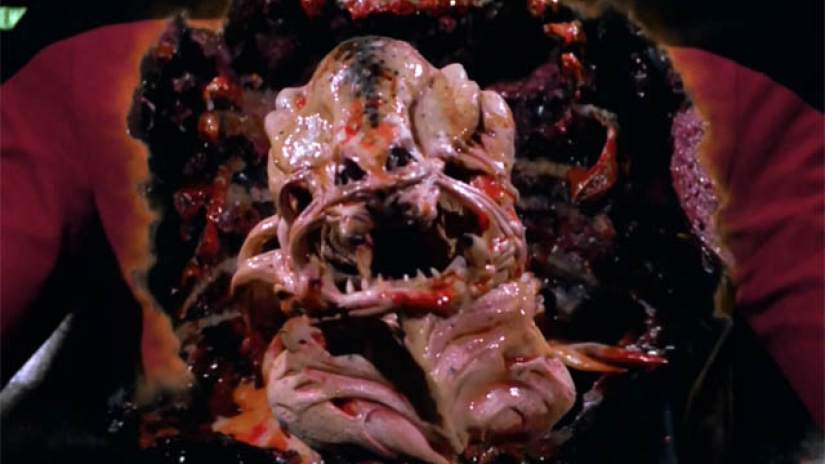
A major rule throughout Star Trek is that the Federation is not to be shown as corrupt. There have been exceptions to this in certain feature films and they get around this in Conspiracy with the Federation top brass invaded by parasitic aliens. The narrative was very strong and felt like a feature film story in scale. I also loved the David Cronenberg-style monsters appearance in the gory finale.
WHAT’S IN A NAME? A BRIEF CONSIDERATION OF FILM TITLES

WHAT’S IN A NAME? A BRIEF CONSIDERATION OF FILM TITLES

While reviewing the entertaining HBO show Barry, it struck me that I have an irrational dislike of film and TV programmes which resort to using people’s singular names in the title. Why, though? Let’s be honest: it’s not a big deal. So, why does it bother me? To answer this question I decided to a hold a brief whimsical exploration of such titles.

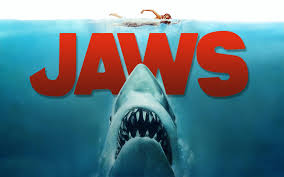
Titles are important. They create the first contact for the audience. They pull you in or push you away before you even know who made the film or who stars in it. I mean, who doesn’t want to watch a film called: Jaws (1975) or Alien (1979) or The Terminator (1984)? Conversely, who wants to watch a film called The Sisterhood of the Travelling Pants 2 (2008)?

Obviously, big decisions are made at the title-naming stage of any works. Or are they? I think naming a film after a single name, on the surface, just seems a tad lazy. But, on reflection, using single names for the titles of a film or TV show can be impactful and to the point.

It’s weird, because I don’t mind place name titles at all. In fact, Fargo (1996), is one of my favourite films. The singular title just works. Similarly, so does Chinatown (1974). Fargo, especially, names both a place and the two syllables within the place — ‘far’ and ‘go’ — suggest the actions of the characters in the story. Chinatown, on the other hand, is more poetic; naming a place but also hinting at something exotic and mysterious. Either that or a cultural area where you can visit and perhaps get a certain kind of food.

I also don’t object to personal names being part of the title. For example, Rosemary’s Baby (1968), is such a great title because it’s better than just plain old ‘Rosemary’. What does the singular Rosemary tell us? Very little. But add the ‘baby’ element and you conjure up suspense and a desire to know what will happen to Rosemary and her child. Similarly, When Harry Met Sally (1986), is a simple yet delightful title which tells you the character names, events and we’re most likely to witness some form of romance.

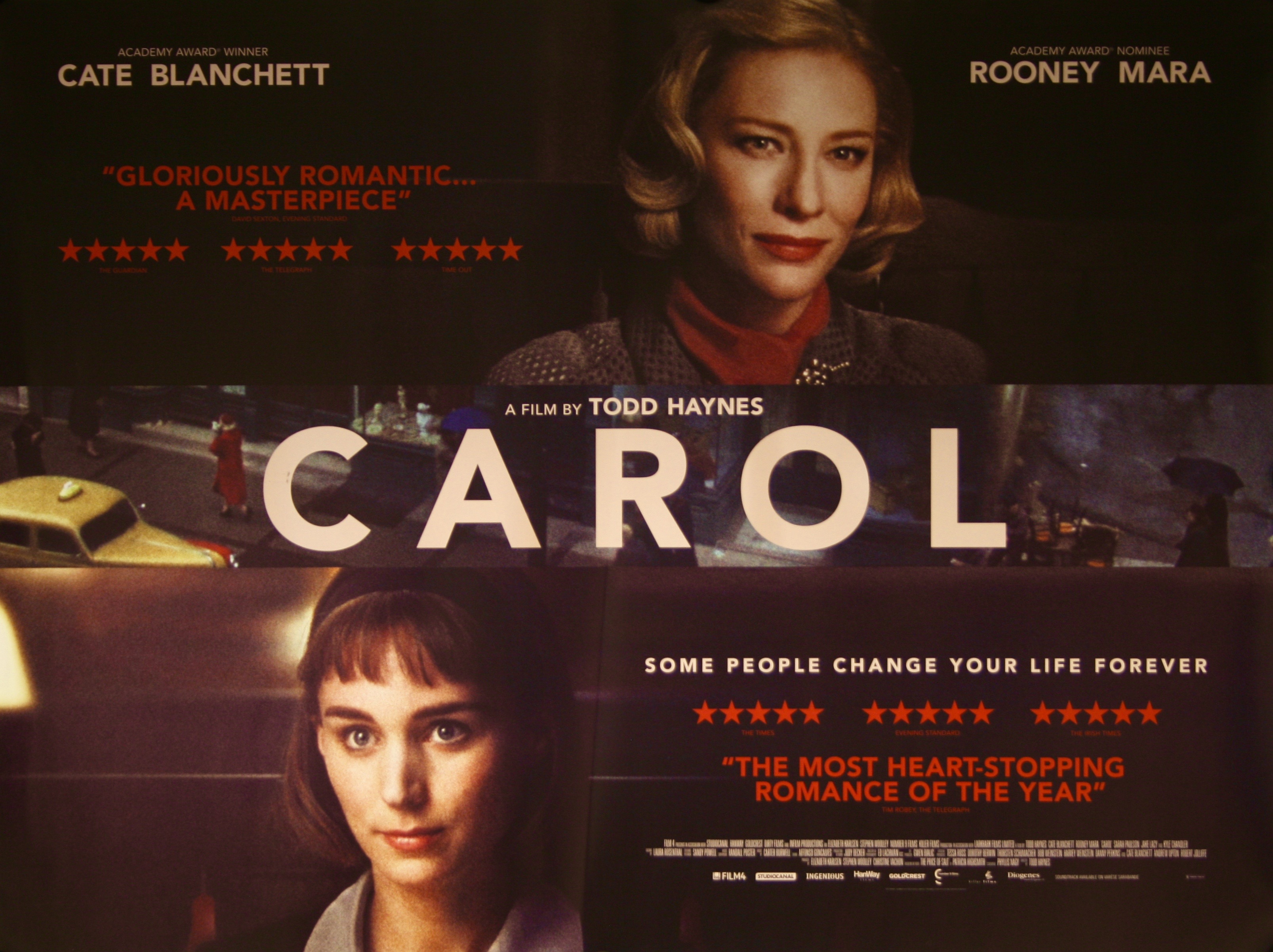
It may be that the film is an adaptation and just named after the original source material. Rebecca (1940), by Daphne Du Maurier is a good example of this. Rebecca works for me though as the name has a haunting feel; and this is certainly confirmed once you read the book or watch the film. On the other hand, the film Carol (2015), feels benign in comparison. Based on Patricia Highsmith’s literary classic, it’s a sumptuous and touching romance, however, the title did not draw me in. It was only when I saw the cast and that it was directed by Todd Haynes, I decided to watch it.

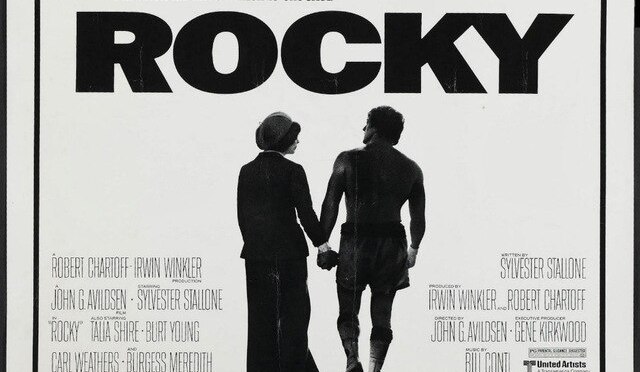
The best singular name film is Rocky (1975). Here is a classic underdog story of a boxer who is Rocky by name and rocky by nature. He’s streetwise but lacking intellect and seems to have literal rocks in his head. He’s scrabbling around trying to make ends meet with a head as hard as rock too. But, because of this he can take the blows and punches and still come back for more. We love the character because he never gives in; he literally rocks!

In conclusion, like everything, there are good and bad examples of film titles. Some singular named titles work way better than others. Titles like: Barry (2018), Dave (1993) and even a fine film like Carol, seem weak to me. Meanwhile, a title like Rocky just works perfectly. Anyway, here are eleven singular named film titles which also fly against my pet annoyance and mostly work really well.

Top Eleven “Single Name” Films

  1. Rocky (1975)
  2. Carrie (1976)
  3. Jezebel (1938)
  4. Lolita (1962)
  5. Amelie (2001)
  6. Tarzan (1932 etc.)
  7. Rebecca (1940)
  8. Leon (1994)
  9. Matilda (1996)
  10. Marty (1955)
  11. Nell (1994)

MY CINEMATIC ROMANCE #16 – JODIE FOSTER

MY CINEMATIC ROMANCE #16 – JODIE FOSTER

Having recently caught the underwhelming B-movie crime movie, Hotel Artemis (2018), on Sky Movies, I was suddenly reminded what a brilliant actor Jodie Foster is. She has been around for years so it’s easy to take for granted what a consummate performer and on-screen creator she is. Indeed, her sterling work held Hotel Artemis‘ weak narrative together; as she gave a nuanced and clever portrayal of a morally ambiguous medical professional.

Foster is an actor, director and producer who has received two Academy Awards, three BAFTAs, two Golden Globes and countless other nominations recognizing her screen skills and brilliance. She is one of those rare actors, like Ethan Hawke, who has transcended child stardom and become a prolific performer in adulthood too. Here are, in keeping with the rules of this feature, FIVE stand-out Jodie Foster roles that I can highly recommend you watch.

**MAY CONTAIN SPOILERS**

TAXI DRIVER (1976)

Already boasting acting heavyweights such as Harvey Keitel and Robert De Niro, this existential classic finds Foster as a teenage prostitute, Iris. It was a very risky role for all concerned, especially as Foster was only twelve at the time. However, it is one of the greatest child performances of all time, with Foster bringing vulnerability, toughness, smarts and pathos to girl lost on the mean streets of New York seeking salvation.

THE ACCUSED (1988)

Foster’s incredible performance as Sarah Tobias deservedly won her a first Academy Award. Tobias’ character is the victim of a brutal gang-rape and the film sets about to highlight the savagery of men and the injustices of the legal system. I have not seen this film in years but I will never forget Foster’s steely and emotional acting tour-de-force, plus the physical and mental bravery she committed to the stunning portrayal.

SILENCE OF THE LAMBS (1991)

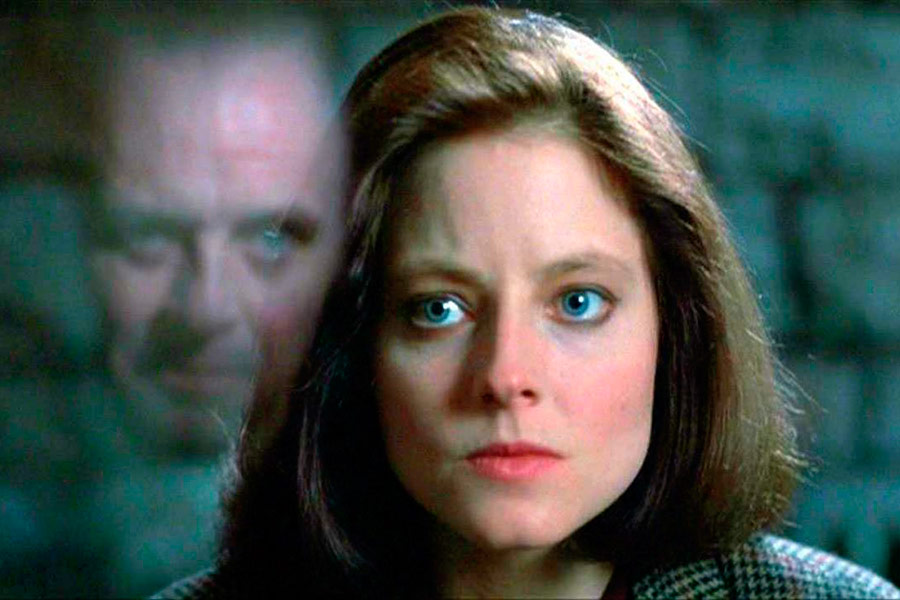
If I didn’t include her role of Clarice Starling then I would need my head examined. Obviously, NOT by Dr Hannibal Lecter, I must add. Indeed, while Anthony Hopkins gets much kudos for his startling turn as no one’s favourite chef, it’s Foster’s sterling work which glues the film together. All in all it’s almost a perfect genre film which owes much to Thomas Harris’ fine characterisations of Lecter and Starling and Jonathan Demme’s excellent direction. Nonetheless, Foster brings the tough, determined, yet vulnerable, FBI rookie to life brilliantly; and her scenes with Hopkins spark, scare and thrill especially.

CONTACT (1997)

I wasn’t a massive fan of this film when it was first released. That was because I was expecting something more action-based akin to Robert Zemeckis’ previous body of work. However, Contact, on subsequent views is an emotionally rich and intelligent look at religion, science and contact with extra-terrestrials. Foster is Dr Ellie Arroway, a scientist who utilises radio signals to chart potential alien signals in space. In a role which doesn’t exclusively find her life in danger, Foster is able to show her range as an intelligent, heartfelt and sensitive character. As such Dr Arroway is, amidst the vast expanse of space and time, ultimately searching for that all-encompassing and universal desire: love.

INSIDE MAN (2006)

I love this heist film because it has so many brilliant aspects; notably one of the cleverest twists in recent movie history. Spike Lee directs in confident style, with Denzel Washington and Clive Owen excellent as the lead cop and main criminal, respectively. Jodie Foster steals her scenes as a feisty and venal fixer brought in by Christopher Plummer’s bank owner, to handle a more “delicate” element of the robbery. I liked that Foster chose a less heroic character to portray, as she struts and sells her services to the highest bidder. Ultimately, her Madeleine White is anything but white; instead she’s a black-hearted vulture, dealing with the greedy capitalists and politicians of first-world Manhattan.

CLASSIC MOVIE SCENES #8 – DEAD MAN’S SHOES (2004) – RICHARD MEETS SONNY

CLASSIC MOVIE SCENES #8 – DEAD MAN’S SHOES (2004) – RICHARD MEETS SONNY

Directed by: Shane Meadows

Produced by: Mark Herbert, Louise Meadows

Written by: Paddy Considine, Paul Fraser, Shane Meadows

Cast: Paddy Considine, Toby Kebbell, Gary Stretch, Stuart Wolfenden etc.

Cinematography: Danny Cohen

**MAY CONTAIN SPOILERS**

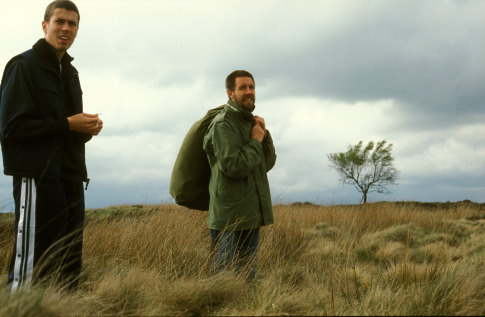
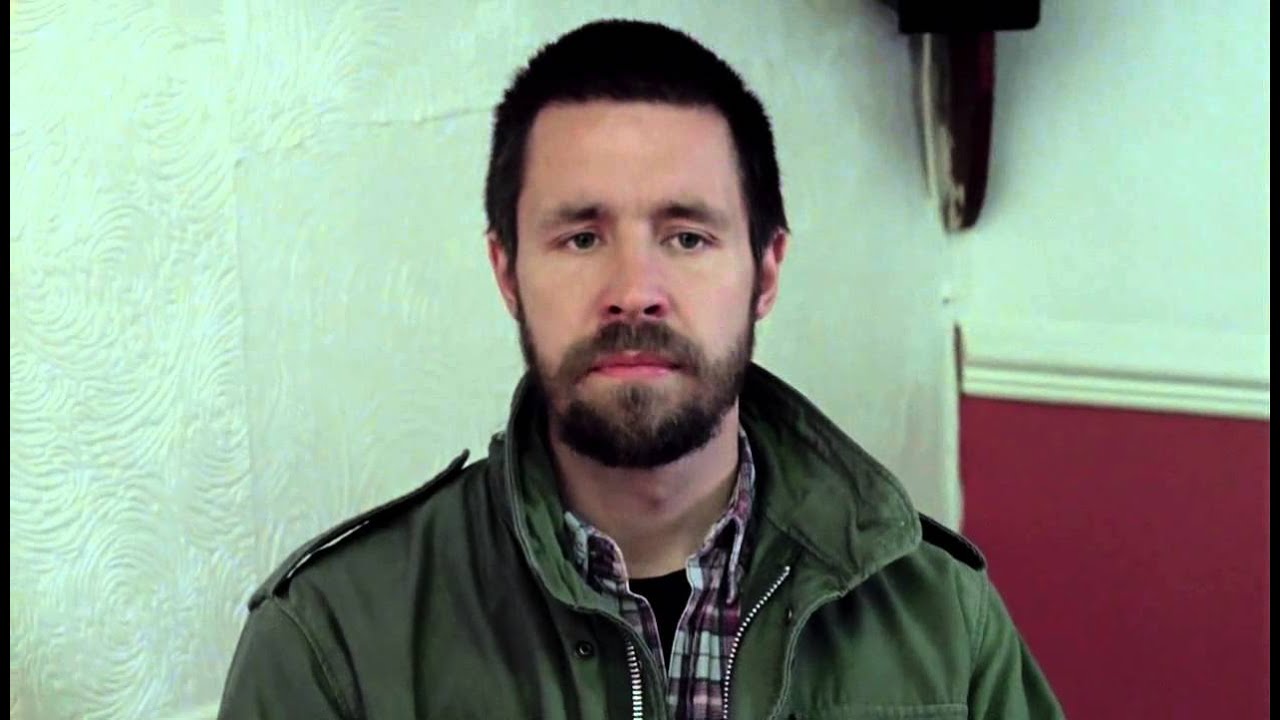
Shane Meadows’ Dead Man’s Shoes (2004) is both a revenge thriller and a metaphor for the lost youth of England. Specifically, the youth of the Midlands discarded and forgotten by society.

Paddy Considine gives an incredible performance full of intensity, guilt, pathos, pain, self-loathing and regret. He portrays, Richard, a returning soldier, out to get back at those that hurt his brother, Anthony (Toby Kebbell). The film asks: can revenge absolve guilt? Alas, there is no easy answer.

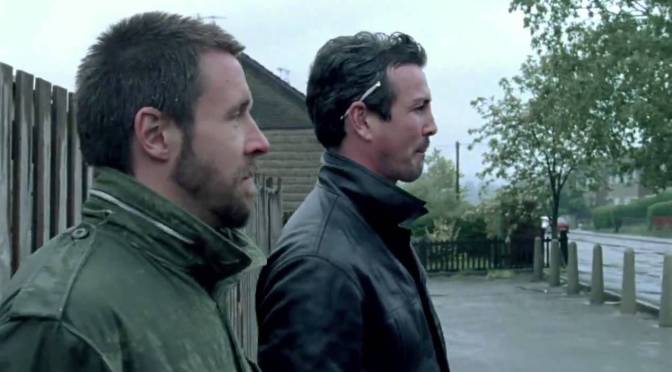
The film was shot in three weeks on a shoestring budget. Among many, many brilliant and disturbing scenes is the one where Richard initially meets main gang-leader, Sonny (Gary Stretch). It’s a short but impactful scene full of menace and suspense. Richard makes it plain he is coming for Sonny and his motley crew of low level criminals. Apparently a larger scale confrontation was scripted, but due to budget constraints this scene replaced it; proving that more often than not less is definitely more.

UNDER-RATED CLASSICS #4 – TRIANGLE (2009)

UNDER-RATED FILM CLASSICS #4 – TRIANGLE (2009)

Written and directed by: Christopher Smith

Produced by: Jason Newmark, Julie Baines, Chris Brown

Starring: Melissa George, Michael Dorman, Rachael Carpani, Henry Nixon, Emma Lung, Liam Hemsworth

Music by: Christian Henson

Cinematography: Robert Humphreys

**MAY CONTAIN SPOILERS**

I started this series a while ago and posted a few times on the subject with multiple entries; however, I have now decided to make it a feature, like ‘Classic Movie Scenes’, that concentrates on singular films. My rules are simple. An under-rated classic can be a film I love, plus not be one of the following:

  • Must not have won an Oscar.
  • Must not have won a BAFTA.
  • Must not appear in the AFI Top 100 list.
  • Must not appear in the IMDB Top 250 list.
  • Must not appear in the BFI 100 Great British films.
  • Must not appear in the all-time highest grossing movies of list.

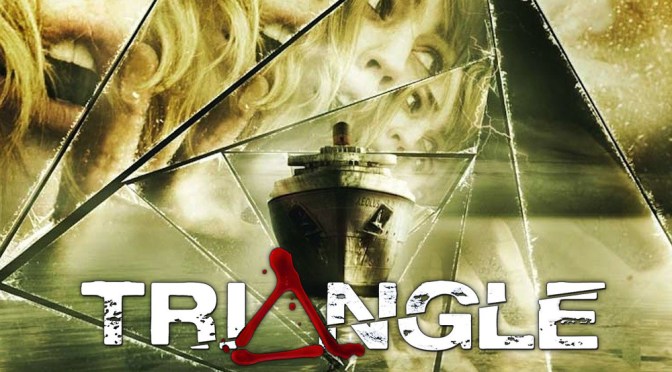
So, here’s a film, called Triangle (2009) which I recently caught again on the Horror Channel and given the critical acclaim many films get, I just cannot work out why this isn’t considered more of a classic.

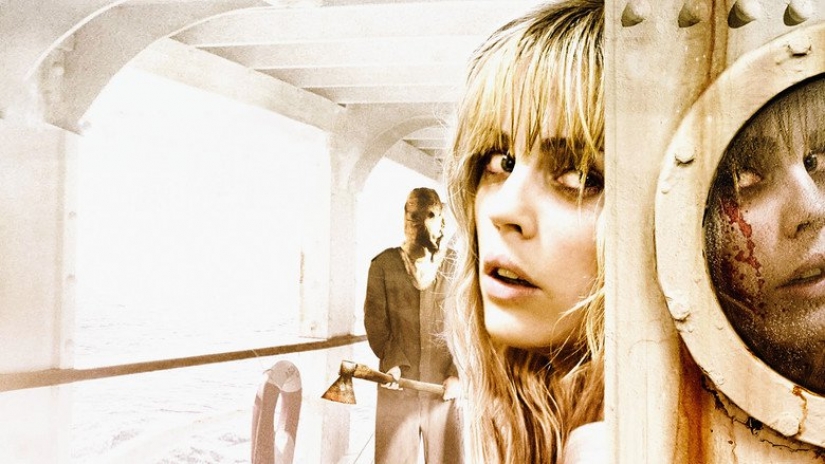
This is an absolute cracker of a Sisyphean-time-loop-paradox-movie. Melissa George portrays a single mother hoping to escape her stress with a yacht trip with wealthier friends. However, things don’t go according to plan as a massive storm knocks the group way off course.

Without giving anything away this film then went into a loopy and gripping direction with an exceptionally clever criss-cross narrative. The plot is both ingenious and creepy as violent events and startling deaths begin to mount up. Melissa George carries the film incredibly well with a performance which crackles with pathos and fear. Lastly, director/writer Christopher Smith’s work should have heralded more illustrious and bigger budget films based on this incredible existential horror classic.

MY TOP ELEVEN MARVEL UNIVERSE FILMS

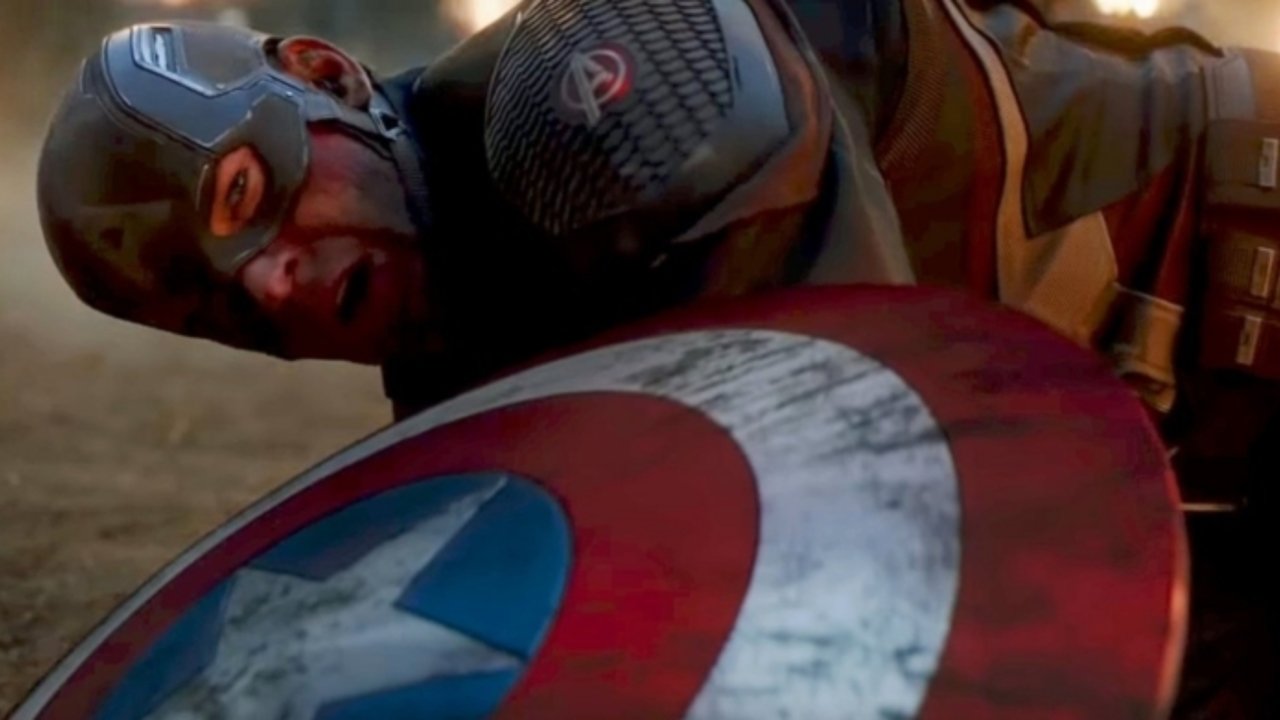
With Avengers: Endgame gloriously bringing to a close the twenty-two film interconnected multiverse, I thought it may be fun to pick my favourite films of the superhero releases. Of course, that won’t be the end of the Marvel/Disney money-making behemoth but we can take a breath for a moment.

In keeping with Thanos’ modus operandi I have chosen half of the films in release date order. At the end I pick — under pain of death — my favourite THREE! My favourite three are based on impact on release, entertainment value, quality of story, direction and writing etc. Plus, they are films I could watch again and again. Although, to be honest I can watch most of them again as they are all such fun and easy viewing.

If you would like to read my review of Avengers: Endgame – then you can find it HERE.

MY TOP ELEVEN MARVEL UNIVERSE FILMS (IN ORDER OF RELEASE)

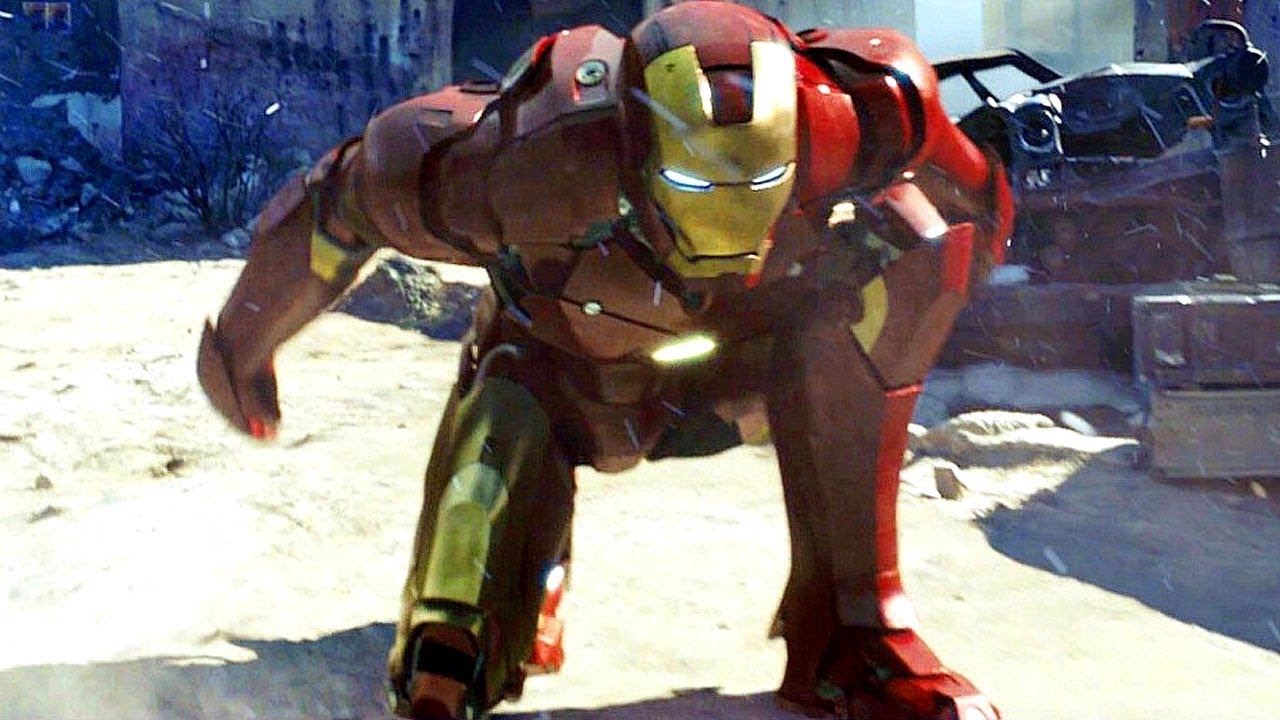
IRON MAN (2008)

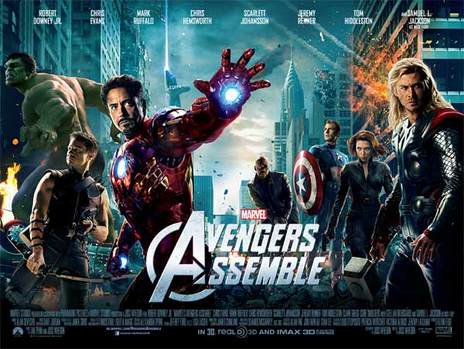
AVENGERS: ASSEMBLE (2012)

CAPTAIN AMERICA: THE WINTER SOLDIER (2014)

GUARDIANS OF THE GALAXY (2014)

ANT-MAN (2015)

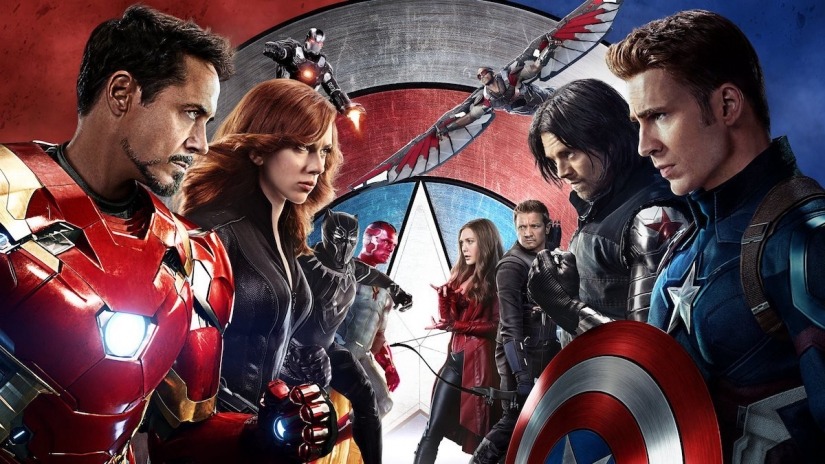
CAPTAIN AMERICA: CIVIL WAR (2016)

DOCTOR STRANGE (2016)

THOR: RAGNAROK (2017)

BLACK PANTHER (2018)

AVENGERS: INFINITY WAR (2018)

AVENGERS: ENDGAME (2019)

MY TOP THREE MARVEL UNIVERSE FILMS (BY PAIN OF DEATH)

1. CAPTAIN AMERICA: WINTER SOLDIER (2014)

2. GUARDIANS OF THE GALAXY (2014)

3. MARVEL’S AVENGERS: ASSEMBLE (2012)

IN PRAISE OF BBC’S LINE OF DUTY + SEASON 5 – TV REVIEW

BBC’S LINE OF DUTY & SEASON 5 REVIEW

Created and Written by Jed Mercurio

Directors (Season 5): John Strickland and Sue Tully

Cast (Season 5): Taj Atwal, Martin Compston, Adrian Dunbar, Stephen Graham, Anna Maxwell Martin, Vicky McClure, Rochenda Sandall, Polly Walker etc.

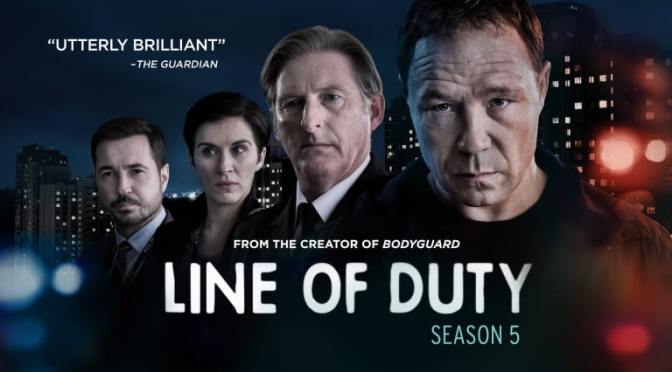
I was slightly late to the Line of Duty corrupt police drama party. Thankfully, I caught up with it by watching the first four seasons on Netflix. The fifth season has just completed a run over the last six weeks on BBC1 and thoroughly thrilling it was too. Creator and writer Mercurio is a bulletproof show-runner; a genre writer with a proven hit rate whose work almost always brings commercial, critical and audience success.

Having achieved early TV writing acclaim with dark medical comedy, Cardiac Arrest (1994-1996), Mercurio’s subsequent drama Bodies (2004 – 2005) was another critical hit. Latterly, Bodyguard (2018) and Line of Duty (2012 – present) have also proved highly successful. Undeniably, Line of Duty is a massive hit for the BBC. It has received awards and nominations from: the Royal TV Society, the Writers’ Guild and BAFTA. Moreover, it was also voted in the top BBC shows of all time. Therefore, after the success of Season 4 on BBC1, Season 5 was awaited with great anticipation.

THE LANGUAGE OF LINE OF DUTY

If you haven’t seen Line of Duty then it is highly recommended as quality genre storytelling. Over five seasons it has received much media attention and a strong fan following. It’s also fun looking out for the tropes, genre expections and language built into the classic cop drama. So, a game of Line of Duty bingo would certainly include:

  • AC12’s lead characters: DS Steve Arnott, DI Kate Fleming and Superintendent Ted Hastings will be committed to nicking bent coppers.
  • Massive and unexpected plot twists.
  • Untimely deaths of major characters.
  • Police Officers being bigger criminals than actual crooks.
  • The main antagonist will likely be revealed early on to the audience like an episode of Columbo.
  • Brilliantly written and lengthy police interview scenes often dominate whole episodes.
  • The main antagonist can at any time be superseded by a bigger antagonist like an episode of ‘24‘.
  • Main antagonists will be played by well known actors such as: Lennie James, Keeley Hawes, Daniel Mays and Thandie Newton.
  • Minor sub-plots will often blow up into being the main plot.
  • Red herrings galore with misdirection and cliff-hanger writing tricks becoming legion.
  • Line of Duty language and catchphrases have become culturally familiar including: “Fella”; “Mother of God”; “Bent Coppers”; and my favourite: “DCI. . . has the right to be questioned by an officer at least one rank senior.”
  • Fantastic hard-boiled one-liners and dialogue that Raymond Chandler would be proud of.

I could go on but I can highly recommend all five seasons of the show. While it exists within the police drama genre the lead characters are well written. Not simply basic binary heroes, they are complicated humans, yet highly determined and professional. The plots are serpentine and often become very complex, threatening to swallow their own tail at times. Nonetheless, if Alfred Hitchcock created a long running crime drama then Line of Duty would be it.

LINE OF DUTY – SEASON 5 REVIEW (WITH MINOR SPOILERS)

Season 5 began with an all action and breathless opening couple of episodes. Yet, by the end it transformed into a claustrophobic, theatrical and tense police interview showdown. While Season 4 found Thandie Newton desperately trying to evade capture using her intelligence and guile, Season 5 was more explosive. Opening with a pulsating robbery, with an OCG (Organised Crime Group), raiding a police vehicle convoy carrying confiscated drugs and weapons; AC12 were soon hunting armed robbers and investigating the death of several Police Officers.

The head of the crime gang is, or so we think, John Clayton. He is portrayed by fine character actor, Stephen Graham. It soon turns out Clayton is not what he seems and is playing a very dangerous game as an undercover cop. But, is Clayton still undercover or has he gone rogue? Clayton’s gang are not to be crossed and their boss is an anonymous high-ranking corrupt Police Officer referred to only as ‘H’. They communicate via computer text software, thus creating a fog of invisibility and suspicion.

As the various plot strands ravel and unravel further robberies and murders occur, with Mercurio creating a series of tense stand-offs and action set-pieces. The stakes get higher and higher until our very own Ted Hastings becomes number one suspect in the chase for ‘H’. Adrian Dunbar as Hastings is especially brilliant in this season. His character finds his whole life and history turned upside down and in freefall. I mean, could this beloved character be the arch-nemesis? The conflict created by Mercurio is totally absorbing until the very final reveal.

Overall, one could argue that Season 5 goes too far to attempt to out do the previous seasons. However, I loved both the complexity and familiarity of what I was watching. The action, suspense, twists, doubt, shocks and ‘whodunit’ plot were played to perfection. We also got a bit of characterisation amidst the heavy plotting as we found out about: Hastings’ history in Northern Ireland; Fleming’s family issues; and the impact of Arnott’s spinal injury (from a violent attack in Season 4). We also got some new characters such as the formidable DCS Carmichael featuring a stand-out performance from Anna Maxwell Martin.

Ultimately, this is a cops and robbers show which plays the numbers very well. Furthermore, like a game of bingo you never know the order the numbers will come out, who’ll win or lose and whether the game is, in fact, rigged so no one really profits in the end.

Mark: 9 out of 11

MY CINEMATIC ROMANCE #15 – JACQUES AUDIARD – WITH: THE SISTERS BROTHERS (2018) – CINEMA REVIEW

MY CINEMATIC ROMANCE #15 – JACQUES AUDIARD

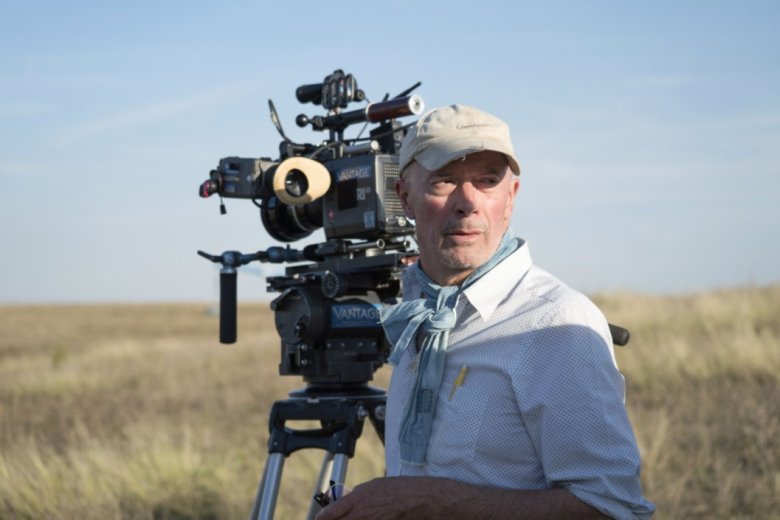
Experienced French filmmaker Jacques Audiard, makes what I call proper films. I mean, have you watched the cinema of yesteryear, notably the 1970s, with stories about characters that are deeply flawed and even possibly unlikeable. Well, Audiard still makes those kind of films. He takes risks representing human beings on the edge of society and perhaps struggling with life; people who often make left-field decisions to improve or escape their existential plight.

For my latest piece in the My Cinematic Romance series, I will look at some key Audiard films well worth watching. I will also incorporate a mini-review of his most recent release, tragi-comedy Western, The Sisters Brothers. If you haven’t seen much of Audiard’s work and are drawn to intense human character studies with absorbing narratives, then I highly recommend it.

**MAY CONTAIN SPOILERS**

THE SISTERS BROTHERS (2018) – CINEMA REVIEW

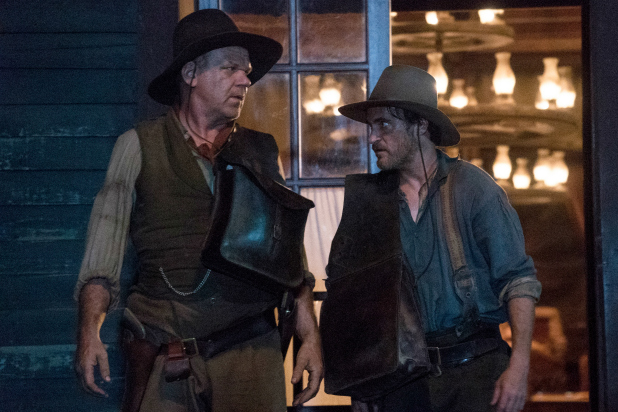
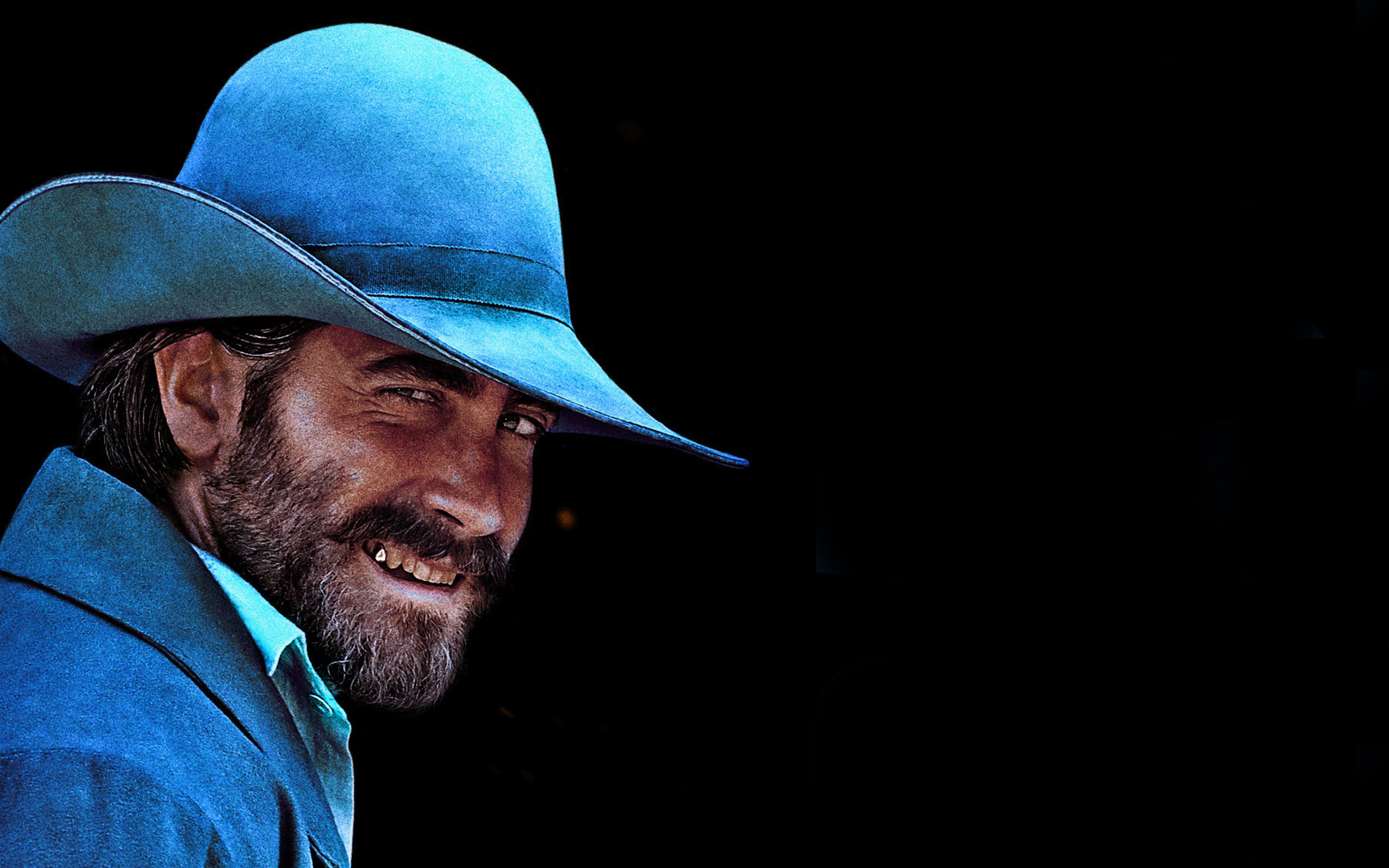
Starring a quartet of fantastic scene-stealing actors in: Riz Ahmed, Jake Gyllenhaal, Joaquin Phoenix and John C. Reilly, this Western bends the genres between drama, comedy and tragedy. Based on Patrick DeWitt’s critically acclaimed novel, the film is set in the 1850s during the Californian Gold Rush. It centres on the titular brethren, easier-going, Eli (Reilly), and drunken Charlie (Phoenix); hired bounty hunters who kill mainly for an enigmatic individual called the Commodore.

The film unfolds in what I would call a curious romp fashion; and it is certainly guaranteed to attain future cult status. Moreover, it also echoes the tone and eccentricity of recent Westerns like: The Ballad of Buster Scruggs (2018) and Slow West (2015). While Reilly and Phoenix’ characters form a humorous double-act in terms of verbal exchanges, their actions betray the fact they are cynical, hard-bitten and murderous. A product of their amoral milieu they remain the antithesis of the stylish and charming outlaws Butch Cassidy and the Sundance Kid.

Their latest quarry and target for the Commodore is Ahmed’s idealistic chemist, Herbert Warm. Assisting them is Gyllenhaal’s likeable tracker, John Morris. The brothers’ haphazard pursuit of Warm is a fun and bloody journey replete with: chaotic shootouts, barnstorming brawls, hilarious bickering and right-turn narrative twists. Overall, it’s probably too idiosyncratic to impact the box office, yet, Audiard directs with his usual love for morally ambiguous characters. Lastly, the natural lighting and colour scheme is beautifully shot throughout; while Alexandre Desplat’s score resonates impeccably. Thus, these elements plus Phoenix and Reilly’s tremenodous on-screen sparring make this a very enjoyable picaresque Western tale.

Mark: 8.5 out of 11

OTHER RECOMMENDED AUDIARD FILMS

READ MY LIPS (2001)

This Audiard thriller centres on Emmanuelle Devos’ office worker, Carla, and has echoes of Hitchcock and Coppola’s paranoiac classic The Conversation (1974). Hiding her deafness from colleagues, Carla enters into a robbery plot with Vincent Cassel’s ex-con and a fascinating serpentine double-crossing narrative ensues.

A PROPHET (2009)

This is one of the best prison films I have ever seen. It is a perfect example of the emotional power of linear filmmaking. As we follow Tahar Rahim’s lowly prisoner rise through the prison ranks using: violence, luck, cunning and smarts, we feel every emotion and tension he does during an incredibly compelling journey.

RUST AND BONE (2012)

Marion Cotillard and Matthias Schoenaerts fizz with passion, star quality and brute sexuality in this “opposites-attract” romance drama. Cotillard is a Marine Park employee who falls for Schoenaerts low level criminal but obviously the path of love is a jagged one. Full of beautiful imagery and brutal violence, it’s a memorable character drama full of bitterness, redemption and pain.

DHEEPAN (2015)

Dheepan starts as a humane story of survival and the immigrant experience, before crossing over into explosive thriller territory by the end. Further, Audiard casts his leads with unknown actors and wrings every ounce of feeling from the sympathetic characters. As the Sri Lankan Tamil, Dheepan, and his “wife”, struggle with life on a Paris council estate, what may seem small in scale is in fact emotionally very epic.

US (2019) – CINEMA REVIEW

US (2019) – CINEMA REVIEW

Directed by: Jordan Peele

Produced by: Jason Blum, Ian Cooper, Sean McKittrick, Jordan Peele

Written by: Jordan Peele

Starring: Lupita Nyong’o, Winston Duke, Elisabeth Moss, Tim Heidecker, Shahadi Wright Joseph, Evan Alex etc.

Music: Michael Abels

Cinematography: Mike Gioulakis

**MAY CONTAIN SPOILERS**

Orson Welles is reportedly quoted as saying, “A movie in production is the greatest train set a boy could ever have.” Thus, Jordan Peele proves this point with an unstoppable cinematic train ride in Us (2019); that while threatening to career off the rails on occasions, proves to be a thrilling work of horror-meets-social-satire entertainment.

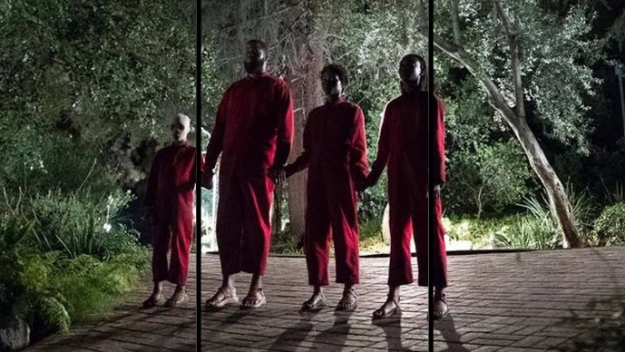
The film centres on an everyday normal family of four — the Wilsons: Adelaide (Lupita Nyong’o), Gabe (Winston Duke), and their two children — as they visit their summer home by the beach. Haunted by a scary incident in a hall of mirrors when a child, Adelaide is afraid to return to the beach where it occurred, until her husband’s goofy enthusiasm wins her over.

Events begin to turn and twist askew when their son, Jason, seems to go missing for a while. Even though he returns, paranoia and fear sneaks into Adelaide’s psyche. Things become even stranger when a mysterious family of four appear in the Wilsons’ drive in the dead of night. This is when the true face of horror surfaces and a pulsating home invasion and prolonged chase sequence ensues.
Peele has clearly seen a lot of horror films. As such the early scenes build tension perfectly with: stormy weather; a strange drifter with biblical sign haunting the boardwalk; creepy hall of mirrors; the choral soundtrack reminiscent of Rosemary’s Baby (1968); the son, Jason wearing a Jaws (1975) movie t-shirt; the flock of seagulls on the beach echoing Hitchcock’s The Birds (1963); and so it goes.

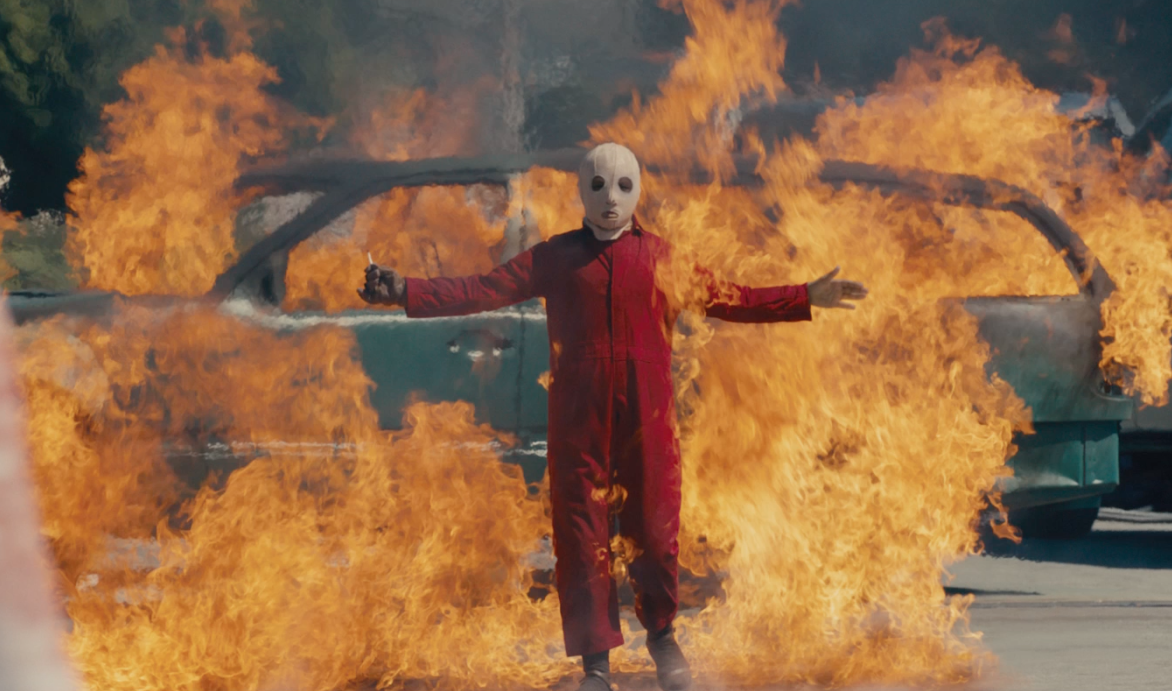
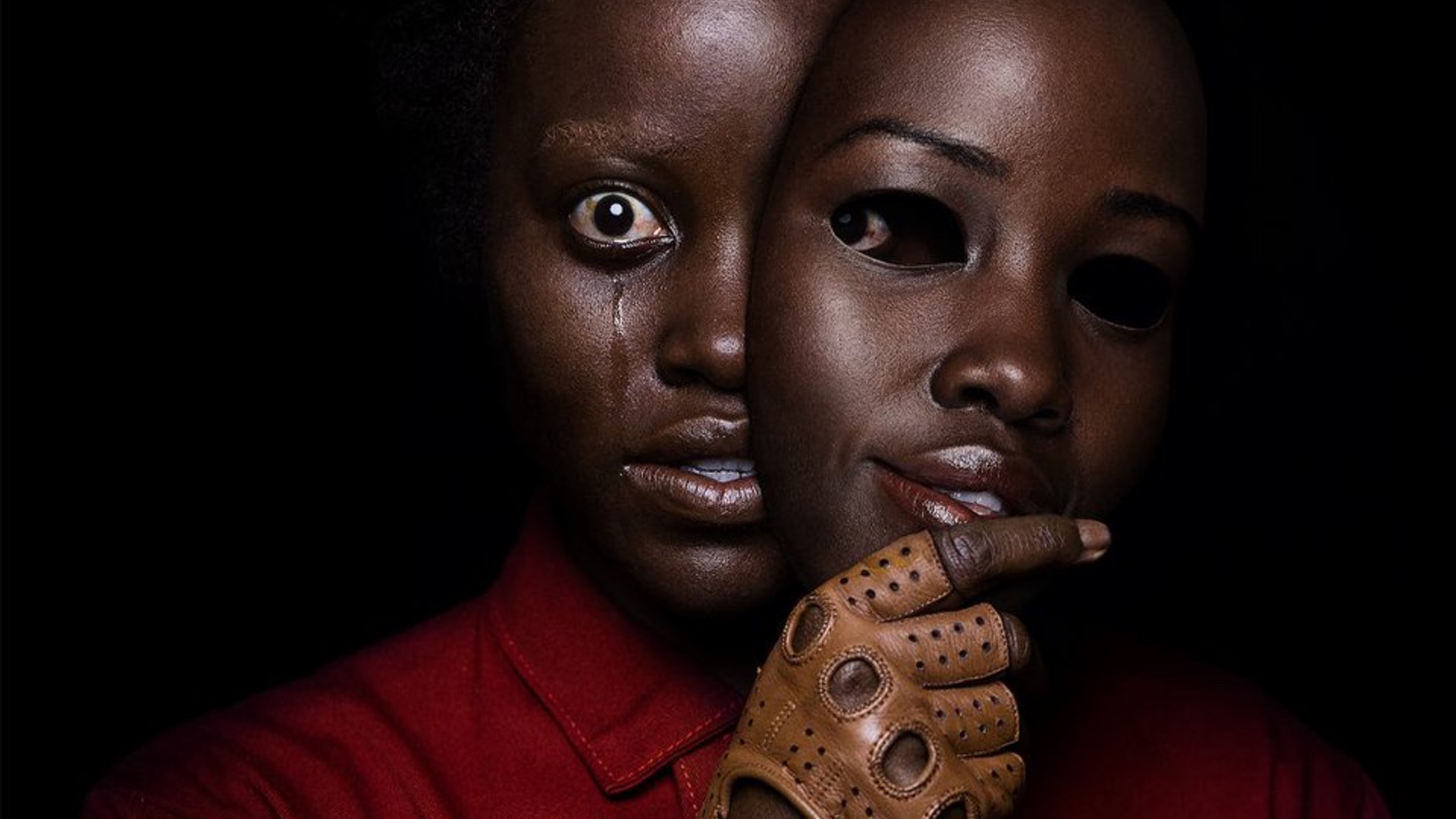
Such horror tropes build a huge wall of tension so effectively it’s almost a relief when released during the big doppelganger reveal. Subsequently, the blood-letting ensues in some meaty fights and exchanges involving weapons, such as: baseball bats, metal pokers, ornaments and golf clubs. The doppelgangers themselves are clearly a reflection of the self; twisted visions of humanity turning against the characters, as they literally become their own worst enemies.

The cast are expertly marshalled by Peele, as he gets doubly great performances from all the actors. The logistics of shooting doubles must have been tough, especially so many at a time. The featured cast are very good, notably Winston Duke as Gabe Wilson. He offers some light, comedic and physical humour amidst the gore. Meanwhile, Lupita Nyong’o steals the show in the dominant twin roles of Adelaide and the nefarious Red.

It’s Adelaide’s personal journey of double/split identity which provides the spine of the film. As she fights to save her family she must also literally battle the demon inside and outside herself. This thematic is the most powerful of the film for me, as Nyong’o’s acting is full of emotional resonance.

Perhaps, not as successful, when compared to Get Out, is the attempt to marry the personal conflict to the socio-political landscape. While Peele’s first film was an overt satire of slavery and white America oppression and exploitation, Us’ targets are intellectually more ambiguous and open to interpretation. I mean take your pick from: class, capitalism, consumerism, race, de-politicization, narcissism, over-population, split personalities, government conspiracies; and over-arching fear of ‘the other’.

These and many more themes are on Peele’s radar, as is his overall critique of the United States (U.S. = US – geddit!). That they don’t quite gel coherently is not a criticism but a positive indictment of his ambition. Conversely, while I felt the underlying power of Peele’s call-to-arms and desire for human unity in Us, one could argue the fire, smoke and mirrors of these ideas subtract from the power of the families’ personal struggle. Moreover, what is the solution to the government copying us or burying our doubles underground? Is it to kill the others and hold hands in unity? Who knows? What I can say is such naive idealism in horror has never been so entertaining.

After the success of the slavery-soul-swapping and genre bending thriller, Get Out, Jordan Peele has tasked himself with trying to top that fine movie. Well, if Get Out was the starter, Us is the main meal. In fact, one could argue the film is so full of ideas that it threatens to fail due to sensory overload. However, Peele is such a multi-talented storyteller he skilfully delivers, wholly thanks to great writing, masterful film production, an exceptional soundtrack and an incredible cast.

Mark: 9.5 out of 11

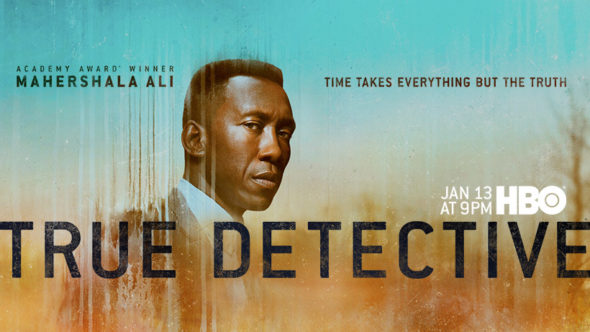
TRUE DETECTIVE (2019) – SEASON 3 – HBO TV REVIEW

TRUE DETECTIVE (2019) – SEASON 3 – HBO TV REVIEW

Created by: Nic Pizzolatto

Writers: Nic Pizzolatto, David Milch, Graham Gordy

Directors: Jeremy Saulnier, Daniel Sackheim, Nic Pizzolatto

Starring: Mahershala Ali, Carmen Egogo, Stephen Dorff, Scoot McNairy, Ray Fisher etc.

No. of episodes: 8

**MAY CONTAIN SPOILERS**

Time is an unforgiving concept. It marches on and absolutely never stops until we are dust. While young we believe we have more time, but deep down we can see our own death. That fear will either drive us forward positively or send us insane. Old age is perhaps the bitterest turn in time we must suffer. If we live long enough to collect a litany of fine memories, the mind disintegrates them, cruelly disallowing us from recalling such happy moments. There is also regret. If you have a conscience you are likely to suffer regret. Regret of what you have done wrong, not done right and been simply incapable of doing. Lastly, it is said time and tide wait for no man or woman. But it is waiting; waiting for us to die.

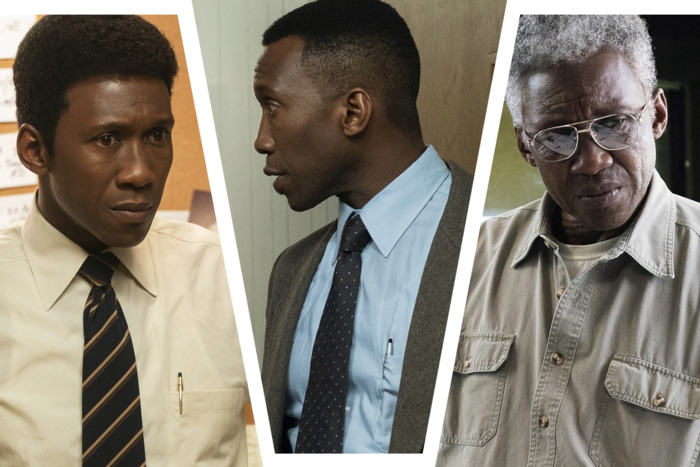
Existential police procedural drama, True Detective, is back for a third season and very good it is too. Starring Mahershala Ali and Stephen Dorff as the, as usual, mismatched cops; it concerns the hunt for two missing children in the Ozarks, Arkansas. Further, the supporting cast include the impressive Carmen Egogo and always compelling Scoot McNairy. Set over eight compelling episodes we criss-cross three separate timelines that centre on the said case. Events unfold circa 1980 (when the crime occurred); circa 1990 (when the investigation is re-opened); and the present with the characters aged and withering from time’s unrelenting march. The complex structure really enhances the genre plot as the intriguing timelines over-lap and bleed into one another, thickening the mystery and heightening suspense.

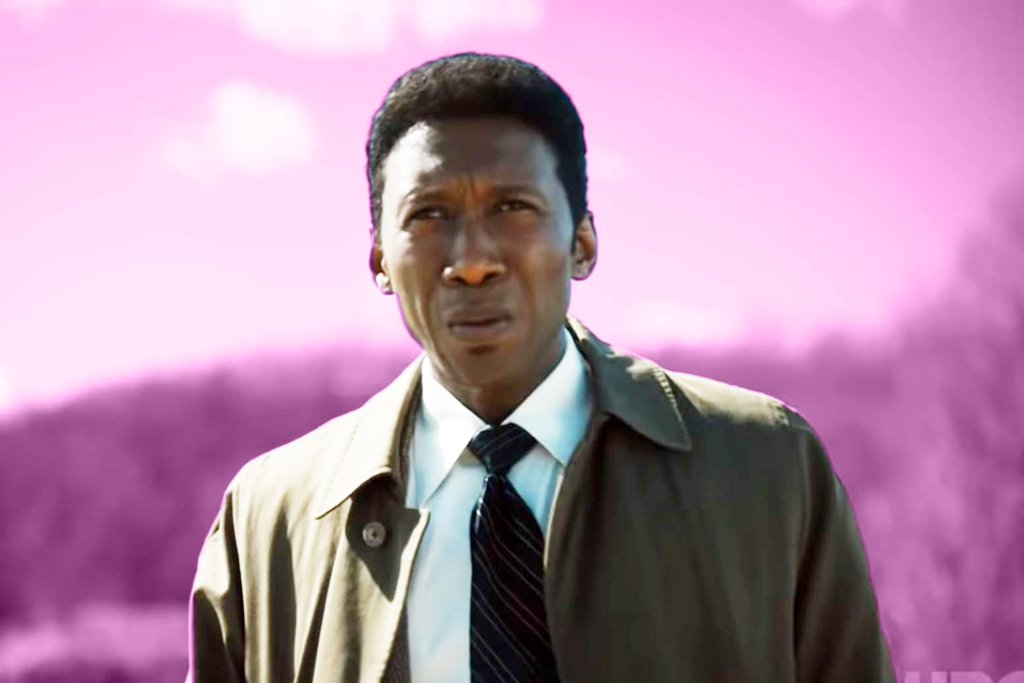
While the criminal case is central to the conventions of the genre, writer Nic Pizzolatto is as much interested in the character development and themes pertaining to: love, time, regret, guilt, aging, memory and death. The character of lead detective, Wayne Hays (Ali) is fascinating. A former U.S. soldier who served in Vietnam, he is a complex soul striving for meaning and trying to do the righteous thing. Consistently, however, he finds his race and social standing a barrier to solving the crime. Through his trio of timelines we feel his sense of loss, love, isolation, anger, happiness and confusion. The confusion especially worsens when his older self is hit by Alzheimer’s. Indeed, it is incredibly heartfelt while he attempts to piece together events from memories past including: the crimes, his actions, violent events, and the romantic moments he had with his wife (Egogo.)

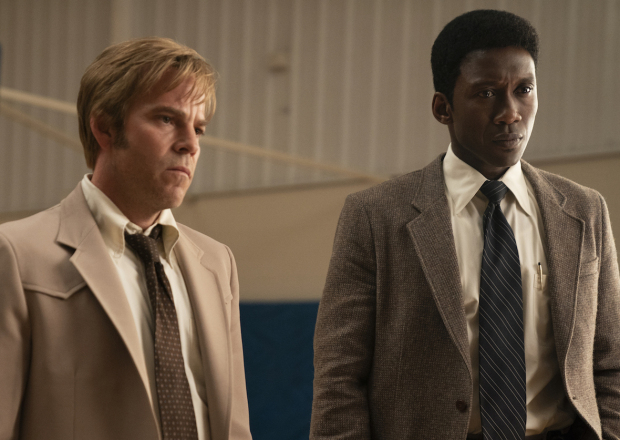
Once again, Mahershala Ali proves he is pound-for-pound one of the best actors around. He gives an incredibly nuanced and intelligent performance as Hays. To inhabit the same character in three different guises takes a particular skillset and the subtle differences in performance are a joy to behold. He is assisted by uniformly excellent direction and production design. Indeed, some of the editing is sublime as the images switch between the young Hays and older Hays brilliantly; dissolves, reflections and over-lapping montage effects used imaginatively throughout. Lastly, it’s was also great to see Stephen Dorff too in a prominent role as Hays’ no-nonsense partner, Roland West. Dorff provides ebullient support during the investigation and their friendship is a mainstay of the show.

After the scintillating first season which had Matthew McConaughey and Woody Harrelson burning the plasma off the TV screen with their intense performances, the unfocussed second season contained star acting power but a confused narrative. However, Season 3 is a fine return to form and if you love your cop shows: dark, existential, meditative, violent and intelligent, then this is definitely worth your time.