Tag Archives: drugs

Cinema Review: Him (2025) – find blood, sweat, and meltdowns galore in this visceral NFL thriller!

Cinema Review: Him (2025)

Directed by Justin Tipping

Written by Skip Bronkie, Zack Akers & Justin Tipping

Produced by Jordan Peele, Win Rosenfeld, Ian Cooper & Jamal Watson

Main cast: Marlon Wayans, Tyriq Withers, Julia Fox, Tim Heidecker, Jim Jeffries, Maurice Greene etc.

Cinematography by Kira Kelly

** MAY CONTAIN SPOILERS **


“In modern slang, “Him” is used to signify a person who is considered a standout or a “star” in their field, often in sports or entertainment.” — Google search result.


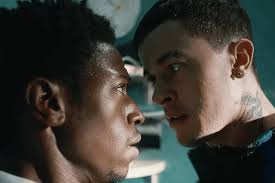
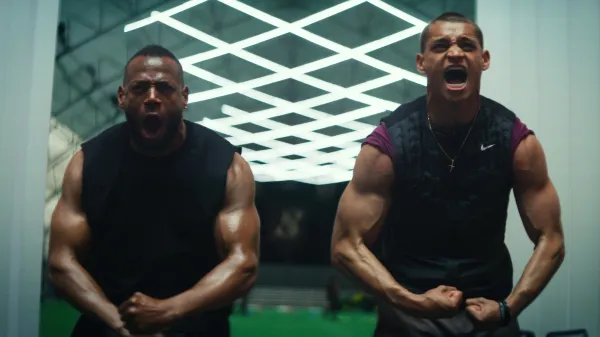
Him (2025) is a visually arresting and thematically potent descent into the underbelly of American athletic obsession — a pitch-black thriller that trades stadium lights for the strobe of psychological torment. Centered on Cameron “Cam” Cade, a young quarterback hungry to dethrone San Antonio Saviors’ reigning legend Isaiah White (a commanding Marlon Wayans), the film begins as a standard sports drama and swiftly morphs into something far darker. Director Justin Tipping captures the suffocating intensity of modern competition with a painter’s eye — sweat, blood, and neon collide in every frame, turning locker rooms and training fields into cathedrals of self-destruction.

As Cam endures Isaiah’s brutal “boot camp,” the film exposes the rot beneath the rhetoric of greatness. Fear, humiliation, and violence dominate the regimen, transforming mentorship into a form of ritualized hazing. Themes of steroid abuse, distorted masculinity, and father-son guilt weave through the story like poison veins. The omnipresence of social media — the constant surveillance, the demand for curated perfection — amplifies the claustrophobia. In its best moments, Him (2025) feels like a nightmarish hallucination of ambition, where performance and identity blur until nothing human remains.


Yet for all its kinetic power and aesthetic daring, Him (2025) stumbles when it comes to coherence. The screenplay rushes through emotional beats, failing to give its characters space to breathe or evolve. Key relationships and motivations are truncated by editing that favours rapid cuts over logic — the film’s pulse races, but its heart falters. The result is an experience that dazzles visually but feels narratively hollow, more like a hypnotic music video than a fully realized character study. Indeed, the ending drops the ball most of all. The nightmarish satire culminates in a bloodbath which, while visually powerful, feels like something more twisted and subtle would have served Cam’s character arc better.

Overall, there’s no denying Him (2025) and its impact as a cinematic spectacle, with Wayans and Withers delivering standout performances. Its imagery lingers — bodies breaking under fluorescent light, cheers warping into screams — as does its commentary on the performative nature of modern masculinity, crazy fan worship, monetization of athletes and sporting sacrifice. If only the script matched its visuals, Him (2025), might have stood shoulder to shoulder with the psychological thrillers it so clearly reveres.

Mark: 6.5 out of 11


Amazon Prime Film Review: Kneecap (2024) – Irish rap rebels substitute words-for-bombs in riotous youth-in-revolt triumph!

Amazon Prime Film Review: Kneecap (2024)

Directed by Rich Peppiatt

Screenplay by Rich Peppiatt

Story by Rich Peppiatt, Liam Óg Ó hAnnaidh, Naoise Ó Cairealláin, JJ Ó Dochartaigh

Produced by Jack Tarling and Trevor Birney

Main cast: Naoise Ó Cairealláin, Liam Óg Ó hAnnaidh, JJ Ó Dochartaigh, Josie Walker, Fionnuala Flaherty, Jessica Reynolds, Adam Best, Simone Kirby, Michael Fassbender, etc.

Cinematography by Ryan Kernaghan

*** MAY CONTAIN SPOILERS ***


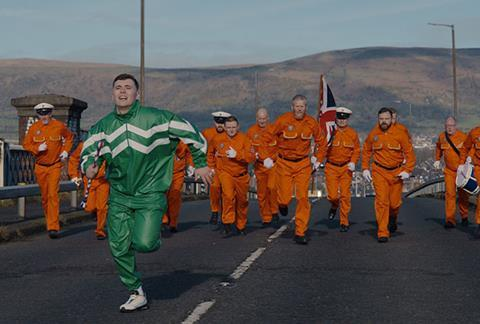
The 2024 film Kneecap is a riotous, politically charged portrait of youth in revolt, channeling the raw energy of punk and hip-hop into a uniquely Irish-language rebellion. Starring the real-life Belfast rap trio—Mo Chara, Móglaí Bap, and DJ Próvaí—as fictionalized versions of themselves, the film blends anarchic humour, biting satire, rites of passage, and cultural defiance to tell the story of how a group of working-class misfits wove their frustrations into musical gold.

Set in post-Troubles West Belfast, the film captures the lingering scars of British occupation and the generational trauma it left behind. Liam (Mo Chara) and Naoise (Móglaí Bap) are introduced as small-time drug dealers navigating poverty, police harassment, and fractured families. Their lives take a turn when JJ Ó Dochartaigh, a disillusioned Irish-language teacher, discovers their lyrical talents and joins them as DJ Próvaí. Together, they form the eponymous group, an Irish-language rap group that weaponizes music as a form of cultural resistance.

The film is unapologetically rebellious, using the Irish language not just as a means of communication but as a symbol of defiance. Arlo (Michael Fassbender), Naoise’s father and a former republican paramilitary, encapsulates this sentiment when he declares, “Every word of Irish spoken is a bullet fired for Irish freedom” . This philosophy permeates the group’s music, which tackles issues like British colonialism, drug culture, and the complexities of identity in a divided society.


Kneecap (2024), while a bold and electric celebration of youth rebellion arguably overstretches itself emotionally by attempting to cover too many themes at once. In its ambition to be both a political statement and a coming-of-age tale, a musical odyssey and a generational cry for recognition, the film occasionally dilutes its emotional impact. As the film juggles a multitude of weighty themes: the trauma of post-Troubles Northern Ireland, the fight for Irish-language preservation, the drug culture plaguing working-class communities, the fractured nature of family life, absent fathers and mothers, and the burden of political legacy. Add to this the rise of a rap group in an unexpected cultural context, and the film becomes a whirlwind of ideas competing for attention. The result is a film that sometimes feels like it’s racing to say everything at once, rather than letting its most resonant emotional threads breathe.

Nonetheless, director and co-writer, Rich Peppiatt, displays strong visual flair evoking the urban vibrancy of Trainspotting (1996) and underdog musical joy of The Commitments (1991). It helps that the film is often fucking hilarious. Plus, I realise it’s a raw reflection of their life choices, I could take or leave the perpetual scenes of gratuitous drug-taking. At the same time, the film doesn’t shy away from the gritty realities of its setting. It portrays the trio’s clashes with radical republican groups, their run-ins with the police, and the family and romantic struggles that come with their newfound fame.

Amidst the chaos, Kneecap (2024) maintains a sense of humour and humanity, offering a nuanced look at the power of art to challenge the status quo and inspire change. In essence, Kneecap is a ballsy and risk-taking celebration of rebellion, a testament to the enduring power of language and music as tools of resistance, and a vivid portrayal of youth challenging the remnants of a colonial past and a country attempting to find peace and identity after centuries of conflict.

Mark: 8.5 out of 11


CINEMA REVIEW: BLINK TWICE (2024)

Directed by Zoë Kravitz

Written by Zoë Kravitz & E.T. Feigenbaum

Produced by Bruce Cohen, Tiffany Persons, Garret Levitz, Zoë Kravitz and Channing Tatum

Cast: Naomi Ackie, Channing Tatum, Christian Slater, Simon Rex, Adria Arjona, Kyle MacLachlan, Haley Joel Osment, Geena Davis and Alia Shawkat etc.

Cinematography by Adam Newport-Berra

*** MAY CONTAIN SPOILERS ***


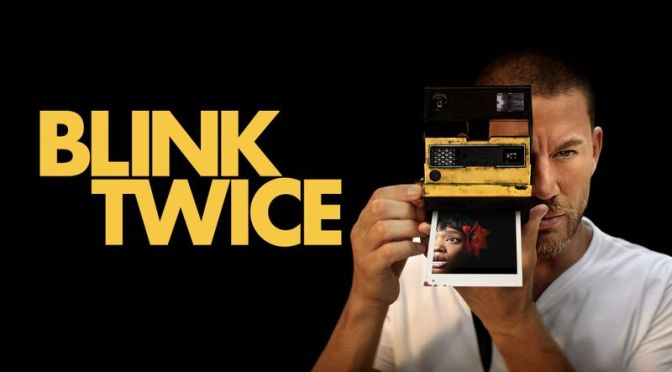
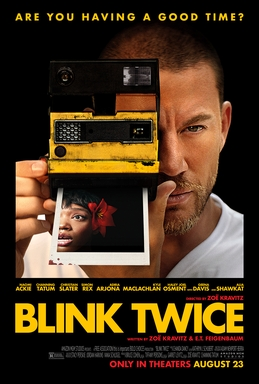
The theme of toxic masculinity is almost becoming a sub-genre of itself in the wake of the #MeToo movement. Films such as The Royal Hotel (2023), How to Have Sex (2023) and Men (2022) are powerful genre films which take the manipulative, malevolent and violent aspect of men, utilizing it as both nemesis and a destructive force the main protagonists must contend with. While She Said (2022) dealt specifically with the Harvey Weinstein legal case, Zoe Kravitz’ energetic blend of genres in Blink Twice (2024), takes a more fictional and heightened route while exposing the horrors surrounding the potential happenings at the notorious Epstein Island.

Frida (Naomie Ackie) and her friend Jess (Alia Shawkat) work at an exclusive event where Frida meets Slater King (Channing Tatum), a billionaire tech mogul who recently resigned as CEO after a public scandal. Despite the scandal Frida and Jess gladly accept an invitation to his private island, where his assistant Stacy (Geena Davis) confiscates their phones. The island hosts Slater’s friends and business partners along with three glamorous guests including Sarah (Adria Arjona). The men and women are treated to lavish rooms, gift bags, gourmet meals, cocktails, and party like hedonistic rock stars drinking champagne and taking hallucinogens.


If you’ve seen the similar island-based, The Menu (2022), which I loved, plus the less than riveting 1950’s perfect suburb-set, Don’t Worry Darling (2022), one soon realises that not all is well in paradise. Amidst the sun, sea and partying the narrative slowly builds the tension until Frida and Jess begin to suspect all may not be as it seems. Kravitz carefully ratchets up the tension, with several strange discoveries heightening the paranoia and anxiety. Latterly the suspense gives way to all-out gory horror and black comedy in the thrilling final act. Naomi Ackie and Adria Arjona are impressive “final girls”, however, the script arguably throws in too many twisty reveals at the end, testing narrative credibility.

Zoe Kravitz is clearly a talented filmmaker and Blink Twice (2024), while unsubtle, is highly entertaining. But does the diversion to the horror genre dilute the power of the themes of toxic masculinity? Kravitz aims to critique the evils of men by showcasing male characters who embody arrogance, dominance, and emotional suppression. But while Kravitz may intend to address toxic masculinity, the reliance on traditional horror tropes potentially undermines this message by exaggerating characters, victimizing women, and prioritizing sensationalism over substance. Still, as a revenge fantasy, Blink Twice (2024), is both stylishly and dynamically rendered.

Mark: 7.5 out of 11


GREAT ENSEMBLE FILM CASTS #5 – COPLAND (1997)

GREAT ENSEMBLE FILM CASTS #5 – COPLAND (1997)

Directed by: James Mangold

Produced by: Cathy Konrad, Ezra Swerdlow, Cary Woods

Written by: James Mangold

Cast: Sylvester Stallone, Harvey Keitel, Ray Liotta, Robert De Niro, Peter Berg, Janeane Garofalo, Robert Patrick, Michael Rapaport, Annabella Sciorra, Noah Emmerich, Edie Falco, Deborah Harry etc.

*** CONTAINS SPOILERS ***


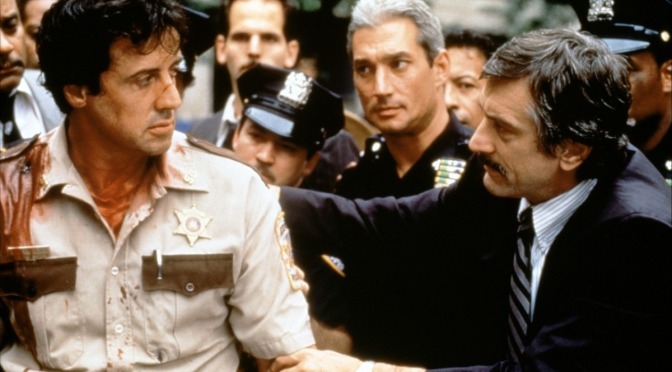
James Mangold is rarely mentioned as one of the best filmmakers around. Probably because he is not a flashy director or a household name. Yet, he has consistently delivered a series of extremely entertaining and inventive genre films over the past few decades. These include: Identity (2003), Girl, Interrupted (1999), Walk the Line (2005), 3:10 to Yuma (2007) and more recently, Logan (2017). His films always feature solid characterisation, compelling conflict and well-structured plots. Above all else, Mangold always attracts A-list actors to his film projects. None more so than in the urban neo-Western, Copland (1997).

Copland (1997) is a thriller which still resonates today with themes that focus on corrupt cops conspiring to control crime from the town of Garrison, New Jersey. Drug deals, racial profiling, murder, larceny and perverting the course of justice are all in a day’s work for the crew led by Harvey Keitel’s alpha cop, Ray Donlan. The Sherriff of Garrison is half-deaf and lumpy, Freddie Heflin (Sylvester Stallone). He is so in awe of Ray and his crew that he is prepared to turn a blind eye to their crimes. However, after a series of brutal incidents which bring heat and Internal Affairs onto Freddie’s patch, he must decide whether to take a stand against the bullies.

Copland (1997) is both a fine character study of a downtrodden man finally standing up against those keeping him down, and a searing damnation of the dishonest nature of American police enforcement. Moreover, Mangold has assembled a hell of a cast. Stallone has never been better in his role of Freddie Heflin. He is a sympathetic character, but frustrating as one wills him to fight back. Robert DeNiro attempts to help him as the Internal Affairs officer, Moe Tilden. While slightly over-the-top here, DeNiro’s scenes with Stallone really sizzle. DeNiro spikes with energy as Stallone offers silent awkwardness.

Ray Liotta almost steals the show as the coked-up-copper-on-the-edge, Figgis. While Robert Patrick, unrecognisable from his performance as the T-1000, shines too as nasty piece of work, Jack Rucker. Add Keitel, Michael Rapaport, Peter Berg, Janeane Garofalo and Cathy Moriarty into the mix and you have one cracking ensemble. Interestingly, Stallone said the film hurt his career. However, he received much critical praise and I wish he’d pursued more character-heavy roles like this rather than films like the forgettable Expendables trilogy.


UNDER-RATED CLASSICS #9 – WILD BILL (2011)

UNDER-RATED CLASSICS #9 – WILD BILL (2011)

Directed by: Dexter Fletcher

Produced by: Tim Cole & Sam Tromans

Written by: Dexter Fletcher, Danny King

Cast: Charlie Creed-Miles, Will Poulter, Liz White, Sammy Williams, Charlotte Spencer, Leo Gregory, Neil Maskell, Iwan Rheon, Olivia Williams, Andy Serkis etc.

Music by: Christian Henson

Cinematography: George Richmond

***MAY CONTAIN SPOILERS ***


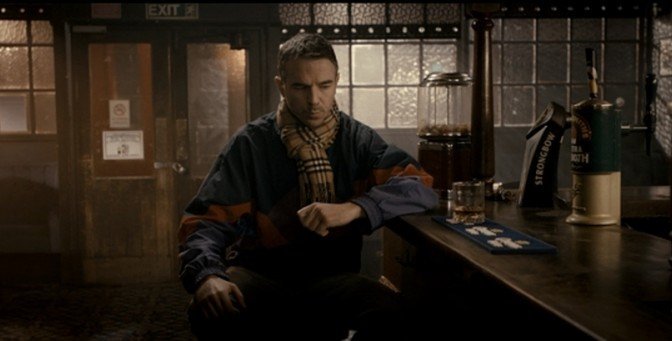
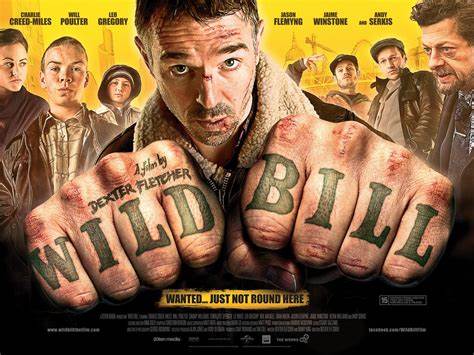
With so much British filmmaking talent behind and in front of the camera being absorbed by the big film and television studios in America, and the lack of cash within the British film industry too, it’s rare that a British film gets made and then distributed properly. Even if a film such as the earthy London-set crime drama, Wild Bill (2011), does find its way to British cinemas it can be cruelly enveloped by the Hollywood film behemoth, swallowed up at the multiplexes and seen by very few popcorn guzzlers. Which is a damn shame as Wild Bill (2011) is a tidy, low-budget, and extremely under-rated classic in my book. Made for just £700,000 and directed by the now in-demand actor-turned-filmmaker, Dexter Fletcher, the film marries family conflict, humour, violence, South London gangsters all in a moving tale of redemption.

For the record, for me, an under-rated classic can be a film I love, plus satisfy the following criteria:

  1. Must not have won an Oscar.
  2. Must not have won a BAFTA.
  3. Must not appear in the AFI Top 100 list.
  4. Must not appear in the IMDB Top 250 list.
  5. Must not appear in the BFI 100 Great British films.
  6. Must not appear in the all-time highest grossing movies of list.

Unfortunately, Wild Bill (2011), does not meet any of these criteria. In fact, not many people have even heard of the film, let alone seen it. But it’s on Netflix so do try and catch it. Read on for some reasons why.


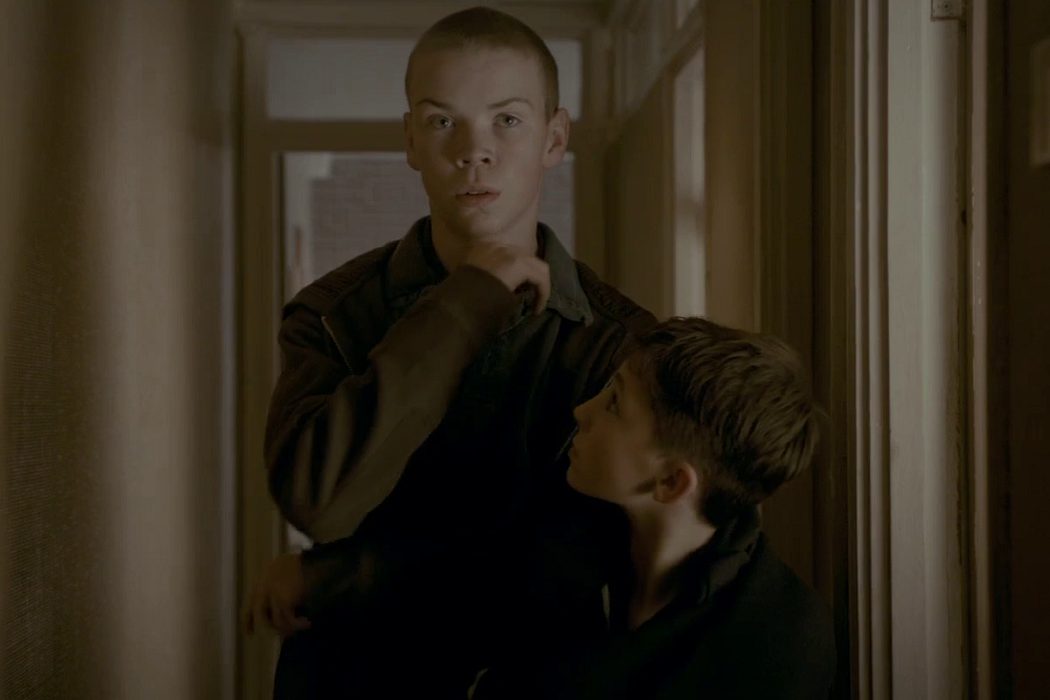
The main character nicknamed, portrayed by the excellent character actor, Charlie Creed-Miles, is the titular “Wild Bill”. He has just been released from prison having been a dealer and fighter and general menace to society. There is immediately tension because you wonder if the man will return to his bad old ways. Surprised to find his wife has buggered off to Spain, Bill is hardly given a warm welcome by his older son, Dean, as Will Poulter give another very mature performance. Indeed, Dean hates Bill, and while he is only fifteen, he has been the breadwinner looking after his young brother, Jimmy (Sammy Williams). Forced to stay together by Social Services, much of the film finds the father and son resisting, then attempting to find some common ground. The attempts at family harmony are not aided by the career thugs, including Leo Gregory and Neil Maskell’s characters, attempting to get Bill back on their crack dealing crew. It’s during such struggles that Bill strives to be positive and not return to his violent ways. However, there is only so far a man can be pushed.

Wild Bill (2011) is beautifully filmed with some fantastic London vistas as well as some gritty, urban locations to savour. Sure, the film also has a familiar set of character archetypes and narrative tropes. These include the ex-con trying to go straight, the tart with a heart, the local drug dealers terrorizing the estate, a teenage mum, estate kids getting pulled into crime, the white dealer who thinks he’s black; and the “Mr Big” crime boss played with threatening glee by Andy Serkis. Yet, the characters never become stereotypes as the writing and narrative avoid most of the cliches usually present in plain bad cockney gangster films. Ultimately, the writers, director and actors really make us care about Bill and his boys. I mean, after many false starts he really tries to make a go of it as a father. Bill may not have always made the best decisions in life, but he has guts and heart; very much like Wild Bill (2011) as a whole.


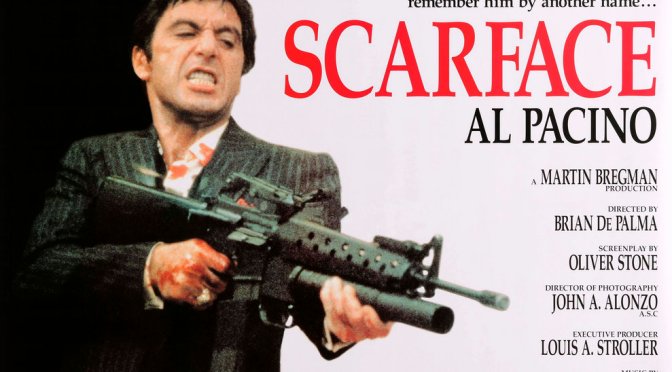
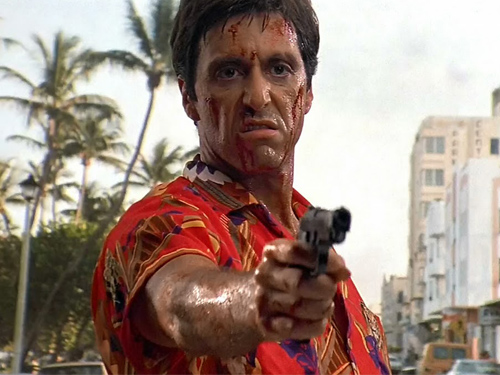
CLASSIC FILM REVIEW – SCARFACE (1983) – YOUTUBE VIDEO

CLASSIC FILM REVIEW – SCARFACE (1983) – YOUTUBE VIDEO

The Cinema Fix is a website for all film and TV lovers everywhere. It’s a mix of reviews, articles, essays, news and thoughts on new and classic releases. It is intended to be honest, irreverent, funny and hopefully intelligent. I also have a YouTube channel with loads of short films and video articles. Check it out here.

I have just created a new video article. It’s a review of the classic gangster film, Scarface (1983). You can read it here or check out the video below.


CREDITS

This video article is a fun and educational piece reviewing one of our favourite gangster films ever.

Written by: Paul Laight
Narrated by: Melissa Zajk
Music Produced by : Aries Beats
Promoted by : CRFC

The copyright of the images and trailers are those of the film studio. I do not own any of the images or films.

Film/Trailer clips credits:

Scarface (1983)
Directed: by Brian DePalma
Produced by: Martin Bregman
Written by: Oliver Stone.
Distributed by: Universal Pictures

Check out our other sites:

www.fixfilms.co.uk
www.youtube.com/c/FixFilmsLtd


ALL 4 FILM REVIEW: DIEGO MARADONA (2019)

ALL 4 FILM REVIEW – DIEGO MARADONA (2019)

Directed by: Asif Kapadia

Produced by: James Gay-Rees, Paul Martin

Written by: Asif Kapadia

Music by: Antônio Pinto

Edited by: Chris King

Available platform: Channel 4 / All 4


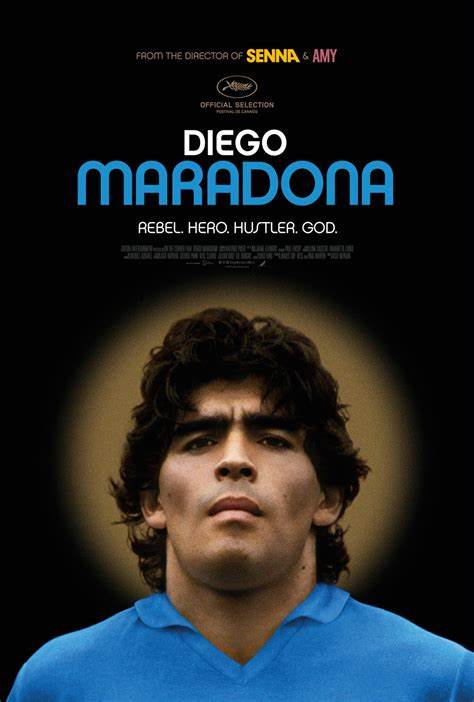
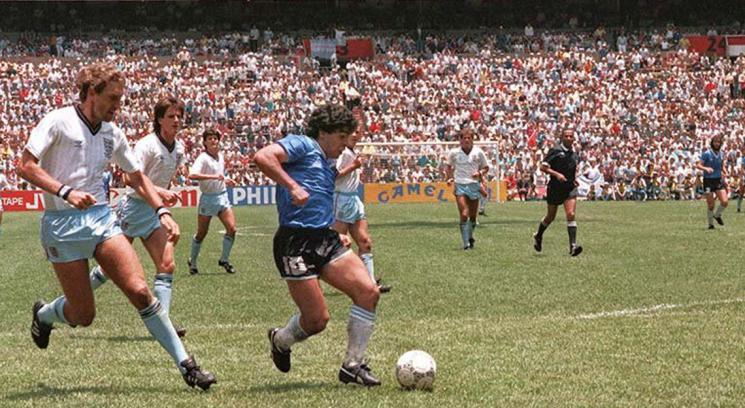
Even if you’re not a fan of football, you cannot fail to have to heard of the Argentinian player that is Diego Maradona. If you don’t know him then he rose from the shantytowns of Buenos Aires to become one of the greatest footballers of all time. A wunderkind prodigy as a teenager, he became the most expensive footballer ever when he moved to Napoli from Barcelona. In Naples he would transform a club, normally in the shadows of giants from Milan and Rome, into a title winning team. Moreover, he famously led Argentina to World Cup glory in 1986, with one of the most scintillating individual footballing performances ever witnessed. I missed Asif Kapadia’s absorbing documentary when released at the cinema, however, with Maradona sadly passing away last week, I took the opportunity to watch it on Channel 4’s streaming platform.

Kapadia has shown himself as a master filmmaker in constructing narratives from archival footage. This engrossing style and expertly edited form is brilliantly demonstrated in Senna (2010) and Amy (2015), both winning several major awards. Once again Kapadia uses the same process. He combines interviews via voiceover with Maradona, his ex-wife Claudia, his trainer and many other people, with hundreds of hours of found film footage shot by Argentine cameramen in the 1980s. Moreover, further archival footage was discovered in the home of Maradona’s ex-wife in a trunk untouched for 30 years.


Kapadia and his editors weave such sources to create an absorbing portrait of an extremely complex personality. Indeed, many interviews comment on the football star having two distinct sides. One called Diego, a sweet-natured lad who became a phenomenon on the pitch and the other Maradona, a notorious, larger than life mega-star pursued by the media, football fans, women, gangsters and money people. Whether this schism contributed to Maradona’s battles with drug addiction and other controversies, it is difficult to say. What is clear though is, despite his flaws, love for partying, fiery temperament and questionable associations, the press in Italy and the rest of the world, were permanently in Maradona’s face, creating a pressure cooker atmosphere for him and his family.

Overall, I was totally transfixed by the documentary, Diego Maradona (2019). Having grown up as a teenager watching Maradona on the television, notably the infamous ‘Hand of God’ game against England at the 1986 World Cup, I was struck by huge waves of nostalgia. Even though Maradona’s Argentina defeated England, one could never fail to be in awe at his magical skills as a player. I love football and enjoyed many scenes showing the brutal and beautiful nature of the game. Lastly, Kapadia’s main narrative thrust involves Maradona’s rise and fall from grace during Napoli’s spectacular rise to the top of the Italian league. Yet, having scored the penalty that knocked Italy out of the 1990 World Cup, his once beloved Naples would turn on Maradona, leaving him friendless and without protection from the Italian law. Ultimately, the film stands as not only a complex tribute to a footballing genius, but also a cautionary tale of the trials and tribulations of worldwide fame and notoriety.

Mark: 9 out of 11


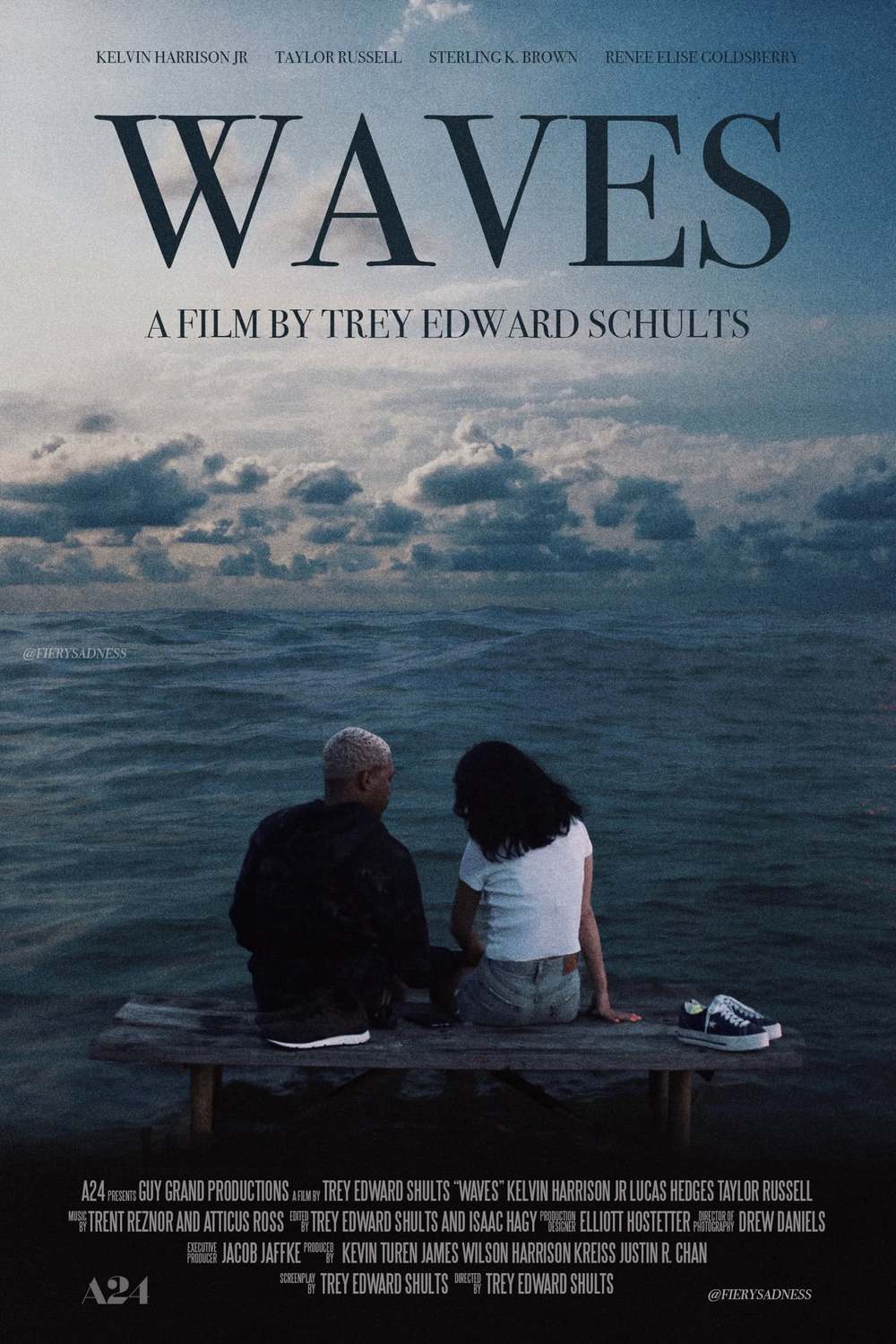
FILMS THAT GOT AWAY #11 – WAVES (2019)

FILMS THAT GOT AWAY #11 – WAVES (2019)

Directed by: Trey Edward Shults

Produced by: Kevin Turen, Jessica Row, Trey Edward Shults

Written by: Trey Edward Shults

Cast: Kelvin Harrison Jr., Lucas Hedges, Taylor Russell, Alexa Demie, Renée Elise Goldsberry, Sterling K. Brown, Alexa Demie, Clifton Collins Jr., Vivi Pineda, etc.

Music by: Trent Reznor, Atticus Ross

Cinematography: Drew Daniels

*** MAY CONTAIN SPOILERS ***


“First your parents, they give you your life, but then they try to give you their life.”

― Chuck Palahniuk


Being a parent is an extremely difficult job and mostly impossible to get right. It is a rewarding and joyous experience, but can also be a frustrating one. Raising another human being in this world is a fluid and ever-shifting set of tasks. Once you have got past a certain age and seemingly resolved the issues of that time, their next period of growth provides a whole different set of puzzles. Whatever books you read or advice you take, or help you get, you will never be prepared enough to meet the challenge of being a parent. Even those who have had more than one child can attest that what occurred with the first child will not be the same for the next or the next after that. Every individual being is different and will have a varied set of intricacies.

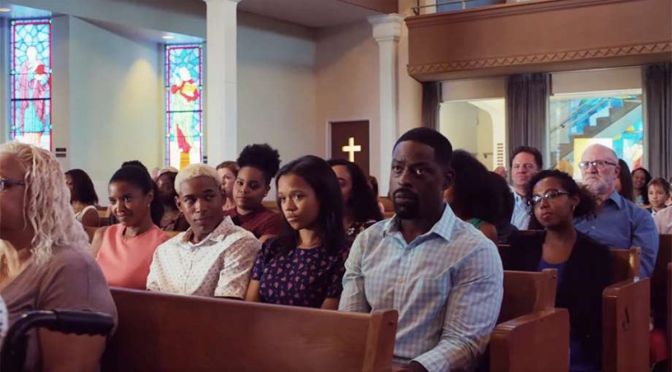
In the majestic family drama, Waves (2019), for example, Ronald (Sterling K. Brown) and Catherine Williams (Renee Elise Goldsbery), are middle-class parents with successful jobs who provide a fabulous Florida home and upbringing to their teenage children. Their son, Tyler (Kelvin Harrison Jnr.), is smart, athletic and a popular student, while their younger daughter, Emily, is quieter but equally bright. Ronald pushes Tyler to excel in every way, in study, work and on the wrestling team. He’s doing it with best intentions, but it creates incredible pressure for the lad. So much so, when Tyler suffers a serious injury and a problematic romantic situation he mentally and emotionally breaks.


Waves (2019)

This is a tale of two children and their parents attempts to raise, guide and control them. Not control in a negative fashion, but out of love and desire to see they are on the correct path in life. But what the narrative illustrates is that even the most loving and comfortable families can have tragedy bestowed upon them via a mixture of spontaneously poor life choices, youthful emotional imbalance and the fickle finger of fate. Thus, some could argue that with subjects such as unwanted pregnancy, pushy parents and rebellious teenagers, the film is over-familiar and melodramatic in places. However, the acting, direction and cinematography render the film wholly cinematic. Special mention to the extremely talented cinematographer Drew Daniels, who also lit HBO’s stylish mini-series Euphoria (2019). The production’s choice of colour, lighting, lens differentiation and aspect ratio switches are another reason this fabulous film impacted me so much.

No disrespect intended to the films nominated for Best Picture at the last Academy Awards, but how Waves (2019) did not get on that list is beyond me. Maybe it didn’t qualify due to some technicality, but it was definitely one of the best films of last year. It’s a shame I missed it as Trey Edward Schults proves he is a formidable young director. Sterling K. Hayden is impressive as the father who thinks he knows best, but is ultimately as emotionally lost as his son. Taylor Russell as Emily is an absolute shining star in the role and Kelvin Harrison Jnr. is, following his mesmerising performance in Luce (2019), destined for great things. Lastly, I’m not sure how Waves (2019) got away from me on release, but I’m glad I finally caught up with this searing and complex drama.

Mark: 9 out of 11


NETFLIX TV REVIEW – DIRTY JOHN (2018)

NETFLIX TV REVIEW – DIRTY JOHN (2018)

Created by: Alexandra Cunningham

Based on articles and podcast: Dirty John by Christopher Goffard

Directed by: Jeffrey Reiner

Writers: Alexandra Cunningham, Christopher Goffard, Sinead Daly, Lex Edness, Kevin J. Hynes, Evan Wright, Diana Son, etc.

Producer(s): Melinda Whitaker, Christopher Goffard, Nan Bernstein Freed, Jonathan Talbert, etc.

Cast: Connie Britton, Eric Bana, Juno Temple, Julia Garner, Jean Smart, Shea Whigham, Alan Ruck, Kevin Zegers, etc.

Composer: Mark Mothersbaugh

Original networks: Bravo (USA) and Netflix (UK)


Such is the veracious appetite journalists, writers, filmmakers, TV producers, podcasters and the audience have for true crime stories, it’s no surprise that the life of con-man, John Meehan, and his victims, was turned into a thrilling eight-part drama shown on Bravo and Netflix respectively. After decades of cons, fakery, impersonations, drug addiction, robberies, lawsuits, insurance scams, harassment, spying, stalking and consistent lying, Meehan’s criminal activities came to an end as recently as 2016. Meehan had been trained in the “art” of the con by his father from a young age. Alas, his nature could not, unlike his sister, overcome such spurious nurture and Meehan was destined for a life of crime. They say truth is stranger than fiction and that is very much the case here with some of his venomous antics quite unbelievable. However, Meehan must have had so much charm and confidence to trick the many women he deceived, his character sadly stands as a heinous example of toxic masculinity.

Eric Bana portrays John Meehan in Dirty John (2018). Bana is an excellent actor and arguably, based on his breakthrough performance in the film, Chopper (2000), one who I thought would achieve possibly more critical acclaim. His career is full of sterling work though and his handsome looks and rugged charisma are perfectly utilised as John Meehan. Indeed, when we first encounter him he is meeting Debra Newell (Connie Britton) for a date. After a sticky start the romance develops very quickly. Debra is a wealthy interior designer with her own business, and her character is exceptionally kind, but somewhat gullible. Even when her kids, Veronica (Juno Temple) and Terra (Julia Garner), warn her that something is rotten about John, her desire for John overcome any doubts she may harbour. As Debra, Connie Britton gives a brilliant representation of a woman who is desperate for love and companionship. Having said that, Juno Temple steals every scene as the mouthy daughter, Ronnie, someone who is certainly way more suspicious of John than her good-natured mother.


Structured around John and Debra’s developing romance are flashbacks to John’s prior relationships and crimes. While he is shown to be a really bad man, context is given during scenes from his youth. His father, portrayed by the excellent character actor, Shea Whigham, has young John eating a Taco with glass placed in it, so he can scam the restaurant. Such twisted examples of dire parenting give reason to John’s later behaviour, however, they should not excuse his actions in adulthood. They also explain John’s dependency on narcotics. This addiction to opiates, as well as a sociopathic desire to lie and cheat, drive the character and narrative powerfully. In the scenes where Debra, having incredibly given John another chance, helps him go cold turkey, Bana’s acting levels are most impressive.

As the drama proceeds and Debra and her daughters begin to discover the crimes of John’s past they themselves become targets of his malevolence. John is a beast Debra has alas invited into her life and one feels so much empathy for her and his other victims. Moreover, even when cornered and accused John Meehan is at his most dangerous. He often savagely attacked his accusers and their family members with severe vengeance. But, the scariest part for me was that he was “qualified” to be a Certified Registered Nurse Anaesthetist; a profession he exploited to rob and feed his drug addiction. Ultimately, I can recommend Dirty John (2018), to those who enjoy absorbing crime dramas. Some shows, with such “real life” narratives, can be exploitational in tone. However, this is a high quality production with excellent acting, writing and directing throughout. It really was edge-of-your-seat viewing, with Eric Bana’s multi-dimensional acting delivering a true monster for the millennium.

Mark: 8.5 out of 11


NETFLIX TV REVIEW – BETTER CALL SAUL (2020) – SEASON 5

NETFLIX TV REVIEW – BETTER CALL SAUL (2020) – SEASON 5

Created by: Vince Gilligan, Peter Gould

Executive producer(s): Vince Gilligan, Peter Gould, Mark Johnson, Melissa Bernstein, Thomas Schnauz, Gennifer Hutchison,

Producer(s): Bob Odenkirk, Nina Jack, Diane Mercer, Robin Sweet, Gordon Smith, Jonathan Glatzer,

Directors: Bronwen Hughes, Norberto Barba, Michael Morris, Gordon Smith, Jim McKay, Melissa Bernstein, Vince Gilligan, Thomas Schnauz, Peter Gould,

Writers: Vince Gilligan, Peter Gould, Thomas Schnauz, Gordon Smith, Alison Tatlock, Heather Marion, Ann Cherkis,

Cast: Bob Odenkirk, Jonathan Banks, Rhea Seehorn, Patrick Fabian, Michael Mando, Tony Dalton, Giancarlo Esposito, etc.

Cinematography: Arthur Albert, Marshall Adams

Production company(s): High Bridge Productions, Crystal Diner Productions, Gran Via Productions, Sony Pictures Television

Original network: AMC

UK Release: Netflix

***MAY CONTAIN SPOILERS***


“We all make our choices. And those choices, they put us on a road. Sometimes those choices seem small, but they put you on the road. You think about getting off. But eventually, you’re back on it.”
Mike Ermantraut – Better Call Saul (S5 – Episode 9)


One thought, of many, that I will take to my dying day is in regard to the business of the war on drugs. I get that people want to strive for intoxication in order to medicine themselves against the pain and struggle of everyday life. I get that humans love to get high and have a party. I get that people unfortunately get addicted to substances, so much so they turn into junkies existing only for their next fix. It may not make it right, but I get why people do drugs.

I also understand the business of making money selling drugs. The drug dealers and Cartels across the world earn a fortune farming, creating, distributing and selling narcotics. Moreover, Governments, across our civilisation, attempt yet fail, to stop them. I get all this. What I don’t understand though is when the Cartels make SO much money, and wall it up in safehouses, farms and apartments — why don’t they stop!! They have enough! Just retire. It’s a naive question, obviously. Because the money, drugs, lifestyle and power are also an addiction. It’s an insane game. It’s a bad road. It’s another indictment against the evil of humanity and our greed-driven society. Having said that the conflict with drugs and more specifically that of the Mexican drug Cartels is also providing the masses with some fine television drama.


Bob Odenkirk as Jimmy McGill, Rhea Seehorn as Kim Wexler – Better Call Saul – Photo Credit: Nicole Wilder/AMC/Sony Pictures Television

Following hot on the heels of the gripping Season 3 of Cartel-driven thriller, Ozark (2020), comes Season 5 of Vince Gilligan and Peter Gould’s crime prequel to Breaking Bad — the brilliant, Better Call Saul. Once again, it proves itself an incredibly well written character drama, containing some of the finest acting around. I mean, some shows you watch, and they can be a struggle. But Better Call Saul is like digital silk, so smooth in its presentation. The overall style, colour scheme, imaginative camera angles and framing make the show a joy to experience. The story isn’t too bad either.

Having worked through his conflicts with his brother, Chuck (Michael McKean), in the previous sterling seasons, Jimmy McGill finally embraces the ‘Saul Goodman’ legal name and persona. In this season though, in attempting to create a niche making a living helping the lower level criminal element, Jimmy/Saul, eventually finds his legal skills being employed by the Salamanca drug Cartel. Here Saul makes decisions which drag him, and his partner, Kim Wexler (Rhea Seehorn), into a series of dangerous drug-related situations in and out of court. Indeed, episode 8, Bagman, is as good as crime drama gets in terms of narrative, conflict, characterisation and dialogue.

While Bob Odenkirk again sparkles as the cheeky ducker-and-diver-lawyer, Saul Goodman, it’s Rhee Seehorn as Kim Wexler who steals the show. The development of her character from corporate legal player to something more than a money-driven suit is fascinating. In addition, her shifting attitudes also reflect a possible adrenaline addiction to the danger that Saul’s questionable choices bring. Meanwhile, Jonathan Banks as experienced fixer, Mike Ermantraut; Giancarlo Esposito as drug boss, Gustavo Fring; and new cast member, Tony Dalton as Lalo Salamanca, all add to sheer acting charisma and talent on screen. Ultimately, the war on drugs will never be won because there is an insatiable demand for narcotics, and a more fervent demand to supply them. I’m just so happy I am very far removed from the ‘Badlands’ of the Mexican drug Cartels. No doubt after the latest season of Better Call Saul, Saul Goodman, will be feeling very much the same. After all, we are all eventually a prisoner of our own bad choices.

Mark: 9.5 out of 11