Produced by Andrew Macdonald, Peter Rice, Bernie Bellew, Danny Boyle, Alex Garland, etc.
Main cast: Ralph Fiennes, Jack O’Connell, Alfie Williams, Erin Kellyman, Chi Lewis-Parry, etc.
Cinematography by Sean Bobbitt
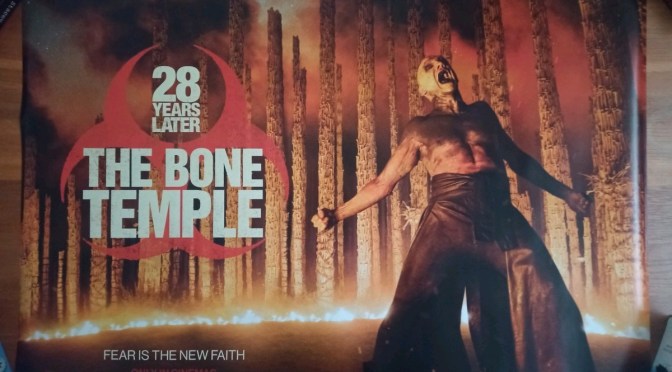
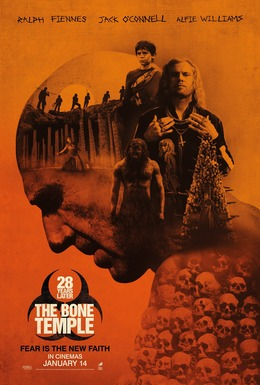
28 Years Later: Bone Temple (2025) is not a film that eases you in. It grabs you by the throat and refuses to let go, piling atrocity upon atrocity until meaning begins to seep through the blood. This is apocalyptic cinema as ritual punishment, and under Nia DaCosta’s direction, it becomes something ferociously alive.
At the calm, moral centre of the chaos standsRalph Fiennes, delivering a performance of astonishing gravitas and unexpected tenderness as Dr. Ian Kelson. In a world rotted by infection and cruelty, Kelson represents something almost radical: goodness without irony. Fiennes plays him not as a saint, but as a weary human being who still believes care, cure and compassion matter, even when the world insists otherwise. His presence anchors the film, giving its excess a conscience.
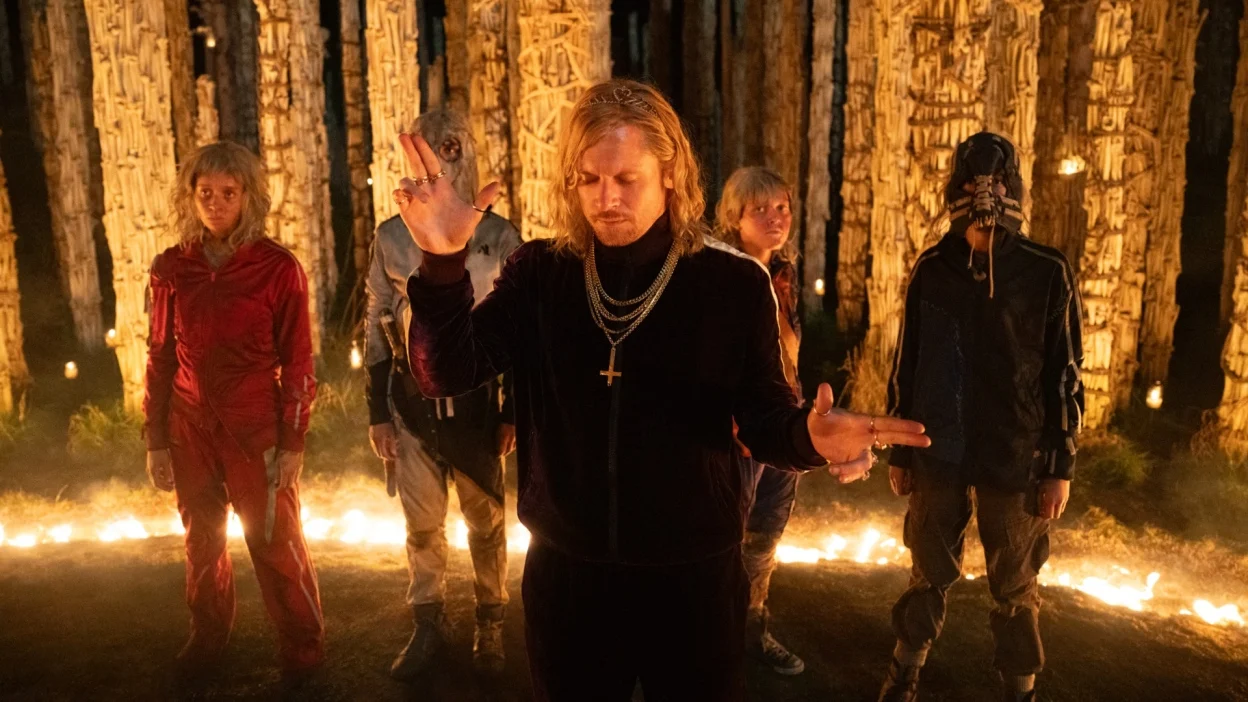
Opposing him is Jack O’Connell’s Jimmy Crystal, a vicious cult leader whose charisma curdles into something genuinely frightening. Crystal preaches violent “charity” in the name of Satan, offering salvation through brutality, and O’Connell leans hard into the performance’s ugliness. Leading his young, droogy, Savile-esque followers, he wages war not just on human survivors, but on the infected as well, collapsing any moral distinction between mercy and massacre. It’s a performance that feels designed to make your skin crawl—and it succeeds. Alas, Spike (Alfie Williams) gets caught up in Jimmy’s insanity and the sense of fear for him reigns throughout.
DaCosta directs with visceral energy, staging sequences that are frequently jaw-dropping in their gore and sadism. This is not a film particularly interested in an actual plot, clean narrative arcs or deep psychological excavation. Instead, Bone Temple unfolds as a succession of brutal set-pieces, each more punishing than the last. Some viewers will undoubtedly find it too much—too loud, too violent, too relentless.
But that relentlessness is also the point. What makes 28 Years Later: Bone Templeso compelling is how it mashes thematic power with B-movie exploitation ultra-violence. Beneath the spray of blood and bone is a furious meditation on false charity, moral absolutism, and the terrifying ease with which cruelty dresses itself up as righteousness. It’s ugly, abrasive, and often overwhelming—but it’s never empty. Indeed, if there is a more stylish and powerful scene in cinema all year than the ‘Number of the Beast’- Iron Maiden-soundtracked-fiery-ritual-sequence then I can’t wait to see it.
Ultimately, this is apocalypse horror as endurance test and sermon, and while it won’t be for everyone, I found it exhilarating. In its refusal to soften its blows, 28 Years Later: Bone Temple (2025)earns its place as one the most savage entries in the franchise, so far.
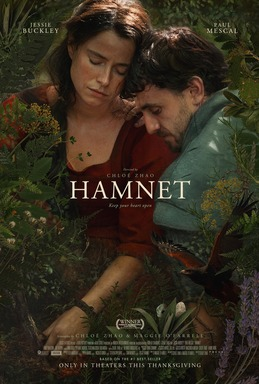
Screenplay by Chloé Zhao & Maggie O’Farrell – Based on Hamnet by Maggie O’Farrell Produced by Liza Marshall, Pippa Harris, Nicolas Gonda, Steven Spielberg & Sam Mendes Main cast: Jessie Buckley, Paul Mescal, Emily Watson, Joe Alwyn, David Wilmot, Jacobi Jupe, Olivia Lynes, etc.
Cinematography by Łukasz Żal
There are actors who impress, and then there is Jessie Buckley, who seems to detonate the screen every time she appears. From the feral menace and vulnerability of Beast (2017) to the raw, soul-baring musical grit of Wild Rose (2018), Buckley has proven herself fearless; from the existential unravelling of I’m Thinking of Ending Things (2020) to her razor-sharp, unclassifiable turn in Fargo (2020) – Season 4, and the aching restraint of Fingernails (2023), her work consistently redefines what emotional truth on screen can look like. Now, with an earth-shattering rendition of Agnes Shakespeare in Hamnet (2025), Buckley doesn’t just command attention—she claims her place as one of the most electrifying actors of her generation.
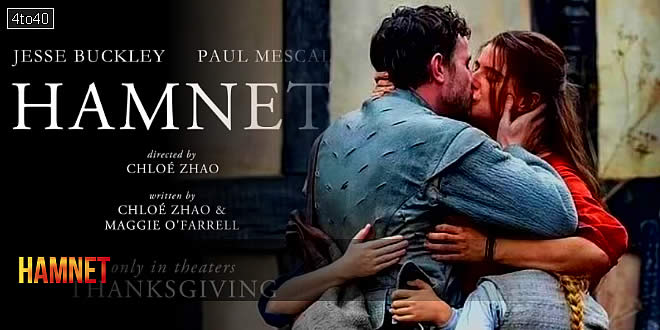
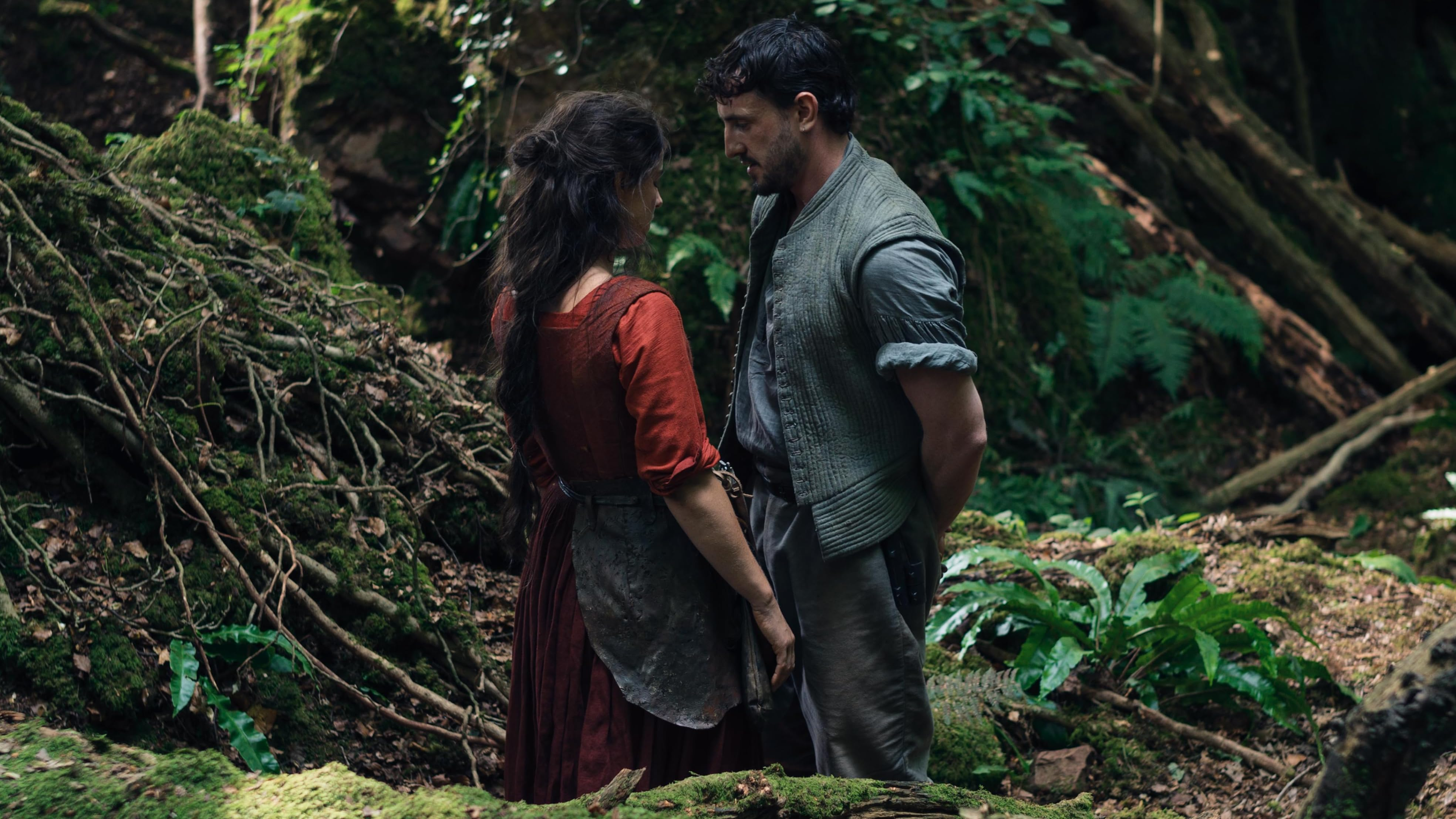
Hamnet (2025) is an adaptation of Maggie O’Farrell’s critically acclaimed novel is a quietly thunderous piece of cinema—one that chooses intimacy over spectacle and emotion over mythology. At its core is the relationship between Agnes and William Shakespeare, charted from their first, tentative connection through marriage, parenthood, and the fractures that emerge when love collides with loss and ambition.
The film is less concerned with the legend of Shakespeare than with the human beings behind it: a scholar and poet struggling to find his literary voice, set against Agnes, a woman of the land and forest, spiritually attuned to nature, instinct, and ritual. Their romance blooms in the space between these worlds, with Agnes’s chanting communion with the natural world acting as an unspoken counterpoint to Will’s search for language and form.
Director Chloé Zhao brings her signature elegance and patience to the material, allowing moments to breathe and emotions to surface organically. Her collaboration with cinematographer Łukasz Żal results in imagery that feels almost painterly—soft, natural light spilling across interiors and fields, rendering the English countryside as something tactile and alive. Every frame seems steeped in earth, wind, and time, reinforcing the film’s grounding in the physical and the elemental.
At the centre of it all is Jessie Buckley, delivering a stunningly embodied performance as Agnes. Her work is raw, intuitive, and deeply moving—she plays grief not as a single rupture but as a living force that reshapes the body and spirit. Paul Mescal brings a quiet intelligence and aching restraint to William, capturing the tension between domestic devotion and creative restlessness, while the incredible, Jacobi Jupe, as the young son, Hamnet, adds genuine emotional resonance, grounding the family dynamic with heart-breaking sincerity.
Hamnet (2025) is ultimately a powerhouse drama about family, grief, and the curative—often painful—power of the creative process. It understands art not as triumph but as transformation, something born from love and loss in equal measure. My one reservation is a personal one: I found myself wanting more of Shakespeare’s journey in London and his struggle toward theatrical success and subsequent writing on the classic, Hamlet. But this absence is deliberate and understandable. The film is weighted toward the emotional interiority of Agnes’s experience, and in centring her perspective—so exquisitely rendered by Buckley—Hamnet (2025) finds its true, devastating strength.
Written by Craig Brewer – Based on Song Sung Blue – documentary by Greg Kohs
Produced by John Davis, John Fox, Craig Brewer
Main cast: Hugh Jackman, Kate Hudson, Michael Imperioli, Ella Anderson, Mustafa Shakir, Fisher Stevens, Jim Belushi, King Princess, etc.
Cinematography by Amy Vincent
** MAY CONTAIN SPOILERS **
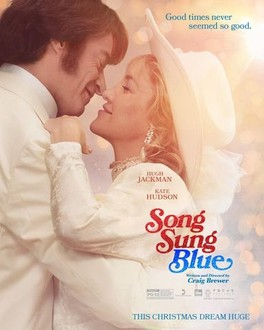
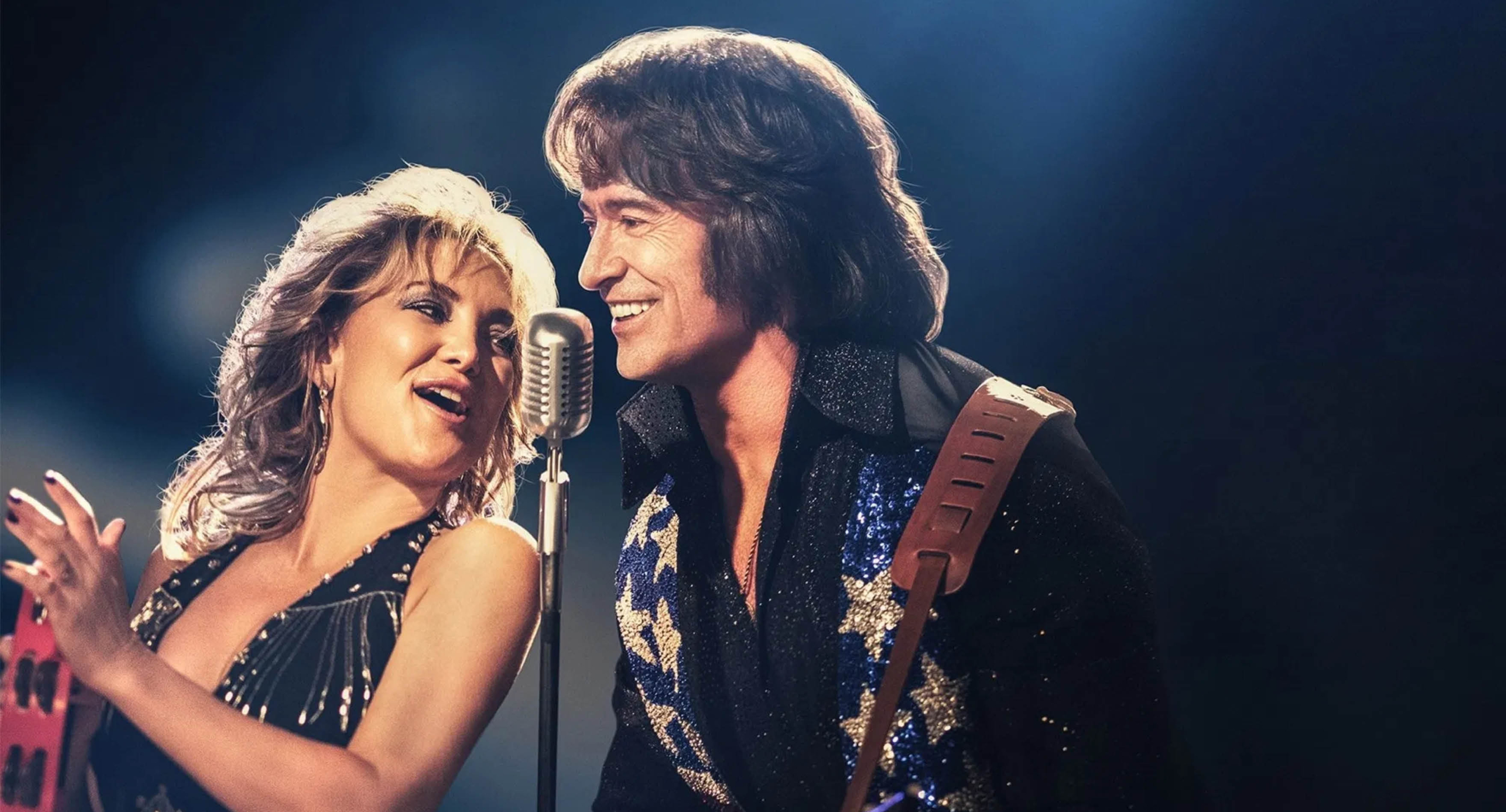
Song Sung Blue (2025) is a warm, big-hearted musical drama that wears its love for music—and for people—proudly on its sleeve. Based on the 2008 documentary of the same name, the film arrives as a crowd-pleasing celebration of performance, devotion, and the quietly heroic act of expressing emotion through song. Under Craig Brewer’s direction, the film hums with sincerity, lifted by a strong ensemble cast and the enduring power of Neil Diamond’s music.
At the centre of the story are Mike and Claire Sardina, known on stage as Thunder and Lightning from Milwaukee. They are not presented as mere lookalikes or imitators, but as fully formed performers who carry the Neil Diamond torch with genuine artistry and respect. Their performances are less about mimicry and more about connection—channeling Diamond’s songs as emotional vessels for love, longing, and resilience. The film is at its best when it allows music to speak where words fall short, and Thunder and Lightning embody that truth beautifully.
The acting across the board is excellent. Hugh Jackman and Kate Hudson bring warmth, vulnerability, and an easy chemistry that grounds the film’s emotional core. Their characters feel lived-in and deeply human, making their shared journey feel earned rather than sentimental. Supporting turns from Michael Imperioli, Fisher Stevens, Jim Belushi, Ella Anderson, King Princess, and Mustafa Shakir add texture and personality, giving the film a rich, communal feel that mirrors the supportive world of local performance and fandom it portrays.
Craig Brewer’s vibrant direction leans into the idea that music is not just entertainment, but a lifeline. The film’s big-hearted characters use performance as a way to communicate love, heal wounds, and navigate life’s many trials and tribulations. In that sense, Song Sung Blue (2025) doubles as a loving tribute to Neil Diamond’s songwriting genius—his songs serving as emotional shorthand for feelings that are often too large or too complicated to articulate otherwise.
The film is incredibly dramatic too dealing with life themes relating addiction, depression, debt, disability and family trauma. Arguably it tries to cover too much in the two-or-so-hours finding topics such as the adoption subplot skimmed over in favour of maintaining pace and momentum. While this keeps the film buoyant and accessible, it occasionally feels like a missed opportunity to explore those themes with greater depth.
Still, these minor shortcomings do little to diminish the overall impact. Jackman and Hudson just fly throughout, making Song Sung Blue (2025), a heartfelt, affirming experience—one that understands how music can bind people together and how love, expressed through song, can carry us through even the most difficult chapters of life. It’s a film that leaves you smiling, misty-eyed, and humming a Neil Diamond tune on the way out of the theatre.
The Cinema Fix presents: 12 Favourite Films of 2025!
Happy 2026! I feel like I have watched even more films last year at the cinema and the many streaming platforms.
My instinct is it’s been a decent year overall of quality films, especially from independent or what one would class as indie-minded filmmakers. The bigger budgeted films or traditional blockbusters have been mainly not great or I just didn’t enjoy them. Aside from perhaps the entertaining Mission: Impossible finale.
Of all the genres, horror has really risen to the top in terms of overall quality the last few years, doing big box office and being recognised at awards ceremonies too. Having said that, and this could be my age and is nostalgia-driven, I find myself enjoying older, cult and more obscure film releases than the today’s modern film releases.
Anyway, here my my 12 FAVOURITE films of 2025. Not the BEST films, but the ones I enjoyed the most. There’s a few high quality, critically acclaimed films which do not make the list including Train Dreams (2025), Sorry, Baby (2025), Eddington (2025), Warfare (2025), Good Boy (2025), The Brutalist (2024) andI’m Still Here (2024), but remember these are my FAVOURITE films of the year.
For reference my favourite films of 2024 are below and here.
ALL OF US STRANGERS (2023) AMERICAN FICTION (2023) HERETIC (2024) THE HOLDOVERS (2023) THE IRON CLAW (2023) LATE NIGHT WITH THE DEVIL (2023) MONSTER (2023) POOR THINGS (2023) THE QUIET GIRL (2023) SPEAK NO EVIL (2024) THE SUBSTANCE (2024) THE ZONE OF INTEREST (2023)
Netflix’s auteur-driven cinema push has seen the platform hand enormous creative freedom—and budgets—to filmmakers like Noah Baumbach, Rian Johnson, Kathryn Bigelow, Edward Berger, and Guillermo del Toro, pairing them with world-class casts and top-tier crews to produce works of unmistakably cinematic ambition.
The paradox is that many of these films—designed with theatrical scale, craft, and seriousness—ultimately premiere to mass audiences via Netflix’s online platform rather than traditional movie theatres, reflecting a fundamental shift in how prestige cinema is financed, distributed, and culturally consumed in the streaming era.
What can you do? Well, pay the Netflix subscription and watch them from the comfort of one’s living room. Here are my reviews with usual marks out of eleven. Happy 2026!
A House of Dynamite (2025)
Kathryn Bigelow’s A House of Dynamite (2025) is an expertly directed and intriguingly structured disaster movie, unfolding across three interlocking chapters that chart a nuclear attack on the United States by an unknown enemy. Each section reframes the same escalating crisis through a different lens—the White House intelligence apparatus, the military response, and the political sphere—culminating in the perspective of the President, played with sensitivity and gravitas by Idris Elba.
As events overlap and repeat, the script cleverly ratchets up tension, revealing new information through subtle shifts in context, while Bigelow’s command of pacing and scale, combined with sterling filmmaking and a who’s-who ensemble cast, keeps the film gripping on a moment-to-moment level. Yet for all its craft, the film ultimately plays like a fear-mongering piece of propaganda and an implicit recruitment advert for the U.S. government and military. Its refusal to name a perpetrator suggest the U.S. has many enemies thus justifying huge spending on defence and weapons. The abrupt ending could be interpreted as brave storytelling, but for me it undercut the suspense, leaving the experience feeling oddly hollow and non-plussed rather than provocatively unresolved.
Mark: 6 out of 11
Ballad of a Small Player (2025)
The Ballad of a Small Player (2025) follows Lord Doyle, played by a magnetic Colin Farrell, as he lies low in Macau, numbing himself on casino floors with deep debt, bad bets, and the stubborn hope that the next hand will fix everything. Farrell is phenomenal here, turning compulsive gambling into a form of slow self-harm, his performance layered with exhaustion, bravado, and quiet panic. When he’s offered a fragile lifeline by the enigmatic Dao Ming, played with poised restraint by Fala Chen, the film hints at redemption.
Director Edward Berger and his production team deliver a ravishingly beautiful film, capturing Macau’s neon glow and claustrophobic interiors as both seduction and trap. At its best, the film is a melancholy character study about addiction for a protagonist who is often deeply annoying and morally bankrupt. However, the final act falters, introducing fuzzy, unearned twists that soften the film’s harder truths and dilute its emotional impact. While the journey is engrossing and Farrell’s performance alone makes the film worth seeing, the conclusion ultimately cheats the audience out of a powerful Uncut Gems (2019)-style denouement.
Mark: 7 out of 11
Frankenstein (2025)
Is Guillermo Del Toro’s big budget adaptation of Mary Shelley’s classic gothic novel really necessary? There are much better versions out there, yet, Netflix and Del Toro certainly thought so. Oscar Isaac is a great actor but miscast or misdirected here for me. Then again, even in Shelley’s seminal novel Dr Frankenstein is a colossal whinger! Thankfully, Jacob Elordi gives a hearty and emotional rendition of the tragic creature, who again is the most interesting character. Safe to say the majestic production values provide a visual and aural feast, but, aside from a scintillating opening in the North Pole, Del Toro’s slog of a script ultimately fails to bring Shelley’s story to life in a sustained enjoyable fashion. Don’t get me wrong, the production and design is of the highest order but I just didn’t connect emotionally or philosophically or even as a horror fan.
Mark: 6 out of 11
Jay Kelly (2025)
Jay Kelly (2025) is a mild, reflective comedy drama that sees George Clooney doing what he’s long perfected: playing a famous film star grappling with past and present relationships while barely appearing to break a sweat. As Kelly travels to Tuscany to collect a lifetime achievement award, the film drifts between memories, regrets, and professional compromises, offering Clooney ample opportunity to deploy his trademark charm—stretching his range (not), but doing so with effortless ease. The more grounded emotional texture comes from Adam Sandler, who is quietly excellent as Kelly’s long-suffering manager, bringing a lived-in, humane quality that feels more emotionally honest.
Director Noah Baumbach has delivered far sharper and more incisive work and Jay Kelly (2025) never quite pushes its Hollywood satire of spoiled first-world creatives as far as it could. Still, there’s an undeniable pleasure in Baumbach’s dialogue and structure, with clear echoes of Wild Strawberries (1957) and 8½ (1963) filtering through in its introspective, memory-haunted moments. The film ultimately has its cake and eats it—content to indulge its characters rather than interrogate them—but it remains a very pleasant cake all the same: soft, well-made, and easy to enjoy.
Mark: 7 out of 11
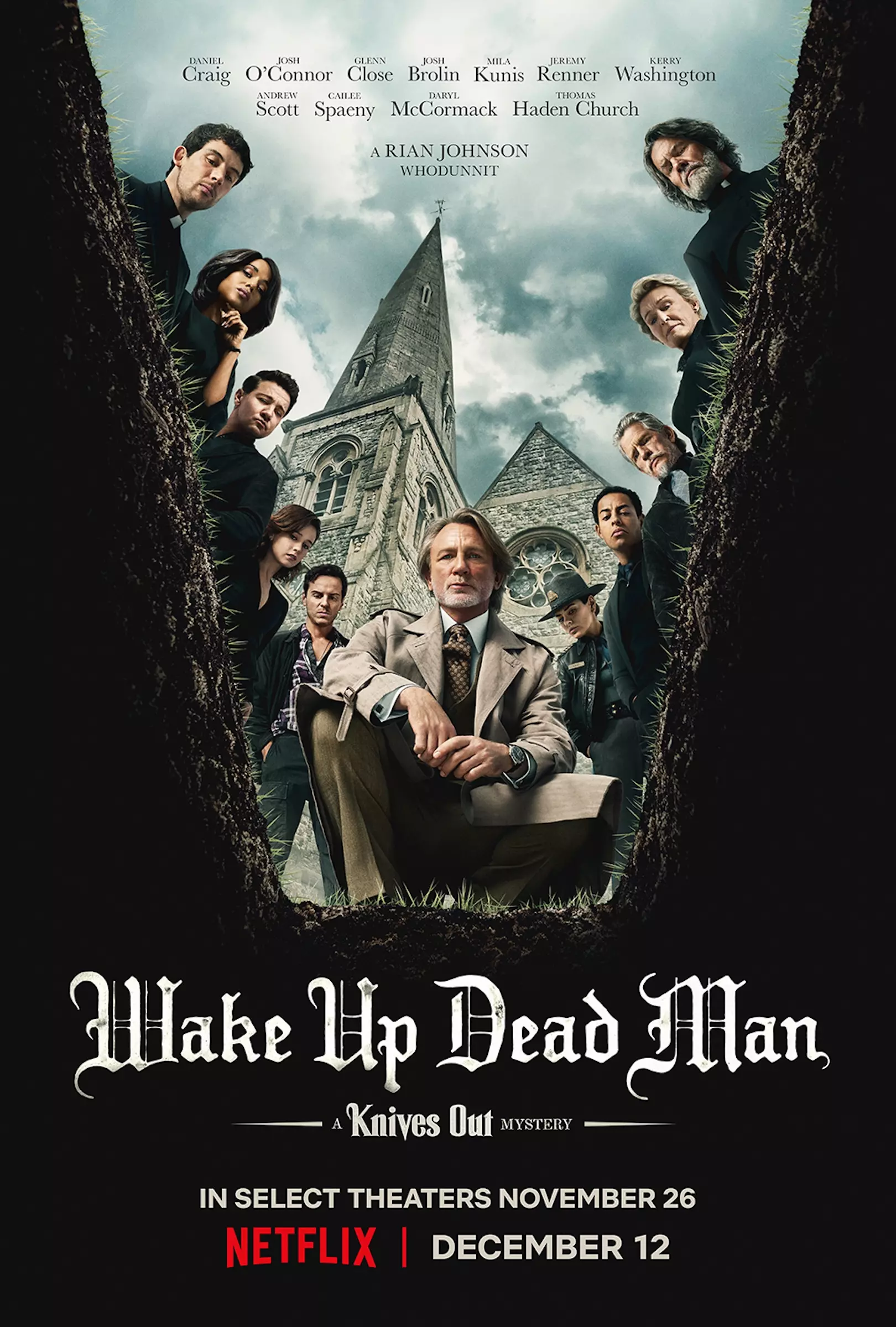
Wake Up Dead Man: A Knives Out Mystery (2025)
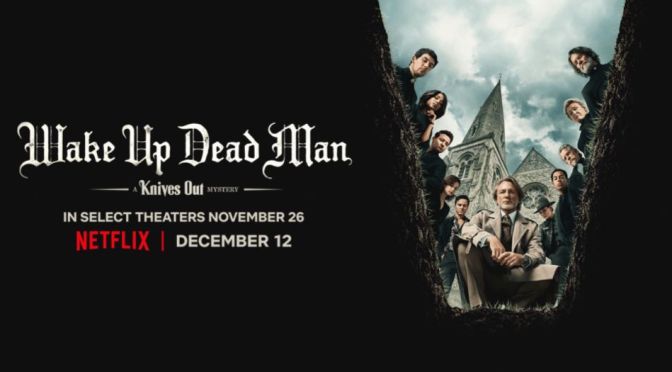
Wake Up Dead Man (2025) stands as the clear high point of Netflix’s auteur-driven releases from November and December 2025, confirming Rian Johnson as a post-modern master of the classical whodunnit. Once again drawing from the elegant clockwork of Agatha Christie’s works, Johnson constructs a devilishly complicated mystery centred on the murder of the tyrannical Monsignor Wicks, played with thunderous menace by Josh Brolin. The suspect list is gloriously stacked—church staff and parishioners portrayed by Glenn Close, Jeremy Renner, Kerry Washington, Andrew Scott, Cailee Spaeny, Daryl McCormack, Thomas Haden Church, and a young visiting priest, Jud Duplenticy (Josh O’Connor)—each performance feeding into a puzzle that’s as playful as it is precise.
What elevates the film beyond genre excellence is its sharply observed character work, particularly in the portrayal of Wicks as a Trump-like authoritarian figure ruling his congregation through fear and humiliation. Johnson smartly frames the mystery as a moral clash between Old Testament wrath and New Testament compassion, allowing the film to interrogate power, faith, and hypocrisy without ever losing its entertainment value. The script crackles with brilliant one-liners and sly, witty exchanges, especially when Daniel Craig’s Poirot-style detective peels back layers of deceit with theatrical relish. Among the ensemble, Josh O’Connor delivers a superbly nuanced performance, injecting emotional specificity and intelligence that rise above what could have been more generic material. Clever, funny, thematically sharp, and immaculately engineered, Wake Up Dead Man isn’t just Netflix’s best auteur offering of the season—it’s one of Johnson’s most satisfying achievements to date.
Produced by Josh Safdie, Ronald Bronstein, Eli Bush, Anthony Katagas and Timothée Chalamet
Main cast: Timothée Chalamet, Gwyneth Paltrow, Odessa A’zion, Kevin O’Leary, Tyler Okonma, Abel Ferrara, Fran Drescher, Sandra Bernhard, etc.
Cinematography Darius Khondji
Music by: Daniel Lopatin
Anxiety cinema, though always a part of film history, has seen a surge in prominence in recent years, with directors like Gaspar Noé, the Safdie brothers, Sean Baker and Ari Aster leading the charge. These filmmakers specialize in creating films that push audiences to their emotional limits, heightening tension and discomfort without offering the cathartic release often found in more traditional thrillers or suspense films by the likes of DePalma, Hitchcock, and Spielberg. Rather than resolving the anxiety with a tidy ending or a moment of relief, these films leave viewers on edge, their blood pressure elevated, and their minds unsettled, reflecting the growing cultural sense of unease and existential dread.
It’s important to note that it would appear, with the release of the frantic Marty Supreme (2025), it is Josh Safdie and Ronald Bronstein, not Benny Safdie, who could be seen to be the driving forces behind the anxiety-driven films like Good Time (2017) and Uncut Gems (2019). Their collaborative work has come to define the frantic, high-pressure style of modern anxiety cinema. In contrast, Benny Safdie’s more recent work, The Smashing Machine (2025), highlights a shift toward more authentic and subtle character development, offering a quieter, more understated take on human drama. While Josh and Bronstein continue to escalate tension to dizzying heights, Benny’s approach focuses on exploring deeper, more introspective emotional journeys.
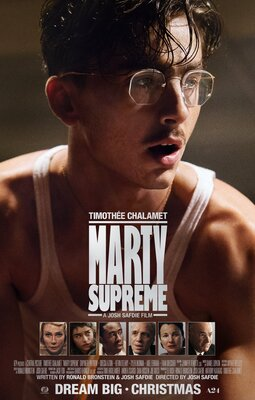
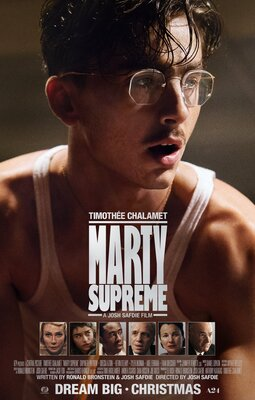
So, Marty Supreme (2025), is it any good? Let’s just say that this isn’t a Christmas or feelgood film, so I can only think the marketing team are being ironic with the poster tagline ‘Dream Big – Christmas!’ This is a 1952 period set anti-heroic-rites-of-passage rollercoaster journey profiling Marty Mauser (Timothée Chalamet), a New York shoe salesman with dreams of hitting the big time as a world champion table-tennis player. But rather than being characterised as a Rocky-style underdog sporting personality who the audience can root for, Marty (loosely based on real-life Marty Reisman), is in fact a fast-talking-arrogant-crisis-addicted-confidence-trickster and womaniser who is not averse to “friendly” armed robbery to get what he wants. Oh, by the way, Marty is also a phenomenal table-tennis player.
Having previously cast Robert Pattinson in Good Time (2017) and Adam Sandler in Uncut Gems (2019) as their disaster-prone, masculine leads, Josh Safdie and Ronald Bronstein took a new direction in Marty Supreme (2025) by casting Timothée Chalamet. Known for his charisma and commitment, as showcased most recently in Wonka (2023) and A Complete Unknown (2024), Chalamet brings an entirely new energy to the table. As Marty, he is nothing short of a force of nature—physically commanding as a table tennis player, yet intellectually and verbally dominating the screen. His performance captivates with a magnetic presence, delivering lines with such intensity and precision that he becomes impossible to look away from. Chalamet’s portrayal of Marty is both memorable and transformative, showcasing his versatility as an actor who can take on the manic, chaotic energy required by a character in a Safdie-Bronstein film while adding a unique layer of depth and intrigue.
Marty’s journey represents a fascinating emotional dialectic, one that leaves the audience both drawn to and repelled by his behaviour. While I didn’t necessarily enjoy his character arc, that’s exactly what makes Chalamet’s portrayal so compelling. Marty is, in many ways, his own worst enemy—he can’t follow rules, he’s a liar, and he cheats to get ahead. Yet, his raw talent and unwavering sense of purpose give him an undeniable charisma, pulling the audience in even as his decisions spiral into reckless, life-threatening situations. The character’s hustle, constant scheming, and pursuit of personal gain lead him into a series of humiliating, violent confrontations that highlight his self-destructive tendencies.
Marty’s a deeply flawed person desperately trying to make something of himself. But he also makes his own bad luck through poor decision-making. Whether it’s falling through a hotel ceiling in a bath; retrieving a missing dog for a psychopathic gangster; locking horns with the table tennis authorities and the uber-businessman he’s seeking patronship from; fighting a cuckolded neighbour whose wife, Rachel Mizler (Odessa A’zion) he possibly loves – not forgetting the scintillating table tennis games – the film is a litany of combative and panic-attack inducing set-pieces. The emotional tension lies in watching Marty repeatedly sabotage his own potential, a cycle of ups and downs that plays out as a cautionary tale. Marty’s journey doesn’t just depict failure; it explores the emotional complexity of someone trapped in their own worst impulses.
Marty Supreme (2025) stands as a masterpiece of filmmaking, with creative choices that not only subvert expectations but elevate the entire storytelling experience. From its striking cinematography to the anachronistic 1980s soundtrack, every visual and auditory detail feels meticulously crafted to immerse the audience in the world of Marty Mauser. The gritty, authentic production design brings a raw realism that grounds the film, while the ensemble cast—many of whom are quirky non-actors—brings an undeniable energy and authenticity to the narrative. In conclusion, the collaboration between Chalamet, Josh Safdie and Ronald Bronstein, and the entire cast and crew gave me both a nervous breakdown and an unforgettable cinematic experience.
Cast: Olivia Hussey, Keir Dullea, Margot Kidder, John Saxon, Marian Waldman, Andrea Martin, Art Hindle, etc.
Cinematography by Reginald H. Morris
*** MAY CONTAIN SPOILERS ***
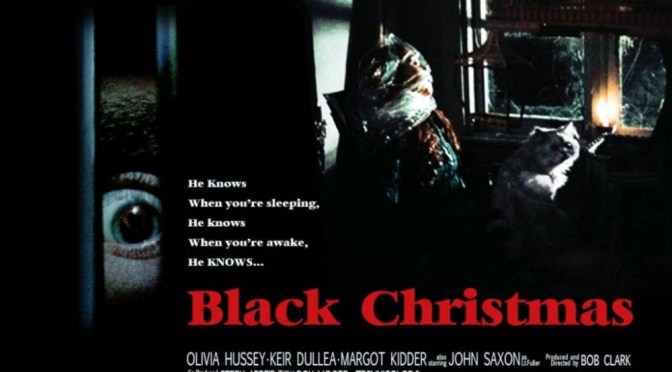
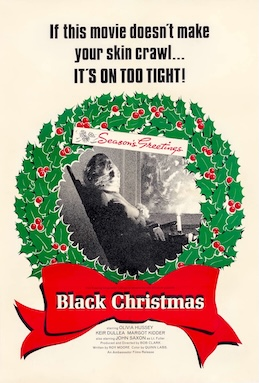
Black Christmas (1974) remains a cornerstone of cult horror, steeped in creeping dread thanks to director Bob Clark’s unnerving ability to build eerie atmospherics. As a series of obscene phone calls begin to plague a sorority house, the film patiently tightens the noose, revealing that a psychopath is homing in on the “sisters” with sinister intent. Even as the police attempt to trace the calls, Clark toys with perception, suggesting that nothing—and no one—is quite what it seems.
Beyond its surface-level shocks, Black Christmas reveals a surprisingly progressive and unsettling thematic undercurrent. The film’s menace is deeply entangled with ideas of toxic masculinity: male entitlement, surveillance, and violence seep into almost every threat faced by the women. The killer’s obscene phone calls aren’t just frightening—they’re exercises in domination, attempts to invade private space through verbal abuse and sexualised rage. Even ostensibly “normal” male authority figures are depicted as dismissive, incompetent, or quietly threatening, reinforcing the sense that danger is systemic rather than anomalous.
Most striking for its era is the film’s pro-choice stance. Jess’s determination to have an abortion—presented as a firm, rational decision rather than a moral failing—grounds the horror in real-world anxiety. Her boyfriend’s furious reaction exposes a fragile masculinity rooted in ownership and expectation, aligning emotional coercion with the film’s broader atmosphere of male control. Horror here isn’t just the killer in the attic; it’s the social pressure bearing down on women’s autonomy.
Familial breakdown also looms large. The sorority house functions as a fractured surrogate family, one that offers warmth and camaraderie but ultimately fails to protect its members. Traditional structures—parents, police, institutions—are either absent, drunk, or found wanting, leaving the women isolated within spaces that should be safe. This erosion of trust amplifies the film’s dread, making the violence feel inescapable.
The ambiguous ending remains divisive. By denying the audience catharsis or moral resolution, director Bob Clark leaves the horror unresolved, lingering long after the credits roll. For some viewers, this refusal to “close the case” is profoundly unsettling; for others, it risks dissatisfaction, as the absence of narrative justice feels incomplete rather than subversive. Yet it’s arguably this very lack of closure that cements Black Christmas’s power. The evil isn’t vanquished—it’s merely unseen, waiting—an idea that would echo loudly through the genre and unsettle audiences for decades to come.
Standout performances from wise-cracking Margot Kidder, ethereal Olivia Hussey, and the intensely unsettling Keir Dullea elevate the material. Revisiting the film after a twenty years hiatus, I felt the fear factor is occasionally undercut by arguably silly humour and moments of heightened over-acting. Yet, its influence is undeniable—paving the way for filmmakers like John Carpenter, who would refine and surpass its template with the classic Halloween (1978).
Under-rated Classic Film Review #12: The Silent Partner (1978)
Directed by Daryl Duke
Written by Curtis Hanson – Based on Think of a Number 1969 novel by Anders Bodelsen
Produced by Joel B. Michaels & Stephen Young
Main cast: Elliott Gould, Christopher Plummer, Susannah York, Celine Lomez, John Candy, Stephen Young, Ken Pogue etc.
Cinematography by Billy Williams
Music by: Oscar Peterson
*** MAY CONTAIN SPOILERS ***
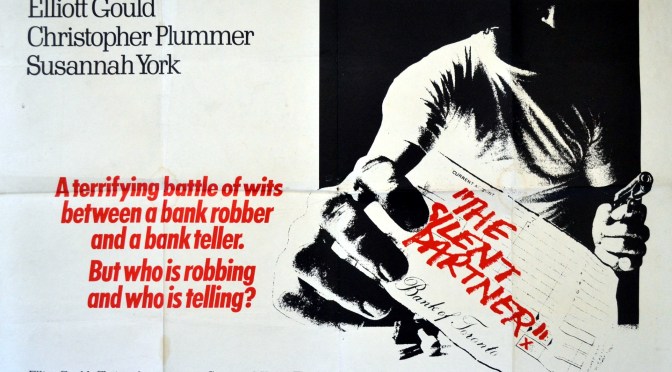
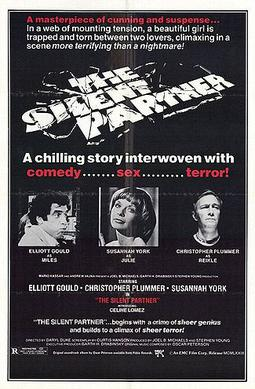
The Silent Partner (1978), directed by Daryl Duke and based on Anders Bodelsen’s novel Think of a Number (Tænk på et tal), stands out as not only one of the best Christmas thrillers of all time but also one of the most meticulously plotted crime thrillers outside of Alfred Hitchcock’s grand body of work. The film, which takes place against the snowy backdrop of Toronto, is a slick, taut, and endlessly clever exercise in suspense, filled with smart twists and an ever-present sense of menace.
At the heart of the film is a brilliantly constructed screenplay by Curtis Hanson, which provides the perfect vehicle for its two star actors: Elliott Gould and Christopher Plummer. The story’s premise is deceptively simple: Miles Cullen (Gould), a mild-mannered bank teller, discovers a discarded holdup note revealing an impending robbery. His quick thinking—suspecting the mall Santa, Harry Reikle (Plummer), to be the would-be robber—leads him to secretly hide $48,300 from the bank’s vault and give Reikle only a fraction of the money. When Reikle realizes he’s been swindled, the tension escalates, and Miles becomes the target of the dangerous and unhinged criminal, setting off a high-stakes game of cat and mouse.
The film’s brilliance lies in its ability to build both an intricate plot and a captivating atmosphere of suspense, while never losing its sense of humour. There’s a certain rhythm to The Silent Partner (1978), a precision that evokes the same sense of control as Hitchcock’s best thrillers. The story unfolds with a metronomic pace, carefully stacking one suspenseful moment after another, each new twist feeling earned and expertly timed.
One of the key pleasures of The Silent Partner(1978) is the pairing of Gould and Plummer, two actors who couldn’t be more different in their approaches to character. Gould plays Miles with a cool, calculating detachment—a man who might appear meek and even timid at first glance, but is secretly a clever and pragmatic planner. He’s the type of guy who thinks five steps ahead, carefully orchestrating every move as he tries to stay one step ahead of the increasingly unhinged Reikle. Gould’s portrayal is sharp, cerebral, and fascinating to watch as he navigates the complex moral terrain of his actions.
On the other hand, Plummer’s Harry Reikle is a chilling force of nature—volatile, unpredictable, and capable of explosive violence at the drop of a hat. He’s one of the best screen villains ever with Plummer delivering a performance that’s equal parts suave and menacing. His portrayal of Reikle is a study in contrasts—he’s charming one moment, a psychopath the next. Where Gould’s Miles is a thinker, Reikle is all instincts and rising rage. The tension between these two characters, each representing a different kind of threat, is what drives the film forward. It’s a masterclass in how to craft a compelling dynamic between protagonists and antagonists.
Beyond the characters and their performances, The Silent Partner (1978) stands out as a deeply satisfying crime thriller. The film is full of great set-pieces that slowly ratchet up the suspense—each one feeling like it could be the final nail in the coffin, but instead leading to a further complication. Whether it’s Miles using his wits to stay one step ahead of Reikle, or having to think on his feet having lost the key to the deposit box with the loot, every element of the plot is carefully calibrated. Even the Christmas setting, which could have been just a backdrop, is used effectively to heighten the film’s tension. The festive atmosphere of the holiday season contrasts sharply with the darkness of the film’s themes, creating a stark juxtaposition that enhances the thriller’s sense of dread.
The Silent Partner (1978) is a deeply underrated gem in the thriller genre. With a killer screenplay, two outstanding lead performances, and a plot that’s as intricately designed as a clockwork machine, it’s a film that rewards careful attention and repeat viewings. It’s a perfect blend of Christmas cheer turned upside down, and it holds its place as one of the finest thrillers ever made—one that, unfortunately, remains too often overlooked.
Main cast: Mari Shirato, Junko Miyashita, Kentarō Shimizu, Jun Etō, etc.
Cinematography by Yonezou Maeda
Music by Toshiyuki Honda
*** MAY CONTAIN SPOILERS ***
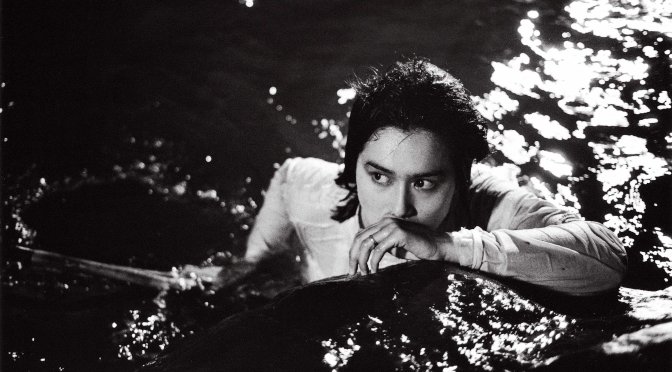
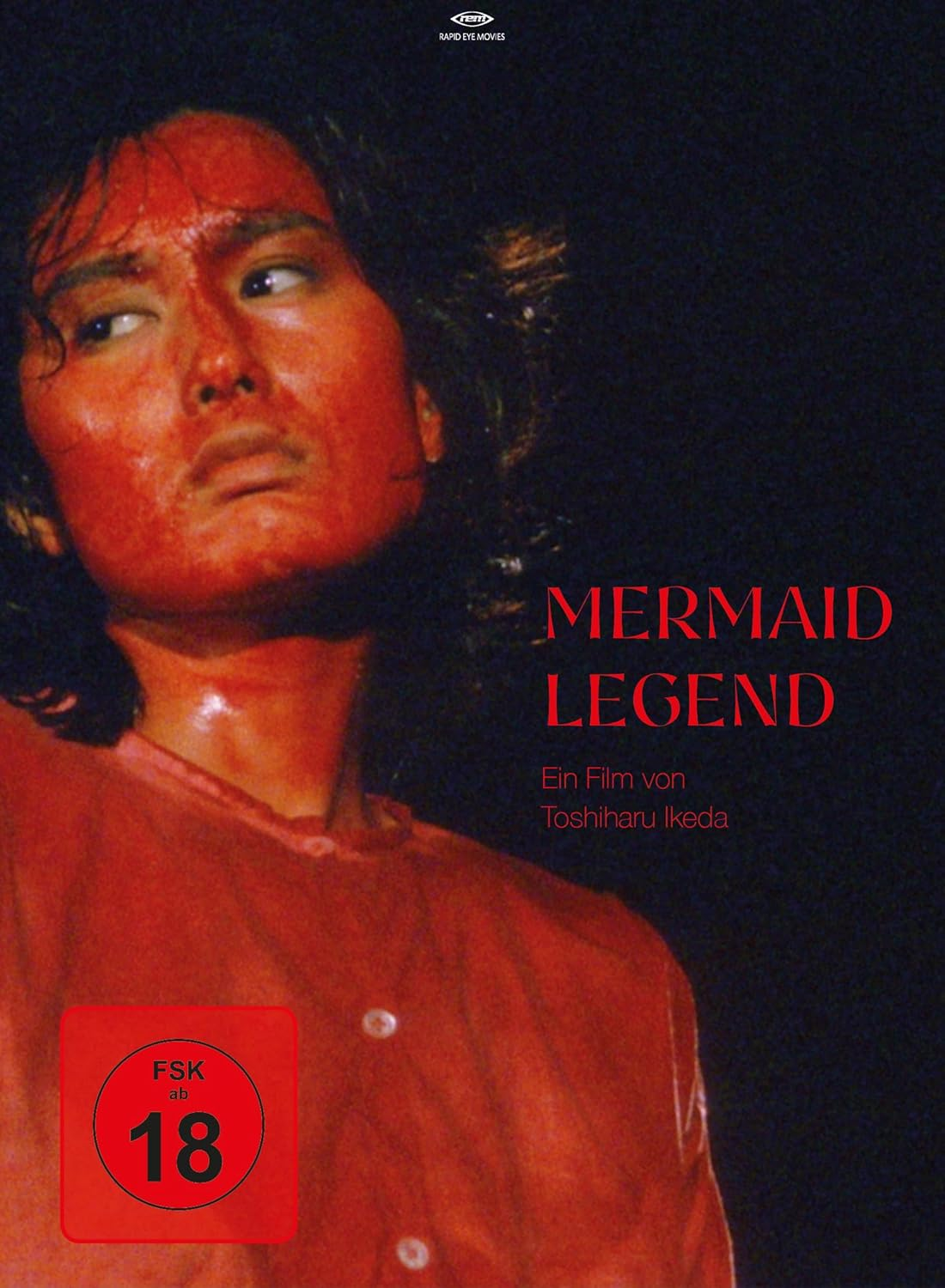
I took a gamble on an unknown Japanese film at the Nickel Cinema and walked out genuinely shaken. Mermaid Legend (1984) isn’t just a cult oddity—it’s a film that mutates before your eyes, seducing you with beauty before drowning you in blood. I was stunned by how something so lyrical could also be so brutally confrontational.
The story begins almost modestly, as a coastal drama about a fisherman and his wife, Migiwa. They bicker constantly, their marriage worn thin by poverty and exhaustion, yet there’s an undeniable bond beneath the arguments. That fragile domesticity is shattered when the fisherman stands in the way of an industrial development scheme. The business developers—faceless, polite, and utterly ruthless—have him murdered, disposing of his life as casually as industrial waste.
From there, Mermaid Legend (1984) transforms again. What starts as marital realism becomes a corporate espionage murder mystery, steeped in anger at nuclear energy, environmental destruction, and the cold machinery of corporate greed. Migiwa, a powerful-lunged pearl diver, initially hides, retreating into grief and the sea itself. But this is not a film about quiet mourning. When she decides to act, she does so with mythic force.
Played by the ethereal and astonishing Mari Shirato, Migiwa becomes something halfway between woman, avenging angel, and sea spirit. Shirato’s performance is magnetic—serene, sensual, and terrifying. As her vengeful pursuit begins, the film plunges headlong into extreme violence and explicit sexuality, reclassifying itself yet again as one of the most shocking exploitation epics I’ve seen from Japan in recent years. These scenes aren’t gratuitous in the lazy sense; they’re confrontational, weaponized, daring you to look away while refusing to let you feel comfortable for a second.
What makes Mermaid Legend (1984) so intoxicating is how its elements collide. Poetic underwater cinematography turns the ocean into a womb, a grave, and a cathedral. Religious, angelic, and environmental imagery blur together, as if Migiwa is both martyr and executioner. The music is heavenly—soaring, mournful, almost sacred—creating a surreal contrast with the carnage on screen. Beauty and brutality coexist in the same frame, each intensifying the other.
And then there’s the ending. The final, elongated pier stabbing rampage is completely off the chart—relentless, bloody, and hypnotic. It plays out like a ritual rather than an action sequence, stretching time until violence becomes abstraction, then meaning, then release. By the time the last body falls, Mermaid Legend (1984) has fully shed realism and entered the realm of legend, justifying its title in blood.
This is a film that shouldn’t work, yet does—furiously, defiantly. A genre-shifting fever dream that moves from domestic drama to political thriller to erotic exploitation to mythic revenge tragedy, Mermaid Legend (1984) is both beautiful and brutal, and I can’t stop thinking about it. Seeing it by chance at the Nickel Cinema felt like discovering a secret too powerful to stay hidden.
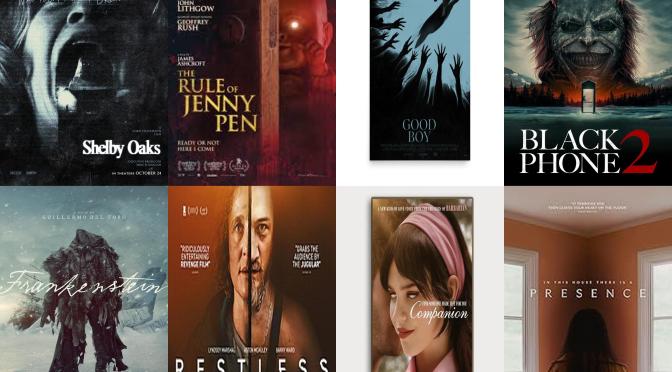
In the languid drift of autumn, when Halloween’s shadow lengthens and winter begins its slow, expectant inhale, the world seems to slip into a more suggestive register—one where every rustling leaf feels like a whispered omen. It is, of course, the most appropriate season to surrender to the year’s latest horror releases, as though communing with these cinematic phantoms might prepare us—spiritually, aesthetically—for the deeper darkness to come.
Which basically means I have been catching up with some 2025 horror film releases I missed at the cinema during autumn. A couple of these probably warrant more in depth solo reviews, but as I edge closer to old age and the reaper’s scythe, I am economizing somewhat.
*** MAY CONTAIN SPOILERS ***
Black Phone 2 (2025)
Scott Derrickson and co-writer C. Robert Cargill deliver a sequel to The Black Phone (2021) with Mason Thames, Madeleine McGraw, Jeremy Davies, and Ethan Hawke reprising their roles from the first chiller. I actually enjoyed this one more than the original, which despite the clunky set-up, finds the siblings and others trapped in a teen camp hit by a blizzard. They find themselves hunted and haunted by both The Grabber (Hawke) and other ghostly spirits haunting the area. Derrikson throws a lot of horror tropes and the characters (literally in certain scenes) at the walls, and much of it sticks. Having said that, I still don’t think The Grabber is the scariest villain ever committed to screen, despite Hawke’s presence. (Mark: 7.5 out of 11)
Companion (2025)
Companion (2025) feels like Garland’s Ex Machina (2014) colliding elegantly with Fargeat’s feral Revenge (2017)—a sunny day-horror fable that hides its nastiest surprises in plain sight. Its twists are sharp, its aesthetic confident, and its ideas far more ambitious than its modest surface first suggests. I would have admired it even more were it not, on occasions, completely dumb. Plus, the occasional drift into a comedic register undercuts its more incisive moments. The beautiful Sophie Thatcher once again commands the screen with the same riveting presence she brought to Heretic (2024). Mark: 8 out of 11.
Graduation Day (1981)
Thanks to Bobby Carroll’s site for reminding me about slasher film, Graduation Day (1981), as I had completely forgotten about it. High quality kills and gore mask a screenplay which has more nudity than character development. Yet, I am a sucker for these 1980’s exploitation flicks and this is a watchable one. Mark: 6 out of 11
Good Boy (2025)
An low-budget horror film triumph with Ben Leonberg directing his own dog, Indy, a Nova Scotia Duck Tolling Retriever, as the only witness to nasty spirits threatening his owner. The film emerges as a formal tour-de-force, whose meticulous composition and deliberate pacing elevate its simple premise into something unexpectedly resonant. Its visual precision and rhythmic control shape an atmosphere of dread that feels more sculpted than sensational, grounding the film in an emotionally impactful narrative about loyalty, vulnerability, and the unsettling spaces between trust and fear. For all its craft, and impressive animal direction, the film doesn’t quite sustain a relentless menace throughout. But, it remains a memorable feature debut from Leonberg and Indy the dog. Mark: 8.5 out of 11.
Presence (2025)
In Presence (2024), David Koepp and Steven Soderbergh demonstrate just how potent a one-location horror film can be when discipline and imagination converge. The entire piece unfolds like a controlled exhale: a slow-build structure that trusts the audience to lean in, and a drifting, almost contemplative camera that adopts the ghost’s POV to quietly—sometimes imperceptibly—reveal fragments of the story. Instead of overplaying its hand, the film slow-drips its plot elements with an elegance that keeps tension suspended in the air, letting unease pool in the corners of an otherwise ordinary space. By the time it reaches its finale, Presence (2024) delivers not only a surge of emotional and thematic clarity but two genuinely surprising twists—earned, unsettling, and executed with the kind of precision that affirms both writer and directors’ mastery of the form. Mark: 8.5 out of 11.
Restless (2024)
Really good independent British thriller with Lyndsey Marshal as a nurse, Nicky, who finds herself terrorized by 24-hour partying thug neighbours. Writer-director Jed Hart creates great empathy and identification with the situation and it’s a shame decent British films like this get short shrift at the multiplexes. Nicky’s spiral into insomnia-driven madness is compelling as her desperate attempts to sleep give way to vengeance. But the film’s final act tonal turn denies us a full-on descent into suburban hell, for something amenable but unfortunately less twisted. Mark: 7.5 out of 11
The Rule of Jenny Pen (2025)
The Rule of Jenny Pen is an original, weird, and powerful shock of a film — a mash-up of psychological thriller and nursing-home horror that lands far more often than it stumbles. Its greatest strength is, without question, the towering performances at its centre. Geoffrey Rush and John Lithgow, two masters of calibrated gravitas, turn the film’s cat-and-mouse mind game into a gripping acting showcase. Together, they elevate the film’s themes of aging, vulnerability, and institutional neglect into something both unsettling and strangely beautiful. The plotting, however, does get a bit sticky toward the end. The final act jars slightly, causing me confusion in an otherwise tight psychological narrative. Still, even as the story wobbles a tad, the film’s originality, eerie tone, and powerhouse acting keep it compelling. Mark: 8 out of 11
The Woman in the Yard (2025)
The Woman in the Yard (2025) rises on the strength of Danielle Deadwyler’s commanding lead performance. As a mother trying to protect her two children from a funereal spirit lingering in their backyard, Deadwyler grounds the supernatural dread with raw emotional honesty. The child actors match her with a believable, lived-in family dynamic that makes the haunting feel all the more personal. Where the film falters is in its structure. The script leans heavily on crow-barred flashbacks that interrupt rather than enrich the unfolding tension. A more linear approach could have built a stronger emotional momentum, allowing the story’s grief, guilt, and mental illness to accumulate naturally instead of stuttering backward at key moments. (Mark: 6 out of 11)
Together (2025)
Together (2025) gets an immediate boost from the casting of real-life couple Alison Brie and Dave Franco, whose natural chemistry gives the film an authentic emotional core. As a pair trying to rebuild their relationship after moving from the city to a rural small town, they convincingly inhabit the tensions, resentments, and unspoken fears that surface long before the horror does. Their incompatible expectations feel lived-in — and once they tumble into a sinkhole and the strange bodily transformations begin, that emotional groundwork makes the nightmare hit harder.
I loved the trailer for this film, which promised a truly skin-crawling descent into body-horror chaos. The final product, while atmospheric and often engrossing, doesn’t fully deliver on that promise. It pulls back when it could push further, leaving some of the more disgusting, surreal possibilities off-screen. But the ending — bold, surprising and unexpectedly poignant — is a fantastic payoff. Even if the film doesn’t always reach the extremes it teases, Together still manages to leave a memorably twisted impression. Mark: 8.5 out of 11




 The Cinema Fix presents