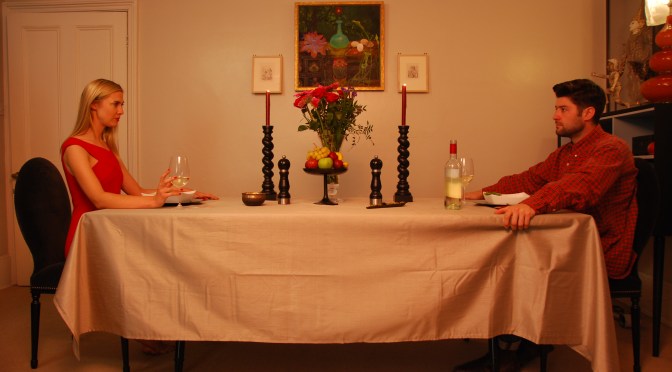
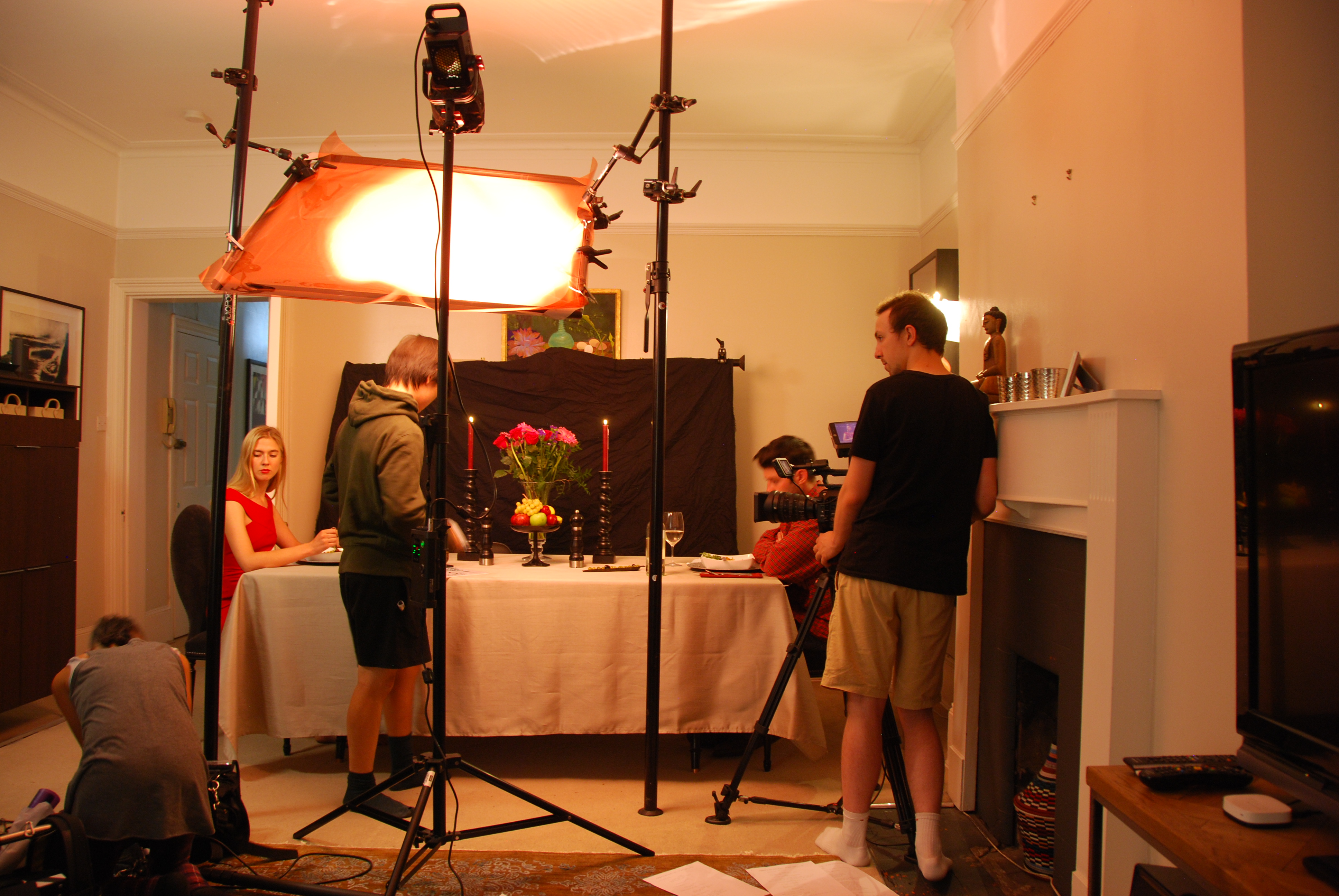
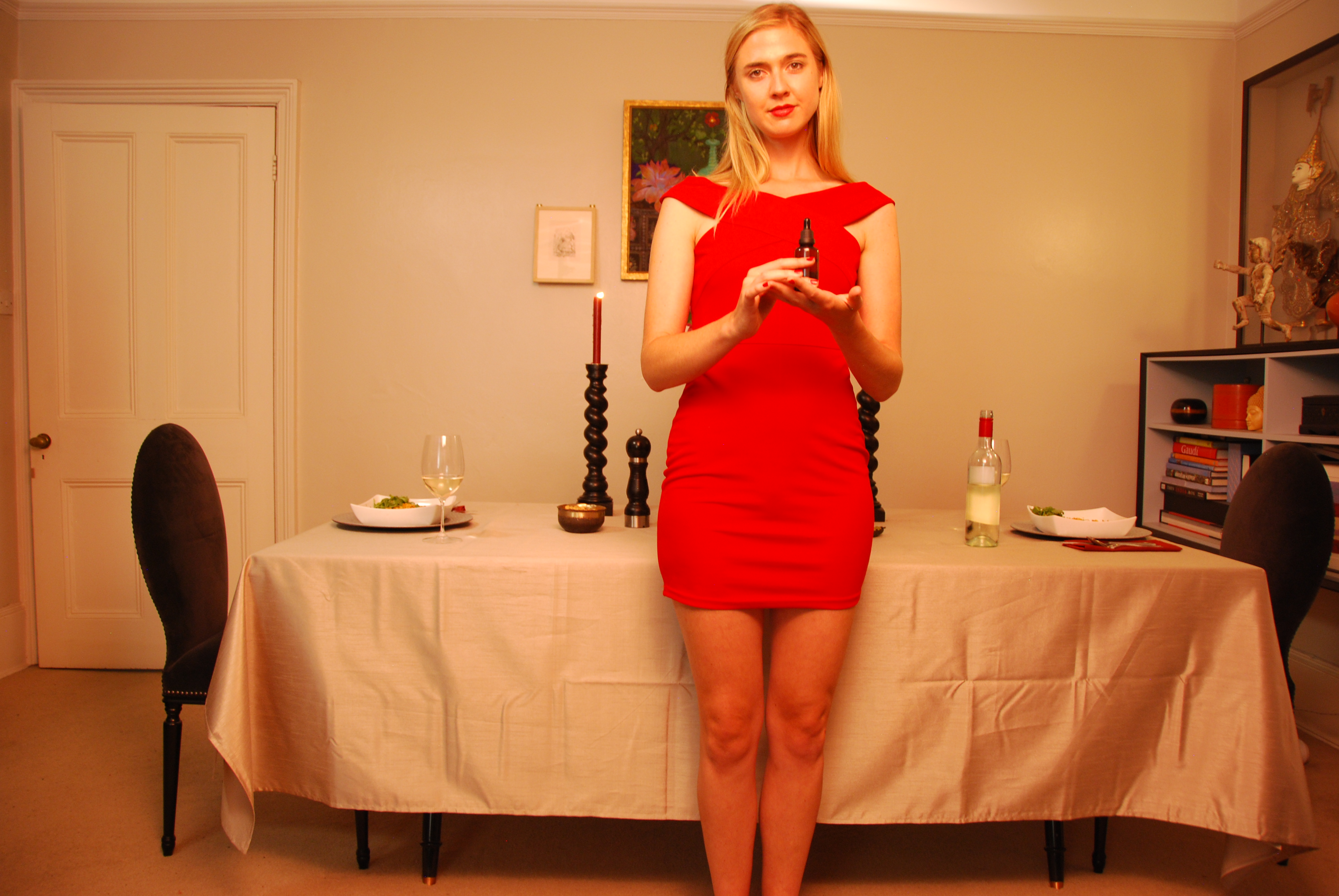
My third directorial short film effort went into production this year and the weekend shoot took place in the last week of July 2018. Thus, a small crew and two cast members put all of our preparations and rehearsals into action, in order to produce a compelling work of fiction. I am now at the editing/score stage but in the meantime here are some cast and crew details, on-set photos and story pitch.
THE STORY
Sadie Cort is out for revenge. Her ex-boyfriend Stephen is coming to dinner and she has prepared a beautifully set candlelit table. The wine is uncorked and chilled before Sadie pours poison into it. As it drifts slowly to the bottom of the bottle, the doorbell chimes. Stephen is here but will he drink the wine? And why does Sadie want him dead? All will be revealed in the short horror and darkly comedic film Tolerance (2018), inspired by Roald Dahl, Inside No. 9 and Tales of the Unexpected.
CAST AND CREW
Written, produced, catered and directed by: Paul Laight
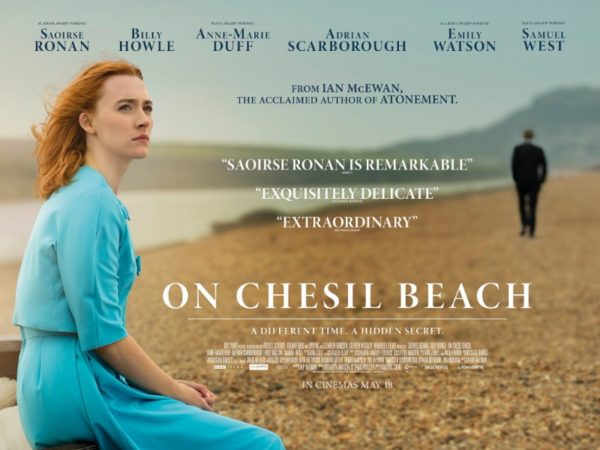
Screenplay by: Ian McEwan (Based on: On Chesil Beach by Ian McEwan)
Starring: Saoirse Ronan, Billy Howle, Emily Watson, Anne-Marie Duff, Samuel West, Adrian Scarborough
Cinematography: Sean Bobbitt
**MAY CONTAIN SPOILERS**
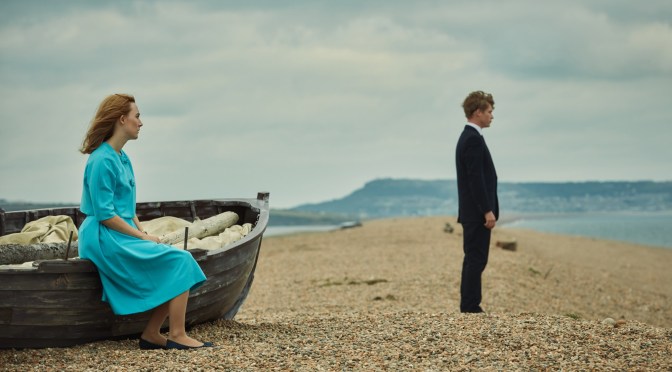
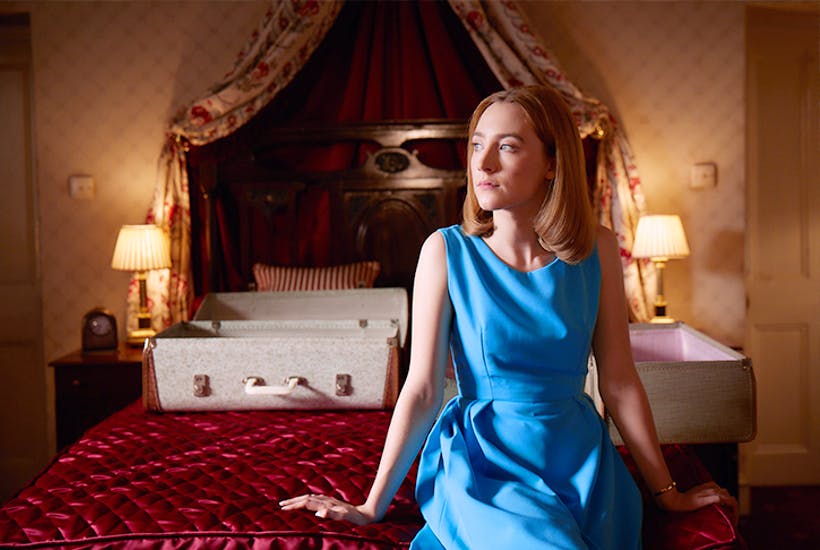
I watch a lot of films. I also write screenplays. Indeed, over the last twenty-five years I have studied and read many “how to” write screenplay courses, books, and articles. One of the major rules of screenwriting, as opposed to radio and television writing is to SHOW and not tell. Deliver your story via the images, performance and shot composition rather than obvious dialogue which spells everything out. As a writer of incredible talent Ian McEwan has, along with director Dominic Cooke and their editor, created an intriguing story of lost love and romance. It flashes forward and back between the past and present beautifully and certainly shows rather than tells the story in a less than obvious fashion. In fact, for me it was ultimately TOO subtle in delivery and the emotional ramifications of certain events are lost in the subtext.
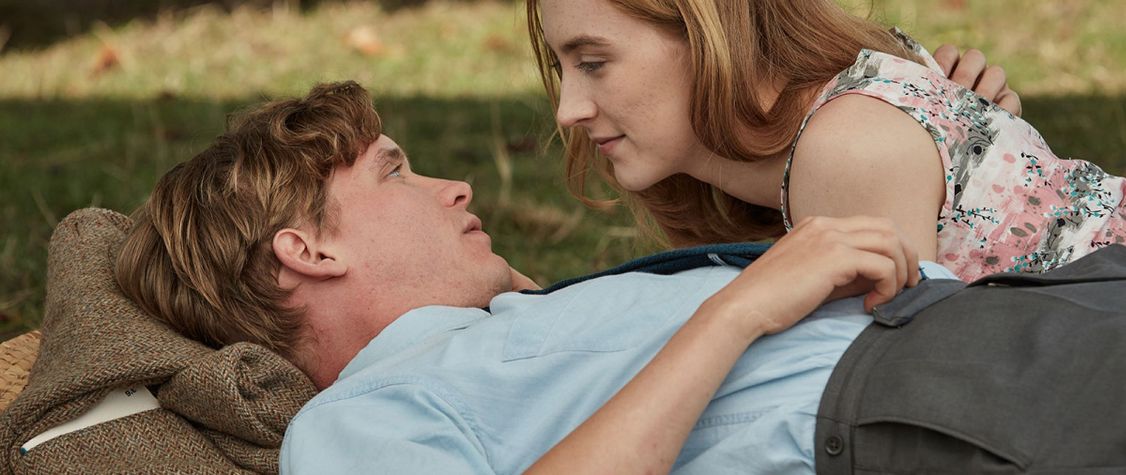
The story begins in the 1960s as newlyweds, Florence and Edward, nervously entwine on their wedding day. As portrayed by the imperious Saoirse Ronan and compelling Billy Howle we are immediately empathetic of their situation and time. Because traditionally, unlike the more sexualised mores of today, religion and social convention would dictate that the couple were more likely to be virgins. Therefore the nervous glances and small-talk slowly build a sexual tension creating an incredibly awkward and embarrassing mid-point moment between the characters. McEwan’s script also flashes back to the past establishing how the characters met. Edward is a lower-middle class boy from a rural background while Florence’s family are more upper-middle class capitalists. As presented in other McEwan works class tensions also propel the drama as Florence’s family look down on Edward somewhat.
There is a lot of depth within the characterisations notably from Ann-Marie McDuff as Edward’s unfortunate mother. Although, at times I wasn’t sure how her mental condition was linked to the themes of the piece, the performance of the actor alone was fascinating throughout. Ultimately, it’s a film about love, loss and terrible secrets; notably how past events can haunt the present. However, in choosing to bury the big reveal within a blink-and-you-miss-it flashback, the poetic editing, in my opinion, took away from the dramatic power and potential catharsis in denouement. On occasions telling us as well as showing us can empower an audience to feel even more for the characters.
Dominic Cooke marshals the film with an assured hand as befits an experienced theatre director. Ronan and Howle give brilliant performances. In fact, I don’t think there is a better and more consistent young actor than Saoirse Ronan. In films such as: Atonement (2007), Hanna (2011), Brooklyn (2015), Lady Bird (2017) and now On Chesil Beach (2017), she has proved herself capable of capturing depth and emotional power with her performances. Ronan and her romantic counterpart, Howle, make the film worthy of your attention even if I was left mildly bewildered, valiantly trying to work out why their characters’ relationship was doomed to fail.
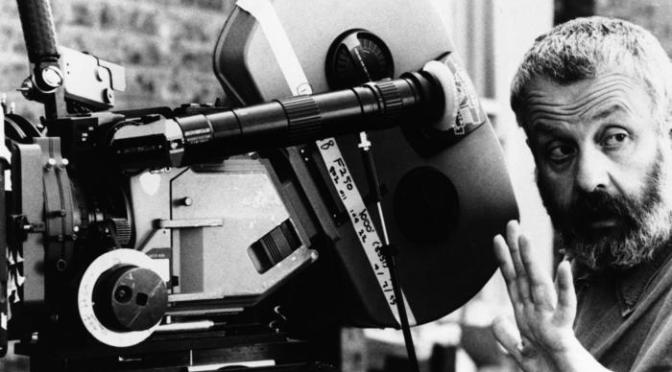
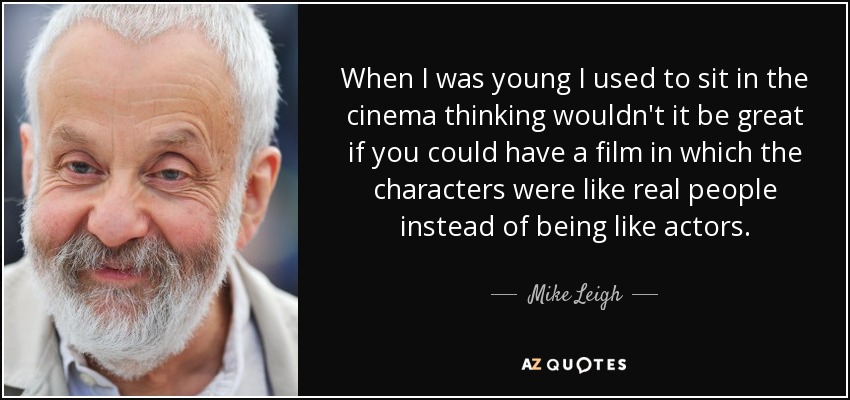
There is no way a mere simple page of words from my keyboard can do justice to the decades of incredible theatrical, televisual and cinematic work of the genius that is Mike Leigh. He has, since the 1960s, worked tirelessly creating: drama, comedy, pathos, empathy, love, hatred, politics, harmony, conflict, nihilism and hope through an orchestra of characters and creative endeavour.
For me Mike Leigh is a true artist. He has not only been involved in innumerable film, TV shows and plays since the 1960s but also created his own production modus operandi in the process. He is rightly well regarded for working intimately with his actors organically creating character and stories from the kernel of an emotion or idea. His works are legion and often feature representations the working or under-classes. There are no superheroes or special effects but rather raw emotion and feelings within his body of work.
The My Cinematic Romance series has always sought to praise filmmakers and actors I really love and Mike Leigh is no different. I would have to say though that to pick FIVE of my favourite works is an impossible task as there is so much choice. Nonetheless, these are five of my favourite Mike Leigh works but do check out any of his films as they have much to say about humanity and life and are also very entertaining in their own inimitable style.
**CONTAINS SPOILERS**
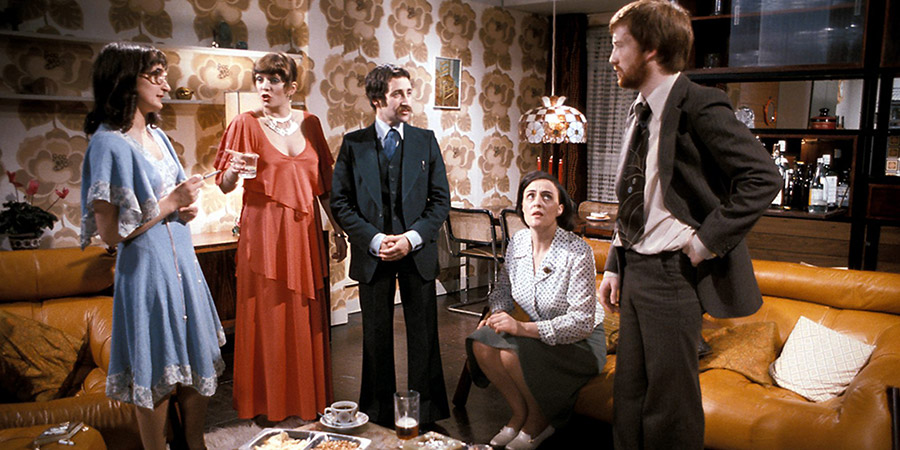
ABIGAIL’S PARTY (1977) – BBC TV PLAY
Opening as a stage play in 1977, the seminal tragic-comedy Abigail’s Party sold out for months at the Hampstead Theatre when first released. A filmed TV version was released later to much acclaim that year and starred: Alison Steadman, Janine Duvitski, John Salthouse, Thelma Whiteley and Tim Stern. It’s a comedy of crumbling relationships featuring the passive aggressive clashes between the aspirational classes. The performances, notably from Steadman as the brash and formidable Beverley, are astute, over-the-top but somehow hilariously nuanced too. Moreover, the barbed dialogue and bitchy asides are perfectly delivered during a dinner party that, once seen, will have you laughing throughout. But, like much of Leigh’s work, by the end you somehow feel sad too.
MEANTIME (1983) – CINEMA
The epitome of classic working-class-kitchen-sink-council-estate tragic-comedy, Meantime, features a “Who’s-Who” of now famous actors including: Gary Oldman, Tim Roth, Phil Daniels, Alfred Molina; plus an early appearance from Leigh favourite Peter Wight. Set amidst the bleak concrete landscape of East London the episodic story focusses on the Pollock family, notably the unemployed brothers portrayed by Daniels and Roth. The former is an answer-for-everything-clever-dick while Roth’s Colin is the more subdued, shy and possibly autistic one, very much in his brother’s shadow. Furthermore, a very young-looking Oldman pops up as a bored, thuggish, glue-sniffing and racist skinhead who bullies those around him, especially Colin. Overall, Meantime evokes memories of my own childhood growing up on a rough Battersea council estate and captures the ennui and inertia of unemployment in Thatcher’s Britain. While it may sound depressing there’s also some classic dialogue and a number of hilarious exchanges between the family and characters which certainly silvers the dark, grey clouds on the horizon.
NAKED (1993) – CINEMA
We need to talk about, Johnny! Arguably, of all the characters and creations from Mike Leigh, Johnny Fletcher is the darkest manifestation and representation of his worldview. Unlike the permanently positive Poppy from Leigh’s Happy Go Lucky (2008), Johnny is a dress-in-black, biting and bilious shadow who drifts like smoke from North to South with no aim other than to attack those around him. Sardonic and severe in his outlook, Johnny’s misanthropy knows no bounds as he angrily castigates his ex-girlfriend’s lack of ambition, portrayed by Lesley Sharp, before beginning a doomed sexual liaison with her flatmate, the self-hating Sophie (Katrin Cartlidge). It is not an easy film to watch due to the flagrant and offensive misogyny exhibited by the male characters and the seeming lack of hope throughout. Yet, it remains a compelling portrait of pre-millennial nihilism with some epic monologues delivered by the rasping and mercurial voice of David Thewlis’ in a never-to-be-bettered acting performance.
SECRETS AND LIES (1996) – CINEMA
After the nihilistic dissonance of Naked (1993) Leigh’s next film would return to familial roots and gentler, if still emotionally resonating, domestic drama. The story centres on Marianne Jean-Baptiste’s optometrist attempting to locate the birth mother who gave her up for adoption. In an extremely tender and serene performance, Baptiste as Hortense Cumberbatch finds her search turn up unexpected results. Brenda Blethyn, in the more melodramatic role of Cynthia Purley, runs the gamut of emotions; while the imperious Timothy Spall steals the floor with his noble rendition of Cynthia’s brother, Maurice. Spall’s Maurice is an ordinary, yet noble man, trying to hold the disparate family strands together. I especially loved the opening vignettes of Maurice’s photographic customers which established themes of surface appearances contrasted to hidden family secrets. This overall is what I class as a small epic containing so many brilliant character details, funny looks, and very touching moments where the emotion, quite often, is in the silence. Secret and Lies (1996) was, to date, Mike Leigh’s most accessible and emotionally satisfying film and would deservedly garner acting and directing awards and nominations from the Academy, BAFTA and Cannes.
VERA DRAKE (2004) – CINEMA
Having presented the lively Topsy Turvy (1999) world of Gilbert and Sullivan a few years before, Leigh created another period piece with Vera Drake. Set in 1950s London it centres on Imelda Staunton’s kind housewife who harbours a secret life. Amidst her family and work existence Vera assists young woman who accidentally get in the “family way”. I don’t want to say too much but this is a gut-wrenching and tragic story which highlights the issues of the day with a stunning emotional power. Imelda Staunton is one of the best actors I have ever witnessed on stage and screen and she brings to Vera’s character sympathy, pride and passionate inner strength. The supporting cast of Philip Davis, Eddie Marsan, Daniel Mays, and Sally Hawkins are superb; and a special mention to cinematographer Dick Pope, who has lit most of Leigh’s films. Pope creates, within a palette of greys, greens and browns a salient mood which enhances the performances and Leigh’s masterful direction.
Mike Leigh’s new film PETERLOO (2018) will be released this year in cinemas.
Rather coincidentally I have watched a number of films recently with female lead protagonists and hopefully this harks a more progressive move toward equality in leading roles. As a humanist myself I applaud any movement which proclaims and pursues empowerment and equality to every human being. For far too long people have been oppressed, including women, and we must rid the world of prejudice and negativity based on gender, race, sexuality, health, shoe size, hair colour and looks in general.
Thus, in mild tribute to yesterday’s International Women’s Day I am reviewing some very different films where female characters are to the fore. In these reviews I will consider the characters and their strengths and place in their given setting and world; as well as my own subjective appreciation of the films. As usual the marks are out of eleven.
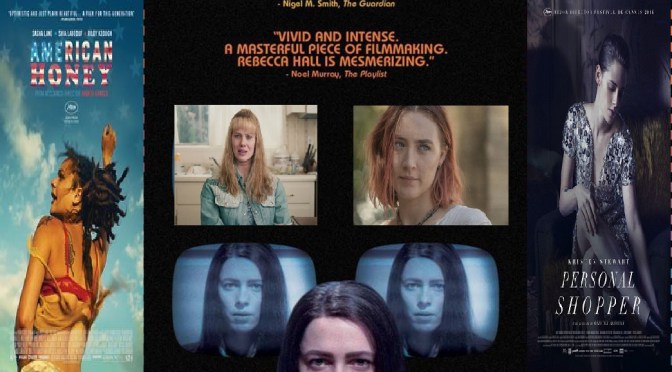
AMERICAN HONEY (2016) – SKY CINEMA
Andrea Arnold is an incredibly talented filmmaker and her films Red Road (2006) and Fishtank (2009) were bleak, honest and brilliant representations of working class British life. In American Honey she tackles the on-the-road-under-belly-working-class representations of American life with mixed results. Sasha Lane portrays Star, a young, transient and energetic character attempting to find hope, love and money on the oily, grimy roads of the USA. She joins a rag-tag troupe of magazine sellers led by Shia LaBeouf and Riley Keough, who drink, smoke pot and fuck while crossing various States! Star’s character is naïve and feisty, and as she falls for LeBeouf’s charismatic Jake, she finds her life choices coming into question. Overall, this is a beautifully shot and directed film and Arnold gets some very interesting performances from an amateur supporting cast, but the film is TOO LONG and many of the characters are just too unlikeable and stoned to care about. With editing Star’s journey could have been even more fascinating but despite some enthralling scenes I struggled to connect. (Mark: 6 out of 11)
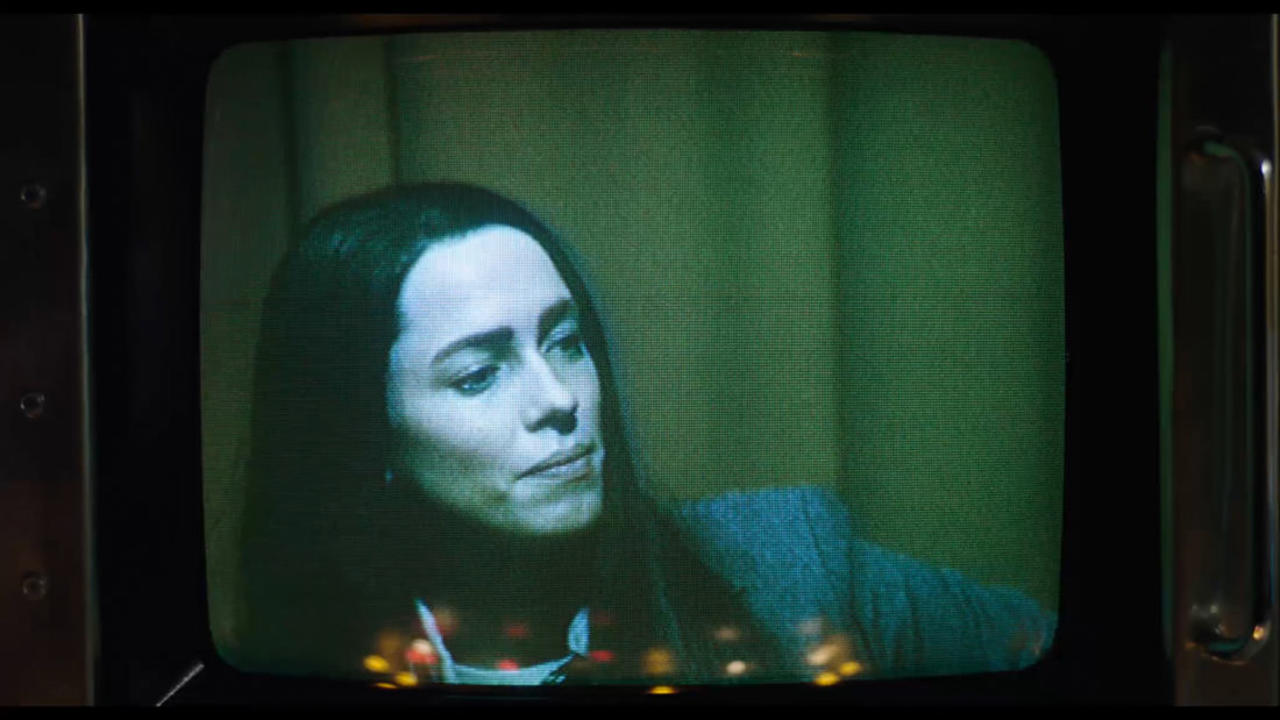
CHRISTINE (2016) – SKY CINEMA
Christine Chubbuck was a Sarasota TV news journalist who became infamous for an incredibly sad act she carried out live on TV. I won’t reveal what is was for fear of spoilers BUT safe to say it was not pretty. Rebecca Hall portrays this complex character with an artistic and haunted beauty; with Christine’s character totally infected by stark depression. She just does not fit in as she seeks artistic more human stories at work and clashes with her ratings-seeking boss, portrayed sympathetically by Tracy Letts. Michael C. Hall as the handsome news ‘anchor’ also tries to connect with Christine but her mood swings, paranoia and punishing work schedule pushes her away from those around her. Family, friends, and colleagues all rally round but ultimately Christine’s depression defeats her. Rebecca Hall is brilliant as Christine and this is a very absorbing, character study which sticks in the heart and mind. (Mark: 8.5 out of 11)
GHOST IN THE SHELL (2017) – SKY CINEMA
The ubiquitous Scarlett Johansson once again takes on an impressive kick-ass futuristic female role which finds her “ghost” inserted in to a computer-powered “shell”. Despite incredible visuals and fight scenes and Scarlett again proving a dominant screen presence the film is a let-down from a narrative and script perspective. There is a decent story in there as Johansson’s Major uncovers a nefarious murder plot being carried by evil corporations (is there any other kind?); but while looking pretty and carrying some impressive special effects this is an underwhelming adaptation of the original Japanese anime cult classic. (Mark: 5.5 out of 11)
I, TONYA (2017) – CLAPHAM PICTUREHOUSE CINEMA
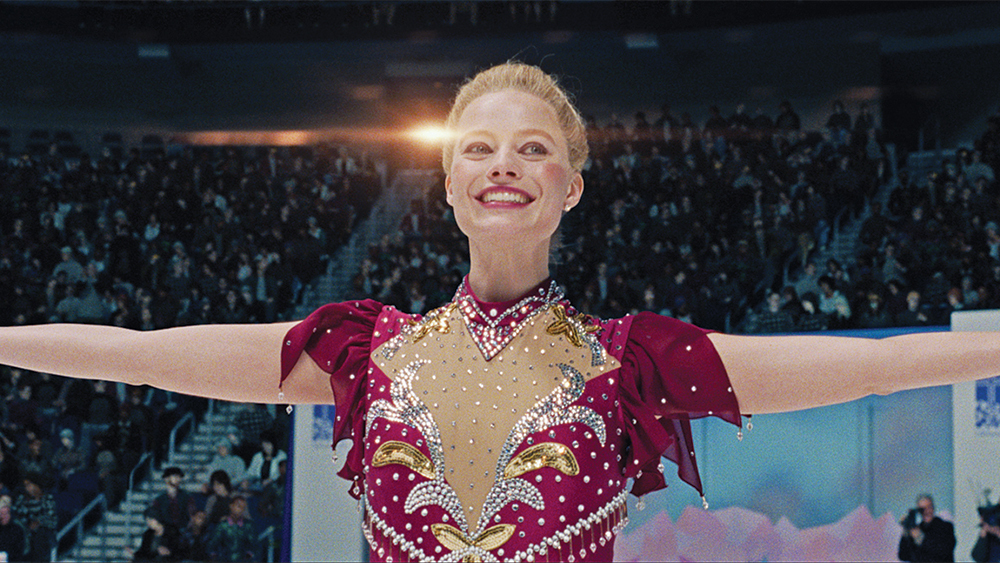
Tonya Harding was an incredibly talented and driven ice skater who went on to represent the USA at the Worlds and Olympics. She was also the first American female skater to perform two triple axel jumps in the same set. However, she also surrounded herself with and married fucking idiot men who ruined, along with her poor decisions, her career. As portrayed by Margot Robbie, Tonya is a potty-mouthed, bitter, energetic, unlikeable person yet effervescent and funny. Off the ice she continually chooses to go back to her abusive husband Jeff Gilhooly (impressive Sebastian Stan); while on the ice she skates with passion, determination, and brilliance. Steven Rogers script and Craig Gillespie’s direction present the story in mockumentary form with some comedy sketch-style cutaways which on occasion take away from the emotional core. Alison Janney is formidable as Harding’s hard-faced, pushy mother. However, it is her aggression and abuse which, while creating an incredible sportsperson in Tonya, also crushes all the love from the mother-daughter relationship. (Mark: 8.5 out of 11)
LADY BIRD (2017) – CLAPHAM PICTUREHOUSE CINEMA
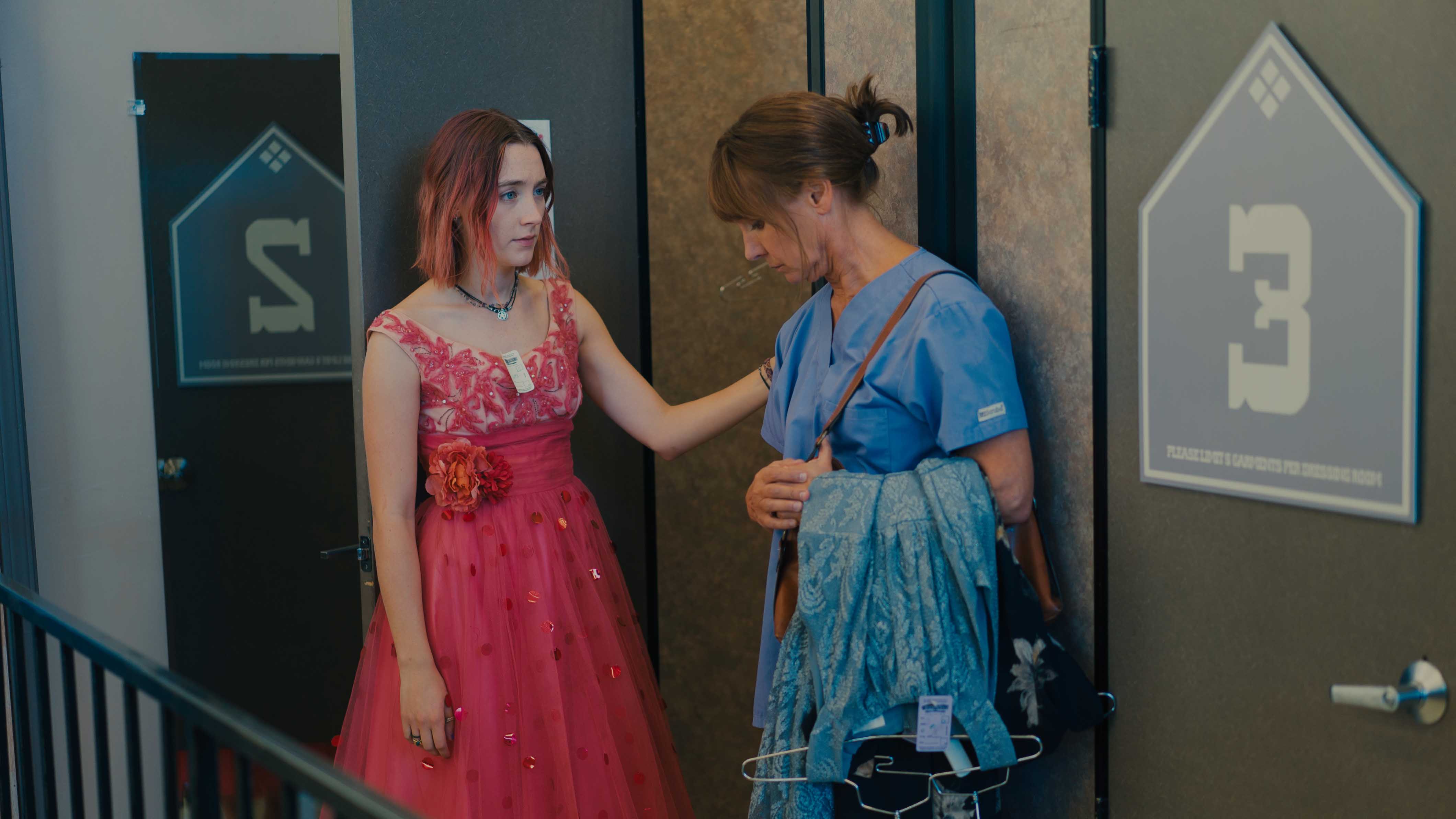
Greta Gerwig’s very personal rites of passage character study is a breezy, touching, emotional and funny hop through the life of Christine “Lady Bird” McPherson, as she navigates from High School to College. Lady Bird is a complex representation of young womanhood as her character is irrational, bitchy, kind, irritating, neurotic and somehow kind of loveable. Saoirse Ronan, Tracy Letts, and Laurie Metcalfe excel in a great ensemble cast and Gerwig’s script begins like a train with a flurry of very quick and funny scenes involving Lady Bird, her family, school friends and objects of desire. Later, notably with Lady Bird’s strained relationship with her mother, the film tugs at the heart strings to enthralling effect. Lady Bird has received a lot of critical acclaim and deserves much praise as Gerwig shows she is going to be a directorial talent to watch out for.
(Mark: 8 out of 11)
PERSONAL SHOPPER (2016) – NETFLIX
Another ambiguous, cerebral arthouse film from filmmaker Olivier Assayas containing both thriller and ghostly elements. The haunted Kristen Stewart plays a grief-stricken individual who is both a psychic and personal shopper. Stewart’s character Maureen is a lost soul working a job she hates searching for closure. While attempting to connect psychically with her deceased brother she is also stalked by an unknown person or “force”. As a character study the film works very well but I would have preferred the ghostly element of the story to play out emotionally as the other story did not successfully merge for me. I guess it’s open to interpretation but it felt like the filmmaker was telling two stories which did not hold together successfully. Stewart though imbues Margaret with a cold, distanced but powerful empathy and her fear and paranoia drives the story, notably in a couple of very creepy scenes. (Mark: 7 out of 11)
Produced by: Tim Bevan, Lisa Bruce, Eric Fellner, Anthony McCarten, Douglas
Written by: Anthony McCarten
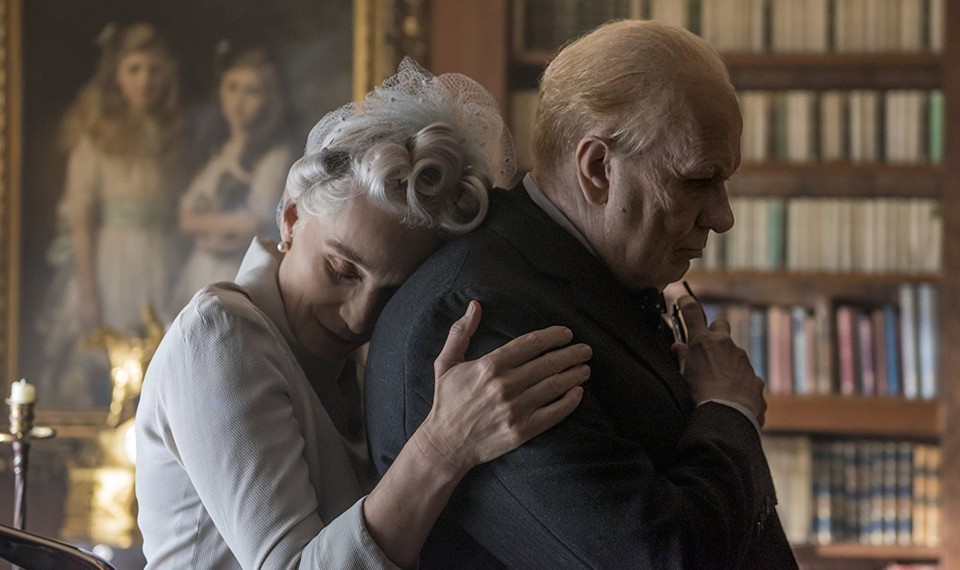
Starring: Gary Oldman, Kristin Scott Thomas, Lily James, Stephen Dillane, Ben Mendelsohn
What makes human beings want to go to war? What is it that determines thoughts and actions which will lead to the death of another human being? Is it: a genetic trait; a tribal desire; a psychological defect; financial gain; jealousy; boredom; passion; political chicanery; religion; greed; anger; revenge; or quite simply madness. Taking a life is something I have never understood. I mean, unless you are forced to defend yourself against a foe hell-bent on your destruction why would you wish to harm anyone else?
So, Adolf Hitler has a lot to answer for because, even accepting the political and social reasons for the rise of the Nazi party and his desire to repair national pride after the first World War, what the hell gives a nation the right to invade and conquer other countries. If you choose to go down that road you are signing the death certificate of a generation men and women and children. It’s not just Germany either. The British Empire, Roman Empire, Vikings, Mongols, United States of America, France and many more have waged war against humanity down the years. Will it ever stop? Sadly, I doubt it.
In times of war what is needed is obviously bravery, steel, fight, intelligence and more than a little luck. You need hearty human beings to stand and be counted and to die on the battlefields and in the air and in the sea. You also need leaders; figureheads who can rally the troops and galvanise that last ounce of fight in order to repel the enemy. During World War II, with the country on its knees and backs to the walls we had many leaders, but Winston Churchill, above all else, became synonymous with victory.
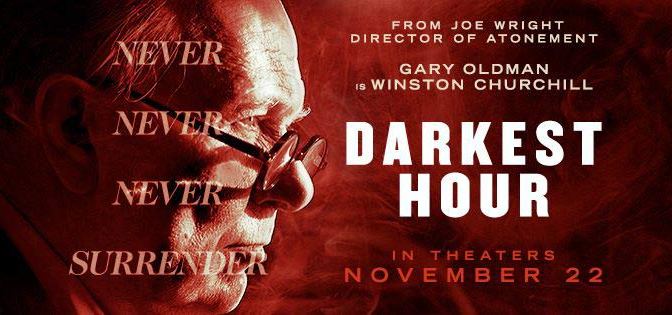
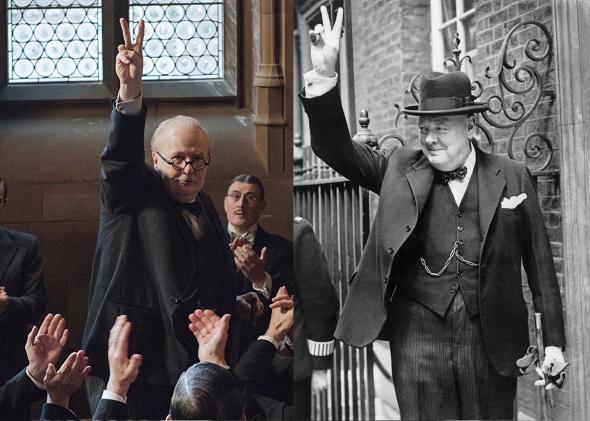
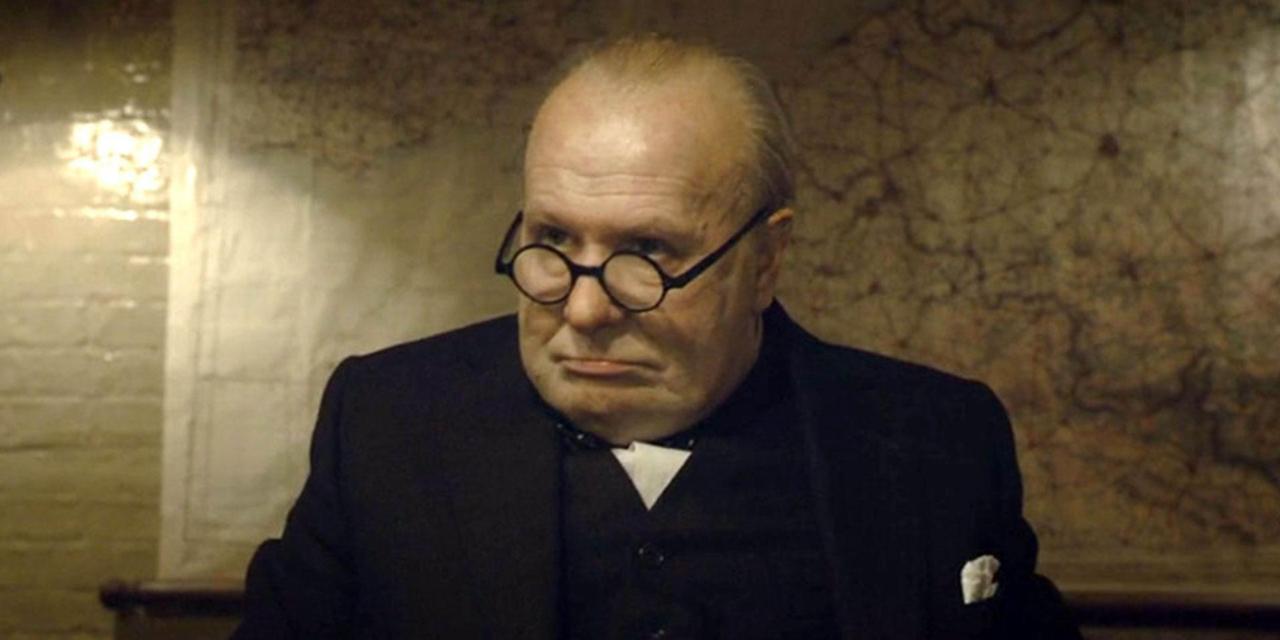
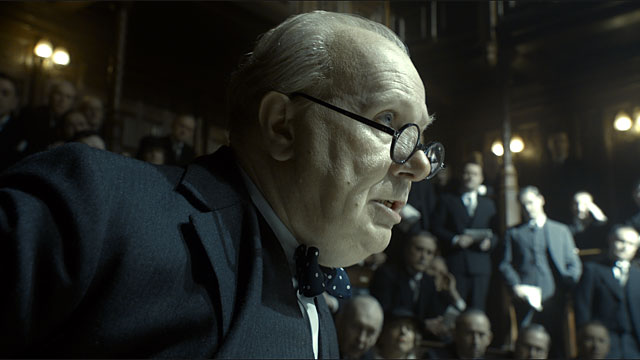
As portrayed in Joe Wright’s beautifully shot microcosmic epic, Darkest Hour, Churchill is presented as a flawed-pink-pyjama’d-cigar-chuffing-blustering-iconoclastic-functioning-alcholic prone to fits of rage, melancholy and depression. He also happens to be devilishly intelligent, full of energy, with a wicked tongue and talent for brilliant oration. Much of the plaudits must go to Gary Oldman, and his make-up team, for creating such a wonderfully human portrait. Indeed, Oldman owns the screen with his damned-near perfect impression.
Anthony McCarten’s fine script centres on a finite number of days during World War II when Churchill became Prime Minister. Aside from one emotionally effective yet historically grating symbolic scene on the London underground, is it well written with fantastic one-liners and Churchill’s greatest verbal ‘hits’. Joe Wright is a talented director (the mis-guided Pan (2015) aside) and he evocatively conveys the shadow of looming defeat. Wright traps Churchill and ensemble in cars, lifts and in underground chambers. Shafts of light also pin the characters to the corners of the screen; pushing them toward the darkness. But through the spirit of Churchill’s never-say-die attitude we fought back against the Nazis and eventually stole victory from the jaws of defeat. War is hell. War is madness. But sometimes it is unfortunately a necessity to prevent the bullies from winning.
CAST: Aubrey Plaza, Elizabeth Olsen, Billy Magnussen, O’Shea Jackson Jr., Wyatt Russell, Pom Klementieff,
**CONTAINS MINIMAL SPOILERS**
Grief is something which we will, or have already experienced, and given the dramatic possibilities, death and overcoming the death of a loved one propels many narratives in the cinema, literature and music etc. Ingrid Knows Best is one such narrative and while much is made of the plague that is social media and Instagram culture, this is ultimately a story of how our anti-hero deals with the loss of her mother and, in some ways, her own identity. In short: she doesn’t handle it very well, but rather disassociates her grief and fixates on so-called on-line celebrities in order to distract herself and escape the pain.
Aubrey Plaza is brilliant as Ingrid and she is fast becoming one of my favourite actors. I loved her in Office-influenced sitcom, Parks and Recreation and the brilliant lo-fi-sci-fi-rom-com Safety Not Guaranteed (2012). However, in this film and the mind-bending science fiction series Legion (2017), she completely owns the show. Plaza has a rare skill for vulnerable insanity where she does crazy stuff but at the same time you really empathise with her character.
In the opening scene she commits an act of pretty despicable revenge but once you see her living arrangements and family situation you really gain understanding of her character. Even when Ingrid heads west and begins stalking her next obsession, Plaza’s doe-eyed-butter-wouldn’t-melt façade and crumbling inner humanity ensure you never lose empathy for her. The writing is excellent as the script creates humour, drama and skilful satire of the facile, narcissistic and selfie-obsessed culture we live in today. Elizabeth Olsen too is impressive as the “Instagram Queen” and object of Ingrid’s obsession.
Overall, this was just #brilliant #dark #funny #sad! I was really satisfied with this film and while the slightly off-kilter crime-plot-turn near the end slightly unhinged the character study, the touching and thematically perfect ending was a brilliant pay-off for Ingrid’s character. Plaza though is the shining light of the film as she imbues Ingrid with not only the pathos of a zeitgeist Travis Bickle, but also a comedic mania which really brings the satire home.
FAMILIARITY AND NOSTALGIA IN THE FANTASY FILM GENRE
“Here you leave today and enter the world of yesterday, tomorrow, and fantasy.”
― Walt Disney Company
Once upon a Time. . . four simple words which immediately conjure a whole host of possibilities and eventualities in literature and by extension, cinema. In her book A Once Upon a Time: A Short History of Fairy Tale, Marina Warner attests that fairy tales are “Stories that try to find the truth and give us glimpses of greater things. . . this is the principle that underlies their growing presence in writing, art and cinema.” My own personal experience growing up was of reading fairy tales, myths and legends. Indeed, such stories formed a narrative backbone to my childhood and opened my mind to all manner of worlds of monsters, magicians, Kings, Queens, dragons, spiders, ghosts, gold-haired heroines, muscular heroes, acts of love and war, epic journeys; as well as breath-taking battles and feats of unimaginable compassion and bravery.
Such an education conditioned my young mind for an array of imaginative potentialities and in later life my love of fairy tales and stories would bleed through into my love of cinema. But how does one make the leap off the page onto the screen, making that which is fantastic believable to our eyes, hearts and minds? In this article I would like to consider certain ways we have been conditioned and how storytellers develop their narratives in the fantasy genre. How does the unbelievable become believable in our minds? There are many ways in which this is achieved but I would like to focus on two methods which are familiarity and nostalgia.
How does one define fantasy cinema? One could certainly posit the notion that the fantasy genre deals with fantastic themes including: magic, the supernatural, myth, folklore, exotic worlds, and fairy tales; and for the benefit of this article can encapsulate science fiction, horror and superhero movie genres. Essentially, fantasy is that which is not of our perceived rendition of reality, enabling escape into the extraordinary. Fantasy cinema is not simply dragons and wizards but more far-reaching as their stories cast their magic from childhood to adulthood. I myself recall the day when I first saw The Wizard of Oz (1939) as Dorothy’s journey from Oz literally took my breath away. Moreover, only recently I marvelled at the fantastic images and comedy of Thor: Ragnarok (2017) on the big screen.
Lew Hunter’s book Screenwriting 434 is a fine research tool for all budding writers. He opines, “You have to make the audience care about your on-screen people and their dilemmas, and when that occurs you’ve created believable unbelievabilty. Audiences will not just get with a film that starts with what they perceive as unbelievable unbelievability.” Thus, this is an integral rule in getting the audience to suspend disbelief and come into a fantastic world. I mean for every Lord of the Rings Trilogy, which in my view brilliantly brought to life J. R. R. Tolkien’s incredible literary behemoth, you get many films which fail to achieve this. Peter Jackson obviously used, at the time, state of the art special effects to achieve his vision of the book but more important, in my view, is establishing the world and characters in the audience’s psychology and making the unbelievable believable.
As aforementioned there are many other movies which do not arguably work as fantasy films. Of course these are subjective choices but offerings such as: The Island of Dr Moreau (1996), Judge Dredd (1995), Batman and Robin (1997), Van Helsing (2004), Cat Woman (2004) The Lady in the Water (2006), Eragon (2008), Foodfight (2012), Terminator: Genisys (2015), Death-Note (2017), to name a few, could all be argued to have failed to make the unbelievable believable. Be it the poor writing, bad production choices or a lack of cogency in the presentation of the rules of their respective worlds, these are a few examples of movies which arguably did not work. But what of the films that successfully connect with our imagination. How do they achieve that?
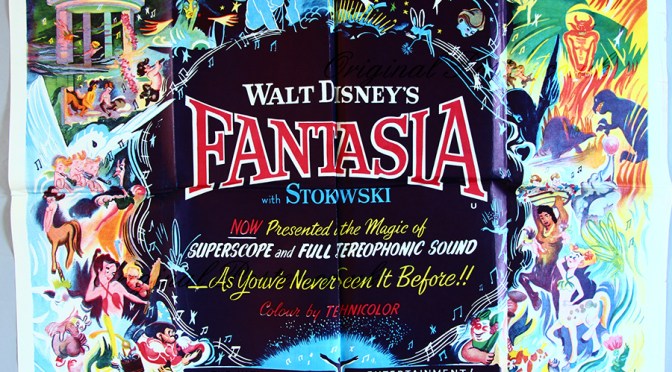
Disney Studios has been presenting animated and live action films for close to a century now. As well as developing short animated films centred on iconic characters such as Mickey Mouse, Disney Studios used established texts too. Their first short was Little Red Riding Hood (1922) and subsequently they would win an Oscar for The Three Little Pigs (1933). Thus, the Disney template of utilising familiar stories from folklore or fairy tales was born and since then they have produced many, many such short and feature length productions such as: Snow White and the Seven Dwarfs (1937), Sleeping Beauty (1959) and The Little Mermaid (1989). The suspension of narrative disbelief is achieved because innately we are accustomed to the idea of talking animals or wicked witches or half-woman-half-fish characters as they were familiarised to us in infancy. Indeed, as famous fantasy writer Neil Gaiman confirms, “We encounter fairy tales as kids, in retellings or panto. We breathe them. We know how they go.” Thus, believable unbelievability is achieved due to conditioning as children with the extraordinary. Likewise, our acclimatization with commercial products when growing up, including toys such as: Lego, Transformers, Barbie and the Pixar’s ingenious Toy Story trilogy tap into this familiarity model and the child’s dream that perhaps our toys can actually come to life.
As we grow older though many of us can become cynical and lose the innocence and imagination we had when younger. Thus, the challenge for filmmakers is to make not only children but also adults believe in the fantastic and the unbelievable. One way of doing this is through nostalgia or harking back to narrative conventions established from yesteryear. Academic Frederick Jameson wrote in his seminal essay Postmodernism and Consumer Society, that society entered a key cultural period from around the 1960s onwards where modernism had given rise to postmodernism and that originality per se was being replaced by emulation; more specifically satire, parody and pastiche. He goes on to suggest “. . . individualism and personal identity is a thing of the past. . . stylistic innovation is no longer possible and all that is left is the imitate dead styles.” A cinematic element of pastiche he argues is the “nostalgia film” which consists, not of original narrative, but of film moments and narratives from the previous films.
Indeed, one of the most successful cinema franchises of all time is George Lucas’ series which began with, Star Wars (1977). While containing many original elements in regard to the fictional monsters, creatures, planets, space ships, weapons, heroes and villains it’s structurally very familiar, featuring the archetypal hero rescuing a “Princess in a Tower” narrative. Even the “Once Upon a Time. . .” like beginning is echoed in the now classic opening text: “A long time ago in a galaxy far, far away. . .” Moreover, the expositional crawl which then follows is inspired by the early Saturday cinema sci-fi adventures such as: Flash Gordon. Lucas’ genius in using such nostalgic devices creates a clear pattern of familiarity and mental preparation for the fantasy elements yet to come in the story. Lastly, and less obvious, Star Wars also draws heavily, in terms of structure and characters, from Akira Kurosawa’s classic film Hidden Fortress (1958).
Similarly, J.K. Rowling’s Harry Potter series is equally adept at creating a magical world out of nostalgia and familiarity. The films are all structured around the school year and generally begin with an opening set-piece set in a mundane suburban area before slowly introducing the fantasy elements. Of course, some of us may not be so nostalgic for our school years but we are familiar with the educational structure. The Harry Potter books and films are a creative stroke of genius creating both emotional connections for children and adults. Children see the characters of Harry, Hermione and Ron as reflection and wish to emulate such characters; while adults can look back on their school days nostalgically and perhaps also enjoy the magical adventures from a position of halcyon positivity. What Star Wars and Harry Potter both offer is a means to project some incredibly fantastical elements but make it believable by setting their worlds in a recognizable environment such as school or through the stylistic signifiers like the opening Star Wars text.
Ultimately, most of us love reading or going to the cinema in order to be entertained and escape from our reality. However, if the writer or filmmakers have not successfully created a suspension of disbelief we as an audience will fail to enter their fantasy world. Quality writing, production design, costumes, make-up, performance are of course integral to ensuring we believe what we read and see on the screen. However, as I have attested films also work on a more psychological level of drawing us in using methods such as familiarity and nostalgia to tell their stories. We may not even be aware of this but to make the unbelievable believable it paradoxically must connect with our prior knowledge and experiences, especially those we had as children.
Over the past few months I’ve focussed my extra-curricular viewing on BBC produced dramas via the BBC channels and catch-up on Netflix. The British Broadcasting Corporation, being the public-service-tax-payer-funded-beast that it is has a commitment to produce quality programming for national viewing and also overseas sales too. I then got to thinking; why not check out where some of my £12.12 per month money goes. So, here are some bitesize reviews of recent BBC dramas with marks out of the usual eleven.
**CONTAINS MILD SPOILERS**
THE CHILD IN TIME (2017)
Based on Ian McEwan’s prize-winning novel this was an interesting drama which worked in many respects but did not quite connect in others. Benedict Cumberbatch and Kelly McDonald are parents whose child goes missing while out shopping. The drama and grief of this was very well evoked but the supporting story of a publisher’s regression and mental collapse did not quite thematically meld for me. No doubt McEwan’s original source is a master work and I enjoyed many of the emotional moments provided by the excellent acting. (Mark: 8 out of 11)
DOCTOR FOSTER – SEASON 1 (2015) + SEASON 2 (2017)
Suranne Jones is absolutely stunning in this domestic drama written by Mike Bartlett. She acts her heart and soul out as the eponymous GP, who in the face of her husband’s suspected infidelity, attempts to find both the truth and maintain her family unit and sanity. It’s a brilliantly written TV series which creates great drama from the “whodunnit” aspect of the potential spousal treachery. Plus, in addition to the Hitchcockian elements Dr Foster herself is very unpredictable in her actions; making for some nail-biting scenes. Bertie Carvel also excels as the charismatic husband and the second season, while not reaching the emotional heights of the first, and feeling more contrived, had some decent dramatic twists too.
(Season 1 – Mark: 9.5 out of 11)
(Season 2 – Mark: 8 out of 11)
LONDON SPY (2015)
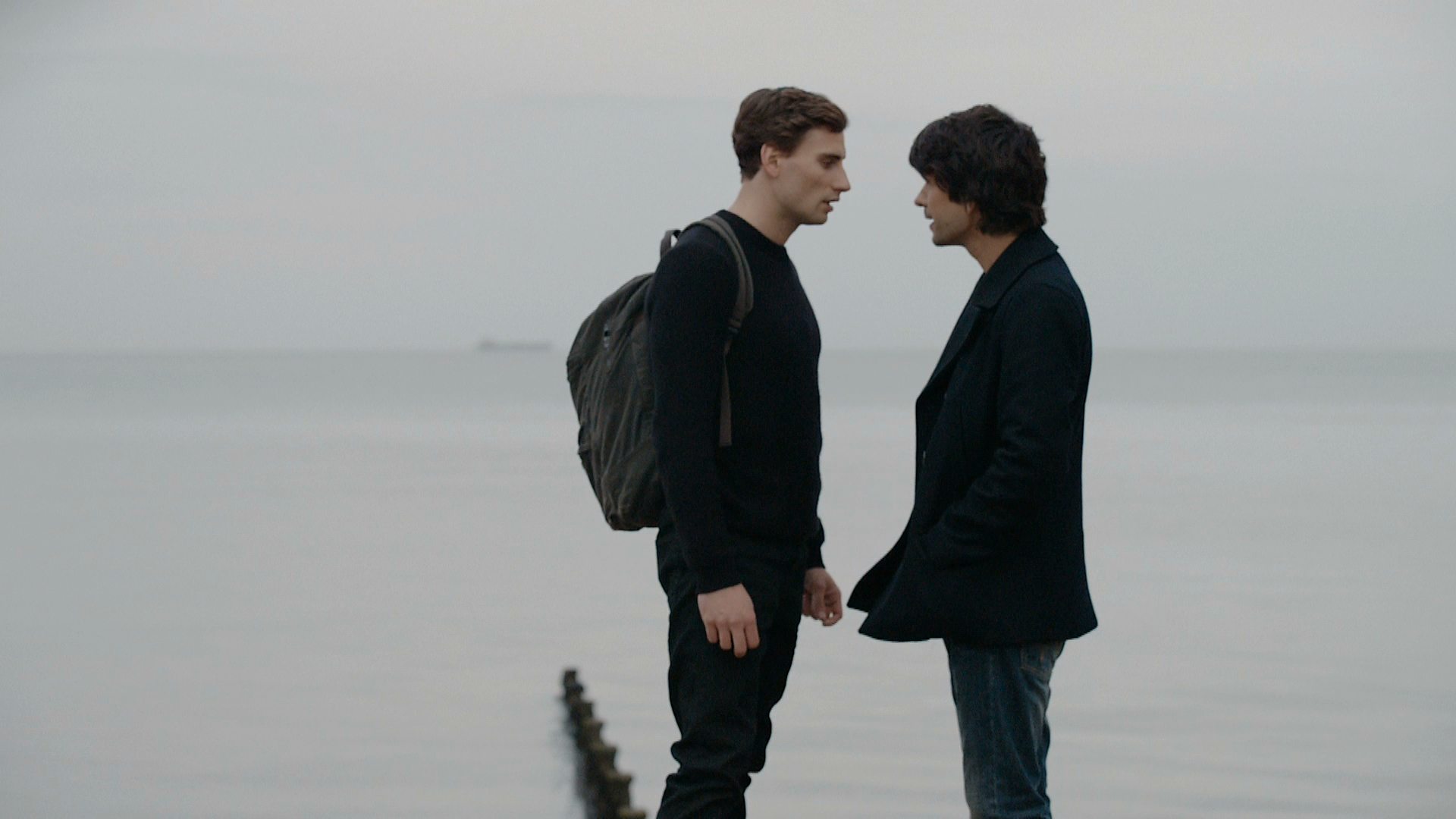
The always-impactful actor Ben Whishaw is superbly supported by thespian giants Jim Broadbent and Charlotte Rampling in this obtuse spy thriller. Playing a troubled warehouse worker called Danny, Whishaw falls for the enigmatic genius, Alex (Edward Holcroft); and is thrown into a murky and murderous world of spymasters and upper-class family feuds. Beautifully acted and designed the story moved too slowly for me. Over five episodes the slow-bleed plot of character despair, double-crosses and cover-ups did not sustain the suspense and tension throughout. (Mark: 7.5 out of 11)
THE SECRET OF CRICKLEY HALL (2012)
Suranne Jones (again!) leads the acting line in an earlier post-Coronation Street role. She portrays a mother who, along with her family, seeks the solace of the countryside after their young child has gone missing. However, the house they reside in is haunted by ghosts from the past and as the family attempt to overcome their grief, evil spirits threaten their present. The contemporary narrative works well with the wartime scenes in a decent haunted house scenario that was adapted from the book by horror legend James Herbert; also featuring an early role for Maisie Williams. (Mark: 7.5 out of 11)
SMALL ISLAND (2009)
Notable for its excellent ensemble cast and featuring before-they-were-famous roles for: Ruth Wilson, David Oyelowo, Naomi Harris, Benedict Cumberbatch and Ashley Walters, this excellent drama focussed on the war and post-war lives of several disparate characters whose lives become intertwined by fate. Based on Andrea Levy’s novel it is especially rich in regard to the diasporic characterizations and experiences of Jamaican immigrants in war-torn England. The writing is solid and there’s some fine acting and emotional moments to keep one enthralled and I enjoyed how the stories dovetailed dramatically at the end. (Mark: 8 out of 11)
TOP OF THE LAKE (2013)
Hey, what if Jane Campion wrote and directed a cop drama? Well, the answer is Top of the Lake! This is a slow-burn, who-why-how-dunnit with a superb cast, beautiful New Zealand vistas and eccentric, dark characters. Some may find it too slow and artsy, while certain decisions by the characters and plot turns were intriguingly weird. However, Elizabeth Moss excels as the burnt-out cop (is there any other kind?) searching for a missing pregnant teenager, while Peter Mullan is suitably vicious as the rural patriarch; and Holly Hunter is fantastic too as the leader of a women’s commune. Overall, Campion’s barbed world-view satirizes humanity and cop show clichés in a compelling crime drama. (Mark: 8.5 out of 11)
TOP OF THE LAKE 2: CHINA GIRL (2017)
Screened earlier this year on the BBC, the follow-up finds Elizabeth Moss, now back in Sydney, tracking down the killer of an Asian prostitute while battling illegal adoption rings and all manner of sexist-pig-men. Like the original it pulls you in with its richly drawn characters and brilliant cast all committing to the lurid and quirky plotlines. Moss is always reliable and does the brooding, melancholic and troubled cop perfectly, while Nicole Kidman is brilliant as the middle-class academic out of her depth with the emotions of her adopted daughter. The sinister beta-male-nemesis Puss portrayed by David Dencik was a great rendition of spurious masculinity while it was great to see Gwendoline Christie out of her Game of Thrones armour, as a naïve rookie cop assisting Moss’ detective. (Mark: 8.5 out of 11)
TRUST ME (2017)
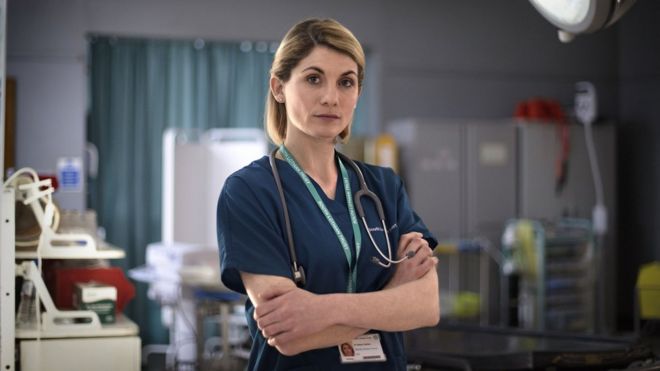
Jodie “New Doctor Who” Whittaker leads the cast as a downtrodden nurse and single-mum struggling with an NHS cover-up over poor service delivery. Faced with the sack she decides to engage in a cover-up herself by taking on the identity of a Doctor; and then the real drama kicks in. Whittaker is very empathetic and natural, while the suspense was very thrilling at times as her character gets deeper and deeper into the mire. Overall, it was a very tense and fun medical drama which made some very good social points in regards to a Doctors’ life and the NHS in general. Ultimately, it made me appreciate what the NHS does for us but also want to avoid getting ill in the future too!
(Mark: 8.5 out of 11)
WAR AND PEACE (2016)
Well, the BBC certainly pushed the budget boat out on this one with a who’s who of new and experienced acting talent including: Jim Broadbent, Paul Dano, Lily James, Tuppence Middleton, Aneurin Barnard, Adrian Edmondson, Jessie Buckley, Tom Burke, Rebecca Front, Greta Scacchi, Brian Cox, Stephen Rea, Gillian Anderson and many more. Adapting Tolstoy’s gigantic and classic doorstop novel must have been some feat and it is indeed and sumptuous and incredible production. As a drama it drew me in with its’ stories of over-privileged Russian lives set during the Napoleonic wars as they live, love, cheat, duel, war and die. Yet, while I did not feel too much empathy for the characters, the acting, design and directing is a joy to behold and I garnered a certain hypnotic pleasure bathing in the high quality of the whole shebang. (Mark: 8 out of 11)
Philip K. Dick’s dense, dystopic and futuristic novel, Do Androids Dream of Electric Sheep (1968), is an ugly, beautiful, depressing, obtuse, hypnotic wade-through-treacle read full of incredible concepts relating to: Artificial Intelligence; robot technology; android simulacra; animal husbandry; apocalyptic disease; virtual reality/empathy mood tech; extinguished humanity; and ultimately, of course, mortality and death. The fact that Hampton Fancher and David Webb Peoples were able to fashion a workable screenplay for Ridley Scott to direct is a creative miracle in itself. Moreover, it is testament to the writing and Scott’s incredible production team that Bladerunner (1982) is held in such high esteem among cinema fans now.
The original Bladerunner, despite bombing at the box office and subsequently going through a number of cuts, re-cuts, final cuts and re-re-re-releases, has become a bona fide science fiction cinema classic. I watched the original theatrical version recently and despite the deadpan Harrison Ford voiceover and spurious, tacked on “happy” ending, it actually has a lot going for it. Obviously the ‘Unicorn Dream’ re-edits released under the guidance of Ridley Scott are the purer versions but the film holds up notably because of Ford’s gruff, depressive and world-weary performance as Rick Deckard; the imperious psychopathy of Rutger Hauer as android assassin Roy Batty; Scott’s glorious tech noir rendition of our desecrated future; as well as the evocation of Philip K Dick’s thematic existential power.
Thus, to offer up a near three-hour sequel to a box office bomb of an almost unfilmable novel was something I thought extremely brave from a creative and business perspective. However, as soon as I saw the director Denis Villeneuve was attached, I immediately knew that Bladerunner 2049 was a must-see! This filmmaker has elevated himself to the higher echelons of Hollywood directors with superlative work such as: Incendies (2010), Prisoners (2013), Enemy (2014), Sicario (2016) and Arrival (2016). In such films he was able to meld story, style, character and performance to create very accessible genre films which encapsulate the pain and drama of the human condition adroitly.
In Bladerunner 2049, the future’s orange but, like the original novel and film adaptation, it’s definitely not bright! We are in a sick, unforgiving and murderous world where a dying Earth, specifically California, is inhabited by killer replicants, pleasure models, and totalitarian law enforcement and overseen by the venal, profit driven capitalist oligarchic Wallace Corporation. In this vision of Earth, men, women, children, animals and robots are all slaves to be bought and sold to the highest bidder. I have seen some critique that the film is exploitative in its female representations but the films reflects much that is wrong with our world today and the original novel’s dystopic and misanthropic themes.
Both male and females are objectified and deemed commodities and alas that is true too of the sick world we live in today, yet perhaps just not as blatant? Bladerunner 2049, I does not offer solutions but depressingly mirrors society’s desire to sexualise and exploit others. Our “hero” the replicant cop ‘K’ (Ryan Gosling) is a victim of such exploitation in his touching relationship with A: I hologram Joi (Ana De Armas). Ultimately, he learns that they’re all being faked by the horrific technological nightmare they call existence. I think it extremely interesting that K’s wry smile when he realises he has been exploited by the Wallace Corp. product Joi; and paradoxically this demonstrates his humanity.
Villeneuve, aided with startling artistry by cinematographer Roger Deakins directs from a screenplay written by original writer Hampton Fancher, plus Michael Green. One could argue that the original Bladerunner is style over content, as the story was distilled to that of Deckard basically hunting down a bunch of outlaw robots. However, the style WAS the content along with the dense richness of the themes. Similarly, Bladerunner 2049 does not have a particularly complex plot, save for one fantastic thematic reversal, yet at its heart it explores the powerful question of what it means to be human? I think all intriguing narratives should ask this and explore important notions of existence. I mean, it’s not surprise Gosling’s character is called ‘K’ – because the story echoes Kafka’s The Trial in many ways. Indeed, is his seemingly futile search for meaning or humanity just a pointless pursuit or is it reward enough to delude oneself with the possibility of hope or love? Life and the decision whether to carry on regardless is therefore very much on trial.
I think this is a film which will benefit from further viewings. I felt like I was watching a Tarkovsky or Bergman film on a massive budget. It’s like Denis Villeneuve managed to combine, with the writers and designers, an indie-Hollywood-art film installation. I would say this is a character and theme led narrative rather than purely plot driven. Even Niander Wallace’s (Jared Leto) weirdness, while not essential for the plot, added to the depth of character and surface emotion. He felt like a Colonel Kurtz figure trapped in his own insane delusion and obsession. Could he have been a replicant too? Likewise, Harrison Ford’s reappearance as Deckard adds great flavour to a wonderful sci-fi broth. Yet, his aging persona is integral to the plot and not simply a meta-textual nod to the original film.
Ultimately, we mere mortals are arguably not worthy to critique this fantastic work of genre art cinema. I understand it was slow but that almost increased the joy for me. It moved glacially but with high confidence and in Ryan Gosling it had a bona fide star to guide us through this sick yet beautiful world. Moreover, the sound design and music from Hans Zimmer and Benjamin Wallfisch was a powerful force which heightened the suspense and paranoia. While the visuals are absolutely breath-taking I was also drawn in by the existential intrigue of the themes. Technically, within the story, the replicants are not living people but we empathise with their plight nonetheless because THEY are US. There lies the paradox and beauty of this film, in that I cared and was fascinated by what happened to actors playing robots on the cinema screen.
8 EPISODES WHY CURB YOUR ENTHUSIASM IS “PRETTY GOOD!”
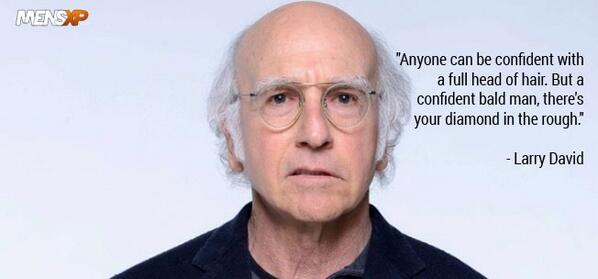
There’s absolutely no reason why a situation comedy about an aging, wealthy, neurotic and narcissistic Hollywood writer should be one of the most consistently funny comedy shows of the last twenty years. There’s no real substance or depth in Curb Your Enthusiasm; in fact not much really happens of great value as it occurs very much in a bubble. Moreover, in anti-hero Larry David you more often than not find his behaviour abhorrent as he goes about upsetting friends, family members, celebrities, colleagues and strangers on a daily basis.
David, who plays an extreme version of himself (one hopes), revels in pedantry, un-PC behaviour, poor decisions, risky statements and strict adherence to the social etiquette and unwritten rules of life that make him a right royal pain in the backside. Yet, incredibly, because the writing, situations and storylines are so clever the whole show works a treat. To celebrate the recent release of the 9th season of HBO’s classic comedy Curb Your Enthusiasm, I have chosen one episode from each season to praise. It’s a difficult choice to pick my favourites but I think you’d agree these episodes are pretty, pretty good!
**CONTAINS MASSIVE SPOILERS**
SEASON 1 – EPISODE 4 – THE BRACELET (2000)
I was going to choose Beloved Aunt because of the monumentally unfortunate typo which involved Larry upsetting Cheryl and his in-laws. In an obituary for a recent departure the words “Beloved Aunt” became “Beloved C*nt” and Larry gets the blame. However, The Bracelet is a classic for me as it involves Larry going head-to-head with comedian Richard Lewis for the said jewellery item. The slapstick and race-against-the-clock narrative are hilarious as is their meeting with an ungrateful blind person they help. The road to hell is indeed paved with good intentions!
SEASON 2 – EPISODE 7 – THE DOLL (2001)
One of the delights of the show is when Larry, having made some terrible social faux pas is ripped apart by one of the supporting cast. Arguably, his most fierce nemesis is his agent’s wife Susie; portrayed with vicious, black-eyed venom by Susie Essman. The narrative thrust of Season 2 involved Larry trying to get another Network show commissioned, but when he erroneously trims the hair (god knows why) of a child’s doll he become embroiled in a head-swapping comedy of nightmarish errors. When Susie catches him and Jeff using her daughter’s doll’s head, all hell breaks loose and Larry gets a volley of joyously ripe abuse!
SEASON 3 – EPISODE 8 – KRAZEY-EYEZ KILLA (2002)
Larry’s experiences with members of the black community range from: embarrassing misunderstandings, accidental racism, satirizing lazy stereotypes and finally some very offensive situations. Some of it is hilariously funny while more often than not it can be very painful to watch. However, Larry David is a brave writer as he doesn’t shy away from subjects which could be deemed politically incorrect. More often than not though he himself is the butt of the joke! Season 3 had a wonderful arc of Larry getting involved with a Restaurant and the final episode had some glorious profanity. However, his run in with Wanda Sykes’ cheating rapper boyfriend Krazey-Eyez and Larry telling Martin Scorsese he “does too many takes” on set is just comedy gold!
SEASON 4 – EPISODE 6 – THE CAR POOL LANE (2004)
Season 4 benefits from one of the strongest narrative arcs of the whole series. Larry has been chosen by Mel Brooks to star in the Broadway show The Producers and includes the brilliant Ben Stiller and David Schwimmer. The Car Pool Lane finds Larry attempting to get into an upper-class-W.A.S.P-y country club and cajole Marty Funkhouser into giving up his dead father’s seat at a Dodger’s game. The comedy sparks really fly when in an attempt to get to the game he hires a prostitute to allow him to use said car-pool lane and beat the traffic. The dovetailing call-backs of his Dad’s glaucoma, trying to get off Jury service, Funkhouser’s dead Dad and country club narrative strands makes this one of the funniest episodes ever and features an effervescent performance from Kym Whitley as Monena the hooker!
SEASON 5 – EPISODE 7 – THE SEDER (2005)
What I love about Larry David’s writing – or retro-scripting to coin a phrase – is he is unafraid to ask intriguing moral or immoral questions within the comedy subtext. In the episode The Seder, he poses the idea that a sex offender, while having served his sentence, could possibly actually be a “nice” guy. Thus, Larry literally befriends a bald, Jewish sex offender (a brilliant Rob Corddry) much to the horror of his family, neighbours and friends. As thanks for an awesome golfing tip he even goes so far as to invite him to a Passover meal where all kinds of social embarrassment ensues.
SEASON 6 – EP. 3 – THE IDA FUNKHOUSER ROADSIDE MEMORIAL (2007)
After the steady mixed-bag comedic narratives of Season 5 – Larry’s potential adoption and Richard Lewis’ dying kidney – Season 6 introduced a new set of hilarious characters and situations. When Larry’s wife Cheryl (Cheryl Hines) “adopts” a homeless family, whose lives were wrecked by a hurricane, the comedy bar is raised to a whole new level. The season has some classic episodes but my favourite is The Ida Funkhouser Roadside Memorial. Despite Larry’s nebbish irritations quite often I am on his side when it comes to petty grievances. In this episode he deals with: unnecessary condolences and sample abusers, but stealing flowers off a roadside memorial is a totally out of order, So, Larry definitely deserves the stream of ire that comes his way when he commits this gob-smacking social “crime.”
SEASON 7 – EPISODE 7 – THE BLACK SWAN (2009)
Season 7 is most notable because Larry, having split up with Cheryl, is now dating Loretta Black (Vivica Fox). In order to get Cheryl back he orchestrates a Seinfeld reunion with all the gang (Jerry, Julia Louis-Dreyfus, Jason Alexander and Michael Richards), as a means to offer Cheryl a part. Firstly, though he has to dump Loretta, who sadly is now suffering from cancer. I mean Curb Your Enthusiasm must be admired for the lengths it goes to get laughs and how he “dumps” Loretta is something else. One of the funniest episodes is the Black Swan which occurs on the golf course. Suspected (he did it!) of killing the course owner’s treasured swan, there’s a scene where Larry’s customary “staring” motif is used against HIM!! The ending of this episode involving his Mother’s gravestone is also one of the great payoffs too!
SEASON 8 – EPISODE 3 – PALESTINIAN CHICKEN (2011)
I am not easily shocked by anything but I must say that this is one of the most controversial episodes of comedy I have seen. I was sat agog through many of the scenes in this one. I mean I’m not an expert when it comes to the Israeli and Palestinian conflict but I am aware of the geographical and religious issues which have occurred throughout the years. What Larry David does with his comedy is to skewer the significance of the conflict and satirize it within a consumer food war. Having began eating the chicken at a Palestinian restaurant Larry becomes attracted and begins a sexual relationship with one of the Arab customers. She is a sexual dynamo to him and her dirty talk is pure filth and anti-Semitic! As Larry puts his penis first and at the end is caught between rampant sex and his loyalty to his “people”! Again, another classic ending to a brilliant episode.





/cdn.vox-cdn.com/uploads/chorus_image/image/55991485/Screen_Shot_2017_07_28_at_3.44.06_PM.0.png)






 The Cinema Fix presents