Tag Archives: greed

Cult Film Review: Mermaid Legend (1984)

Cult Film Review: Mermaid Legend (1984)

Directed by Toshiharu Ikeda

Screenplay by Takuya Nishioka

Main cast: Mari Shirato, Junko Miyashita, Kentarō Shimizu, Jun Etō, etc.

Cinematography by Yonezou Maeda

Music by Toshiyuki Honda

*** MAY CONTAIN SPOILERS ***
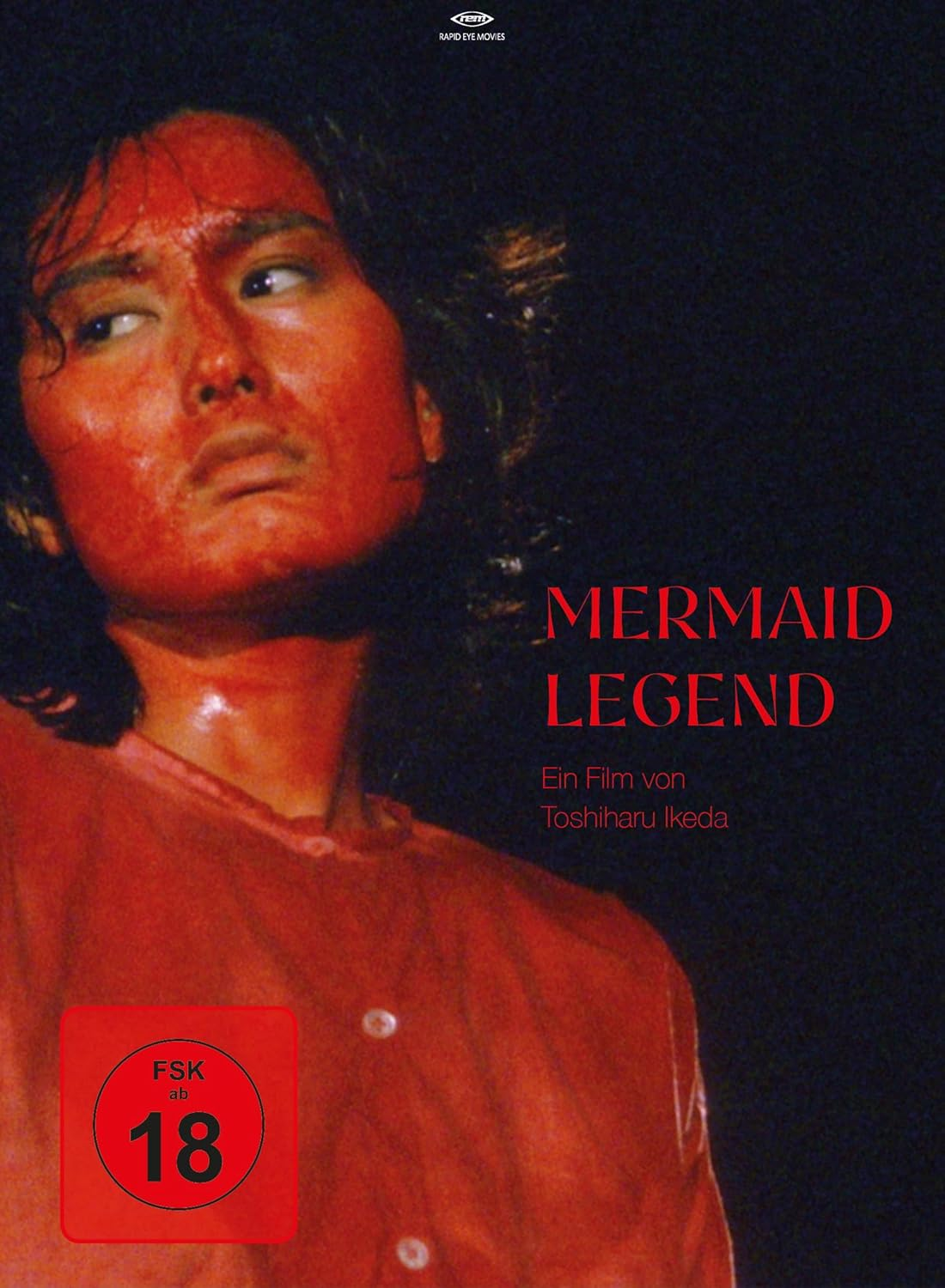


I took a gamble on an unknown Japanese film at the Nickel Cinema and walked out genuinely shaken. Mermaid Legend (1984) isn’t just a cult oddity—it’s a film that mutates before your eyes, seducing you with beauty before drowning you in blood. I was stunned by how something so lyrical could also be so brutally confrontational.

The story begins almost modestly, as a coastal drama about a fisherman and his wife, Migiwa. They bicker constantly, their marriage worn thin by poverty and exhaustion, yet there’s an undeniable bond beneath the arguments. That fragile domesticity is shattered when the fisherman stands in the way of an industrial development scheme. The business developers—faceless, polite, and utterly ruthless—have him murdered, disposing of his life as casually as industrial waste.

From there, Mermaid Legend (1984) transforms again. What starts as marital realism becomes a corporate espionage murder mystery, steeped in anger at nuclear energy, environmental destruction, and the cold machinery of corporate greed. Migiwa, a powerful-lunged pearl diver, initially hides, retreating into grief and the sea itself. But this is not a film about quiet mourning. When she decides to act, she does so with mythic force.



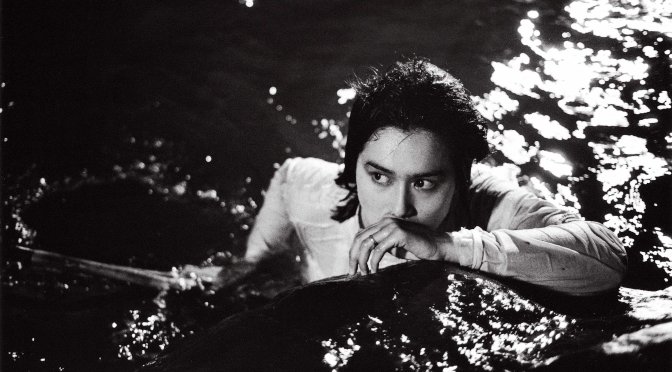
Played by the ethereal and astonishing Mari Shirato, Migiwa becomes something halfway between woman, avenging angel, and sea spirit. Shirato’s performance is magnetic—serene, sensual, and terrifying. As her vengeful pursuit begins, the film plunges headlong into extreme violence and explicit sexuality, reclassifying itself yet again as one of the most shocking exploitation epics I’ve seen from Japan in recent years. These scenes aren’t gratuitous in the lazy sense; they’re confrontational, weaponized, daring you to look away while refusing to let you feel comfortable for a second.

What makes Mermaid Legend (1984) so intoxicating is how its elements collide. Poetic underwater cinematography turns the ocean into a womb, a grave, and a cathedral. Religious, angelic, and environmental imagery blur together, as if Migiwa is both martyr and executioner. The music is heavenly—soaring, mournful, almost sacred—creating a surreal contrast with the carnage on screen. Beauty and brutality coexist in the same frame, each intensifying the other.

And then there’s the ending. The final, elongated pier stabbing rampage is completely off the chart—relentless, bloody, and hypnotic. It plays out like a ritual rather than an action sequence, stretching time until violence becomes abstraction, then meaning, then release. By the time the last body falls, Mermaid Legend (1984) has fully shed realism and entered the realm of legend, justifying its title in blood.

This is a film that shouldn’t work, yet does—furiously, defiantly. A genre-shifting fever dream that moves from domestic drama to political thriller to erotic exploitation to mythic revenge tragedy, Mermaid Legend (1984) is both beautiful and brutal, and I can’t stop thinking about it. Seeing it by chance at the Nickel Cinema felt like discovering a secret too powerful to stay hidden.
Mark: 9.5 out of 11


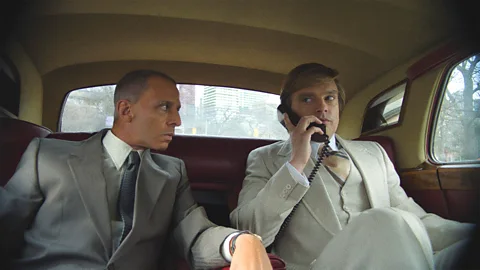
Sky Cinema Review: The Apprentice (2024) – a mesmerizing portrayal of the rise of Donald Trump!

Sky Cinema Review: The Apprentice (2024)

Directed by Ali Abbasi

Written by Gabriel Sherman

Produced by Ali Abbasi, Louis Tisné, Ruth Treacy, Julianne Forde, Jacob Jarek, Daniel Bekerman

Main cast: Sebastian Stan, Jeremy Strong, Martin Donovan and Maria Bakalova, etc.

Cinematography Kasper Tuxen

*** CONTAINS SPOILERS ***


Ali Abbasi’s previous directed films such as Holy Spider (2022) and Border (2018) are brilliant and powerful films centered around stories relating to serial killers and trolls, respectively. So, I had to pause for a moment and ask: what attracted him to a film about businessman, reality TV personality and now, President of the USA, Donald Trump?

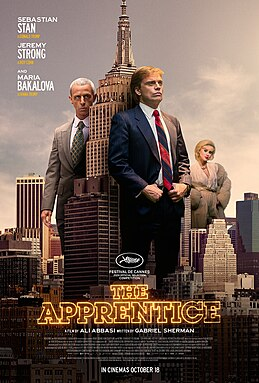
Abbasi’s The Apprentice (2024) is less a deep psychological excavation than a chillingly slick chronicle of power corrupted at its root. Framed like a “greatest hits” package of Donald Trump’s (Sebastian Stan) formative years, the film charts his transformation from brash outer-borough real estate hustler into the ruthless media manipulator and future political juggernaut — all under the tutelage of the infamous Roy Cohn (Jeremy Strong) and his three essential rules of business and life.


Sebastian Stan delivers a startling performance as a young Trump, capturing the man’s bravado, insecurity, and relentless hunger for dominance without slipping into caricature. Opposite him, Jeremy Strong is mesmerizing and serpentine as Cohn — a master manipulator who recognizes, nurtures, and ultimately weaponizes Trump’s worst instincts. Together, they form a grotesquely compelling duo: two charismatic monsters locked in a dance of mutual ambition and moral decay.

While the film occasionally skims across the surface of its characters — opting for scenes that feel like historical checkpoints rather than dramatic revelations — it compensates with a queasy momentum and sharp stylistic flair. It also looks great with the film and video stock reflecting the era of which it is set. Overall, this isn’t a biopic searching for sympathy or redemption; it’s a portrait of the making of one of the most divisive figures in modern history, seen through the lens of a mentor whose own legacy drips with cynicism and menace. In conclusion: The Apprentice (2024) may not dig as deep as it could, but what it shows is enough: monsters aren’t simply born — they’re coached.

Mark: 8 out of 11


FIX FILMS PRESENTS: SIN – EPISODES 4 – 7

SIN – EPISODES 4

Last year I wrote and produced seven monologues inspired by the deadly sins. With careful planning, myself and a quality cast and crew shot them all in one day at Raindance Film School. I’m now releasing them online via YouTube. They are in essence a proof of concept project with an aim for myself to develop them into a feature film screenplay. Below are episodes 4 to 7!


PITCH

“Let those without sin cast the first stone.”

An anthology of 7 monologues based around the seven deadly sins. Moments, drama, humour, character studies and themes exploring the darker side of human nature. Influenced by: Alan Bennett’s Talking Heads, Inside No. 9, Tales of the Unexpected and Amicus/Hammer horror film anthologies.


PRIDE starring Myles Horgan

Bishop, a retired spy with a gun in his face, delivers a powerful monologue as he attempts to deduce the identity of the assassin that faces him.


LUST starring Tom Cavendish

Danny, a police officer racked with guilt, confesses as to why he thinks he cheated on his beloved fiancé with her sister.


ENVY starring Malcolm Jeffries

Len, a covert photographer, reveals how his obsession with a client’s wife brings back haunting memories from his past.


WRATH starring Julia Florimo

Sadie describes in detail how and why she plotted revenge by poisoning her cheating ex-boyfriend, Stephen.


CREDITS

Writer and Producer: Paul Laight
Camera and Post-Production: Gary O’Brien
Sound: Ali Kivanc
Camera Assistant: Maka Natsvlishvili

Music by: Epic Violin Music NO Copyright royalty free music  
Special thanks: Raindance Film School and Universal Video


CINEMA REVIEW: KILLERS OF THE FLOWER MOON (2023)

CINEMA REVIEW: KILLERS OF THE FLOWER MOON (2023)

Directed by: Martin Scorsese

Screenplay by: Eric Roth and Martin Scorsese

Based on: Killers of the Flower Moon by David Grann

Produced by: Dan Friedkin, Bradley Thomas, Martin Scorsese and Daniel Lupi

Main cast: Leonardo DiCaprio, Robert De Niro, Lily Gladstone, Jesse Plemons, John Lithgow, Tantoo Cardinal, Scott Shephard, etc.

Cinematography: Rodrigo Prieto

Edited by: Thelma Schoonmaker

*** MAY CONTAIN SPOILERS ***


Who can tell how the world and society as we know it would’ve evolved if Christopher Columbus, the explorer credited with finding the Americas in 1492, had not landed and begun the first steps toward colonising this uncharted part of Earth. Of course, there were existing natives in the Americas and over time they would experience first contact with Spanish, Portuguese, British and other European, predominantly white, settlers. It may be that the natives would have had equally difficult experiences, and colonists brought with them many positive things. But one has to surmise they would not have had their land and lives gradually taken from them over the centuries without the European invasion.

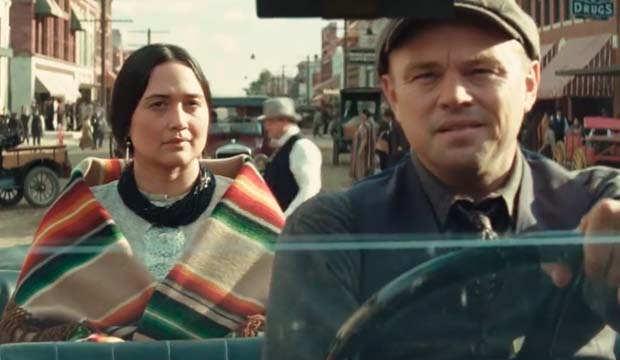
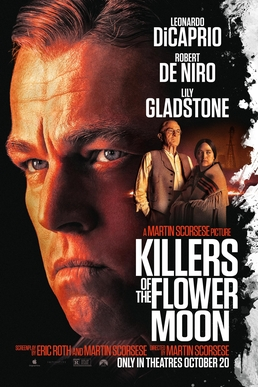
The violent theft of land and wealth from Native Americans forms the bedrock of the narrative of Martin Scorsese’s latest epic drama, Killers of the Flower Moon (2023). Adapted from David Grann’s critically acclaimed nonfiction book, the film centres on the series of murders of wealthy Osage people that occurred in Oklahoma in the early 1920s. The motive for the heinous culling was the greed of white men. Such individuals lusted after the richness present after big oil deposits were discovered beneath the Osage people’s land. Whereas Grann’s book is a monumental study of the murders, perpetrators, the Osage culture, politics of the era, and how the newly formed FBI delved into the crimes, Scorsese’s incredibly slow and long adaptation does all that, while also exploring the romance and murderous treachery between Osage native, Mollie (Lily Gladstone) and war veteran, Ernest Burkhart (Leonardo DiCaprio).


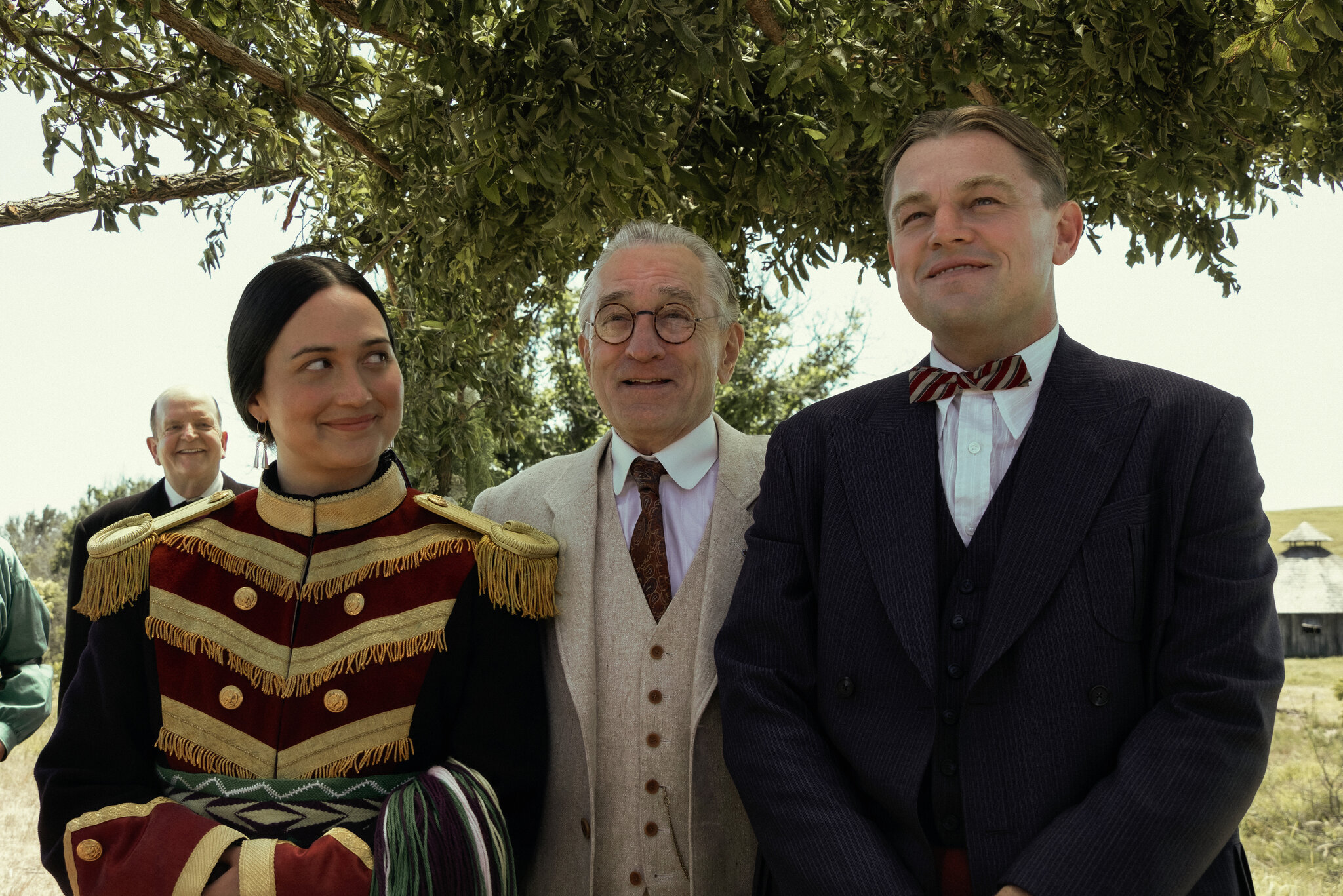
Opening by establishing how the oil erupted and blackened the green land, the film then firmly sets up how the American businessmen used the legality of the headright system to manipulate the flow of sudden wealth that came to the Osage people. One such man is William King Hale (Robert DeNiro) who presents himself as a benefactor to the Osage, but truly speaks with a forked tongue. Having left the infantry unit after World War One, Hale’s nephew Ernest joins him to work and ultimately do his bidding. Hale cajoles Ernest to romance wealthy Mollie and get further feet under the table and closer to that beloved black gold money. Yet, enough is never enough for the likes of Hale and driven by another formidable Scorsese directed performance, De Niro delivers a deviously evil characterisation.

DiCaprio here takes the less charismatic role as the doltish Ernest. As Hale urges him to do further misdeeds the banality of everyday evil is palpable in Ernest’s actions. Along with a litany of professional and thuggish cowboy types Ernest and Hale’s other minions wreak havoc on the Osage people, committing arson, murder, poisonings, robbery, and shootings. All just for more money. The tragedy is that Ernest clearly has feelings for Mollie, serenely portrayed by a revelatory Lily Gladstone, but he just cannot stand up for himself against his wicked uncle. So much so that I just wondered why the hefty runtime was concentrating on Ernest’s character. I mean, Scorsese and DiCaprio give us little in the way of anti-heroism to bounce off, or even some cathartic sense of redemption. Ernest starts out as a loser and finished the story the same. Over three hours spent with a gurning idiot left me frustrated.

Directed, as one would expect with a masterful hand, mind and eye by Scorsese, who once again surrounds himself with an incredibly talented cast and production crew. Not to forget the unbelievable $200 million budget. But Scorsese’s movement of late to ultra-long and methodical cinema is an artistic choice that requires much patience. While Killers of the Flower Moon (2023 is thematically very powerful, beautifully filmed, and contains a number of exceptionally impressive sequences, there was genuinely not enough story to justify such a long running time. Whereas The Irishman (2019) was slow, it was methodically thrilling and absorbing throughout. Killers of the Flower Moon (2023) on the other hand becomes repetitive in its reveals of greedy Cowboys breaking bad and raising hell to the cost of the Osage. The introduction of the FBI and their subsequent investigation comes way too late to save the over-bloated length and pace. However, there is no doubt, the film remains vital in highlighting the historial horror perpetrated upon the Osage land and people. Perhaps Apple TV should have just given the money to the Osage descendants as reparation?

Mark: 8 out of 11


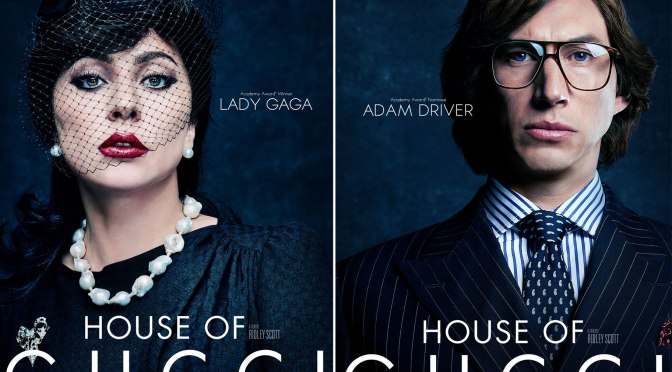
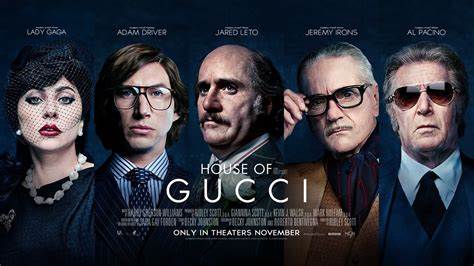
CINEMA REVIEW: HOUSE OF GUCCI (2021)

CINEMA REVIEW: HOUSE OF GUCCI (2021)

Directed by: Ridley Scott

Screenplay by: Becky Johnston, Roberto Bentivegna

Based on: The House of Gucci: A Sensational Story of Murder, Madness, Glamour, and Greed by Sara Gay Forden

Produced by: Ridley Scott, Giannina Scott, Kevin J. Walsh, Mark Huffam

Cast: Lady Gaga, Adam Driver, Jared Leto, Jeremy Irons, Salma Hayek, Al Pacino etc.

Cinematography: Dariusz Wolski

*** MAY CONTAIN SPOILERS***


I’m not a fan of fashion. I wear clothes obviously and like to be smart and clean. Yet, the idea of believing one’s garments, shoes and accessories mean you are important, superior or worthy of adulation sickens me to be honest. However, fashion is a multi-billionaire industry and I get that people of variant social standing love it as a cultural phenomena. People either own or aspire to own over-valued garments and objects to inflate their ego or sense of importance is beyond me. Then again, I passionately enjoy watching human beings kick a ball into a net, so everyone has irrational passions. C’est la vie!

I didn’t go to see House of Gucci (2021) to look at the clothes though. My interest in this star-studded, big budget crime drama directed by the legend, Ridley Scott, was more because I did not know anything about the lives and personalities within the Gucci empire. Who would have thought that a wealthy family unit could have turned out so poisoned by greed and envy?

Covering a period of twenty or so years from the late 1970s into the 1990s, the story is structured around the relationship between Patrizia Reggiani (Lady Gaga) and Maurizio Gucci (Adam Driver). They fall passionately is lust, much to the chagrin of his spiteful father (Jeremy Irons) and marry against his will. Patrizia genuinely loves the sensitive Maurizio, but also has green eyes for the Gucci empire and the power that can bring. As her desire for influence in the family business grows, then so does cracks in their marriage. Crumbling relationships, business chicanery and family treachery dominate the narrative, all coming to a head with tragic results.


As a morality tale about how greed corrupts and drives human beings toward unnecessary tragedy, The House of Gucci (2021) is certainly worth a watch. Is there a sense the Gucci family were cursed by there wealth. Perhaps? But the film and screenplay as a whole present this theme without really drawing them out to full dramatic effect. However, the cast are absolutely fantastic throughout with Al Pacino, Adam Driver, and Lady Gaga on particularly exceptional form. Jared Leto dominates many scenes with his bald head, extra weight and screechy voice. While entertaining, the director could have reigned Leto in slightly to extract more pathos from the sad clown that is represented in Paulo Gucci.

I had a few issues with The House of Gucci (2021) inasmuch as it felt incomplete. At times it was as though I was watching a test screening version. The transitions between years were often confusing. What year is it, Ridley? Adam Driver’s arc from likeable young academic to selfish adulterer was rushed and unearned. I got the evocation of a Fredo and Michael Corleone dynamic between Maurizio and Paulo, but this really could have been developed further. The cinematography was grey and dull with the natural lighting style working against the expected colour and vibrancy of the 1980s era. I also wondered if the film had been graded?

While watching The House of Gucci (2021) I just kept thinking of more superior crime and gangster films. It is also mildly disrespectful to a genius like Ridley Scott to say Martin Scorsese would have knocked this story out of the park. I truly felt, while Lady Gaga was excellent in her role, her character could have been written and given a voice-over up there with that of Henry Hill’s. Nonetheless, I still enjoyed the film but wonder if there is a director’s cut out there which doesn’t feel rush released. Or even the possibility HBO or Showtime may adapt it into a longer drama series in time. Yet, does one want to spend more time with such avaricious and vain characters? Depends who is telling the story I guess.

Mark: 7.5 out of 11


AMAZON FILM REVIEW – I CARE A LOT (2020)

AMAZON FILM REVIEW – I CARE A LOT (2020)

Directed by: J Blakeson

Produced by: Teddy Schwarzman, Ben Stillman, Michael Heimler, J Blakeson

Written by: J Blakeson

Cast: Rosamund Pike, Peter Dinklage, Eiza González, Chris Messina, Macon Blair, Alicia Witt, Damian Young, Isiah Whitlock Jr., Dianne Wiest, etc.

Music by: Marc Canham

**MAY CONTAIN SPOILERS**


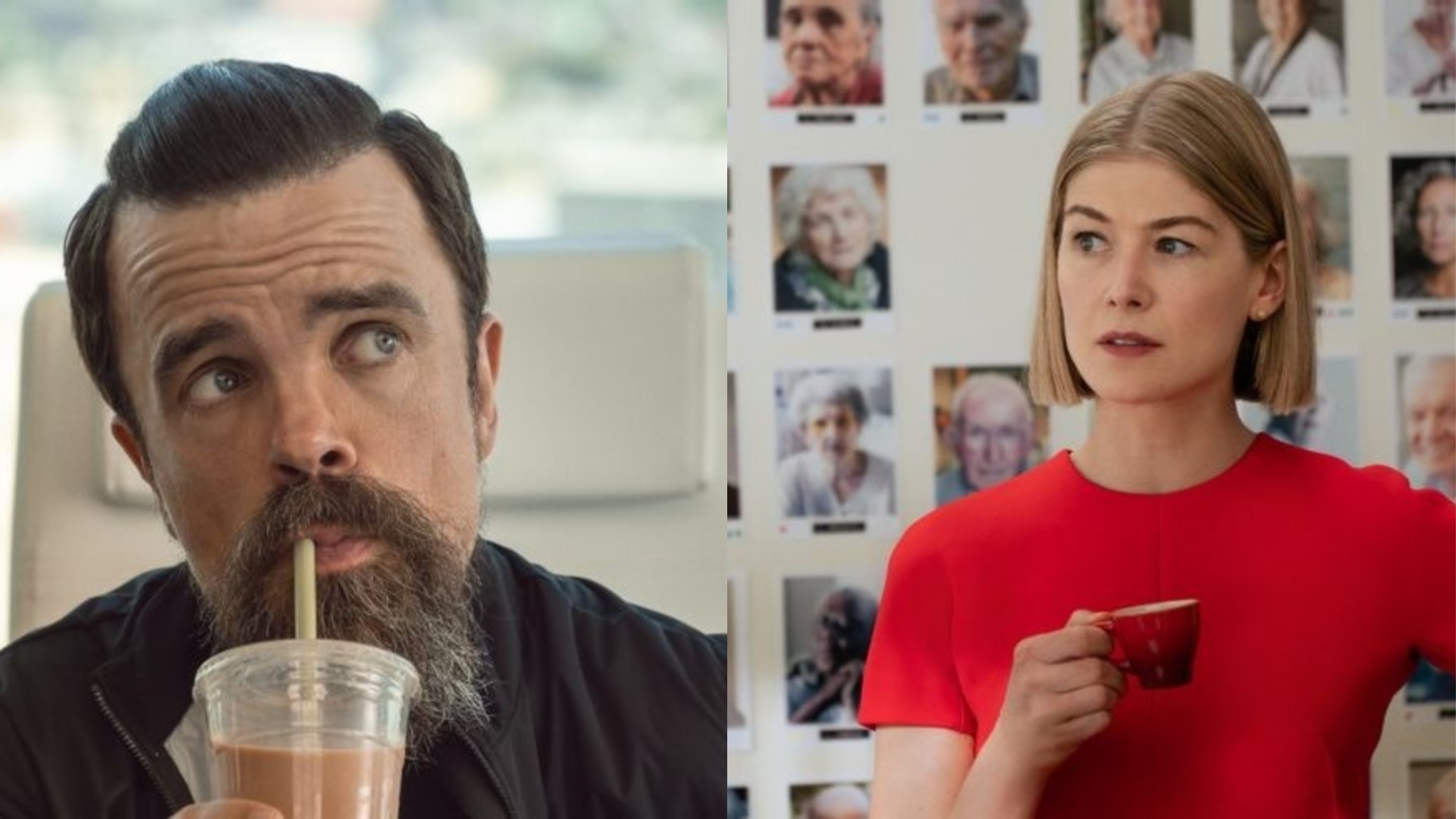
Strange that this highly entertaining and acid-humoured thriller should be a Netflix release overseas, but in the U.K. released via Amazon Prime. Anyway, streaming platform aside was I Care A Lot (2020) any good? Firstly, let’s talk about genre. Do you enjoy watching films without any redeemable or essentially heroic characters? Do you enjoy spending time with criminals? Whether they are the charismatic kind like those in Goodfellas (1990) or Layercake (2004), or romantic kind in Drive (2011), or ultra-ambitious types such as Lou Bloom in neo-noir masterpiece, Nightcrawler (2014). If you do, then you will both love and hate Rosamund Pike’s confident sociopath, Marla Grayson!

J Blakeson’s razor-sharp and barb-cracking screenplay opens with Marla’s brutally honest statement of intent. She wants it all and doesn’t care who she crushes to get it. Unlike, Lou Bloom, who was on his knees broke when we meet him, Marla already has a successful, legal but morally repugnant business going on. Marla and her associate and partner, Fran (Eiza Gonzalez) run a successful ‘Guardian Angel’ corporation. Their modus operandi is to exploit the elderly and tie them up in legal knots to asset-strip their money, properties and belongings. Complicit Doctors and retirement home directors are also in on the con, while the most frightening thing is that the American justice system assists the process. If I had had a gun, I would have shot the television after forty minutes, such was my anger toward Marla and her sordid business practices. Then she inadvertently makes a fatal mistake in choosing her next mark, Dianne Wiest’s wealthy “cherry,” Jennifer Peterson. That is a rich retiree with NO relatives or children. Marla thinks it is Christmas come early – it has not!


See the source image

Without wishing to give away too much away, Peter Dinklage’s rich businessman, Roman, enters the narrative and Marla’s devious planning suddenly comes under threat. Here the film moves from spot-on satire into extremely generic territory losing the dynamism of the first half of the film. Indeed, the first hour of I Care A Lot (2020) was a fantastic critique of the care system in the USA, and no doubt across the world. In blood-boiling fashion the film tells us that getting old is extremely expensive. One can work all one’s life and then see your savings and properties ripped away by expensive health care, homes for the elderly, pharmaceutical companies jacking up their products, greedy carers and pernicious lawyers. Marla Grayson is a grinning symbol of this corrupt system and nothing will get in her way – not even Roman and his associates. This is perfectly encapsulated in a fine scene where Marla ruthlessly negotiates with Chris Messina’s slippery lawyer. But the suited shark is just the starter as Roman is now on the warpath.

Peter Dinklage again proves what a brilliant actor he is as Roman. He is extremely good at rage in many scenes. His and Marla’s ongoing battle comes to a head in the final act, and when he turns the tables on her I was so happy that she would get her comeuppance. I felt maybe the direction lost some focus in the second half of the film as J Blakeson arguably felt the audience should somehow side with Marla as she finds her life under threat. I can safely say that I wanted her to die in the most painful way possible. Because unlike the ‘Driver’ (Ryan Gosling) in Drive (2011), Marla Grayson is utterly beyond redemption. Not that she would care what anybody else thought! Overall, that’s why I found the film incredibly entertaining. It may have lost sharpness when it moved from socio-political tubthumping into more standard crime film territory, it continually made me feel proper emotion, anger mainly. Sure, it may be slightly overlong, but J Blakeson crams a lot of twists and shocks into into, I Care A Lot (2020).

Mark: 8.5 out of 11


CLASSIC FILM REVIEW – SCARFACE (1983) – YOUTUBE VIDEO

CLASSIC FILM REVIEW – SCARFACE (1983) – YOUTUBE VIDEO

The Cinema Fix is a website for all film and TV lovers everywhere. It’s a mix of reviews, articles, essays, news and thoughts on new and classic releases. It is intended to be honest, irreverent, funny and hopefully intelligent. I also have a YouTube channel with loads of short films and video articles. Check it out here.

I have just created a new video article. It’s a review of the classic gangster film, Scarface (1983). You can read it here or check out the video below.


CREDITS

This video article is a fun and educational piece reviewing one of our favourite gangster films ever.

Written by: Paul Laight
Narrated by: Melissa Zajk
Music Produced by : Aries Beats
Promoted by : CRFC

The copyright of the images and trailers are those of the film studio. I do not own any of the images or films.

Film/Trailer clips credits:

Scarface (1983)
Directed: by Brian DePalma
Produced by: Martin Bregman
Written by: Oliver Stone.
Distributed by: Universal Pictures

Check out our other sites:

www.fixfilms.co.uk
www.youtube.com/c/FixFilmsLtd


NETFLIX TV REVIEW – BETTER CALL SAUL (2020) – SEASON 5

NETFLIX TV REVIEW – BETTER CALL SAUL (2020) – SEASON 5

Created by: Vince Gilligan, Peter Gould

Executive producer(s): Vince Gilligan, Peter Gould, Mark Johnson, Melissa Bernstein, Thomas Schnauz, Gennifer Hutchison,

Producer(s): Bob Odenkirk, Nina Jack, Diane Mercer, Robin Sweet, Gordon Smith, Jonathan Glatzer,

Directors: Bronwen Hughes, Norberto Barba, Michael Morris, Gordon Smith, Jim McKay, Melissa Bernstein, Vince Gilligan, Thomas Schnauz, Peter Gould,

Writers: Vince Gilligan, Peter Gould, Thomas Schnauz, Gordon Smith, Alison Tatlock, Heather Marion, Ann Cherkis,

Cast: Bob Odenkirk, Jonathan Banks, Rhea Seehorn, Patrick Fabian, Michael Mando, Tony Dalton, Giancarlo Esposito, etc.

Cinematography: Arthur Albert, Marshall Adams

Production company(s): High Bridge Productions, Crystal Diner Productions, Gran Via Productions, Sony Pictures Television

Original network: AMC

UK Release: Netflix

***MAY CONTAIN SPOILERS***


“We all make our choices. And those choices, they put us on a road. Sometimes those choices seem small, but they put you on the road. You think about getting off. But eventually, you’re back on it.”
Mike Ermantraut – Better Call Saul (S5 – Episode 9)


One thought, of many, that I will take to my dying day is in regard to the business of the war on drugs. I get that people want to strive for intoxication in order to medicine themselves against the pain and struggle of everyday life. I get that humans love to get high and have a party. I get that people unfortunately get addicted to substances, so much so they turn into junkies existing only for their next fix. It may not make it right, but I get why people do drugs.

I also understand the business of making money selling drugs. The drug dealers and Cartels across the world earn a fortune farming, creating, distributing and selling narcotics. Moreover, Governments, across our civilisation, attempt yet fail, to stop them. I get all this. What I don’t understand though is when the Cartels make SO much money, and wall it up in safehouses, farms and apartments — why don’t they stop!! They have enough! Just retire. It’s a naive question, obviously. Because the money, drugs, lifestyle and power are also an addiction. It’s an insane game. It’s a bad road. It’s another indictment against the evil of humanity and our greed-driven society. Having said that the conflict with drugs and more specifically that of the Mexican drug Cartels is also providing the masses with some fine television drama.


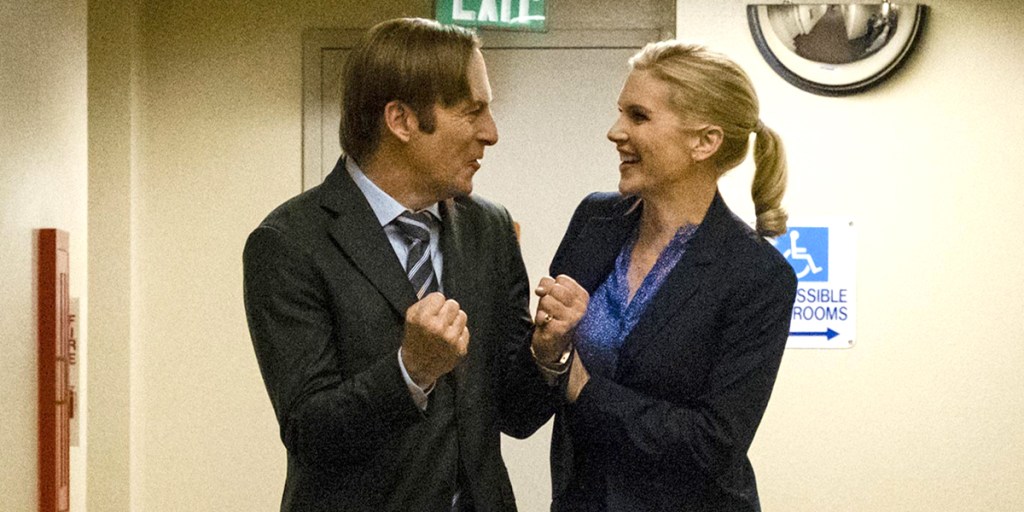
Bob Odenkirk as Jimmy McGill, Rhea Seehorn as Kim Wexler – Better Call Saul – Photo Credit: Nicole Wilder/AMC/Sony Pictures Television

Following hot on the heels of the gripping Season 3 of Cartel-driven thriller, Ozark (2020), comes Season 5 of Vince Gilligan and Peter Gould’s crime prequel to Breaking Bad — the brilliant, Better Call Saul. Once again, it proves itself an incredibly well written character drama, containing some of the finest acting around. I mean, some shows you watch, and they can be a struggle. But Better Call Saul is like digital silk, so smooth in its presentation. The overall style, colour scheme, imaginative camera angles and framing make the show a joy to experience. The story isn’t too bad either.

Having worked through his conflicts with his brother, Chuck (Michael McKean), in the previous sterling seasons, Jimmy McGill finally embraces the ‘Saul Goodman’ legal name and persona. In this season though, in attempting to create a niche making a living helping the lower level criminal element, Jimmy/Saul, eventually finds his legal skills being employed by the Salamanca drug Cartel. Here Saul makes decisions which drag him, and his partner, Kim Wexler (Rhea Seehorn), into a series of dangerous drug-related situations in and out of court. Indeed, episode 8, Bagman, is as good as crime drama gets in terms of narrative, conflict, characterisation and dialogue.

While Bob Odenkirk again sparkles as the cheeky ducker-and-diver-lawyer, Saul Goodman, it’s Rhee Seehorn as Kim Wexler who steals the show. The development of her character from corporate legal player to something more than a money-driven suit is fascinating. In addition, her shifting attitudes also reflect a possible adrenaline addiction to the danger that Saul’s questionable choices bring. Meanwhile, Jonathan Banks as experienced fixer, Mike Ermantraut; Giancarlo Esposito as drug boss, Gustavo Fring; and new cast member, Tony Dalton as Lalo Salamanca, all add to sheer acting charisma and talent on screen. Ultimately, the war on drugs will never be won because there is an insatiable demand for narcotics, and a more fervent demand to supply them. I’m just so happy I am very far removed from the ‘Badlands’ of the Mexican drug Cartels. No doubt after the latest season of Better Call Saul, Saul Goodman, will be feeling very much the same. After all, we are all eventually a prisoner of our own bad choices.

Mark: 9.5 out of 11


NETFLIX DOCUMENTARY REVIEW: DIRTY MONEY (SEASONS 1 & 2)

NETFLIX REVIEW: DIRTY MONEY (S1 – S2)

Directors: Alex Gibney, Jesse Moss, Erin Lee Carr, Kristi Jacobson, Brian McGinn, Fisher Stevens, Dan Krauss, Zachary Heinzerling, Daniel DiMauro, Morgan Pehme, Stephen Maing, Kyoko Miyake, Margaret Brown

Executive producer(s): Adam Del Deo, Yon Motskin, Lisa Nishimura, Stacey Offman, Jason Spingarn-Koff, Alex Gibney

Production company(s)  Jigsaw Productions

Distributor: Netflix


Do you remember that scene in The Matrix (1999)? Not the famous one where Neo (Keanu Reeves) is given the choice of taking the red pill or blue pill. Not the scene where he is told the blue pill will allow him to remain in the fabricated reality of the ‘Matrix’; whereas the red pill will let him locate his body in the real world to be “unplugged” from the ‘Matrix.’ No, I’m talking about the scene where Cypher (Joe Pantoliano) asks specifically to be sent back into the ‘Matrix’, so he can forget about the horrific nature of his reality. He’s so sick of feeling powerless and fighting against a system he cannot beat, he is prepared to sell out his comrades and go back to blissful ignorance of the alien control machine. I call this unenviable and traitorous decision, “Cypher’s Choice.” I mean, he’d taken the red pill, but the truth was so unpalatable he wanted to reverse it and live in an artifical fiction.

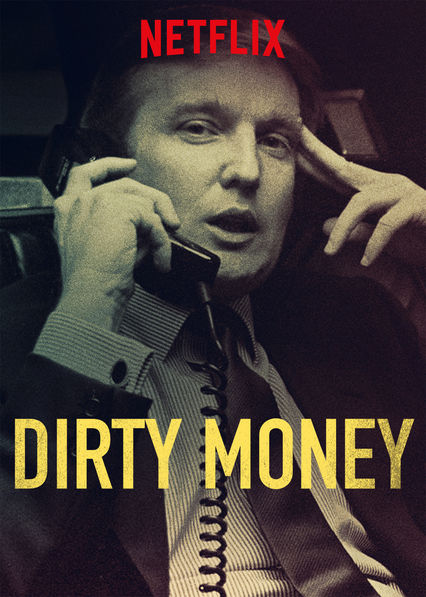
‘Cypher’s Choice’ is one that can face many of us who have a modicum of thought, sensitivity and understanding of the world we live in. It’s also something which struck me when watching both seasons of the superior Netflix documentary, Dirty Money (2019 – 2020). Here is a very well produced, researched and edited set of films which really make one question the very core of human behaviour. This capitalist system which we live in just continues to produce unbelievable greed, corruption and questionable, almost psychopathic, acts of abuse. More often than not the individuals, corporations and governments perpetrating these morally repugnant acts are even acting within the law, or some twisted version of it. So, does one just accept that we are living in a cesspool of greed, hypocrisy and sociopathic moneymen? Further, does one accept one is powerless to stop it? Does one take ‘Cypher’s Choice’ and head back into the ‘Matrix’? Or fight the machine? It’s an incredibly difficult decision to make.


One way of fighting back or, at the very least holding a mirror up to the corruption in the world, is a trial by media. Conversely, Dirty Money (2019 – 2020), presents a frightening, but compelling series of documentaries featuring some illuminating exposes into negative, and illegal, corporate and government practices. Netflix, to their credit, have banded together a whole host of determined documentary filmmakers including: Alex Gibney, Jesse Moss, Dan Krauss, Fisher Stevens, Erin Lee Carr, and Margaret Brown, to name a few. These twelve documentary films are carefully presented and are hugely serious programmes. While they posit a certain journalistic objectivity, and lack the personal style of say Michael Moore, Nick Broomfield and Louis Theroux, they certainly cut their targets down to size from a left-of-centre standpoint.

Personally, I believe we need to transcend agendas and opposing political viewpoints and move toward a collective humanist goal where everyone treats everyone equally. That is clearly an ideological non-starter though. However, whatever your political standpoint may be, whether you’re a gun-carrying right-winger or Marxist pinkie or libertarian Darwinist, you have to agree that the current financial systems we have are busted. They must be or we would not get documentaries alleging: criminal pay-day loan scams; the Volkswagen emission scam; a Malaysian President siphoning off tax-payer money to fund an extravagant lifestyle; HSBC money-laundering for Mexican drug cartels; nefarious landlords screwing tenants for all the money they have; price-gouging Pharmaceutical firms; and the likes of Wells Fargo Bank aggressively cross-selling and inventing customers to boost their share price.

These and many more legal and moral crimes are represented in Dirty Money (2019 – 2020) and they shock one to the core. How can people be so greedy? How can companies lie so much? Why isn’t enough ever enough? Are they sadists or even psychopaths? Why can’t they share or redistribute their wealth? Why are they hellbent on destroying the Earth we live in? Why do some people constantly lie and steal from others? Why do they deny they have done anything wrong? And am I part of the problem living in this world and doing nothing to change it? Finally, these documentaries truly make you question whether you want to be part of this world. Does one look away though; swallow that blue pill again and take ‘Cypher’s Choice’? It’s probably way easier to do exactly that. Thankfully, though there are many out their battling the system and seeking justice for the wrongs that have been done. Long may the fight continue. It’s not ending anytime soon.


CLASSIC FILM REVIEW: SCARFACE (1983)

CLASSIC FILM REVIEW: SCARFACE (1983)

Directed by: Brian DePalma

Produced by: Martin Bregman

Screenplay by: Oliver Stone

Cast: Al Pacino, Steven Bauer, Michelle Pfeiffer, Robert Loggia, F. Murry Abraham, Mary Elizabeth Mastrantonio, Paul Shenar etc.

Music: Giorgio Moroder

Cinematography: John A. Alonzo


*** CONTAINS SPOILERS ***


“I always tell the truth, even when I lie! so, say good night to the bad guy!” Tony Montana


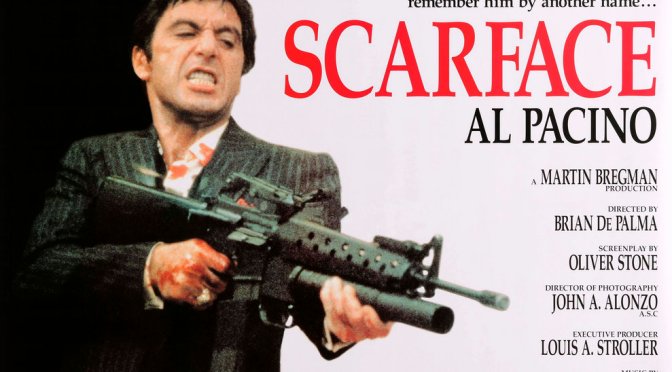
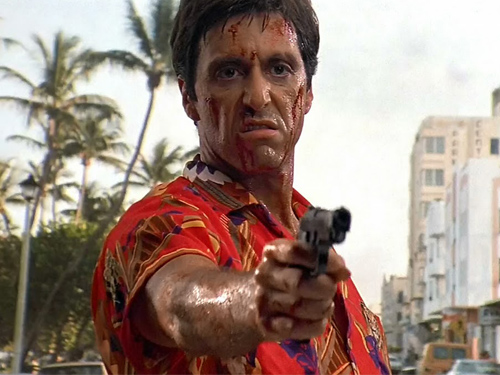
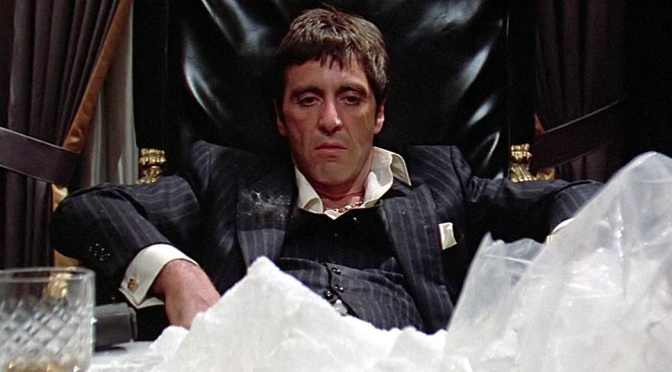
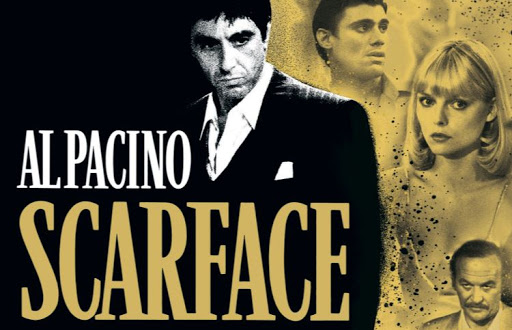
While Al Pacino is rightly lauded in the critically acclaimed Godfather Trilogy, as quietly menacing Michael Corleone, I think his spectacular performance as Tony Montana in Scarface (1983), is nothing short of cinematic gold. Tony Montana is a monstrous symbol of 1980’s excess and neo-capitalism. A product of social deprivation and cold war division. In this world, greed is not just good, but a driving force behind an evil empire which believes the extreme is only halfway. Tony Montana is small in size but big on gesture, colour and voice, both an anti-hero and villain for the eighties era. Moreover, for me, Tony Montana is the most iconic gangster ever committed to celluloid.

With a combustible screenplay written by Oliver Stone, Scarface (1983), is a cocaine driven and incendiary viewing experience. Stone himself is reported to have been battling cocaine addiction while writing it and this shows in the over-the-top world on screen. Everything is ramped up to eleven, including: the violence, shouting, swearing, shooting, politicking, drug-taking, sex, killing, avarice, money-making and corruption. There isn’t one redeemable character in the whole film. Everyone is corrupt. Actually, Tony’s mother tries her best to stay away from the darkness that follows Tony. His sister Gina (Mary Elizabeth Mastrantonio) seems pure, but is ultimately drawn into Tony’s incestuous glue, precipitated by her dangerous liaison with Manny (Steven Bauer).


“In this country, you gotta make the money first. Then when you get the money, you get the power. Then when you get the power, then you get the women.” – Tony Montana


How 'Scarface' Transformed the Way Cubans Were Perceived in the US

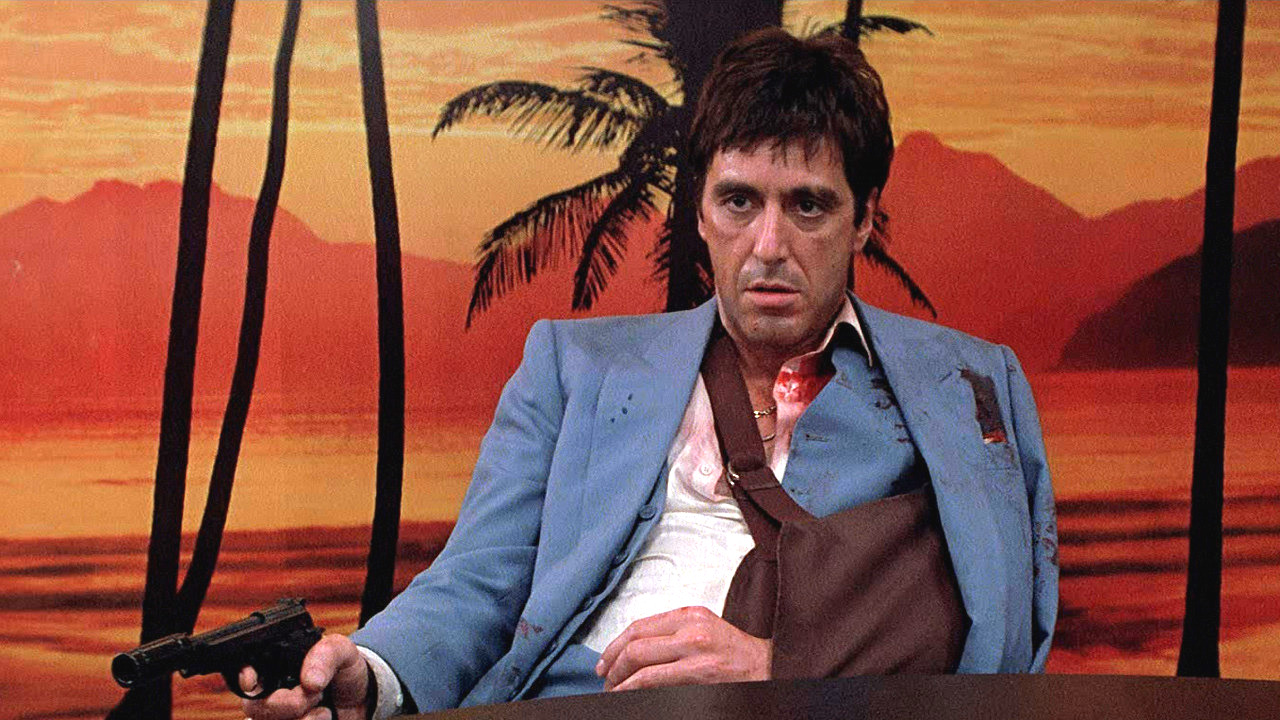
Directed with operatic and kinetic power by Brian DePalma, I have to say that Scarface (1983) is probably my favourite gangster film of all time. That isn’t to say it’s the best. That is Scorsese’s masterpiece Goodfellas (1990). But I just love this film because DePalma and Stone and Pacino revel in excess, violence and tragedy. It also contains some very dark humour too. Tony Montana is horrific, but also very funny. Georgio Moroder’s brooding synthesised score pocks the Miami streets, clubs, beaches, Bolivian boltholes, and in the final hour, Tony’s fortified mansion. I love the artificial backdrops featuring palm trees and sun because their fakeness symbolises the delusory world of the characters. Indeed, even the back-projection shots used when driving add to the illusion. The characters business foundations are built on white sand, a powder which ultimately blows away in the wind.

DePalma is the best director of a cinematic set-piece since Hitchcock. That isn’t to say he’s the best director ever per se, but rather someone who just creates so many well-conceived and memorable scenes. The infamous chainsaw scene, the killing of Frank (Robert Loggia), Tony’s bitter monologue in the restaurant, and the explosive “say hello to my little friend” ending, are just a few of the jaw-dropping moments in this epic crime drama. DePalma also gets incredible performances from all the cast. Pacino obviously blows the doors off as the tough, paranoiac, angry, greedy and hyperbolic Montana. The then, mostly unknown, Michelle Pfeiffer is equally impressive as the coke-fuelled ice-queen, Elvira, who becomes Tony’s vampiric and soulless wife.

Stone’s scenery-crunching script obviously owes much to the original film version of Scarface (1932), co-written by, among others, W. R. Bennett and Ben Hecht and directed by Howard Hawks. The structure is remarkably similar charting the rise and fall of the “political refugee” from Cuba, Tony Montana. It’s a genius stroke by Stone to transplant the exodus of Cubans to America and at the same time, echo the rise of the gangster during the prohibition era of the original film. But, instead of booze, the drug of choice is cocaine. This war on drugs is bloody and unforgiving. As the money and narcotics mount up, so do the victims. Complicit with the criminals are law enforcement, South American dictators and U.S. Government officials. Stone makes many political barbs, but never preaches at the expense of the narrative. Capitalism, the law and American foreign policy has never been more ruthless than here in Scarface (1983). As the oft-seen slogan says, ‘The World is Yours’, but tragically these characters don’t live long enough to enjoy it.


“Every day above ground is a good day.” – Tony Montana