Tag Archives: horror

Cinema Review: Eddington (2025) – a daring Western satire on COVID-era America, US politics and the poison of social media!

Cinema Review: Eddington (2025)

Directed by Ari Aster

Written by Ari Aster

Produced by: Lars Knudsen, Ari Aster & Ann Ruark

Main Cast: Joaquin Phoenix, Pedro Pascal, Luke Grimes, Deirdre O’Connell, Micheal Ward, Austin Butler and Emma Stone.

Cinematography by Darius Khondji

*** MAY CONTAIN SPOILERS ***


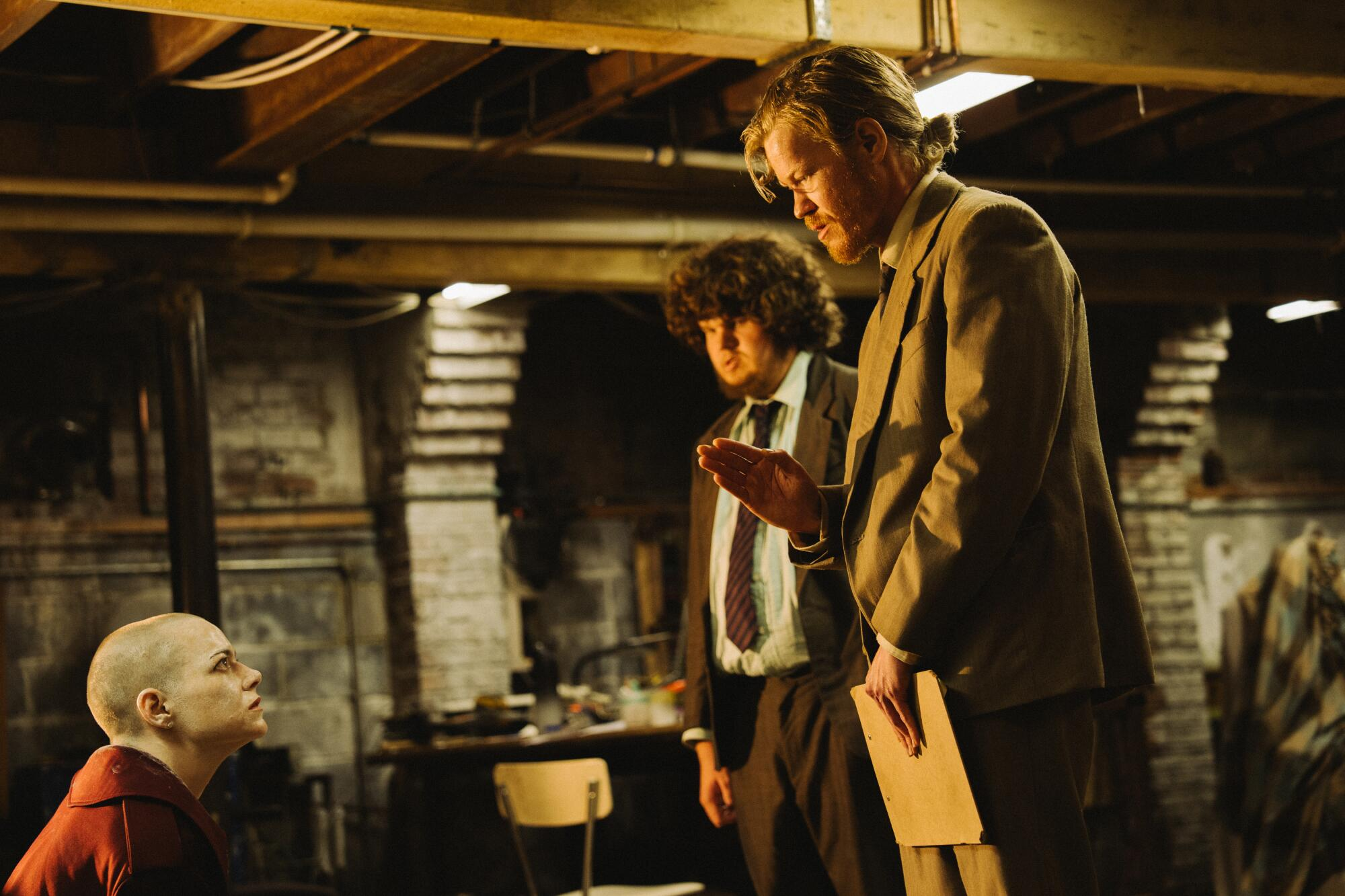
Ari Aster’s first two horror films, Hereditary (2018) and Midsommar (2019) were rightly critically acclaimed and delivered at the box office too. His third film Beau is Afraid (2023) was a flop when compared and in my view not surprising. The film was arguably, depending on your view, a hilarious, risk-taking arthouse tragi-comedy or a self-indulgent act of egregious career self-sabotage. Safe to say I did not enjoy it, so approached the latest A24-produced film of Aster’s, Eddington (2025), with emotional caution.

Thankfully Aster’s screenplay, characters and all-round production of Eddington (2025), are far more accessible and focused than his third feature. Pedro Pascal and Joaquin Phoenix anchor Eddington (2025) superbly, as Aster delivers a blistering small-town allegory that uses a public health crisis as the spark for something far larger. What begins with Mayor Ted Garcia (Pascal) dutifully following the Governor’s lockdown orders quickly escalates when Sheriff Joe Cross (Phoenix) refuses to comply and runs for Mayor himself. This casts the town and people into a conflict that mirrors America’s own political division.


Phoenix brings his trademark intensity to Sheriff Cross, whose defiance feels equal parts principled and unhinged, while Pascal’s Mayor, revealed to be a corporate puppet, balances him as a leader losing grip on his authority. Thus, Eddington (2025) is a powerful film whose strength lies in the performances and a brave, intelligent screenplay which asks many questions. The main issues I had were under-developed character arcs for Emma Stone’s and Austin Butler’s characters. Further, as in previous films Aster relies heavily on left-field plot turns, which go more for shock, rather than understandable character development. Indeed, the final act Western-style shootout, while incredibly exciting, seems out-of-sync with the thoughtful build-up and drama established in the first hour.

Ultimately, Director Ari Aster resists turning Eddington (2025) into just a COVID-era-morality tale; instead, the film confidently threads together a powerful mix of left and right-wing US politics, toxic masculinity, historical sexual abuse, conspiracy and alternative theories, cultish religious fervour, white saviour virtue-signalling, homegrown terrorism, algorithmic influence of social media, and the creeping threat of corporate greed. Each theme and subplot fold back into the central question: who really controls the narrative in modern America or is it a nation spiraling out of control toward inevitable civil war? The result is a tense, unsettling portrait of a town—and a country—at war with itself.

Mark: 8 out of 11


Cinema Review: Dangerous Animals (2025) sprays ‘Jaws’-dropping and bloody thrills!

Cinema Review: Dangerous Animals (2025)

Directed by Sean Byrne

Written by Nick Lepard

Produced by Troy Lum, Andrew Mason, Pete Shilaimon, Mickey Liddell, Chris Ferguson & Brian Kavanaugh-Jones

Main Cast: Hassie Harrison, Josh Heuston, Rob Carlton, Ella Newton, Liam Greinke, Jai Courtney etc.

Cinematography by Shelley Farthing-Dawe

*** MAY CONTAIN SPOILERS ***


Set amidst the golden beaches and deep blue sea of the Gold Coast, Australia, the film begins with boat captain, Tucker (Jai Courtney) springing a shocking and literal tourist trap. The film then moves onto establishing a fledgling romance between surf drifter, Zephr (Hassie Harrison) and local office clerk, Moses, (Josh Heuston). What then follows is a brutal and gory thriller which had me on the edge-of-my-popcorn throughout. It also once again proves that human beings are more of a threat than the actual big fish in the sea.

Dangerous Animals (2025) consistently delivers thrills thanks to Nick Lepard’s witty, nasty script and two standout performances. Hassie Harrison shines as a gutsy fighter who refuses to play the victim, while Jai Courtney both embodies and skewers the Aussie male stereotype in a scenery-chewing turn sharper than a shark’s jaws. His hulking frame, blunt verbals and piercing looks emulate a predatory fearfulness throughout creating one of the most memorable screen villains in recent years.

After watching the trippy Kafkaesque Nicolas Cage beach thriller not long ago, The Surfer (2024), I found Australian toxic masculinity once again raising its head with blood and bite in the Jaws-meets-Silence of the Lambs suspense thriller. Dangerous Animals (2025) isn’t without minor plot snags, but ultimately Lepard’s twisted script ensures we care about the leads, weaving a believable romance amid tense shark attacks and sea-sprayed suspense. Director, Sean Byrne, orchestrates the shark and human action brilliantly on a relatively low budget, ensuring the result is a lean, bloody, and entertaining ride that bites down hard and doesn’t let go.

Mark: 8 out of 11


The Suicide Shift – short film update and posters!

The Suicide Shift – short film update

In January 2025 I announced my next independent short film project called The Suicide Shift.

You can read about it here: https://thecinemafix.com/2025/01/20/fix-films-present-a-new-horror-short-the-suicide-shift-2025/


Gradual but excellent progress has been made on the post-production. Editing and the musical score have been completed so the film should be ready by the end of September 2025 for submission to festivals.

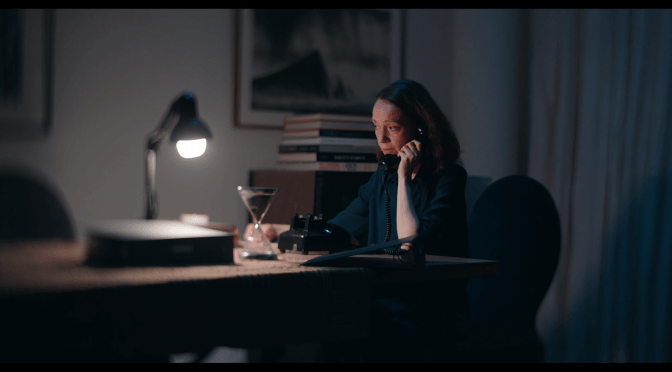
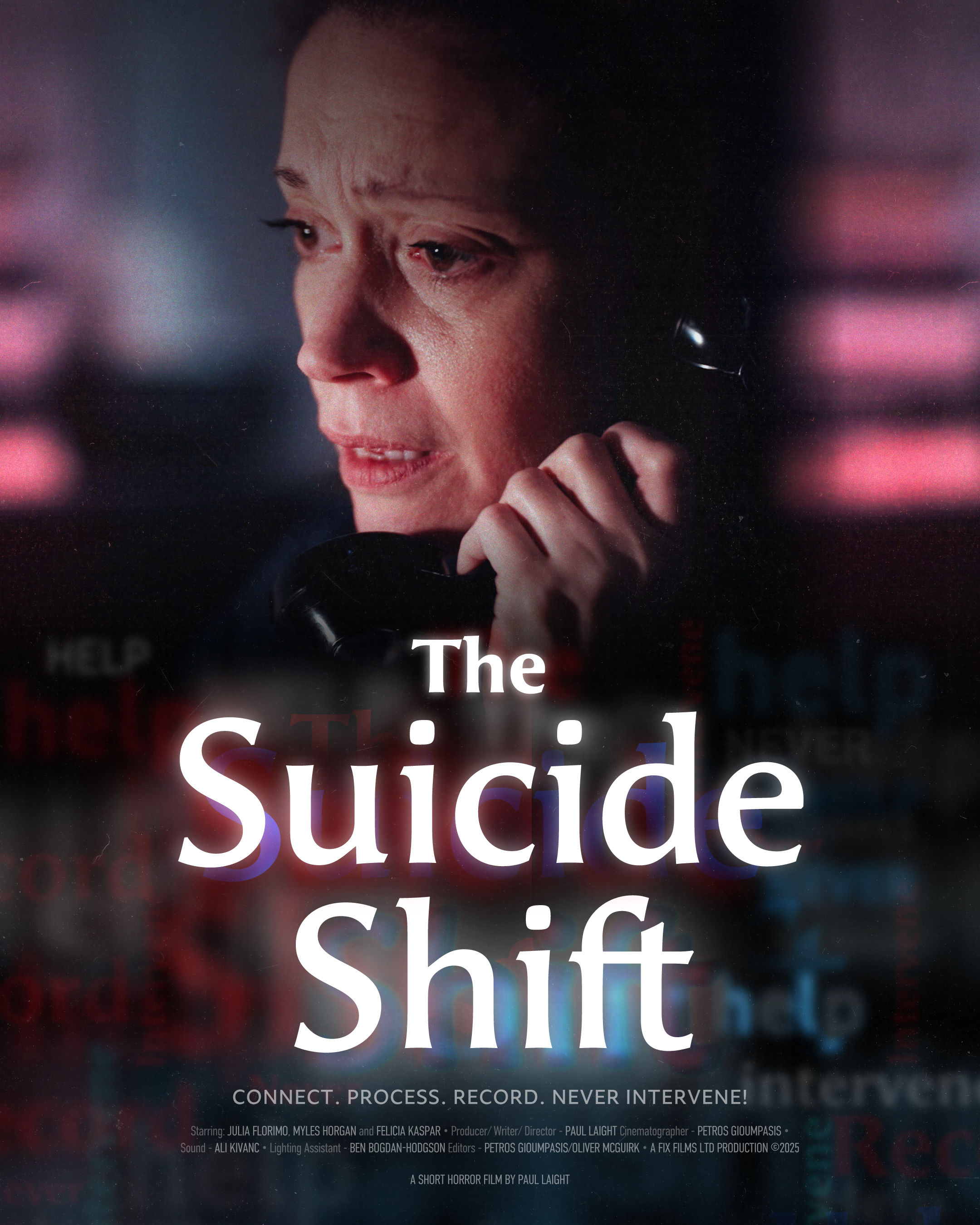
A trailer will be released soon. In the meantime, I commissioned some film and character posters. See above and the slideshow below.


Logline

Banished to the “suicide shift” for breaking spirit call centre regulations, CARMILLA FERRY, now deals with the most tortured of souls moving from this world to the next. After being blasted by her line manager on the phone, Russell, Carmilla is feeling even more isolated and demoralised than usual. After a series of heart-crushing calls, culminating in a particularly stressful shift, Carmilla is then faced with the most heart-wrenching call of all.


Cast

Julia Florimo as Carmilla Ferry

Myles Horgan as Russell Schaeffer

Felicia Kaspar as Lucy (Carmilla’s daughter)


Crew

Director, Producer & Writer: Paul Laight

Cinematography: Petros Gioumpasis

Sound Recordist / Designer: Ali Kivanc

Camera Assistant: Ben Bogdan-Hodgson

Make-Up: Georgie Lang

Location Manager: Melissa Zajk

Editors: Oliver McGuirk & Petros Gioumpasis

Composer: Ben Randall

© 2025 A Fix Films Production

Sky Cinema Review: A Different Man (2024) – a multi-faceted character study on inner and outer identity.

SKY CINEMA REVIEW: A DIFFERENT MAN (2024)

Directed by Aaron Schimberg

Written by Aaron Schimberg

Produced by Christine Vachon, Vanessa McDonnell & Gabriel Mayers

Main cast: Sebastian Stan, Renate Reinsve, and Adam Pearson.

Cinematography by Wyatt Garfield

*** MAY CONTAIN SPOILERS ***


Few films in recent years feel as startlingly original as A Different Man (2024) —and yet, paradoxically, it’s a film made almost entirely from borrowed pieces. Aaron Schimberg’s latest begins as a bracing character study, anchored by Sebastian Stan’s Edward Lemuel, a socially awkward, struggling actor whose neurofibromatosis manifests in a disfiguring facial condition. These early passages are its strongest: Edward’s halting existence, his quiet desperation, disintegrating ceiling and the unnerving, tactile authenticity of his world call to mind the seedy New York grit of Abel Ferrara and Frank Henenlotter.

But just as the viewer settles into this world, the film veers via a sci-fi twist. An experimental procedure transforms Edward’s face, and with it, the narrative mutates. Suddenly we’re in a Woody Allenesque romantic entanglement—wry, neurotic, and tinged with irony—as Edward’s new identity draws him into a triangular relationship with Renate Reinsve as Ingrid and Adam Pearson as Oswald. Oswald also has neurofibromatosis, but has a confidence and popularity that Edward envies. As Oswald usurps Edward’s place in the off-Broadway play Ingrid is directing the film’s tone teeters between comedy and cruelty.


From there, A Different Man (2024) shape-shifts yet again. The third act discards linearity for a fragmented, Charlie Kaufmanesque unraveling: episodic bursts, narrative cul-de-sacs, and surreal detours that question not just Edward’s identity but the film’s own. It’s at once exhilarating and frustrating. Schimberg seems intent on deconstructing his own story midstream, leaving us with shards of multiple films rather than one fully integrated work. The ending works artistically but could, for me, have been way more dramatic with Edward confronting Oswald for, in his neurotic mind, stealing his life and identity.

That tension—between raw originality and homage—defines A Different Man (2024). It begins with remarkable clarity and empathy, only to succumb to a kind of cinematic identity crisis. Nonetheless, the film is very funny and moving and the themes are also very thought-provoking. Further, the script, direction and performances, especially from Sebastian Stan and Adam Pearson, make the film consistently compelling. Indeed, even in its unevenness, it remains one of the most daring and distinctive works of the past few years: a film that refuses to be just one thing, even if that refusal undermines certain dramatic potential.

Mark: 8.5 out of 11


Cinema Review: Weapons (2025) – a finely constructed horror mystery!

Cinema Review: Weapons (2025)

Directed by Zach Cregger

Written by Zach Cregger

Produced by Zach Cregger, Roy Lee, Miri Yoon, J. D. Lifshitz, Raphael Margules, etc.

Main Cast: Josh Brolin, Julia Garner, Alden Ehrenreich, Austin Abrams, Cary Christopher, Benedict Wong and Amy Madigan.

Cinematography by Larkin Seiple

*** MAY CONTAIN SPOILERS ***


Zach Cregger’s Barbarian (2022) was an intriguing feature debut that captivated viewers with a suspenseful, tension-filled first half, expertly building a sense of dread and mystery. The film begins with a seemingly simple premise — a woman arrives at an Airbnb, only to find it double-booked — but what starts as a quiet psychological thriller quickly takes an unexpected turn. As the plot unfolds, the sense of unease grows, drawing viewers deeper into its web of secrets.

However, the second half of the film ventures into increasingly bizarre and chaotic territory, unravelling into a frankly insane series of twists and reveals. While it might initially seem like a more grounded thriller, Barbarian (2022) pushed the boundaries of genre, diving head first into over-the-top absurdity. It’s a thrilling ride that keeps you on the edge of your seat, even if the madness of the final act leaves you both bewildered and entertained. In some ways Cregger’s follow-up Weapons (2025) shares such structural and thematic similarities with his first film, however, it is a much more controlled and impactful mystery. Until the end.

Weapons (2025) immediately hooks viewers with the mystery of the seventeen children going missing in the town of Maybrook. This instantly draws us into a world brimming with tension and unanswered questions. The authorities investigation into their disappearance soon stalls and how the townsfolk react becomes the central thread, gradually unraveling a complex, carefully structured narrative. Thus, Cregger’s postmodern fairy-tale unfolds through the eyes of various interconnected characters, each of whom brings a unique perspective and layer to the plot.


Josh Brolin plays Archer Graff, a father grieving the disappearance of his son Matthew, one of the missing children. His portrayal is poignant, balancing grief with a desperate need for answers, and his journey pushes the narrative forward with a personal stake in the outcome. Next, Julia Garner’s Justine Gandy, a dedicated teacher, adds another emotional dimension. She’s devastated when she discovers that nearly all of her students have vanished without a trace, with the exception of Alex Lilly (played by Cary Christopher), the only child from her class who remains. Justine’s struggle to find out what happened to her students, coupled with her own crumbling personal life and alcoholism, make her a compelling protagonist.

Other characters include Alden Ehrenreich’s Paul Morgan, a troubled police officer with his own set of demons, is a reluctant ally to Justine. Their past relationship adds a layer of tension as they navigate the growing sense of danger and urgency surrounding the missing children. Then, Austin Abrams brings a sense of raw, chaotic energy to James, a homeless drug addict and burglar whose past intersects with the mystery in unexpected ways. Lastly, Benedict Wong plays Marcus Miller, the school principal, who serves as an important figure in Justine’s quest for answers. Though sympathetic to her, Marcus is often caught between his professional responsibilities and the mounting pressure of the situation.

Weapons (2025) masterfully weaves its non-linear narrative with a striking array of tense, spine-chilling moments that keep audiences on edge throughout. As the plot unfolds through intersecting character arcs, the film expertly intersperses surprising scares, thrilling foot chases, and creepy locations, all while pulling you deeper into its twisting mystery. The jumps in time and the interconnected storylines create a sense of disorientation that builds forces viewers to constantly question what’s real and what isn’t.

Each character’s journey is filled with psychological unease and physical danger, leading to some genuinely heart-pounding sequences. Meanwhile, the eerie, claustrophobic settings—ranging from decaying homes to ominous, unfamiliar spaces—serve as perfect backdrops for the increasing horror. These moments contribute to the growing sense that something monstrous is lurking just beneath the surface, waiting to break free. Further, the film also plays with ambiguity, surreal dreams and unreliable narrators, allowing characters’ perspectives to fracture.

However, similar to Barbarian (2022), Weapons (2025) takes a tonal right-turn in the final moments, descending into all-out mania and Savini-style gore. The reveal of the matriarchal menace, who emerges as a central ‘Pied Piper’ type villain, feels somewhat unearned, undermining the narrative choices before. The ending also didn’t quite fully connect with the deeper themes or subtext of the film that were promised in the set-up. Yet, despite such inconsistencies Cregger’s Weapons (2025) has been marketed incredibly well and as has deservedly done great box-office business. Lastly, Creggers is a very talented filmmaker and his second film remains a smartly written and gripping ride filled with tension, scares, and that insane final act.

Mark 8.5 out of 11


Cinema Review: Bring Her Back (2025) – a powerfully disturbing study of grief, obsession and matriarchal mania!

Cinema Review: Bring Her Back (2025)

Directed by Danny and Michael Philippou

Written by Danny Philippou and Bill Hinzman

Produced by Samantha Jennings, Kristina Ceyton

Cast: Billy Barratt, Sora Wong, Jonah Wren Phillips, Sally Hawkins, Sally-Anne Upton, etc.

Cinematography by Aaron McLisky

*** MAY CONTAIN SPOILERS ***


It’s become something of a cliché to lament the state of theatrical cinema: superhero fatigue, endless sequels, spin-offs and reboots, streaming overflow. Original stories—particularly in multiplexes—feel increasingly rare. Yet one genre has bucked the trend and, against all industry logic, placed original visions front and centre: horror. In an era of IP dominance, horror’s persistence as the great innovator is growing. It thrives on shadows, but in today’s cinema landscape, it’s also the brightest light.

Across the last few years, titles like Barbarian (2022), Pearl (2022), Skinamarink (2022), Nope (2022), Talk to Me (2023), Infinity Pool (2023), When Evil Lurks (2023), Late Night With the Devil (2023), Totally Killer (2023), Heretic (2024), Longlegs (2024), Sinners (2025), and the soon-to-be-reviewed, Weapons (2025) have proved again and again that audiences crave fresh nightmares. Even 28 Years Later (2025), though technically part of an ongoing series, represents a rare franchise event grounded less in brand synergy than in directorial reinvention and raw cultural appetite.

Unlike superhero spectacles or sci-fi epics, horror thrives on modest budgets and audacious ideas. A film like Skinamarink (2022), shot for a reported $15,000, can turn experimental textures into a viral theatrical moment. Personally, I found this film difficult to digest, however, the more commercial, Talk to Me (2023), made for $4.5 million, earned nearly twenty times that worldwide. These aren’t just hits; they’re validations of originality as a business model.


Horror is also a proving ground where young or unexpected filmmakers leap into the cultural spotlight. Zach Cregger (Barbarian (2022) twisted narrative structure into something memorable. The Philippou brothers Talk to Me (2023) translated YouTube viral adrenaline into terrifying cinematic language. But, what of their latest film, Bring Her Back (2025)? Well, for me they have surpassed their debut feature not only in genuinely sickening moments of dread, but also in terms of powerfully emotional horror scenes.

The narrative of Bring Her Back (2025) begins as it means to go on with a rapidly series of unsettling scenes. After discovering their father dead in the shower, 17-year-old Andy (Billy Barratt) and his partially sighted step-sister Piper (Sora Wong) are placed in the care of Laura (Sally Hawkins). Laura is an eccentric former counselor living on the outskirts of town and suffered the loss of her teenage daughter to drowning. In her home, the siblings encounter Oliver (Jonah Wren Phillips), a mute foster boy who seems terrified of the house’s locked outhouse. Andy eventually realizes Laura’s obsessive behaviour is far more threatening than he could imagine and they are all in danger.

Like Toni Collette in Hereditary (2018) and Lupita Nyong’o in Us (2019), Sally Hawkins delivers a powerfully intense performance that pushes horror into the realm of high drama. She carries the film with raw, nerve-shredding vulnerability, shifting from fragile grief to volcanic fury with startling precision. Every gesture—whether a whispered plea or a full-bodied breakdown—feels lived-in and emotionally scalding, grounding the supernatural terror in something painfully human. Also, Billy Barratt and newcomer Sora Wong offer excellent support as the in-peril ‘Hansel and Gretel’ siblings. Barratt is especially good carrying the audience’s fearful perspective.


The Philippou brothers draw on a potent brew of horror traditions—satanic ritual, grief, abduction, parental abandonment, and matriarchal hysteria—to craft Bring Her Back, a haunting and gut-wrenching descent into obsession. The film thrives on its willingness to plunge into emotional extremity, channeling raw pain into sequences of near-operatic dread. Several knife-in-the-teeth jolts of terror punctuate the story, as everyday necessities such as water, food and parental love are twisted into deathly hazards.

While the script occasionally wavers and certain narrative and backstory elements required sharpening, the thematic and emotional core remains undeniable. At its best, Bring Her Back (2025) isn’t just another exercise in occult horror—it’s a powerful study of grieving obsession, of the lengths people will go to fill a void that cannot be healed. The result is a film that lingers, not only for its shocks but for the raw ache that underpins them.

Mark: 9 out of 11


Cult Film Review: Possession (1981)

CULT FILM REVIEW: POSSESSION (1981)

Directed by Andrzej Żuławski

Screenplay by Andrzej Żuławski

Adaptation and dialogue by Andrzej Żuławski & Frederic Tute

Produced by Marie-Laure Reyre

Main cast: Isabelle Adjani, Sam Neill & Heinz Bennent

Cinematography by Bruno Nuytten

Edited by Marie-Sophi Dubus & Suzanne Lang-Willar

Music by Andrzej Korzyński

*** MAY CONTAIN SPOILERS ***


Andrzej Żuławski’s Possession (1981) is a film that doesn’t just defy genre—it annihilates the very idea of categorization. Part spy thriller, part domestic psychodrama, part Lovecraftian horror, and part apocalyptic hallucination, the film barrels forward with such manic intensity that it becomes less a movie and more an exorcism of the soul. It resists structural and emotional compartmentalizing at every turn, choosing instead to implode in a flurry of shrieks, flailing bodies, and gooey, pulsing monstrosities.

Set in a divided Berlin, the film ostensibly begins as a break-up story: Mark (Sam Neill), a shell-shocked spy, returns home to discover that his wife Anna (Isabelle Adjani, in a performance of pure, unrelenting hysteria) wants a divorce. But from there, the film spirals rapidly out of the realm of conventional melodrama and into something far more surreal and terrifying. Mark’s confusion curdles into obsession, Anna’s descent becomes biblical, and reality itself begins to warp and splinter.


Is it a Cold War spy film? Yes, but only in fragments, and those are quickly consumed by the escalating emotional chaos. Is it a break-up film? Certainly—but filtered through an expressionist nightmare where the grief and rage of separation erupt as literal body horror. Horror film? Undoubtedly, though the fear is less about monsters and more about the abyss that opens when love dies. And as the narrative crumbles into bloody symbolism and metaphysical dread, Possession (1981) begins to feel like an apocalyptic drama—one where the apocalypse is internal, intimate, and unstoppable.

Żuławski directs like a man possessed, matching his characters’ unhinged energy with a restless camera and wild tonal shifts. The result is a fever dream of shrieking confrontations, doppelgängers, collapsing identities, and one of the most infamous subway scenes in cinema history. Possession (1981) is not an easy film—it’s messy, abrasive, and frequently overwhelming—but it’s precisely in its refusal to conform that its power lies. Indeed, much of the dialogue is obtuse non-sequitur in delivery as the actors deliver prose-like philosophical statements that have clearly influenced the writing of Yorgos Lanthimos and Efthymis Filippou.

To watch Possession (1981) is to witness cinema used as a weapon against coherence, comfort, and calm. I almost had a panic attack watching it. Neill, usually a calm on-screen presence looks as though he is lost in a nightmare he cannot escape. Heinz Bennent, as the lover, fully embraces Zulawski’s insane vision, while Adjani literally has a mental breakdown on screen. It is an unbelievably fearless embodiment of psychotic sexuality, arguably only matched in a commercial release by Eva Green’s Vanessa Ives from the majestic gothic TV series, Penny Dreadful (2014-2016). Ultimately, Possession (1981), is as much about the disintegration of self as it is about the end of a marriage, the failure of ideology, or the horror of being alive. One doesn’t simply watch Possession (1981)—one survives it.


Cinema Review: 28 Years Later (2025) – an epic horror sequel; one for the (r)ages!

Cinema Review: 28 Years Later (2025)

Directed by Danny Boyle

Written by Alex Garland

Produced by Danny Boyle, Alex Garland, Andrew Macdonald, Peter Rice & Bernie Bellew

Main Cast: Jodie Comer, Aaron Taylor-Johnson, Jack O’Connell, Alfie Williams, Edvin Ryding and Ralph Fiennes

Cinematography by Anthony Dod Mantle

Edited by Jon Harris

** MAY CONTAIN SPOILERS **


We’re foot—slog—slog—slog—sloggin’ over Africa
Foot—foot—foot—foot—sloggin’ over Africa —
(Boots—boots—boots—boots—movin’ up and down again!)
There’s no discharge in the war! —
Rudyard Kipling

The opening sequences of 28 Days Later (2002), directed by Danny Boyle and written by Alex Garland, are some of the most haunting and iconic introductions in cinema—transcending the horror genre to deliver something mythic, mournful, and terrifyingly real. They are masterclasses in mood-building, world-setting, and emotional manipulation, and redefined what the modern apocalypse could feel like on screen. From the terrifying raging simian attacks to the stunning silence of hollow streets and buildings of London as Jim (Cillian Murphy) awakes to an incredibly changed and empty planet. Here Boyle used guerrilla filmmaking as an artistic weapon with digital video blending with silence and dread, beauty and decay, loneliness and rage creating a grimy realism that no big budget blockbuster could replicate.

The opening sequence of the sequel, 28 Weeks Later (2007), was damned good as well, although what followed was not as formidable as the original. If we’re honest it was more of a high-quality straight-to-video effort, especially when compared to the incredible first film. But what of 28 Years Later (2025), which finds Boyle and Garland re-teaming with a stellar cast including: Jodie Comer, Aaron Taylor-Johnson, Ralph Fiennes and newcomer, Alfie Williams. It opens with yet another impressive opening sequence in 2002, as a family of kids are attacked in their Scottish home. Escaping on frantic foot is young Jimmy who finds his father, the local minister, in his church proclaiming the ‘end of days!’ Move forward twenty-eight years to 2031 and the film joins, interestingly enough, not Jimmy, but a survivor community living in Lindisfarne, a tidal island connected by a fortified causeway.

Focusing on the family unit of twelve-year-old son, Spike (Alfie Williams), and parents, Isla (Jodie Comer) plus father, Jamie (Aaron Taylor-Johnson), 28 Years Later (2025) marks a ferocious and exhilarating return to the infected-ravaged world. It is not simply a continuation, but a full-fledged reimagining that deepens, widens, and accelerates the mythology, style, and thematic power of the series. It is not just a sequel—it’s an evolution, one that pulses with the blood of Romero’s bleak social horror and the serialized depth of The Walking Dead, while forging its own cinematic identity: brutal, urgent, and conceptually masterful.


From its opening moments, 28 Years Later plunges viewers into a world far beyond what we’ve seen before. Civilization hasn’t recovered—it has, like the zombies, mutated. The virus is no longer an outbreak or an aftermath; it is an ecosystem. What began as a confined crisis in 28 Days Later, and widened into militarized guilt and familial betrayal in 28 Weeks Later, now becomes a reckoning. Thematically, the film touches on generational trauma, hybrid immunity, rites of passage, euthanasia and the evolution of the rage undead. Jamie trains his son in the art zombie-hunting, before the middle act finds Spike attempting to save his unwell mum. At this time he both matures and overcomes several battles with mutated inhumans.

The visual grammar of 28 Years Later stays true to the DNA of the series: raw, immediate, and grimy. But it’s also evolved. The digital grunge of 28 Days Later is elevated with modern tools, while still embracing a handheld, documentary-style urgency. Towns and buildings aren’t just abandoned—they’re fossilized in trauma. New scenes are suffused with ash, dust, decay, blood, plasma and rusted iconography, painting a world that’s both rotting and fighting to be reborn. This is a horror film that smells like blood and diesel. It feels dirty. Every camera move, whip pan and smash cut drags you to hell and makes you feel like your life is in danger.

28 Years Later doesn’t just revive a franchise—it transforms it into a towering trilogy of infection, collapse, and spiritual trauma. It draws from Romero’s cynicism, The Walking Dead‘s moral complexity, and its own raw, kinetic legacy to deliver something uniquely powerful: a horror film that is both visceral and cerebral, intimate and operatic. While there are some script and pacing issues toward the end of the second act, Boyle directs superbly. Plus, the film benefits from some memorable performances, notably Comer, Fiennes and young Alfie Williams. Lastly, it has one of the most startling endings to a film I have seen in a long time. It is frankly nuts. Yet, it ensures 28 Years Later (2025) is a modern horror classic, pulsing with urgency, style, and an almost unbearable truth: that the most terrifying viruses don’t infect the body—they infect the soul. Bring on the sequel!

Mark: 9.5 out of 11


Cinema Review: Sinners (2025) – a blazing, bold and bloody blues opera!

Cinema Review: Sinners (2025)

Directed by Ryan Coogler

Written by Ryan Coogler

Produced by Zinzi Coogler, Sev Ohanian, Ryan Coogler

Main cast: Michael B. Jordan, Hailee Steinfeld, Miles Caton, Jack O’Connell, Wunmi Mosaku, Jayme Lawson, Omar Miller, Delroy Lindo, etc.

Cinematography by Autumn Durald Arkapaw


After the bleakly lustful vision of Robert Eggers’ Nosferatu (2024) — a film steeped in shadow, dread, and tragic sensuality — Ryan Coogler offers a wildly different, electrifying take on the vampire mythos: a bold, colourful, and deeply soulful experience that pulses with life even as it drinks from the dead. Where Eggers lingers in gothic majesty, with Sinners (2025), Coogler surges forward with kinetic energy, blending grind-house thrills and emotional depth with From Dusk Till Dawn-style narrative turns.

Coogler’s film is set in the richly textured American South of the 1930s, a world still nursing the scars of the Great War and on the cusp of social upheaval. Into this volatile landscape, he drops the muscular Michael B. Jordan as twin war veterans turned Chicago gangsters, Smoke and Stack — men who carry both physical and spiritual wounds from the trenches — now repurposed as businessman looking to set up a juke joint. These characters feel reminiscent of the working class anti-heroes of Peaky Blinders, their emotional trauma rendered in everything from flickering glances to bursts of brutal, operatic violence. The twins have ghosts of the past and present to battle including relationship issues with Stack’s ex-girlfriend, Mary (Hailee Steinfeld), as well as Smoke’s painful reunion with his wife, Annie (Wunmi Mosaku).

Sinners (2025) plot is muscular and sinewy, establishing the characters impressively before shifting the moody Southern gothic tale into an all-out genre-bender. The film contains a fine ensemble cast knitting a series of substantial supporting characters each with their own personalities, humour and wants. The most striking is Miles Caton as the twins’ cousin, Sammie “Preacher Boy” Moore, a young blues musician with an incredible ability, that proves to be a somewhat dangerous talent. Delroy Lindo also throws in another memorable performance as the ebullient pianist, Delta Slim. With the first night’s festivities in full swing three mysterious strangers appear from the near dark, desiring to be let in. Their leader is charismatic Remmick (Jack O’Connell) and he has more than partying in mind.


Visually, Coogler lets his imagination loose, notably in a memorable cross-generational musical montage that literally burns up the cinema screen. Gone is the shadow-heavy monochrome of Eggers; in its place is a palette of dusk reds, moonlit silvers, and deep bayou greens. The film pulses with colour, sex, motion, and sweat. Blood flows, but it never feels gratuitous — it feels earned, ritualistic, even sacramental. But what ultimately makes Coogler’s film so potent is its soul. Amid the genre thrills and gore, there’s a beating heart full of soul. These vampires are not romanticised, nor merely feared; they are hungry creatures. Coogler gives them back their humanity, and in doing so, reanimates the genre with urgency.

Music is where the film truly soars. Coogler and his production team, attuned to the cultural pulse, curate a soundtrack that fuses Delta blues, Appalachian folk, and early jazz into a feverish, ghostly soundscape. There are scenes where the music alone tells the story: a backwoods funeral scored by a bone-dry slide guitar; a juke joint confrontation where the rhythm of violence matches the stomp of the blues; a haunting lullaby sung by Remmick the migrant vampire that channels generations of sorrow. It is music as memory, as resistance, as raw emotional texture.

Sinners (2025) is not just a vampire film. It’s a blues opera. A folk horror elegy. A pulpy, poignant, and powerfully visceral story about the things that haunt us, and how we fight to keep our humanity intact. What begins as a slow-burning period drama smolders into a blood-soaked explosion of action and moral reckoning. Coogler even delivers a Klan-blasting and redemptive shoot-out final act set-piece. Lastly, in Coogler’s hands, the vampire becomes more than a monster; it’s a metaphor for trauma, addiction, religion, racism, and survival. Coogler reclaims the myth for a new generation, one shaped by history, crime, grief, music, and spiritual struggle, delivering a genre masterpiece that bites deep and lingers long after the lights come up.

Mark: 9.5 out of 11


Apple TV+ Film Reviews – Part Two

Apple TV+ Film Reviews – Part Two

As is standard procedure when one creates a part one of a series, the logical and linear progression is to have a part two. So, having watched the majority of the AppleTV+ films currently streaming I now move onto part two. The first set of reviews can be found here:


Coda (2021)

For some unknown alphabetical amnesia I forgot to include this Oscar -winning film in the first set of reviews, so I rectify that omission now. Arguably one of the best films on the platform, it is simultaneously a feelgood, tearjerker and a Save-the-Cat-screenplay-template-box-ticker hitting wholly familiar beats and a well-trodden genre path. Nonetheless, it is a terrifically entertaining, moving, funny and heart-warming story which, on reflection kind of surprisingly won the Academy Award for best film. I personally think another remake West Side Story (2021) was a far more scintillating work of cinema, but hey what do I know? My original review of Coda (2021) can be found below. Mark: 9 out of 11.


Ghosted (2023)

Of late Chris Evans has been choosing roles, as with Red One (2024), that go against the Alpha-heroic persona of Captain America. Unfortunately, Knives Out (2019) aside, the results are average at best. Aside from a series of amusing cameos in the middle act, not even the alluring Ana De Armas can save this clunky AI-written-spy-romance. With better scripting and direction this attractive action fluff could’ve been almost bearable. I remember when Dexter Fletcher made really good low-budget indie films like Wild Bill (2011). Mark: 5 out of 11.


The Gorge (2025)

I really enjoyed this big-budget-romantic-monster shoot-em up. I need to watch it again sober before deciding if it is going to make my top films of the year list or did I love it because I was drunk. Miles Teller and Anya Taylor-Joy revel in fine on-screen chemistry as the physical and symbolic divide provides no barrier to their lustful wants. My full review can be found below. Mark: 8.5 out of 11.


The Greatest Beer Run Ever (2022)

Likeable every-guy, Chickie Donohue (Zac Efron), has the crazy notion of hand delivering beer to his buddies fighting in Vietnam. But his naïve morale-boosting trip soon becomes an eye-opening and perspective changing nightmare. There’s a really good dramatic character arc in this historical 1968-set “road” movie but the comedic tone dilutes the overall catharsis of the journey. Efron is full of energy while the formidable presence of Russell Crowe is memorable if woefully under-used. Mark: 7 out of 11.


Greyhound (2020)

A fast-paced and technically impressive WW2 film with Tom Hanks portraying the Commander of a destroyer battling to survive an enemy onslaught amidst a part of the sea called ‘the Black Pit’. It’s been a while since I watched this but recall it being a solid suspense thriller with great production design and effects, although a little light on meaty character development. Mark: 7 out of 11.


The Instigators (2024)

Matt Damon and Casey Affleck team up once again for this underdog heist film which tries to be funny and dramatic, but misses the nuanced tone a director like Steven Soderbergh can deliver. I kind of enjoyed this because I like Damon, Affleck and Hong Chau, but many scenes suffer from the sense the actors are “improvising” and rewriting the script as they go along. Also, why can’t we have some proper 1970’s hard-boiled crime films like Sam Peckinpah and David Mamet used to deliver. Not all robbery films have to have one-liners throughout. Mark: 6 out of 11.


Killers of the Flower Moon (2023)

My critical feelings of Martin Scorsese’s most recent epic did not shift on the second watch. This profile of the horrors that befall the Osage people after they have struck oil remains compelling. Indeed the film contains powerful themes relating to the greed, power and psychopathy of the white man, but focusing the main thrust of the narrative from their perspective creates a skewed and oddly unimpactful viewing experience. Of course, Scorsese’s filmmaking expertise shines through and the performances are terrific. Mark: 8 out of 11. My full review is here:


Luck (2022)

I felt more than a tad unlucky after watching this animated misfire which didn’t work on any level. I know hundreds of crafts-people worked hard creating this, but why not spend a bit more time on the script. Or film another script altogether. The fact that the budget for this film is reported to be $140 million and there are people starving in the world is a travesty against humanity. Mark: 3 out off 11.


Napoleon (2023)

I haven’t had the spiritual gumption to re-watch this messy biopic from Joaquin Phoenix and Ridley Scott. There’s a four-hour directorial version to contemplate watching too. Oh, if only Stanley Kubrick had made his version. My original review is below. Mark: 7 out of 11


Palmer (2021)

Justin Timberlake again proves himself an adept leading man, having successfully graduated from the Disney-groomed production line he started out on. Palmer (2021) is overall a well-acted and directed redemptive crime drama, which also tackles themes relating to gender nonconformity to differentiate the well worn “parolee-trying-to-go-straight” narrative. Mark: 7 out of 11.


Sharper (2023)

Sharper (2023), directed by Benjamin Caron, skillfully uses classic con artist film tropes to craft a layered and compelling drama. By blending familiar elements of the genre with sleek cinematography and a nonlinear narrative, the film elevates itself above typical heist fare and leans into character-driven storytelling. The terrific cast, notably Julianne Moore, have fun with a genre script containing emotional depth, deliberate pacing, and decent characterisation. Mark: 7.5 out of 11.


Tetris (2023)

Tetris (2023), directed by Jon S. Baird, turns the unlikely origin story of a video game into a surprisingly engaging Cold War-era techno-thriller—at least for a while. Rooted in real historical tensions, the film smartly weaves espionage, corporate greed, and political paranoia into the story of how a simple puzzle game became a global phenomenon. However, its descent into exaggerated action sequences, particularly the climactic chase, turns it into something closer to parody than period drama. It’s a film that ultimately undercuts the suspense by choosing spectacle over substance. Mark: 7 out of 11