Tag Archives: monster movies

Cinema Review: Clayface (2026) | Beauty is skin deep – revenge goes much deeper in this entertainingly gruesome DC anti-hero movie!

Cinema Review: Clayface (2026)

Directed by James Watkins

Screenplay by Mike Flanagan and Hossein Amini

Story by Mike Flanagan – Based on Characters from DC

Produced by Matt Reeves, Lynn Harris, James Gunn & Peter Safran

Main cast: Tom Rhys Harries, Naomi Ackie, David Dencik, Max Minghella, Eddie Marsan, Rob Brydon, etc.

Cinematography by Rob Hardy
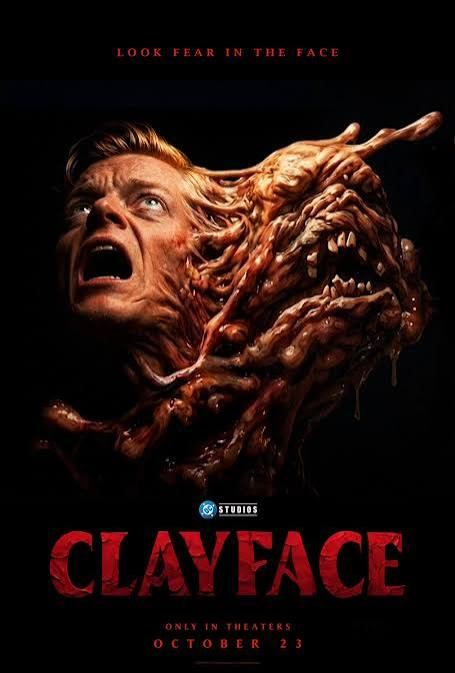


Based on the DC Comics character, Clayface (2026) is a surprisingly effective slice of body horror that successfully channels the spirit of classic films such as Frankenstein (1931), The Phantom of the Opera (1925) and Eyes Without a Face (1960), alongside more contemporary offerings like Darkman (1990), Upgrade (2018) and The Substance (2024).

The story follows an up-and-coming actor Matt Hagen (Tom Rhys Harries) whose promising career takes a horrific turn after he sleeps with the wrong woman and ends up brutally disfigured at the hands of a generic gangster (David Dencik). Enter Naomi Ackie as a scientist who offers him a second chance, using AI-driven nanotechnology to reconstruct his face. Unfortunately, as with all good mad-scientist experiments, things don’t quite go according to FDA regulations, and the results are predictably gruesome.

What makes Clayface (2026) work is that it takes time to establish its characters before plunging them into what is, essentially, a fairly generic revenge story. The narrative doesn’t exactly break new ground, but the character development gives the ensuing carnage some emotional weight. There are some wonderfully grotesque moments of body horror, effective kills, impressive gore and some decent performances that help elevate the material beyond your average comic-book adaptation.



Further, the thematic exploration of the pursuit of narcissistic perfection inherently destabilizing the character of Matt Hagen, is extremely prescient. Given society’s ongoing obsession with surgical and pharmaceutical “enhancements” being employed, his character arc provides some mild thought provocation. The weight-loss drugs and cosmetic surgery photos of skeletal and puffy-faced celebrities that adorn social media today make them look more like the monstrous painting in the attic of Dorian Gray, rather than being the peak of attraction.

My main criticism of Clayface (2026) is the rather jarring use of a 1970s/80s soundtrack, particularly the disco dancing inexplicably interspersed with the climactic fight sequences. It’s a strange tonal choice that occasionally undermines the horror and tension, as though the filmmakers couldn’t decide whether they were making a tragic monster movie or a tongue-in-cheek superhero romp. Basically, James Watkins, a very capable director, could not override the influence of James Gunn’s obsession with pop-culture-trailer-bait nonsense.

Nevertheless, Clayface (2026) is an entertaining, suitably nasty and surprisingly character-driven addition to the DC universe. Harries and Ackie give excellent performances amidst the CGI and practical effects, also sharing great on-screen chemistry. Ultimately, the film wears its literary, comic-book and cinematic influences proudly, delivering some terrific gore and, refreshingly, remembers that even monsters need a little humanity. And, notwithstanding the disco dancing, I actually really enjoyed a DC comic book adaptation for the first time in quite a while.

Mark: 8 out of 11


Cinema Review: The End of Oak Street (2026) – a fun and exciting Twilight Zone meets Jurassic Park movie mash-up!

Cinema Review: The End of Oak Street (2026)

Directed by David Robert Mitchell

Written by David Robert Mitchell

Produced by: J. J. Abrams, Hannah Minghella, Jon Cohen, David Robert Mitchell, Matt Jackson, Tommy Harper, etc.

Main cast: Anne Hathaway, Ewan McGregor, Maisy Stella
Christian Convery, etc.


Cinematography by Michael Gioulakis

** CONTAINS SPOILERS **


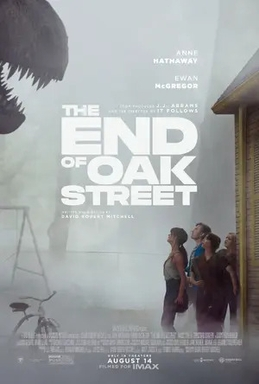
David Robert Mitchell announced himself as a filmmaker to watch with the amazing It Follows (2014), one of the most original and unnerving American horror films of the last decade. Its relentless, shape-shifting entity, dreamlike suburban landscapes and wonderfully simple central conceit turned teenage sexuality and anxiety into something genuinely nightmarish. Four years later came the altogether stranger Under the Silver Lake (2018), a bizarre, labyrinthine Hollywood conspiracy thriller that seemed determined to disappear down every rabbit hole it could find. Now, after an eight-year absence from directing, Mitchell lands somewhere between those two extremes with The End of Oak Street (2026)— a wacky movie mash-up, certainly, but one pitched on considerably safer and more commercial ground: dinosaurs destroying the neighbourhood.

The premise is gloriously fun. It is the early 1980s and the Platt family — Denise (Anne Hathaway), Greg (Ewan McGregor) and their children Audrey (Maisy Stella) and Brian (Christian Convery) — are already experiencing their own domestic extinction event when a mysterious cosmic phenomenon transports their suburban neighbourhood millions of years into the past. Suddenly the comfortable American cul-de-sac is surrounded by prehistoric vegetation and populated by creatures considerably less friendly than the people next door.

It is difficult not to think of Spielberg. Jurassic Park (1993) is the obvious reference, but there are also echoes of E.T. (1982), Poltergeist (1982) and the Amblin school of ordinary suburban families confronted by extraordinary events. Mitchell effectively reverses the Jurassic Park formula: instead of humans visiting the dinosaurs, the suburbs are dropped into their world. The result is part science fiction, part creature feature, part dysfunctional-family drama and part disaster movie — a cinematic pick-and-mix that rarely stops moving long enough for us to question how absurd the whole thing is.

And when the dinosaurs arrive, Mitchell has fun with them. These aren’t simply majestic CGI museum exhibits waiting for somebody to stare upwards in wonder. They are animals, predators and occasionally wrecking balls, turning driveways, kitchens, gardens and picket fences into prehistoric feeding grounds. There is something inherently amusing about seeing the reassuring iconography of American suburbia invaded by creatures that existed millions of years before the mortgage, the station wagon and the neighbourhood barbecue.


Michael Gioulakis’ cinematography gives Mitchell’s suburban apocalypse considerably more visual personality than the average effects-driven blockbuster, while Michael Giacchino’s score understands exactly when to embrace the grandeur and when to undercut it. Mitchell even deploys split-diopter compositions during comparatively mundane family conversations — an indication that, beneath the expensive dinosaur spectacle, the director of It Follows hasn’t entirely disappeared.

Hathaway and McGregor also prevent the human story from being completely trampled beneath giant reptilian feet. Denise and Greg’s marriage is already in trouble before prehistoric nature intervenes, giving the film a neat central joke: sometimes it takes being transported millions of years into the past and nearly eaten by dinosaurs to put your domestic problems into perspective. Hathaway is particularly good at giving Denise the necessary toughness without turning her into a generic action heroine, while McGregor brings warmth and vulnerability to Greg.

There are some surprisingly brutal moments too. Mitchell hasn’t forgotten his horror roots, and when the film wants its dinosaurs to be frightening rather than spectacular, they genuinely are. The neighbourhood becomes a hunting ground where screams, gunshots and sudden silences remind us that families in the surrounding houses are experiencing their own unseen horror stories. One major mid-film development is especially effective because Mitchell briefly allows us to believe that this apparently family-friendly adventure might be prepared to become something much nastier. Plus, I have to say that gigantic prehistoric snake is a seriously terrifying predator, especially when wrapped within the rooms and doorways of the house.

The later time-warp mechanics allow Mitchell to play with paradoxes, alternative outcomes and some intriguingly strange ideas, but they also provide the screenplay with convenient escape routes. The film constructs a wonderfully impossible situation and then becomes noticeably more generous toward its characters as it approaches the finishing line. That choice makes for an audience-friendly conclusion, but there is a tantalisingly darker version of this movie buried somewhere underneath — one in which Mitchell follows his premise to a more apocalyptic and cruel destination.

Still, the neat, wrapped up conclusion totally makes sense and Bad Robot’s J.J. Abrams crowd-pleasing, commercial sensibility has clearly reined in Mitchell’s more risky storytelling approach. Overall, The End of Oak Street (2026) knows exactly what kind of Saturday-night movie it wants to be. It has movie stars, monsters, scares, humour, family melodrama, science-fiction, time travel and enormous prehistoric creatures smashing their way through suburbia. Sometimes cinema doesn’t need to reinvent the dinosaur, even though some conspiracy theorists believe dinosaurs never existed. But, that’s another film altogether.

Mark: 8 out of 11