Tag Archives: practical effects

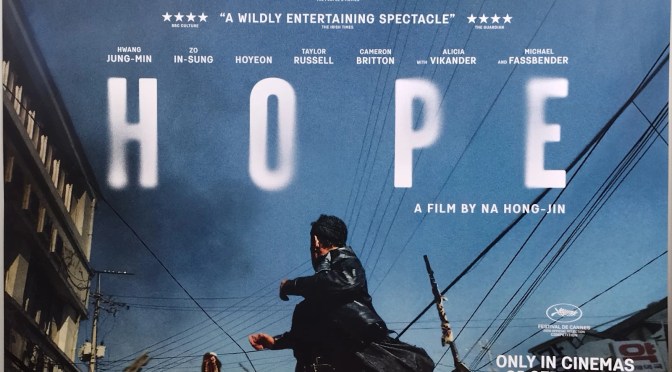
Cinema Review: Hope (2026) | A chaotic, breathless and monstrous chase film!

Cinema Review: Hope (2026)

Directed by Na Hong-jin

Written by Na Hong-jin

Produced by: Na Hong-jin, Kim Sae-mi, Kim Sae-rom


Main cast: Hwang Jung-min, Zo In-sung, Jung Ho-yeon, Taylor Russell,
Cameron Britton, Alicia Vikander, Michael Fassbender, etc.


Cinematography Hong Kyung-pyo

*** CONTAINS SPOILERS ***
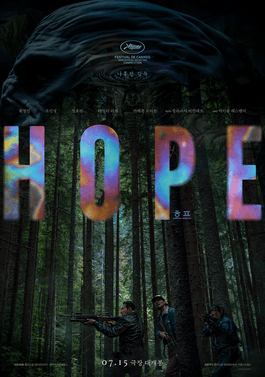


I haven’t seen Na Hong-jin’s film The Yellow Sea (2010). But I saw the critically acclaimed horror film, The Wailing (2016) twice. While I did not connect narratively with this gruesome horror as much as the critics, it is a film, that while overlong, really makes your skin crawl. Hong-Jin’s first film The Chaser (2008) is equally gruesome as a pimp pursues a killer who has stolen one of “his” sex workers. Part police procedural and part urban horror film, it is an uneven, but exhilarating thriller full of twists and turns and flawed characters. Which brings us Na Hong-jin’s latest film release, Hope (2026). It’s also a chase film, full of action and suspense, containing an altogether different set of monsters.

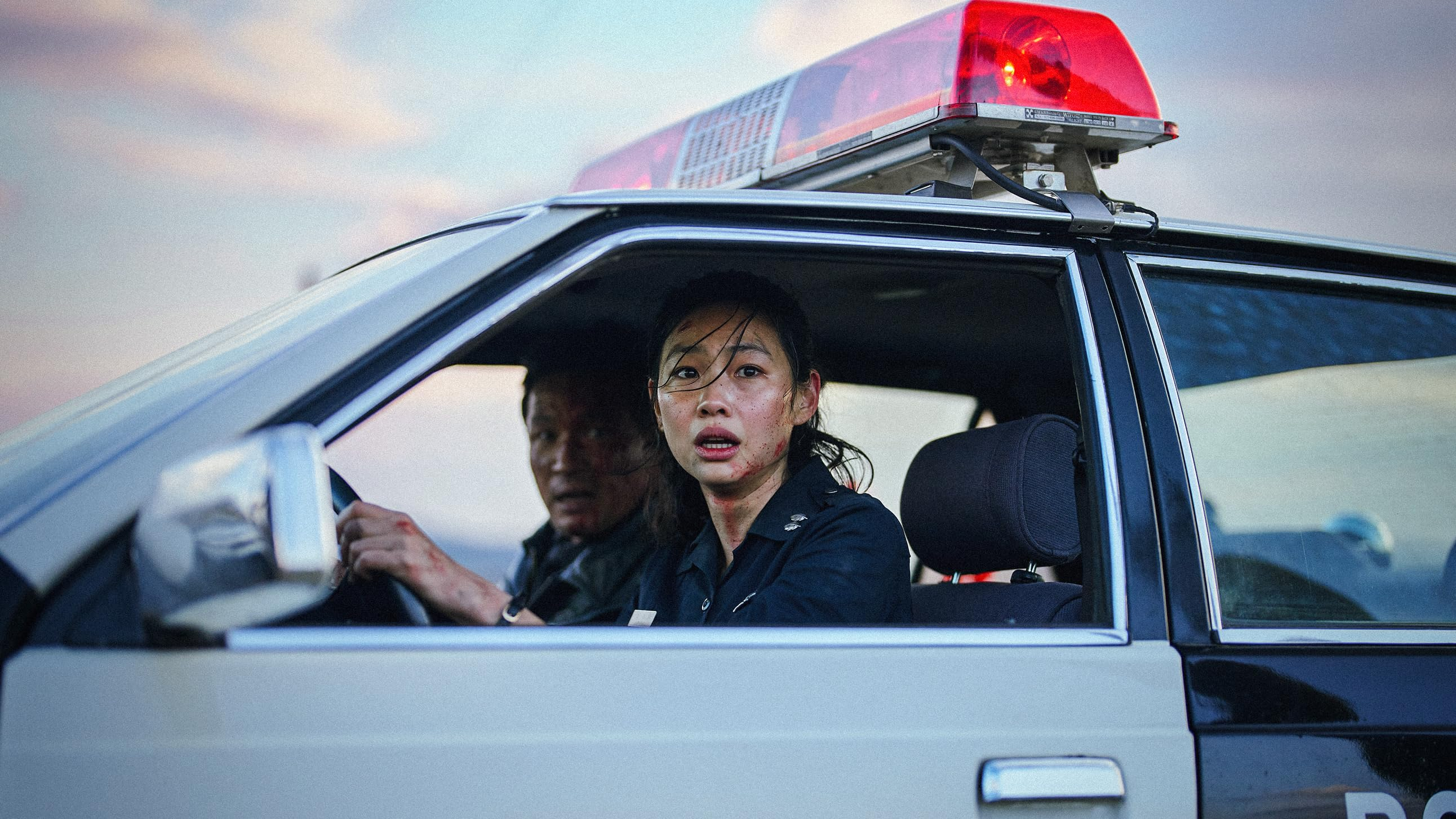
Set in the remote fishing community of Hope Harbour, close to North Korea’s demilitarised northern border, Na Hong-jin’s Hope (2026) follows the local police chief (Hwang Jung-min), his deputy (Jung Ho-yeon) and a ragtag assortment of hunters and townspeople as their isolated community comes under threat from something decidedly alien to Earth. What follows is a propulsive, exhilarating action film that hurtles along at breakneck pace, with spectacular car and horseback pursuits as the locals battle terrifying off-world creatures using little more than analogue weapons, ingenuity and sheer bloody determination.


Arguably overlong and in need of some pruning, the film also feels rushed its introduction of characters and setting, particularly for those unfamiliar with small-town Korean culture. However, given the whole film is in effect a first-parter with a sequel to follow another watch would iron out such an initial reaction. Further, I only discovered afterwards that it was set in the 1980s, which perhaps reflects its occasionally muddled sense of time and place.

Much of the huge budget not only produces effective CGI creatures – although slightly videogame-ish in look – but also considerable carnage and destruction. In terms of the human cast Kang Sae-byeok’s character stands out. Following her breakthrough performance in Squid Game (2021–2025), Jung Ho-yeon confirms herself as a sparkling screen presence, effortlessly combining nuanced characterisation with an extraordinary flair for physical action. Her magnetic charisma, expressive physicality and natural screen confidence make her a compelling performer, equally convincing in moments of quiet vulnerability and full-throttle action.

Overall, Na Hong-jin’s chaotic tendencies towards structure and narrative are certainly evident, but there’s something wonderfully audacious about the sheer scale, energy and ambition of his filmmaking. Hope (2026) is a film that will undoubtedly benefit from a second viewing, not least to absorb its extraordinary detail and relentless invention. The relentless action and alien worldbuilding are impressive, although for science fiction fans certain elements will feel over-familiar. Yet, despite its flaws, this could well be one of the most thrilling films I’ve seen in 2026. A gloriously unhinged, ferociously entertaining piece of cinema that somehow manages to turn a small Korean town into the unlikely battleground for an interplanetary nightmare, with more chaos to come.
Mark: 8.5 out of 11


Cinema Review: The Odyssey (2026) – a loud, proud and phenomenal cinematic voyage!

Cinema Review: The Odyssey (2026)

Directed by Christopher Nolan

Screenplay by Christopher Nolan – Based on Homer’s Odyssey

Produced by Emma Thomas & Christopher Nolan


Main cast: Matt Damon, Tom Holland, Anne Hathaway, Robert Pattinson, Lupita Nyong’o, Samantha Morton, Zendaya, Charlize Theron, Himesh Patel, Jon Bernthal, John Leguizamo, Bill Irwin and many more!

Cinematography by Hoyte van Hoytema

Edited by Jennifer Lame

Music by Ludwig Göransson

*** REVIEW CONTAINS SPOILERS ***


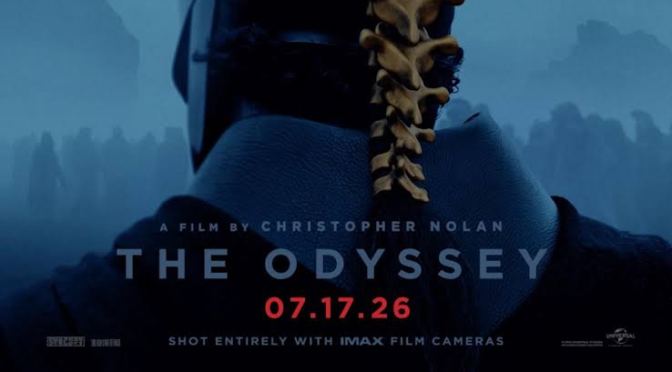
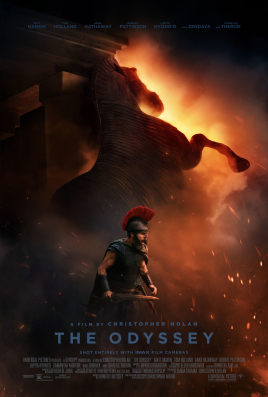
I’ve been weirdly reluctant to review Christopher Nolan’s rendition of Homer’s epic poem, The Odyssey (2026). Being honest, what I think of the film is pretty irrelevant. I mean, it’s an incredible feat of big budget filmmaking from, Sir Christopher Nolan, who remains one of the most brilliant filmmakers of the modern era. The film is likely to make more money at the box office than the debt of a small country as it sails the cinema seas. But I have to say amidst the incredible entertainment, stellar cast, jaw dropping sound and visuals and lengthy running time it does contain some dubious creative decisions, mainly where accents and casting are concerned.

I’m a big Nolan fan, but not all of his films land fully with me. My favourites remain: Memento (2000), The Prestige (2006), The Dark Knight (2008), Inception (2010) and Dunkirk (2017). Conversely, The Odyssey (2026) matches Oppenheimer (2023) for the array of Nolan’s ensemble of stars, confident and masterly direction, plus the sheer seismic scale of what his production team have committed to screen. Similarly though, while Cillian Murphy and Matt Damon give compelling performances as leaders in their field having to make tough choices to win wars, am I meant to care about these characters, who are effectively, “destroyers of worlds.”

Well, in J. Robert Oppenheimer’s case , dependent on your point of view, a huge debt of gratitude is owed to him and his team for producing a weapon to end all wars. If you ignore all the subsequent actual wars, proxy wars, invasions, conflicts and the blasted ‘Cold War’ which ensued after World War II ended, nuclear weapons have meant no other wars have occurred. So, The Odyssey (2026) is another Nolan film about war. But it’s also about duty, family, love, honour, comradeship, guilt and making the perilous journey home. Let’s be honest though, Odysseus is either a hero of Troy or a war criminal. Further, he’s a sneaky so and so – hiding in a gigantic hollow horse, and making the Trojans pull it into the city too! At least the Trojans got some cardiovascular exercise before they were all slaughtered.

Told in a non-linear fashion from shifting character perspectives, The Odyssey (2026) shows our hero and his crew facing a dangerous voyage back to Ithaca, questing the Gods, fighting nasty weather and meeting creatures like the Cyclops Polyphemus, gigantic metal knights, the Sirens, Charybdis and Scilla along the way. Furthermore, as well as focusing on Odysseus’ hazy, drugged memories, poisoned with lotus flowers by Calypso (a shrinking, Charlize Theron), we get woven historical flashes from Telemachus (Tom Holland) as he searches for his father, Penelope (Anne Hathaway) as she recounts their romantic commitments before the war, and Menelaus (Jon Bernthal), as he provides revelation on the post-war fate of his brother, King Agamemnon. I watched the stories-within-stories unfold totally enthralled and feeling like this was the Citizen Kane (1941) of epic mythical cinema.


While the action and spectacle are undeniably compelling, it’s Nolan’s gift for weaving ancient myth into gripping cinema that impresses just as much. The casting, too, is full of intriguing choices. As expected, Nolan reunites with several familiar collaborators, and Matt Damon is superb as an ageing Odysseus – a battle-scarred general worn down by years of war but still determined to get his men home. Unfortunately, a string of catastrophically bad decisions ensures the gods have other ideas. In the world of The Odyssey (2026), poor judgement is practically a death sentence, and every time the crew think they’ve caught a break, another vengeful deity or monster appears to remind them who’s really in charge. None is more delightfully capricious than the witch Circe (Samantha Morton), who transforms the crew into pigs simply because… well, she can. Morton’s wonderfully imperious performance, thankfully delivered in her own British accent amidst an ocean of American ones, is a genuine scene-stealer.

Which does raise an interesting question. Why does Tom Holland, playing Telemachus, sound American? Is he following his on-screen father? Fair enough—but then what about the suitors, led by Antinous (Robert Pattinson), who’ve spent years occupying Ithaca while pestering Penelope and circling the throne like particularly persistent estate agents? Nolan famously pursued authenticity elsewhere, filming extensively in Greece, utilizing full-sized wooden ships, combining practical effects (Jet-Skis for the killer whirlpool) with discreet CGI, even building an enormous Cyclops model for Polyphemus. Yet somehow Jon Bernthal still sounds as though he’s just wandered in from a Brooklyn deli. (I know he’s not actually from Brooklyn… but, hey, what are ya gonna do?) The quest epics I grew up with often great British Shakespearean actors in them. While Laurence Olivier and Maggie Smith are not Greek either, they paradoxically somehow seem more authentic.

Still, The Odyssey (2026) is a glorious reminder of what cinemas were built for. It is loud, proud, unapologetically epic, and although it runs for three hours, the time flies even as it threatens to blow your eardrums out. This is filmmaking on the grandest possible scale—war, monsters, storms, impossible voyages and heroes—designed to overwhelm an audience in ways no living room ever could. Nolan understands that some stories demand the biggest IMAX screen imaginable. In an age when entertainment is increasingly consumed in fragments, The Odyssey (2026) insists on total immersion. It isn’t subtle, and it isn’t trying to be. It’s spectacular cinema in the truest sense of the word.

Perhaps that’s what cinema has always been for: gathering in the dark to watch wars, death and monsters on a screen, if only to distract ourselves from the wars, death and monsters waiting for us in reality. As the philosopher Guy Debord observed, “The spectacle is not a collection of images, but a social relationship between people that is mediated by images.” And as Heraclitus famously put it, “War is the father of all things.” The Odyssey (2026) reminds us that, three thousand years later, humans are still captivated and bombarded by both.

Mark: 9.5 out of 11