Who doesn’t like a great movie death? Well, people who abhor violence and gore on the screen. But I am not one of those people. Thus, if done right in terms of combining emotional context and cinematic imagination, there’s nothing I like more than revelling or lamenting a character’s end in fine bloody fashion. Lastly, I hear you ask why no Zahler, Scorsese, Cronenberg, Miike, Peckinpah, Jackson, Fulci, Roth, Romero, Argento etc. on this list? So much death and only six make it, so please suggest any of the thousands I have missed off in the comments.
*** CONTAINS SPOILERS ***
ALIEN (1979) – “Do these eggs taste off?”
I think it may have been something Kane (John Hurt) ate or maybe something that ate him? Anyway, one of the most spectacularly surprising scenes ever still holds amazing power to this very day.
THE FURY (1978) – Separated at death!
This under-rated tele-kinetic thriller is a spiritual sequel to Carrie (1976). Adding a spy conspiracy plot to Amy Irving’s rites of passage character arc, it has a whip-cracking-pace and classic DePalma set-pieces. None more so than the explosive end of the baddie-in-black.
PSYCHO (1960) – Take a bath next time!
What more can be written about one of the most shockingly original scenes in cinema history? Not only did Hitchcock break all narrative rules killing off the main protagonist halfway through, he did it with one of the most ingenious uses of montage, music and murder ever.
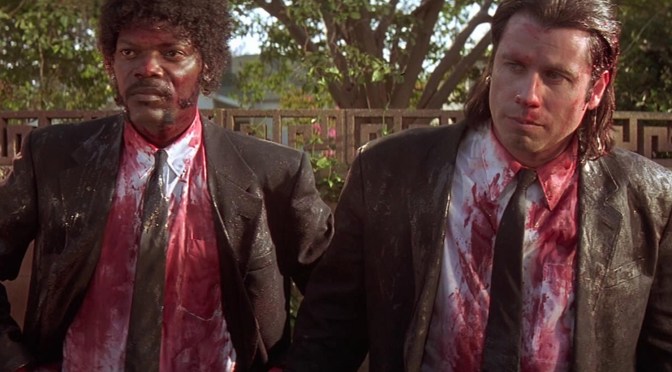
PULP FICTION (1994) – The original “face-off!”
Marvin never saw it coming. But let’s face it – none of us did!
ROBOCOP (1987) – Toxic Wasted!
Whoever designed this action scene, no doubt Paul Verhoeven had much to say, delivered one of the most excessive demises in 1980’s cinema. The vehicle crash, the toxic waste, the melting bad guy, the steam coming off his body and the final disintegration are just cinematic perfection.
WILD AT HEART (1990) – Bobby Peru loses his mind!
David Lynch’s vibrant adaptation of Barry Gifford’s romantic thriller contains many colourful characters. Willem Dafoe’s Bobby Peru is a particularly nasty piece of work and he gets his comeuppance in an incredibly visceral and disturbing way!
Created and written by: Steve Pemberton & Reece Shearsmith
Directors (Season 6): Matt Lipsey, Guillem Morales
Original Network: BBC (available on BBC Iplayer)
No. of Episodes: 6
I have written exhaustively about how brilliant this television programme is, so much so I don’t think I can add any further other than I believe it deserves regaling as TV national treasure. Just when you think Reece Shearsmith and Steve Pemberton could be running out of creative steam they prove you wrong with another superb series of Inside No. 9. If you are interested, here are prior articles I have written about it.
However, to recap, if you have never seen Inside No. 9 I urge you to do so. It is an exceptional anthology series with six stand-alone episodes per series. Individual episodes feature a whole host of different characters and amazing actors each time led by the multi-talented Pemberton and Shearsmith. As per the prior seasons, the latest one is absolutely unforgettable. It again privileges tightly woven thirty-minute short narratives, which more often than not, feature a twist in the tale. Moreover, the events usually unfold in one location with rarely more than a handful of characters. This makes the narratives feel more focussed, intense and intimate. In series 6, there is even more growth within the anthology genre and much risk-taking where style and form are concerned.
So, here are my mini-reviews of each episode from Season 6 with marks out of nine (obviously).
*** BEWARE: POTENTIAL SPOILERS ***
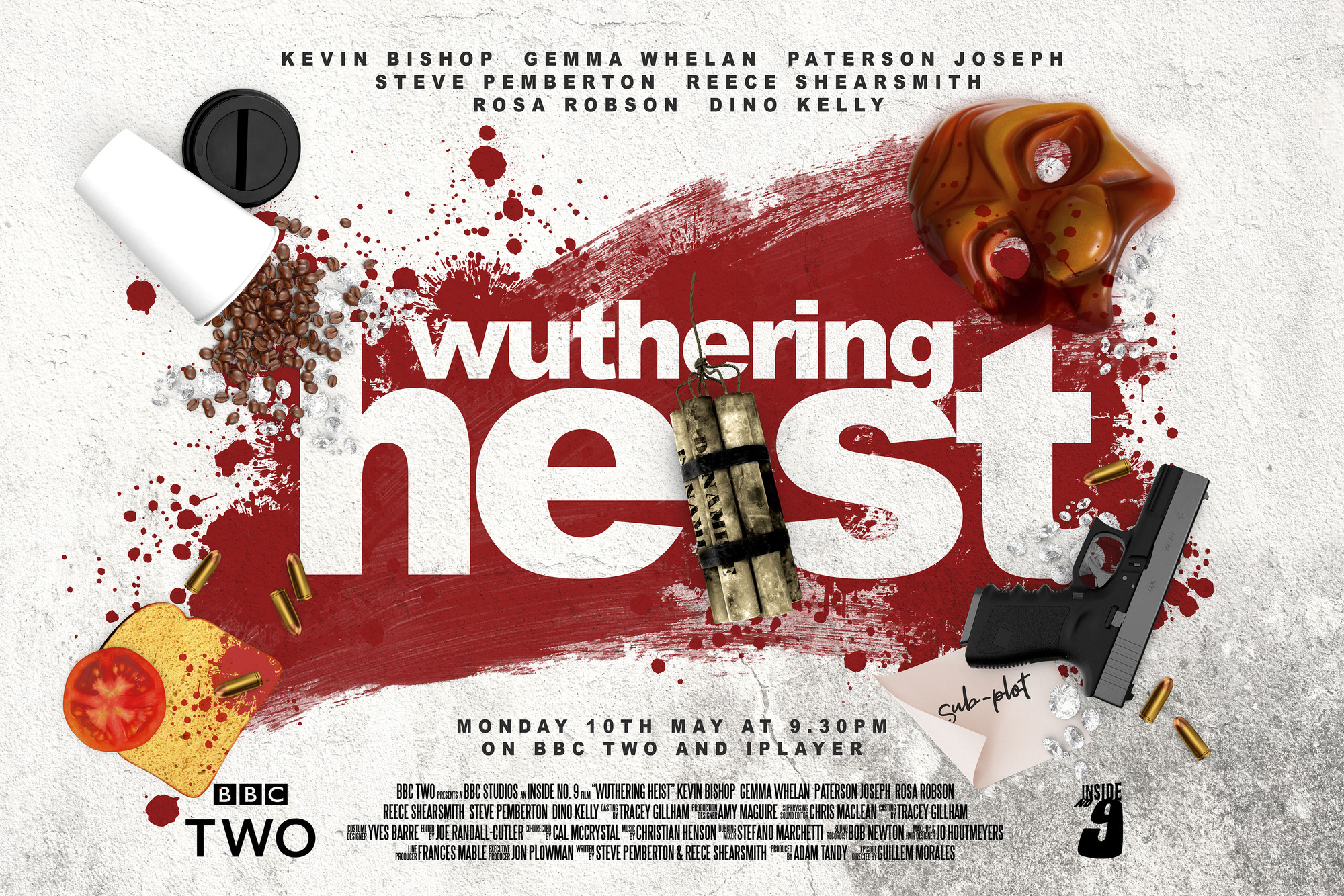
EPISODE 1: WUTHERING HEIST
Main cast: Paterson Joseph, Gemma Whelan, Kevin Bishop, Reece Shearsmith, Steve Pemberton, Rosa Robson, Dino Kelly etc.
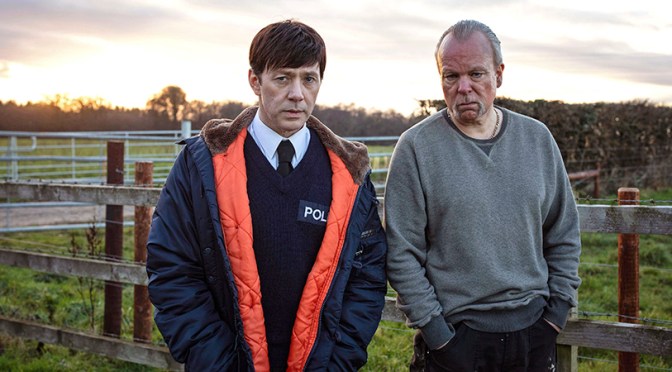
Not only are Pemberton and Shearsmith accomplished actors, writers and directors, they are also acutely aware how fans revel in their incredible work, devilishly mocking their own mythology and playing with audience expectations. They do this to dizzying impact in the puntastic opening episode, Wuthering Heist. Marrying elements from farce, crime, Commedia dell’arte and the plot of Reservoir Dogs (1992), the players wear masks, prat about and bleed over each other while attempting to pull off a diamond heist. Set in one location, a disused warehouse, Gemma Whelan is superb as the fourth-wall breaking narrator attempting to hold all the story innards together. Pretty soon though one realises that the flurry of puns, sight gags, plot contrivances and comical misunderstandings are intended as wondrous and silly fun. The lack of emotional depth is the joke here and the writers know this. Because Shearsmith and Pemberton’s script has a gag every four seconds, be it a sight jape or involve some sparky verbal dexterity. Lastly, not only do they know they are jumping the shark, but they revel in doing so during this hilarious meta-work.
Mark: 8 out of 9
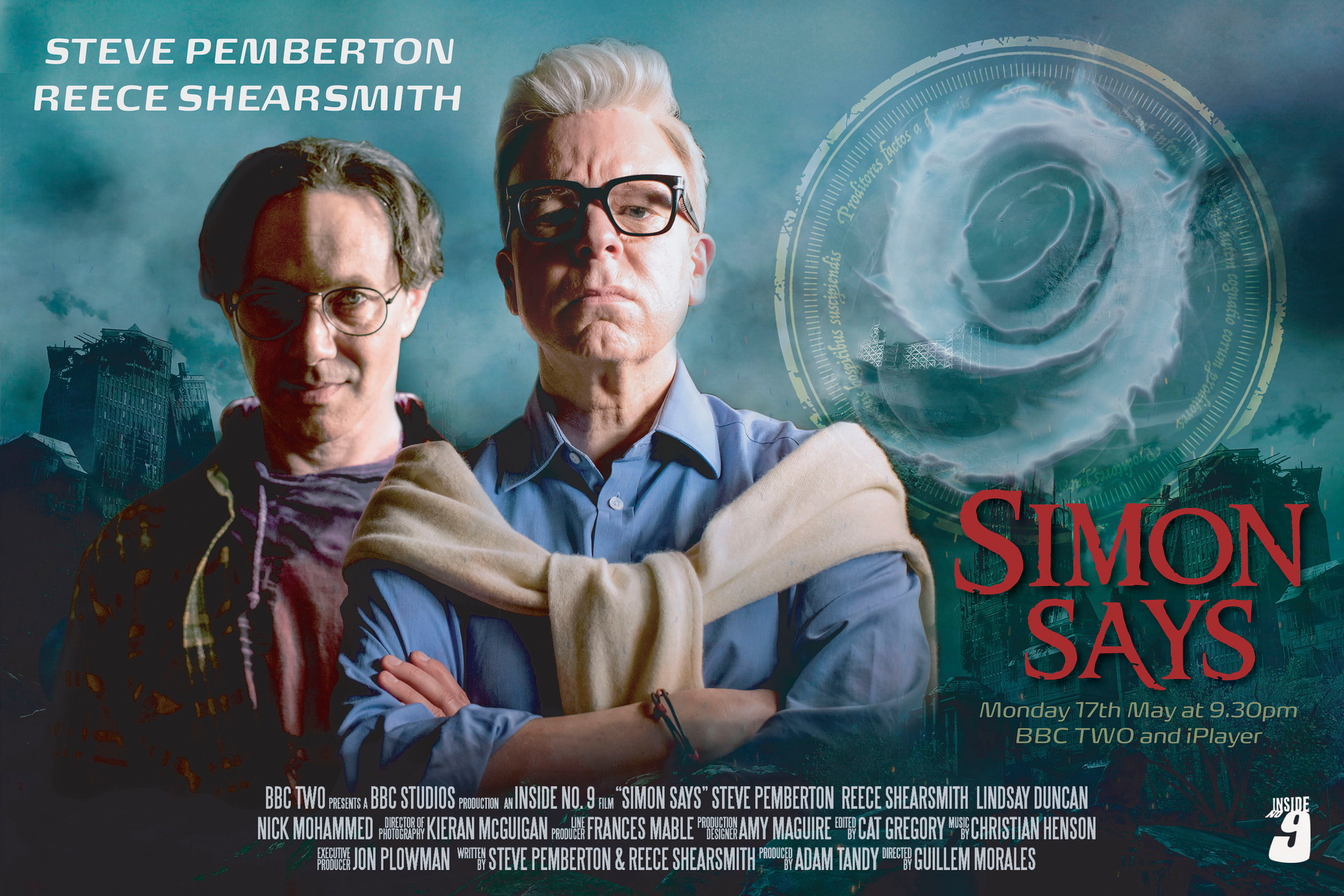
EPISODE 2: SIMON SAYS
Cast: Reece Shearsmith, Steve Pemberton, Lindsay Duncan, Nick Mohammed
Among many of the recurring pleasures of watching Inside No. 9 is wondering what the number nine will refer to. It’s been a myriad of things including: a karaoke booth, a hotel room, a train sleeper car, a dressing room, a referee’s changing room, and even a shoe. In Simon Says it’s the name of a television epic called The Ninth Circle. This show is very similar to Game of Thrones in genre and scale, and likewise has a battalion of fans across the country who feel the final series undid the majesty of the prior seasons. The episode opens with immediate mystery as Steve Pemberton’s writer, Spencer, enters his flat with blood staining his clothes and conscience. Suddenly, Simon (Reece Shearsmith), is at the door saying he has evidence Spencer has committed a serious crime. Simon, a Ninth Circle uber-fan then blackmails Spencer into, among others things, rewriting the whole of the last season of The Ninth Circle into something more fan-friendly. Managing to be both funny and suspenseful in equal measures, Pemberton and Shearsmith’s characters play cat-and-mouse expertly, throwing in several big plot twists at the end of this compelling tale.
Mark: 8 out of 9
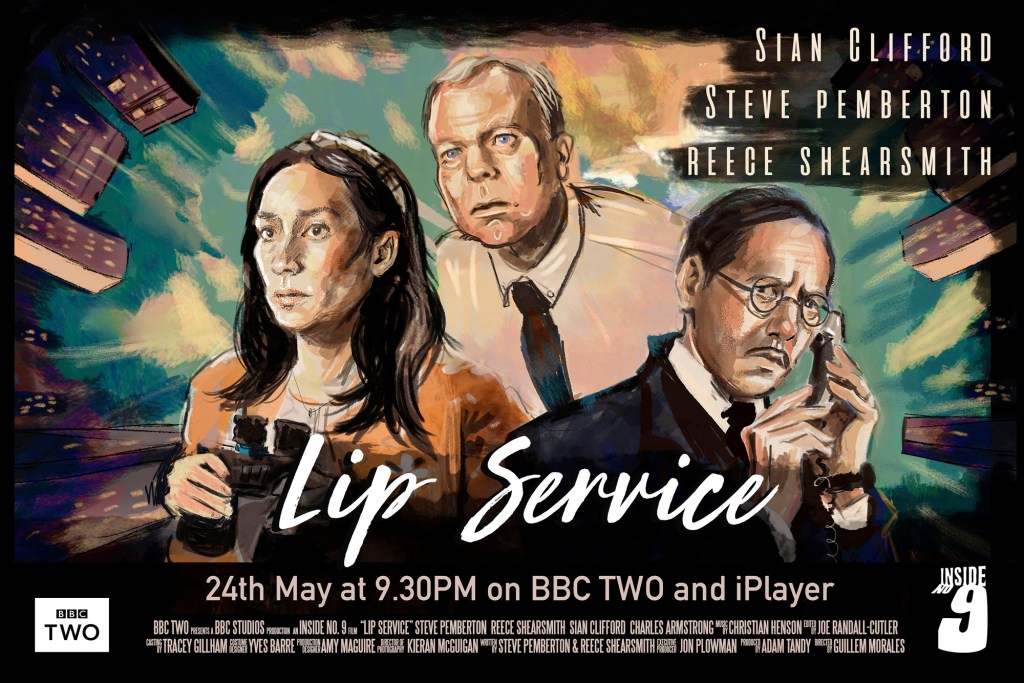
EPISODE 3: LIP SERVICE
Cast: Sian Clifford, Steve Pemberton, Reece Shearsmith
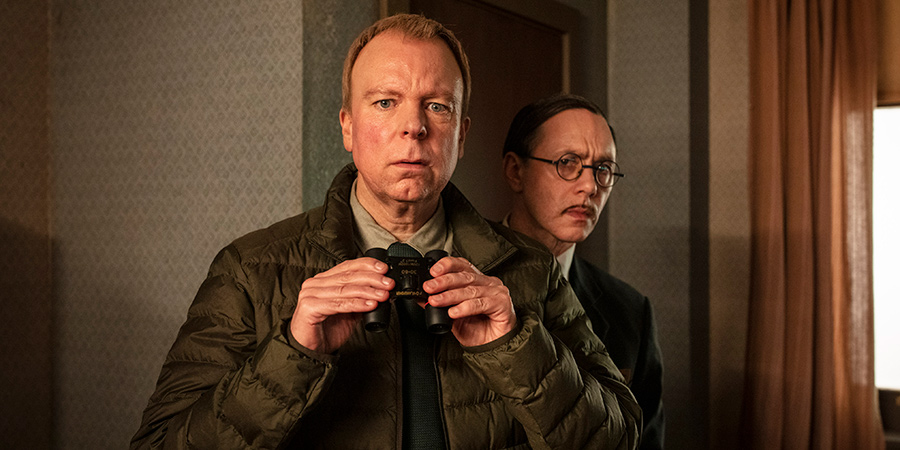
I watch some television series and films and am often struck at how much time is wasted in setting up the protagonists and story. Similarly, in unnecessarily long TV series you get either eight or ten episodes full of padding in the middle which destabilizes the momentum of the story. Nothing of the sort occurs in Inside No. 9. Stories are set-up with stylish economy and the situations immediately grab you by the throat and rarely let go. In Lip Service, Steve Pemberton’s downtrodden Felix is holed up in a hotel room waiting to liaise with a woman. But it’s not what you think. Sian Clifford’s Iris arrives and it turns out she is there to offer her services as a lip-reader. Felix suspects the woman he loves is having an affair and he requires Iris to read her and a possible lover’s lips at an adjacent hotel suite. I’ve now seen this episode three times and it truly is breathtaking. There’s empathy for Felix’s lost soul, some fine linguistic comedy, a potential romance, Clifford’s performance knocking it out of the park, Reece Shearsmith having great fun as an officious German hotel manager and THAT ending. The denouement, while totally believable, comes out of nowhere and leaves you genuinely speechless.
Mark: 8.5 out 9
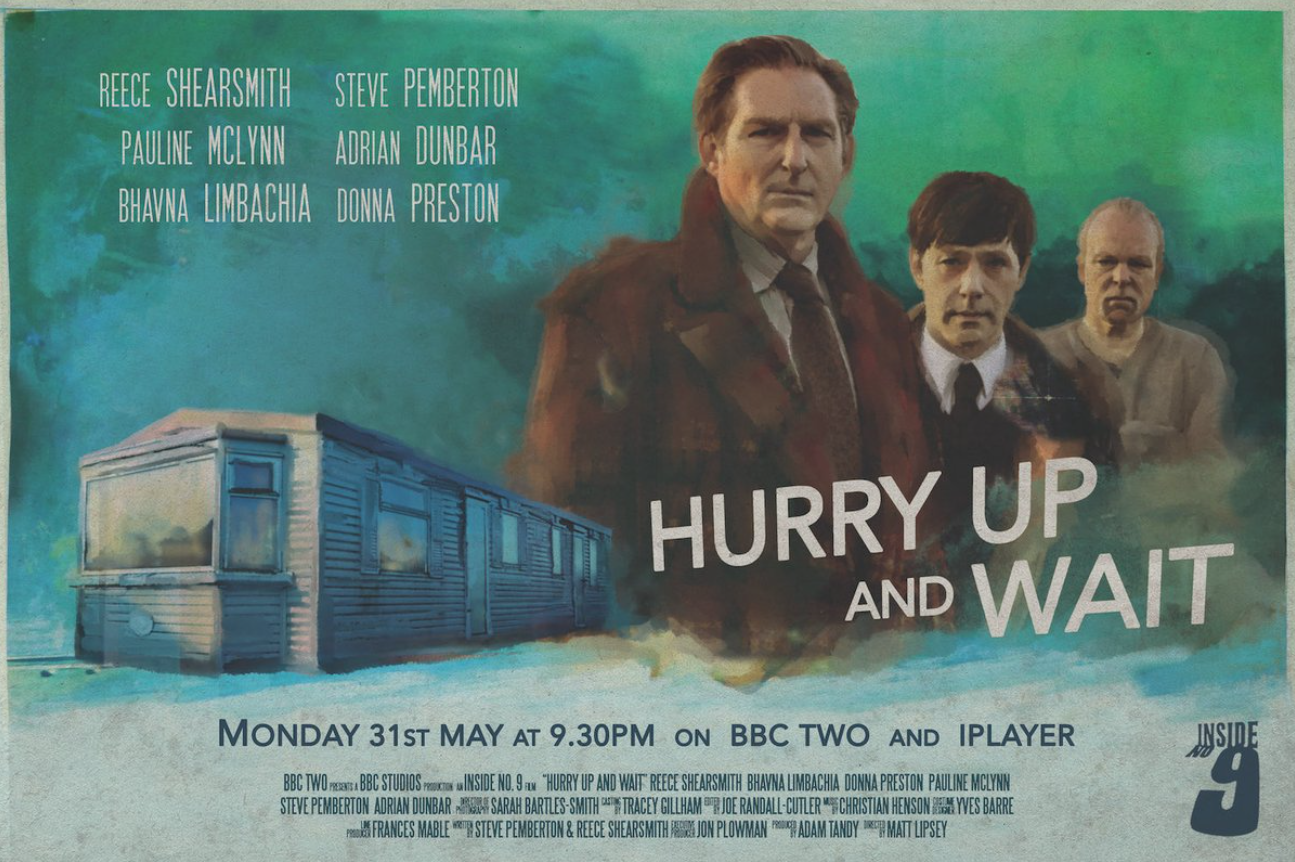
EPISODE 4: HURRY UP AND WAIT
Cast: Adrian Dunbar, Steve Pemberton, Reece Shearsmith, Donna Preston, Bhavna Limbachia, and Pauline McGlynn
Quite possibly my favourite episode of the series, Hurry Up and Wait manages to achieve that difficult juxtaposition of being meta-textual and containing some real emotional power. Because it is one thing to be self-referential and satirise the creative process, in this case the making of a television police drama starring famous actor Adrian Dunbar, but it’s quite another to build in a murder mystery and empathetic characters who you root for. While Reece Shearsmith is always excellent playing angry characters, here he portrays James, a mild-mannered actor, who has got a break playing a scene with the precious talent, Dunbar. The TV drama they are in concerns a missing child and the “green room” happens to be a static caravan owned by a working-class family who may have important information about said grisly crime. Steve Pemberton and Pauline McGlynn play the parents of immature, Beverley – the brilliant Donna Preston – adding much comic relief, but all possibly hiding a dark secret. As James learns his lines he also plays detective seemingly discovering the truth until the truly chilling ending is revealed.
Mark: 9 out of 9
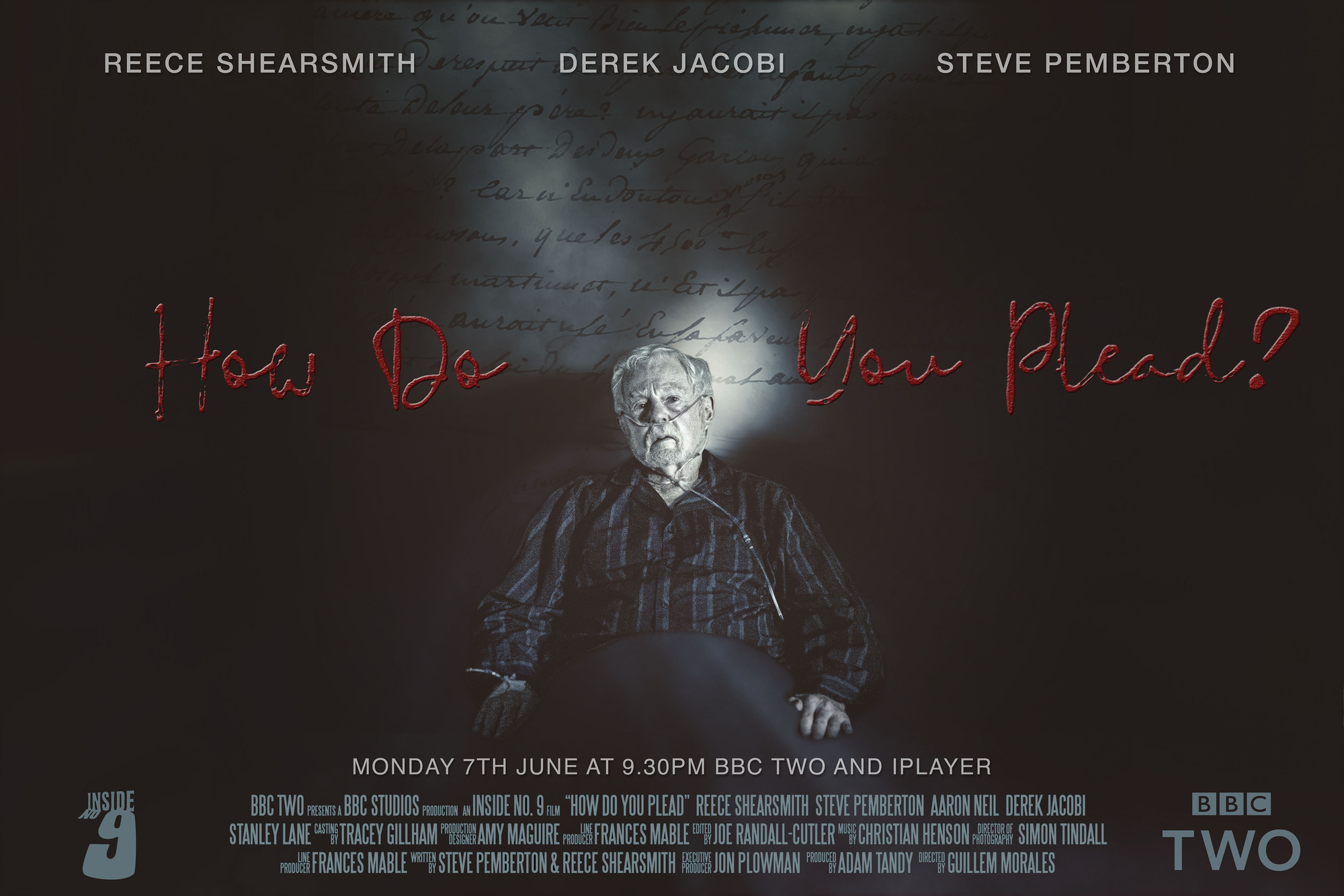
EPISODE 5: HOW DO YOU PLEAD?
Cast: Steve Pemberton, Reece Shearsmith, Derek Jacobi
Arguably the darkest tale, both in terms of the noir lighting and foreboding themes, it is difficult to discuss this tale of soul-searching guilt and justice without giving away too much of the story. Thus, I’ll talk about the actors and characters more. Derek Jacobi gives a deeply moving performance of a dying barrister who prides himself of, after an upturn in his early legal career, never losing a case in court until retirement. As he lies dying in bed, lungs heavy around his heart, he feels guilt about one case where he defended the indefensible. As he confesses his regret to Shearsmith’s cheery carer, it is soon revealed both men have sins they buried in the past which will soon come back to bite them. Watching these two fine actors spark off one another is as compelling as television drama can get, but there’s also comedy there too as Shearsmith delivers some spirited one-liners in between Jacobi’s grand screen gravitas. But where’s Pemberton I hear you ask? He’s sitting there waiting patiently in the shadows of this evocatively lit and thrilling tale.
Mark: 8 out of 9
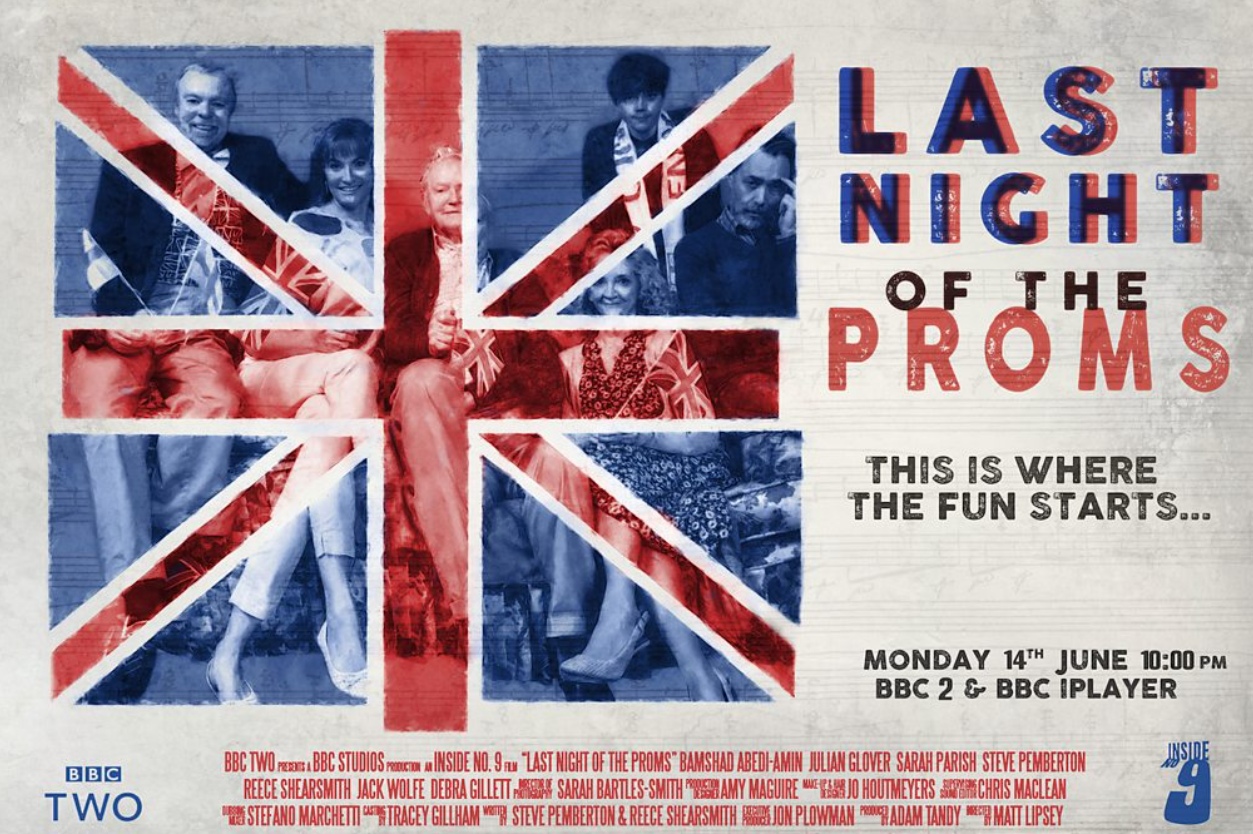
EPISODE 6: LAST NIGHT OF THE PROMS!
Cast: Steve Pemberton, Reece Shearsmith, Julian Glover, Debra Gillett, Bamshad Abedi-Amin, Sarah Parish etc.
Are you aware of the work of Dennis Potter? He was one of the finest writers in British television from the 1960’s way into the early 1990’s. His scripts were always highly erotic, political and incredibly controversial. They skewered very British and human themes and burnt great sacred cows of the church, government, family, sex and marriage on the TV barbecue, leaving charcoal remains in their stead. Potter was a genius and with Last Night of the Proms, Pemberton and Shearsmith match him for bravado in deconstructing human nature and what it means to be British. Set in a well-to-do, middle-class household, a family of three generations sit down to watch the Last of the Proms on the BBC. It’s a big traditional classical music event and cultural celebration of what it means to be British. It makes me sick! Britain isn’t great. The British are racist, imperialistic and hardy murderers, who have a history and present (fucking Brexit!) they should be ashamed of. The thought-provoking screenplay here is heavy on compelling themes, memorable imagery and striking symbolism. This is a jarring and messy episode and what it lacks in precise plotting it more than makes up for in juxtaposing horror, satire, drama, surrealism, Jesus, social commentary and comedy to rather mesmerising effect. Potter’s ghost would have watched with glee and disgust and hate and love and pity and sadness; which is much how I felt witnessing Last Night of the Proms.
THE HORROR OF IDENTITY: DOUBLE BILL FILM REVIEWS – DEERSKIN (2019) & POSSESSOR (2020)
“Be yourself; everyone else is already taken.”-Oscar Wilde
We’ve all wanted to exist outside our own skin. Or perhaps inhabit someone else’s? Or, maybe even change our own identity, both literally and psychologically. Or is that just me? At the least we have all thought about it. Even losing weight and going down the gym or giving up alcohol or changing our hairstyle is a means of basic transformation. We may make a more defiant change and leave that job we hate or break out from a negative relationship. Arguably though, personality, attitude and mental changes in one’s life are the most difficult. After all, it is incredibly difficult to change the very fabric of one’s personality or character.
We can find an alternative source of transformation in a vicarious sense through storytelling mediums such as literature, television and cinema. The horror genre especially is replete with monstrous visions of identity switches, psychotic breakdowns and physical transmogrification. I personally take great pleasure in seeing altered identities occur on the screen and am especially drawn to characters who experience mental and corporeal metamorphosis. That simply isn’t because I cannot change who I am or what I do on a daily basis, but it’s quite scary to attempt to reshape one’s existence and identity. It’s bloody hard work without much guarantee of success. Horror films, while also frightening when done well, are far more satisfying and give a more immediate hit than the grind of reality.
Two films I have seen recently both relate to mid-life crises and exhibit themes that illustrate two characters changing their appearance to bring about a shift in identity, behaviour and personality. They also show characters spiralling out of control in incredibly violent, bizarre and entertaining ways. Those films are Deerskin (2019) and Possessor (2020) and here are my reviews.
*** MAY CONTAIN SPOILERS ***
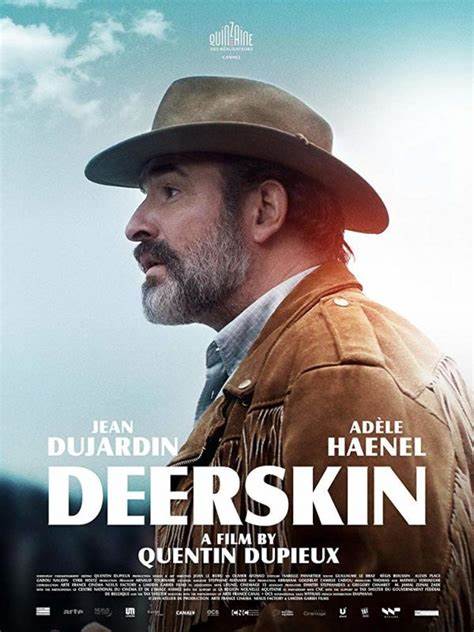
DEERSKIN (2019)
Directed and written by Quentin Dupieux
Main Cast: Jean Dujardin, Adele Haenel
Have you ever seen the film Rubber (2010)? It is a gonzo horror-comedy about a murderous-tyre called Robert killing birds and people with telekinetic powers. Beneath the insanity of the pitch there is in fact a subtextual satire on the nature of Hollywood filmmaking and an audience starved of originality; I think!It came from the mind of Quentin Dupieux, so I was intrigued that he had nabbed for a subsequent production the grand talents of Jean Dujardin and Adele Haenel for the obsidian killer comedy, Deerskin (2019).
Dujardin is Georges, a middle-aged loner, recently dumped by his wife whose only aim now it appears is to purchase a deerskin jacket. Buoyed by the confidence the jacket has given him, and armed with a video camera thrown in with the deal, George plots up at a rural hotel and befriends Adele Haenel’s bar server and enthusiastic film editor. Their budding friendship threatens to turn this into a relatively conventional love story, however, a series of twisted turns tip the story into a hilarious series of murderous set-pieces, with Georges determined to get money to make a movie, but most importantly buy deerskin trousers, hat and gloves.
The story of a middle-aged man altering his outer look in order to transform his life and fortune is a staple of Hollywood comedies and romance films. Deerskin (2019) is that kind of film on the surface. Yet when filtered through Dupieux’s iconoclastic imagination the premise is an altogether different kind of demented animal. Ultimately, it is a low-budget gem of a black comedy with some fantastic ideas and fascinating character study of a man attempting to shift skin, but falling deeper and deeper into psychopathy. It’s a wacky journey with committed performances, yet, it felt like the ending was just too sudden, as if the filmmaker either ran our of money or just wanted to screw with audience expectations right up until the final sudden frame.
MARK: 7.5 out of 11
POSSESSOR (2020)
Directed and written by Brandon Cronenberg
Main Cast: Andrea Riseborough, Christopher Abbott, Sean Bean, Tuppence Middleton etc.
Whereas Deerskin (2019) finds a literal and figurative metamorphosis when a character buys a jacket, Brandon Cronenberg’s vicious horror film, Possessor (2020), is an altogether more cerebral, violent and psychologically stunning journey. Andrea Riseborough is as intense as ever portraying an assassin named, Tasya Vox, who through some incredible technology is able to inhabit the mind and body of another individual and use them as a human puppet to commit murder. It’s a perfect set-up for the assassination agency led by Jennifer Jason Leigh’s handler, Girder. Yet such murder by scientific proxy comes at a cost to Vox’s family life and mental stability.
After a glorious opening scene featuring an astoundingly brutal stabbing, Vox attempts to reconnect with her partner and son, but finds herself becoming ever more disconnected. The pressure of taking over another individual’s identity is causing Vox to discombobulate as her mind begins to fracture. Despite this she takes the next job, a contract to kill John Parse (Sean Bean), using Christopher Abbott’s Colin Tate as a conduit. As Vox struggles with her splitting psyche, Tate himself is having personal issues also and this leads to some mind-bending and psychedelic montage scenes as the two battle within Tate’s brain. If this all sounds a bit weird, it is and it isn’t because the filmmaking is of such a high quality one believes the process. Further, the director never loses his grip on the narrative and Cronenberg gets a compelling performance from Abbott as his character confronts the invasion into his soul.
Overall, Possessor (2020) has a stunning concept at its heart but I just kept wondering how a genre filmmaker like Leigh Whannell may have handled the idea. He certainly would have made the characters more empathetic because it is so tough to warm to either Vox or Tate. Indeed, Tate’s character should have been developed more at the beginning in my view as he would have made an ideal “innocent/wrong man” type character so often used by Hitchcock. Nonetheless, Brandon Cronenberg has crafted one of the most visually impressive and shocking psychological horror films I have seen in a long time. Like Whannell’s Upgrade (2018), it contains some memorable gore and violence. It is also very intelligent as the fantastic ideas explore what it means to not only inhabit another person’s skin, but rip through their very soul.
Produced by: Cathy Konrad, Ezra Swerdlow, Cary Woods
Written by: James Mangold
Cast: Sylvester Stallone, Harvey Keitel, Ray Liotta, Robert De Niro, Peter Berg, Janeane Garofalo, Robert Patrick, Michael Rapaport, Annabella Sciorra, Noah Emmerich, Edie Falco, Deborah Harry etc.
*** CONTAINS SPOILERS ***
James Mangold is rarely mentioned as one of the best filmmakers around. Probably because he is not a flashy director or a household name. Yet, he has consistently delivered a series of extremely entertaining and inventive genre films over the past few decades. These include: Identity (2003), Girl, Interrupted (1999), Walk the Line (2005), 3:10 to Yuma (2007) and more recently, Logan (2017). His films always feature solid characterisation, compelling conflict and well-structured plots. Above all else, Mangold always attracts A-list actors to his film projects. None more so than in the urban neo-Western, Copland (1997).
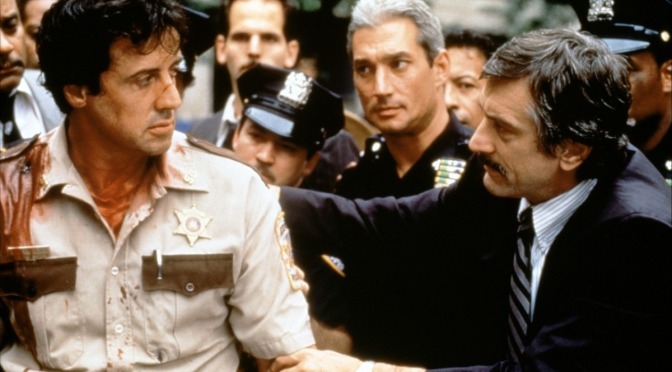
Copland (1997) is a thriller which still resonates today with themes that focus on corrupt cops conspiring to control crime from the town of Garrison, New Jersey. Drug deals, racial profiling, murder, larceny and perverting the course of justice are all in a day’s work for the crew led by Harvey Keitel’s alpha cop, Ray Donlan. The Sherriff of Garrison is half-deaf and lumpy, Freddie Heflin (Sylvester Stallone). He is so in awe of Ray and his crew that he is prepared to turn a blind eye to their crimes. However, after a series of brutal incidents which bring heat and Internal Affairs onto Freddie’s patch, he must decide whether to take a stand against the bullies.
Copland (1997) is both a fine character study of a downtrodden man finally standing up against those keeping him down, and a searing damnation of the dishonest nature of American police enforcement. Moreover, Mangold has assembled a hell of a cast. Stallone has never been better in his role of Freddie Heflin. He is a sympathetic character, but frustrating as one wills him to fight back. Robert DeNiro attempts to help him as the Internal Affairs officer, Moe Tilden. While slightly over-the-top here, DeNiro’s scenes with Stallone really sizzle. DeNiro spikes with energy as Stallone offers silent awkwardness.
Ray Liotta almost steals the show as the coked-up-copper-on-the-edge, Figgis. While Robert Patrick, unrecognisable from his performance as the T-1000, shines too as nasty piece of work, Jack Rucker. Add Keitel, Michael Rapaport, Peter Berg, Janeane Garofalo and Cathy Moriarty into the mix and you have one cracking ensemble. Interestingly, Stallone said the film hurt his career. However, he received much critical praise and I wish he’d pursued more character-heavy roles like this rather than films like the forgettable Expendables trilogy.
Produced by: Margot Robbie, Josey McNamara, Tom Ackerley, Ben Browning, Ashley Fox, Emerald Fennell, etc.
Written by: Emerald Fennell
Cast: Carey Mulligan, Bo Burnham, Alison Brie, Clancy Brown, Jennifer Coolidge, Laverne Cox, Connie Britton, etc.
Music by: Anthony Willis
Cinematography: Benjamin Kračun
*** CONTAINS MILD SPOILERS ***
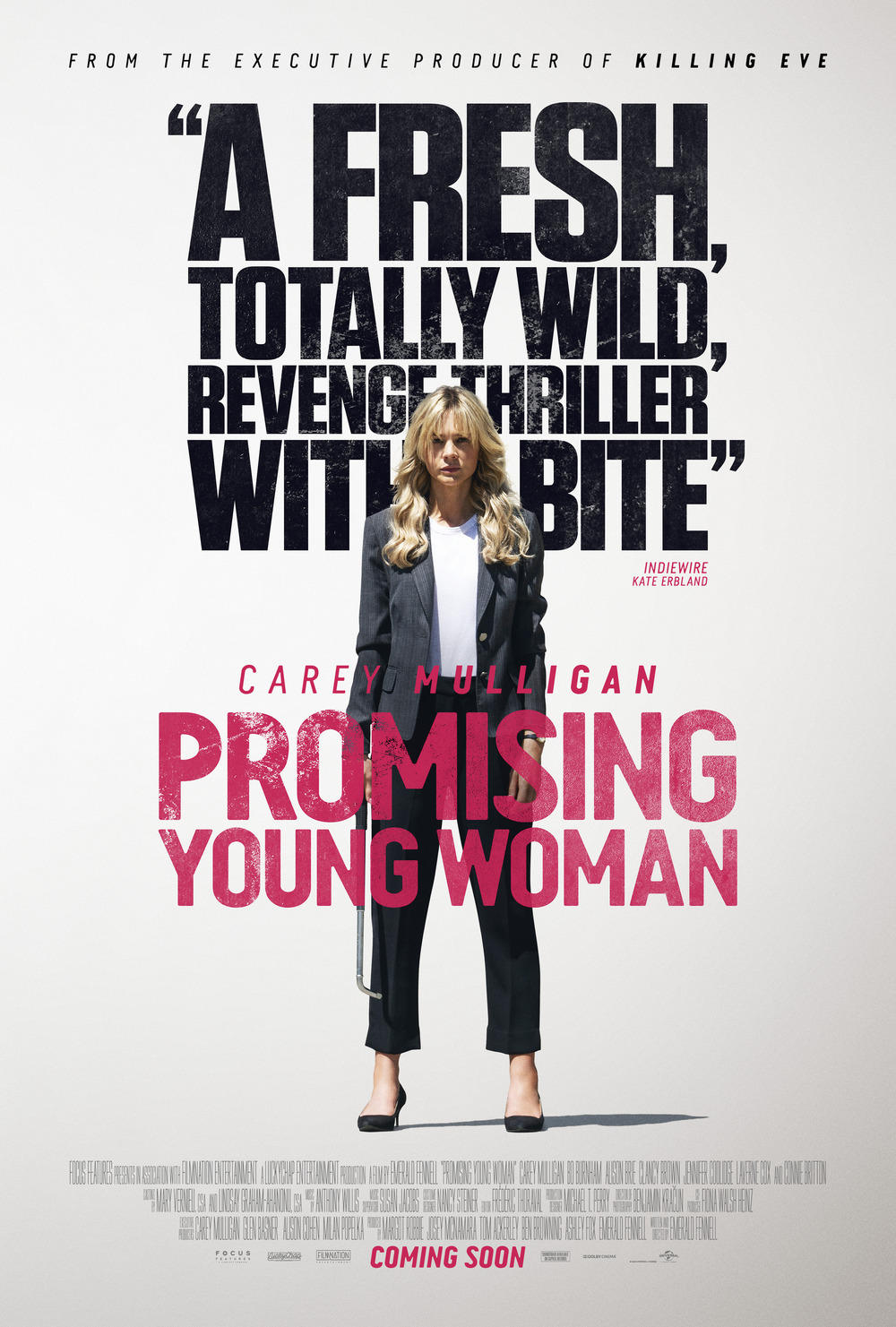
As the recent awards garnered upon Emerald Fennell’s brilliant screenplay for Promising Young Woman (2020) testify, Fennell is a major talent. She has acted in TV shows such as Call the Midwife and The Crown, as well as writing and producing the second series of Killing Eve. Not only is she an excellent actress, writer, director and producer, but she is also now an Oscar and BAFTA winner at the age of thirty-five. I am Jack’s raging envy!
But, is Promising Young Woman (2020) any good, and does it deserve these awards for best original screenplay? Well, for starters the film is not particularly original in terms of genre. It is what I would class as a B-movie revenge thriller at heart with A-list credentials. Like cinema classics such asSilence of the Lambs (1991) and Seven (1995), plus Tarantino’s Kill Bill (2003) films and the recent arthouse assassin thriller, You Were Never Really Here (2018), Promising Young Woman (2020) takes a well-worn subject matter within the crime genre and intelligently delivers a narrative experience which transcends such familiarity. Indeed, in the era of #MeToo, Fennell’s directorial debut updates and surpasses both intellectually and emotionally, similar themed films such asDeath Wish (1974) and I Spit on Your Grave (1978).
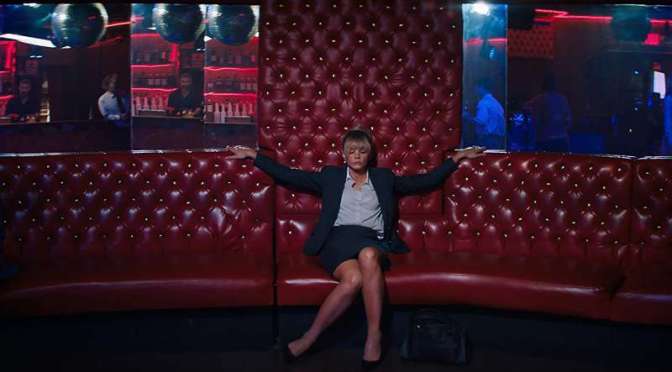
Promising Young Woman (2020) starts with one of the best opening scenes you’re likely to see in a long time. Here we meet Cassie Thomas, drunk and unable to stand, in a nightclub. Thankfully, there are “kind” gentlemen waiting to assist her, one of them being Adam Brody’s, Jerry. But instead of taking her home he takes her to his place and tries to take advantage of her inebriated state. I won’t spoil what happens next but safe to say that Cassie has other plans for Jerry. As the expertly plotted film progresses the story reveals Cassie has a long standing desire to wreak revenge on those individuals who brought tragedy to the life of her former medical school classmate and friend, Nina. A college dropout and working in a coffee shop, Cassie finds her life at a pitstop as she cannot move past what occurred to her friend. A budding romance with Bo Burnham’s charming Doctor threatens to pacify Cassie, but Fennell’s twisting plot soon puts Cassie on a deadly path right to the door of those who ruined her and, most significantly, Nina’s life.
The first three-quarters of Promising Young Woman (2020) are a witty, frightening and absolutely spellbinding exploration of negative masculine behaviour, gender politics and institutional corruption when it comes to cases of gang rape. No one is safe from Emerald Fennell’s sharpened pen and Cassie’s clever plan. As Cassie, Carey Mulligan gives a wonderfully subtle performance of a deeply pained and grieving individual. One thinks that Margot Robbie, who co-produced the film, would have made Cassie more zinging and wise-cracking. Mulligan gets it just right in terms of magnetic allure, strong personality and hidden vulnerability. It’s a shame that Fennell kind of throws Cassie under the narrative bus at the end. Don’t get me wrong the denouement ties all the previous scenes together, but I don’t think Cassie deserved such a messy fate. Unlike Fennell herself though. She deserves all the current success and that which is coming to her in the future.
Produced by: Jason Blum, Alix Madigan, Christopher Tricarico
Written by: Veena Sud
Based on: We Monsters by Marcus Seibert and Sebastian Ko
Cast: Mireille Enos, Peter Sarsgaard, Joey King, Cas Anvar, Devery Jacobs, etc.
Music by: Tamar-kali
**MAY CONTAIN SPOILERS**
It’s a difficult job writing a screenplay. There are a myriad of choices to be made and you can make good ones and also terrible ones. That’s why many film scripts go through many drafts and, in certain cases, many different writers. As a screenwriter myself I am always fascinated by the decisions that are made at script stage. More specifically, I often struggle with the choice of making characters empathetic or taking a risk and possibly making them unlikeable. I mean, why should the audience get involved in the story if the characters are loathsome or at the very least, there is little empathy for their situation? Sometimes the central premise is strong enough that the characters do not necessarily have to be likeable, as long as the conflict they face is compelling enough. But what if the characters make really bad decisions or the writer makes bad decisions for them? How long before the audience give up on the characters because they are just so stupid?
Centred on the Logan Family consisting of teenager Kayla (Joey King), her mother Rebecca (Mireille Enos) and estranged father, Jay (Peter Sarsgaard), The Lie (2018), poses the highly dramatic question: how far are you willing to go to protect your child? The film opens with Jay driving Kayla to a ballet retreat in the wintry Canadian woods. They pick up her friend Brittany (Devery Jacob), but during the trip a tragedy occurs and Kayla, after an argument, pushes Brittany off a bridge. Jay and Rebecca then decide, against all moral and legal judgement, to attempt to cover up Kayla’s crime. Clearly this decision is wrong, and their crimes are exacerbated by the fact that Kayla is either emotionally unhinged or socioopathic. Indeed, Joey King’s performance, while admirable, veers inconsistently from scene to scene. But I guess that’s the nature of her character. However, because of this and Kayla’s parents terrible life choices, I ultimately found the Logan’s very difficult to empathise with.
Based on a German film called We Monsters (2015), this Blumhouse production for Amazon takes a brilliant idea and kind of throws it away with a weak set-up and increasingly dumb decisions by the main characters. But, as I say, it’s a great premise that Hitchcock in his heyday would’ve had a ball with, such are the intriguing twists and turns present. But Hitchcock would have made you feel connected to the Logan family and given them even more powerful reasons to cover up the crime. Don’t get me wrong, I actually really enjoyed this B-movie thriller. I was able to shout at the television throughout with a high moral superiority over the characters. When the final act twist comes, and it’s a good one, I was genuinely laughing at the stupidity and tragedy of their actions. We are all prisoners of our own life choices and this entertaining but daft thriller certainly proves that.
NETFLIX FILM REVIEW: THE DEVIL ALL THE TIME (2020)
Directed by: Antonio Campos
Produced by: Jake Gyllenhaal, Riva Marker, Randall Poster, Max Born
Screenplay by: Antonio Campos, Paulo Campos
Based on: The Devil All the Time by Donald Ray Pollock
Cast: Tom Holland, Bill Skarsgård, Riley Keough, Jason Clarke, Sebastian Stan, Haley Bennett, Eliza Scanlen, Mia Wasikowska, Robert Pattinson, Harry Melling, etc.
Narrated by: Donald Ray Pollock
Music by: Danny Bensi, Saunder Jurriaans
Cinematography: Lol Crawley
***MAY CONTAIN SPOILERS***
Netflix’s latest major film release is a literary adaptation of Donald Ray Pollock’s psychological thriller, The Devil All the Time (2020). One has to believe it is a pretty faithful adaptation because the novelist himself narrates the tale to us via voiceover. Set in the years after World War II, the grim events unfold in the states of Ohio and West Virginia, respectively. While the action is not located in the deep South, the story has many of the tropes synonymous with the Southern Gothic genre, notably: religious fanaticism, explicit sexuality, flawed characters, sickening violence, poverty and human alienation.
The film, directed by Antonio Campos — who helmed the under-rated character study, Christine (2016) — starts extremely purposefully. Returning soldier, Miller Jones (Bill Skarsgard), meets a waitress on his bus journey home and eventually marries her. Both Skarsgard and Hayley Bennett, portraying his wife, inhabit empathetic characters working hard to bring up their son and saving for their own place. Jones, however, is haunted by a traumatic incident in the Pacific, and strives for solace in God and family. Indeed, the corrupt force of religious mania spreads like a cancer throughout The Devil All the Time (2020), becoming a constant threat and reason for many of the characters downfall.
Just as I was connecting with Jones’ life and becoming absorbed by Bill Skarsgard’s commanding performance, tragedy strikes and the narrative takes one of several jarring switches between characters. As such the film does not really have a strong plot, meandering from one character to another witnessing all manner of horrific events fate throws at them. Because, let’s be honest, The Devil All the Time (2020), is no way close to being a feelgood film. In fact, it revels in representing the evil acts of so-called human beings. Thus, throughout I felt a constant sense of dread and anxiety. Barely had Skarsgard misery ended and we are then introduced to the tragedies of characters portrayed by Harry Melling and Mia Wasikowska. Simultaneously, Jason Clarke and Riley Keough join the fray as two violent and sex-driven thrill-seekers. Yet, they are weakly written characters who again drive the mood of the film into pitch blackness.
The film gathers some strength and momentum n the middle act when Tom Holland’s son of Miller Jones comes of age. By focussing on his story we get more drama and emotion, especially where his relationship with his step-sister (Eliza Scanlan) is concerned. Holland gives an excellent performance as the young man attempting to make his way in this filthy and ungodly world. Similarly, Robert Pattinson’s oily Preacher oozes repugnant charm in another sterling piece of acting work. Alas, Sebastian Stan’s Sheriff and Douglas Hodge’s rural gangster are given short shrift in another crime subplot which goes nowhere.
Overall, Antonio Campos delivers an extremely solid thriller from an acting and thematic standpoint. Unfortunately, the fragmented screenplay should arguably have been given a more committed plotline. Of course, it has most likely shadowed the structure of the source novel so therein lies the rub. Having said that, despite the structural shortcomings, there are many shocking and violent set-pieces to satisfy horror fans. Ultimately though, The Devil All the Time (2020) lacks redemption, catharsis and even some decent suspense. By the end we are given few characters to care about and delivered the pessimistic vision that life is a belt of misery. Even a suggestion of sugar helps the poison go down and this film offers very little in the way of sweetness or light.
Based on: Memories of Murder (play) by Kim Kwang-rim
Cast: Song Kang-ho, Kim Sang-kyung, Kim Roi-ha, Park Hae-il, Byun Hee-bong etc.
Music by: Tarō Iwashiro
Cinematography: Kim Hyung-koo
***MAY CONTAIN SPOILERS***
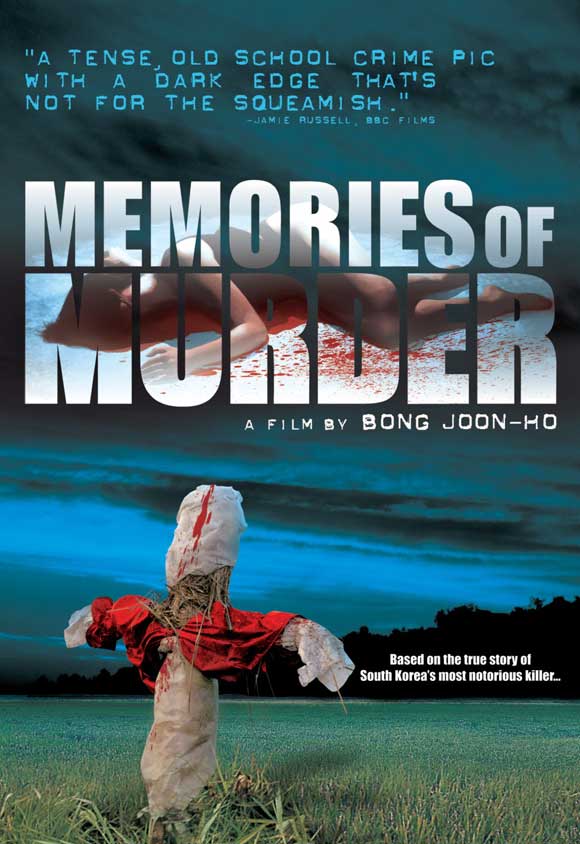
In this current COVID-19 climate it’s going to take a big film release or an extremely excellent film to get me to go to the cinema. Not only because of the underlying health risks, but also because I think social distancing is a societal duty to be respected. Moreover, it is better to be safe than sorry where health and wealth are concerned. If I was to come in contact with an individual or group who possibly had the virus then having to self-isolate would leave me in a tricky place where work is concerned. Of course, the number of new releases have been stymied too. Yet, despite these factors and armed with our face coverings and hand sanitizers, myself and my wife, ventured to Clapham Picturehouse to watch a re-released genre classic, namely Bong-Joon-ho’s, MEMORIES OF MURDER (2003).
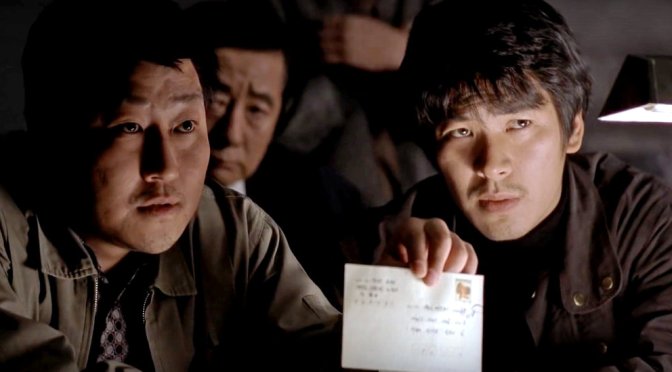
Interestingly, it made me long for the days of the proper independent repertory films that I frequented in the late 1980’s and 1990’s like the Scala, Prince Charles and Everyman. There you could catch old, forgotten and classic movies on re-release, often on double bills or late- night line-ups. To be fair some of these cinemas are still around, but unfortunately not as many as twenty years ago. Unsurprisingly, because of the commercial and critical success of PARASITE (2019), Bong Joon-ho’s back catalogue has been plundered, hence the re-release of MEMORIES OF MURDER (2003). This truly brilliant police procedural thriller is loosely based on the true story of Korea’s first serial murders which took place between 1986 and 1991 in the Gyeonggi Province. The story follows the police department as they pursue a number of leads and suspects over a number of years. However, the killer proves incredibly cunning and, as in the David Fincher helmed crime classic, ZODIAC (2007), it becomes an almost impossible case to crack.
Song Kang-ho and Kim Sang-kyung star as Detective Park and Detective Seo, respectively. They are two very different cops striving to solve the murders of young women who usually wear red. Esteemed Korean actor Song Kang-ho portrays the more instinctive and emotional detective, while Kim Sang-kyung’s cop relies on thorough investigation and deduction. Kang-ho especially proves what a wonderfully natural talent he is and his character’s marital relationship provides warmth amidst the bloody horror of the serial killings. Indeed, it made a change to see a police officer who wasn’t an alcoholic, divorced or utterly cynical.
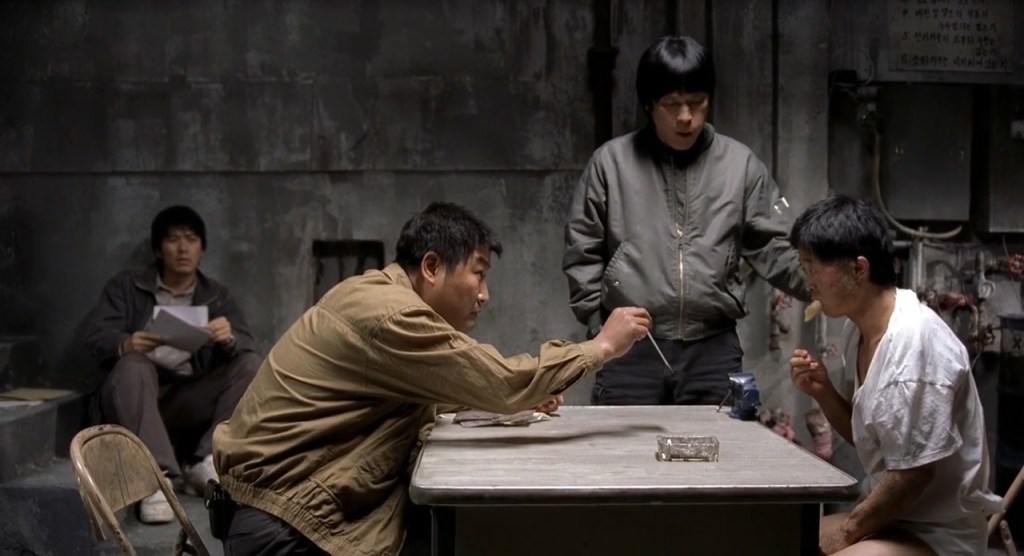
Allied to a plot that over many narrative years is full of twists and turns, the themes and characters within MEMORIES OF MURDER (2003) are what makes it a cut above the standard police drama. While the lead detectives are mostly empathetic, the screenplay finds time to critique their unscrupulous interviewing techniques of suspects. It is only when Detective Seo applies proper forensics and logic do they begin to make headway in the case. Seo especially becomes obsessed with catching this venal murderer of young women. So much so it pushes him to breaking point.
MEMORIES OF MURDER (2003) also presents an early example of the intelligent and precise directorial style of Bong Joon-ho. His framing of multiple actors in the same shot, overlapping dialogue and the exquisite cinematographic representations of both rural and urban landscapes make this an aesthetically pleasing film to experience. Joon-ho loves scenes in the rain too and these add to the film’s atmosphere. Lastly, while it deals with crimes that are dark and shocking, there is also much quirky humour within the excellent screenplay. The bickering between the exasperated police Captain his team provides laughs that spike the grim mood the murders bring. Thus, overall this is very much a film worth leaving the house and going to the cinema for.
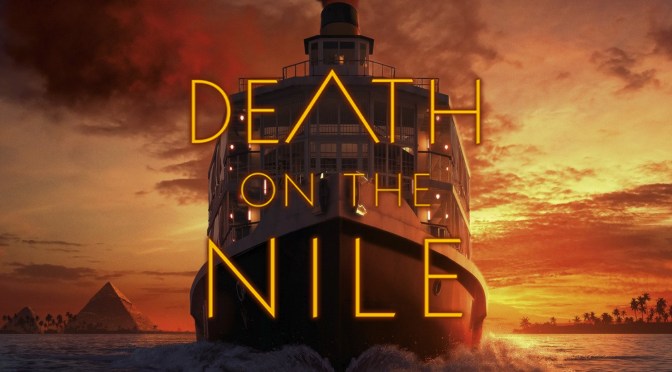
FIVE REASONS THIS COULD BE GOOD – DEATH ON THE NILE (2020)
Directed by: Kenneth Branagh
Produced by: Kenneth Branagh, Judy Hofflund, Simon Kinberg, Ridley Scott, Mark Gordon, Kevin J. Walsh
Screenplay by: Michael Green
Based on: Death on the Nile by Agatha Christie
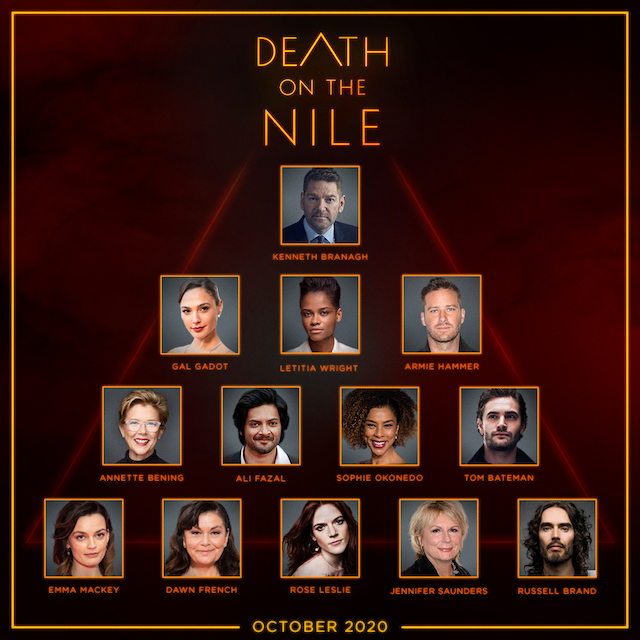
Cast: Tom Bateman, Annette Bening, Kenneth Branagh, Russell Brand, Ali Fazal, Dawn French, Gal Gadot, Armie Hammer, Rose Leslie, Emma Mackey, Sophie Okonedo, Jennifer Saunders, Letitia Wright
UK Release Date: 23/10/2020
The cinemas are now open again and while the reason for their closure was understandable, it’s great to look forward to seeing some of the more grand and expensive films on the giant screen. I have very much made the most of watching loads of films and television programmes at home via streaming and digital channels, yet it was a pleasure to be back at the cinema this weekend watching TENET (2020). Kenneth Branagh features heavily in Christopher Nolan’s latest high concept brain-twister. Moreover, he also has an updated version of DEATH ON THE NILE (2020) being released soon. Thus, as I’m such a sucker for these old-fashioned murder mysteries I thought I’d give five reasons why it could be good.
CAST
Following the box office success of MURDER ON THE ORIENT EXPRESS (2017), it comes as no surprise there is a sequel to the classy Hercule Poirot train-set murder mystery. Once again Kenneth Branagh directs and stars as the Belgian detective and he has also assembled a wonderful cast of A-listers and solid character actors within the ensemble. I’m especially pleased to see Annette Bening lend some gravitas to the glamour and whether GAME OF THRONES’ Rose Leslie can break out into bigger film roles. Gal Gadot and Letitia Wright leave behind recent comic book films for an altogether more period setting. Lastly, who doesn’t want to see French and Saunders reunited on screen.
NOSTALGIA & FAMILIARITY
I have always loved Agatha Christie’s work be it in literary, radio, television or film mediums. DEATH ON THE NILE (2020) is a favourite of mine, especially as the 1978 version was the first Christie adaptation I saw at the cinema. I must have seen that particular film about twenty times over the years. So much so I know the plot backwards. I guess the nostalgia for watching a film as a child and familiarity with the story create a kind of comfort film. Thus, another positive reason why I am looking forward to the new adaptation is how they recreate a familiar classic.
LOCATIONS
As I established in a recent film review, I for one have a massive fear of flying. Thus, watching films set in exotic locations can be a way for me to experience vicariously places I would not normally visit. Seeing as the film is set on a boat travelling up the Nile, there is no doubt there will be some incredible sights to see while Poirot tries to solve a devilishly complex crime.
MYSTERY
Agatha Christie truly knows how to create a masterful detective plot. In fact, she was a genius. What we now consider to be a cliched genre, the “whodunnit”, was practically invented and reinvented by Christie and this story has a particularly brilliant plot and ending. While the genre is familiar, I enjoy watching all the players in one location conflicting with each other. Of course, Poirot is an eccentric and brilliant detective, so even though I know he will solve the crime and how, paradoxically I still love the mystery of it all.
TRAILER
I have now watched the trailer a few times and it shone on the big screen at the weekend. It also does a great job of establishing the cast, characters and setting without giving away any of the plot. The Depeche Mode track really resonates with the grand voiceover, building to a crescendo where we get to meet Kenneth Branagh as the inimitable Poirot. Anyway, here it is!
For my final slew of Shudder horror film reviews (with one television series write-up to come), I have combined a series of films which contain murder and killers central to the plot. I mean, most horror films feature these types of terrible situations, but the following movies are grounded very much in reality. Ghosts and ghouls and zombies and monsters are to the fore of the horror genre, however, for me, the shocking violence of human beings can often be far more scary on screen. Thus, these films feature assassins, revengers and serial killers which reflect the blackest part of the human soul. Marks out of eleven, with best rated first. You know the drill.
**MAY CONTAIN SPOILERS**
KILLER JOE (2011) – DIRECTED BY WILLIAM FREIDKIN
Tracy Letts’ incendiary, critically acclaimed dark comedy play was adapted by himself and directed brilliantly by genre auteur, William Friedkin. Matthew McConaughey arguably relaunched his serious acting career as the eponymous and corrupt lawman, Joe Cooper, who takes a fancy to Juno Temple’s southern Lolita-type. Killer Joe (2011) is full of bleakly biting noir dialogue and some amazing performances, especially from McConaughey and Temple. Playing out like the Coen Brothers doing a horror film, the memorably disturbing ending almost put me off chicken for life. This is a true cult classic from a director, screenwriter and cast, all at the top of their game.
Mark: 9 out of 11
A PERFECT GETAWAY (2009) – DIRECTED BY: DAVID TWOHY
Kind of like Agatha Christie meets holiday show Wish You Were Here, I had a lot of fun with David Twohy’s clever-clever-meta-thriller. Steve Zahn and Milla Jovovich are the honeymooners in Hawaii who find death in paradise, as a pair of serial killers are murdering holidaymakers. Having helped Vin Diesel to stardom in Pitch Black (2000), Twohy tries again with the laconic and likeable Timothy Olyphant as Macgyver-type island tourist. I’m a big Olyphant fan and he steals the show here in this nifty, twisting cat-and-mouse plot, however, the actor who would go onto massive things in the film world in none other than Chris Hemsworth. Thor pops up here portraying a tattooed-beefcake-with-an-attitude. Anyway, loads of actions, twists, pace and lovely locations make this film worth a visit.
Mark: 8 out of 11
WILDERNESS (2006) – DIRECTED BY: M.J. BASSETT
An efficient low-budget British thriller with a youngish cast led by charismatic actor, Toby Kebbell. Here, Sean Pertwee, takes his gang of youth offenders into the woods for a team-building exercise, only to find the team being destroyed by an unknown assailant. There are some decent thrills and kills throughout, but Christopher Smith’s film Severance (2006) did this idea much better. Still, it rattles along at a fine pace and Kebbell again demonstrates why Hollywood came knocking for his acting talent.
Mark: 7 out of 11
SMALLTOWN KILLERS (2017) – DIRECTED BY OLE BORNEDAL
Two Danish builders are having marital difficulties and one night when drunk, accidentally hire a Russian hitman on the ‘Dark Web’ to kill their wives. Mildly amusing, this comedic thriller is predictable with some haphazard plotting. Lastly, while the warring couples are pretty unlikeable characters, Marcin Dorocinski and Gwen Taylor, as the two hired assassins, provide some belly laughs with their hilarious performances.
Mark: 6.5 out of 11
WHITE OF THE EYE (1987) – DIRECTED BY DONALD CAMMELL
David Keith and Cathy Moriarty star in this serial-killer tale adapted from Margaret Tracy’s novel, Mrs White. Their relationship is put to the test when he becomes prime suspect in a series of murders. Cammell gets compelling performances from the leads but mishandles the plotting as the sudden twist near the end felt mildly ridiculous and contrived.







 The Cinema Fix presents