Produced by Ali Abbasi, Louis Tisné, Ruth Treacy, Julianne Forde, Jacob Jarek, Daniel Bekerman
Main cast: Sebastian Stan, Jeremy Strong, Martin Donovan and Maria Bakalova, etc.
Cinematography Kasper Tuxen
*** CONTAINS SPOILERS ***
Ali Abbasi’s previous directed films such as Holy Spider (2022) and Border (2018) are brilliant and powerful films centered around stories relating to serial killers and trolls, respectively. So, I had to pause for a moment and ask: what attracted him to a film about businessman, reality TV personality and now, President of the USA, Donald Trump?
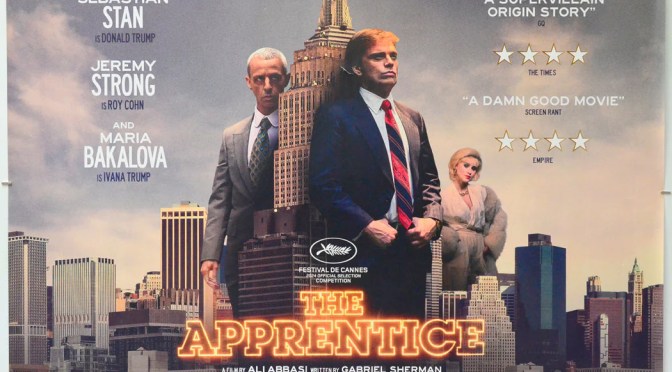
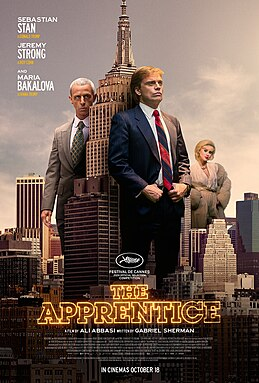
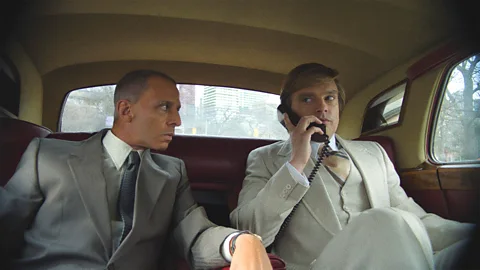
Abbasi’s The Apprentice (2024) is less a deep psychological excavation than a chillingly slick chronicle of power corrupted at its root. Framed like a “greatest hits” package of Donald Trump’s (Sebastian Stan) formative years, the film charts his transformation from brash outer-borough real estate hustler into the ruthless media manipulator and future political juggernaut — all under the tutelage of the infamous Roy Cohn (Jeremy Strong) and his three essential rules of business and life.
Sebastian Stan delivers a startling performance as a young Trump, capturing the man’s bravado, insecurity, and relentless hunger for dominance without slipping into caricature. Opposite him, Jeremy Strong is mesmerizing and serpentine as Cohn — a master manipulator who recognizes, nurtures, and ultimately weaponizes Trump’s worst instincts. Together, they form a grotesquely compelling duo: two charismatic monsters locked in a dance of mutual ambition and moral decay.
While the film occasionally skims across the surface of its characters — opting for scenes that feel like historical checkpoints rather than dramatic revelations — it compensates with a queasy momentum and sharp stylistic flair. It also looks great with the film and video stock reflecting the era of which it is set. Overall, this isn’t a biopic searching for sympathy or redemption; it’s a portrait of the making of one of the most divisive figures in modern history, seen through the lens of a mentor whose own legacy drips with cynicism and menace. In conclusion: The Apprentice (2024) may not dig as deep as it could, but what it shows is enough: monsters aren’t simply born — they’re coached.
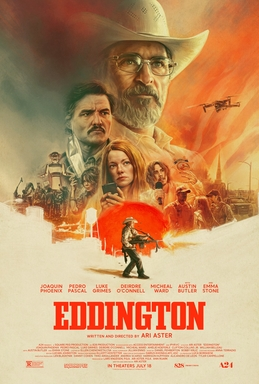
Main Cast: Joaquin Phoenix, Pedro Pascal, Luke Grimes, Deirdre O’Connell, Micheal Ward, Austin Butler and Emma Stone. Cinematography by Darius Khondji
*** MAY CONTAIN SPOILERS ***
Ari Aster’s first two horror films, Hereditary (2018) and Midsommar (2019) were rightly critically acclaimed and delivered at the box office too. His third film Beau is Afraid (2023) was a flop when compared and in my view not surprising. The film was arguably, depending on your view, a hilarious, risk-taking arthouse tragi-comedy or a self-indulgent act of egregious career self-sabotage. Safe to say I did not enjoy it, so approached the latest A24-produced film of Aster’s,Eddington (2025), with emotional caution.
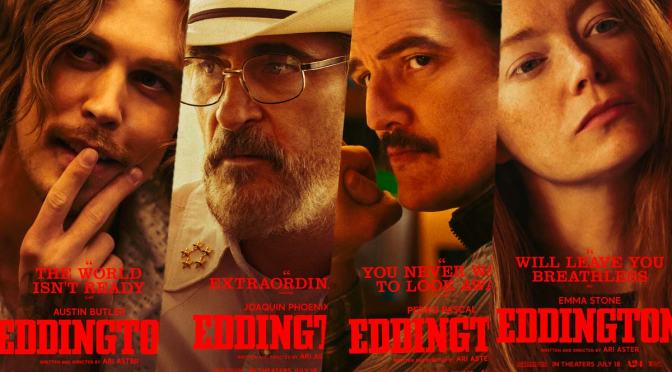
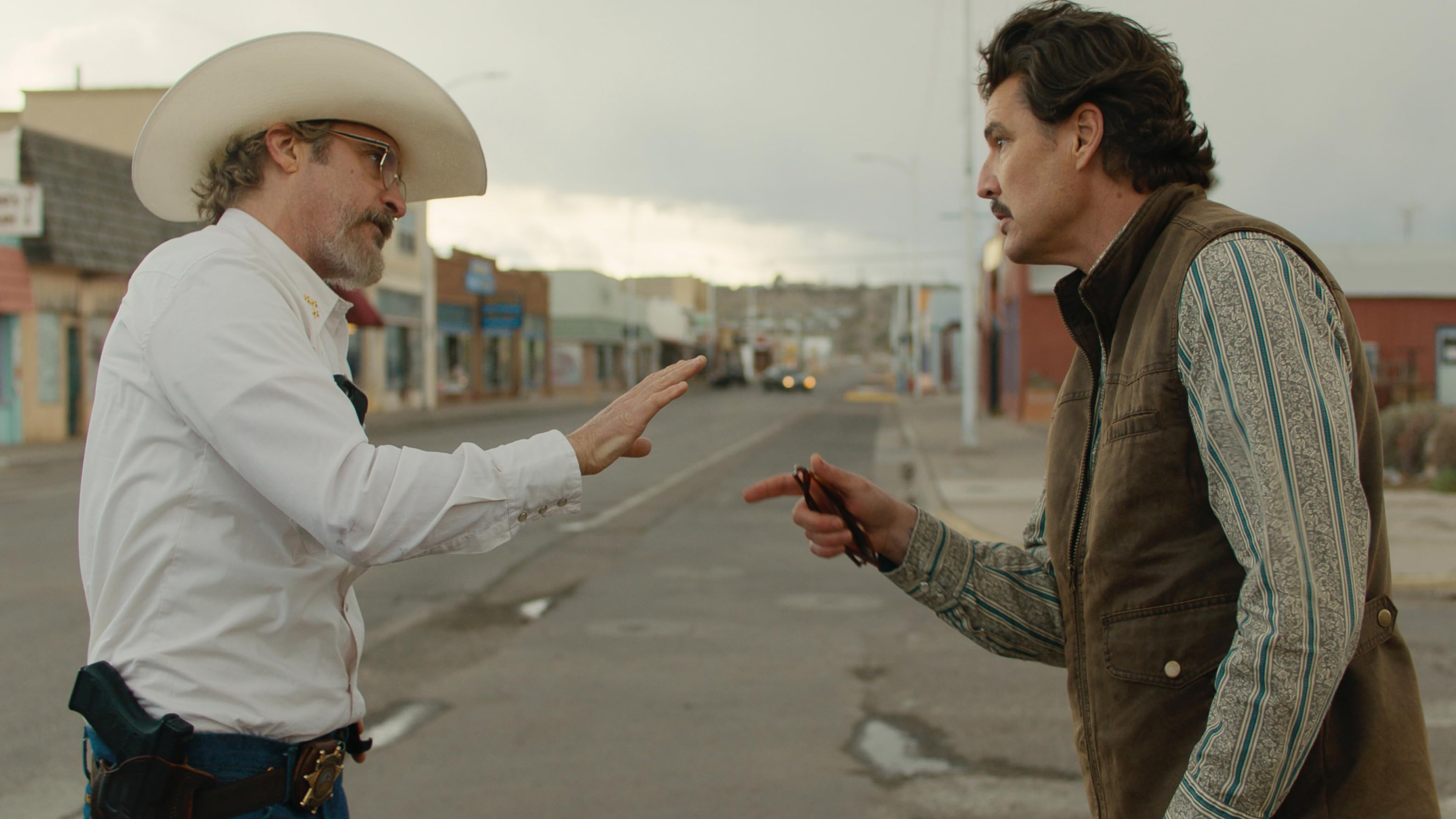
Thankfully Aster’s screenplay, characters and all-round production of Eddington (2025), are far more accessible and focused than his third feature. Pedro Pascal and Joaquin Phoenix anchor Eddington (2025) superbly, as Aster delivers a blistering small-town allegory that uses a public health crisis as the spark for something far larger. What begins with Mayor Ted Garcia (Pascal) dutifully following the Governor’s lockdown orders quickly escalates when Sheriff Joe Cross (Phoenix) refuses to comply and runs for Mayor himself. This casts the town and people into a conflict that mirrors America’s own political division.
Phoenix brings his trademark intensity to Sheriff Cross, whose defiance feels equal parts principled and unhinged, while Pascal’s Mayor, revealed to be a corporate puppet, balances him as a leader losing grip on his authority. Thus, Eddington (2025) is a powerful film whose strength lies in the performances and a brave, intelligent screenplay which asks many questions. The main issues I had were under-developed character arcs for Emma Stone’s and Austin Butler’s characters. Further, as in previous films Aster relies heavily on left-field plot turns, which go more for shock, rather than understandable character development. Indeed, the final act Western-style shootout, while incredibly exciting, seems out-of-sync with the thoughtful build-up and drama established in the first hour.
Ultimately, Director Ari Aster resists turning Eddington (2025) into just a COVID-era-morality tale; instead, the film confidently threads together a powerful mix of left and right-wing US politics, toxic masculinity, historical sexual abuse, conspiracy and alternative theories, cultish religious fervour, white saviour virtue-signalling, homegrown terrorism, algorithmic influence of social media, and the creeping threat of corporate greed. Each theme and subplot fold back into the central question: who really controls the narrative in modern America or is it a nation spiraling out of control toward inevitable civil war? The result is a tense, unsettling portrait of a town—and a country—at war with itself.
Written by Moritz Binder, Tim Fehlbaum and Alex David
Produced by Philipp Trauer, Thomas Wöbke, Tim Fehlbaum, Sean Penn, John Ira Palmer and John Wildermuth
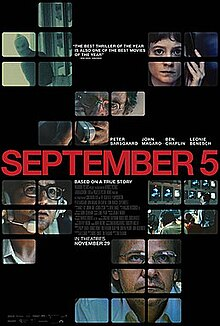
Main cast: Peter Sarsgaard, John Magaro, Ben Chaplin, Leonie Benesch, Jim Mckay (archival footage), Zinedine Soualem, etc.
Cinematography by Markus Förderer
Edited by Hansjörg Weißbrich
*** MAY CONTAIN SPOILERS ***
The events of September 5th, 1972, during the Munich Olympics are deeply connected to the tragic and harrowing story of the attack by the Palestinian group ‘Black September’, which targeted the Israeli Olympic team. This day is crucial in understanding the impact of the attack, as it marks the beginning of what became known as the ‘Munich Massacre’. The documentary One Day in September (2000) directed by Kevin Macdonald, offered a detailed account of the events providing chilling footage, interviews with survivors, and insights from those who witnessed the attack and as a moment that deeply altered the course of history, influencing global politics, the perception of terrorism, and the nature of security at international events.
Steven Spielberg’s fictionalised film Munich (2005) dramatized the aftermath of the ‘Munich Massacre’, focusing on Israel’s covert response to the attack. The film based on the book Vengeance by George Jonas, told the story of a team of Israeli agents tasked with assassinating those involved in the planning of the massacre. The plot of Munich (2005) unfolds as these agents track down and kill individuals connected to ‘Black September’. The film, criticized for a series of inaccuracies, portrayed the moral complexities and psychological toll of vengeance, showing the personal conflict faced by the agents as they carry out their mission. Now, covering the same event, we have September 5th (2024), a drama-documentary that snapshots the conflict from the perspective of the ABC Sports crew and their coverage of the events.
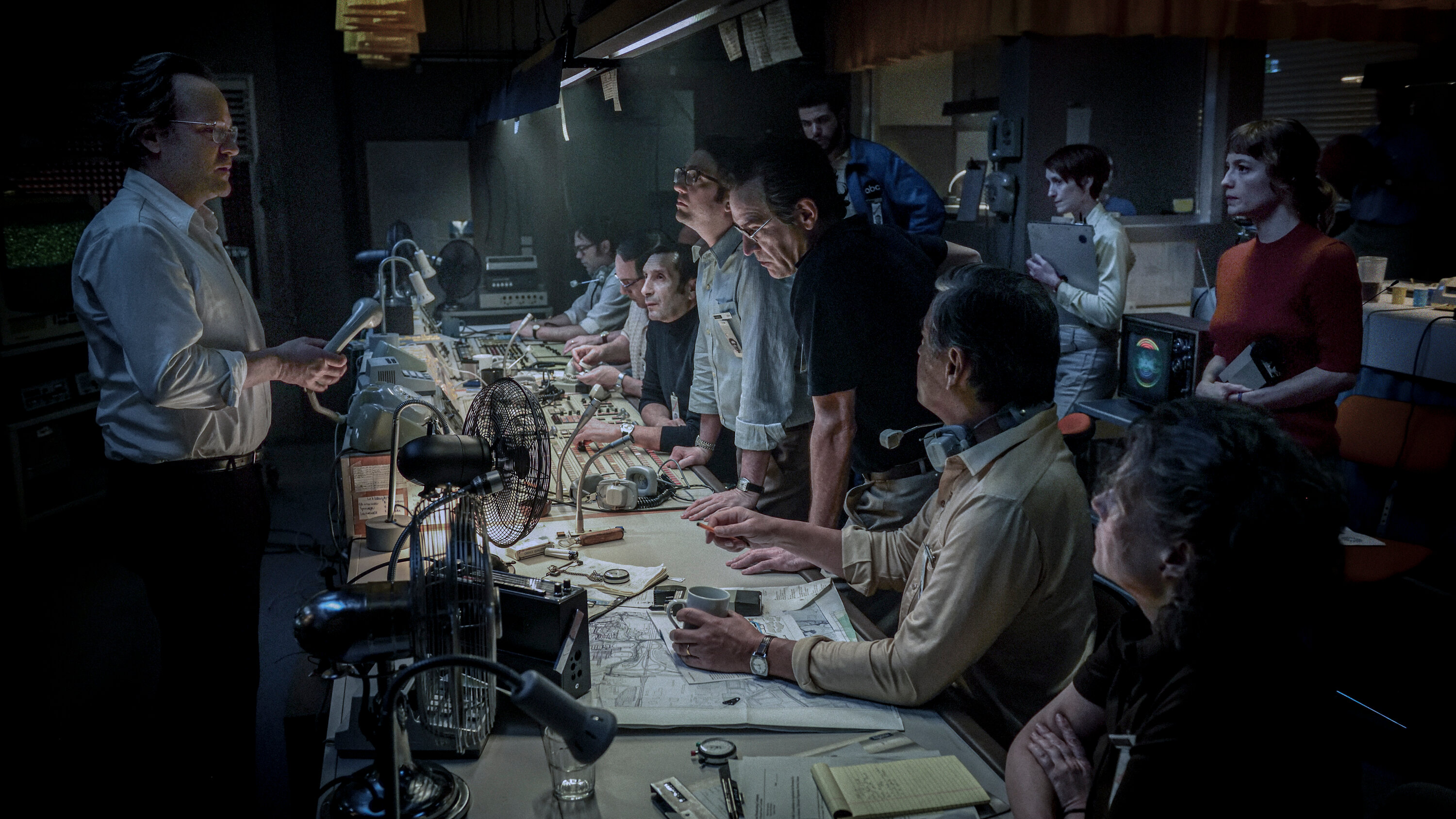
Director, Tim Fehlbaum, and his talented production team effectively utilize constraints in geography, time, space, and structure to craft a highly claustrophobic thriller, drawing viewers into the escalating crisis as it unfolds. From the moment the athletes are taken hostage the ABC media team headed by Peter Sarsgaard as Roone Arledge, the president of ABC Sports, John Magaro as Geoffrey Mason, the head of the control room in Munich and Ben Chaplin as Marvin Bader, the head of operation at ABC Sports are on red alert striving to capture the story and prevent it being taken from them by the ABC News team. Fehlbaum makes use of limited settings, “real-time” structure, and confined spaces expertly as the audience find out information of the hostages plight and subsequent runway killings at precisely the same time as the crew do.
The films’ use of psychological space, close-ups, shadows and screens, creates a claustrophobic atmosphere, starving the audience of air and making them feel the increasing emotional pressure on each character. Like the world’s population today witnessing the brutal events unfold between Israel and Palestine on the news, they ultimately have little power over the situation as news of tragedy bleeds through to them. Further, the cast are uniformly compelling with Peter Sarsgaard, John Magaro and Leonie Benesch, as a translator for the ABC crew, stand out amongst an impressive ensemble. Lastly, special mention for the editing team led by Hansjörg Weißbrich, who skilfully weaved in actual footage from the ABC archive, creating a seamless and powerful cinematic experience.
Story by Franco Solinas and Gillo Pontecorvo – Based on Souvenirs de la Bataille d’Alger by Saadi Yacef
Produced by Antonio Musu and Saadi Yacef
Main Cast: Jean Martin, Saadi Yacef, Brahim Haggiag, Tommaso Neri and ensemble.
Cinematography by Marcello Gatti
Edited by Mario Morra and Mario Serandrei
Music by Ennio Morricone and Gillo Pontecorvo
*** MAY CONTAIN SPOILERS ***
The Battle of Algiers (1966) was one of the greatest films I had NEVER seen. Now, The Battle of Algiers (1966) is one of the greatest films I have EVER seen. I’m embarrassed to admit that I had, for some unknown reason, not found the time to watch it. But wow, the “best films of all time” lists it appears on are NOT wrong. For sure, I don’t always get on with the critics’ list released by respected publications such as Sight and Sound, nevertheless with this incendiary work of cinema I am in total agreement of its deserved high ranking. In fact it could be higher.
The Battle of Algiers (1966) is set during a particularly brutal period of the Algerian War of Independence which occurred between 1954 and 1962. It is not a conflict I am too familiar with historically, nonetheless, I am aware of the desire by the Algerian National Liberation Front to decolonize themselves from French rule. Their demands were rejected by French leaders, thus the Algerian people took to the streets to wage a guerrilla campaign against both civilian and military targets.
Like many a bloody conflict lives, families, businesses, homes, properties and animals were savagely hurt and left irreparably damaged. As the prolonged fighting ensued in Algiers both sides resorted to more extreme combat measures. But with Algiers becoming a politically adverse battlefield, France’s external allies, such as the USA, moved their support away and eventually the Algerian people would overcome the hostile landlords. For the French, the Algerian rebels were terrorists. But remember, one person’s terrorist is another person’s freedom fighter.
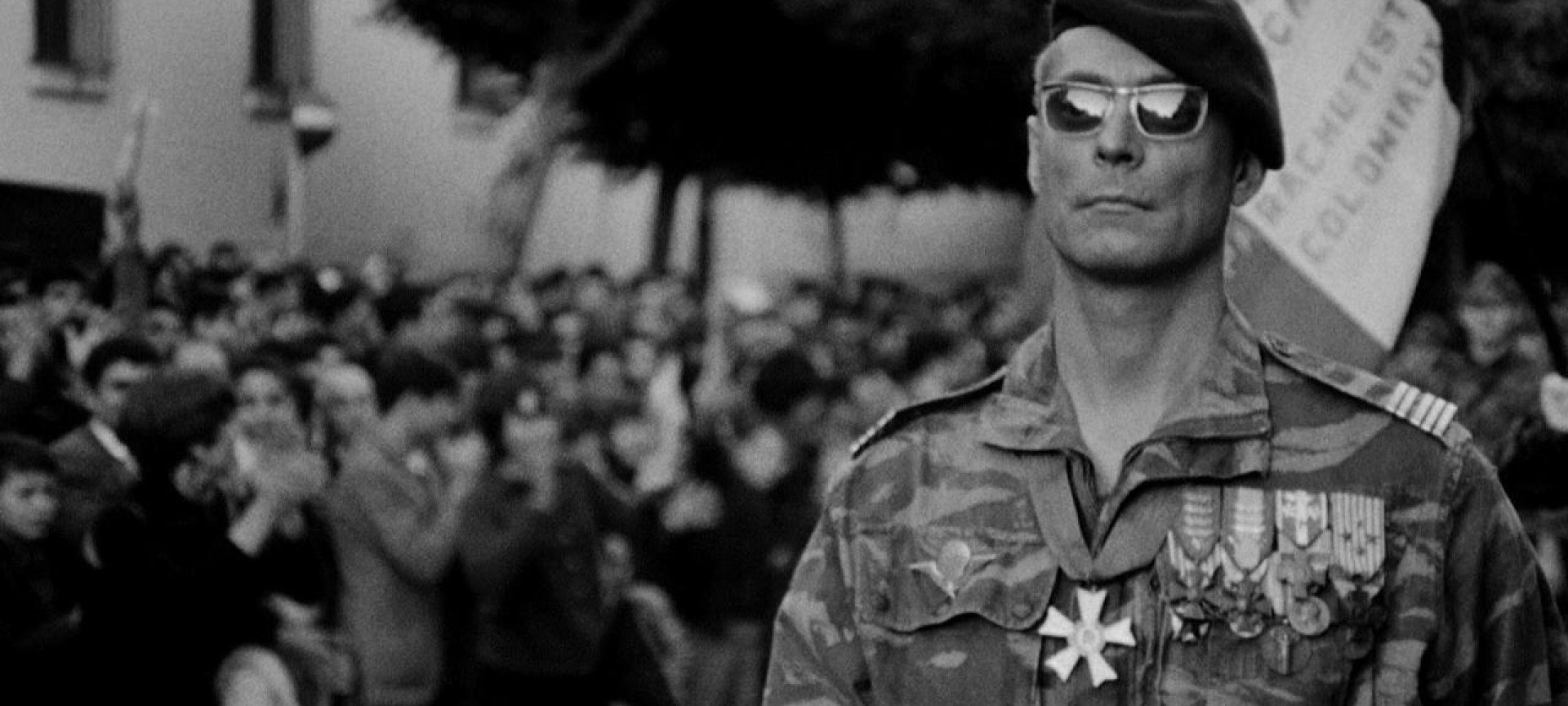
A short review on a humble film blog cannot pretend to imagine the currency of horror, grief and pain encapsulated within this brutal conflict. Yet, incredibly, Gillo Pontercorvo, as well as producing a searing indictment against the barbarity of war, has in The Battle of Algiers (1966) made palpable such horror, grief and pain through sheer formal cinematic ingenuity. In two hours, Pontercorvo and his production team, employ a stark black-and-white-film-documentary-style, non-professional actors, chopping episodic narrative, percussive and beating sounds, handheld cameras, vérité production design and dynamic, dialectic montage to spectacularly bring the psychological power of war to the screen. Not to mention the iconic Morricone and Pontercorvo composition which pulsates throughout the soundtrack.
Intrinsically focussed on events in the Casbah, Algiers between 1954 and 1957, as the story is bookended from the perspective of Ali la Pointe (Brahim Haggiag). La Pointe is a petty criminal who is politically radicalized while in prison, but becomes a formidable force in the fight. The narrative events display a variety of bombings he organizes against the French and his attacks lead the French to bringing in experienced soldier, Lieutenant-Colonel Mathieu (the sole professional actor, Jean Martin). The paratrooper commander is tasked with bringing down the Algerian Liberation Front and his methods of torturing prisoners soon begin to turn the bloody tide.
I cannot overstate how moved I was emotionally and intellectually by The Battle of Algiers (1966). It is momentous filmmaking and made me feel both a fraud and horribly depressed at how evil human beings can behave. I am a fraud because I am safely able to live out my privileged life thankfully free of the horror I have witnessed in the film. Moreover, it is so depressing that we never learn as conflict continues to blight this poisoned planet we exist on. Lastly, Pontercorvo, redefines for me the job a what a director does. The Battle of Algiers (1966) is a pinnacle of how filmmaking style and form can match the heartfelt agony of the narrative themes on show. It is not only one of the greatest anti-war films of all time, but simply one of the most complete films ever made.
“Essentially, I’m untrained, so I just go with my imagination and try to put myself as solidly as I can into the shoes of whatever person I’m going to be playing.” — Christian Bale
It’s easy to forget that Christian Charles Philip Bale was only thirteen years old when he was chosen out of thousands of young actors for a starring role in Steven Spielberg’s war drama, Empire of the Sun (1987). From there on in he has become one of the most formidable actors of a generation. Unlike many young actors he has not fallen by the wayside, but rather delivered a series of tour-de-force and award-winning performances in both independent and big budget Hollywood blockbusters.
So, for my occasional look at the major talents of cinema I have turned to one of the greatest actors of the last twenty-something years, and chosen five of his best roles to illustrate that. An intense and natural talent he has been in many outstanding films and some not so good. However, whatever role Christian Bale chooses he is usually never less than powerfully magnetic. I must say, I have not selected any of his portrayals of Bruce Wayne and that very fine Batman performance, notably from a physical perspective. Even though in, Batman Begins (2005), he created a stirring existential vision of a wealthy child growing out of grief into the dark saviour of Gotham City. I just think he has given five better acting transformations on screen. Here they are.
***CONTAINS FILM SPOILERS***
AMERICAN PSYCHO (2000)
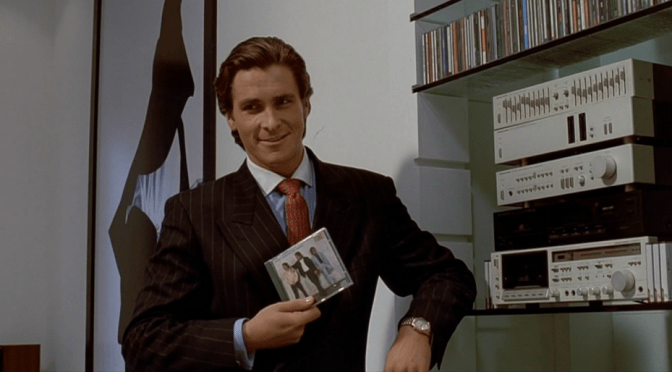
Having tread water in a career-sense attempting to traverse the difficult bridge from child actor to the leading man we have come to know, Christian Bale got a break in Mary Harron’s adaptation of Bret Easton Ellis’s notorious novel, American Psycho. And boy – did he make the most of it! I watched the film again recently and I have to say, other than perhaps Leonardo DiCaprio (who was originally cast in the role), no other actor could have delivered such an unhinged, evil and funny (yes he’s hilarious) portrayal of the Wall Street banker-turned-serial killer, Patrick Bateman. It’s a dangerous and sick character who Bale somehow manages to make you despise, yet simultaneously humanise.
THE MACHINIST (2004)
Possibly the greatest Christian Bale performance that hardly anyone has seen. Oh you have seen it? Wow, what an intense performance Bale gives as lonely blue collar worker, Trevor Reznik. Reznik is a haunted man who cannot sleep. He is also anorexic as Bale reduced his weight to 62kg for the role, demonstrating, not for the last time, a dangerous method of obsessive physical transformation. It works too as the skeletal Reznik struggles to overcome a slow descent into madness, with Bale, once again, showing incredible commitment to his craft in this under-rated and haunting noir nightmare of a film.
THE FIGHTER (2010)
While Mark Wahlberg was excellent as the lead actor in David O. Russell’s profile of tough Massachusetts fighter, Micky Ward, Bale absolutely steals the thunder with an incredible acting performance as Ward’s half-brother, Dicky Eklund. As a study of the nefarious curse of addiction, Bale makes the charismatic, but unreliable, Ekland both a loathsome and somehow empathetic character. Because while his crack cocaine addiction drives him to make bad choices for both him and his brother, there is at his heart a loving person battling to win over his illness and make his brother a champion. A story about family and human beings overcoming the odds, Bale punches out another memorably flawed individual in The Fighter (2010), deservedly winning an Oscar in the process.
HOSTILES (2017)
This revisionist Western did not get nearly enough attention on release. Yet buried in here is another quietly intense acting performance from Christian Bale. His other Western, 3:10 to Yuma (2007) is the more entertaining film, but in Hostiles (2017), he gives a much more complex characterisation as Captain Joseph Blocker. The weight of guilt and pain and death hang heavy on Blocker following years of brutal conflict. Scott Cooper’s film conveys the depressing murderous times borne out of the greedy need for progress. Hatred and white man’s guilt drives his character as Bale’s soldier initially refuses to take Chief Yellow Hawk back to his homeland. Is it more because of the deaths of his own men on the battlefield or because he does not want to face up to his own crimes against the Native Americans? The film explores this question superbly with Bale at the heart of the conflict from savage beginning to bloody end.
VICE (2018)
While I agree with critics of Vice (2018), that it is cartoonish and simplistic, it is also a brilliant and scabrous work of satire. Yes, sure it’s preaching to the liberal and left-winged Hollywood choir, but it definitely presents a fascinating snapshot of Dick Cheney’s rise from alcoholic wastrel to powerful political figure. I mean let’s face it, Cheney, based on his reign in U.S. politics, is arguably one of the most dangerous men who ever existed. In Adam Mckay’s black political comedy Cheney is shown to be a manipulative puppet-master to Bush’s marionette President. McKay’s film, while certainly one-tracked, powers along picking apart one of the most shadowy political figures of recent years. But what about, Bale? Why take a role where he had to live on doughnuts for year to gain the weight required for the film? Well, because he likes to challenge himself and Bale should have won the Best acting Oscar! Rami Malek was decent as Freddie Mercury, but Christian Bale is astonishing. Fair enough, he takes a real person and delivers an emulation performance, but he also brings to Cheney to life with such intelligent style. Of course, the physical transformation takes the headlines, but in terms of emotion and mentality he really raises the bar. Cheney may be an enigmatic character but Bale brings menace, whispers and evil to the role. There is also a sly humour there too which makes Bale’s Cheney another unforgettable monster he’s brought to the screen.
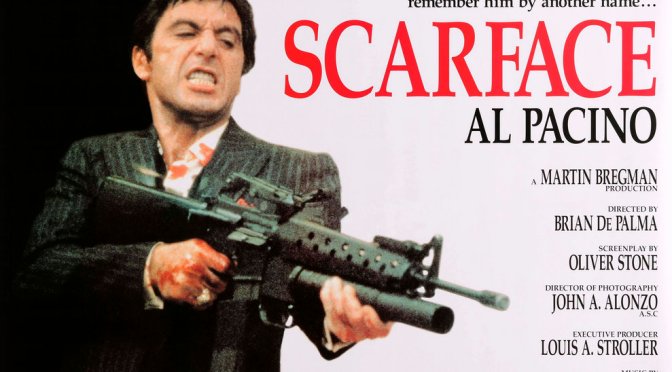
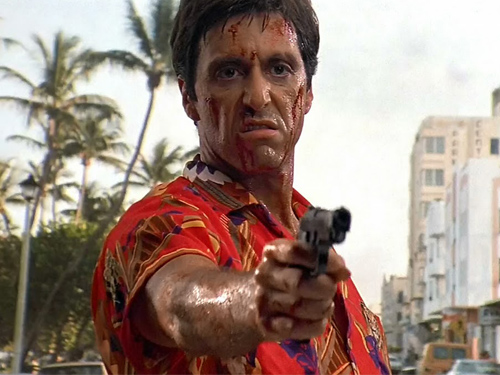
CLASSIC FILM REVIEW – SCARFACE (1983) – YOUTUBE VIDEO
The Cinema Fix is a website for all film and TV lovers everywhere. It’s a mix of reviews, articles, essays, news and thoughts on new and classic releases. It is intended to be honest, irreverent, funny and hopefully intelligent. I also have a YouTube channel with loads of short films and video articles. Check it out here.
I have just created a new video article. It’s a review of the classic gangster film, Scarface (1983). You can read it here or check out the video below.
CREDITS
This video article is a fun and educational piece reviewing one of our favourite gangster films ever.
Written by: Paul Laight Narrated by: Melissa Zajk Music Produced by : Aries Beats Promoted by : CRFC
The copyright of the images and trailers are those of the film studio. I do not own any of the images or films.
Film/Trailer clips credits:
Scarface (1983) Directed: by Brian DePalma Produced by: Martin Bregman Written by: Oliver Stone. Distributed by: Universal Pictures
Writers: Steve McQueen, Courtia Newland, Alastair Siddons
Composer: Mica Levi
Cinematographers: Shabier Kirchner
Original Network: BBC and available on Amazon Prime.
*** CONTAINS HISTORICAL SPOILERS ***
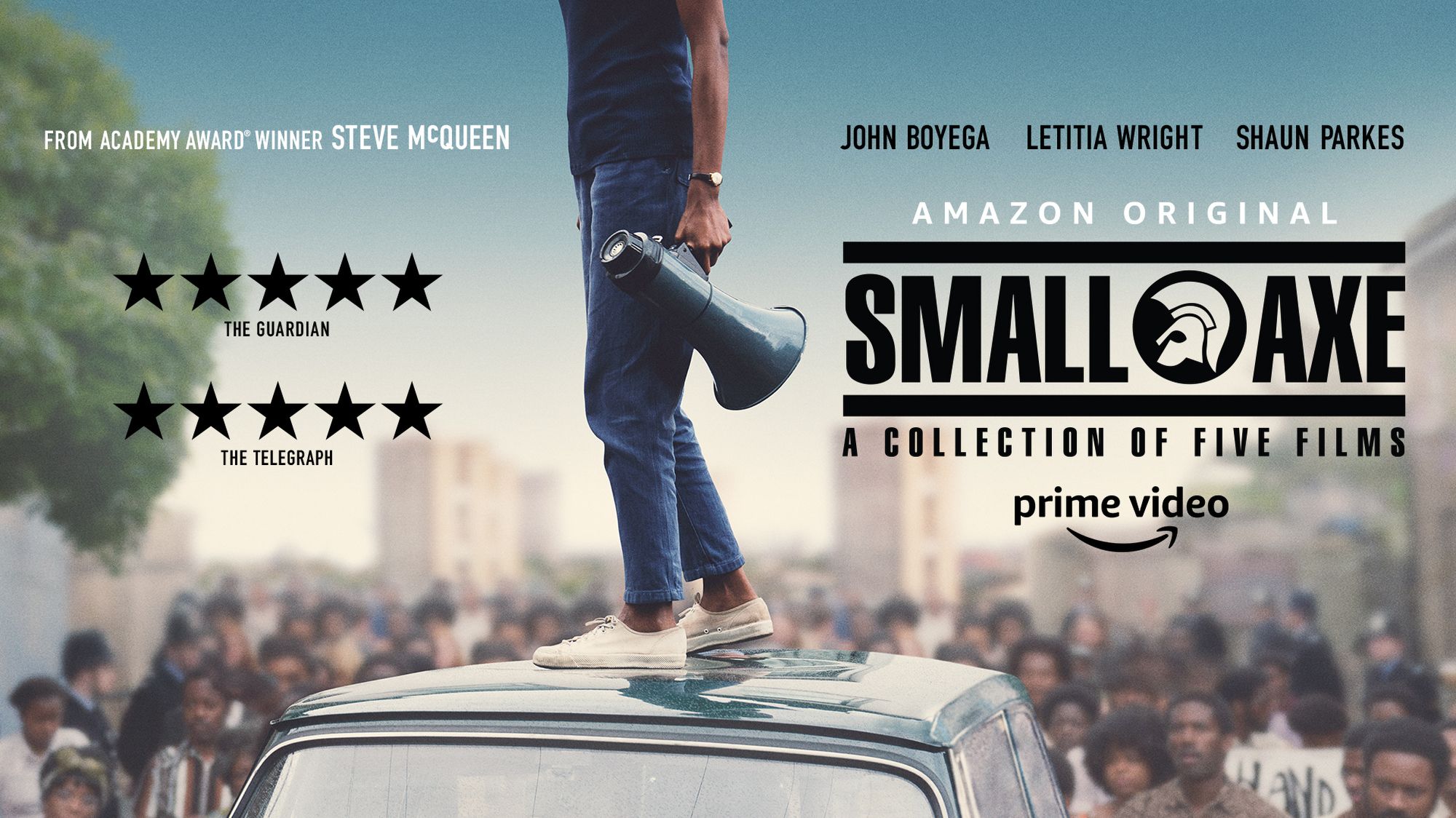
Small Axe could also be described in the vein of ‘Small Acts’. Dramatized and rich slices-of-life that reflect significant historical figures and events from black culture in the 1960s, 1970s and 1980s. MANGROVE (2020) was the first in a set of five films devised, written and directed by Steve McQueen. It premiered at the London Film Festival in 2020, before being released on the BBC television network. I reviewed the film MANGROVE (2020)here. Such was its power, the searing drama would make my list of favourite films of 2020.
Ultra-talented McQueen was not satisfied with one amazing work. He, his incredible cast and production team also delivered four more high quality dramas called LOVERS ROCK (2020), RED WHITE & BLUE (2020), ALEX WHEATLE (2020) and EDUCATION (2020). I had the privilege of viewing these films via the BBC over the New Year period and provide short reviews here.
LOVERS ROCK (2020)
Main Cast: Micheal Ward, Amarah-Jae St. Aubyn, Kedar Williams-Stirling, Shaniqua Okwok, Ellis George, etc.
As well as alluding to the main love story within the narrative, Lovers Rock also makes specific reference to a style of reggae music with a romantic sound and content. Set over one night during a London-based birthday party, the film opens with the setting up of a sound system, making of food and preparation of the large house. While mostly an ensemble piece, the story narrows its focus on prospective lovers, Franklyn and Martha, who fall for each other amidst the thumping bass and hearty vocals of the music. Surely, Lovers Rock is a testament to the power of harmony and community and love. There are brief moments of drama to spike the party mood, but ultimately this is about the joy of being alive and drunk on song and romance. Lastly, it’s arguably as close to feelgood as McQueen’s intense filmmaking style gets in this amazing anthology.
Mark: 9.5 out of 11
LOVERS ROCK (2020)
RED, WHITE AND BLUE (2020)
Main Cast:John Boyega, Steve Toussaint, Neil Maskell, Joy Richardson, etc.
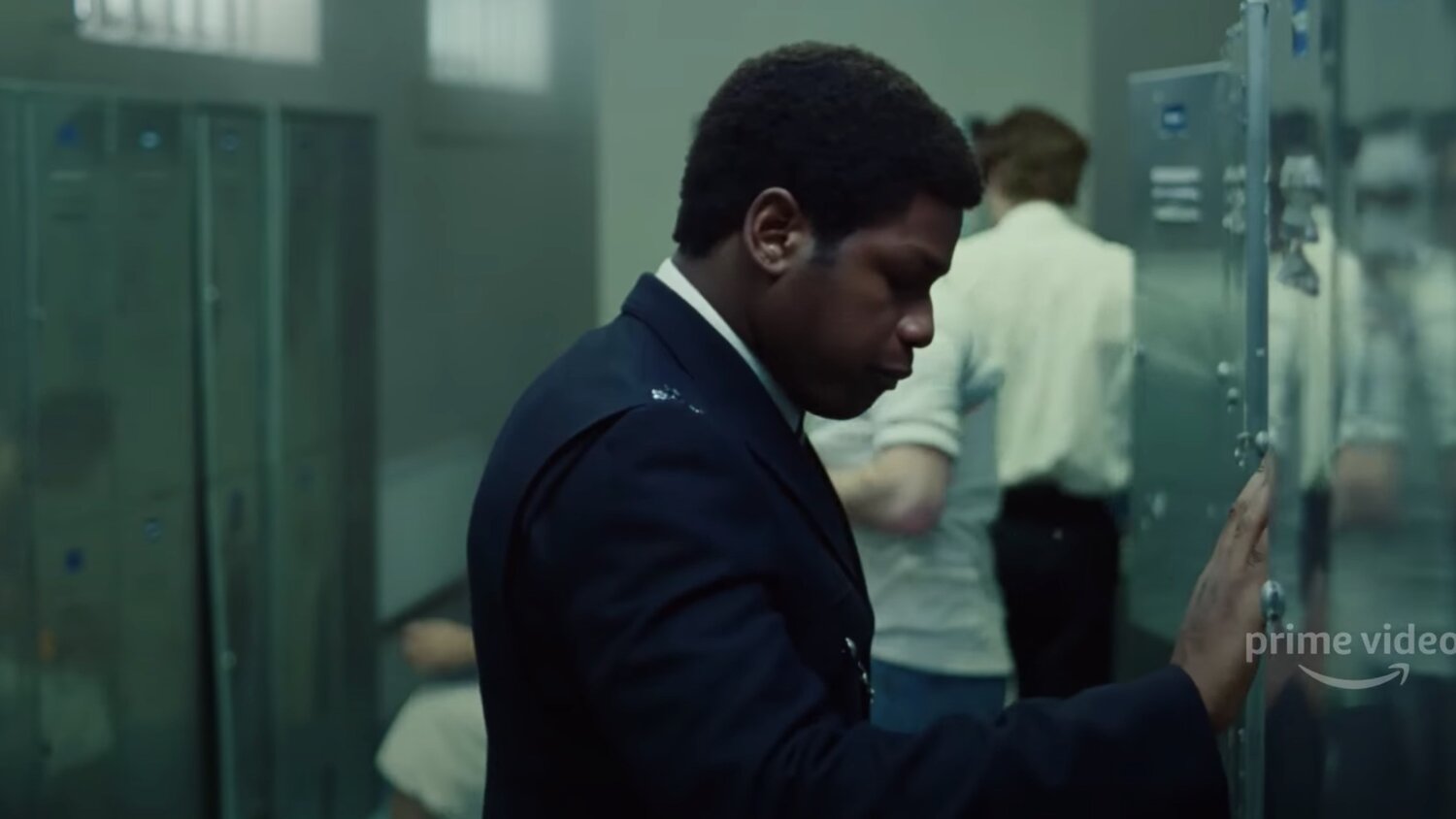
As well as evoking the socio-political landscape of the era so well, the costumes, hair, make-up and location work feel so authentic in all of the Small Axe films. Such authenticity serves the stories well, as does the virtually perfect casting too. Fresh from his energetic portrayals of Finn in the Star Wars trilogy, John Boyega’s performance as Leroy Logan in Red, White and Blue (2020), brings his character into conflict with a whole different kind of dark side. Logan was one of the first prominent black police officers in the Metropolitan police. He subsequently founded the Black Police Association and attempt to reform the police from within. No two ways around it, based on the early part of his police career, Logan is represented as a trailblazing hero. He is intelligent and tough and ready to face up to the barbaric language and violence from both white police officers and members of the black community who saw him as a traitor. Boyega is spellbinding as Logan, navigating his way up the ranks facing rancour and rejection from within the police and his own father too, who was understandably unhappy at Leroy’s controversial choice of career.
Mark: 9.5 out of 11
RED, WHITE & BLUE (2020)
ALEX WHEATLE (2020)
Main Cast:Sheyi Cole, Robbie Gee, Johann Myers, Johnathan Jules, etc.
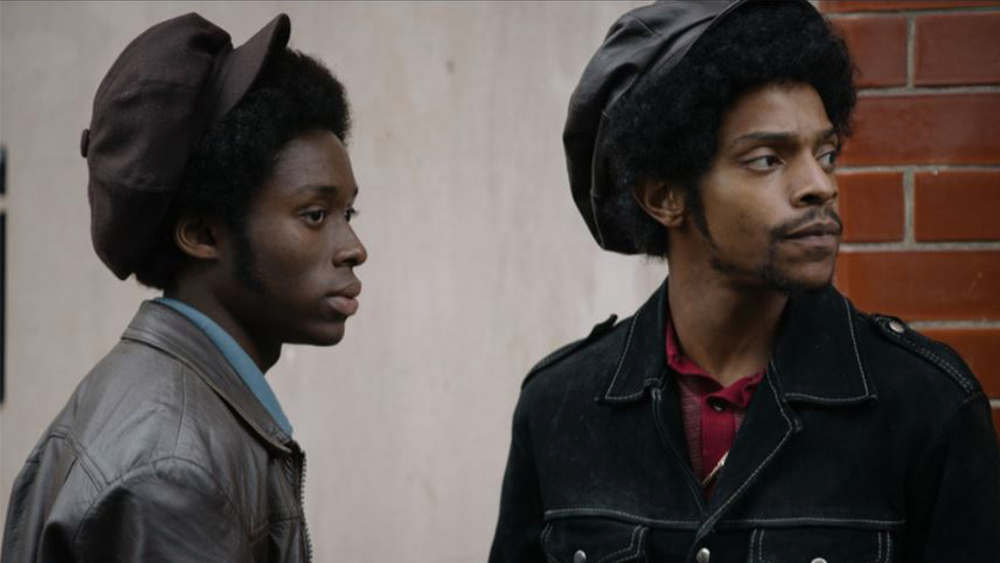
What Steve McQueen deserves praise for with Small Axe, among many other things, is bringing to the fore individuals one may not have heard of, or reminding us of important events from within recent British history. In Alex Wheatle (2020), McQueen weaves the early years of now famous author, Alex Wheatle, with circumstances relating to the Brixton riots and the New Cross fire tragedy of 1981. The latter took the lives of fourteen young black people and fuelled much anger at the time in regard to racist attacks on the black community. Alex himself was brought up in care and grows up an angry young man. He finds solace in music and expressing lyrics in a political and combative style. We first meet him in a prison cell sharing with Rastafarian, Simeon (Robbie Gee). The fractious scenes between the two, with both Gee and Sheyi Cole giving fine performances, are full of anger and humour. Far from being a comedy, there remains both witty banter and pathos fizzing around this profile of Wheatle’s formative years. This fine profile finds a young rebel discovering his voice and identity amidst the urban decay, racism and police brutality of the mean streets of London.
Mark: 10 out of 11
ALEX WHEATLE (2020)
EDUCATION (2020)
Main Cast: Kenyah Shandy, Sharlene White, Josette Simon, Tamara Lawrence, Daniel Francis, etc.
Having addressed social and cultural issues relating to civil liberties, law, music, work and identity, Steve McQueen focussed specifically on educational themes within the black community in the aptly named, Education (2020). The highest praise I can give Education (2020) and all the films in the Small Axe anthology is that I felt genuine emotion for all of the characters and the situations they were in. They may not have been perfect and had their flaws, but ultimately all five of these narratives made me feel and care about the characters. Because they were up against an unfair system which demanded to be challenged and changed to stop the systematic prejudice of the time. Education (2020) feels extremely personal to Steve McQueen as one senses the lead character, twelve-year-old Kingsley Smith (Kenyah Sandy) experiences much of the grief he may have when younger. Considered disruptive at the local Comprehensive, Kingsley is dumped into a “Special School” where he becomes lost and ill-educated. One absurd scene simply shows a teacher playing House of the Rising Sun as part of a lesson. Kingsley’s formidable mother, with help from political forces within the black community, strive to right these educational wrongs in a powerful and moving final chapter to the Small Axe anthology.
NETFLIX FILM REVIEW: THE TRIAL OF THE CHICAGO SEVEN (2020)
Directed by: Aaron Sorkin
Produced by: Stuart M. Besser, Matt Jackson, Marc Platt, Tyler Thompson
Written by: Aaron Sorkin
Cast: Yahya Abdul-Mateen II, Sacha Baron Cohen, Daniel Flaherty, Joseph Gordon-Levitt, Michael Keaton, Frank Langella, John Carroll Lynch, Eddie Redmayne, Noah Robbins, Mark Rylance, Alex Sharp, Jeremy Strong, etc.
Music by: Daniel Pemberton
Cinematography: Phedon Papamichael
***CONTAINS HISTORICAL SPOILERS***
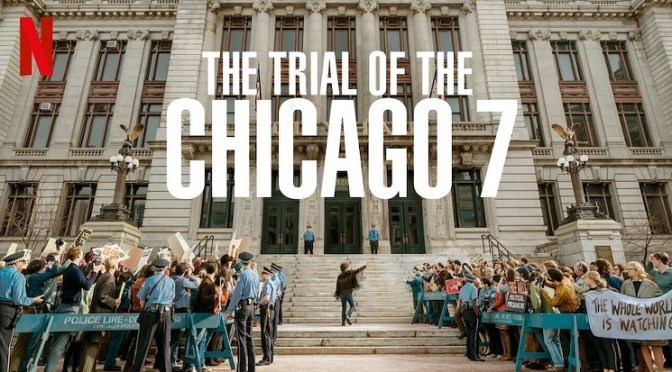
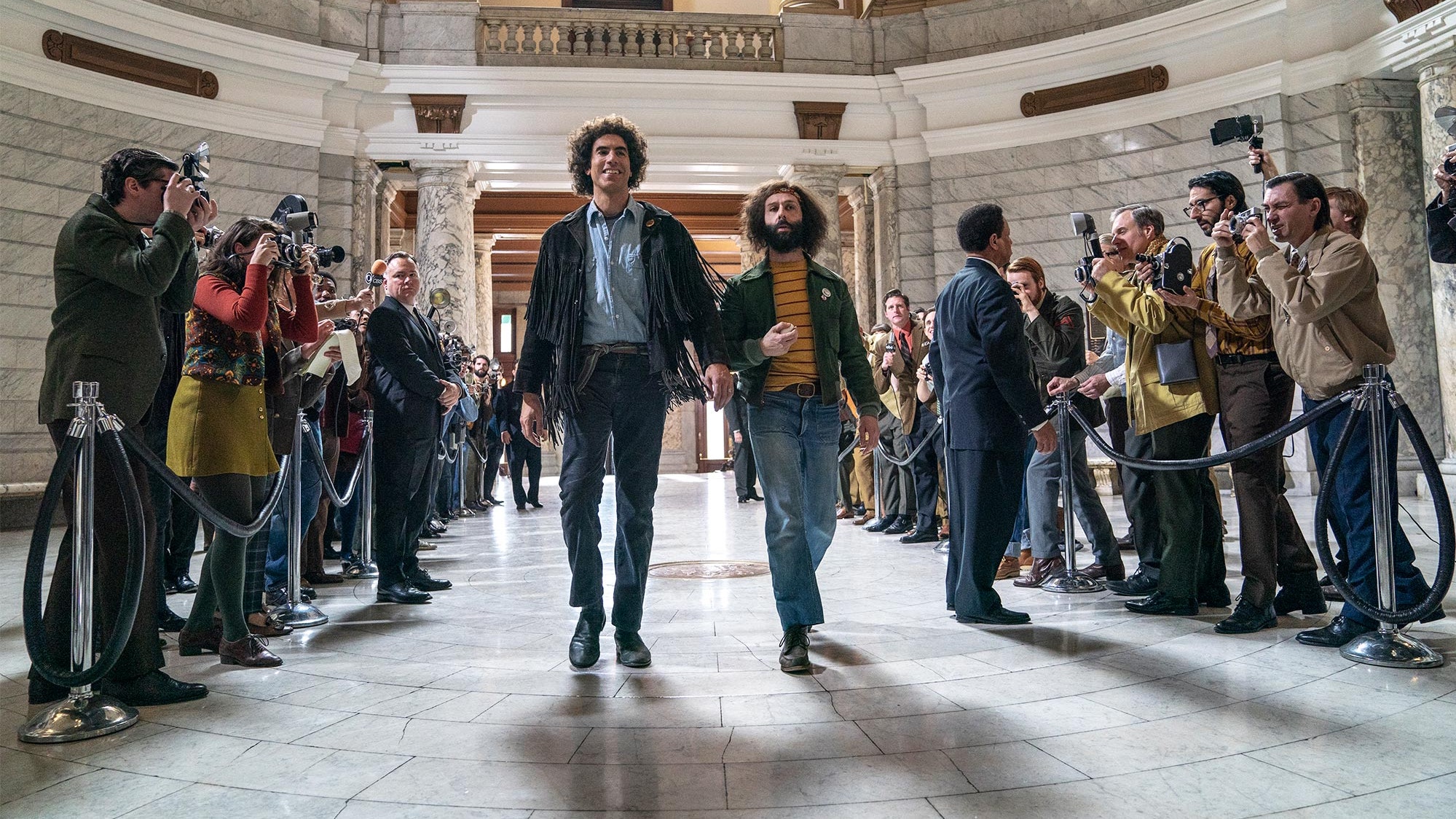
In 2006, screenwriter Aaron Sorkin met Steven Spielberg met to discuss a film project which would focus on the 1968 riots at the Democratic National Convention, which occurred in Chicago. After the meeting Sorkin has admitted he had no knowledge of said riots or the infamous trial which took place afterwards. Sorkin would remedy this with much research and complete his screenplay in 2007. Having been in development for some time eventually Sorkin himself has directed, The Trial of the Chicago 7 (2020). Part-historical drama, part courtroom-thriller and part political satire, the film illustrates skilfully the shocking attempt by the U.S. Government to convict, initially eight, then latterly seven individuals believed to have conspired to cross state lines with the desire to incite violence and mayhem in Chicago.
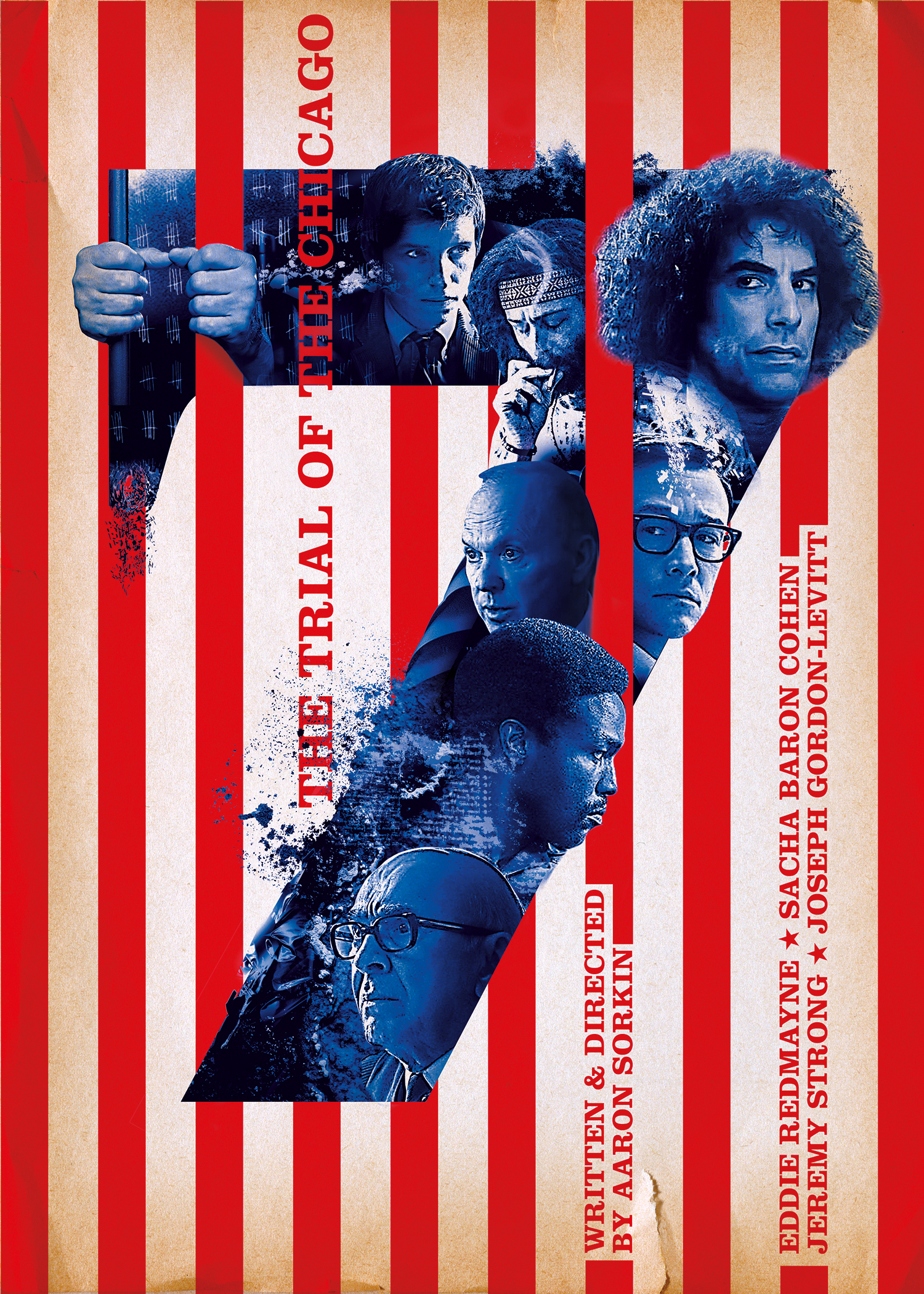
I, like Sorkin back in 2006, knew nothing of this huge legal and political event from the late 1960’s. But, The Trial of the Chicago 7 (2020), while obviously taking narrative liberties with the temporal order and specificity of certain events, provides an entertaining and insightful flavour of the before, during and aftermath of the incendiary trial. Opening stylishly and rapidly, Sorkin establishes the major characters who will be charged with causing violence on the streets of Chicago. Notable amongst these are civil rights and counter-culture figures such as: Abbie Hoffman ( Sacha Baron Cohen), Jerry Rubin (Jeremy Strong), Tom Hayden (Eddie Redmayne), Bobby Seale (Yahya Abdul-Mateen II), David Dellinger (John Carroll Lynch et al. Swiftly, Sorkin then takes us into the trial itself, which took place in 1969, and structures the narrative around flashbacks from witnesses on the stand to events leading up to conflict between police and demonstrators.
Given the gravity of the socio-political importance of this trial, I was surprised how much I was laughing during, The Trial of the Chicago 7 (2020). The humour, and later pathos, comes from both the absurdity of certain events and behaviour of the characters on trial. Indeed, in a trial which lasted an incredible five months, there was clearly an abundance of rich material for Sorkin to mine. Thus, we get a greatest “hits” summation of this politically driven farce, explained as being influenced by, U.S. Attorney General John Mitchell’s ire, at being snubbed by his predecessor. Moreover, the trial itself escalates into further absurdity as Judge Hoffman (Frank Langella) takes exception with the majority of the defendants and their lawyers, bringing most of them up on charges of contempt, notably the attention-seeking Hoffman and Rubin. It was not surprising as there were often mocking and zinging one-liners from them and even more vociferous protests from Bobby Seale. Nonetheless, that does not excuse what Judge Hoffman did to Bobby Seale in court. That remains a low in the history of the American justice system.
As The Trial of the Chicago 7 (2020) progresses, the comedic elements transition to a more serious tone and many heartfelt speches are given. The demonstrations and violent scenes from the riots bleed through to the fore also. My understanding is that in the United States there is such a thing as freedom of speech and the demonstrators were attempting to have their say on the war in Vietnam. They wanted their voices heard against what they considered to be an unjust war. Of course, I cannot possibly know what occurred that day as I was not there, however, given the U.S. Government’s fear of opposing views, as demonstrated by their handling of race issues and the McCarthy-led investigation into the Communist threat, one must surmise they were scared of anyone protesting a different perspective from theirs. From such fear comes a desire to wield power and suppress such voices; something which the Chicago Police Department appeared to do during the fateful Democratic National Convention.
Aaron Sorkin and his incredibly adept ensemble cast deserve much praise for taking such a complex case and distilling it into such an enlightening work of cinema. Sacha Baron Cohen and Jeremy Strong stand out as a fine double act, while Mark Rylance attends his usual intelligence and class to the role of defence lawyer, William Kunstler. In fact, all the cast are exceptional in bringing to life Sorkin’s witty and storming screenplay. Ultimately, one could argue though that The Trial of the Chicago 7 (2020), is simplistic fodder, designed to spoon-feed the liberal left and preach to the millennial choir. In all honesty, it is that and arguably full of caricatures and one-dimensional storytelling. However, given the United States, and the world, have suffered recent and extreme political dumbing down from one of the worst U.S. Presidents of all time, Sorkin’s one-dimension is still more nuanced and deep than those in power could ever be.
Cast: Ike Barinholtz, Betty Gilpin, Amy Madigan, Emma Roberts, Ethan Suplee, Hilary Swank etc.
Music by: Nathan Barr
Cinematography: Darran Tiernan
*** MAY CONTAIN SPOILERS ***
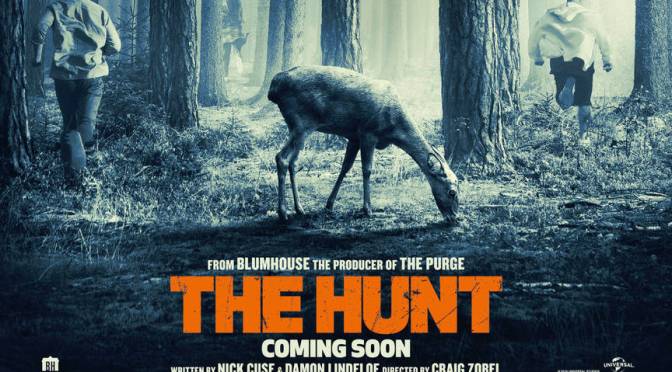
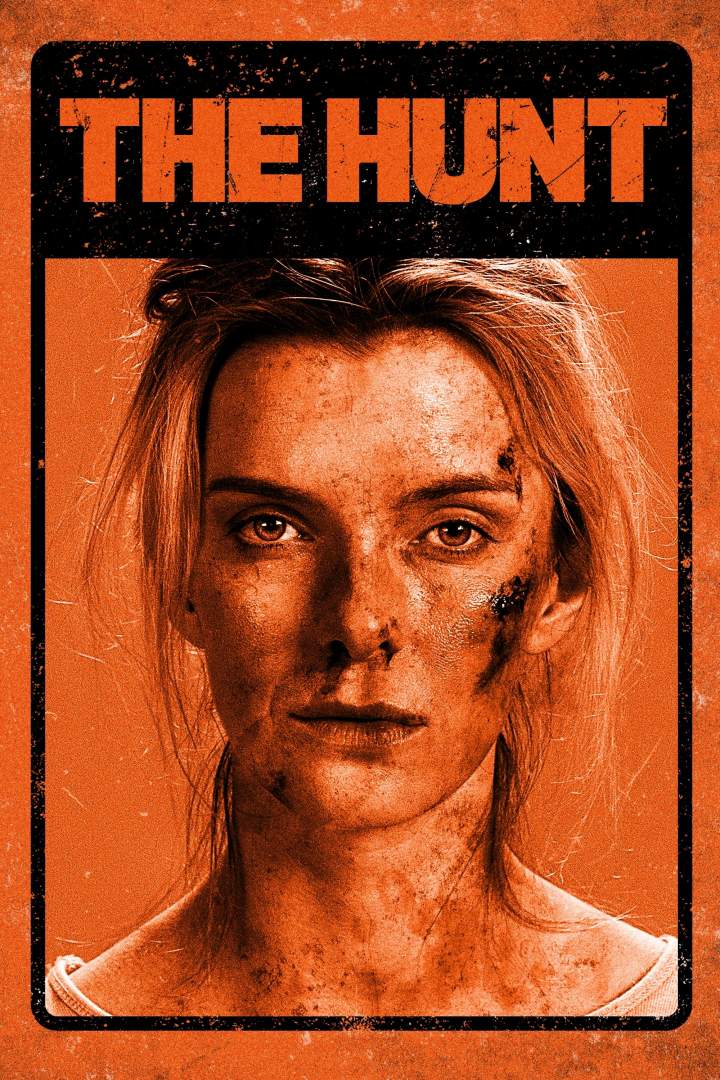
RKO’s movie, The Most Dangerous Game (1932), based on a short story by Richard Connell, is a genuine B-movie delight with a great villain named, Count Zaroff, plus solid lead performances from Joel McCrea and Fay Wray. The simple, but ingenious story involves the Count hunting shipwrecked humans on his remote island. This thrilling premise has been adapted numerous times over the years and the latest one, produced by Blumhouse Productions, is calledThe Hunt (2020). Arguably, the best version of this story is the Japanese classic, Battle Royale (2000), where high school kids are charged with killing each other to win a prize: their life!
Craig Zobel directs The Hunt (2020) from a screenplay by Damon Lindelhof and Nick Cuse. While The Most Dangerous Game (1932) had big-game hunting and murder-as-sport as a theme, and Battle Royale (2000) was essentially about the control of juvenile delinquents, The Hunt (2020) instils the mayhem, traps and violent deaths with a lean toward political commentary. Reflecting the division of Trump’s Presidency and the left/right and North/South divide allows the witty script to deliver gags damning both sides of the political strata. All from rich capitalists to the liberal elite and right-wing conspiracy theorists are satirised mercilessly. Having said that, none of this gets in the way of the breathless pace of shootings, explosions, stabbings and bloodletting.
Overall, what The Hunt (2020) lacks in characterisation and plot credibility, it more than makes up with several tense and funny scenes. You’re never too far away from a gory end or biting punchline or the surprise death of a relatively well known actor. The cast and director do not take this movie particularly seriously, but I must say Betty Gilpin as Crystal Creasey was brilliant. Energetic Gilpin takes a thinly written character and provides much personality, as well as an impressive physical presence in the many well-choreographed fight scenes. Ultimately, The Hunt (2020) will excite those who want something undemanding for their Saturday night movie entertainment. I particularly enjoyed several of the cartoon kills in this comedic action thriller. I could take or leave the social commentary, because for me politics is the most dangerous game of all.
So, I don’t get paid for doing this. I do it because I enjoy watching films and television and writing about them. It helps me to review stuff critically from both a creative perspective and absorb knowledge for when I make my own low budget films. Also, it’s something to do isn’t it; a hobby and means to immerse oneself in something that interests me. Lastly, one also learns much from the hours of viewing, especially if the narratives are grounded in reality, representations of history and social issues.
CHANNEL 4 has always been at the forefront of producing intelligent drama television built to inform, entertain and provoke thought. Their streaming platform called ALL 4 is a great place to catch up with Channel 4’s product and I have already reviewed many of their shows here on this site. Having said that, I thought I should put an even bigger effort to catch up with some of their dramas. After all, ALL 4 is — aside from watching a few adverts — is absolutely FREE! I’m glad I did because they have quality production values and are very powerful, skilfully tackling social themes and historical events. So, here are some quick reviews of Channel 4 television dramas both recent and not so recent with the usual marks out of eleven.
THE ACCIDENT (2019) – Mark: 9 out of 11
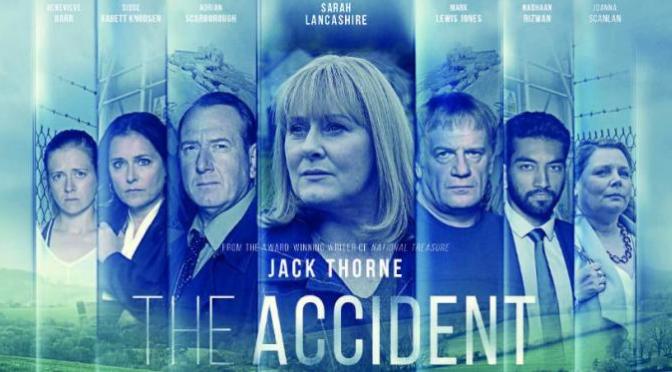
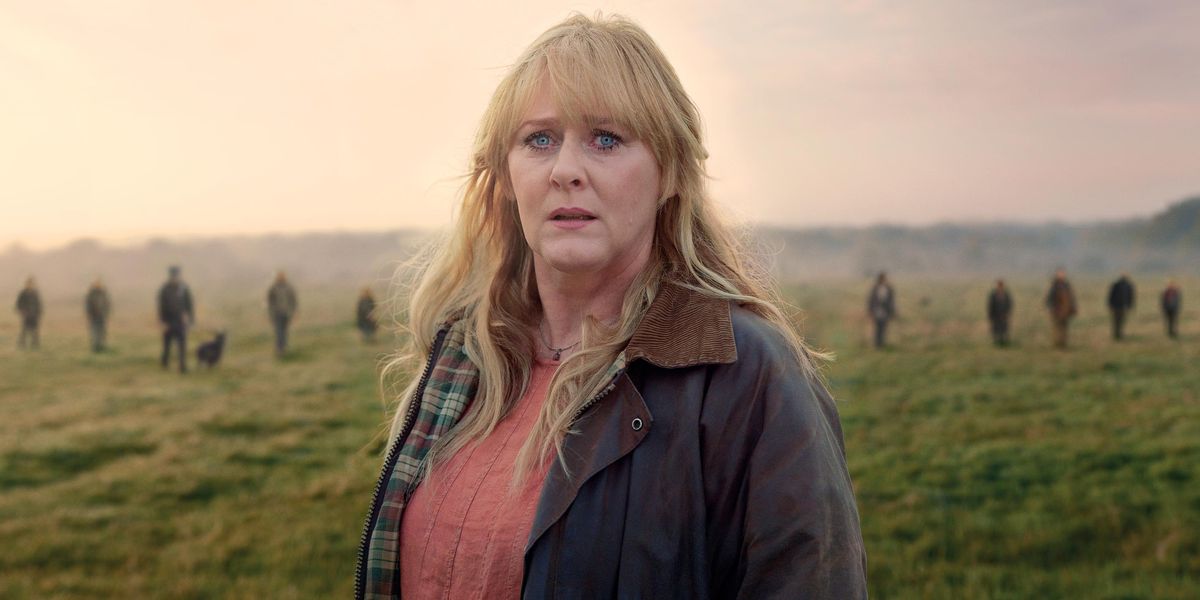
What I found from my All 4 residency was that many of the shows were written by Jack Thorne. He is a clever writer with a keen eye and ear for drama relating to everyday people’s lives. The Accident (2019) is set in Wales and concerns a small community whose lives are ripped apart by an explosion at a construction site. Many children are killed, but given they were trespassing the blame initially falls on both them and building company. The ensemble cast lead by Sarah Lancashire and Joanna Scanlan are uniformly excellent, as the impactful drama echoes actual events such as Aberfan and Grenfell Tower disasters.
CHIMERICA (2019) – Mark: 8 out of 11
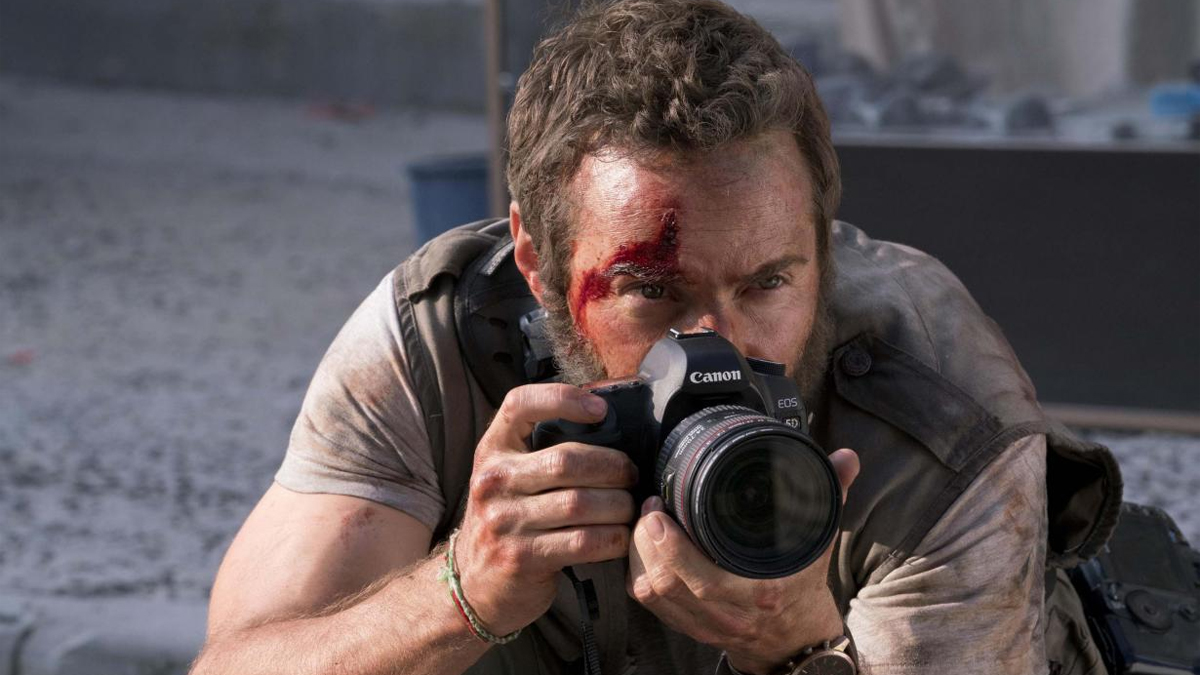
Based on Lucy Kirkwood’s play of the same name and set during the 2016 American Presidency election, this political drama sees Alessandro Nivola’s once-lauded photographer attempt to locate the “Tank Man” from the 1989 Tiananmen Square protests. Part-redemption and part-historical expose, the writing is excellent as Cherry Jones and F. Murray Abraham easily steal the acting plaudits. I was more interested in the plight of Zhang Lin’s (Terry Chen) China-set parallel storyline than the photographer’s, but, overall, I was drawn into detective plot and human conflict throughout.
THE DEVIL’S WHORE (2008) – Mark: 9 out of 11
The wonderfully titled The Devil’s Whore (2008), features a fine cast of actors including: John Simm, Peter Capaldi, Andrea Riseborough, Michael Fassbender and Dominic West. The drama focusses on the historical era of Oliver Cromwell and Charles I, filtered through the eyes of Riseborough’s strong, yet scandalised heroine, Angelica Fanshawe. Peter Flannery’s excellent script is full of violence, political and religious intrigue and works well as both a work of entertainment and chronicle of key characters from the bloody English Civil War!
I AM. . . (2019) – Mark: 9.5 out of 11
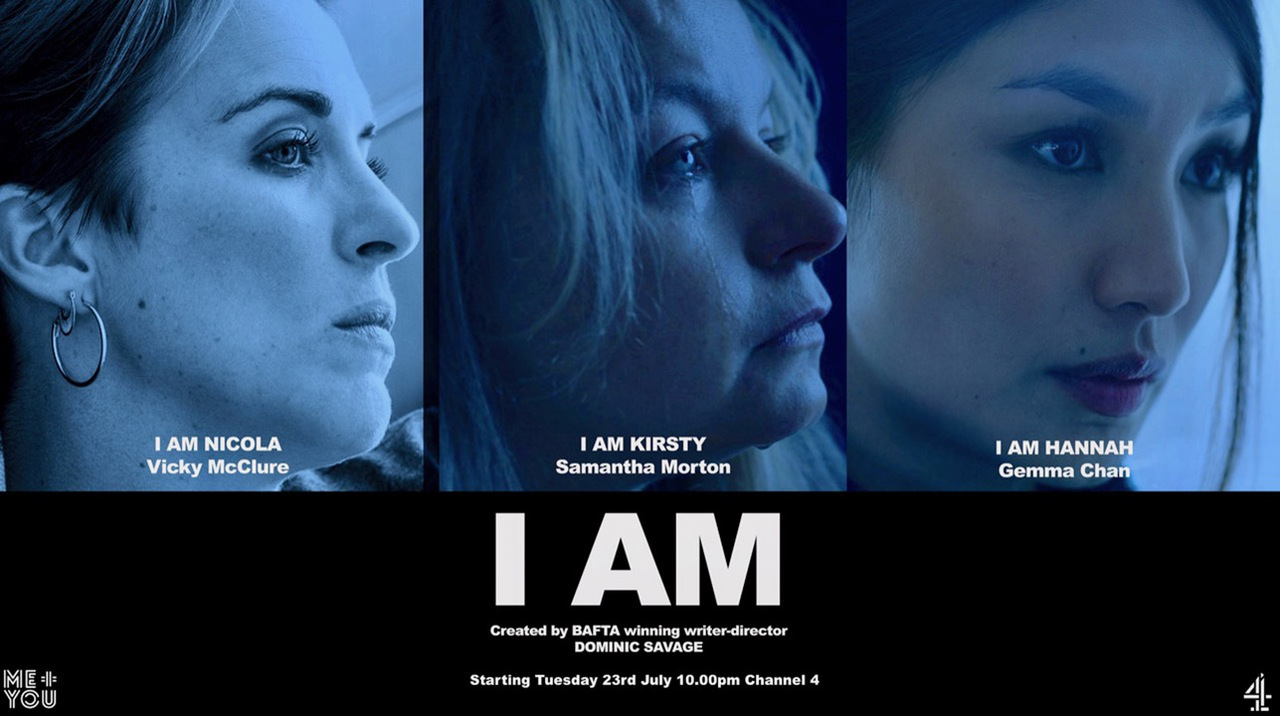
Dominic Savage is a skilful and experienced filmmaker, who recently made the semi-improvised feature, The Escape (2017). It focussed on unhappy mother portrayed by Gemma Arterton, and while an interesting character study, it ultimately felt a little flat dramatically. Using the same improvisatory and documentary style with the anthology triptych, I Am. . . (2019), Savage casts Vicky McClure, Samantha Morton and Gemma Chan in three separate stories of women in various states of domestic plight. All of the narratives are brilliantly acted and directed, focussing on coercive relationships, gaslighting debt escalation and painful maternal inertia respectively, all delivered with tremendous emotional power.
FALLING APART (2002) – Mark: 8.5 out of 11
Mark Strong and Hermione Norris excel is this shocking drama about domestic violence. Seemingly the perfect couple, Pete and Clare fall in love and marry, only for Pete’s aggressive tendencies to come to the fore soon after the honeymoon period. Clare forgives Pete and blames work and herself and then finally thinks he may have a problem. An honest and bleak look at love gone wrong, there are many scenes that make one flinch and feel bad for those women trapped in similar situations.
KIRI (2018) – Mark: 9.5 out of 11
Sarah Lancashire is exceptional as the social worker hung out to dry when a fostered child, Kiri, is killed after a family visit to her paternal grandparents. Jack Thorne writes a subtle and compelling script which explores issues relating to: adoption, social care, race, class, and child murder. As well as Lancashire, Lucian Msamati, Paapa Essiedu, Wunmu Mosaku, Lia Williams and Sue Johnston give exceptional performances. Finally, what begins as a murder mystery drama unfolds into something far more complex, with an ending that leaves you stunned with its brave, narrative risk-taking.
NATIONAL TREASURE (2016) – Mark: 9 out of 11
Not to be confused with the Nicolas Cage film series, this searing drama, written by Jack Thorne again, springboards off the recent #MeToo and Operation Yewtree news events. Robbie Coltrane takes the lead as Paul Finchley, a once successful comedian of the 1980s and 1990s, now hosting a television quiz show, while his wife is portrayed by the exceptional Julie Walters. Finchley’s life and career is turned upside down when he is accused of rape and sexual assault, something he vehemently denies. The drama unfolds in an engrossing fashion as we flash back and forth between Finchley’s present day and past history. Again, a potentially sensationalist subject matter is dealt with mesmeric power, as it all culminates in a tense and emotional court case.
ON THE EDGE (2018) – Mark: 8 out of 11
Excellent set of short anthology dramas which focus on various issues affecting mostly younger people in Britain today. Issues explored include: knife crime, body shaming, race, neurodiversity, date rape, depression and social work. All are extremely well acted and directed, giving excellent examples of diverse drama Channel 4 excels at.




 The Cinema Fix presents