Based on: Tell Me Who I Am by Joanna Hodgkin, Alex Lewis and Marcus Lewis
Cinematography: Erik Alexander Wilson
***SPOILER FREE***
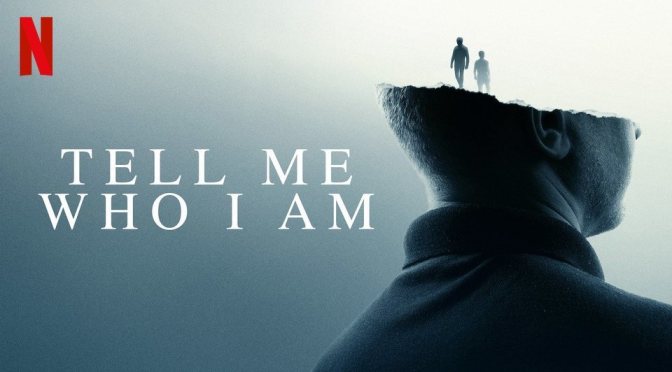
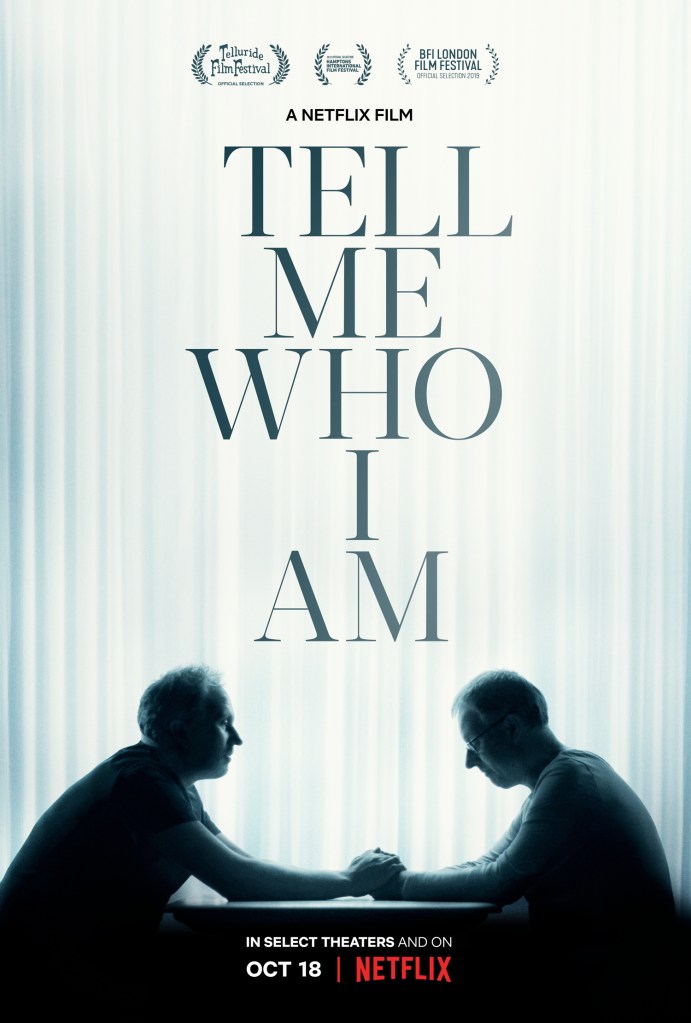
I recently reviewed a number of documentaries here, but it was only during a catch-up of Netflix films did I watch the harrowing family drama, Tell Me Who I Am (2019). Now, in my younger days I was naive enough to think documentaries were a representation of the whole truth and not a mediated version of events. There was fiction on one side and documentaries on the other. It’s a documentary so it must be true and must not be questioned.
That isn’t to say that the events of this incredible story are not true. No, my point is that Tell Me Who I Am (2019) is, while based on a true story, structured like a classic Hollywood thriller akin to something Hitchcock may have produced. Conversely, I was gripped throughout by the mystery, suspense and a gut-kicking reveal halfway through. Do not read anything about this moving family story beforehand, as going in with NO knowledge will make it all the more powerful.
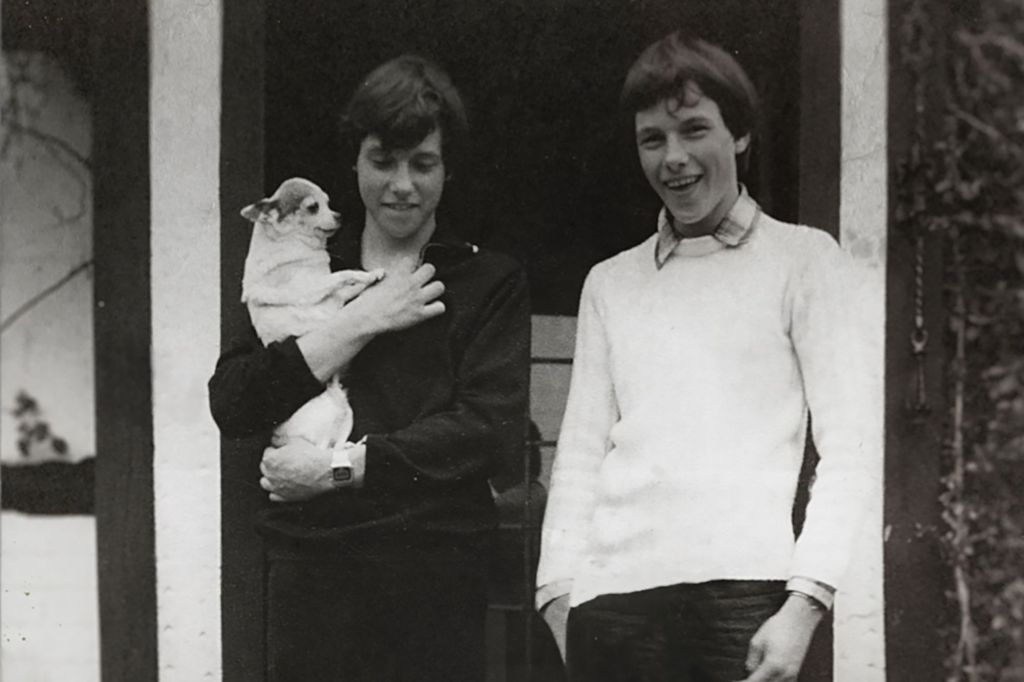
The film is structured in the classic three act fashion. Firstly, we find Alex Lewis describing events of an accident he had when 18. The incident led to him totally losing his memory. The only thing he remembered was he had a twin brother, Marcus. His mother, father, friends, their farmhouse, the privileged background and their dogs were all forgotten. Like a film noir protagonist he was left in the dark as to his whole history. With the help of Marcus, he slowly begins to learn about his past and rehabilitate for the future. Thus, at first one feels this is a story of an individual overcoming near-tragedy and rebuilding their life moment by moment. However, it becomes something much more than that. I shall say no more.
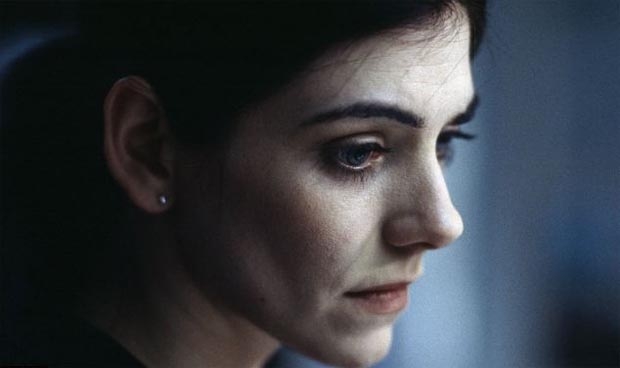
Shot through talking heads, photo montage and reconstruction, this is an exquisitely edited and filmed documentary. The twins, Alex and Marcus are framed in close-ups, with pale backgrounds and shadowed foregrounds. As we move back and forth between their respective sides of the story, one is slowly pulled into the incredible events that confirm truth is more horrifying than fiction. By the resolution I was shook and deeply affected by the film, with still some questions left unanswered. Ultimately though, Tell Me Who I Am (2019) is a satisfying and very emotionally charged story about searching for truth amidst familial conflict, betrayal and a longing for redemption.
Produced by: Kwak Sin-ae, moon Yang-kwon, Bong Yok-cho, Jang Young-hwan
Screenplay by: Bong Joon-ho & Han Jin-won
Cast: Song Kang-ho, Jang Hye-jin, Choi Woo-shik, Park So-dam, Lee Sun-kyun, Cho Yeo-jeong, Jung Ji-so, Jung Hyeon-jun, Lee Jung-eun
Cinematography by: Hong Kyung-pyo
******* MAY CONTAIN SPOILERS ********
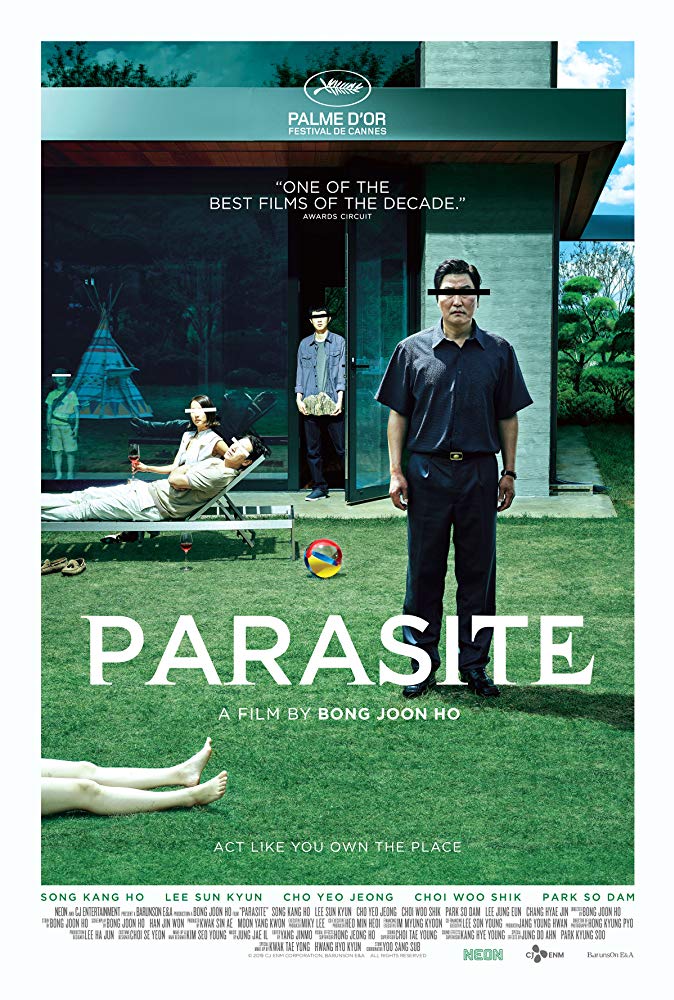
I actually saw this incredible work of cinema storytelling on Saturday just passed, so am writing this review AFTER the film rather incredibly won several Oscars at the 92nd Academy Awards ceremony on Sunday. I say “rather incredibly”, not because the film wasn’t a worthy winner of the Best Film award, but because high quality films not in the English language usually have to be satisfied with the Best International Film Award, as it is known now. Parasite (2019) in fact, deservedly won that award too. Anyway, irrespective of the awards it has earned, the film has also been universally praised. Not surprisingly, because it is not just a Korean arthouse film, but rather an ingenious genre classic. It blends dark comedy, horror, drama and thriller tropes to create a funny, suspenseful and consistently surprising experience.
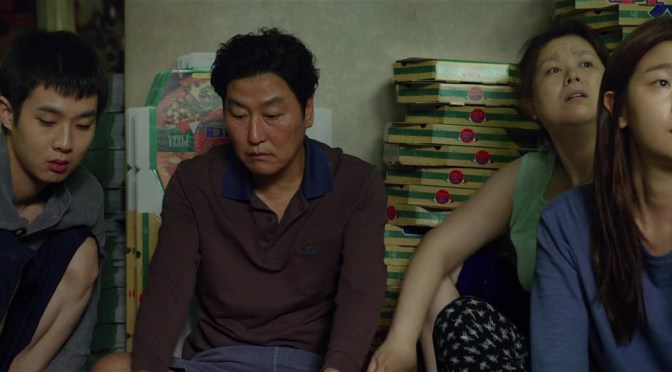
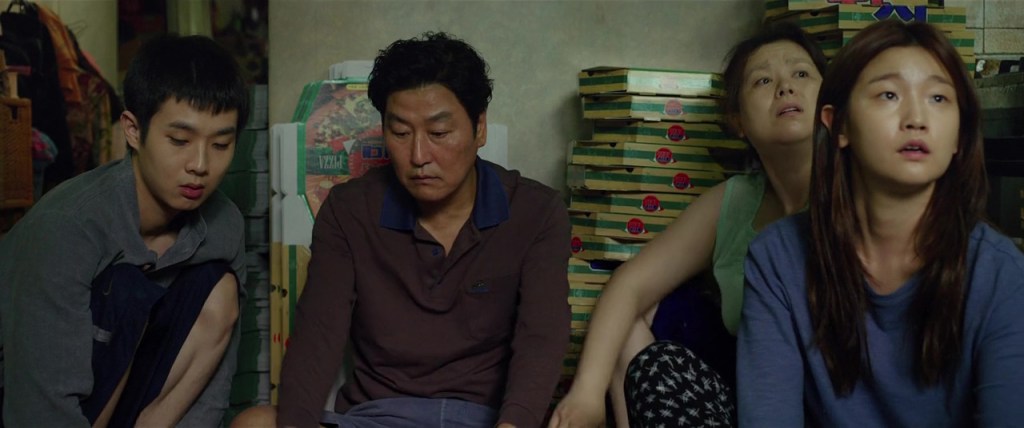
The story premise itself is relatively simple and it begins not too differently from a Japanese film I watched recently called, Shoplifters (2018). A lower class family, in this case Korean, live in cramped conditions and struggle to survive on a daily basis. Their apartment is below level and the Kim’s including father, Ki-taek, mother Chung-sook, daughter Ki-jeong and son Kim Ki-woo are all out of work. While they struggle on they stick together as a family, battling drunks who piss against their window, steal local wi-fi and also carry out menial part-time jobs like making up pizza boxes. Fortunately, a friend of Ki-woo recommends him for a teaching position within a very wealthy household belonging to the Park family. Then the narrative really gathers pace as the Kim family surreptitiously begin to infest and inveigle their way into the Park’s privileged lives.
You’d be forgiven for thinking that the Kim family are the antagonists in the narrative, however, they are very empathetic characters. Their dubious actions lead the story into very dark and funny territory, as they manipulate Mr and Mrs Park, plus their young son and teenage daughter. While not condoning their actions one can identify with their class struggle because they are desperate to improve their situation and prosperity. The issue is though they get a bit greedy and the superb screenplay throws a massive twisting curve-ball at them as the Kim’s plans unravel and events go completely off the rails.
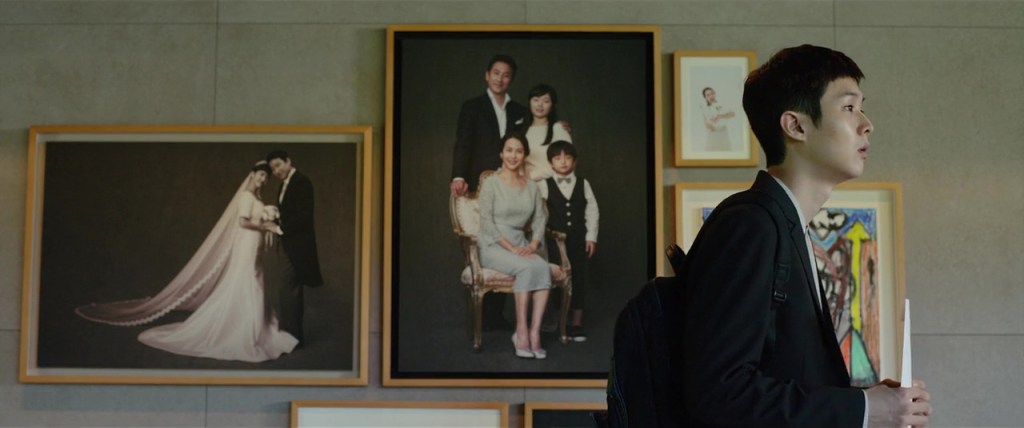
Filmmaker, Bong Joon-ho, like he did with the brilliant films, Snowpiercer (2013) and The Host (2006) is clearly using the social status of his characters to satirise and critique capitalist society. It’s literally an ‘Upstairs versus Downstairs’ narrative in terms of both locations and themes. Beautifully filmed, in a property that was actually built for the film, the cinematography makes clever use of glass and windows to mirror characters and reflect identity. Moreover, it has more than a voyeuristic air to it with characters hiding around doorways and stairwells, as well as following, spying and watching each other secretly. It’s a film which Hitchcock would have been proud to have directed too, with many suspenseful and gripping set-pieces throughout.
Ultimately, the first three-quarters of the Parasite (2019) are a cinematic masterpiece, so brilliantly plotted and planned out. When the Kim’s plans are then upended, the film gives way to an unhinged ending as events descend into bloody chaos. However, Bong Joon-ho is so in control of the material he tells us, via Ki-taek, that this careful planning is about to give way to something more messy. Furthermore, the final act while moving and tenderly rendered, I felt, was replete with somewhat poetic narrative holes. But, this is not a criticism as even in the final scenes Joon-ho is inventive while surprising the audience. Although, overall, the biggest shock would come when Parasite (2019) won the best film at the Oscars. I’m still reeling the Academy made such a risky choice!
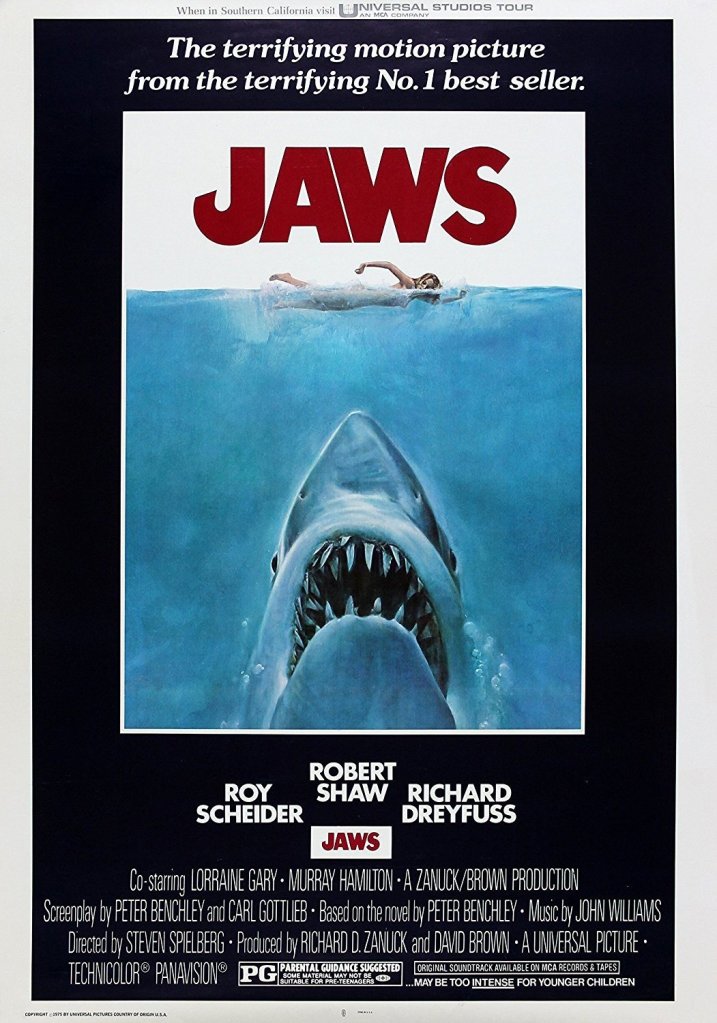
CLASSIC MOVIE SCENES #11 – JAWS (1975) – QUINT’S U.S.S. INDIANAPOLIS SPEECH
Directed by: Steven Spielberg
Produced by: Richard D. Zanuck, David Brown
Written by: Peter Benchley, Carl Gottlieb, Howard Sackler (uncredited)
Based on the novel by Peter Benchley
Main cast: Roy Schieder, Robert Shaw, Richard Dreyfuss, Lorraine Gary
**CONTAINS SPOILERS**
I have genuinely lost count the amount of times I have watched Jaws (1975). It is one of my favourite films and has one of the tightest written screenplays of all time. There is not an ounce of fat in the lean human versus monster thriller. The story as everyone knows finds a gigantic great white shark attacking beachgoers, tourists and locals at a New England summer resort town. Sheriff Martin Brody (Roy Schieder) is tasked with stopping the shark, but due to pressure from business owners and the Mayor he cannot close the beaches.
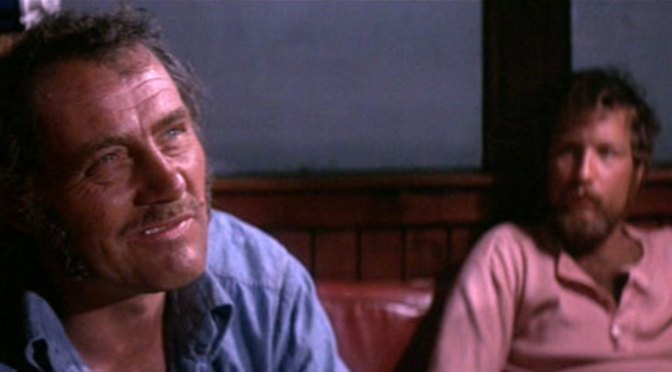
Spielberg, in only his second feature film cinema release, directed this classic thriller amazingly, filling it with a series of gripping set-pieces, fearful jump-scares and bloody carnage. He’s ably assisted by John Williams iconic score, Bill Butler’s impeccable cinematography, and sterling character acting from Robert Shaw, Richard Dreyfuss and Roy Schieder. However, amidst the suspense and heart-pounding scenes, arguably the best moment of the film is Quint’s speech that related to his experiences on the U.S.S Indianapolis.
The monologue itself comes as Quint and Hooper share “war stories” from their past experiences at sea. The men share a laugh before Brody asks Quint about a particularly nasty scar. Then the mood darkens and the old sea dog recounts a story about the U.S.S Indianapolis on which he was aboard when it sank in 1945. The chilling tale of a sinking ship and over one thousand men at the mercy of the sea, hunger, dehydration and shark attacks, is eerily recounted by Quint; loss and bitterness in his eyes. Shaw is incredible during this classic monologue as he not only establishes why Quint hates sharks, but also builds palpable suspense prior to the frenzied final shark attack on the doomed Orca.
Lastly, many writers have sought to take credit for the amazing monologue and the debate is almost as famous as the scene itself. An excellent article outlining who wrote the speech can be found here.
Produced by: Scott Rudin, Eli Bush, Sebastian Bear-McClard
Written by: Ronald Bronstein, Josh Safdie, Benny Safdie
Cast: Adam Sandler, Lakeith Stanfield, Julia Fox, Kevin Garnett, Idina Menzel, Eric Bogosian, Judd Hirsh etc.
Cinematography: Darius Khondji
**MAY CONTAIN SPOILERS**
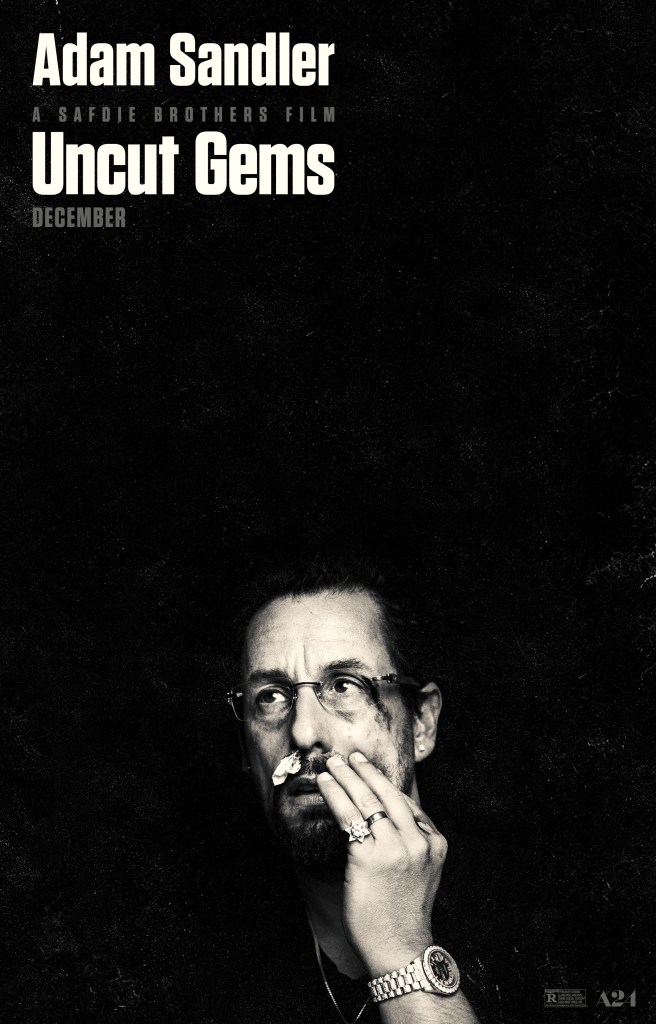
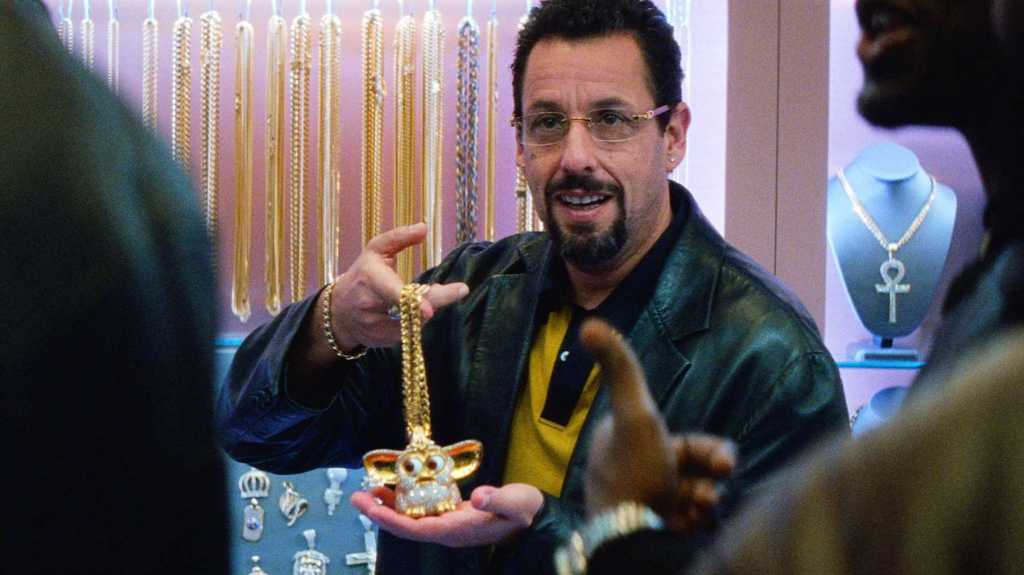
This is a film about an arsehole. Aptly enough we are introduced to the main protagonist, Howard Ratner (Adam Sandler), as he has a rectal examination of his colon and other extremities. From here on we descend into the mired cesspool that is Howard’s dysfunctional business, family, love and extra-curricular activities. He is, on the surface, a successful businessman selling jewellery, watches and gems within New York’s Diamond district. Alas, he is also a degenerate gambler who is being chased by all manner of shark-like money lenders. Most hungry of all is Eric Bogosian’s Arno, who also happens to be Howard’s brother-in-law.
So, we find ourselves in the company of a thoroughly unedifying character such as Howard. Yet, in Adam Sandler’s brilliant performance and searing direction by the Safdie Brothers, you get caught up in his latest cynical money-making plan to sell an uncut opal rock from Ethiopia at auction. The rock itself becomes — reminiscent of Guy Ritchie’s Snatch (2000) — a metaphorically blood-stained McGuffin that drags us into the underbelly of New York’s sports, pawnbroker, bookmaker, entertainment and loan shark territories. Aside from Howard’s wife and children everyone is looking for luck and a buck. Everyone’s a hustler. Everyone talks and shouts and swears over each other, creating a sense of panic throughout many scenes of deal-making and deal-breaking.
Opening with two visually very different internal examinations that involve “mining”, the Safdie brothers film Uncut Gems (2019), is a stylish and rampant anxiety inducing character study and thriller. The plot, which in itself, is quite straightforward, is wrapped in a series of heart-sweating gambles, twists and double-crosses. Supporting Sandler’s fine central performance, the Safdie Brothers find acting gold with Lakeith Stanfield’s memorable supporting turn, plus basketball legend, Kevin Garnett brilliantly playing himself! Allied to this, you also get a rogue’s gallery of personalities straight out of the local New York jewellery area itself. These characters add a further dirty authenticity to the already chaotic urban environment.
Like the Safdie Brothers previous film, the ironically titled, Good Time (2017), we are once again introduced to a set of morally repugnant characters who, rather than root for, you are dragged down into their disturbing lifestyle choices and increasingly poor decisions. Howard himself is an unrelenting addict, his own worst enemy and a whirlwind of broken promises. But, I must admit I was gripped throughout due to overwhelmingly brilliant style, cinematography, editing, direction, darkly funny script and acting performances. My only criticism is that for all the black humour, bone-breaking violence and heart-sweating suspense, the film could have easily been 15 minutes shorter. I like a lot of plot and action, but at times the narrative was over-loaded with characters and scenes that could have been chopped. Lastly, it’s great to witness Adam Sandler taking another risky role, even if Howard Ratner is fundamentally an arsehole from the probing start to the very bitter end.
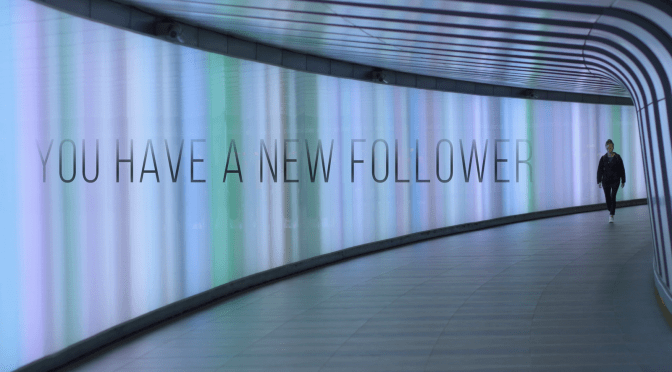
YOU HAVE A NEW FOLLOWER (2020) – SHORT FILM UPDATE
Last year I wrote and filmed a new short film called You Have a New Follower (2020). It is now completed and it is now being prepared for submission to film festivals. Here are the details, credits and a trailer to watch.
Please also feel free to SUBSCRIBE HERE to my YouTube channel which has all my short films on. Or check out the WEBSITE HERE.
YOU HAVE A NEW FOLLOWER (2020) – TRAILER
YOU HAVE A NEW FOLLOWER (2020) – DETAILS
TAGLINE
“Watch your back…”
PREMISE
Astrid Nilsson’s life begins to unravel when she is stalked by a mysterious hooded figure.
ABOUT
You Have a New Follower (2020) is the latest short film from Paul Laight and Fix Films. It was shot in London and combines mystery, suspense and science fiction genres with dramatic effect. It’s a short, low-budget film which seeks to explore themes of paranoia, anxiety, and identity within the thriller genre.
MAIN CAST
ASTRID NILSSON – Tilde Jensen DAVID MARKER – Mitchell Fisher
CREDITS AND CREW
DIRECTED BY: Paul Laight and Tilde Jensen WRITTEN AND PRODUCED BY: Paul Laight CAMERA: Petros Gioumpasis LIGHTING: Sakis Gioumpasis SOUND: Marina Fusella EDITORS: Oliver McGuirk, Petros Gioumpasis COMPOSER: James Wedlock SOUND DESIGN: Simos Lazaridis LOCATION MANAGER: Melissa Zajk PRODUCTION ASSISTANT: Lue Henner
Directors: David Fincher, Andrew Dominik, Carl Franklin
Created by: Joe Penhall – based on Inside the FBI’s Serial Crime Unit by John Douglas & Mark Olshaker
Writers: Doug Jung, Joshua Donen, Courtenay Miles, Phillip Howze, Jason Johnson, Colin J. Louro, Pamela Cederquist, Liz Hannah, Alex Metcalf, Shaun Grant etc.
Producers: Jim Davidson, Mark Winemaker, Liz Hanna
Cast: Jonathan Groff, Holt McCallany, Cotter Smith, Anna Torv, Stacey Roca, Joe Tuttle, Albert Jones, etc.
Original Network: Netflix
**CONTAINS HISTORICAL SPOILERS**
Serial killers and the subsequent crime investigations are big business. Book, films, musicals, songs, podcasts, television documentaries and fiction shows litter our screens and airwaves. Murder, for all the savagery and horror it brings, is something we as a species are inextricably drawn to explore. I can only speak for myself to say that I am consistently horrified by the evil crimes people commit. Such violence is sickening, yet, in an attempt to understand it I watch and listen to many crime shows and programmes.
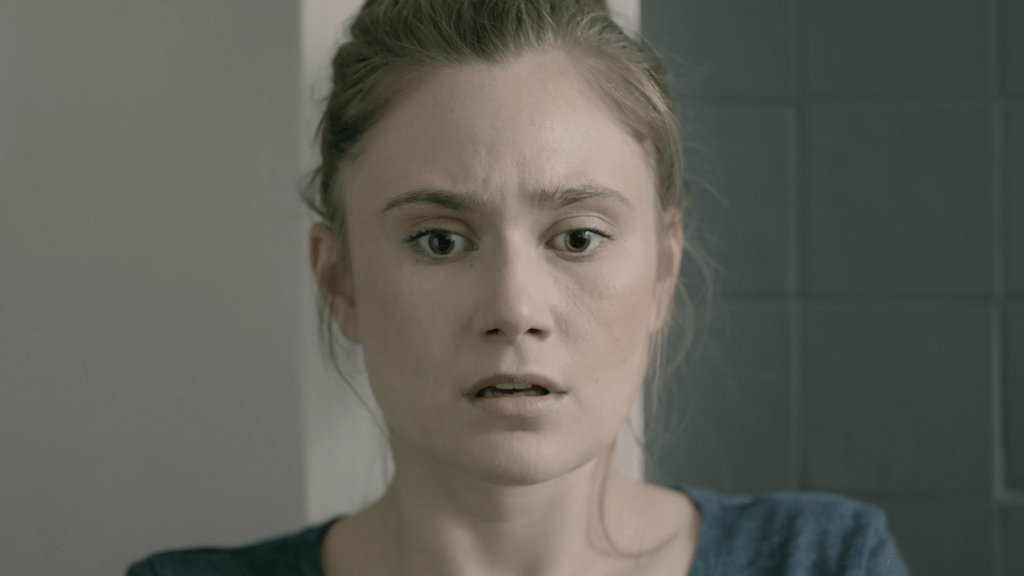
Both dark and stylish, Mindhunter, is one of the classiest and well-crafted of the serial killer genre dramas released in recent years. This David Fincher-led production, created by writer Joe Penhall, takes elements from Zodiac(2007), Silence of the Lambs (1991) and standard FBI procedural dramas to brilliantly highlight the embryonic stages of the ‘Behavioural Science Unit’ or BSU serial-killing profiling team.
Season 1 began in 1979 and found the team of Holden Ford (Jonathan Groff), Bill Tench (Holt McCallany) and Dr Wendy Carr (Anna Torv), forming an uneasy alliance at the BSU. They initially began interviewing murderers behind bars to attempt to understand their motives and modus operandi in order to assist with new investigations. The highlight of the season was the appearance of notorious serial killer Ed Kemper (Cameron Britton). Britton’s rendition is incredibly chilling and his intense connection with Ford rattled the FBI agent’s cage so much he unravelled psychologically.
Season 2 is even better than the first because it wastes no time in getting to some major crime investigations. Season 1 got slightly bogged down in Ford’s personal relationships, and while Season 2 find Tench’s and Carr’s home lives providing intriguing subplots, this latest set of nine episodes are more committed to interviewing and catching killers. Kemper returns briefly, but the team also have some intense interviews with ‘Son of Sam’ – David Berkowitz (Oliver Cooper) and Charles Manson (Damon Herriman). The latter, in Episode 5, is a short but striking scene and complete television gold.
The majority of Season 2 is taken up with a major murder case in Atlanta during 1981. A series of teenage black youths, mainly boys, have been going missing and Ford and Tench are sent out to help the Atlanta police department. It’s a hotbed of socio-political and racial tensions. Plus, the parents of the missing kids feel the police are not doing enough to catch the killer. There is also a belief the murders could be the work of the Ku Klux Klan. Tench and Ford have other ideas and meet resistance to their new theories. Much drama and suspense is gained from testing their methods within this charged atmosphere. Jonathan Groff as Holden Ford is especially adept at rubbing people up the wrong way with his off-centre, almost alien, persona. Holt McCallany is also very impressive in his role as his more popular partner, Tench.
David Fincher is one of those filmmakers whose form and style is often unsettling and remarkable. He, along with fellow directors, Andrew Dominik and Carl Franklin, shoot in the shadows, both stylistically and psychologically. Greens, dark yellows and browns stain the screen and create a haunting stylistic palette. Furthermore, with gripping narratives, great direction, memorable performances and the production team’s accurate eye for period detail in mind, I just did not want the latest season of Mindhunterto end. Lastly, while murder has become a lucrative fixture on our TV screens, I have to admit that series like this render it powerfully addictive; something that captures you and refuses to let you go.
Writers: Jed Mercurio, Rachel Anthony, Richard Zajdlic
Directors: Jed Mercurio, John Strickland, Richard Laxton, Jon East, Iain B. Macdonald, Douglas Mackinnon,
Cast: Max Beesley. Patrick Baladi, Neve McIntosh, Keith Allen, Susan Lynch, Tamzin Malleson, Preeya Kalidas, Simon Lowe, Hattie Morahan, Vicky Hall, Nicholas Palliser etc.
No. of Episodes – 17 (over two seasons and one-off special)
Original Network: BBC (can now be viewed on BBC IPlayer)
**MAY CONTAIN SPOILERS**
Creator and writer Mercurio is a bulletproof show-runner; a genre writer with a proven hit rate whose work almost always brings commercial, critical and audience success. Having achieved early TV writing acclaim with dark medical comedy, Cardiac Arrest (1994-1996), Mercurio’s next drama Bodies (2004 – 2005) was another critical hit. Latterly, Bodyguard (2018) andLine of Duty (2012 – present) have also proved highly successful.
Undeniably,Line of Duty is a massive hit for the BBC. It has received awards and nominations from: the Royal TV Society, the Writers’ Guild and BAFTA. Moreover, it was also voted in the top BBC shows of all time. While I tend to avoid medical and police procedural dramas as a mild rule, due to the overly-saturation of such programmes on television, Mercurio’s work always draws me in. Thus, I decided to re-watch Bodies (2004 – 2005) on the BBC IPlayer and I’m both glad I did and didn’t to be honest.
I’m glad I watched it because it contains some of the most tense drama you can ever experience. I wish I hadn’t because it contains some of the most visceral medical operations and birthing situations you could ever witness. In fact, all Peckinpah, Carpenter and Tarantino films combined contain less blood than Bodies. Indeed, the ultra-realism of the gynaecological operations on show should contain a health warning of their own. No surprise the make-up and prosthetic effects team on the programme won many awards.
Based on Mercurio’s book of the same name, the narrative is inspired by his experiences working in the National Health Service. An ensemble cast impresses, but the lead protagonist is specialist registrar, Rob Lake (Max Beesley). He is a skilled Doctor who joins the Obstetrics and Gynaecology ward at fictional South Central Infirmary. Rob isn’t particularly likeable and Beesley is directed to portray him as a serious and surly Northern bloke. While still learning his trade he is an excellent surgeon though, with a keen sense of what is right.
The first series of six episodes is incredibly tightly wound and suspenseful because Lake finds himself in a number of medical and moral dilemmas. This is due to his clashes with his boss, Dr Roger Hurley (Patrick Baladi), who is prone to making severe errors during medical procedures. Consequently, during these pulsating scenes of medical trauma my heart was not so much in my mouth but on the floor. Having scooped and swallowed it back up, the fast pace of first season soon delivers further nerve shredding life and death situations.
Season Two is not quite as brilliant as Season One. While containing more incredibly vivid moments of birthing madness, it is over-stretched by an extended ten episode run. Plot-wise it carries on in a similar vein with Lake, Hurley and the toxic masculinity of Dr Tony Whitman (Keith Allen), all clashing within the hospital wings and operation rooms. Their conflicts endanger patients lives as they continually venture into dangerous games of one-upmanship. Added to the deadly apothecary are the politics on the ward, gender, sexual and class. Moreover, there’s the over-arching bureaucracy and target-led NHS managers poking their statistics in. These budget-scrabbling pen-pushers arguably kill more patients than the warring Doctors, mainly due to their incessant bean-counting, biscuit-eating and public relation drives.
Overall, while I have made this sound like a heavy drama or horror genre programme, it is in fact also darkly funny. Mercurio has a knack of taking the most grim circumstances and injecting doses of sardonic humour throughout. There is also gallons of blood and a lot of sex too; probably too much in the first season. But, I get that the theme of the human body was being explored very thoroughly, in more ways than one. Am I the only person who is not a fan of overt sex scenes in films or on television, even if they are in context?
Be warned, if you are scared of hospitals, or operations or about to have a child — DO NOT EVER WATCH THIS SHOW! It is brilliantly scripted and acted, but it will give you nightmares. I mean the Doctors, Nurses and medical staff of the NHS do an incredible job saving lives, so this show should not be a reflection of actual health care in the United Kingdom. If it is though, the phrase: “Trust me, I’m a Doctor” is never as scary as it is in Bodies.
Executive Producers: David E. Kelley, Jean-Marc Vallee, Reese Wetherspoon, Bruna Papandrea, Nicole Kidman, Liane Moriarty etc.
Based on: Big Little Lies by Lianne Moriarty
Teleplays written by: David E. Kelley
Directed by Andrea Arnold
Main Cast: Reese Witherspoon, Zoe Kravitz, Nicole Kidman, Shailene Woodley, Laura Dern, Meryl Streep, Alexander Skarsgård, Adam Scott, James Tupper, Jeffrey Nordling, Kathryn Newton etc.
Cinematography: Yves Belanger, Jim Frohna
Original Network: HBO
**CONTAINS SPOILERS FOR SEASON ONE**
I hate Social Media and Twitter especially, sometimes. I also hate myself for getting dragged into the bullshit it sometimes brings. I’m referring specifically to the distorted prejudice the mind can take on when reading a few negative posts about a programme, film or personality. Such reports can obviously be accurate. However, they can mislead and stain your expectations of a show or film or actor or artist. In this case the second season production of HBO’s, Big Little Lies, came under fire from a few people on my Twitter feed. They said it was an awful and an ultimately disappointing series. Were they right? I mean, how bad could it be?
Then there was the Indiewirearticle which highlighted an issue during production. They asserted in a well written piece of click-bait that director Andrea Arnold was unceremoniously disregarded in the editing process and first season director, Jean-Marc Vallee, brought in to oversee re-shoots and final cut. If you believe the Indiewire article, this was the act of a heinous media corporation cutting down a beloved artist and robbing her of her vision. Arnold’s auteur status remains untainted for me. She is a fine director who carried out her contract and did not have final cut anyway. This belonged to HBO and they had say on who they hired during the production.
Thus, in a short period of time, a couple of tweets and one article had seriously affected my expectations of the second season of Big Little Lies. I was expecting a mess of a show. One which did not make sense and was robbed of all artistic and dramatic impetus by the HBO hierarchy. However, I can safely say I was wrong and, while not as good as the brilliant first season, it was still a really intriguing eight episodes worth of entertainment.
After the exceptional first season which found a stellar cast including: Reese Witherspoon, Nicole Kidman, Laura Dern, Adam Scott, Zoe Kravitz, Alexander Skarsgård and Shailene Woodley on top acting form, the second season follows on with the aftermath of prior events. The first season expertly inter-weaved stories concerning an unknown “murder” victim; school bullying; warring parents; extra-marital affairs; and abusive relationships, expertly played out over seven compelling episodes. With the “murder” victim revealed in the final episode, we now get an exploration of suspicion, guilt, conspiracy and a test of loyalty and friendship.
Without wishing to give too much away the newest and strongest addition to the series is Meryl Streep. She plays the mother ***SPOILER ALERT*** of the dead guy from the first season, Perry Wright (Alexander Skarsgård). His death occurred when he was pushed “accidentally” down some stairs at a party. But, the friend’s, including his wife, Celeste (Nicole Kidman), collude to say he fell instead. With the police still suspicious the main investigator is actually Streep as the dogged Mary Louise. She is passive-aggressive and subtle in her enquiries as to how her son died. It’s a delight watching her deviously pull apart each of the lead suspects. It is also an absolute masterclass in acting as Streep’s crafty characterisation makes this series a must-watch. Her scenes with Nicole Kidman’s crumbling personality are especially compelling.
Allied to the investigation into Perry’s death, the show gives some interesting narrative strands to Laura Dern’s energetic power-mum, Renata. Her world is about to disintegrate around her in the face of her husband’s financial wrong-doings. Equally powerful is Bonnie’s (Zoe Kravitz) attempt to heal the rift between herself and her mother. Bonnie suffers the most guilt as ***SPOILER ALERT*** she was the one who pushed Perry down the stairs. As she battles with the emotional repercussions of her actions, she experiences a painful re-emergence of historical parental abuse. Perhaps, not as intriguing are Madeline (Reese Wetherspoon) and Jane’s (Shailene Woodley) narrative strands. Nonetheless, they do support the series’ themes of family, trust and love that add depth and subtext.
To finish, I learnt once again that social media and Twitter surfing can have a negative impact on one’s critical expectation of a programme or film. You have to basically make your own mind up and not be swayed by the pitchforks and torch-bearers baying for blood online. Big Little Lies (2019), Season 2, therefore, while not reaching the dramatic heights of the first season is an excellent follow-up. It explores the privileged lives of the rich Monterey set instilling a sense of humanity and frailty to their lives. The more improvisational direction of Andrea Arnold works well with the fragmented impressionism of the editing style to bring this out. Mainly though, it’s the impressive cast and script which glued me to the screen while experiencing this very watchable drama.
Produced by: Marco Morabito, Brad Fischer, Luca Guadagnino, Silvia Venturini, Francesco Melzi d’Eril, William Sherak, Gabriele Moratti
Screenplay by: David Kajganich – Based on Suspiria (1977) by Dario Argento and Dari Nicolodi
Cast: Dakota Johnson, Tilda Swinton, Mia Goth, Angela Winkler, Ingrid Caven, Elena Fokina, Chloe Grace Moretz, Malgosia Bela, Lutz Ebersdorf, Jessica Harper etc.
Music by: Thom Yorke
Cinematography: Sayombhu Mukdeeprom
**MAY CONTAIN SPOILERS**
There are so many films released that it is virtually impossible to see them all. Plus, even if you didn’t have to work to earn a damned wage or physically need sleep you still wouldn’t be able to watch everything at the cinema. More specifically though, we may choose NOT to go to see a film on the big screen for certain reasons. Collectively, I consider these movies to be “one’s that got away!”
Thus, in a new section called, unsurprisingly, FILMS THAT GOT AWAY, I will be reviewing films which I missed first time round at the cinema and have subsequently caught up with on Sky, Amazon, Netflix, Blu-Ray or even good old-fashioned terrestrial television. I will consider the film critically as entertainment and why I missed it first time round. As usual the film will be marked out of eleven.
When the UK release of Suspiria (2018) was announced there were many reasons I was immediately put off from wanting to see it. Firstly, despite having watched it three times, I genuinely could not stand the original Dario Argento film. I know people consider it a horror classic; however, I think story wise, it’s a bad film. It’s neither scary from an emotional point-of-view or actually makes any sense logically. I know it’s meant to be based on surreal and nightmarish imagery, montage and performance, but the story or characters did not connect with me. The colour design, gore and soundtrack are outstanding but, overall, I felt I was trapped watching the manic outpourings of an Italian psychopath.
The second reason I did not want to watch it is I haven’t always got on with Luca Guadagnino’s cinematic works. Don’t get me wrong, he is a brilliant filmmaker. However, I find him an indulgent artist whose tone, pace and direction seems haphazard. Of the films I have seen, I Am Love (2009) was a brilliant character study, anchored by a stunning Tilda Swinton performance. But A Bigger Splash (2011) and Call Me By Your Name (2017), were expertly constructed but indulgent and over-rated travelogues littered with narcissistic bores. Nonetheless, I really liked Suspiria (2018). It is almost, but for Guadagnino’s typical excesses, a horror masterpiece.
Set in 1977 (when the original was released), at the height of the Cold War in divided Germany, Suspiria, is a heady mix of rites of passage, cold war and horror genres. There are many narrative strands with which the screenplay, by David Kajganich, attempts to balance. Further, we also have personal, political, religious, artistic, gender and communal themes prevalent through the story. While it’s an ensemble cast the focus is Dakota Johnson’s Susie. She is a young aspiring dancer, from an Amish background, who joins the world-famous Markos dance company. In the process she is determined to impress Tilda Swinton’s commanding mentor. The parallel narrative involves psychiatrist Dr Josef Klemperer and his investigation into a missing patient (Chloe Grace Moretz); who also happens to be a dancer from the troupe.
As the story unfolds Susie proves herself an incredibly powerful dancer. At the same time, it is revealed that the elders and teachers of the dance group are hiding a sinister secret with darkness and ritual to the bloody fore. Memorable dance sequences full of beauty, energy and gore dominate, with Dakota Johnson giving an impressively physical acting portrayal. I also liked the nuanced control within her character as she grows stronger with each dance. Meanwhile, further dark events occur as Dr Klemperer’s investigations draw him closer to the troupe’s shadowy doors.
As I said, Suspiria is almost a horror masterpiece. The filmmaking, cinematography, art direction, choreography and score by Thom Yorke all collide to create an incredibly tense and terrifying experience. Moreover, while I was fully committed to the characters in the dance troupe and Susie’s movement up the ranks, the choice to juxtapose the socio-political events seemed to belong in another film. The religious context and notions of family and matriarchal dominance were incredibly powerful too and served the horror well. However, Guadagnino, in my humble view should have shaved some scenes from the running time. While I much prefer this film to the Argento original, a further edit for pace would have made this even better. Nonetheless, it had me riveted throughout through the sheer quality of filmmaking. I was incredibly impressed by the melding of dance and death. Indeed, the final orgiastic ritual with buckets of blood, decapitations and gnarled monsters was supernaturally unforgettable.
Produced by: Jason Blum, Ian Cooper, Sean McKittrick, Jordan Peele
Written by: Jordan Peele
Starring: Lupita Nyong’o, Winston Duke, Elisabeth Moss, Tim Heidecker, Shahadi Wright Joseph, Evan Alex etc.
Music: Michael Abels
Cinematography: Mike Gioulakis
**MAY CONTAIN SPOILERS**
Orson Welles is reportedly quoted as saying, “A movie in production is the greatest train set a boy could ever have.” Thus, Jordan Peele proves this point with an unstoppable cinematic train ride in Us (2019); that while threatening to career off the rails on occasions, proves to be a thrilling work of horror-meets-social-satire entertainment.
The film centres on an everyday normal family of four — the Wilsons: Adelaide (Lupita Nyong’o), Gabe (Winston Duke), and their two children — as they visit their summer home by the beach. Haunted by a scary incident in a hall of mirrors when a child, Adelaide is afraid to return to the beach where it occurred, until her husband’s goofy enthusiasm wins her over.
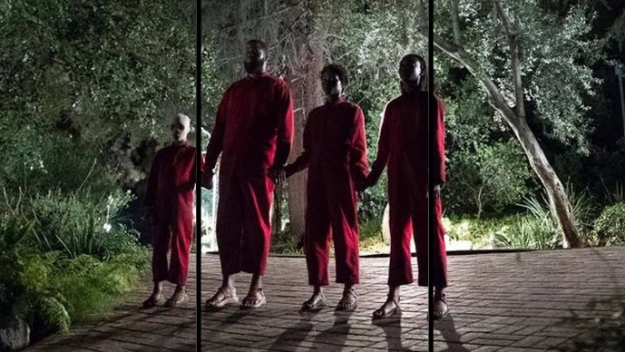
Events begin to turn and twist askew when their son, Jason, seems to go missing for a while. Even though he returns, paranoia and fear sneaks into Adelaide’s psyche. Things become even stranger when a mysterious family of four appear in the Wilsons’ drive in the dead of night. This is when the true face of horror surfaces and a pulsating home invasion and prolonged chase sequence ensues.
Peele has clearly seen a lot of horror films. As such the early scenes build tension perfectly with: stormy weather; a strange drifter with biblical sign haunting the boardwalk; creepy hall of mirrors; the choral soundtrack reminiscent of Rosemary’s Baby (1968); the son, Jason wearing a Jaws (1975) movie t-shirt; the flock of seagulls on the beach echoing Hitchcock’s The Birds (1963); and so it goes.
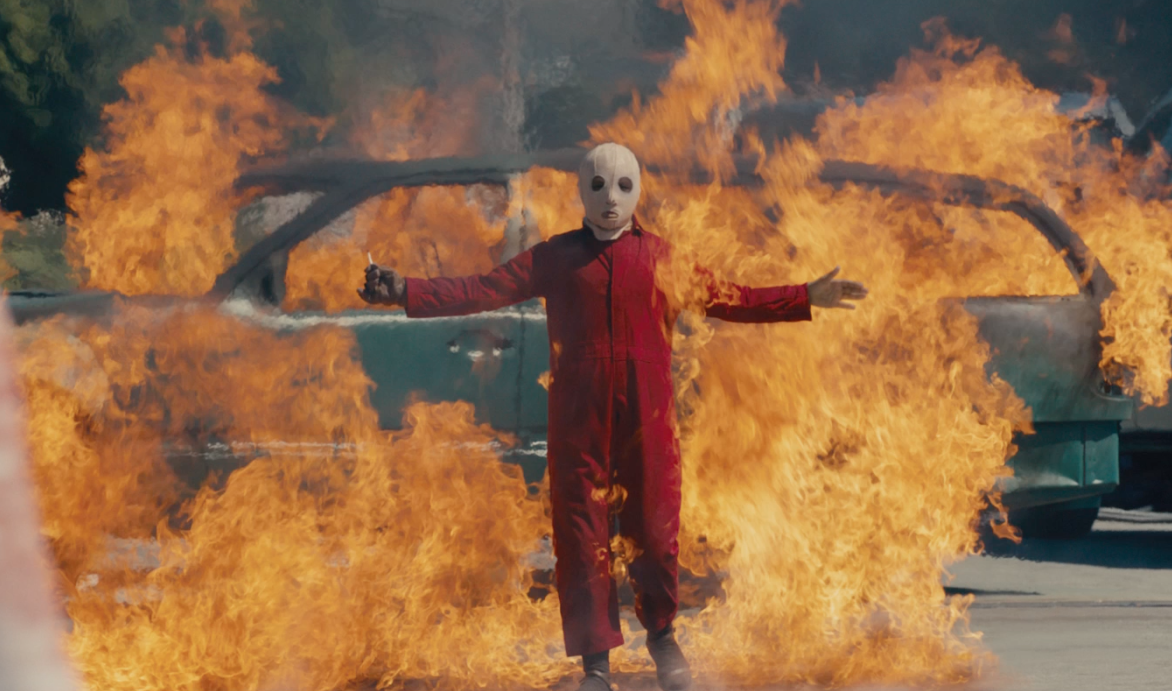
Such horror tropes build a huge wall of tension so effectively it’s almost a relief when released during the big doppelganger reveal. Subsequently, the blood-letting ensues in some meaty fights and exchanges involving weapons, such as: baseball bats, metal pokers, ornaments and golf clubs. The doppelgangers themselves are clearly a reflection of the self; twisted visions of humanity turning against the characters, as they literally become their own worst enemies.
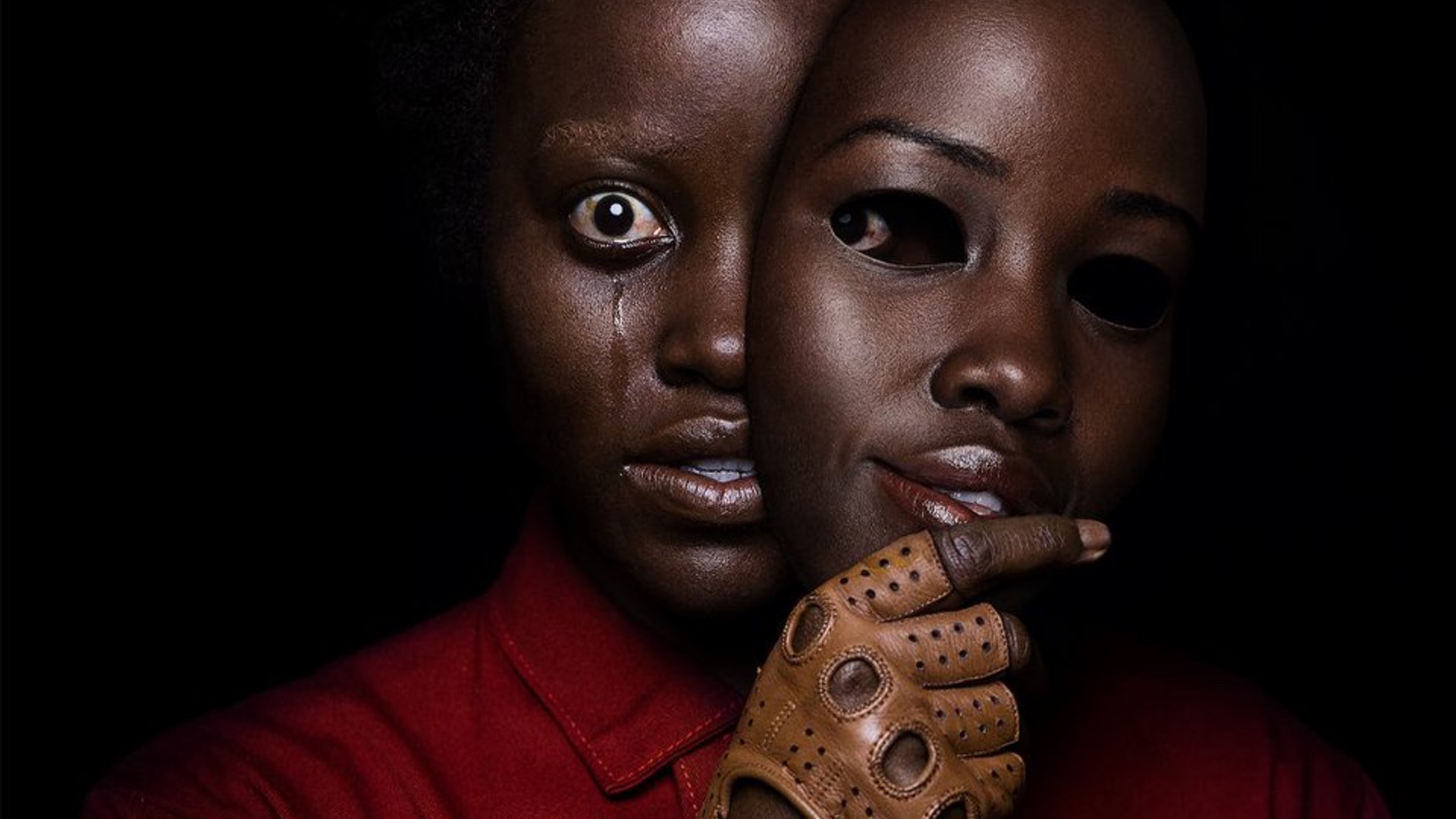
The cast are expertly marshalled by Peele, as he gets doubly great performances from all the actors. The logistics of shooting doubles must have been tough, especially so many at a time. The featured cast are very good, notably Winston Duke as Gabe Wilson. He offers some light, comedic and physical humour amidst the gore. Meanwhile, Lupita Nyong’o steals the show in the dominant twin roles of Adelaide and the nefarious Red.
It’s Adelaide’s personal journey of double/split identity which provides the spine of the film. As she fights to save her family she must also literally battle the demon inside and outside herself. This thematic is the most powerful of the film for me, as Nyong’o’s acting is full of emotional resonance.
Perhaps, not as successful, when compared to Get Out, is the attempt to marry the personal conflict to the socio-political landscape. While Peele’s first film was an overt satire of slavery and white America oppression and exploitation, Us’ targets are intellectually more ambiguous and open to interpretation. I mean take your pick from: class, capitalism, consumerism, race, de-politicization, narcissism, over-population, split personalities, government conspiracies; and over-arching fear of ‘the other’.
These and many more themes are on Peele’s radar, as is his overall critique of the United States (U.S. = US – geddit!). That they don’t quite gel coherently is not a criticism but a positive indictment of his ambition. Conversely, while I felt the underlying power of Peele’s call-to-arms and desire for human unity in Us, one could argue the fire, smoke and mirrors of these ideas subtract from the power of the families’ personal struggle. Moreover, what is the solution to the government copying us or burying our doubles underground? Is it to kill the others and hold hands in unity? Who knows? What I can say is such naive idealism in horror has never been so entertaining.
After the success of the slavery-soul-swapping and genre bending thriller, Get Out, Jordan Peele has tasked himself with trying to top that fine movie. Well, if Get Out was the starter, Us is the main meal. In fact, one could argue the film is so full of ideas that it threatens to fail due to sensory overload. However, Peele is such a multi-talented storyteller he skilfully delivers, wholly thanks to great writing, masterful film production, an exceptional soundtrack and an incredible cast.







 The Cinema Fix presents