Tag Archives: USA

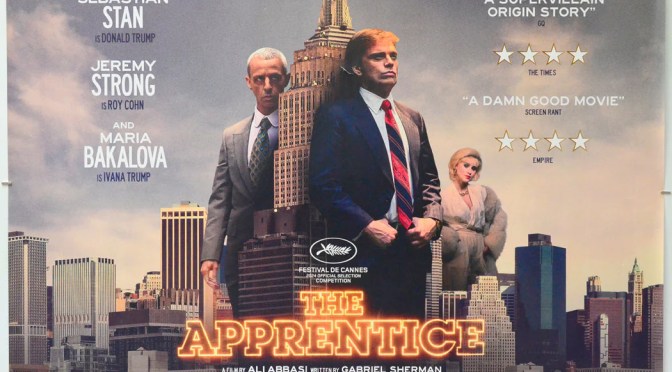
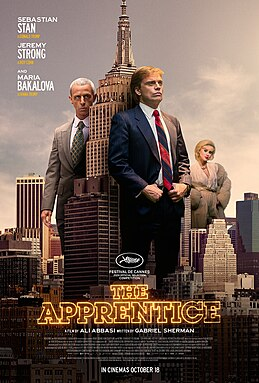
Sky Cinema Review: The Apprentice (2024) – a mesmerizing portrayal of the rise of Donald Trump!

Sky Cinema Review: The Apprentice (2024)

Directed by Ali Abbasi

Written by Gabriel Sherman

Produced by Ali Abbasi, Louis Tisné, Ruth Treacy, Julianne Forde, Jacob Jarek, Daniel Bekerman

Main cast: Sebastian Stan, Jeremy Strong, Martin Donovan and Maria Bakalova, etc.

Cinematography Kasper Tuxen

*** CONTAINS SPOILERS ***


Ali Abbasi’s previous directed films such as Holy Spider (2022) and Border (2018) are brilliant and powerful films centered around stories relating to serial killers and trolls, respectively. So, I had to pause for a moment and ask: what attracted him to a film about businessman, reality TV personality and now, President of the USA, Donald Trump?

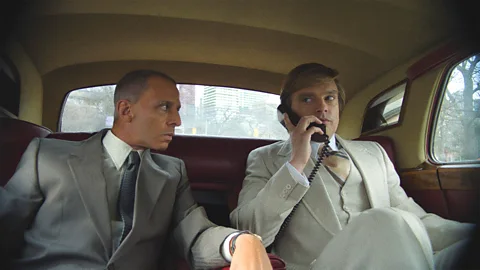
Abbasi’s The Apprentice (2024) is less a deep psychological excavation than a chillingly slick chronicle of power corrupted at its root. Framed like a “greatest hits” package of Donald Trump’s (Sebastian Stan) formative years, the film charts his transformation from brash outer-borough real estate hustler into the ruthless media manipulator and future political juggernaut — all under the tutelage of the infamous Roy Cohn (Jeremy Strong) and his three essential rules of business and life.


Sebastian Stan delivers a startling performance as a young Trump, capturing the man’s bravado, insecurity, and relentless hunger for dominance without slipping into caricature. Opposite him, Jeremy Strong is mesmerizing and serpentine as Cohn — a master manipulator who recognizes, nurtures, and ultimately weaponizes Trump’s worst instincts. Together, they form a grotesquely compelling duo: two charismatic monsters locked in a dance of mutual ambition and moral decay.

While the film occasionally skims across the surface of its characters — opting for scenes that feel like historical checkpoints rather than dramatic revelations — it compensates with a queasy momentum and sharp stylistic flair. It also looks great with the film and video stock reflecting the era of which it is set. Overall, this isn’t a biopic searching for sympathy or redemption; it’s a portrait of the making of one of the most divisive figures in modern history, seen through the lens of a mentor whose own legacy drips with cynicism and menace. In conclusion: The Apprentice (2024) may not dig as deep as it could, but what it shows is enough: monsters aren’t simply born — they’re coached.

Mark: 8 out of 11


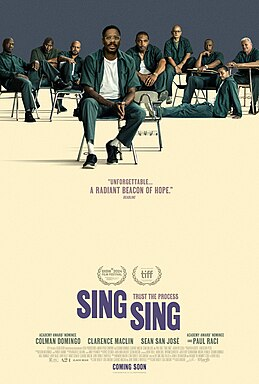
Amazon Prime Film Review: Sing Sing (2023) – displays the redemptive power of art and performance!

Amazon Prime Film Review: Sing Sing (2023)

Directed by Greg Kwedar

Screenplay by Clint Bentley & Greg Kwedar

Story by Clint Bentley, Greg Kwedar, Clarence Maclin & John “Divine G” Whitfield

Based on “The Sing Sing Follies” by John H. Richardson and Breakin’ the Mummy’s Code by Brent Buell

Produced by Clint Bentley, Greg Kwedar & Monique Walton

Main cast: Colman Domingo, Clarence Maclin, Sean San José,
Paul Raci, Sharon Washington, Jon-Adrian “JJ” Velazquez, Patrick “Preme” Griffin, Sean “Dino” Johnson, Miguel Valentin and more.


Cinematography by Pat Scola


Sing Sing (2023) is a powerful prison drama directed by Greg Kwedar, based on the real-life Rehabilitation Through the Arts (RTA) program at New York’s Sing Sing Correctional Facility. The film follows John “Divine G” Whitfield (portrayed by Colman Domingo), a wrongfully convicted man who finds purpose and transformation through participation in a prison theatre group. As the group prepares to stage an original comedy, tensions arise, particularly between Divine G and a new, skeptical member, Clarence “Divine Eye” Maclin (played by himself).

The reported $2 million budget for the prison-based theatrical drama Sing Sing (2023) underscores a powerful truth in filmmaking: emotional impact and narrative power are not dictated by the size of a production’s budget. In an industry often dominated by multi-million dollar spectacles and high-concept visual effects, Sing Sing (2023) stands out as a reminder that authenticity, performance, and purposeful storytelling can achieve more than sheer spending ever could. In this way, the film charts a path forward for filmmakers: it shows that profound emotional connection comes not from lavish resources but from the courage to tell deeply human stories with clarity, care, and conviction.

By investing modestly but wisely—prioritizing casting choices, intimate direction, and a grounded script—the filmmakers harness the emotional gravity of the story itself. Featuring real formerly incarcerated individuals alongside professional actors, the film creates a resonance that can’t be manufactured with money alone. The restraint in budget mirrors the thematic focus of the film: confinement, transformation, and human dignity. There’s a raw, stripped-down sincerity in Sing Sing (2023) that aligns with its financial humility, allowing viewers to focus not on spectacle but on spirit.


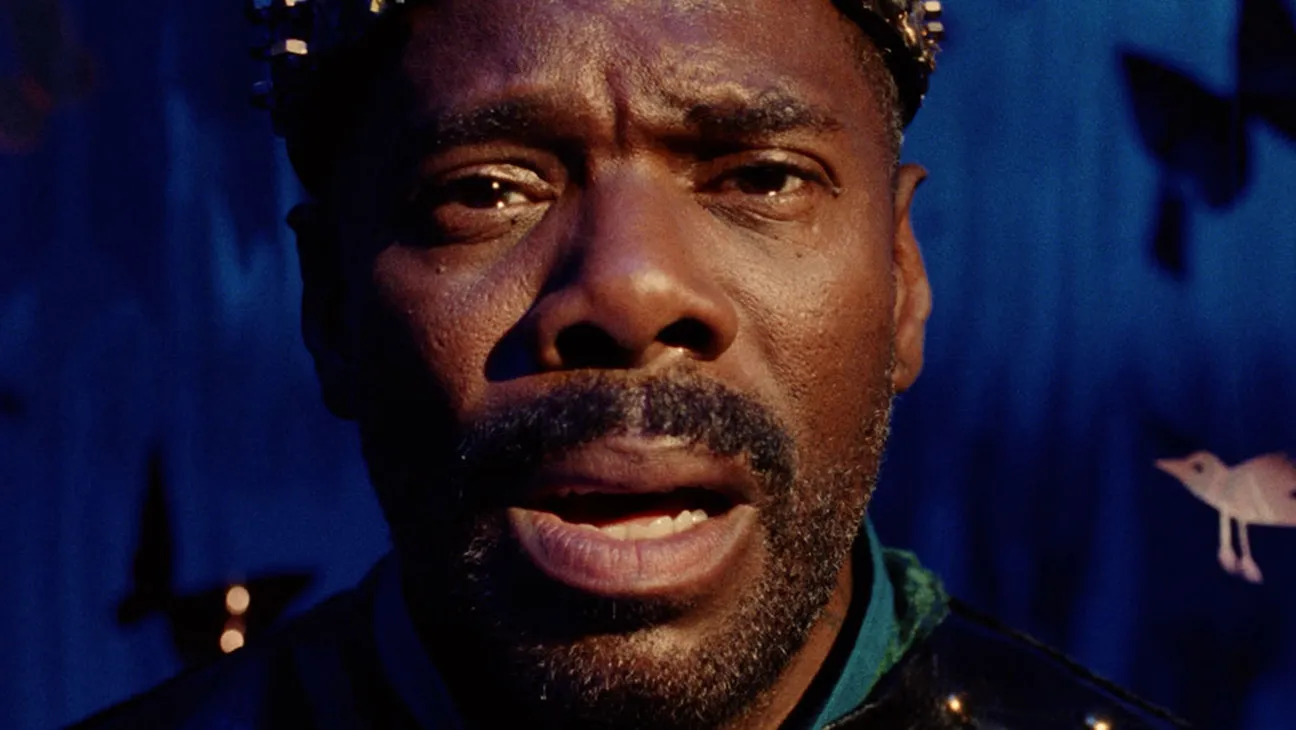
At the heart of the film is Colman Domingo majestic performance. Without question he is one of the most enthralling actors working today. With a presence that radiates both gravitas and vulnerability, he has the rare ability to inhabit characters so fully that they feel less like performances and more like revelations. In Sing Sing, his work is restrained, generous, and deeply moving—serving not just as a lead, but as a quiet conduit for the emotional power of those around him. It’s the kind of performance that reminds you what acting is for.

There’s a grounded nobility to Domingo’s recent choices—films that matter, that uplift overlooked voices, and that seek to transform rather than simply entertain. In an era where so many talented actors get absorbed into the ever-expanding Disneyverse or other IP-driven machines, one can only hope that Domingo continues on this path. His gifts are too profound, too precise, to be flattened into quips and CGI battles. He belongs in films like Sing Sing (2023) where the stakes are human and the impact is lasting.

Directed with subtle power by Greg Kwedar he delivers a drama of transcendent creative expression as the inmates forge deep bonds, confront personal demons and change societal perceptions. Featuring performances by both professional actors and real-life formerly incarcerated individuals, Sing Sing (2023) offers an authentic and moving exploration of redemption, resilience, and the transformative power of art. Of course not all of them are innocent and are guilty. The film does not apologise for their crimes or glamourise them, but allows these men to find light amidst the darkness; a spiritual and cultural escape from the walls and bars which surround them.

Mark: 9 out of 11


CINEMA REVIEW: THE BIKERIDERS (2023)

CINEMA REVIEW: THE BIKERIDERS (2023)

Directed by Jeff Nichols

Screenplay by Jeff Nichols (Based on The Bikeriders by Danny Lyon)

Produced by Sarah Green, Brian Kavanaugh-Jones and Arnon Milchan

Main Cast: Jodie Comer, Austin Butler, Tom Hardy, Michael Shannon, Mike Faist, Norman Reedus, Boydf Holbrook etc.

Cinematography by Adam Stone

*** MAY CONTAIN SPOILERS ***


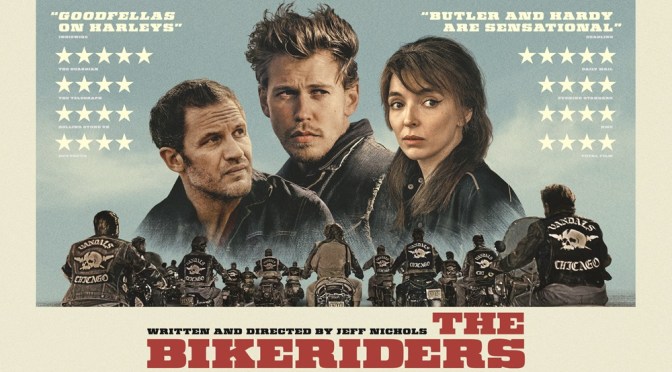
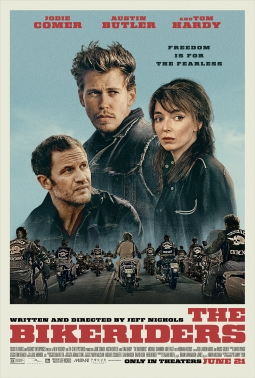
Set in the mid-sixties, the biopic The Bikeriders (2023), centres on a bike club (or what we could be considered a ‘Hell’s Angel’ gang of the era) called ‘The Vandals.’ Started by Tom Hardy’s, leader Johnny, as a motorbike racing club, it develops into a social place for men to meet and play and look cool and party and fight. More significantly, ‘The Vandals’ club allows the men to gain a sense of authority and identity within the shifting state of America during the 1960’s. The terrific ensemble cast includes Austin Butler as moody Benny, plus his sparky narrator wife, Jodie Comer, as Kathy. All are very good, yet there is something lacking thematically and in terms of plot.

Story-wise The Bikeriders (2023), is more like a verbal and pictorial diary with Comer’s affected Chicago accent gluing the various events together without reaching a height of dramatic satisfaction. Butler and Hardy are really cool and moody, echoing visitations of James Dean and Marlon Brando, respectively. But there needed to be more differentiation in their characters as TWO strong and silent types created a dramatic vacuum for me. Classic scene stealers such as Michael Shannon, Boyd Holbrook and Norman Reedus do add colour and charisma. I kind of wanted more of those guys because they had strong personalities, and actually spoke! Meanwhile, the props, costumes, production design and cinematography are all brilliantly rendered, clothing the film in an authentic and gritty sense of style.

Ultimately, the nostalgic, “anti-hero” driven period drama, so well delivered by Martin Scorsese over the years gets another solid run-out in The Bikeriders (2023) from the talented filmmaker, Jeff Nichols. Whereas Scorsese brings incendiary cinematic fireworks and complex tales of morality to your face, mind and heart, Nichols is a more under-stated director. He presents his stories and characters without too much push, with the audience having to lean in to catch the whispers of drama. That isn’t to say The Bikeriders (2023) doesn’t have action, racing, fighting, crashes, and blood, but the characters are lacking a powerful narrative engine to drive the strong performances forward. Plus, the themes of loss, war, and masculinity in crisis needed more gas. The film motors along just fine, but without ever getting into fifth, let alone sixth gear.

Mark: 7 out of 11

CINEMA REVIEW: CIVIL WAR (2024)

CINEMA REVIEW: CIVIL WAR (2024)

Directed by Alex Garland

Written by Alex Garland

Produced by Andrew Macdonald, Allon Reich, Gregory Goodman

Main Cast: Kirsten Dunst, Wagner Moura, Cailee Spaeny, Stephen McKinley Henderson, Sonoya Mizuno, Nick Offerman, etc.

Cinematography by Rob Hardy

*** MAY CONTAIN SPOILERS ***


Alex Garland has an impressive literary, cinema and televisual curriculum vitae. He gained acclaim as the writer of the novel, The Beach, before moving onto screenwriting duties with fine films such as: 28 Days Later (2002), Sunshine (2007), Never Let Me Go (2010), and under-rated Dredd (2012). He made his directorial debut with Ex Machina (2014), which earned him an Academy Award nomination for Best Original Screenplay. His second film, Annihilation (2018), garnered further acclaim, so much so, FX bypassed a pilot and went straight to series for his science fiction TV narrative, Devs (2020).

While I am a massive fan of Garland’s work, I wasn’t too enamoured of Annihilation (2018). I found it brilliantly made with some fantastic concepts and incredible moments, yet overall it was too slowly paced. With eight superlative episodes of Devs (2020), Garland delivered a story which really connected with me by merging a compelling technological espionage plot to an intelligent exploration of philosophical thought and human behaviour. Where Devs (2020) presciently examined the impact of artificial intelligence, Garland’s new political thriller, Civil War (2024), prophetically imagines an apocalyptic America in the throes of war between combined California and Texas state rebel forces and the current President’s (Nick Offerman) retreating army.

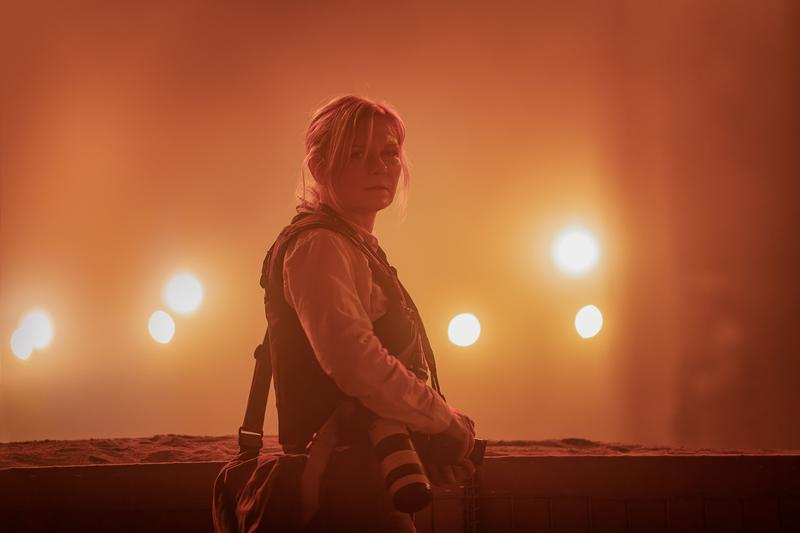
With the ‘January 6 United States Capitol attack’ in mind, Garland opens up a “what if” narrative where the whole of America is conflicted and consuming itself from within. At the heart of the violence is the war photographer, represented by Lee Smith (Kirsten Dunst) and Reuters journalist, Joel (Wagner Moura). Their journey to Washington to photograph the President reveals confusion, destruction and further bloodshed. Generically speaking, a road movie meets dystopian thriller, Civil War (2024) contains thought-provoking themes and incredible cinematography, but with shaky writing in places.


Films about war photographers and/or journalists can be problematic for me. Such characters lend themselves to heroic and the anti-heroic. The writing has to be right because I can lose empathy between such crusading journos and the narcissistic adrenaline junkies looking to deflect their own loathing and self-destructive tendencies. Civil War (2024) struggled to get me onside with the lead characters, although Dunst’s characterisation of Lee Smith is superb. However, her mentor-apprentice relationship with Cailee Spaeny, Jessie Cullen, was under-developed. Spaeny’s “innocent” being used more as a suspense device as opposed to learning the true horrors of humanity and war. Perhaps Garland intended for her to be a sociopath without depth just looking for blood? She finds it!

Moreover, Jessie’s journey from a political perspective was weak as there was no real sense of development in her character. That’s where the decision not to overtly take political sides causes a lack of sociological depth. War films such as Salvador (1986) and The Killing Fields (1984) are more successful as Civil War (2024) loses political impact by not choosing precise sides. But I guess whether they are Democratic or Republican is the whole point. Garland is saying that political parties are all as bad as each other, with human beings their own worst enemy. Politics, like football, gender, sexuality, and religion, are propellants for humans to fight each other.

For a film about photographers, the images on show are incredible and Rob Hardy’s work is genius. Fire, blood and war have never looked so brutal and aesthetically impressive. As well as Dunst, Wagner Moura and Stephen McKinlay Henderson are terrific in their respective roles. Further, there are some nail-biting and suspenseful scenes, notably one involving a film-stealing performance from Jesse Plemons. However, many of the characters’ decisions were weakly written for me. This is surprising given Garland’s prodigious literary and screenwriting talent. Civil War (2024), however, remains another stunning addition to his oeuvre and for all my perceived script weaknesses, the hell of war has never been so artistic and artful.

Mark: 8 out of 11


CINEMA REVIEW: PAST LIVES (2023)

CINEMA REVIEW: PAST LIVES (2023)

Directed by Celine Song

Written by Celine Song

Produced by: David Hinojosa, Christine Vachon and Pamela Koffler, etc.

Main cast: Greta Lee, Teo Yoo, John Magaro, Ji Hye Yoon, Choi Won-young, etc.

Cinematography: Shabier Kirchner

Edited by: Keith Fraas

*** MAY CONTAIN SPOILERS ***


“It’s an in-yeon if two strangers even walk past each other in the street and their clothes accidentally brush, because it means there must have been something between them in their past lives. If two people get married, they say it’s because there have been 8,000 layers of in-yeon over 8,000 lifetimes.”Nora from Past Lives (2023)


Are we fated to connect with the ones we love through each life we lead? Is love a connecting force for good which enriches and links us to our forever soulmate? Or is it a complex chemical reaction driven by three chemicals in the brain such as noradrenaline that stimulates adrenaline production, dopamine, and phenylethylamine. Be it spiritual or chemical, love drives many of the highs of our lives, but it is also responsible for disappointing lows. Safe to say that love and romance are also a staple for many emotionally charged and beautiful works of cinema, of which Celine Song’s Past Lives (2023) is certainly one of them.

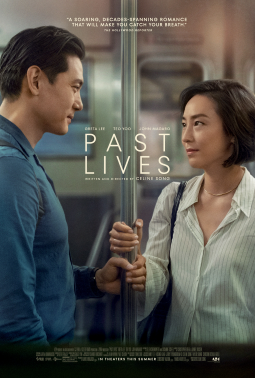
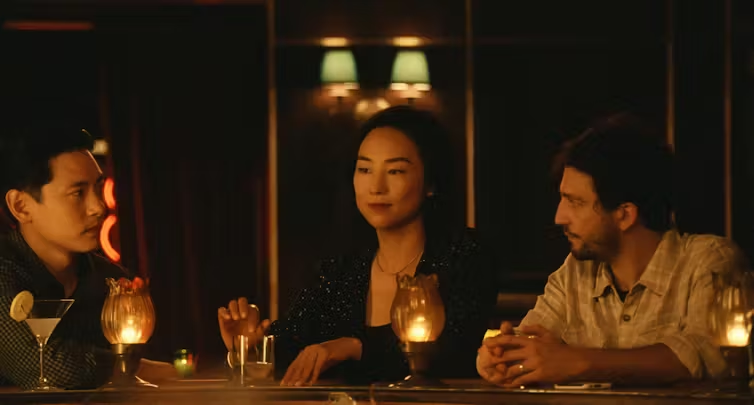
Past Lives (2023) is a love story which transports the audience across time and continents through the spiritual and spatial connection of characters, Na Young (Greta Lee) and Hae Sung (Teo Yoo). The opening act establishes the relationship of the two as schoolfriends in Seoul. Alas, any potential fledgling romance for the teenagers is blocked as Na Young’s family moves to Canada, leaving Hae Sung’s alone with his future unknown. The film then moves twelve years forward where Na Young, now known as Nora, lives in New York. Through a chance quirk of social media fate, she reconnects with Hae Sung. Is that adolescent spark still there?


In the second act, Song’s elegantly devised screenplay explores and Nora Hae Sung’s long distance relationship over several heartfelt online calls. But complex emotional circumstances dictate the two cannot reconcile the friendship further. The two drift apart and they take other partners as another twelve years pass. With Nora in a strong relationship with the sensitive and kindly, Arthur (John Magaro), it would appear Nora and Hae Sung’s friendship is at an end. Or is it? Because Song delivers one of the most powerfully moving third acts I have seen at the cinema in some years.

Without explosions, or car chases, or superheroes or fast-paced cutting or extraordinary heroes defeating powerful foes, Past Lives (2023), is one of the most impactful and stirring films of this year. Celine Song achieves this with a delicate hand in the writing and direction, plus a purposeful naturalistic cinematographic palette delivered by Shabier Kirchner. Above all else Song creates two honest characters who you root for from the start, as the one feels the romantic electricity build on the screen. Indeed, Greta Lee and Teo Yoo’s on-screen chemistry is an acting masterclass, with John Magaro further providing touching support within the triangle.

Now, I am not without sensitivity, but it’s virtually impossible to make me cry at the cinema. But Past Lives (2023) almost did. It made my heart swell and ache. It made me laugh as well, because Song’s script has lovely humour throughout. Above all else, whether it is karma or chemicals, it made me grateful to have known love.

Mark: 10 out of 11


NETFLIX FILM REVIEW: BLONDE (2022)

NETFLIX FILM REVIEW: BLONDE (2022)

Directed and written by: Andrew Dominik

Based on: Blonde by Joyce Carol Oates

Produced by: Brad Pitt, Dede Gardner, Jeremy Kleiner, Tracey Landon, Scott Robertson

Main cast: Ana de Armas, Adrien Brody, Bobby Cannavale, Xavier Samuel, Julianne Nicholson, Evan Williams, Toby Huss, David Warshofsky, Caspar Phillipson, etc.

Cinematography: Chayse Irvin

*** CONTAINS HISTORICAL SPOILERS ***


Aside from expertly directing episodes of the Netflix drama, Mindhunter and the documentary One More Time with Feeling (2016), filmmaker Andrew Dominik’s directorial output has been sparse of late. Indeed, he hasn’t released a feature film since quirky gangster drama, Killing Them Softly (2012). I imagine this is due to many reasons including: slow-gestating methodology, several unrealized projects failing to see a greenlight, and the dreaded COVID-19. It’s a shame as I believe he is one of the most compelling filmmakers around at present. Chopper (2000) remains one of my favourite cult stories about a charismatic, larger-than-life criminal anti-hero. Similarly, The Assassination of Jesse James by the Coward Robert Ford (2007) is one of the best films I have seen from the last twenty years.  It was pretty much a box-office flop but everything about it screamed greatness to me: stunning cinematography; brilliant cast; and resonating themes regarding celebrity and legend in the Wild West.

After Chopper Read and Jesse James, once again Dominik explores the iconic life of a real person in Blonde (2022). You may have heard of her, Norma Jean Mortenson/Baker, or as she was more famously known: Marilyn Monroe. Using Joyce Carol Oates’ book as a springboard, plus no doubt many other written, visual and media sources available, Dominik has crafted a stylish and singular vision of the peroxide icon’s life and career. In no doubt should a viewer believe this to be a “true” story in the documentary-drama style, but rather an impressionistic, poetic and compelling imagining of Marilyn’s short, yet tumultuous, existence on this planet.

For me, Marilyn Monroe was one of the most stunning movie stars who ever existed. She lit up the screen and was a mightily under-rated actor also. In her heyday she was the biggest star in the world. Her role as Sugar in Some Like it Hot (1959), is one of the most gorgeously funny, beautiful and vulnerable performances ever committed to celluloid. Enter Ana De Armas as Marilyn in Blonde (2022). De Armas is a revelation on-screen in terms of her looks, movement, body language and the nuanced depth she brings to the screen siren. It’s a brave role too as the script demands much of her. Throughout many exquisitely filmed and edited scenes lies the ugly degradation of Marilyn’s body and soul. De Armas gives her all in these vignettes of domestic abuse, sexual assault, rape, abortions, overdoses, miscarriages, mental breakdowns and further sexual gaslighting at the hands of people she believed were friends.


So, why should you want to watch Blonde (2022), you may ask yourself. Well, De Armas’s performance alone is worth enduring much of the emotionally draining misery. Moreover, Dominik again proves himself to be a director of the highest quality. He’s a maverick and iconoclast who has an impressive and intelligent cinematic eye. The opening sequence where Norma, as a young child, is driven by her unwell mother through Los Angeles forest fires is a frightening and imperious interpretation of mental health, full of fear, heat, and portentous symbolism. Such fire and trauma foreshadows the distress and torment that is to come to young Norma throughout her life. A schizophrenic Mother also echoes the schism of persona that impacts Norma the individual, and Marilyn the movie star. The division of personalities is a theme which the screenplay sensitively explores, despite being buried in the more lurid and shocking events of Marilyn’s sad life.

Overall, Blonde (2022) is a startling and shocking rendition of Marilyn Monroe. Of course, hers was an existence full of drama, intensity, darkness and tragedy. But you have to think there was some light in there, some happiness, humour and joy. On some fleeting occasions during Blonde (2022), Dominik presents this, but ultimately this is a beautifully filmed yet ugly-hearted cinematic tragedy. On the surface the film genre is biopic, but it really is a horror film, as Marilyn’s exploitation by the men in her life is laid bare on the screen. I’ve read some critics describe the film as exploitational, however, this is a film ABOUT exploitation. Marilyn was exploited by agents, photographers, directors, producers, the press, the Hollywood system, the audience, her doctors, her lovers, her husbands and a President of the United States.

Dominik is perhaps suggesting Monroe did not kill herself, but was disintegrated by those who should have loved and cared for her. The ultimate tragedy is that Norma/Marilyn could not find the love and mental strength inside herself to survive those who perpetually sought to profit from this beautiful shining star. If the events realised in Blonde (2022) are to be believed, what person could?

Mark: 8 out of 11


GREAT ENSEMBLE FILM CASTS #6 – AUGUST: OSAGE COUNTY (2013)

GREAT ENSEMBLE FILM CASTS #6 – AUGUST: OSAGE COUNTY (2013)

Directed by: John Wells

Screenplay by: Tracy Letts

Based on: August: Osage County by Tracy Letts

Produced by: George Clooney, Grant Heslov, Jean Doumanian, Steve Traxler

Cast: Meryl Streep, Julia Roberts, Ewan McGregor, Chris Cooper, Abigail Breslin, Benedict Cumberbatch, Juliette Lewis, Margo Martindale, Dermot Mulroney, Julianne Nicholson, Sam Shepard, Misty Upham, etc.

Cinematography: Adriano Goldman

*** MAY CONTAIN SPOILERS ***


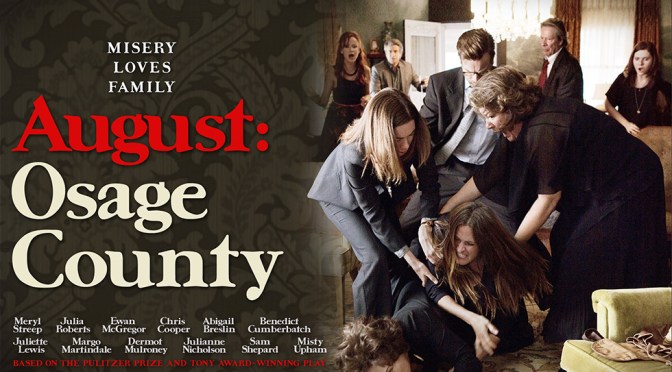
Unsurprisingly, the play, August: Osage County, from the typewriter of Tracey Letts – the formidable playwright behind Killer Joe and Bug – about a family suffering loss of a “loved” one was not going to be a feelgood and uplifting affair. Instead, over the period of a month we are introduced to a whole host of characters with a variety of anger, addiction and attitude issues. Brought together by apparent grief, when patriarch, Beverley Weston (Sam Shepard) drowns, the extended Weston family fight and vent spleen at each over current and past dramas, with many a secret soon to be revealed.

Winning the Pulitzer Prize for Drama in 2008, Letts play was subsequently adapted into the dark, feel-bad and tragi-comedy film in 2013. Directed by John Wells, August: Osage County (2013), brought together an unbelievable ensemble cast of actors who did spectacular work with Letts acerbic and razor-sharp dialogue. Given that many of the personalities in the narrative are dominant matriarchal characters, the casting of Meryl Streep and Margo Martindale in the roles of Violet Weston and Mattie Fae respectively, is certain to create sparks on the screen. So, it proves.

Streep has delivered so many memorable characterisations over the years, but as Violet Weston I’m not sure she’s been so bilious and cancerous, both literally and symbolically. Her daughters, portrayed by Julia Roberts, Juliette Lewis and Julianne Nicholson, all have their own issues to deal with, but with such a vicious mother it’s a surprise they aren’t in a psychiatric ward. As harsh truths and bitter revelations unfold over the dinner and kitchen table conversations, Letts shows the complex nature of family existence; how it traps us with people we have nothing in common with. Women are seemingly in charge of the Weston family as the men, represented by Ewan McGregor, Benedict Cumberbatch, Sam Shephard and Chris Cooper, appear more passive and bullied.

Altogether, August: Osage County (2013), is a difficult to watch as there’s not a lot of love shown in the Weston household. Nonetheless, as an acting and writing tour-de-force there are few films that can best it. I guess we all have family problems and many ups and downs to deal with in life. What we can learn from this play and film is that this is definitely NOT the way to behave to people you’re meant to love and care for.


AMAZON FILM REVIEW: THE MAURITANIAN (2021)

AMAZON FILM REVIEW: THE MAURITANIAN (2021)

Directed by: Kevin Macdonald

Produced by: Adam Ackland, Michael Bronner, Benedict Cumberbatch, Leah Clarke, Christine Holder, Mark Holder, Beatriz Levin, Lloyd Levin, Branwen Prestwood-Smith, etc.

Screenplay by: M.B. Traven, Rory Haines, Sohrab Noshirvani

Based on: Guantanamo Diary by Mohamedou Ould Slahi

Cast: Jodie Foster, Tahar Rahim, Shailene Woodley, Benedict Cumberbatch, Zachary Levi etc.

Music by: Tom Hodge

Cinematograph: Alwin H. Kuchler

***CONTAINS MASSIVE SPOILERS***


“…a writ requiring a person under arrest to be brought before a judge or into court, especially to secure the person’s release unless lawful grounds are shown for their detention.” — Basic definition of Habeus Corpus


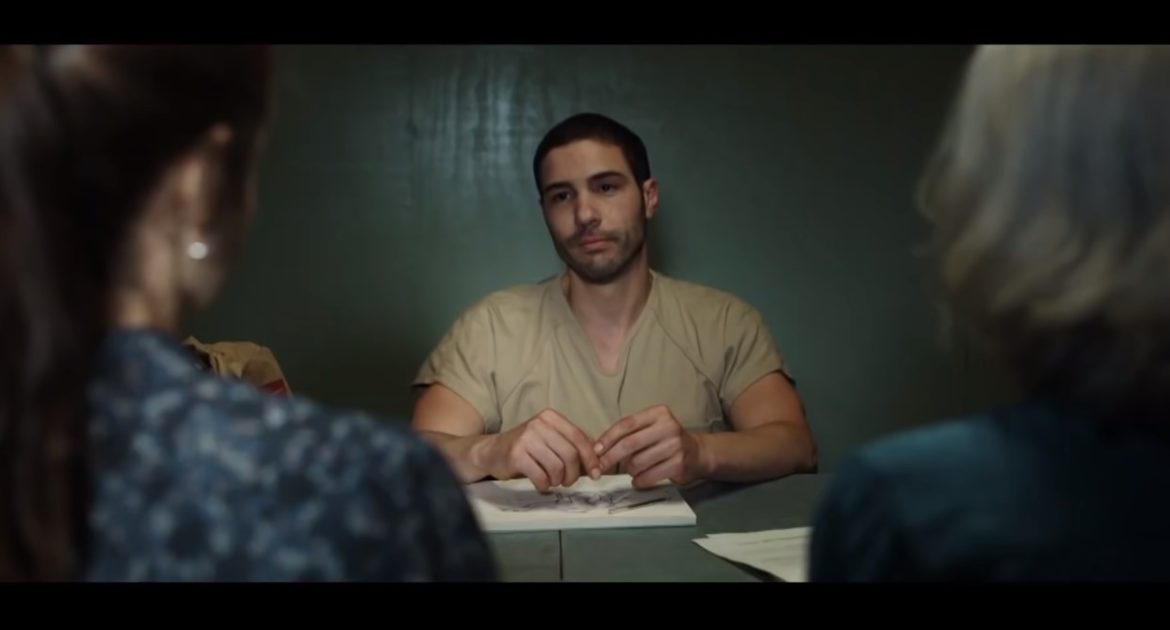
Mohamedou Ould Slahi is a Mauritanian man who was held for fourteen years from 2002 to 2016 without charge in the Guantanamo Bay detention camp. FOURTEEN YEARS without a trial. Let that sink in.

If ever there was a living embodiment of a Kafkaesque experience then this is that. Surely, whatever crime you have or haven’t committed you should be presented to a court of law and evidence be brought to try you for the alleged crimes. Clearly, the United States have, in this singular case against Mohamedou Ould Slahi, by denying him a trial — plus torturing him for years too — committed a heinous war crime. Yes, the 9/11 atrocities were abominable acts of violence, but that does not give anyone the right to wreak revenge against other human beings without concrete evidence to justify such acts. It’s a basic tenet of existence that separates us from the beasts in the jungle, every person deserves a fair trial! To be honest the U.S. administration who were responsible for this and and many other crimes are worse than animals.

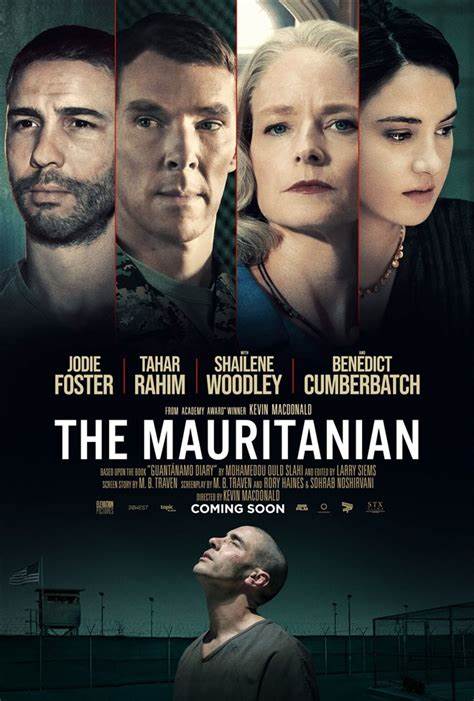
The Mauritanian (2021) is an adaptation of Mohamedou Ould Slahi’s best selling memoir, Guantanamo Diary. It opens with Ould Slahi (Tahar Rahim) attending a wedding in his place of birth. He is then picked up by local Mauritanian police and after that is imprisoned indefinitely, unknown to him, by the American military. The structure of the film compellingly builds his experiences in jail and the brutal torture he endures as the Americans attempt to gather intelligence to prove that he is a key member of the terrorist cells who organised the 9/11 attacks. As the story reveals his horrendous ordeal, lawyers represented by Nancy Hollander (Jodie Foster) and Teri Duncan (Shailene Woodley) take up his case to, at the very least, enable Ould Slahi to get a fair trial.


As well as highlighting the horrors of how Ould Slahi was treated this film is a damning indictment of American foreign policy, notably under the George Bush administration. The fact that Ould Slahi and his lawyers were successful in achieving a win against his imprisonment was not the end of his entrapment. You honestly won’t believe what occurred even after he won his case. But what about the film you may be asking? Well, I am just staggered this and many other sitautions occur in the world so this is more of an emotional review than a cinematic appraisal.

Overall, The Mauritanian (2021) is an exceptional drama which is directed effectively by seasoned filmmaker, Kevin Macdonald. As Ould Slahi, Tahar Rahim is absolutely exceptional. He brings a humanity and humour to the character’s struggle. What I absorbed most from his portrayal, and this is reflected in a moving credits sequence excerpt, is how Ould Slahi retained his humour even in the most trying times. Furthermore, while their character’s smack of white saviour personalities, the legal team — based on the real people — are expertly represented by Jodie Foster and Shailene Woodley. Foster especially shows her usual sterling gravitas in the role. Benedict Cumberbatch, arguably miscast as the military lawyer suffering a crisis of conscience, gives his usual excellent performance.

Lastly, The Mauritanian (2021), because of a slightly choppy screenplay, I felt the book deserved a longer telling via a television series. Yet, the film remains an important narrative about how bloodlust, greed and desire for revenge means humans commit horrific acts in the name of war. Mohamedou Ould Slahi was denied his freedom and human rights for crimes never proved. How he survived is an incredible feat of human endurance. Thus, whether he was innocent or guilty his freedom was earned and then some.

Mark: 9 out of 11


AMAZON FILM REVIEW – I CARE A LOT (2020)

AMAZON FILM REVIEW – I CARE A LOT (2020)

Directed by: J Blakeson

Produced by: Teddy Schwarzman, Ben Stillman, Michael Heimler, J Blakeson

Written by: J Blakeson

Cast: Rosamund Pike, Peter Dinklage, Eiza González, Chris Messina, Macon Blair, Alicia Witt, Damian Young, Isiah Whitlock Jr., Dianne Wiest, etc.

Music by: Marc Canham

**MAY CONTAIN SPOILERS**


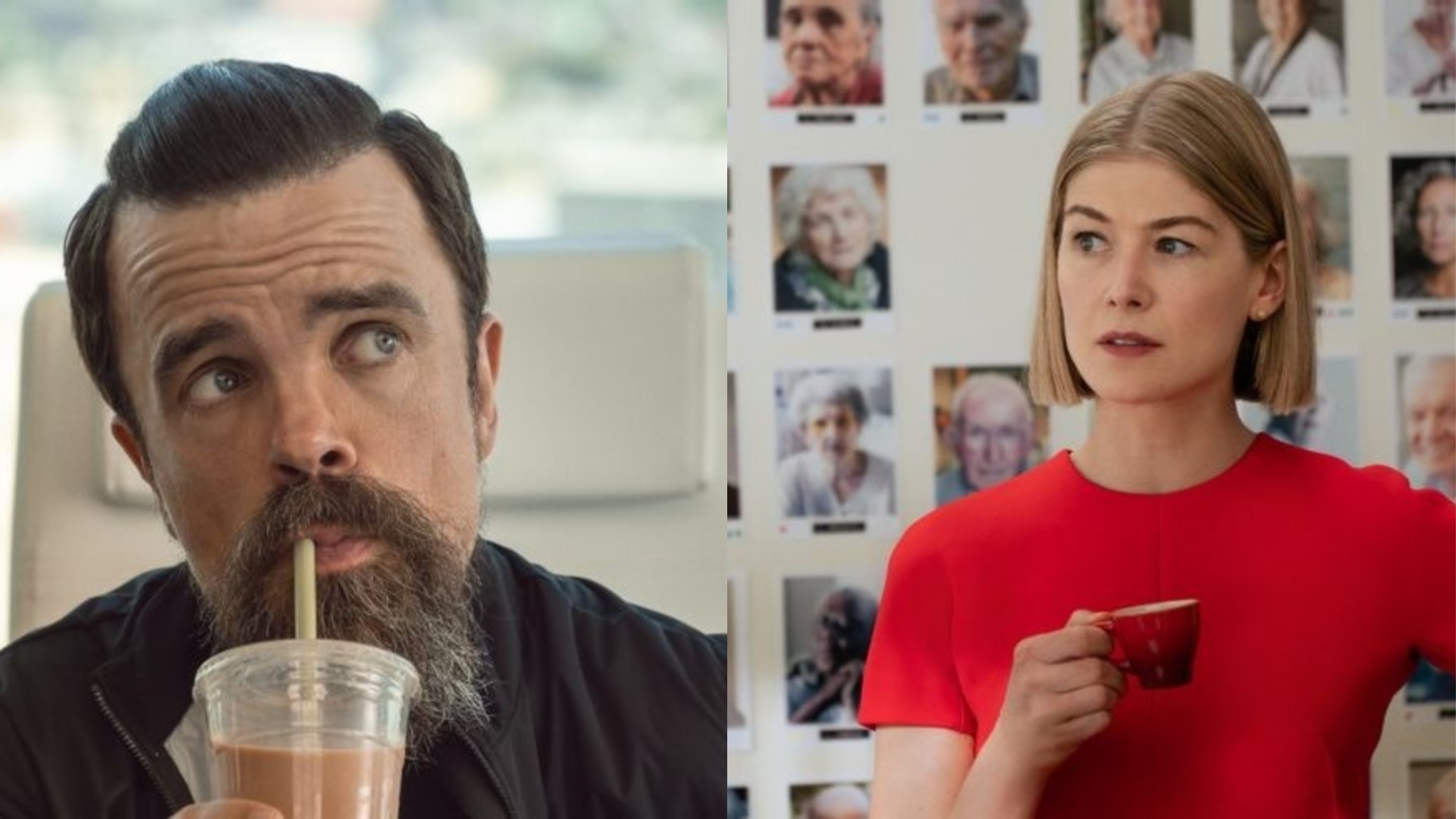
Strange that this highly entertaining and acid-humoured thriller should be a Netflix release overseas, but in the U.K. released via Amazon Prime. Anyway, streaming platform aside was I Care A Lot (2020) any good? Firstly, let’s talk about genre. Do you enjoy watching films without any redeemable or essentially heroic characters? Do you enjoy spending time with criminals? Whether they are the charismatic kind like those in Goodfellas (1990) or Layercake (2004), or romantic kind in Drive (2011), or ultra-ambitious types such as Lou Bloom in neo-noir masterpiece, Nightcrawler (2014). If you do, then you will both love and hate Rosamund Pike’s confident sociopath, Marla Grayson!

J Blakeson’s razor-sharp and barb-cracking screenplay opens with Marla’s brutally honest statement of intent. She wants it all and doesn’t care who she crushes to get it. Unlike, Lou Bloom, who was on his knees broke when we meet him, Marla already has a successful, legal but morally repugnant business going on. Marla and her associate and partner, Fran (Eiza Gonzalez) run a successful ‘Guardian Angel’ corporation. Their modus operandi is to exploit the elderly and tie them up in legal knots to asset-strip their money, properties and belongings. Complicit Doctors and retirement home directors are also in on the con, while the most frightening thing is that the American justice system assists the process. If I had had a gun, I would have shot the television after forty minutes, such was my anger toward Marla and her sordid business practices. Then she inadvertently makes a fatal mistake in choosing her next mark, Dianne Wiest’s wealthy “cherry,” Jennifer Peterson. That is a rich retiree with NO relatives or children. Marla thinks it is Christmas come early – it has not!


See the source image

Without wishing to give away too much away, Peter Dinklage’s rich businessman, Roman, enters the narrative and Marla’s devious planning suddenly comes under threat. Here the film moves from spot-on satire into extremely generic territory losing the dynamism of the first half of the film. Indeed, the first hour of I Care A Lot (2020) was a fantastic critique of the care system in the USA, and no doubt across the world. In blood-boiling fashion the film tells us that getting old is extremely expensive. One can work all one’s life and then see your savings and properties ripped away by expensive health care, homes for the elderly, pharmaceutical companies jacking up their products, greedy carers and pernicious lawyers. Marla Grayson is a grinning symbol of this corrupt system and nothing will get in her way – not even Roman and his associates. This is perfectly encapsulated in a fine scene where Marla ruthlessly negotiates with Chris Messina’s slippery lawyer. But the suited shark is just the starter as Roman is now on the warpath.

Peter Dinklage again proves what a brilliant actor he is as Roman. He is extremely good at rage in many scenes. His and Marla’s ongoing battle comes to a head in the final act, and when he turns the tables on her I was so happy that she would get her comeuppance. I felt maybe the direction lost some focus in the second half of the film as J Blakeson arguably felt the audience should somehow side with Marla as she finds her life under threat. I can safely say that I wanted her to die in the most painful way possible. Because unlike the ‘Driver’ (Ryan Gosling) in Drive (2011), Marla Grayson is utterly beyond redemption. Not that she would care what anybody else thought! Overall, that’s why I found the film incredibly entertaining. It may have lost sharpness when it moved from socio-political tubthumping into more standard crime film territory, it continually made me feel proper emotion, anger mainly. Sure, it may be slightly overlong, but J Blakeson crams a lot of twists and shocks into into, I Care A Lot (2020).

Mark: 8.5 out of 11


CLASSIC FILM REVIEW – SCARFACE (1983) – YOUTUBE VIDEO

CLASSIC FILM REVIEW – SCARFACE (1983) – YOUTUBE VIDEO

The Cinema Fix is a website for all film and TV lovers everywhere. It’s a mix of reviews, articles, essays, news and thoughts on new and classic releases. It is intended to be honest, irreverent, funny and hopefully intelligent. I also have a YouTube channel with loads of short films and video articles. Check it out here.

I have just created a new video article. It’s a review of the classic gangster film, Scarface (1983). You can read it here or check out the video below.


CREDITS

This video article is a fun and educational piece reviewing one of our favourite gangster films ever.

Written by: Paul Laight
Narrated by: Melissa Zajk
Music Produced by : Aries Beats
Promoted by : CRFC

The copyright of the images and trailers are those of the film studio. I do not own any of the images or films.

Film/Trailer clips credits:

Scarface (1983)
Directed: by Brian DePalma
Produced by: Martin Bregman
Written by: Oliver Stone.
Distributed by: Universal Pictures

Check out our other sites:

www.fixfilms.co.uk
www.youtube.com/c/FixFilmsLtd