Tag Archives: violence

Cult Film Review: Mermaid Legend (1984)

Cult Film Review: Mermaid Legend (1984)

Directed by Toshiharu Ikeda

Screenplay by Takuya Nishioka

Main cast: Mari Shirato, Junko Miyashita, Kentarō Shimizu, Jun Etō, etc.

Cinematography by Yonezou Maeda

Music by Toshiyuki Honda

*** MAY CONTAIN SPOILERS ***


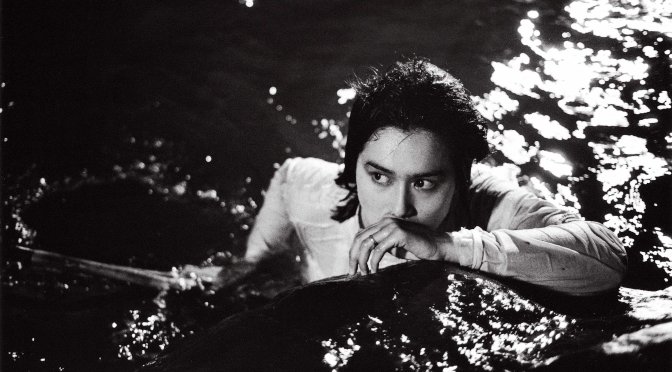
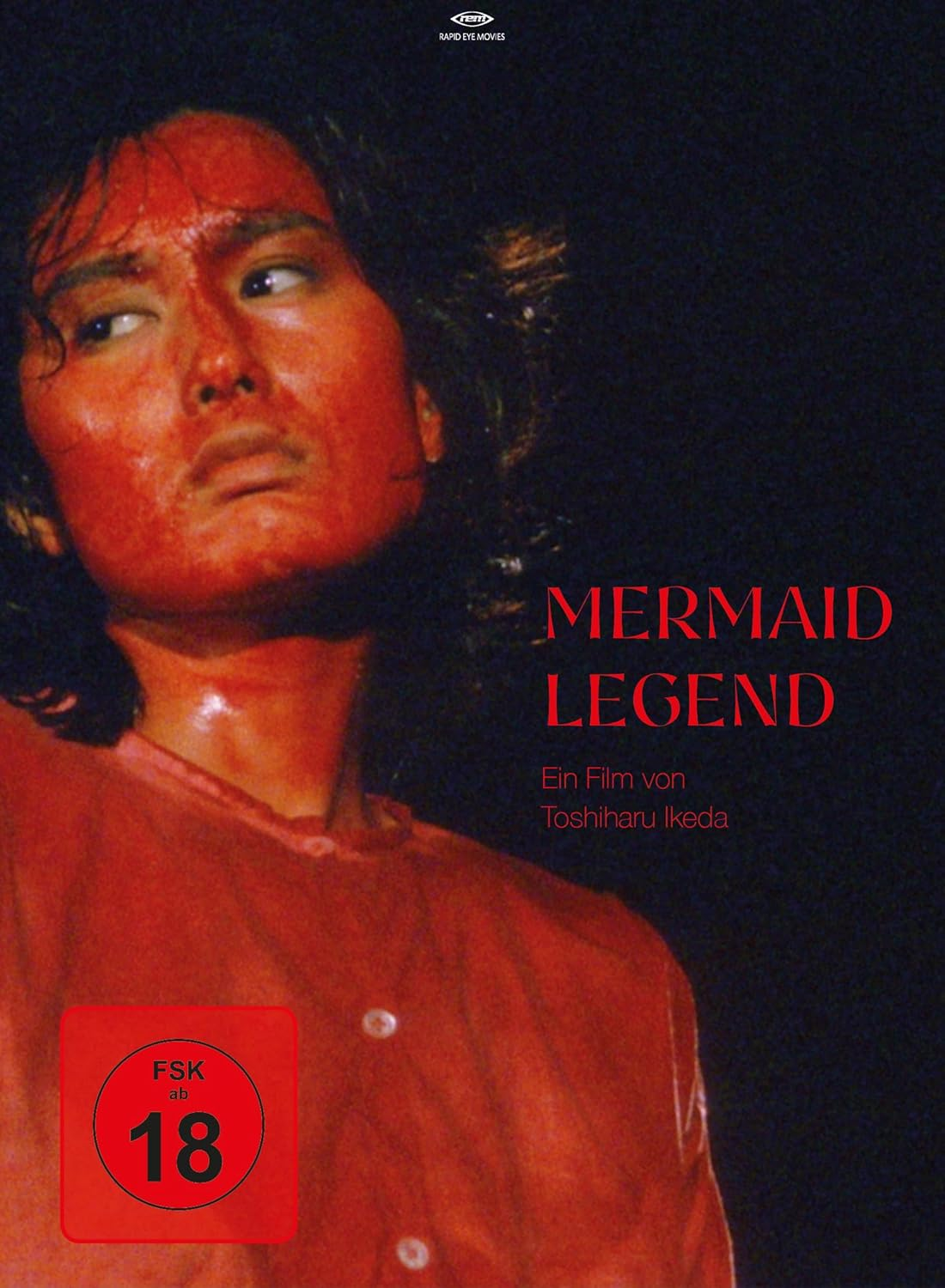
I took a gamble on an unknown Japanese film at the Nickel Cinema and walked out genuinely shaken. Mermaid Legend (1984) isn’t just a cult oddity—it’s a film that mutates before your eyes, seducing you with beauty before drowning you in blood. I was stunned by how something so lyrical could also be so brutally confrontational.

The story begins almost modestly, as a coastal drama about a fisherman and his wife, Migiwa. They bicker constantly, their marriage worn thin by poverty and exhaustion, yet there’s an undeniable bond beneath the arguments. That fragile domesticity is shattered when the fisherman stands in the way of an industrial development scheme. The business developers—faceless, polite, and utterly ruthless—have him murdered, disposing of his life as casually as industrial waste.

From there, Mermaid Legend (1984) transforms again. What starts as marital realism becomes a corporate espionage murder mystery, steeped in anger at nuclear energy, environmental destruction, and the cold machinery of corporate greed. Migiwa, a powerful-lunged pearl diver, initially hides, retreating into grief and the sea itself. But this is not a film about quiet mourning. When she decides to act, she does so with mythic force.


Played by the ethereal and astonishing Mari Shirato, Migiwa becomes something halfway between woman, avenging angel, and sea spirit. Shirato’s performance is magnetic—serene, sensual, and terrifying. As her vengeful pursuit begins, the film plunges headlong into extreme violence and explicit sexuality, reclassifying itself yet again as one of the most shocking exploitation epics I’ve seen from Japan in recent years. These scenes aren’t gratuitous in the lazy sense; they’re confrontational, weaponized, daring you to look away while refusing to let you feel comfortable for a second.

What makes Mermaid Legend (1984) so intoxicating is how its elements collide. Poetic underwater cinematography turns the ocean into a womb, a grave, and a cathedral. Religious, angelic, and environmental imagery blur together, as if Migiwa is both martyr and executioner. The music is heavenly—soaring, mournful, almost sacred—creating a surreal contrast with the carnage on screen. Beauty and brutality coexist in the same frame, each intensifying the other.

And then there’s the ending. The final, elongated pier stabbing rampage is completely off the chart—relentless, bloody, and hypnotic. It plays out like a ritual rather than an action sequence, stretching time until violence becomes abstraction, then meaning, then release. By the time the last body falls, Mermaid Legend (1984) has fully shed realism and entered the realm of legend, justifying its title in blood.

This is a film that shouldn’t work, yet does—furiously, defiantly. A genre-shifting fever dream that moves from domestic drama to political thriller to erotic exploitation to mythic revenge tragedy, Mermaid Legend (1984) is both beautiful and brutal, and I can’t stop thinking about it. Seeing it by chance at the Nickel Cinema felt like discovering a secret too powerful to stay hidden.

Mark: 9.5 out of 11


Cult Film Review: Ms. 45 / Angel of Vengeance (1981) – a beautiful looking yet grisly exploitation classic!

Cult Film Review: Ms. 45 / Angel of Vengeance (1981)

Directed by Abel Ferrara

Written by Nicholas St. John

Produced by: Richard Howorth, Mary Kane

Main cast: Zoë Tamerlis (Lund), Albert Sinkys, Steve Singer, Jack Thibeau, Peter Yellen, Darlene Stuto, Helen McGara etc.

Cinematography by James Momel


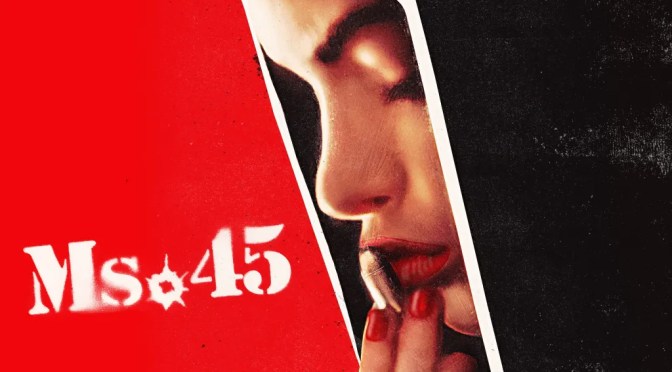
In its latest 4K restoration, Ms. 45—Abel Ferrara’s 1981 revenge thriller—has never looked more electrifying, or more disturbing. A stunning new rendering of Ferrara’s gritty vision, Ms. 45 showcases New York City in all its stark, seething chaos: a place of beautiful ugliness, where the streets pulse with danger, desperation, and decay. The film, originally shot on 16mm, feels both of its time and eerily timeless, especially now in ultra-high-definition, where every grainy detail of Ferrara’s oppressive, neon-lit streets shines in a raw, unapologetic manner.

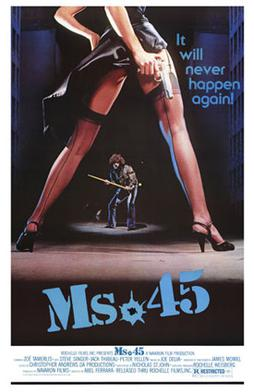
At the heart of this urban nightmare is Thana (Zoë Lund, credited as Zoë Tamerlis), a mute seamstress whose world shatters after she is brutally assaulted by a man on her way home, then attacked again in her home. Her muteness is both a powerful thematic element and an artistic choice, amplifying her trauma, her rage, and her vengeance in a way that spoken words never could. Thana’s descent into violence is stark, visceral, and unrelenting, making her a strange kind of anti-hero in this world of moral decay. Ferrara’s direction is clinical, cold, and absolutely uncompromising—each frame holds a sharp, almost surgical precision, magnifying the madness of her mind and the city itself.

What truly elevates Ms. 45 beyond its genre limitations is the electric performance of Zoë Tamerlis/Lund. At just 17 years old when the film was made, Lund’s portrayal of Thana is nothing short of revelatory. She is the beating heart of this disturbing narrative, lighting up the screen with a fierce, magnetic presence that could have easily made her a Hollywood star—had the industry been ready for her. While many of the supporting cast either cannot act or over-act, Lund’s both vulnerable and terrifying, her expression often the only indication of her character’s state of mind. Her journey from victim to vengeful force is tragic, yet always compelling.


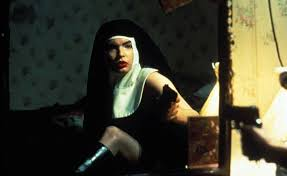
Had Lund chosen to pursue a more conventional career, she would likely have ascended to Hollywood’s A-list—her look was captivating, her screen presence undeniable—but the indie, underground scene was where she truly thrived. In Ms. 45, she is a tragic figure of youth lost to the violence of the world around her, and in the midst of it all, she shines, her performance capturing the raw, cathartic essence of a girl pushed too far. Further, Lund’s performance peaks in one of the most iconic sequences of the film—Thana’s nun fancy-dress shootout. Drenched in blood and surrounded by chaos, she dissects the partygoers in slow-motion with a terrifying calm, her eyes wide with cold sorrow. It’s a juxtaposition of innocence and savagery, like a child playing with fire and discovering its destructive power. Kudos to the deranged soundtrack here which really ramps up Ferrara’s nightmarish vision.

Ms. 45 is NOT a film for the faint of heart or the easily offended. It’s violent, raw, and unapologetically brutal, with moments that will leave you questioning your own reaction to Thana’s vengeful spree. There is something deeply primal about the film—the way it feeds off its viewers’ discomfort, forcing them to confront Thana’s rage. It’s a film that revels in its own madness, and yet somehow, Ferrara and Lund manage to make revenge feel like an art form. It’s as stylish as it is savage, as haunting as it is exhilarating.

In conclusion, Ms. 45 is a genre-defining thriller, a masterpiece of violent cinema that has lost none of its power with time. The 4K restoration is a perfect showcase for Ferrara’s vision, and Zoë Lund’s performance is a revelation—her beauty and intensity burn through the screen, making you wonder what might have been had she chosen a different path. But for those of us lucky enough to witness this film in all its gritty glory, it’s impossible not to see her as a true underground legend. Whether or not you’re ready for it, Ms. 45 is visceral, stylish, and uncompromising cinema—one that will stay with you long after the credits roll and that evil saxophone soundtrack beat fades out.

Mark: 9 out of 11


Cinema Review: Him (2025) – find blood, sweat, and meltdowns galore in this visceral NFL thriller!

Cinema Review: Him (2025)

Directed by Justin Tipping

Written by Skip Bronkie, Zack Akers & Justin Tipping

Produced by Jordan Peele, Win Rosenfeld, Ian Cooper & Jamal Watson

Main cast: Marlon Wayans, Tyriq Withers, Julia Fox, Tim Heidecker, Jim Jeffries, Maurice Greene etc.

Cinematography by Kira Kelly

** MAY CONTAIN SPOILERS **


“In modern slang, “Him” is used to signify a person who is considered a standout or a “star” in their field, often in sports or entertainment.” — Google search result.


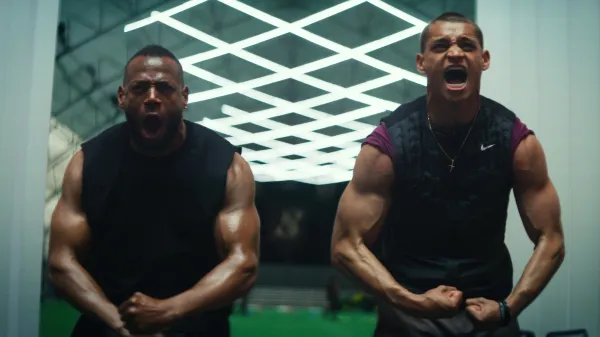
Him (2025) is a visually arresting and thematically potent descent into the underbelly of American athletic obsession — a pitch-black thriller that trades stadium lights for the strobe of psychological torment. Centered on Cameron “Cam” Cade, a young quarterback hungry to dethrone San Antonio Saviors’ reigning legend Isaiah White (a commanding Marlon Wayans), the film begins as a standard sports drama and swiftly morphs into something far darker. Director Justin Tipping captures the suffocating intensity of modern competition with a painter’s eye — sweat, blood, and neon collide in every frame, turning locker rooms and training fields into cathedrals of self-destruction.

As Cam endures Isaiah’s brutal “boot camp,” the film exposes the rot beneath the rhetoric of greatness. Fear, humiliation, and violence dominate the regimen, transforming mentorship into a form of ritualized hazing. Themes of steroid abuse, distorted masculinity, and father-son guilt weave through the story like poison veins. The omnipresence of social media — the constant surveillance, the demand for curated perfection — amplifies the claustrophobia. In its best moments, Him (2025) feels like a nightmarish hallucination of ambition, where performance and identity blur until nothing human remains.


Yet for all its kinetic power and aesthetic daring, Him (2025) stumbles when it comes to coherence. The screenplay rushes through emotional beats, failing to give its characters space to breathe or evolve. Key relationships and motivations are truncated by editing that favours rapid cuts over logic — the film’s pulse races, but its heart falters. The result is an experience that dazzles visually but feels narratively hollow, more like a hypnotic music video than a fully realized character study. Indeed, the ending drops the ball most of all. The nightmarish satire culminates in a bloodbath which, while visually powerful, feels like something more twisted and subtle would have served Cam’s character arc better.

Overall, there’s no denying Him (2025) and its impact as a cinematic spectacle, with Wayans and Withers delivering standout performances. Its imagery lingers — bodies breaking under fluorescent light, cheers warping into screams — as does its commentary on the performative nature of modern masculinity, crazy fan worship, monetization of athletes and sporting sacrifice. If only the script matched its visuals, Him (2025), might have stood shoulder to shoulder with the psychological thrillers it so clearly reveres.

Mark: 6.5 out of 11


Cinema Review: Weapons (2025) – a finely constructed horror mystery!

Cinema Review: Weapons (2025)

Directed by Zach Cregger

Written by Zach Cregger

Produced by Zach Cregger, Roy Lee, Miri Yoon, J. D. Lifshitz, Raphael Margules, etc.

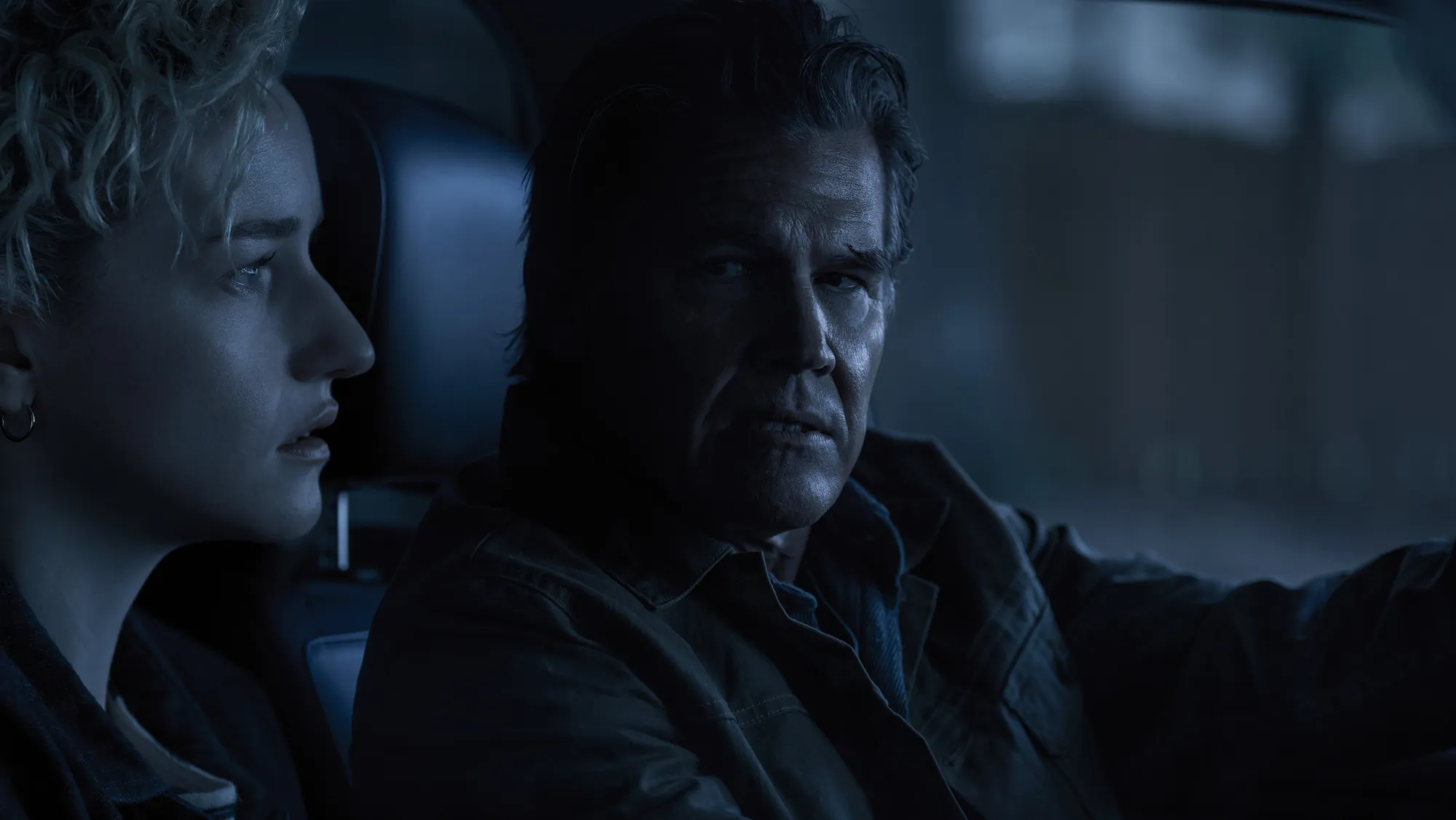
Main Cast: Josh Brolin, Julia Garner, Alden Ehrenreich, Austin Abrams, Cary Christopher, Benedict Wong and Amy Madigan.

Cinematography by Larkin Seiple

*** MAY CONTAIN SPOILERS ***


Zach Cregger’s Barbarian (2022) was an intriguing feature debut that captivated viewers with a suspenseful, tension-filled first half, expertly building a sense of dread and mystery. The film begins with a seemingly simple premise — a woman arrives at an Airbnb, only to find it double-booked — but what starts as a quiet psychological thriller quickly takes an unexpected turn. As the plot unfolds, the sense of unease grows, drawing viewers deeper into its web of secrets.

However, the second half of the film ventures into increasingly bizarre and chaotic territory, unravelling into a frankly insane series of twists and reveals. While it might initially seem like a more grounded thriller, Barbarian (2022) pushed the boundaries of genre, diving head first into over-the-top absurdity. It’s a thrilling ride that keeps you on the edge of your seat, even if the madness of the final act leaves you both bewildered and entertained. In some ways Cregger’s follow-up Weapons (2025) shares such structural and thematic similarities with his first film, however, it is a much more controlled and impactful mystery. Until the end.

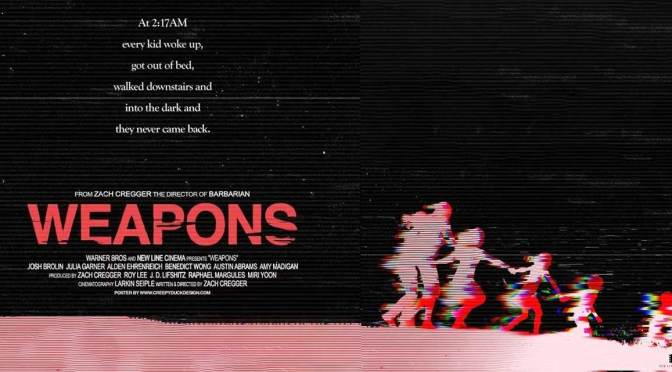
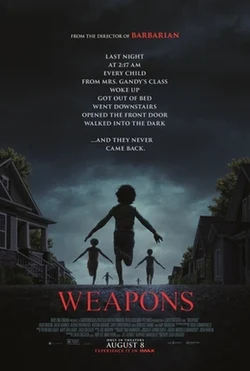
Weapons (2025) immediately hooks viewers with the mystery of the seventeen children going missing in the town of Maybrook. This instantly draws us into a world brimming with tension and unanswered questions. The authorities investigation into their disappearance soon stalls and how the townsfolk react becomes the central thread, gradually unraveling a complex, carefully structured narrative. Thus, Cregger’s postmodern fairy-tale unfolds through the eyes of various interconnected characters, each of whom brings a unique perspective and layer to the plot.


Josh Brolin plays Archer Graff, a father grieving the disappearance of his son Matthew, one of the missing children. His portrayal is poignant, balancing grief with a desperate need for answers, and his journey pushes the narrative forward with a personal stake in the outcome. Next, Julia Garner’s Justine Gandy, a dedicated teacher, adds another emotional dimension. She’s devastated when she discovers that nearly all of her students have vanished without a trace, with the exception of Alex Lilly (played by Cary Christopher), the only child from her class who remains. Justine’s struggle to find out what happened to her students, coupled with her own crumbling personal life and alcoholism, make her a compelling protagonist.

Other characters include Alden Ehrenreich’s Paul Morgan, a troubled police officer with his own set of demons, is a reluctant ally to Justine. Their past relationship adds a layer of tension as they navigate the growing sense of danger and urgency surrounding the missing children. Then, Austin Abrams brings a sense of raw, chaotic energy to James, a homeless drug addict and burglar whose past intersects with the mystery in unexpected ways. Lastly, Benedict Wong plays Marcus Miller, the school principal, who serves as an important figure in Justine’s quest for answers. Though sympathetic to her, Marcus is often caught between his professional responsibilities and the mounting pressure of the situation.

Weapons (2025) masterfully weaves its non-linear narrative with a striking array of tense, spine-chilling moments that keep audiences on edge throughout. As the plot unfolds through intersecting character arcs, the film expertly intersperses surprising scares, thrilling foot chases, and creepy locations, all while pulling you deeper into its twisting mystery. The jumps in time and the interconnected storylines create a sense of disorientation that builds forces viewers to constantly question what’s real and what isn’t.

Each character’s journey is filled with psychological unease and physical danger, leading to some genuinely heart-pounding sequences. Meanwhile, the eerie, claustrophobic settings—ranging from decaying homes to ominous, unfamiliar spaces—serve as perfect backdrops for the increasing horror. These moments contribute to the growing sense that something monstrous is lurking just beneath the surface, waiting to break free. Further, the film also plays with ambiguity, surreal dreams and unreliable narrators, allowing characters’ perspectives to fracture.

However, similar to Barbarian (2022), Weapons (2025) takes a tonal right-turn in the final moments, descending into all-out mania and Savini-style gore. The reveal of the matriarchal menace, who emerges as a central ‘Pied Piper’ type villain, feels somewhat unearned, undermining the narrative choices before. The ending also didn’t quite fully connect with the deeper themes or subtext of the film that were promised in the set-up. Yet, despite such inconsistencies Cregger’s Weapons (2025) has been marketed incredibly well and as has deservedly done great box-office business. Lastly, Creggers is a very talented filmmaker and his second film remains a smartly written and gripping ride filled with tension, scares, and that insane final act.

Mark 8.5 out of 11


Netflix Film Reviews: Indonesian Action Maestro – Timo Tjahjanto Trilogy

Netflix Film Reviews: The Timo Tjahjanto Trilogy

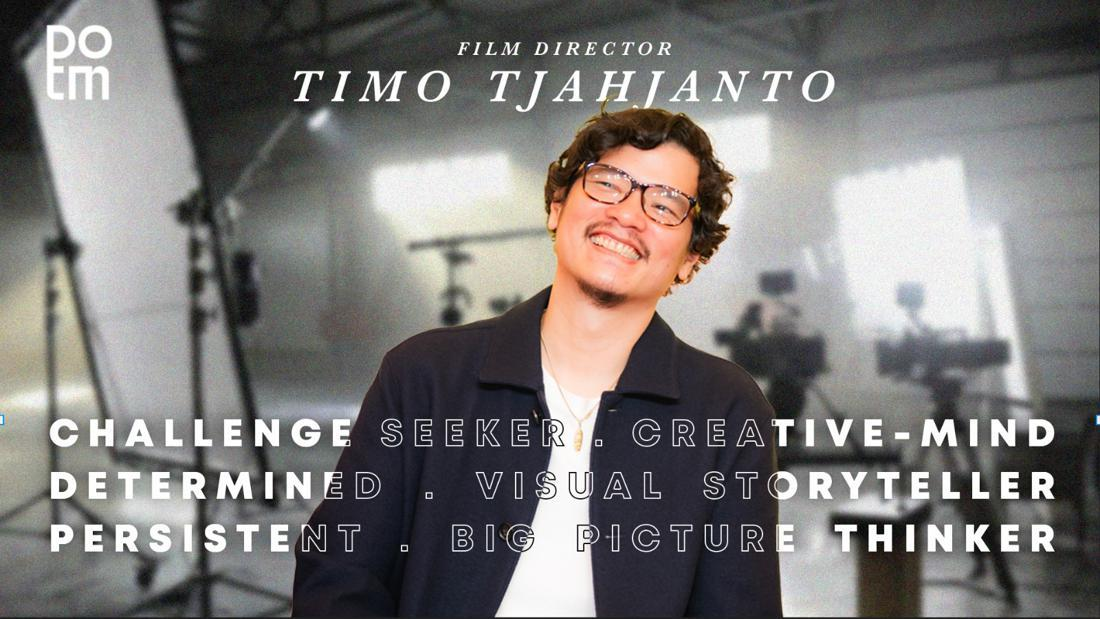
When Welsh filmmaker Gareth Evans burst on the cinematic scene with martial arts film, Merantau (2009) and followed it with the seminal action classic, The Raid (2011), he precipitated a welcome interest in Indonesian cinema and visceral fight films too. On reflection, Evans’ rise has influenced Indonesian director, Timo Tjahjanto, and their collaboration played a significant role in shaping the latter’s career. The two directors worked together on the action-packed Safe Haven segment of the anthology film V/H/S/2 (2013), which gained critical acclaim for its intensity and creativity. This partnership showcased Tjahanto’s knack for blending horror, action, and suspense, a style Evans is also known for through his work on the aforementioned The Raid series.

Thus, as a massive fan of The Raid (2011), I decided to watch Tjahjanto’s most recent Netflix releases. Their shared focus on high-octane action and stylized, bloody violence has led to comparisons between each of the filmmakers’ work and a sense of mutual inspiration. Tjahjanto has often expressed admiration for Gareth Evans’ meticulous approach to action choreography and storytelling. Evans’ ability to balance fast-cutting action, physically powerful actors and pulsating sound effects likely resonated with Timo, who has implemented similar techniques in his own films.

Here are three short reviews of those Netflix actioners from Tjahjanto, who is soon to be directing Nobody 2 (2025). I realise scenes where characters are garroted, decapitated, strangled, snapped, shot, hung and impaled with their own splintered bones are not the most seasonal of films to recommend, but if you absolutely love fist-blade-gun-bomb-stick-knife-head-tools-led set-pieces then do check them out.

** MAY CONTAIN SPOILERS **


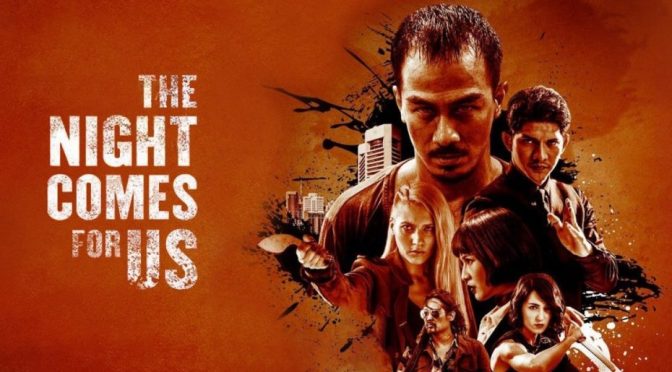
THE NIGHT COMES FOR US (2018)

Main cast: Joe Taslim, Iko Uwais, Julie Estelle, Sunny Pang and Zack Lee

Fans of the The Raid series will recognise Iko Uwais immediately, however, he is not the main hero in this frenetic and ultra-violent crime thriller. Not that there are not many heroes on show here. Tjahjanto is very much a genre writer and director, presenting big archetypal gangs involving the South East Asian Triads, groups called ‘The Big Six’ and characters called ‘The Operator.’ While there is an attempt to create emotion, Tjahjanto’s strength is in directing and choreographing blistering battle scenes between these various gangs.

The Night Comes For Us (2018) plot finds Joe Taslim’s, Ito, as enforcer saving a young girl’s life and trying to turn his back on crime and violence. It’s easier said than done as all hell breaks loose when various crime factions pursue him in a myriad of ferocious set-pieces. Here Tjahjanto vision of violence serves as more than just a tool for storytelling; it becomes an overwhelming, nihilistic force that shapes the film’s worldview and emotional tone. The relentless brutality and graphic depiction of human suffering go beyond entertainment, creating a numbing effect that forces viewers to confront the inescapable cycle of destruction and loss. The theme of redemption is at the heart of Ito’s journey, but ultimately it’s the high body count that stays with you.

Mark: 8.5 out of 11


THE BIG 4 (2022)

Main cast: Abimana Aryasatya, Putri Marino, Lutesha, Arie Kriting and Kristo Immanuel etc.

The Big 4 (2022) takes a sharp tonal shift from the grim and nihilistic world of The Night Comes for Us, embracing a blend of high-octane action and irreverent humour. While both films showcase the director’s trademark flair for elaborate action choreography and over-the-top violence, The Big 4 tempers its brutality with comedic undertones, a zany dysfunctional family dynamic, and a sense of fun reminiscent of The A-Team.

The film is peppered with witty banter, physical comedy, and absurd situations that lighten the mood, even during intense action sequences. The violence, while still extreme, is stylized in a way that leans more toward cartoonish spectacle than visceral horror, allowing the audience to laugh along with the chaos rather than feel emotionally drained by it. At the heart of The Big 4 is the relationship between its central group of misfit assassins, who operate more like a chaotic, bickering family than a traditional hit squad. The result is a film that retains Timo Tjahjanto’s penchant for adrenaline-fueled spectacle while delivering a more comedic and uplifting familial experience.

Mark: 7.5 out of 11


THE SHADOW STRAYS (2024)

Main cast: Aurora Ribero, Hana Malasan, Taskya Namya, Agra Piliang, Andri Mashadi, Chew Kin Wah etc.

Tjahjanto’s latest release, The Shadow Strays (2024) melds the sleek, character-driven intensity of Nikita (1990) with the mythic, stylized world-building of John Wick, resulting in a brutal and visceral cinematic experience that showcases his signature flair for action. The film blends high-octane combat with a dark, morally ambiguous narrative, creating a layered world filled with shadowy organizations, unrelenting assassins, and a protagonist caught between vengeance and redemption.

The well-worn plot shows a young trainee assassin called, Thirteen (Aurora Ribero), trying to find her own identity, at the same time of rescuing a young orphan from nefarious drug dealers and corrupt politicians. The narrative explores themes of identity, loyalty, and betrayal, grounding the hyper-stylized violence in a story of personal stakes and transformation. Her journey resonates with a sense of tragedy, as she grapples with the toll her violent profession takes on her psyche and relationships. While The Shadow Strays pays homage to its influences, it remains distinctly Tjahjanto, weaving his trademark brutality with Ribero confirming herself as bona fide film action star. The overall result is a gripping, unrelenting, if overlong journey, into a violent underworld where every choice comes with a cost.

Mark: 8 out of 11


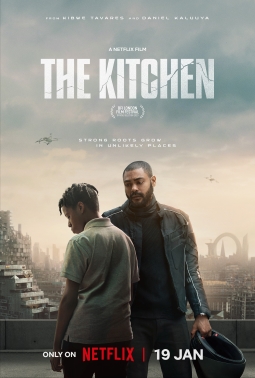
Netflix Film Review: Violence, paternity and love all cook in The Kitchen (2024)

NETFLIX FILM REVIEW: THE KITCHEN (2024)

Directed by Kibwe Tavares and Daniel Kaluuya

Written by Daniel Kaluuya and Joe Murtagh

Produced by Daniel Emmerson and Daniel Kaluuya

Main Cast: Kane Robinson, Jedaiah Bannerman, Hope Ikpoku Jr, Teija Kabs, Demmy Ladipo and Ian Wright

Music by Labrinth and Alex Baranowski

Cinematography by Wyatt Garfield

*** MAY CONTAIN SPOILERS ***


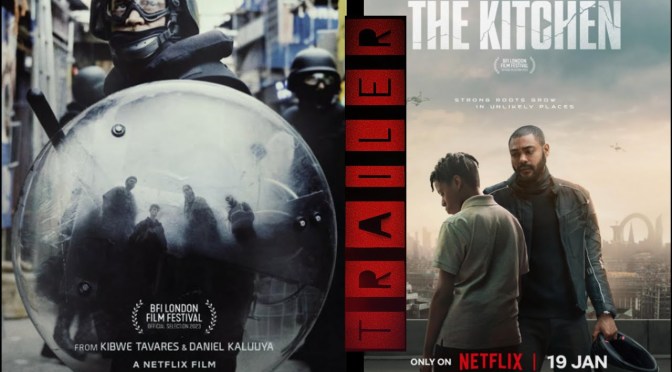
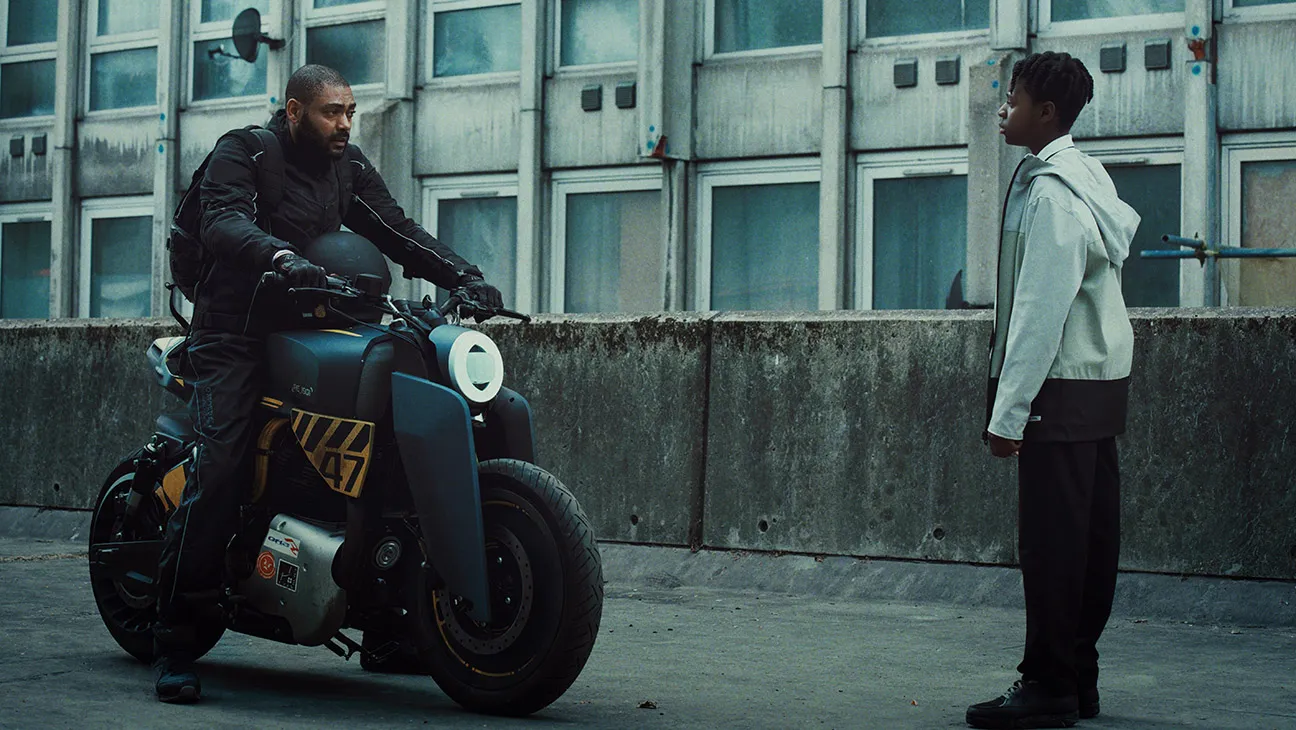
The Kitchen (2023) is a solid addition to the cinematic library of sci-fi dystopian narratives. It also combines thematic elements from rites of passage, action and family drama genres with much success. The story concentrates on Izi (Kane Robinson), who lives in London, 2044) where social housing is gone, except for “The Kitchen,” a community under threat from the wealthy. He works at ‘Life After Life’, a futuristic funeral service that turns unaffordable burials into trees families can visit before planting. After attending a funeral at his work he meets and forms an uneasy relationship with the son of the deceased, Benji (Jedaiah Bannerman). But is there more that connects the two?

Directed with imagination, energy and compelling flair by Kibwe Tavares and Daniel Kaluuya, The Kitchen (2023) focuses on Black culture as it faces relentless attacks from capitalist forces and oppressive law enforcement, painting a vivid portrait of a community fighting for survival. Moreover, the film explores the systematic erasure of cultural and physical spaces, where gentrification and state violence converge to push out the last bastion of working-class solidarity. This struggle becomes a powerful metaphor for resistance and resilience, underscored by music, tradition, community and collective memory.


At its heart, the film also delves deeply into paternal relationships, exploring the nature of both surrogate and absent fathers. Despite the futuristic setting, it is the relationships in the film which are most powerful. Benji is at a crossroads as to which direction his life may go, with the drama echoing the emotional intensity of Boys in the Hood (1991), This Is England (2006), Platoon (1986), and A Bronx Tale (1993). These connections explore themes of legacy, masculinity, crime and moral conflict within a fractured world. Through these intimate relationships the film compellingly reflects on generational trauma, grief and love.

Overall, The Kitchen (2023) is a stylish, superbly filmed and thought-provoking drama with a fantastic soundtrack and score. I would have preferred a lead protagonist who was more expressive and verbal. Kane Robinson is a fine actor, but I wanted Izi to explode on the screen rather than keep all that emotion and anger in. This and the over-familiar story beats ultimately do not take away from an excellent feature from the incredibly talented Tavares and Kaluuya.

Mark: 8 out of 11


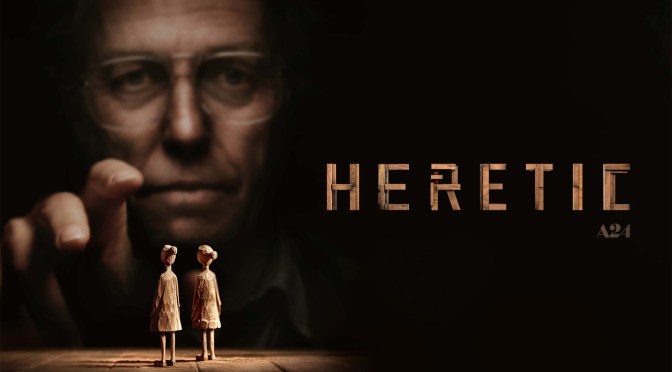
Cinema Review: Heretic (2024) – A Devilish Twist on Religious Horror

Heretic (2024)

Directed by Scott Beck & Bryan Woods

Written by Scott Beck & Bryan Woods

Produced by Stacey Sher, Scott Beck, Bryan Woods, Julia Glausi and Jeanette Volturno

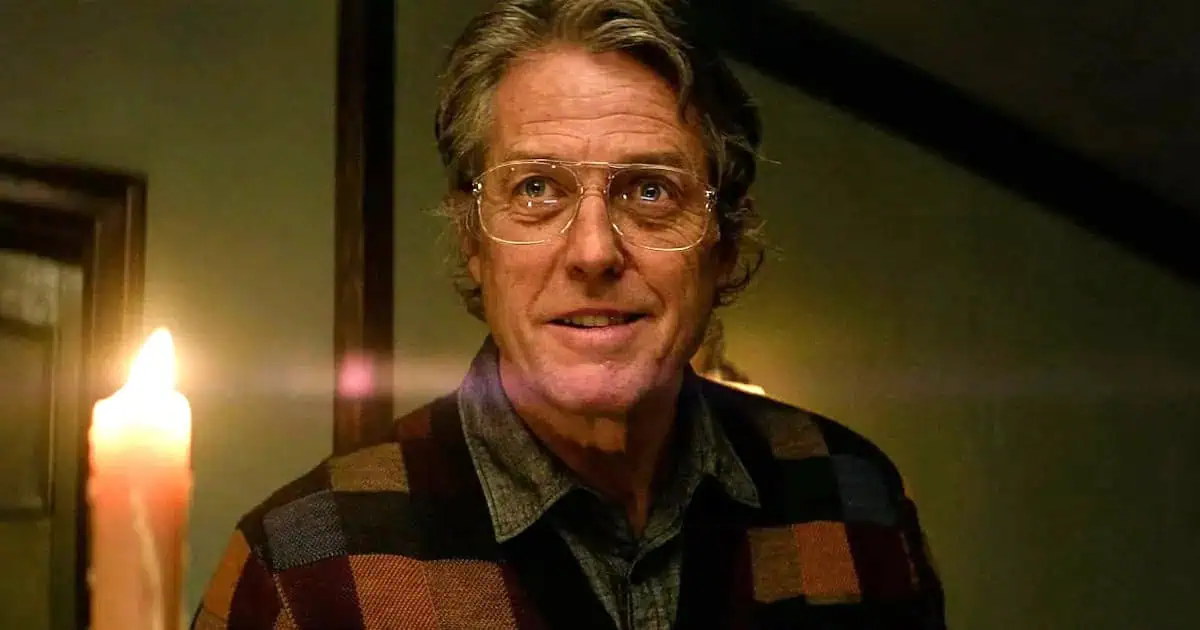
Main cast: Hugh Grant, Sophie Thatcher, Chloe East and Topher Grace.

Cinematography by Chung Chung-hoon


Hugh Grant has been leaning into edgier, more complex roles in recent years, breaking away from the charming, rom-com archetype that first made him famous in films like Notting Hill (1999) and Four Weddings and a Funeral (1994). His performance as the scheming Fletcher in The Gentlemen (2019) showcased his versatility and willingness to play morally ambiguous, darker characters, a notable shift from his earlier, more likeable characters. Additionally, his involvement in projects like Heretic (2024) demonstrates a continued exploration of grittier, layered personas, signaling a reinvention of his career as he embraces unconventional, often villainous roles that display a new level of depth and unpredictability.

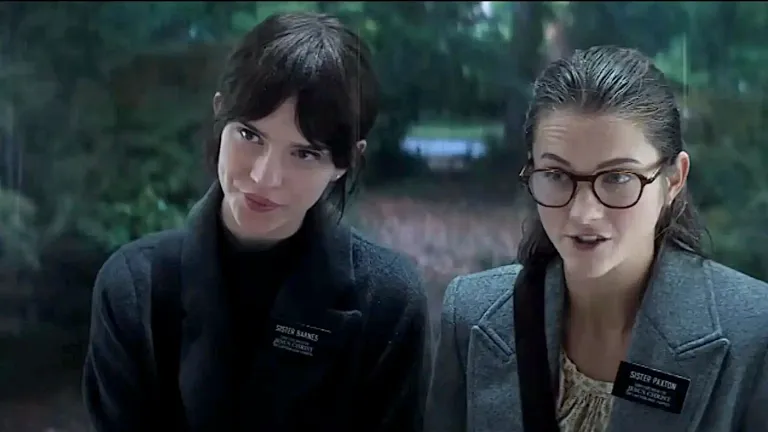
In the theologically-driven horror thriller, Heretic (2024), he portrays a certain Mr Reed, who is door-stepped by two Mormon missionary’s, Sister Barnes (Sophie Thatcher) and Sister Paxton (Chloe East). After the opening scenes which establish empathy for the Mormons, despite some slightly risque dialogue, they knock on the door of Mr Reed and soon the tension begins to rise as he clearly has ulterior motives. But what could they be?


The excellent script by Scott Beck and Bryan Woods truly comes alive in the second act, diving into a sharp, intelligent critique on the nature of religion and faith. The narrative shifts into thought-provoking territory, dissecting the contradictions and complexities of belief systems with nuance and wit. Hugh Grant, delivers these lines with palpable relish, embodying a character that’s both captivating and unsettling. His performance amplifies the script’s incisive commentary, bringing a darkly charismatic edge to the film’s anti-treatise that leaves a lasting impression on the viewer. There’s some great humour in there too, even name-checking South Park and The Book of Mormon during a thrilling game of verbal cat-and-mouse as Mr Reed challenges the sweet missionaries’ whole doctrine. Which, let’s face it, as invented by Joseph Smith, is arguably founded on many ridiculous ideas.

Heretic loses some of its originality toward the end as it leans into familiar horror and “final girl” tropes, diluting the impact of its earlier, more mazy, twisted and thought-provoking narrative. After building a layered critique on religion and faith, the climax reverts to predictable genre conventions, somewhat undermining the complexity established in the second act. This shift might feel like a missed opportunity, as the nuanced themes give way to traditional horror cliches that prioritize shocks over substance. While still entertaining, the reliance on these tropes makes the conclusion feel less daring compared to the film’s more intellectually ambitious setup. Still, Hugh Grant’s devilish Mr Reed and a fantastic soundtrack, make it well worth the admission fee. Meanwhile Woods and Beck again prove themselves as genre filmmakers worth keeping faith with.

Mark: 8.5 out of 11


Cinema Review: The Substance (2024) – A Dark Exploration of Identity

THE SUBSTANCE (2024)

Directed by Coralie Fargeat

Written by Coralie Fargeat

Produced by: Coralie Fargeat, Tim Bevan and Eric Fellner

Main Cast: Demi Moore, Margaret Qualley and Dennis Quaid

Cinematography by Benjamin Kracun

*** MAY CONTAIN SPOILERS ***


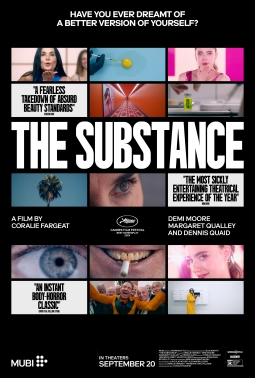
The Substance (2024), directed by Coralie Fargeat, is a visually striking and visceral film that pushes the boundaries of body horror and psychological terror. Fargeat, known for her raw and relentless style in Revenge (2017), once again delivers an unforgettable experience by weaving references to classic literature and horror cinema into a narrative that is at once familiar and entirely original.

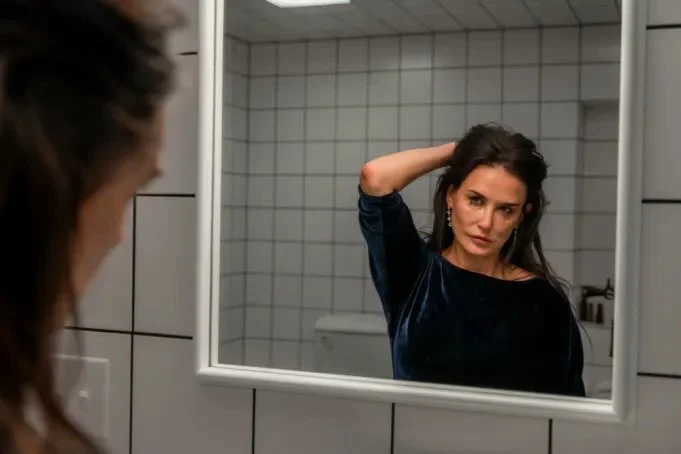
Demi Moore portrays a former Hollywood star, Elizabeth Sparkle, now relegated to doing a mildy successful cable TV aerobics show. However, Dennis Quaid’s oily production executive is on the lookout for younger talent. Elizabeth soon finds herself on the media scrapheap. Desperate to regain her youth and career, Elizabeth is drawn to the hypnotic promise of a new product called ‘The Substance.’

Before you can say, “Dorian Gray”, Elizabeth is lured to a strange white room full of lockers and has committed to the process. Similar to Gremlins (1984), there are rules to follow. As she follows the steps and injects the potions, Elizabeth goes through a painful and incredibly impactful transformation process. She literally gives birth to a young and beautiful alter ego called, Sue (Margaret Qualley). Elizabeth and Sue then get seven days each to live their life before they have to swap back. What could go wrong?


The film’s core themes draw heavily from Robert Louis Stevenson’s Dr. Jekyll and Mr. Hyde, exploring duality, identity, and the monstrous potential hidden within human nature. Like Stevenson’s tale of inner conflict, The Substance delves into the consequences of scientific ambition. It investigates moral transgression but with a modern, feminist twist. Fargeat’s use of body horror, particularly in the transformation sequences, echoes the grotesque, unsettling work of David Cronenberg. The nightmarish atmosphere and surreal visuals are reminiscent of David Lynch’s unsettling dream logic. This is notably seen in Eraserhead (1977) and Mulholland Drive (2001).

The film also pays homage to John Carpenter’s The Thing (1982), with its transmogrifying frights, sense of creeping paranoia and rising conflict. But rather than a group of men fighting each other Elizabeth and Sue turn on each other over ownership of their physical existence and Hollywood status. The final act descends into hellish and bloody satire echoing Peter Jackson’s Braindead (1992), with gore galore. Moreover, Stanley Kubrick’s influence is palpable in the film’s meticulous framing, production design and tension-building. The climactic body-morphing scenes, however, most clearly nod to Brian Yuzna’s Society (1989), with its grotesque depictions of class and conformity, fused with Fargeat’s unique vision of female empowerment, revenge and resistance.

The Substance (2024) feels like a bigger budget film in look and style, but you soon realise the minimal number of sets used and a lack of crowd scenes, finds the narrative effectively becoming a two-hander in the middle act by focusing on Sue and Elizabeth’s internal retaliatory vindictiveness. There are some amazing framing, colour design and cinematographic choices as showers become tombs to trap the protagonists. The book-ended Hollywood star montage and returning final shots are imaginative and unforgettable. Got to say that Demi Moore, as an actress taking on a role of an aging and neurotic former star is genius casting. While Qualley delivers a sexually charged and energetic performance, it is Moore who carries the weight of the complex themes as Elizabeth’s journey dives deeper into the stuff of nightmares.

Overall, The Substance (2024) is a postmodern classic and a film that honors its influences while forging its own path. Fargeat uses these references to enrich the narrative, creating a damned ugly and beautiful satire on those seeking narcissistic perfection through unnatural means, ultimately paying the price of those seeking eternal youth and fame.

Mark: 9 out of 11


CINEMA REVIEW: BLINK TWICE (2024)

Directed by Zoë Kravitz

Written by Zoë Kravitz & E.T. Feigenbaum

Produced by Bruce Cohen, Tiffany Persons, Garret Levitz, Zoë Kravitz and Channing Tatum

Cast: Naomi Ackie, Channing Tatum, Christian Slater, Simon Rex, Adria Arjona, Kyle MacLachlan, Haley Joel Osment, Geena Davis and Alia Shawkat etc.

Cinematography by Adam Newport-Berra

*** MAY CONTAIN SPOILERS ***


The theme of toxic masculinity is almost becoming a sub-genre of itself in the wake of the #MeToo movement. Films such as The Royal Hotel (2023), How to Have Sex (2023) and Men (2022) are powerful genre films which take the manipulative, malevolent and violent aspect of men, utilizing it as both nemesis and a destructive force the main protagonists must contend with. While She Said (2022) dealt specifically with the Harvey Weinstein legal case, Zoe Kravitz’ energetic blend of genres in Blink Twice (2024), takes a more fictional and heightened route while exposing the horrors surrounding the potential happenings at the notorious Epstein Island.

Frida (Naomie Ackie) and her friend Jess (Alia Shawkat) work at an exclusive event where Frida meets Slater King (Channing Tatum), a billionaire tech mogul who recently resigned as CEO after a public scandal. Despite the scandal Frida and Jess gladly accept an invitation to his private island, where his assistant Stacy (Geena Davis) confiscates their phones. The island hosts Slater’s friends and business partners along with three glamorous guests including Sarah (Adria Arjona). The men and women are treated to lavish rooms, gift bags, gourmet meals, cocktails, and party like hedonistic rock stars drinking champagne and taking hallucinogens.


If you’ve seen the similar island-based, The Menu (2022), which I loved, plus the less than riveting 1950’s perfect suburb-set, Don’t Worry Darling (2022), one soon realises that not all is well in paradise. Amidst the sun, sea and partying the narrative slowly builds the tension until Frida and Jess begin to suspect all may not be as it seems. Kravitz carefully ratchets up the tension, with several strange discoveries heightening the paranoia and anxiety. Latterly the suspense gives way to all-out gory horror and black comedy in the thrilling final act. Naomi Ackie and Adria Arjona are impressive “final girls”, however, the script arguably throws in too many twisty reveals at the end, testing narrative credibility.

Zoe Kravitz is clearly a talented filmmaker and Blink Twice (2024), while unsubtle, is highly entertaining. But does the diversion to the horror genre dilute the power of the themes of toxic masculinity? Kravitz aims to critique the evils of men by showcasing male characters who embody arrogance, dominance, and emotional suppression. But while Kravitz may intend to address toxic masculinity, the reliance on traditional horror tropes potentially undermines this message by exaggerating characters, victimizing women, and prioritizing sensationalism over substance. Still, as a revenge fantasy, Blink Twice (2024), is both stylishly and dynamically rendered.

Mark: 7.5 out of 11


CINEMA REVIEW: THE BIKERIDERS (2023)

CINEMA REVIEW: THE BIKERIDERS (2023)

Directed by Jeff Nichols

Screenplay by Jeff Nichols (Based on The Bikeriders by Danny Lyon)

Produced by Sarah Green, Brian Kavanaugh-Jones and Arnon Milchan

Main Cast: Jodie Comer, Austin Butler, Tom Hardy, Michael Shannon, Mike Faist, Norman Reedus, Boydf Holbrook etc.

Cinematography by Adam Stone

*** MAY CONTAIN SPOILERS ***


Set in the mid-sixties, the biopic The Bikeriders (2023), centres on a bike club (or what we could be considered a ‘Hell’s Angel’ gang of the era) called ‘The Vandals.’ Started by Tom Hardy’s, leader Johnny, as a motorbike racing club, it develops into a social place for men to meet and play and look cool and party and fight. More significantly, ‘The Vandals’ club allows the men to gain a sense of authority and identity within the shifting state of America during the 1960’s. The terrific ensemble cast includes Austin Butler as moody Benny, plus his sparky narrator wife, Jodie Comer, as Kathy. All are very good, yet there is something lacking thematically and in terms of plot.

Story-wise The Bikeriders (2023), is more like a verbal and pictorial diary with Comer’s affected Chicago accent gluing the various events together without reaching a height of dramatic satisfaction. Butler and Hardy are really cool and moody, echoing visitations of James Dean and Marlon Brando, respectively. But there needed to be more differentiation in their characters as TWO strong and silent types created a dramatic vacuum for me. Classic scene stealers such as Michael Shannon, Boyd Holbrook and Norman Reedus do add colour and charisma. I kind of wanted more of those guys because they had strong personalities, and actually spoke! Meanwhile, the props, costumes, production design and cinematography are all brilliantly rendered, clothing the film in an authentic and gritty sense of style.

Ultimately, the nostalgic, “anti-hero” driven period drama, so well delivered by Martin Scorsese over the years gets another solid run-out in The Bikeriders (2023) from the talented filmmaker, Jeff Nichols. Whereas Scorsese brings incendiary cinematic fireworks and complex tales of morality to your face, mind and heart, Nichols is a more under-stated director. He presents his stories and characters without too much push, with the audience having to lean in to catch the whispers of drama. That isn’t to say The Bikeriders (2023) doesn’t have action, racing, fighting, crashes, and blood, but the characters are lacking a powerful narrative engine to drive the strong performances forward. Plus, the themes of loss, war, and masculinity in crisis needed more gas. The film motors along just fine, but without ever getting into fifth, let alone sixth gear.

Mark: 7 out of 11