Tag Archives: war film

CINEMA REVIEW: OPPENHEIMER (2023)

CINEMA REVIEW: OPPENHEIMER (2023)

Directed by: Christopher Nolan

Screenplay by: Christopher Nolan

Based on: American Prometheus by Kai Bird and Martin J. Sherwin

Produced by: Emma Thomas, Charles Roven, Christopher Nolan

Cast: Cillian Murphy, Emily Blunt, Matt Damon, Robert Downey Jr., Florence Pugh, Josh Hartnett, Casey Affleck, Rami Malek, Kenneth Branagh, Tom Conti and many more.

Cinematography: Hoyte van Hoytema

*** MAY CONTAIN SPOILERS ***
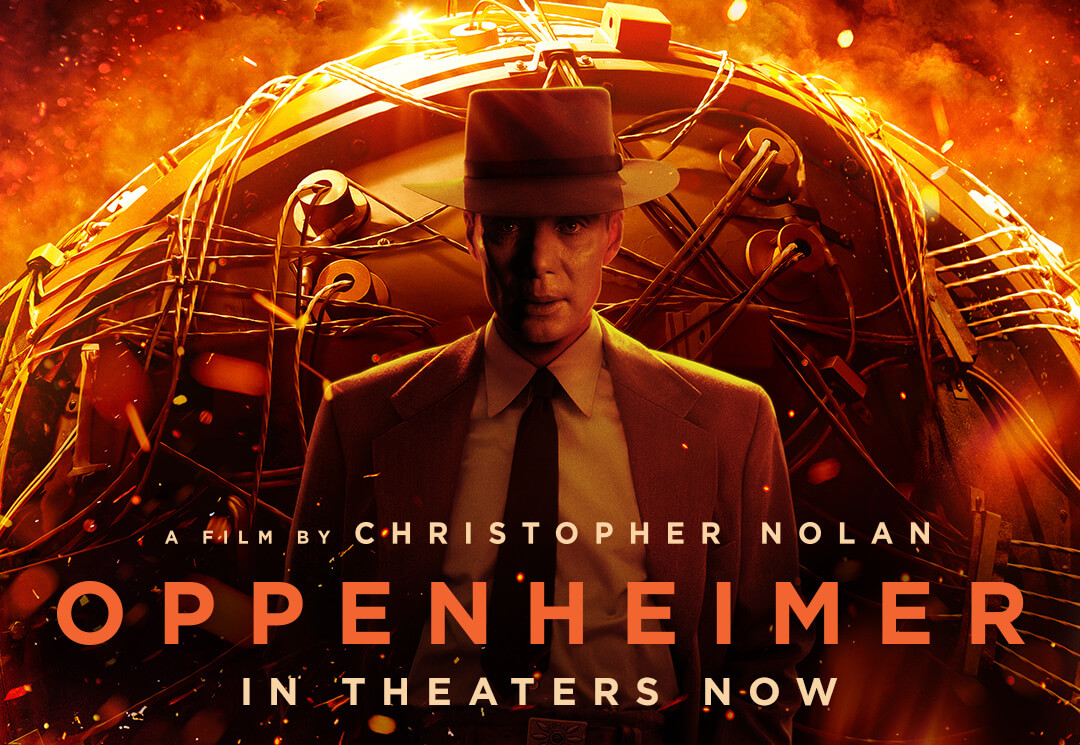


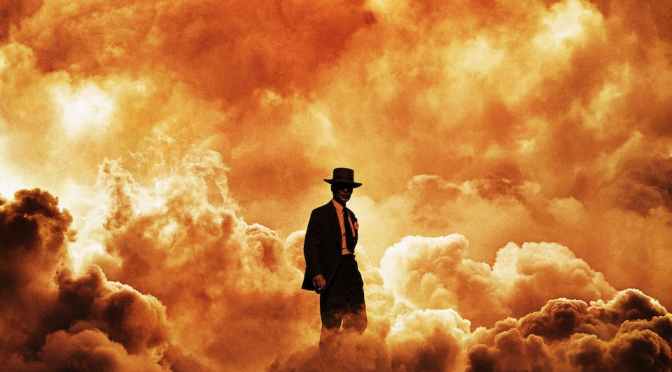
One wonders if Christopher Nolan sees himself reflected, on some subconscious level, in the character of J. Robert Oppenheimer. Both are geniuses within their chosen field, and both have had their critics who do not always agree with their choices. The intrinsic difference is that the work of Oppenheimer and his team of scientists created one of the most expensive and deadly weapons the world has even seen. His actions led to destruction and death on a mass scale. Christopher Nolan, on the other hand, merely creates expensive drama and destruction on a cinema screen for our entertainment.

J. Robert Oppenheimer is clearly a complex character to bring to life on the screen. Indeed, scientists are not always the most riveting of characters, nor particularly cinematic. Especially since they spend their days in laboratories, classrooms and have their heads buried in books. Thus, visually speaking it is a constant challenge for filmmakers to present such biopic narratives. Moreover, thematically, and philosophically there is much internal conflict to wrestle with. Especially someone as (in)famous as Oppenheimer. I mean, how does a man overcome the guilt of being responsible for the deaths of so many people?

Having said that, Oppenheimer, as the leader of the ‘Manhattan Project’ at Los Alamos, could also be interpreted as the saviour of lives. The invention of nuclear weapons is an act of aggression, but paradoxically also a shield of peace. Such is the fear generated by such a devastating tool we will never know how many lives the existence of nuclear bombs has saved. Unfortunately, human beings find other ways to kill each other. That sadly will never stop. Does Nolan explore these themes within the intense three hours of cinematic propulsion, Oppenheimer (2023)? It is certainly there in the subtext, but perhaps not as pronounced as I would have hoped.


Adapting American Prometheus by Kai Bird and Martin J. Sherwin, Christopher Nolan’s screenplay is highly intelligent and clearly professionally researched. It is also, when compared with the often-baffling Tenet (2020), simply structured. Events from Oppenheimer’s early life, post-war troubles with the United States government and the key stages of the ‘Manhattan Project’ are cut together in juxtaposing timelines throughout the lengthy running time. Nolan builds from the Senate and court hearings Oppenheimer faces after the war, where his security status is threatened with revocation due to his alleged association with the Communist party before the war.

That McCarthyistic-Red-Scare-paranoia was vilifying genuine heroes such as Oppenheimer is quite incredible, but unsurprising. I mean, here is a man, who served his country to personal cost and his own mental degradation. It is therefore a measure of his character, as presented via Cillian Murphy’s formidable portrayal, that he refuses to break in the face of constant questioning of his patriotism and commitment to America. I felt that the constant jolts from the Senate hearings, where Robert Downey Jnr’s, Lewis Strauss, is seeking election, to Oppenheimer’s security status “trial,” brought about an overly repetitive and talky series of scenes which bogged down the emotions for me.

Where the film truly blooms is when Oppenheimer makes his scientific breakthrough, builds his team of geniuses and the construction and testing of the nuclear weapons at Los Alamos. There is palpable suspense (even though we know what happens) in the race with the Germans to make the bomb first. Imagine if the Germans had won the race? It does not bear thinking about. The history of the world would have been irrevocably altered beyond comprehension. Nolan also does an effective job of keeping the scientific language at an understandable level, as he promotes personalities over jargon. Indeed, Nolan’s ultra-talented ensemble cast including Matt Damon, Rami Malek, Josh Hartnett, Dane DeHaan, Jason Clarke, Florence Pugh and the best of the lot, Robert Downey Jnr, are all superbly marshalled by the director.
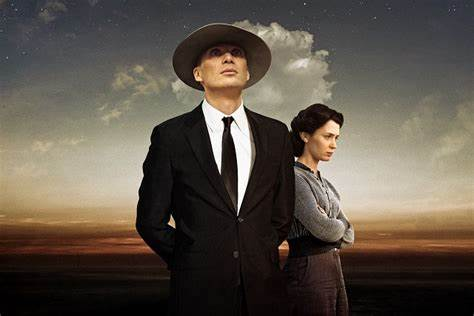


As well as being rich in history and thematic power, Oppenheimer’s (2023) visuals, allied with Hoyte Van Hoytema’s pristine cinematography, are unsurprisingly impressive. Nolan makes the choice to switch between black-and-white and colour photography. This is initially jarring but works with the shifting character perspectives it is intended to denote. On the other hand, I would say the pulsating sound design and score felt overbearing at times. Similarly, one could argue the overload of cutting, aural battering and switching of film colour stock combine to overload the viewer and remove emotional and dramatic resonance.

Oppenheimer (2023) is another Nolan masterwork as he and Cillian Murphy will surely get Oscar nominations. Lastly, the film works best as a bullet-pointed history lesson, a fine tribute to a complex and flawed genius, and a powerful damnation of United States paranoid politics. However, the solipsist nature of Oppenheimer’s character study and crowd of talking heads often becomes dizzying, watering down the drama and emotion of this immaculate and nuclear work of cinema.

Mark: 9 out of 11


CLASSIC FILM REVIEW: THE BATTLE OF ALGIERS (1966)

CLASSIC FILM REVIEW: THE BATTLE OF ALGIERS (1966)

Directed by Gillo Pontecorvo

Written by Franco Solinas

Story by Franco Solinas and Gillo Pontecorvo – Based on Souvenirs de la Bataille d’Alger by Saadi Yacef


Produced by Antonio Musu and Saadi Yacef

Main Cast: Jean Martin, Saadi Yacef, Brahim Haggiag, Tommaso Neri and ensemble.

Cinematography by Marcello Gatti

Edited by Mario Morra and Mario Serandrei

Music by Ennio Morricone and Gillo Pontecorvo

*** MAY CONTAIN SPOILERS ***


The Battle of Algiers (1966) was one of the greatest films I had NEVER seen. Now, The Battle of Algiers (1966) is one of the greatest films I have EVER seen. I’m embarrassed to admit that I had, for some unknown reason, not found the time to watch it. But wow, the “best films of all time” lists it appears on are NOT wrong. For sure, I don’t always get on with the critics’ list released by respected publications such as Sight and Sound, nevertheless with this incendiary work of cinema I am in total agreement of its deserved high ranking. In fact it could be higher.

The Battle of Algiers (1966) is set during a particularly brutal period of the Algerian War of Independence which occurred between 1954 and 1962. It is not a conflict I am too familiar with historically, nonetheless, I am aware of the desire by the Algerian National Liberation Front to decolonize themselves from French rule. Their demands were rejected by French leaders, thus the Algerian people took to the streets to wage a guerrilla campaign against both civilian and military targets.

Like many a bloody conflict lives, families, businesses, homes, properties and animals were savagely hurt and left irreparably damaged. As the prolonged fighting ensued in Algiers both sides resorted to more extreme combat measures. But with Algiers becoming a politically adverse battlefield, France’s external allies, such as the USA, moved their support away and eventually the Algerian people would overcome the hostile landlords. For the French, the Algerian rebels were terrorists. But remember, one person’s terrorist is another person’s freedom fighter.


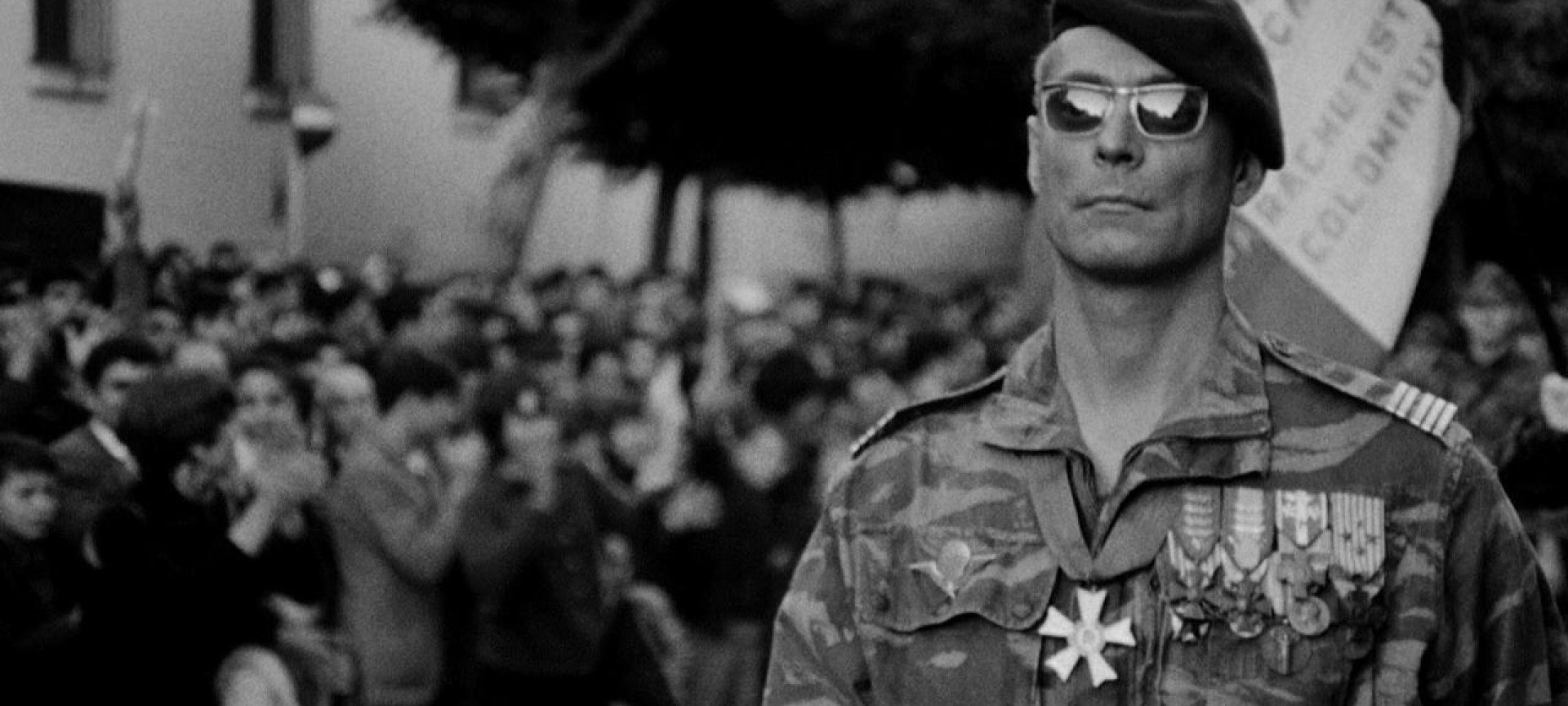
A short review on a humble film blog cannot pretend to imagine the currency of horror, grief and pain encapsulated within this brutal conflict. Yet, incredibly, Gillo Pontercorvo, as well as producing a searing indictment against the barbarity of war, has in The Battle of Algiers (1966) made palpable such horror, grief and pain through sheer formal cinematic ingenuity. In two hours, Pontercorvo and his production team, employ a stark black-and-white-film-documentary-style, non-professional actors, chopping episodic narrative, percussive and beating sounds, handheld cameras, vérité production design and dynamic, dialectic montage to spectacularly bring the psychological power of war to the screen. Not to mention the iconic Morricone and Pontercorvo composition which pulsates throughout the soundtrack.

Intrinsically focussed on events in the Casbah, Algiers between 1954 and 1957, as the story is bookended from the perspective of Ali la Pointe (Brahim Haggiag). La Pointe is a petty criminal who is politically radicalized while in prison, but becomes a formidable force in the fight. The narrative events display a variety of bombings he organizes against the French and his attacks lead the French to bringing in experienced soldier, Lieutenant-Colonel Mathieu (the sole professional actor, Jean Martin). The paratrooper commander is tasked with bringing down the Algerian Liberation Front and his methods of torturing prisoners soon begin to turn the bloody tide.

I cannot overstate how moved I was emotionally and intellectually by The Battle of Algiers (1966). It is momentous filmmaking and made me feel both a fraud and horribly depressed at how evil human beings can behave. I am a fraud because I am safely able to live out my privileged life thankfully free of the horror I have witnessed in the film. Moreover, it is so depressing that we never learn as conflict continues to blight this poisoned planet we exist on. Lastly, Pontercorvo, redefines for me the job a what a director does. The Battle of Algiers (1966) is a pinnacle of how filmmaking style and form can match the heartfelt agony of the narrative themes on show. It is not only one of the greatest anti-war films of all time, but simply one of the most complete films ever made.


1917 (2019) – CINEMA REVIEW

1917 (2020) – CINEMA REVIEW

Directed by: Sam Mendes

Produced by: Sam Mendes, Pippa Harris, Jaybe-Ann Tenggren, Callum McDougall, Brian Oliver

Written by: Sam Mendes, Krysty Wilson-Cairns

Cast: George McKay, Dean Charles-Chapman, Mark Strong, Andrew Scott, Colin Firth, Claire Duburcq, Benedict Cumberbatch etc.

Cinematography: Roger Deakins

Music by: Thomas Newman

**CONTAINS HISTORICAL SPOILERS**


Image result for 1917 film

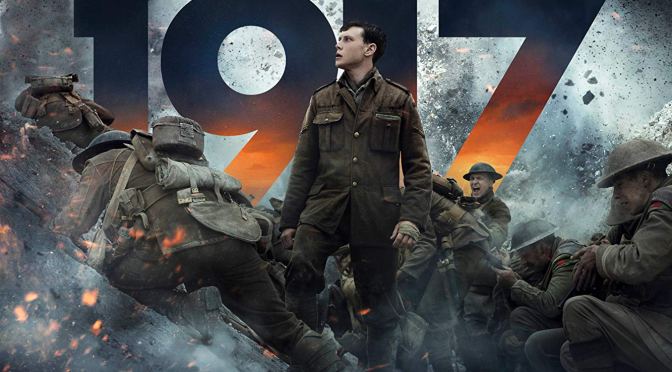
If Roger Deakins doesn’t win every single award for best cinematography in the world, I will be completely shocked! Together with Sam Mendes’ and their respective creative and production teams they have delivered a barnstorming, aggressive and beautiful work of pulsating cinema with 1917 (2019). In fact, the whole project is such a feat of technical brilliance, I think Sam Mendes will probably win best direction and the film will most likely win best film at the 2020 Academy Awards.

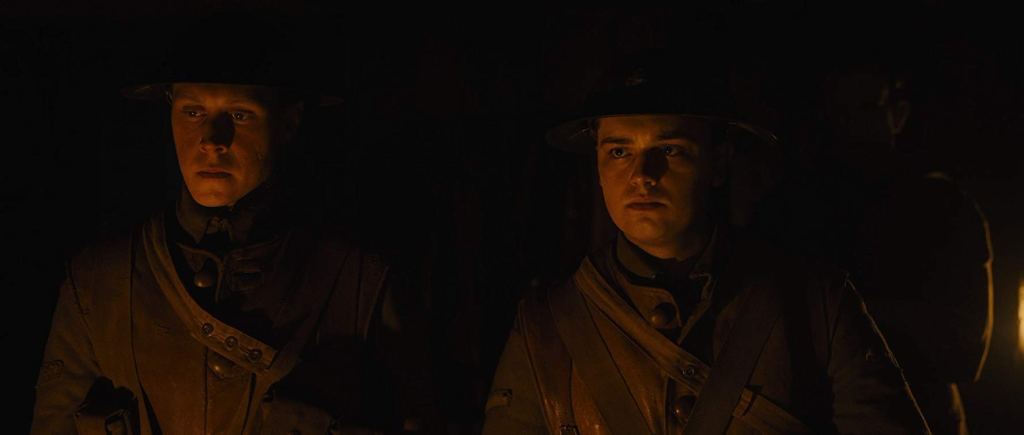
The form and style of the film are dictated by Mendes and Deakins audacious decision to film in one long continuous take. Set, as the title states in 1917 during World War I, we open with a long tracking shot and from there the shot never ends. Establishing the main protagonists Lance Corporal Will Schofield (George MacKay) and Lance Corporal Tom Blake (Dean-Charles Chapman), the camera glides along as they make small-talk, creating humour, warmth and calm before the storm to come. That storm derives from their mission to carry a message through perilous territory and prevent 1,600 British soldiers falling into a German trap. Immediately the stakes are high and these two brave men set out to achieve this dangerous task.


The choice to film in one continuous shot is a fascinating one and here it is executed brilliantly. Of course, there are occasions where a cut has occurred, but this is masked by darkness, water, camera movement or CGI. I personally am not a massive fan of longer takes though. They can be seen as a stylish, but empty process and usually work best in opening scenes. Moreover, by not cutting or using montage techniques I feel you can lose suspense, impact and pace from a film. However, that is certainly not the case with 1917 (2019). Here it works perfectly with the camera following, tracking, running, falling and stalking the characters, so much so, the audience becomes the camera. We are right in this war with them!

As we track Blake and Schofield through bunkers, trenches, fields, farmhouses, derelict buildings and villages, the stench of death and destruction surrounds them. Mendes and his writing partner, Krysty Wilson-Cairns, also create some heart-sweating and explosive set-pieces for the soldiers to overcome. Indeed, the pace with which they regularly find themselves under attack, married with the filmmaking style, puts you in the heart of the action and fight. The final battle where Schofield valiantly strives to reach his final destination and relay the message is utterly exhilarating and spellbinding cinema.


As the two everyman soldiers, George MacKay and Dean-Charles Chapman give convincing performances. MacKay is especially memorable as his tall frame, hollowed cheekbones and haunted eyes dominate the screen. Furthermore, the two leads are supported ably by a “who’s-who” of British actors. The likes of: Mark Strong, Colin Firth, Benedict Cumberbatch and Andrew Scott puncture the action throughout with their quality. Scott is especially excellent as a cynical officer, drunk and bereft of hope. The two heroes ignore his jaded battle worn persona, but soon find themselves surrounded by corpses, quickly coming to understand this character’s despairing heart.

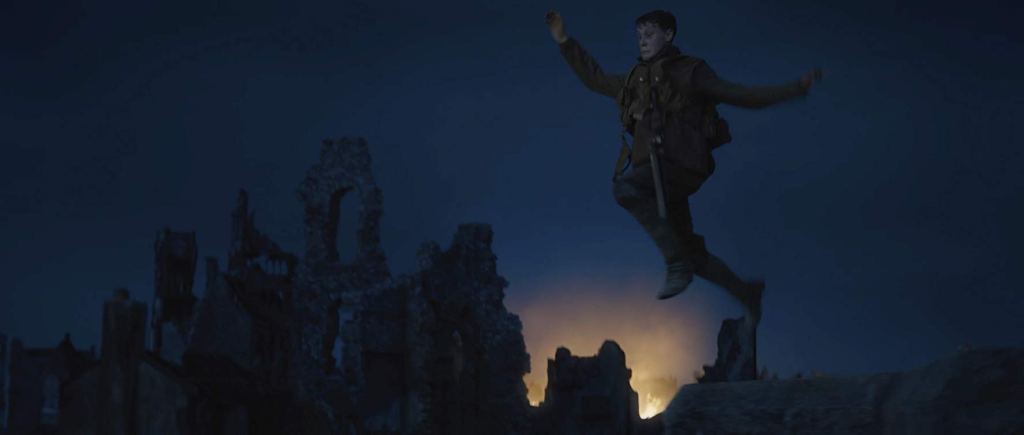
Like Dunkirk (2017), the film is arguably thin on characterisation and character development, but stylistically impressive in it’s rendition of the horrors of war. Indeed, when the events switch to night, Deakin’s lighting skills dominate as he paints images with darkness, moonlight and fire with majestic results. Thus, overall, one could argue this is just one long chase film; an extended version of the climax of another World War I classic, Gallipoli (1981). However, the cinematic marvel that is, 1917 (2019), overcomes it’s narrative and thematic familiarity with an amazing technical achievement in both form and style. Awards glory beckons for all involved; and more importantly the film pays fine tribute to the gallant soldiers who served in an ultimately senseless war.

Mark: 9.5 out of 11


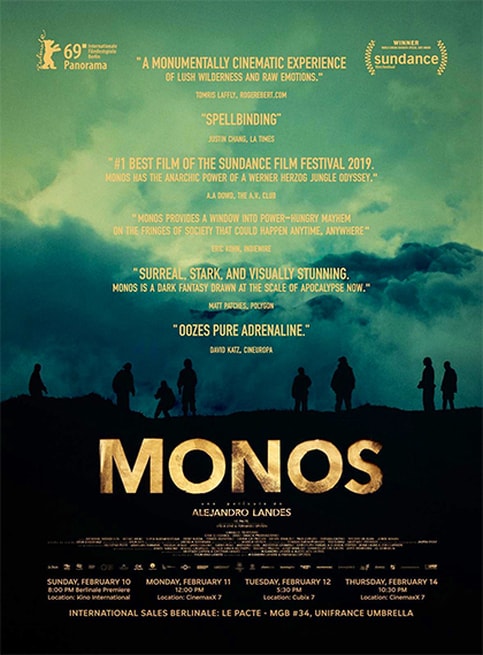
MONOS (2019) – CINEMA REVIEW

MONOS (2019) – CINEMA REVIEW

Directed by: Alejandro Landes

Produced by: Alejandro Landes, Fernando Epstein, Santiago Zapata, Cristina Landes

Written by: Alejandro Landes, Alexis Dos Santos

Cast: Julianne Nicholson, Moises Arias, Sofia Buenaventura, Julian Giraldo, Karen Quintero, Laura Castrillon, Deiby Rueda, Wilson Salazar, Esneider Castro, Paul Cubedes etc.

Music: Mira Levi

**MAY CONTAIN SPOILERS **


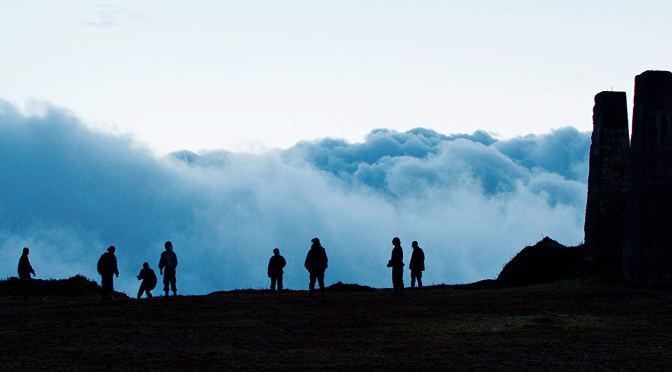
Those American teenagers, as represented in recent film and television offerings such as Stranger Things and IT, have some serious problems to deal with, such as inter-dimensional aliens and extra-terrestrial demons masquerading as killer clowns. Such foes, however scary, are of course fantasy. The horrors that the kids in feature film MONOS (2019) have to deal with, feel very real, raw and altogether horrifically more deadly.

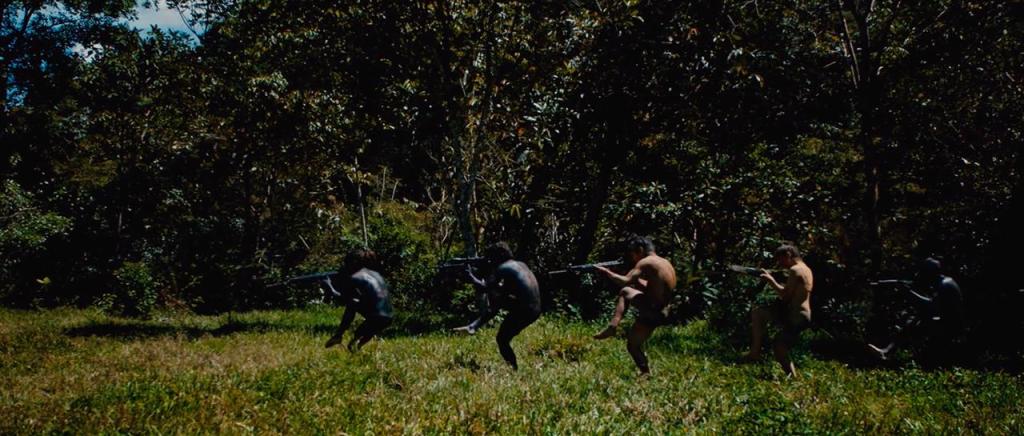
The film opens on South American mountaintop in Columbia. We are thrown straight into the everyday lives of young rebel soldiers known only by their war names including: Rambo, Smurf, Lady, Dog, and Wolf among others. The fact we never learn their real names establishes the dehumanized and exploited nature of these characters. They are denied a childhood and used as young soldiers within a guerrilla cell. The adults controlling them are represented by a man known only as The Messenger, who visits, drills and orders them about. While they act out, have sex, drink and “play” with the illusion of freedom, if they do not follow orders then there is hell to pay.


“Hell-to-pay” is an apt phrase for both the characters and the audience watching. For me this is not an enjoyable film in terms of entertainment. It is not intended to be. It is a very angry film and a shocking war of attrition to sit through. There is a documentary feel and in-your-face realism throughout, with little or no sympathetic characters to root for. Don’t get me wrong, I empathised with the plight of the children and what had happened to them. Yet, it’s difficult to sympathise with them, because when we join them they all seem so irreparably damaged by war and their existence. It’s a dog eat dog world and these dogs have guns, knives and semi-automatics.

Overall, I found the characterisations and elliptical narrative jarring throughout. For me, it created alienation in terms of emotional impact. However, the cinematic storytelling is of the highest quality. The visuals, sound, score and acting are all exceptional. Indeed, Alejandro Landes is a fearlessly talented filmmaker and definitely one to watch for the future. The mountain vistas and jungle scenery were majestic and beautiful to behold, despite the hellish events unfolding. Lastly, the film carries a deeply important message about these lost children of South America. Their lives are no fantasy. They are violent, animalistic, dirty, carnal and, based on what I saw in Monos (2019), completely devoid of hope.

Mark: 8.5 out of 11


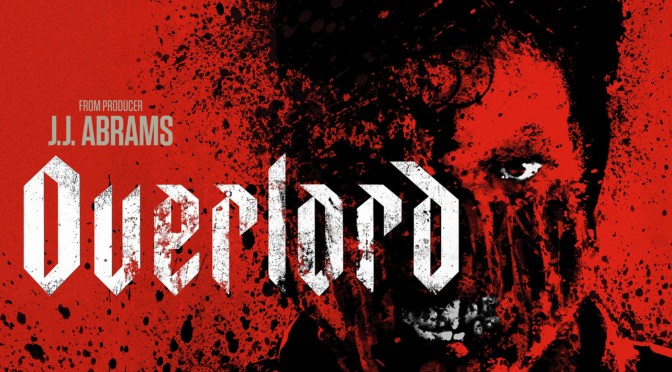
FILMS THAT GOT AWAY #2 – REVIEW – OVERLORD (2018)

OVERLORD (2018)

Directed by: Julius Avery

Produced by: J.J. Abrams, Lindsay Weber

Screenplay by: Billy Ray and Mark L. Smith

Cast: Jovan Adepo, Wyatt Russell, Mathilde Ollivier, John Magaro, Pilou Asbæk, Bokeem Woodbine etc.

Cinematography: Laurie Rose and Fabian Wagner

**MAY CONTAIN SPOILERS**

Inglourious Basterds anyone? More like inglorious mutants!

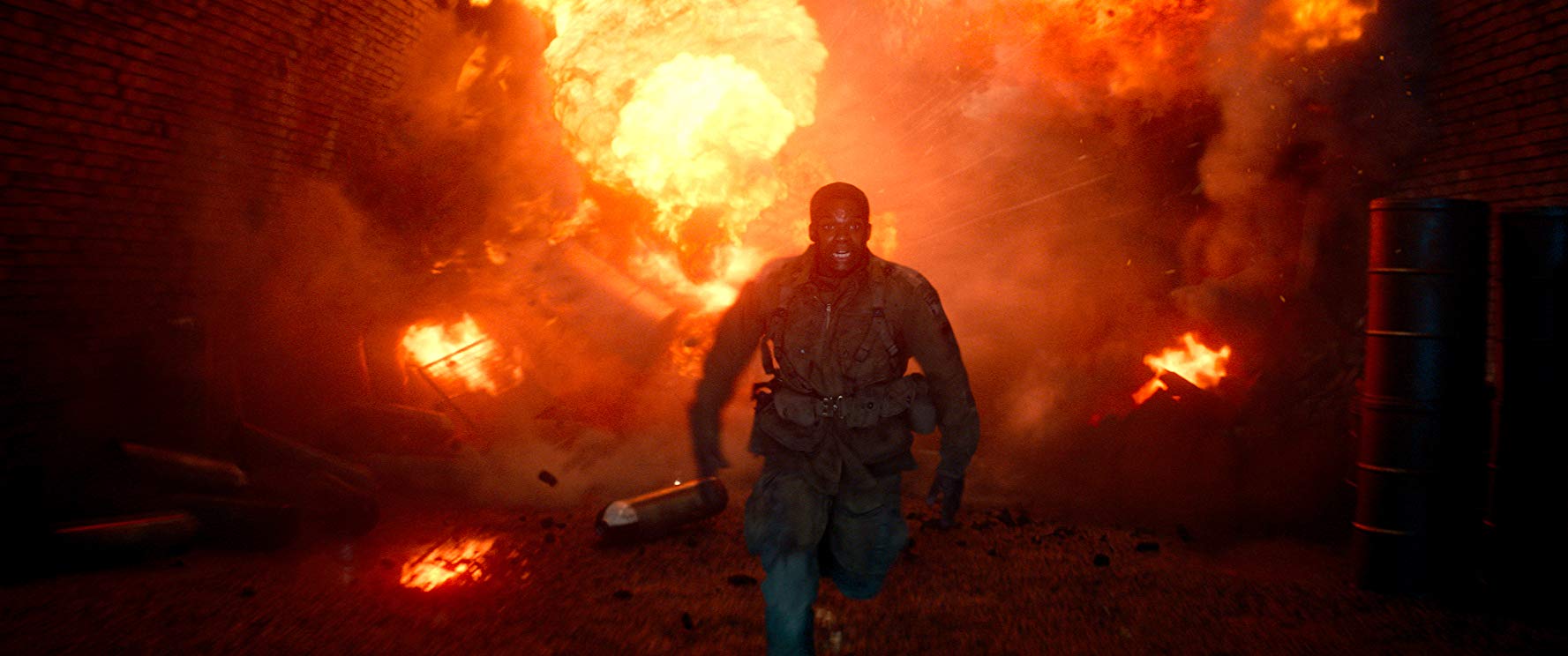
I love a good B-movie horror film and I love a good B-movie war film! So, I’m still confused as to why I missed this one at the cinema first time round. It was released in November 2018 in the UK, so perhaps I was still in London Film Festival mode? Perhaps it fell through the cracks after a busy October cinema-going? Perhaps the marketing wasn’t strong enough over here? Perhaps, perhaps, perhaps?

Anyway, I caught up with it on Sky Cinema via the television box and I immediately regretted not seeing it on the big screen. The film is set in June 1944 during the Allied invasion of Normandy. The operation was called Overlord and part of the WWII D-Day push to defeat the dastardly Nazis. It opens superbly, in mid-flight, as a fighter bomber carries American soldiers about to parachute into enemy territory. Safe to say aeroplane food, crying children and lack of leg room are the least of their worries.

The explosive, noisy and destructive opening sequence sets an incredible pace. Also, the body count starts to stack up too as we land in occupied France. Not so much a dirty dozen as a filthy four remain after the landing carnage. The ragtag quartet consisting of nervous rookie, Private Boyce (Jovan Adepo), tough-guy Corporal Ford (Wyatt Russell), mouthy Private Tibbet (John Magaro), and war photographer Private Chase (Iain De Caestecker), are joined by French civilian fighter, Chloe (Mathilde Ollivier) in battling the Nazi hordes. Their mission is to take out a Nazi radio tower, but we get a whole lot more than the usual WWII battle sequences. Something horrific is lurking in the church where the radio tower is.

While the film essentially deals in genre archetypes the narrative pace, action and suspense really get the heart racing. Moreover, the cast commit to the action and bloodshed with impressive abandon. What I liked was, with relatively unknown actors cast, it meant there was suspense in who would or wouldn’t survive. So, in a film full of surprises this added another layer of tension you wouldn’t get in a star-driven film. Nonetheless, the real asset of the film is the monstrous soldiers born out of the sinister minds of the Nazi Doctors. These are some real nasty pieces of work! Indeed, director Julius Avery revels in representing the bloody carnage these experimental creatures bring. You can’t beat a good old Nazi monster baddie! Well, you can! In all sorts of fleshy, fiery and visceral ways!

I recognised Wyatt Russell from other films and TV shows, and he was great. Russell exuded all the tough qualities his father Kurt has shown down the years, but he gave Corporal Ford a steely edge all of his own. Jovan Adepo and John Magaro impressed as chalk and cheese soldiers, initially clashing but subsequent gaining respect for each other. Adepo’s Private Boyce grows from frightened rabbit to resilient hero over the course of the film. Meanwhile, Game of Thrones scenery-chewer, Pilou Asbæk, begins with quite a subtle portrayal of SS Captain Wafner. Yet, by the end he is on gloriously over-the-top form as the most mutated of all the Nazis.

Ultimately, this is a mid-budget B-movie genre gem. It has lashings of action, blood and gore. It also combined war and horror genres really impressively. I would have liked even more gore and a bit more backstory regarding the Nazi experiments, but that would have probably ruined the surprises. Also, it’s definitely not one of the most original films you will see as there are major echoes of many soldiers-on-a-mission war films, the video-game Wolfenstein and also From Dusk Til Dawn (1995) too. But, with Wyatt Russell, Mathilde Ollivier and Jovan Adepo impressing in the cast and Avery directing the hell out of the explosive action and bloody fighting, I had a great time watching Overlord (2018). It’s just a damn shame I missed it on the big screen when first released.

Mark: 8.5 out of 11

CLASSIC MOVIE SCENES #3 – ATONEMENT— “On Dunkirk Beach!”

ATONEMENT— “On Dunkirk Beach!”

Directed by: Joe Wright

Produced by: Tim Bevan, Eric Fellner, Paul Webster

Screenplay by: Christopher Hampton – Based on: Atonement by Ian McEwan

Starring: James McAvoy, Keira Knightley, Saoirse Ronan, Romola Garai, Vanessa Redgrave

Music by: Dario Marianelli

Cinematography: Seamus McGarvey

Release date: 7 September 2007 (United Kingdom)

**CONTAINS SPOILERS**

maxresdefault

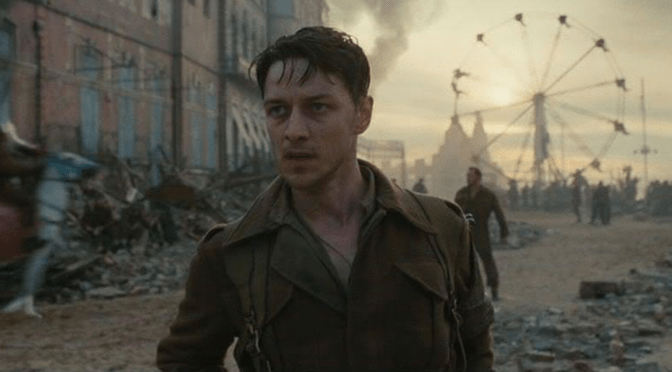
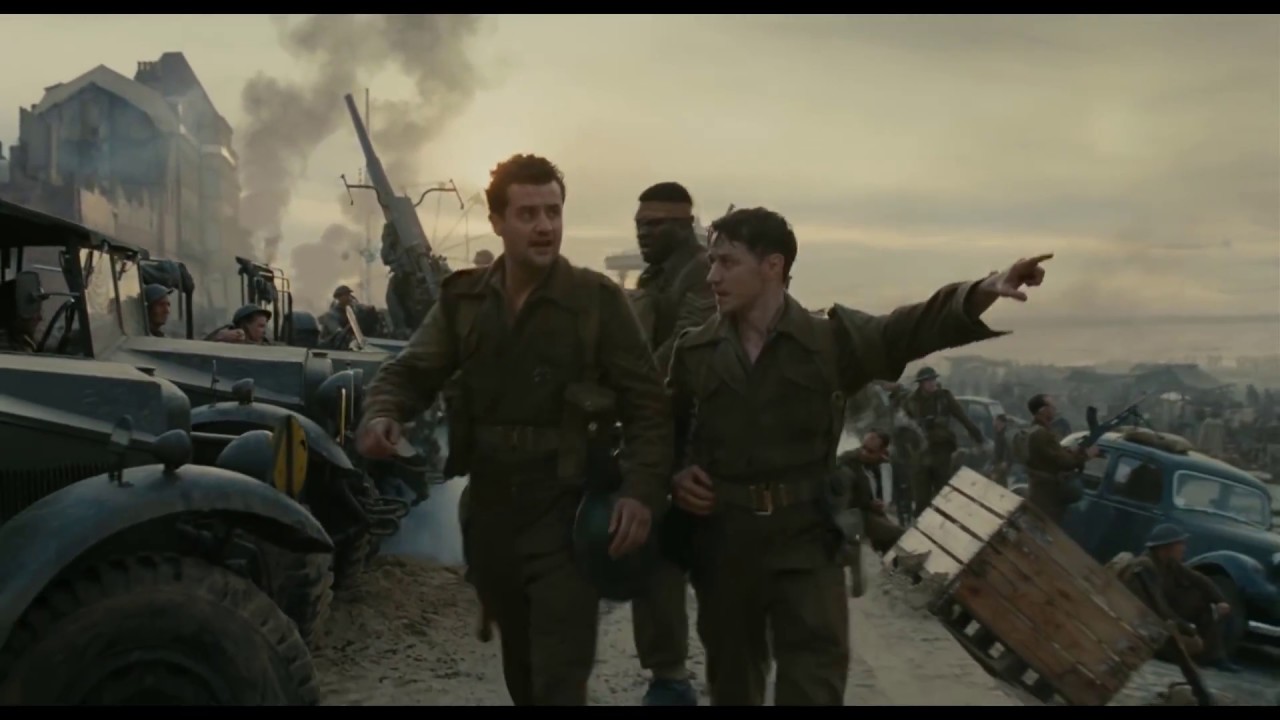
Joe Wright’s majestic directorial adaptation of Ian McEwan’s tragic romantic war story is a poignant study of petty revenge and class conflict. The scene on Dunkirk beach is the standout cinematic moment of the film as James McEvoy’s weakened soldier, Robbie Turner, flanked by compatriots portrayed by Daniel Mays and Nonso Anonzie, vainly attempts to find a way off the beach.

The scene is shown in one long five minute take and involves a certain beautiful, poetic and brutal chaos. Dario Marianelli’s soaring score and a male choir on the beach accompany images of: naked men skinny-dipping, horses being shot, crushed boats, blazing fires, spinning carousels and big wheels; as trapped soldiers remain in peril from bombs overhead.

Aside from the cinematic and technical achievement on display the emotional impact is surreal, heartfelt and haunting. The power from the film’s denouement when we discover much of the episode has been filtered through Saoirse Ronan’s unreliable narration makes the scene all the more heart-breaking.

FIX FILMS RETROSPECTIVE #2 – A FAR CRY (2006) By PAUL LAIGHT

FIX FILMS RETROSPECTIVE #2 – A FAR CRY (2006) By PAUL LAIGHT

And thus I continue my look back to the past short film projects I have made with Gary O’Brien under the Fix Films umbrella.

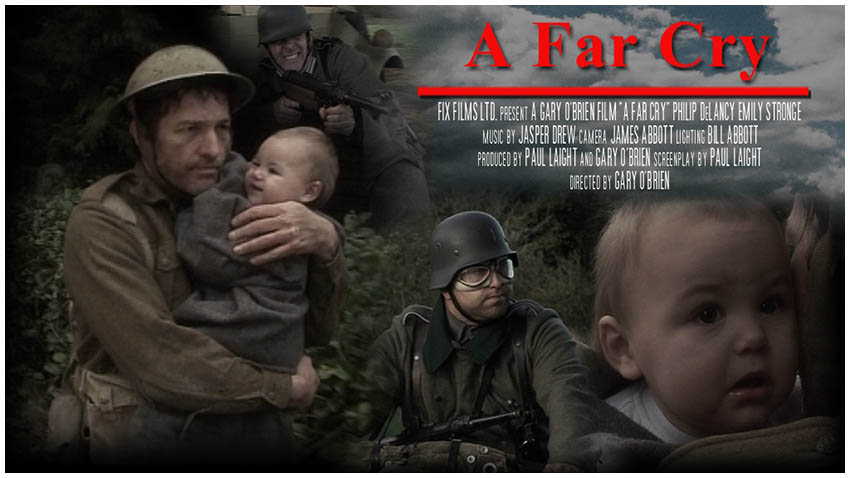
afarcry

A FAR CRY (2006)

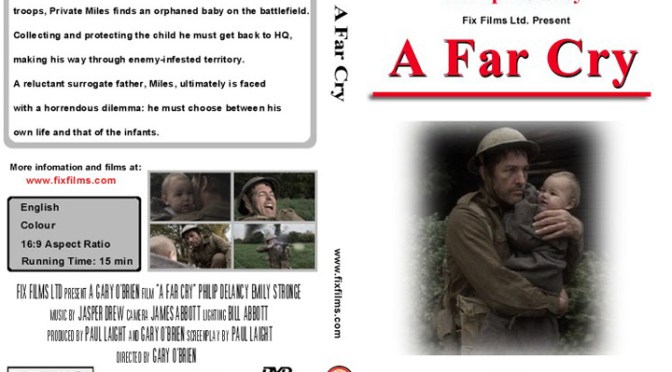
A FAR CRY (2006) was our second short film.  It was also our most expensive.  I admit I got myself into some debt on a credit card/overdraft for this film.  I’d finished my Master’s Degree a couple of years before.  I had hope that if I made a great short film I could possibly ignite a career as a writer or producer or both within the British Film Industry. At the very least I had hope I would have a show reel piece and even if I started at the bottom I could work my way up within a reputable production company.  I was wrong. But I was naïve and ambitious and that drove the whole production. I have no regrets though as A Far Cry   is — despite its many faults — is a brilliant short film.

a-far-cry-1

It all started one drunken evening in Ascot somewhere and myself and Gary had enjoyed the process of making our first short film — the revenge comedy Getting Back Mr Hunt (2005) which you can read about HERE — SO much we crazily thought let’s do another one.  What followed was a crazy, stupid and wholly memorable experience as we put A FAR CRY into pre-production. I cannot quite recall why we chose to do a war film. I guess because we both love war films; and didn’t think it through properly in regard to the amount of work that it would entail.

I know we definitely wanted to do something involving a moral dilemma where the main protagonist had an impossible decision to make.  We wanted the audience to ask themselves: “WHAT WOULD I DO IN THAT SITUATION?!”  Moreover, as it’s a war film it obviously had to be bad. Really terrible. A decision that would haunt the character and the audience.  I think with THAT ending we achieved that.  So, eventually we spent months on the screenplay batting it back and forth until we’d moulded something we were happy with. Only then did we dip our toe into the casting and crew side.

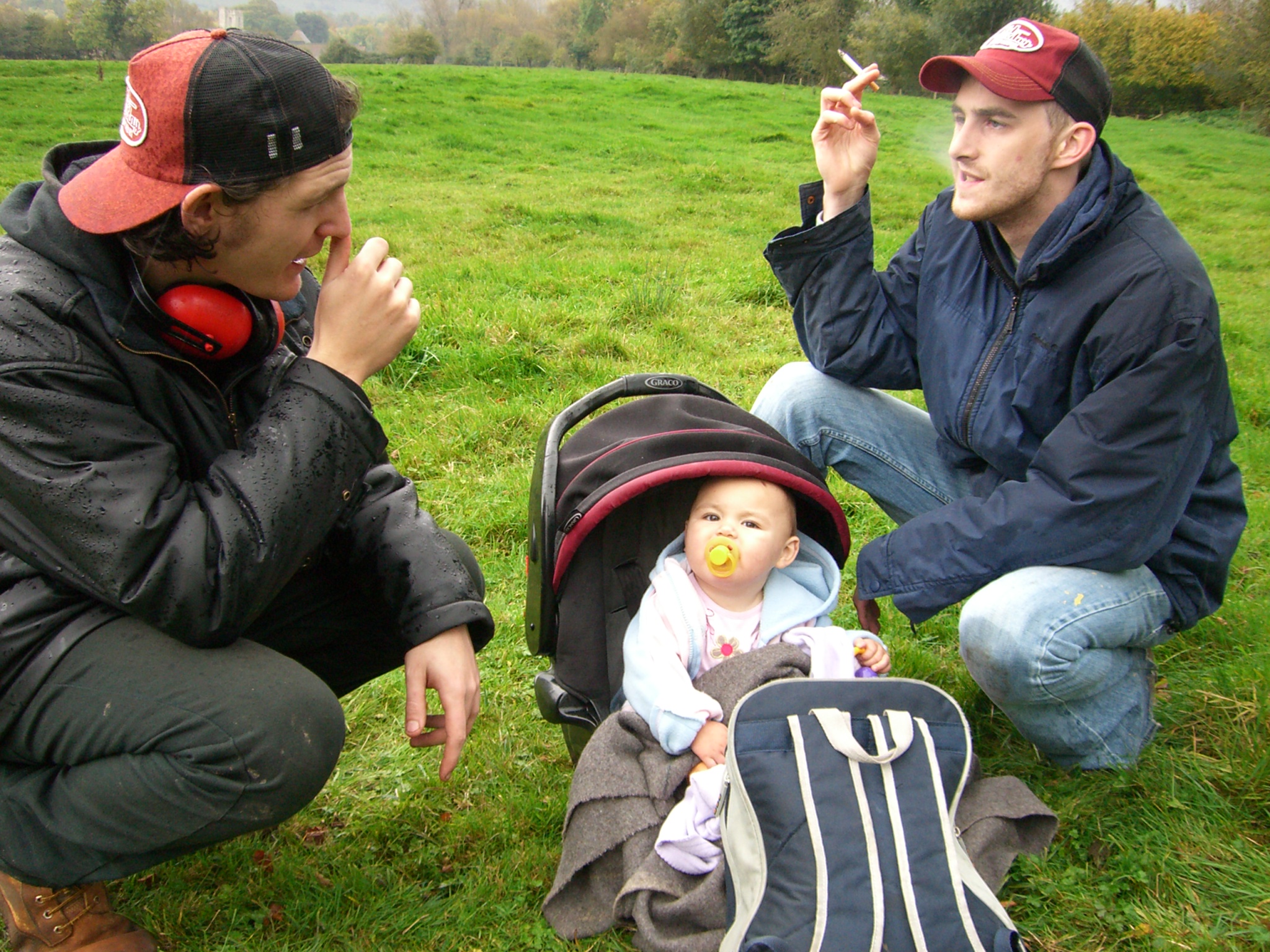
This, for a small group of creative and deluded fools, was a massive undertaking.  We were making a 15 minute short film set in World War II which involved:  a big opening battle scene; a baby; marauding German soldiers hunting down our protagonist; AND it was set in FRANCE!!    To put it in perspective the budget for Saving Private Ryan (1998) was $70 million; ours was a one-hundred-thousandth of that.  Did that stop us?  No!   We managed to source a baby via Gary’s great mate Toby and to him I will be eternally grateful as we could not have made the film otherwise.  Likewise, we needed a massive location somewhere in the middle of nowhere where we could recreate the big opening battle scene and others.  Sometimes in life opportunity just comes knocking and we were at a party on a farm in Watlington, Oxfordshire and the owner — who I only ever knew as Murray — said we could use his land for a bottle of booze.  So, for free we had a baby and for some scotch we had a farm and a few acres with which to continue this creative folly.

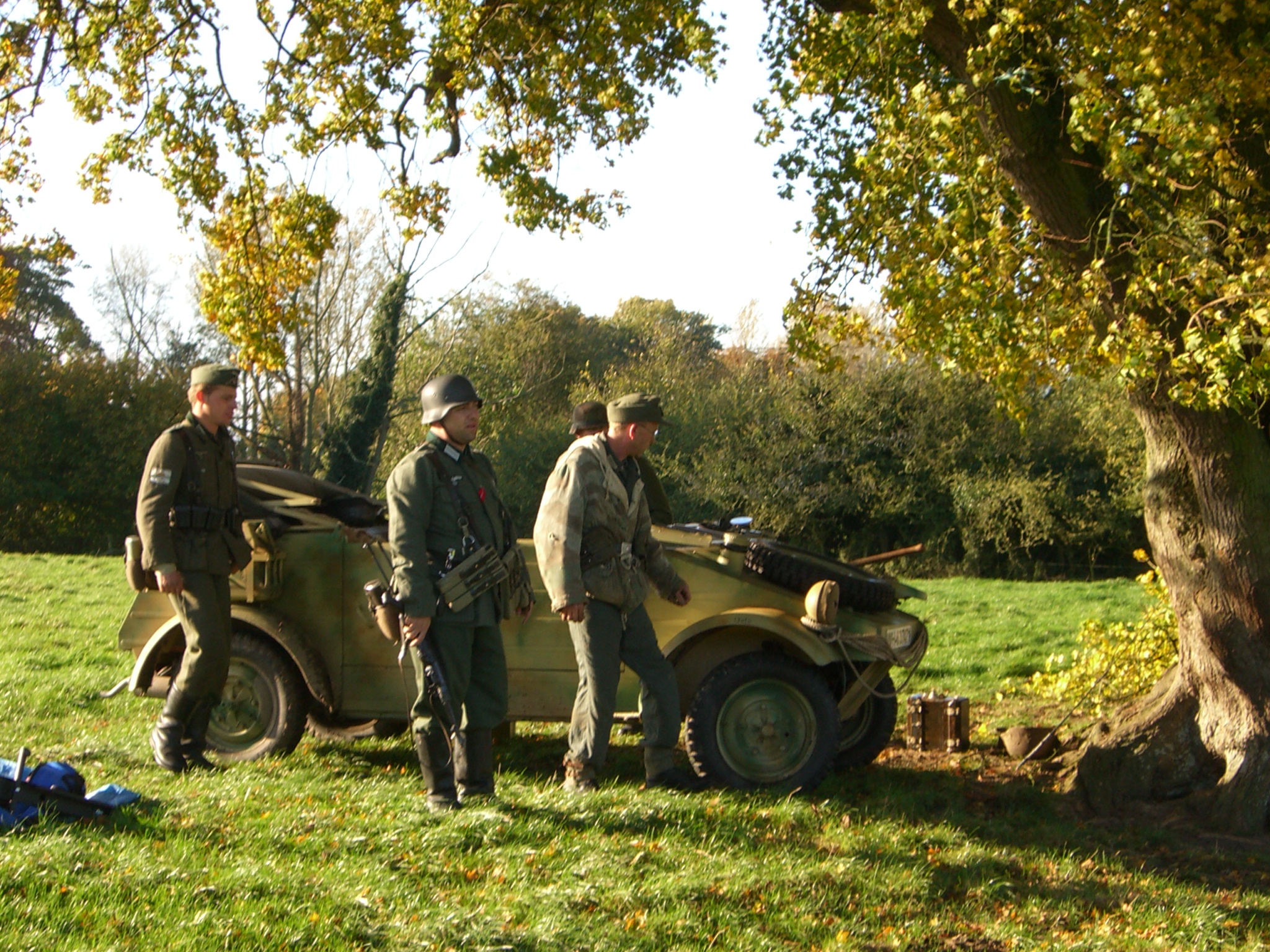
Next stop was sourcing some Germans.  I was sure the whole venture would collapse. But DID YOU KNOW there are groups who recreate WWII battles as a hobby!  I didn’t but we met some cracking guys from the WW2 Re-enactors Group led by Mark Craig and Jason Lavene and they were incredible.  They loved dressing up as Germans and rather cheaply gave us the use of all their guns, uniforms, props and most importantly themselves and their time to make it happen.  We had some ups and downs while making A Far Cry but when I look back I think that through sheer will and hard work everything went amazingly well. The WW2 Re-enactors were brilliant and I had to laugh on the first day of shooting when they woke up in the morning expecting their to be a Catering Truck serving hot food only to be told that there wasn’t a budget for that. Did they complain?  Not at all. We had a laugh about it; well me and Gary did.  While I imagine they were cursing us they soldiered on and gave their all in the production.

Filming of A Far Cry was done over a couple of weekends.  One in Watlington, Oxfordshire.  The other in Ascot, Berkshire.  We shot quickly and economically and looking back at the film now I have to say Gary did a brilliant job of crafting some very memorable set-pieces throughout. As the producer it was my job to keep things steady and moving along and manoeuvre all the units into place. Oh, and I made A LOT of sandwiches. I think the whole project worked because everyone was pulling in the same direction and enjoying the experience.  The opening battle was a lot to take on and we did overrun in regard to timing but due to Gary’s excellent storyboards and a script we knew back to front we were able to keep on track on the whole. 


The pouring rain on the Sunday, I think, really put us back but we managed to pick up the scenes we lost during the first weekend when we shot in Ascot. Often we had to improvise and compromise but we did it inventively to make the story work. I recall the filming process being one of very long days and buzzing urgency with all manner of friends and family helping out on different days. It was incredible feat to make this film for so little money. Even stuff like recreating the barn in a garage in Ascot came off; Gary actually hired bales of hay from some random rural folk who then came and collected them the Monday after shooting.  Of course, our cast were awesome and special mention for our lead actor Phil Delancy who gave a great performance and anchored the film with gravitas, physicality and emotional depth.  Without him the film would be nothing.

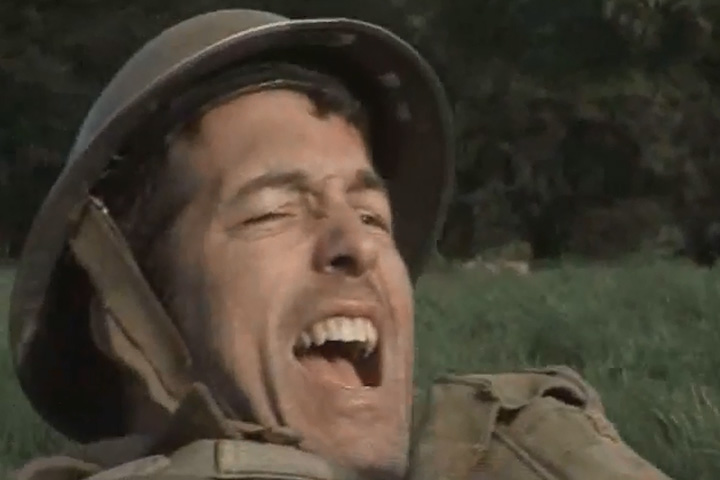
A FAR CRY_1
A FAR CRY_2

Once the shoot was over we had a hell of a lot of sweat, time and insanity in the can and it was down to Gary to edit it into a cogent whole. That he did with tremendous endeavour as the film flows brilliantly with a fine combination of action and suspense. We had a great script in our view with a brutal subject matter and even darker ending.  I was very happy with what we had and when I started seeing the footage I was elated.  I was, by day, an office clock-puncher with a dead-end job but over those two weekends I had lived the dream of being a filmmaker. I WAS a filmmaker; albeit on a budget that wouldn’t pay for Robert Downey Jnr’s on-set beard stylist.

I re-watched the film again yesterday for this little piece and it stands up very well as a story. I also think Jasper Drew’s score is wonderful. I think we clearly aimed high with this production and it’s the lack of budget shows, however, everybody involved with this film worked REALLY hard to make it work and I think we did the script justice in the time we had.  I thank everyone who assisted in making the film become a reality.  What started on a crazy, drunken night in Ascot became one of the biggest projects I’ve worked on.  You may say I’m and idiot for following a dream. But I’m a very proud idiot. No one can take that or this film away.

EPILOGUE

The film was very well received by many of those who saw it.  A lot of people were shocked by the ending but in terms of the war-is-hell theme we feel we were justified and while it is heart-wrenching I think it is in context and not gratuitous.  The film was screened at many film festivals and short film nights and on the whole we got some great feedback online and by word-of-mouth. For a list of screenings and film details please visit my website:  http://www.fixfilms.co.uk/a-far-cry