Tag Archives: war

MY CINEMATIC ROMANCE #18 – KEN LOACH

MY CINEMATIC ROMANCE #18 – KEN LOACH


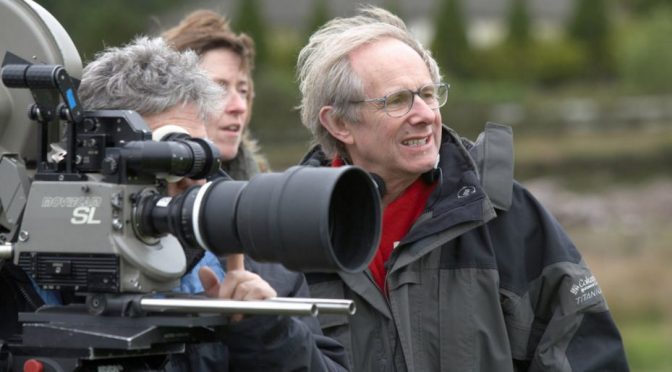
I haven’t done one of these articles for a while, but in light of the Conservative Party victory in the General Election the other day, I thought it interesting to lean toward a more political filmmaker for my latest post. Thus, I once again pick five highly recommended films by one of my favourite cinema creatives. Today, I look at the work of Ken Loach.

Loach is now, at time of writing, eighty-three year’s old, and has just released a new film called Sorry We Missed You (2019). At the cinema alone he has singularly directed twenty-five films, plus been involved with many television productions too. His ‘Wednesday Play’ Cathy Come Home (1966), was voted in the top ten best British television programmes of all time at the turn of the millennium. It was so powerful in its depiction of a struggling homeless character, the issues were raised in Parliament at the time. His work continues to address socio-political issues even now and has often provoked controversy.

Loach works generally in the dramatic or social realist genre. However, his raw, almost documentary style, which centres on working or characters from the under-classes, does have much comedy going through it too. Structurally his films build empathy with his characters in a generally linear fashion; slices of life which more often than not result in tragedy. While the landscapes he displays are quite depressing, his characters aren’t victims though. They are always strong and passionate and striving for the best outcome. However, poor life choices, poverty, bureaucracy, gangsters, criminality, addiction, military, and unfair government laws and procedures provide fierce obstacles.

Some have accused Loach of, over the years, being a ‘Champagne Socialist’, comfortably attacking the ruling classes from a position of privilege. He’s also been accused of vicariously holidaying in the land of the under-privileged, for what gain I’m unsure of. Personally, I am always compelled by Loach’s cinema, the issues raised and the characters he presents. He is a true humanist director and storyteller, who has made some consistently brilliant films. Whether you agree with his politics or views, he is at least attempting to reflect the injustices in the world and the underdogs within in it. Here are five films which capture this perfectly.

**CONTAINS SPOILERS**


KES (1969)

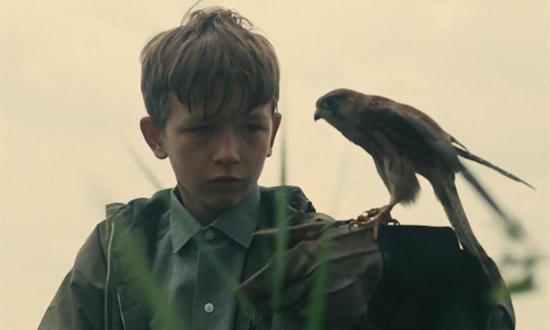
Based on Barry Hines’ novel, Kes is one of the finest British films ever. It concerns the everyday existence of Billy Casper (David Bradley) and his attempts to survive the harsh realities of Northern life in Barnsley. Billy struggles at school, but finds salvation when he adopts and trains a young kestrel. Kes represents a microcosm of working-class life where the kids are either damned or sent down the pit to work. Simultaneously warm, harsh, bitter, funny and tragic, Kes is a memorable early work from Ken Loach and deserves revisiting over and over again.


MY NAME IS JOE (1998)

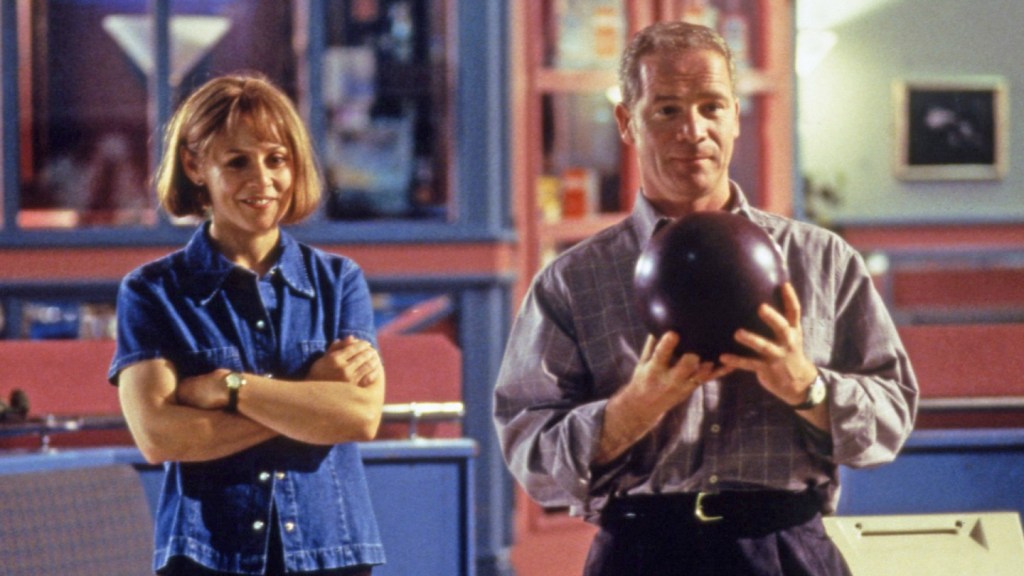
Anchored by an incredible leading performance from Peter Mullen, My Name is Joe, centres on Joe Kavanagh and his attempts to stay sober. Joe has been a destructive alcoholic for some years and uses AA to control his drinking. The narrative drive comes from Joe’s attempt to assist recovering drug addict, Liam (David McKay), plus Joe’s blossoming romance with a local health worker, Sarah (Louise Goodall). It’s a raw rendition of Scottish working-class life with romance and tragedy lying side-by-side in a moving portrait of addiction, love and life’s everyday struggles.


THE WIND THAT SHAKES THE BARLEY (2006)

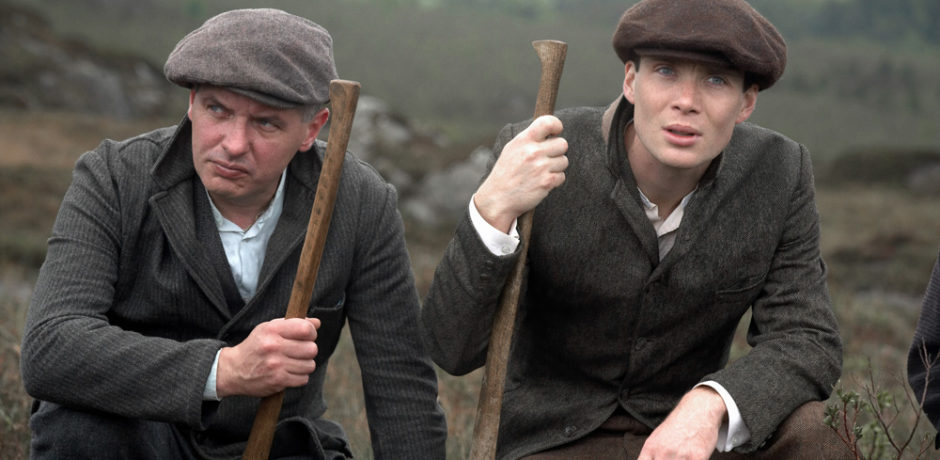
Incredibly controversial when released, Loach’s war drama is set in 1920’s, Cork, Ireland. It centres on the conflict between the Irish Republican Army and the British army, as civil war broke out prior to the Anglo-Irish Treaty. The lead protagonists are two brothers portrayed by Cillian Murphy and Padraic Delaney. As the war and violence heightens the two brothers, their families and their compatriots are devastated by harsh British rule. Loach was described as “anti-English and traitorous” by the English press and Conservative politicians, when the film was released. However, irrespective of your politics, it is a stunningly human work of cinema; both shocking and heart-wrenching in equal measures.


LOOKING FOR ERIC (2009)

Films about football (soccer in the U.S.A) and footballers can be very tricky to get right as the game itself arguably works better as a live spectacle, rather than at the cinema. However, Loach scored a big win with this really moving story about a lowly postman, Eric Bishop (Steve Evets), who is struggling with family, love and work pressures. Depressed and almost suicidal, Eric finds unlikely help in the magical appearance of Manchester United football legend, Eric Cantona. Sprinkling the kitchen sink realism with fantasy is a departure for Loach, and Paul Laverty’s wonderful script brilliantly espouses the need for teamwork, fraternity and community within its touching narrative.


I, DANIEL BLAKE (2016)

Having worked for the Benefits Agency a few decades ago, I have some understanding of social security and government assistance schemes. Via the titular character of Daniel Blake (the brilliant Davey Johns), Loach savagely criticises Conservative austerity measures. The systematic turning of the screw has seen many British people have their benefits stopped because of somewhat Kafkaesque measures. Of course, the system should work to stop people abusing it, but many deserving people suffered too. This is demonstrated here in this heartfelt drama of one man, who having suffered a heart attack, battles for his pride and future.


ALL 4 TV REVIEWS – A VERY BRITISH COUP (1988) & SECRET STATE (2012)

ALL 4 TV REVIEWS – A VERY BRITISH COUP (1988) & SECRET STATE (2012)

With a General Election coming up I thought I’d look at a couple of political TV dramas, both of which can be seen on Channel Four’s streaming service All 4. Interestingly enough, they are also both based on Chris Mullin’s book, A Very British Coup (1982).

I don’t propose to be an expert on these things, but I hate politics. It’s a necessary evil as someone has to run society, I guess. What with another General Election on December 12th, 2019, it’s not difficult to feel saturated with all things political and with the cluster-fuck of BREXIT! 


politics.jpg

In the U.K. we have several political parties, but the two main ones are Labour and the Conservatives. They fight and bitch with each other and switch places every four years or so and end up undoing the work the previous party had done. I realise it is a bloody tough thing to run a country, but just wonder whether this the best system we have?

I mean why can’t we join together and work as a collective rather than in constant conflict. Can we not put aside our differences to work toward a common goal? The current system pits us AGAINST each other – left versus right and up versus down and black versus white and green versus blue! Divide and rule seems to be the favoured system to maintain the status quo! Could this change or am I just dreaming!?


A VERY BRITISH COUP (1988) – CHANNEL FOUR

Directed by: Mick Jackson

Adapted by Alan Plater – based on the novel by Chris Mullin

Cast: Ray McAnally, Keith Allen, Alan MacNaughton etc.

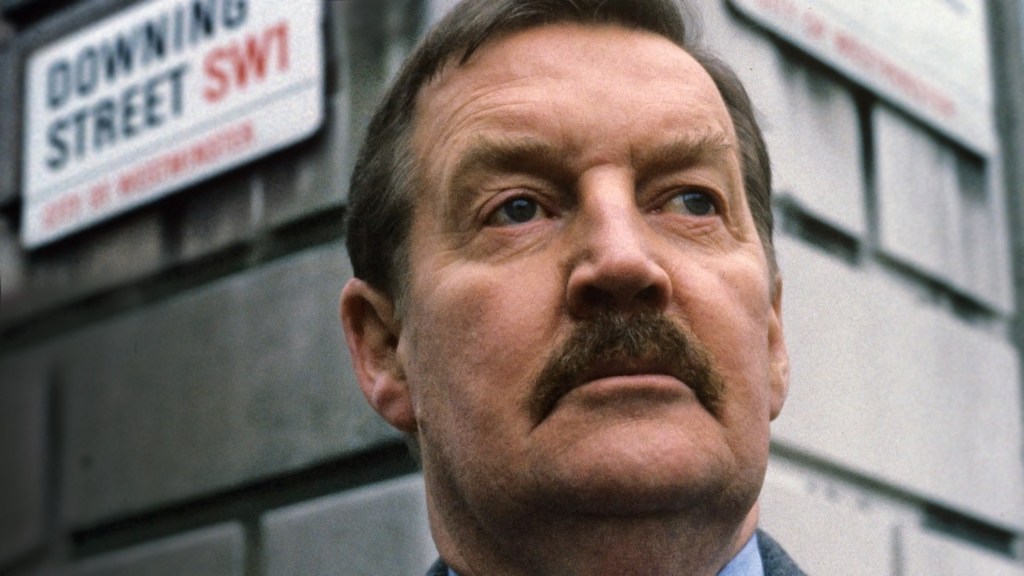
Mullins novel imagines a staunch working class and socialist MP, Harry Perkins, rising to the position of Prime Minister and immediately trying to change the political landscape of the ruling upper classes. His biggest desire is to nationalise industry and proceed with nuclear disarmament. This creates, a perceived a security threat, and Perkins finds himself targeted by the Secret Service, including MI5, MI6 and the C.I.A. Moreover, the scandal-lusting media also attempts to bring him down.

Shot on nostalgia-brimmed 16mm film, this is a high quality political drama. Ray McAnally is absolutely brilliant as the strong-willed man of principal attempting to make the system more honest and open. There are echoes of the current Labour leader, Jeremy Corbyn in his socialist policies, so one can see how Perkins would be a threat. With the financial, media, and government factions all fighting each other, it’s a fascinating exploration of political machinations. Sadly, I don’t think much has changed in Westminster or the world either.

Mark: 9 out of 11


SECRET STATE (2012) – CHANNEL 4

Directed by: Ed Fraiman

Adapted by: Robert Jones – based on the novel by Chris Mullin

Cast: Gabriel Byrne, Charles Dance, Ruth Negga, Douglas Hodge etc.

If I hadn’t looked it up online, I would never have known this was another adaptation of Chris Mullin’s book. This modern update leaves behind the classic left-wing and right-wing politics of the original adaptation and moves into the more murky world of corporate, industrial and military political intrigue. Gabriel Byrne is uniformly excellent as Deputy Prime Minister Tom Dawkins, suddenly thrust into the PM’s place following a tragic series of events. With a devastating chemical disaster ongoing, potential war with Iran, the Secret Service and political rivals plotting against him, Dawkins is threatened from all sides.

What unfolds is a meaty conspiracy drama which, while lacking the political depth of the original TV programme, more than makes up with quality cast and suspense. While lacking a truly compelling ending, the drama benefits from some excellent performances, notably Douglas Hodge as the washed up, alcoholic ex-spy. It was interesting too that the writers deemed it unnecessary to define what political party Dawkins was from, such was the more ambiguous nature of the political landscape in the pre-Corbyn and post-Blair era.

Mark: 8.5 out of 11


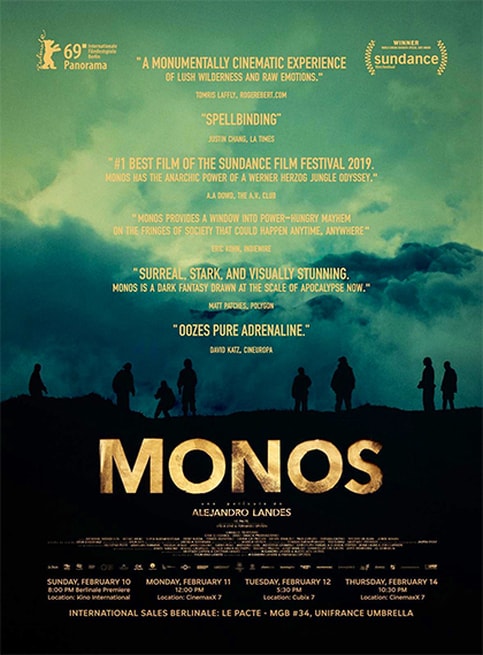
MONOS (2019) – CINEMA REVIEW

MONOS (2019) – CINEMA REVIEW

Directed by: Alejandro Landes

Produced by: Alejandro Landes, Fernando Epstein, Santiago Zapata, Cristina Landes

Written by: Alejandro Landes, Alexis Dos Santos

Cast: Julianne Nicholson, Moises Arias, Sofia Buenaventura, Julian Giraldo, Karen Quintero, Laura Castrillon, Deiby Rueda, Wilson Salazar, Esneider Castro, Paul Cubedes etc.

Music: Mira Levi

**MAY CONTAIN SPOILERS **


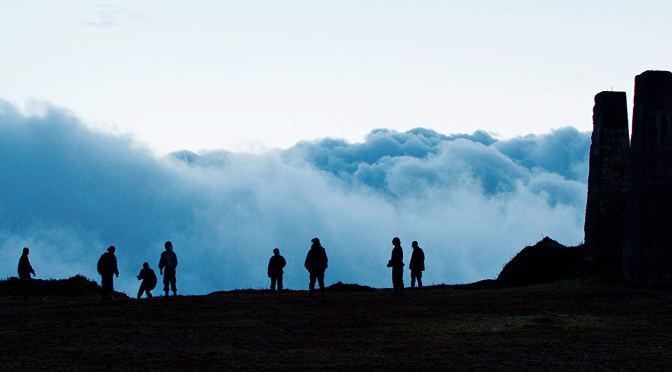
Those American teenagers, as represented in recent film and television offerings such as Stranger Things and IT, have some serious problems to deal with, such as inter-dimensional aliens and extra-terrestrial demons masquerading as killer clowns. Such foes, however scary, are of course fantasy. The horrors that the kids in feature film MONOS (2019) have to deal with, feel very real, raw and altogether horrifically more deadly.

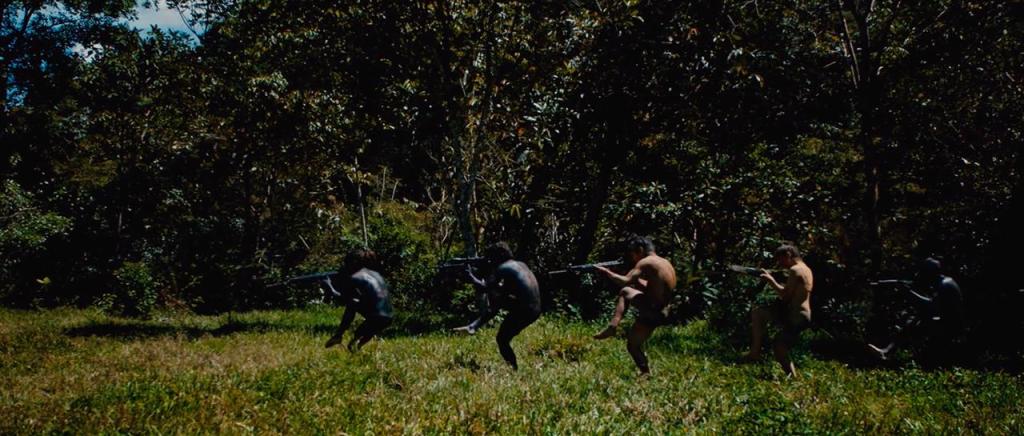
The film opens on South American mountaintop in Columbia. We are thrown straight into the everyday lives of young rebel soldiers known only by their war names including: Rambo, Smurf, Lady, Dog, and Wolf among others. The fact we never learn their real names establishes the dehumanized and exploited nature of these characters. They are denied a childhood and used as young soldiers within a guerrilla cell. The adults controlling them are represented by a man known only as The Messenger, who visits, drills and orders them about. While they act out, have sex, drink and “play” with the illusion of freedom, if they do not follow orders then there is hell to pay.


“Hell-to-pay” is an apt phrase for both the characters and the audience watching. For me this is not an enjoyable film in terms of entertainment. It is not intended to be. It is a very angry film and a shocking war of attrition to sit through. There is a documentary feel and in-your-face realism throughout, with little or no sympathetic characters to root for. Don’t get me wrong, I empathised with the plight of the children and what had happened to them. Yet, it’s difficult to sympathise with them, because when we join them they all seem so irreparably damaged by war and their existence. It’s a dog eat dog world and these dogs have guns, knives and semi-automatics.

Overall, I found the characterisations and elliptical narrative jarring throughout. For me, it created alienation in terms of emotional impact. However, the cinematic storytelling is of the highest quality. The visuals, sound, score and acting are all exceptional. Indeed, Alejandro Landes is a fearlessly talented filmmaker and definitely one to watch for the future. The mountain vistas and jungle scenery were majestic and beautiful to behold, despite the hellish events unfolding. Lastly, the film carries a deeply important message about these lost children of South America. Their lives are no fantasy. They are violent, animalistic, dirty, carnal and, based on what I saw in Monos (2019), completely devoid of hope.
Mark: 8.5 out of 11


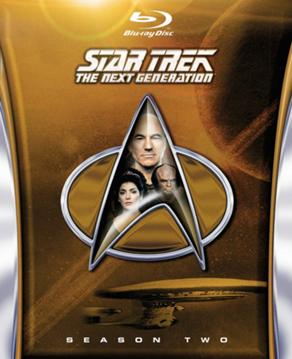
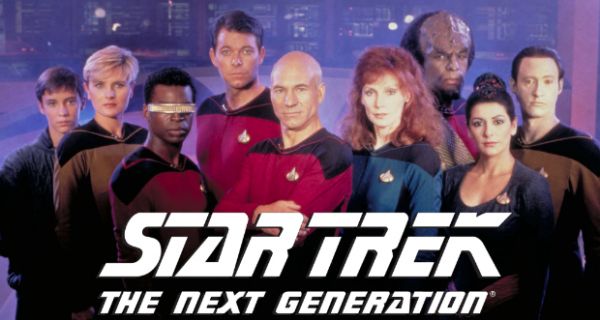
TO BOLDLY REVIEW #7 – STAR TREK: NEXT GENERATION – SEASON 2 (1988 – 1989)

TO BOLDLY REVIEW #7 – STAR TREK: NEXT GENERATION – SEASON 2

Based on Star Trek & Created by: Gene Roddenberry

Season 2 writers (selected): Richard Manning, David Assael, Melinda Snodgrass, Scott Rubenstein, Leonard Mlodinow, Maurice Hurley, Burton Armus, Robert Iscove, Kathryn Powers, Gene Roddenberry, Joseph Stefano, Terry Devereaux etc.

Season 2 directors (selected): Winrich Kolbe, Rob Bowman, Robert Becker, Les Landau, Robert Scheerer, Joseph L. Scanlan, Cliff Bole etc.

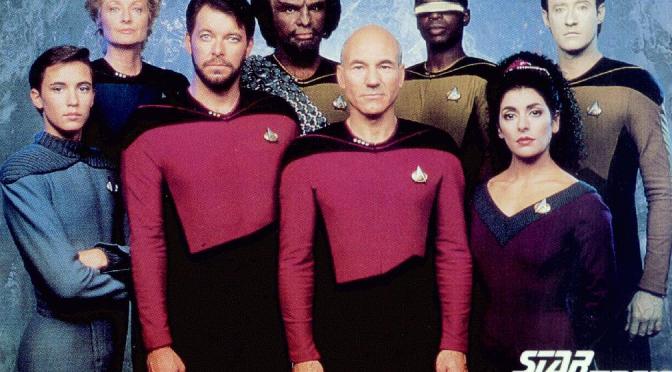
Main Cast: Patrick Stewart, Jonathan Frakes, LeVar Burton, Whoopi Goldberg, Colm Meaney, Michael Dorn, Marina Sirtis, Brent Spiner, Wil Wheaton, Diane Muldaur, John De Lancie, Lycia Naff etc.

Music/Composers: Alexander Courage, Jerry Goldsmith, Dennis McCarthy, Ron Jones, Jay Chattaway

Production Company(s): Paramount Television, CBS Television

**THIS REVIEW CONTAINS SPOILERS**


Thus, my ongoing viewing project of watching ALL the Star Trek series and films in order of release date continues. I have already covered the pro-genesis of STAR TREK: THE NEXT GENERATION here. So, I won’t cover the same ground again.
While the first season did a good job establishing the characters, action, plots, gadgets, themes and general formula, it was still finding its space feet, as it were. While we lost a couple of major characters, the second season transitioned into a very satisfying series of episodes.
Dr Pulaski (Diane Muldaur) replaced Beverley Crusher (Gates McFadden) for a season and she provided some stern opposition to Picard in certain narratives. But, the casting of Whoopi Goldberg as Guinan was a masterstroke. Goldberg is such an intuitive and classy actor, she added cinematic quality to some fine episodes.

I have to admit I am not so sure HOW they managed to produce so many good episodes. My understanding is shooting a twenty-plus episode season of television is an incredible feat of creativity. The rewards were certainly earned. The show would garner great viewing figures and also many Emmy nominations come TV awards season. Here are six of my favourite episodes from STAR TREK: THE NEXT GENERATION – SEASON 2.


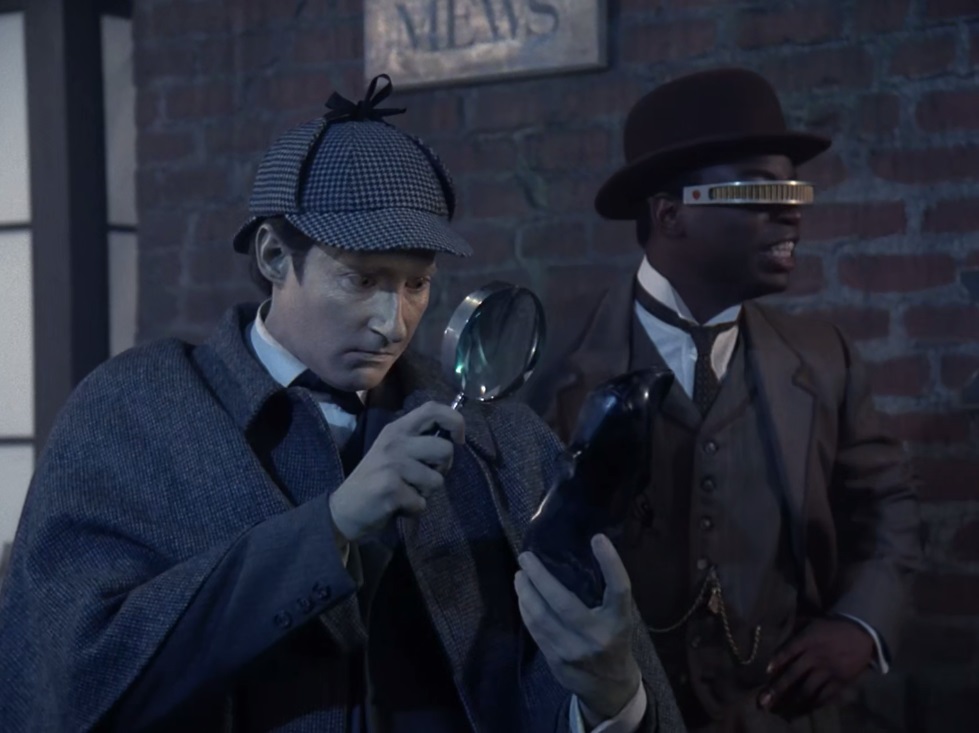
ELEMENTARY MY DEAR DATA – EPISODE 3

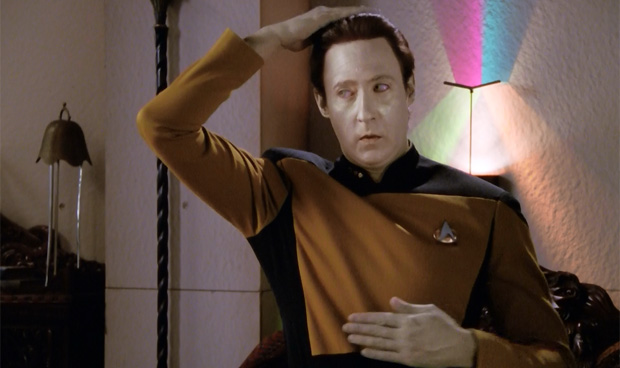
Data and Chief Engineer La Forge take on the roles of Holmes and Watson in another “holodeck-adventure-gone-wrong” narrative. I love Sherlock Holmes so this episode is fantastic to me. I also felt that the sentient Moriarty (Daniel Davis) brought much humanity to the classic nemesis. The La Forge and Data character dynamic is really fun too as La Forge attempts to outwit and challenge his android friend with dangerous results.


THE SCHIZOID MAN – EPISODE 6

Reminiscent of a classic Star Trek episode from the original series, and also a tribute to The Prisoner, this story contains the often used revered scientist gone rogue. More interestingly though, it explores themes of immortality and transference of human intelligence into a computer. Of course, it’s Data who finds his character split and battling an interloper seeking everlasting existence.


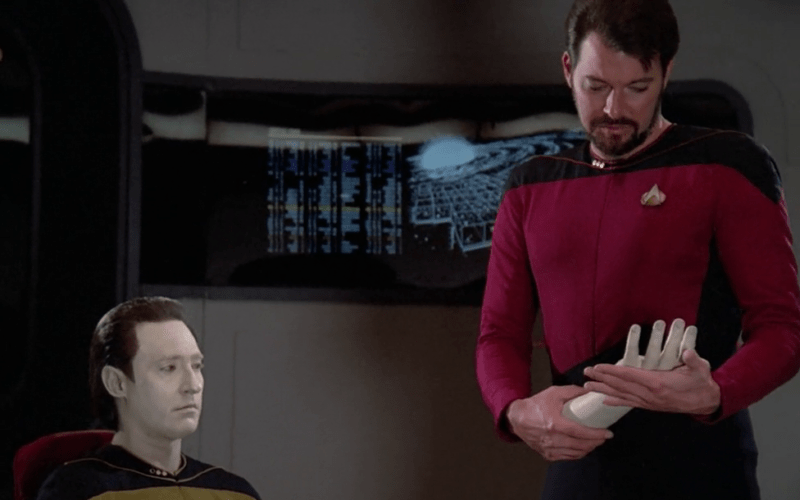
MEASURE OF A MAN – EPISODE 9

Sorry, another Data led episode. Data finds himself at a tug-of-war dispute over whether he can be determined as human or a mere piece of technology to be dismantled for science. A court case follows with Picard defending Data and Riker “prosecuting”. Spiner is superb as Data and Jonathan Frakes is especially good, having to carry out a duty he comes to hate. This episode has genuinely high class writing, acting, direction themes and narrative. Not to say most of the other episodes aren’t good, but this one is particularly great.


TIME SQUARED – EPISODE 13

I love doppelganger and time travel plots. This episode has both, as Picard must face a future version of himself and some incredibly difficult decisions to save the destruction of the Enterprise. Often time travel narratives will involve years or even decades difference, but this time it’s around six hours. This creates much drama and brings to life that always fascinating theme of the self having to face the self in a time of crisis.


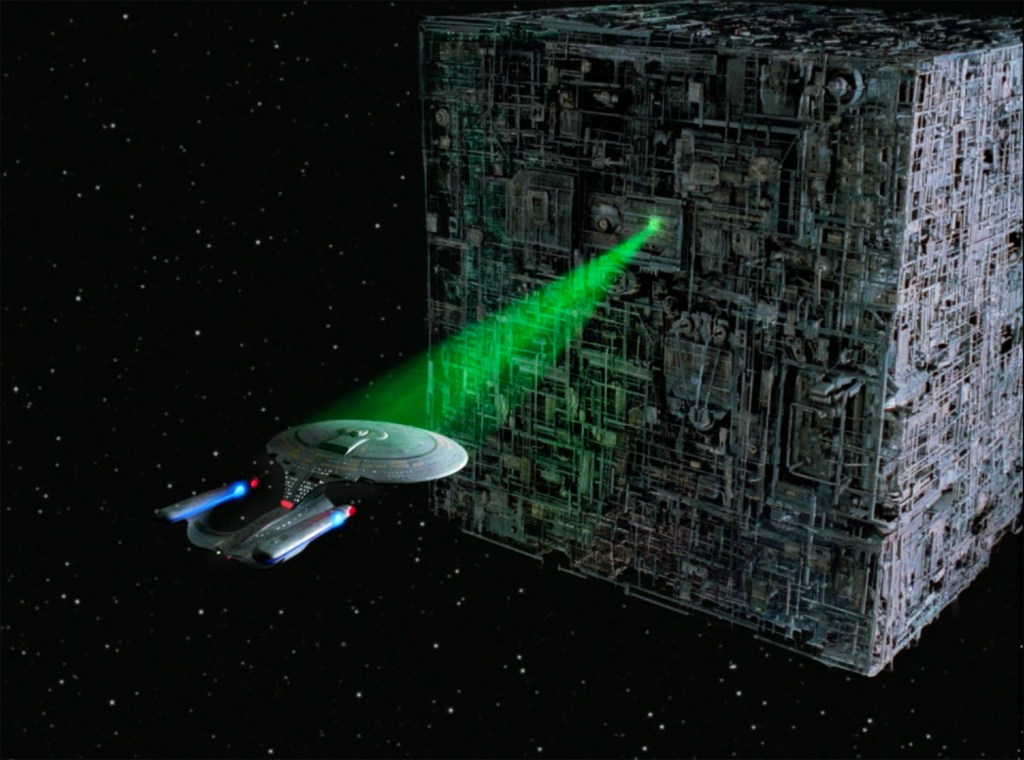
Q-WHO – EPISODE 16

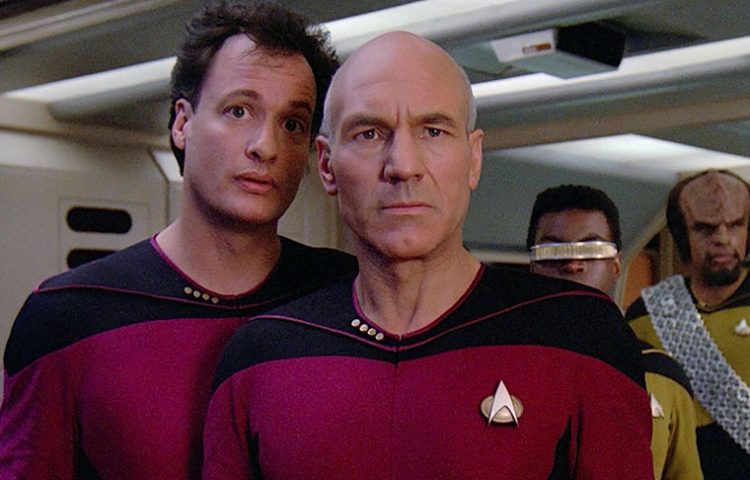
The irritating super-being Q (John De Lancie), rears his annoying head again. Although, he actually isn’t the most threatening enemy in this brilliant episode. That “honour” is bestowed upon the formidable Borg. Picard and the Enterprise crew find themselves challenged by these relentless machines and almost perish. The Borg remind me of Doctor Who‘s vicious rivals, the Cybermen, and make for impressive adversaries. The episode is also notable for the further development of Guinan’s character. Indeed, more of Whoopi Goldberg is always welcome.


THE EMISSARY – EPISODE 20

Promoting Worf (Michael Dorn) to Chief Security Office was a masterstroke of character development for the second season. The Klingon race is famed for its’ head-on approach to the fight and Worf would often find his inner Klingon battling Starfleet regulations. Here Worf is further conflicted with romantic feelings for a half-human-half-Klingon emissary, K’Ehleyr (Susie Plakson). She is sent to resolve a fascinating “Hell in the Pacific” side-plot; where a Klingon crew do not yet know the war is over. Dorn and Plakson share fantastic chemistry and it was compelling to find love and war themes combine so effectively.


LFF REVIEW – THE IRISHMAN (2019)

LFF REVIEW – THE IRISHMAN (2019)

Directed by: Martin Scorsese

Written by: Stephen Zaillian – based on the book I Heard You Paint Houses by Charles Brandt

Produced by: Martin Scorsese, Robert De Niro, Jane Rosenthal, Gaston Pavlovich, Randall Emmett, Emma Tillinger Koskoff, Gerald Chamales, Irwin Winkler

Cast: Robert De Niro, Al Pacino, Joe Pesci, Harvey Keitel, Anna Paquin, Bobby Cannevale, Stephen Graham, Kathrine Narducci, Jesse Plemons, Jack Huston, Ray Romano, Stephanie Kurtzuba and many more.

Cinematography: Rodrigo Prieto

Distribution: Netflix

******MAY CONTAIN SPOILERS ******


“I heard you paint houses…”

As well as watching new films that have yet to be released, one of the pleasures of film festivals can be when the filmmakers, writers, crew and actors themselves attend and introduce their work. Having said that, I’m not usually one for big and lengthy introductions and back-slapping celebration. I’m also not one for star-gazing and celebrity-spotting hysteria. They are just human beings; let them get about their business in peace.

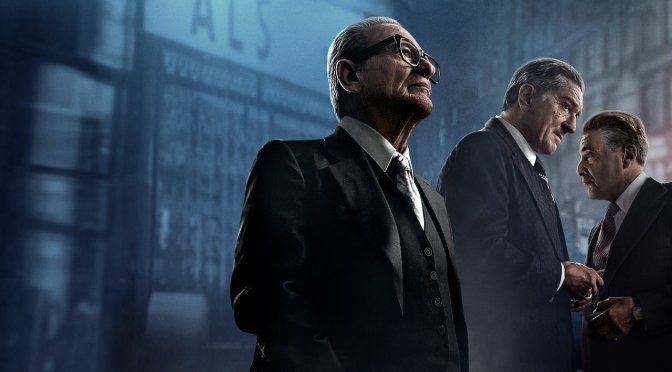
But, when the cinematic geniuses that are: Martin Scorsese, Robert DeNiro, Al Pacino and Harvey Keitel took to the stage for the premiere of THE IRISHMAN (2019), even I was star struck! Add the brilliant actors Stephen Graham, Anna Paquin and Jack Huston to the mix and I can confirm I was in the presence of all-round film greatness.


Scorsese is the best genre filmmaker still living today. But what of THE IRISHMAN (2019)? Is it yet another cinematic masterpiece to add to an incredible list of classics that Scorsese has directed? On first watch I would say both yes and no. I sit on a fence because the film is SO long, detailed and intense, I need another sitting to really nail an absolute opinion. It’s very, very good – BUT is it a great? I remember first watching Goodfellas (1990) and feeling dazed by the end of it. It is now one of my favourite films of all time.

First impressions are that, once again, Scorsese has delivered yet another impeccable film in the gangster movie genre. Film is a collaborative endeavour though and he has surrounded himself with an army of major talents in the production and acting departments. Robert De Niro, who himself, optioned the book on which the film is based, takes the lead as Frank Sheeran. In support are the aforementioned Al Pacino, Harvey Keitel, Stephen Graham, Anna Paquin, Jack Huston and the out-of-retirement Joe Pesci. All work from a superlative screenplay adaptation from uber-writer Steven Zaillian


The story is structured, in many ways, like another gangster classic, Once Upon a Time in America (1984). An elderly character looks back on key aspects on their life; the highs, the lows, the deals, the crimes, the relationships and the bloody carnage. Frank Sheeran, as delivered by De Niro and Scorsese, is another complex presentation of masculinity. He was a trained soldier who did his duty in World War II against the Nazis. Then, on return to America, he found himself driving trucks. With a family to support he finds he cannot turn down the chance to “paint houses” and carry out important work for the mob family run by Russell Bufalino (Joe Pesci). I must say that Pesci is a revelation as the quiet shot caller, in the shadows, giving orders out of the spotlight. His mob boss is the total opposite from the psychopaths he’s played before.

Talking of great performances, Al Pacino as Jimmy Hoffa steals the whole film. It is incredible to think this is the first Scorsese film he has been in. It was definitely worth the wait. De Niro himself is also impressive. His role as narrator and story conduit guides us through many exhilarating scenes involving gangland deals, explosive action and violent hits. Moreover, we are also compellingly embroiled in Hoffa’s Teamster Union business conflicts, as well as, some of the most iconic historical moments from U.S. politics and history.


Scorsese’s approach to style is less frenetic when compared to his other gangster films or the rapid velocity of say, The Wolf of Wall Street (2013). There are fireworks and gunfights of course, plus explosive arguments between the angry and powerful men which inhabited this era. The heated debates between Hoffa (Pacino) and Tony Provenzano (Stephen Graham) are especially memorable. Plus, I liked that Hoffa’s character had very specific demands in regard to time-keeping and punctuality. It’s beautifully filmed but the pace is not as say, rock and roll, as his other films. In one long tense sequence toward the end of the film, Scorsese uses silence rather than trademark rock music to enhance the visuals.

Overall, themes of death, murder, loyalty, friendship, politics and regret dominate the story narrative. From the nursing home where Frank Sheeran begins his epic tale, to the multitude of hits and shootouts we experience, the Grim Reaper follows these characters like a constant shadow. I wasn’t sure how I was meant to feel about Frank Sheeran by the end. He is a complex character who, as a trained killer, is difficult to empathise with. But his, the bosses and Hoffa’s stories are compelling nonetheless. However, the last part of the film raises a lot of emotionally painful questions with equally difficult answers.

Lastly, certain things about the film, such as the “de-aging” CGI and lengthy running time, detracted from my initial enjoyment. However, Netflix have an absolute monster of a gangster film here, with Scorsese once again delivering a very special cinematic offering. The irony is that it will only have a limited theatre release. THE IRISHMAN (2019), therefore, deserves to be painted and seen on the biggest screen you can find.

Mark: 9.5 out of 11


LFF REVIEW – JOJO RABBIT (2019) – SPOILER FREE

LFF REVIEW – JOJO RABBIT (2019)

Written and Directed by: Taika Waititi

Based on: Caging Skies by Christine Leunens

Produced by: Carthew Neal, Taika Waititi, Chelsea Winstanley

Cast: Roman Griffin Davis, Thomasin McKenzie, Taika Waititi, Sam Rockwell, Scarlett Johansson, Rebel Wilson, Alfie Allen etc.

***SPOILER FREE***


After watching the astounding Joker (2019) earlier in the day, and having my psyche shook by that descent into hell, I needed something lighter to watch afterwards. A comedy about the Nazis, World War II and Hitler himself, therefore, probably wasn’t the ideal choice. Nonetheless, I really enjoyed Taika Waititi’s furiously funny war satire.

Essentially, JoJo Rabbit (2019), is a rites-of-passage comedy with a heavy dose of pathos, tragedy and combat thrown in. The story concerns JoJo Betzler (Roman Griffin Davis), a young German boy who has a staunch commitment to the Hitler Youth and the Nazi Party. So much so he conjures up a vision of Hitler (Taika Waititi), to act as a kind of spirit guide through his everyday life. Safe to say, Hitler isn’t the best teacher, especially with Waititi’s mischievous and ridiculous representation.

JoJo Rabbit (2019) has a wonderful character arc for the lead protagonist, who benefits from an empathetic performance by sterling young actor, Roman Griffin Davis. JoJo, through his wartime experiences slowly learns the horrors of Nazi propaganda and the real truth about the Jewish people. It’s a heartwarming and touching story which advocates love over hate, even in the face of such dark terror.


This image has an empty alt attribute; its file name is jojo-rabbit-trailer.jpg

While Waititi’s comedic turn as Hitler threatens to plunge the film into tonal chaos, Scarlet Johansson and Thomasin McKenzie ground the film in emotional depth with moving acting portrayals. Sam Rockwell also contributes brilliantly as a German Captain, charged with training JoJo and other Hitler Youth members. Stephen Merchant is also ideally cast as a fastidious Gestapo Officer. The scene where he and his Nazi cohorts search JoJo’s house is one of many memorable scenes throughout the film.

Overall, Jojo Rabbit (2019), takes an incredible risk creating humour out of such tragic events as war and the Holocaust. But, by ridiculing Hitler and the Nazis, there is a sense that Waititi is taking back power through rapid humour. Conversely, the jokes come thick and fast. There are sight gags, physical humour, puns, cartoon violence, illustrations, slapstick and so many zinging one-liners in the irreverent screenplay.

At times it was like ‘Monty Python’s Flying Germans’, such was fast pace, sketchy and surreal nature of the jokes. One could argue that the jokes undermine the more tragic elements of the story. It’s a tough thing to do, to make you laugh AND cry; as the bombs fall and bullets fly. Nevertheless, by the end, Waititi manages to just about retain the balance between parody and pathos.

Mark: 9 out of 11


FILMS THAT GOT AWAY #2 – REVIEW – OVERLORD (2018)

OVERLORD (2018)

Directed by: Julius Avery

Produced by: J.J. Abrams, Lindsay Weber

Screenplay by: Billy Ray and Mark L. Smith

Cast: Jovan Adepo, Wyatt Russell, Mathilde Ollivier, John Magaro, Pilou Asbæk, Bokeem Woodbine etc.

Cinematography: Laurie Rose and Fabian Wagner

**MAY CONTAIN SPOILERS**

Inglourious Basterds anyone? More like inglorious mutants!

I love a good B-movie horror film and I love a good B-movie war film! So, I’m still confused as to why I missed this one at the cinema first time round. It was released in November 2018 in the UK, so perhaps I was still in London Film Festival mode? Perhaps it fell through the cracks after a busy October cinema-going? Perhaps the marketing wasn’t strong enough over here? Perhaps, perhaps, perhaps?

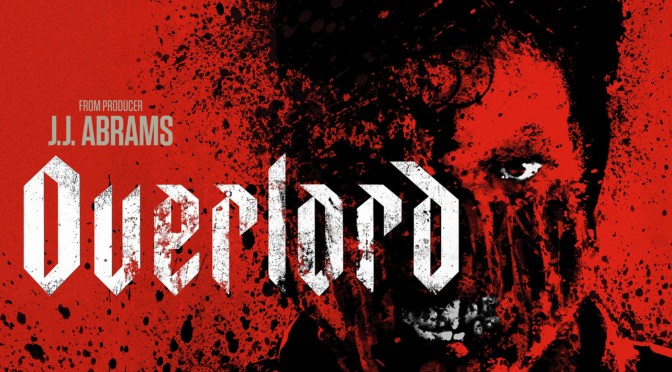
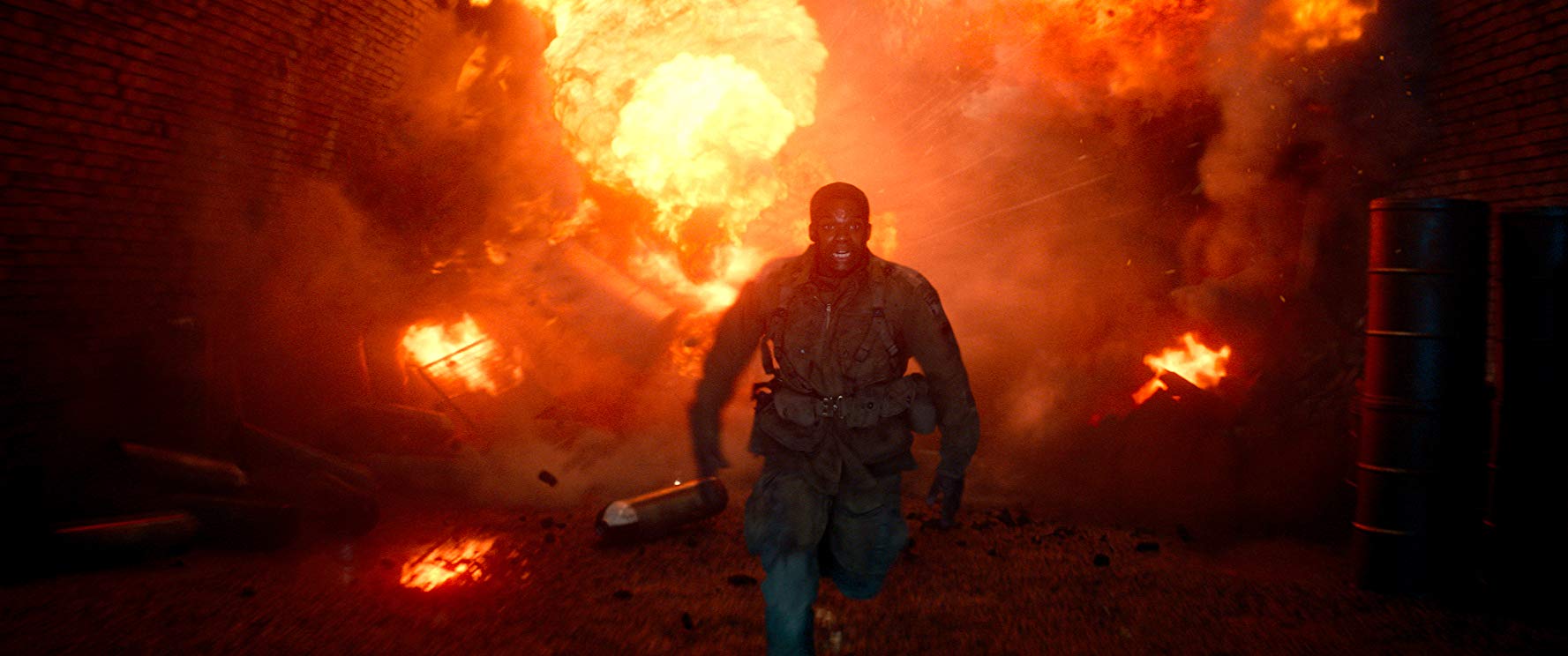
Anyway, I caught up with it on Sky Cinema via the television box and I immediately regretted not seeing it on the big screen. The film is set in June 1944 during the Allied invasion of Normandy. The operation was called Overlord and part of the WWII D-Day push to defeat the dastardly Nazis. It opens superbly, in mid-flight, as a fighter bomber carries American soldiers about to parachute into enemy territory. Safe to say aeroplane food, crying children and lack of leg room are the least of their worries.

The explosive, noisy and destructive opening sequence sets an incredible pace. Also, the body count starts to stack up too as we land in occupied France. Not so much a dirty dozen as a filthy four remain after the landing carnage. The ragtag quartet consisting of nervous rookie, Private Boyce (Jovan Adepo), tough-guy Corporal Ford (Wyatt Russell), mouthy Private Tibbet (John Magaro), and war photographer Private Chase (Iain De Caestecker), are joined by French civilian fighter, Chloe (Mathilde Ollivier) in battling the Nazi hordes. Their mission is to take out a Nazi radio tower, but we get a whole lot more than the usual WWII battle sequences. Something horrific is lurking in the church where the radio tower is.

While the film essentially deals in genre archetypes the narrative pace, action and suspense really get the heart racing. Moreover, the cast commit to the action and bloodshed with impressive abandon. What I liked was, with relatively unknown actors cast, it meant there was suspense in who would or wouldn’t survive. So, in a film full of surprises this added another layer of tension you wouldn’t get in a star-driven film. Nonetheless, the real asset of the film is the monstrous soldiers born out of the sinister minds of the Nazi Doctors. These are some real nasty pieces of work! Indeed, director Julius Avery revels in representing the bloody carnage these experimental creatures bring. You can’t beat a good old Nazi monster baddie! Well, you can! In all sorts of fleshy, fiery and visceral ways!

I recognised Wyatt Russell from other films and TV shows, and he was great. Russell exuded all the tough qualities his father Kurt has shown down the years, but he gave Corporal Ford a steely edge all of his own. Jovan Adepo and John Magaro impressed as chalk and cheese soldiers, initially clashing but subsequent gaining respect for each other. Adepo’s Private Boyce grows from frightened rabbit to resilient hero over the course of the film. Meanwhile, Game of Thrones scenery-chewer, Pilou Asbæk, begins with quite a subtle portrayal of SS Captain Wafner. Yet, by the end he is on gloriously over-the-top form as the most mutated of all the Nazis.

Ultimately, this is a mid-budget B-movie genre gem. It has lashings of action, blood and gore. It also combined war and horror genres really impressively. I would have liked even more gore and a bit more backstory regarding the Nazi experiments, but that would have probably ruined the surprises. Also, it’s definitely not one of the most original films you will see as there are major echoes of many soldiers-on-a-mission war films, the video-game Wolfenstein and also From Dusk Til Dawn (1995) too. But, with Wyatt Russell, Mathilde Ollivier and Jovan Adepo impressing in the cast and Avery directing the hell out of the explosive action and bloody fighting, I had a great time watching Overlord (2018). It’s just a damn shame I missed it on the big screen when first released.

Mark: 8.5 out of 11

TO BOLDLY REVIEW #6 – STAR TREK: NEXT GENERATION – SEASON 1 (1987 – 1988)

TO BOLDLY REVIEW #6 – STAR TREK: NEXT GENERATION – SEASON 1

Based on Star Trek & Created by: Gene Roddenberry

Season 1 writers (selected): John F. Black, Diane Duane, D.C. Fontana, Maurice Hurley, Robert Lewin, Richard Manning, Kathryn Powers, Gene Roddenberry, Joseph Stefano, Tracy Torme etc.

Season 1 directors (selected): Colin Bucksey, Rob Bowman, Cliff Bole, Les Landau, Kim Manners, Win Phelps, Mike Vejar etc.

Main Cast: Patrick Stewart, Jonathan Frakes, LeVar Burton, Denise Crosby, Michael Dorn, Gates McFadden, Marina Sirtis, Brent Spiner, Wil Wheaton etc.

Music/Composers: Alexander Courage, Jerry Goldsmith, Dennis McCarthy, Ron Jones, Jay Chattaway

Production Company(s): Paramount Television, CBS Television

**THIS ARTICLE CONTAINS SPOILERS**

“MAKE IT SO. . .”

So, my cultural journey beyond the stars continues with a review of the first season of Star Trek: Next Generation. It took some serious time for what was originally known as Phase II to take off. Indeed, they finally hit warp speed during the late 1980’s. Roddenberry, the original Enterprise crew, plus swarms of Paramount employees had kept themselves busy with the ‘Original Series’ cinema releases, but, in 1986, a new TV series was announced.

Then, almost a year later in September 1987, Star Trek: Next Generation was released. TNG featured: a new crew, a more advanced class of Enterprise, and a variety of new aliens, planets and galaxies to boldly explore. While there was an initial decree to avoid all the old enemies from the original series, the Klingons, Romulans and more, slowly bled into the show as it was further developed.

FIRST CONTACT

Much has been written about Star Trek in general and the internet is brimming with articles, features, interviews, podcasts, fan films and documentaries which would take an immortal’s lifetime to read. So, my approach to this piece is to concentrate on the characters, narratives, themes and concepts which leapt out while watching it.

Overall, I really enjoyed most of Star Trek: Next Generation – Season 1. I have read that die-hard fans were resistant to the idea their favourite show from the 1960’s was getting a makeover. However, Paramount/CBS Studios chucked $1.3 million at each episode and shot on 35MM film, thus demonstrating a commitment to a quality product.

Even watching it now I am impressed by the production values, cast, direction and science fiction concepts. Obviously some of the effects are a bit dated compared to what we experience today but I always prefer in-camera effects and prosthesis, anyway. Having said that Star Trek has always been about strong ideas and themes for me.

In terms of story and character there are some very strong episodes and some pretty weak ones. Gene Roddenberry, his producers and raft of writers were, reported to be consistently at loggerheads throughout the production. So much so very few of the original TNG writing team remained by the end. It’s a testament to the rock-solid formula of the show that such issues did not hinder the ultimate consistency of entertainment while I was watching.

My main criticism is that some episodes felt like first drafts. Plus, there was, on occasions, a few episodes which were top heavy in set-up and rushed toward the end. Nonetheless, Roddenberry’s original format is always fascinating and you could certainly feel that when they successfully married: the science fiction concepts, characters, tone and dialogue you got many great episodes.

THE FAMILY UNIT

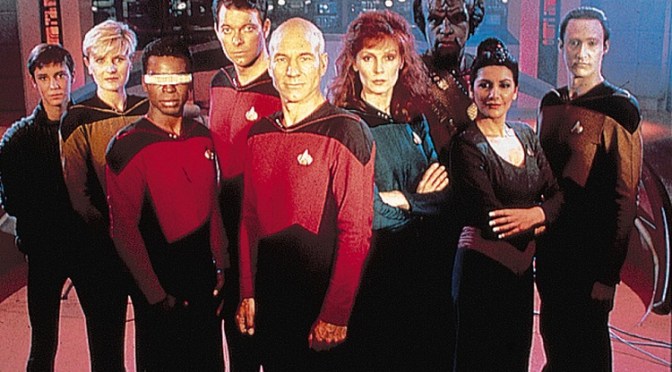
Holding the narratives and show together was an exceptionally brilliant set of actors. I mean, in the cold light of space, Star Trek: Next Generation could be deemed just men, women and aliens in silly outfits. Of course, we know it’s much more intelligent than that. So with acting heavyweight Patrick Stewart leading the way, all the cast were committed to their roles formidably. They had to be for it to work so well.

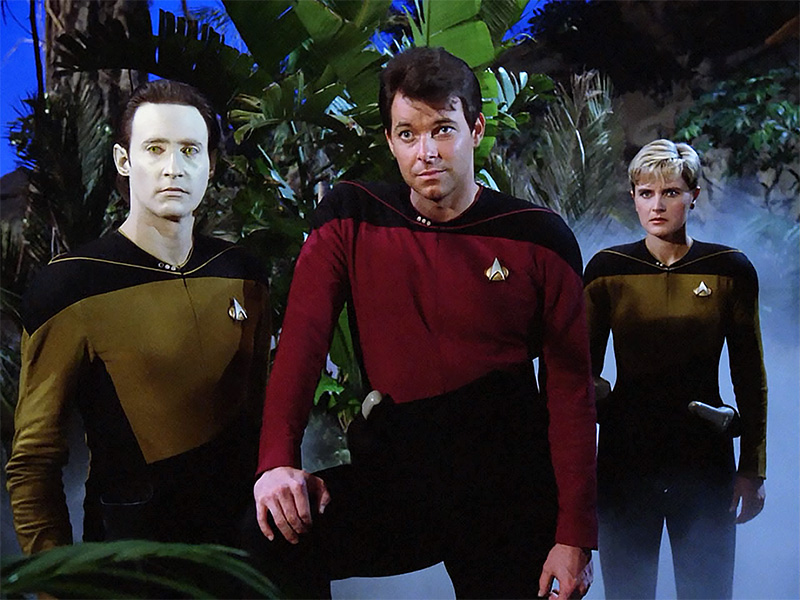
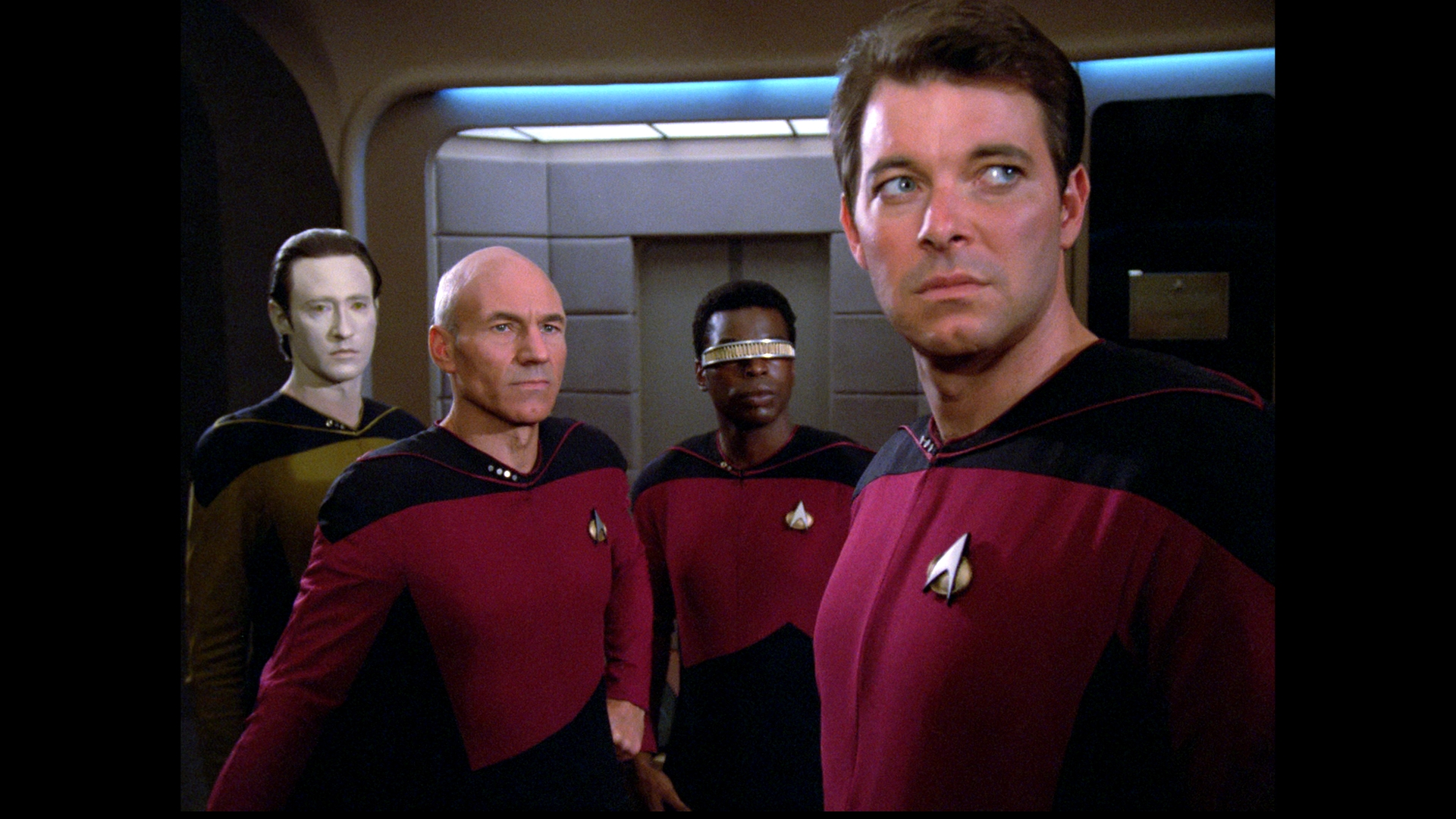
To me TNG was structured around a quasi-family unit, as opposed to the naval/military hierarchy of the ‘Original Series’. Captain Jean-Luc Picard majestically leads from the front with authority and a keen sense of fair play. Dr Beverly Crusher is the pseudo-matriarch, both professional and caring. Further, the other main members of the crew are, very loosely speaking, the children.

Riker I’d suggest is the first son and heir apparent, closely followed in the hierarchy by Geordi. The likes of data and Wesley are the younger, gifted children, full of intelligence and enquiry. The sensitive, Troi and tougher Yasha represent the older daughters, while I’m not quite sure how the Klingon, Worf, fits in. Perhaps, he’s a bastard son or long lost cousin seeking affirmation of the family unit. Thus, these characters as a ‘family’ support the spine of the show, all combining with varying strength and characteristics to form a whole that propels both drama and emotion.

THE REST IS HISTORY. . .

Star Trek: Next Generation consisted of TWENTY-SIX episodes!! While no doubt well paid, this remains an incredible workload for the cast and crew. Initially, the season got off to a difficult start in terms of ratings and reviews. Nonetheless, by the end of the season , the class of the production and format shone through. Furthermore, it would be nominated for seven Emmy TV awards. Ratings would also improve and it became the highest rated syndication series by the end of the run. To conclude, I would like to look at six episodes from season 1 which I felt stood out while I watched them.

THE BIG GOODBYE – EPISODE 12

The ‘Holodeck‘ plays a huge part in the series as a whole. It’s a fantastic way to marry the past and future together. In this clever episode Picard attempts to escape into one of his favourite film noir simulations but gets more than he bargained for. Then when the holodeck malfunctions, Picard and his crew find themselves in the midst of a simulated “real-life” and perilous gangster mystery.

DATALORE – EPISODE 13

I love a good Jekyll and Hyde story and this one explores the origin of much respected android, Data. Brett Spiner is such a good television actor and he nails both roles as Data and his “brother” Lore, who, as genre conventions require, is basically bad Data and hell-bent on taking control of the Enterprise.

HEART OF GLORY – EPISODE 20

Obviously the stories involving the Federation are always interesting but often I really enjoy the more personal narratives. In this episode Michael Dorn as Worf finds his allegiances between the Enterprise and fellow Klingons tested. It’s a fine character exploration as we get to see Worf’s warrior persona versus the more reasoned Starfleet side.

THE ARSENAL OF FREEDOM – EPISODE 21

War, or threat of war has always been at the heart of many great episodes. The concept that a planet of arms dealers who are killed by their own hi-tech product was a great idea. It also gave the crew and Enterprise major threats on the planet they visit and in space. The action, character development and suspense make this a very thrilling episode all-round.

SYMBIOSIS – EPISODE 22

Social commentary was a key component of the ‘Original Series’. Many episodes tapped into the zeitgeist of the 1960’s issues relating to war, race, religion and gender etc. TNG continued this tradition with Symbiosis which expertly explores the nature of narcotic addiction and how it can be exploited to negative effect by an alien race. I especially enjoyed the grey ending where the ‘Prime Directive‘ comes into play.

CONSPIRACY – EPISODE 25

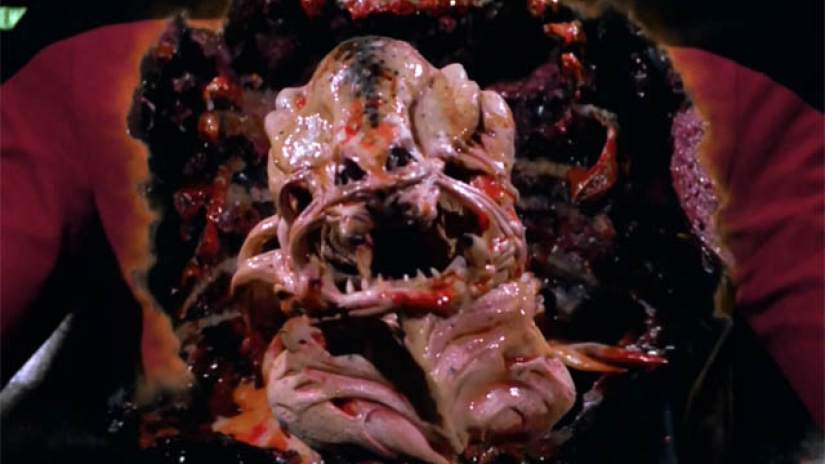
A major rule throughout Star Trek is that the Federation is not to be shown as corrupt. There have been exceptions to this in certain feature films and they get around this in Conspiracy with the Federation top brass invaded by parasitic aliens. The narrative was very strong and felt like a feature film story in scale. I also loved the David Cronenberg-style monsters appearance in the gory finale.

VANITY FAIR (2018) – ITV DRAMA REVIEW

VANITY FAIR (2018) – ITV DRAMA REVIEW

Created and written by: Gwyneth Hughes

Based on: Vanity Fair by William Makepeace Thackeray

Executive producer(s): Damien Timmer, Tom Mullens, Gwyneth Hughes, James Strong

Directed by: James Strong

Starring: Olivia Cooke, Claudia Jessie, Tom Bateman, Johnny Flynn, Charlie Rowe, Simon Russell Beale, Anthony Head, Martin Clunes, Frances de la Tour, Michael Palin

Composer(s): Isobel Waller-Bridge

Distributor: ITV, Amazon Studios

**MAY CONTAIN SPOILERS**

It’s an interesting anomaly in my later years that having previously boycotted period dramas which illustrate the lives of the wealthy and privileged, I now find myself being less partisan and actually watching more. This change doesn’t derive from a mellowing of my socialist working class roots but more an intelligent inquisitiveness as ignorant dismissal of the genre, be they on television or film, means one is possibly missing out on some fine drama or comedy. Indeed, many historical periods’ works of literature or theatre are in fact satirising or damning the upper classes.

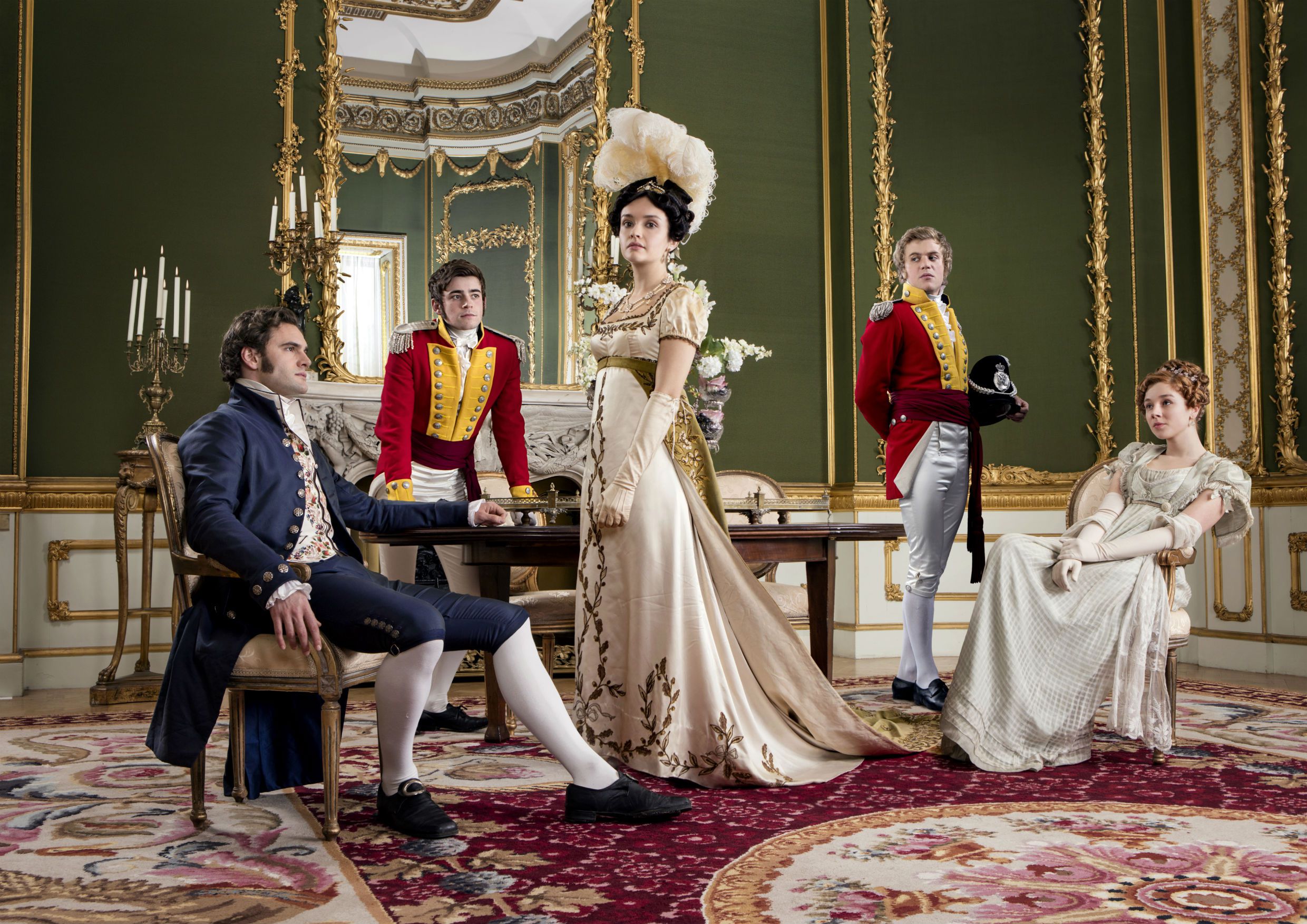
Dickens for example dealt with the lower, middle and upper classes, shining a critical light at the many degradations of the era. Likewise, William Makepeace Thackeray also critiqued the folly of war, greed and narcissistic pursuits of the privileged. Stanley Kubrick demonstrated this brilliantly in his classic adaptation of Barry Lyndon (1975); while in ITV’s most recent adaptation Vanity Fair (2018), Thackeray’s adroit study of ambition and upward mobility shows the strengths, weaknesses and foibles of the women and men at the time of the Napoleonic wars.

Vanity Fair is widely considered a classic and considered the founder of the Victorian domestic drama. Originally serialised between 1847 and 1848 it was at the time a massive hit and one could argue the equivalent of what we would call a soap opera today. There have been, since the novel’s release, a plethora of screen, radio and television adaptations. Did we need another one? Probably not; but over seven compelling episodes Gwyneth Hughes’ screenplay does great justice to bring to life an army of: well-to-dos, country lords and ladies, soldiers, clergy, businessmen, plus the sparkling scheming of anti-heroine Rebecca or Becky Sharp.

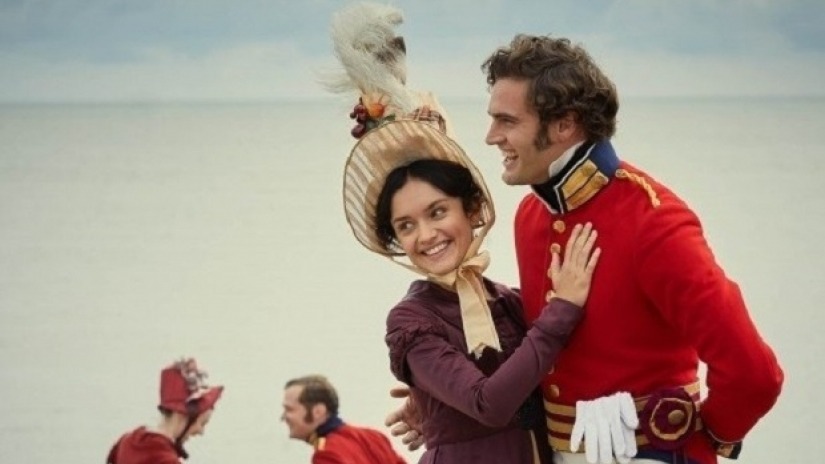
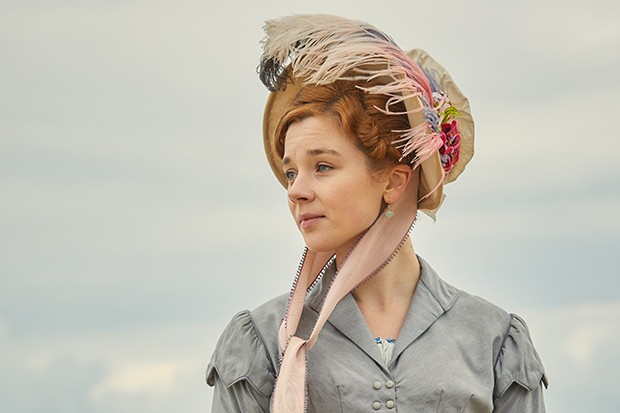
Indeed, the effervescent, nuanced and outstanding performance of Olivia Cooke as Becky drives the narrative forward with absolute purpose. Cooke owns every scene as Becky attempts, from lowly beginnings, to rise through the ranks of society. It is both her strength of character and confidence which is her biggest asset and greatest enemy, because, always pushing for more, she doesn’t quit when she’s ahead. In stark reflection to Becky, Claudia Jessie as Amelia, is characterised as a romantic and desirous not of wealth or position, but rather love and romance. She is a pure spirit and her personality contrasts perfectly with Becky’s. While we admire Becky’s ambitious drive we remain suspicious of her motives, yet Amelia we warm to due to her big and gracious heart.

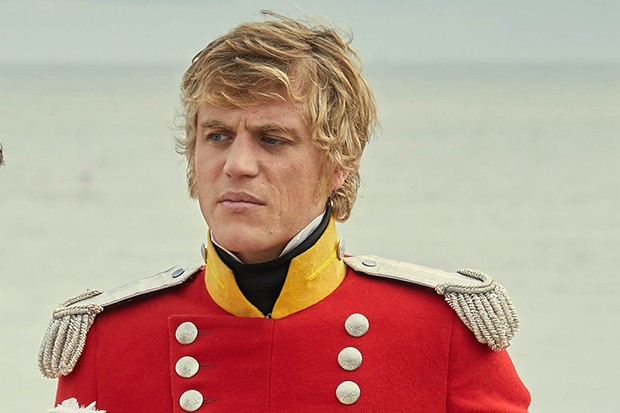
The men in the piece are a mixture of romantics, noble soldiers, treacherous or haphazard patriarchs, foppish fools, gamblers or all of the above. Tom Bateman gives a solid performance as Rawdon Crawley, Becky’s gambling military husband, as does Charlie Rowe as the more conflicted romantic, George Osborne. Furthermore, the adaptation contains sterling support from the cream of English character acting royalty including: Martin Clunes, Frances De La Tour, Claire Skinner, Anthony Head and Simon Russell Beale to name a few. However, the standout performance for me was Johnny Flynn as William Dobbin. This is such an empathetic and selfless character that, while holding a torch for Amelia, was prepared to sacrifice his love to make everyone happy. Potentially seen as a weakness, this for me was a real strength in a story which was full of selfish narcissists out for what they could get.

Aside from slightly dodgy green-screen CGI for the later scenes in India this was beautifully shot and lit, with the vistas of the English and French countryside wonderfully rendered. The interiors were eloquently designed as the stately and city homes of the characters, likewise the colourful costumes, were expertly brought to life.  James Strong is a prolific television director and he gets brilliant performances and marshals the pace and machinations of the narrative precisely. With Olivia Cooke and Johnny Flynn delivering star turns in their roles I was consistently surprised by this adaptation of Thackeray’s masterpiece. Ultimately, I’ve learned that whether something is a period drama or not one must give it a chance as it could have qualities which continue to stand the test of time.

Mark: 8.5 out of 11

DOCTOR WHO – S11 – EP. 6 REVIEW – DEMONS OF THE PUNJAB (2018)

DOCTOR WHO – S11 – EP. 6 REVIEW – DEMONS OF THE PUNJAB (2018)

Directed by: Jamie Childs

Written by: Vinay Patel

Cast: Jodie Whittaker, Mandip Gill, Bradley Walsh, Tosin Cole, Leena Dhingra, Amita Suman, Shane Zaza, Hamza Jeetooa etc.

Produced by: Alex Mercer

Executive producer(s): Chris Chibnall, Matt Strevens, Sam Hoyle

Composer: Segun Akinola

**MAY CONTAIN SPOILERS**

Doctor Who Demons of the Punjab

This season of Doctor Who is now settling into a strong mix of diversity, narrative simplicity and emotional resonance. I’ve read some negative comments bemoaning the quality of the writing and weakness of the stories in general, however, as Sunday night teatime entertainment goes the show is a success in my view. Indeed, the latest episode, Demons of the Punjab was another involving and fascinating watch.

This week it was Yaz’ character which took centre stage as her curiosity about her grandmother, Umbreen, found the Doctor breaking time-travel protocol. If you’ve seen the Doctor Who episode Father’s Day and film classic Back to the Future (1985) we all know how dangerous it can be for anyone to cross their own timeline. Indeed, while the Doctor has actually crossed her own timeline before many times she should really know better!


Doctor Who India

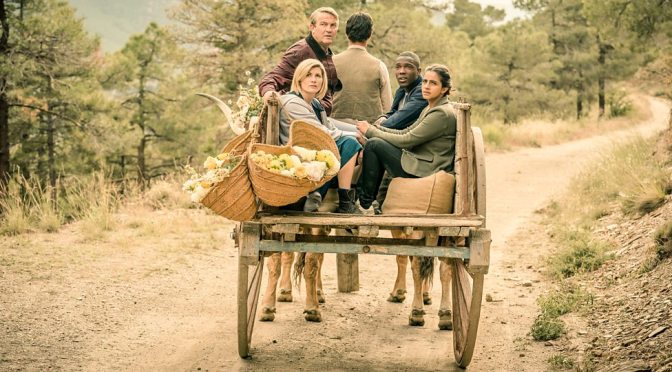
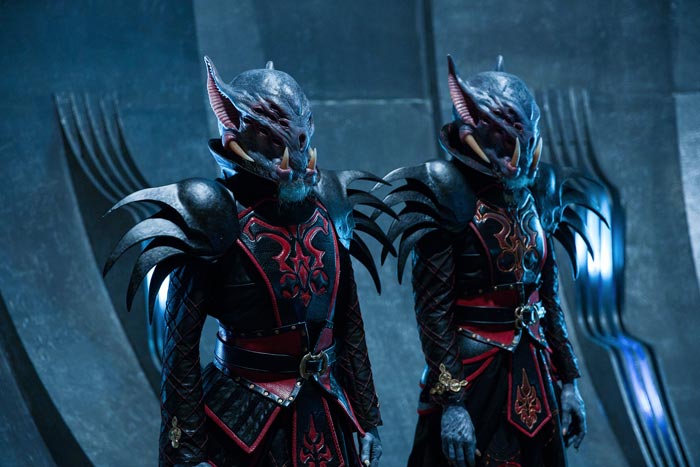
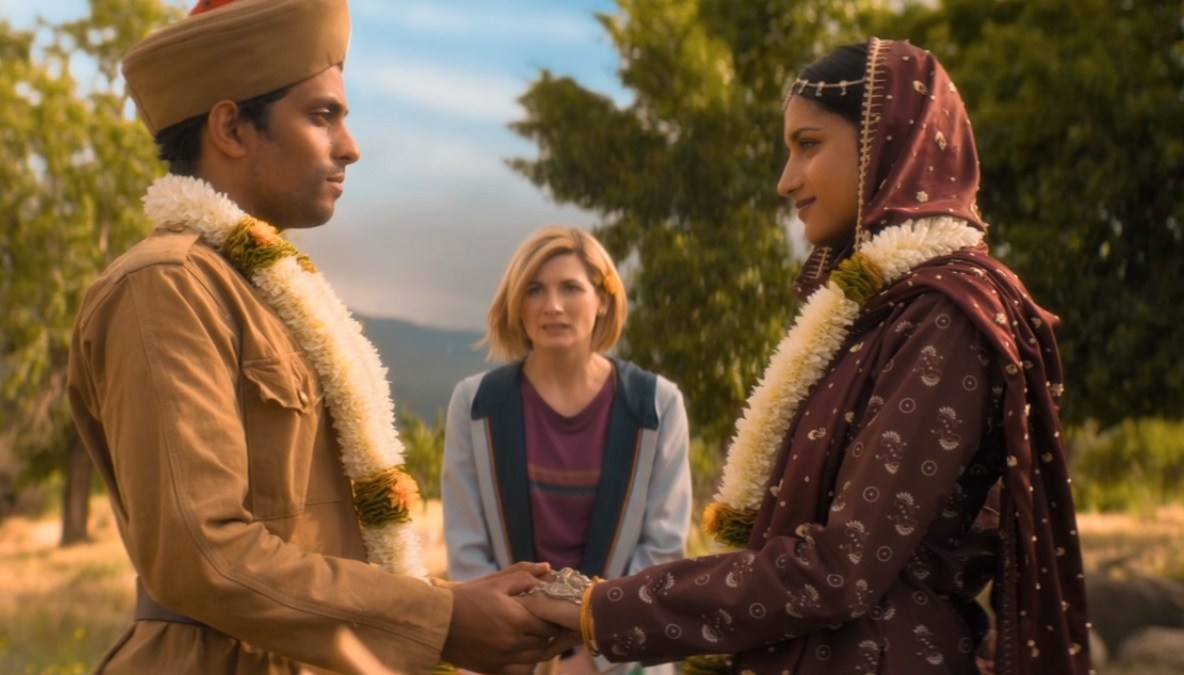
Thus, Team TARDIS travelled back to 1947 as the Partition of India took place. Here Yaz gets to meet her own family members as her grandmother is about to marry. Of course the path of true love and time travel rarely goes smoothly and the course of history is threatened by Yaz’ presence and her and the Doctor must attempt to not interfere with events. Of course, it would not be a Doctor Who episode without some kind of alien threat and this is provided by the Vajarians; a mystical race who appear where chaos is ensuing across the universe. Their presence adds an air of mystery to the episode, but ultimately they are an emotional subplot to the main conflict relating to how the Partition of India affects Yaz’ family.

Overall, Demons of the Punjab successfully combined political, historical, romance and drama in amidst the usual science fiction concepts. It was especially strong from an emotional perspective. By the end as a family is torn apart by the situation I felt a real sadness in my heart. The division of India by the British Empire was an event which divided people based on their religion and ethnic background and created a huge schism between families, colleagues and friends. Doctor Who merely skims the surface of the impact it would have and the lives affected by the subsequent conflict. Yet, what the episode teaches us is that while we may not be able to change history we must learn from it. We must learn that division and conflict can only lead to heartache and pain.

Mark: 8.5 out of 11