Tag Archives: war

CONTRASTING DREAMS: REVIEWING THE WORK OF AUTHOR – PHILIP K. DICK

CONTRASTING DREAMS ON PAGE AND SCREEN: REVIEWING THE WORK OF PHILIP K. DICK 

“Today we live in a society in which spurious realities are manufactured by the media, by governments, by big corporations, by religious groups, political groups… So I ask, in my writing, what is real? I do not distrust their motives; I distrust their power. They have a lot of it. And it is an astonishing power: that of creating whole universes, universes of the mind. I ought to know. I do the same thing.”

― Philip K. Dick
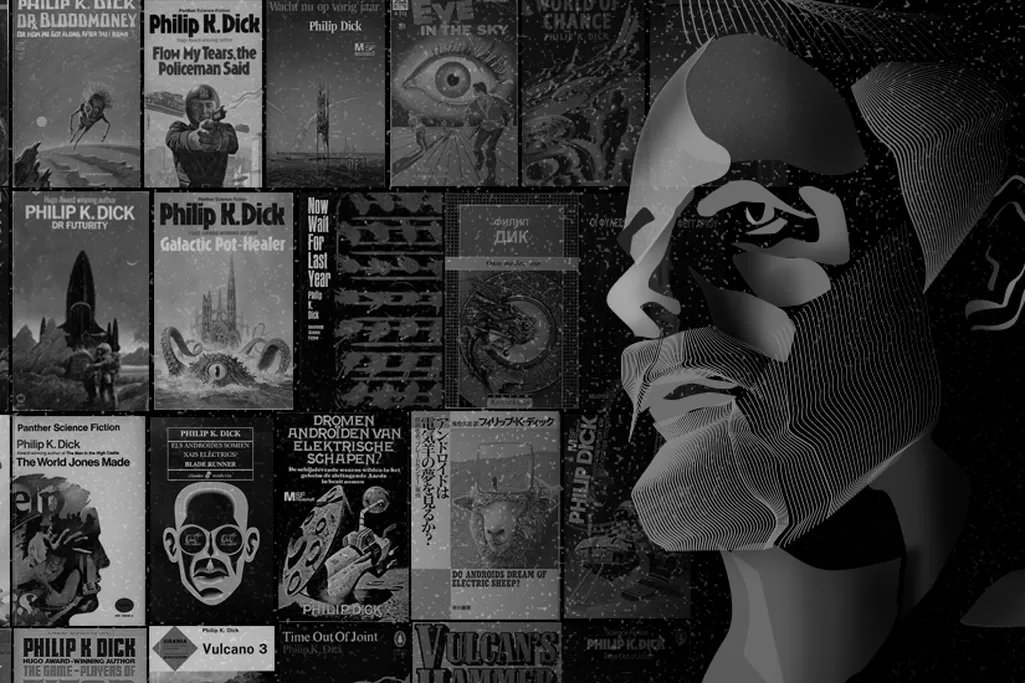
pkd_lead2

INTRODUCTION

For a writer who wrote extensively about artificial intelligence and technology, Philip K. Dick himself was in fact a certifiable writing machine, publishing over 44 novels, a further 120-odd short stories, plus a whole vision of manuscripts, essays and other literary paraphernalia. His death at the relatively young age of 53 took an incredible genius away from us; however, you’re never too far away from his work either on TV, computer or at the cinema.

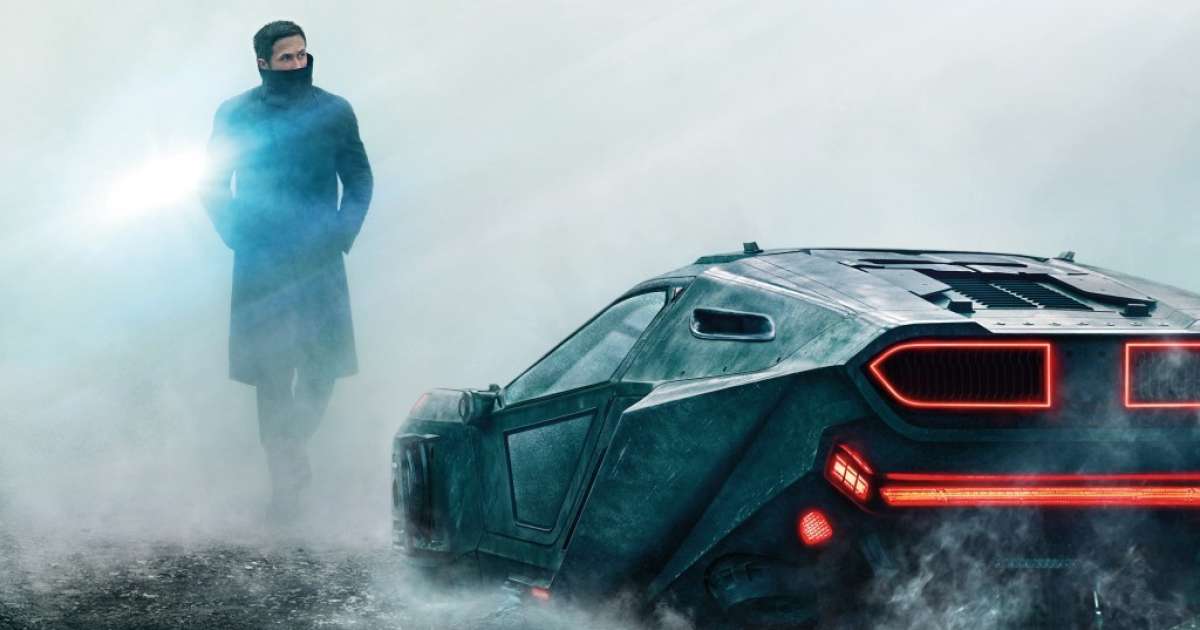
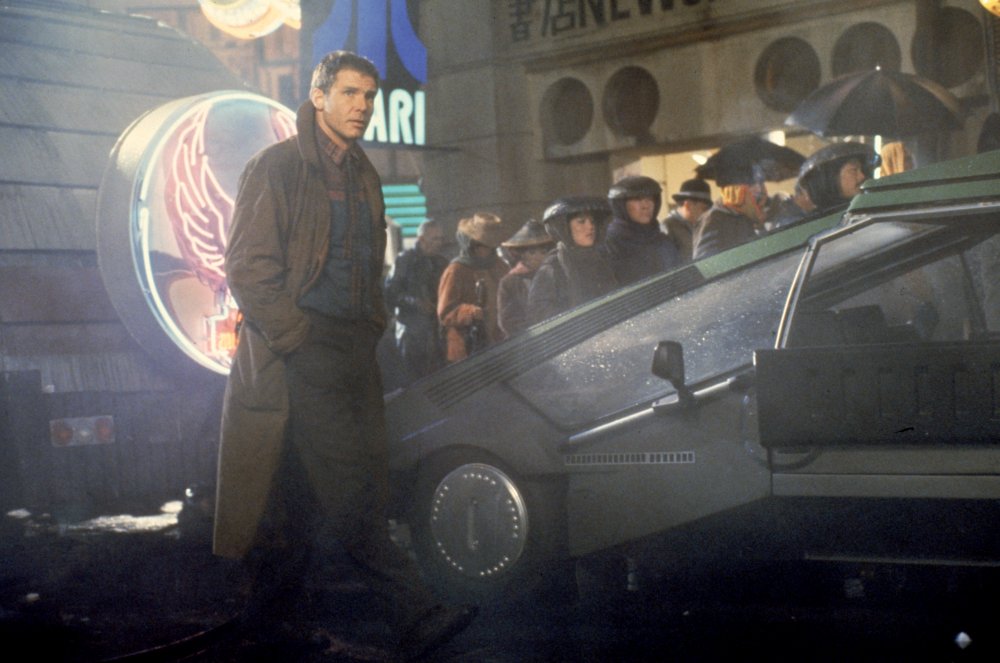
The latest cinema release inspired by Dick’s vision was the beautifully directed space epic Blade Runner 2049 (2017). Here Denis Villeneuve picked up the baton from Ridley Scott’s Blade Runner (1982); an adaptation of K. Dick’s seminal novel Do Android’s Dream of Electric Sheep (1968). But of course his stories have also given us film adaptations including: Minority Report (2002), Total Recall (1990 & 2012), The Adjustment Bureau (2011), Next (2007), Paycheck (2003), A Scanner Darkly (2006) etc. Moreover, Amazon has recently adapted his classic 1962 alternate history novel The Man in the High Castle (2015) to positive acclaim.

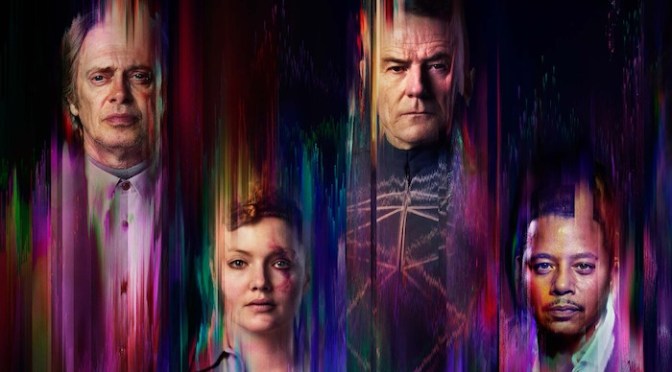
With Charlie Brooker’s Black Mirror jumping ship to Netflix, Channel Four UK (Sony / Amazon in the U.S.A) and various other production companies) must have felt there was a “futuristic anthology show” hole in their schedule. Thus, they obtained the rights to Philip K. Dick’s back catalogue and produced a show called Electric Dreams – shown in two halves in 2017 and 2018. The production values were very high and some extremely talented actors, producers, writers and directors were brought in to bring ten Dickian short stories to the TV screen. Such creative luminaries included: Janelle Monae, Dee Rees, Ronald Moore, Juno Temple, Bryan Cranston, David Farr, Matthew Graham, Timothy Spall, Jack Thorne, Steve Buscemi, Anna Paquin, Terrence Howard, Travis Beacham, Richard Madden, Vera Farmiga and many more.

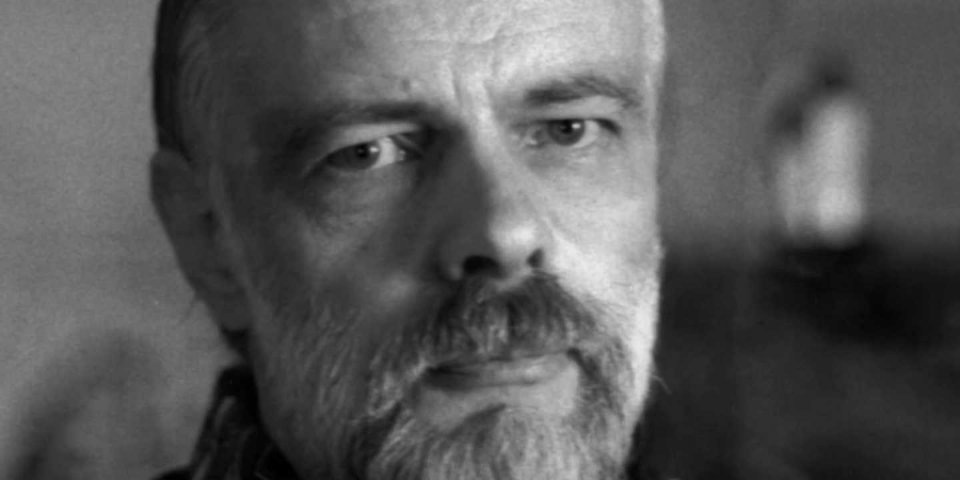
I have immersed myself in the novels, cinema and TV work inspired by Philip K. Dick recently. I was fascinated by the themes and narratives represented and comparisons between the literary and screen works.  How did they compare to Dick’s original vision and how do they differ?
screen-shot-2014-01-30-at-110239-am

NIGHTMARE THEMES IN ELECTRIC DREAMS

Of late I have read his novels Do Android’s Dream of Electric Sheep (1968), Ubik (1969) and the collection of short stories – collated in conjunction with the Channel 4 series – Electric Dreams. Moreover, I have seen most of his works adapted for cinema. His narratives are often hallucinatory and dream-like with simple yet devastating prose. They deal in reality, alternative reality and beyond reality. You’re often in a place where you are unsure as to what is occurring is in the real world or some imagined or manufactured nightmare. Technology, disease and war are more than often a threat.  The biggest threat though is humanity and its seeming endless proclivity for inventing weapons, machines and viruses with which to kill. Paranoia and doubt infect Dick’s work making you feel as trapped as his characters. Further, mutated strands of humanity are a staple trope where telepaths and empaths inhabit his oeuvre; along with classic science fiction aliens and monsters from outer space too.

The narratives, while possessing an otherworldly and futuristic feel, paradoxically feel realistic because his characters are everyday people. They are rarely action heroes or soldiers or scientists but rather administrators or office staff, factory or transport workers. They are family people trying to make their way through life and the horrors the world throws at them. Given Dick was writing during the 1950s onwards it’s not surprising that the threat of nuclear war hung heavy within his words. Furthermore, the rapid technological breakthroughs which, while offering hope for humanity, brought with it a movement to the loss of free will and a possible future governed by machines. Big corporations, banks, governments and computers all erode and destroy the very fabric of being in Dick’s world rendering human identity and existence obsolete. His universe is brimming with people under threat, humans desiring to escape and a questioning of what it means to be human.
blade-runner-2049-1024x768-ryan-gosling-officer-k-2017-hd-7401

CONTEXTUALISING THE NIGHTMARES

**CONTAINS FILM AND LITERARY SPOILERS**

Adapting Dick’s work can be complex because what works on the page as a concept can be difficult to transfer to a visual medium. Conversely, his work is often altered beyond recognition with fragments of the initial idea remaining while others stay true to the original. The original and subsequent sequel of Bladerunner (1982) are very faithful to the structure and futuristic vision of Dick’s original novel; retaining the ‘hunting of replicants’ plot and the existential question of whether an android can be considered human. In Electric Dreams the adaptation of the short story Human Is. . . . poses a similar question. In this story a wife faces the choice as to whether her husband, whose body has been invaded by an alien, is in fact more human because he is an improvement and displaying idealised human traits such as kindness and love. The flipside of this occurs in the film adaptation of Imposter (2002), and the short story adaptation The Father Thing, where nefarious aliens hell-bent on invasion take over the humans in order to divide and conquer. Human Is…  both the short story and television adaptation are particularly convincing as many people have all been trapped in dying relationships where we wish we could change our partner.  Dick’s story takes this idea and makes it real and emotionally very powerful.

Certain filmmakers, when adapting Dick’s work, will mould their style to his vision. For example, in the Steven Spielberg directed thriller Minority Report (2002), Dick’s pre-crime conspiracy model was presented as an action pursuit film with Tom Cruise going on the run for a crime he may or may not have committed.  Spielberg retains the initial idea and concepts relating to pre-cognitive telepathy and empathic mutation but renders it a more fast-paced and spectacular cinematic experience. Similarly, telepathy and mutants feature heavily in Matthew Graham’s pretty faithful adaptation of The Hoodmaker. Like Minority Report telepaths are exploited by the government and law to do their bidding, only for the system to be corrupted and used for death by those in power.
blade-runner-1982-019-deckard-city-street-00o-gck

Dick’s story We Can Remember it For You Wholesale, has been adapted on two occasions as Total Recall (1990 and 2012). Paul Verhoeven’s earlier version about warring government agents and colonies on Mars is an absolute blast. Dick’s concepts relating to alternative realities and implanted memories are fused with an explosive Arnold Schwarzenegger action film. Yet, what is retained amidst the shoot-outs and spectacular set-pieces is the main protagonists’ life dissatisfaction and desire to escape their everyday existence for something more exciting. This is a common theme in Dick’s work and can also be found in the Electric Dreams’ stories Impossible Planet and The Commuter. In the latter a Station clerk finds a hitherto lost “town” which offers a means of escape from his seemingly humdrum life but it comes at a cost. While Total Recall raises the pace and stakes within an interplanetary setting, The Commuter is more ordinary and emotional in its cerebral representation.

Political, social and technological corruption is present in many of Dick’s other works too. In Richard Linklater’s adaptation of A Scanner Darkly (2006), an undercover cop battles to conceal his identity while struggling with drug addiction. While in Electric Dreams, Dee Rees’ rendition of Dick’s short story The Hanging Man, takes an allegorical story about social unrest and fascistic hangings, turning it into a thought-provoking, paranoiac nightmare scenario. Rees calls her story Kill All Others, where we find Mel Rodriguez’s factory worker driven by fake news and political manipulation during an election. This eerily reflects much of the social and media saturation seen during Donald Trump’s U.S. election win. Likewise the adaptation of Foster, Your Dead became the very impactful Safe and Sound; and examined the deadly possibilities of technology firms manipulating youth within the context of the war on terror.

Arguably not as successful, however, was the Tony Grisoni adaptation called Crazy Diamond. This episode completely altered Dick’s story Sales Pitch, which told of a relentless Sales-Bot who won’t take no for an answer. In fact I had no idea what Crazy Diamond was trying to say and perhaps the writer should have stuck to Dick’s intriguing techo-nightmare premise.  Indeed, threat of technology and the inevitable doom progress represents is also presented in the excellent episode called Autofac. Dick wrote this story in 1955 and set it after an apocalyptic world war has devastated Earth’s civilizations. All that remains is a network of hardened robot “Autofacs” supplying goods to the human survivors. However, these drones and bots are in fact hindering survival and the idea is incredibly prescient. Indeed with the rise of Amazon and Google and Apple industries our society is becoming more dependent on such technology to the extent we could be classed as helpless without it.    
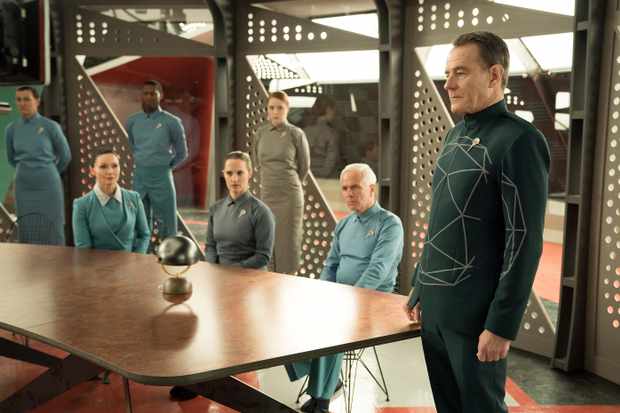
Philip K. Dick's Electric Dreams

CONCLUSION

Lastly, what Electric Dreams demonstrates, along with the many film adaptations of his work, is that Dick’s concepts are just as relevant, if not more so than at the time of writing. Moreover, what this thematic and genre contextualisation of Dick’s work illustrates is that universal themes such as: the desire to escape; what it means to be human; media manipulation; fear of technology and war; oppressive government regimes; and all round insidious paranoia about a very dark future are inescapable and will always be part of society and the human condition.

*Article originally appeared on http://www.sothetheorygoes.com*
Gary Oldman shines in DARKEST HOUR (2017) – Cinema Review

DARKEST HOUR (2017) – CINEMA REVIEW

Directed by: Joe Wright

Produced by: Tim Bevan, Lisa Bruce, Eric Fellner, Anthony McCarten, Douglas

Written by: Anthony McCarten

Starring: Gary Oldman, Kristin Scott Thomas, Lily James, Stephen Dillane, Ben Mendelsohn

171130_MOV_WinstonChurchill.jpg.CROP.promovar-mediumlarge

What makes human beings want to go to war?  What is it that determines thoughts and actions which will lead to the death of another human being? Is it: a genetic trait; a tribal desire; a psychological defect; financial gain; jealousy; boredom; passion; political chicanery; religion; greed; anger; revenge; or quite simply madness. Taking a life is something I have never understood. I mean, unless you are forced to defend yourself against a foe hell-bent on your destruction why would you wish to harm anyone else?

So, Adolf Hitler has a lot to answer for because, even accepting the political and social reasons for the rise of the Nazi party and his desire to repair national pride after the first World War, what the hell gives a nation the right to invade and conquer other countries. If you choose to go down that road you are signing the death certificate of a generation men and women and children. It’s not just Germany either. The British Empire, Roman Empire, Vikings, Mongols, United States of America, France and many more have waged war against humanity down the years. Will it ever stop? Sadly, I doubt it.

darkest_4

In times of war what is needed is obviously bravery, steel, fight, intelligence and more than a little luck. You need hearty human beings to stand and be counted and to die on the battlefields and in the air and in the sea. You also need leaders; figureheads who can rally the troops and galvanise that last ounce of fight in order to repel the enemy. During World War II, with the country on its knees and backs to the walls we had many leaders, but Winston Churchill, above all else, became synonymous with victory.

darkest_2

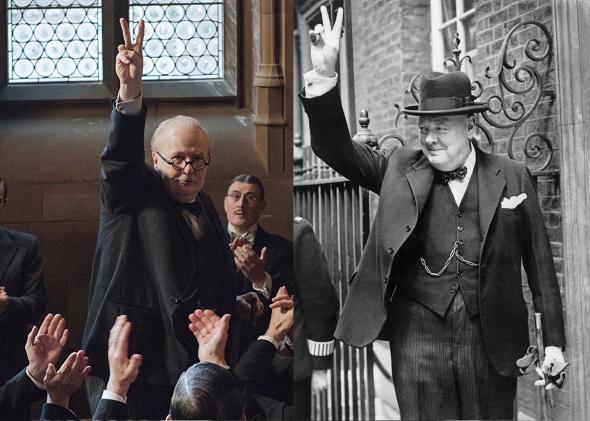
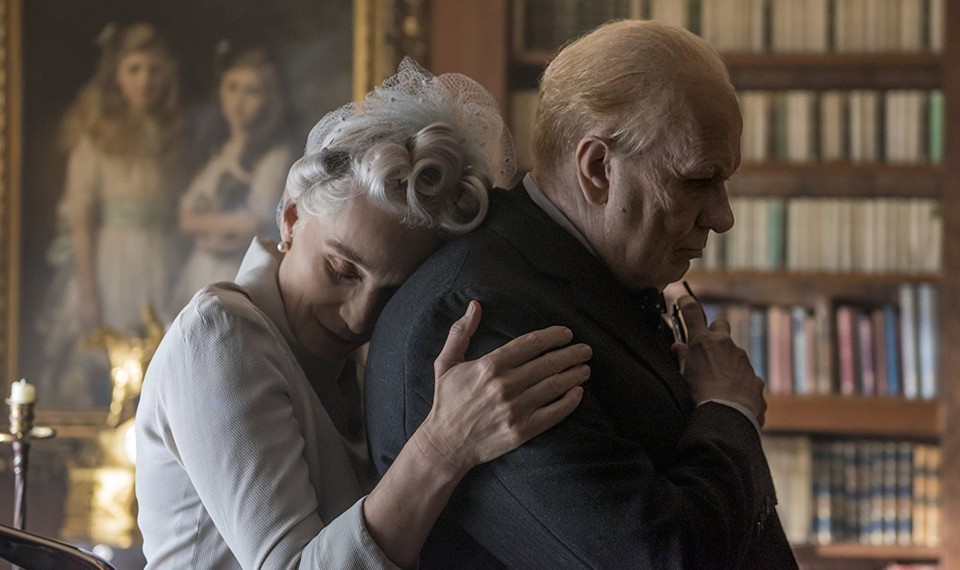
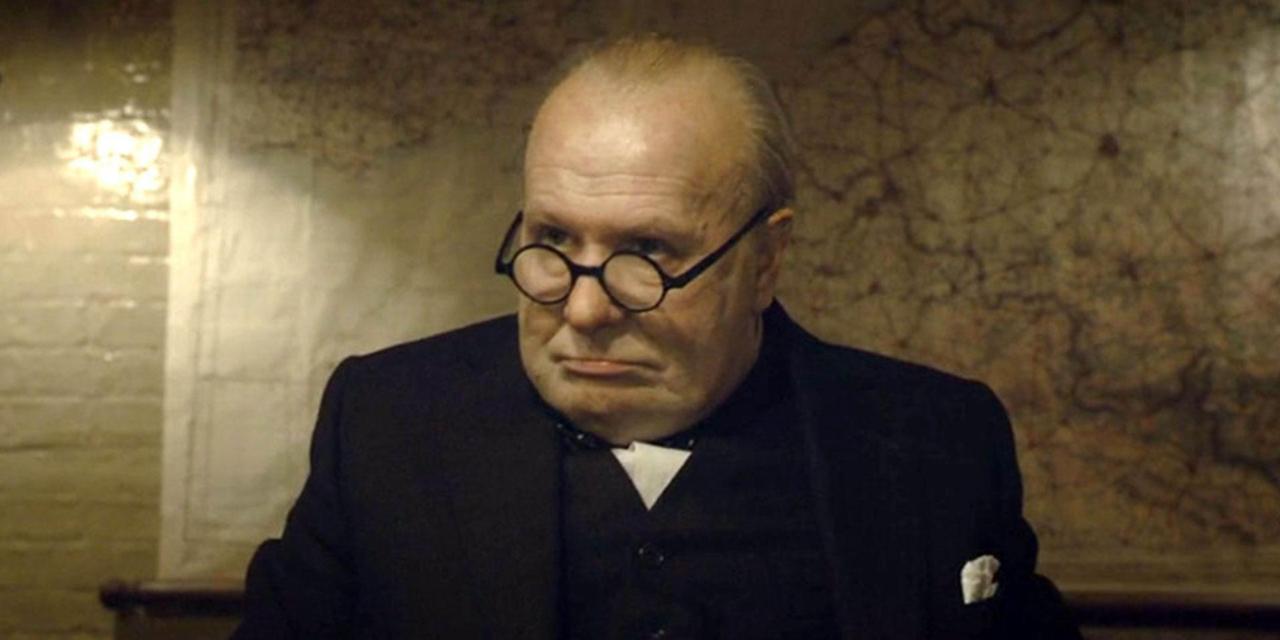
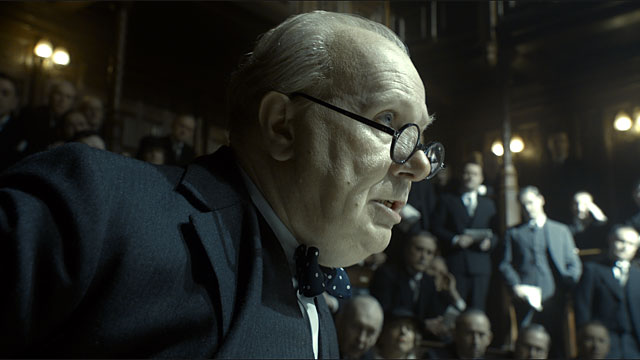
As portrayed in Joe Wright’s beautifully shot microcosmic epic, Darkest Hour, Churchill is presented as a flawed-pink-pyjama’d-cigar-chuffing-blustering-iconoclastic-functioning-alcholic prone to fits of rage, melancholy and depression. He also happens to be devilishly intelligent, full of energy, with a wicked tongue and talent for brilliant oration. Much of the plaudits must go to Gary Oldman, and his make-up team, for creating such a wonderfully human portrait. Indeed, Oldman owns the screen with his damned-near perfect impression.

darkest_3

Anthony McCarten’s fine script centres on a finite number of days during World War II when Churchill became Prime Minister. Aside from one emotionally effective yet historically grating symbolic scene on the London underground, is it well written with fantastic one-liners and Churchill’s greatest verbal ‘hits’. Joe Wright is a talented director (the mis-guided Pan (2015) aside) and he evocatively conveys the shadow of looming defeat. Wright traps Churchill and ensemble in cars, lifts and in underground chambers. Shafts of light also pin the characters to the corners of the screen; pushing them toward the darkness. But through the spirit of Churchill’s never-say-die attitude we fought back against the Nazis and eventually stole victory from the jaws of defeat. War is hell. War is madness. But sometimes it is unfortunately a necessity to prevent the bullies from winning.

Mark: 8.5 out of 11

HEARING STORIES: SOME THOUGHTS AND REVIEWS ON AUDIO-BOOKS

HEARING STORIES: SOME THOUGHTS AND REVIEWS ON AUDIO-BOOKS

Six months ago I was reading a physical book of Joseph Heller’s Catch 22 and I was just not feeling it. Not the actual book as it is a classic novel of our time but the actual activity of reading itself. I just did not want to read anymore. Of course, I can do it but my mind just didn’t have the desire or energy. What did this mean?

Had I been dumbed down and rendered attention deficient by virtue of the constant viewing of films, TV and the barrage of internet viewing. Perhaps my brain had been become punch-drunk and distorted my mind, like an over-the-hill boxer who’d just had one too many fights. It was confusing. I’ve always loved reading and did not want to stop.

So, I thought why not try out the Audio-book route?  What’s the worst that could happen?  I could LISTEN to someone reading the book to me and experience the literature from an aural perspective. I have to be honest – I’m glad I did! Because I have been listening to a number of audio-book productions and they have been very rewarding from all manner of dramatic, artistic, comical and emotional directions. Moreover, I listen to these books while walking and at the gym so my “reading” has become a very pleasing mobile pursuit.

Anyhow, here are some reviews of the books I have been listening to over the past months. If you also listen to audiobooks please feel free to suggest any good “reads” or narrations.

AUDIBLE

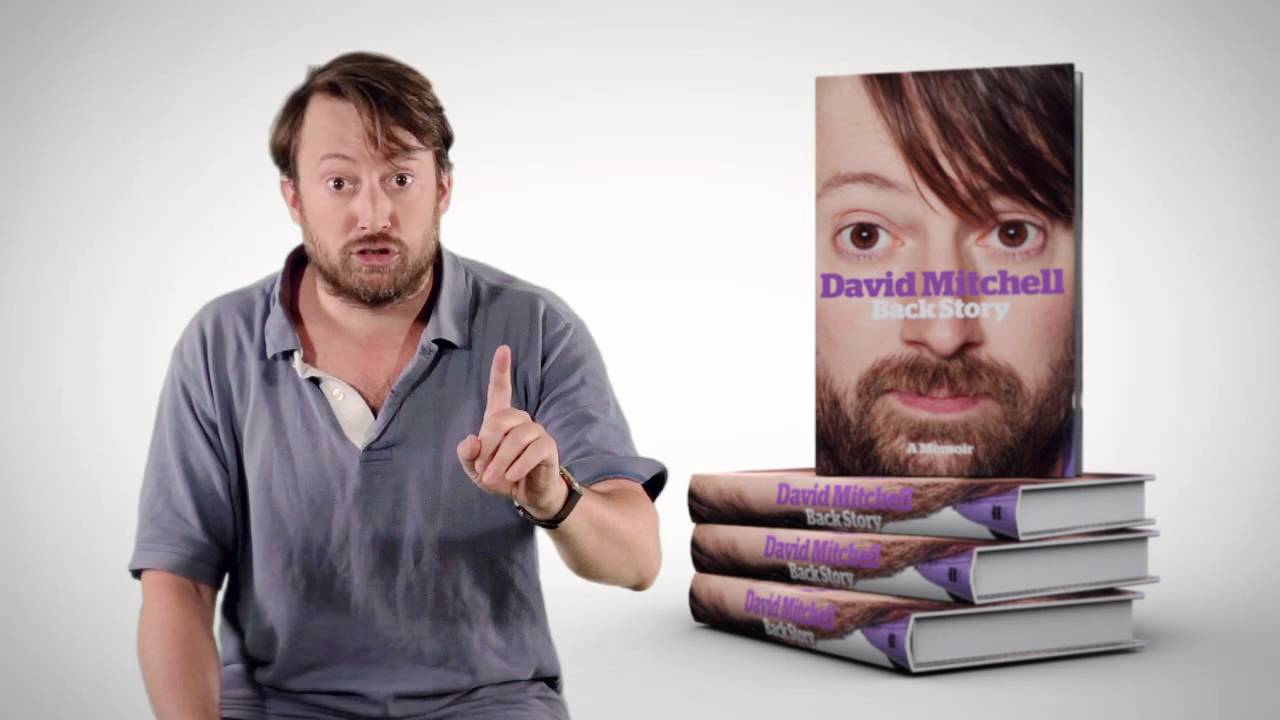
BACK STORY – DAVID MITCHELL (narrated by David Mitchell)

Comedian, actor, panel-show humourist and writer David Mitchell takes us on a literal walk of London landmarks and streets, while also wandering down his own personal memory lanes and avenues. Pedantic, neurotic, angry and insightful in equal measures this is an entertaining and intelligent journey full of hilarious rants and stories relating to Mitchell’s life; one which is blighted, not by personal tragedy, but rather a very painful bad back. His narration too is very funny and listening to him speak is like having your very own personal version of the brilliant comedy show Peep Show in your head.  I especially, from a creative point-of-view, enjoyed his analysis of comedy past, present and the actualities of writing sketches, jokes and performing too.

Image result for DAVID MITCHELL BACK STORY

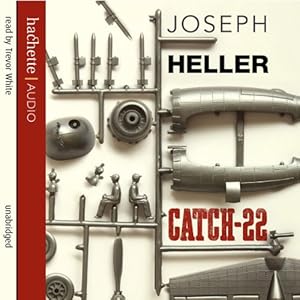
CATCH 22 – JOSEPH HELLER (narrated by Trevor White)

The novel which began my whole diversification into the audiobook territories is a startling anti-war character drama full of tragedy and black comedy, highlighting the folly of humanity during conflict. I was both laughing out loud and crying inside as Heller’s seminal work crashes us into the heart of madness during World War II. Featuring any number of crazed pilots either being killed or trying not to be killed while flying over Italy, this novel expertly takes you up and down and up and down. Heller does this with a meticulously acute writing style and via characters such as the wonderfully named: Yossarian, Milo Minderbinder, Doc Daneeka, Snowden, Nately, Nurse Cramer, Captain Aardvark, Colonel Cathcart and many more lunatics. This is a sprawling insane war-set epic which satirizes and laments the folly and destructive behaviour of mankind, and is all the more relevant today because we still can’t fucking learn to stop killing each other over ridiculous things like money, land, God and love.

Image result for CATCH 22 AUDIO BOOK

DO ANDROIDS DREAM OF ELECTRIC SHEEP – PHILIP K. DICK (narrated by Scott Brick)

Dick’s classic science-fiction novel is better known now as Blade Runner and the film versions are incredibly stylish and powerful genre works. Yet, Scott Brick’s narration of Dick’s source novel is absolutely perfect in its rendition, creating a haunting pathos beyond that featured in the film. The story covers one day in the life of Rick Deckard – an “Andy” or android bounty hunter who must track down a series of superior robots of the Nexus Six variety. The original Blade Runner (1982) film did well to distil and simplify the narrative but it only touched the sides where the complex themes are concerned. The novel is far more involved with subtext relating to: simulations; animal husbandry; Artificial Intelligence; Virtual-reality religious fervour; and the existential pain or humans and robots, being explored within the rotting dystopic, Earth setting.

Image result for do androids dream of electric sheep BOOK COVER

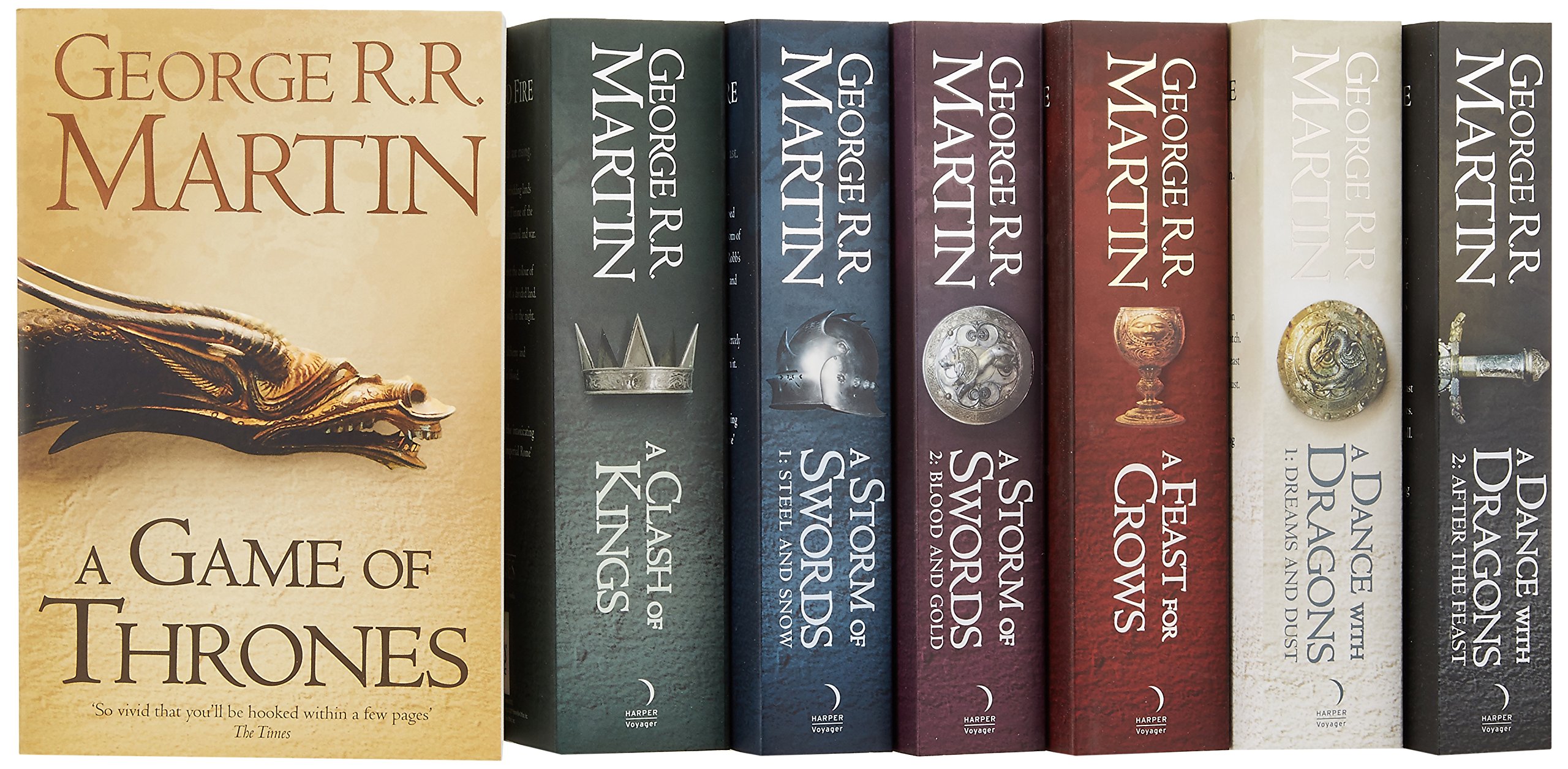
GAME OF THRONES – GEORGE R.R. MARTIN (narrated by Roy Dotrice)

George R. R. Martin’s North-versus-South-Westerosian fantasy epic has provided hours of entertainment via HBO’s massive hit TV adaptation. The original source novel is a literary monster of a book with an over 33 hours running time, so kudos to the talented, yet ageing actor, Roy Dotrice for staying alive during the recording and finding the energy to narrate it. If you don’t know the Game of Thrones TV show, it has become an iconic narrative of Starks versus Lannister’s versus Targaryen’s versus zombies versus dragons and all manner of: lords, ladies, monsters, whores, hordes, henchmen, sorcerers, warriors, Kings, Queens and peasant scum; all fighting and spitting hate at each other for a baying public’s bloodthirsty satisfaction.

The book, of which Game of Thrones is based, is an intricately plotted, brilliantly characterised and action-packed joy. Not for the faint-hearted it is explicit from a violence and erotic perspective and Martin’s writing is believable unbelievability of the highest order. While it may be fantastic in regard to many of the concepts it is grounded in a raw and human reality as the flawed characters conflict with each other in all manner of familial jousting, hearty battling and political chicanery. The book has all the greatest qualities of the television show and much more besides and well worth the many hours it took me to “read”.

Image result for GAME OF THRONES BOOK

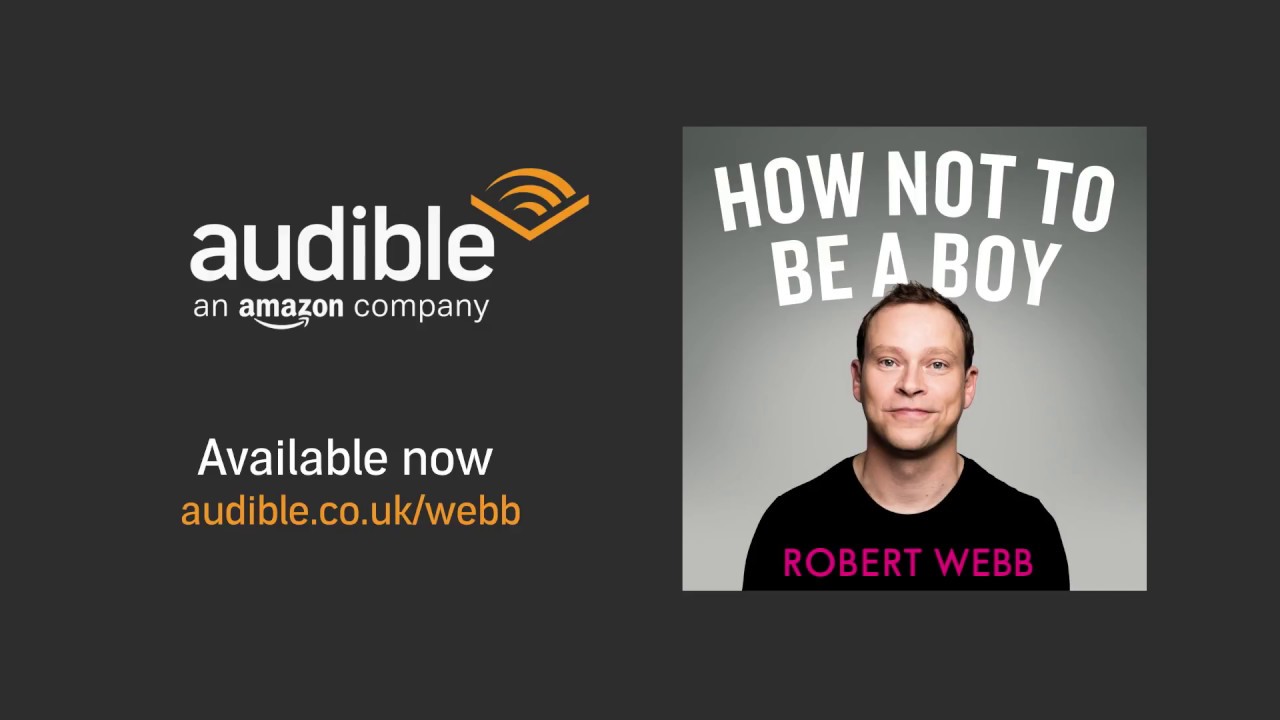
HOW NOT TO BE A BOY – ROBERT WEBB (narrated by Robert Webb)

The other half of the Mitchell and Webb double-act, Robert, narrates his own story with an adept sarcasm, intelligence and over-riding sense of grief throughout. As a big fan of Peepshow, his brilliance as an actor is playing unlikeable-selfish-man-boys with devilish charisma. He’s obviously very funny too and his anecdotes and memories of growing up in a Lincolnshire town and overcoming family heartache before joining the so-called Cambridge academic elite are very honest and personable. I would have liked a bit more detail about his creative process but reading between the lines I felt that it all came very naturally and unpretentiously to Webb. Overall, this is a terrific listen, full of funny and tragic moments; plus given I’m the same age as Webb, his references to televisual, pop, film and comedy culture were immediately recognisable to me, only adding to the book’s enjoyment.

Image result for robert webb how not to be a boy audiobook

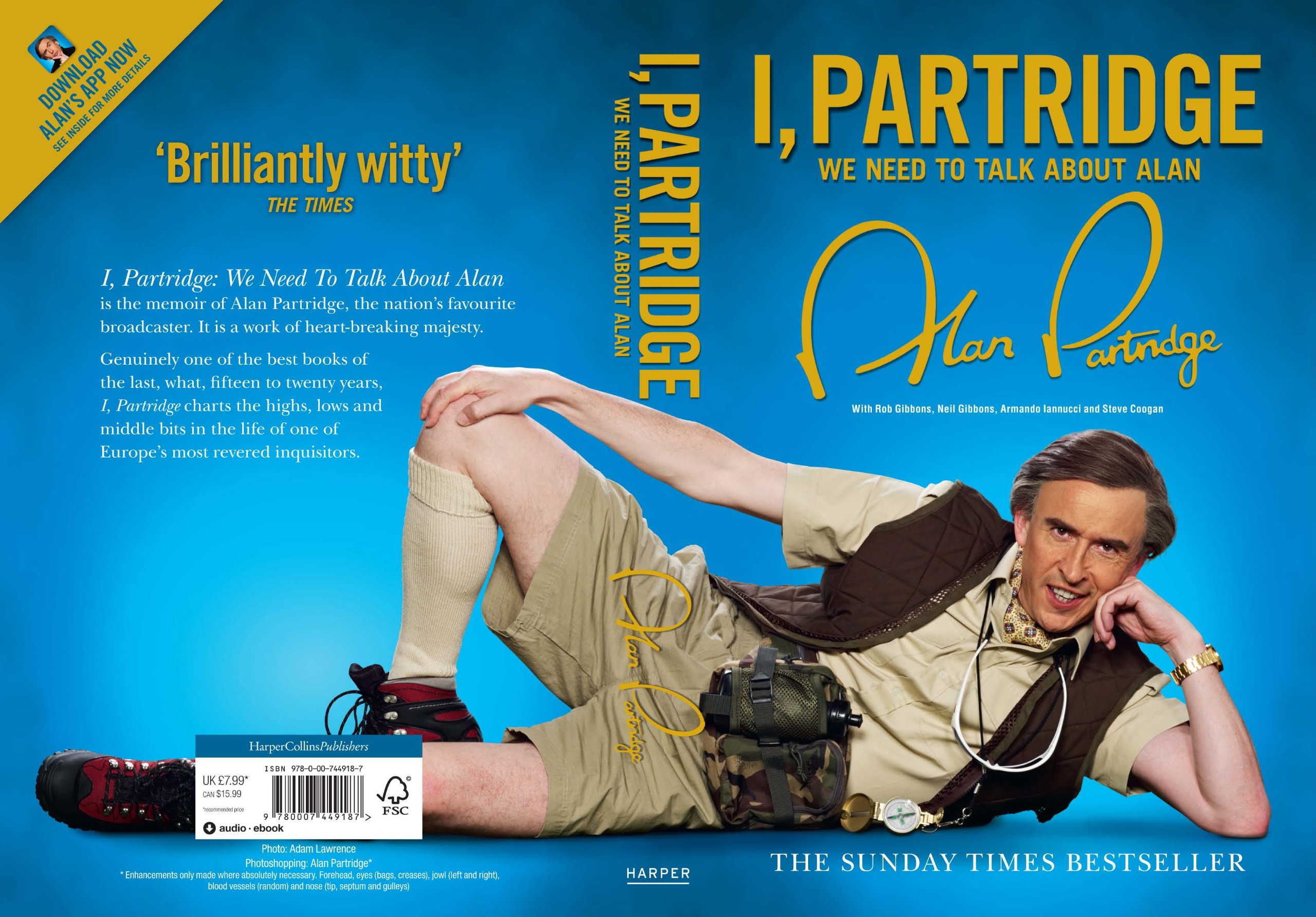
I, PARTRIDGE: WE NEED TO TALK ABOUT ALAN – ALAN PARTRIDGE (read by Alan Partridge)

Steve Coogan’s genius comedy creation Alan Partridge has been part of my life since the 1990s when I first saw him on the brilliant satire show The Day Today. There he presented the sports and would subsequently go on to a kind of greatness as a chat show host on Knowing Me, Knowing You and starring in one of the best sitcoms of all time, I’m Alan Partridge. It is a testament to the acting ability, quality of writing and sheer stamina of Coogan that he continues to mine comedy gold from the hills of Partridge, as it were. Coogan narrates (in the glorious character of Partridge) a fictional autobiography from actual cradle to career grave. It also hilariously covers how he bounced back from the precipice of a chocolate-driven-frenzied-nervous-breakdown-suicide-attempt in Dundee. I have never laughed so much as six hours of comedic gold entered my brain and left me in stitches throughout. This is one of the funniest things I have had the pleasure to listen too; full of bitter rants, vengeful asides, over-elaborate similes and a litany of what I can only call Partridgeisms! Is that a word: well it is now!

Image result for i partridge audiobook

DUNKIRK (2017) – CINEMA REVIEW

DUNKIRK (2017) – CINEMA REVIEW

**CONTAINS MILD SPOILERS**

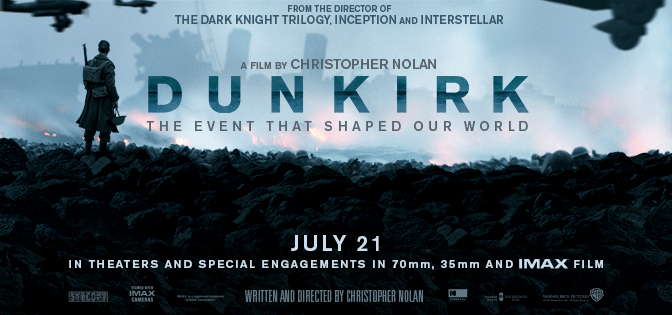
Firstly, the evacuation of Dunkirk, France, during World War II was simply put one of the most incredible acts of survival and escape achieved. From the historical articles and documentaries I have read and seen the Allies were on the ropes and pinned back by the German army causing 400,000 beaten, starving and bedraggled human beings to be trapped on the beach waiting desperately for rescue.  It’s no spoiler to state that many brave people enabled that rescue creating that well-known phrase “Dunkirk spirit” to enter our vocabulary.

dunkirk_1

Put yourself in that position for even just a minute and the fear drains one cold and feeling so lucky that I will never have to feel that threatened. These are people, young soldiers fighting against a fascistic foe who are backed into a corner and whose lives are about to be extinguished. So, think about that when you wake up in the morning because Christopher Nolan’s epic film, as do many other films, books and television shows about the war, give your life meaning about how lucky we are to not have to live through that. Count your blessings you’re not in a war and the life we live has relative freedom.

These and many more emotions flashed through my being while experiencing the incredible epic that master director Nolan and team have delivered via Dunkirk. Throwing us immediately into the action we are shown the hell of war from three perspectives: land, sea and air. Nolan works from a simpler focus and premise compared to his other works and this makes it all the more powerful an experience. Where films such as Inception (2010), Interstellar (2014) and Memento (2000) had complex, shifting narratives relying on heavy exposition, grand concepts and plot twists, Dunkirk deals with one simple sterling idea: survival!

dunkirk7

I found the whole experience immersive and pulsating from a cinematic perspective. Christopher Nolan, and his production team, have in the: editing, cinematography, composition, colour, acting, framing, sound, score and movement created pure and poetic cinema. From the safety of my comfy seat I felt real danger, peril and claustrophobia. The narratives’ drive comes from fragmented moments of fear and blasts of explosive danger. The impressionistic style was full of scenes containing quiet doom as well as noisy, confusing and fiery terror. Even the smallest situation such as the locking of a cabin door takes on great significance, sending a chill down the spine. As the enemy closes in from above and below and water fills the screen and lungs of our heroes, then death moves in for the kill.

Nolan eschews the solid build-up of traditional characterisation to create emotion through the visual form with a chopping style which serves to heighten the panic. There are so many haunting images as men and boys are stuck behind doors and ships and in boats and underwater and in the air and on moles and piers, compressed, suffocating and unable to breath as bullets, torpedoes and bombs pepper their souls. The coruscating soundscape, montage and hypnotic score from Hans Zimmer only add to the dread within the non-stop action. The dialogue is spare and at times muffled as character development is also sacrificed due to the compressed timeline. Yet, for me, empathy was garnered through verisimilitude, form and style rather than a conventional storytelling and a simplistic three-act transformational arc.

hardy_dunkirk

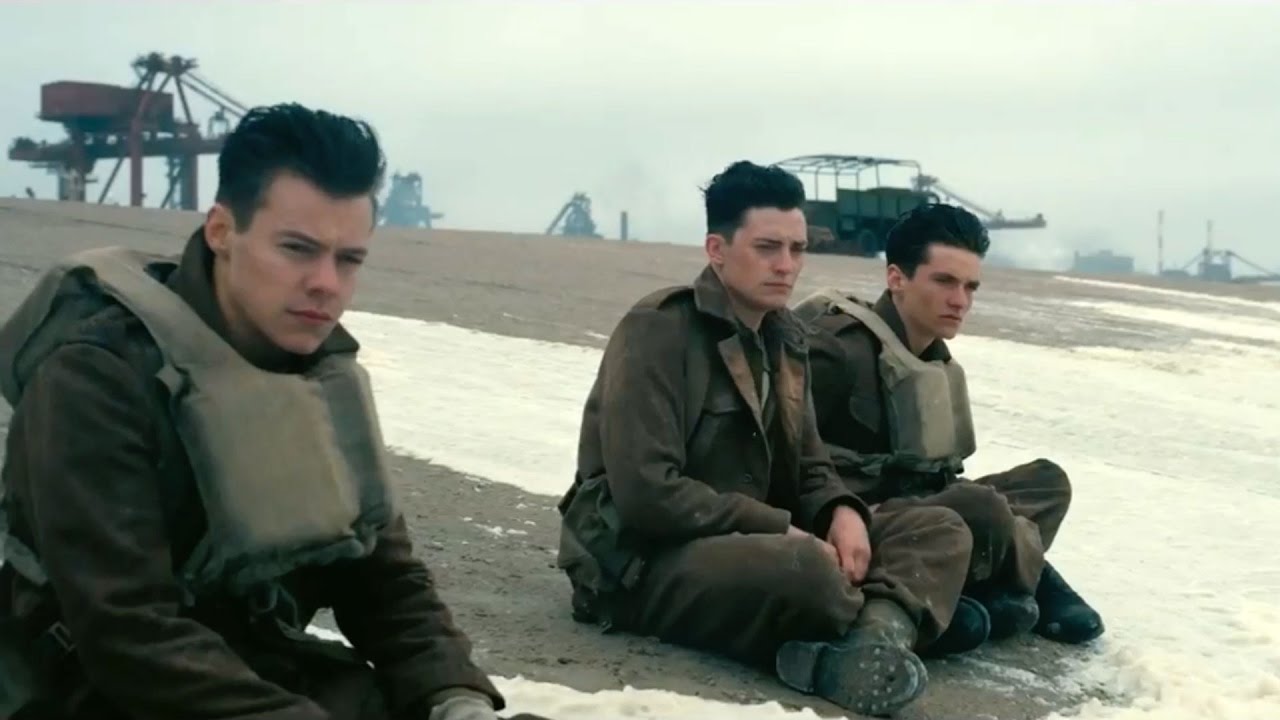
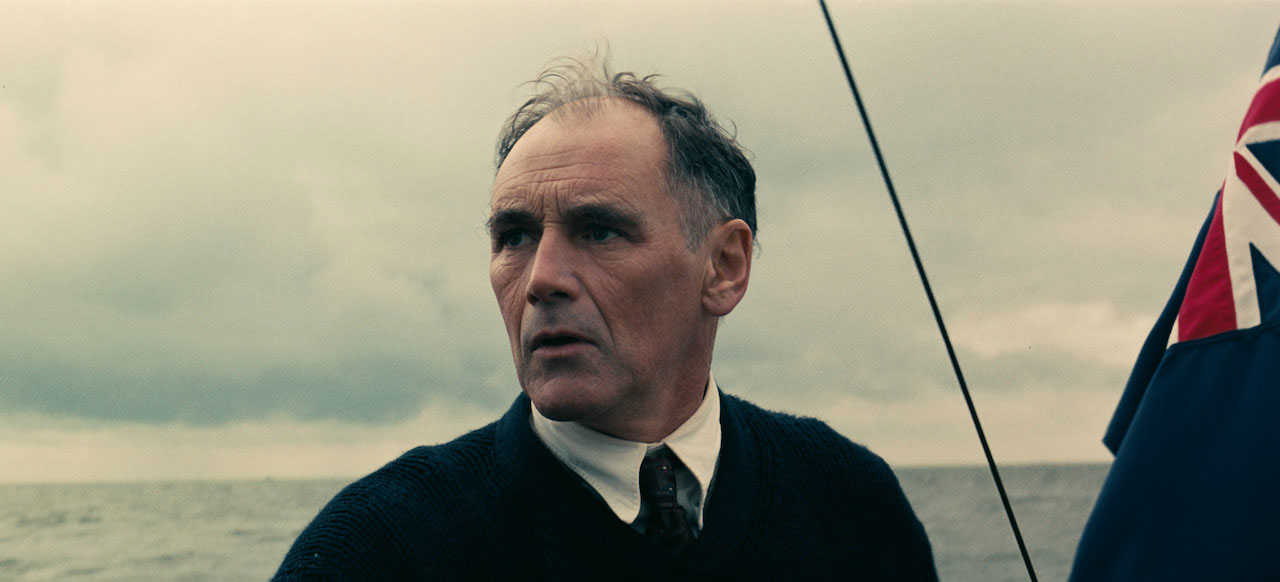
The characters are archetypes but serve the story very well. Kenneth Branagh’s noble sea Commander brings gravitas while Mark Rylance brings a naturalistic humility to the stalwart and duty bound Mr Dawson. Aneurin Barnard’s silent soldier allows his haunting eyes to dominate, while the pathos emitting from Barry Keoghan’s young George is incredibly powerful. Fionn Whitehead and Harry Styles, while inexperienced actors, represent the palpable fear any young man would exhibit when faced with certain death. Tom Hardy adds star quality in his role of RAF pilot, Farrier, and the image at the end of his plane burning in the sunset is indelibly etched in my mind.

But, overall the film belongs to the masterful direction of Christopher Nolan who, in delivering 106 minutes of pure dramatic exhilaration demonstrates he is more than just a genre filmmaker but a cinematic artist echoing the works of Sergei Eisenstein, Martin Scorsese and Stanley Kubrick within this war and disaster film masterpiece. Dunkirk was a savage defeat for the Allies but it rallied the nation against the enemy and Nolan has produced a film that stands as a worthy tribute to those who lost their lives and those brave people who survived.

(Mark: 10 out of 11)

TEN THINGS I HATE ABOUT YOU #5 – POLITICS

TEN THINGS I HATE ABOUT YOU #5 – POLITICS

With a General Election coming up I thought I’d diversify my post and continue my Ten Things I Hate About You series which to date includes reasons why I hate: Zach Snyder, the Cinema, Found Footage films and Movie Hair!? So I thought why not write a slightly more serious one about politics.

I don’t propose to be an expert on these things so most of these thoughts are emotional and scattered blasts at the system. It’s just a rant more than anything so please don’t take it too seriously. What with another General Election coming up I feel saturated with all things political and the massive changes to come with the cluster-fuck of BREXIT!  So this is just me letting off steam.

politics.jpg

Politics divides!

In the U.K. we have two main political parties – Labour and the Conservatives – who fight and bitch each other and switch places every four years or so and end up undoing the work the previous party had done. I realise it is a bloody tough thing to run a country but just wonder whether this the best system we have?

I mean why can’t we join together and work as a collective rather than in constant conflict. Can we not put aside our differences to work toward a common goal? The current system pits us AGAINST each other – left versus right and up versus down and black versus white and green versus blue! Divide and rule seems to be the favoured system to maintain the status quo! Could this change or am I just dreaming!?

Image result for left versus right politics

Politicians are liars!

This isn’t a simple criticism – this is almost a necessity for survival. Imagine if you had to run the country you have to lie because if you told the truth then you’d probably create wholesale panic across the country. Politics seems to thrive on fear but not hysteria thus lies and manipulations are fed via the politicians and the media to arguably control the populace. What does drive me nuts though is the hypocrisy that ordinary people must live their lives to a certain standard while those in power lie and cheat and get away with it.

Image result for politicians are liars

I mean, how many crimes and lies have been committed by politicians and either covered up or, aside from the odd scapegoat, avoided legal incarceration. How many campaign lies have been told in order to gain power? Perhaps they aren’t lies in the first place but naïve beliefs they can change things for the better? Maybe politicians are just all honest and never fiddle their taxes or expenses? Oh, hang on a fleet of pigs just flew by my desk as I type this?

Politics as a necessary evil!

The biggest anxiety I have quite often is that we may have to accept that this is the best system we have!  I mean my life is very good. I have food, a roof over my head and my family are doing okay so I have little to complain about. However, political decisions the world over are doing severe damage to the environment, the poor and the society as a whole. However, there are many good things certain governments achieve such as in the UK. Over time we have achieved a general standard of living which, for the majority is good. Plus, while crime and corruption occur regularly we’re not in the Wild West or back in the Dark Ages. So, the scariest thing could be that politics and democracy do work to some extent. Even with the food banks, austerity, overseas conflicts and Brexit on the horizon maybe this is as good as it gets! Gulp!

Image result for politics necessary evil

Politics is Big Business!

The system we have seems to favour big business over the working person.  But it’s always been like that I guess. This thing called capitalism is a survival-of-the-fittest-driven-by-greed ideology. Politics is fed by the banks and corporations and vice versa the banks and corporations feed the politicians at one massive trough! Moreover, politics itself is a big industry. Labour and Conservative Parties employ many people and elections create many employment opportunities. But they also receive hefty donations from corporations and Trade Unions. So, is it really an impartial and democratic system? Besides, even the most basic history books will show our society is grounded within a feudal system where peasants tend the land and keep of the Lords and Ladies in the high castles. Thus, politics essentially is global gangsterism and run by the big bosses.

Image result for evil politicians

Power corrupts absolutely!

Well, where do you start!?  Okay, so mostly I think there are many politicians who try to do good but many do not go into it to represent the people. They go into it to represent their own best interests. Because, I believe, the edict that power corrupts and absolute power corrupts absolutely to be true!  Hitler is probably the most horrific example of this. So, while I am far from being a fan of politicians I also feel that the system itself is flawed. Of course the democratic system we have has been in place for centuries and even when you change it as the Russians did circa 1919 the idealism and hope the change ultimately gave way to Stalin’s dictatorial regime. So, perhaps it is humanity which is flawed and not simply politics; power is an addiction and as such must be handled very carefully.

Image result for evil politicians

Politicians are Evil!

Whether they set out to be or became that way the likes of: Thatcher, Hitler, Stalin, Bush, Blair, Franco, Mao Zedong, Mugabe, Saddam Hussain, Mussolini, Gaddafi etc. have in their own way made decisions that have caused the death of many, many lives and communities over the years. How they have been able to live with themselves is beyond me as I feel bad if I accidentally step on a bug. My theory is that some politicians and leaders must have the psychopathic tendencies of serial killers, because how they sleep at night is beyond me.

Image result for evil politicians orwell

Politics = War!

How many wars does politics cause?  Well, along with religion, loads of them!  Be it fighting the rise of fascism; attempting to defeat communism; conflict over territory and resources; and the current war against terror are just a fraction of the kind of conflicts we have had in the last century or so. The worst excuse we’ve had lately is when the powers-that-be argue that the war is necessary for humanitarian reasons. We’re constantly fed a diet of misinformation by the puppet-masters and even rallying against it gets ignored; as seen when Blair’s Labour government disregarded over one million protestors to take us into another war in Iraq. What a liberty! Oh, no – it wasn’t liberty but more death and destruction!

Image result for politics blair war

Media saturation!

Oh my God what with Brexit and now the General Election hovering like a giant eagle about to lay a big brown rotten egg over the nation I’ve kind of already had my fill of politicians asking for my vote. Elections are just a big pantomime of lies and big clowns telling us how they’re going to make things better when really we know running a country is all about damage limitation.  I guess we have to have the illusion of democracy as the alternative is anarchy and a possible ‘Mad Max’ future where everyone is fighting over oil and gasoline. Hold on that’s just like now!! Aaarrggghhh!! I just want the election to be over!

Image result for videodrome

Personality Politics

What really annoys me is when Politicians get defeated at elections or retire and then go on to become celebrities or reality TV stars!!  Because a plethora of insipid excuses for human beings have used their once political power to carve out careers on the television e.g. Ed Balls, Anne Widdicombe, Michael Portillo to name a few have now humanized themselves as reality stars or travelogue celebrities and it sickens me.  It actually worked the other way round with Donald Trump, the billionaire reality TV show businessman has, god help us, somehow become United States President. Stop the world I want to get off!

Image result for ann widdecombe strictly

Douche and Turd Politics!

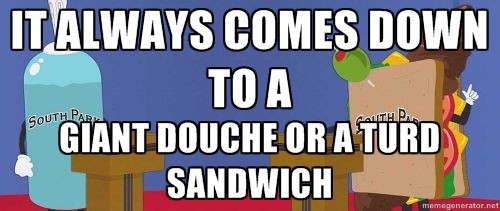
South Park has it right all along – all we have when we vote is a choice between a Douche and Turd – so why vote?  Because I am stupid and human I am still optimistic on occasions and maybe I can actually make a difference?! So I will vote as people lost their lives for the vote and democratic change! But who will it be this year: the Giant Douche or the Turd Sandwich? What a choice?!  I guess overall we’re lucky we still have a choice.

Image result for douche and turd

MOVIE REVIEW: KONG: SKULL ISLAND (2017)

MOVIE REVIEW: KONG: SKULL ISLAND (2017)

**THERE BE SPOILERS AHEAD**

kong2

Of late I have watched a plethora of heavyweight Oscar-driven dramas such as: Arrival (2016), Manchester by the Sea (2016), Fences (2016), Hacksaw Ridge (2016) and Moonlight (2016) and the cinema-going experience was in danger of becoming far too thought-provoking a place to be. I mean I like using my brain but I was seriously getting over-worked here. Even feel-good films such as La La Land (2016) were pretty complex in their whip-bang delivery, while the bio-pic Hidden Figures (2016) dealt with issues of racial segregation and empowerment during the space race. Thankfully, my brain can take a rest from such challenging dramas as first John Wick 2 (2016) and Kong: Skull Island (2017) have come to save the day with some good old-fashioned-fast-paced-B-movie-bloody-genre-action.

KONG: SKULL ISLAND

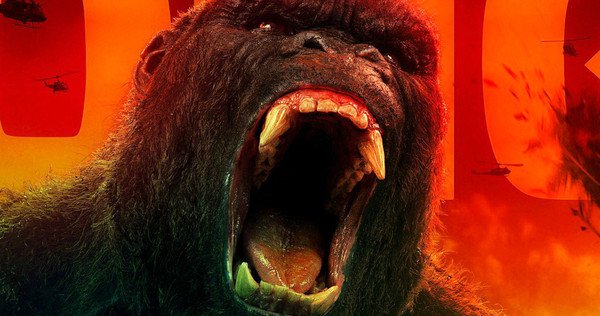
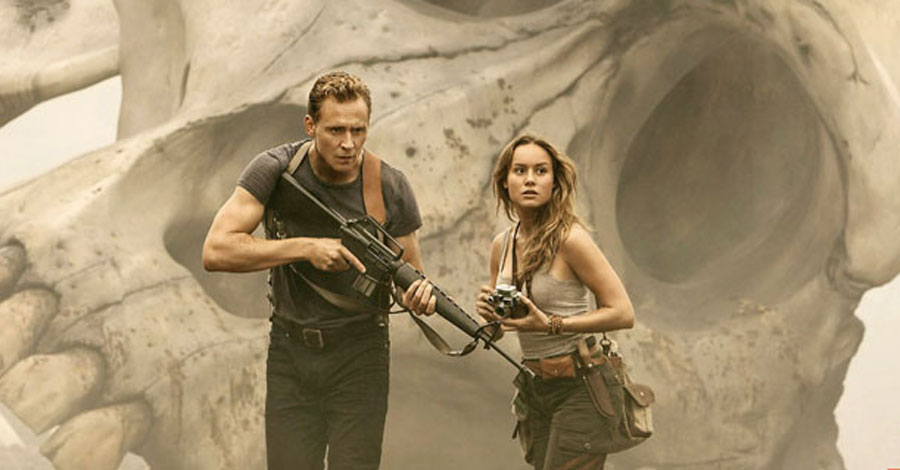
Kong director Jordan Vogt-Roberts and platoon of screenwriters have constructed a thrilling monster movie which is low on plot but high on pyrotechnics in a cinema blast which they should have called APOCALYPSE KONG!!  The story, if you can call it that, involves John Goodman’s murky conspiracy theorist embarking on a “surveying” mission of an island which rarely shows up on radar. Plus, it looks like a skull on a map AND pretty much every boat or plane which goes near it vanishes. So, enter at your peril!

kong

Personally, I probably would not choose this as a holiday destination yet Goodman manages to gather an army consisting of United States marines who’ve just that day finished fighting in Vietnam. These battle-weary veterans led by Samuel L. Jackson, Shea Wigham and Toby Kebbell should probably go home but Jackson’s Lieutenant-Colonel Packard has some old testament vengeance business he needs to re-enact. Meanwhile, anti-war photographer Brie Larson and SAS mercenary Tom Hiddleston also join the crew too along with a generic bunch of scientists and military grunts all destined to be Kong fodder!

Kong-Skull-Island1

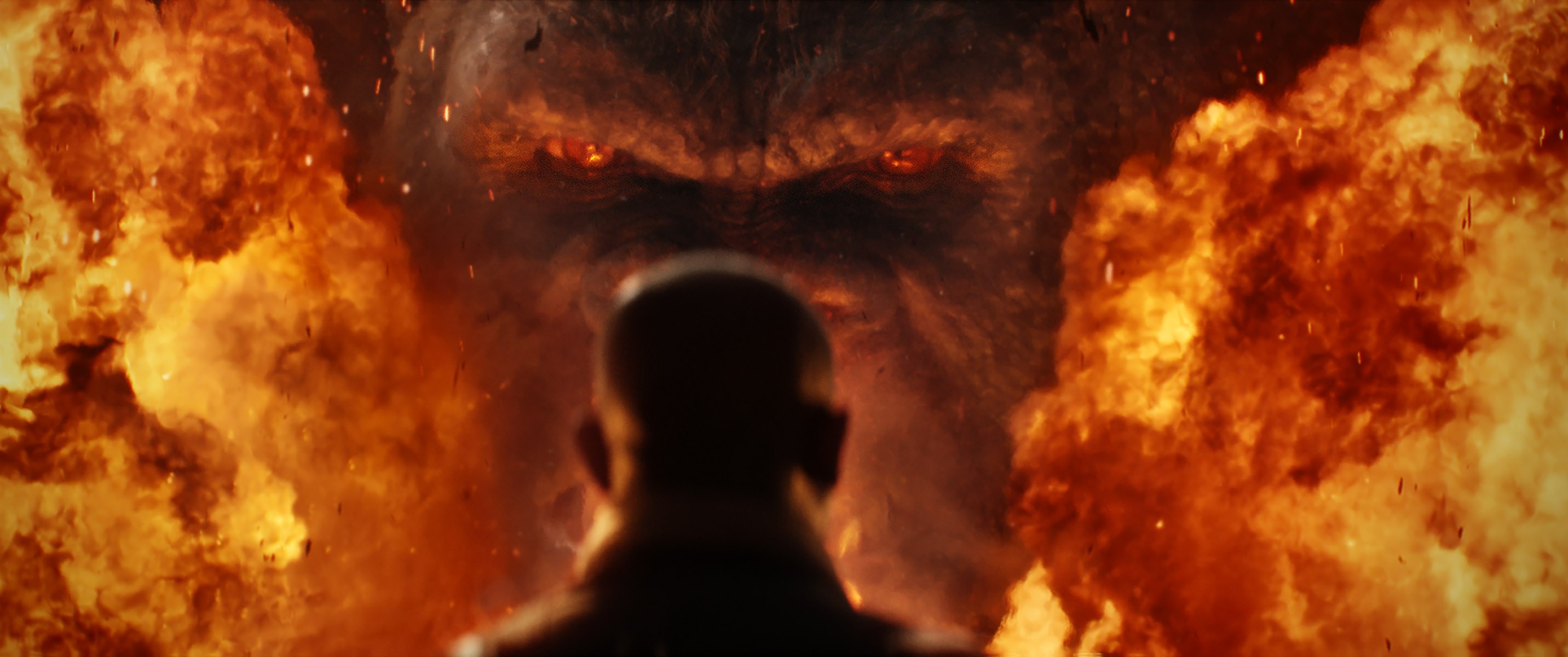
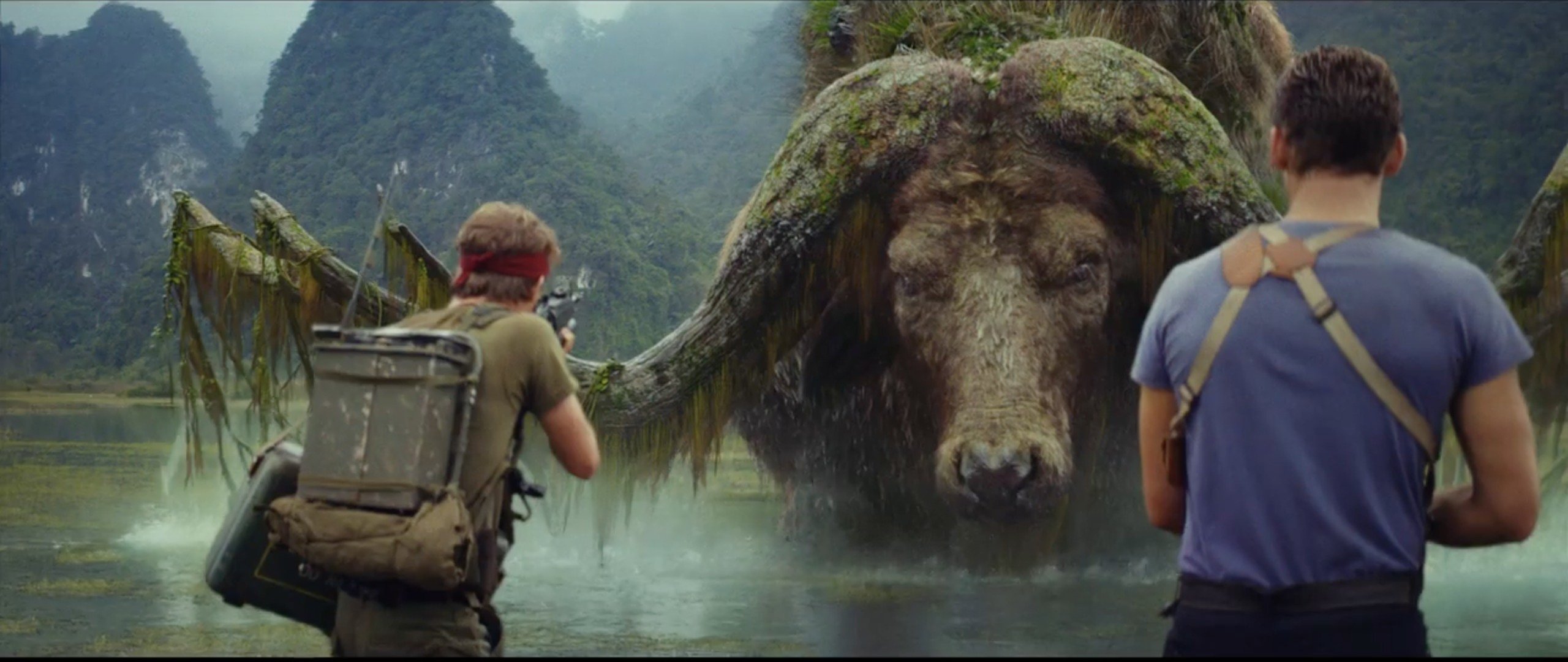
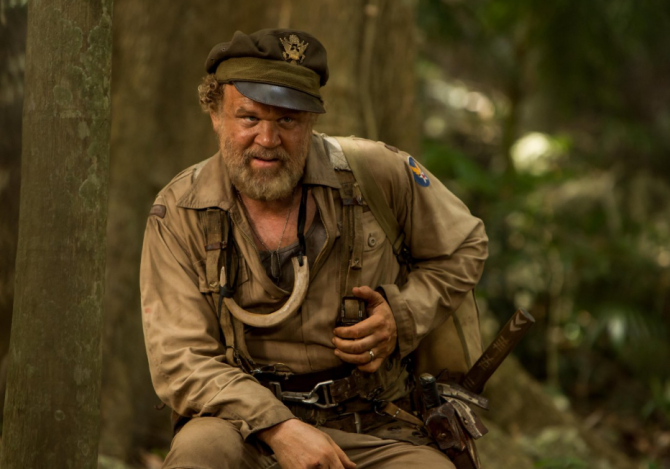
Now, I wasn’t a massive fan of the most recent Godzilla (2014) film –  my review here testifies – as it did not have enough of the monsters or action and was WAY too serious. Skull Island is a totally different beast altogether. You get monsters galore from the get-go and of course Kong is the King, as he finds his eco-system invaded by humans and their big weapons so he fights back with hairy, muscular abandon. The humanity and humour of the film is provided mainly by John C. Reilly’s WW2 soldier who has gone bamboo with the natives and his story arguably has the most emotion. But the real stars are the tree-monsters, subterranean creatures, Pterodactyls, giant Squids and Spiders, which along with Kong, leap out of the screen at regular intervals dining on humans for breakfast, lunch and supper.

johncreilly.png

Overall, the film wears its’ Jurassic-Park-Hell-In-the-Pacific-Lost-World-Predator-Apocalypse-Now-Godzilla influences on its gigantic jungle sleeves. So it’s safe to say I had a lot of fun taking my brain out and watching the fireworks and monsters in this B-movie behemoth. The story is uneven and characters paper-thin but the gorgeous imagery, fun action set-pieces and a very attractive cast including Hiddleston, Larson and Corey Hawkins, plus the off-kilter mania of John C. Reilly make it worth the admission alone. (Mark 8 out of 11 – for the monsters and mayhem mainly.)

WAR AS HEAVEN AND HELL! HACKSAW RIDGE (2016) REVIEW

WAR AS HEAVEN AND HELL! HACKSAW RIDGE (2016) REVIEW

**CONTAINS SPOILERS**

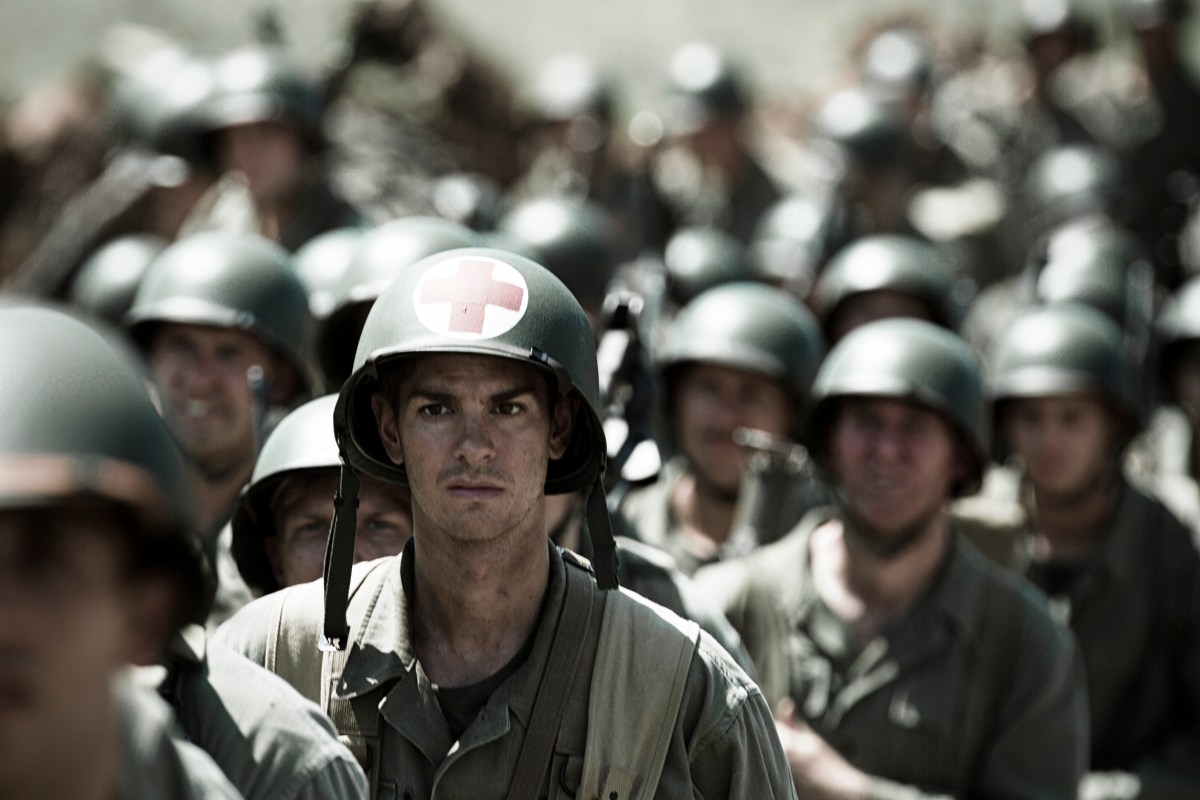
What is it with Andrew Garfield and his battles with the Japanese, armed only with his faith?  In a thematic replica of the compelling drama, Silence (2016), Garfield leads the cast of Hacksaw Ridge (2016) by portraying 7th Day Adventist, Desmond Doss, who while compelled to serve his country during World War II, declines, on principle to pick up a rifle and kill. He wants to save lives not end them. Now, I, as a screenwriter feel this is a fantastic base for drama and suspense; and so it turns out to be, in a rip-roaring, inspirational, bloody and heroic war film.

hacksaw_bible

Hacksaw Ridge is classic Hollywood filmmaking par excellence. Andrew Garfield’s Doss is a humble everyman we can all root for as he contends with a drunken father, and then with army training as colleagues and superiors fail to recognise his religious stance. In the final lengthy battle scenes he then faces the Japanese, along with his unit, as they clamber the eponymous Hacksaw Ridge in an attempt to gain control of Okinawa. This is where the action really takes off as the gruesome war scenes create an astounding flurry of bombs, shots, bullets-on-tin-and-bone and whooshing flame-throwers searing the skin of men. All produced by both sides apart from Doss who, incredibly without a rifle, saves many, many lives.

hacksaw-ridge1-photo-credit-mark-rogers.jpg

Mel Gibson the storyteller doesn’t do grey areas in his narratives. Black is black; white is white; good is good and the Japanese are just plain bad. Indeed, this film reminded me of the good old-fashioned war epics of yesteryear such as Howard Hawks’ Sergeant York (1941) starring Gary Cooper. Moreover, the brilliant constructed action sequences echoed the kinetic majesty and orgiastic bloodbaths of Saving Private Ryan (1998); as well as the director’s own work in Braveheart (1995).

mel-gibson-hacksaw-ridge

Andrew Garfield inhabits the character of Doss perfectly exuding a homespun goodness and religious core which at no time feels sappy. He is ably supported by an excellent cast including: Hugo Weaving, Sam Worthington, Rachel Griffiths, Luke Bracey and scene-stealer Vince Vaughan. While the characters are essentially binary archetypes, the film stands ultimately as a formidable war film with suspense elements. Because we care so much about Doss, the tension is incredible during many nerve-jangling moments; and especially when he’s in the rat-infested Japanese tunnels.

hacksaw1

Given Mel Gibson’s controversial history especially when it comes to alcohol-related domestic fights, rants and convictions, he is no doubt looked at suspiciously by the public and filmmaking community. Thus, it meant he would have to produce something special to redeem his reputation in Hollywood; so a Best Oscar Director nomination aids his comeback. Yet, while this film does not represent total redemption for Gibson personally, he once again proves his value as a worthy movie-maker. Overall, via Doss’ heroics, Gibson, his writers, cast and crew demonstrate that war is hell but with such acts of compassion for humanity, Doss showed, it can represent a fragment of heaven too.

THE TIN DRUM (1979) – CLASSIC FILM REVIEW

THE TIN DRUM (1979) – CLASSIC FILM REVIEW

**THIS REVIEW CONTAINS SPOILERS**

I’d never seen this film before and am so glad I did because it now in my top twenty best films I have EVER witnessed. It is a tour-de-force of writing, directing, acting, design, narration, humour, drama, sound and imagination. Based on Gunter Grass’ exceptional novel The Tin Drum – directed by Volker Schlondorff – it is set in the realistic backdrop of post-World War 1 Germany, and during World War 2, before veering into magical realism and surrealism to present a giddy allegorical tale of some wonder.

The comical opening contains a prologue which sets the ambiguous tone of humour and darkness.  It establishes the ancestry of our leading character Oskar Matzerath (amazing David Bennent) and clearly echoes and influences current filmmakers such as Paul Thomas Anderson, the Coens and Wes Anderson with its’ curious oddity. From there on Oskar himself enters the world and while initially reluctant he is forced into life and what a life that is!

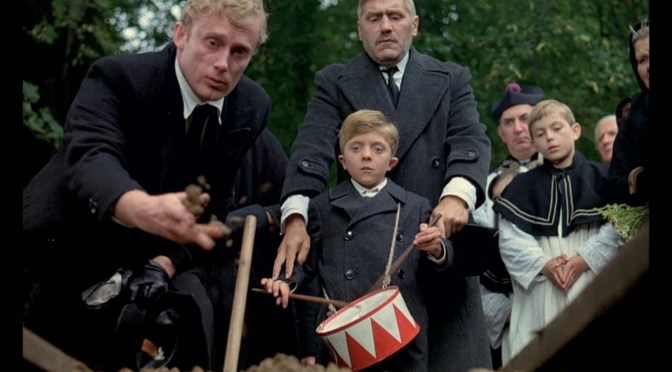
Born with the mind of an adult, at the age of three, Oskar decides that he will NOT grow up for as long as he chooses. Anyone who crosses him is subject to a visceral scream which is loud enough to shatter glass. In addition, Oskar also smashes a tin drum incessantly revealing a psychotic pathology which disregards the pain and suffering of those around him. My reading is that Oskar is representative of the rise of fascism and Hitler in these difficult socio-political times for Germany. This idea is further supported by the fact his mother has two men chasing her affection; a gruff German grocer, Alfred, and gentler Polish man, Jan; and either could be Oskar’s father. These are divisive and confusing times for Germany, and a child, especially one who is as precocious, strange and violent as Oskar.

The meat of the film is continual conflict, death and dark situations. The scenes on the beach with eels being captured using a dead horse’s head is full of symbolism and a black humour I will never forget.  More conflict for Oskar ensues as he rejects all authority including religion.  When his mother dies, seemingly from overwhelming guilt, and his friend, a Jewish toymaker, commits suicide following Nazi oppression, Oskar’s life is further stained by death. Latterly, the film enters a stage where – while he is still physically a three-year-old – he hits puberty and become sexually active. The explicit sex scenes involving Maria, a sixteen year old shop girl, are disturbing and unforgettable and this leads to further conflict with Oskar’s father who eventually marries Maria.  Anger and jealousy provokes Oskar so much he literally runs off with the circus and becomes part of a troupe that entertains German soldiers during the war. It is not long though before further tragedy strikes and his strange romance with dwarf singer Roswitha, ends suddenly with her demise.


The Tin Drum is intense, visceral and brave filmmaking. While it uses history as a backbone, its’ muscle, skin and clothes are eccentricity, allegory and insanity. It was one of the most financially successful German films of the era and won the 1979 Oscar for Best Foreign Film. I guess I missed it because it is rarely shown on television, no doubt due to the controversial sex scenes involving 11 year-old Bennent. Overall, it is one of the most original stories I have seen on screen and the child actor who played Oskar was a revelation. I have rarely been so horrified, moved and made to laugh as much as I have by a recent cinema visit. I would heartily recommend this film to anyone serious about making films and those who demand intensity in their cinema viewing.


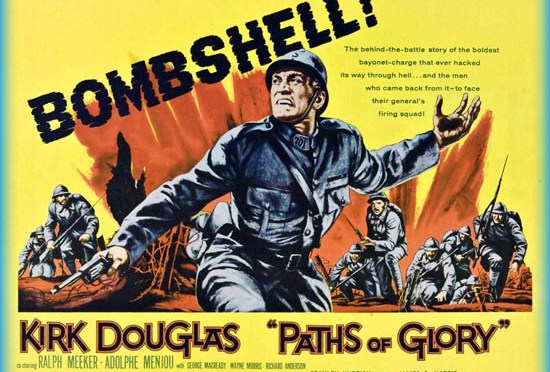
PATHS OF GLORY (1957) – CLASSIC FILM REVIEW

PATHS OF GLORY (1957) – CLASSIC FILM REVIEW

The boast of heraldry, the pomp of pow’r,
And all that beauty, all that wealth e’er gave,
Awaits alike th’inevitable hour.
The paths of glory lead but to the grave.

Thomas Gray, 1751

pathsofglory_2900189b (1)

Stanley Kubrick is the greatest filmmaker who ever lived. That is a fact.  He made films in all genres but indelibly stamped his own genius on the war, comedy, thriller, horror, satire, crime, science-fiction, historical and drama films he adapted and created for the big screen. His work contains a litany of iconic images, searing soundtracks, stupendous performances, great intelligence and provocative thought which ensures his films linger in the memory of those who have witnessed them. All hail a true cinematic master.

Paths of Glory (1957) was Kubrick’s fourth feature film and certainly his biggest budget film to date. His previous film had been a B-movie crime masterpiece called The Killing (1956), which meticulously examined the planning, progression and aftermath of a racetrack robbery. Using a documentary style and surgically precise narrative structure The Killing is indicative of Kubrick’s subsequent ability to reinvigorate a genre with his masterly eye. However, Paths of Glory was, emotionally speaking, even more powerful than The Killing.

Image result for stanley kubrick paths of glory

The story is set in France, 1916, during the heated battle and burning mud of WW1 trench warfare. World War I is rightly (and then wrongly) thought of as the war to end all wars with millions of soldiers and civilians losing their lives in a coruscating damned hellish indictment against humanity. As if the incredible number of deaths between the warring factions were not enough the powers-that-be would also shoot their own men for cowardice and desertion believing this to be “good for morale” or at very least a warning to those who refuse the fight. This is the frankly insane setting for this formidable dramatic tale.

The main action concerns the court martial of four men chosen, apparently, at random to face a firing squad following a botched attack on a key enemy position called the ’Anthill’. War is a desperate prison even at the best of times but here the men are shown as broken, battered, starving, shell-shocked and on their knees spiritually even before the attack. When the suicide mission unsurprisingly flounders, ambitious and sociopathic General Mireau – portrayed with venal glee by George Macready – proclaims death to all who failed the glory of France. The seemingly more reasonable, yet equally poisonous Major General Broulard (Adolphe Menjou) lowers the numbers to be shot in a chilling scene that reduces human life to no more than barbaric bulls-at-a-market bartering.

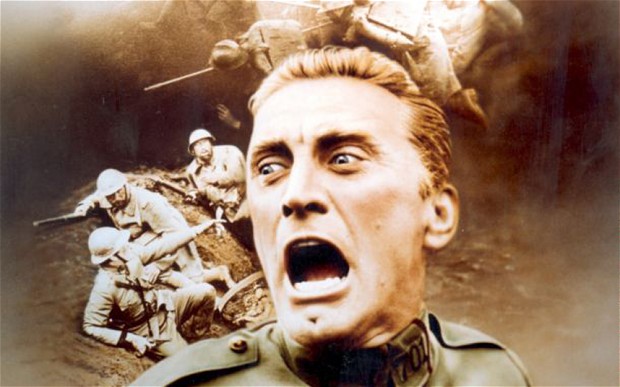
The voice of reason amidst all this insanity is Kirk Douglas’ former-lawyer Colonel Dax; who himself was part of the failed raid on the ‘Anthill’ and could testify to the impossibility of the task. Dax is the audience’s conduit to the madness of those in charge; from the: choosing of one soldier by lots; the farcical trial and even the final execution where one unconscious soldier is woken up only to be shot dead moments later. Douglas is imperious in the role demonstrating a range of emotions from incredulity, despair, anger and a powerful sense of the righteousness. The final heart-breaking scene where he gives his men a few more minutes listening to the folk song tells us Dax is a sane man in an insane world run by psychopaths. The song is delivered hauntingly by the captured German girl (the actress Christine Harlan was later to become Kubrik’s wife) to men who are destined to die in the barbed-wire brutality of war.

Kubrick’s work (Barry Lyndon, Dr Strangelove, Clockwork Orange to name a few) is full of damning critiques of the upper classes, high falutin politicians and war-mongering men who use the working or lower classes to do their filthy bidding. In this film they are represented by Menjou’s politically-driven Broulard who sits comfortably in his Chateau quaffing wine and scissoring quail; all the while brave men are skewered in battle. Full of tragedy, wicked satire and black humour the screenplay based on Humphrey Cobb’s novel is eighty-eight minutes of sheer cinematic perfection, power and heartwrenching injustice and emotion.

Quite rightly Paths of Glory has been proclaimed a masterpiece and one of the greatest anti-war films of all time. Filled with the now-iconic tracking shots of bloody battle, plus many tremendous performances notably Macready, Menjou, Douglas and the scene-stealing, druggy sop that is Timothy Carey. Overall, I have watched this classic many times when young and having seen it on the big screen at the BFI recently I can testify that it has lost NONE of its grandstanding power. Forget the insipid blockbusters of today and revisit the master of cinema where and when you can: his name is Stanley Kubrick.

SCREENWASH REVIEWS– MARCH 2016

SCREENWASH – MARCH 2016

March is a looonnngggg old month and I have watched a shedload of shows and films; so it’s a quick wash and go through my monthly review round up. As usual marks are out of 11 – do enjoy!

**DEFINITELY MAY CONTAIN SPOILERS** 


FILMS OF THE MONTH!

10 CLOVERFIELD LANE (2016) – CINEMA

If you’d like a cinema alternative from the current superhero hype then try out neat suspense thriller 10 Cloverfield Lane. It was lean, mean, well-acted and full of fun twists; proving good writing will often be more entertaining than big-budgeted blockbusters. Trapped heroine Mary Elizabeth Winstead is both imprisoned in a bunker by sinister John Goodman and freakish occurrences going on outside and must use her wits to escape. It’s edge-of-the-seat stuff throughout in a thrilling sidequel to over-rated “found footage” monster movie Cloverfield (2008). (Mark: 8 out of 11)

BONE TOMAHAWK (2015) – CINEMA

A tremendous genre-blend of horror and Western, this debut feature from S. Craig Zahler is destined to be a cult classic. We’re in The Searchers meets Hills Have Eyes territory as Kurt Russell, Patrick Wilson. Matthew Fox and Richard Jenkins track down townsfolk kidnapped by savage cannibal natives. Not for the faint-hearted, I loved the witty dialogue exchanges, sunburnt vistas and sudden smashes of bloody violence. (Mark: 8 out of 11)

HAIL CAESAR (2016) – CINEMA

If you love the Coen Brothers and also like films that are about people making and watching movies, then Hail Caesar is a delight. It’s a feel-good nostalgic tribute to Hollywood, both funny and charming. It was like watching a cinema soufflé with extra icing sugar on top as the wonderful cast and Hollywood pastiches are faultless. Alden Ehrenreich is superb as the singing cowboy turned unlikely thespian and Josh Brolin knits the “day in the life” structure perfectly as workaholic studio boss. It’s pretty flimsy in terms of a plot but works wonderfully as a series of vignettes from the era, along with mild religious and political satire too. (Mark: 8 out of 11)

SUPER (2010) – NETFLIX

“Shut up Crime!” yells Frank Darbo: Rainn Wilson’s on-the-verge-of-a-breakdown loser, as he is visited by God and told he is the “chosen one”. Thus, begins his transformation into the Crimson Bolt; a human superhero/vigilante with no powers, charging to take down Kevin Bacon’s slimy drug dealing scumbag who has also stolen Frank’s wife. This is a hilariously dark and comedic anti-super-hero film very much in the Kick-Ass territory but somehow grittier and more bizarre. Wilson channels his Dwight Shrute persona perfectly and Ellen Page offers spunky support as his sidekick Boltie. James Gunn writes and directs with off-kilter joy and who’d believe he’d go onto direct the far more commercially successful Guardians of the Galaxy (Mark: 8.5 out of 11)

THEY LIVE (1989) – AMAZON PRIME

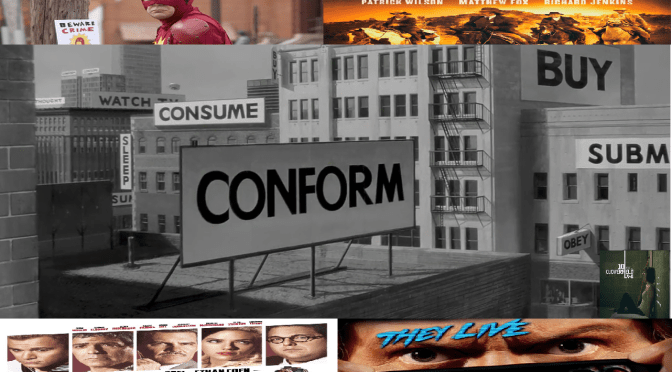
They Live is a classic underrated film from the late 80s and still retains its power as a social sci-fi satire. Hard-done-by drifter Roddy Piper finds himself amidst aliens who have infiltrated Earth and now subliminally control human population through the media and advertising. NOT LIKE REAL LIFE THEN! John Carpenter’s film is both clever and dumb as Piper and a band of rebels fight back against the extra-terrestrial horde. Some plot blips aside this is cracking entertainment and contains some great one-liners and fight scenes. (Mark: 8.5 out of 11)

WORTH A WATCH OR RE-WATCH

AGE OF ADALINE (2015) – NOW TV

Kind of a female Benjamin Button movie as Blake Lively shines as Adaline in a heart-warming romantic drama with the excellent Harrison Ford providing fine support.
(Mark: 7 out of 11)

ALAN PARTRIDGE’S MIDMORNING MATTERS (2016) – NOW TV

Steve Coogan is back on the airwaves with his usual verbal and physical buffoonery. A succession of hilarious guest cameos from the likes of Reece Shearsmith and Julian Barrett make this comedy gold. (Mark: 8 out of 11)

CROOKED MAN: TOMMY TIERNAN (2010) – NETFLIX

This is incredible stand-up comedy from the Irish cyclone that is Tommy Tiernan. The controversial comedian rips through 90 minutes of stunning observations and routines which are replete with lyrical and bestial beauty. (Mark: 9 out of 11)

DOWNFALL (2004) – NETFLIX

I’ve seen this wonderful rendition of Hitler’s final days before but it retains its incredible power and tragedy. Bruno Ganz is monstrously brilliant as the Fuhrer whose murderous empire crumbles around him. The Germans are shown to be dirty rats leaving a sinking ship and there are so many sad scenes throughout; a tough yet enriching experience. (Mark: 9 out of 11)

THE EXPENDABLES 3 (2014) – NETFLIX

This brainless action film shows Stallone, Snipes, Statham, Schwarzenegger etc. taking on Mel Gibson’s nefarious arms dealer; and while it’s ridiculous and over-the-top – as cinematic lobotomies go – it’s not too bad. (Mark: 5.5 out of 11)

EXODUS: GODS AND KINGS (2014) – NOW TV

Ridley Scott remakes Gladiator (2000) again but this time in Egypt as Christian Bale’s Moses goes up against Joel Edgerton’s nefarious Pharaoh. Plagues, pestilence, visions of God and the parting of the seas are all present and correct in a pretty entertaining Biblical epic. (Mark: 6.5 out of 11)

GOOD KILL (2014) – NETFLIX

Excellent character drama focussing on a falling-apart Drone pilot portrayed with burnt-out aplomb by Ethan Hawke. It’s a compelling analysis of U.S. foreign policy as they attack various targets in the Middle East and while sympathising with the dehumanisation of the “pilots” it also critiques the almost cowardly destruction of life from a distance.
(Mark: 7.5 out of 11)

THE GRANDMASTER (2013) – NETFLIX

Exquisitely shot martial art-house film from Wong Kar-Wai, which pays tribute to Chinese cultural icon Ip Man portrayed with much class by Tony Leung. The Donnie Yen Ip Man films are more accessible than the poetic storytelling offered here but this still packs a delectable punch. (Mark: 7.5 out of 11)

I AM LOVE (2009) – NETFLIX

Tilda Swinton owns the screen in this melodrama which follows the trials and tribulations of a rich Italian family. Not much occurs but the Italian scenery is breath-taking and while narratively slow, Swinton’s performance and the final act tragedies make it worth the journey. (Mark: 7 out of 11)

THE JINX (2015) – NOW TV

Now, this documentary was something else. A filmmaker named Andrew Jareki made an okay feature film called All Good Things (2010) starring Ryan Gosling. It charted events concerning eccentric multi-millionaire Robert Durst and the disappearance of his wife. Flash forward a few years and Durst asked Jarieki if he’d like to interview him about his situation and what he perceived was a “witch-hunt”. What follows is an amazing documentary featuring Durst and the events around his wife and TWO other people he is suspected of murdering. There’s something not quite right about Durst as the chilling denouement to the compelling docu-series reveals. (Mark: 8 out of 11)

LIFE ON MARS – SEASON 2 (2007) – NETFLIX

Second season of the “time-travel” 70s cop show picks where the first left off with John Simms’ Sam Tyler battling baddies and once again clashing with his boss, the mud-mouthed-maverick Gene Hunt (Philip Glennister). Once again this drama has great humour and plot twists amidst the mind-bending theatrics and Northern seventies era.(Mark: 8 out of 11)

THE NIGHT MANAGER (2016) – BBC IPLAYER

Beautiful women, locations, undercover spies and nefarious bad guys feature in this James Bondesque John Le Carre literary adaptation. The cast including: Tom Hiddleston, Olivia Colman and Hugh Laurie are excellent and the story had me mesmerised right up until the explosive though generically unsatisfying ending. Still, it was overall great quality Sunday evening eye-candy though.(Mark: 8 out of 11)

THE PROGRAM (2015) – SKY MOVIES

This intriguing biopic about cyclist Lance Armstrong follows his battle against cancer to Tour de France winner to disgraced drug cheat. It’s a real eye-opener into the process of the win-at-all-costs Armstrong and his obsessive pursuit of victory. Ben Foster excels in the lead and while the dramatics could have been beefed up toward the conclusion it’s still a fascinating story. (Mark: 7 out of 11)

RED TAILS (2012) – NETFLIX

This is a worthy yet lightweight wartime drama focussing on the Tuskegee Airmen and their aerial dog-fighting prowess that was demonstrated so superbly in WWII. The battle scenes are impressive but the characters felt underwritten and the film lacked impact for such an interesting subject. (Mark: 5 out of 11)

SPRING (2014) – NETFLIX

Intriguing low-budget horror-romance film which moves VERY slowly but is punctuated with some fine gore and body horror effects. The characters I could take or leave as anaemic American tourist, Evan, meets a mysterious young woman, Louise, on the streets on Italy. However, the filmmakers deserve acclaim for attempting to create something original in the horror genre. (Mark: 6.5 out of 11)

STAR TREK: GENERATIONS/ FIRST CONTACT/INSURRECTION (1994/96/98) – NETFLIX

Given myself and my filmmaking partner Gary are making a Star Trek “fan-boy” short film as our next production I decided to immerse myself in some Trek movies; and very good human and science fiction films they are too. Generations sees Kirk (Shatner) and Picard (Patrick Stewart) meet across the time-streams in a giddy mix of philosophy and temporal variance. In First Contact, Picard and crew fight the formidable Borg with the former flexing his action man muscles. Lastly, despite the title Insurrection slows the pace down as Picard falls in love while protecting a peace-loving community called the Ba’ha. All the films are well crafted with First Contact offering the greatest peril as collectively they offer some fine sci-fi concepts, character turns, humour and drama throughout.(Mark: 7.5 out of 11)

STILL LIFE (2013) – NETFLIX

Eddie Marsan is wonderful in this touchingly told story of a council worker who searches for family members of “clients” who’ve died alone. It moves slowly but with heart, purpose and pathos; offering an alternative to the overblown lobotomised big budget films at the multiplex. (Mark: 7.5 out of 11)


STRETCH (2014) – NOW TV

This is a flashy, style-over-substance-day-in-the-life-movie about a burnt out actor/chauffeur who must avoid criminals, cops and crazed clients while trying to stay sober. Patrick Wilson is watchable but I’d only recommend this if you are pissed or unconscious on a Friday night. (Mark: 5 out of 11)

AVOID LIKE THE PLAGUE

SEVENTH SON (2014) – NOW TV

Jeff Bridges and the exquisite Julianne Moore take a pay-check but offer little else in this nonsensical fantasy witch-hunter yarn. Awful beyond words. (Mark: 2 out of 11)

THE WITCH (2016) – CINEMA

Be wary of The Witch. Its trailer suggested a scare-fest but it is in essence an overly talky art-house horror; heavy on religious symbolism and folklore. It is very well directed, designed and acted and the broadsheet critics will love it. However, there’s not enough gore, scares or actual story for my liking and at times I was bored as hell. It’s a damned shame as I like horror films and art-house cinema but The Witch just doesn’t make us care about the characters or story at all. (Mark: 3 out of 11)