Produced by: Sara Murphy, Adam Somner, Paul Thomas Anderson
Cast: Alana Haim, Cooper Hoffman, Sean Penn, Tom Waits, Bradley Cooper, Benny Safdie etc.
Cinematography: Michael Bauman and Paul Thomas Anderson
Edited by Andy Jurgensen
*** MAY CONTAIN SPOILERS ***
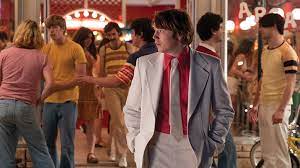
Any film from Paul Thomas Anderson will certainly receive high critical praise and Licorice Pizza (2021) is certainly no different. Not only do I think this is his most over-rated film. I don’t even think it is a good one. Not for any technical reasons. Because as usual Anderson’s filmic skills as a director, the scintillating cinematographic style, the evocative rendition of early 1970’s Californian suburbs, plus two star-making turns within a formidable cast, ensure Licorice Pizza (2021) is deservedly going to win many plaudits. But I just did not get the story about pretty much nothing and did not connect with the lead romance.
Set in 1973, Licorice Pizza (2021), is part slice-of-life period drama and part character comedy, with a spine consisting of an odd romance between entrepreneurial fifteen-year-old, Gary Valentine (Cooper Hoffman) and twenty-five-year-old, Alana Kane (Alana Haim). While containing many brilliantly directed scenes, the film is a hot mess of indulgent rooting through Paul Thomas Anderson’s historical research and anecdotal events inspired by real-life film producer, Gary Goetzman.
Being asked to root for a relationship which is dubious on the surface and extremely complex to say the least is not beyond me. But Licorice Pizza (2021) doesn’t address the age difference, aside from a couple of moments in the script. I know Cooper Valentine is an old head on young shoulders, but why Alana doesn’t hang out with people her own age was weird for me. I’m not being politically correct or a prude, but is Anderson asking for us to root for what could end up being statutory rape. Am I over-thinking this? Well, all I can say is it impacted my emotions of a major aspect of the story.
Licorice Pizza‘s (2021) worst crime is it’s virtually plotless and I could not identify with the characters. I liked Gary to a certain extent as he ducks and dives to make a living, but what was at stake? Nothing really. Yeah, I get it is art but I found Anderson’s vision boring. Sure, the actors are great, especially the effervescent Alana Haim. Virtual cameos from Sean Penn, Bradley Cooper and Tom Waits failed for me though, with Cooper’s coke-addled and womanising impression of Jon Peters about as funny as an enema. Of course, the cinematography, period design, soundtrack and costumes are exquisitely presented, but they exist in an emotional vacuum. Finally, Licorice Pizza (2021) made me want to watch Paul Thomas Anderson’s previous 1970s masterpiece, Boogie Nights (1997). Now, that film deserved all the critical praise that came its way.
THE CINEMA FIX PRESENTS: 10 FAVOURITE FILMS OF 2021!
Following on from the extremely tricky global issues of 2020, the cinema saw further transitions amidst lockdowns and the rise of even more streaming platforms. Traditional timetables for film releases remain all over the place due to the effects of the pandemic on our culture. Plus, big budget productions are now going straight to the living room more often than not. Especially if the proposed cinema release date is postponed on several occasions. What studios lose in terms of cinema release profits, they are now looking to claw back with reduced marketing budgets and subscriptions to their own respective channels.
In the past my favourite film of the year lists were all films I saw at the cinema. Now they are a mixture of cinema and online releases. There is some overlap too in the given year when I watched such films due to the scheduling changes. I’m really not a fan of this as I don’t like change to routine as a rule. But if it means I still get to see my favourite films online or at the cinema then it’s hardly a trial or major issue to adjust.
List Notes
There are LOADS of films I have NOT SEEN! Please comment below MUST-SEE films not on the list.
The Bond film is not on here. It was fantastic entertainment, but NOT a good Bond movie.
There are no MARVEL/DC films on the list as I have not watched them all. Plus, I have superhero film formula fatigue.
Nomadland (2020), while good, was completely over-rated.
White Tiger (2021) would be on this list, but I only watched it yesterday. So, it qualifies for assessment in 2022.
For comparison here is my list of favourite films in 2020. A starter if you will, before the main cinematic course.
Happy New Year – have a great 2022!
TWELVE FAVOURITE FILMS of 2020!
1917 (2019) DARK WATERS (2019) DA 5 BLOODS (2020) I’M THINKING OF ENDING THINGS (2020) THE INVISIBLE MAN (2020) MANGROVE (2020) PARASITE (2019) PORTRAIT OF A LADY ON FIRE (2019) SAINT MAUD (2019) TENET (2020) THE TRIAL OF THE CHICAGO SEVEN (2020) UNCUT GEMS (2019)
“… with Thomas Vinterberg’s expert direction, evocative natural cinematography, and Mads Mikkelsen giving yet another acting masterclass, the humorous narrative soon leaves the laughs behind to become a bittersweet, yet still uplifting, work of Nordic cinema.”
“… David Lowery is an original thinking talent, and someone I categorise as an alternative genre filmmaker… The Green Knight (2021) certainly has scale and magic and astounding cinematic power.”
“… Edgar Wright has delivered one of the most thrilling and spectacularly energetic films of the year. The nostalgic and heavenly soundtrack is to die for, with so many songs I recall growing up listening to. Likewise, the cinematography and lighting design sparkle in hues of black, fluorescence, shadow and neon.”
“… Levee Green does not see the bigger picture and is sucked in by the promise of money, women and fame. He is blinded by the bright city lights and the closer he gets to them the easier it is for the record producers to pick his pocket. In such a tragic character August Wilson has created a memorably complex persona, perfectly rendered by the acting genius, Chadwick Boseman. R.I.P.”
“… the scenes where David antagonises his unconventional grandmother are hilarious. Youn Yuh-jung as the elderly matriarch is fantastic, deservedly winning a best supporting actress role at the Oscars. Moreover, Lee Isaac Chung gets a miraculous performance from child actor, Alan Kim.”
“… The loss of a child is never going to be an easy experience and it is something an individual will never get over. As I followed Martha’s journey intensely the smallest incremental shift in her personality is felt massively. Vanessa Kirby, in particular, is stunning as a woman cut-off from the world by this devastating grief.”
“… I’m not always a fan of poetic cinema, especially within a narrative presented as a quasi-Western. Mostly I like to be punched in the gut, not branded slowly from the inside out. Yet Jane Campion’s expert adaptation of Thomas Savage’s novel, The Power of the Dog (2021), contains some bite. You just don’t see when and how it happens.”
“… I’ve seen some so-so reviews for The Rental (2020), but it’s the kind of tightly plotted suspense thriller I really thrive on. What starts as an idyllic getaway for two relatively wealthy couples is carefully unravelled by Dave Franco’s well-paced direction, complimented by Brie and Steven’s committed performances, has wonderful locations and a seriously proper killer ending.”
“… Sound of Metal (2019) beats along steadily but with incredible purpose and rhythm. It teaches us that losing a major sense need not be the end of one’s life, but rather the beginning of an altogether different one.”
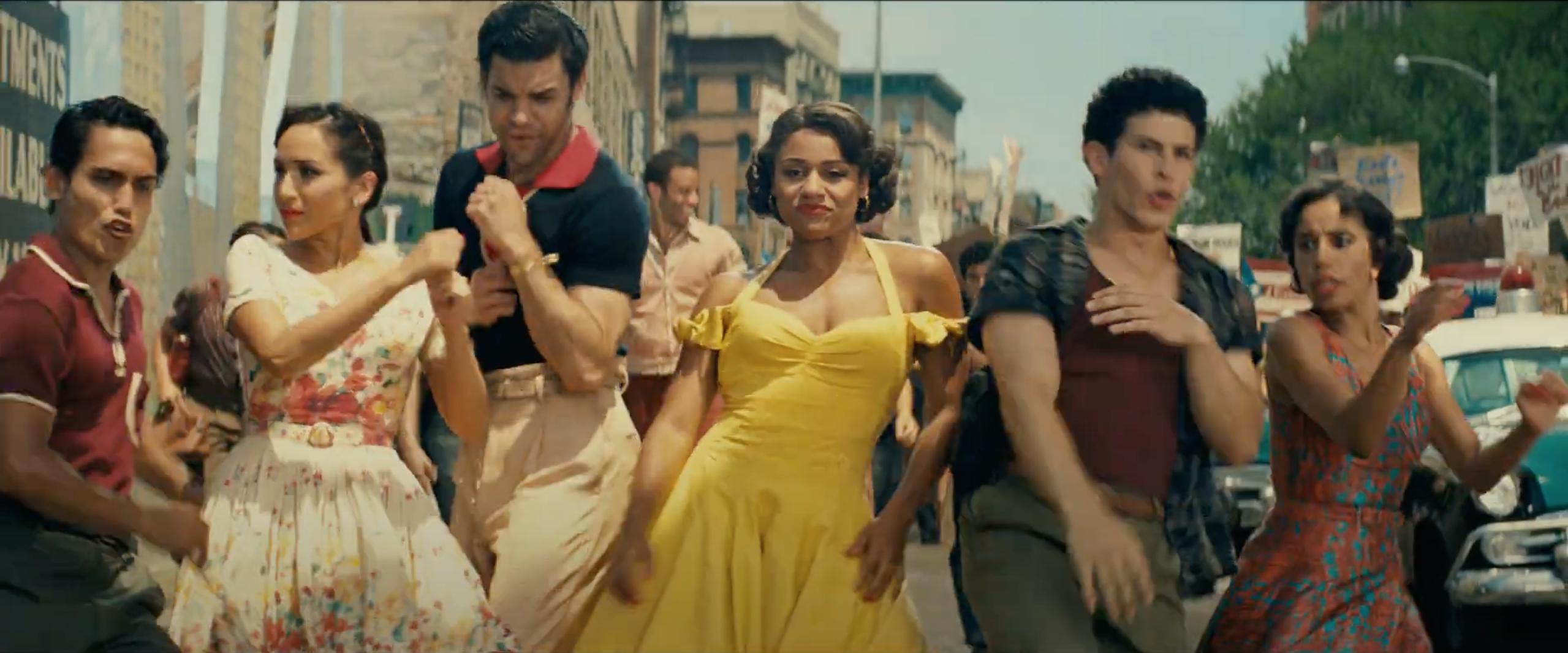
“… Everything about the film screams colour, energy and movement. The dancing and editing and swinging beats take you on a breathless journey through the romance and street war. West Side Story (2021) keeps all the memorably catchy songs… and if there is a better directed, choreographed and edited set-piece all year in the Gee, Officer Krupke number then I haven’t seen it.“
Based on: West Side Story by Jerome Robbins, Leonard Bernstein, Stephen Sondheim and Arthur Laurents
Produced by: Steven Spielberg, Kristie Macosko Krieger, Kevin McCollum
Cast: Ansel Elgort, Ariana DeBose, David Alvarez, Mike Faist, Rita Moreno, Rachel Zegler etc.
Cinematography: Janusz Kamiński
Choreography: Justin Peck
Music by: Leonard Bernstein
*INEVITABLE SPOILERS WITH THIS STORY*
Well, if you removed all the songs and added more dialogue to West Side Story (2021), then I guarantee it would make an amazing stage play. Oh, it has already. I thought it felt extremely familiar. Silly jokes aside, one often hears the decrying of originality in Hollywood cinema. Sequels, prequels, remakes, adaptations and reboots are plentiful as big business. Known quantities are a better bet to executives than original never-heard-of speculative screenplays. And not everyone is averse to re-doing fully developed properties. Thus, one of the most talented filmmakers of a generation, Steven Spielberg, has delivered a stunning remake of a film adaptation of a stage musical that was developed from William Shakespeare’s Romeo and Juliet.
You know the story. If you don’t, stop reading. Young star-crossed lovers fall in love against their families wishes. Their romance explodes into unbridled passion as war escalates between the two rival factions. As the lovers attempt to find a way to be together the conflict brings about eventual tragedy. Shakespeare was a genius and knew how to structure and spin a yarn. No surprise his works have been adapted infinitely to much success. One of the greatest was the musical West Side Story (1961). Exchanging Verona for New York and pitting the Puerto Rican Sharks against the local firm, the Jets, the play and film contain some of the most incredible numbers ever sang and danced to. The original play won awards and broke box-office records. The film West Side Story (1961) deservedly won many Oscars. It is considered almost a perfect musical. How could it be improved?
West Side Story (2021) cannot possibly be classed as better than the original because Jerome Robbins, Arthur Laurent, Leonard Bernstein and Stephen Sondheim, plus their incredible team, had already done all of the challenging work crafting the production. But with this new version Steven Spielberg has once again proved he is one of the great genre directors. Assembling an ultra-talented team including Josh Peck as choreographer, Tony Kushner as screenwriter, Janusz Kaminski as cinematographer and an effervescently wonderful cast.
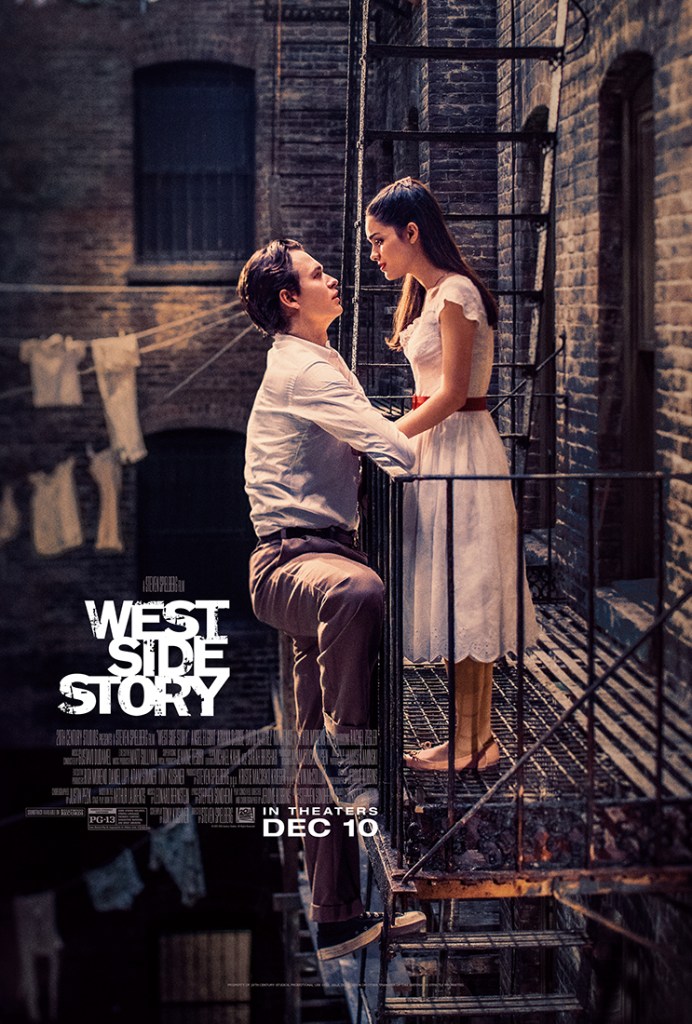
Everything about the film screams colour, energy and movement. The dancing and editing and swinging beats take you on a breathless journey through the romance and street war. Tony (Ansel Elgort) and Maria’s (Rachel Zegler) love story is bounced effortlessly between the expertly devised gang battles. Moreover, West Side Story (2021) keeps all the memorably catchy songs such as: Maria, Tonight, America, Cool, and Somewhere, capturing the heart and imagination in equal measure. If there is a better directed, choreographed and edited set-piece all year in the Gee, Officer Krupke number then I haven’t seen it.
The cast are uniformly excellent with Ansel Elgort, while lacking slightly in the vocal department, more than making up for it with his magnetic screen presence. Rachel Zegler is charming if bland as Maria, but Ariana DeBose absolutely steals the scenes with her all-round performance as fiery Anita. The cast all deliver Tony Kushner’s excellent dialogue and the iconic songs with aplomb. Lastly, West Side Story (2021) is an absolute tour-de-force as cinematic entertainment. However, there is a sense that it is a missed opportunity for Steven Spielberg and his team to perhaps update the themes for the modern day. Kushner’s script hints at some analysis of racism that ultimately only scratches the surface. Spielberg is satisfied emulating a classic adaptation of a classic play, remaining trapped in a shiny post-modern time-warp full to the brim with powerful nostalgia.
Produced by: Emile Sherman, Iain Canning, Roger Frappier, Jane Campion, Tanya Seghatchian
Cast: Benedict Cumberbatch, Kirsten Dunst, Jesse Plemons, Kodi Smit-McPhee, Thomasin McKenzie, Genevieve Lemon, Keith Carradine, Frances Conroy etc.
Cinematography: Ari Wegner
*** MAY CONTAIN SPOILERS ***
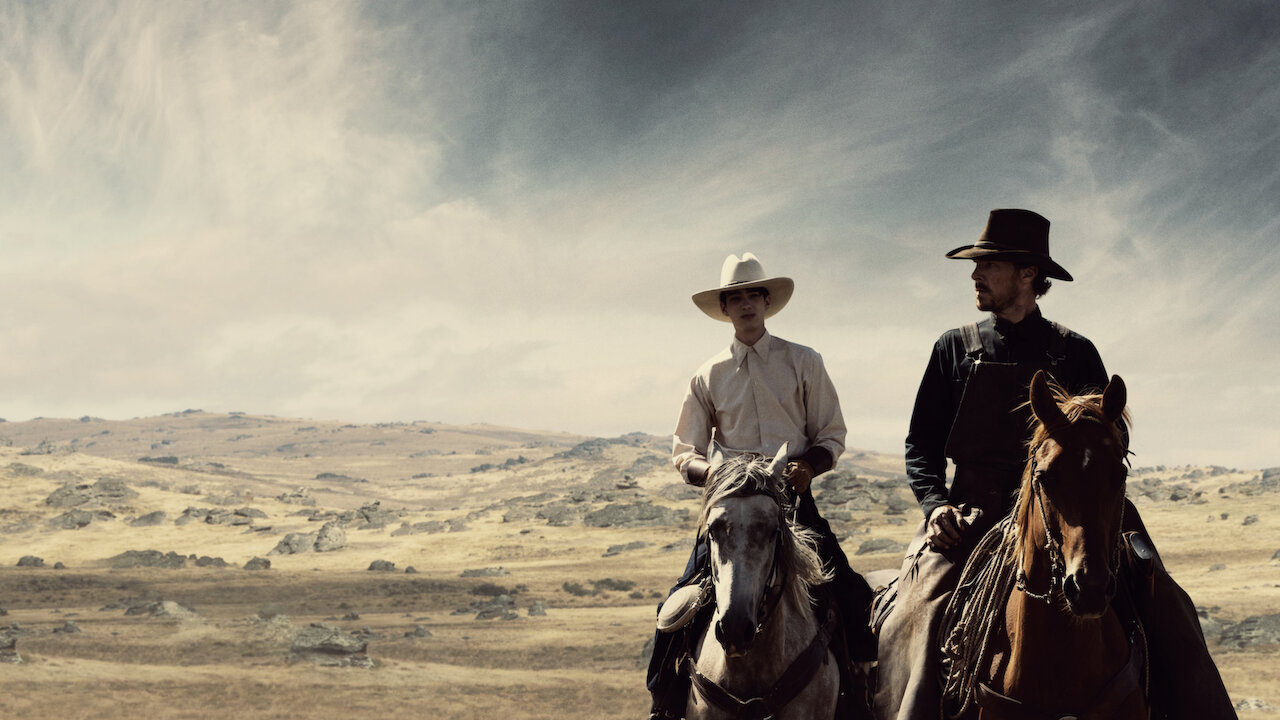
Set in 1925 amidst the spectacular terrain of Montana, The Power of the Dog (2021), centres around a ranching family’s everyday relationships, romances, hatreds and choices. Two brothers run the Burbank ranch, Phil (Benedict Cumberbatch) and George (Jesse Plemons). George is the kinder man who leans more toward progress and business. Phil is more of the land and the traditional cowboy. However, he is incredibly intelligent and could have made more of his education. Instead, he is driven to follow in his hero and mentor, Bronco Henry’s wake, work the ranch and command men.
While hiding a deep secret, Phil is absorbed by the cowboy lifestyle and thrives on controlling those around him. But when George meets Rose (Kirsten Dunst) at a cattle drive inn, he falls for her. Soon they marry and George agrees to provide for Rose and her son Peter (Kodi Smit-McPhee). Phil immediately becomes upset by the intruder to the family equilibrium. Soon Rose and Peter fall foul of his bullying and superiority complex. Thus, begins a series of subtle and ambiguous clashes where Phil and Rose clash, before the bright, androgynous Peter manoeuvres to protect his beloved mother.
The stunning cinematography and vistas of, The Power of the Dog (2021), are more luminous dressing when compared to the compelling characterisation and incredible performances delivered via Jane Campion’s confident direction. Indeed, Benedict Cumberbatch, Kirsten Dunst and Kodi Smit-McPhee are so good you could have set the story on an empty soundstage (like Dogville (2003) and the searing properties of the drama would have been carried just as potently. Cumberbatch is exceptional. This is an Oscar winning performance. His bitter and envious alpha male broods and hides behind violence and biting words. Every now and then he threatens to burst, but is pulled back. Phil wants to love but is so trapped by social expectations and prejudices that he is trapped tragically by the era. The sensitive Peter doesn’t care what people think and that sadly makes him a victim. But still waters run very deep. Peter has a plan.
This film will give you heartburn. It’s subtle and bubbles like acid, reaches the throat before scarring the pit of your stomach. Now, I’m not always a fan of oblique and poetic cinema, especially within a narrative presented as a quasi-Western. Mostly I like to be punched in the gut, not branded slowly from the inside out. Yet Jane Campion’s expert adaptation of Thomas Savage’s novel, The Power of the Dog (2021), contains some bite. You just don’t see when and how it happens. Expect awards galore for this fine drama.
Based on: The House of Gucci: A Sensational Story of Murder, Madness, Glamour, and Greed by Sara Gay Forden
Produced by: Ridley Scott, Giannina Scott, Kevin J. Walsh, Mark Huffam
Cast: Lady Gaga, Adam Driver, Jared Leto, Jeremy Irons, Salma Hayek, Al Pacino etc.
Cinematography: Dariusz Wolski
*** MAY CONTAIN SPOILERS***
I’m not a fan of fashion. I wear clothes obviously and like to be smart and clean. Yet, the idea of believing one’s garments, shoes and accessories mean you are important, superior or worthy of adulation sickens me to be honest. However, fashion is a multi-billionaire industry and I get that people of variant social standing love it as a cultural phenomena. People either own or aspire to own over-valued garments and objects to inflate their ego or sense of importance is beyond me. Then again, I passionately enjoy watching human beings kick a ball into a net, so everyone has irrational passions. C’est la vie!
I didn’t go to see House of Gucci (2021) to look at the clothes though. My interest in this star-studded, big budget crime drama directed by the legend, Ridley Scott, was more because I did not know anything about the lives and personalities within the Gucci empire. Who would have thought that a wealthy family unit could have turned out so poisoned by greed and envy?
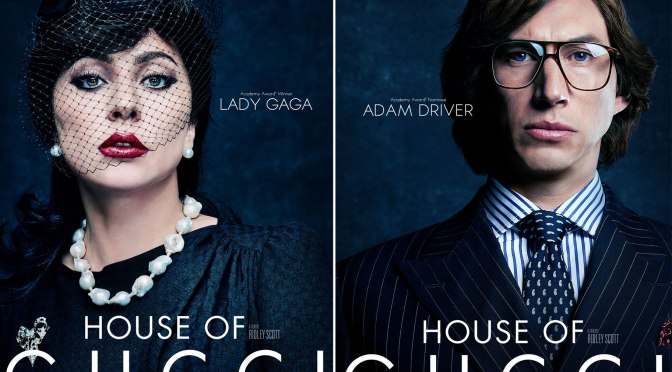
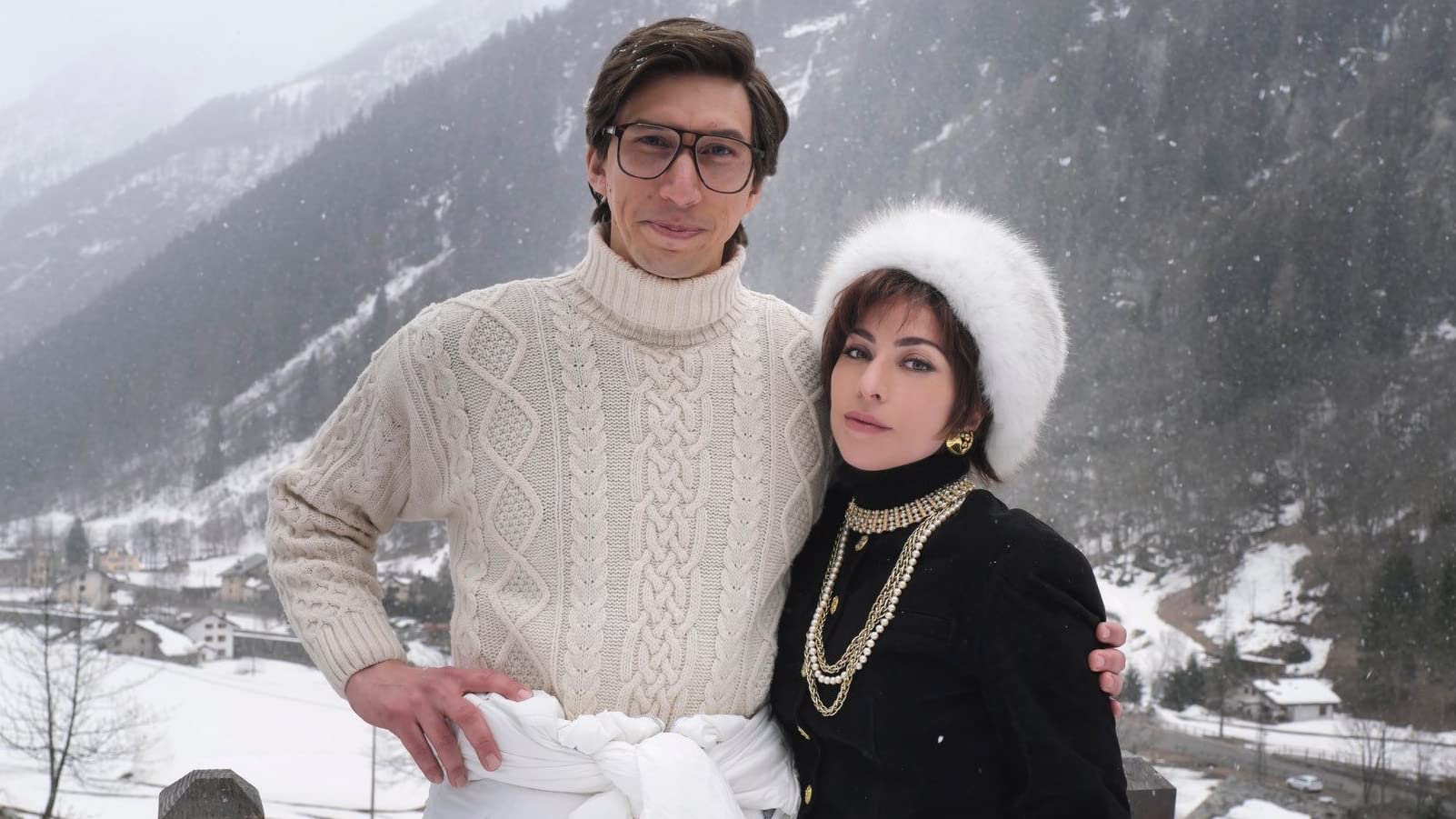
Covering a period of twenty or so years from the late 1970s into the 1990s, the story is structured around the relationship between Patrizia Reggiani (Lady Gaga) and Maurizio Gucci (Adam Driver). They fall passionately is lust, much to the chagrin of his spiteful father (Jeremy Irons) and marry against his will. Patrizia genuinely loves the sensitive Maurizio, but also has green eyes for the Gucci empire and the power that can bring. As her desire for influence in the family business grows, then so does cracks in their marriage. Crumbling relationships, business chicanery and family treachery dominate the narrative, all coming to a head with tragic results.
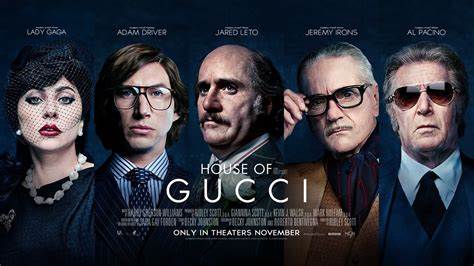
As a morality tale about how greed corrupts and drives human beings toward unnecessary tragedy, The House of Gucci (2021) is certainly worth a watch. Is there a sense the Gucci family were cursed by there wealth. Perhaps? But the film and screenplay as a whole present this theme without really drawing them out to full dramatic effect. However, the cast are absolutely fantastic throughout with Al Pacino, Adam Driver, and Lady Gaga on particularly exceptional form. Jared Leto dominates many scenes with his bald head, extra weight and screechy voice. While entertaining, the director could have reigned Leto in slightly to extract more pathos from the sad clown that is represented in Paulo Gucci.
I had a few issues with The House of Gucci (2021) inasmuch as it felt incomplete. At times it was as though I was watching a test screening version. The transitions between years were often confusing. What year is it, Ridley? Adam Driver’s arc from likeable young academic to selfish adulterer was rushed and unearned. I got the evocation of a Fredo and Michael Corleone dynamic between Maurizio and Paulo, but this really could have been developed further. The cinematography was grey and dull with the natural lighting style working against the expected colour and vibrancy of the 1980s era. I also wondered if the film had been graded?
While watching The House of Gucci (2021) I just kept thinking of more superior crime and gangster films. It is also mildly disrespectful to a genius like Ridley Scott to say Martin Scorsese would have knocked this story out of the park. I truly felt, while Lady Gaga was excellent in her role, her character could have been written and given a voice-over up there with that of Henry Hill’s. Nonetheless, I still enjoyed the film but wonder if there is a director’s cut out there which doesn’t feel rush released. Or even the possibility HBO or Showtime may adapt it into a longer drama series in time. Yet, does one want to spend more time with such avaricious and vain characters? Depends who is telling the story I guess.
Produced by: Dede Gardner, Jeremy Kleiner, Christina Oh
Cast: Steven Yeun, Han Ye-ri, Alan Kim, Noel Kate Cho, Youn Yuh-jung, Will Patton, etc.
Cinematography: Lachlan Milne
Music by: Emile Messeri
*** MAY CONTAIN SPOILERS ***
I missed Minari (2020) at the cinema. Which is a shame because out of all the Oscar-nominated films from earlier in the year it is now my favourite. Further, it should certainly have won the best film award. (Note: I have yet to see The Father (2020).) It has the heart and warmth and realistic hope that eventual winner, Nomadland (2020) lacked. Chloe Zhao’s powerful character study was arguably too meditative and glacially paced, without any real diversion from the plodding repetition of monotonous existence. I love slice-of-life and character-driven work, but I want some drama too. While Minari (2020) has certain meditative qualities, writer-director Lee Isaac Chung has crafted a supeb cinematic memoir of tender power and emotion.
Set in 1983, Minari (2020), centres around the Yi family. They had been working in California, but have moved to Arkansas to farm the land. The father, Jacob (Steven Yuen) dreams of growing produce to sell to fellow Korean businesses. However, the farm and static caravan he has purchased is remote with no guarantee of water to ripen the fruits and vegetables. Jacob must either pay exorbitant prices from the water company or find a natural spring underground. Alas, rain rarely threatens the Arkansas plains.
Jacob’s wife, Monica (Han Ye-ri) hates the caravan and does not share his farming dream. This marital conflict drives the much of the narrative as the two argue constantly. Monica is especially angry that her young son, David (Alan Kim) is so far from a hospital. The boy has a heart condition and like any good mother she consistently worries. Their teenage daughter, Anne (Noel Kate Cho) is too young to be a full-time caregiver to David while Jacob and Monica support themselves working at a local chicken factory. To placate Monica, Jacob brings grandmother, Soon-ja (Youn Yuh-jung) to the farm for support. Here a beautiful and funny parallel plot begins as David and his grandmother’s relationship comes to the fore.
I watched Minari (2020) on a Sunday morning at home, relaxed and cosy, filled with breakfast and coffee. I loved experiencing the film. The music wondrously supports the beautiful photography that illuminates the green and wheats that fill the lens’ gorgeous palette. Like the masterpiece, Parasite (2019), Minari (2020) represents a working-class family striving to stay together and survive in difficult times. The main difference though is the Yi family were doing it with honest hard graft rather that grifting, ducking and diving. The Yi’s connect with nature and the land rather than skimming the city and the rich. I really rooted for the Yi’s. Jacob’s desires and battles to find water reminded me of the equally moving French classic,Jean De Florette (1986).
Minari (2020) doesn’t take the obvious route of making the Arkansas locals racists who rail against the Yi’s. While there are some scenes involving cultural clashes, much of the drama and humour derives from the families interactions with each other. Indeed, the scenes where David antagonises his unconventional grandmother are hilarious. Youn Yuh-jung as the elderly matriarch is fantastic, deservedly winning a best supporting actress role at the Oscars. Moreover, Lee Isaac Chung gets a miraculous performance from child actor, Alan Kim. Special mention for a busy, but nuanced portrayal of a troubled but helpful worker, Paul, by Will Patton. His deeply pious character could have easily been made an antagonist, but Chung ensures he is another relatable human being in a film full of them.
Screenplay by: Edgar Wright and Krysty Wilson-Cairns
Produced by: Nira Park, Tim Bevan, Eric Fellner and Edgar Wright
Cast: Thomasin McKenzie, Anya Taylor-Joy, Matt Smith, Michael Ajao, Terence Stamp, Diana Rigg, Rita Tushingham, etc.
Cinematography: Chung-hoon Chung
*** MAY CONTAIN SPOILERS ***
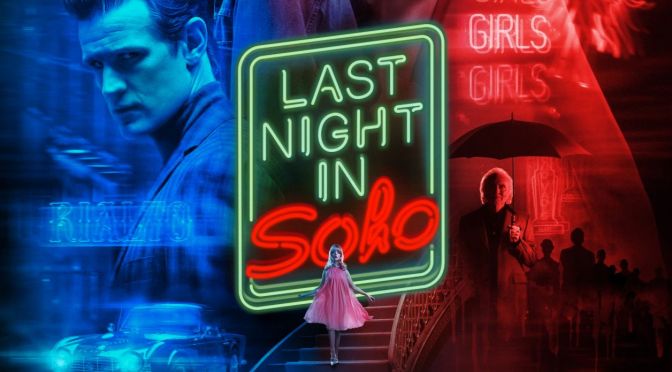
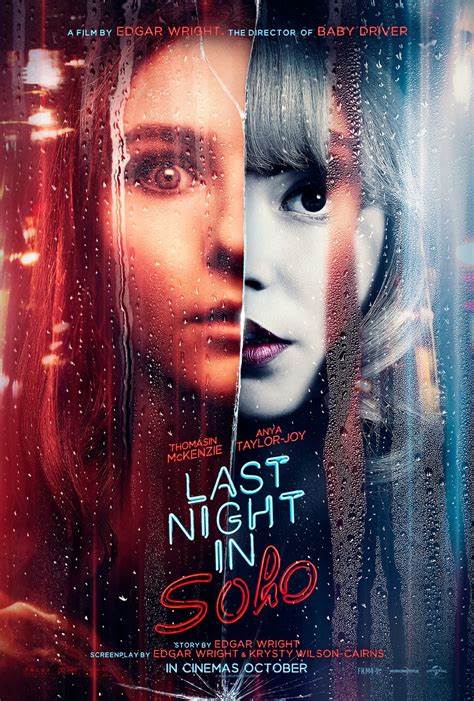
Edgar Wright is one of my favourite directors working today. His films possess an endless series of cinematic techniques such: long takes, quick cuts, swooping camera moves, canted frames, Steadicam, camera holds, frame switches, pans, scans, tilts, low-angles, metronomic editing, blurred dissolves, point-of-view and god’s-eye view shots. Moreover, Wright’s use of humour, music, colour, casting choices, and cross-genre collisions are spectacularly imaginative and entertaining. His latest film Last Night in Soho (2021) is no different. I was enthralled and excited throughout this ripping big-budget exploitation film, which juxtaposes influences such as Stephen King, Brian DePalma and Doctor Who, with a suggestion of Dario Argento and giallo cinema.
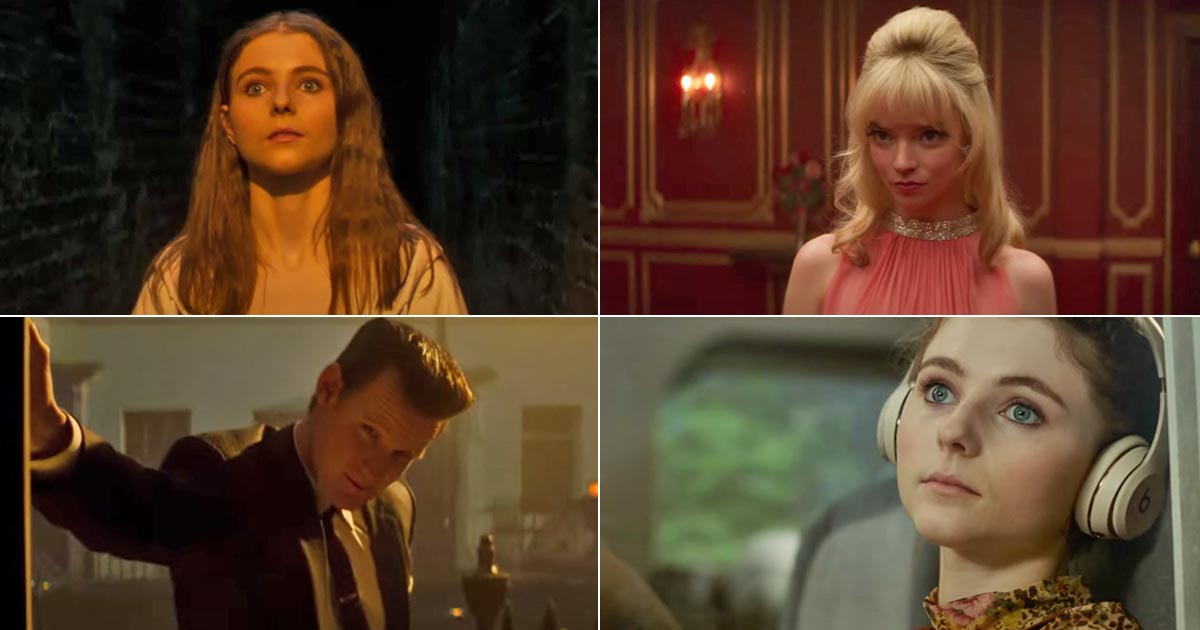
Last Night in Soho (2021) is both a love and hate letter to the Soho area of central London in the 1960’s and the now. If hate is too strong a word then at the very least the myriad of storylines collide to create a cautionary tale of one young person’s move from Cornwall to London to study fashion at the University of Arts. Major acting talent Thomasin Mackenzie is Ellie Turner, a passionate young woman who loves the sixties music and style, but also mourns the loss of her mother at an early age. Leaving her comfortable home she shares with her Grandmother (Rita Tushingham), Ellie experiences London and student life with initially mixed results. Finding it difficult to connect with her obnoxious room-mate, Jocasta, she moves into an antiquated bedsit, with imperious Diana Rigg as her landlady no less. All of a sudden her incredible journey into the glamorous and seedy past of Soho begins.
As with many of his films Wright establishes several storylines simultaneously. He brilliantly crosses rites-of-passage with period drama, romance, musical, detective and finally the horror genre. Ellie finds her feet at University, gets a job in a bar, receives praise for her initial designs and starts a budding romance with fellow student, John (Michael Ajao). At the same time her life becomes entwined in a surreal twist with that of Sandie (Anya Taylor-Joy), an engaging character desiring showbiz stardom who happens to live in Soho, but in the 1960’s. Ellie’s psychic link with Sandie brings her vivid dreams, but a striking empathic connection.
While Ellie is nervous and insecure within her London experiences, Sandie is the opposite. The theme of duality in their polar characters is both emotionally and visually breathtaking as their twin journey brings positive change and developing confidence in Ellie’s character. Yet, when Sandie’s career desires are exploited for nefarious gain by a local face called Jack (Matt Smith), both woman head for darker spaces in the shadows and smoke of the capital. Here the issue of mental health is intriguingly explored too. As Ellie is drawn further into Sandie’s nightmarish existence, she struggles to hold on to reality and the present.
Despite some minor wrinkles in the narrative and geographical London liberties taken, Edgar Wright has delivered one of the most thrilling and spectacularly energetic films of the year. The nostalgic and heavenly soundtrack is to die for, with so many songs I recall growing up listening to. Likewise, the cinematography and lighting design sparkle in hues of black, fluorescence, shadow and neon. Sure, Edgar Wright has his cake and eats it with mild virtue signalling relating to the “Me Too” movement. The male gaze eats up Anya Taylor Joy’s stunning charisma on screen, making us complicit in her downfall. Nonetheless, with issues relating to grief, mental health, sexual exploitation, identity, doppelgängers, urban breakdown and many more all enveloped into a craftily structured plot, you won’t find a more breathless cinematic experience all year.
Screenplay by: Jon Spaihts, Denis Villeneuve, Eric Roth
Based on: Dune by Frank Herbert
Produced by: Denis Villeneuve, Mary Parent, Cale Boyter, Joe Caracciolo Jr.
Cast: Timothée Chalamet, Rebecca Ferguson, Oscar Isaac, Josh Brolin, Stellan Skarsgård, Dave Bautista, Stephen McKinley Henderson, Zendaya, Chang Chen, Sharon Duncan-Brewster, Charlotte Rampling, Jason Momoa, Javier Bardem, etc.
Cinematography: Greig Fraser
***MAY CONTAIN SPOILERS***
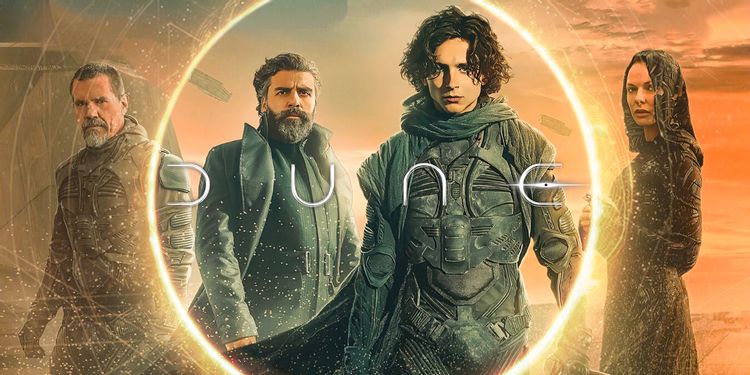
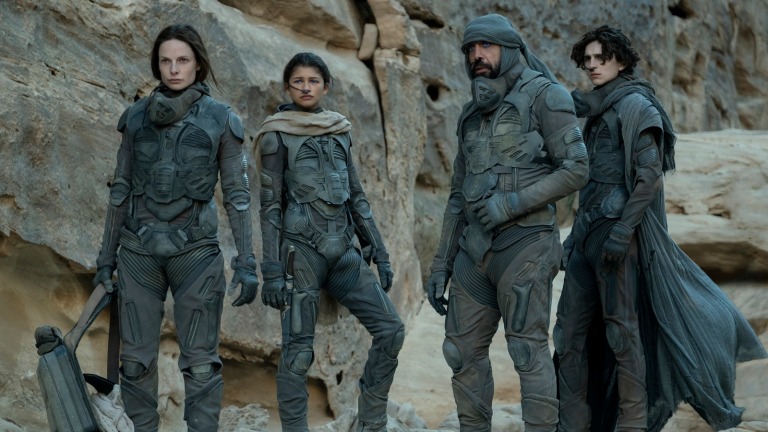
I truly hope Dune: Part One (2021), an epic adaptation of Frank Herbert’s legendary Dune literary series, has a second part, otherwise I would have wasted well over two hours of my life watching the Denis Villeneuve helmed film version. Having said that, there were times where I felt the glacial pace of the narrative caused time to stand still, boring me in the process. But, I get it. It’s part one and setting all the major players up and building a strange world both visually and imaginatively. As such perhaps Herbert’s books may have suited a HBO TV adaptation rather than a cinematic version.
Maybe I’m jaded and cynical though. Have I seen too many films and stories? Is Dune: Part One (2021) even worth the journey and perhaps it’s too old-fashioned a sci-fi story to create resonance for myself and these times? Well, it absolutely looks amazing. The special effects, sandy landscapes, behemoth buildings, underground monsters and space vessels are rendered with such believable authenticity they genuinely looked real on the screen. Frank Herbert’s (I haven’t read the books) vision is astoundingly realised as this futuristic world in a far, far galaxy felt like a moving work of art. But, it was extremely beige and brown and sandy looking on Arrakis, so much so that I was glad of the dark contrast in the scenes involving House of Harkonnen. By the way, I’m not often a fan of the natural cinematography style used here where during big action scenes at night I could hardly see anything. Moan over.
The story of Dune (2021) felt a bit old-fashioned as a classic hero’s journey. It didn’t help that the in-the-sand screenplay and Denis Villeneuve’s meditative, confident direction was too subtle for this story. I mean why do we care about Timothee Chalamet’s Paul Atreides and his family’s inheritance of the spice world’s of Arrakis? Without giving anything away it becomes a poisoned chalice politically in this world and Paul’s, his parents, and the House of Atreides’ lives all become endangered. So, while Frank Herbert’s novel was originally released to powerful acclaim in 1965 and five other novels would follow year’s later, a film version of Dune (2021) now feels outdated in terms of subtext. Villeneuve is a genius filmmaker, but I’m not sure, aside from the beautiful look of the locations, sets and actors there is much of a narrative to get our teeth into. Just another ‘white saviour’ quest, which is so drawn out in terms of the interminable slow pace at times.
Of course, the cast are wonderful to look at, but Chalamet is miscast for me. He is an incredibly talented young actor, but he is not given any character to get his teeth into. Villeneuve does a less-is-more style that I love and he’s obviously playing the long game withDune (2021), yet he really needed a young Ryan Gosling to carry Paul Atreides as Chalamet isn’t given enough to do in terms of acting. Yes, there are massive worms and big explosions and floating fat men, but the story dragged. Thankfully, Jason Momoa injected some movie star charisma in his action sequences, while Rebecca Ferguson and Javier Bardem sprinkled some of their own spice amidst the over-controlled Villeneuve design.
I really wanted to like Dune (2021). I won’t see a more attractive and technically perfect rendition of a sci-fi world in the cinema in years. But, I could not connect with the narrative or drama. I mean, Paul is possibly the chosen one or something or other but why do we care? His mother is connected to some weird cultish sect — with the “Force” — and there are big worms which made me want to watch Tremors (1990); a far superior and shorter version of the hero’s journey. Watch that instead.
Halloween is slowly creeping out of the fog and shadows. It’s a time of the year where horror films come to the fore. Personally, I watch horror all the year round, but it’s always fun when the genre pulls focus on the cultural calendar.
Rather than concentrate on current horror film releases, I thought it would be interesting to seek out chillers that are a tad less known. So, I had a scan through Amazon and Shudder screening platforms and unearthed several cult horror gems worth catching.
Some of these films come from the 1980’s period which encompassed the “video-nasty” era in the United Kingdom. With the advent of home video technology, the government suddenly got frightened about bloody and exploitational films and desired control. Censoring seventy-two titles and banning a flurry of films actually made people want to watch them more. This caused the government’s policy to backfire as people clamoured to watch “pirate” video versions of such films. In fact, it was in the living room watching forbidden films and the old Universal black-and-white classics where my true love of horror cinema began.
The following films may not have been banned at the time, but I was intrigued by how many of the titles I missed seeing on first release. Aside from Ben (1972), When A Stranger Calls (1979) and Phantasm (1979), I hadn’t seen the other titles. Therefore, if you’re looking for obscure horror films to watch then delve deep into the Amazon library. They have a fine feast of 1970’s and 1980’s fear inducing fare, many of them which were on the infamous “video-nasty” list. Dare you watch them!?
THE CAT OF NINE TAILS (1971)
An early Dario Argento giallo finds a blind puzzle-maker (Karl Malden) and dogged reporter (James Franciscus) investigating murders at a genetics lab. Aside from a couple of scary set-pieces, notably in a graveyard, it neither works as a detective nor horror story. It is however beautifully filmed with a vibrant restoration. (Mark: 6 out of 11)
CHUD (1984)
As the Nuclear Regulatory Commission track down missing toxic waste the New York homeless population are becoming victims to something monstrous in the sewers. An energetic sci-fi-horror hybrid combining a schlocky plot with socio-environmental themes. It’s not bad and actually quite funny, with early roles for John Heard and Daniel Stern whose acting raises the overall quality. (Mark: 6 out of 11)
CLASS OF 1984 (1982)
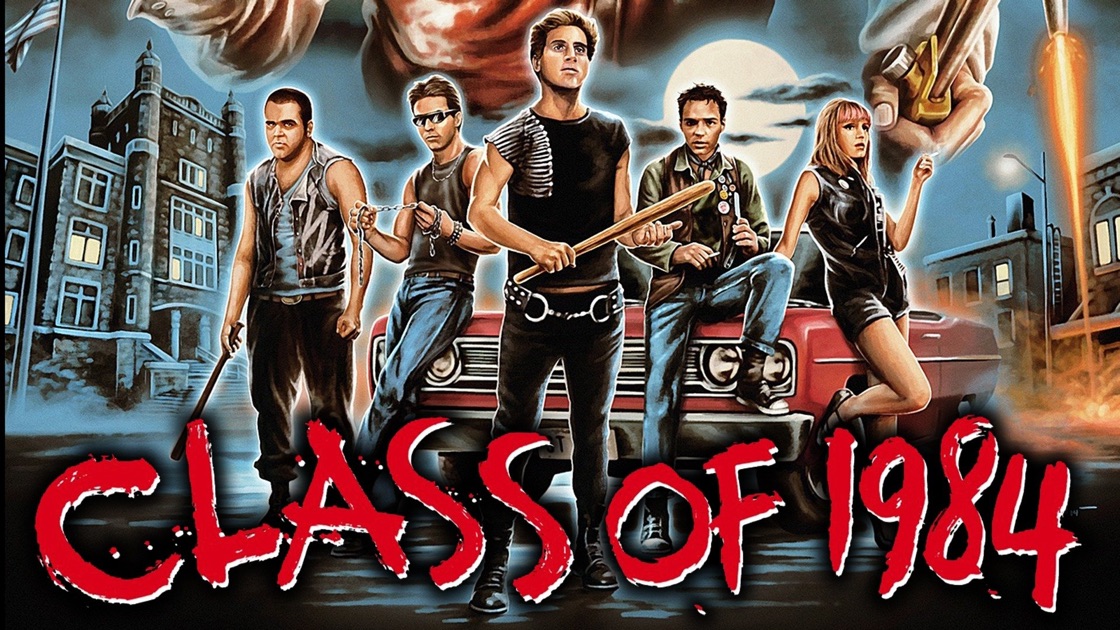
I remember school kids raving about this film when I was twelve. I really wanted to see it, but could never find it in the video shop or from the “pirate” video guy. The plot merges The Blackboard Jungle (1955) with Death Wish (1974), as Perry King’s music teacher attempts to soothe the savage beast of a gang of nasty punk students. He fails and the final act revenge-driven rampage is fantastically inventive and gory. Latterly famous director, a young Tim Van Patten, portrays the psychotic, Peter Stegman, with vicious zeal. A true exploitational classic. (Mark: 8 out of 11).
HELL NIGHT (1981)
This is one of those films I had never even heard of. With a sizeable budget of $1.4 million dollars for a slasher film, it concerns four college students, including a grown-up Linda Blair, spending the night in a creepy house as part of an initiation ritual. Unfortunately, there’s a psychotic killer about hellbent on hunting them down. We’ve seen it all before, but it was nicely filmed and had decent humour. Overlong but way better than I thought it would be. (Mark: 7 out of 11)
PHANTASM II (1988)
I reviewed the remastered version of Don Coscarelli’s low-budget masterpiece here, but only just got round to watching the sequel. Phantasm II (1988) had a bigger budget and suffers from some stodgy plotting. The re-casting of Mike with James Le Gros in the role throws you. Yet, once Mike and Reggie fight with the Tall Man (inimitable Angus Scrimm), the razor-sharp spheres and the hooded monsters, the film finds real pace. Coscarelli blows-up a lot of stuff and ramps up the weaponry, but the sequel lacks the twisted magic of the original must-watch horror fantasy, Phantasm (1979). (Mark: 6.5 out of 11)
TERROR TRAIN (1980)
Another unknown mini-gem I found on Amazon. This Canadian slasher film is, you guessed it, set on a train and finds, yes you guessed it again, college students getting picked off one-by-one by a vengeful psycho. Notable for a really good plot which gives the killer empathy and understandable motivation, it also stars everyone’s favourite final girl, Jamie Lee Curtis. With disguise and magic prevalent in the themes, David Copperfield also appears in a neat role. Highly entertaining with a killer twist. (Mark: 8 out of 11)
WHEN A STRANGER CALLS (1979)
Inspired by a famous urban legend, Fred Walton’s chilling suspense thriller has one of the most nail-biting opening twenty minutes in horror cinema. Carol Kane is the babysitter terrorized by a series of tense phone calls from a mystery ringer. From that terrifying start the story falters slightly as it focusses on Charles Durning’s obsessive search for the unhinged man. Only when Kane rejoins the film some years later does the horror rise up again in a truly frightening denouement. (Mark: 8.5 out of 11)
WILLARD (1971) / BEN (1972)
This was an odd one because I knew and seen the sequelBen (1972) when I was a younger. Little did I realise the original Willard (1971) had been released the year before and became a sleeper box-office hit. Bruce Davison is excellent as the introvert, Willard, who is bullied at work by his aggressive boss, Ernest Borgnine. Only when, and take a deep breath here, Willard trains an army of rats does he gain confidence to take on the world. It’s a weird film that actually works because of Willard’s fascinating character arc and Davison’s nuanced performance. (Mark: 8 out of 11)
The follow-up Ben (1972) focusses on Willard’s alpha rat, Ben, and his friendship with lonely kid, Danny. The sequel really raises the rat count and there appears to be thousands of them in their dirty lair. Danny is a likeable kid who suffers from a serious illness that prevents him from going out. Why he would make friends with a killer rat though is still frankly nuts! A lack of thrills and goofy premise make it difficult to recommend, and is more famous for the classic Michael Jackson hit called, surprisingly enough, Ben.(Mark: 6 out of 11)
Story by: Neal Purvis, Robert Wade, Cary Joji Fukunaga
Based on: James Bond by Ian Fleming
Produced by Michael G. Wilson, Barbara Broccoli
Cast: Daniel Craig, Rami Malek, Léa Seydoux, Lashana Lynch, Ben Whishaw, Naomie Harris, Jeffrey Wright, Christoph Waltz, Ralph Fiennes, Billy Magnusson, Ana De Armas etc.
Cinematography: Linus Sandgren
Edited by: Elliot Graham, Tom Cross,
Music by: Hans Zimmer
Production companies: Metro-Goldwyn-Mayer, Eon Productions
*** NO MAJOR SPOILERS ***
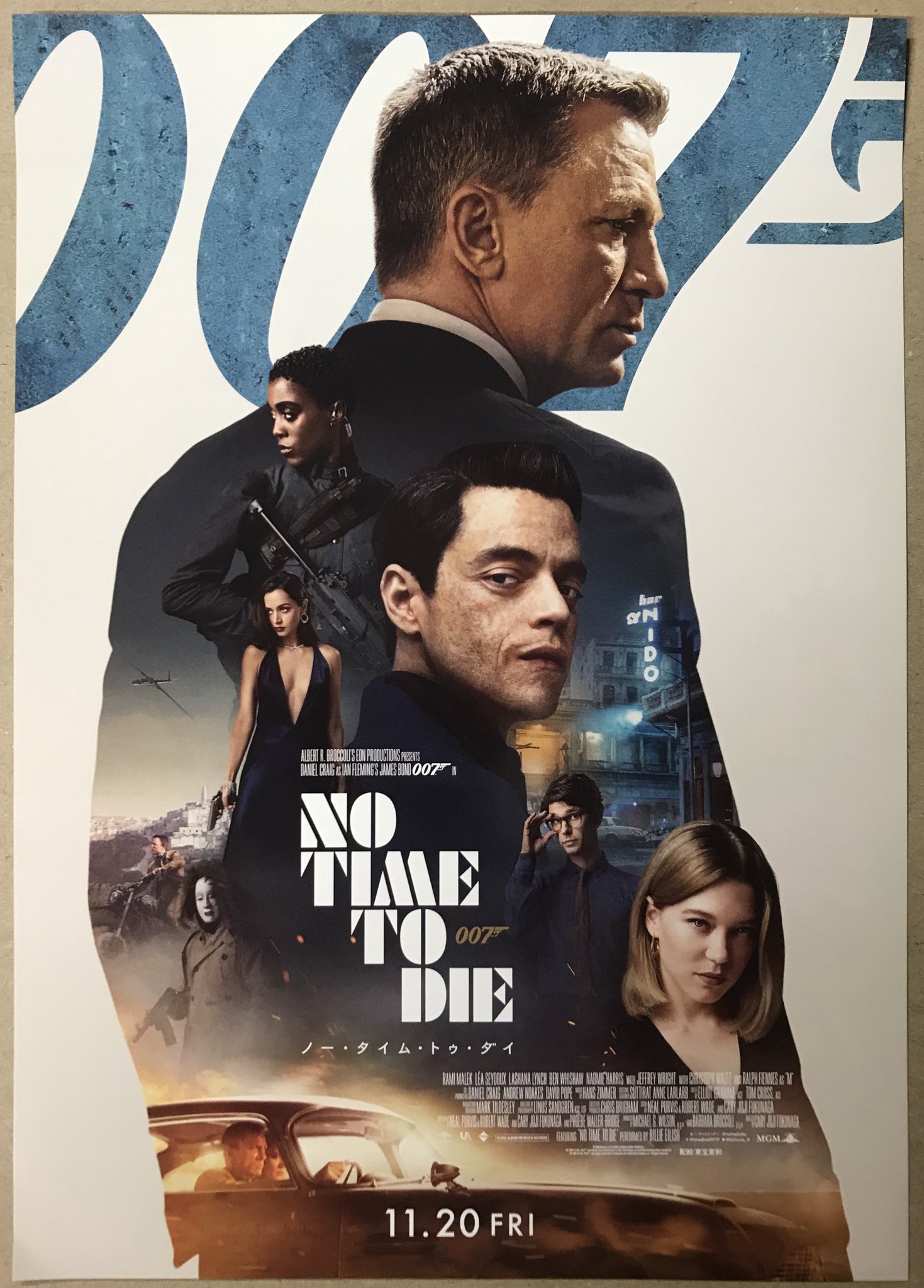
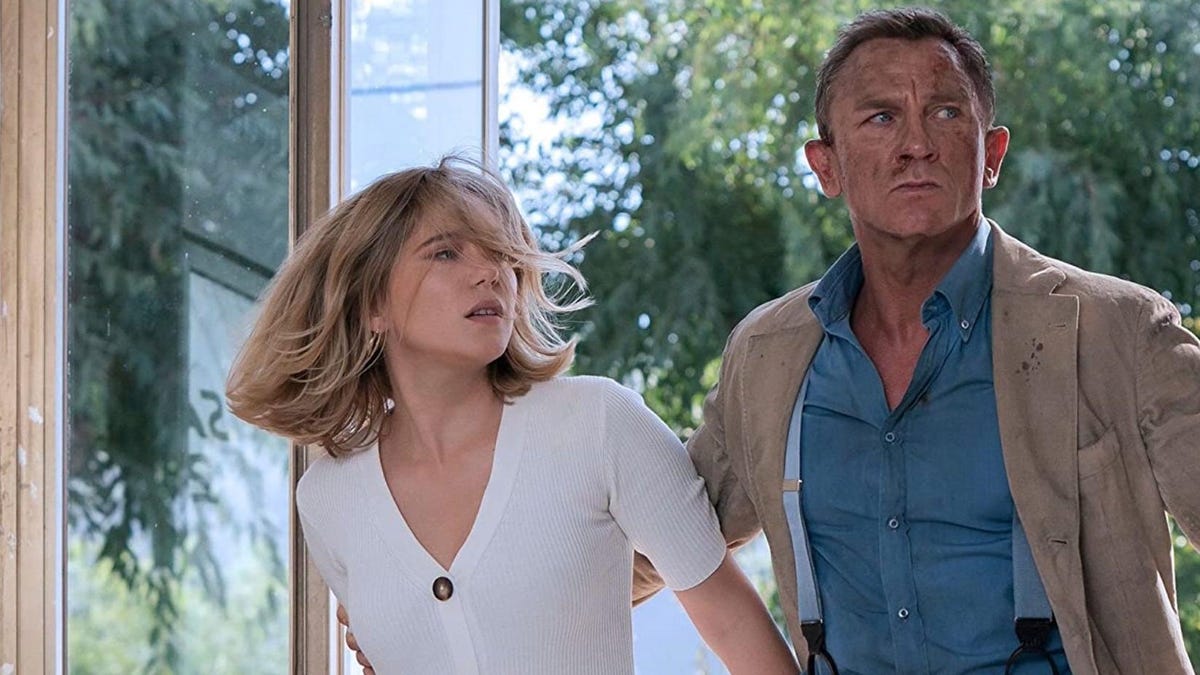
As a Bond swansong, No Time To Die (2021) gives Daniel Craig’s earthy and human characterisation of the famous spy a tremendous finale. Indeed, it was a powerfully entertaining work of cinema, but was it a great Bond film? Not for me. Don’t get me wrong, all the creatives here from the director, art department, cinematographer, location scouts, costume design, scintillating cast, stunt team, production crew, the army of screenwriters and so on, have all worked prodigiously to create a wonderful example of blockbuster genre cinema. But it has many story and legacy issues that stop it from being a memorably pure Bond film in my opinion. However, I am not going to be critical in this review, but rather celebrate what is great about No Time To Die (2021). Thus, it’s time to revel in the fact Fleming’s fictional formula continues providing sensational diversion from everyday existence.
The choice to make No Time To Die (2021) a direct sequel toSpectre (2015), would not have been my preferred route for this narrative. Spectre (2015) is entertaining. It was fine. Was it a good Bond film though? Not particularly. I should qualify this by saying I thought Skyfall (2012) was a cracking film; a fantastic action thriller with fine characterisation and a formidably nasty, yet playful, villain in Javier Bardem. Thematically, it was strong with Bond’s orphan background and relationship with M (other) providing depth and subtext. Skyfall (2012) was also lusciously shot by Roger Deakins with fantastic direction from Sam Mendes. But neither Spectre (2015) or Skyfall (2012) are great Bond espionage adventures like From Russia With Love (1963) or The Living Daylights (1987), or a devastatingly plotted, romantic action adventure like Casino Royale (2006). Skyfall (2012) was an Oedipal soap opera with bells on, as ghosts of the past avenge the present. Spectre (2015) and No Time To Die (2021) continue the theme of vengeful and dysfunctional family ties bringing strife to Bond. But, nowhere near as successfully as Craig’s first outing, Casino Royale (2006). That remains one of the best Bond films ever.
Like Quantum of Solace (2008), No Time To Die (2021) is, as aforementioned a sequel, but the main difference is No Time To Die (2021) is way longer than Quantum of Solace (2008). The pace rarely dips in No Time To Die (2021), but it could certainly have been trimmed in places because at times I felt the screen was stuffed with too many characters and subplots. I must point out I’m aware that Quantum of Solace (2008)is not rated highly in the Bond canon, but I like it. I feel there are some incredibly filmed sequences in it. Notably, the opening car and foot chase, the opera shootout, a spectacular air conflict and the fiery desert lair denouement. While the villain was weak and it failed in terms of narrative, Quantum of Solace (2008)succeeded for me as a fast-paced and exquisite, if choppy, spectacle that tied up the loose ends from the far superior, Casino Royale (2006). Quantum of Solace (2008) infamously had no writers re-working it due to the ongoing strike, No Time To Die (2021), arguably has too many cooks and ingredients occurring simultaneously. Having said that Cary Joji Fukunaga brings a confident energy to the film throughout, connecting the emotions of the script and explosive box of tricks together in a neatly packaged presentation.
Daniel Craig is phenomenal in No Time To Die (2021). While he is always a strong actor, he has also grown into a bona fide movie star too. Even when going through the motions in Spectre (2015) he was good, but in No Time To Die (2021), he blows the doors off. While he does look too old for the role now, from getting blown up in Italy, to almost drowning in Cuba and facing off against Rami Malek’s malevolent poisoner on an island near Russia, nobody does almost-dying better than Craig. Moreover, as well as the constant threats on his life, crazy new technology that delivers instant death, and a litany of evil henchmen trying to take him down, Bond must contend retirement and having his place usurped at MI6 by the confident Nomi (Lashana Lynch). Having been set-up as a major story player, Nomi and this spy-versus-spy story pivot ultimately peters out for more melodramatic plotlines which I will not divulge. In fact, Nomi’s thunder is ultimately stolen by the CIA agent, Paloma, with Ana De Armas absolute dynamite in the smashing Cuban section of the film.
As with Spectre (2015), where there wasn’t nearly enough of Christoph Waltz, Rami Malek’s villain Safin is not utilised enough. Malek gives a haunting performance in a few creepy scenes, yet I felt cheated. I would have loved more exchanges between him and David Dencik’s eccentrically dangerous scientist. More scenes in the imaginatively designed island lair where all manner of deadly poisons were being concocted would have been brilliant, and further developed Safin’s intriguing backstory and fiendish plotting.
No Time To Die (2021) belongs to Bond and Daniel Craig of course, and they get into some barnstorming scrapes. The opening action involving motorcycle stunts and the iconic Aston Martin blasting the Spectre goons is an early highlight. The Cuban nightclub murders and subsequent gunplay really raise the pulse too. After the explosive boat sequence where Bond has a moving parting of the ways from an old friend, the action arguably becomes more generic and not as memorable. That is, THAT IS, until the unforgettable end set-piece where Craig’s 007 faces an insurmountable set of physical and emotional challenges. Lastly, some might say Daniel Craig goes out on an all time high, and no doubt No Time To Die (2021) is destined to knock the living daylights out of all prior Bond box office records.












 The Cinema Fix presents