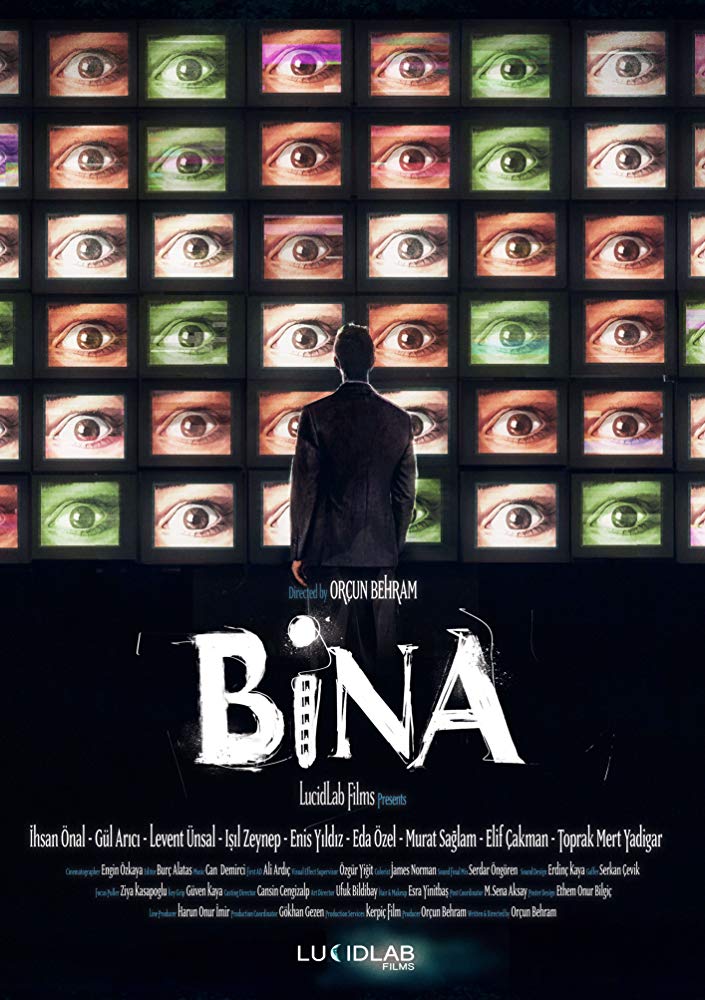
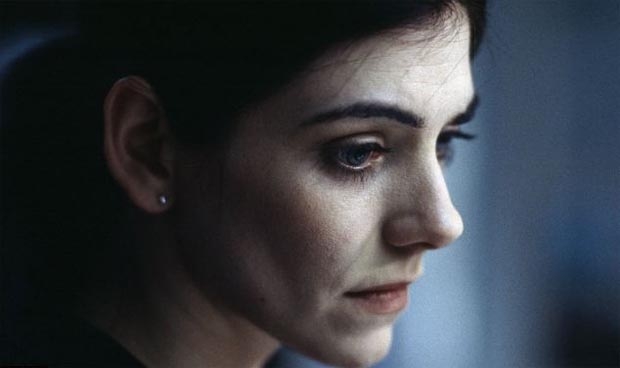
Cast: Ihsan Onal, Gül Arici, Elif Cakman, Murat Saglam
**********SPOILER FREE REVIEW**********
The London Film Festival is here once again and I have booked in to watch a number of big studio and independent films. Not as many as my wife, who is determined to break herself on the cinematic wheel.
It really is kid in a candy store time at the London Film Festival with all manner of films on show. The first I chose was a low budget Turkish film. It’s a psychological and socio-political horror film called The Antenna (2019).
As we follow the lowly security guard, Mehmet (Ihsan Onal), and various families on the council estate, all manner of weird things start to occur when a new Satellite dish is installed. The slow pace, sharp camera angles, creepy imagery and haunting sound all combine to create an under-the-skin paranoia and fear.
Clearly the Turkish filmmaker, Orcun Behram, is a very talented director who has been learning from the best, notably David Cronenberg and David Lynch. His surreal, dystopian vision of an oppressed tower block in an unnamed state becomes an allegorical critique of Government and media control.
I was really gripped by the film, but once you get the powerful and horrific message the filmmaker is making,The Antenna (2019) feels too long. The sinister pace worked at the beginning but as the film progressed it felt draining. Indeed, while the incredible visuals and soundscape serve the message impressively, it arguably needed to be trimmed for pace to make the horror on show even more powerful.
Produced by: Brad Pitt, Dede Gardner, Jeremy Kleiner, James Gray, Anthony Katagas, Rodrigo Teixeira, Arnon Milchan
Written by: James Gray, Ethan Gross
Cast: Brad Pitt, Tommy Lee Jones, Ruth Negga, Donald Sutherland, Liv Tyleretc.
Music: Max Richter
Cinematography: Hoyte Van Hoytema
**MAY CONTAIN SPOILERS**
There’s a moment toward the end when Brad Pitt’s intrepid astronaut, Roy McBride, is floating in space, and he asks himself (via a voice-over), should I carry on? Is there any point? In the vastness of space, nearing the endgame of an epic mission full of danger, he asks himself if it is worth, existentially speaking, continuing. It’s a central theme to the whole film and perfectly encapsulates McBride’s character. Externally he is heroic, however, internally he is perpetually questioning whether life is worth living. I often find myself doing this, but not in space. It’s usually when my alarm goes off in the morning and I have to go to work.
But McBride is not pathetic like me. I cannot even get on a plane for fear of crashing. He is on a mission to save Earth. Because, in the near future, catastrophic destruction is threatening us. Thus, he is given the task of venturing to Neptune, via Mars and experience all manner of space obstacles in order to track down the person or persons who may have caused the beginning of the end. This individual is alleged to be his father, portrayed by Tommy Lee Jones. So begins McBride’s very personal journey to the stars; to the heart of the darkest space.
A while ago I wrote an article about Hollywood making unofficial “remakes” as part of their film output – you can read the article here. Essentially, I proposed that in amidst their sequel, prequels, adaptations and superhero movie releases, you will get original screenplays and content too. However, sometimes these original ideas are thinly veiled carbon copies of ideas and structures from other films or literary sources.
For example, Star Wars (1977) used The Hidden Fortress (1958) structure and characters as an original starting point. Likewise, James Gray’s stunningly crafted science-fiction drama. Ad Astra (2019) is clearly using Joseph Conrad’s Heart of Darkness and Francis Ford Coppola’s Apocalypse Now (1979), as, not just influences, but total structural replication.
This in no way effected my enjoyment of this enthralling epic. What did happen though is that the story structure felt very familiar. The narrative unfolds in a staccato style with elegantly shot space transportation sequences and McBride’s psyche testing stops, spiked with bursts of action, fighting and surprising twists. When Clifford finally reaches Kurtz, I mean his father, his character and the audience have experienced some truly thrilling and visually spectacular moments. We also experience the psychological and philosophical musings of McBride. But, arguably these are nowhere near as poetic as Martin Sheen’s voice-over from the Coppola war classic.
In most scenes the visuals steal the show. The cinematography by Hoyte Van Hoytema and production design creates a hive of imagery which, amidst the darkness, bursts with colour and light. I genuinely, especially on Mars, felt like I was in a moving art installation. Having said that, Brad Pitt’s subtle but emotional performance and Max Richter’s sumptuous score also enhance the emotional pull of the story. Pitt, I expect to win a Best Supporting Oscar as Cliff Booth in Once Upon A Time in Hollywood (2019), but he could also get a Best Actor nomination here.
James Gray directs with a deft and “less is more” hand throughout. While the production itself looks epic, the psychology of the film is one of introspection. His themes of obsession, journey and existentialism drew me in the way they did in his last film, The Lost City of Z (2016). Ultimately, although the film’s screenplay could have ironed out some thin characterisations and plot inconsistencies, Gray demonstrates that the very existence of his films certainly make life worth living.
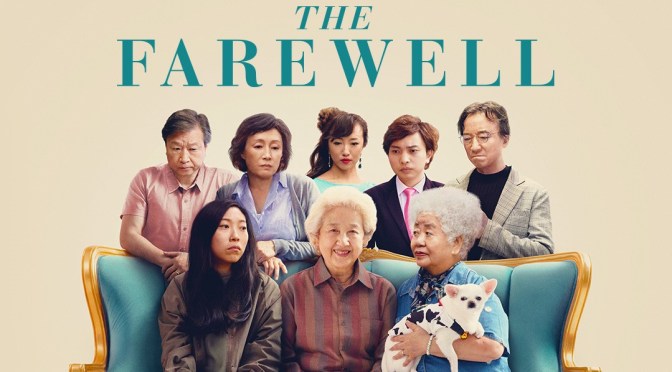
Produced by: Daniele Melia, Peter Saraf, Marc Turtletaub, Andrew Miano, Chris Weitz, Jane Zheng, Lulu Wang, Anita Gou
Main Cast: Awkwafina, Tzi Ma, Tzi Ma, Diana Lin, Jiang Yongbo, Zhao Shuzhen, Lu Hong, Chen Han, Aoi Mizuhara etc.
Cinematography: Anna Franquesca Solano
Music: Alex Weston
**MAY CONTAIN SPOILERS**
High concept film pitches usually take a tremendously marketable idea that can hook you in seconds, but also cost tens of millions of dollars to make. Sometimes though you’ll get a lower budget, more art-house character film, which will have an equally alluring premise for a fraction of the price. Lulu Wang’s second directorial release, The Farewell (2019), is one such film.
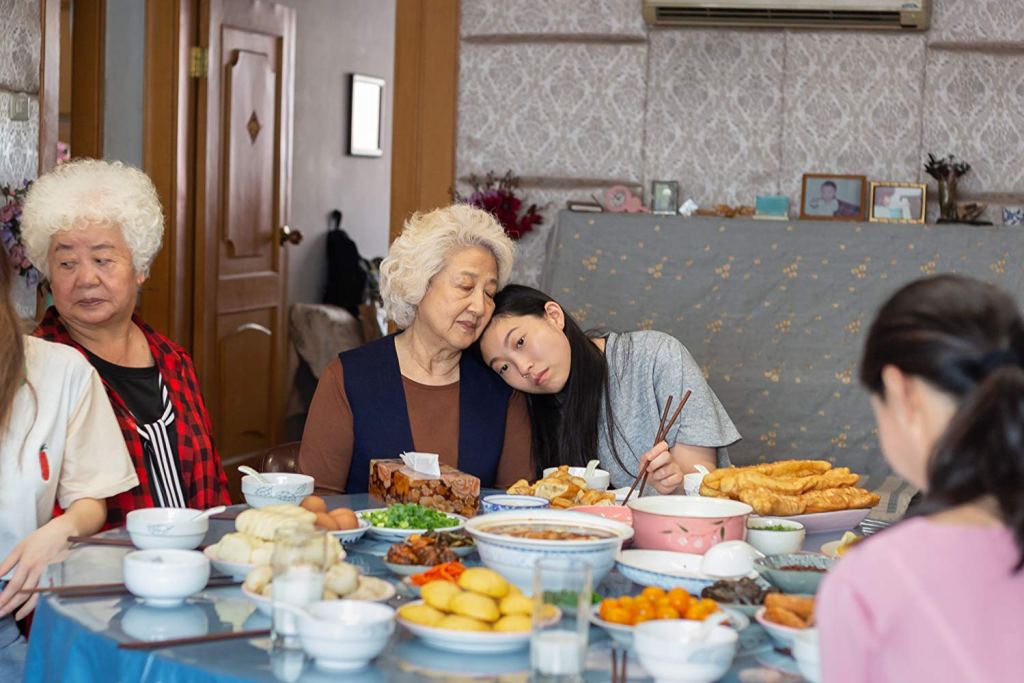
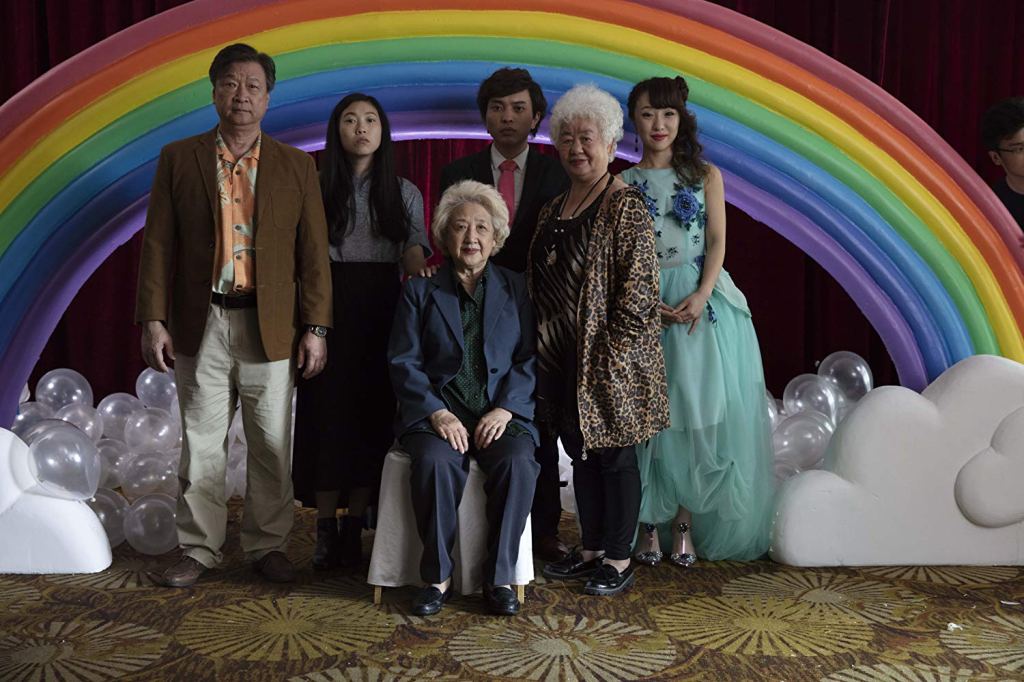
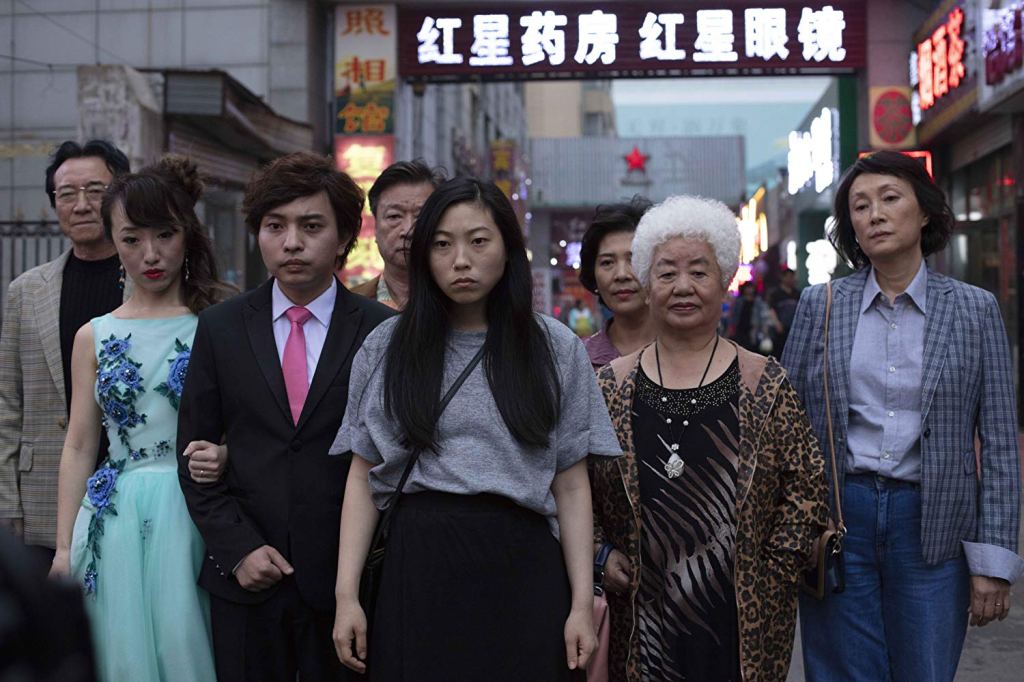
Based on a true story or “actual lie” as the prologue text reveals, the narrative revolves around a Chinese family and their decision not to reveal to their paternal Grandmother, or Nai-Nai (Zhao Shuzhen), that she has terminal cancer. This leads to a bittersweet series of scenes, full of comedy and pathos, as the whole family must keep the secret while arranging a fake family wedding in China.
While it is an ensemble cast generally, the audience conduit is Awkwafina’s Billi Wang. As her character, along with her mother and father, have lived in America for several years she believes that the Grandmother she loves has a right to know about her illness. As the scenes unfold, she clashes with various family members creating a palpable suspense as to whether Billi will reveal the truth. Moreover, we get many scenes where the family debate the various cultural and philosophical reasons why Nai-Nai should or should not be told. These I found very thoughtful and engaged both my heart and mind in equal measure.
Overall, it’s a low-key character study but nonetheless gripping, funny and sad throughout. I was especially drawn in because I wondered what I would have done in that situation. Personally, I think it is best to tell the person they are ill, but as the film wore on, I could see the other side of the argument too. In other hands this could have been turned into a poorly conceived farcical comedy, but as this is based on the writer and director’s Lulu Wang’s real-life experiences, we ultimately get a very touching film about life, death, family, love, culture and truth.
Personally, I would have liked Billi’s character to have been a bit more fleshed out at the start. Mainly because I was unsure of her personality and she just seemed a bit depressed. I mean was she a writer or a pianist and what was her job? Having said that, Awkwafina provides subtle brilliance in her role as Billi, yet, Zhao Shuzhen steals the show as the effervescent Nai-Nai, whose character shows an unabated lust for life throughout this fine film.
Based on: IT by Stephen King – Screenplay by Gary Dauberman
Produced by: Barbara Muschietti, Dan Lin, Roy Lee
Main Cast: Jessica Chastain, James McEvoy, Bill Hader, Bill Skarsgard, Isiah Mustafa, James Ransone, Jay Ryan, Andy Bean etc.
Cinematography: Checco Varese
**MAY CONTAIN SPOILERS**
Stephen King is clearly a genius. To be able to maintain creativity and longevity as a writer, plus give birth, as it were, to any number of iconic narratives, characters and events is a testament to his massive energy and talent. When I was young one of the scariest things I ever saw on TV was the horror serial Salem’s Lot (1979), which was about vampires taking over a small town. His book Carrie (1976) was also adapted into one of the best horror films of the seventies too. Moreover, during the 1980s, TV and cinema screens were peppered with King’s work notably: The Shining (1980), Stand by Me (1986) and the under-rated Pet Semetary (1989). In 1990, Tommy Lee Wallace directed a mini-series of IT,with the terrifying Tim Curry as Pennywise the Clown. IT proved to be an excellent horror story until the – faithfully sticking to the novel of course – ridiculously silly ending.
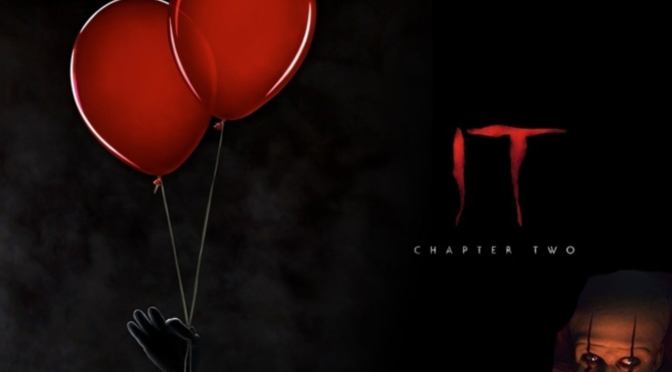
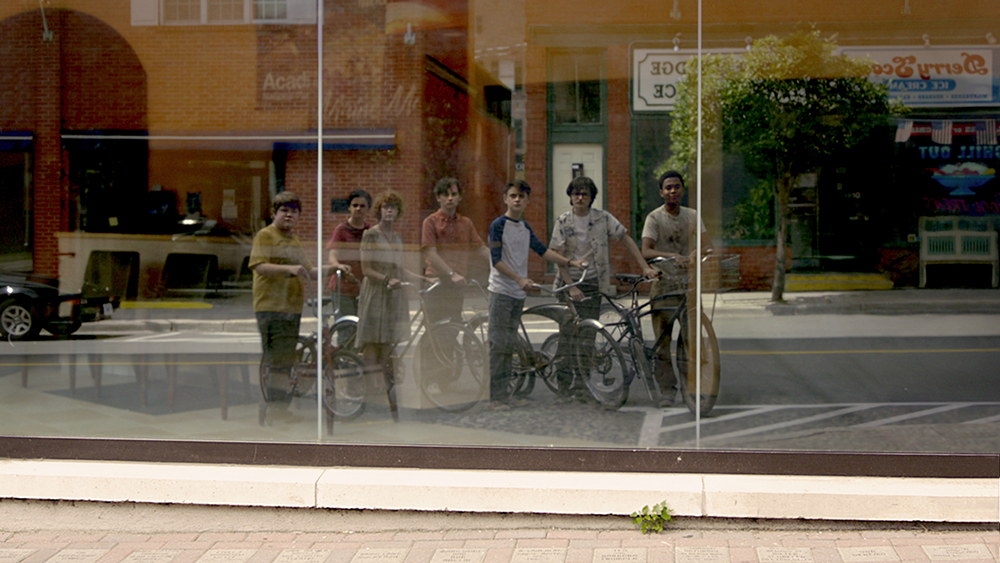
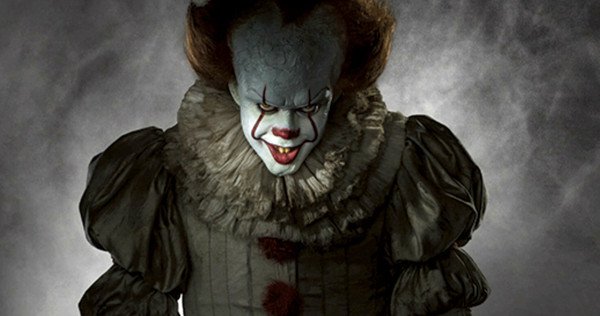
Flash forward twenty-seven years, IT: Chapter One (2017) and Pennywise (Bill Skarsgard) was back to haunt the dreams, drains and sewer pipes of Derry, Maine, using subconscious manipulation and fear to lure kids and adults to their death. Directed by Andy Muschietti, the film was a big box office hit and it’s a highly entertaining genre horror movie full of fantastic set-pieces. Thus, it was no surprise we got IT: Chapter Two, with the terrified kids now older, but equally afraid and under threat from that devilish clown.
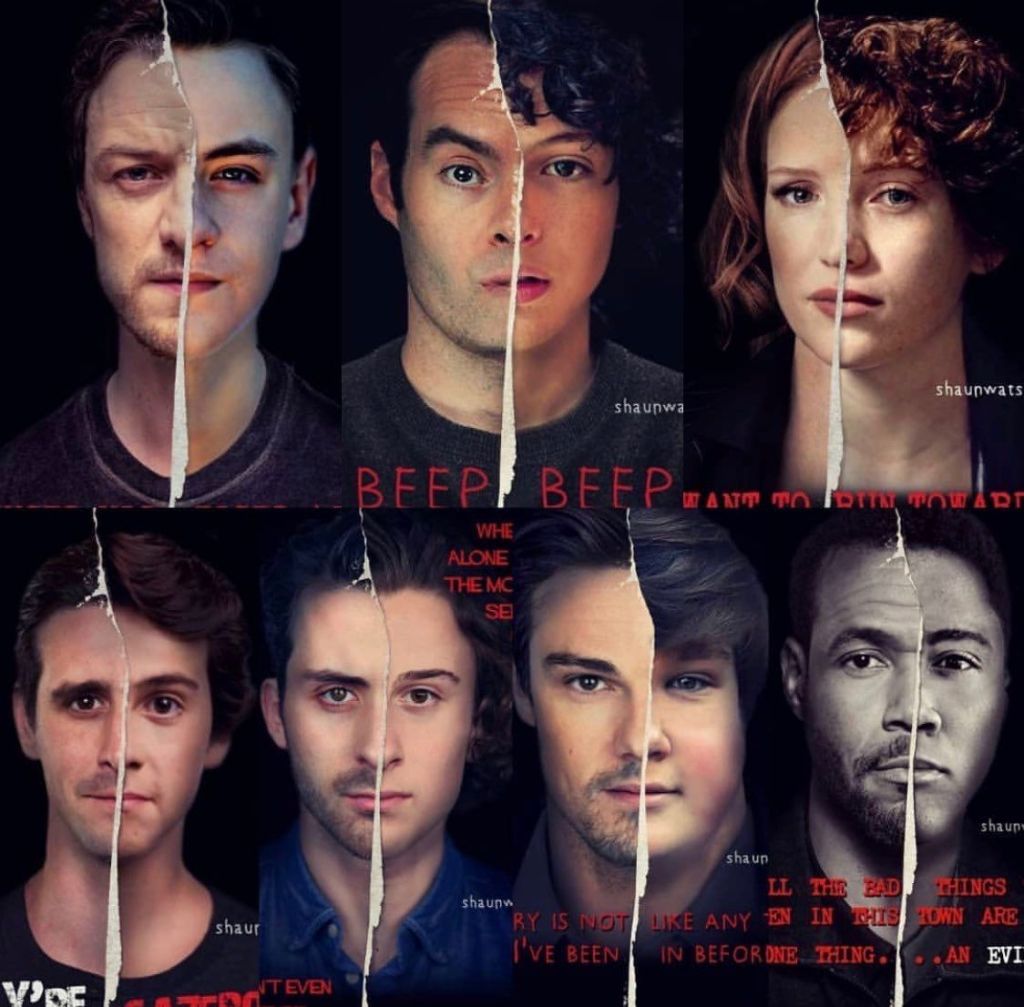
In preparation for IT: Chapter Two, I re-watched IT: Chapter One and must say I enjoyed it even more second time round. King’s imagination and ability to craft a great story full of memorable iconography such as the clown, balloons, deathly sewers, small-town existence and the strong theme of outsiders/losers versus bullies/abusers resonate perfectly within the jump-scare-horror tropes. The second film, though longer, doesn’t really develop the characters as much and we get more of the same scary scenarios but this time with the adults in place. Having said that the cast led by Jessica Chastain, James McEvoy and the brilliant Bill Hader create excellent characterisations and reflections of their younger selves.
Pennywise himself is arguably not as scary second time round either because his fear factor is lessened by familiarity. But the assorted monsters the ‘It’ creature conjures up still hold some surprise for our protagonists to face. The scariest was Bev’s demon, a creepy old woman who frightened the life out of me during the trailer and the film. What I also liked was the film confronting the frankly insane nature of Stephen King’s actual monster, which we are advised has existed since Earth even began. The filmmakers succeed where the 1990 mini-series failed, in making this inter-dimensional behemoth somehow plausible. I especially liked the in-jokes referencing the criticisms about King’s works often having terrible endings.
Thus, overall, I enjoyed this final chapter horror adaptation of King’s monster novel; and the ending worked this time. While there is a lot of repetition and recycling of horror moments of the first film, the themes of confronting and defeating bullies and demons from the past and present resonates powerfully. Lastly, like many of King’s works, it’s about the power of friendship and strength in togetherness. Because, only together can we overcome the fear of real, surreal and unreal demons lurking in the darkness of our towns, cities, rooms, homes, sewers and most of all, our minds.
Developed by Steven Levenson and Thomas Kail – based on Fosse by Sam Wasson
Executive Producers: Steven Levenson, Thomas Kail, Joel Fields, Lin-Manuel Miranda, George Stelzner, Sam Rockwell, Michelle Williams
Producers: Erica Kay, Kate Sullivan, Brad Carpenter
Directors: Thomas Kail, Adam Bernstein, Jessica Yu, Minkie Spiroetc.
Writers: Steven Levenson, Thomas Kail, Deborah Cahn, Tracey Scott Wilson, Charlotte Stouldt, Ike Holter, Joel Fields
Main Cast: Sam Rockwell, Michelle Williams, Norbert Leo Butz, Margaret Qualley, Nate Corddry, Paul Reiser, Jake Lacy, Susan Misner, Peter Scolari, Kelli Barrett, Evan Handler and many more.
Original Network: FX – UK Network: BBC
No. of Episodes: 8
**MAY CONTAIN SPOILERS**
I’m not a massive fan of musical shows or films as a genre. However, when the subject material or narrative connects with me, or the craft of song and dance transcends the form I will enjoy them. Thus, musicals I have seen and enjoyed on stage in the last few years include the brilliant Gypsy, Funny Girl, and Company. On the other hand, I could not stand Hamilton, despite the incredible talent involved in the production. Ironically, Hamilton director, Thomas Kail, is a major driving force behind this adaptation of Sam Wasson’s book about Bob Fosse and Gwen Verdon.
On the cinema screen the likes of: The Wizard of Oz (1939), Singing in the Rain (1952),Grease (1978), Moulin Rouge (2001), Chicago (2002), are just a few great examples of the genre I liked. But, the best and most exceptional musical I have seen in terms of form, style and subject matter is the Bob Fosse directed, Cabaret (1972). It’s not just a great musical, but it’s also a incredible piece of cinema. It oozes dark class in the musical set-pieces, ambiguous and fractured characterisation, sleazy sexuality and the thematic political subtext of pre-World War II Germany.
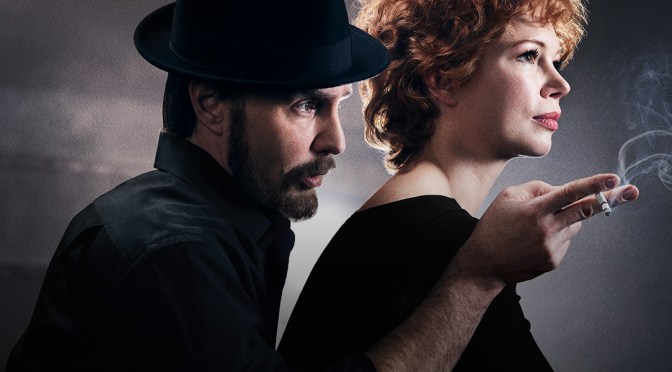
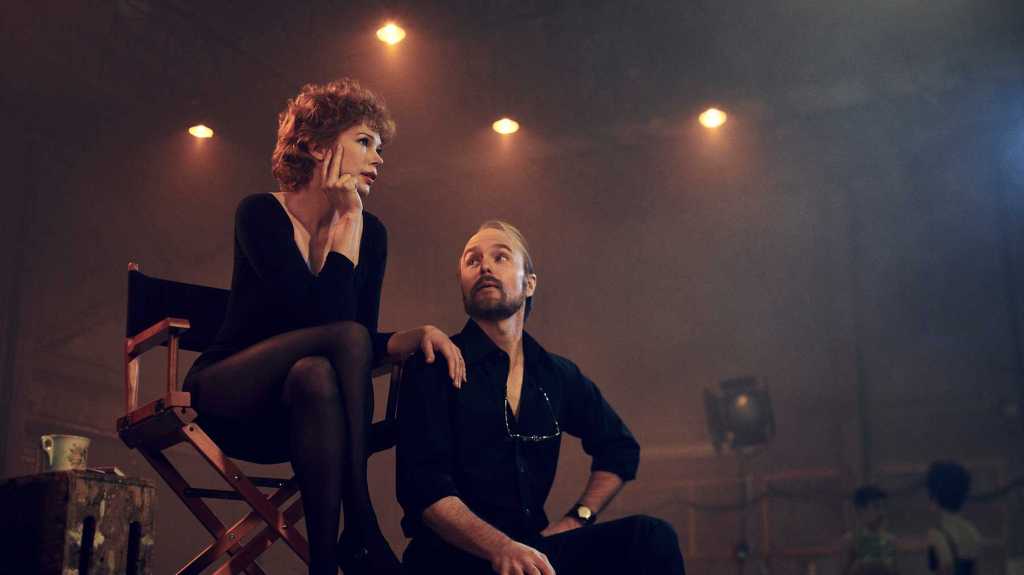
The making ofCabaret (1972) is one of the many creative events featured in Fosse/Verdon (2019). As the title suggests, it is an extensive biographical television drama about legendary director and choreographer Bob Fosse (Sam Rockwell) and the genius dancer, Gwen Verdon (Michelle Williams). Both their artistic and personal lives were entwined from the time they met on the Broadway musical Damn Yankees in 1955, to the moment of his death in 1987.
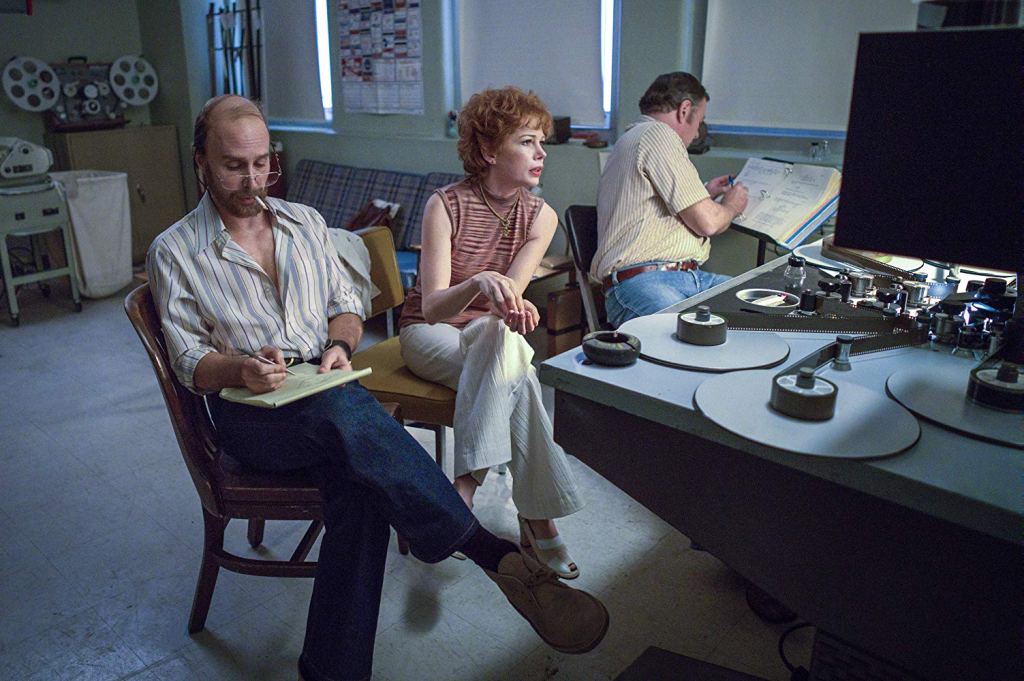
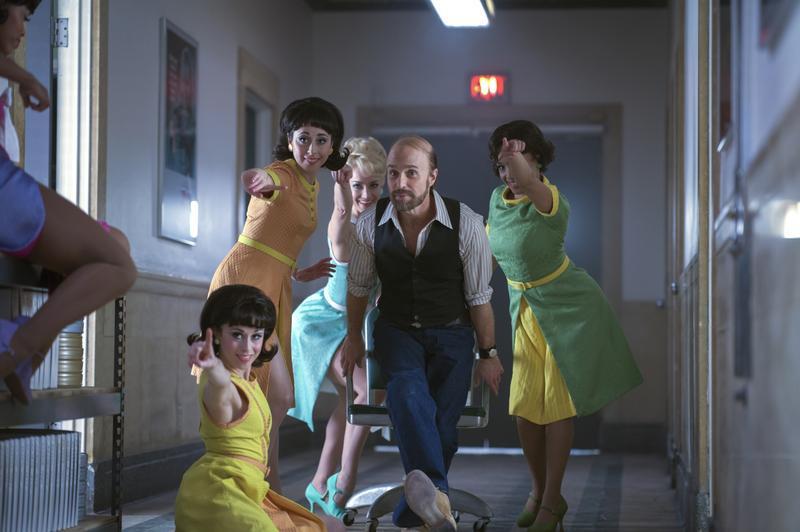
If you’re interested in musicals and the work of Fosse and Verdon then you will absolutely love this warts and all biopic. We get extensive rehearsal, on stage, on screen and edit room scenes showing Fosse and Verdon’s creative process. Songs and dance numbers from Cabaret, Sweet Charity, All That Jazz, Pippin, Chicago and many more, feature heavily in the play and fantastic soundtrack. Further, both Fosse and Verdon, were dancers from a very young age and we therefore get scenes from their formative years paying their dues in dives and flop-houses.
We also get the heavy drama of Fosse and Verdon’s marriage battles. The former being a pill-popping workaholic and womaniser was the biggest issue in their relationship. His constant affairs and narcissistic tantrums took their toll eventually. Indeed, Fosse, while an amazing creative force, is quite despicable in his lecherous use of the casting couch and exploitation of his position and power. Perhaps, even more could have been done to critique his negative acts, especially in light of the #MeToo gender issues relevant today. However, there is no aggressive damnation of his actions, but rather agnostic reflection and acceptance that this was prevalent masculine behaviour for the era.
Sam Rockwell as Fosse is outstanding. He conveys the sadness of a junkie, haunted by a dysfunctional and abusive childhood. Yet, where his work is concerned his energy and obsession is non-stop and formidable. This, in no small part, is down to his constant amphetamine abuse; something which would lead to mental and physical health issues. Similarly, Michelle Williams is incredible as Gwen Verdon. She inhabits this classy performer with an energy and drive, but also a fighting spirit when clashing with Fosse creatively and matrimonially. She is more his match than his muse though. Indeed, Verdon, is his equal and deserves to share many of his plaudits and awards. They ultimately would push each other to greater heights and achievements.
The supporting cast, including the magnetic Margaret Qualley as dancer, Anne Reiking, and Norbert Leo Butz portraying writer, Paddy Chayefsky are excellent. Also, the talent and look of the era is convincingly evoked on and off the stage. The cavalcade of dance numbers are superbly mounted and the editing perfectly reflects the fractured nature of the characters’ show business lives. Lastly, the jigsaw structure, which zigs and zags from the characters’ past to Fosse’s final days, charting triumph and adversity, complements the complexity of the characters.
Thus, overall, this works as an honest analysis of a flawed genius and his equally talented dance and life partner. It is highly recommended for those drawn to the darker side of creative artistry and personal relationships. But the question remains: should the work of Fosse be re-evaluated, especially in light of his extremely sexual and sexist behaviour? Is there a statute of limitation for genius and all that jazz? The Primetime Emmy awards panel do not seem concerned given Fosse/Verdon (2019) has received seven major nominations at time of writing. All of which it stands a great chance of winning!
Created and Written by Sally Wainwright – based on The Diaries of Anne Lister
Director(s): Sally Wainwright, Sarah Harding, Jennifer Perrott
Producer(s): Sally Wainwright, Faith Penhale, Laura Lankester, Phil Collinson
Main Cast: Suranne Jones, Sophie Rundle, Joe Armstrong, Gemma Whelan, Gemma Jones, Tom Lewis, Timothy West, Shaun Dooley, Vincent Franklin, Rosie Cavaliero, Lydia Lawton, Amelia Bullimore etc.
No. of episodes: 8
Original Network: BBC / HBO
**MAY CONTAIN SPOILERS**
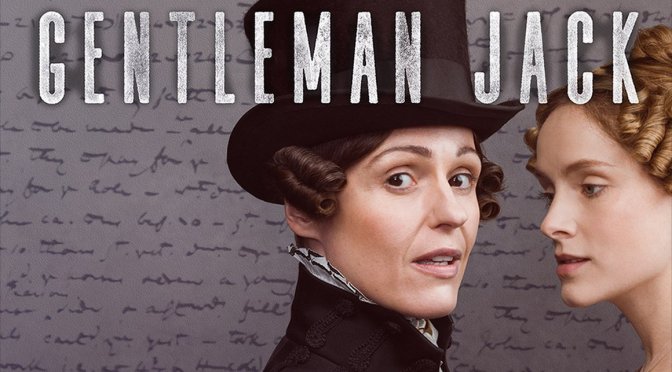
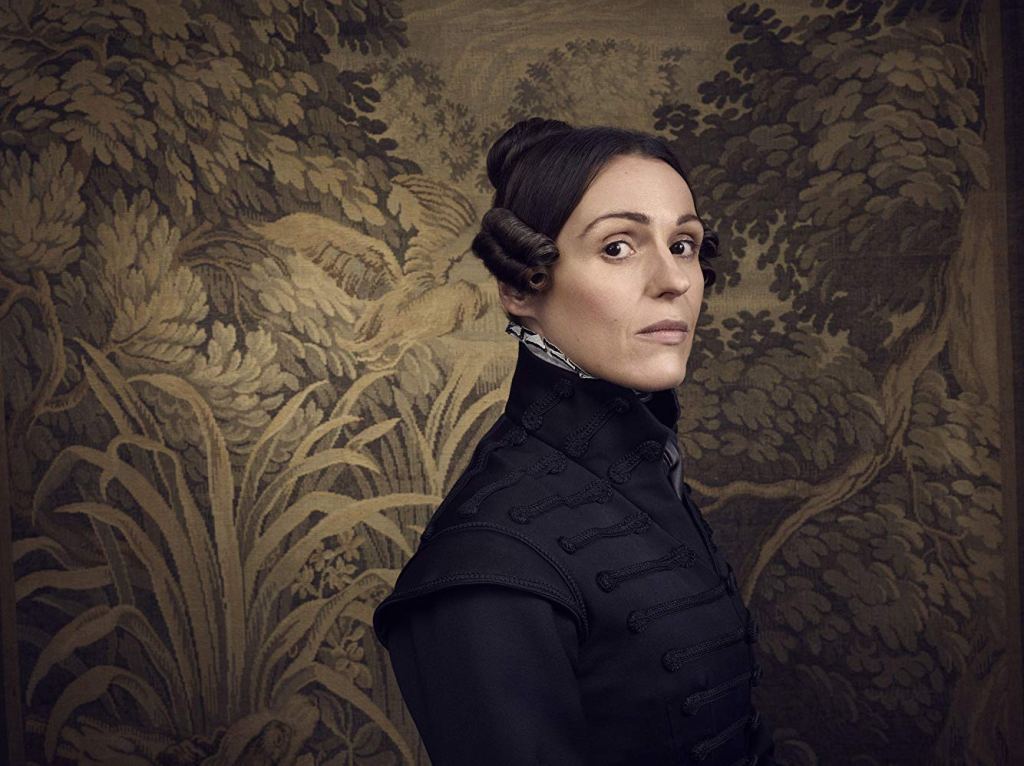
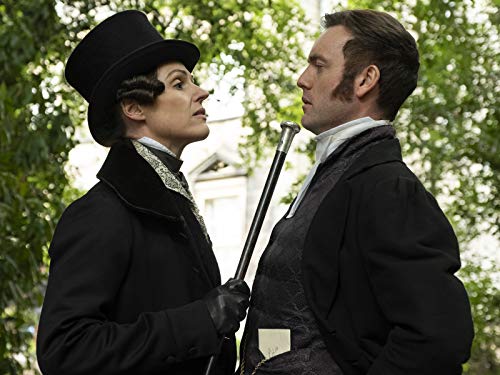
The BBC has a long history of producing classic period dramas and they have had much success with them. Likewise, HBO have an almost flawless record of producing great TV drama. Gentleman Jack caught my eye as it starred the ever impressive Suranne Jones in the lead role of Anne Lister. The titular character was a prominent industrialist and landowner in 1800s, Halifax, Yorkshire. Lister was full of energy, courage and determination as she fought the dominant patriarchal values of the day. As well as battling the men on the business plain, she also caused scandal with her preference for same-sex relationships. Much of this was documented in her extensive ‘secret’ diaries and came to light in their full explicit glory when they were de-coded some years later.
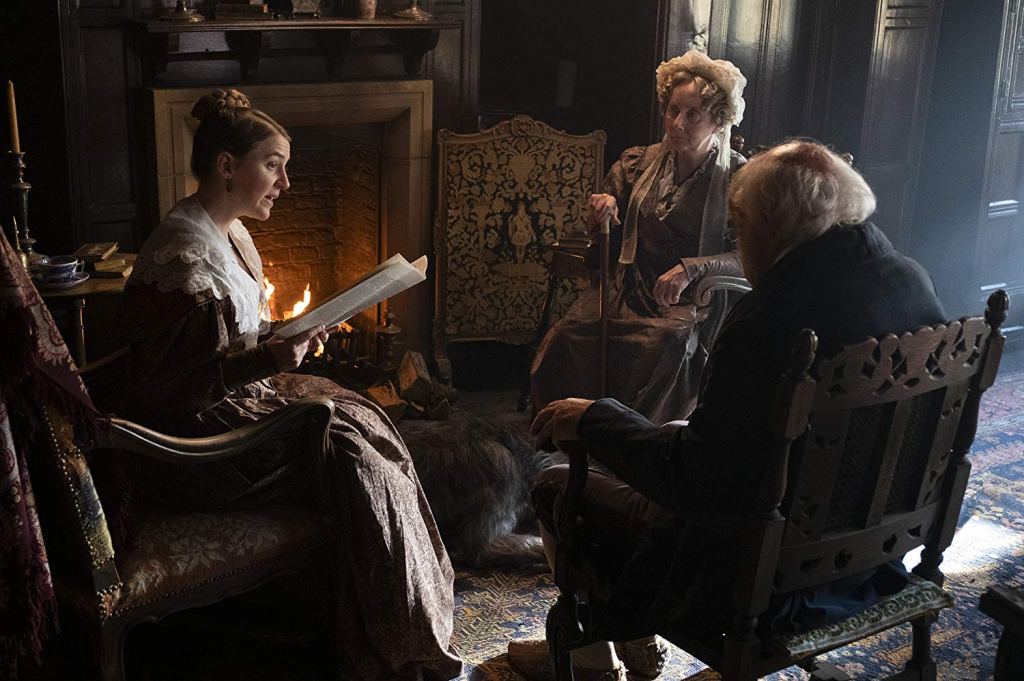
Adapted by Sally Wainwright, a very experienced writer and director, the eight episodes begins at a giddy pace. Lister has returned from abroad to her estate at Shibden Hall, after the breakdown of her most recent relationship. She wastes no time getting back into the swing of running the show and attempting to raise capital for a venture into the coal industry. Lister dotes on her Aunt and Uncle, but clashes with her more conventional sister, Marian (Gemma Whelan).
Marian disapproves of her sister’s robust, androgynous style and unsaid desire for female “companionship”. Amidst the cutthroat business conflicts with her rivals and tenants, Lister then finds a new romance with neighbour Ann Walker (Sophie Rundle). Ann Walker though is younger, delicate and somewhat inexperienced; thus, the path of love is very precarious.
The character of Anne Lister as presented by Suranne Jones is a fantastic watch. She strides around from location to location energetically controlling her estate and making plans. She clashes and stands her ground with the men of the drama, proving herself to be more than their equal. Gemma Whelan, as Marian, is also brilliant. Whelan steals many a scene with an exasperated look, sarcastic smile and witty quip. It’s a testament to her acting range she can inhabit such a bright character after the darkness shown in her role of Yara in Game of Thrones.
The actor with the most difficult role is Sophie Rundle. At times her character is so confused, mentally and emotionally, that she is hard to warm to. I personally wondered, apart from her wealth and sickly nature, what Lister was attracted to. I think there was probably sexual attraction but also a desire to protect this delicate flower. Nonetheless, the opposite nature of Lister and Walker’s personalities created intriguing and touching romantic situations.
The story had been told before in a film called The Secret Diaries of Miss Anne Lister (2010), directed by James Kent and starring Maxine Peake. I did not see that particular drama but as this latest adaptation is a co-production between the BBC and HBO, the values of the production are of course exemplary. The costumes, camerawork, style, musical score and pace create a very engaging tele-visual experience. Sally Wainwright deserves credit for adapting the diaries and creating compelling drama, romance and some darker events along the way.
I would say that perhaps the various narrative strands could have been resolved within six episodes, rather than eight. Plus, there was, on occasion, a use of Anne Lister directly addressing the audience which became jarring at times. I mean, there did not seem to be much context to the use of this stylistic device. Nonetheless, these are minor issues which did not stop me enjoying the show. Indeed, with a brilliant cast, writing and direction throughout I would highly recommend this excellent TV programme.
Writers: Jed Mercurio, Rachel Anthony, Richard Zajdlic
Directors: Jed Mercurio, John Strickland, Richard Laxton, Jon East, Iain B. Macdonald, Douglas Mackinnon,
Cast: Max Beesley. Patrick Baladi, Neve McIntosh, Keith Allen, Susan Lynch, Tamzin Malleson, Preeya Kalidas, Simon Lowe, Hattie Morahan, Vicky Hall, Nicholas Palliser etc.
No. of Episodes – 17 (over two seasons and one-off special)
Original Network: BBC (can now be viewed on BBC IPlayer)
**MAY CONTAIN SPOILERS**
Creator and writer Mercurio is a bulletproof show-runner; a genre writer with a proven hit rate whose work almost always brings commercial, critical and audience success. Having achieved early TV writing acclaim with dark medical comedy, Cardiac Arrest (1994-1996), Mercurio’s next drama Bodies (2004 – 2005) was another critical hit. Latterly, Bodyguard (2018) andLine of Duty (2012 – present) have also proved highly successful.
Undeniably,Line of Duty is a massive hit for the BBC. It has received awards and nominations from: the Royal TV Society, the Writers’ Guild and BAFTA. Moreover, it was also voted in the top BBC shows of all time. While I tend to avoid medical and police procedural dramas as a mild rule, due to the overly-saturation of such programmes on television, Mercurio’s work always draws me in. Thus, I decided to re-watch Bodies (2004 – 2005) on the BBC IPlayer and I’m both glad I did and didn’t to be honest.
I’m glad I watched it because it contains some of the most tense drama you can ever experience. I wish I hadn’t because it contains some of the most visceral medical operations and birthing situations you could ever witness. In fact, all Peckinpah, Carpenter and Tarantino films combined contain less blood than Bodies. Indeed, the ultra-realism of the gynaecological operations on show should contain a health warning of their own. No surprise the make-up and prosthetic effects team on the programme won many awards.
Based on Mercurio’s book of the same name, the narrative is inspired by his experiences working in the National Health Service. An ensemble cast impresses, but the lead protagonist is specialist registrar, Rob Lake (Max Beesley). He is a skilled Doctor who joins the Obstetrics and Gynaecology ward at fictional South Central Infirmary. Rob isn’t particularly likeable and Beesley is directed to portray him as a serious and surly Northern bloke. While still learning his trade he is an excellent surgeon though, with a keen sense of what is right.
The first series of six episodes is incredibly tightly wound and suspenseful because Lake finds himself in a number of medical and moral dilemmas. This is due to his clashes with his boss, Dr Roger Hurley (Patrick Baladi), who is prone to making severe errors during medical procedures. Consequently, during these pulsating scenes of medical trauma my heart was not so much in my mouth but on the floor. Having scooped and swallowed it back up, the fast pace of first season soon delivers further nerve shredding life and death situations.
Season Two is not quite as brilliant as Season One. While containing more incredibly vivid moments of birthing madness, it is over-stretched by an extended ten episode run. Plot-wise it carries on in a similar vein with Lake, Hurley and the toxic masculinity of Dr Tony Whitman (Keith Allen), all clashing within the hospital wings and operation rooms. Their conflicts endanger patients lives as they continually venture into dangerous games of one-upmanship. Added to the deadly apothecary are the politics on the ward, gender, sexual and class. Moreover, there’s the over-arching bureaucracy and target-led NHS managers poking their statistics in. These budget-scrabbling pen-pushers arguably kill more patients than the warring Doctors, mainly due to their incessant bean-counting, biscuit-eating and public relation drives.
Overall, while I have made this sound like a heavy drama or horror genre programme, it is in fact also darkly funny. Mercurio has a knack of taking the most grim circumstances and injecting doses of sardonic humour throughout. There is also gallons of blood and a lot of sex too; probably too much in the first season. But, I get that the theme of the human body was being explored very thoroughly, in more ways than one. Am I the only person who is not a fan of overt sex scenes in films or on television, even if they are in context?
Be warned, if you are scared of hospitals, or operations or about to have a child — DO NOT EVER WATCH THIS SHOW! It is brilliantly scripted and acted, but it will give you nightmares. I mean the Doctors, Nurses and medical staff of the NHS do an incredible job saving lives, so this show should not be a reflection of actual health care in the United Kingdom. If it is though, the phrase: “Trust me, I’m a Doctor” is never as scary as it is in Bodies.
Writer(s): William Bridges, Kate Trefey, Paul Dichter, Curtis Gwinn
Cast: Winona Ryder, David Harbour, Finn Wolfhard, Millie Bobby Brown, Gaten Matarazzo, Caleb McLaughlin, Noah Schnapp, Sadie Sink, Natalia Dyer, Charlie Heaton, Maya Hawke, Cara Buono, Joe Keery, Cary Elwes and many, many more.
Number of episodes: 8
Original Network: Netflix
**CONTAIN MASSIVE SPOILERS**
When Season 1 was released, Netflix’s phenomenally popular sci-fi-rites-of-passage-comedy-adventure-drama proved an excellent nostalgia-fest. Indeed, it evoked the 1980’s perfectly in design, sound and look, wearing Steven Spielberg, Stephen King, John Carpenter and George Lucas influences, not so much on its sleeve, but as a whole darned fashion show.
Written and directed by the Duffer Brothers, it centred on the search for a missing child in (where else) Indiana, an ultra-dimensional netherworld and a telekinetic kid called Eleven, who’s on the run from a nefarious US Government facility. Archetypal characters such as embittered drunken cop (David Harbour), distraught nutty mother (Winona Ryder), Gooniesque geeky teens all try and track down their missing friend during eight episodes containing weird and monstrous moments throughout.
I thought Season 1, while full of great design, style, suspense and mystery, was over-rated. It was still a fine work of entertainment but I found the story seriously padded out and stretched. While Season 2 is more generic it was a marked improvement as we got more pace and action. Season 3, though, is even better in terms of story-lines, pace and humour. Some may lament the move away from the mystery and darkness of Season 1, but Season 3’s humour, action and romantic sub-plots are turned right up to Eleven (pun intended).
Furthermore, amidst all the teenage romance crap, there is some fantastic gore and visceral monster goo on show. The Mind Flayer nemesis is an absolutely fearsome creature creation and way more convincing than the cartoon Russians. So, overall, I think this was my favourite season as it didn’t take itself too seriously. It just went for pure adrenaline and mind-bending chases and fights throughout. I didn’t even mind the John Hughes-style soppy romances.
Lastly, Season 3 isn’t perfect as it often verged on parody. This is notable in Episode 8, where we get a viral-bait version of The Never Ending Story (1984) theme song. Quite frankly, it was tonally inappropriate given the kids were being hunted down by Russian soldiers and an inter-dimensional monster at the time. Aside from this crime against genre occurring Season 3 is great because it featured a cavalcade of film references and homages. Well, let’s be honest, they basically stole a load of ideas from other movies.
So, rather than do a traditional review I will mark Stranger Things (2019) – Season 3, and then pick a TOP TEN movie homages or steals that featured prominently as a fun meta-bingo review. Obviously, I’ve probably missed loads out, so, if you care, let me know which ones.
Mark: 9 out of 11
TOP TEN META-REFERENCES IN STRANGER THINGS (2019)
RUSSIAN BADDIE — THE TERMINATOR (1984)
BILLY AND TOWNSFOLK ‘DOUBLES’ — INVASION OF THE BODY SNATCHERS (1956 / 1978)
THE MIND FLAYER – THE BLOB (1958) / ALIEN (1979) / THE THING (1982) / TREMORS (1990)
STEVE AND ROBIN’S “WILL THEY, WON’T THEY ROMANCE?” — ANY JOHN HUGHES FILM!
THE BLACK WATER VOID – UNDER THE SKIN (2013)
USA VERSUS RUSSIA — RED DAWN (1984), RAMBO 2 (1985) & ANY COLD WAR FILM!
BILLY’S DREAMS — DREAMSCAPE (1984) / NIGHTMARE ON ELM STREET (1984)
ELEVEN’S TELEKINETIC POWERS — CARRIE (1976), THE FURY (1978) & SCANNERS (1981) ETC. . .
KIDS ON A MISSION TO SAVE THE TOWN/WORLD (AGAIN) — THE GOONIES (1985)
FANTASY OLDER WOMEN DYNAMIC — RISKY BUSINESS (1983) / WEIRD SCIENCE (1985)
ONCE UPON A TIME IN HOLLYWOOD (2019) – FILM REVIEW
Directed and Written by: Quentin Tarantino
Produced by: David Heyman, Shannon McIntosh, Quentin Tarantino
Cast: Leonardo DiCaprio, Brad Pitt, Margot Robbie, Emile Hirsch, Timothy Olyphant, Margaret Qualley, Austin Butler, Al Pacino, Mike Moh, Bruce Dern, Dakota Fanning, Damien Lewis, Kurt Russell and many, many more.
Cinematography: Robert Richardson
**MAY CONTAIN SPOILERS**
From watching the trailers for Quentin Tarantino’s ninth film, Once Upon A Time in Hollywood (2019), I remember thinking: this looks so cool and I’m glad they haven’t given away much of the story here. Because, I hate those darned trailers which give away the story!
So, you watch Quentin Tarantino’s ninth film and then you realise, after the excessive running time, THERE ISN’T REALLY ANY STORY as such! Okay, DiCaprio’s character suffers an existential career crisis but that’s kind of it. Instead, you get mostly a nigh-on three-hour historical and cultural nostalgia trip down memory lane filtered through the artistic and fetishistic vision of one of cinemas great filmmaking iconoclasts.
Once Upon A Time in Hollywood (2019), is essentially an arthouse character study where you get to hang out with two-and-a-half lead protagonists, plus a whole army of fictional and ‘real’ life supporting characters from the 1969 Hollywood era. Our two main “heroes” are neurotic, alcoholic B-movie actor, Rick Dalton (Leonardo DiCaprio), and tough, handsome and laconic, Cliff Booth (Brad Pitt). The two characters contrast and complement each other perfectly. Moreover, the star quality, chemistry and fine performances of the lead actors bind the movie together amazingly.
Brad Pitt is especially brilliant. His character is not, until the violent ending, given much to do story wise; however, he does it with such charm. He imbues a character who has accepted his place in the world with such easy-going humour and control, it is an absolute joy to watch. It’s an iceberg performance which seems shallow on the surface, but has hidden and unsaid depth. I really wanted to know more about his character, especially what appeared to be a very colourful backstory.
DiCaprio, on the other hand, has the showier performance. Edgy, hungover and insecure due to his characters’ fading Hollywood career, DiCaprio gives another fantastic movie performance. He commits to the Dalton character and features in some wonderful sketches which pay homage and parody B-movies, TV variety shows and old TV Westerns. What I loved was his ability to demonstrate different levels of acting skills. DiCaprio can fuck up Dalton’s acting on set one moment, but then deliver acting on a Shakespearean level the next.
Margot Robbie, who we know is a brilliant actor in her own right, alas, is not afforded the same level of care in regard to the characterisation of Sharon Tate. More of an ornamental character in the film, she looks great going to the cinema, packing a suitcase, driving and generally just being effervescent. Yet, it’s truly is one of the film’s major flaws that it doesn’t make more of Robbie’s acting talent. Even the fantastic ending, which Tarantino, takes incredible liberties with in regard to actual events, finds Tate’s character development unfortunately left bereft of emotion.
Similarly, the Hollywood cameos echoing throughout the films are pure style over substance. For example Steve McQueen, Roman Polanski and Bruce Lee feature but these are mostly inconsequential encounters. The Bruce Lee representation and scene is actually really funny as Cliff Booth and the martial arts star face off in a hilarious flashback. Typically, Tarantino has caused controversy with his Bruce Lee (Mike Moh) rendition. Personally, I respect that people may be offended, however, it’s more comedic and iconoclastic rather than overt racism. After all, this is a fairy-tale vision of Hollywood and not a documentary. Plus, Tarantino knows he’s going to piss people off so it’s obvious he’s playing with people here.
While Bruce Lee’s persona is playfully satirized or racist depending on your point-of-view, Tarantino’s representation of the Manson family is more damning. It’s clear he absolutely hates hippies, especially acid-looped killer hippies. Dalton and Booth represent the old-school, honest Hollywood working class, so are the antithesis of the drop-out youths. The culture clashes between this era and the new flower-power cults is something Tarantino explores. Charles Manson, who barely features, is a ghost-like figure though. Instead, it is the character of Tex (Austin Butler) and the females of the commune who are most prominent.
Margaret Qualley as Pussycat is especially hypnotic in her role. Exuding both sexuality and acid-drenched nihilism, Pussycat is a siren hitcher, luring drivers to symbolically crash against the cliffs. For me, Tarantino should have made way more of the old and new California culture clash themes, as they resonated powerfully when on screen. Plus, the scenes on the commune were actually quite creepy, so more should have been made of this threat from a dramatic perspective. Lastly, the irreverent and violent final act carnage exploits the clashing of these two different cultures, but more could have done throughout to enhance this dynamic.
Overall, Once Upon A Time In Hollywood (2019) is a near three-hour arthouse classic. If you like films about film and TV making, driving, feet, ensemble casts, films within films, cinema-going, Los Angeles, more feet; and hanging with the marvellous DiCaprio and Pitt in a 1969 setting, then you will love this beautifully rendered and lovingly crafted film about Hollywood. Otherwise, you will probably find it a boring, indulgent and style-over-substance folly. Either way you have to admire Tarantino’s exquisitely controlled writing and direction. He certainly does!!
Safe to say though Tarantino will not care either way, because most of his filmic output has made a lot of money at the box office. This has now allowed him the luxury, like that of true cinema artists such as Kubrick, Altman and Antonioni, to make whatever films a studio is prepared to give him the money for. He’s basically making films for himself and doesn’t care if the audience likes it or not.
I personally found myself magnetically drawn to Tarantino’s vision and from a purely filmmaking and artistic perspective I was totally immersed throughout. Having said that, if the incessant driving and shots of dirty feet were cut and Dalton and Booth had been given a proper plot, rather than the thin stranded narrative within the impressive gallery of cameos and set-pieces, I would definitely expect to be writing about one of the best films ever made.
Season 5: 3 Episodes (excludes Bandersnatch (2019)
Original Network: Netflix
Having positively reviewed Season 4 of Charlie Brooker’s wonderful anthology show here and the recent “choose-your-own-adventure” stand alone film, Bandersnatch (2019), here – I can further confirm I am a massive Black Mirror fan. Indeed, if Charlie Brooker wrote and produced a story about himself having his toenails clipped in the future, I would definitely enjoy it that too.
Lastly, it’s safe to say I certainly loved the latest three episodes of the programme and not just because Brooker wrote them. It’s because the ideas relating to the darker side of technology are so fascinating and of course the productions are of very high quality. Here are mini reviews of each episode with usual marks out of eleven.
**MAY CONTAIN SPOILERS**
STRIKING VIPERS (2019)
Director: Owen Harris
Cast: Anthony Mackie, Nicole Beharie, Yahya Abdul-Mateen II, Pom Klementieff and Ludi Lin.
Danny (Mackie) and Theo (Beharie) portray a loving couple who having been together for some time suffer a marriage dip and a somewhat curious eleven-year itch. This drama is especially propelled when Danny’s best mate, Karl (Abdul-Mateen II) reconnects with Danny and the two play the Virtual-Reality video-game, Striking Vipers, online. Soon the two enter into a curious online relationship, one which threatens their relationships and sanity.
While the danger of videogames and VR have been explored before in Black Mirror, this is freshly presented both dramatically and humorously via an unexpected and bizarre love triangle. I was very empathetic for the main characters as they felt trapped by family life and struggle to keep the romance going. Plus, that need to escape propels some hilarious scenes that pay homage and parody combat videogames in general. Funny, touching and surprising, Striking Vipers is an excellent season opener.
Mark: 9 out of 11
SMITHEREENS (2019)
Director: James Hawes
Cast: Andrew Scott, Damson Idris, Amanda Drew, Monica Dolan, Topher Grace etc.
Actor-of-the-moment, Andrew Scott, gives another blistering performance as a rideshare/”Uber” driver, Chris Gillhaney, who kidnaps a young Smithereen employee, Jaden (Damson Idris). Smithereen are a social media company not dissimilar to Facebook or Twitter, and Gillhaney holds a serious grudge against them. It’s so serious in fact, he will kill Jaden if he doesn’t get to speak directly to Smithereen CEO, Billy Bauer (Topher Grace).
Structured around a very tense standoff in an English field between Gillhaney and the Police, the events also go ‘viral’ via social media and online news platforms. Scott’s characterisation of Gillhaney is dramatically impressive. He emits a sadness, guilt and anxiety which forces his character to commit an unlikely crime. While we do not condone his actions Scott keeps you onside with his sterling portrayal of a man on the edge. Ultimately, the narrative turn at the end impacted me because it felt so believable and human. Once again Brooker taps into the heart of the technological matter and how reliance on it can cause tragedy and senseless loss of life.
Mark: 9.5 out of 11
RACHEL, JACK AND ASHLEY TOO (2019)
Director: Anne Sewitsky
Cast: Miley Cyrus, Angourie Rice, Madison Davenport, Susan Pourfar etc.
Pop star Miley Cyrus stars as pop star Ashley-O in this dramatic and comedic techno satire, which finds her character being pushed to the creative limit by her unscrupulous manager. At the same time Ashley-O uber-fan, Rachel (Angourie Rice), worships every word Ashley O’s manufactured persona spits out; much to the chagrin of her metal-head sister, Jack (Madison Davenport.) The two sisters’ conflict is exacerbated when Rachel is given an Ashley-O smart speaker and Rachel becomes obsessed with the techno doll. As the story progresses the two Ashley-O narratives connect in a somewhat contrived but captivating way.
Starting as a teenage-rites-of-passage-profile-of-a-pop-star-mash-up, this narrative crosses the genres and becomes a heist-led comedy by the end. With so many criss-crossing leaps in style the characters get a little bit lost in the mix of ideas. However, use of technology to exploit both the pop singer and the all-consuming fan finds Charlie Brooker’s satirical darts hitting more targets than it misses. Arguably, this is the weakest of the three episodes as the onerous pop manager is a bit of a cliche. Plus, more planning could have gone into the final act when it all felt rushed. It is nonetheless very entertaining episode, very much on point in its vision of pop culture, the music industry and society’s ever reliance on technology for emotional interaction.