NETFLIX FILM REVIEW: MALCOLM AND MARIE (2021)

NETFLIX FILM REVIEW: MALCOLM AND MARIE (2021)

Directed by: Sam Levinson

Produced by:  Kevin Turen, Ashley Levinson, Sam Levinson, Zendaya, John David Washington

Written by: Sam Levinson

Cast: Zendaya, John David Washington

Music by: Labrinth

Cinematography: Marcell Rév

*** MAY CONTAIN SPOILERS ***


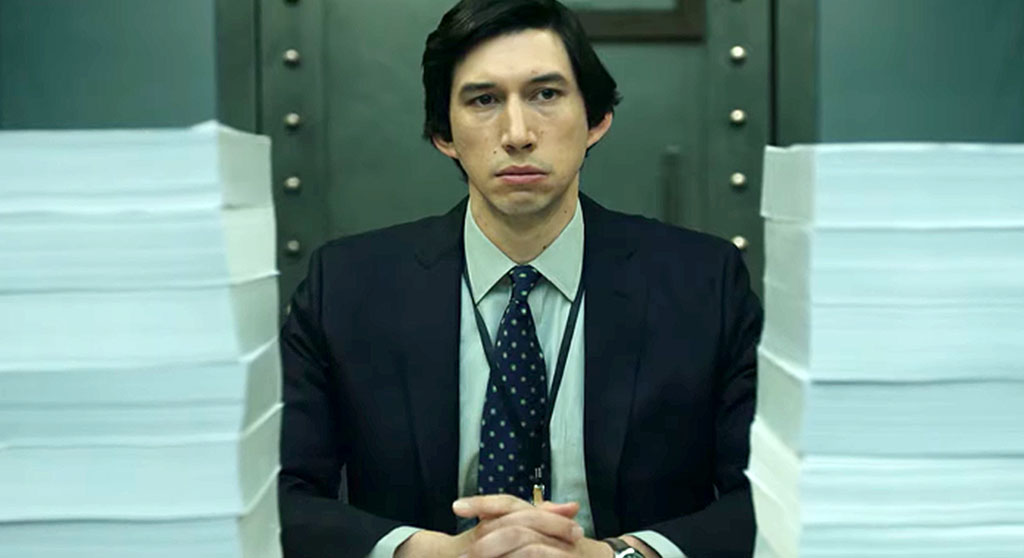
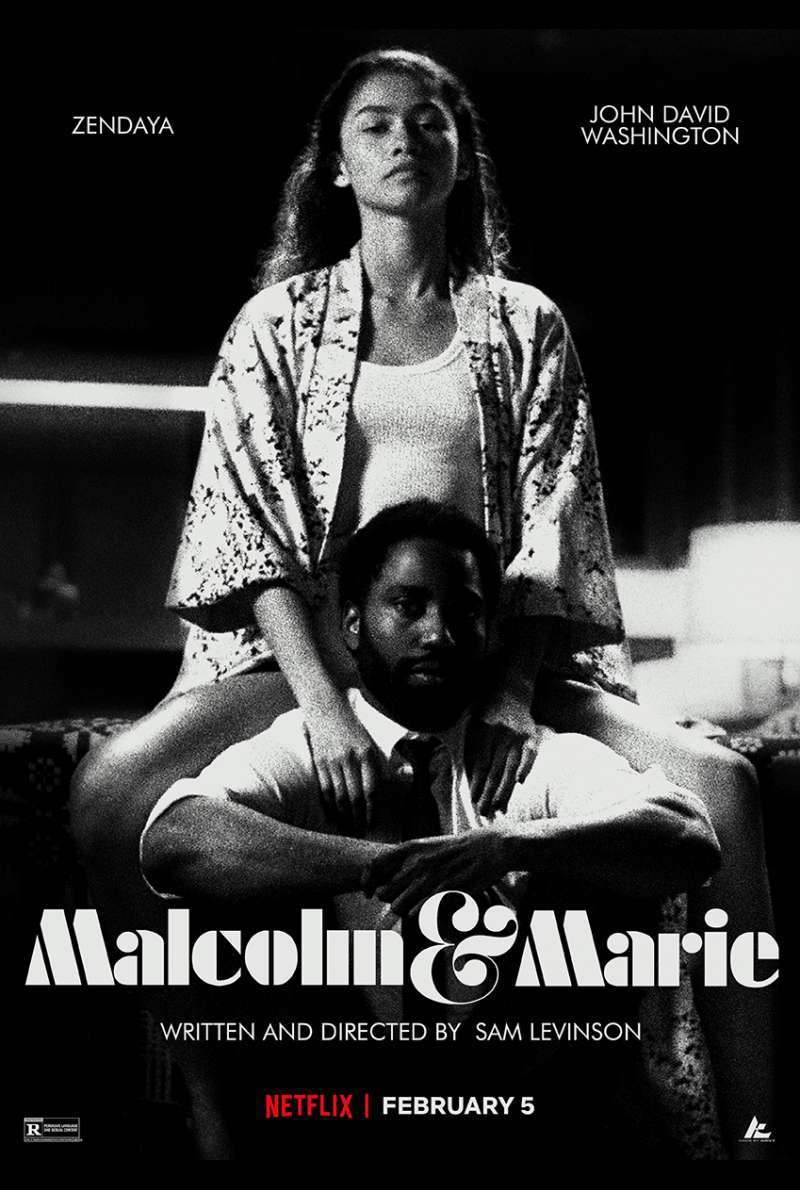
The Oscar nominations came out this week and due to the ongoing pandemic situation and consequent lockdowns, there are a number of films on the esteemed list which have yet to reach these shores, either at the cinema or via streaming platforms. Having said that, and I am aware space for nominees are limited and it has been a pretty strange year for cinema, but I was extremely surprised that Delroy Lindo did not receive an acting nomination in lead or supporting category. Similarly, I was also bewildered that Sam Levinson’s striking romantic drama, Malcolm and Marie (2021), had not received nominations in either screenplay or acting categories. Further, I was utterly shocked that critic’s reviews for the intense two-hander had been pretty mixed. Hey, it’s just opinions but I was really gripped by this highly theatrical and gorgeously cinematic two-hour argument in black-and-white. Personally, I think most of the deriders are wrong. But that’s just my view.

Maybe the film wasn’t liked because John David Washington’s, Malcolm, an up-and-coming filmmaker celebrating a successful premiere that evening, launches into a wonderfully eloquent rant about a review which he feels pigeonholes and patronises his film in purely political terms. I mean it’s actually a positive review, but who doesn’t enjoy ire toward professional critics. I mean, everyone has an opinion, or a view and the Internet has caused a mass proliferation and gaping spew of words and views and brain-thoughts in extremis. But Levinson’s script and Washington’s grandstanding acting spits that if you earn a living as a critic then you are essentially Satan! Perhaps some reviewers took umbrage with this? I loved the whole scene’s energy and Malcolm’s savage attack had me applauding throughout.


But Malcolm and Marie (2021) is more than Levinson getting back at those individuals who gave him bad reviews. It’s a sharp, funny, sexy and poignant exploration of a relationship close to breaking point. Malcolm and Marie may be different fighting weights, but they both punch hard and often. He is on a high after his film premiere success, but Marie is upset because he did not thank her during his speech. From there the conflict rises from light sparring to harsh emotional knockout blows. Both Malcolm and Marie tear at each other’s skin and flesh and figurative organs in an attempt to resolve the ever-increasing divide between them. Malcolm and Marie (2021), may not be for everyone, but any person who has been in a heated war of words with a partner or spouse, will identify with the inescapable tension on display. Levinson’s expert screenplay rides a rollercoaster journey of emotions as one moment you side with Marie and the next you’re with Malcolm. Yet, before you know it, you’re disliking both these complex, narcissistic, egotistical and infuriating humans.

Both Zendaya and John David Washington deserve so much praise for their performances in, Malcolm and Marie (2021). Washington has already demonstrated his massive talent in BlacKkKlansman (2018), while Zendaya excelled in recent HBO drama, Euphoria (2019). Levinson too directs with a deft skill. I was especially impressed by the way he balances the comedy and drama of these flailing humans, poking and picking at the scabs of each other’s past behaviour. Indeed, as well as containing some brilliant dialogue, the erudite script really sang to me. At times the coruscating repartee reminded me of Edward Albee’s acclaimed play, Who’s Afraid of Virginia Wolf. Nonetheless, for a dialogue and performance driven film, the precise framing and sumptuous black-and-white photography by Marcell Rév render the visuals wholly cinematic.

Sure, by the end of Malcolm and Marie (2021) is anything really resolved? And who is ultimately interested in this couple’s first world problems? Well, I’ve witnessed my parents fighting and also experienced such exhausting relationship arguments before. So, I must say that overall, I thoroughly enjoyed witnessing Malcolm and Marie’s nocturnal battle. Especially because I watched it all from the safety, warmth and comfort of my own home.

Mark: 8.5 out of 11


CLASSIC FILM REVIEW – THE GO-BETWEEN (1971)

CLASSIC FILM REVIEW – THE GO-BETWEEN (1971)

Directed by: Joseph Losey

Produced by: John Heyman, Denis Johnson, Norman Priggen

Screenplay by: Harold Pinter

Based on: The Go-Between by L. P. Hartley

Cast: Julie Christie, Alan Bates, Margaret Leighton, Edward Fox, Dominic Guard, Michael Redgrave, etc.

Music by: Michel Legrand


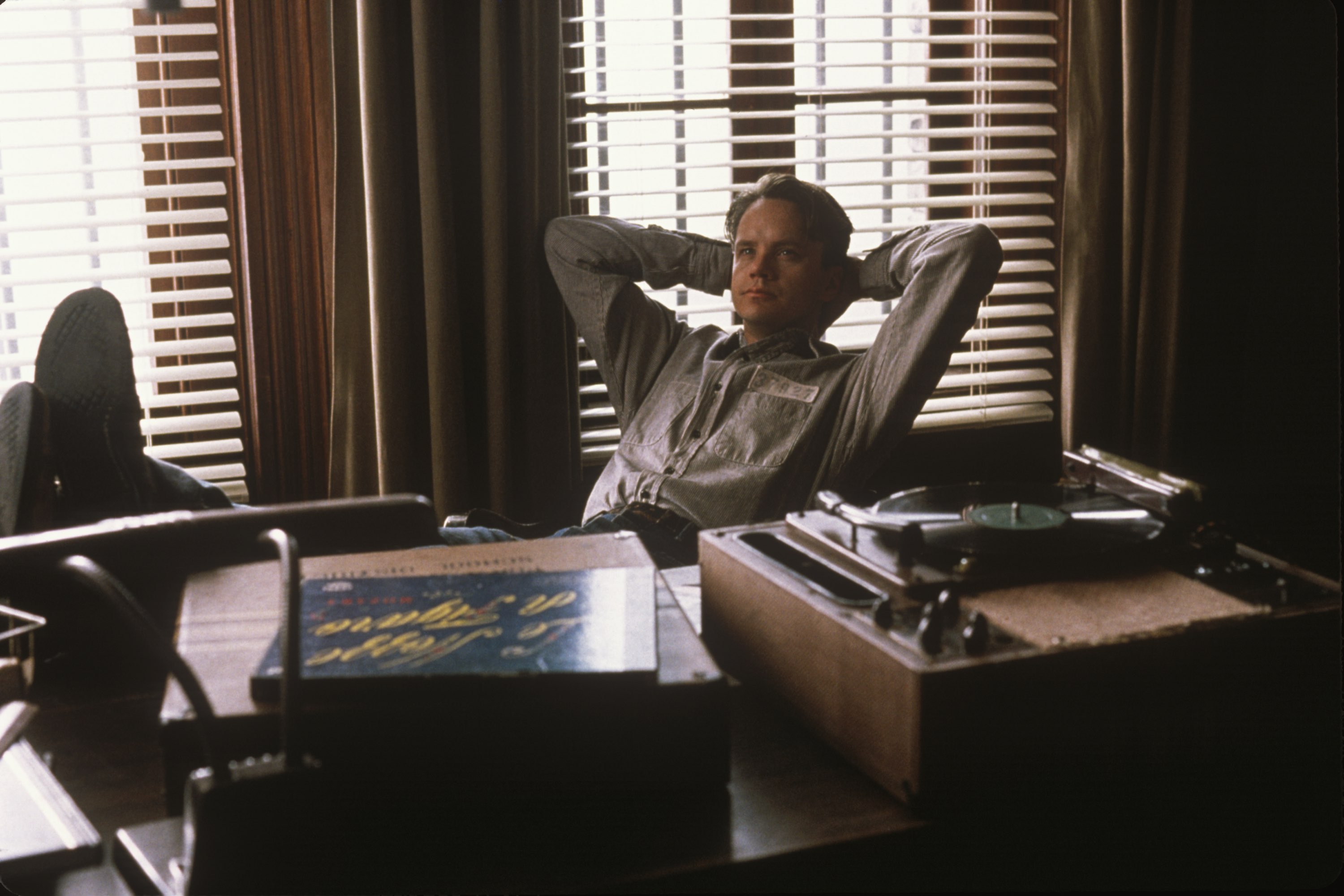
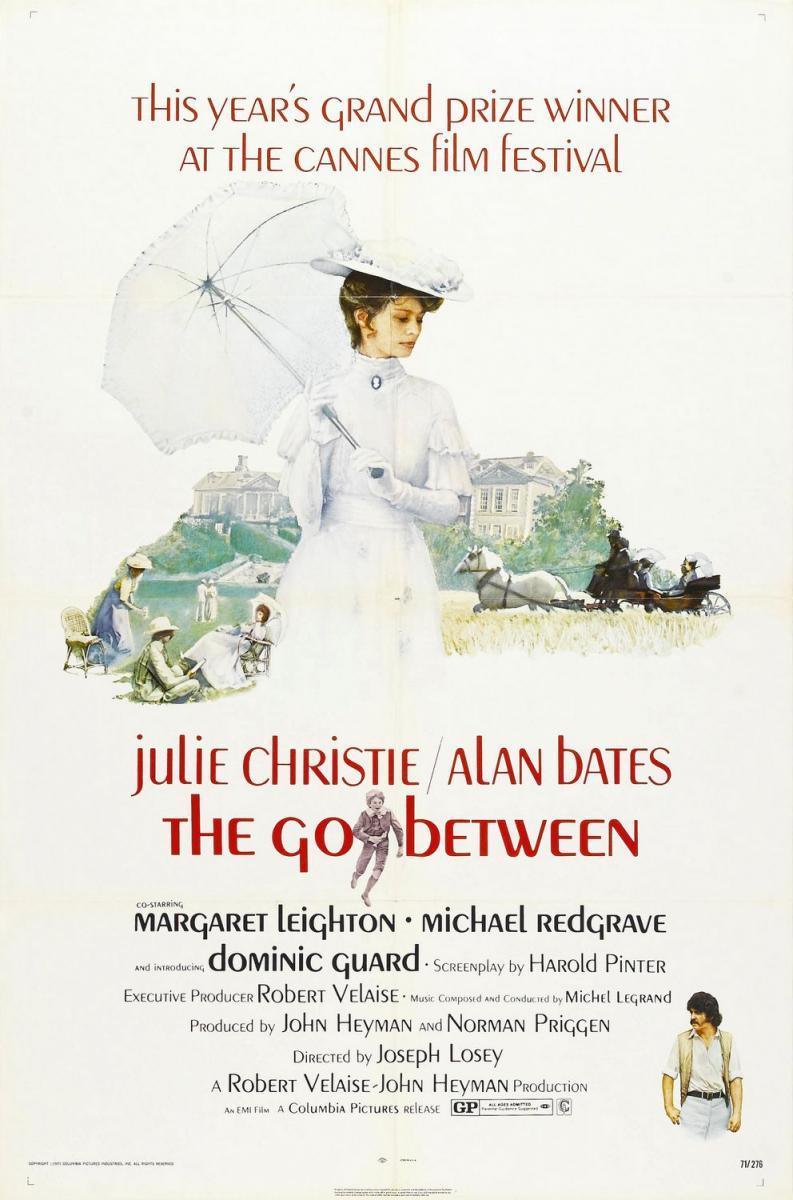
The Go-Between (1971) is one of those expert works of understated cinema which I was sure I had seen before. Yet, I would come to discover I had never seen it when I caught it on the rather marvellous digital channel, Talking Pictures. But then I love that when you find a period classic and watch it for the first time. It’s like unearthing gold in your living room. Because the film is a heartfelt rites-of-passage drama which subtly pulls at the loose end of the knitted cardigan that is the British class system. Nevertheless, while the romance, lies and regret unfold under the surface, The Go-Between (1971) certainly retains much dramatic power.

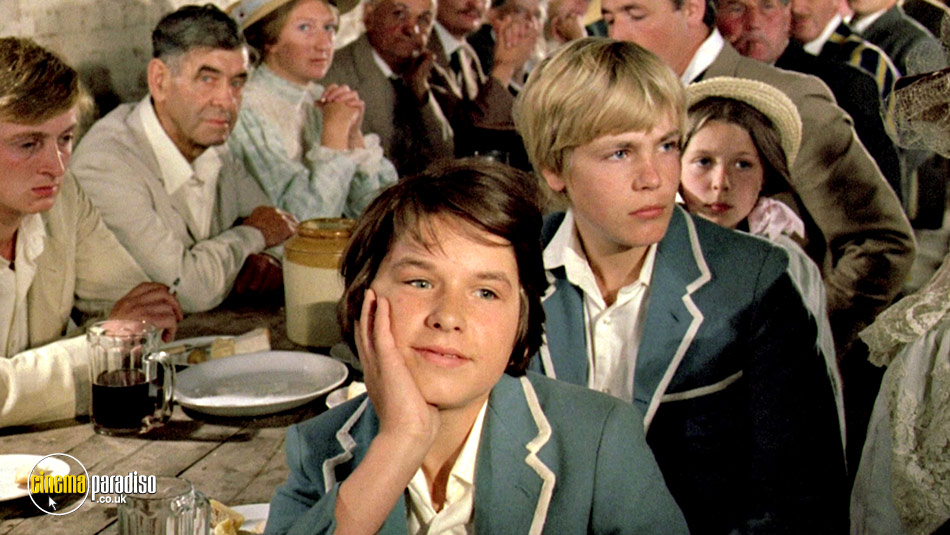
Adapted by acclaimed playwright, Harold Pinter, from the esteemed novel by L.P. Hartley, The Go-Between (1971) stars Julie Christie and Alan Bates as secret lovers separated by the chasm of class and tradition. Bates’ Ted Burgess is a charismatic and muscular farmer with a reputation as a ladies man. Christie is the beautiful and slyly rebellious daughter of the Lord of the Manor, Marian, promised in marriage to Edward Fox’s Viscount Hugh Trimingham. With peering eyes and suspicion coming from Marian’s mother, the lustful affair requires stealth, thus they enlist the help of Dominic Guard’s intelligent but less-privileged, Leo Colston. He is there as guest of Marian’s young brother as both attend the same boarding school; Leo there on a scholarship. The narrative develops very much through Leo’s sweet innocent eyes. The outsider’s point-of-view is expertly presented as it is both objective and allows the audience to make up their own mind about the characters.


Leo is pure of heart and believes he is helping by running notes back and forth between Burgess and Marian. He also makes friends with the cuckolded Viscount, as Fox gives a fine performance of a man who may or may not know whether his potential wife is being unfaithful. I think that is one of the strengths of the book and film, in that it explores the theme of duty versus passion. Burgess and Marian represent freedom, lust and nature, which are opposite to the “doing your duty” arrangements of the upper classes. Of course, dramatically speaking something has to give where the love affair is concerned. Sadly, tragedy intervenes, resulting in the loss of Leo’s innocence, and adding a layer of guilt which gravely haunts him in his later years.

Everything about The Go-Between (1971) reeks of quality. From the production design, locations, costumes, score by Michel Legrand and Gerry Fisher’s exquisite cinematography. Unsurprisingly, Harold Pinter would receive an Academy Award for his confident adaptation. Further, Joseph Losey is not a filmmaker whose work I am not particularly well acquainted with, but the performances from Fox, Bates, Christie and young Dominic Guard are assured testament to his stellar ability to convey meaning and emotion between the lines. Indeed, while some films smash you over the head with emotional melodrama, something I love too, The Go-Between (1971) instead slowly squeezes at your heart and mind. Lastly, this is not simply a damning indictment of the class system, but a lament for loss of innocence, illustrating how monolithic tradition dictates love, fate and tragedy are inextricably entwined.


SIX OF THE BEST #30 – FAVOURITE FILM MONTAGES!

SIX OF THE BEST #30 – FAVOURITE FILM MONTAGES!

Who doesn’t love a film montage!? The passage of time edited and set to a memorable soundtrack is fine cinematic tradition. Not only is a montage a great way to tell a story visually, it can also give pace to a narrative, provide a perfect cinematic bridge to the final act or even supply emotional impetus at the start and middle of a film.

Here I choose six of my favourite movie montages. All have been selected due to both the style and content of the sequence, plus the music accompanying the montage. Of course, I could have chosen a more artistic aspect to montage by including examples from Eisenstein, Kubrick or the incredible editing in the The Godfather (1972), when Michael Corleone wipes out his rivals during his nephew’s baptism. That I will save for another day.


ROCKY (1976)

No film franchise has exploited the fight montage and training sequence to the max like Rocky. I could have chosen others, but the original remains the best. I love the urban locations and the Philadelphian streets are just so gritty as Stallone’s down-on-his-luck boxer gets a crack at the championship of the world! That music just soars too!

SCARFACE (1983)

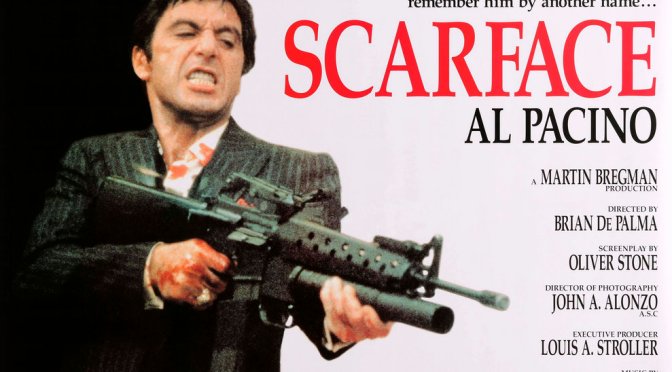
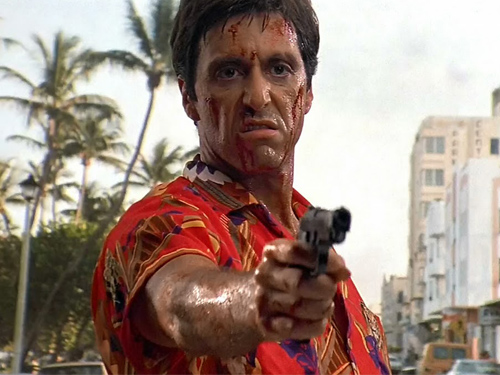
With a combustible screenplay written by Oliver Stone, Scarface (1983), is a cocaine driven and incendiary viewing experience. Everything is ramped up to eleven, including: the violence, shouting, swearing, shooting, politicking, drug-taking, sex, killing, avarice, cocaine, money-making, decadence and corruption. It is an epic film with many classic scenes, but the 80’s pop-synth-driven montage here adds real pace to the brutal proceedings.


THE KARATE KID (1984)

Another fighting film and another John G. Avildsen pick! More than just a teenage Rocky rip-off, The Karate Kid (1984) is a terrific rites-of-passage drama that incorporates a love story and a boy overcoming bullies with the help of a wise mentor. Joe Esposito’s song, “You’re the Best” was originally chosen for Rocky III, but ultimately ended up here in the fantastic fighting tournament montage.


FERRIS BUELLER’S DAY OFF (1986)

John Hughes fast-paced-set-in-one-day-comedy-classic has some brilliant dialogue and is anchored superbly by Matthew Broderick’s cocky lead performance as mischievous Ferris Bueller. For all the craziness on show one of my favourite scenes is when Hughes slows the pace down at the museum. Here we get some wonderfully framed shots, sly humour and a beautiful instrumental version of The Smiths’ song, “Please, Please, Please, Let Me Get What I Want!”


UP (2009)

So many films struggle to establish empathy for their characters either through bad writing or poor creative choices. Pixar, however, are masterful at establishing both character identification and motivation. None more so than in this classic montage featuring the mostly blissful life of Carl and Ellie Fredericksen. With Michael Giacchino’s iconic score called “Married Life” providing energetic and poignant emotional support, this is one of the most moving four minutes in movie history.


DJANGO UNCHAINED (2012)

Tarantino’s epic Western runs the gamut of action, violence, comedy and drama, even throwing a buddy-buddy dynamic in there for good measure. While often known for his quotable dialogue, Tarantino’s films always feature crisp editing and a powerful visual storytelling too. I love this montage in Django Unchained (2012), with Django and King Schultz framed against the wonderful snowy vistas as Jim Croce sings his catchy tune.


FILMS THAT GOT AWAY #12: THE DAY SHALL COME (2019) + SIX OF THE BEST #29 – CHRIS MORRIS THINGS YOU MUST WATCH!

THE DAY SHALL COME (2020) – FILM REVIEW

Directed by:  Chris Morris

Produced by: Iain Canning, Anne Carey, Emile Sherman

Written by: Chris Morris, Jesse Armstrong

Cast: Marchánt Davis, Anna Kendrick, Danielle Brooks, Kayvan Novak, Denis O’Hare, Jim Gaffigan etc.


Chris Morris is a bona fide genius. A natural prankster, a fearless satirist, writer, actor, producer, director and enfant terrible of radio, television and more recently cinema. He has been suspended by Greater London Radio and by the BBC and described by the Daily Mail as “the most loathed man on TV.” Which to me is a highly positive thing. Moreover, Morris is genuinely one of my cultural heroes and certainly one of the funniest artists to have graced the planet.

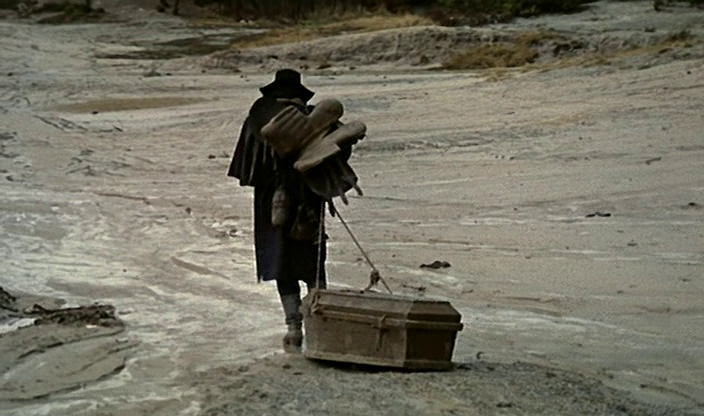
Morris’ latest cinema release is called The Day Shall Come (2019), and given I am such a fan of his work it did not make any sense why I have only just seen the film. Perhaps I had seen some negative reviews or maybe it was released at the same time as the London Film Festival in 2019? Thus, it meant I could not find time to watch it. Anyway, the story is somewhat of a mixed bag and definitely not as focussed or blisteringly funny as Morris’ prior directorial masterwork, Four Lions (2010). Centring on the idiotic efforts of the F.B.I’s terrorist taskforce to bring down targets that threaten United States security, operative Kendra Glack (Anna Kendrick) and her boss, Andy Mudd (Denis O’Hare) pull focus on Marchánt Davis as Moses Al Shabaz, an impoverished preacher, running the hapless ‘Star of Six’ commune. Moses, who is possibly bi-polar, is a likeable fool with delusions of grandeur, however, the FBI decide he is a threat and try to fit him up in many farcical scenes of entrapment.

There are funny moments and some delightfully bizarre dialogue exchanges. Furthermore, Davis excels in his role as the eccentric Moses and the under-used Danielle Brooks brings much needed humanity to her role as his wife. However, the film is full of mostly unlikeable and unlikely characters, meaning Morris’ satirical bullets rarely hit their target. Kendrick is miscast and while there are a few laugh-out-loud moments throughout, I just felt like the script was continually trying to squeeze square blocks into round holes. I even watched it twice to see if maybe I had missed something first time round. Goes to show even for a creative magician such as Chris Morris, certain tricks don’t always come off.

Mark: 7.5 out of 11


SIX OF THE BEST #29 – CHRIS MORRIS THINGS YOU MUST WATCH!

NEWSREADER: The main stories so far: Jimmy Savile drops dead at the Stoke Mandeville Boxing Day bash—but the patients are far from mourning.

CORRESPONDENT: The majority, if not all of them, are extremely relieved that he’s now dead, although I suspect that some of them will be sorry that he didn’t suffer a great deal more.

— The Chris Morris Music Show, 16 December 1994


While The Day Shall Come (2019) does not reach the dizzy heights of Chris Morris’ best output, it is still a highly thought-provoking critique of American law enforcement practices. Arguably though it misses more marks than it hits. Here are six of the best things that Chris Morris has been involved in and I urge you to try and find them on a streaming platform or on DVD or online somewhere. If you love obsidian black and controversial comedy then Chris Morris is your man!

CHRIS MORRIS RADIO SHOWS!

Morris’ creative career really formed on radio. He worked at Radio Bristol, Greater London Radio and made the The Chris Morris Radio Show on BBC Radio 1. He gained notoriety and was suspended from the BBC for announcing Conservative politician Michael Heseltine was dead. In fact, fake obituaries were one of his early favourite pranks. Later, Morris joined forces with another comedy legend, Armando Iannucci, to help create the seminal spoof news show called, On the Hour. The rest they say is history.


THE DAY TODAY (1994)

The Day Today was a TV comedy show that parodied current affairs programmes. Broadcast in 1994 on BBC2, it was created by Armando Iannucci and Chris Morris and an adaptation of the radio programme On the Hour. The genius and surreal satire The Day Today found Morris winning the 1994 British Comedy Award for Best Newcomer. The rest of the cast including Steve Coogan, Rebecca Front, Doon Mackichan, Patrick Marber and David Schneider were incredibly good too. I wonder what happened to them?!


BRASS EYE (1997)

Chris Morris took the ferocious journalistic character he created on The Day Today (1994) into Brass Eye (1997), with one of the most scurrilous and controversial works of television ever. Once again, Morris was lampooning current affairs shows and the often hysterical way the media sensationalise issues such as drugs, sex and crime. Morris fooled many celebrities and politicians during the filming of Brass Eye (1997), getting them to commit to absurd, but fake media campaigns. A 2001 special was planned but cancelled due to fear of further controversy and litigation against Channel 4.


JAM (2000)

Ever pushing the boundaries of radio and television genre form and style, Morris’ cult sketch show Jam (2000), is a truly dark and twisted experience. Unsettling and bleak it presented unconnected and surreal sketches, unfolding over an ambient soundtrack. Buried late at night on the Channel 4 schedule it was incredibly striking in style and content with a superb cast including: Amelia Bullimore, Julia Davis, Mark Heap and Kevin Eldon.


NATHAN BARLEY (2005)

This absurdist comedy found Morris working with another comedy genius in Charlie Brooker. Here they took inspiration from Brooker’s TVGoHome – a 2001 E4 TV show parodying television – as the focus of a fly-on-the-wall documentary called Cunt. With energetic fool and influencer Nathan Barley as the lead idiot, the sitcom delivered six delicious episodes which skewered hipster characters and pretentious Shoreditch-based culture. The cast included: Julian Barratt, Ben Whishaw, Richard Ayoade, Nicholas Burns, Claire Keelan etc. and Nathan Barley is a highly recommended comedy that seems as vital now as it did in 2005.


FOUR LIONS (2010)

Oh my word! How the hell this film did NOT get banned is something that still shocks me. It is one of the the funniest and controversial films ever about the darkest subjects, namely terrorism and radicalised Jihadis. How Morris and his co-writers, Jesse Armstrong and Sam Bain, managed to successfully satirise, demonise and humanise Muslim fundamentalists is beyond belief. The wicked script and unbelievably good performances by Riz Ahmed, Nigel Lindsay and Kayvan Novak help make Four Lions (2010) one of the finest socio-political comedies of all time. It’s hilarious and actually moving at the end as I pitied, recoiled and felt for these poor misguided fools. Deservedly, Chris Morris won the award for Outstanding Debut by a British Writer, Director or Producer at the BAFTAS in 2011.


YOU HAVE A NEW FOLLOWER (2020) – SHORT FILM YOUTUBE RELEASE

YOU HAVE A NEW FOLLOWER (2020) – SHORT FILM RELEASE

Hope you are well and safe!

Finally, I have decided to release my short film, You Have A New Follower (2020) on YouTube. It has been delayed due to the pandemic and other personal matters. It got several screenings at online and physical film festivals, however, not as many as hoped due to the outbreak of COVID-19.

I am very proud of the film as I have attempted to explore issues relating to mental health within the thriller genre. I hope it intrigues and interests you too. Below is link to the film and after that the credits and further film details.

You Have A New Follower (2020) – Fix Films Ltd


PITCH

“Watch your back…”

Astrid Nilsson’s life begins to unravel when she is stalked by a mysterious hooded figure.

You Have a New Follower (2020) is the latest short film from Paul Laight and Fix Films. It was shot in London and combines mystery, suspense and science fiction genres with dramatic effect. It’s a short, low-budget film which seeks to explore themes of paranoia, anxiety, and identity within the thriller genre.

CAST & CREDITS

Directed by: Paul Laight & Tilde Jensen
Cast: Tilde Jensen, Mitchell Fisher
Written and Produced by: Paul Laight
Camera: Petros Gioumpasis
Lighting: Sakis Gioumpasis
Sound: Marina Fusella
Editors: Oliver McGuirk, Petros Gioumpasis
Composer: James Wedlock
Sound Design: Simos Lazaridis
Location Manager: Melissa Zajk
Production Assistant: Lue Henner

SCREENINGS

The Fix Film Night, London – February 2020
Cineshots, London – March 2020
Lift Off Sessions, UK – March 2020 (Online)
Fabulosis Short Film Night, London – May 2020 (Online film night) Unrestricted View Horror Festival, London – October 2020 – (Online festival)
Horror of Damned, Italy – November 2020 (Online festival)
Lulea International Film Festival, Sweden – November 2020 – (Online in 2020 and hopefully in Sweden in September 2021)

Website: www.fixfilms.co.uk
YouTube: www.youtube.com/c/FixFilmsLtd

A FIX FILMS PRODUCTION © 2020


TO BOLDLY REVIEW #11 – STAR TREK: NEXT GENERATION (1992 – 1993) – SEASON 6

TO BOLDLY REVIEW #11 – STAR TREK: NEXT GENERATION (1992 – 1993) – SEASON 6

Based on Star Trek & Created by: Gene Roddenberry

Season 6 writers (selected): Joe Menosky, Jeri Taylor, Frank Abatemarco, Ronald D. Moore, Jean Louise Matthias, Ronald Wilkerson, Brannon Braga, René Echevarria, Ward Botsford, Diana Dru Botsford, Michael Piller, Allison Hock, Robert Hewitt Wolfe, Naren Shankar, Ronald D. Moore, Morgan Grendel, Ronald Wilkerson, Jean Louise Matthias, James E. Brooks, Michael A. Medlock, etc.

Season 6 directors (selected): Les Landau, Cliff Bole, Winrich Kolbe, Alexander Singer, Robert Weimer, Robert Scheerer, Adam Nimoy, Patrick Stewart, Jonathan Frakes, Gabrielle Beaumont, Dan Curry, James L. Conway, LeVar Burton, etc.

Main Cast: Patrick Stewart, Jonathan Frakes, LeVar Burton, Whoopi Goldberg, Colm Meaney, Michael Dorn, Marina Sirtis, Brent Spiner, Gates McFadden, Michelle Forbes, Majel Barrett, Rosalind Chao, plus guests: David Warner, Olivia D’Abo, John De Lancie, Daniel Davis, Norman Lloyd, Rene Jones, Stephen Hawking, James Doohan, etc.

Music/Composers: Alexander Courage, Jerry Goldsmith, Dennis McCarthy, Ron Jones, Jay Chattaway

Production Company(s): Paramount Television, CBS Television

**** CONTAINS SPOILERS ****


I watch a lot of television drama and comedy shows, as well as films, so I can be quite the critic and hard to please. Too many though to find the time to review every single one on this website. However, over the past couple of years I have ventured into the project of chronologically watching every episode of Star Trek in release order, then reviewing each season. I have now completed the viewing of season six of STAR TREK: THE NEXT GENERATION and can safely say that the quality of the writing, acting, directing and production values remained exceptionally high. Season 6 felt just as fresh watching it now and, while set in the future, it did not feel dated in any way.

One always worries about having fatigue for a particular show that continues for many seasons. Moreover, many television programmes can quickly run out of ideas and “jump the shark” by resorting to desperate concepts, parody or relying on special guest appearances to bolster weak writing. While Star Trek has always represented a robust set of values, ideals and structure, it would be easy for the science fiction to be over-blown and concepts become more bizarre. While some of the episodes in season 6 stretched credulity, on the whole it was another twenty-raft of consistently superb works of television. Indeed, a major strength of this particular episodic show remains the characters. Each of the ensemble gets several opportunities to shine and here I present a mere six of my favourite episodes of season 6. It could easily have been double that!


RELICS – EPISODE 4

Talking of characters, the episode Relics contrived in a highly positive way to bring back Montgomery Scott (James Doohan). Having escaped being trapped in a transporter buffer for some decades, Scottie clashes initially with Geordi (LeVar Burton), before the two inevitably join forces to save the Enterprise. A great episode which conflicts Scott’s experience with La Forge’s youthful exhuberance, highlighting that old age is no barrier to resolving major engineering and life problems.

Star Trek: The Next Generation" Relics (TV Episode 1992) - IMDb

SCHISMS – EPISODE 5

Given the number of physical wars with the well-known foes such as the Klingons and Romulans, this creepy episode did something different with an insidious and hidden alien enemy. The superb script finds Riker, Worf, Troi and Data discombobulated, and sleep deprived as their behaviour on the Enterprise is confused to say the least. When other crew members go missing they begin to piece together the events on the Holodeck, with Schisms overall using suspense and horror to excellent effect.


Year of Trek: Schisms

CHAIN OF COMMAND – PARTS 1 & II – EPISODES 10/11

A fantastic two-parter finds Captain Picard being sent on a covert mission into Cardassian territory. Not only do the episodes introduce an espionage mission, but they also provides excellent character conflict on the Enterprise. This is because Captain Jellicoe, portrayed by the formidable character actor Ronny Cox, takes over the Enterprise and he has a more aggressive style when compared with Picard. Riker especially finds himself clashing with Jellicoe’s more egregious decisions which exert pressure on the crew. Part two of Chain of Command heightens the tension as Picard is captured by the Cardassians and mercilessly tortured. Here Patrick Stewart gives a powerful and emotional performance as a man sent to the edge of darkness by David Warner’s interrogator. Stewart and Warner in a room attempting to outwit each other makes this episode very special television. How many lights do you see?


FRAME OF MIND – EPISODE 21

Frame of Mind is an incredibly clever episode structured around a stage play within the hallucinatory mental breakdown of Will Riker. Opening with Riker rehearsing Dr Crusher’s play called Frame of Mind, and about to go undercover on a secret mission, he suddenly finds himself falling apart mentally in an insane asylum. Cutting back and forth between the asylum, the play and the Enterprise, Jonathan Frakes excels as Riker. He is usually such a cool character, so to find him experience fragility, confusion, anger and depression is an extremely emotional experience for the audience.

6 Things to Know About "Frame of Mind"

SUSPICIONS – EPISODE 22

I was going to choose the episode Second Chances as that has Will Riker finding, following a transporter accident eight years earlier, that he has a duplicate. However, I am such a sucker for whodunnits and Riker features heavily in my prior selection. Moreover, I also I really enjoyed that Suspicions was led by the character of Dr Beverly Crusher, who turns detective after the death of a Ferengi scientist. Structured like a noir detective film, Crusher recounts to Guinan (Whoopi Goldberg) how she is about to be court martialled and lose her career for defying Starfleet regulations. There’s a great (if mildly obvious) twist as Crusher discovers an unlikely killer, with Gates McFadden giving a committed lead performance. Lastly, the episode also introduces the fascinating scientific theory of metaphasic shielding, a technique which returns in the two-parter Descent.

Ex Astris Scientia - Alien Monocultures in Star Trek

DISNEY + FILM REVIEW: SOUL (2020)

DISNEY + FILM REVIEW: SOUL (2020)

Directed by: Pete Docter

Produced by: Dana Murray

Written by: Pete Doctor, Mike Jones, Kemp Powers

Cast: Jamie Foxx, Tina Fey, Graham Norton, Rachel House, Alice Braga, Richard Ayoade, Phylicia Rashad, Donnell Rawlings, Questlove, Angela Bassett etc.

Music by: Trent Reznor, Atticus Ross, Jon Batiste[a]

Cinematography: Matt Aspbury, Ian Megibben

*** MAY CONTAIN SPOILERS ***


Death, the loss of childhood innocence, grief, mid-life crises, missing children, the end of the word due to human greed, ghosts, female emancipation within patriarchal society, the afterlife, use of fear as energy, neuropsychological exploration of emotions, oh, and death again are all heavy themes and subjects for a film. But they are not just from the works of heavyweight filmmakers such as Werner Herzog, Akira Kurosawa, Ingmar Bergman or Stanley Kubrick. They are subjects investigated and probed and rendered entertainment in a fantastic style by the ever-impressive Pixar studio. Their latest film Soul (2020) is yet another extravaganza of high concepts, existential themes, and scintillating visual world-building.

Soul (2020) centres around Joe Gardner (Jamie Foxx), a music teacher who longs to immerse himself in a career as a jazz musician. It’s not necessarily suggested in the opening scenes as to why Joe hasn’t made it as he clearly has musical talent. However, his dominant mother Libby (Phylicia Rashad) objects to his frivolous desire to play piano, plus Joe, like many artists out there just cannot get a break. A chance arises though when he gets an opportunity to audition for esteemed singer, Dorothea Williams (Angela Bassett). Joe’s exquisite piano playing wins over Dorothea, but then tragedy strikes as an excited Joe falls down a manhole and dies. Being a Pixar film committed to venturing into the afterlife, as it did previously with Coco (2017), Joe finds himself, not in the ‘Land of the Dead’ but rather the ‘Great Before/Beyond’ instead.


As Joe moves toward the light with the many other souls he refuses to accept this is the end. He rejects the unknown glowing light of the ‘Great Beyond’ and escapes to a world full of young, old and lost souls called the ‘Great Before’. Here he meets a cynical soul called 22 (Tina Fey), who is refusing to claim the badges required to begin her own life on Earth. This is where the story gets a bit sticky for me. I mean I enjoy narratives about life, death and the afterlife including the brilliant A Matter of Life and Death (1946) and both excellent versions of Heaven Can Wait (1943 / 1978). However, Soul (2020) I think tries to do too much as 22’s story threatens to dominate Joe’s pursuit to get his life and career back. Moreover, the ridiculous sight of Joe’s soul ending up in a therapy cat also felt like a contrived lean toward giving the kids something to laugh at. Indeed, I felt this water-and-oil decision, while funny, undermined the more intrinsically vital themes within the narrative.

Ultimately though, having succumbed to the cultural pressure of signing up to Disney +, I did thoroughly enjoy Pixar’s Soul (2020). Jamie Foxx and Tina Fey create a fine double act with their brilliant comedic timing and performances. Moreover, Graham Norton and Richard Ayoade provide humorous voice support, and of course, the animation is incredible. Although I would actually have preferred to stay on the exquisitely drawn streets of New York more than the ‘Fantasiaeque’ lysergic acid look of the afterlife. Still, once again, Pixar have been clinical in delivering an intelligent film that delves into existential themes relating to the meaning of life. Joe’s journey, like his music, is full of verve, beauty and many surprising twists, ensuring his soul is certainly one that is worth saving.

Mark: 9 out of 11


MY CINEMATIC ROMANCE #22 – MARTIN SCORSESE

MY CINEMATIC ROMANCE #22 – MARTIN SCORSESE

Cinema is a matter of what’s in the frame and what’s out.
— Martin Scorsese

I recently had a three-week career break while I was looking for a new job. I have since gratefully located employment and that would explain why I have not been as active on this blog as before. Because looking for work is more time consuming than an actual job! Anyway, aside from spending the day on the computer searching for gainful employment I also caught up on some TV shows and films that had been on my planner for a while. One of the those I watched was the HBO produced TV drama called VINYL (2016). Created, directed (first episode only) and produced by, among others, Martin Scorsese.

Vinyl (2016) was an incendiary, nostalgic and snorting cavalcade of 1970’s rock and roll music centred around a drug addicted record executive, portrayed by Bobby Cannavale, whose business and personal life are collapsing due to his addictive and self-destructive behaviour. Overall, the ten episodes were scintillating entertainment: loud, over-the-top, ballsy, in-your-face and darkly hilarious. The characters were despicable scumbags at best, yet Scorsese’s sensational style ensures the audience enthusiastically rubber-necks these human car crashes.

Alas, due to low ratings, poor critical response and the huge budget, HBO did not renew Vinyl (2016) for a second season. Thus, Scorsese’s blistering TV rock and roll creation was no more. However, in my latest piece in the My Cinematic Romance series, I have selected five of Scorsese cinematic classics. I could’ve, of course, chosen many, many more but have challenged myself to pick only ONE film from each of the last five decades of the master filmmaker Martin Scorsese. Don’t worry Marty – I thought Vinyl (2016) absolutely rocked. F*ck the critics! You are a true genius.


Vinyl – Co-Creator/Executive Producer Mick Jagger with Bobby Cannavale and Co-Creator/Executive Producer/Director of Pilot of Martin Scorsese on the set ©2016 HBO, photo by Niko Tavernise

TAXI DRIVER (1976)

Paul Schrader’s incredible screenplay about a lost soul travelling the mean streets of New York while on the edge of insanity, is given dark life by Scorsese’s evocative direction and Robert DeNiro’s fearless performance. One of the most memorably nightmarish thrillers and character studies of the 1970s; a period which arguably represents the most exceptional decade of American cinema. Having both the writer and director admit to substance addiction in the 1970’s, lends further to the monstrously illusory vision of urban decay within the pores of this amazing work of cinema.


RAGING BULL (1980)

Boxing champion Jake La Motta represented another morally complex vision of masculinity in crisis for both Robert DeNiro and Martin Scorsese. Both in and out of the ring he is man in pain who hurts those he loves and, above all else, himself. Each battering jab and uppercut and hook is felt by the audience via incredible editing and sound design. Overall, Scorsese delivers a brutal profile in stark black-and-white and a knockout box of cinematic tricks. Unsurprisingly, DeNiro won a Best Acting Oscar at the 1981 Academy Awards. Rather surprisingly, Ordinary People (1980) was winner of Best Picture. Go figure!


GOODFELLAS (1990)

As far back as I can remember, this has been one of my favourite films of all time. Ray Liotta’s voiceover introduces and tells the story of the rise and fall of gangster, Henry Hill, while expertly supported by Scorsese’s selection of memorable shots, music and sequences. Further, Scorsese’s major skill here is too, is to make us both enamoured and disgusted by the actions of these charismatic criminals and killers. There are so many classic scenes in this incredible epic and the cast of Liotta, DeNiro and scene-stealing, Joe Pesci, make it one of those films that can be watched over and over. Did I forget to mention that it also has one of the greatest cinema soundtracks ever!


THE DEPARTED (2006)

A truly remarkable remake of Infernal Affairs (2002), the film is shot and edited, as expected, with immaculate precision; crammed with unrelenting and bone-crushing thrills and violence. Thematically, it’s powerful too. Throughout, honesty and truth are obliterated by lies and death. Costigan and Sullivan are no more than pawns at the hands of a corrupt system that lets people down from a great height. This is literally the case where Martin Sheen’s Captain Queenan is concerned. An immense cast including DiCaprio, Damon, Wahlberg and scenery-chewing, Jack Nicholson, take a twisting Kafkaesque plot where criminals and cops collide; ultimately chasing their shadows and souls to a treacherous, bloody and bitter end.


THE WOLF OF WALL STREET (2013)

The Wolf of Wall Street (2013) feels like a greatest hits package combining all of the finer ingredients from Scorsese’s other films. You’ve got the classic swooning camera moves; the direct address to camera; cat-and-dog couples fighting as seen in Casino (1995) and Goodfellas (1990); the boat-in-peril sequence as seen in Cape Fear (1991); the multi-character voiceovers; the dumb criminals putting themselves in the shit; characters turning on each other and ratting each other out as seen in The Departed (2006); plus many more. But whereas Scorsese used to deal with outsiders, oddballs and working class criminals like Travis Bickle, Rupert Pupkin or Henry Hill, he presents via Jordan Belfort a white-collar criminal and venal member of the “Master-Race”, getting his just desserts in an incendiary morality tale of major power.


NETFLIX FILM REVIEW – MA RAINEY’S BLACK BOTTOM (2020)

NETFLIX FILM REVIEW – MA RAINEY’S BLACK BOTTOM (2020)

Directed by: George C. Wolfe

Produced by: Denzel Washington, Todd Black, Dany Wolf

Screenplay by: Ruben Santiago-Hudson

Based on: Ma Rainey’s Black Bottom by August Wilson

Cast: Viola Davis, Chadwick Boseman, Glynn Turman, Colman Domingo, Michael Potts etc.

Music by: Branford Marsalis

Cinematography: Tobias A. Schliessler

*** MAY CONTAIN SPOILERS ***


The spectre of death hangs over us all as time effortlessly drains the life from us. It is an unstoppable force that will quicken on occasion to take a human being way before they deserve. What if said individual has knowledge of their end? Aside from the fear they must be feeling, there is clearly a moment of clarity and strong focus. Something that makes their work gather an altogether unique power. Both player and audience feel such power palpably. This is most certainly the case where Chadwick Boseman’s acting performance is concerned in the screen adaptation of August Wilson’s powerful play, Ma Rainey’s Black Bottom (2020). As talented, hustling and arrogant musician and songwriter, Levee Green, Boseman is a charismatic vision of drive, confidence, energy and naivety, ready to take on the world, not quite knowing the odds are stacked against him.

Boseman steals the film from under the lungs of the formidable Viola Davis as the titular blues legend, Ma Rainey. Her laconic singer with a voice that stops the clocks is being paid to record a series of songs at a Chicago recording studio in the year 1927. Much conflict is derived from Levee Green’s desire to spice up Ma Rainey’s more traditional blues arrangements. Ma Rainey will not give in to what she perceives as ideas of populism and selling out to white producers who want to water down the blues for a white audience. As Ma Rainey, Viola Davis, excels as this irascible and world-weary diva, fighting off her exploitative manager and record producer. Rainey and the other band members try to dampen Levee Green’s enthusiastic ardour, however, the younger trumpeter will not listen to the advice of more experienced musicians. This eventually comes at a grave cost to those within the play.


Events of Ma Rainey’s Black Bottom (2020) are set mainly within a day and in the confines of the recording studio. The mix of a hot day, tempestuous characters and colliding personalities all combine in the enclosed space to create much dramatic tension. Given the screenplay is based on August Wilson’s acclaimed play, what the film loses in cinematic visuals, it more than makes up with sensational dialogue and stellar acting performances. Indeed, the supporting cast including: Colman Domingo as Cutler, Glynn Thurman as Toledo and Michael Potts as Slow Drag provide sterling contributions as Ma Rainey’s band. They banter and battle and spar, especially with the argumentative Levee, desiring to simply play the music and get paid. Safe to say therefore the wonderful blues songs performed are beautifully played. They fill the screen with humour and pathos, puncturing the fizzing dialogue of Wilson’s many fine soliloquys with poignant joy.

Amidst the conflict and music, August Wilson’s original text also contains great thematic power within the words. At the heart of the drama and eventual tragedy there is the underlying critique of the black musicians’ songs and style being stripped away from them by unscrupulous record producers. Ma Rainey stands strong rejecting attempts to assimilate her work and personality and voice into the mainstream. Those songs are her lifeblood, and she refuses to entirely sell her soul. Levee Green does not see the bigger picture and is sucked in by the promise of money, women and fame. He is blinded by the bright city lights and the closer he gets to them the easier it is for the record producers to pick his pocket. In such a tragic character August Wilson has created a memorably complex persona, perfectly rendered by the acting genius, Chadwick Boseman.

Mark 9 out of 11


CLASSIC MOVIE SCENE #15 – X-MEN: DAYS OF FUTURE PAST (2014) – QUICKSILVER BREAKS OUT MAGNETO!

CLASSIC MOVIE SCENE #15 – X-MEN: DAYS OF FUTURE PAST (2014) – QUICKSILVER BREAKS OUT MAGNETO!

Directed by: Bryan Singer

Produced by: Bryan Singer, Lauren Shuler Donner, Simon Kinberg, Hutch Parker

Screenplay by: Simon Kinberg

Story by: Jane Goldman, Simon Kinberg, Matthew Vaughn

Based on: X-Men by Stan Lee, Jack Kirby and Days of Future Past by Chris Claremont, John Byrne

Cast: Hugh Jackman, James McAvoy, Michael Fassbender, Jennifer Lawrence, Halle Berry, Anna Paquin, Elliot/Ellen Page, Peter Dinklage, Ian McKellen, Patrick Stewart, Evan Peters etc.

***CONTAINS SPOILERS***


“We need your help, Peter.”

“For what?”

“To break into a highly secured facility…and to get someone out.”

“Prison break? That’s illegal, you know.”

“Um…only if you get caught.”

“So, what’s in it for me?”

“You, you kleptomaniac, get to break into the Pentagon.”

―Wolverine, Quicksilver, and Professor X


After loving the venture back in time to the 1960’s in X-Men: First Class (2011), I recall genuinely looking forward to the follow up X-Men: Days of Future Past (2014). I wasn’t disappointed as it gripped me from the brilliant opening scene which established a set of all-conquering villainous machines called The Sentinels which had taken over the earth and were wiping out both mutants and humans alike.  Cue Wolverine being sent back in time by Magneto and Professor X to convince the two respective younger versions of them to change the events which caused the Sentinels to rise to power. If it seemed a bit Terminatoresque it’s because it was completely the same story with some Back to the Future nods thrown in too.  But Simon Kinberg’s screenplay (from Matthew Vaughan/Jane Goldman’s story in turn inspired by 1981 Uncanny X-Men comic book narrative by Chris Claremont and John Byrne) wears its influences proudly and gets us into the story so quickly that the time travel element becomes structurally very satisfying.

Usual X-Men favourites get some wonderful moments including Wolverine (Hugh Jackman) going back to the past and finding his powers are altered somewhat. Moreover, Mystique (Jennifer Lawrence) is on impressively vengeful form. We are also introduced to a “new” character called QuickSilver, portrayed with cheeky charisma by Evan Peters. He gets his chance to shine when the film goes all Mission Impossible.  Magneto is being held a mile underground at the Pentagon penitentiary and QuickSilver utilises his speedy skills brilliantly. The rescue scene gives rise to probably the best set-piece I saw at the cinema that year. The majestic use of slow motion, special effects, sight jokes, folk music by Jim Croce etc. had my heart in my mouth and adrenalin rushing throughout. It also reveals character as Quicksilver’s playful jabs, hat-knocking and wedgy show him as a mischievous force of nature.  

Furthermore, the scene continued to highlight the ongoing battle between Magneto (Michael Fassbender) and Charles Xavier (James McAvoy) with Magneto having little consideration for life. As the adults argue, the “child” in the scene is the one who saves the day breathing a hurricane of humorous fresh air into the scene and film. Finally, QuickSilver is also speedy in mind as all his set-ups pay-off with a litany of fantastic punchlines at the end of the scene. Thus, avoiding any deaths and getting the X-Men out of a difficult situation in the blink of an eye. The interesting thing about the scene is Quicksilver steals the film and then is not really involved afterwards, leaving a gaping hole in any further potential action. I guess the writers were trying to avoid easy resolution, given he could just save everyone with his impressive powers. Still, quality over quantity, I guess.


Thoughts on Cinema and Filmmaking