NETFLIX REVIEW: DARK (2020) – SEASON 3 – AND SO CONCLUDES ONE OF THE BEST TV DRAMAS EVER MADE!

NETFLIX REVIEW: DARK (2020) – SEASON 3

Created by: Baran bo Odar, Jantje Friese

Written by: Jantje Friese, Ronny Schalk, Marc O. Seng, Martin Behnke, Daphne Ferraro

Directed by: Baran bo Odar

Cast: Louis Hofmann, Karoline Eichhorn, Lisa Vicari, Maja Schöne, Stephan Kampwirth, Jördis Triebel, Andreas Pietschmann, Paul Lux, Moritz Jahn, Christian Hutcherson, Oliver Masucci, Peter Benedict, Gina Stiebitz, Deborah Kaufmann, Daan Lennard Liebrenz, Julika Jenkins, Carlotta von Falkenhayn, Tamar Pelzig, Dietrich Hollinderbäumer, Mark Waschke, Leopold Hornung, Christian Pätzold, Will Beinbrink, Hermann Beyer, Christian Steyer, Lisa Kreuzer, Anne Ratte-Polle, Walter Kreye, Lydia Maria Makrides, Tom Philipp, Nele Trebs, Tatja Seibt, Lea van Acken, Shani Atias, Max Schimmelpfennig, Ella Lee, Peter Schneider and many more.

Composer(s): Apparat, Ben Frost

Executive producer(s): Justyna Müsch, Jantje Friese, Quirin Berg, Max Wiedemann, Baran bo Odar,

Cinematography: Nikolaus Summerer

Original Network: Netflix

***MAY CONTAIN SPOILERS***


“Time is an illusion.” ― Albert Einstein


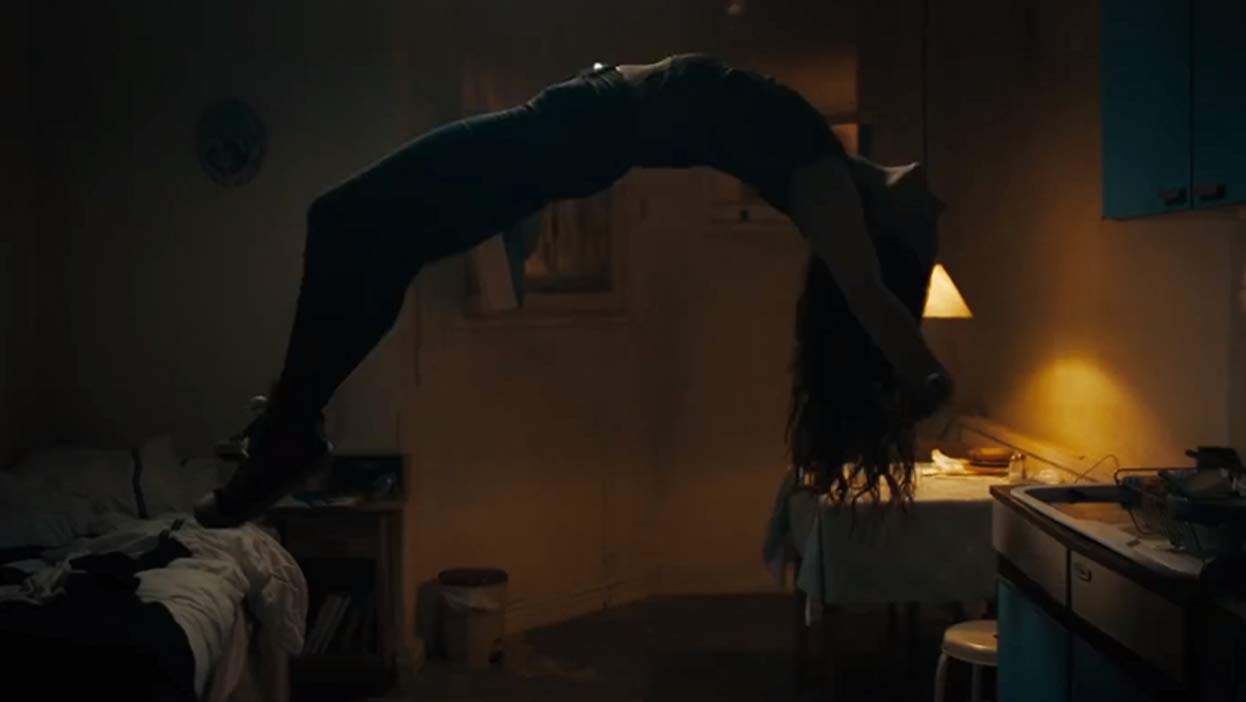
And so the end is nigh, and we reach the final season of uber-drama, DARK. If you have Netflix and you like to have your mind scrambled and heart moved, then I urge you to watch it. It is easily one of the best television dramas I have seen in a long time. It’s edgy, nightmarish, confusing, twisted and to be honest, virtually unreviewable. I say that because I don’t want to give away any spoilers but, trust me, if you like emotionally, structurally and artistically complex plots involving multiple characters, locations and timelines then this German thriller is for you. It had me confused in a good way and totally immersed in the plot and characters. You will be lost, searching for the light, yet you will be astounded too by the audacity of the writing, direction and looping insanity of the show.

Time, space and dimensional rifts are central to the drama. The cycles of life and death are also integral within the fabric of DARK. The action occurs in the German town of Winden as the narrative entwines the past, present and futures of four families: Kahnwald, Nielsen, Doppler, and Tiedemann.  One could argue that the state of Saṃsāra is invoked as a key theme. Saṃsāra is a fundamental concept in all Indian religions. It is linked to the karma theory, and refers to the belief that all living beings cyclically go through births and rebirths. The term is related to phrases such as the cycle of successive existence, including the karmic cycle or the wheel of life. What occurs within the twenty-six episodes of DARK is a cyclical lunar convergence of 33 years, taking place initially in 1987 and 2020. Well, that’s just in season one. From season two onwards things temporally twist beyond into other years on the cycle.

During season two and much of season three I was often lost with the various characters criss-crossing each other on different timelines and at various ages of their lives. I finally found some semblance of understanding in DARK, after much frustration and almost giving up, by distilling the events to the human strands of childhood, adulthood and old age. Like a moving vision of Titian’s painting, The Three Ages of Man, all the major characters, notably Jonas Kahnwald, Claudia Tiedemann and Ulrich Nielsen, feature in these three stages of existence. Interestingly, the programme events show they have different agendas and perspectives, with older versions either teaching their younger selves or acting as their own nemesis. Proving that existentially speaking life is ultimately a constant battle with oneself.


Temporal paradox is central also to DARK. More specifically, it features the Bootstrap Paradox. This refers is a theoretical paradox of time travel that occurs when an object or piece of information sent back in time becomes trapped within an infinite cause-effect loop in which the item no longer has a discernible point of origin. Indeed, closed causal loops, such as the Predestination Paradox or Bootstrap Paradox, find time running in a repeating circle. When such circles over-lap in DARK, conflict is derived in the story because certain characters are trying to keep the loops going and others are trying to destroy them.

Which brings us to another major theme of the drama, the death of the self and death of the world. With the spectre of Chernobyl hanging over the town of Winden, the nuclear power station becomes a central harbinger of catastrophe throughout the various cycles. In the early years it is a beacon of prosperity, energy and employment. In later years it is the precipitous location for the apocalypse. Lastly, philosophically the textual richness in DARK is endless. While temporally speaking the looping timelines can be confusing, the final season, while leaving many questions unanswered provides a satisfying closure to this extremely human story. Amidst the science fact and fiction and philosophical explorations of life and death this is ultimately a television series about family and community. Because as soon as the cracks begin to show in the family unit we are destined to fall through the fissures of destiny. Only together can we conquer fate; but only if time allows.

Mark: 10 out of 11


CLASSIC FILM REVIEW: DANCER IN THE DARK (2000)

CLASSIC FILM REVIEW: DANCER IN THE DARK (2000)

Directed by: Lars von Trier

Produced by: Peter Aalbæk Jensen, Vibeke Windeløv

Written by: Lars von Trier

Cast: Björk, Catherine Deneuve, David Morse, Peter Stormare, Joel Grey

Music by: Björk

Cinematography: Robby Müller

Edited by: François Gédigier, Molly Marlene Stensgård

***MAY CONTAIN SPOILERS***


Rather incredibly, until very recently, I had never seen DANCER IN THE DARK (2000). However, it has quickly gone up the ranks in my mind as one of the best musical films I have ever seen. Having given it a lot of thought, it was difficult to place my review of Lars Von Trier’s eccentric, magical and moving tragedy. I could have reviewed it as a cult or under-rated classic film, but it was too high profile really; AND it won the Palm D’Or at Cannes. Thus, I decided, because it is such a compelling story and told in a magnetically creative style it definitely qualifies as a classic film.

Set in Washington State, circa 1964, the story centres on the life of Selena Ježková (Bjork), a Czech immigrant, who works in a factory supporting herself and her teenage son, Jean. She is good friends with co-worker Kathy (Catherine Deneuve), and has a good relationship with her landlord, a police officer called Bill (David Morse), and his wife, Linda (Cara Seymour). Selena is also romantically pursued by Jeff (Peter Stormare). Yet despite him being a pleasant and easy-going guy she prefers to be just friends. Selena is an admirable character because she works round-the-clock with at least two jobs, striving to make ends meet. But she also hides a secret. She is, in fact, going blind. Kathy helps cover for her where she can at the factory, however, the condition is irreversible. Selena is extraordinarily brave, but foolhardy too. Her condition puts herself and factory productivity at risk. Yet, this is merely a suggestion of the drama and tragedy which later befalls her. Because someone close to her will betray a trust, setting in motion a series of extremely depressing eventualities.


In order to escape the trials of her everyday existence, Selena often daydreams in song and dance form. These fantasies are further contextualised by Selena and Kathy taking part in a town production of THE SOUND OF MUSIC, plus their visits to the cinema to watch Hollywood musicals. Von Trier is careful though to establish verisimilitude and plausible reality prior to the first musical number. Even so, it is initially extremely jarring when the song begins. Nonetheless, the power of surprise provides an electrical surge to the narrative and Selena’s characterisation. The first number set in the factory finds the mechanical sounds of the machinery providing a metronomic rhythm to the song and dance routine. Furthermore, songs such as, I’ve Seen It All (with the sequence set on a locomotive), and Smith and Wesson link Selena’s character to metal, machines and American industrialisation. Essentially, Selena’s experiences as a working class immigrant find her attempting to escape via song, but being trapped by American machines and later on in the film, their justice system too.

Filmed on digital cameras the presentation is arguably inspired somewhat by Von Trier’s established Dogme 95 style. In terms of content, DANCER IN THE DARK (2000), combines elements of melodrama and film noir reminiscent of films by Douglas Sirk. Such thematic and visual cues are then filtered through a meta-textual inversion of the Hollywood musical. While the classical musical is all about joy, love, family, companionship, song and performance, Von Trier effectively represents these genre tropes, but twists them into calamitous trials and tribulations for Selena. I for one felt such pain, regret and sympathy for her character. Indeed, Bjork, who had never acted before and has rarely acted since, gives an incredibly moving and soulful performance as the dedicated mother only trying to do her best for her son. Similarly, the songs she co-wrote with Mark Bell, Sjón Sigurdsson and Lars von Trier, sparkle and spike and tug at the heartstrings passionately.

Lars Von Trier is a divisive filmmaker and personality. He has always sailed close to the wind in regard to his challenging filmmaking style and content, as well as causing dissension over the years with his perceived outrageous comments. Moreover, Bjork herself spoke openly about a “Danish filmmaker” who oppressed and harassed her persistently on set. One must deduce that this indeed was Von Trier, thus I must respect and sympathise with the anguish she felt while filming, DANCER IN THE DARK (2000). Lastly, reviews of the film at the time were equally dichotomous. Peter Bradshaw of The Guardian dubbed it the: “most shallow and crudely manipulative film of 2000. . . and one of the worst films, one of the worst artworks and perhaps one of the worst things in the history of the world.” Yet, Roger Ebert of the Chicago Sun-Times stated: “It smashes down the walls of habit that surround so many movies. It returns to the wellsprings. It is a bold, reckless gesture.” Personally, I am with Roger Ebert, as I found the film to be one of Lars Von Trier’s most emotionally moving, stylistically daring and human dramas.


CINEMA REVIEW: TENET (2020)

CINEMA REVIEW: TENET (2020)

Directed by: Christopher Nolan

Produced by: Emma Thomas, Christopher Nolan

Written by: Christopher Nolan

Cast: John David Washington, Robert Pattinson, Elizabeth Debicki, Dimple Kapadia, Michael Caine, Kenneth Branagh, Martin Donovan, Clement Poesy, etc.

Music by: Ludwig Göransson

Cinematography: Hoyte van Hoytema

***MAY CONTAIN SPOILERS***


I am writing this review from the future while travelling backwards to the past to try and alter events which have yet to occur in the present. Confused yet? Jokes aside, Christopher Nolan’s latest temporally challenging and narratively inverted blockbuster, TENET (2020), is actually not as complicated as some would lead you to believe. However, that’s because I’ve been training my brain with such mind-boggling adventures in time, space and dimensions while watching the third season of the ingenious German sci-fi drama, DARK (2020), this week. Safe to say however, TENET is still rather complex and probably unnecessarily so. Yet, Christopher Nolan is a filmmaker who loves exploring challenging scientific concepts and marrying them to hugely involving plots and stylish spectacular action. All credit to him too for pushing himself and the audience!

TENET opens with a fast-paced set-piece located at a Ukrainian opera house. A SWAT team, that includes our unnamed hero, (John David Washington), is there to save a spy and obtain an unidentified object, which will of course become an integral part of the plot later or earlier on in the story. From then on, ‘The Protagonist’, as he later becomes known, becomes embroiled in stopping the megalomaniacal plans of Russian oligarch, Andrei Sator (Kenneth Branagh). In order to do so he attempts to infiltrate and stop Sator via his bullied wife, Kat (Elizabeth Debicki). Here the Protagonist builds a bond to Kat and this provides the emotional glue of the film. Although, I’ll be honest, I was too busy thinking about the machinations of Nolan’s head-twirling approach to temporal structure, than actually feel much for the characters.


What the film lacks in emotional depth it more than makes up with spectacular action. There are at least six incredible set-pieces that involve hand-to-hand combat, fast-paced vehicle pursuit, bungee-jumping and all-out combat between various government and mercenary factions. Nolan and his production team twist the action with a visually mirrored trick which, well I won’t say anymore. Moreover, the grandiose style and cinematography are eye-popping. Sharp suits, sharper knives and futuristic masks are adorned by the characters giving the spy thriller a hyperreal edge. Similarly, the stunts and editing are superbly orchestrated and executed. Having said that, the sound design and dialogue could have been better. Far be it from me to criticize, but in striving for verisimilitude in the sound, the constant wearing of masks meant important dialogue lacked clarity. Likewise, in the final amazing set-piece I was lost amidst the bodies and explosions as to who was who and why and what and how. Clearly a second and third watch of TENET (2020) is in order.

While the action was pretty much flawless throughout, the screenplay, unlike say Nolan’s prior high-concept masterpiece, INCEPTION (2010), did lack character depth for me. While I realise this was Nolan’s intention, hardly any time is given setting up the characters. So much so they become cyphers within the plot. Nonetheless, the charisma of the cast, notably John David Washington and the impressive Robert Pattinson, dominates the screen and the two bounce off each other magnetically. Elizabeth Debicki and Kenneth Branagh also bring much to their roles, however their subplot involving domestic abuse felt out of place in such a post-modern spectacle. Moreover, Branagh’s oligarch was, in certain scenes, verging on parodic cliche. I wondered if the villain of the piece could have been a little less B-movie heavy at times and possibly more cultured. This is a minor gripe though. After all, he is the bad guy!

Ultimately, TENET (2020) is a big, brash and confident Bond-type film with bells on. Sure, the rules of the world could have been excavated and presented somewhat clearer. But, Nolan favours a breakneck pace and be damned if you cannot keep up. Indeed, I am certain he has covered all the plot-holes (or paradoxes) I thought I saw and numerous questions I had by the end. While it is not without flaws, on first watch, I once again have to congratulate Christopher Nolan for striving for original thinking and fascinating concepts within a genre film. One may even argue that there are too many ideas here and simplification could have created a more emotionally satisfying film. However, there are many moments of cinematic genius in TENET (2020), notably in the Sisyphean payoffs within the inverted plot structure. Finally, one won’t see a more shiny and beautiful looking film all year. The future is bright: the future is Christopher Nolan.

Mark: 9.5 out of 11


FIVE REASONS THIS COULD BE GOOD – DEATH ON THE NILE (2020)

FIVE REASONS THIS COULD BE GOOD – DEATH ON THE NILE (2020)

Directed by: Kenneth Branagh

Produced by: Kenneth Branagh, Judy Hofflund, Simon Kinberg, Ridley Scott, Mark Gordon, Kevin J. Walsh

Screenplay by: Michael Green

Based on: Death on the Nile by Agatha Christie

Cast: Tom Bateman, Annette Bening, Kenneth Branagh, Russell Brand, Ali Fazal, Dawn French, Gal Gadot, Armie Hammer, Rose Leslie, Emma Mackey, Sophie Okonedo, Jennifer Saunders, Letitia Wright

UK Release Date: 23/10/2020


The cinemas are now open again and while the reason for their closure was understandable, it’s great to look forward to seeing some of the more grand and expensive films on the giant screen. I have very much made the most of watching loads of films and television programmes at home via streaming and digital channels, yet it was a pleasure to be back at the cinema this weekend watching TENET (2020). Kenneth Branagh features heavily in Christopher Nolan’s latest high concept brain-twister. Moreover, he also has an updated version of DEATH ON THE NILE (2020) being released soon. Thus, as I’m such a sucker for these old-fashioned murder mysteries I thought I’d give five reasons why it could be good.


CAST

Following the box office success of MURDER ON THE ORIENT EXPRESS (2017), it comes as no surprise there is a sequel to the classy Hercule Poirot train-set murder mystery. Once again Kenneth Branagh directs and stars as the Belgian detective and he has also assembled a wonderful cast of A-listers and solid character actors within the ensemble. I’m especially pleased to see Annette Bening lend some gravitas to the glamour and whether GAME OF THRONES’ Rose Leslie can break out into bigger film roles. Gal Gadot and Letitia Wright leave behind recent comic book films for an altogether more period setting. Lastly, who doesn’t want to see French and Saunders reunited on screen.


NOSTALGIA & FAMILIARITY

I have always loved Agatha Christie’s work be it in literary, radio, television or film mediums. DEATH ON THE NILE (2020) is a favourite of mine, especially as the 1978 version was the first Christie adaptation I saw at the cinema. I must have seen that particular film about twenty times over the years. So much so I know the plot backwards. I guess the nostalgia for watching a film as a child and familiarity with the story create a kind of comfort film. Thus, another positive reason why I am looking forward to the new adaptation is how they recreate a familiar classic.


LOCATIONS

As I established in a recent film review, I for one have a massive fear of flying. Thus, watching films set in exotic locations can be a way for me to experience vicariously places I would not normally visit. Seeing as the film is set on a boat travelling up the Nile, there is no doubt there will be some incredible sights to see while Poirot tries to solve a devilishly complex crime.


MYSTERY

Agatha Christie truly knows how to create a masterful detective plot. In fact, she was a genius. What we now consider to be a cliched genre, the “whodunnit”, was practically invented and reinvented by Christie and this story has a particularly brilliant plot and ending. While the genre is familiar, I enjoy watching all the players in one location conflicting with each other. Of course, Poirot is an eccentric and brilliant detective, so even though I know he will solve the crime and how, paradoxically I still love the mystery of it all.


TRAILER

I have now watched the trailer a few times and it shone on the big screen at the weekend. It also does a great job of establishing the cast, characters and setting without giving away any of the plot. The Depeche Mode track really resonates with the grand voiceover, building to a crescendo where we get to meet Kenneth Branagh as the inimitable Poirot. Anyway, here it is!


AMAZON PRIME FILM REVIEW: 7500 (2020)

AMAZON PRIME FILM REVIEW – 7500 (2020)

AMAZON PRIME REVIEW – 7500 (2019)

Directed by: Patrick Vollrath

Produced by: Maximilian Leo, Jonas Katzenstein

Screenplay by: Patrick Vollrath

Cast: Joseph Gordon-Levitt, Omid Memar, Aylin Tezel, Carlo Kitzlinger, Murathan Muslu, Paul Wollin etc.

Cinematography: Sebastian Thaler

***MAY CONTAIN SPOILERS***


I am bona fide confirmed aviophobe. Even the merest sight of a plane in the sky gives me the shivers. I imagine it’s a mixture of not being in control, lacking consistent flight experience and the pure fact that when one is that high up there is little chance of escape if anything goes wrong. Personally speaking, I think it’s an extremely rational fear. While I have flown on a plane a few times, if it means never flying again, I am genuinely happy to holiday in my own country for the rest of my life. Bearing this is mind, films that are set on a plane have a head start in increasing the tension I feel watching them. Indeed, good examples of cinema releases with heavy doses of airborne drama include: United 93 (2006), Flight (2012), Sully (2016), Passenger 57 (1992) and Red Eye (2005) etc. Just the mere thought of these, and the spectacular plane crash in Knowing (2006), are enough to have me reaching for the vodka and Valium.

The 2019 action-thriller, 7500 is a worthy addition to such aeronautic movies. Written and directed by Patrick Vollrath, in his directorial feature-length film debut, 7500 stars Joseph Gordon-Levitt as pilot, Tobias Ellis. He joins the Captain on a standard city flight from Berlin to Paris and soon after take-off the crew and passengers on the plane find themselves attacked by hijackers. What follows is a claustrophobic, suspenseful and deadly set of events which push Tobias, and passengers, to the brink of death and back again. Aside from a few establishing CCTV shots of Berlin, virtually all of the action takes place inside the cockpit of the plane. The camera therefore is right up in the face of Joseph Gordon-Levitt throughout the film. Thankfully, he is a seasoned actor and gives a fine performance that runs the gamut of emotions.

One-location thrillers can be hard to pull off, however, the director Patrick Vollrath manages to build the suspense expertly through a good pace and many suspenseful moments. Indeed, when the hijackers were trying to smash their way into the cockpit, my heart was firmly in my mouth. To be honest, my heart began beating loudly even on take-off. Keeping the action to mainly the cockpit allows a real sense of claustrophobia and anxiety to build. We are right in the perilous mix with Tobias and Gordon-Levitt plays the everyman-in-danger to perfection. My main criticisms of the script really lay in the characterisation of remaining characters, especially the villains. It’s a shame the script did not explore their motivations above the cardboard terrorist personalities represented. However, as a singularly committed one-location-individual-in-crisis genre story, 7500 takes off and rarely threatens to crash.

Mark: 8 out of 11


FIFTY NOT OUT! 50 FAVOURITE FILMS IN 5 MINUTES!

FIFTY NOT OUT! 50 FAVOURITE FILMS IN 5 MINUTES!

I celebrated my fiftieth birthday last week. So, for a bit of fun I set myself a cinema game involving the theme of fifty. I gave myself no more than five minutes to list fifty favourite films. The rules are simple:

  • Pick 50 favourite films off the top of your head.
  • Take no longer than 5 minutes.
  • No checking Imdb.com or other cinema sites.
  • One film per franchise.
  • Go with your instinct – don’t overthink it!
  • Once you have written fifty down – you cannot change any.

Of course, these aren’t necessarily the best films ever, but instinctively films I love. Obviously, I am now kicking myself for the many great works of cinema I have missed. But, it’s just a bit of fun! So, here we go! In alphabetical order – FIFTY FAVOURITE FILMS chosen in FIVE MINUTES to celebrate FIFTY YEARS alive!


A GHOST STORY (2017)

AMERICAN BEAUTY (1999)

ANCHORMAN: THE LEGEND OF RON BURGUNDY (2004)

AU REVOIR LES ENFANTS (1987)

THE BIG LEBOWSKI (1998)

CAPTAIN AMERICA: THE WINTER SOLDIER (2014)

CASABLANCA (1942)

CASINO ROYALE (2006)

DAWN OF THE DEAD (1978)

DEAD MAN’S SHOES (2004)


THE EXORCIST (1973)

FARGO (1996)

FIGHT CLUB (1999)

FOUR LIONS (2010)

GLADIATOR (2000)

THE GODFATHER: PART II (1974)

GOODFELLAS (1990)

THE GOOD THE BAD AND THE UGLY (1966)

THE GREAT ESCAPE (1963)

HALLOWEEN (1978)


INGLOURIOUS BASTERDS (2009)

JAWS (1975)

KES (1969)

LORD OF THE RINGS: THE RETURN OF THE KING (2003)

THE MAGNIFICENT SEVEN (1960)

MAN ON FIRE (2004)

MEMENTO (2000)

MILLER’S CROSSING (1990)

MISSION IMPOSSIBLE (1996)

NETWORK (1976)


THE NINTH CONFIGURATION (1980)

NOSFERATU (1922)

ONCE UPON A TIME IN AMERICA (1984)

PSYCHO (1960)

RAGING BULL (1980)

RAIDERS OF THE LOST ARK (1981)

RESERVOIR DOGS (1992)

ROBOCOP (1987)

ROCKY (1976)

SCARFACE (1983)


SECRETS AND LIES (1996)

THE SEARCHERS (1956)

THE SEVEN SAMOURAI (1954)

STAR WARS (1977)

THE TERMINATOR (1984)

THE THING (1982)

TREMORS (1990)

TRUE GRIT (1969)

WHEN HARRY MET SALLY (1989)

WITHNAIL AND I (1986)


HBO FILM REVIEW: BAD EDUCATION (2019)

HBO FILM REVIEW: BAD EDUCATION (2019)

Directed by: Cory Finley

Produced by: Fred Berger, Brian Kavanaugh-Jones, Julia Lebedev, Mike Makowsky, Oren Moverman, Eddie Vaisman

Screenplay by: Mike Makowsky – Based on: The Bad Superintendent by Robert Kolker

Cast: Hugh Jackman, Allison Janney, Geraldine Viswanathan, Alex Wolff, Rafael Casal, Stephen Spinella, Annaleigh Ashford, Ray Romano etc.

***MAY CONTAIN SPOILERS***


Not to be confused with Pedro Almodovar’s film of the same name — or the BBC comedy show/film, Bad Education, starring Jack Whitehall — this Bad Education (2019), is an altogether different scholastic narrative. Based on true events which occurred at the Rosslyn Union Free School District circa early 2000’s, the story centres on a massive scandal which broke involving the educational District’s managers, financiers and auditors. I am going to review this without too many spoilers, as learning the gravity of what occurred and how it happened is a major part of the film’s jaw-dropping enjoyment.

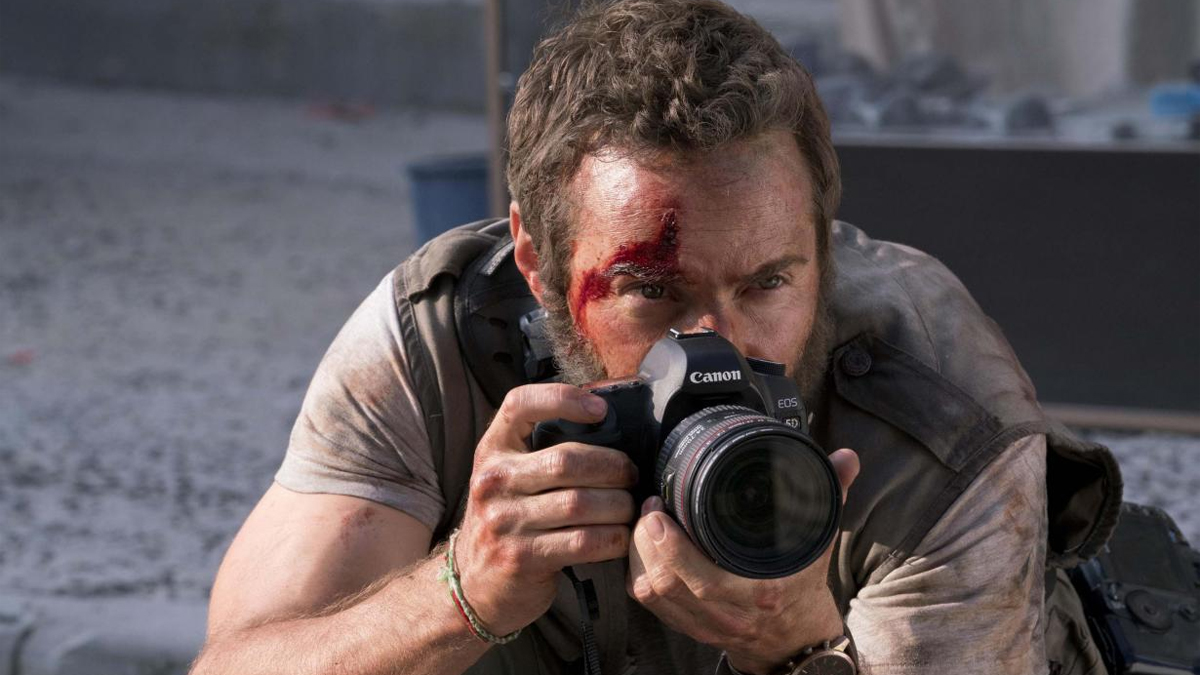
As this is a HBO TV film, there was a heightened expectation of quality on my part. I was not to be disappointed. An expertly crafted screenplay, based on an article by Robert Kolker, finds Hugh Jackman as Frank Tassone. He is a suave, vain and intelligent Superintendent who has the school staff, students and parent under a charm spell. Not only is he a smooth talker, but the exam results for the schools in his charge have improved no end. His Long Island domain has incredible returns and this ensures more middle-class families move into the area, driving up property prices. Everybody’s happy, right? Yes, for a while! Tassone is supported ably by his Financial Manager, Pam Gluckin (Allison Janney). It’s only when school reporter, portrayed impressively by Geraldine Viswanathan, starts digging deeper, that something indeed is revealed to be rotten in the district of Rosslyn High.

Directed with some skill by Corey Finley, this film is highly recommended to those who enjoy compelling dramas with a heavy dose of ironic humour. Finley’s previous film, Thoroughbreds (2017), was an incredibly dark noir character study. Bad Education (2019), on the other hand, deals with serious financial malfeasance in a lighter tone. The dialogue is very witty and full of humorous exchanges between the characters. Moreover, Hugh Jackman and Allison Janney are on top acting form in their respective roles. Jackman especially proves what charismatic and interchangeable talent he has. Indeed, it’s good to see him play a highly complex character again. Ultimately though, the almost unbelievable nature of the events portrayed, prove how bottomless human greed and corruption can become. When will we ever learn?

Mark: 9 out of 11


SHUDDER TV HORROR REVIEW: CREEPSHOW (2019)

SHUDDER TV HORROR REVIEW: CREEPSHOW (2019)

Directors (various): Rob Schrab, Greg Nicotero, Tom Savini, Roxanne Benjamin, John Harrison, David Bruckner, etc.

Writers (various): Stephen King, Rob Schrab, Joe Hill,  Paul Dini, Stephen Langford, David J. Schow, John Skipp, Dori Miller, John Esposito, Bruce Jones, Christopher Buehlman, Matt Venne, etc.

Cast (various): Adrienne Barbeau, Jesse C. Boyd, Giancarlo Esposito, Christopher Nathan, Tobin Bell, Cailie Fleming, Rachel Hendrix, David Shea, Guy Messenger, Diane D. Carter, David A. MacDonald, Jeffrey Combs, Nelson Bonilla, Callan Wilson, Kid Cudi, DJ Qualls, Antwan Mills, Jake Garber, Gino Crognale, David Arquette, Karen Strassman, Tommy Kane, Kermit Rolison, Bruce Davison, Hannah Barefoot, Tricia Helfer, Dylan Smitty, Afemo Omilami, Logan Allan, Addison Hershey, Will Kidrachuck, Big Boi, Nasim Bowlus, Carey Jones, Madison Bailey, Ian Gregg, Ravi Naidu, Connor Christie, Madison Thompson, Jason Jabbar Wardlaw Jr., Andrew Eakle, Julia Denton, Scott Johnson, Tom Olson, Erica Frene, Danielle Lyn, Michael Scialabba, Jordan Patrick, Dennis Bouldin, David Wise, etc.         

Streaming platform: Shudder / Amazon Prime

***MAY CONTAIN SPOILERS***


The anthology or portmanteau film has thrown up some fine cinematic entertainment over the years. Generally, an anthology film can be described as a collection of works with a linked theme, genre, style and author etc. The horror genre is an ideal subject matter for anthology and the feature film, Creepshow (1982), found two giants of horror — Stephen King and George A. Romero — marrying their mischievous minds to monstrous impact.

Creepshow (1982) consisted of five short stories. Two of these stories were adapted from King’s literary narratives, while the rest were from originals he wrote for the film. The film is bookended by prologue and epilogue scenes involving a young boy who is scolded for reading horror comics. Conversely, Creepshow is a homage to the EC horror comics of the 1950s, such as Tales from the Crypt and The Vault of Horror. Romero even hired long-time effects specialist Tom Savini to replicate comic-like effects during the film. The movie was a minor hit and a sequel would follow. As would an actual comic book series based on the film.


Unsurprisingly, in this era of endless remakes and reboots and universes, Creepshow has received the TV adaptation treatment. Released as Shudder original production, the series consisted of six episodes and twelve terrifying tales. Experienced horror writers and directors were employed and there are also some very familiar faces in the cast too. Was it any good? Well, as someone who watches a lot of short horror films on YouTube, I have to say that there’s always hits and misses in the genre. However, the production values of Shudder’s Creepshow are of an excellent quality. Moreover, the stories keep to the traditions of the original films, which usually involved some kind of morality tale, revenger’s story or character-driven plot. They aren’t simply just exercises in style or terror over substance.

My favourites of the twelve were The House of the Head and Night of the Paw. In the former, a young girl discovers a terrifying toy head in her newly acquired dollhouse. This creepy concept really made me jump throughout and was devilishly clever too. In the Night of the Paw, we got another telling of the classic Monkey’s Paw story. Here a local mortician possesses a monkey’s paw that grants wishes which backfire horrifically. Of the other stories that I liked, Gray Matter was an atmospheric and nasty monster short. While Bad Wolf Down taps into the well-worn military versus werewolves’ theme, with stylish and bloody results.

Children and horror obviously feature a lot in Stephen King’s work. This is echoed in the stories called All Hallows Eve and The Companion. Both stories focussed on bullying and retribution in an imaginative fashion. Of the other stories, The Finger benefited from an unhinged performance by DJ Qualls. His character finds a finger which turns into something unspeakably evil. Meanwhile, Skincrawlers trod another often-used horror theme; that of the dangers of plastic surgery and (un)natural body enhancement. The remaining stories were also decent, although having said that the zombie tale, Times is Tough in Musky Holler, was arguably the weakest of the lot. Ultimately, Shudder’s Creepshow reboot was an entertaining horror anthology show, well written, directed and acted. My only reservation was it was all a bit slick and glossy. In fact, it could have done with a lower budget and the grittier touch of George Romero at times.

Mark: 8 out of 11


SHUDDER HORROR REVIEWS – KILLERS

SHUDDER HORROR REVIEWS – KILLERS

For my final slew of Shudder horror film reviews (with one television series write-up to come), I have combined a series of films which contain murder and killers central to the plot. I mean, most horror films feature these types of terrible situations, but the following movies are grounded very much in reality. Ghosts and ghouls and zombies and monsters are to the fore of the horror genre, however, for me, the shocking violence of human beings can often be far more scary on screen. Thus, these films feature assassins, revengers and serial killers which reflect the blackest part of the human soul. Marks out of eleven, with best rated first. You know the drill.

**MAY CONTAIN SPOILERS**


KILLER JOE (2011) – DIRECTED BY WILLIAM FREIDKIN

Tracy Letts’ incendiary, critically acclaimed dark comedy play was adapted by himself and directed brilliantly by genre auteur, William Friedkin. Matthew McConaughey arguably relaunched his serious acting career as the eponymous and corrupt lawman, Joe Cooper, who takes a fancy to Juno Temple’s southern Lolita-type. Killer Joe (2011) is full of bleakly biting noir dialogue and some amazing performances, especially from McConaughey and Temple. Playing out like the Coen Brothers doing a horror film, the memorably disturbing ending almost put me off chicken for life. This is a true cult classic from a director, screenwriter and cast, all at the top of their game.

Mark: 9 out of 11


A PERFECT GETAWAY (2009) – DIRECTED BY: DAVID TWOHY

Kind of like Agatha Christie meets holiday show Wish You Were Here, I had a lot of fun with David Twohy’s clever-clever-meta-thriller. Steve Zahn and Milla Jovovich are the honeymooners in Hawaii who find death in paradise, as a pair of serial killers are murdering holidaymakers. Having helped Vin Diesel to stardom in Pitch Black (2000), Twohy tries again with the laconic and likeable Timothy Olyphant as Macgyver-type island tourist. I’m a big Olyphant fan and he steals the show here in this nifty, twisting cat-and-mouse plot, however, the actor who would go onto massive things in the film world in none other than Chris Hemsworth. Thor pops up here portraying a tattooed-beefcake-with-an-attitude. Anyway, loads of actions, twists, pace and lovely locations make this film worth a visit.

Mark: 8 out of 11


WILDERNESS (2006) – DIRECTED BY: M.J. BASSETT

An efficient low-budget British thriller with a youngish cast led by charismatic actor, Toby Kebbell. Here, Sean Pertwee, takes his gang of youth offenders into the woods for a team-building exercise, only to find the team being destroyed by an unknown assailant. There are some decent thrills and kills throughout, but Christopher Smith’s film Severance (2006) did this idea much better. Still, it rattles along at a fine pace and Kebbell again demonstrates why Hollywood came knocking for his acting talent.

Mark: 7 out of 11


SMALLTOWN KILLERS (2017) – DIRECTED BY OLE BORNEDAL

Two Danish builders are having marital difficulties and one night when drunk, accidentally hire a Russian hitman on the ‘Dark Web’ to kill their wives. Mildly amusing, this comedic thriller is predictable with some haphazard plotting. Lastly, while the warring couples are pretty unlikeable characters, Marcin Dorocinski and Gwen Taylor, as the two hired assassins, provide some belly laughs with their hilarious performances.

Mark: 6.5 out of 11


WHITE OF THE EYE (1987) – DIRECTED BY DONALD CAMMELL

David Keith and Cathy Moriarty star in this serial-killer tale adapted from Margaret Tracy’s novel, Mrs White. Their relationship is put to the test when he becomes prime suspect in a series of murders. Cammell gets compelling performances from the leads but mishandles the plotting as the sudden twist near the end felt mildly ridiculous and contrived.

Mark: 6 out of 11


SHUDDER HORROR CLASSIC REVIEW – THE CHANGELING (1980)

SHUDDER HORROR CLASSIC REVIEW – THE CHANGELING (1980)

Directed by: Peter Medak

Produced by: Joel B. Michaels, Garth H. Drabinsky

Screenplay by: William Gray, Diana Maddox

Story by: Russell Hunter

Cast: George C. Scott, Trish Van Devere, Melvyn Douglas, John Colicos, Jean Marsh, Helen Burns, Madeleine Sherwood,

Cinematography: John Coquillon

***MAY CONTAIN SPOILERS***


If, teenagers being stalked and slashed by a crazed non-speaking maniac are your preference, then you probably would not enjoy the classic ghost story, The Changeling (1980). However, if you are rivetted and chilled by expertly crafted cinematic horror, built on a compelling screenplay, excellent performances and fine cinematography, then this is a film for you.

Not to be confused with the kidnapping thriller, Changeling (2008). The Changeling (1980) feels like one of those older films which created the mould for many other contemporary ghost narratives. A few examples include: The Woman in Black (2012), Candyman (1992), the Ring series and more recently, Hereditary (2018). Such films often feature genre tropes like:

  1. Grieving or vulnerable lead protagonist(s).
  2. A vengeful ghost or spirits who were murdered or done wrong when alive.
  3. A creepy house or location which holds a dark secret and becomes a character in it’s own right.
  4. A detective plot structure which finds said protagonist attempting to solve the mystery of the ghost’s past.
  5. Lots of creepy supernatural comings and goings that ultimately lead to the ghost’s redemption or a successfully chilling retribution.

Of course, the model for such conventions lay in the pages of classic literary ghost stories, however, having not seen The Changeling (1980) for over thirty-years, I felt like I was watching a masterpiece of the supernatural film genre. It doesn’t hurt having Oscar winning actor, George C. Scott, subtly playing the lead as grieving John Russell, a musical professor trying to come to terms with the death of his wife and child. Moreover, the mature approach to pacing and direction by Peter Medak slowly builds the terror to a real crescendo. The horror within the plot, involving a murdered child, is ably imbued by the compelling score, elegant editing and John Coquillon’s exquisite camera movement and lighting composition. Ultimately, I enjoy a good slasher film, but give me a classy supernatural tale such as The Changeling (1980) any night of the week.

Mark: 9 out of 11


Thoughts on Cinema and Filmmaking