Tag Archives: A24

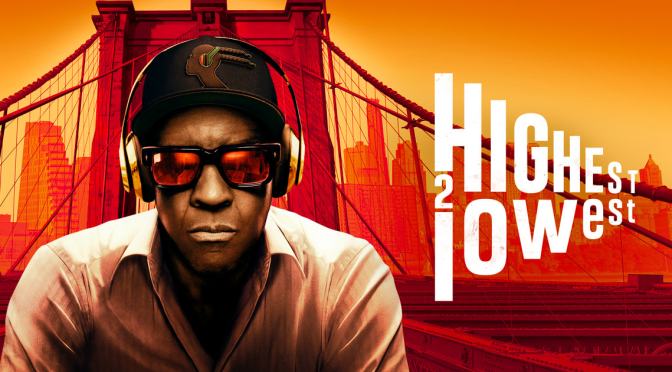
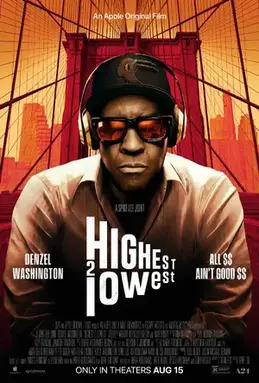
Apple TV+ Film Review: Highest 2 Lowest (2025) – a vibrant, musical and pacy, if unnecessary, remake.

Apple TV+ Film Review: Highest 2 Lowest (2025)

Directed by Spike Lee

Screenplay by Alan Fox

Based on High and Low (1963 film) by Akira Kurosawa, Hideo Oguni,
Ryūzō Kikushima, Eijirō Hisaita, and King’s Ransom (1959 novel) by Ed McBain.


Produced by Todd Black and Jason Michael Berman

Main cast: Denzel Washington, Jeffrey Wright, Ilfenesh Hadera, ASAP Rocky, John Douglas Thompson , Dean Winters, LaChanze, Aubrey Joseph, etc.

Cinematography by Matthew Libatique


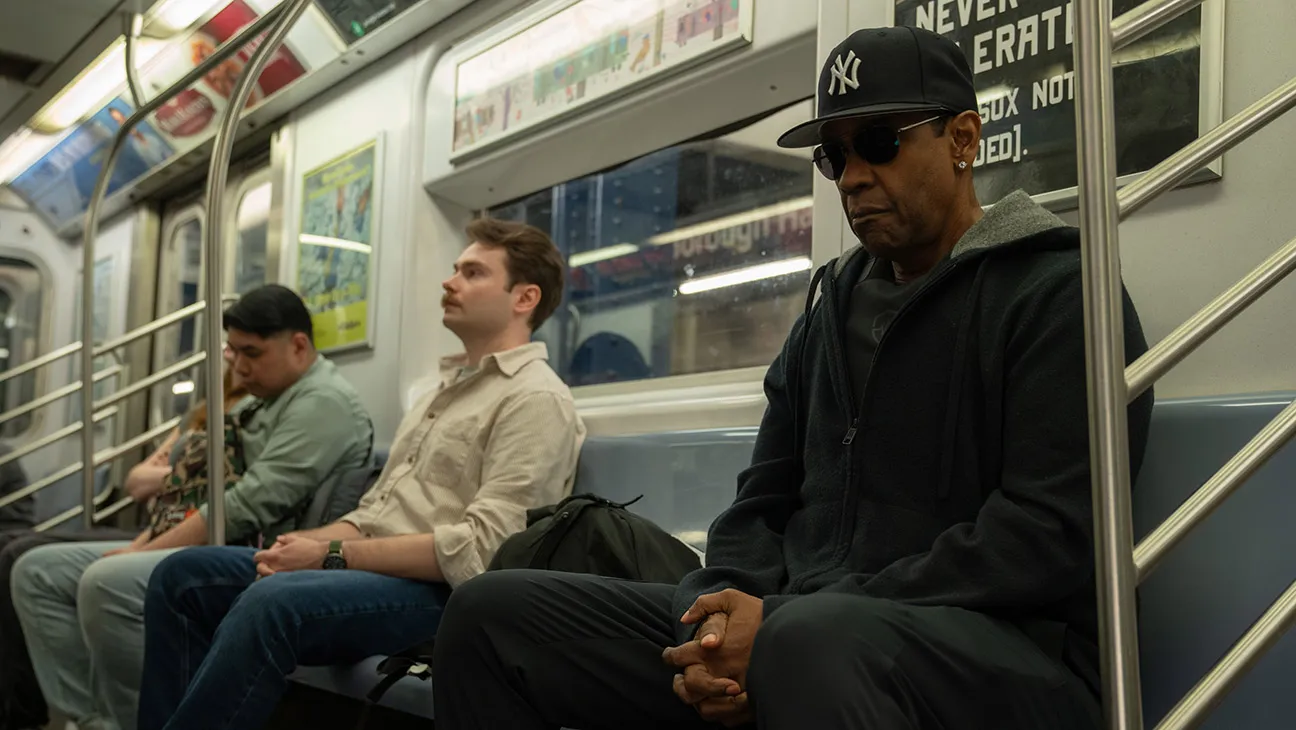
Spike Lee’s Highest 2 Lowest (2025) is a kinetic, vividly modern reimagining of Akira Kurosawa’s High and Low (1963), transplanting the Japanese master’s class-conscious thriller into the bustling, chaotic pulse of contemporary New York City. As expected from Lee, the film bursts with visual flair and political verve — the camera rarely rests, and the city itself becomes a character, glowing with heat, colour, and tension. The streets hum with energy, from glassy penthouses to subway platforms, creating a dynamic canvas on which the moral dilemmas unfold.

Denzel Washington, as usual, delivers a commanding performance as David King, a renowned independent producer and record label owner, torn between his conscience and his ambition when the kidnapping of his son occurs. Washington captures both the quiet torment and moral exhaustion of a man staring down the gulf between his privilege and his humanity. Jeffrey Wright, offers great support as his friend and chauffeur. The narrative navigates class and corporate tensions, bringing a soulful intelligence to every scene, grounding the film’s intensity with empathy and authority.


The film moves at a thrilling pace, carried by a propulsive soundtrack that fuses hip-hop, jazz, and gospel with Lee’s trademark flair for musical storytelling. Nowhere is this energy more palpable than in the ransom handover sequence — a masterclass in direction and editing — cutting feverishly across New York’s boroughs and metro trains, while the Puerto Rican Day Parade swells in a euphoric, near-operatic crescendo. It’s a breathtaking montage that exemplifies Lee’s command of rhythm, geography, and social texture. It proves to be Highest 2 Lowest (2025)’s biggest high.

Where Highest 2 Lowest (2025) falters is in the handling of its central moral crisis, which in turns undermines the all-to-rapid ending too. Indeed, it seemed to be missing a betrayal twist for me. The decision David King must make — the film’s spiritual core — arrives and resolves too swiftly around the midpoint, leaving the second half conflict, after the exhilarating Puerto Rican Day Parade, more focused on wrapping up loose ends quickly than psychological reckoning. It’s a missed opportunity for the deeper character study that Kurosawa’s original sustained so brilliantly.

Still, as an adaptation, Lee’s film is an entertaining piece of work — bold, stylish, and alive with the contradictions of the modern city. While Kurosawa’s High and Low (1963) remains the more compelling exploration of social class and moral responsibility, Highest 2 Lowest (2025) finds its own voice: vibrant, urgent, and unmistakably Spike Lee.

Mark: 7 out of 11


Cinema Review: Eddington (2025) – a daring Western satire on COVID-era America, US politics and the poison of social media!

Cinema Review: Eddington (2025)

Directed by Ari Aster

Written by Ari Aster

Produced by: Lars Knudsen, Ari Aster & Ann Ruark

Main Cast: Joaquin Phoenix, Pedro Pascal, Luke Grimes, Deirdre O’Connell, Micheal Ward, Austin Butler and Emma Stone.

Cinematography by Darius Khondji

*** MAY CONTAIN SPOILERS ***


Ari Aster’s first two horror films, Hereditary (2018) and Midsommar (2019) were rightly critically acclaimed and delivered at the box office too. His third film Beau is Afraid (2023) was a flop when compared and in my view not surprising. The film was arguably, depending on your view, a hilarious, risk-taking arthouse tragi-comedy or a self-indulgent act of egregious career self-sabotage. Safe to say I did not enjoy it, so approached the latest A24-produced film of Aster’s, Eddington (2025), with emotional caution.

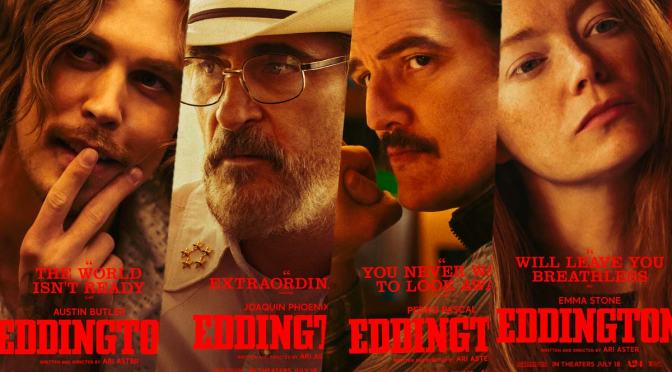
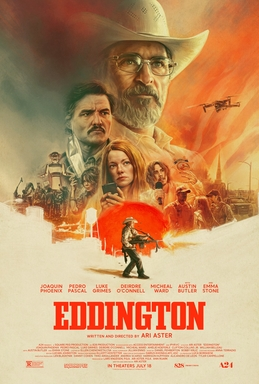
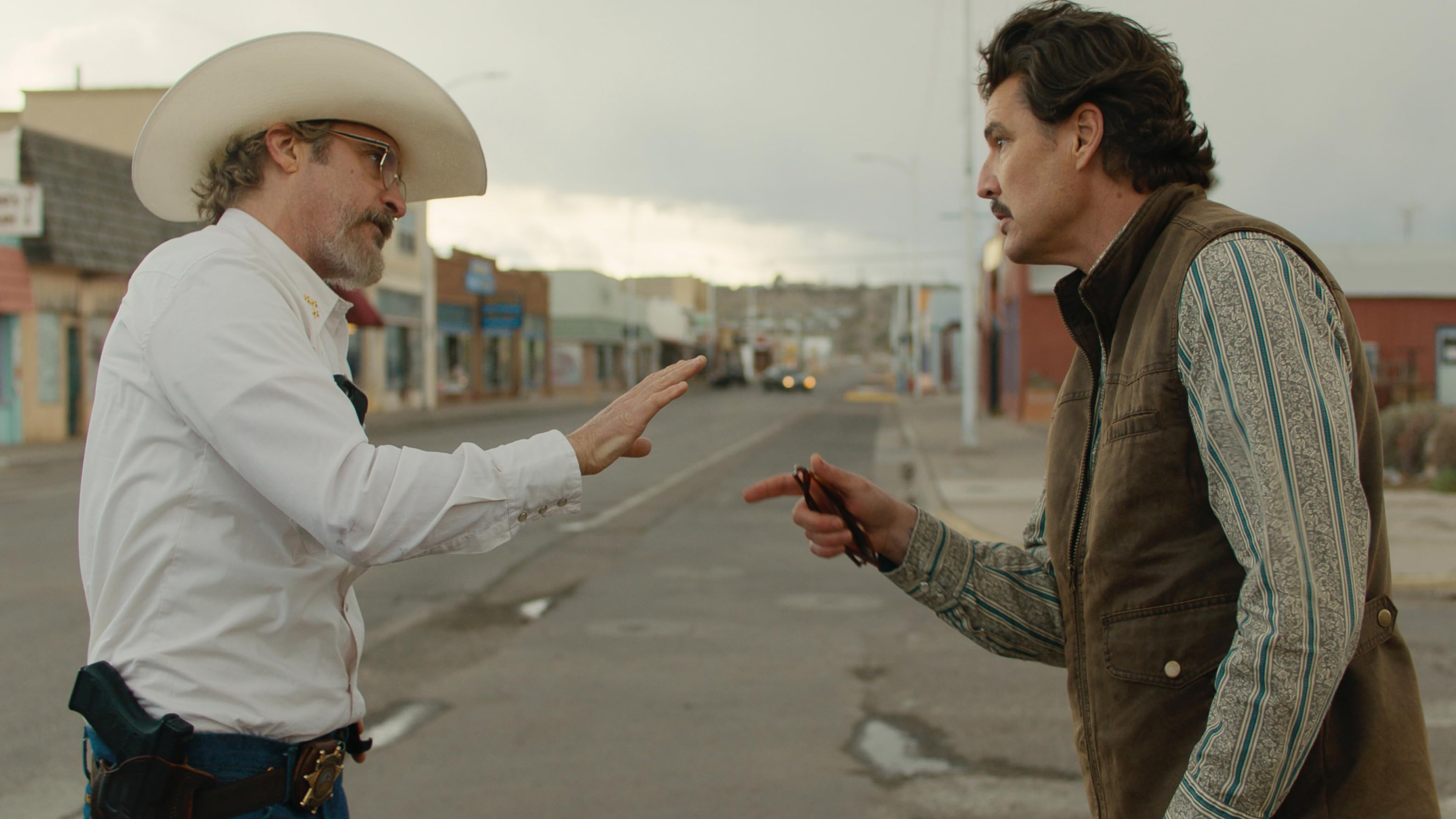
Thankfully Aster’s screenplay, characters and all-round production of Eddington (2025), are far more accessible and focused than his third feature. Pedro Pascal and Joaquin Phoenix anchor Eddington (2025) superbly, as Aster delivers a blistering small-town allegory that uses a public health crisis as the spark for something far larger. What begins with Mayor Ted Garcia (Pascal) dutifully following the Governor’s lockdown orders quickly escalates when Sheriff Joe Cross (Phoenix) refuses to comply and runs for Mayor himself. This casts the town and people into a conflict that mirrors America’s own political division.


Phoenix brings his trademark intensity to Sheriff Cross, whose defiance feels equal parts principled and unhinged, while Pascal’s Mayor, revealed to be a corporate puppet, balances him as a leader losing grip on his authority. Thus, Eddington (2025) is a powerful film whose strength lies in the performances and a brave, intelligent screenplay which asks many questions. The main issues I had were under-developed character arcs for Emma Stone’s and Austin Butler’s characters. Further, as in previous films Aster relies heavily on left-field plot turns, which go more for shock, rather than understandable character development. Indeed, the final act Western-style shootout, while incredibly exciting, seems out-of-sync with the thoughtful build-up and drama established in the first hour.

Ultimately, Director Ari Aster resists turning Eddington (2025) into just a COVID-era-morality tale; instead, the film confidently threads together a powerful mix of left and right-wing US politics, toxic masculinity, historical sexual abuse, conspiracy and alternative theories, cultish religious fervour, white saviour virtue-signalling, homegrown terrorism, algorithmic influence of social media, and the creeping threat of corporate greed. Each theme and subplot fold back into the central question: who really controls the narrative in modern America or is it a nation spiraling out of control toward inevitable civil war? The result is a tense, unsettling portrait of a town—and a country—at war with itself.

Mark: 8 out of 11


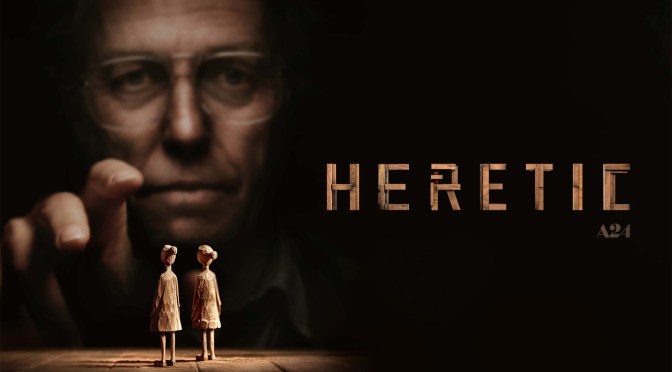
Cinema Review: Heretic (2024) – A Devilish Twist on Religious Horror

Heretic (2024)

Directed by Scott Beck & Bryan Woods

Written by Scott Beck & Bryan Woods

Produced by Stacey Sher, Scott Beck, Bryan Woods, Julia Glausi and Jeanette Volturno

Main cast: Hugh Grant, Sophie Thatcher, Chloe East and Topher Grace.

Cinematography by Chung Chung-hoon


Hugh Grant has been leaning into edgier, more complex roles in recent years, breaking away from the charming, rom-com archetype that first made him famous in films like Notting Hill (1999) and Four Weddings and a Funeral (1994). His performance as the scheming Fletcher in The Gentlemen (2019) showcased his versatility and willingness to play morally ambiguous, darker characters, a notable shift from his earlier, more likeable characters. Additionally, his involvement in projects like Heretic (2024) demonstrates a continued exploration of grittier, layered personas, signaling a reinvention of his career as he embraces unconventional, often villainous roles that display a new level of depth and unpredictability.

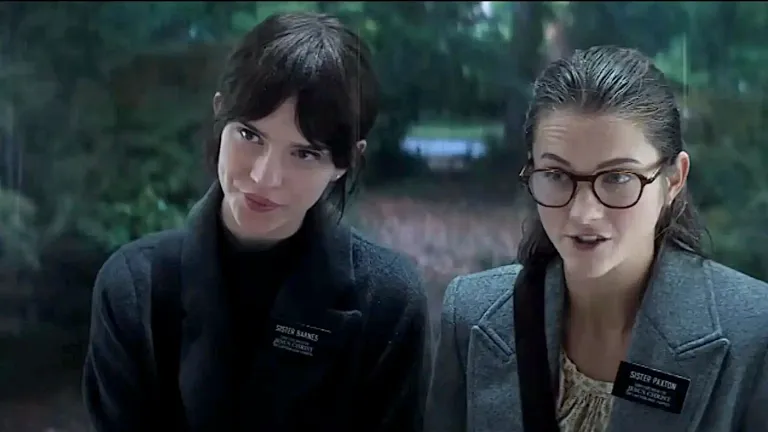
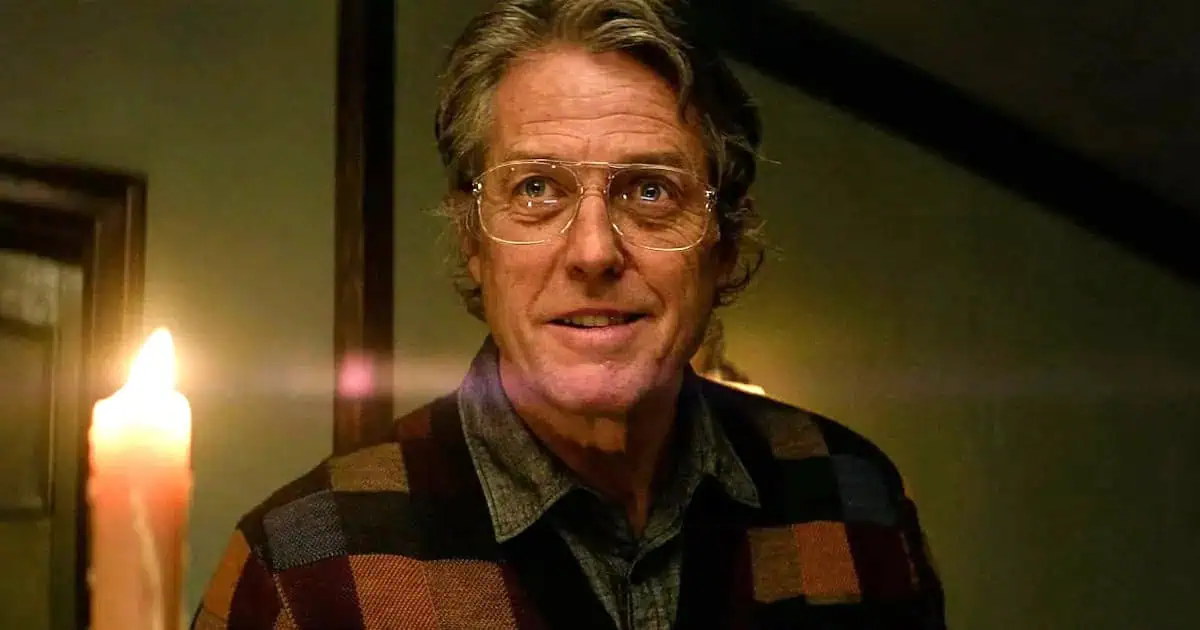
In the theologically-driven horror thriller, Heretic (2024), he portrays a certain Mr Reed, who is door-stepped by two Mormon missionary’s, Sister Barnes (Sophie Thatcher) and Sister Paxton (Chloe East). After the opening scenes which establish empathy for the Mormons, despite some slightly risque dialogue, they knock on the door of Mr Reed and soon the tension begins to rise as he clearly has ulterior motives. But what could they be?


The excellent script by Scott Beck and Bryan Woods truly comes alive in the second act, diving into a sharp, intelligent critique on the nature of religion and faith. The narrative shifts into thought-provoking territory, dissecting the contradictions and complexities of belief systems with nuance and wit. Hugh Grant, delivers these lines with palpable relish, embodying a character that’s both captivating and unsettling. His performance amplifies the script’s incisive commentary, bringing a darkly charismatic edge to the film’s anti-treatise that leaves a lasting impression on the viewer. There’s some great humour in there too, even name-checking South Park and The Book of Mormon during a thrilling game of verbal cat-and-mouse as Mr Reed challenges the sweet missionaries’ whole doctrine. Which, let’s face it, as invented by Joseph Smith, is arguably founded on many ridiculous ideas.

Heretic loses some of its originality toward the end as it leans into familiar horror and “final girl” tropes, diluting the impact of its earlier, more mazy, twisted and thought-provoking narrative. After building a layered critique on religion and faith, the climax reverts to predictable genre conventions, somewhat undermining the complexity established in the second act. This shift might feel like a missed opportunity, as the nuanced themes give way to traditional horror cliches that prioritize shocks over substance. While still entertaining, the reliance on these tropes makes the conclusion feel less daring compared to the film’s more intellectually ambitious setup. Still, Hugh Grant’s devilish Mr Reed and a fantastic soundtrack, make it well worth the admission fee. Meanwhile Woods and Beck again prove themselves as genre filmmakers worth keeping faith with.

Mark: 8.5 out of 11


CINEMA REVIEW: CIVIL WAR (2024)

CINEMA REVIEW: CIVIL WAR (2024)

Directed by Alex Garland

Written by Alex Garland

Produced by Andrew Macdonald, Allon Reich, Gregory Goodman

Main Cast: Kirsten Dunst, Wagner Moura, Cailee Spaeny, Stephen McKinley Henderson, Sonoya Mizuno, Nick Offerman, etc.

Cinematography by Rob Hardy

*** MAY CONTAIN SPOILERS ***


Alex Garland has an impressive literary, cinema and televisual curriculum vitae. He gained acclaim as the writer of the novel, The Beach, before moving onto screenwriting duties with fine films such as: 28 Days Later (2002), Sunshine (2007), Never Let Me Go (2010), and under-rated Dredd (2012). He made his directorial debut with Ex Machina (2014), which earned him an Academy Award nomination for Best Original Screenplay. His second film, Annihilation (2018), garnered further acclaim, so much so, FX bypassed a pilot and went straight to series for his science fiction TV narrative, Devs (2020).

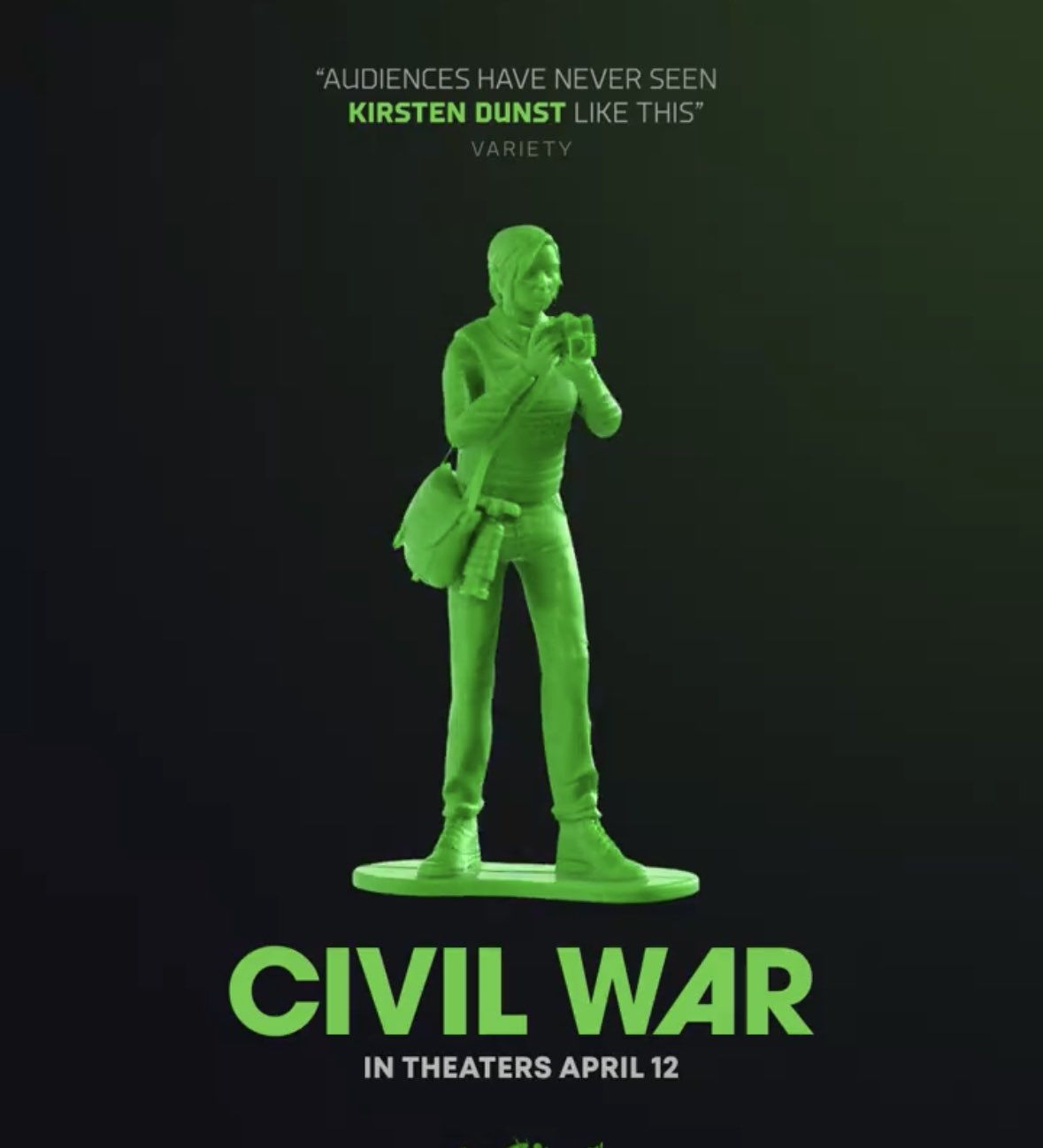
While I am a massive fan of Garland’s work, I wasn’t too enamoured of Annihilation (2018). I found it brilliantly made with some fantastic concepts and incredible moments, yet overall it was too slowly paced. With eight superlative episodes of Devs (2020), Garland delivered a story which really connected with me by merging a compelling technological espionage plot to an intelligent exploration of philosophical thought and human behaviour. Where Devs (2020) presciently examined the impact of artificial intelligence, Garland’s new political thriller, Civil War (2024), prophetically imagines an apocalyptic America in the throes of war between combined California and Texas state rebel forces and the current President’s (Nick Offerman) retreating army.

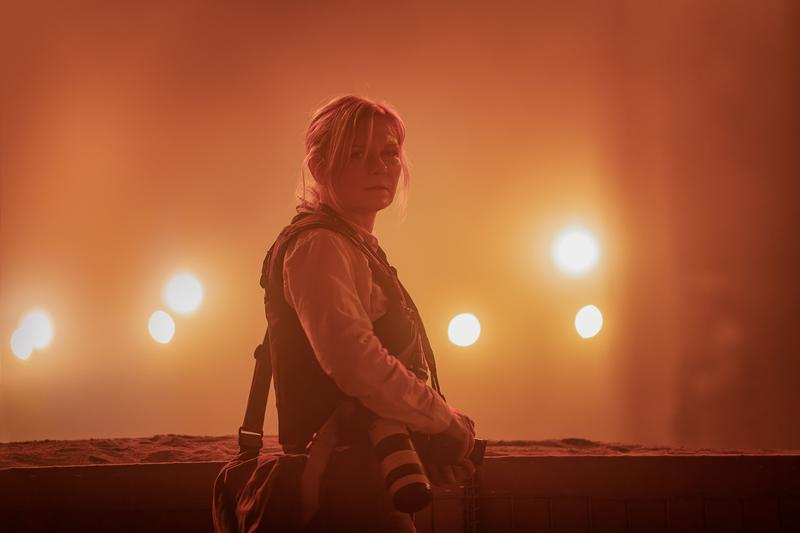
With the ‘January 6 United States Capitol attack’ in mind, Garland opens up a “what if” narrative where the whole of America is conflicted and consuming itself from within. At the heart of the violence is the war photographer, represented by Lee Smith (Kirsten Dunst) and Reuters journalist, Joel (Wagner Moura). Their journey to Washington to photograph the President reveals confusion, destruction and further bloodshed. Generically speaking, a road movie meets dystopian thriller, Civil War (2024) contains thought-provoking themes and incredible cinematography, but with shaky writing in places.


Films about war photographers and/or journalists can be problematic for me. Such characters lend themselves to heroic and the anti-heroic. The writing has to be right because I can lose empathy between such crusading journos and the narcissistic adrenaline junkies looking to deflect their own loathing and self-destructive tendencies. Civil War (2024) struggled to get me onside with the lead characters, although Dunst’s characterisation of Lee Smith is superb. However, her mentor-apprentice relationship with Cailee Spaeny, Jessie Cullen, was under-developed. Spaeny’s “innocent” being used more as a suspense device as opposed to learning the true horrors of humanity and war. Perhaps Garland intended for her to be a sociopath without depth just looking for blood? She finds it!

Moreover, Jessie’s journey from a political perspective was weak as there was no real sense of development in her character. That’s where the decision not to overtly take political sides causes a lack of sociological depth. War films such as Salvador (1986) and The Killing Fields (1984) are more successful as Civil War (2024) loses political impact by not choosing precise sides. But I guess whether they are Democratic or Republican is the whole point. Garland is saying that political parties are all as bad as each other, with human beings their own worst enemy. Politics, like football, gender, sexuality, and religion, are propellants for humans to fight each other.

For a film about photographers, the images on show are incredible and Rob Hardy’s work is genius. Fire, blood and war have never looked so brutal and aesthetically impressive. As well as Dunst, Wagner Moura and Stephen McKinlay Henderson are terrific in their respective roles. Further, there are some nail-biting and suspenseful scenes, notably one involving a film-stealing performance from Jesse Plemons. However, many of the characters’ decisions were weakly written for me. This is surprising given Garland’s prodigious literary and screenwriting talent. Civil War (2024), however, remains another stunning addition to his oeuvre and for all my perceived script weaknesses, the hell of war has never been so artistic and artful.

Mark: 8 out of 11


CINEMA REVIEW: THE IRON CLAW (2023)

CINEMA REVIEW: THE IRON CLAW (2023)

Directed by Sean Durkin

Written by Sean Durkin

Produced by: Tessa Ross, Juliette Howell, Sean Durkin, Angus Lamont, Derrin Schlesinger

Cast: Zac Efron, Jeremy Allen White, Harris Dickinson, Maura Tierney, Stanley Simons, Holt McCallany and Lily James.

Cinematography: Mátyás Erdély

*** CONTAINS SPOILERS ***


According to research on the internet the biggest killer of men in the UK under fifty-years of age is suicide. Nationally and locally seventy-five percent of those that die by suicide are men, with the highest numbers being forty-five to fifty-four years of age. In the USA, reports show suicide is the second leading cause of death among Americans ages ten to thirty-four, and the fourth leading cause of death in the thirty-five to fifty-four age group. I personally have known two close male friends who have taken their own lives in the last decade.

In addition, mortality rates for professional wrestlers are reportedly up to 2.9 times greater than the rate for men in the wider United States population. Statistics also show that the early deaths of professional wrestlers were significantly higher than that of athletes in other sports. Potentially due to the consistent mental and physical detriment as well as a proclivity toward higher rates of cardiovascular disease, depression and drug addiction. Thus, with this in mind, Sean Durkin’s film, The Iron Claw (2023), a profile of the Von Erich family, while full of exciting wrestling action, is NOT one of those generic feelgood underdog sports dramas. It is however a complex exploration of masculinity, familial pressure, sports politics, suicide, grief, religion, addiction, love, and the resilience of the human spirit.


A prologue establishes Jack “Fritz” Von Erich (Holt McCallany) as an uncompromising professional wrestler in the 1960s with a signature move called the ‘Iron Claw.’ A number of years later Von Erich Snr. is a wrestling promoter who runs successful WCCW events in Texas. His unique selling point for the shows is that he has four sons, Kevin (Zac Efron), Kerry (Jeremy Allen White), David (Harris Dickinson) and Mike (Stanley Simons), who throughout the narrative, all test themselves to the limit in the wrestling ring.

While it is certainly a strong ensemble cast, the main focus of Durkin’s compelling screenplay is Zac Efron’s, Kevin. A strong, fast and muscular athlete in the ring, Kevin, however, is not a confident personality out of it. He, and his brothers, live in the shadow of his domineering father, who controls and dictates to those around him. Jack’s resentment at not winning the NWA Worlds Heavyweight Championship during his career, and dissatisfaction at the politics of the higher-ups in wrestling, has made him a bitter, angry man. Thus, the theme of toxic masculinity bleeds throughout the story as Jack keeps his sons, and wife (Maura Tierney), under control. Therefore The Iron Claw (2023) is not just a signature wrestling move, but also the means with which the Von Erich family are treated by Jack.

There are moments of glory in the ring for the brothers, notably Kevin, Kerry and David in The Iron Claw (2023). Indeed the wrestling action is often pulsating and Durkin does include several genre-pleasing action montages. But, tragedy is never far away from the Von Erich family. Kevin even tells his wife-to-be, Pam (Lily James) that he believes the family are cursed. She dismisses this, but given what occurs during the film and the heartbreak which befalls the brothers, you begin to think he may be right. As Kevin, Zac Efron gives an incredibly moving performance as the brother seeking love, success and family community. Lastly, I truly disliked Sean Durkin’s last film The Nest (2020), as it said very little about people I did not care about. The Iron Claw (2023), on the other hand, says so much about people I was emotionally rooting for, with Kevin Von Erich in particularly admirable as he showed ultimate fighting spirit by surviving such unforgiving loss.

Mark: 9 out of 11


SKY CINEMA REVIEW: MINARI (2020)

SKY CINEMA REVIEW: MINARI (2020)

Directed by Lee Isaac Chung

Written by Lee Isaac Chung

Produced by: Dede Gardner, Jeremy Kleiner, Christina Oh

Cast: Steven Yeun, Han Ye-ri, Alan Kim, Noel Kate Cho, Youn Yuh-jung, Will Patton, etc.

Cinematography: Lachlan Milne

Music by: Emile Messeri

*** MAY CONTAIN SPOILERS ***


See the source image

I missed Minari (2020) at the cinema. Which is a shame because out of all the Oscar-nominated films from earlier in the year it is now my favourite. Further, it should certainly have won the best film award. (Note: I have yet to see The Father (2020).) It has the heart and warmth and realistic hope that eventual winner, Nomadland (2020) lacked. Chloe Zhao’s powerful character study was arguably too meditative and glacially paced, without any real diversion from the plodding repetition of monotonous existence. I love slice-of-life and character-driven work, but I want some drama too. While Minari (2020) has certain meditative qualities, writer-director Lee Isaac Chung has crafted a supeb cinematic memoir of tender power and emotion.

Set in 1983, Minari (2020), centres around the Yi family. They had been working in California, but have moved to Arkansas to farm the land. The father, Jacob (Steven Yuen) dreams of growing produce to sell to fellow Korean businesses. However, the farm and static caravan he has purchased is remote with no guarantee of water to ripen the fruits and vegetables. Jacob must either pay exorbitant prices from the water company or find a natural spring underground. Alas, rain rarely threatens the Arkansas plains.

Jacob’s wife, Monica (Han Ye-ri) hates the caravan and does not share his farming dream. This marital conflict drives the much of the narrative as the two argue constantly. Monica is especially angry that her young son, David (Alan Kim) is so far from a hospital. The boy has a heart condition and like any good mother she consistently worries. Their teenage daughter, Anne (Noel Kate Cho) is too young to be a full-time caregiver to David while Jacob and Monica support themselves working at a local chicken factory. To placate Monica, Jacob brings grandmother, Soon-ja (Youn Yuh-jung) to the farm for support. Here a beautiful and funny parallel plot begins as David and his grandmother’s relationship comes to the fore.


See the source image

I watched Minari (2020) on a Sunday morning at home, relaxed and cosy, filled with breakfast and coffee. I loved experiencing the film. The music wondrously supports the beautiful photography that illuminates the green and wheats that fill the lens’ gorgeous palette. Like the masterpiece, Parasite (2019), Minari (2020) represents a working-class family striving to stay together and survive in difficult times. The main difference though is the Yi family were doing it with honest hard graft rather that grifting, ducking and diving. The Yi’s connect with nature and the land rather than skimming the city and the rich. I really rooted for the Yi’s. Jacob’s desires and battles to find water reminded me of the equally moving French classic, Jean De Florette (1986).

Minari (2020) doesn’t take the obvious route of making the Arkansas locals racists who rail against the Yi’s. While there are some scenes involving cultural clashes, much of the drama and humour derives from the families interactions with each other. Indeed, the scenes where David antagonises his unconventional grandmother are hilarious. Youn Yuh-jung as the elderly matriarch is fantastic, deservedly winning a best supporting actress role at the Oscars. Moreover, Lee Isaac Chung gets a miraculous performance from child actor, Alan Kim. Special mention for a busy, but nuanced portrayal of a troubled but helpful worker, Paul, by Will Patton. His deeply pious character could have easily been made an antagonist, but Chung ensures he is another relatable human being in a film full of them.

Mark: 9.5 out of 11


CINEMA REVIEW: THE GREEN KNIGHT (2021)

CINEMA REVIEW: THE GREEN KNIGHT (2021)

Directed by: David Lowery

Screenplay by: David Lowery

Based on: Sir Gawain and the Green Knight by Anonymous

Produced by: Toby Halbrooks, James M. Johnston, David Lowery, Tim Headington, Theresa Steele Page

Cast: Dev Patel, Alicia Vikander, Joel Edgerton, Sarita Choudhury, Sean Harris, Ralph Ineson, etc.

Cinematography: Andrew Droz Palermo

*** MAY CONTAIN SPOILERS ***


The quest to see The Green Knight (2021) has seemingly taken longer than Gawain’s mythical journey to meet his ultimate fate. Was it worth the wade through COVID determined lockdowns and distribution delays to the cinema to finally watch it on Amazon? Yes and no I would say as the filmmaking on show is of a visually magical standard. Yet, somewhere in the character’s bones is an emotional brittleness. I will expand.

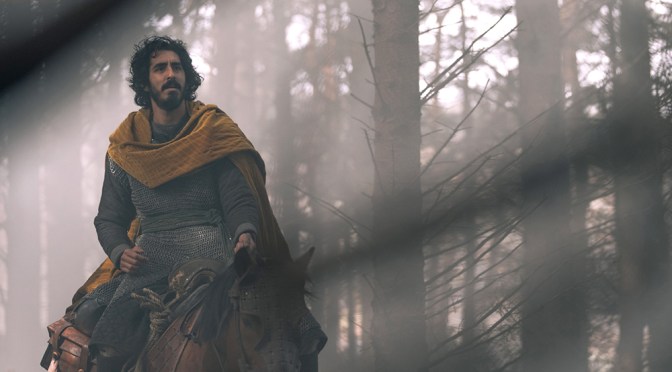
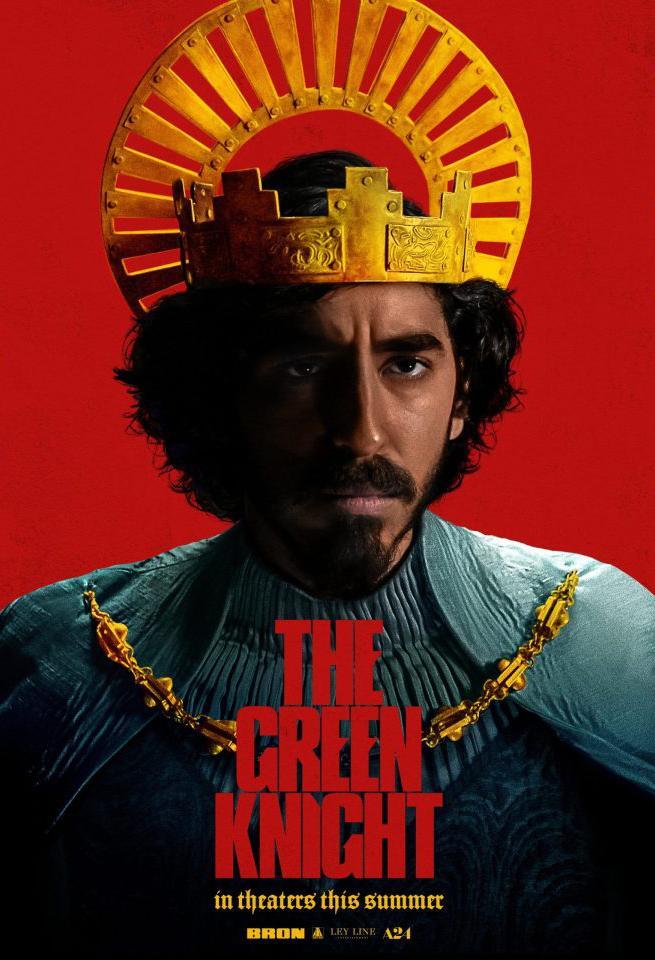
Written and directed by the formidable filmmaker David Lowery, The Green Knight (2021), is based on the rites-of-passage trials of Gawain (Dev Patel), a young subject within the court of King Arthur’s (Sean Harris) Camelot. Happy getting drunk and flirting with apparently loose women, one of which is Essel (Alicia Vikander), he is then faced with a challenge from the Green Knight (Ralph Ineson). Meeting the gamble from this stunningly created craggy work of metaphor head on sets in motion a fight for his life on the road to symbolic discovery. Throw in some exquisite montages of ominous religious and magical subtext and Gawain must face his fears, fate and foes on a dangerous quest.


Once Gawain hits the dirt tracks, bloody battlefields and ghostly houses of this cursed land the The Green Knight (2021) really finds narrative impetus. Gawain’s confrontation with the Green Knight at Arthur’s court is certainly thrilling, but Lowery spends too much time creating poetic juxtaposition and magical image systems, which while beautiful, really slow the pace of the story. King Arthur’s kingdom and Sean Harris’ performance is somewhat downbeat and drab as less time is spent establishing Gawain’s characterisation.

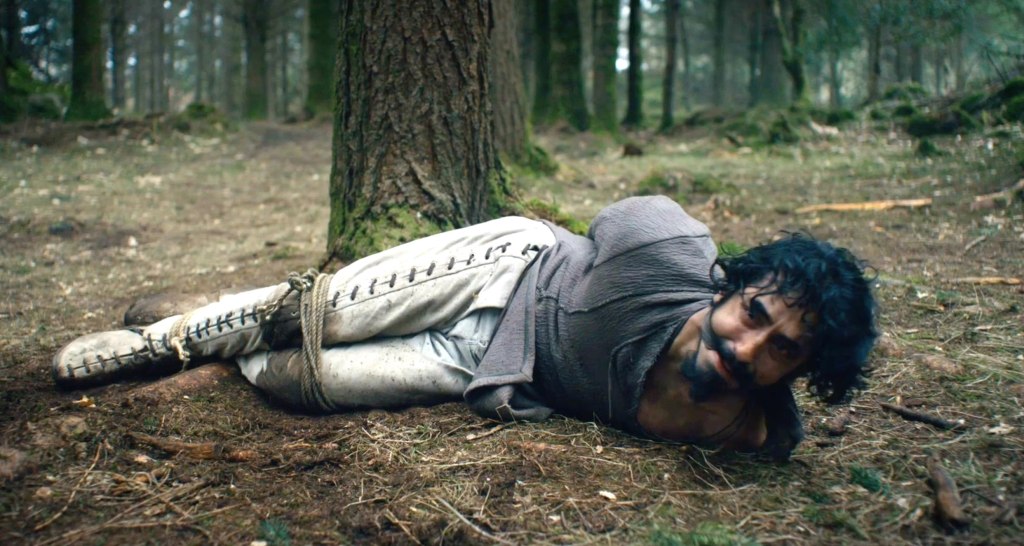
Dev Patel is phenomenal in the role. He brings both strength and vulnerability. But what was Gawain? Was he a fool to be taught a lesson? Was he a determined individual desiring to prove himself? Was he out for revenge? Was he doing it for love? Who is he saving? What did he want? I was never sure. Thus, The Green Knight (2021) was in danger of collapsing under its own stunning visual pretension. That is until Barry Keoghan’s effervescent thief came along and raised the stakes and energy of the story. After that Gawain’s drive was one of survival as Lowery’s screenplay gave him a succession of devilish, deadly and seductive obstacles to overcome.

David Lowery is an original thinking talent, and someone I categorise as an alternative genre filmmaker. Like Quentin Tarantino, the Coens, Bong Joon-Ho and dare I say it, Stanley Kubrick, he takes familiar content and filters it through his own inimitable style and vision. His masterpiece thus far is the truly remarkable romance, A Ghost Story (2017), a low-budget indie gem. The bigger-budgeted The Green Knight (2021) certainly has scale and magic and astounding cinematic power. But such adventure stories, for my taste and preference, need a hero with a clearer goal. Lowery gives the audience sorcery and existentialism and some nightmarishly beautiful sequences, while overall lacking clarity for Gawain’s personation. I imagine this is actually deliberate to counter genre expectations and make the viewer raise their game and apply meaning. I felt the same about Kubrick’s fatalistic, Barry Lyndon (1975), when I first saw that. Indeed, I have no doubt that on future watches The Green Knight (2021) is likely to be similarly revered as cinematic gold.

Mark: 8.5 out of 11


FILMS THAT GOT AWAY #11 – WAVES (2019)

FILMS THAT GOT AWAY #11 – WAVES (2019)

Directed by: Trey Edward Shults

Produced by: Kevin Turen, Jessica Row, Trey Edward Shults

Written by: Trey Edward Shults

Cast: Kelvin Harrison Jr., Lucas Hedges, Taylor Russell, Alexa Demie, Renée Elise Goldsberry, Sterling K. Brown, Alexa Demie, Clifton Collins Jr., Vivi Pineda, etc.

Music by: Trent Reznor, Atticus Ross

Cinematography: Drew Daniels

*** MAY CONTAIN SPOILERS ***


“First your parents, they give you your life, but then they try to give you their life.”

― Chuck Palahniuk


Being a parent is an extremely difficult job and mostly impossible to get right. It is a rewarding and joyous experience, but can also be a frustrating one. Raising another human being in this world is a fluid and ever-shifting set of tasks. Once you have got past a certain age and seemingly resolved the issues of that time, their next period of growth provides a whole different set of puzzles. Whatever books you read or advice you take, or help you get, you will never be prepared enough to meet the challenge of being a parent. Even those who have had more than one child can attest that what occurred with the first child will not be the same for the next or the next after that. Every individual being is different and will have a varied set of intricacies.

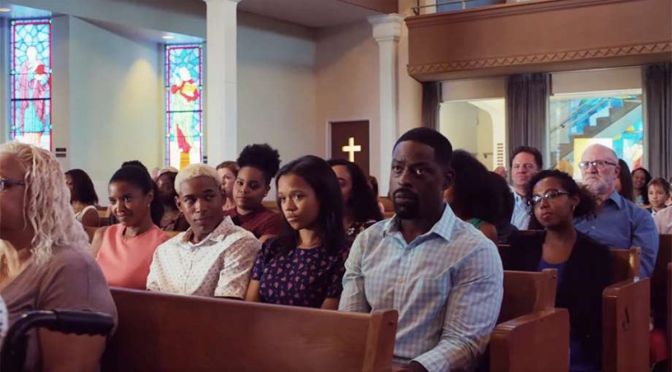
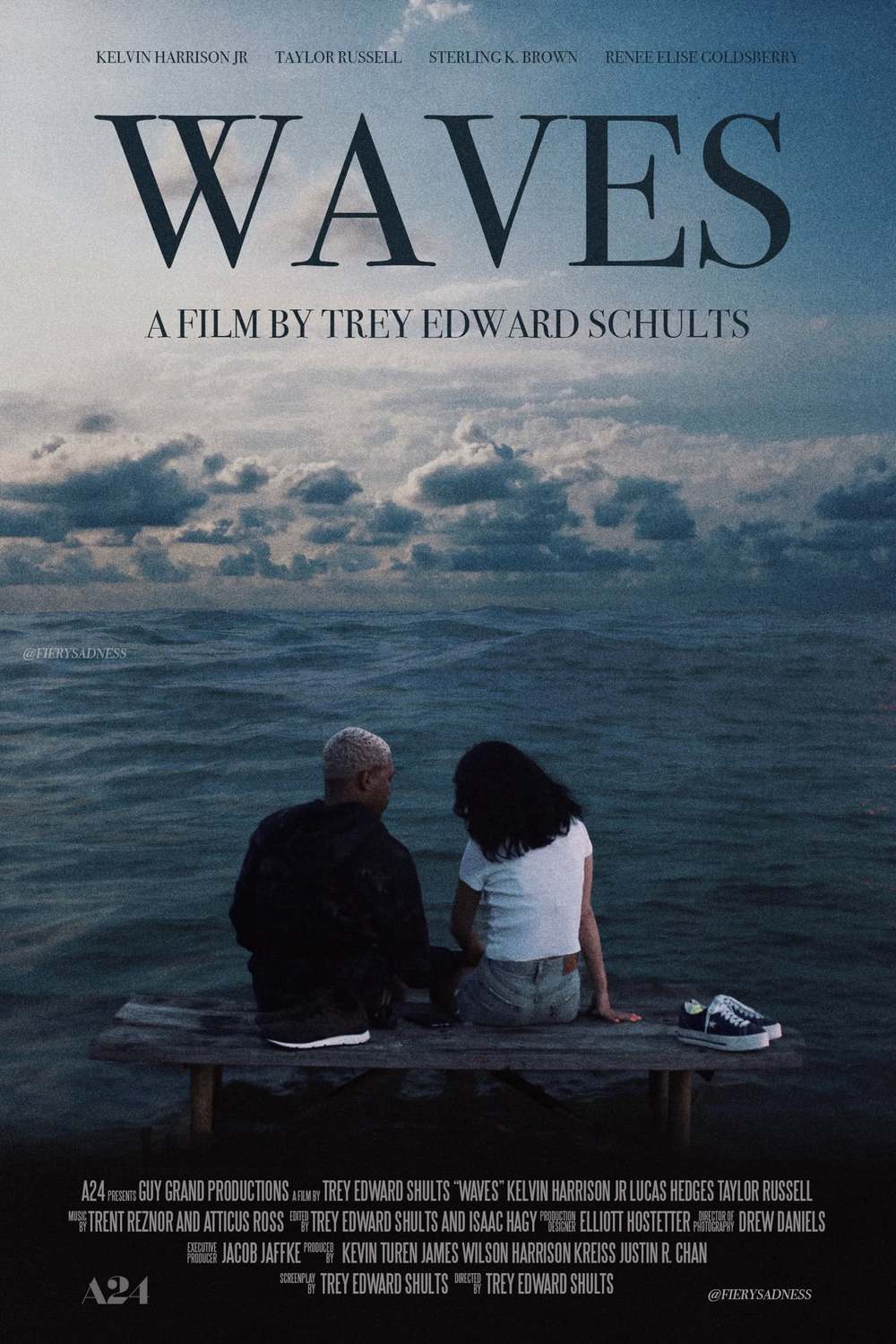
In the majestic family drama, Waves (2019), for example, Ronald (Sterling K. Brown) and Catherine Williams (Renee Elise Goldsbery), are middle-class parents with successful jobs who provide a fabulous Florida home and upbringing to their teenage children. Their son, Tyler (Kelvin Harrison Jnr.), is smart, athletic and a popular student, while their younger daughter, Emily, is quieter but equally bright. Ronald pushes Tyler to excel in every way, in study, work and on the wrestling team. He’s doing it with best intentions, but it creates incredible pressure for the lad. So much so, when Tyler suffers a serious injury and a problematic romantic situation he mentally and emotionally breaks.


Waves (2019)

This is a tale of two children and their parents attempts to raise, guide and control them. Not control in a negative fashion, but out of love and desire to see they are on the correct path in life. But what the narrative illustrates is that even the most loving and comfortable families can have tragedy bestowed upon them via a mixture of spontaneously poor life choices, youthful emotional imbalance and the fickle finger of fate. Thus, some could argue that with subjects such as unwanted pregnancy, pushy parents and rebellious teenagers, the film is over-familiar and melodramatic in places. However, the acting, direction and cinematography render the film wholly cinematic. Special mention to the extremely talented cinematographer Drew Daniels, who also lit HBO’s stylish mini-series Euphoria (2019). The production’s choice of colour, lighting, lens differentiation and aspect ratio switches are another reason this fabulous film impacted me so much.

No disrespect intended to the films nominated for Best Picture at the last Academy Awards, but how Waves (2019) did not get on that list is beyond me. Maybe it didn’t qualify due to some technicality, but it was definitely one of the best films of last year. It’s a shame I missed it as Trey Edward Schults proves he is a formidable young director. Sterling K. Hayden is impressive as the father who thinks he knows best, but is ultimately as emotionally lost as his son. Taylor Russell as Emily is an absolute shining star in the role and Kelvin Harrison Jnr. is, following his mesmerising performance in Luce (2019), destined for great things. Lastly, I’m not sure how Waves (2019) got away from me on release, but I’m glad I finally caught up with this searing and complex drama.

Mark: 9 out of 11


FILMS THAT GOT AWAY #5 – REMEMBER (2015)

FILMS THAT GOT AWAY #5 – REMEMBER (2015)

Directed by: Atom Egoyan

Produced by: Robert Lantos, Ari Lantos

Written by: Benjamin August

Cast: Christopher Plummer, Martin Landau, Bruno Ganz, Henry Czerny, Dean Norris etc.

UK Release Platform: Amazon

**MAY CONTAIN SPOILERS**


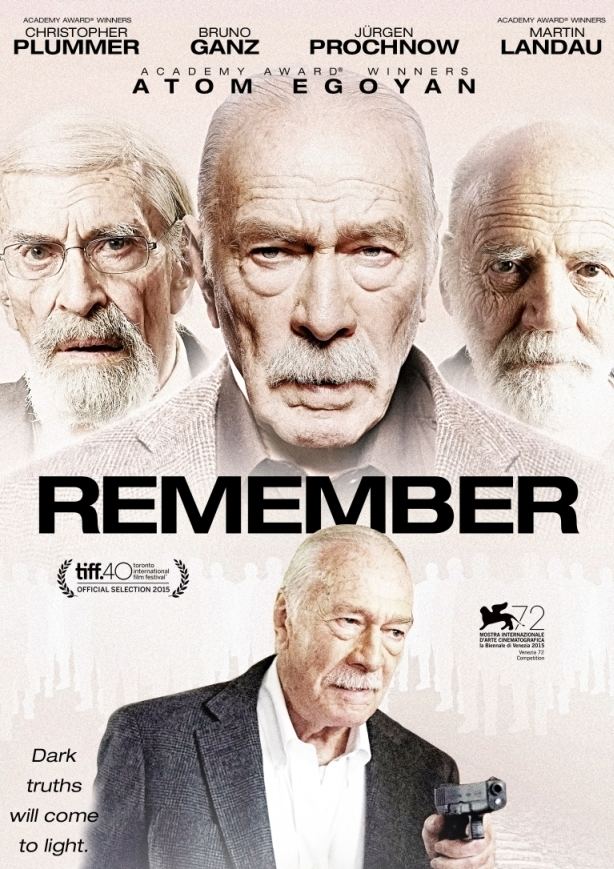
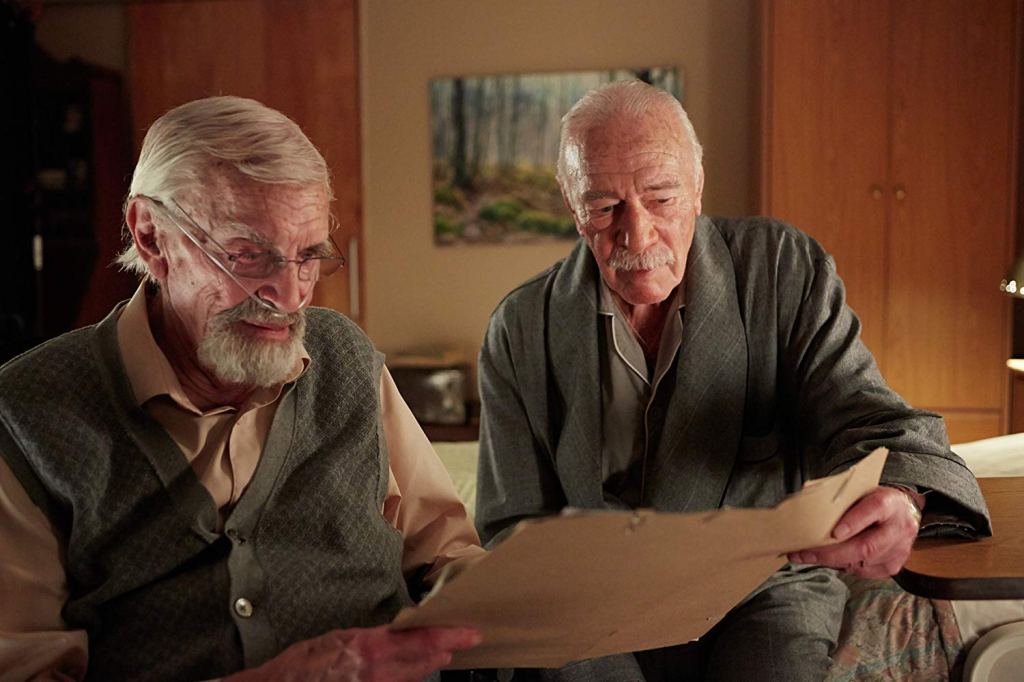
There are many reasons to have missed a film at the cinema. Life can get in the way or you’re not really feeling drawn to a movie or there are just too many films out you want to see, so some slip through the net. But, Remember (2015), was NOT even released by A24 in the United Kingdom, for some unknown reason. I only found it by accident on Amazon Prime Video. It’s a shame because the Atom Egoyan directed revenge thriller is an under-rated gem, with a slow-burning and hypnotically compelling script.

The narrative concerns Zev Guttman (Christopher Plummer), an 89-year-old Auschwitz survivor living in a New York nursing home. He forms a bond with fellow camp survivor, Max Rosenbaum (Martin Landau). On Max’s behest, Zev sets out on a mission to track down the concentration camp Nazis who killed their respective families. Suffering from dementia, however, means Zev’s memory comes and goes. So, Zev must follow Max’s written instructions to the letter.


Noir and crime thrillers are littered with revenge and pursuit narratives. The amnesiac protagonist too is an often-used character trope. While it is a familiar path and the beats of Remember (2015) will remind you of a recent low budget crime classic (I won’t say for fear of spoilers), the pace is more akin to David Lynch’s The Straight Story (1999). Zev’s journey across country via train and bus finds him methodically tracking various potential Nazis all hiding under the same fake name. As his memory comes and goes, Zev has to keep reading the letter to remind him what he’s doing. Despite such narrative repetition I found this just as suspenseful and thrilling as faster-paced films.

Atom Egoyan directs with significant subtlety and skill. He’s an experienced filmmaker whose films can be left field character studies; often playing with linearity and structure. Moreover, they usually win festival prizes and are lauded by critics. I think though that this is his most accessible film to date. Christopher Plummer is, unsurprisingly, quite brilliant. He inhabits his character with both steel and sympathy. Benjamin August’s script is respective of Auschwitz survivors and those suffering from dementia. The fact he has managed to loop these themes into a plot that wouldn’t be out of place in a Liam Neeson, Stallone, Schwarzenegger, Cruise, Willis et al action flick, makes Remember (2015) a film I won’t forget in a hurry.

Mark: 9 out of 11


HEREDITARY (2018) – CINEMA REVIEW

HEREDITARY (2018) – CINEMA REVIEW

Directed by: Ari Aster

Produced by: Kevin Frakes, Ridley Scott, Buddy Patrick

Written by: Ari Aster

Starring: Toni Collette, Alex Wolff, Milly Shapiro, Ann Dowd, Gabriel Byrne

Music by: Colin Stetson

Cinematography: Pawel Pogorzelski

**MAY CONTAIN SPOILERS**

hereditary-trailer_0

I’m tempted to do two reviews of this movie. Because there’s a minority part of me that feels its bravura and beautifully crafted horror film; but the majority part just could not get over the illogical and surreal elements which unhinge the carefully plotted family tragedy it promised to be. Nonetheless, the writer and director Ari Aster is clearly an ultra-talented filmmaker who deserves much praise for creating a series of impressively creepy scenes throughout. Still, he does throw a lot of ideas at the wall hoping they stick so many critics will probably love Hereditary, unfortunately it lost me some way through due to a major plot and tonal turn which, while foreshadowed, did not really make any emotional sense.

Hereditary-trailer_1

The story begins with the Graham family mourning the death of Annie Graham’s (Toni Collette) mother. From beginning to the end Collette’s portrayal is absolutely incredible and she deserves any awards that are coming to her. Indeed, Collette anchors the film with moving and incredibly dramatic performance. Her character is very empathetic suffering tragedy after tragedy and attempting to come to terms with the devastation life brings.  She is ably supported by Gabriel Byrne as her husband; while Alex Wolff and Milly Shapiro offer excellent support as their troubled kids. Shapiro especially is well cast as the unstable teenage girl who may or may not have some darker force within her.

The film begins slowly and creeps along for forty minutes or so building dread and atmosphere. Collette has some fine speeches about grief and family relationships and this is where the writing is very strong. These scenes showcase Collette’s acting ability before the action takes a vicious twist with one grandstanding horror moment half-way through. This is where, in my view, the film suddenly started to become lop-sided and full of debateable plot-holes. Don’t get me wrong, if you read the film as a supernatural fantasy full of surreal and dream logic like the cinema of Luis Bunuel and David Lynch, you can swallow much of what happens in the final act.  Moreover, symbolically and thematically Hereditary is very strong with issues relating to grief and dysfunctional family relationship very well explored. However, due to a ridiculous final act where the film moves away from this my empathy for the family was lost in a number of wildly over-the-top scenes, which while scary, made little sense in my humble opinion.

Hereditary-Trailer

Hereditary (2018) is a “Mother” of a horror film!!  Indeed, it has much in common with last year’s divisive work of cinema directed by Darren Aronofsky called Mother (2017). Like Mother (2017) it is a brilliantly directed horror story with great acting throughout, that alas, falls apart at the end with narrative illogic, plot-holes and a laughable denouement. It’s a shame because the first half of Hereditary is beautifully set up. The visual style involving miniatures, shadows, weird dolls’ head and bird decapitations is creepy and very impressive. However, the filmmaker’s fantastic work is destabilised by a narrative desire to twist the film into something pretty crazy. Yet, Ari Aster deserves much praise for taking risks in the horror genre and his and Collette’s craft are of the highest order; at least until the ending.

(Mark 7.5 out of 11)