Cult Film Review: Thriller – A Cruel Picture (1974)
Directed by Alex Fridolinski
Screenplay by Alex Fridolinski
Produced by Bo Arne Vibenius
Main cast: Christina Lindberg, Heinz Hopf, Despina Tomazani, etc.
Cinematography by Andreas Bellis
Edited by Brian Wikström
**Viewer discretion is advised – this film contains scenes that many will find disturbing**
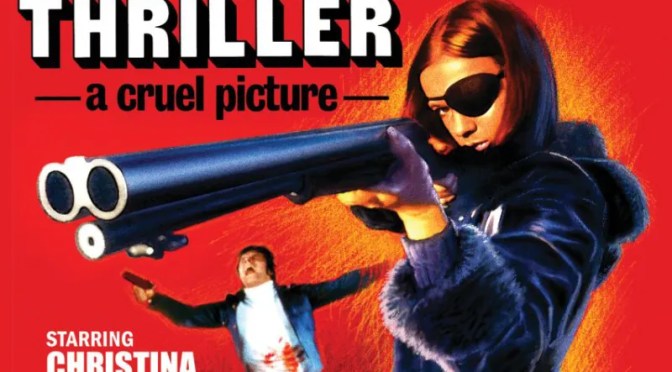
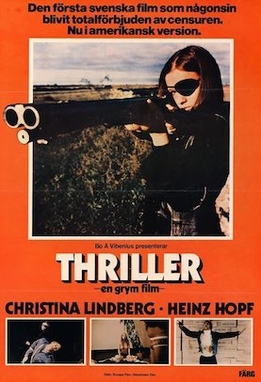
Thriller – A Cruel Picture (1973) (Swedish: Thriller – en grym film) is a 1973 Swedish exploitation film from writer-director Bo Arne Vibenius, working under the pseudonym Alex Fridolinski, starring Christina Lindberg and Heinz Hopf. Infamous for its unflinching depictions of sexual violence, drug abuse, and degradation, the film charts the ordeal of a mute young woman who is coerced into heroin addiction and forced into prostitution before embarking on a brutal campaign of revenge against her tormentors.
Released in the United States in a heavily cut version by American International Pictures—under lurid alternate titles such as They Call Her One Eye, Hooker’s Revenge, and The Swedish Vice-Girl—the film has earned a reputation as a deeply disturbing and confrontational work. Its graphic content and relentless tone make it a challenging and potentially distressing viewing experience, best avoided by those sensitive to extreme subject matter.
Unsurprisingly, due to the violent scenes, on-screen drug use, nudity and also inclusion of hardcore pornography, Thriller – A Cruel Picture (1973) was either banned outright or heavily censored on release. I had heard so much about this film on various YouTube videos expounding the shocking nature of the themes and scenes. Allied to this, Quentin Tarantino has also “championed” the movie and it’s star, Christina Lindberg. With this in mind the film I got tempted and purchased the recent Blu Ray version released in the UK. This version DOES NOT, thankfully, include the pornographic scenes which were filmed by the director with a Swedish couple who did live sex shows.
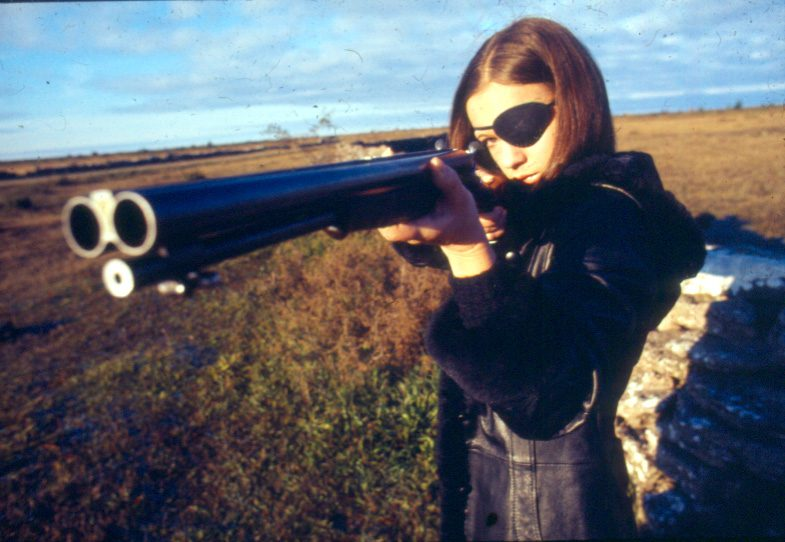
So, is Thriller – A Cruel Picture (1973) actually any good? Well, it is safe to say that it is a relentlessly harsh watch. That said, it would be unfair to dismiss the film outright as mere grindhouse provocation. Vibenius employs striking stylistic flourishes that elevate certain sequences into something oddly hypnotic. Most famously, the extended slow-motion shotgun reprisals—henchmen blasted backwards in balletic, almost operatic fashion—are staged with a visual patience that borders on the surreal. These, as well as the lengthy final act car pursuit sequence, are technically memorable, even as their brutality remains confronting.
Where the film becomes almost nightmarish is in its internal logic. Once Madeline (Christina Lindberg) is captured and brutalized by the sadistic drug dealer Tony (Heinz Hopf), the narrative takes on a dreamlike, disjointed quality. Despite being forcibly addicted to heroin, she somehow manages to train herself in hand-to-hand combat, driving, and sharpshooting—preparing an elaborate revenge while still under the grip of addiction. The plotting feels less realistic than hallucinatory, as though the film operates on the logic of trauma and fantasy rather than grounded cause and effect.
A great deal of the film’s lasting impact rests on the striking screen presence of Christina Lindberg, as well as her character’s grim journey.Already known internationally in the late 1960s and early 1970s for her work as an erotic actress and glamour model, Lindberg brings an arresting, almost statuesque quality to the role. Her icy stare—especially once framed by the now-iconic eyepatch—gives the character a mythic, comic-book intensity. At the same time, the creative decision to render her character mute inevitably shapes how that performance is perceived. Silence becomes a stylistic device, amplifying the film’s cold and detached tone. The director’s choice to sidestep the demands of more dialogue-heavy dramatic scenes actually works in the film’s favour.
Overall, Thriller – A Cruel Picture (1973) is a film that oscillates between exploitation rawness and stark, almost avant-garde stylization. For hardened genre enthusiasts, it may be a grim curiosity with undeniable visual audacity. For many others, however, its graphic content and relentless tone will make it a deeply uncomfortable, even distressing experience. Proceed carefully.
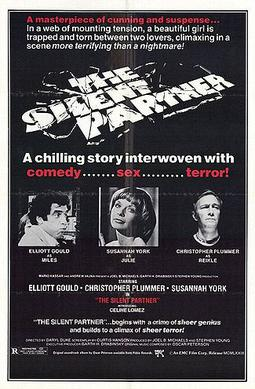
Under-rated Classic Film Review #12: The Silent Partner (1978)
Directed by Daryl Duke
Written by Curtis Hanson – Based on Think of a Number 1969 novel by Anders Bodelsen
Produced by Joel B. Michaels & Stephen Young
Main cast: Elliott Gould, Christopher Plummer, Susannah York, Celine Lomez, John Candy, Stephen Young, Ken Pogue etc.
Cinematography by Billy Williams
Music by: Oscar Peterson
*** MAY CONTAIN SPOILERS ***
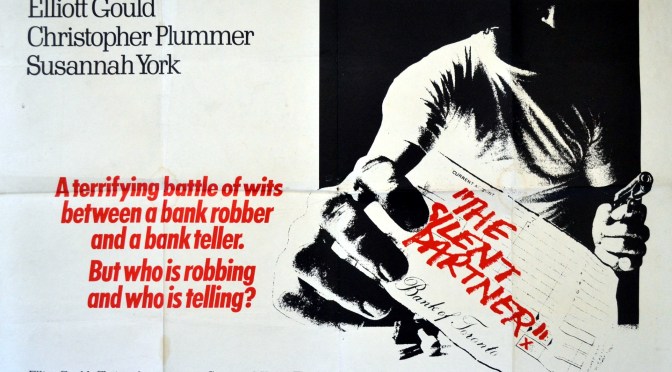
The Silent Partner (1978), directed by Daryl Duke and based on Anders Bodelsen’s novel Think of a Number (Tænk på et tal), stands out as not only one of the best Christmas thrillers of all time but also one of the most meticulously plotted crime thrillers outside of Alfred Hitchcock’s grand body of work. The film, which takes place against the snowy backdrop of Toronto, is a slick, taut, and endlessly clever exercise in suspense, filled with smart twists and an ever-present sense of menace.
At the heart of the film is a brilliantly constructed screenplay by Curtis Hanson, which provides the perfect vehicle for its two star actors: Elliott Gould and Christopher Plummer. The story’s premise is deceptively simple: Miles Cullen (Gould), a mild-mannered bank teller, discovers a discarded holdup note revealing an impending robbery. His quick thinking—suspecting the mall Santa, Harry Reikle (Plummer), to be the would-be robber—leads him to secretly hide $48,300 from the bank’s vault and give Reikle only a fraction of the money. When Reikle realizes he’s been swindled, the tension escalates, and Miles becomes the target of the dangerous and unhinged criminal, setting off a high-stakes game of cat and mouse.
The film’s brilliance lies in its ability to build both an intricate plot and a captivating atmosphere of suspense, while never losing its sense of humour. There’s a certain rhythm to The Silent Partner (1978), a precision that evokes the same sense of control as Hitchcock’s best thrillers. The story unfolds with a metronomic pace, carefully stacking one suspenseful moment after another, each new twist feeling earned and expertly timed.
One of the key pleasures of The Silent Partner(1978) is the pairing of Gould and Plummer, two actors who couldn’t be more different in their approaches to character. Gould plays Miles with a cool, calculating detachment—a man who might appear meek and even timid at first glance, but is secretly a clever and pragmatic planner. He’s the type of guy who thinks five steps ahead, carefully orchestrating every move as he tries to stay one step ahead of the increasingly unhinged Reikle. Gould’s portrayal is sharp, cerebral, and fascinating to watch as he navigates the complex moral terrain of his actions.
On the other hand, Plummer’s Harry Reikle is a chilling force of nature—volatile, unpredictable, and capable of explosive violence at the drop of a hat. He’s one of the best screen villains ever with Plummer delivering a performance that’s equal parts suave and menacing. His portrayal of Reikle is a study in contrasts—he’s charming one moment, a psychopath the next. Where Gould’s Miles is a thinker, Reikle is all instincts and rising rage. The tension between these two characters, each representing a different kind of threat, is what drives the film forward. It’s a masterclass in how to craft a compelling dynamic between protagonists and antagonists.
Beyond the characters and their performances, The Silent Partner (1978) stands out as a deeply satisfying crime thriller. The film is full of great set-pieces that slowly ratchet up the suspense—each one feeling like it could be the final nail in the coffin, but instead leading to a further complication. Whether it’s Miles using his wits to stay one step ahead of Reikle, or having to think on his feet having lost the key to the deposit box with the loot, every element of the plot is carefully calibrated. Even the Christmas setting, which could have been just a backdrop, is used effectively to heighten the film’s tension. The festive atmosphere of the holiday season contrasts sharply with the darkness of the film’s themes, creating a stark juxtaposition that enhances the thriller’s sense of dread.
The Silent Partner (1978) is a deeply underrated gem in the thriller genre. With a killer screenplay, two outstanding lead performances, and a plot that’s as intricately designed as a clockwork machine, it’s a film that rewards careful attention and repeat viewings. It’s a perfect blend of Christmas cheer turned upside down, and it holds its place as one of the finest thrillers ever made—one that, unfortunately, remains too often overlooked.
Main cast: Mari Shirato, Junko Miyashita, Kentarō Shimizu, Jun Etō, etc.
Cinematography by Yonezou Maeda
Music by Toshiyuki Honda
*** MAY CONTAIN SPOILERS ***
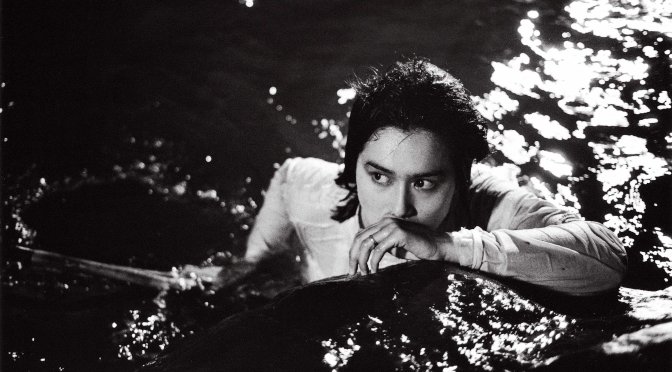
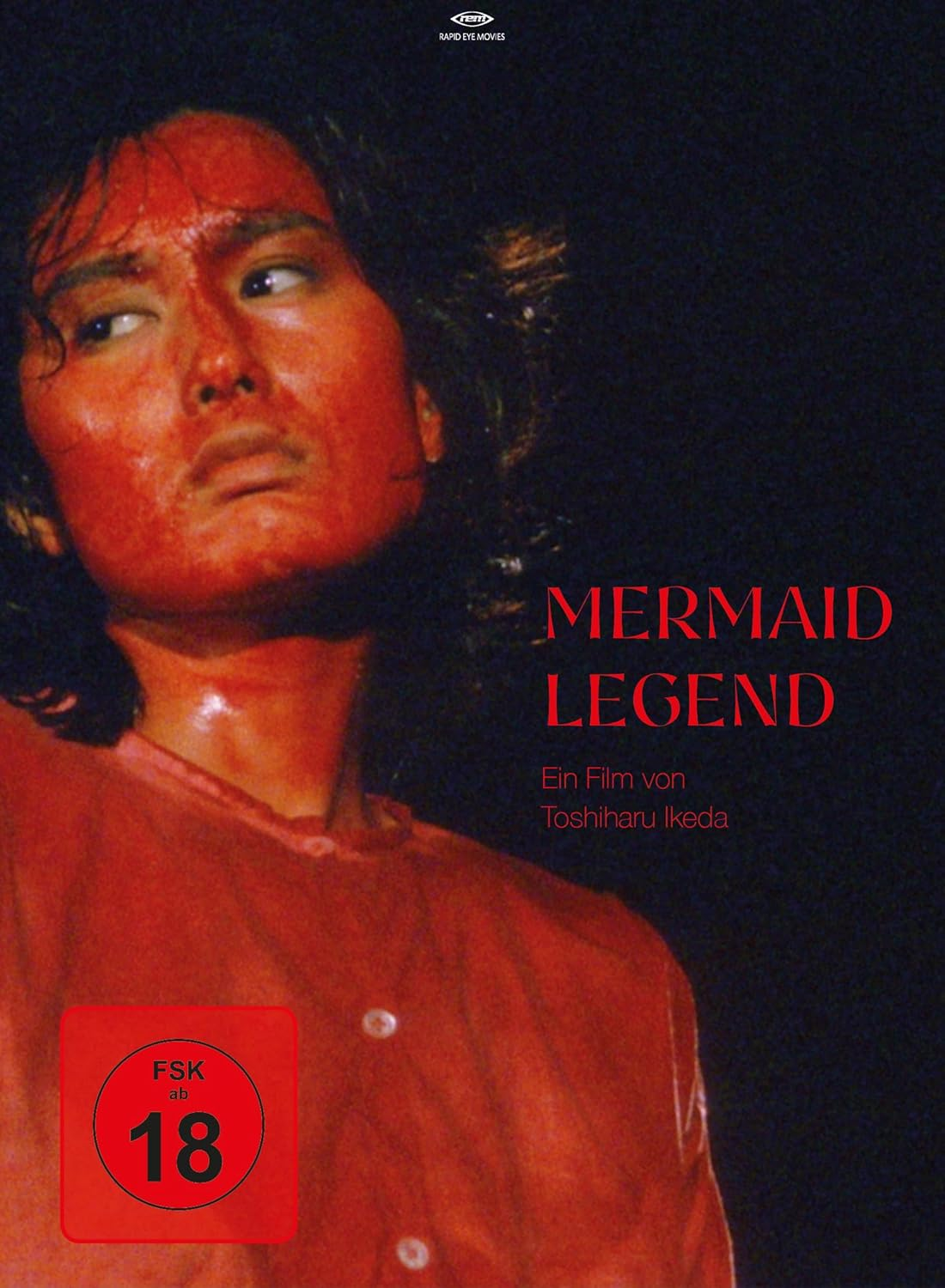
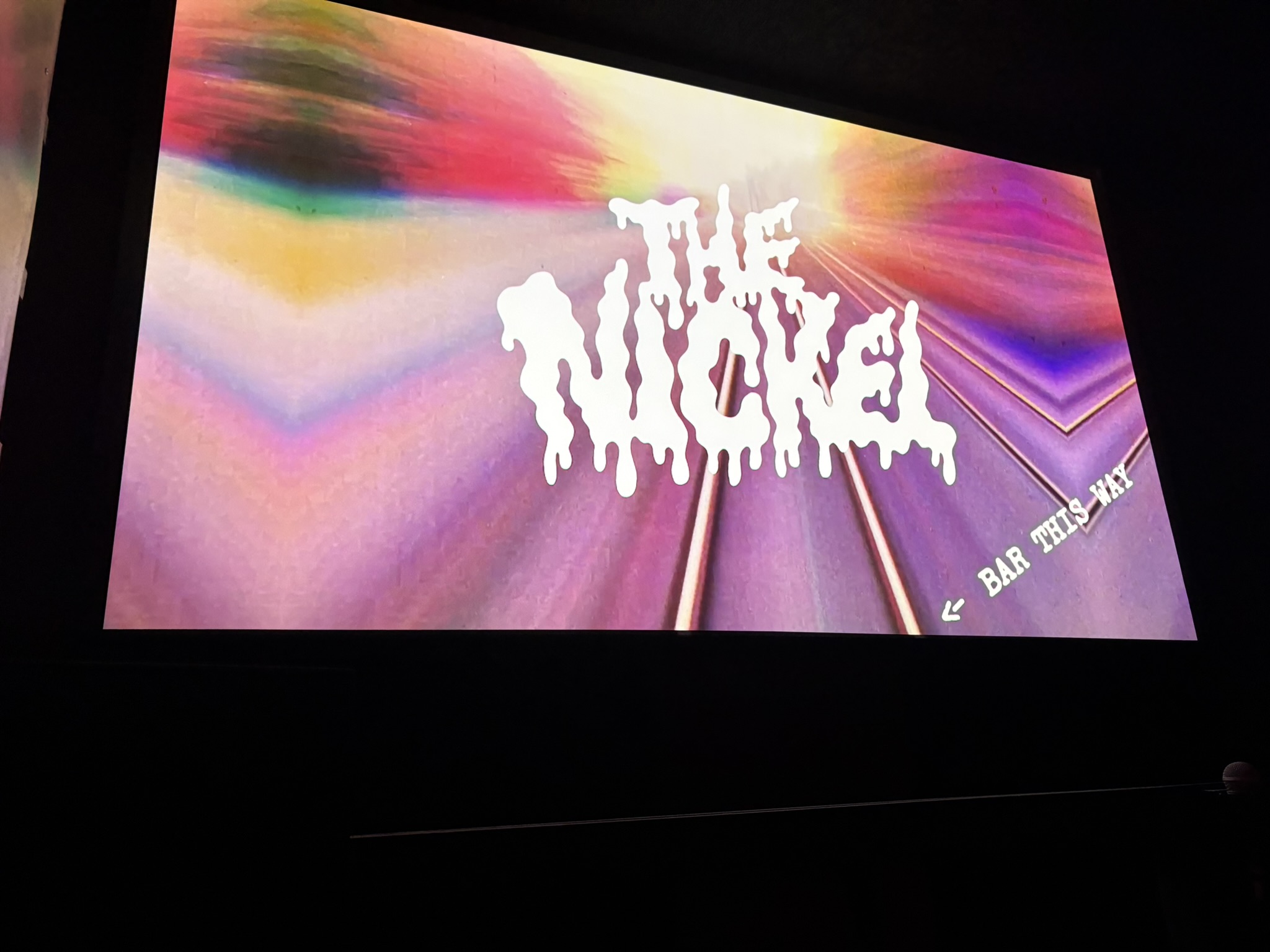
I took a gamble on an unknown Japanese film at the Nickel Cinema and walked out genuinely shaken. Mermaid Legend (1984) isn’t just a cult oddity—it’s a film that mutates before your eyes, seducing you with beauty before drowning you in blood. I was stunned by how something so lyrical could also be so brutally confrontational.
The story begins almost modestly, as a coastal drama about a fisherman and his wife, Migiwa. They bicker constantly, their marriage worn thin by poverty and exhaustion, yet there’s an undeniable bond beneath the arguments. That fragile domesticity is shattered when the fisherman stands in the way of an industrial development scheme. The business developers—faceless, polite, and utterly ruthless—have him murdered, disposing of his life as casually as industrial waste.
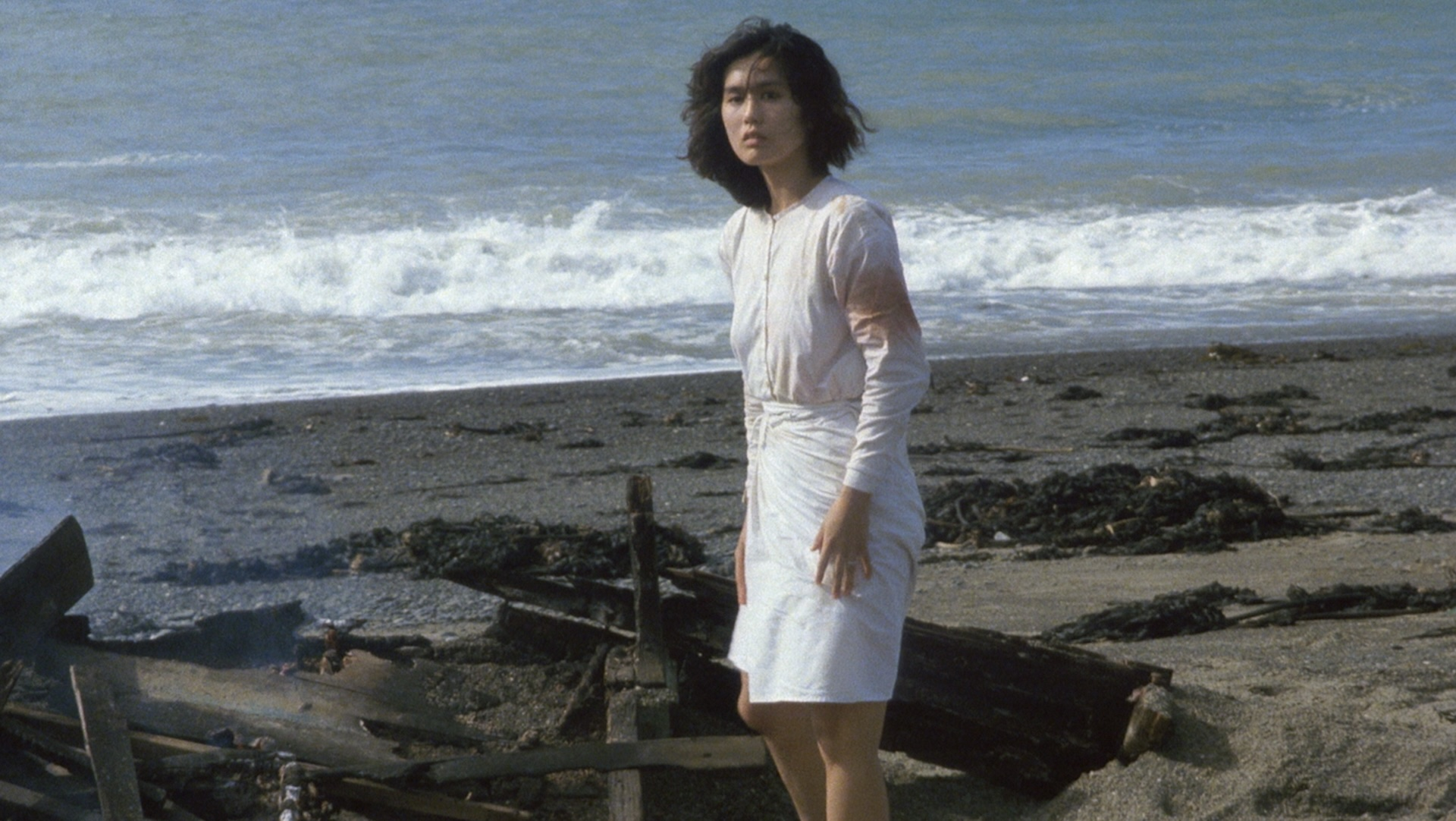
From there, Mermaid Legend (1984) transforms again. What starts as marital realism becomes a corporate espionage murder mystery, steeped in anger at nuclear energy, environmental destruction, and the cold machinery of corporate greed. Migiwa, a powerful-lunged pearl diver, initially hides, retreating into grief and the sea itself. But this is not a film about quiet mourning. When she decides to act, she does so with mythic force.
Played by the ethereal and astonishing Mari Shirato, Migiwa becomes something halfway between woman, avenging angel, and sea spirit. Shirato’s performance is magnetic—serene, sensual, and terrifying. As her vengeful pursuit begins, the film plunges headlong into extreme violence and explicit sexuality, reclassifying itself yet again as one of the most shocking exploitation epics I’ve seen from Japan in recent years. These scenes aren’t gratuitous in the lazy sense; they’re confrontational, weaponized, daring you to look away while refusing to let you feel comfortable for a second.
What makes Mermaid Legend (1984) so intoxicating is how its elements collide. Poetic underwater cinematography turns the ocean into a womb, a grave, and a cathedral. Religious, angelic, and environmental imagery blur together, as if Migiwa is both martyr and executioner. The music is heavenly—soaring, mournful, almost sacred—creating a surreal contrast with the carnage on screen. Beauty and brutality coexist in the same frame, each intensifying the other.
And then there’s the ending. The final, elongated pier stabbing rampage is completely off the chart—relentless, bloody, and hypnotic. It plays out like a ritual rather than an action sequence, stretching time until violence becomes abstraction, then meaning, then release. By the time the last body falls, Mermaid Legend (1984) has fully shed realism and entered the realm of legend, justifying its title in blood.
This is a film that shouldn’t work, yet does—furiously, defiantly. A genre-shifting fever dream that moves from domestic drama to political thriller to erotic exploitation to mythic revenge tragedy, Mermaid Legend (1984) is both beautiful and brutal, and I can’t stop thinking about it. Seeing it by chance at the Nickel Cinema felt like discovering a secret too powerful to stay hidden.
Production companies: Paramount Network Television, Braga Productions & Rick Berman Productions
Selected writers: Brannon Braga, Rick Berman, Manny Coto, Mike Sussman, Phyllis Strong, Judith Reeves-Stevens, Garfield Reeves-Stevens, André Bormanis, Chris Black, David A. Goodman, Fred Dekker, and more.
Selected directors: Roxann Dawson, LeVar Burton, Robert Duncan McNeill, Allan Kroeker, David Livingston, Winrich Kolbe, James L. Conway, Mike Vejar, Michael Grossman, Marita Grabiak, Brennan Spencer, Michael S. Watkins, Vincenzo Natali, and more.
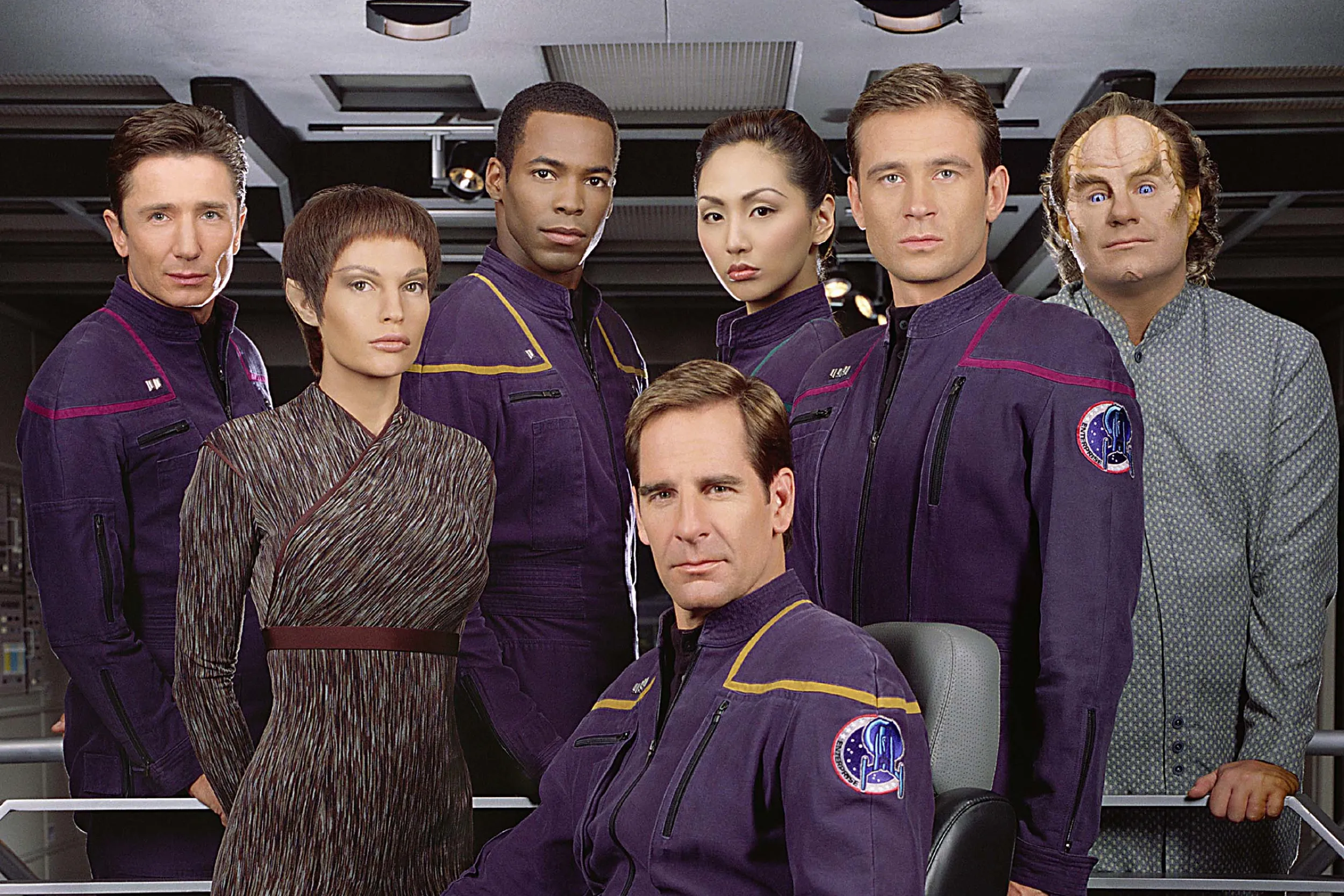
Main cast: Scott Bakula, John Billingsley, Jolene Blalock, Dominic Keating, Anthony Montgomery, Linda Park, Connor Trinneeretc.
Notable guest actors: Jeffrey Combs, Vaughn Armstrong , Gary Graham, Matt Winston, Randy Oglesby, James Cromwell, Brent Spiner, Daniel Dae Kim, Fionnula Flanagan, Robert Picardo, Tony Todd, Bruce Davison, Seth MacFarlane, Steven Culp, Noa Tishby, Rene Auberjonois, Peter Weller, Dean Stockwell etc.
Composer(s): Dennis McCarthy, Jay Chattaway, Brian Tyler, John Frizzell, Mark McKenzie, David Bell, Velton Ray Bunch, Kevin Kiner & Paul Baillargeon
*** MAY CONTAIN SPOILERS ***
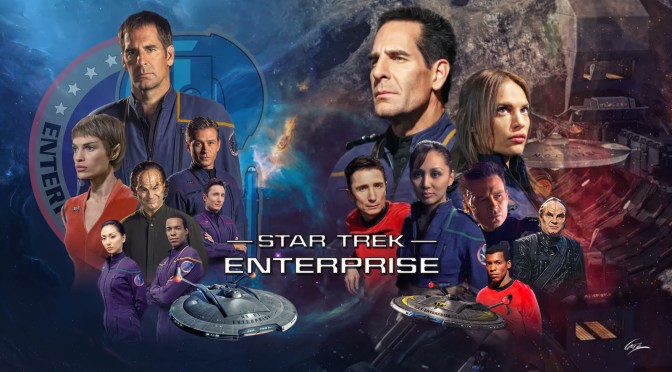
It’s been a while since I reviewed Star Trek on the site. But I have now finally completed the task I set myself to watch and review all the legacy Star Trek series. I am currently on the fence regarding the more recent Star Trek offerings. Anyway, having reviewed Voyager (see below) last year, I can now provide a detailed report back on Enterprise.
Star Trek: Enterpriseoccupies a fascinating corner of the franchise’s sprawling canon. Set a century before Kirk and more than a century after humanity’s first steps into spaceflight, the series charts the formative years of Starfleet—before there even was a “Starfleet” in the sense fans recognize. Its premise alone is rich: a pre-Federation frontier where humanity is inexperienced, unsteady, and often outmatched, yet eager to join a much larger galactic community. In this sense, Enterprise is both a prologue and a missing link, retrofitting the swaggering optimism of The Original Series with a more grounded, early-21st-century sensibility.
The show’s commitment to exploring those transitional years is what secures its place in canon. Enterprise seeds the diplomacy, technology, and interspecies tensions that future shows build upon—from the first warp-5 engine, to early encounters with Vulcans, Andorians, and the ever-shadowy Temporal Cold War. Watching Captain Jonathan Archer and his crew stumble toward the ideals later embodied by the Federation gives the series a distinctive historical weight. It doesn’t merely fit into Star Trek continuity; it actively sculpts the bedrock beneath it.
Central to the show’s appeal is Scott Bakula, whose performance as Captain Archer blends warmth, stubbornness, and a palpable sense of moral growing pains. Bakula gives Archer a grounded humanity that stands apart from the polished command styles of Picard or the passionate Sisko, yet his sincerity and resolve make him every bit their equal. When the writing rises to meet his talent—as in standout episodes like “Cogenitor,” “The Andorian Incident,” “Carbon Creek,” or the Xindi arc’s best moments—the show can reach the emotional and thematic heights of The Original Seriesand The Next Generation.
But Enterprise is also a series defined by uneven execution. For every episode that lands with classic-Trek resonance, there are others hampered by muddled plotting, bland direction, or creative decisions that feel more reactive than visionary. The show often struggled to decide whether it wanted to be a rough-edged prequel, a 2000s-era action drama, or a traditional episodic Trek—frequently trying to be all three at once. While it contains genuinely excellent science-fiction storytelling, its overall writing and directorial cohesion never consistently matched the clarity, ambition, or confidence of its most celebrated predecessors.
Yet despite its flaws, Star Trek: Enterprise remains an essential and often underrated part of the canon—a show whose best moments remind us exactly why Trek endures, and whose imperfections make its aspirations feel all the more human. Here are eight of the best episodes I watched – two per series.
Series 1 – The Andorian Incident (Episode 7)
This episode is the first truly great hour of Enterprise—the point where the show proves it can handle nuanced political storytelling within the Trek universe. The introduction of Jeffrey Combs as Shran is a masterstroke; he immediately brings depth, wit, and volatility to the Andorians. The plot, centered on Archer and his crew discovering that a supposedly pacifist Vulcan monastery is hiding darker secrets, reshapes our understanding of Vulcan–Andorian tensions. Strong direction, tight pacing, and a morally thorny reveal make this the first episode that feels essential to larger Star Trek canon.
Series 1 – Dear Doctor (Episode 13)
A thoughtful, character-driven story told through Dr. Phlox’s personal logs, “Dear Doctor” represents Enterprise at its most philosophically ambitious. It confronts the ethics of medical intervention, cultural evolution, and the limits of humanitarian aid—classic Trek territory handled with sensitivity and restraint. John Billingsley delivers one of the best performances of the season, infusing Phlox with curiosity, compassion, and unsettling pragmatism. The episode’s controversial ending also resonates, sparking debate among fans and critics alike. It’s a quietly powerful hour that demonstrates the series’ potential for moral complexity.
Series 2 – Carbon Creek (Episode 2)
Widely regarded as the highlight of Season 2—and for many, the best Enterprise episode of its first two years—“Carbon Creek” is a charming, unexpectedly heartfelt detour into Trek history. Told by T’Pol as a possibly-true, possibly-mythic story, it follows a stranded Vulcan survey team living incognito in 1950s Pennsylvania. The fish-out-of-water premise is handled with warmth, humour, and subtle social commentary, while Jolene Blalock shines in a dual role that lets her explore a softer, more playful Vulcan persona. It’s imaginative, character-rich, and quietly profound—the kind of tonal experiment that pays off beautifully.
Series 2 – Regeneration – (Episode 23)
A tense, surprisingly effective prequel to The Next Generation’s Borg storyline, “Regeneration” threads a tricky needle: introducing Borg elements without breaking canon. The episode smartly uses the wreckage from Star Trek: First Contact as its entry point, turning the narrative into a chilling, atmospheric thriller. The direction is sharp, the pacing taut, and the danger feels unusually real for this era of Trek. The crew’s desperation—fighting an enemy they can’t possibly understand—creates some of the season’s most gripping moments. It’s both fan-pleasing and genuinely suspenseful.
Series 3 – Twilight – (Episode 8)
Often cited as the masterpiece of Season 3, “Twilight” is a time-bending character drama that blends emotional storytelling with classic Trek sci-fi ingenuity. When Archer becomes afflicted with a neurological condition that erases his short-term memory, the episode jumps forward into an alternate future where humanity has been nearly wiped out by the Xindi. What follows is a surprisingly intimate exploration of Archer and T’Pol’s relationship, played with sincerity and restraint by Scott Bakula and Jolene Blalock. The script balances tragedy, hope, and big ideas without feeling gimmicky. It’s moving, tightly written, and stands alongside the franchise’s finest “what-if” stories.
Series 3 – Azati Prime – (Episode 18)
“Azati Prime” is the moment Season 3’s slow-burn storytelling snaps into urgent, high-stakes clarity. The episode follows Archer’s attempted suicide mission to destroy the Xindi superweapon, giving Scott Bakula one of his strongest performances in the entire series. The moral weight is heavy, the action tense, and the pacing relentless. Crucially, this is where the Xindi cease being abstract antagonists and become three-dimensional political factions torn between fear and diplomacy. The episode’s final act—Enterprise under brutal assault—is among the most cinematic sequences the series ever produced, setting up the endgame of the season with real emotional gravity.
Series 4 – United – (Episode 13)
“United” is Enterprise finally fulfilling its prequel potential—showing the messy, reluctant, and hard-fought beginnings of what will eventually become the United Federation of Planets. The political maneuvering is smart and grounded, the Andorian–Tellarite tension is played with grit and humor, and Jeffrey Combs delivers another magnetic performance as Shran. The episode’s centerpiece—the Andorian duel where Archer must fight to prevent a larger war—is tense, dramatic, and deeply character-driven. It’s classic Trek diplomacy mixed with riveting conflict, all while pushing the franchise’s history forward in meaningful ways.
Series 4 – In a Mirror, Darkly – (Episodes 18–19)
One of the most stylish and purely fun stories Enterprise ever told, this two-parter fully embraces the decadent brutality of the Mirror Universe. The production team goes all-in: redesigned sets, re-imagined uniforms, a pulpy remixed title sequence, and a stunning recreation of the USS Defiant from The Original Series. The cast seems to relish the opportunity to play villainous, unhinged versions of their characters—especially Jolene Blalock and Connor Trinneer. Visually bold, lore-rich, and brimming with dark humour, “In a Mirror, Darkly” is a love letter to both TOS and long-time Trek fans.
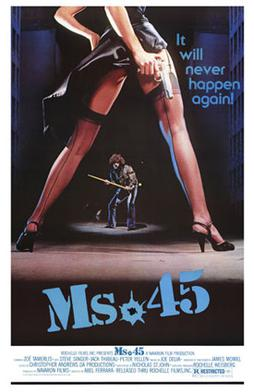
Cult Film Review: Ms. 45 / Angel of Vengeance (1981)
Directed by Abel Ferrara
Written by Nicholas St. John
Produced by: Richard Howorth, Mary Kane
Main cast: Zoë Tamerlis (Lund), Albert Sinkys, Steve Singer, Jack Thibeau, Peter Yellen, Darlene Stuto, Helen McGara etc.
Cinematography by James Momel
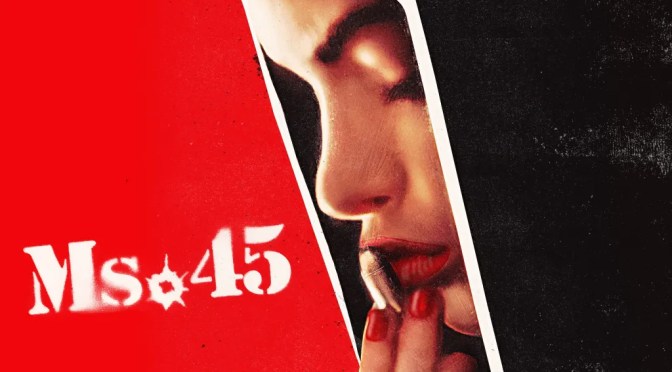
In its latest 4K restoration, Ms. 45—Abel Ferrara’s 1981 revenge thriller—has never looked more electrifying, or more disturbing. A stunning new rendering of Ferrara’s gritty vision, Ms. 45 showcases New York City in all its stark, seething chaos: a place of beautiful ugliness, where the streets pulse with danger, desperation, and decay. The film, originally shot on 16mm, feels both of its time and eerily timeless, especially now in ultra-high-definition, where every grainy detail of Ferrara’s oppressive, neon-lit streets shines in a raw, unapologetic manner.
At the heart of this urban nightmare is Thana (Zoë Lund, credited as Zoë Tamerlis), a mute seamstress whose world shatters after she is brutally assaulted by a man on her way home, then attacked again in her home. Her muteness is both a powerful thematic element and an artistic choice, amplifying her trauma, her rage, and her vengeance in a way that spoken words never could. Thana’s descent into violence is stark, visceral, and unrelenting, making her a strange kind of anti-hero in this world of moral decay. Ferrara’s direction is clinical, cold, and absolutely uncompromising—each frame holds a sharp, almost surgical precision, magnifying the madness of her mind and the city itself.
What truly elevates Ms. 45 beyond its genre limitations is the electric performance of Zoë Tamerlis/Lund. At just 17 years old when the film was made, Lund’s portrayal of Thana is nothing short of revelatory. She is the beating heart of this disturbing narrative, lighting up the screen with a fierce, magnetic presence that could have easily made her a Hollywood star—had the industry been ready for her. While many of the supporting cast either cannot act or over-act, Lund’s both vulnerable and terrifying, her expression often the only indication of her character’s state of mind. Her journey from victim to vengeful force is tragic, yet always compelling.
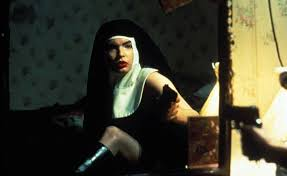
Had Lund chosen to pursue a more conventional career, she would likely have ascended to Hollywood’s A-list—her look was captivating, her screen presence undeniable—but the indie, underground scene was where she truly thrived. In Ms. 45, she is a tragic figure of youth lost to the violence of the world around her, and in the midst of it all, she shines, her performance capturing the raw, cathartic essence of a girl pushed too far. Further, Lund’s performance peaks in one of the most iconic sequences of the film—Thana’s nun fancy-dress shootout. Drenched in blood and surrounded by chaos, she dissects the partygoers in slow-motion with a terrifying calm, her eyes wide with cold sorrow. It’s a juxtaposition of innocence and savagery, like a child playing with fire and discovering its destructive power. Kudos to the deranged soundtrack here which really ramps up Ferrara’s nightmarish vision.
Ms. 45 is NOT a film for the faint of heart or the easily offended. It’s violent, raw, and unapologetically brutal, with moments that will leave you questioning your own reaction to Thana’s vengeful spree. There is something deeply primal about the film—the way it feeds off its viewers’ discomfort, forcing them to confront Thana’s rage. It’s a film that revels in its own madness, and yet somehow, Ferrara and Lund manage to make revenge feel like an art form. It’s as stylish as it is savage, as haunting as it is exhilarating.
In conclusion, Ms. 45 is a genre-defining thriller, a masterpiece of violent cinema that has lost none of its power with time. The 4K restoration is a perfect showcase for Ferrara’s vision, and Zoë Lund’s performance is a revelation—her beauty and intensity burn through the screen, making you wonder what might have been had she chosen a different path. But for those of us lucky enough to witness this film in all its gritty glory, it’s impossible not to see her as a true underground legend. Whether or not you’re ready for it, Ms. 45is visceral, stylish, and uncompromising cinema—one that will stay with you long after the credits roll and that evil saxophone soundtrack beat fades out.
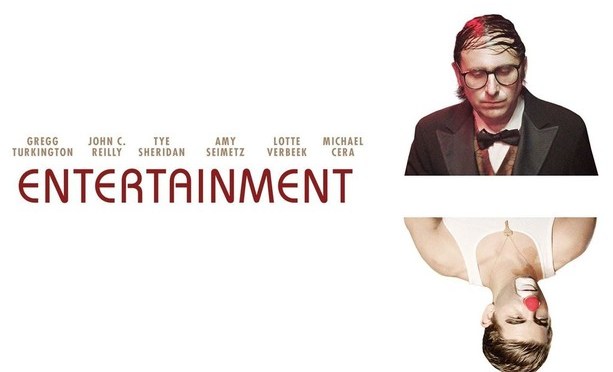
Cult Film Review: Entertainment (2015) at The Nickel Cinema
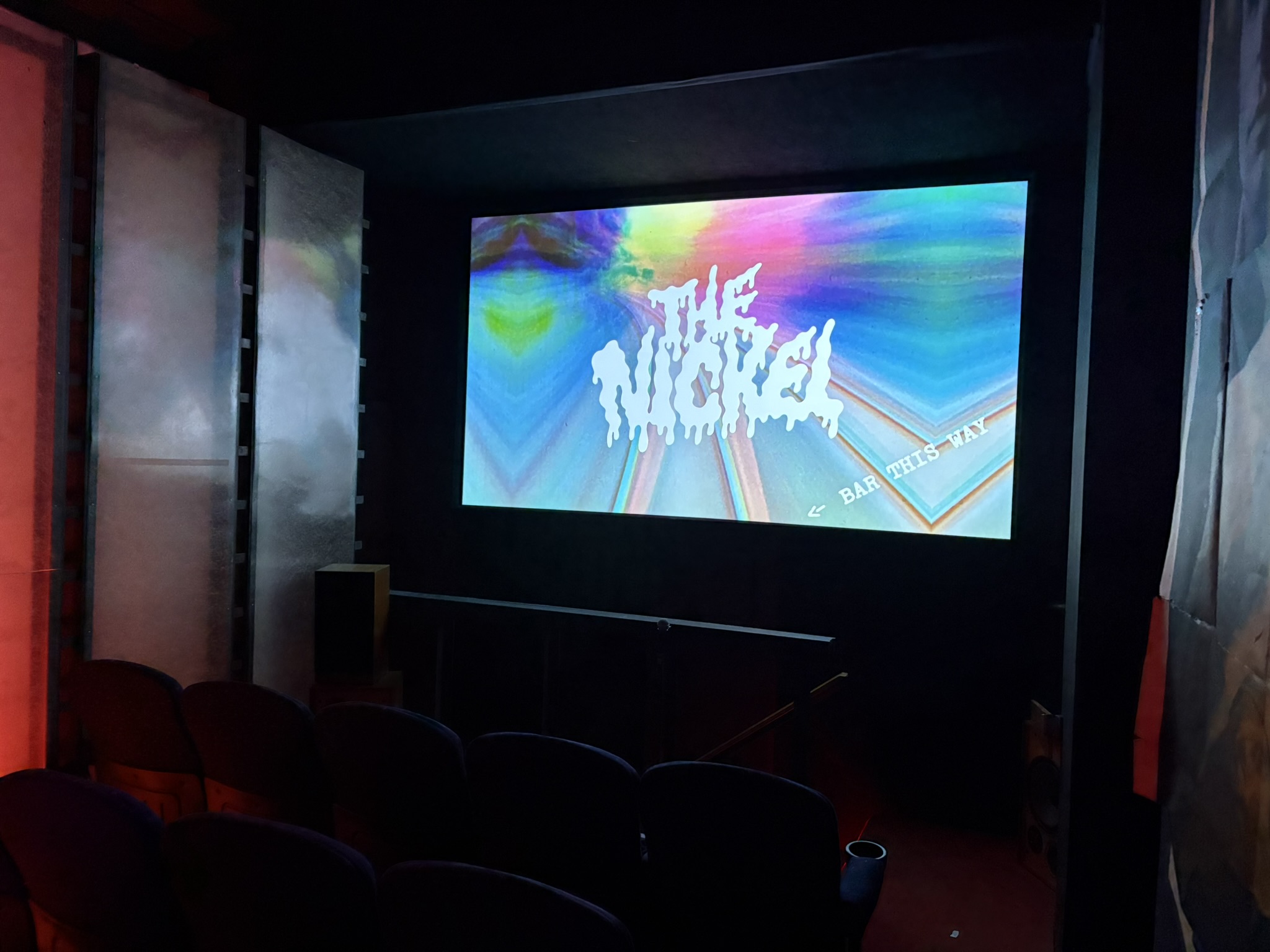
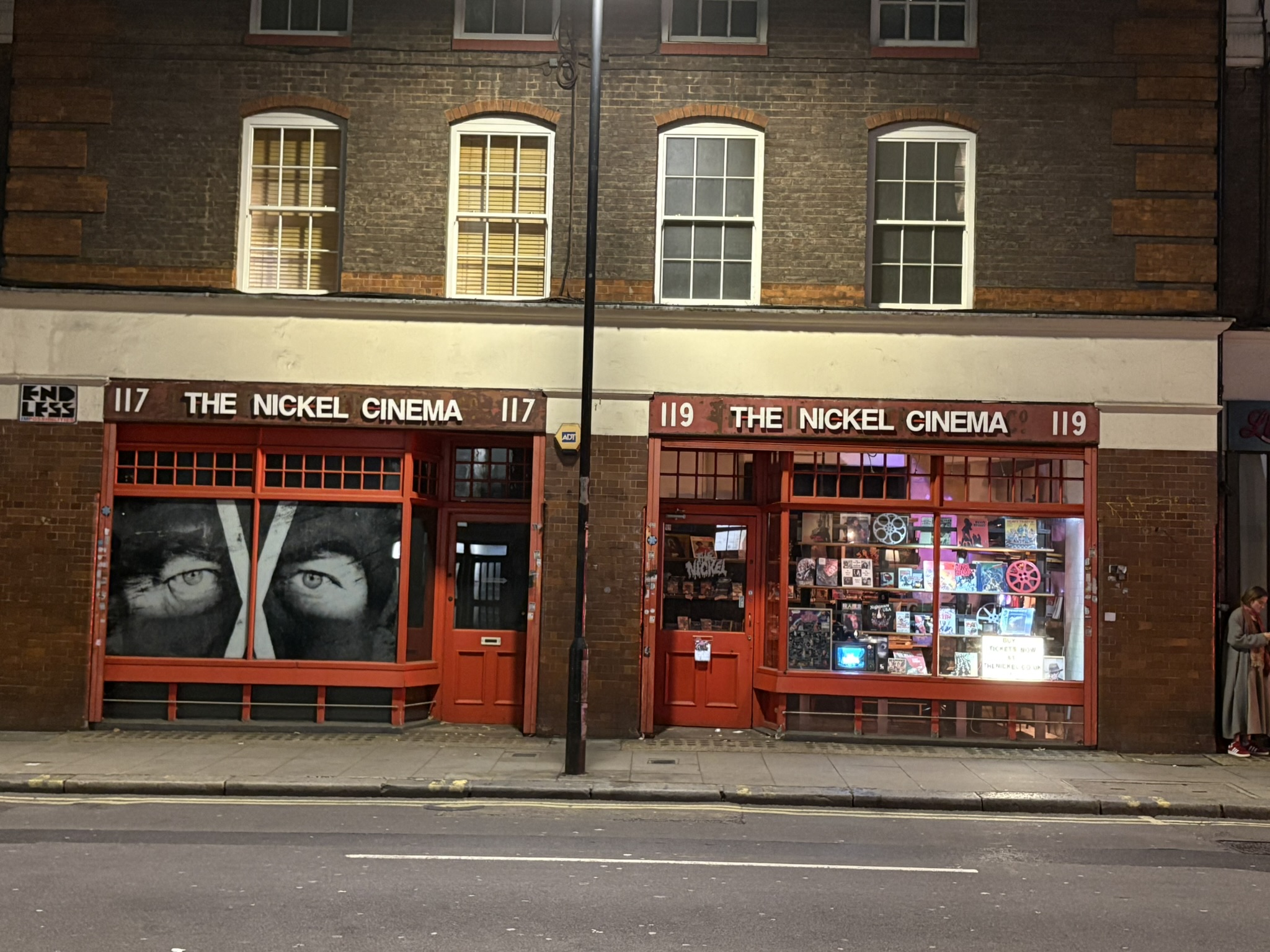
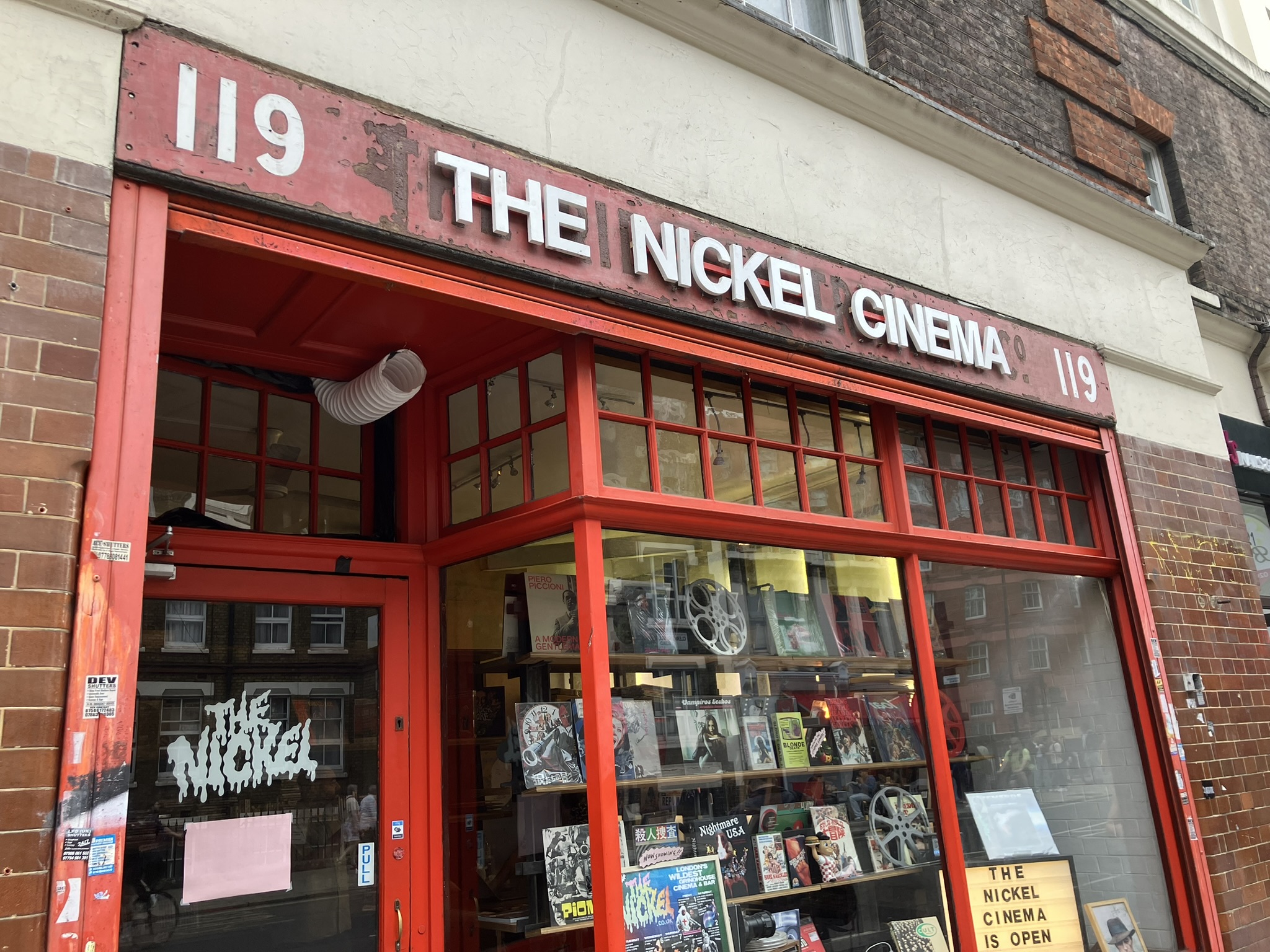
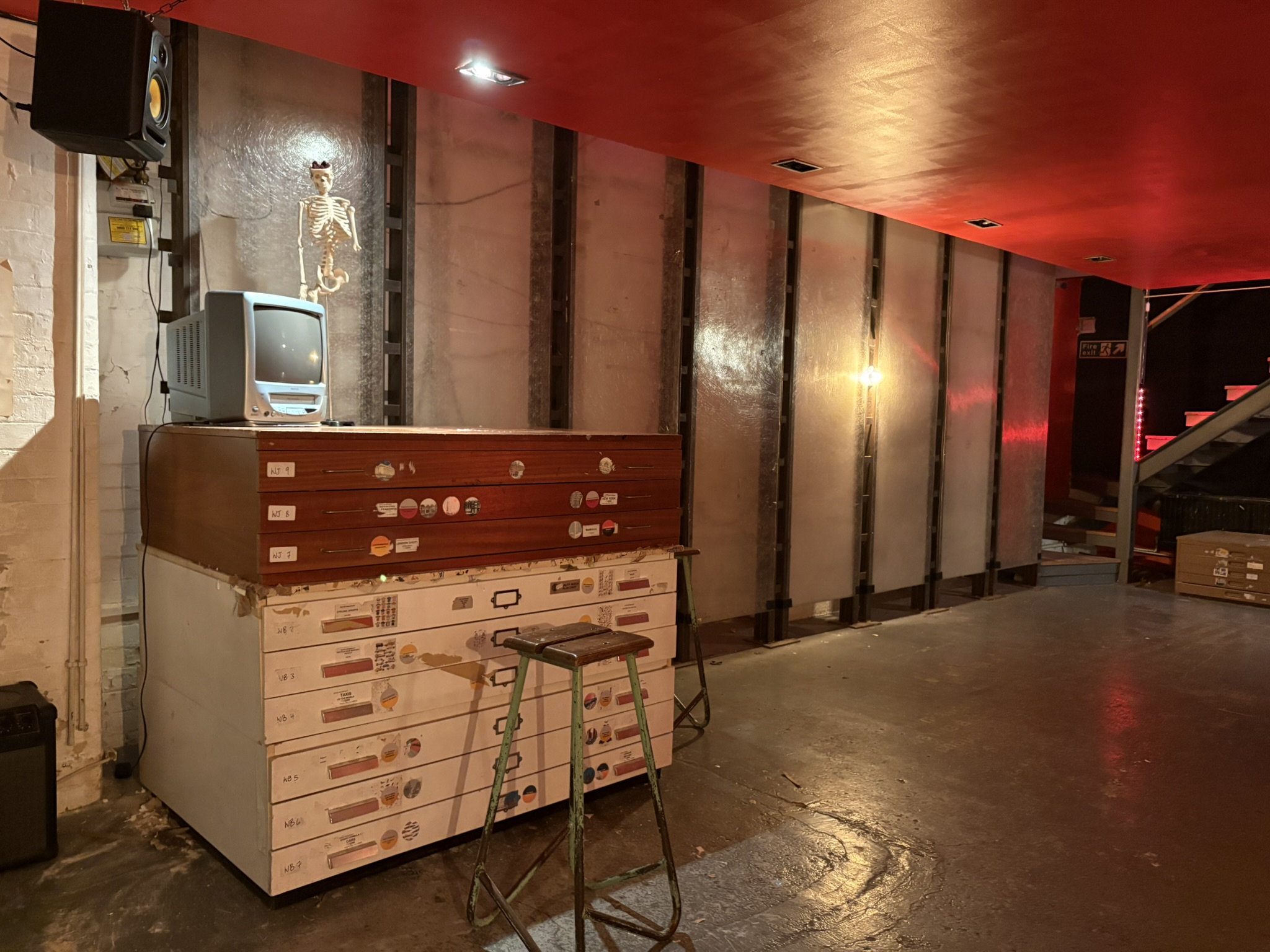
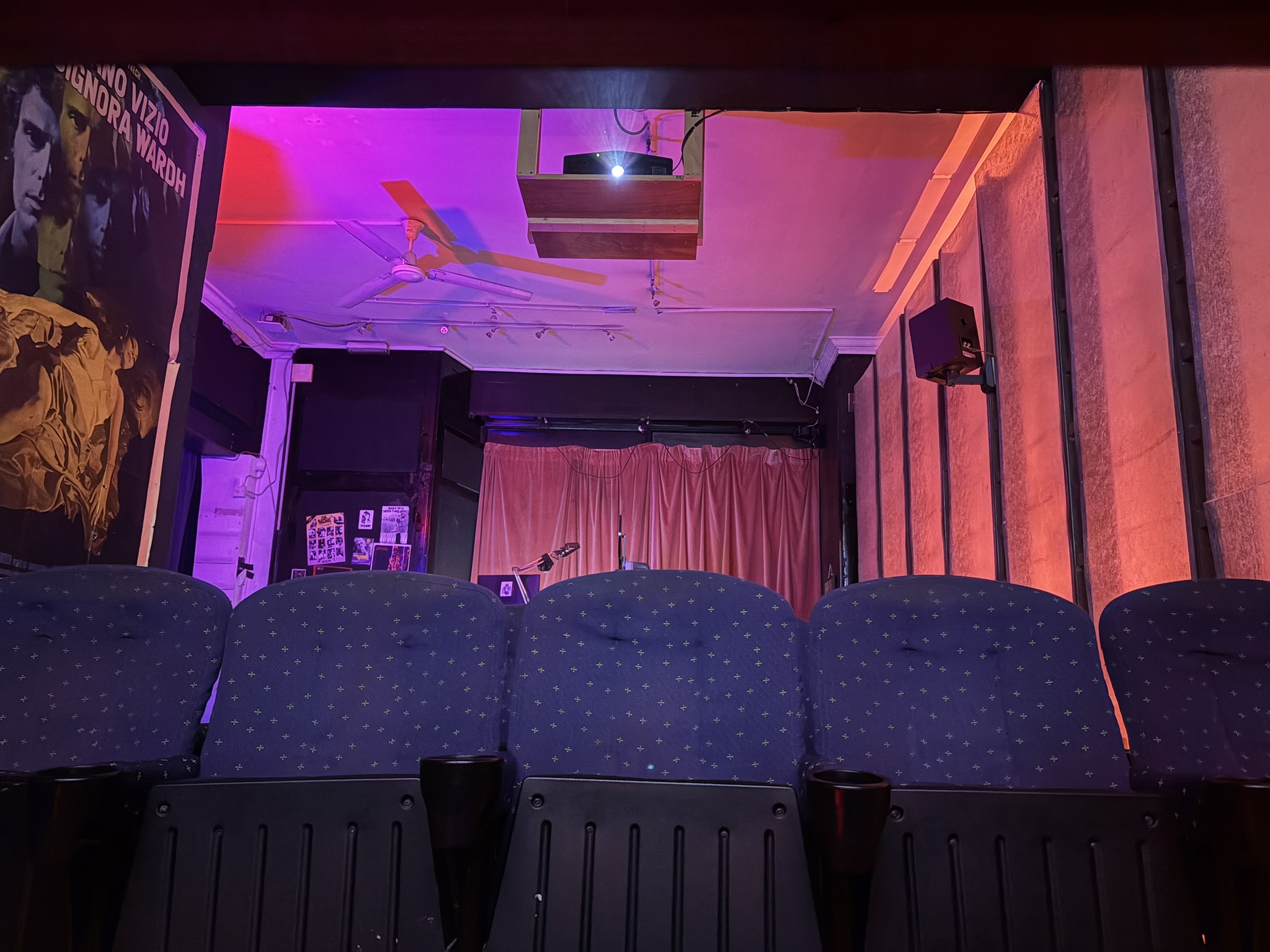
The Nickel Cinema in Clerkenwell feels like a hidden temple for London’s true film obsessives — a grindhouse gem tucked into the city’s polished heart. It’s the kind of place where the air hums with cigarette ghosts and celluloid dreams, where the screen flickers with everything from outlaw art films to midnight slashers and sleazy euro-thrillers. The décor has that lived-in, clandestine vibe — red velvet worn thin, neon bleeding through the dark, and an underground bar serving the kind of cocktails that taste like trouble.
It’s not just a cinema — it’s a refuge for the subversive, the cultish, the weird and the wonderful. You’ll find Anger next to Fassbinder, Fulci, Lynch, Jodorowsky, Korine, Ferrara, Argento, Waters, Kern, Miike, Ferrara, Korine Noe, Cohen, Breillat, Refn and many more bleeding into audiences who actually cheer when the projector rattles. The Nickel doesn’t chase trends; it worships the offbeat, the forgotten, and the dangerous. While feeling still quite new, the place somehow still feels gloriously dirty — and absolutely right up your alley. If not there is a strip club next door if that kind of business takes your fancy.
Last month I watched Rick Alverson’s Entertainment (2015) at The Nickel Cinema.
Entertainment is like watching the American dream rot in real time — a hypnotic, desolate odyssey through the dust and despair of the open road. Gregg Turkington is excellent as he plays “The Comedian,” a hollowed-out version of his Neil Hamburger persona, trudging through a series of soul-scorching stand-up gigs in half-empty bars, bowling alleys, and desert motels. Each performance is a small act of self-immolation — jokes that fall flat, laughter that curdles, a man dissolving behind the microphone as his identity blurs into the toxic sludge of showbiz delusion.
Director Rick Alverson shoots it all with a slow, clinical beauty — wide, frozen frames that turn America’s forgotten corners into alien landscapes. “The Comedian” drifts from neon-soaked diners to sulfurous desert plains, to prisons, to dead Western towns. Further, it contains some incredible locations including an unforgettable sequence at an aircraft graveyard — rows of dead machines basking in the sun, like monuments to ambition and decay. While low in budget the film makes use of such stunning locales, plus impactful acting interludes from John C. Reilly, Michael Cera and Tye Sheridan.
The film is not a comedy, not really — more anti-comedy or like an autopsy of one. Entertainment (2015) is a brutal, mesmeric study of loneliness, alienation, and the sick joke at the heart of performance itself. It’s the road movie as existential purgatory — unbearably awkward, strangely poetic, and utterly unforgettable. It doesn’t so much as have a beginning, middle and end, but a series of events which we are dropped into and experience until the credits suddenly roll. I like to ponder “The Comedian” is still out there, living and dying, on and off stage.
Written by Mike Leigh – Based on 1970 stage play by Mike Leigh
Produced by Leslie Blair
Cast: Anne Raitt, Sarah Stephenson, Eric Allan, Joolia Cappleman, Mike Bradwell, Donald Sumpter etc.
Cinematography by Bahram Manocheri
Camera Assistant: Roger Pratt
Edited by Leslie Blair
One of the quiet yet profound joys of cultural life is finding a creative or sporting figure—or team—whose journey you follow from an early age, growing alongside their work as it evolves. Whether it’s the cinematic brilliance of the Coen Brothers or Mike Leigh, the ever-shifting energy of Primal Scream, or the lifelong, often agonising commitment to Tottenham Hotspur FC, these long-term relationships offer a deep sense of continuity. They become personal landmarks in our emotional and cultural landscapes, threading through decades of change and grounding us with shared history, joy, and—especially in Spurs’ case—a touch of heartache.
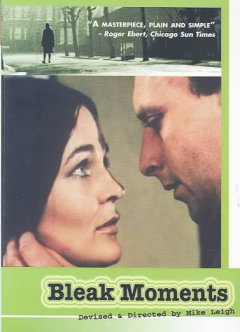
I was born just a year before Mike Leigh’sBleak Moments debuted in 1971, and it became a defining cultural touchstone for me. First encountering it in the early 1980’s, I was captivated by its raw honesty and quiet power—a film I returned to again and again on that solid-format VHS tape over the years. It marked the beginning of a lifelong relationship with Leigh’s work, a body of cinema that has shaped and shadowed my own personal and cultural journey. That connection endures to this day, most recently renewed with his 2025 release, Hard Truths—a testament to a career and vision that continue to evolve with undiminished integrity.
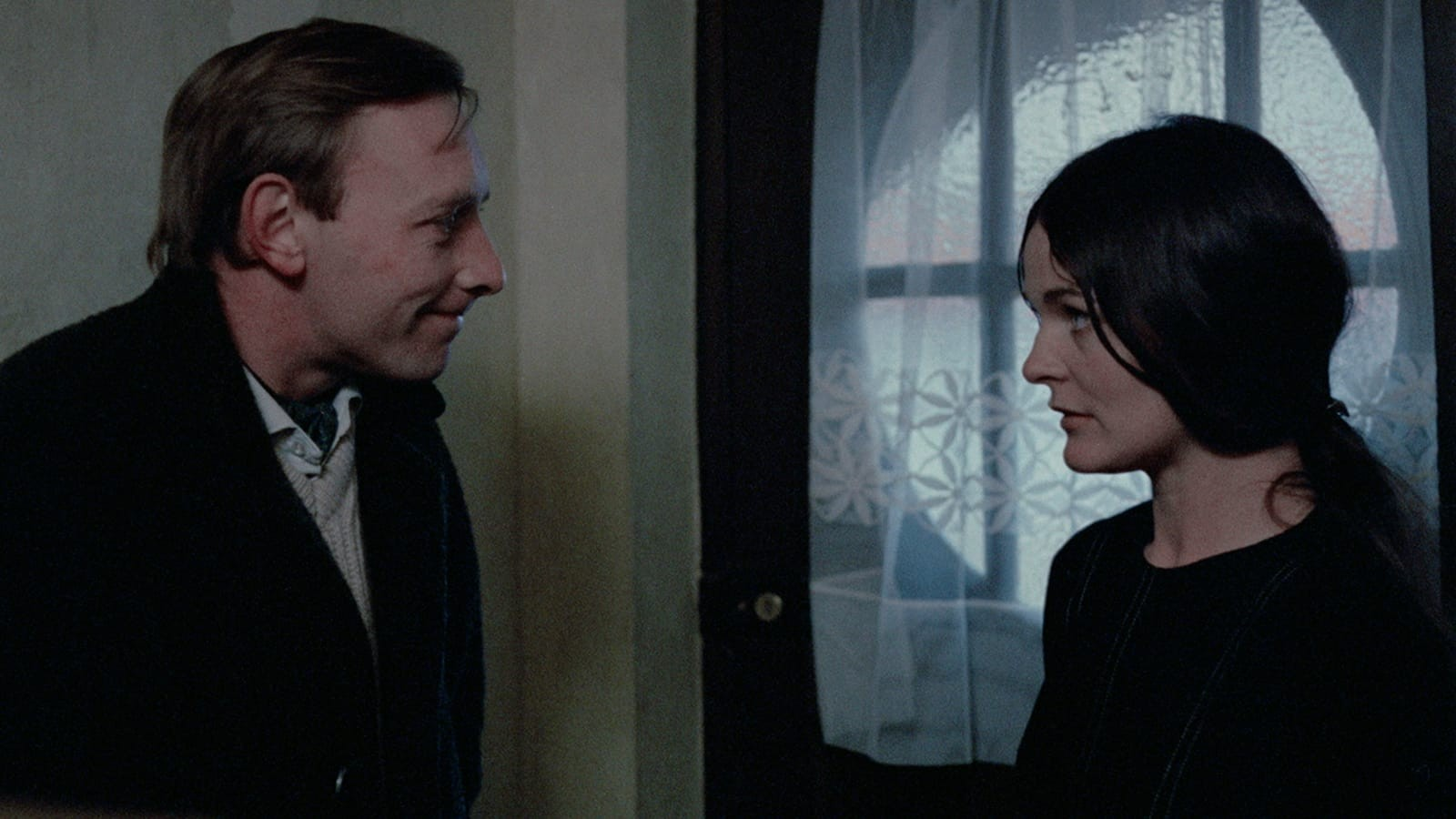
Bleak Moments centres on Sylvia (Anne Raitt), a lonely, introspective young woman navigating the quiet desolation of her suburban life while caring for her mentally challenged sister, Hilda (Sarah Stephenson). Trapped between duty and desire, Sylvia reaches tentatively toward human connection—most notably with a shy schoolteacher—yet every encounter is marked by awkward silences and emotional hesitations. Mike Leigh crafts a delicate, unflinching portrait of isolation and unmet longing, where the most powerful moments are found in what remains unsaid. Indeed, I would say it would have a powerful influence on awkward cinema or television such as Gervais and Merchant’s, seminal show The Office.
I hadn’t seen the film for twenty years and in a packed Prince Charles Cinema, what struck me was how Bleak Moments, while raw and unvarnished in style, unfolds with a beautifully episodic structure that gently accumulates emotional weight. Each scene offers a quiet vignette—moments of everyday awkwardness, tentative exchanges, and domestic stillness—that together create a deeply human portrait of loneliness and restraint. Despite its sombre tone, the film is laced with dry, observational humour and a deep sense of pathos, revealing the absurdity and ache of unspoken lives.
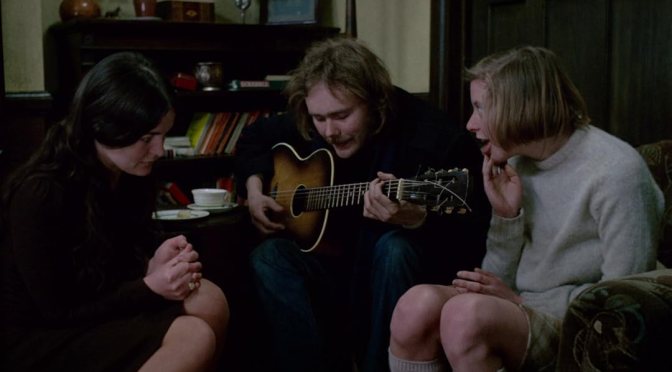
Mike Bradwell’s Norman and his dryly hilarious songs, and the most awkward of “romantic” dinner scenes in the Chinese restaurant just stood out to me as deeply funny. Raitt’s performance too is a masterclass of comedic understatement. Overall, these qualities—emotional nuance, character-driven storytelling, and a commitment to realism—would become defining hallmarks of Mike Leigh’s oeuvre, already fully formed in this striking debut. Finally, it was great to see and hear from Leigh, now in his eighties, answering some great questions with sharp wit and batting away some stupid ones too with his usual intelligence and droll honesty. Leigh remains a hero in my life’s cultural journey.
Produced by Emerald Fennell, Josey McNamara and Margot Robbie
Cast: Barry Keoghan, Jacob Elordi, Rosamund Pike, Richard E. Grant, Alison Oliver, Archie Madekwe, Carey Mulligan, Paul Rhys, etc.
Cinematography by Linus Sandgren
*** MAY CONTAIN SPOILERS ***
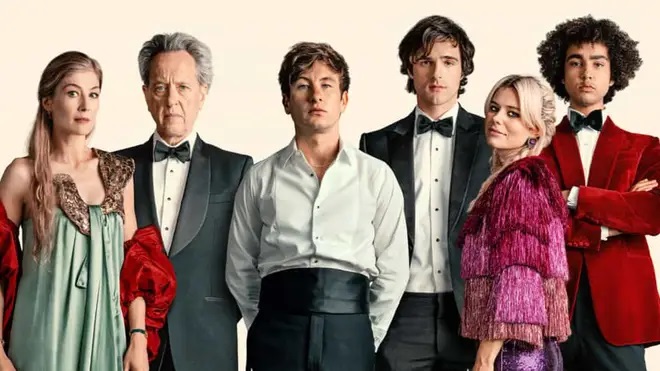
As the awards garnered upon Emerald Fennell’s brilliant Promising Young Woman (2020) will testify, she is clearly a major talent. Fennell has also acted in TV shows such as Call the Midwife and The Crown, as well as writing and producing the second series of Killing Eve. Not only is Fennell an excellent actress, writer, director and producer, but is also now an Oscar and BAFTA winner. Thus, Fennell’s “difficult second film” arrives in the guise of the pitch black comedy,Saltburn (2023). Although to describe this hilarious, bleak, sexy, and often twisted exploration of the British class system as such evidently tests the very definition of comedy.
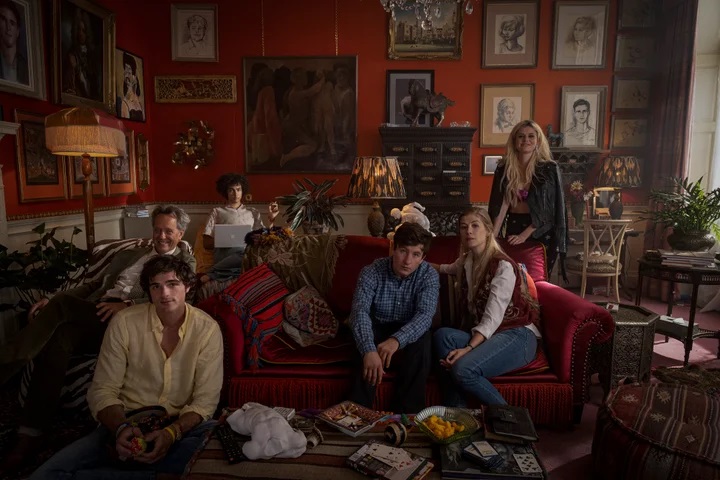
Saltburn (2023) is set in 2006. Oliver Quick (Barry Keoghan) attends Oxford University as a naive fresher with an inferiority complex and desire for company. While he is incredibly intelligent, coming from a lower class background places bookish Oliver as a very small fish in big water. Especially when compared to the so-called Oxford elite including handsome and wealthy, Felix Catton (Jacob Elordi) and his cousin, the handsome and not-as-wealthy, Farleigh Start (Archie Madekwe). While Farleigh is suspicious of Oliver, Jacob soon befriends him and takes the Northerner under his wing. The two connect and form an “odd couple” bromance, with Felix even going so far as to invite Oliver to his stately home, Saltburn, for the summer. There we meet the rest of Felix’s family including his flaky sister, Venetia (Alison Oliver), eccentric father, Sir James (Richard E. Grant) and effervescent mother, Lady Elspeth (Rosamund Pike).
After building Oliver and Felix’s characters carefully during their time at Oxford, Fennell’s savage and satirical screenplay gathers pace in the second act at Saltburn. Here Oliver tries to fit in and ingratiate himself into the Catton family, but it soon becomes clear that however friendly they may be, he will only ever be an outsider to them. Simultaneously, Farleigh sees Oliver as a rival for the Cattons’ emotional and financial affections and the two begin a retaliatory personal war amidst the balmy summer days, breakfasts, dinner parties and social gatherings. Oliver’s main journey is to connect as much with Felix as possible, so much so his passion veers toward obsession. But Felix is a roaming spirit and a hedonist and does not quite requite Oliver’s feelings. Yet, Felix does show compassion for Oliver, as illustrated when he drives him on a mercy mission to visit Oliver’s family. This is where the story takes an intriguing and ever deadly turn.
I cannot recommend Saltburn (2023) enough for its fantastically witty script, devastatingly brilliant cast and some quite disgustingly explicit, but contextually justifiable, character moments and scenes. Fennell takes the setting and structure of Evelyn Waugh’s Brideshead Revisited and turns it upside down, spinning a devious tale of infatuation, love, privilege and social climbing. Through the character Oliver Quick, and I really don’t want to give anything away, there is a powerful and jaw-dropping character arc of upward mobility. Rosamund Pike’s and Keoghan’s performances are both amazing and award-worthy. While the final act twists certainly do shock and surprise they arguably are rushed when compared with the more effective pacing of the opening and middle acts. Moreover, I am also unsure why the exquisite cinematography and stunning locations were presented in the 4:3 (1:33:1) aspect ratio. Why squeeze in Linus Sandgren’s light and framing and not expand them to the widescreen format?
Ultimately, Emerald Fennell proves herself an important voice in British cinema. Unafraid to test the boundaries of taste, genre, and audience expectations, she has crafted one of the most consistently challenging films of the year with Saltburn (2023). One could easily describe the themes presented here as a critique of the upper classes and how the uber-rich are bad people to be brought down to their knees. However, Fennell’s script is not that simplistic. It cleverly careers between love/hate for the characters and irony-bombing the class system, before becoming a damning indictment on the darkest flaws of humanity. Lest one forget the indelible one-liners throughout and THAT final dance sequence, which are both to die for!
Writers: Marti Noxon, Gillian Flynn, Alex Metcalf, Vince Calandra etc.
Editors: David Berman, Maxime Lahaie, Émile Vallée, Jai M. Vee
Starring: Amy Adams, Patricia Clarkson, Chris Messina, Eliza Scanlen, Matt Craven, Henry Czerny, Taylor John Smith, Sophia Lillis, Elizabeth Perkins
**MAY CONTAIN SPOILERS**
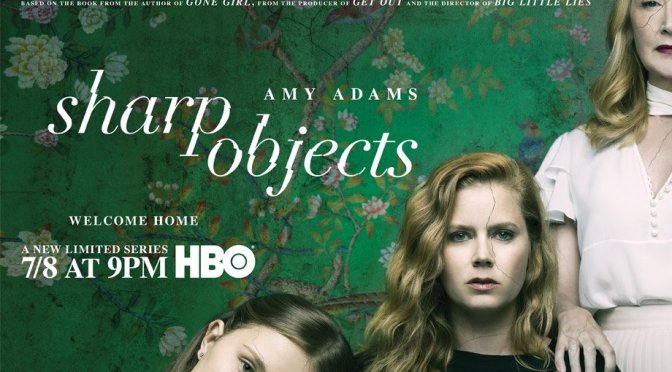
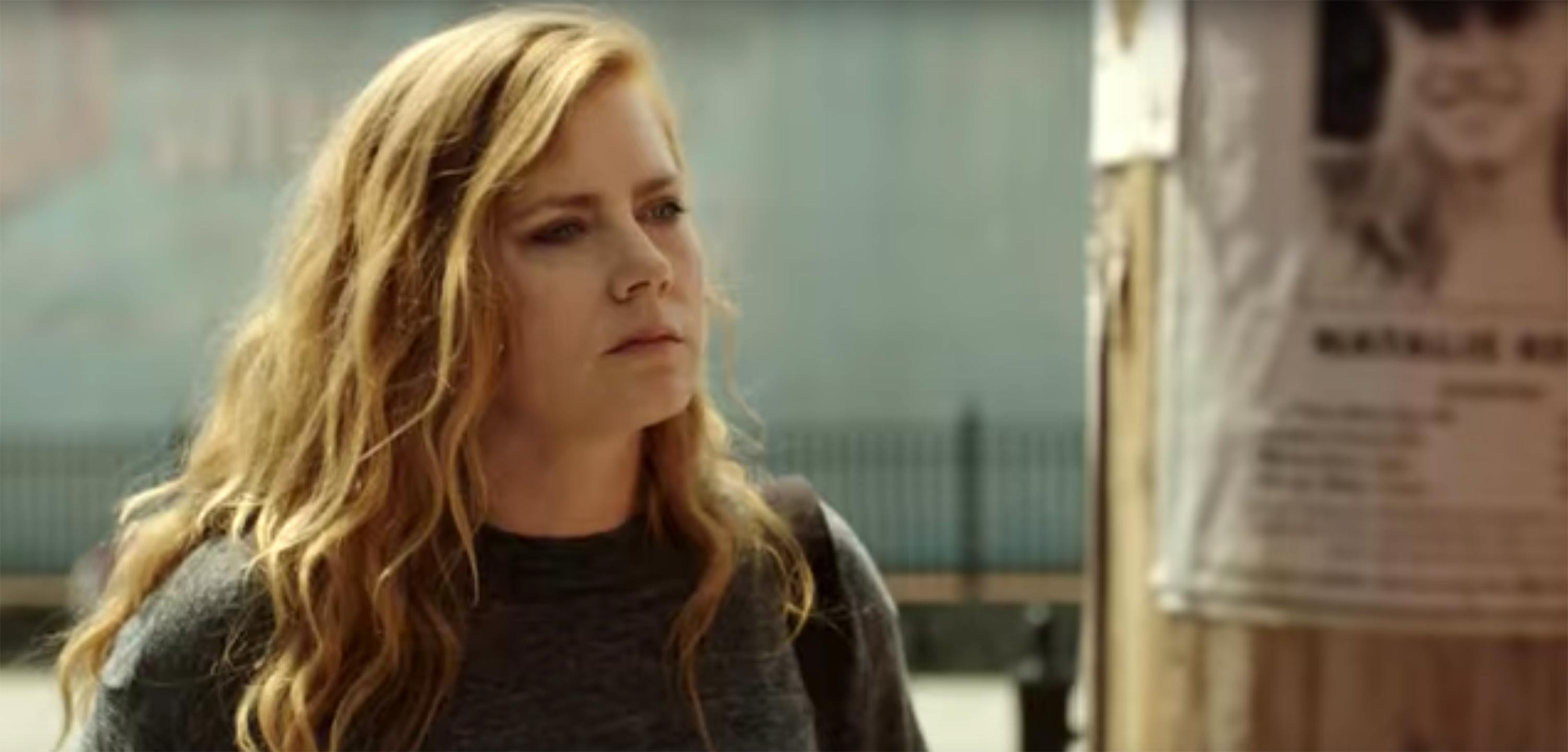
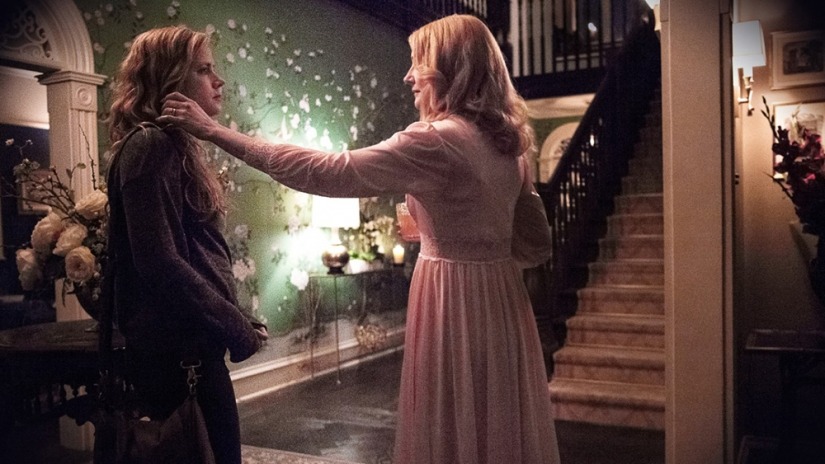
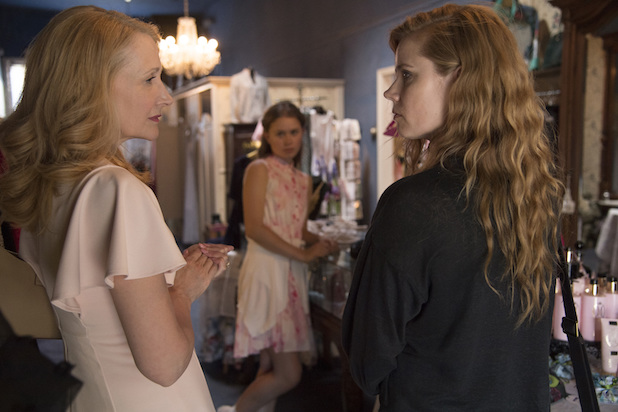
As is often the case when a writer has a big hit producers and studios look at their back catalogue to see if there are any apples in the shade ripe for plucking. Thus, following the cinematic success of her book adaptation Gone Girl (2014), Gillian Flynn’s debut novel from 2006 is given a stylish, small-screen HBO treatment. The story concerns crime reporter Camille Preaker – Amy Adams on stunning form – who returns to her hometown of Wind Gap, Missouri, to investigate the murders of two girls. There she confronts a personal ordeal from the past, clashes with her mother, Adora (Patricia Clarkson) and attempts to bond with her precocious, teenage sister, Amma (Eliza Scanlen).
Firstly, I must say Amy Adams is one of my favourite actors. Her performances in films such as: The Fighter (2010), American Hustle (2013), Arrival (2016), Nocturnal Animals (2016) to name but a few, have demonstrated what a striking screen presence she has. Furthermore, she is able to illuminate a character’s emotion through sheer being; it’s almost effortless. But while she excels in serious roles, displaying both inner strength and vulnerability, she also has a sense of mischief and humour. Indeed, who better to evoke the pathos required to portray a character like Camille Preaker? Adams nails the alcoholic, self-harming, ex-psychiatric hospital patient role, refusing to suffer fools and using mordant wit to hide her pain.
Camille’s assignment takes her back to a place she never wanted to go back to; drinking even more to further block out her inner turmoil. But, she has a vested family interest to find the killer of two missing girls, as her sister, Amma, knows the victims. Her inquisitive nature finds her locking horns with local cop played by Matt Craven; and forming a dysfunctional liaison with out-of-town investigator, Chris Messina. Being a small Southern town everyone has secrets to hide and out-of-towner Camille is not actually welcomed with open arms; not so much the Prodigal’s daughter but the outsider’s insider come to poke her nose where it doesn’t belong. Conflict further derives from external and internal grief that drives a feeling of gothic dread throughout. This is a story about abuse and neglect and the need to dominate through an overpowering sickness and poison. Dysfunctional humans harm others and themselves in order to get through the day.
Having watched a number of films and programmes dealing with the death or taking of children, this harrowing subject is becoming a real go-to for filmmakers and writers. Over eight episodes such crimes are melded with themes relating to: family secrets, mental illness, grooming, mutilation, addiction, suicide and sexual assault. As with Gillian Flynn’s aforementioned Gone Girl, the setting is not a happy place. Human beings do not come off that well either and are presented as very damaged personalities; or controlled and bullied by even more fucked up parents. However, as a brooding psychological thriller Sharp Objects is utterly absorbing and well worth a watch.
I would argue that it moves too slow for eight episodes and is on occasions slightly repetitive, but Jean-Marc Vallee once again proves he is one of the best directors around gaining brilliant performances from Adams, Patricia Clarkson and Eliza Scanlen especially. The editing also is very poetic, shifting beautifully from past to present and in between, charting a series of chilling, violent events. So, while it does have filler moments in the middle it is worth sticking with. Indeed, the end contains a great twist, which in my opinion, was delivered with way to much subtlety. Ultimately, if you like your dramas dark, elegant AND brutal then stick with it; because Sharp Objects cuts deep, way after the end credits have rolled.
Producer(s): Barney Reisz, Charlie Brooker, Annabel Jones
Distributors: Endemol UK – Netflix
Season 4: 6 Episodes
Writer(s): Charlie Brooker plus William Bridges (USS Callister)
Directors: Toby Haynes, Jodie Foster, John Hillcoat, Tim Van Patten, David Slade, Colm McCarthy
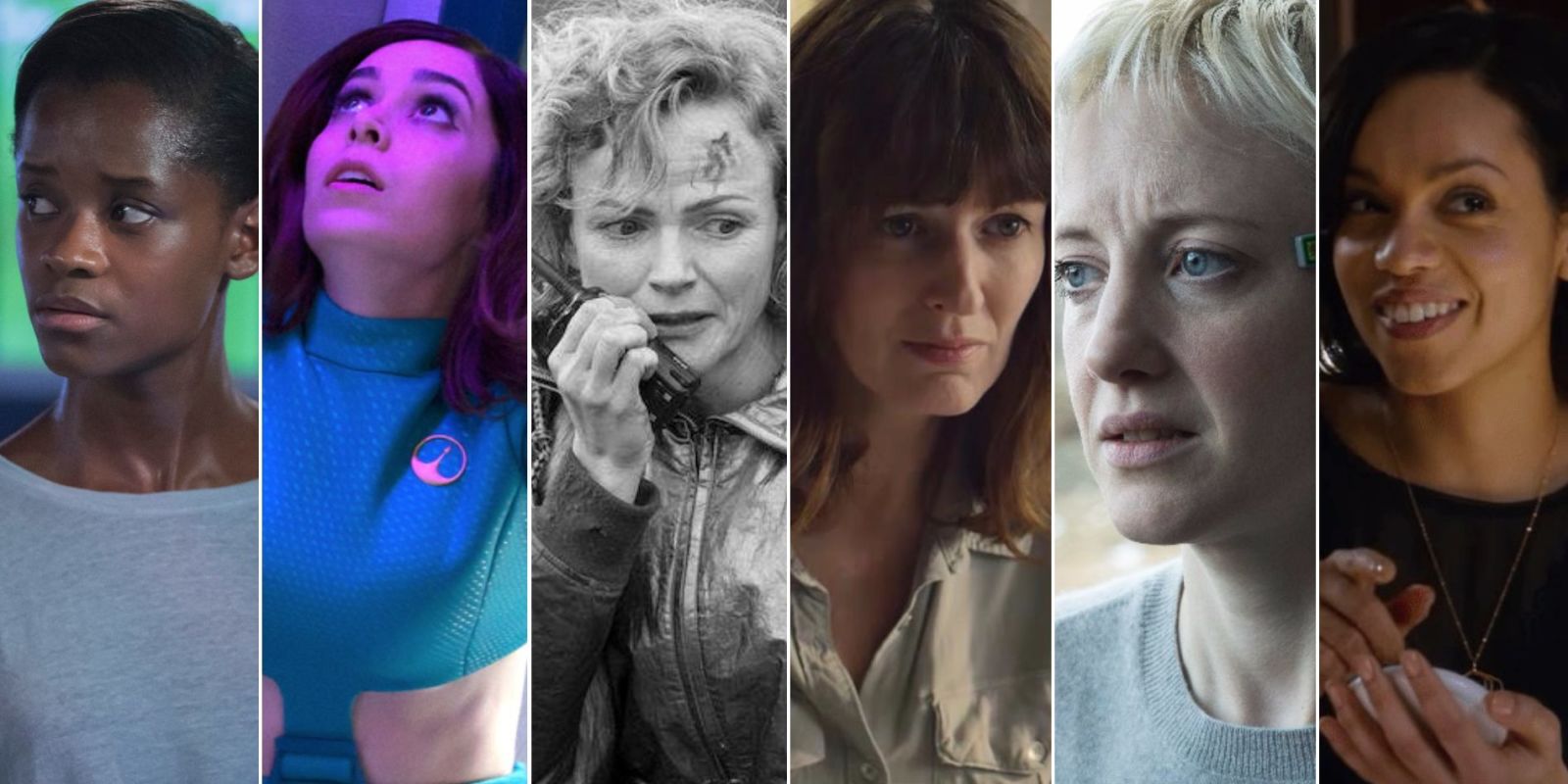
Cast: Jesse Plemons, Cristin Milioti, Jimmi Simpson, Michaela Coel, Billy Magnussen, Rosemarie DeWitt, Brenna Harding, Andrea Riseborough, Kiran Sonia Sawar, Andrew Gower, Georgina Campbell, Joe Cole, Maxine Peake, Douglas Hodge, Letitia Wright etc.
Technology: the final frontier; allowing humans to boldly go where no human has gone before. Indeed, one of the most incredible elements of our world is the technological breakthroughs we have made over the past century or so. We have: electricity, nuclear power, robots, driverless vehicles, television screens, computers, mobile phones, satellites, GPS tracking, drones, 3D printing, smart home air-conditioning, Hadron Colliders, huge space-ships which travel beyond the stars, WI-FI, the world-wide-web connecting everyone with anyone, holograms, the social media phenomenon, virtual reality head-sets, software algorithms, x-rays, gamma knifes, DNA, cloning, MRI scans, Hyperloop tube trains, Sat-Nav, Google, immersive video-games; plus many more medical, military and industrial inventions which make our lives so easy today.
But with such wonderful and fantastic discoveries there is always a dark side. While we may create a medical breakthrough which cures on the one hand we’ll ultimately invent some new weapon or means with which to kill ourselves. So while technology is mainstay of our existence it also can feed our obsessions and thus become an extension of our poor choices, violence and insanity. The scariest thing is we think technology is absolutely necessary and we cannot live without it. I mean, all we really need to survive is water, air, food, shelter and perhaps, as The Beatles sang, love. For all its’ positives, technology is an addiction and can be used to do wrong and cause harm.
Charlie Brooker’s sublime anthology series Black Mirror is now in its 4th Season (2nd on Netflix). It taps into the fear factor technology brings and presents nightmare scenarios that more often than not possess a prescient twist. Who can forget the very first episode of BM which had Rory Kinnear’s Prime Minister having to fuck a pig as a means to pay a hostage ransom? The subsequent tabloid news that our then former Prime Minister David Cameron had, allegedly, stuck his member in a pig’s mouth suddenly made BM incredibly prophetic. This season is another televisual triumph with an incredible array of acting, directing and production talent with each episode offering the feel and scope of a cinema release. I’ll be honest being a massive Charlie Brooker fan I would probably enjoy a video of him dancing in a tutu whilst juggling tomatoes; however, I can confirm these six episodes were beyond brilliant too.
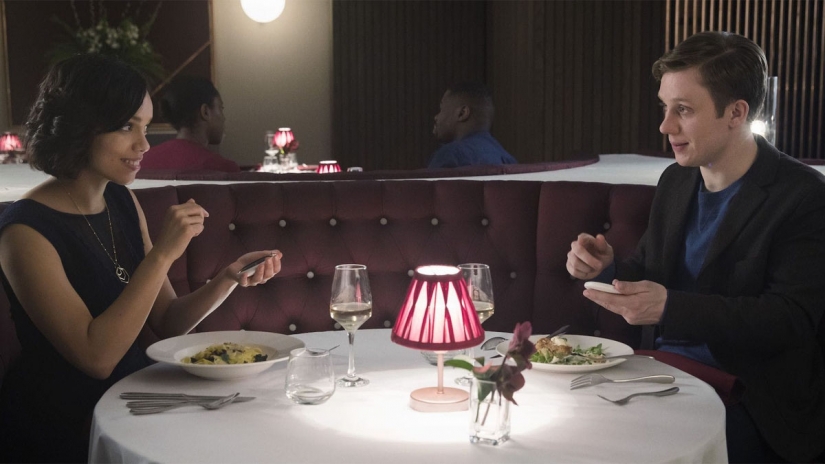
Within the fabric of each episode Brooker holds a mirror up to the future and invariably it will come back black. However, the touching love story of San Junipero (from Season 3) offered some light in the BM universe and similarly Hang the DJ (officially 3rd in the Season 4 list) contained a wonderful love story at its’ heart with Georgina Campbell and Joe Cole giving humorous and touching performances. It also contains a Truman Show (1998) style ending and a twist that I thought was absolutely fantastic. Indeed, what appears to reflect the dystopic controlling techno-world of romance apps becomes something entirely real and beautiful by the end.
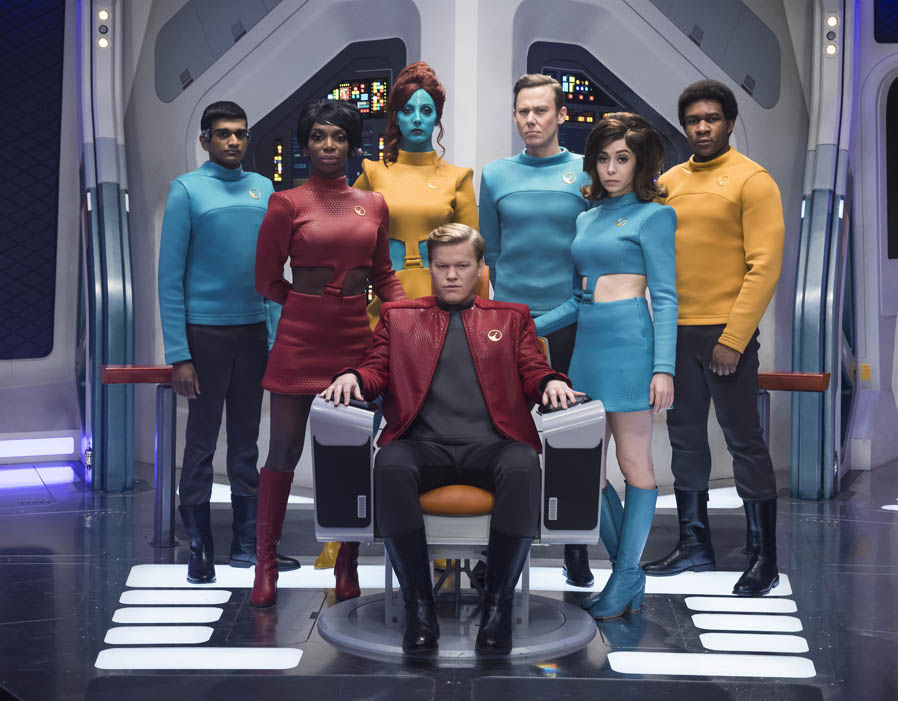
While Hang the DJ offers hope, the remainder of the episodes are bittersweet, brutal and unforgiving in their rendering. Actually, I suppose the Star Trek pastiche USS Callister has a kind of optimistic ending and is bloody funny in its affectionate satire of Trek archetypes and monsters. However, Jesse Plemons downtrodden Silicon Valley programmer holds a dark secret during his immersive Virtual Reality gaming experiences. Full of Star Trek references and themes, the clever script merges ideas relating to gaming and DNA technology with fantastic sci-fi meta-textual moments.
Arkangel also has an element of brain implanted software which enables a neurotic mother (Rosemarie DeWitt) to track and view her daughter’s every move on a computer screen. Despite the revolutionary software used this story is based wholly in familial reality as the relationship between mother and daughter becomes strained as she enters her rebellious teenage years. The danger of “helicopter” or overbearing parenting becomes too apparent in satisfying soap operatic story.
Brooker relates many of his scripts in genre territory so the more outlandish or fantastic ideas are grounded with an identifiable cultural identity. The horrific murder plot of Crocodile unfolds in true Hitchockian fashion as an insurance adjuster tracks down the details relating to a vehicle accident but tragically stumbles on something altogether more deadly. The ending of this story is particularly far-fetched, as Andrea Riseborough’s architect gets deeper and deeper in the mire, however, Brooker must be praised for taking risks with his twists.
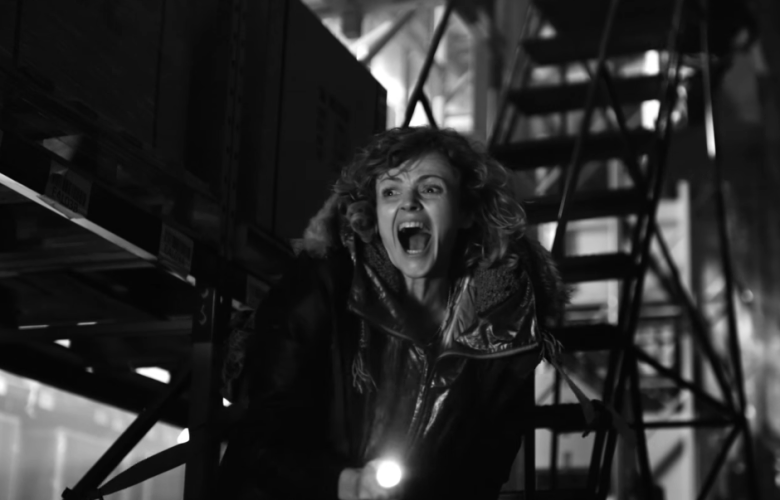
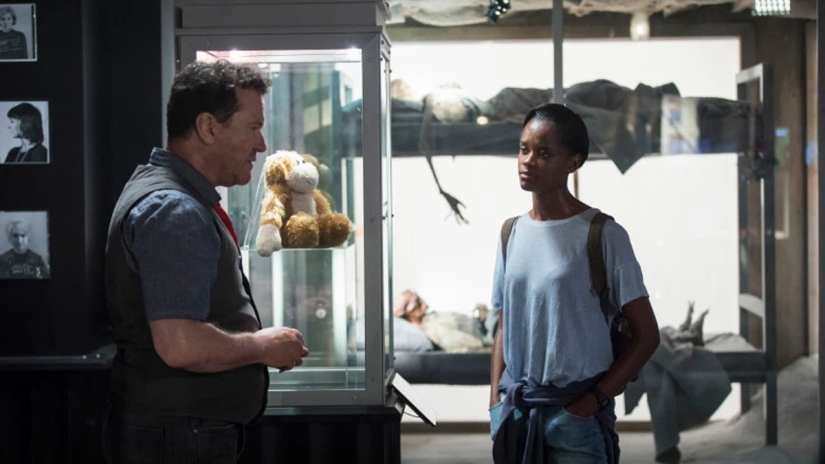
Rather simpler is the pursuit thriller Metalhead, presented in crisp black and white, as a woman (the brilliant Maxine Peake) attempts to survive in a dangerous land full of robotic guard-dogs. It’s mainly a tense one-hander and the future never looked so drained of hope and colour. The final episode Black Museum was even more grisly as Douglas Hodge shows Letitia Wright’s tourist around his grim parade of exhibits. Brooker’s writing is as strong as ever and the horrors of the entwining anthology stories are shocking and powerful. It’s a dark, dark episode which contains the fantastic idea of uploading one’s digital soul into a loved one’s to share their consciousness. This plays out with both horror and humour in a compelling end to the season.
Being a total Charlie Brooker and Black Mirror fan; a big lover anthology stories; plus a fanatic of horror and tales with a twist it’s obvious to say I loved this seasons offerings. They are clever, dark, funny, sickening, silly, romantic, scary, twisted stories full of satire and warnings about the dangers of technological progress. Ultimately, though it is not science or computers or mechanics which are the danger; but rather humans use and abuse of said technology. Because, for all our ingenuity and invention we more often than not use machines negatively and Black Mirror reflects that (im)perfectly.





 The Cinema Fix presents