Tag Archives: CONFLICT

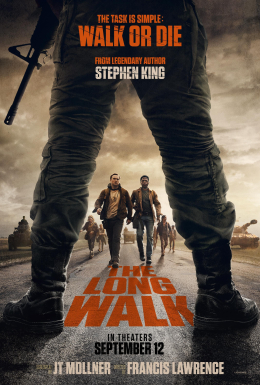
Cinema Review: The Long Walk (2025) – a compelling adaptation of Stephen King’s anti-war allegory!

Cinema Review: The Long Walk (2025)

Directed by Francis Lawrence

Screenplay by JT Mollner

Based on The Long Walk by Stephen King

Produced by Roy Lee, Steven Schneider, Francis Lawrence, Cameron MacConomy

Main Cast: Cooper Hoffman, David Jonsson, Garrett Wareing, Tut Nyuot, Charlie Plummer, Ben Wang, Roman Griffin Davis, Joshua Odjick, Judy Greer, Mark Hamill etc.

Cinematography by Jo Willems

*** MAY CONTAIN SPOILERS ***


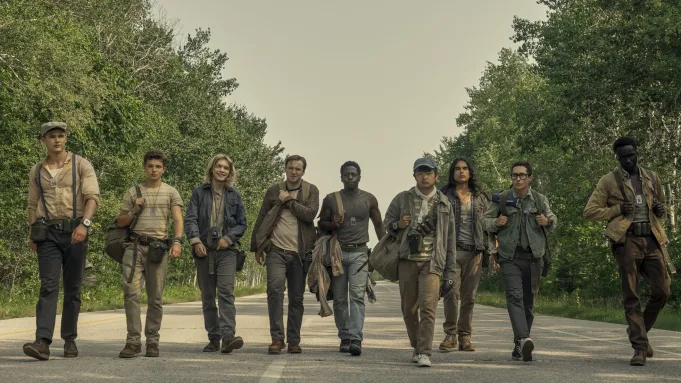
This compelling and moving anti-war film was adapted from the Stephen King novel, The Long Walk (1979), originally published under his pseudonym, Richard Bachman. The story is set in a dystopian alternative version of the United States ruled by a totalitarian regime; a new military-driven world order. The plot follows the fifty young male contestants of a gruelling annual walking contest, who must follow a set of rules or face the grim consequences. Ultimately, most of their fates are doomed as only the last boy standing gains the prize.

As an aside, I often wondered why King published under a pseudonym and after a quick net search I found that the author was limited to publishing one book per year, since publishing more would be “unacceptable” to the public. King therefore wanted to write under another name in order to increase his publication without saturating the market for the King “brand”. So, there you go. But what of The Long Walk (2025)? How does it compare to the plethora of other King film adaptations?


Grim, unrelenting, and devastatingly poignant, The Long Walk (2025) transforms a brutal endurance contest into an unmistakable anti-war allegory. Fifty young men, each plucked from a different state, march forward under the banner of national pride and promised glory — but what unfolds is the slow annihilation of their bodies and spirits. The premise, simple on the surface, becomes a searing critique of how nations sacrifice youth for power, money, and hollow ideals.

The film thrives on the camaraderie and conflict between the boys: fleeting alliances form, bitter rivalries crack open, and in moments of exhaustion or terror, we glimpse the fragile humanity beneath their forced bravado. Echoes of The Hunger Games franchise, also directed by Francis Lawrence, are impossible to miss. However, this story clearly influenced The Hunger Games and other examples of survivalist literature. Yet, The Long Walk (2025) is way more rawer, more intimate, and ultimately more scathing in its indictment of systemic cruelty.

Among the excellent ensemble cast, Cooper Hoffman as Ray and David Jonsson as Peter emerge with standout performances. Their characters, drawn together in unlikely connection, add emotional depth to the carnage, grounding the relentless attrition in genuine feeling. As their bond develops, the horror of the “Walk” feels sharper, the futility more unbearable. Overall, aside from slight repetition of action and an ending I’d have preferred to have gone a different way, The Long Walk (2025) carries hypnotic and bloody power. It is both a war story without a battlefield and a coming-of-age tale without the promise of adulthood — a haunting testament to how societies can destroy their own sons in pursuit of an impossible prize.

Mark: 8.5 out of 11


Netflix Film Review: The Piano Lesson (2024) – ghosts of the past and present haunt the screen with resounding power!

Netflix Film Review: The Piano Lesson (2024)

Directed by Malcolm Washington

Screenplay by Virgil Williams & Malcolm Washington

Based on The Piano Lesson by August Wilson

Produced by Denzel Washington & Todd Black

Main cast: John David Washington, Danielle Deadwyler, Samuel L. Jackson, Ray Fisher, Michael Potts, Erykah Badu, Skylar Aleece Smith,
Corey Hawkins, and more.


Cinematography by Mike Gioulakis


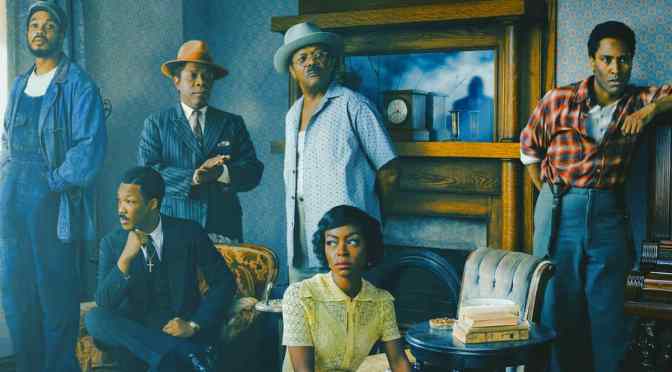
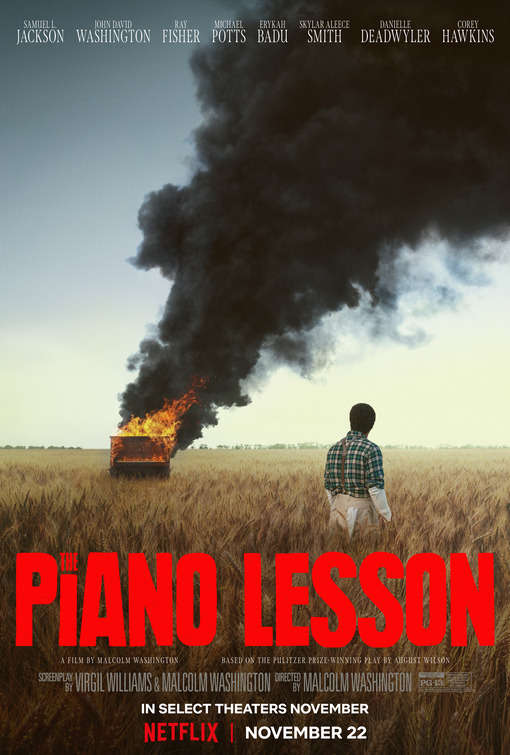
Malcolm Washington’s directorial debut, The Piano Lesson (2024), is a poignant and evocative adaptation of August Wilson’s 1987 play, set in 1936 Pittsburgh. Through a compelling narrative and an exceptional cast, Washington explores themes of heritage, familial conflict, and the enduring impact of racial oppression.

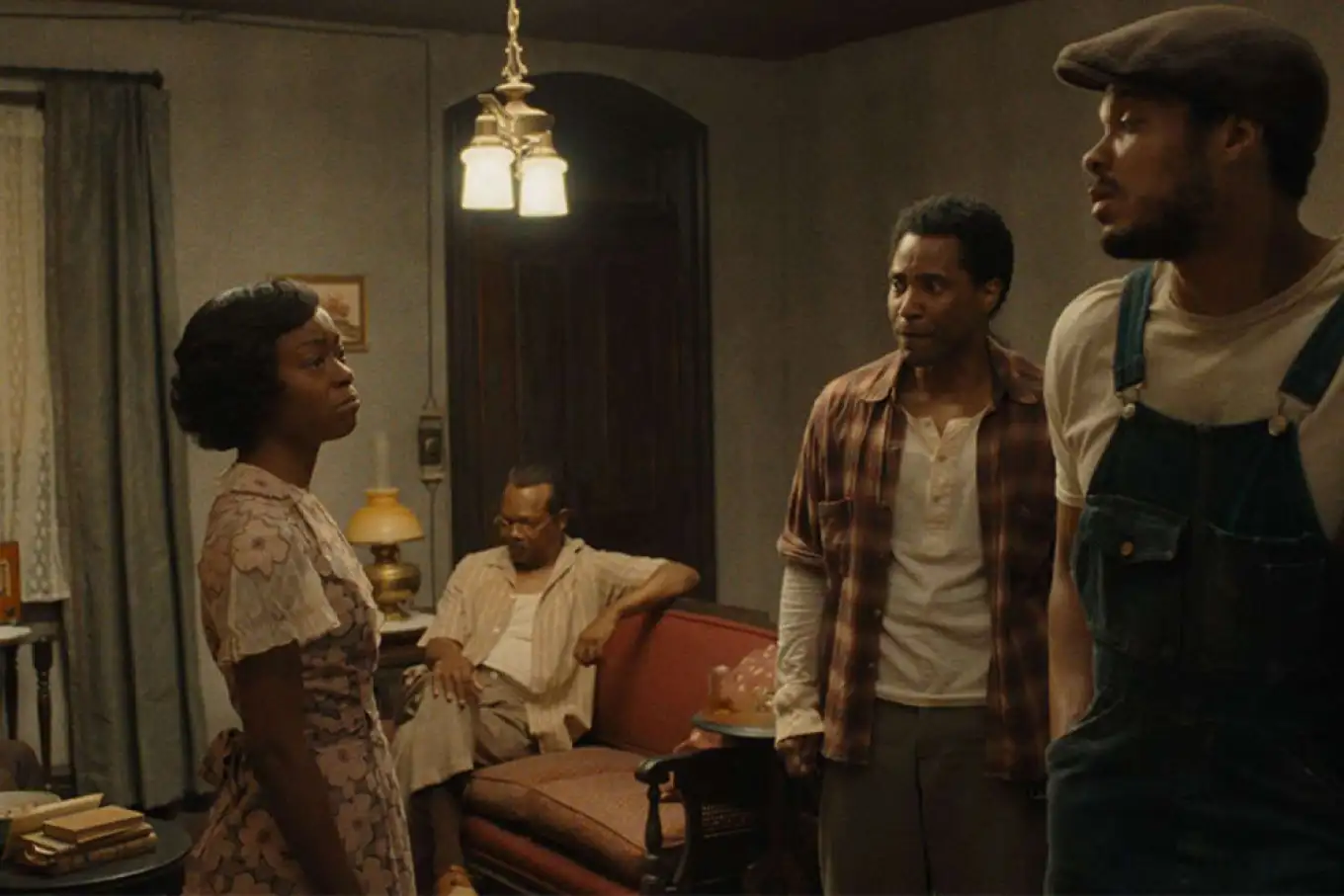
Washington, alongside co-writer Virgil Williams, expands the original stage play’s confines by incorporating flashbacks and supernatural elements, enriching the narrative’s depth and scope. The film centers on the Charles family, particularly siblings Boy Willie (John David Washington) and Berniece (Danielle Deadwyler), who are at odds over the fate of a family heirloom piano. Boy Willie wishes to sell the piano to purchase land that once belonged to their ancestors, while Berniece views the instrument as a sacred connection to their past.

The piano, intricately carved with images of the Charles family’s ancestors, serves as a powerful symbol of their history and resilience. For Boy Willie, it represents a means to break free from the shackles of the past and build a future of self-sufficiency. Conversely, Berniece sees it as a testament to their survival and a link to the sacrifices made by their forebears. This dichotomy underscores the central conflict: the tension between honoring tradition and pursuing progress


The film delves into the complexities of familial bonds and the differing perceptions of heritage. Boy Willie’s desire to sell the piano reflects a yearning to move beyond the constraints of history, while Berniece’s attachment signifies a commitment to preserving their lineage. At the same time she mourns the loss of her husband and combats romantic offers from local suitors. Her struggles truly power the piece and the familial clashes further embody the broader struggle within African American communities: reconciling the weight of history with the aspirations for advancement. The supernatural elements, particularly the haunting presence of the plantation owner, Sutter’s ghost, are delivered effectively. They also amplify the narrative’s exploration of unresolved trauma and the need for reconciliation.

The ensemble cast delivers standout performances, with John David Washington portraying Boy Willie’s fiery ambition and Danielle Deadwyler capturing Berniece’s steadfast resolve. How Deadwyler did not even get an Oscar nomination for Best Actress in a Supporting Role is beyond me. Moreover, Samuel L. Jackson offers a subtle, unselfish and grounded portrayal of Doaker, the family patriarch. Washington’s direction ensures a respectful adaptation, balancing the play’s rich and passionate dialogue with cinematic elements that enhance its emotional resonance.

Overall, Malcolm Washington’s The Piano Lesson is a resounding adaptation that honours August Wilson’s legacy while providing a fresh perspective on timeless themes. Through its rich symbolism, compelling performances, and thoughtful direction, the film invites audiences to reflect on the complexities of heritage, the burdens of history, and the paths toward healing and progress.

Mark: 8.5 out of 11


Amazon Prime Film Review: Kneecap (2024) – Irish rap rebels substitute words-for-bombs in riotous youth-in-revolt triumph!

Amazon Prime Film Review: Kneecap (2024)

Directed by Rich Peppiatt

Screenplay by Rich Peppiatt

Story by Rich Peppiatt, Liam Óg Ó hAnnaidh, Naoise Ó Cairealláin, JJ Ó Dochartaigh

Produced by Jack Tarling and Trevor Birney

Main cast: Naoise Ó Cairealláin, Liam Óg Ó hAnnaidh, JJ Ó Dochartaigh, Josie Walker, Fionnuala Flaherty, Jessica Reynolds, Adam Best, Simone Kirby, Michael Fassbender, etc.

Cinematography by Ryan Kernaghan

*** MAY CONTAIN SPOILERS ***


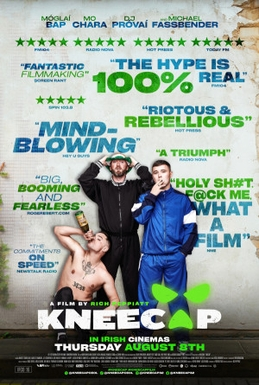
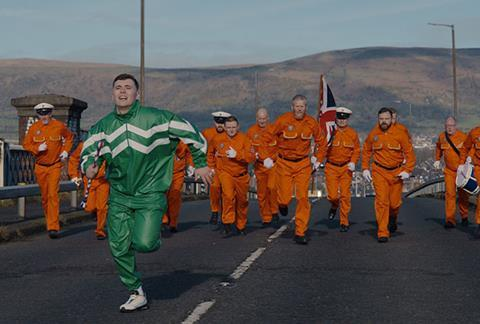
The 2024 film Kneecap is a riotous, politically charged portrait of youth in revolt, channeling the raw energy of punk and hip-hop into a uniquely Irish-language rebellion. Starring the real-life Belfast rap trio—Mo Chara, Móglaí Bap, and DJ Próvaí—as fictionalized versions of themselves, the film blends anarchic humour, biting satire, rites of passage, and cultural defiance to tell the story of how a group of working-class misfits wove their frustrations into musical gold.

Set in post-Troubles West Belfast, the film captures the lingering scars of British occupation and the generational trauma it left behind. Liam (Mo Chara) and Naoise (Móglaí Bap) are introduced as small-time drug dealers navigating poverty, police harassment, and fractured families. Their lives take a turn when JJ Ó Dochartaigh, a disillusioned Irish-language teacher, discovers their lyrical talents and joins them as DJ Próvaí. Together, they form the eponymous group, an Irish-language rap group that weaponizes music as a form of cultural resistance.

The film is unapologetically rebellious, using the Irish language not just as a means of communication but as a symbol of defiance. Arlo (Michael Fassbender), Naoise’s father and a former republican paramilitary, encapsulates this sentiment when he declares, “Every word of Irish spoken is a bullet fired for Irish freedom” . This philosophy permeates the group’s music, which tackles issues like British colonialism, drug culture, and the complexities of identity in a divided society.


Kneecap (2024), while a bold and electric celebration of youth rebellion arguably overstretches itself emotionally by attempting to cover too many themes at once. In its ambition to be both a political statement and a coming-of-age tale, a musical odyssey and a generational cry for recognition, the film occasionally dilutes its emotional impact. As the film juggles a multitude of weighty themes: the trauma of post-Troubles Northern Ireland, the fight for Irish-language preservation, the drug culture plaguing working-class communities, the fractured nature of family life, absent fathers and mothers, and the burden of political legacy. Add to this the rise of a rap group in an unexpected cultural context, and the film becomes a whirlwind of ideas competing for attention. The result is a film that sometimes feels like it’s racing to say everything at once, rather than letting its most resonant emotional threads breathe.

Nonetheless, director and co-writer, Rich Peppiatt, displays strong visual flair evoking the urban vibrancy of Trainspotting (1996) and underdog musical joy of The Commitments (1991). It helps that the film is often fucking hilarious. Plus, I realise it’s a raw reflection of their life choices, I could take or leave the perpetual scenes of gratuitous drug-taking. At the same time, the film doesn’t shy away from the gritty realities of its setting. It portrays the trio’s clashes with radical republican groups, their run-ins with the police, and the family and romantic struggles that come with their newfound fame.

Amidst the chaos, Kneecap (2024) maintains a sense of humour and humanity, offering a nuanced look at the power of art to challenge the status quo and inspire change. In essence, Kneecap is a ballsy and risk-taking celebration of rebellion, a testament to the enduring power of language and music as tools of resistance, and a vivid portrayal of youth challenging the remnants of a colonial past and a country attempting to find peace and identity after centuries of conflict.

Mark: 8.5 out of 11


CINEMA REVIEW: CIVIL WAR (2024)

CINEMA REVIEW: CIVIL WAR (2024)

Directed by Alex Garland

Written by Alex Garland

Produced by Andrew Macdonald, Allon Reich, Gregory Goodman

Main Cast: Kirsten Dunst, Wagner Moura, Cailee Spaeny, Stephen McKinley Henderson, Sonoya Mizuno, Nick Offerman, etc.

Cinematography by Rob Hardy

*** MAY CONTAIN SPOILERS ***


Alex Garland has an impressive literary, cinema and televisual curriculum vitae. He gained acclaim as the writer of the novel, The Beach, before moving onto screenwriting duties with fine films such as: 28 Days Later (2002), Sunshine (2007), Never Let Me Go (2010), and under-rated Dredd (2012). He made his directorial debut with Ex Machina (2014), which earned him an Academy Award nomination for Best Original Screenplay. His second film, Annihilation (2018), garnered further acclaim, so much so, FX bypassed a pilot and went straight to series for his science fiction TV narrative, Devs (2020).

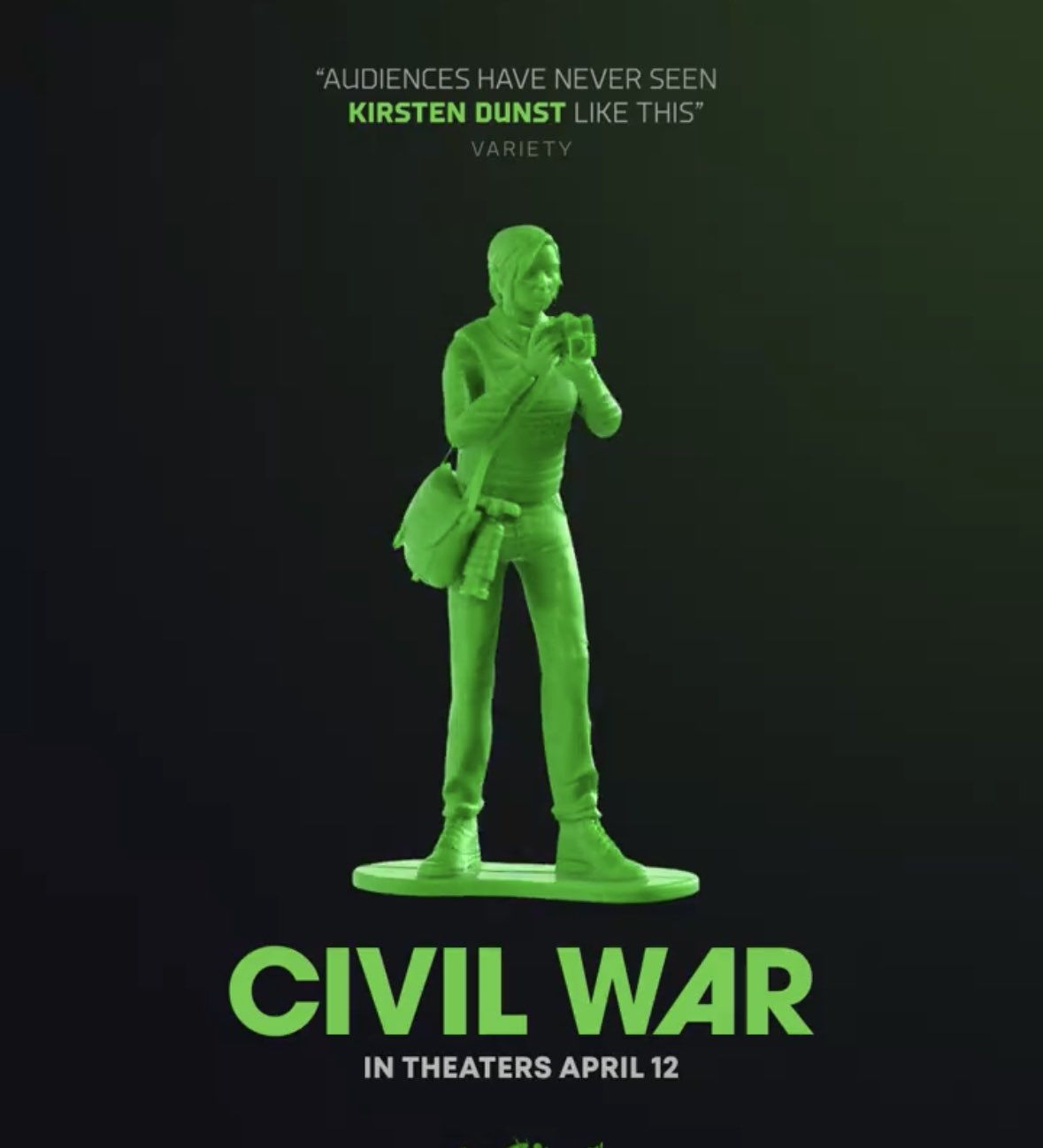
While I am a massive fan of Garland’s work, I wasn’t too enamoured of Annihilation (2018). I found it brilliantly made with some fantastic concepts and incredible moments, yet overall it was too slowly paced. With eight superlative episodes of Devs (2020), Garland delivered a story which really connected with me by merging a compelling technological espionage plot to an intelligent exploration of philosophical thought and human behaviour. Where Devs (2020) presciently examined the impact of artificial intelligence, Garland’s new political thriller, Civil War (2024), prophetically imagines an apocalyptic America in the throes of war between combined California and Texas state rebel forces and the current President’s (Nick Offerman) retreating army.

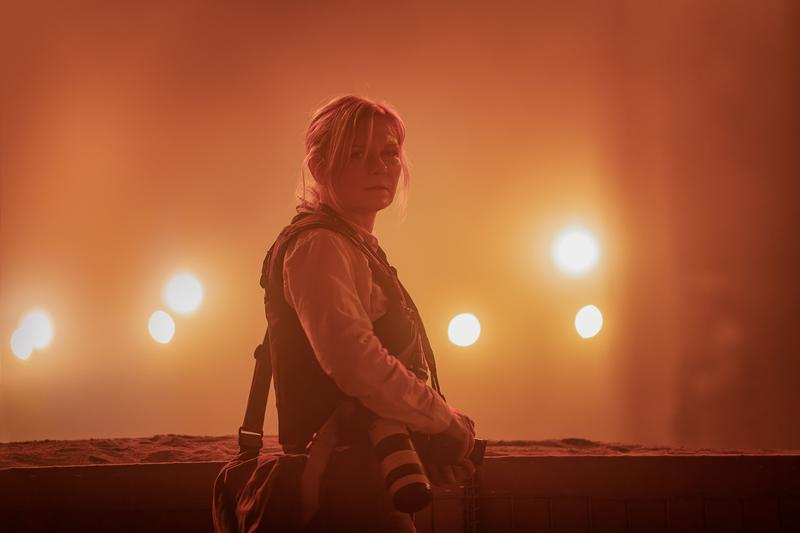
With the ‘January 6 United States Capitol attack’ in mind, Garland opens up a “what if” narrative where the whole of America is conflicted and consuming itself from within. At the heart of the violence is the war photographer, represented by Lee Smith (Kirsten Dunst) and Reuters journalist, Joel (Wagner Moura). Their journey to Washington to photograph the President reveals confusion, destruction and further bloodshed. Generically speaking, a road movie meets dystopian thriller, Civil War (2024) contains thought-provoking themes and incredible cinematography, but with shaky writing in places.


Films about war photographers and/or journalists can be problematic for me. Such characters lend themselves to heroic and the anti-heroic. The writing has to be right because I can lose empathy between such crusading journos and the narcissistic adrenaline junkies looking to deflect their own loathing and self-destructive tendencies. Civil War (2024) struggled to get me onside with the lead characters, although Dunst’s characterisation of Lee Smith is superb. However, her mentor-apprentice relationship with Cailee Spaeny, Jessie Cullen, was under-developed. Spaeny’s “innocent” being used more as a suspense device as opposed to learning the true horrors of humanity and war. Perhaps Garland intended for her to be a sociopath without depth just looking for blood? She finds it!

Moreover, Jessie’s journey from a political perspective was weak as there was no real sense of development in her character. That’s where the decision not to overtly take political sides causes a lack of sociological depth. War films such as Salvador (1986) and The Killing Fields (1984) are more successful as Civil War (2024) loses political impact by not choosing precise sides. But I guess whether they are Democratic or Republican is the whole point. Garland is saying that political parties are all as bad as each other, with human beings their own worst enemy. Politics, like football, gender, sexuality, and religion, are propellants for humans to fight each other.

For a film about photographers, the images on show are incredible and Rob Hardy’s work is genius. Fire, blood and war have never looked so brutal and aesthetically impressive. As well as Dunst, Wagner Moura and Stephen McKinlay Henderson are terrific in their respective roles. Further, there are some nail-biting and suspenseful scenes, notably one involving a film-stealing performance from Jesse Plemons. However, many of the characters’ decisions were weakly written for me. This is surprising given Garland’s prodigious literary and screenwriting talent. Civil War (2024), however, remains another stunning addition to his oeuvre and for all my perceived script weaknesses, the hell of war has never been so artistic and artful.

Mark: 8 out of 11


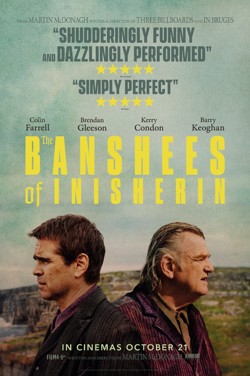
CINEMA REVIEW: THE BANSHEES OF INISHERIN (2022)

CINEMA REVIEW: THE BANSHEES OF INISHERIN (2022)

Written and Directed by Martin McDonagh

Produced by: Graham Broadbent, Peter Czernin & Martin McDonagh

Main Cast: Colin Farrell, Brendan Gleeson, Kerry Condon, Barry Keoghan, etc.

Cinematography: Ben Davis

Edited by: Mikkel E. G. Nielsen

Music by: Carter Burwell

*** MAY CONTAIN SPOILERS ***


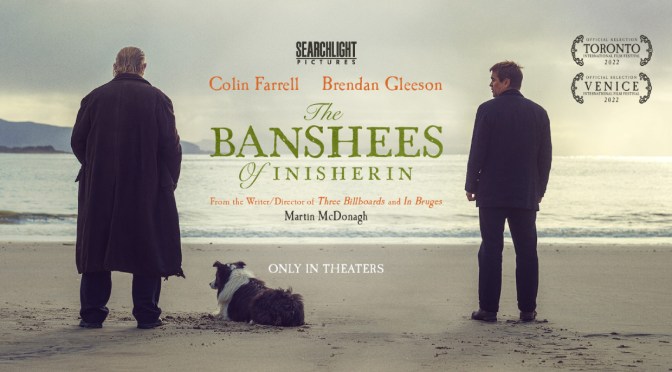
The Banshees of Inisherin (2022) is Martin McDonagh’s latest cinematic masterpiece. Not only is it one of the best films of the year he has, as with Three Billboards Outside Ebbing, Missouri (2017), constructed one of the most formidable screenplays of many a year. As a playwright McDonagh has won many awards for his works. His debut film, In Bruges (2008), was a deceptively simple story of two hitmen on the run which, with rich thematic power, became a darkly hilarious existential cult classic. His follow-up Seven Psychopaths (2012), a heady mix of criminals versus writers in a meta-fictional Hollywood-based narrative was brilliantly written and acted, if slightly lacking thematic clarity. Like Three Billboards Outside Ebbing, Missouri (2017), The Banshees of Inisherin (2022) is a highly emotional human drama which contains intelligent allegory, incredible characterization, and cracking dialogue.

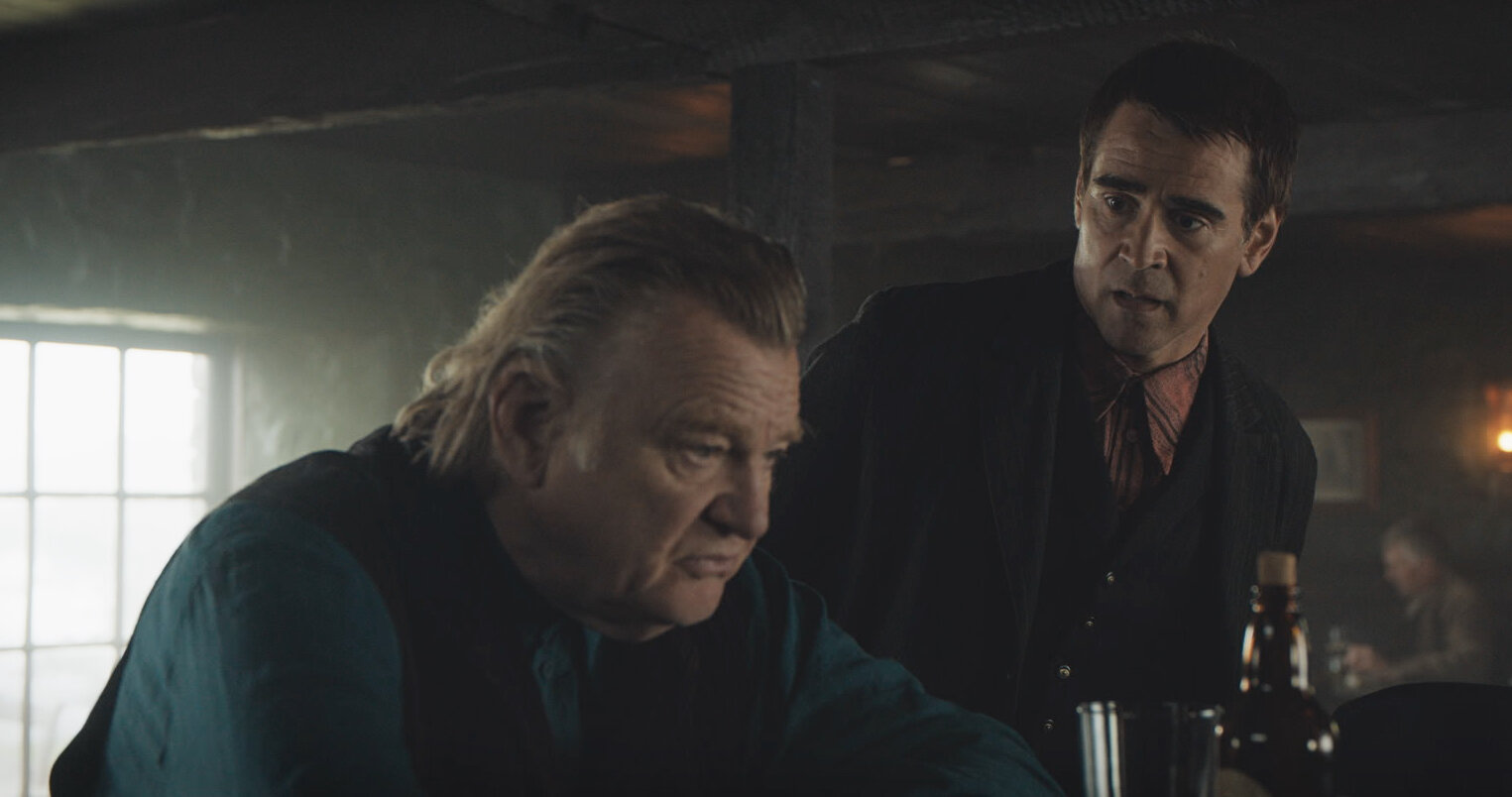
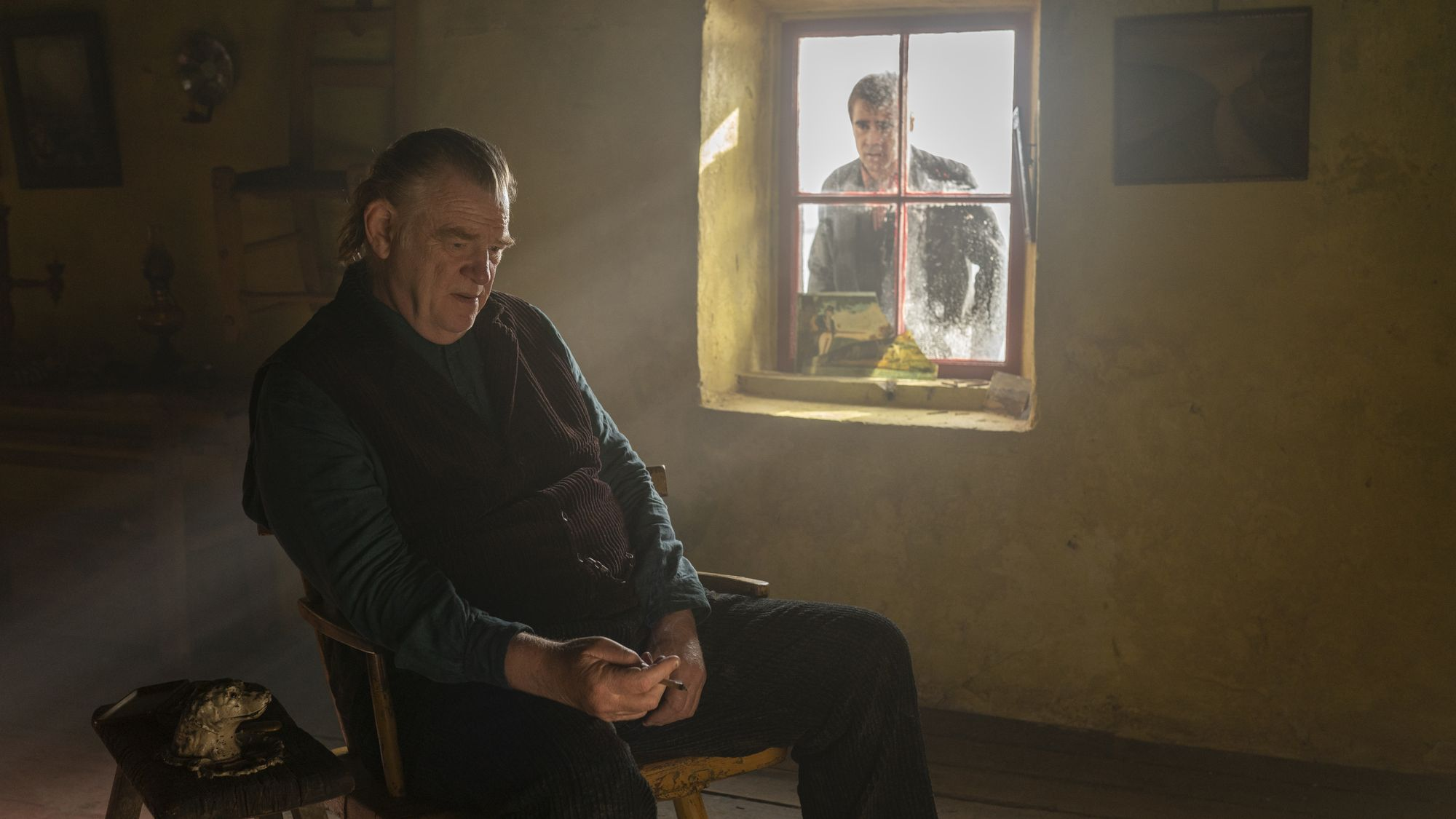
Set in 1923 on an island off of Southern Ireland called aptly Inisherin, the film opens by focussing on genial everyman farmer, Pádraic Súilleabháin (Colin Farrell) and his daily routine. After tending to his animals, he usually calls for his friend, Colm Doherty (Brendan Gleeson) to go to the island pub, the J.J. Devine or Jonjo’s. In England there is an idiom called, “sending someone to Coventry.” This means to ignore or ostracize an individual or individuals. So, basically Colm chooses to do this to his long-standing friend, Pádraic. This shunning completely bemuses Pádraic and despite Colm’s pleading for Pádraic to respect his wishes, he continually seeks an answer to his former friend’s decision.


After this intriguing premise is established, what follows is a tremendously original, darkly funny and emotionally penetrating succession of scenes. The exchanges between the two characters begins as bickering but then descends into some seriously disturbing acts of recrimination. Attempting to make them see sense are various eccentric characters on the island who provide many witty and absurd exchanges that McDonagh specialises in. Further, Pádraic’s sister Siobhán (Kerry Condon) is almost the one voice of reason as the feud escalates. As she tries to diffuse the conflict, even Barry Keoghan’s young idiot, Dominic Kearney, the initial comic relief in the film, attempts to make these two men see sense.

Visually, The Banshees of Inisherin (2022), is incredibly rich. The territory displays gorgeously photographed shots of the rocks, the sea, the stone roads and the lush green countryside. But while there is a sense of expanse and freedom initially, the feeling of isolation pervades. As the story continues the characters feel more and more segregated by the sea and their own or other’s decisions. None more so than Farrell’s Pádraic. A simple man who just wants to do his work and get drunk with his friend, he finds he is sequestered by Colm’s desire to self-isolate and concentrate on his music. Here, Farrell and Gleeson give tremendous character work. Farrell especially has rarely been better as Pádraic’s attitude turns initially from shock to bitterness over the journey of the narrative.


A film director’s job is for me about making key creative choices. Martin McDonagh makes brilliant choices while working from his own exceptional script. I loved everything about The Banshees of Inisherin (2022). The look, the performances, the pacing, the locations and Carter Burwell’s phenomenal score are absolutely first class. I haven’t even mentioned Barry Keoghan’s memorable supporting turn. He surely is one of the most naturally gifted actors of his generation. Not to forget other striking characters in the ensemble such as the creepy, Mrs McCormick (Sheila Flitton), an old harridan who acts as a portent for death on the island.

Martin McDonagh expertly combines a superb ear for dialogue, a psychologically absorbing analysis of the human condition with elements from Waiting For Godot and Channel Four situation comedy, Father Ted. Above all else, The Banshees of Inisherin (2022) is a darkly, spectacular cinematic experience which works on many levels. On one level it is about the isolation of island life and its inhabitants. On another it’s about the death of a friendship. While on yet another level it is about the analogous absurdity of civil war and how conflict can start for the merest of reasons. While the best cinema is certainly about showing and not telling, McDonagh proves again that dialogue-driven films can produce cinematic theatre, comedy and tragedy of the highest order.

Mark: 10 out of 11


AMAZON FILM REVIEW: BEING THE RICARDOS (2021)

AMAZON FILM REVIEW: BEING THE RICARDOS (2021)

Directed and written by: Aaron Sorkin

Produced by: Todd Black, Jason Blumenthal, Steve Tisch

Cast: Nicole Kidman, Javier Bardem, J. K. Simmons, Nina Arianda, Tony Hale, Alia Shawkat, Jake Lacy, Clark Gregg, etc.

Cinematography: Jeff Cronenweth

*** MAY CONTAIN SPOILERS ***


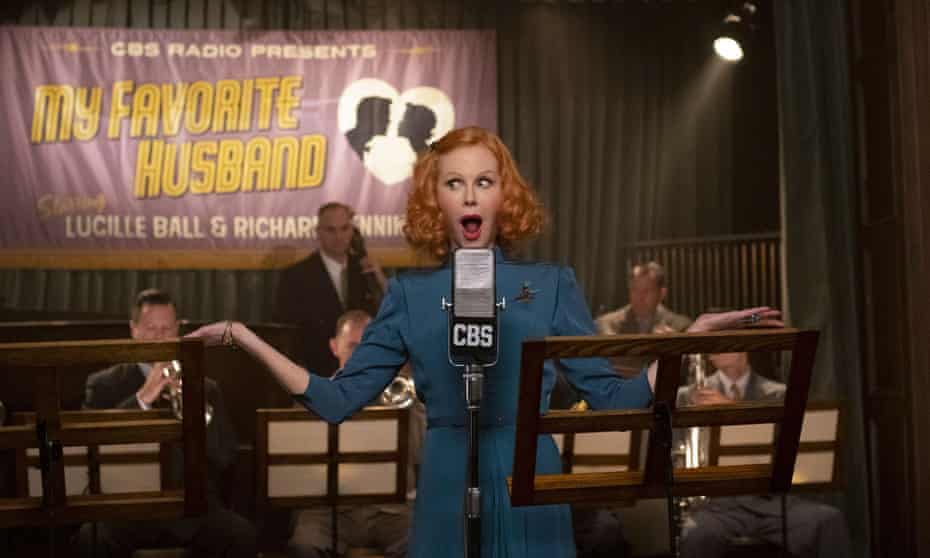
Lucille Ball and Desi Arnaz were entertainment, musical and business pioneers during the classic Hollywood television period. Lucille Ball alone was nominated for 13 Primetime Emmy Awards, winning five times, and the recipient of many other accolades, before being inducted into the Television Hall of Fame. Not only did the married couple produce and star in the seminal U.S. situation comedy, I Love Lucy, but their Desilu Studios production company would be the driving force behind creating famous TV series including Star Trek and Mission: Impossible. The couple broke viewing records and barriers in regard to race, gender and business practices. While they were not of my era, I recognise both Lucille Ball and Desi Arnaz as consummate professionals, business trailblazers and iconic stars.

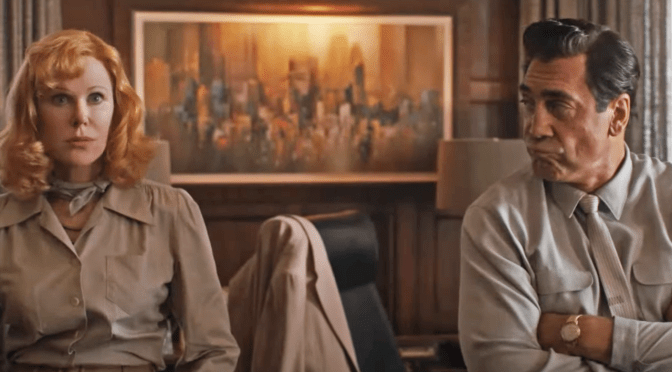
Aaron Sorkin’s Being the Ricardos (2021), adapts a week-in-the-life of Lucille Ball (Nicole Kidman) and Desi Arnaz (Javier Bardem) as they prepare, audition and perform the episode ‘Fred and Ethel Fight’ of I Love Lucy. At the same time, Lucille faces shocking revelations about her alleged Communist past. Moreover, her marriage to Desi is also tested by suspicions he has slept with other women. Interspersed around these events Sorkin flashes back to reveal how the couple met, and Lucille’s flailing film career as a dramatic actress was re-ignited by a chance switch to radio comedy. As a consummate screenwriter Sorkin hops between these time periods with great aplomb and his customary whip-cracking dialogue fires zingers throughout. The production process of the TV episode is particularly brilliant, with crafty Nina Arianda and the awesome J. K. Simmons providing superb support as Lucille and Desi’s supporting couple, William Frawley and Vivian Vance, respectively.


Being the Ricardos (2021) spins a great many plates within the running time and it is rock solid entertainment. As he did with The Trial of the Chicago Seven (2020), Aaron Sorkin arguably takes liberties with the time of events to compress and finesse the truth for the sake of dramatic and comedic effect. But that’s fine as this is not a documentary. What we get instead is an authentic production design which expertly evokes the mood, look, glamour, costumes and sounds of the era. It also explores the business, sexual and ideological politics of age with Desi and Lucille facing and pushing back at sponsor and studio demands. Those who know I Love Lucy will be overjoyed at the recreation of some memorable comedy sketches.

At the heart of the film Nicole Kidman and Javier Bardem combine formidably to breathe life into these legendary talents. Kidman is an actor who is extremely brave taking on the role of an icon. Sure, she gets paid millions of dollars, but her performance as Lucille Ball is energetic and intelligent and very funny. It could be easy to criticise her casting but Kidman does sterling work here. She gives Ball’s characterisation an effervescence, intelligence and perfectionist approach to her craft one cannot help but admire. Javier Bardem is a cinematic dream. With effortless panache he lights up the screen and just is so damned charming. Together they create fine on-screen chemistry as Sorkin’s bullet-paced dialogue is delivered superbly by the stars and terrific ensemble cast.

Ultimately, neither dramatic enough to tug the heartstrings or funny enough to be called an all-out comedy classic, Being the Ricardos (2021) remains another intelligent Aaron Sorkin rendition of real people and actual events. It’s a classy affair with a stunning cast and script, overall paying fine tribute to the genius of Lucille Ball and Desi Arnaz.

Mark: 8.5 out of 11


FILMS THAT GOT AWAY #13 – INCENDIES (2010)

FILMS THAT GOT AWAY #13 – INCENDIES (2010)

Directed by: Denis Villeneuve

Produced by: Luc Déry, Kim McCraw

Screenplay by: Denis Villeneuve, Valérie Beaugrand-Champagne

Based on: Incendies by Wajdi Mouawad

Cast: Lubna Azabal, Mélissa Désormeaux-Poulin, Maxim Gaudette, Rémy Girard, Abdelghafour Elaaziz, etc.

Music by: Grégoire Hetzel

Cinematography: André Turpin

*** MAY CONTAIN SPOILERS ***


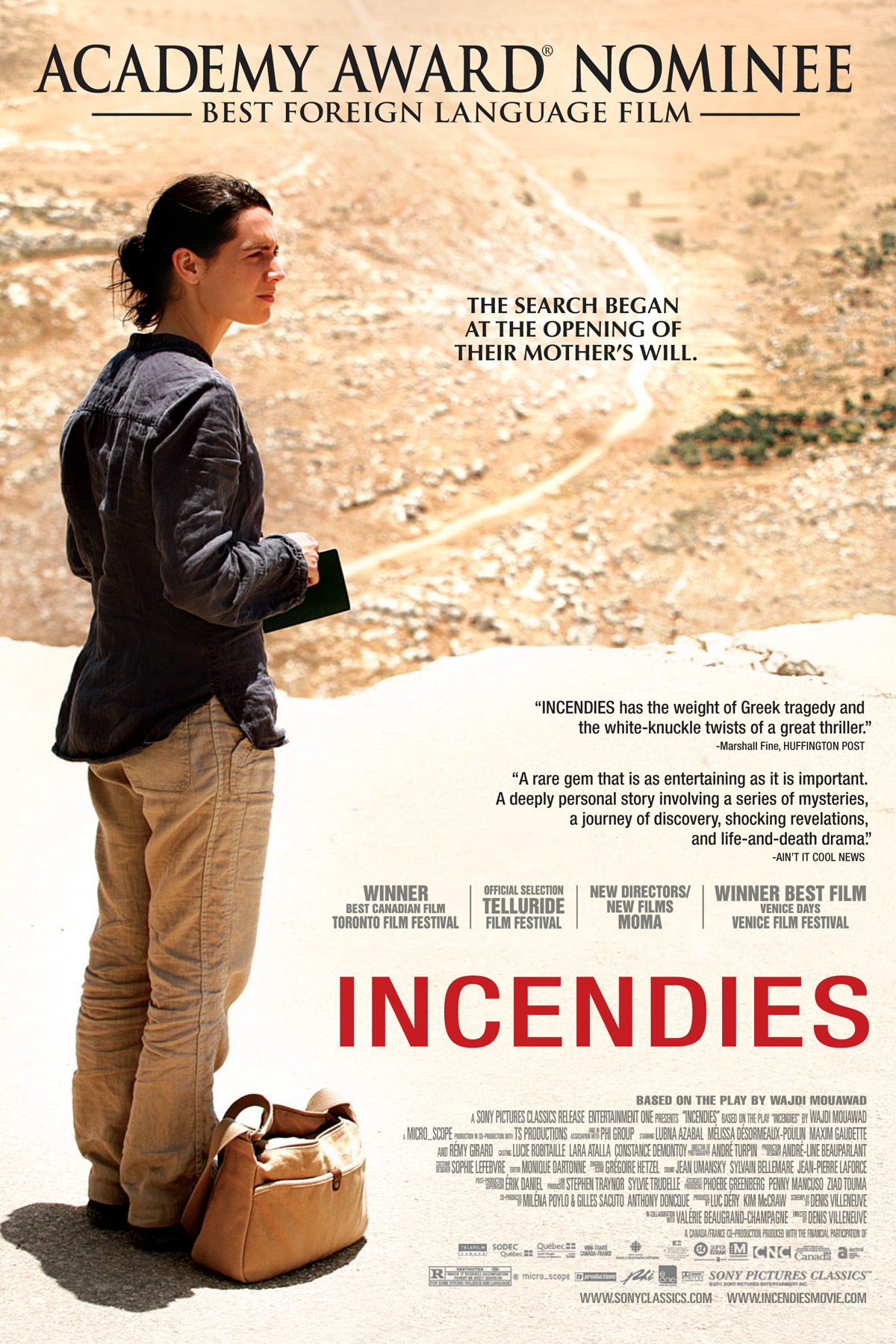
INCENDIES (2010) is the probably the best film you haven’t seen. If you have seen it then tell more people to see it. Spread the word on this incredible film. I watched Incendies (2010) for the first time a few years ago and it has stayed with me ever since. Given the lack of recent cinema releases, I felt compelled to watch it again and once more was blown away by the power of the characters and their stories. Not quite old enough to review as a classic movie, and as it stands as at No. 111 on the IMDB 250, it doesn’t qualify as an under-rated classic, I have therefore filed this contemporary classic under films that got away.

Based on a play by Wajdi Mouawad, Incendies (2010) was developed by Denis Villeneuve, who took five years developing and writing the screenplay. Villeneuve was attracted to the play because it was a modern story with Greek tragedy at its heart. It is set in both Canada and in an unnamed Middle Eastern country, with events in the narrative traversing between the these countries and different time periods. While the country where most of the action takes place is unnamed, given Mouawad is Lebanese, it is safe to say that this complex tale unfolds during the Lebanese Civil War. However, it is a masterstroke not to be specific about setting, as this ensures it is not place and politics one focusses on, but the thought-provoking human drama. And what drama it is!


Incendies tells the brutal but riveting story of Nawal (Lubna Azabal), a woman who lived through her country’s civil war.

After starting with a haunting scene from the past showing bedraggled children herded into an orphanage, the story quickly moves to the present. Twins, (Jeanne Mélissa Désormeaux-Poulin) and Simon Marwan (Maxim Gaudette) meet Jean (Remy Girard), a notary handling their deceased mother’s will. Their mother, Nawal Marwan (Lubna Azabal), has left two letters – one for the twin’s brother, and another for their father. If they can locate them and give them the letters, Nawal will allow her children to bury her with a casket and headstone. Jeanne, the calmer of the two siblings, agrees to the request. However, Simon is angry that secrets were kept and is against taking it any further.

Incendies (2010) then becomes two powerful narratives intertwined to structural perfection by Villeneuve and Valérie Beaugrand-Champagne’s exceptional screenplay. Firstly, we follow Jeanne as she travels to Daresh, in the Middle East, attempting to follow in Nawal’s footsteps. Here the film becomes a compelling detective story as Jeanne (and later in the film, Simon) slowly discovers her mother’s tragic life history before she moved to Canada. Running parallel to this the narrative flashes back to show Nawal’s life as she escapes village life to go to University, only for religious civil war to tear the fabric of the country apart. Villeneuve, who has subsequently directed many visually stunning big budget films, makes the most of the sun-scorched and battle-scarred landscapes. Moreover, he also delivers a stunning and suspenseful sequence when Nawal finds herself trapped on a bus surrounded by soldiers.

I genuinely do not want to say anymore about the plot of Incendies (2010), for fear of spoiling what is such a complex and well designed story. It drives me mad when I watch films or television shows and they gratuitously use flashbacks or fractured temporal structures to create mystery. Because what many ultimately do is confuse the audience and create emotional distance from the characters. Villeneuve directs in an intelligent way, retaining empathy and emotion for both protagonists and antagonists devoured by war. Nawal Marwan’s story is especially heart-breaking and she is given a moving portrayal by Lubna Azabal. Nawal’s story is one of astounding power as the character experiences the hell of loss, war, torture and death. Her final attempt at redemption from beyond the grave gives us a searing human drama. One which will shake you to the core for days and weeks and maybe even years!

Mark: 10 out of 11


NETFLIX FILM REVIEW: MALCOLM AND MARIE (2021)

NETFLIX FILM REVIEW: MALCOLM AND MARIE (2021)

Directed by: Sam Levinson

Produced by:  Kevin Turen, Ashley Levinson, Sam Levinson, Zendaya, John David Washington

Written by: Sam Levinson

Cast: Zendaya, John David Washington

Music by: Labrinth

Cinematography: Marcell Rév

*** MAY CONTAIN SPOILERS ***


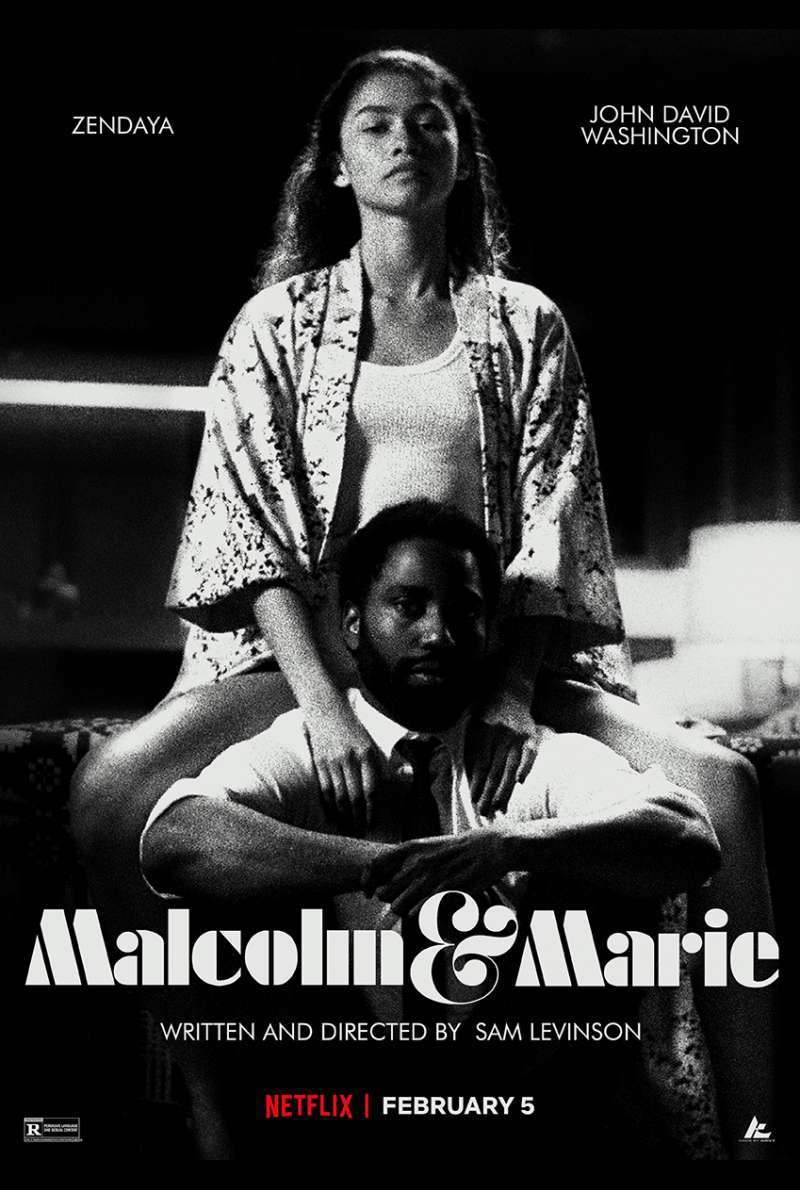
The Oscar nominations came out this week and due to the ongoing pandemic situation and consequent lockdowns, there are a number of films on the esteemed list which have yet to reach these shores, either at the cinema or via streaming platforms. Having said that, and I am aware space for nominees are limited and it has been a pretty strange year for cinema, but I was extremely surprised that Delroy Lindo did not receive an acting nomination in lead or supporting category. Similarly, I was also bewildered that Sam Levinson’s striking romantic drama, Malcolm and Marie (2021), had not received nominations in either screenplay or acting categories. Further, I was utterly shocked that critic’s reviews for the intense two-hander had been pretty mixed. Hey, it’s just opinions but I was really gripped by this highly theatrical and gorgeously cinematic two-hour argument in black-and-white. Personally, I think most of the deriders are wrong. But that’s just my view.

Maybe the film wasn’t liked because John David Washington’s, Malcolm, an up-and-coming filmmaker celebrating a successful premiere that evening, launches into a wonderfully eloquent rant about a review which he feels pigeonholes and patronises his film in purely political terms. I mean it’s actually a positive review, but who doesn’t enjoy ire toward professional critics. I mean, everyone has an opinion, or a view and the Internet has caused a mass proliferation and gaping spew of words and views and brain-thoughts in extremis. But Levinson’s script and Washington’s grandstanding acting spits that if you earn a living as a critic then you are essentially Satan! Perhaps some reviewers took umbrage with this? I loved the whole scene’s energy and Malcolm’s savage attack had me applauding throughout.


But Malcolm and Marie (2021) is more than Levinson getting back at those individuals who gave him bad reviews. It’s a sharp, funny, sexy and poignant exploration of a relationship close to breaking point. Malcolm and Marie may be different fighting weights, but they both punch hard and often. He is on a high after his film premiere success, but Marie is upset because he did not thank her during his speech. From there the conflict rises from light sparring to harsh emotional knockout blows. Both Malcolm and Marie tear at each other’s skin and flesh and figurative organs in an attempt to resolve the ever-increasing divide between them. Malcolm and Marie (2021), may not be for everyone, but any person who has been in a heated war of words with a partner or spouse, will identify with the inescapable tension on display. Levinson’s expert screenplay rides a rollercoaster journey of emotions as one moment you side with Marie and the next you’re with Malcolm. Yet, before you know it, you’re disliking both these complex, narcissistic, egotistical and infuriating humans.

Both Zendaya and John David Washington deserve so much praise for their performances in, Malcolm and Marie (2021). Washington has already demonstrated his massive talent in BlacKkKlansman (2018), while Zendaya excelled in recent HBO drama, Euphoria (2019). Levinson too directs with a deft skill. I was especially impressed by the way he balances the comedy and drama of these flailing humans, poking and picking at the scabs of each other’s past behaviour. Indeed, as well as containing some brilliant dialogue, the erudite script really sang to me. At times the coruscating repartee reminded me of Edward Albee’s acclaimed play, Who’s Afraid of Virginia Wolf. Nonetheless, for a dialogue and performance driven film, the precise framing and sumptuous black-and-white photography by Marcell Rév render the visuals wholly cinematic.

Sure, by the end of Malcolm and Marie (2021) is anything really resolved? And who is ultimately interested in this couple’s first world problems? Well, I’ve witnessed my parents fighting and also experienced such exhausting relationship arguments before. So, I must say that overall, I thoroughly enjoyed witnessing Malcolm and Marie’s nocturnal battle. Especially because I watched it all from the safety, warmth and comfort of my own home.

Mark: 8.5 out of 11


NETFLIX FILM REVIEW – MA RAINEY’S BLACK BOTTOM (2020)

NETFLIX FILM REVIEW – MA RAINEY’S BLACK BOTTOM (2020)

Directed by: George C. Wolfe

Produced by: Denzel Washington, Todd Black, Dany Wolf

Screenplay by: Ruben Santiago-Hudson

Based on: Ma Rainey’s Black Bottom by August Wilson

Cast: Viola Davis, Chadwick Boseman, Glynn Turman, Colman Domingo, Michael Potts etc.

Music by: Branford Marsalis

Cinematography: Tobias A. Schliessler

*** MAY CONTAIN SPOILERS ***


The spectre of death hangs over us all as time effortlessly drains the life from us. It is an unstoppable force that will quicken on occasion to take a human being way before they deserve. What if said individual has knowledge of their end? Aside from the fear they must be feeling, there is clearly a moment of clarity and strong focus. Something that makes their work gather an altogether unique power. Both player and audience feel such power palpably. This is most certainly the case where Chadwick Boseman’s acting performance is concerned in the screen adaptation of August Wilson’s powerful play, Ma Rainey’s Black Bottom (2020). As talented, hustling and arrogant musician and songwriter, Levee Green, Boseman is a charismatic vision of drive, confidence, energy and naivety, ready to take on the world, not quite knowing the odds are stacked against him.

Boseman steals the film from under the lungs of the formidable Viola Davis as the titular blues legend, Ma Rainey. Her laconic singer with a voice that stops the clocks is being paid to record a series of songs at a Chicago recording studio in the year 1927. Much conflict is derived from Levee Green’s desire to spice up Ma Rainey’s more traditional blues arrangements. Ma Rainey will not give in to what she perceives as ideas of populism and selling out to white producers who want to water down the blues for a white audience. As Ma Rainey, Viola Davis, excels as this irascible and world-weary diva, fighting off her exploitative manager and record producer. Rainey and the other band members try to dampen Levee Green’s enthusiastic ardour, however, the younger trumpeter will not listen to the advice of more experienced musicians. This eventually comes at a grave cost to those within the play.


Events of Ma Rainey’s Black Bottom (2020) are set mainly within a day and in the confines of the recording studio. The mix of a hot day, tempestuous characters and colliding personalities all combine in the enclosed space to create much dramatic tension. Given the screenplay is based on August Wilson’s acclaimed play, what the film loses in cinematic visuals, it more than makes up with sensational dialogue and stellar acting performances. Indeed, the supporting cast including: Colman Domingo as Cutler, Glynn Thurman as Toledo and Michael Potts as Slow Drag provide sterling contributions as Ma Rainey’s band. They banter and battle and spar, especially with the argumentative Levee, desiring to simply play the music and get paid. Safe to say therefore the wonderful blues songs performed are beautifully played. They fill the screen with humour and pathos, puncturing the fizzing dialogue of Wilson’s many fine soliloquys with poignant joy.

Amidst the conflict and music, August Wilson’s original text also contains great thematic power within the words. At the heart of the drama and eventual tragedy there is the underlying critique of the black musicians’ songs and style being stripped away from them by unscrupulous record producers. Ma Rainey stands strong rejecting attempts to assimilate her work and personality and voice into the mainstream. Those songs are her lifeblood, and she refuses to entirely sell her soul. Levee Green does not see the bigger picture and is sucked in by the promise of money, women and fame. He is blinded by the bright city lights and the closer he gets to them the easier it is for the record producers to pick his pocket. In such a tragic character August Wilson has created a memorably complex persona, perfectly rendered by the acting genius, Chadwick Boseman.

Mark 9 out of 11


MY CINEMATIC ROMANCE #20 – KATHRYN BIGELOW

MY CINEMATIC ROMANCE #20 – KATHRYN BIGELOW

If there’s specific resistance to women making movies, I just choose to ignore that as an obstacle for two reasons: I can’t change my gender, and I refuse to stop making movies. It’s irrelevant who or what directed a movie, the important thing is that you either respond to it or you don’t. There should be more women directing; I think there’s just not the awareness that it’s really possible. It is.“— Kathryn Bigelow in 1990


Having most recently directed the searing period drama, Detroit (2017), Bigelow has been making feature films, since her debut, The Loveless (1981), for over thirty-nine years. With a strong academic background, having studied at the San Francisco Art Institute and Columbia University, it’s fascinating to review a career which has eschewed arthouse cinema and essentially been spent working mainly on big-budget genre films. However, one can see in her directorial canon that Bigelow, while striving for commercial success, is constantly testing the boundaries of genre storytelling.

Along with a powerful visual style that attains symbiosis with the core material, she intelligently explores themes relating to violence, individual freedom versus the system, masculinity in crisis, gender representations and socio-political corruption. Lastly, her characters are often outsiders, morally complex and dealing with deep personal trauma. In short: Bigelow’s worldview is one of both healthy scepticism and cynicism, but also an element of hope within the longing for control. So, here are five of Kathryn Bigelow’s most impactful cinematic releases.

***ARTICLE CONTAINS FILM SPOILERS***


NEAR DARK (1987)

While The Lost Boys (1987) is rightly regarded as a very entertaining 80’s vampire film, Near Dark (1987) is way, way superior. Despite not catching fire at the box office, this neo-horror-western contains a fantastic cast of James Cameron alumni, including: Lance Henriksen, Bill Paxton and Jenette Goldstein. These great character actors inhabit this snarling gang of vampires perfectly as the film contains shockingly brutal violence and hard-bitten dialogue amidst a tender love story.


BLUE STEEL (1990)

While Jamie Lee Curtis is generally better known for her horror and comedy film performances, Kathryn Bigelow made excellent use of her dramatic acting ability as a rookie police officer caught up with Ron Silver’s psychotic commodities trader. Blue Steel (1990) is a variegated genre film which takes a standard police procedural narrative and twists it into something far more psychologically compelling. Lee Curtis excels, as does vicious bad-guy Silver, aptly named Eugene Hunt!


POINT BREAK (1991)

This classic heist meets surfing movie meets gay subtext bromance is jam-packed with classic action scenes and faux-deep philosophical musings. Keanu Reeves is the daftly named cop, Johnny Utah, who goes undercover, amidst the beach brigade to find a bunch of bank robbers. His suspicions fall on Patrick Swayze’s elemental surfer-dude-god and a dangerous “bromantic” game of cat-and-mouse ensues. Bigelow scored her first major hit with Point Break (1991), infusing it with some incredibly visceral stunt, surfing, robbery and chase sequences in an exhilarating film experience.


THE HURT LOCKER (2008)

After the box office failures of her previous three films, the under-rated sci-fi thriller, Strange Days (1995), enigmatic mystery, The Weight of Water (2000), and stodgy cold war film, K-19: The Widowmaker (2002), Bigelow’s seemingly took a career break. She would, however, come back with her most critically acclaimed and Oscar-winning film, The Hurt Locker (2008). From a brilliant script by Mark Boal and led by Jeremy Renner’s standout lead performance, The Hurt Locker (2008), put the audience right at the heart of a bomb disposal unit in Iraq. Putting aside the politics for a moment, the film is full of incredibly tense and superbly edited scenes which have your heart in your mouth. Simultaneously too, the film also shows the devastating emotional, physical and mental effect war has on the people of Iraq and the soldiers sent to fight this horrifically unjust conflict.


ZERO DARK THIRTY (2012)

Whereas The Hurt Locker (2008) had highly emotional and empathetic protagonists, Bigelow and Boal’s next film Zero Dark Thirty (2012), is a much more clinical and technically efficient cinematic experience. In parts, both a war drama and espionage thriller, the story also has a feel of an old-fashioned Western as American military and CIA operatives, led by the excellent Jessica Chastain and Jason Clarke, hunt down Osama Bin Laden. Politically speaking this is a film which makes me feel very uncomfortable for a number of reasons. It plays out like a revenge story. It also seems to both criticize and vindicate torture in the early scenes. This makes me uneasy as I understand the 9/11 attacks were just horrific, yet they seemed to get used as a motive for many more atrocities by the United States government. I guess that was what Bigelow and Boal were going for. They attempted to create a morally and emotionally complex war thriller that lets you interpret the events yourself and conclude one’s own judgements.