Tag Archives: Film Review

JOHN WICK: CHAPTER 3 – PARABELLUM

JOHN WICK: CHAPTER 3 – PARABELLUM – MOVIE REVIEW

Directed by: Chad Stahelski

Produced by: Basil Iwanyk, Erica Lee

Screenplay by: Derek Kolstad, Shay Hatten, Chris Collins, Marc Abrams

Cast: Keanu Reeves, Halle Berry, Laurence Fishburne, Mark Dacascos, Asia Kate Dillon, Lance Reddick, Ian McShane, Anjelica Huston etc.

Cinematography: Dan Laustsen

**MAY CONTAIN SPOILERS**
Have you ever thought: what’s the point in carrying on? We know we’re going to die someday so why bother trying to live? Dead French bloke Albert Camus wrote an existential essay called The Myth of Sisyphus and deemed life an exercise in the absurd. He offered mythological character Sisyphus as an example. Sisyphus was condemned to immortality for deceiving the Gods and his penance was to push a massive rock up a hill over and over. Camus wasn’t all doom and gloom, because he opined Sisyphus’s struggle ultimately gave his life meaning.

Why am I skirting around such philosophical musings? Well, John Wick is a classic “Sisyphean” character; destined to a repetitive cycle of life and death with very slim reasons for carrying on. In the first film it was revenge. In the second film it was paying back a marker; and then revenge. In the current, and third film of the franchise, it’s because he broke the rules of the assassin’s world and must pay the $14 million price. Plus, more revenge.
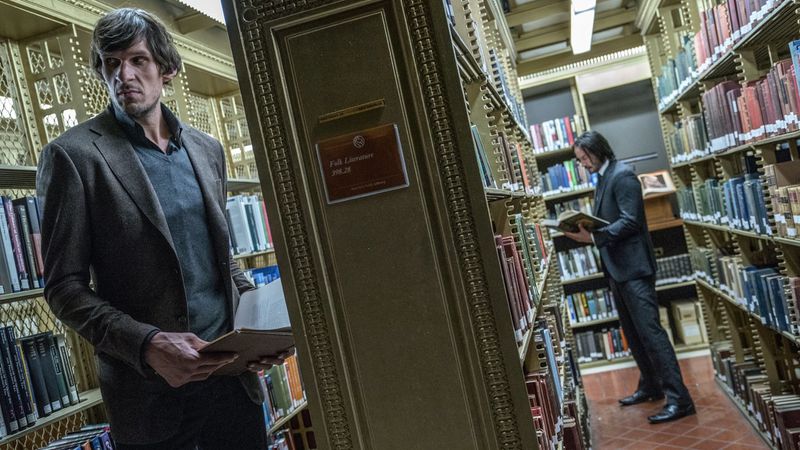
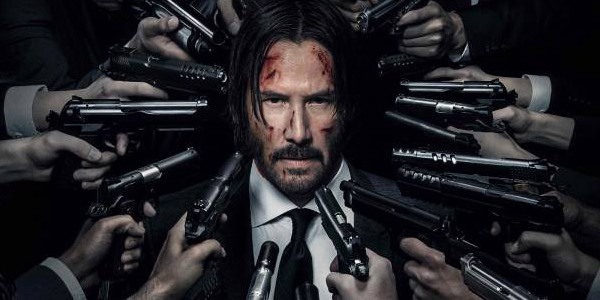
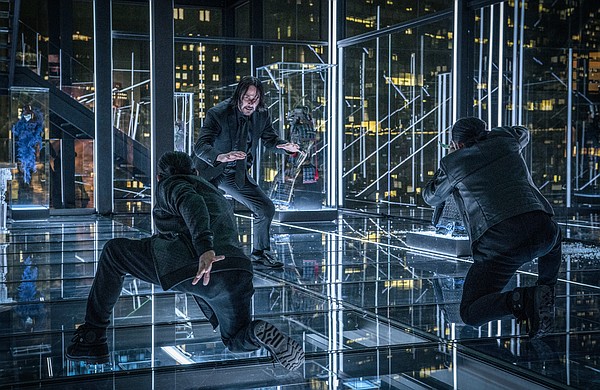
Yet, plot and reason are not the main purpose for watching this franchise. I watch it for the non-stop-Asian-infused-rainy-New-York-noir-flavoured-non-stop-balletic-violence-and-stunts. Here the incredible death toll and bloody killing is differentiated somewhat with: animals, vehicles and assorted sharp ojects joining the array of guns and fists used to hurt the two-dimensional bad people sent by the mysterious High Table gangsters. It doesn’t pay to analyse the film with logic, so just enjoy the immaculate: set design, art direction, cinematography, choreography, editing, visuals; and all-encompassing sound and fury.

Keanu Reeves, once again ignores the limits of his emotional range to deliver a formidable physical performance. Just his face, actions and movement alone are enough to convey his desires. Meanwhile, the writers open out John Wick’s back-story; shading in his past relationships and historical beginnings. This allows us to escape New York and venture to the Middle East, for a bit of sun and much needed change of scenery.

The film also welcomes a slew of fine character actors in support roles including: Halle Berry, Jerome Flynn, Asia Kate Dillon and Angelica Huston. They join the ever reliable Ian McShane, Laurence Fishburne and Lance Reddick from the first two chapters. Although, someone may have asked Fishburne to “rain” in his more bombastic moments, it’s still fun to see Neo and Morpheus on screen together. Oh, but the stunt dogs and 1990s B-movie action hero, Mark Dacascos, steal the show in their featured moments.

Overall, while showing signs of formula fatigue, John Wick: Chapter 3, remains a simple but wonderfully entertaining guilty pleasure. The choreography within the fight scenes and car/horse/motorcycle chases just transcend the action genre. Using: humour, pace, shock and sheer kinetic power they consistently startle and astound. Lastly, one could look at Wick’s character in mythical terms, perpetually fighting the Gods and forever pushing the rock up that hill. Indeed, I guess, like Sisyphus, Wick will carry on ad infinitum as long as there is someone to kill; and an audience wanting to watch such exquisite carnage on a big screen.
Mark: 8.5 out of 11

US (2019) – CINEMA REVIEW

US (2019) – CINEMA REVIEW

Directed by: Jordan Peele

Produced by: Jason Blum, Ian Cooper, Sean McKittrick, Jordan Peele

Written by: Jordan Peele

Starring: Lupita Nyong’o, Winston Duke, Elisabeth Moss, Tim Heidecker, Shahadi Wright Joseph, Evan Alex etc.

Music: Michael Abels

Cinematography: Mike Gioulakis

**MAY CONTAIN SPOILERS**

Orson Welles is reportedly quoted as saying, “A movie in production is the greatest train set a boy could ever have.” Thus, Jordan Peele proves this point with an unstoppable cinematic train ride in Us (2019); that while threatening to career off the rails on occasions, proves to be a thrilling work of horror-meets-social-satire entertainment.

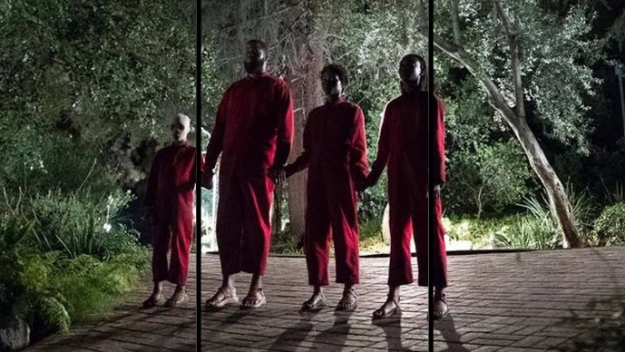
The film centres on an everyday normal family of four — the Wilsons: Adelaide (Lupita Nyong’o), Gabe (Winston Duke), and their two children — as they visit their summer home by the beach. Haunted by a scary incident in a hall of mirrors when a child, Adelaide is afraid to return to the beach where it occurred, until her husband’s goofy enthusiasm wins her over.

Events begin to turn and twist askew when their son, Jason, seems to go missing for a while. Even though he returns, paranoia and fear sneaks into Adelaide’s psyche. Things become even stranger when a mysterious family of four appear in the Wilsons’ drive in the dead of night. This is when the true face of horror surfaces and a pulsating home invasion and prolonged chase sequence ensues.

Peele has clearly seen a lot of horror films. As such the early scenes build tension perfectly with: stormy weather; a strange drifter with biblical sign haunting the boardwalk; creepy hall of mirrors; the choral soundtrack reminiscent of Rosemary’s Baby (1968); the son, Jason wearing a Jaws (1975) movie t-shirt; the flock of seagulls on the beach echoing Hitchcock’s The Birds (1963); and so it goes.

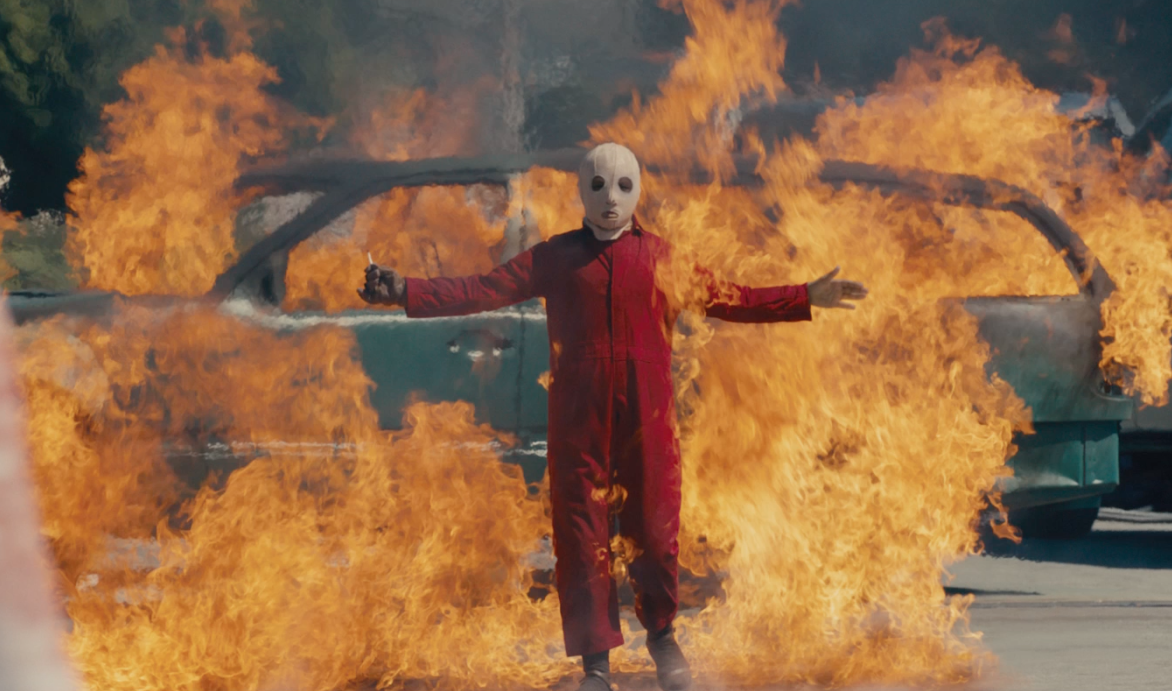
Such horror tropes build a huge wall of tension so effectively it’s almost a relief when released during the big doppelganger reveal. Subsequently, the blood-letting ensues in some meaty fights and exchanges involving weapons, such as: baseball bats, metal pokers, ornaments and golf clubs. The doppelgangers themselves are clearly a reflection of the self; twisted visions of humanity turning against the characters, as they literally become their own worst enemies.

The cast are expertly marshalled by Peele, as he gets doubly great performances from all the actors. The logistics of shooting doubles must have been tough, especially so many at a time. The featured cast are very good, notably Winston Duke as Gabe Wilson. He offers some light, comedic and physical humour amidst the gore. Meanwhile, Lupita Nyong’o steals the show in the dominant twin roles of Adelaide and the nefarious Red.

It’s Adelaide’s personal journey of double/split identity which provides the spine of the film. As she fights to save her family she must also literally battle the demon inside and outside herself. This thematic is the most powerful of the film for me, as Nyong’o’s acting is full of emotional resonance.

Perhaps, not as successful, when compared to Get Out, is the attempt to marry the personal conflict to the socio-political landscape. While Peele’s first film was an overt satire of slavery and white America oppression and exploitation, Us’ targets are intellectually more ambiguous and open to interpretation. I mean take your pick from: class, capitalism, consumerism, race, de-politicization, narcissism, over-population, split personalities, government conspiracies; and over-arching fear of ‘the other’.

These and many more themes are on Peele’s radar, as is his overall critique of the United States (U.S. = US – geddit!). That they don’t quite gel coherently is not a criticism but a positive indictment of his ambition. Conversely, while I felt the underlying power of Peele’s call-to-arms and desire for human unity in Us, one could argue the fire, smoke and mirrors of these ideas subtract from the power of the families’ personal struggle. Moreover, what is the solution to the government copying us or burying our doubles underground? Is it to kill the others and hold hands in unity? Who knows? What I can say is such naive idealism in horror has never been so entertaining.

After the success of the slavery-soul-swapping and genre bending thriller, Get Out, Jordan Peele has tasked himself with trying to top that fine movie. Well, if Get Out was the starter, Us is the main meal. In fact, one could argue the film is so full of ideas that it threatens to fail due to sensory overload. However, Peele is such a multi-talented storyteller he skilfully delivers, wholly thanks to great writing, masterful film production, an exceptional soundtrack and an incredible cast.

Mark: 9.5 out of 11

EVERYBODY KNOWS (2018) – CINEMA REVIEW

EVERYBODY KNOWS (2018) – CINEMA REVIEW

Directed by: Asghar Farhadi

Produced by: Alexandre Mallet-Guy, Alvaro Longoria

Written by: Asghar Farhadi

Starring: Javier Bardem, Penelope Cruz, Ricardo Darin, Barbara Lennie etc.

Cinematography: Jose Luis Alcaine

**MAY CONTAIN SPOILERS**

Asghar Farhadi is one of those filmmakers whose work is always of the highest quality. For some reason I actually missed seeing his prior film The Salesman (2016), so definitely need to catch up with that. However, The Past (2013) and A Separation (2011) were both compelling human dramas. A Separation, in fact, was one of the best films I have seen in the last decade. It took everyday scenarios involving as divorce and class conflict and spun a heartfelt, intense and intelligent narrative which was emotionally very powerful. While Farhadi was born in Iran and his early works are based there, his oeuvre transcends geography; projecting visions of humanity which stay with you way after the film has ended.

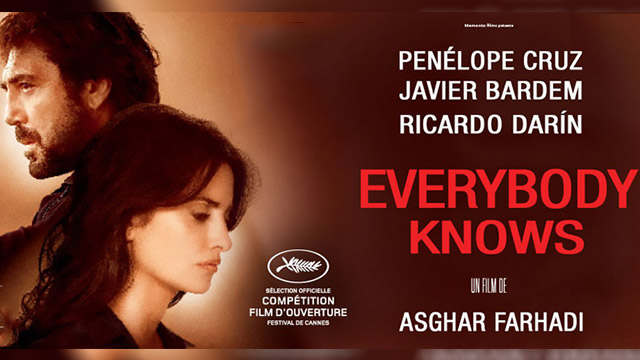
Farhadi’s eighth feature as a director is arguably his most accessible and while not reaching the dramatic heights of his previous films, remains a very solid personal drama. Everybody Knows concerns a large family unit converging for a wedding celebration in Spain. The setting is a small town set amidst beautiful countryside just outside Madrid. It’s the kind of place where everybody knows each others’ business and the community, while seemingly convivial on the outside, carries class, family and business conflicts under the surface.

The film begins with Laura driving her children, notably teenage Irene, back to the town where she was born. The wedding celebrations ensue until terror strikes and Irene is stolen in the night by unknown assailants. Forbidden from contacting the police by the kidnappers, Laura, her family and former childhood boyfriend, Paco (Javier Bardem), desperately seek to find Irene before tragedy occurs. It isn’t long before history converges on the drama and past events involving stolen land and romantic affairs threaten to destabilise the whole town.

With Penelope Cruz and Javier Bardem cast as your leading protagonists, and the brilliant Ricardo Darin in support, you’re always guaranteed an enthralling screen experience. Nonetheless, what is so impressive in the performances and direction is they feel like real people with proper emotions, not simply starry versions of themselves emulating reality. Moreover, Farhadi concentrates on the human aspects of the story rather than the crime, as the characters, relationships and town itself begin to unravel. Further, while the film may lack his usual socio-political subtext, Farhadi really pulls you into the drama, as secrets and revelations are unearthed throughout. Overall, this is a consistently watchable piece of cinema that keeps up Farhadi’s impressive hit-rate, while perhaps feeling more familiar and generic compared to the other films of his I have seen.

Mark: 8 out of 11

کفرناحوم‎ / CAPERNAUM / CHAOS (2018) – CINEMA REVIEW – One of the most heart-breaking films you will ever see!

کفرناحوم‎ / CAPERNAUM / CHAOS (2018) – CINEMA REVIEW

Directed by: Nadine Labaki

Produced by: Michel Merkt, Khaled Mouzanar

Screenplay by: Madine Labaki, Jihad Hojaily, Michelle Keserwany

Cast: Zain Al Rafeea, Yordanos Shiferaw, Boluwatife Bankole, Kawthar Al Haddad, Fadi Kamel Youssef, Nour El Husseini etc.

Cinematography: Christopher Aoun

Editing: Konstantin Bock

**MAY CONTAIN SPOILERS**

The recent Oscars brought up more than its’ fair share of ceremonial, broadcast and social media celebration and moaning from the film creatives, public, critics and privileged millionaires alike. But hey everyone’s entitled to their opinion and has the freedom of speech to express said opinions about what should and shouldn’t win such frivolous industry trinkets. It’s a bit of fun and gets everyone talking about movies, society and life, which is always a good thing.

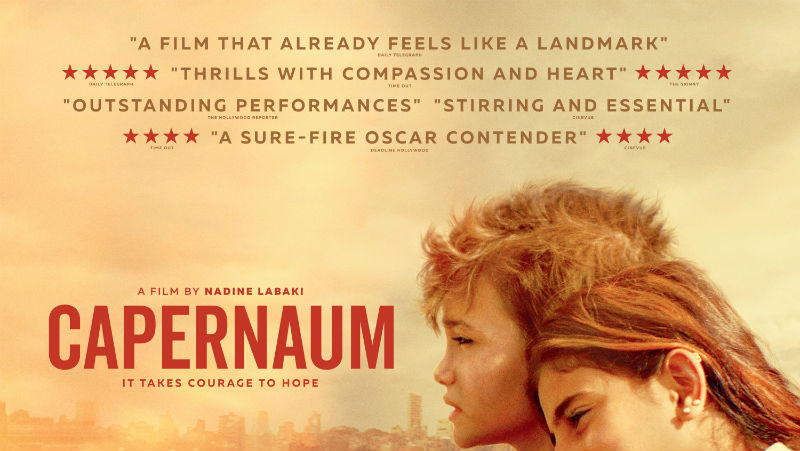
Yet, every now and then a film comes along which, while nominated for an award, does not win the prize it deserves. That film is the heart-ripping, social drama Capernaum (2018). This Lebanese film is one of the most emotonally impactful films I have ever seen and should not just have won ‘Best film in a Foreign Language’ at the Academy Awards, but should have won ‘Best Film’, in my humble view. While Roma (2018) was an expertly crafted love letter to Cuaron’s childhood and the women he grew up with, its’ characters are very passive and the slow moving style left me feeling tepid. Capernaum, on the other hand, is anything but tepid, as its’ hero is a dynamic firebrand who you cannot help but root for.

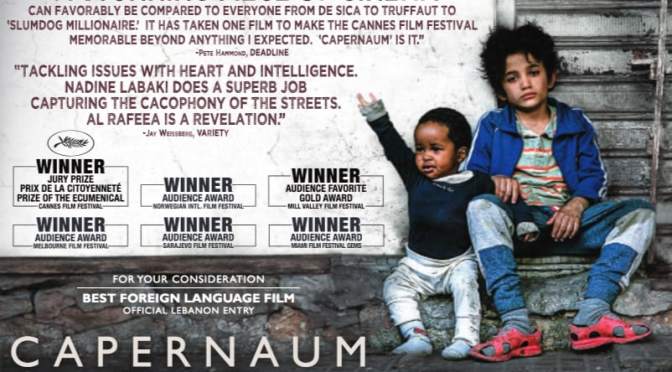
Set in contemporary Lebanon, the story is structured around a court-case where lead protagonist, Zain, a twelve or thirteen year old boy, is seeking to divorce his parents. Extensive flashbacks then reveal why Zain feels this strongly about his life and the hell he has to endure to survive and protect those he loves. Zain’s existence, like many street kids, refugees and families in Beirut, struggle daily under threat of death, disease and exploitation. When his younger sister is sold by his parents to their landlord to prevent eviction, Zain goes crazy. Following a violent row he is thrown onto the streets and is left to fend in the dirt and shadows. He find kindred friendship with Rahil, an undocumented Ethiopian woman, and Zain helps mind her young son, Yonas. Here the narrative screw is really turned as their lives spin further out of control.

With incredible scenes of documentary realism the director Nadine Labaki has delivered such a powerful in your face and frantic style. The streets of Beirut become a legal, social and religious prison for the characters, as forgers, paedophiles and traffickers threaten to rob the souls and bodies of Zain and his like. Moreover, the narrative makes incredible points regarding existence, posing whether people should be brought into the world to such suffering. Indeed, not all characters are as tough as Zain, who’s caring, resourceful, cheeky, tough, entrepreneurial and a born fighter.

I cannot speak highly enough of this film. If I ever feel down about my over-privileged life, then I just need to think of these characters and I will be humbled. For sure it is over-the-top in its’ melodramatic depiction and there are some unlikely narrative elements toward the end, but I did not care about those. It moved me immensely and the director and filmmaking team deserve so much credit turning twelve hours of shooting footage into such a coherently moving portrayal of existence. They even find time for some humour amidst the tragedy. Further, the actor who gave us Zain is himself a refugee and had never acted before, so to capture such energy on screen is amazing. Lastly, next time I selfishly think “my life sucks”, I will picture Zain pulling Yonas around the dusty streets of Beirut in an aluminium pot and be completely humbled.

Mark: 10 out of 11

BOY ERASED (2018) – CINEMA REVIEW

BOY ERASED (2018) – CINEMA REVIEW

Directed by: Joel Edgerton

Screenplay by: Joel Edgerton – Based on: Boy Erased: A Memoir by Garrad Conley

Produced by: Joel Edgerton, Steve Golin, Kerry Kochansky Roberts

Cast: Lucas Hedges, Nicole Kidman, Russell Crowe, Joel Edgerton, Joe Alwyn, Xavier Dolan, Cherry Jones, Flea etc.

**MAY CONTAIN SPOILERS**

It never fails to sadden me the horror that other human beings inflict on each other out of ignorance, intolerance and misguided indoctrination. Boy Erased (2018), is a film that highlights such negative practices committed by parents on their actual children because they are perceived to be abnormal in their eyes and the rules of their faith. I’m not religious but respect those who have different beliefs to me, unless of course those beliefs are used to castigate and punish other human beings. Surely, the basic tenet of any religion, including Christianity, should be kindness, understanding and forgiveness. When such integral ideals are broken then such doctrine should be shunned and held up for criticism.

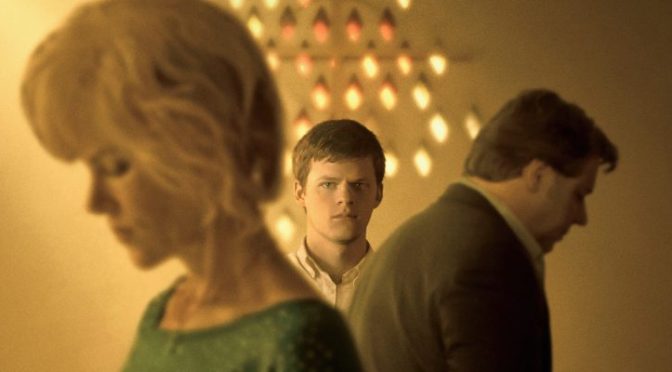
Boy Erased is based on Garrad Conley’s memoir of how his religious parents send him for gay conversion therapy, and the film is structured around the sad events which occurred to Garrad. Conley’s persona and emotional strife is evoked brilliantly in the character of Jared Eamons. Portrayed with sensitivity by the talented Lucas Hedges, the humanity and empathy he delivers is highly impactful. Jared is an innocent who is undeservedly thrust into an unnatural and bullying environment, forcing him to change his sexual identity through shame and persecution.

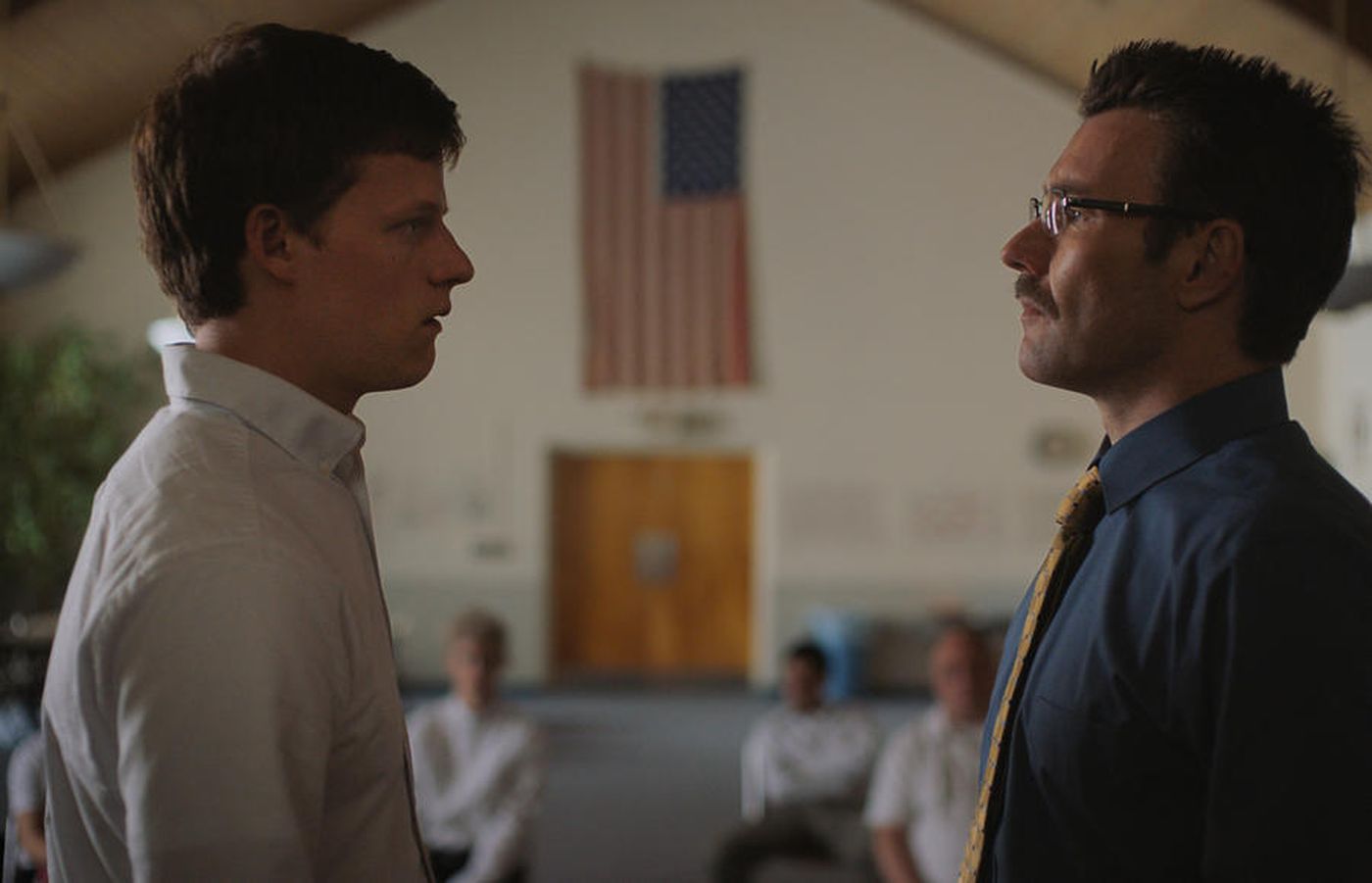
The main thrust of the film finds Jared at the assessment centre and this brings about some harrowing scenes where young men and women are effectivelly imprisoned and vilified in the name of God. While certain scenes are emotionally charged and disturbing the film could have gone even further, however, director Joel Edgerton wisely opts for more subtlety rather than “fire and brimstone” tabloid filmmaking. Indeed, Edgerton and his cinematographer opt for a drained colour scheme and natural lighting style to evoke realism within the action.

Edgerton not only directs and writes with purpose, but also casts himself as the main antagonist and lead “therapist”, Victor Sykes. Sykes is seen as dominating but ultimately weak-willed, deflective and controlling. As Jared’s parents, Nicole Kidman gives a solid performance in the role of his conflicted Mother, while Russell Crowe imbues his preacher with both religious fervour and a sense of torn loyalty. Jared’s parents, in the end, are not bad people. They have just been faced with a difficult situation and are advised badly by their faith and Church.

Ultimately, this is a quietly compelling character drama which highlights very important issues in regard to faith, sexuality and family. I’m not sure why it wasn’t acknowledged more by the Academy Awards, notably in Lucas Hedges fine performace. Nonetheless, it is an important story which is constructed with care. Rather than demonize families and religion, it seeks to highlight and campaign for education, tolerance and love. These things, for me, are what true faith should be about.

Mark: 8.5 out of 11

IF BEALE STREET COULD TALK (2018) – CINEMA REVIEW

IF BEALE STREET COULD TALK (2018) – CINEMA REVIEW

Directed by: Barry Jenkins

Produced by: Megan Ellison, Dede Gardner, Jeremy Kleiner, Adele Romanski, Sara Murphy, Barry Jenkins

Based on: If Beale Street Could Talk by James Baldwin

Starring: Kiki Layne, Stephan James, Colman Domingo, Regina King, Teyonah Parris, Michael Beach, Pedro Pascal etc.

Cinematography: James Laxton

Music: Nicholas Britell

**MAY CONTAIN SPOILERS** 

Barry Jenkins is clearly a talented filmmaker who is striving to transcend the boundaries between art and craft where cinema is concerned. His second feature film Moonlight (2016), was a critical smash and a sleeper box office hit, subsequently going on the win the Best Film nod at the Academy Awards. Whether it was worthy of such as award is another matter, but it was certainly a tremendous work of cinema. The rites of passage story was delivered by Jenkins with imaginative choices in casting, structure, look, music and all-round filmic endeavour.

His latest film, If Beale Street Could Talk, is equally stylish and artfully rendered, but not as emotionally impactful as Moonlight. Indeed, while this is in fact his third feature, Beale Street seems to suffer from classic “2nd album syndrome”, inasmuch as Moonlight set the bar so high, it was going to be a difficult act to follow. Moonlight felt like years of heart and passion thrusted upon the screen, as Beale Street struggles to maintain that said peak. That isn’t to say that the film is not without its virtues as Jenkins once again proves himself a brilliant director.

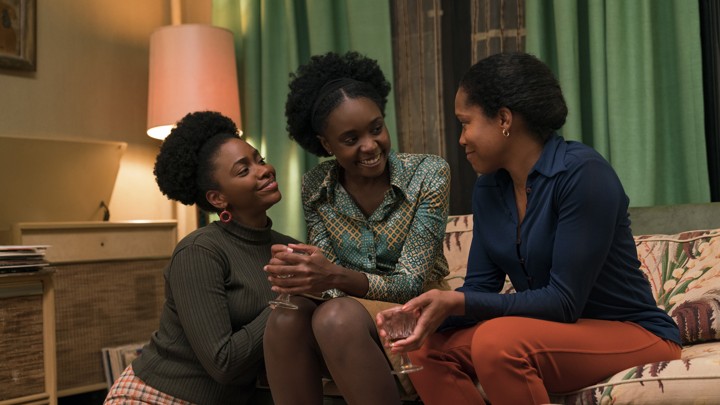
Barry Jenkins’ IF BEALE STREET COULD TALK, an Annapurna Pictures release.

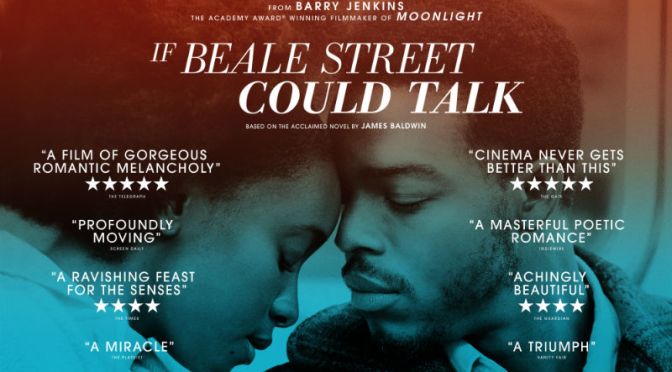
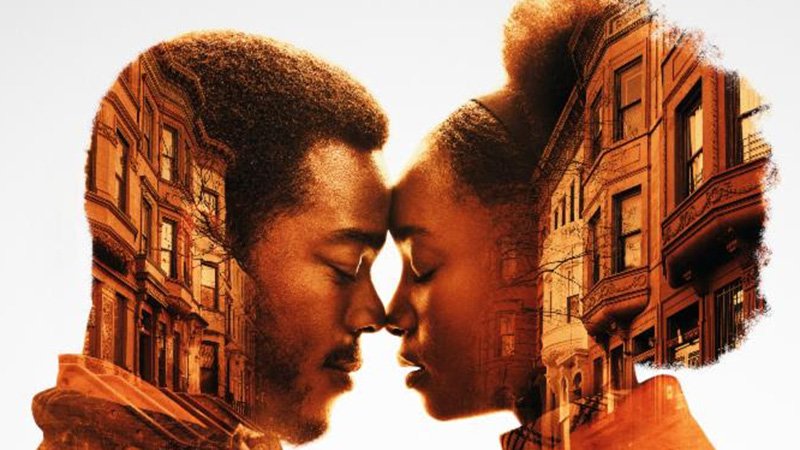
Set in 1970s, Harlem, New York and based on James Baldwin’s novel, the main protagonists are young working class couple Tish (Kiki Layne) and Fonny (Stephen James). Very much in love we open with Tish’s poignant voiceover and a wonderfully lush score supporting the urban and industrial, yet beautifully shot, imagery. Immediately, we realise Jenkins, while basing his story in realism, is presenting his film poetically. Further, Tish’s voiceover lilts and glues the elliptical, non-linear narrative together.

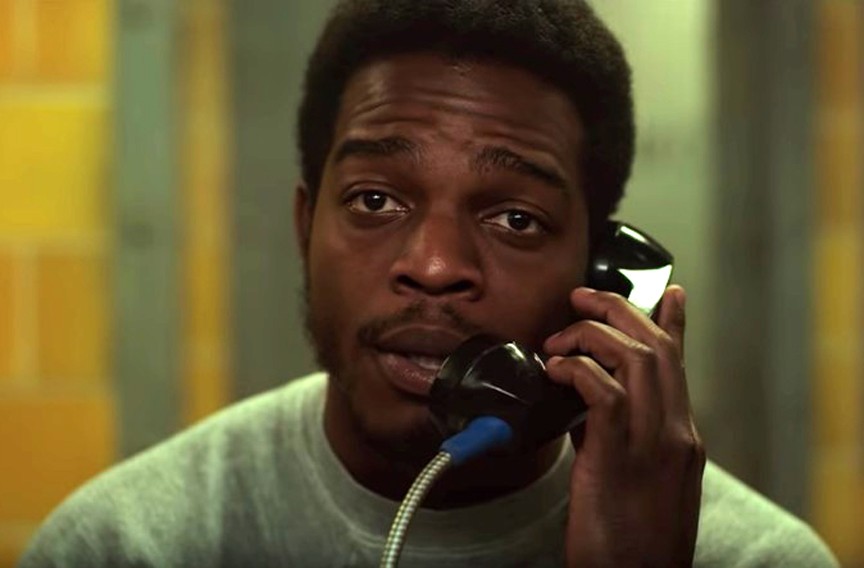
As with Moonlight, Jenkins uses direct address, the characters looking straight back at us drawing us into their emotional core. One may argue the device is over-used and at times distances us from the pace of the story. As Tish recounts events of her and Fonny’s relationship from childhood friends to their currently plight, you really feel a palpable sense of love, but sometimes it moves so painfully slow. Furthermore, the non-linear structure and stylistic devices also undermined the drama of the piece. Indeed, the best scene of the film in my opinion is near the beginning when Tish and Fonny’s family clash over her pregnancy. In this scene the insults spark and spit off the screen; but alas this conflict is sadly under-developed and not revisited later in the film.

Overall, there is a great story here involving: love, romance, social unrest, police brutality, unlawful arrest and injustice, racism, family strife, hope and loyalty; however, Jenkins artistic desires build the narrative in a way that diverts emotion into the cinema style, more so than the characters. Having said that, he is a filmmaker of some brilliance and he gets fantastic performances from the fine ensemble cast, notably the magnetic Regina King. Ultimately, while the story is told slightly pretentiously for my liking,
If Beale Street Could Talk, is a finely tuned work of poetic realism. 

Mark: 8 out of 11

GREEN BOOK (2018) – CINEMA REVIEW & OSCAR BINGO #4

GREEN BOOK (2018) – CINEMA REVIEW

Directed by: Peter Farrelly

Produced by: Jim Burke, Brian Hayes Currie, Peter Farrelly, Nick Vallelonga, Charles B. Wessler

Written by: Nick Vallelonga, Brian Hayes Currie, Peter Farrelly

Starring: Viggo Mortensen, Mahershala Ali, Linda Cardellini

**MAY CONTAIN SPOILERS**

I have to be honest I am getting very tired of racism and racists, so lord knows how the people who it affects deal with it on a day to day basis. To judge and attack people because they have a different race, background or skin colour is, and has always been, the height of stupidity. We are all humans and should be judged on our actions and behaviour and NOT our physical appearance, social background, sexuality or gender. Furthermore, we must not treat someone a certain way based on general experience of how others behave too. I subscribe to individualistic judgement and the desire for peaceful attempts to resolve conflict and differences. Those that attack and bully and abuse any other human being are wrong and their minds must be changed.

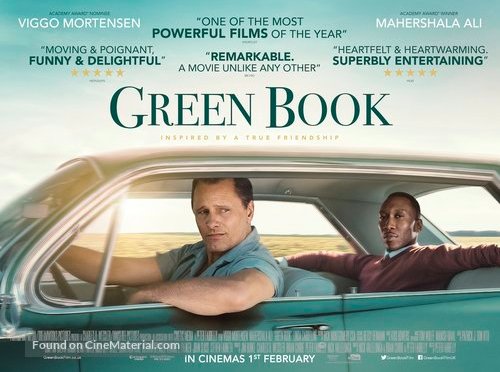
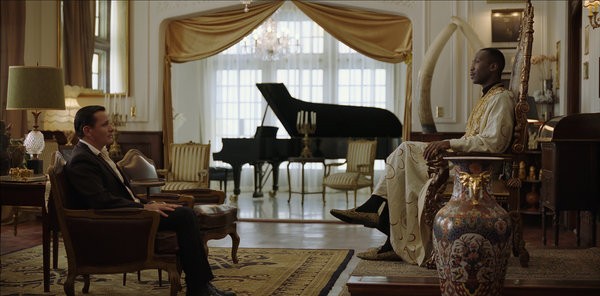
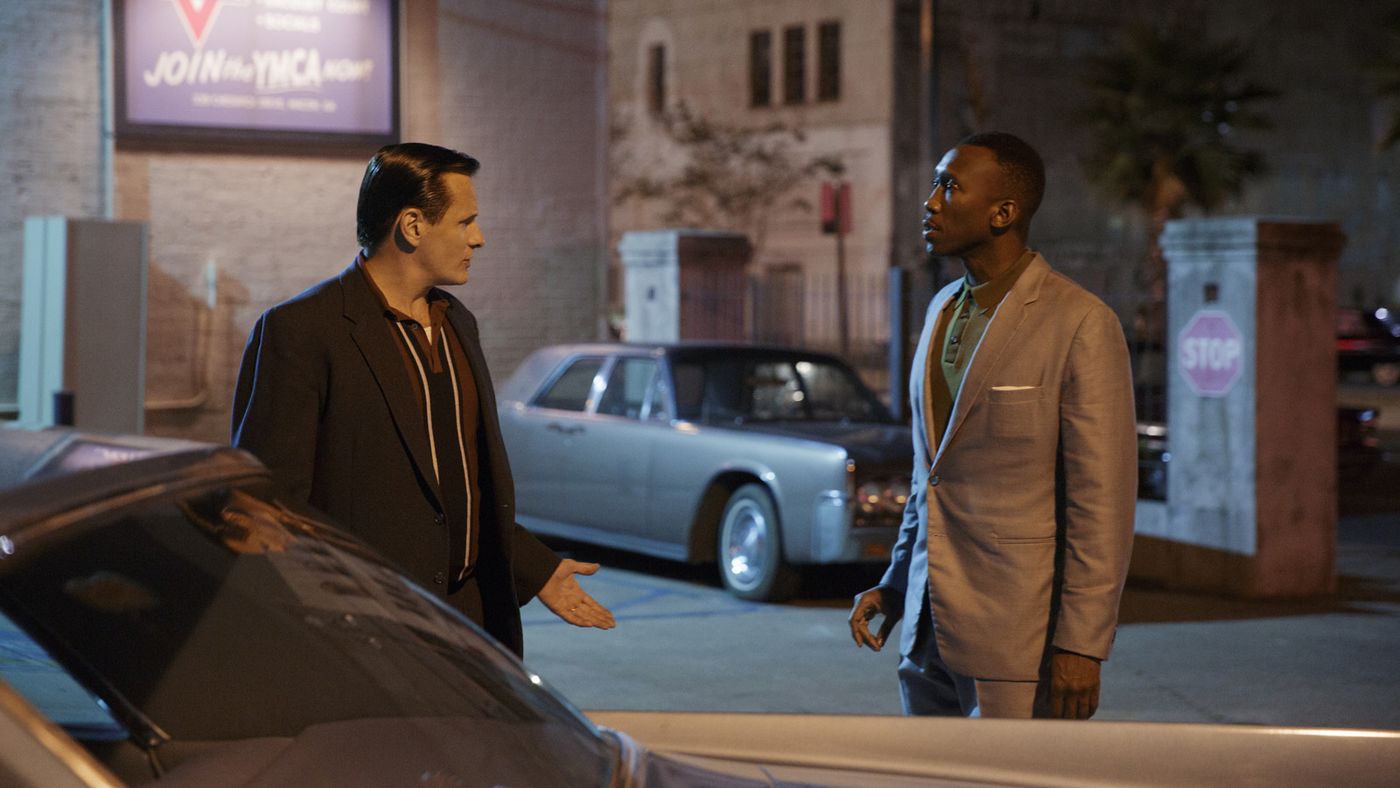
If a feel-good film such as Green Book (2018) can at the very least change one person’s negative attitude then it will be a success. It makes very broad points in regard to race relations and while arguably simplistic, in the very fabric of its story remains a heartwarming call for tolerance, understanding and friendship. Directed by Peter Farrelly, Green Book is based on the true story of Dr Don Shirley, a genius musician, and his brave trip across the deep South of America in 1962 with working class Italian driver, Tony “Lip” Vallelonga. Safe to say the road tour is not without its ups and downs and the men, after initial differences, find common ground, loyalty and friendship.

BEST PICTURE CHANCES – 8/10

As aforementioned in a previous review I would say Roma (2018) will probably win best film at the Academy Awards. Green Book has a decent chance based on the sheer energy and persuasion of the story. Moreover, it attempts to marry comedy with social drama and on the whole succeeds. Peter Farrelly directs with skilled aplomb and the guy is a past-master of the road movie genre with films such as: Dumb and Dumber (1994), Kingpin (1996), There’s Something About Mary (1998) and Me Myself and Irene (2000), all comedies which adhered to road movie genre tropes. I guess that’s one thing that holds Green Book back and that is it’s very “by-the-numbers”, however, that’s also one of the joys of the story in that it hits the heights of genre expectations so well. Finally, Farrelly marshals the road trip, musical gigs and period setting really impressively and film made me feel all glowy by the end.

ACTOR IN A LEADING ROLE CHANCES – 8/10

Viggo Mortensen is such an intelligent actor and has often been cast in intense roles which require much internal conflict. Here, his Tony Lip, is a larger-than-life Italian tough guy, handy with the bullshit and his fists. He eats like a horse and loves his family. Further, he’s stand-up guy who won’t be dragged into the Mafia underworld no matter how broke he is. The character verges on the Italian stereotype we have seen many times before but Mortensen imbues the lovable rogue with a humanity, humour and a do-the-right-thing spirit throughout. It’s his journey we follow as he moves from prejedicial jerk to something more socially acceptable. Lastly, Mortensen’s scenes with Ali are just brilliantly acted; the two bouncing off each other with wit and perfect timing.

ACTOR IN A SUPPORTING ROLE CHANCES – 10/10

Mahershala Ali should win this. He is absolutely outstanding. While Mortensen’s character is big and splashed across the screen in ebullient effervescence, Don Shirley quietly steals the show. His erudite, intellectual and refined exterior hides a pained and lonely soul who just does not fit in to society anywhere. While his music is loved and his genius revered he just cannot find inner peace. I mean I know nothing about playing the piano but Ali impresses here too with his conveyance of the musicianship of the character. Lastly, Ali’s performance is one of the best of the year, and while he won previously for Moonlight (2016), this performance is so good he should be on the list of leading actor role nominations.

BEST SCREENPLAY CHANCES – 8/10

The structure of the screenplay adheres to the classic Hollywood model to a tee. There are few surprises as the set-up of two opposite characters meet and go through a literal and figurative journey of discovery and change. Along with the lead performances, what raises the story though, is a fizzing script full of conflict and comedy. We get set-up-punchline, set-up-drama, set-up punchline, set-up feelgood moment throughout, making it a metronomically impressive piece of writing. The letter-writing running gag, for example, is pure comedic gold. Moreover, the script is littered with tremendous dialogue exchanges between the lead roles and ensemble characters which had me laughing and emoting throughout. Perhaps, historical and political accuracy could be queried by some and there is a reliance on familiar archetypes, but that doesn’t interfere with a zinging story.

CONCLUSION

Green Book is a film that has its chicken and eats it. It is full of life, food, music, family, friendship while making important points about racial issues. It also raises many laughs with heartwarming poignancy, highlighting the inequalities of 1960s with a broad hand. While these issues are not as intriguingly addressed as in BlacKKKlansman (2018), they elevate the generic road-movie-opposites-buddy-bromance tropes and structure. More than anything this is a story about friendship and while it treads a well worn road, mirroring films such as Planes, Trains and Automobiles (1987) and Midnight Run (1988), it does so with verve, humour and heart.

Mark: 9 out of 11

GLASS (2019) – MOVIE REVIEW

GLASS (2019) – MOVIE REVIEW

Directed by: M. Night Shyamalan

Produced by: M. Night Shyamalan, Jason Blum, Marc Bienstock, Ashwin Rajan

Written by: M. Night Shyamalan

Starring: James McAvoy, Bruce Willis, Anya Taylor-Joy, Sarah Paulson, Samuel L. Jackson

Music by: West Dylan Thordson

**CONTAINS SPOILERS FROM SHYAMALAN’S PRIOR FILMS**

M. Night Shyamalan is arguably one of the most critically divisive directors working today. Not because his films are particularly controversial, but mainly because he is a risk-taker that tests the boundaries of genre expectations. He has so many different ideas and concepts that quite often his movies have back-fired spectacularly, however, when he gets it right his genre films are highly entertaining and compelling. Films such as: The Sixth Sense (1999), Unbreakable (2000), Signs (2002), and The Village (2004), were for me, brilliant genre films full of invention, suspense and wicked twists. Many people felt The Village stretched the limits of suspending disbelief, but it was a masterpiece compared to his filmic failures like: The Lady in the Water (2006), The Happening (2008) and The Last Airbender (2010).

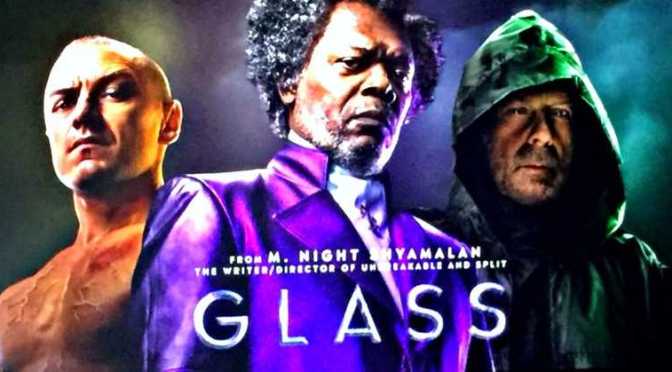
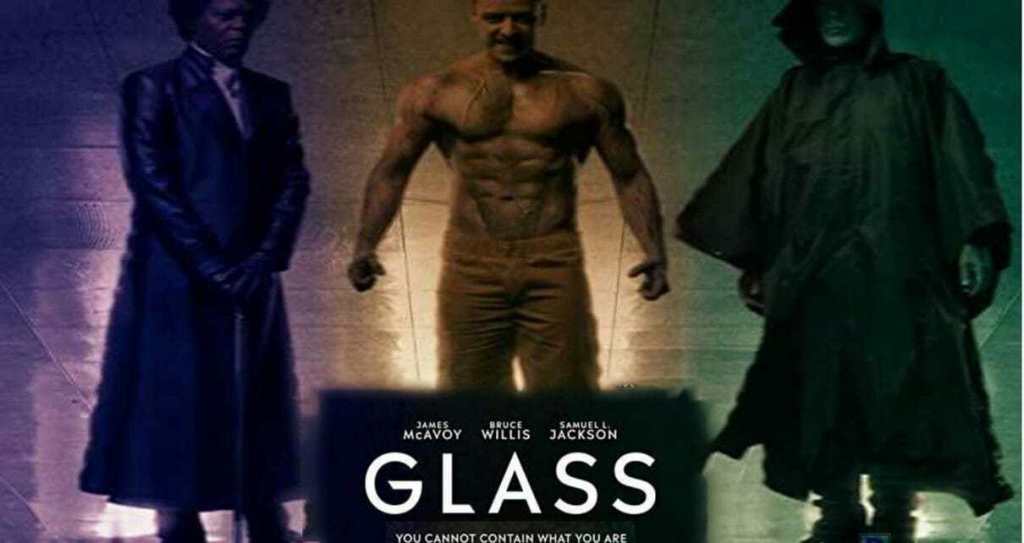
I missed seeing the apparent disaster that was After Earth (2013), yet it was opined that Shyamalan returned to some essence of form with the horror film The Visit (2015). However, I still felt there were some dodgy creative decisions in that, such as the story-filler-white-middle-class-rapping kid in amidst a creepy thriller. Yet, with Split (2016), Shyamalan was back to his best, weaving an exploitational B-movie kidnap-plot with a searing psycho-performance from James McAvoy. The ending, which found Anya Taylor-Joy’s ultra resilient Casey fighting back against McAvoy’s twenty-plus split-personality maniac, then brilliantly linked the film to Shyamalan’s Unbreakable (2000). Therefore Glass (2019), becomes the third part of an unlikely trilogy; three films where Shyamalan strives to create his own universe and mythology within a more realistic superhero and super-villain world.

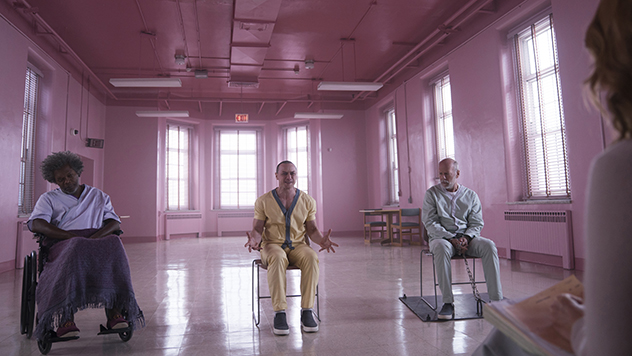
Glass starts three weeks after the end of Split  and opens with a terrific and bruising encounter between McEvoy’s dominant “Beast” personality and David Dunn’s (Bruce Willis) vigilante, daubed “The Overseer” by the media. Captured by authorities, the two are locked up and analyzed by Sarah Paulson’s seemingly sympathetic psychiatrist, Dr Ellie Staple. Enter Samuel L. Jackon’s Elijah Price, who is ALSO being held at the same mental health facility. I mean what could go wrong? Does the catatonic Price have villainous plans for The Horde and The Overseer? What do you think?

What I love about Shyamalan’s screenwriting, and this is something which he could equally be criticized for, is you can hear the cogs of contrivance creaking with every plot turn. Yet his ideas really capture your imagination and you genuinely want to know what happens next. Personally, as a fan of say Agatha Christie, I love theatrical exposition and clear “rules-of-the-world” mechanics. Shyamalan gets his three big-hitters in the same place and cinematic fireworks, however unlikely and full of plot-holes it may be, ensue. Woven within the fights, monologues and narrative misdirections are very clever meta-textual references to comic-book structures. This adds a welcome context to the denouement, which contains at least two incredible revealing twists.

Ultimately, I feel, unlike certain critics, that Glass is a fun and entertaining end to the trilogy. Yes, it tests the believability grid but Shyamalan must be applauded for striving, once again, toward some form of originality within his chosen genre.  It arguably goes down a deep rabbit hole at the end which is hard to get out of; but the impressive cast keep you in the light for the most part. James McAvoy is simply, once again, outstanding. Why hasn’t he been nominated for an Oscar? Who knows! Jackson and Willis are always solid performers, although I felt that Dunn’s character was slightly thrown away at the end. Anya Taylor-Joy also stood out and she is going to be a big star if she carries on delivering wide-eyed and steely performances such as these. Thus, Shyamalan gives us another big hit and something very different from the Marvel and DC superhero universes; something altogether more human.

Mark: 8.5 out of 11

COLETTE (2018) – CINEMA REVIEW

COLETTE (2018) – CINEMA REVIEW


Directed by: Wash Washmoreland

Produced by: Elizabeth Karlsen, Pamela Koffler, Michel Litvak and Christine Vachon.

Screenplay by: Richard Glatzer, Rebecca Lenkiewicz and Wash Washmoreland

Cast: Keira Knightley, Dominic West, Eleanor Tomlinson, Denise Gough etc.

**CONTAINS HISTORICAL SPOILERS**

In a coincidental twist of cultural fate I only recently became aware of turn-of-the-century novelist, libertine, bohemian and society trailblazer that was Sidonie-Gabrielle Colette. I’d been listening to a brilliant audio-documentary by Adam Roche, which was about Audrey Hepburn’s early life prior to becoming a Hollywood star. Interestingly, it was an elderly Colette who spotted the then unknown Helpburn filming a supporting role in Monte Carlo. Furthermore, it was Colette who insisted Hepburn was, despite her lack of stage experience, the ideal person to portray her famous creation Gigi on Broadway. Thus, even in later life Colette was to the fore of the cultural aesthetic; both a major talent and celebrity ripe for respect and admiration.

From her Claudine (1900) novels, to La Vagabond (1910) to Gigi (1944), Colette was a prolific writer of many books and short stories. She was also an actor, dancer and mime, who seemingly delighted in confronting the stuffy middle and upper classes of French society. Unashamed by on-stage nudity and choice of sexual parters, Colette had love affairs with both men and women. Not only did she break down sexual taboos, she also furthered gender equality and would be nominated for the Nobel Prize for Literature in 1948.

Denise Gough stars as Missy and Keira Knightley as Colette in COLETTE
Credit: Robert Viglasky/Bleecker Street

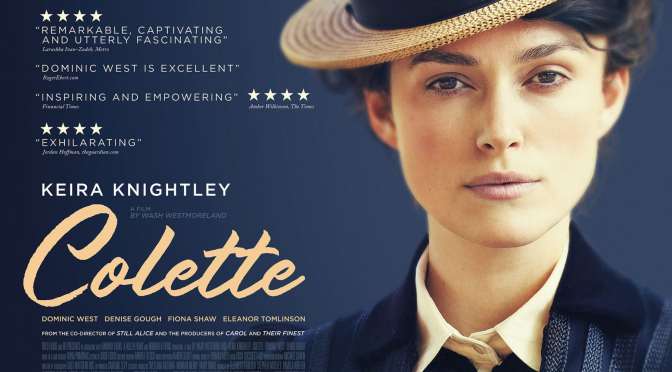
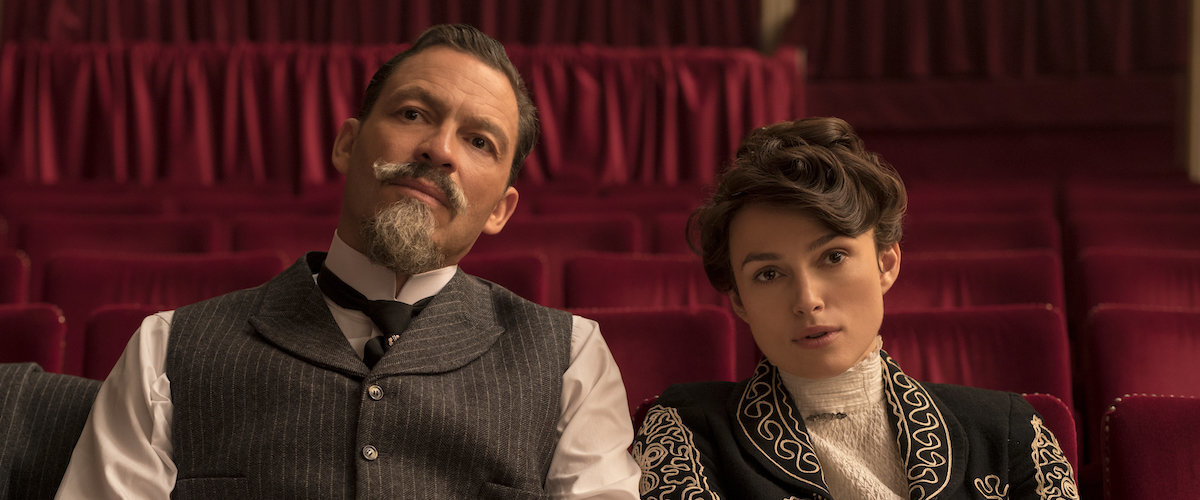
The cinematic version of her life finds Keira Knightley portraying the titular character with a committed energy, verve and magnetism. Knightley has never been the most nuanced of actors but she is a striking movie star, delivering a fine performance here. Likewise, the ever reliable Dominic West is on excellent form as Henry Gaulthier-Villars – AKA ‘Willy’ – Colette’s first husband. West represents him as a charismatic cad with an insatiable lust for women, gambling and booze. While able to wow publishers with his sales pitches he relies on others to do the writing, while happily wasting the advances and royalties.

Willy sweeps the naive country girl Colette off her feet and introduces her to the artistic and literary circles of Paris. As such it is his connections which enable Colette to gain her first publishing success. However, it is Willy who takes all the plaudits, publishing under his own name. This authorial switch inevitably creates a dramatic schism as Colette fights for her name to be on the books. Willy refuses, highlighting both his own egomania and the sexist prejudice of the day. Like the similarly plotted biopic Big Eyes (2014), this film illustrates the nefarious nature of dominant masculinity; however, it also made me consider whether the artists would have been successful if it HADN’T been for these dastardly blokes. Who can tell? One would hope the talent of said artists would shine through come what may.

Structurally, Colette is very linear representing a “greatest hits” of how Colette progresses creatively, romantically and sexually. As aforementioned Knightly gives a fearless performance and the period setting is beautifully evoked within an excellently directed production. My only criticism is a fair amount of time was spent on Colette’s sexual exploits when I would have preferred more drama relating to her authorship battles with feckless Willy. Nonetheless, as period biopics go the film stands as a stylish and admiral tribute to a trailblazing feminist and literary icon.

Mark: 8 out of 11

THE OLD MAN AND THE GUN (2018) – CINEMA REVIEW

THE OLD MAN AND THE GUN (2018)

Written and Directed by: David Lowery

Produced by: James D. Stern, Dawn Ostroff, Jeremy Steckler, Anthony Mastromauro, Bill Holderman, Toby Halbrooks, James M. Johnston, Robert Redford

Based on: The Old Man and the Gun (article) by David Grann

Starring: Robert Redford, Casey Affleck, Danny Glover, Tika Sumpter, Tom Waits, Sissy Spacek

Music by: Daniel Hart

Cinematography: Joe Anderson

**CONTAINS SPOILERS**


Forrest Tucker was a career criminal destined to die in jail. His life in between was one of many bank robberies, incarcerations and successful and unsuccessful prison breakouts. The morality of his actions must be condemned as the man was a recidivist addicted to the thrill of crime, making money and also the chase. While I’m not a fan of banks, who themselves are bigger criminals than the robbers, I rarely find myself rooting for such characters, unless there are mitigating circumstances for their actions.

Indeed, Tucker’s illegal acts would have left the authorities drained chasing him across America, and prevent them from protecting other people. Moreover, by holding a gun in people’s faces and demanding money Tucker would have most likely scared a good number too.  Tucker would go on to rob banks well into his late seventies but he never fired his gun; and was often described as a gentleman by his victims. Yet, despite his wrong-doings, the film of his life in the hands of acting legend Robert Redford and director David Lowery is well worth a watch.


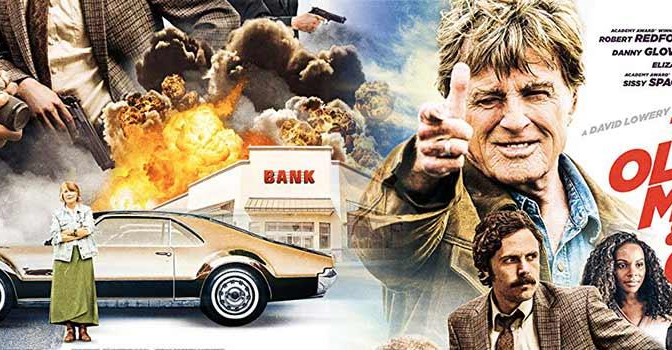
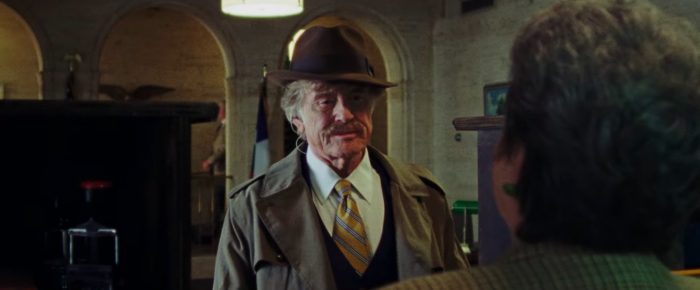
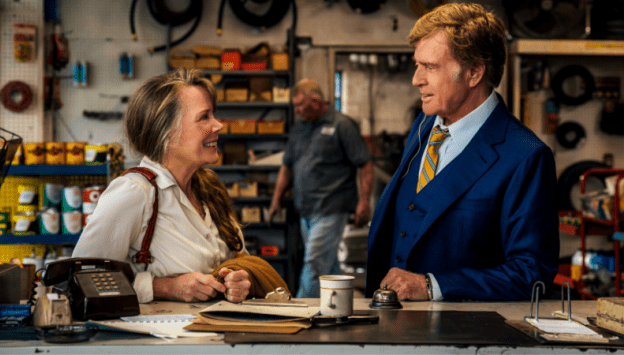
It’s a pretty simple story based on a New Yorker article by David Grann and Lowery adapts with warmth and empathy towards Tucker’s aging bank robber. The casting of Redford is also a masterstroke. As he has throughout his career he exudes a mercurial class and poise.  There’s some wonderful usage of stock photos of Redford from earlier in his career, supplanted to the character of Tucker. This nostalgic trip down memory lane both serves the story and reminds us what a great movie star Redford has always been. It’s a shame that Redford has decided to retire from acting, as reported in August 2018, but this is a fine film to bow out on.

Lowery, whose last film was the amazing A Ghost Story (2017), changes tack with a more conventional character study here; however, he invests lots of imaginative touches in the presentation. He also gets a memorable performance from Sissy Spacek who sparkles as Redford’s romantic interest. It’s beautifully and hazily shot by Joe Anderson on Super 16mm and contains a misty-eyed halcyonic feel to it. I felt like I was watching a film from the 1970s even though it was set in or around the 1990s. So, despite my inherent dislike of the man and the crimes he committed, I very much enjoyed this excellent drama about a fascinating, if misguided, character.                                        

Mark: 8 out of 11