Tag Archives: Sisyphus

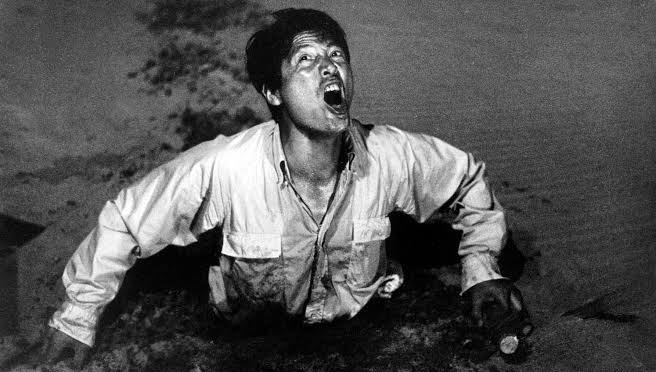
Classic Film Review: Woman in the Dunes (1964)

Classic Film Review: Woman in the Dunes (1964)

Directed by Hiroshi Teshigahara

Screenplay by Kōbō Abe
Based on The Woman in the Dunes
by Kōbō Abe


Produced by Kiichi Ichikawa and Tadashi Ono

Main cast: Eiji Okada, Kyōko Kishida, Kōji Mitsui

Cinematography by Hiroshi Segawa

*** MAY CONTAIN SPOILERS ***
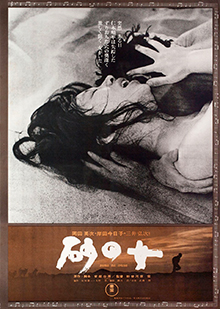


I’d never seen Woman in the Dunes (1964) before, but after watching the director’s cut on the BFI Player, it has now catapulted into one of the best films I have ever seen. This could be first-watch bias, however, thematically, emotionally, philosophically and stylistically speaking, it absolutely touched upon, connected and spoke to me greatly about my life’s experiences and the human condition.

Niki Junpei (Eiji Okada), a frustrated schoolteacher and amateur entomologist from Tokyo, travels to a remote coastal village in search of rare insects. After missing the last bus home, he accepts an invitation to stay overnight with a young widow (Kyōko Kishida) who lives alone in a hut at the bottom of a vast sand dune. He soon learns that her husband and daughter were killed in a sandstorm and that she spends every night shovelling away the endless sand that threatens to bury her home. Though Junpei initially sees himself as a temporary guest, strange comments from the villagers hint that something more sinister is unfolding.

The following morning, Junpei discovers that the rope ladder leading out of the sand pit has been removed. Trapped by the villagers, he realizes he has been chosen to become the widow’s permanent companion and labourer, helping her dig sand that the village secretly sells for profit. As he struggles to escape, Junpei learns that the widow is also a prisoner of the community, both of them controlled through dependence on the villagers for food and water. What begins as an accidental overnight stay becomes a nightmare of confinement, survival, and the gradual erosion of freedom beneath the relentless weight of the sand.
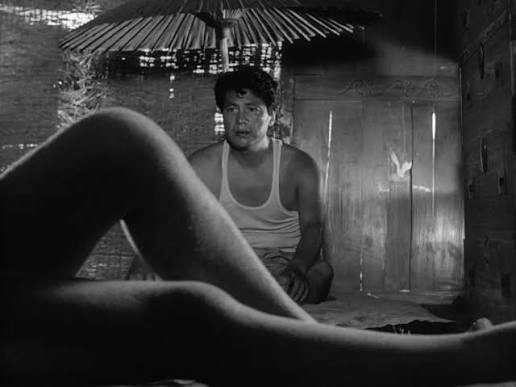


Hiroshi Teshigahara’s Woman in the Dunes (1964) is one of those rare films where image, character, theme and performance become inseparable. Shot in pristine black and white by cinematographer Hiroshi Segawa, it is visually astonishing: every grain of sand, bead of sweat and shadow across a human body is rendered with an almost microscopic intensity. The beauty of the photography is deliberately juxtaposed with the darkness of Niki Junpei’s predicament. What begins as an innocent expedition to collect insects becomes an existential prison, as he finds himself trapped by commerce, a surrogate marriage and, most powerfully, the natural wall of sand that pins both him and the unnamed widow to their strange subterranean existence.

The sand is both physical and metaphorical. It shifts, pours, consumes and rebuilds itself, turning Junpei’s captivity into a distinctly Sisyphean struggle. Every attempt at escape merely seems to return him to where he started, yet what makes Junpei such a compelling character is his absolute refusal to surrender. He builds ladders, devises increasingly ingenious escape plans, attempts to train crows to carry messages and continually tries to outwit the villagers who have ensnared him. Each failure intensifies rather than diminishes his determination. Like Sisyphus pushing the rock back up the hill, Junpei is condemned to confront an obstacle that endlessly renews itself.

Yet Woman in the Dunes (1964) is far more complicated than a straightforward story of imprisonment. Junpei is trapped by the villagers, but also by economic necessity, social expectation and an enforced domestic relationship that gradually begins to resemble a marriage. The villagers need the sand removed; the widow needs a man to help her survive; Junpei needs water, food and eventually human companionship. Teshigahara transforms this bizarre situation into a miniature society in which freedom itself becomes increasingly difficult to define. The more Junpei fights against his surroundings, the more deeply he becomes connected to them.

The relationship between Junpei and the widow, played with extraordinary physical and emotional commitment by Eiji Okada and Kyōko Kishida, gives the film its human core. Their intimacy moves between hostility, dependency, tenderness and desire without ever becoming conventional romance. Although sex is an important element of the film, Teshigahara rarely needs explicit imagery. Bodies appear as silhouettes, fragments and outlines; Kishida’s naked form is often suggested rather than displayed. A shoulder, a curve, a shadow or sand clinging to skin can communicate more than an explicit image ever could. One sees more from less throughout.
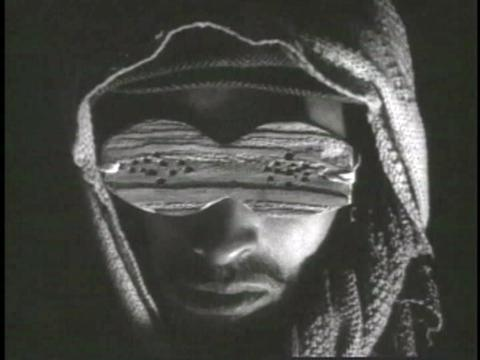


That principle extends to the entire film. Teshigahara makes the smallest details monumental. Sand resembles water, skin resembles landscape and the walls of the pit sometimes appear infinite. Extreme close-ups turn grains of sand into an entire universe, while wider compositions emphasise just how insignificant these two people are against the enormous shifting landscape surrounding them. The immaculate monochrome photography makes the film simultaneously beautiful and suffocating. The sand can look almost luminous in one shot and utterly threatening in the next.

There is also a wonderful irony at the heart of Junpei’s predicament. He arrives as an entomologist searching for insects, only to become a specimen himself: captured, observed and contained within a pit from which he cannot escape. The collector has become the collected. Teshigahara never labours the metaphor because he does not need to. It exists naturally within the imagery and situation, allowing the audience to discover its implications rather than having them explained.

Woman in the Dunes (1964) is virtually flawless in character, theme, cinematography, direction and performance. More than sixty years after its release, it remains startlingly modern and visually unlike almost anything else. Its central image — two human beings endlessly shovelling away a mountain of sand that will simply return tomorrow — is cinema distilled into an unforgettable metaphor for existence itself.

The only negative? Why didn’t I watch it sooner?

Mark: 10.5 out 11


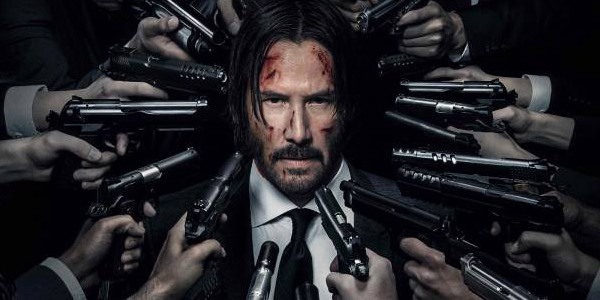
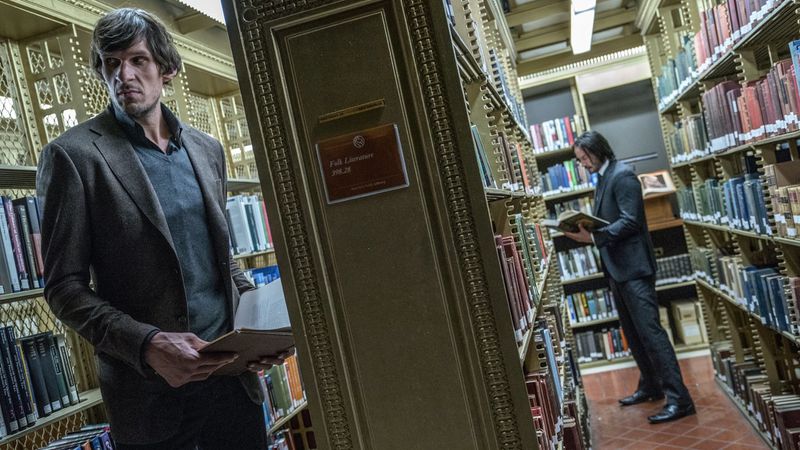
JOHN WICK: CHAPTER 3 – PARABELLUM

JOHN WICK: CHAPTER 3 – PARABELLUM – MOVIE REVIEW

Directed by: Chad Stahelski

Produced by: Basil Iwanyk, Erica Lee

Screenplay by: Derek Kolstad, Shay Hatten, Chris Collins, Marc Abrams

Cast: Keanu Reeves, Halle Berry, Laurence Fishburne, Mark Dacascos, Asia Kate Dillon, Lance Reddick, Ian McShane, Anjelica Huston etc.

Cinematography: Dan Laustsen

**MAY CONTAIN SPOILERS**

Have you ever thought: what’s the point in carrying on? We know we’re going to die someday so why bother trying to live? Dead French bloke Albert Camus wrote an existential essay called The Myth of Sisyphus and deemed life an exercise in the absurd. He offered mythological character Sisyphus as an example. Sisyphus was condemned to immortality for deceiving the Gods and his penance was to push a massive rock up a hill over and over. Camus wasn’t all doom and gloom, because he opined Sisyphus’s struggle ultimately gave his life meaning.

Why am I skirting around such philosophical musings? Well, John Wick is a classic “Sisyphean” character; destined to a repetitive cycle of life and death with very slim reasons for carrying on. In the first film it was revenge. In the second film it was paying back a marker; and then revenge. In the current, and third film of the franchise, it’s because he broke the rules of the assassin’s world and must pay the $14 million price. Plus, more revenge.

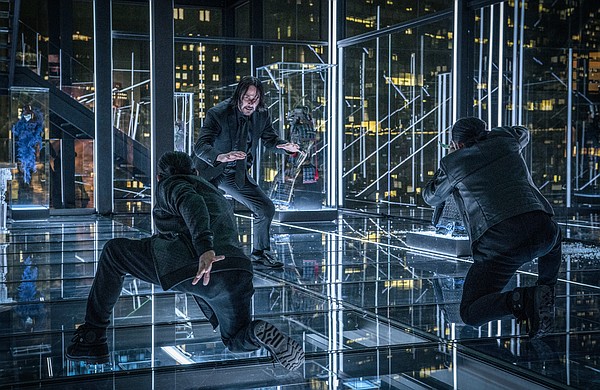
Yet, plot and reason are not the main purpose for watching this franchise. I watch it for the non-stop-Asian-infused-rainy-New-York-noir-flavoured-non-stop-balletic-violence-and-stunts. Here the incredible death toll and bloody killing is differentiated somewhat with: animals, vehicles and assorted sharp ojects joining the array of guns and fists used to hurt the two-dimensional bad people sent by the mysterious High Table gangsters. It doesn’t pay to analyse the film with logic, so just enjoy the immaculate: set design, art direction, cinematography, choreography, editing, visuals; and all-encompassing sound and fury.

Keanu Reeves, once again ignores the limits of his emotional range to deliver a formidable physical performance. Just his face, actions and movement alone are enough to convey his desires. Meanwhile, the writers open out John Wick’s back-story; shading in his past relationships and historical beginnings. This allows us to escape New York and venture to the Middle East, for a bit of sun and much needed change of scenery.

The film also welcomes a slew of fine character actors in support roles including: Halle Berry, Jerome Flynn, Asia Kate Dillon and Angelica Huston. They join the ever reliable Ian McShane, Laurence Fishburne and Lance Reddick from the first two chapters. Although, someone may have asked Fishburne to “rain” in his more bombastic moments, it’s still fun to see Neo and Morpheus on screen together. Oh, but the stunt dogs and 1990s B-movie action hero, Mark Dacascos, steal the show in their featured moments.

Overall, while showing signs of formula fatigue, John Wick: Chapter 3, remains a simple but wonderfully entertaining guilty pleasure. The choreography within the fight scenes and car/horse/motorcycle chases just transcend the action genre. Using: humour, pace, shock and sheer kinetic power they consistently startle and astound. Lastly, one could look at Wick’s character in mythical terms, perpetually fighting the Gods and forever pushing the rock up that hill. Indeed, I guess, like Sisyphus, Wick will carry on ad infinitum as long as there is someone to kill; and an audience wanting to watch such exquisite carnage on a big screen.

Mark: 8.5 out of 11

SISYPHEAN REPRESENTATIONS IN CINEMA AND TELEVISION

SISYPHEAN REPRESENTATIONS IN CINEMA AND TELEVISION

“Success consists of going from failure to failure without loss of enthusiasm.”  Winston Churchill

Have you ever just thought: what’s the point in carrying on?  Dead French bloke Albert Camus wrote an existential essay called The Myth of Sisyphus which I read when I was in my teens; and while failing to understand it I felt cool and superior to everyone else who hadn’t read it. I read it again a few years ago and it is a fascinating analysis as to whether life has any point.

Camus deemed life an exercise in the absurd and one should never give up but rather laugh or revolt; something like that anyway! He offered mythological character Sisyphus, who, if you didn’t know, was punished for his deceitfulness by the Gods. His penance was to forever push the same boulder up a hill over and over. Camus opined Sisyphus’ struggle gave life meaning despite the immortal repetition.

I have in my darkest hours of life’s disappointment thought about relinquishing hope. However, I agree with Camus as I feel NOT giving up is in fact success enough; and persistence is reward enough whatever the outcome. So, to celebrate characters overcoming adversity, abject failure or seemingly insurmountable odds, I have picked out some “Sisyphean” characters from TV and cinema who just didn’t know when they were beaten even if the odds were stacked against them or they’ve suffered defeat after defeat.

**MASSIVE SPOILERS AHEAD**

NUMBER 6 – THE PRISONER (1967)

Bond meets Kafka in this unique 1960s spy-thriller-with-a-twist. The brainchild of TV star Patrick McGoohan, this unique and psychedelic show found our anti-hero Number 6 attempting to escape from an idyllic “prison” called the Village. He could just settle back and give in to his captors’ questioning but Number 6 refuses to be filed and indexed; preferring to fight against the authorities despite being thwarted week after week.


ANDY DUFRESNE – THE SHAWSHANK REDEMPTION (1994)

Patience is a virtue they say and Andy Dufresne shows it in spades; tiny little digging spades he uses to chip away at a tunnel over many, many years. This prison film benefits from a gem of a Stephen King story, plus Frank Darabont’s brilliant writing. Everyman Dufresne could be battered into submission by the rape, beatings, and incarceration he endures but his stubborn survival instinct pays off in a wonderful pay-off at the story’s end.

CAROL PELETIER – THE WALKING DEAD (2010 –               )

Don’t you just hate the darned Zombie Apocalypse!!  I could have chosen a number of characters from other zombie films or shows but to me Carol Peletier (Melissa McBride) is one of the great survivors. She began as an meek character abused by her husband, but having seen her young daughter turn she eventually grew into a formidable “Sarah Connor” archetype kicking zombie butt with aplomb. Arguably, her mental breakdown in the last season was a disappointing but no doubt the Carol we love will be back; hopefully.

HUGH GLASS – THE REVENANT (2015)

Bear with me on this one!  DiCaprio got the Oscar for his nature-versus-man-survival-fest and deservedly so for his physical endeavour. His character Glass just refuses to shatter as he firstly suffers a vicious Grizzly attack and then is left for dead by Tom Hardy’s mumbling mercenary. After which the terrain, natives, climate, and most terrifyingly, men, conspire to force Glass into all manner of gruelling trials as he seeks revenge for the murder of his son.

MATTIE ROSS – TRUE GRIT (1969)

I loved this John Wayne classic pursuit Western when I was a kid and have seen it too many times to mention. The Duke won the Oscar yet the standout performance was from Kim Darby as Mattie Ross; a feisty, motor-mouth irritant who nags and cajoles and chases and fights after vicious murderer Tom Chaney. My favourite scene is with Rooster Cogburn, who when finally realising she just won’t give up, laughs and proclaims in his classic laconic drawl, “By god – she reminds me of me!”

MAX ROCKATANSKY:  FURY ROAD (2015)

Mad Max is one of the great existential action heroes. Adorned in battered leather and wearing life’s scars on his face and heart he continues to live and survive in a hopeless world full of punk maniacs with death in their eyes. I guess he carries on because there’s a flicker of hope in his marrow; even if danger and pain are often his only companions on the Fury Road!


SOLOMON NORTHRUP – TWELVE YEARS A SLAVE  (2013)

I could never begin to understand the suffering individuals went through at the hands of slavers. Yet Solomon Northrup’s memoir and latterly Steve McQueen’s film version of the story encapsulated the pain of such an existence with such power. Chiwetel Ejiofor excels in the lead of an innocent man stolen from his family and forced into bondage by nefarious examples of humanity. Throughout, Northrup retains his dignity and strength never to surrender; and is ultimately rewarded with freedom despite a horrific twelve years of agony.

SCRAT – ICE AGE (2002 –             )

Scrat is a big-toothed-long-suffering-squirrel from the Ice Age franchise whose comic vignettes involve him attempting to transport a huge acorn to an unknown hibernation location. Following Murphy’s Law adage that “what can go wrong will go wrong” to ad infinitum the pain and mayhem for the prehistoric squirrel makes for hilarious slapstick. While we revel in Scrat’s misadventures the blighter never gives up on his prize suffering blow after blow yet never relinquishing that nut whatever the weather.    


SUE HECK – THE MIDDLE (2009 –         )

Benefitting from an effervescent performance by young actress Eden Sher, the character of Sue Heck is a socially awkward yet committed individual. She tries out for EVERYTHING: spelling bees, cheerleaders, competitions, after-school clubs and pretty much FAILS every time. However, she views eschews failure and rejection and the fact teachers don’t even remember who she is as a mere trifle.  She is a terrific loser whose enthusiasm knows no limits and for that I salute her spirit and passion. We can all learn from Sue Heck!

WILE E. COYOTE (1948 –         )

Chuck Jones and Michael Maltese original animated tortured soul IS Sisyphus incarnate. Doomed to pursuit and abject failure Wile E. Coyote just absolutely won’t give up chasing the Roadrunner. Slapstick violence and near-death pummels the damned creature’s soul; yet he comes back for more and more punishment without ever seeking an alternative food supply. I found the cartoons hilarious as a kid and still do now. Wile E. Coyote is the “living” epitome of Churchill’s quote which begins this piece and I love the character for his sheer bloody-minded stubbornness and refusal to yield.