Tag Archives: gene roddenberry

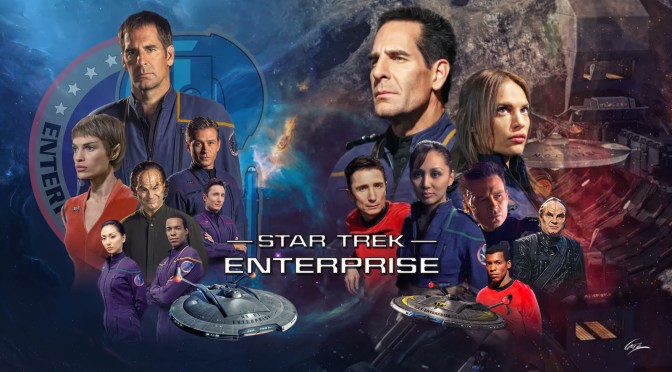
To Boldly Review #16 – Star Trek: Enterprise (2001 – 2005) – Seasons 1-4

To Boldly Review #16 – Star Trek: Enterprise (2001 – 2005) – Seasons 1-4

Created by Rick Berman & Brannon Braga

Based on Star Trek by Gene Roddenberry

Showrunners: Brannon Braga (2001-2004) & Manny Coto (2004-2005)

Production companies: Paramount Network Television, Braga Productions & Rick Berman Productions

Selected writers: Brannon Braga, Rick Berman, Manny Coto, Mike Sussman, Phyllis Strong, Judith Reeves-Stevens, Garfield Reeves-Stevens, André Bormanis, Chris Black, David A. Goodman, Fred Dekker, and more.

Selected directors: Roxann Dawson, LeVar Burton, Robert Duncan McNeill, Allan Kroeker, David Livingston, Winrich Kolbe, James L. Conway, Mike Vejar, Michael Grossman, Marita Grabiak, Brennan Spencer, Michael S. Watkins, Vincenzo Natali, and more.

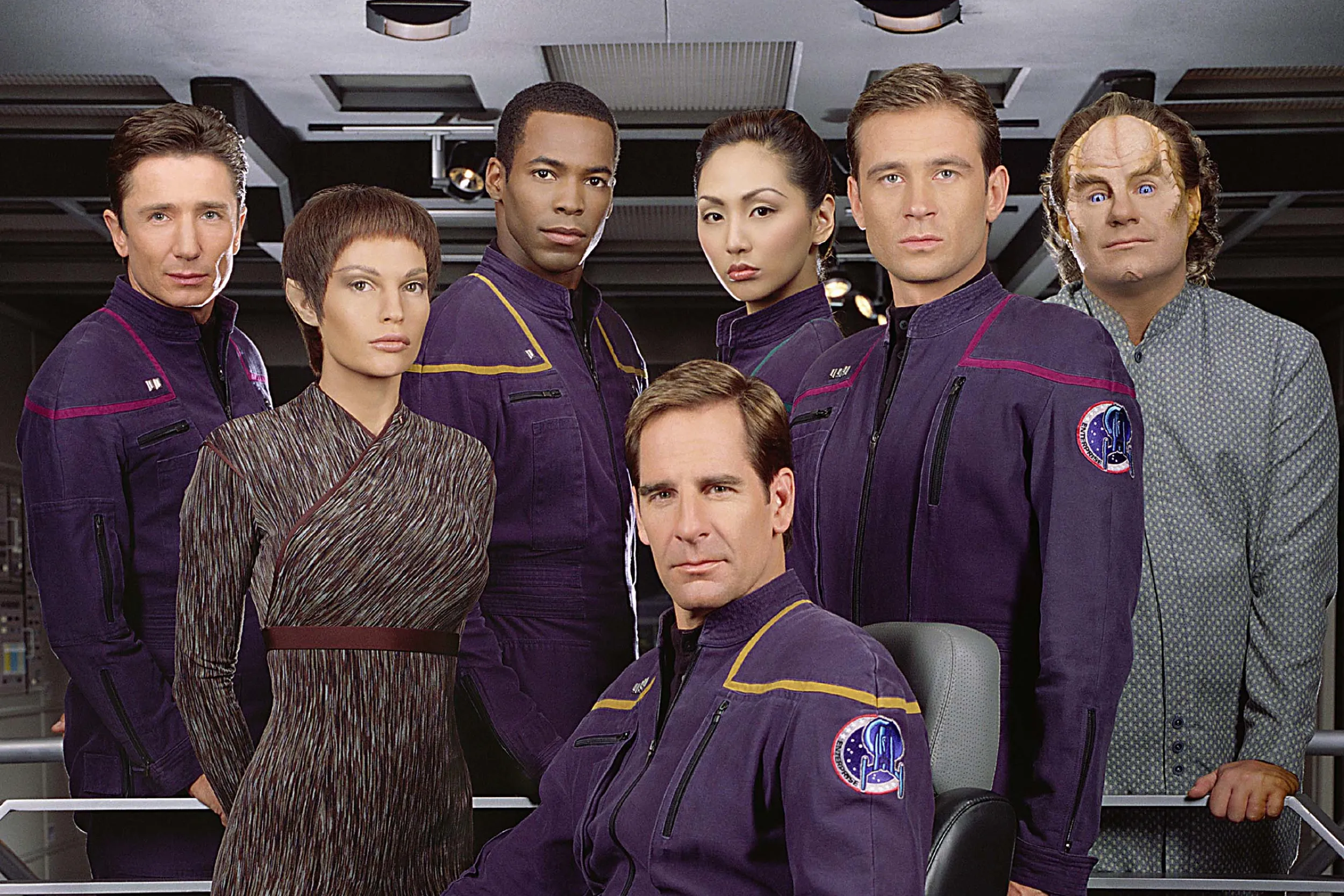
Main cast: Scott Bakula, John Billingsley, Jolene Blalock, Dominic Keating, Anthony Montgomery, Linda Park, Connor Trinneer etc.

Notable guest actors: Jeffrey Combs, Vaughn Armstrong , Gary Graham, Matt Winston, Randy Oglesby, James Cromwell, Brent Spiner, Daniel Dae Kim, Fionnula Flanagan, Robert Picardo, Tony Todd, Bruce Davison, Seth MacFarlane, Steven Culp, Noa Tishby, Rene Auberjonois, Peter Weller, Dean Stockwell etc.

Composer(s): Dennis McCarthy, Jay Chattaway, Brian Tyler, John Frizzell, Mark McKenzie, David Bell, Velton Ray Bunch, Kevin Kiner &
Paul Baillargeon

*** MAY CONTAIN SPOILERS ***


It’s been a while since I reviewed Star Trek on the site. But I have now finally completed the task I set myself to watch and review all the legacy Star Trek series. I am currently on the fence regarding the more recent Star Trek offerings. Anyway, having reviewed Voyager (see below) last year, I can now provide a detailed report back on Enterprise.


Star Trek: Enterprise occupies a fascinating corner of the franchise’s sprawling canon. Set a century before Kirk and more than a century after humanity’s first steps into spaceflight, the series charts the formative years of Starfleet—before there even was a “Starfleet” in the sense fans recognize. Its premise alone is rich: a pre-Federation frontier where humanity is inexperienced, unsteady, and often outmatched, yet eager to join a much larger galactic community. In this sense, Enterprise is both a prologue and a missing link, retrofitting the swaggering optimism of The Original Series with a more grounded, early-21st-century sensibility.

The show’s commitment to exploring those transitional years is what secures its place in canon. Enterprise seeds the diplomacy, technology, and interspecies tensions that future shows build upon—from the first warp-5 engine, to early encounters with Vulcans, Andorians, and the ever-shadowy Temporal Cold War. Watching Captain Jonathan Archer and his crew stumble toward the ideals later embodied by the Federation gives the series a distinctive historical weight. It doesn’t merely fit into Star Trek continuity; it actively sculpts the bedrock beneath it.

Central to the show’s appeal is Scott Bakula, whose performance as Captain Archer blends warmth, stubbornness, and a palpable sense of moral growing pains. Bakula gives Archer a grounded humanity that stands apart from the polished command styles of Picard or the passionate Sisko, yet his sincerity and resolve make him every bit their equal. When the writing rises to meet his talent—as in standout episodes like “Cogenitor,” “The Andorian Incident,” “Carbon Creek,” or the Xindi arc’s best moments—the show can reach the emotional and thematic heights of The Original Series and The Next Generation.


But Enterprise is also a series defined by uneven execution. For every episode that lands with classic-Trek resonance, there are others hampered by muddled plotting, bland direction, or creative decisions that feel more reactive than visionary. The show often struggled to decide whether it wanted to be a rough-edged prequel, a 2000s-era action drama, or a traditional episodic Trek—frequently trying to be all three at once. While it contains genuinely excellent science-fiction storytelling, its overall writing and directorial cohesion never consistently matched the clarity, ambition, or confidence of its most celebrated predecessors.

Yet despite its flaws, Star Trek: Enterprise remains an essential and often underrated part of the canon—a show whose best moments remind us exactly why Trek endures, and whose imperfections make its aspirations feel all the more human. Here are eight of the best episodes I watched – two per series.


Series 1 – The Andorian Incident (Episode 7)

This episode is the first truly great hour of Enterprise—the point where the show proves it can handle nuanced political storytelling within the Trek universe. The introduction of Jeffrey Combs as Shran is a masterstroke; he immediately brings depth, wit, and volatility to the Andorians. The plot, centered on Archer and his crew discovering that a supposedly pacifist Vulcan monastery is hiding darker secrets, reshapes our understanding of Vulcan–Andorian tensions. Strong direction, tight pacing, and a morally thorny reveal make this the first episode that feels essential to larger Star Trek canon.


Series 1 – Dear Doctor (Episode 13)

A thoughtful, character-driven story told through Dr. Phlox’s personal logs, “Dear Doctor” represents Enterprise at its most philosophically ambitious. It confronts the ethics of medical intervention, cultural evolution, and the limits of humanitarian aid—classic Trek territory handled with sensitivity and restraint. John Billingsley delivers one of the best performances of the season, infusing Phlox with curiosity, compassion, and unsettling pragmatism. The episode’s controversial ending also resonates, sparking debate among fans and critics alike. It’s a quietly powerful hour that demonstrates the series’ potential for moral complexity.


Series 2 – Carbon Creek (Episode 2)

Widely regarded as the highlight of Season 2—and for many, the best Enterprise episode of its first two years—“Carbon Creek” is a charming, unexpectedly heartfelt detour into Trek history. Told by T’Pol as a possibly-true, possibly-mythic story, it follows a stranded Vulcan survey team living incognito in 1950s Pennsylvania. The fish-out-of-water premise is handled with warmth, humour, and subtle social commentary, while Jolene Blalock shines in a dual role that lets her explore a softer, more playful Vulcan persona. It’s imaginative, character-rich, and quietly profound—the kind of tonal experiment that pays off beautifully.


Series 2 – Regeneration – (Episode 23)

A tense, surprisingly effective prequel to The Next Generation’s Borg storyline, “Regeneration” threads a tricky needle: introducing Borg elements without breaking canon. The episode smartly uses the wreckage from Star Trek: First Contact as its entry point, turning the narrative into a chilling, atmospheric thriller. The direction is sharp, the pacing taut, and the danger feels unusually real for this era of Trek. The crew’s desperation—fighting an enemy they can’t possibly understand—creates some of the season’s most gripping moments. It’s both fan-pleasing and genuinely suspenseful.


Series 3 – Twilight – (Episode 8)

Often cited as the masterpiece of Season 3, “Twilight” is a time-bending character drama that blends emotional storytelling with classic Trek sci-fi ingenuity. When Archer becomes afflicted with a neurological condition that erases his short-term memory, the episode jumps forward into an alternate future where humanity has been nearly wiped out by the Xindi. What follows is a surprisingly intimate exploration of Archer and T’Pol’s relationship, played with sincerity and restraint by Scott Bakula and Jolene Blalock. The script balances tragedy, hope, and big ideas without feeling gimmicky. It’s moving, tightly written, and stands alongside the franchise’s finest “what-if” stories.


Series 3 – Azati Prime – (Episode 18)

“Azati Prime” is the moment Season 3’s slow-burn storytelling snaps into urgent, high-stakes clarity. The episode follows Archer’s attempted suicide mission to destroy the Xindi superweapon, giving Scott Bakula one of his strongest performances in the entire series. The moral weight is heavy, the action tense, and the pacing relentless. Crucially, this is where the Xindi cease being abstract antagonists and become three-dimensional political factions torn between fear and diplomacy. The episode’s final act—Enterprise under brutal assault—is among the most cinematic sequences the series ever produced, setting up the endgame of the season with real emotional gravity.


Series 4 – United – (Episode 13)

“United” is Enterprise finally fulfilling its prequel potential—showing the messy, reluctant, and hard-fought beginnings of what will eventually become the United Federation of Planets. The political maneuvering is smart and grounded, the Andorian–Tellarite tension is played with grit and humor, and Jeffrey Combs delivers another magnetic performance as Shran. The episode’s centerpiece—the Andorian duel where Archer must fight to prevent a larger war—is tense, dramatic, and deeply character-driven. It’s classic Trek diplomacy mixed with riveting conflict, all while pushing the franchise’s history forward in meaningful ways.


Series 4 – In a Mirror, Darkly – (Episodes 18–19)

One of the most stylish and purely fun stories Enterprise ever told, this two-parter fully embraces the decadent brutality of the Mirror Universe. The production team goes all-in: redesigned sets, re-imagined uniforms, a pulpy remixed title sequence, and a stunning recreation of the USS Defiant from The Original Series. The cast seems to relish the opportunity to play villainous, unhinged versions of their characters—especially Jolene Blalock and Connor Trinneer. Visually bold, lore-rich, and brimming with dark humour, “In a Mirror, Darkly” is a love letter to both TOS and long-time Trek fans.

TO BOLDLY REVIEW #15 – STAR TREK: VOYAGER (1995 -2001) – SEASONS 1 – 7

TO BOLDLY REVIEW #15 – STAR TREK: VOYAGER (1995 -2001) – SEASONS 1 – 7

Created by: Rick Berman, Michael Piller and Jeri Taylor

Based on Star Trek: by Gene Roddenberry

Main Cast: Kate Mulgrew, Robert Beltran, Roxann Dawson, Jennifer Lien, Robert Duncan McNeill, Ethan Phillips, Robert Picardo, Tim Russ, Garrett Wang, Jeri Ryan etc.

Notable guest stars: Kurtwood Smith, Marina Sirkis, Dwight Schultz, Joel Grey, Sarah Silverman, John De Lancie, The Rock, Michael McKean, Jason Alexander, Virginia Madsen, Tom Morello etc.

Theme music composer: Jerry Goldsmith


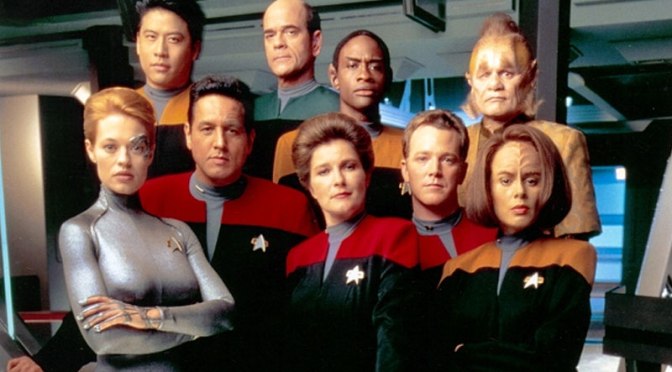
It’s been over a year since I reviewed the Star Trek: Deep Space Nine here. Thus, much of 2023 was spent watching the seven series of Star Trek: Voyager. The main concern with this cultural project of watching every Star Trek show and film released is that I could get serious franchise fatigue. However, Voyager was a fantastic series with some of my favourite ever Trek episodes experienced within the seven seasons.
Paramount Pictures commissioned the series after the cancellation of Star Trek: The Next Generation to run alongside Deep Space Nine in the schedules and launch their new UPN network. Created and developed by Rick Berman, Michael Piller and Jeri Taylor, Voyager uses the template of a Federation crew exploring new worlds and making contact with unknown species, but with a serious goal in place – to return home.

Because in the first episode, The Caretaker, Voyager is enveloped by a powerful energy wave that strands it in the galaxy’s Delta Quadrant, more than 70,000 light-years from Earth. I think this critical narrative drive raises the stakes and sense of jeopardy throughout the series and also gave the writers the opportunity to introduce alien species as recurring characters, namely the Kazon, Vidiians, Hirogen, and Species 8472. Having said that, the main nemesis ultimately ended up being the Borg.

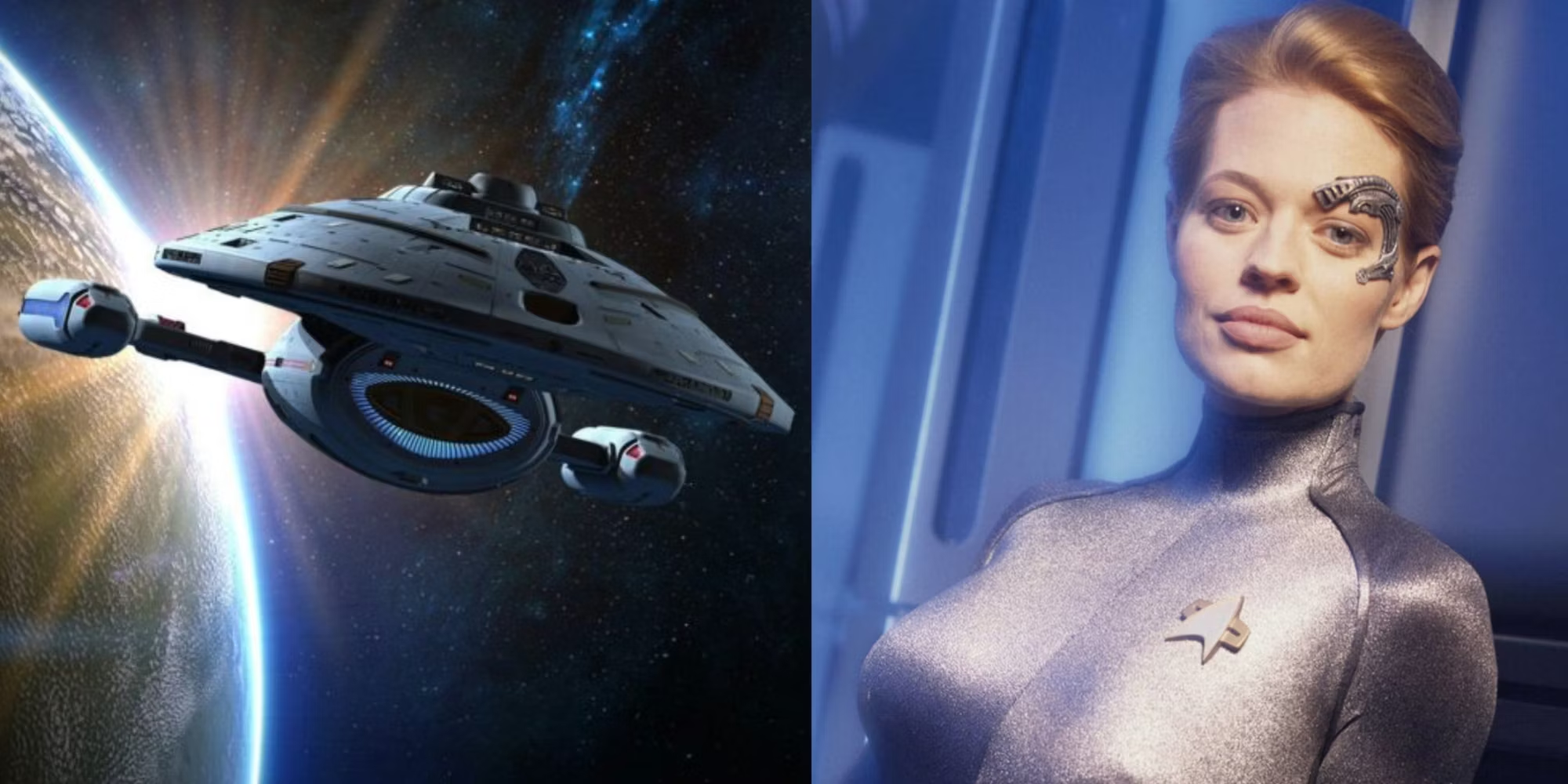
Voyager was the first Star Trek series to feature a female commanding officer, Captain Kathryn Janeway (Kate Mulgrew), as the lead. Mulgrew is a terrific actor and provided formidable characterisation throughout. Interestingly, Geneviève Bujold, was originally cast as Janeway, but quit a day and a half into shooting the pilot and was replaced. Mulgrew is notably supported in the ensemble cast by Robert Beltrani, Robert Picardo, Tim Russ, and the later introduction of fan favourite, Borg designation ‘Seven-of-Nine’ portrayed by Jeri Ryan. Robert Picardo as the hologram Doctor was also especially entertaining with many fine storylines.

I enjoyed the dynamic set-up of Starfleet officers having to work with rebels such as the Maquis, and that conflict provided much drama, pathos and joy throughout the series as their relationships developed. Further, important new Trek discoveries were introduced during the show such as: holo-emitters (so the doctor leave the ship and participate in more episodes), a tachyon core, trans-warp coil, Astrometrics lab, detailed information on the Borg and Delta Quadrant inhabitants, quantum slipstream drive, nano-viruses and access to the Borg’s Transwarp hub.
So, to end this summary I’d like to pick SEVEN of my favourite episodes – one from each season. They represent some of the best examples of Voyager, an often brilliantly written, well acted, funny and moving science fiction series.

** MAY CONTAIN SPOILERS **


VOYAGER – SEVEN GREAT EPISODES (FROM EACH SEASON)

SEASON 1 – CARETAKER

The opening two hour pilot is a terrific introduction to the players and storylines which will inhabit the next seven seasons. On the hunt for Maquis rebels finds the Voyager crew dragged into the Delta Quadrant, where they lock horns with the omnipotent power that is the ‘Caretaker.’ As well as establishing all the main players from Starfleet, the show successfully welcomes series mainstays Kes and Neelix.


SEASON 2 – TUVIX

What is essentially a version of The Fly (1989) in space, Neelix and Tuvok get combined at a molecular level to create a new character called Tuvix (Tom Wright.) What initially seems quite goofy is in fact a heartfelt exploration of morality and ethics. Janeway has an almost impossible decision to make with character actor, Wright, excelling and imposing pathos as the tragic Tuvix.


SEASON 3 – SCORPION – PART 1 and 2

Just when you thought things couldn’t get worse for Voyager they meet a foe even the Borg are fearful of, namely Species 8472. In this brilliant two-parter, Janeway and her intrepid crew find themselves caught in the middle of a war between the Borg and Species 8472. These thrilling episodes also saw the first appearance of ‘7 of 9’ (Jeri Ryan.)


SEASON 4 – YEAR OF HELL – PART 1 and 2

A truly epic two-parter with a story that could easily have made an incredible feature film. The abuse of power via time travel is at the core of the story as Kurtwood Smith’s Annorax obsessively changes his time to his own will as part of the Krenim Imperium. Janeway are enslaved under threat of being wiped from existence but fight back with tremendous resilience as the writing, directing and acting reach a peak for the series as a whole.


SEASON 5 – COURSE: OBLIVION

A direct sequel to Episode 24 from Series 4, Demon, Course: Oblivion is a brave episode for a number of reasons. It has a dreamy, surreal and latterly nightmarish quality to the style and the storyline, notably the ending, is one of the bleakest in Trek history. What is so clever is that as the writing and performances make us care for the characters when they begin to perish, even though we know nothing is what it seems.


SEASON 6 – BARGE OF THE DEAD

‘7 of 9’ (Jeri Ryan) took a lot of the character development plaudits during the last three seasons, but Roxann Dawson as B’Elanna Torres had some terrific episodes too such as this and Lineage in season 7. She is brilliant in this episode as her psyche is breached by a near-death experience and has to confront her family’s past and the heft of Klingon lore and history.


SEASON 7 – BODY AND SOUL

Obviously Star Trek contains episodes that are very serious and dramatic, but it has its fair share of comedic shows too. This re-imagining of gender swap comedy, All of Me (1984), finds ‘7 of 9’ (Jeri Ryan) switching bodies and mind with the Doctor (Robert Picardo) to hilarious effect. Now Picardo has always demonstrated sharp wit throughout Voyager, but Jeri Ryan is particularly impressive as she successfully mimics the Doctor’s mannerisms to hilarious effect, contrasting her usual deadpan and stoic Borg personality.

TO BOLDLY REVIEW #9 – STAR TREK: NEXT GENERATION (1990 – 1991)– SEASON 4

TO BOLDLY REVIEW #9 – STAR TREK: NEXT GENERATION (1990 – 1991)– SEASON 4

Based on Star Trek & Created by: Gene Roddenberry

Season 4 writers (selected): Michael Piller, Michael Wagner, Rick Berman, Jeri Taylor, Lee Sheldon, Melinda Snodgrass, Richard Manning, Ronald D. Moore, David Bischoff, , Joe Menosky, Drew Deighan, Brannon Braga, J. Larry Carroll, Hilary J. Bader, Harold Apter, Stuart Charno, Sara Charno, Maurice Hurley, Shari Goodhartz, Timothy DeHaas, Randee Russell, Ira Steven Behr, Rene Echevarria etc.

Season 4 directors (selected): Jonathan Frakes, Winrich Kolbe, Rob Bowman, Robert Weimer, Les Landau, Robert Scheerer, Cliff Bole, Robert Legato, Tom Benko, Chip Chalmers, Timothy Bond, David Carson, Gabrielle Beaumont, Patrick Stewart, David Livingston, Marvin V. Rush, Chip Chalmers etc.

Main Cast: Patrick Stewart, Jonathan Frakes, LeVar Burton, Whoopi Goldberg, Colm Meaney, Michael Dorn, Marina Sirtis, Brent Spiner, Wil Wheaton, Gates McFadden, John De Lancie, Dwight Schultz, Majel Barrett, Rosalind Chao etc.

Music/Composers: Alexander Courage, Jerry Goldsmith, Dennis McCarthy, Ron Jones, Jay Chattaway

Production Company(s): Paramount Television, CBS Television

**** CONTAINS SPOILERS ****


My simultaneous retrospective and futuristic journey into space and time continues, and I have finally finished watching Season 4 of Star Trek: The Next Generation. It’s commonly admitted to being one of the most consistently excellent seasons of TNG. I very much enjoyed the mixture of sci-fi concepts, drama, humour and tragedy within the well established formula of the Starship Enterprise boldly exploring various galaxies.

Major themes of the season related to family, honour, love, espionage, war and divided loyalties. While the Wesley Crusher character left for the Starfleet Academy (Wil Wheaton left the show), the majority of our favourite characters remained. Indeed, Miles O’Brien (Colm Meaney) was given more airtime and a marriage subplot. More dramatically the Klingons and Romulans featured heavily as pillars of conflict, with many of the best episodes featuring Romulan deceptions and Klingon brutalism.

Star Trek: The Next Generation continues to be a compelling show to watch and look back on with respect and nostalgia. While I continually enjoyed pretty much all the episodes, here are six of the best ones featuring Picard and his devoted crew.


THE BEST OF BOTH WORLDS – PART II – EPISODE 1

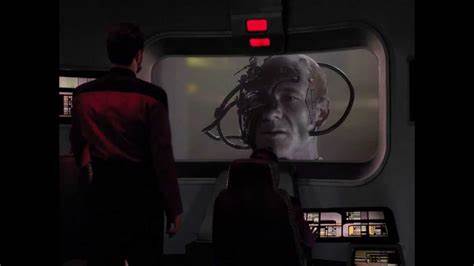
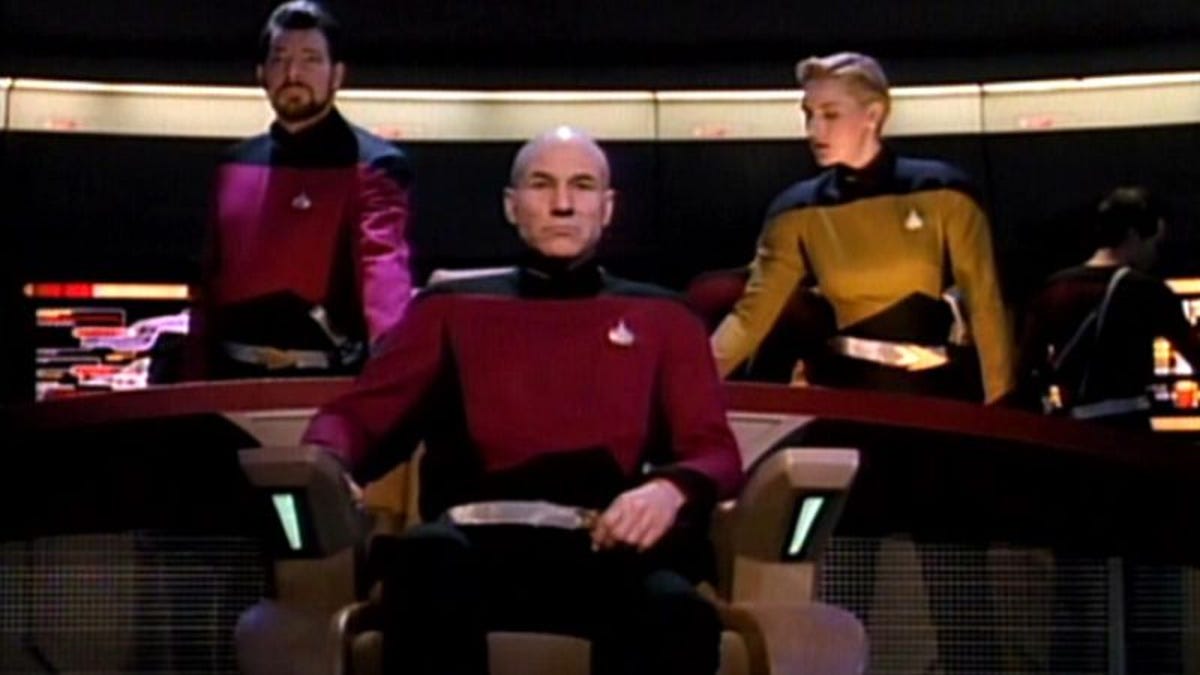
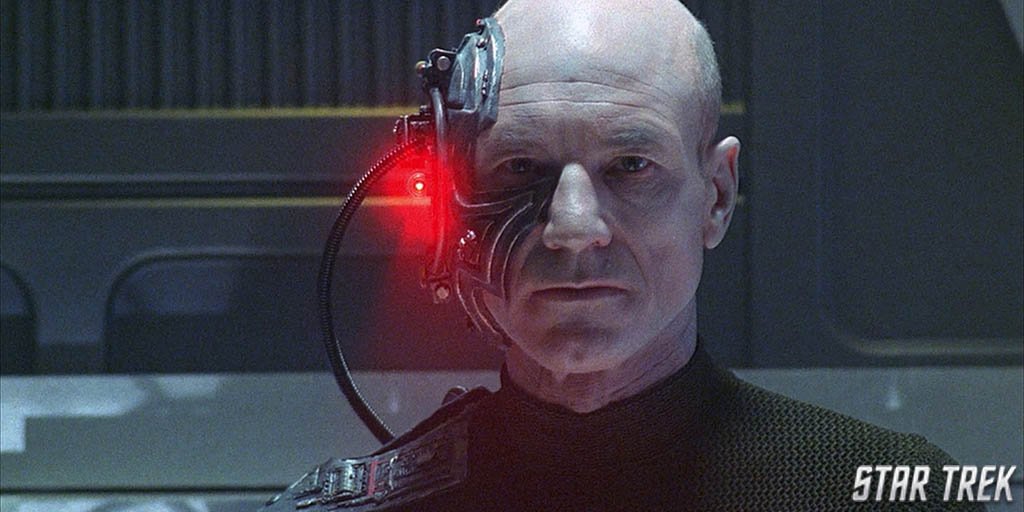
A continuation of Season 3’s cliff-hanger episode found Picard in the grips of the Borg. Even more thrilling was Riker, Data, La Forge and the rest of the crew have to stop the evil machines from launching a deadly assault on Earth. With dual battles of the mind and in space occurring simultaneously, this episode is memorable in so many ways. Patrick Stewart as Picard gives a fantastically intense performance as he battles the evil within.


FAMILY – EPISODE 2

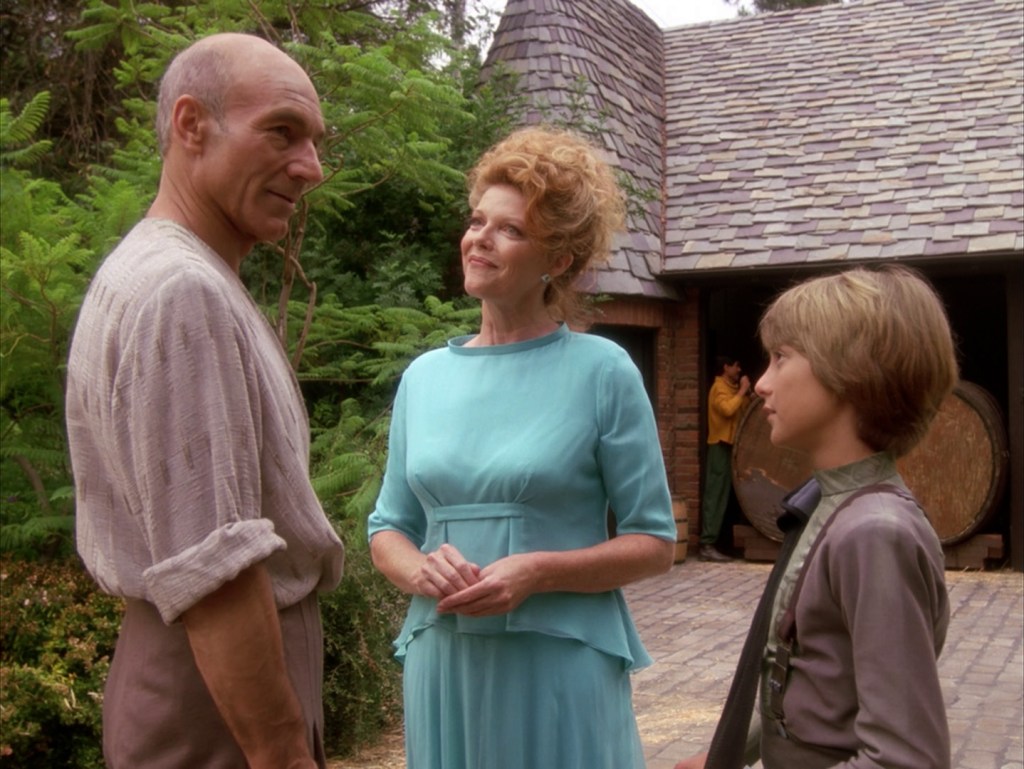
Gentler in approach than the opening episode, Family, has a brilliantly written script with three very emotionally charged storylines. Wesley Crusher must decide whether to watch a video recorded by his deceased father. Worf is met by his adoptive human parents who seek to console him following his Klingon discommendation. Lastly, a still shaken Picard returns to Earth and reconnects with his brother. The trio of narratives combine to forge a highly satisfying and emotionally charged episode.


REUNION – EPISODE 7

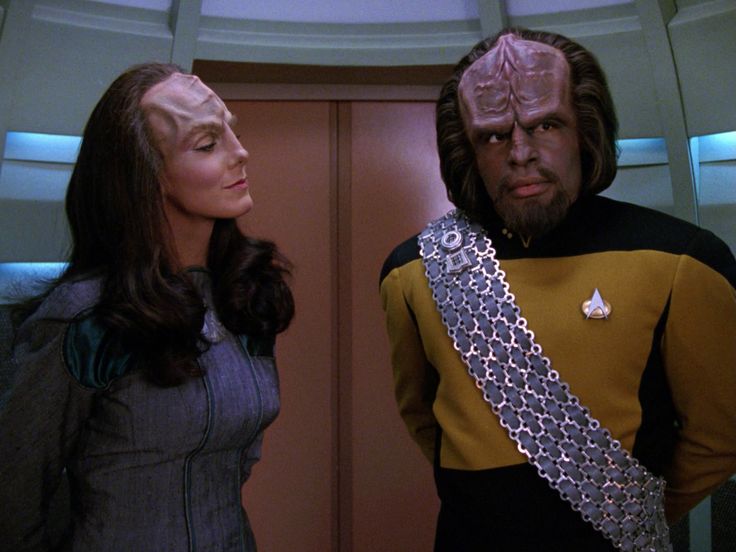
While Patrick Stewart as Captain Picard often garners the acting acclaim with his fine performances, I think Michael Dorn as Lt. Worf always gives great portrayals too. Worf’s conflicted cultural identity – between Klingon and Starfleet – always provides constant moments of explosive and introspective drama. In this episode his former love, K’Ehleyr (Suzie Plakson) returns to oversee, with Picard, the fight for the Klingon leadership. It is revealed that Worf also has a son by K’Ehleyr as the episode delivers excitement, intrigue and tragedy.


THE DRUMHEAD – EPISODE 21

This brilliant episode is unlike many others as the Enterprise crew are not faced with a divisive alien enemy. Instead, Picard and his crew come under Starfleet suspicion from the formidable Admiral Satie. Jean Simmons as Satie gives a memorable acting masterclass, as her over-zealous paranoia causes a witch-hunt culture to poison the court proceedings. I’m a big fan of the courtroom drama and this expertly paced and written episode reminded me of a reverse-engineered version of, The Caine Mutiny (1954).


THE MIND’S EYE – EPISODE 24

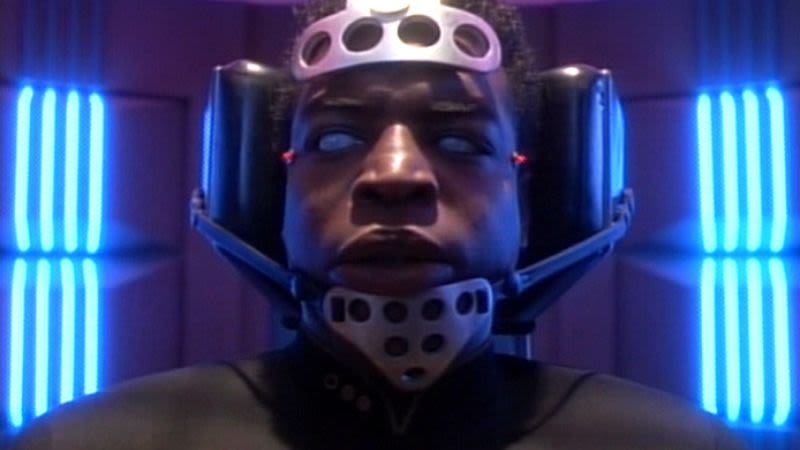
Chief Engineer Geordi La Forge is a very under-rated character within the TNG crew. He’s a brilliant engineer with a likable personality, so when he is “brainwashed” by the Romulans to commit an assassination it was intriguing to see his character go over to the dark side as it were. I especially liked the suspense and plot twists of this episode which paid homage to films such as: A Clockwork Orange (1971) and The Manchurian Candidate (1962).


REDEMPTION – PART I – EPISODE 26

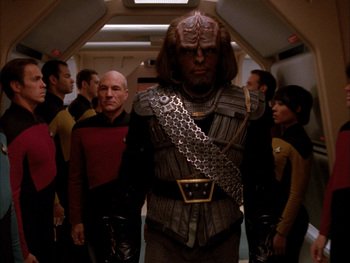
This brilliant season culminated with a superlative episode which brought together all of the plots and subplots involving the battles with the Romulans and Klingons. Lt. Worf has a particularly difficult choice between his Starfleet commission and family honour. Ultimately, he chooses to fight for honour and in a wonderful conclusion to the episode joins the Klingon fleet to fight alongside his brother, Kurn (Tony Todd), against the Duras hordes. Despite the out-of-the-box temporally strained twist involving, Sela (Denise Crosby), a Tasha Yar Romulan lookalike, the episode was full of dramatic moments and provided a compelling cliff-hanger for the next season.


TO BOLDLY REVIEW #8 – STAR TREK: NEXT GENERATION (1989 – 1990)– SEASON 3

TO BOLDLY REVIEW #8 – STAR TREK: NEXT GENERATION (1989 – 1990)– SEASON 3

Based on Star Trek & Created by: Gene Roddenberry

Season 3 writers (selected): Michael Piller, Michael Wagner, Melinda Snodgrass, Richard Manning, Ronald D. Moore, David Kemper, Hannah Louise Shearer, Sam Rolfe, Robin Bernheim, Richard Danus, Ed Zuckerman, Joseph Stefano, Rene Echevarria, David Bischoff, Sally Caves, Susan Sackett, Hans Beimler, etc.

Season 3 directors (selected): Jonathan Frakes, Winrich Kolbe, Rob Bowman, Robert Becker, Les Landau, Robert Scheerer, Joseph L. Scanlan, Cliff Bole, Robert Legato, Tom Benko, Chip Chalmers, Timothy Bond, David Carson, Gabrielle Beaumont, etc.

Main Cast: Patrick Stewart, Jonathan Frakes, LeVar Burton, Whoopi Goldberg, Colm Meaney, Michael Dorn, Marina Sirtis, Brent Spiner, Wil Wheaton, Gates McFadden, John De Lancie, Dwight Schultz etc.

Music/Composers: Alexander Courage, Jerry Goldsmith, Dennis McCarthy, Ron Jones, Jay Chattaway

Production Company(s): Paramount Television, CBS Television

**THIS REVIEW CONTAINS SPOILERS**


Thus, my ongoing viewing project of watching ALL the Star Trek series and films in order of release date continues. I have already covered the pro-genesis of STAR TREK: THE NEXT GENERATION here. So, I won’t cover the same ground again. With Season 3 we saw the return of Gates McFadden as Doctor Beverly Crusher, replacing the sterner virtues of Doctor Pulaski. Other than that, the established crew of the Enterprise were all present and correct.

The season as a whole continued, and even improved, the consistent qualities of Season 2. Indeed, there was a great balance between romantic, comedic, dramatic, tragic, action and sci-fi genre storylines. The appearances of Romulans, Klingons and the Ferengi further cemented their place in Star Trek lore. Yet, there was also space in the bumper twenty-six episodes for new species, beings and aliens to appear. Plus, not forgetting the return of that very formidable foe, The Borg.

I especially thought the narrative balance was very good throughout. All the Enterprise crew got episodes dedicated to their characters and a chance to shine individually and as part of the ensemble. We also got some fine guest appearances as new characters were introduced. Anyway, here are six episodes from Season 3 that I particularly enjoyed.


Image result for star trek next generation season 3

THE VENGEANCE FACTOR – EPISODE 9

Here Riker finds himself romantically entwined as Picard attempts to broker peace between two factions hellbent on a blood feud. I enjoyed it because of the murder mystery aspect. Also, Jonathan Frakes impressed as Riker in the leading romantic hero role.


Image result for the vengeance factor star trek

THE HUNTED – EPISODE 11

This fast-paced and action-packed episode found the crew meeting their match, as they face off against a genetically enhanced soldier portrayed by Jeffrey McCarthy. With echoes of Universal Soldier (1992), the episode has emotional depth too because it explores the disregard of veteran soldiers by the ruling classes once war is over.


Image result for the hunted star trek

YESTERDAY’S ENTERPRISE – EPISODE 15

The writers deserves a lot of praise for constructing such an imaginative and intelligent alternative-timeline narrative. A rift in space and time creates another version of the Enterprise. In this timeline war rages with the Klingons and moreover reveals Tasha Yar (Denise Crosby) to still be alive. Only Guinan (Whoopi Goldberg) senses something isn’t right and what ensues is a complex story; thoroughly enjoyable from both plot and emotional perspectives.


Image result for star trek yesterday's enterprise

THE OFFSPRING – EPISODE 16

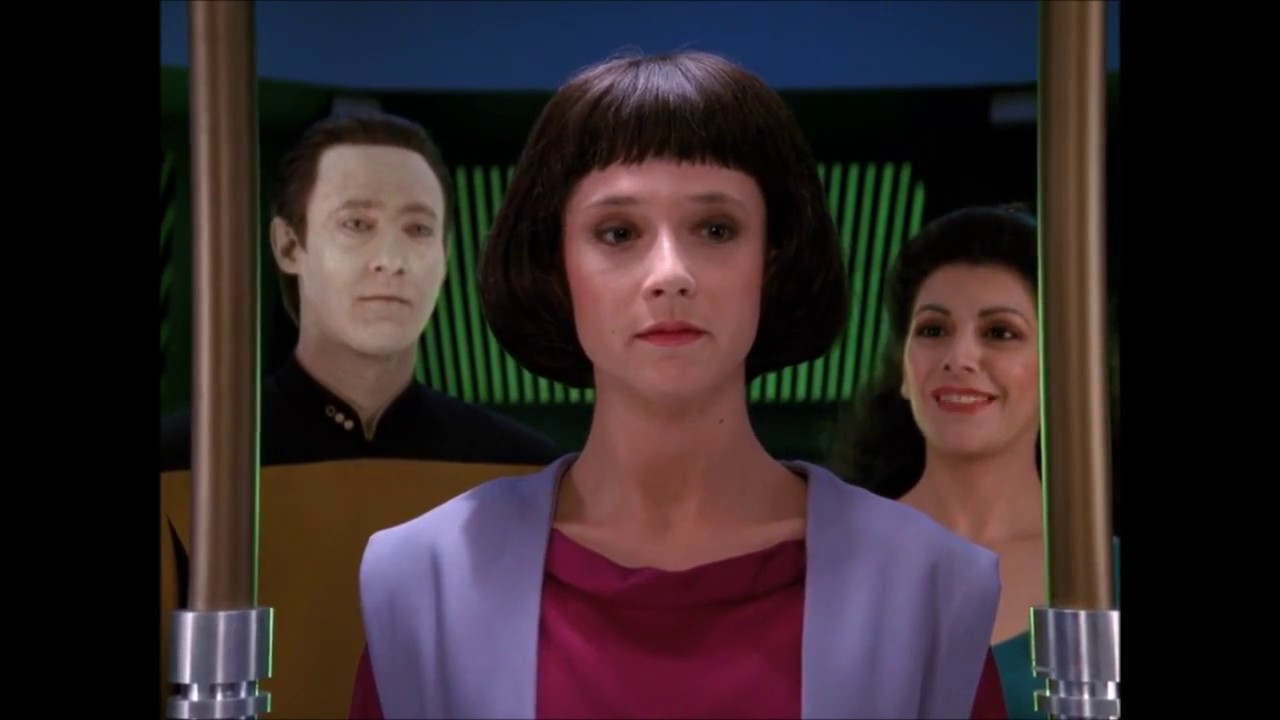
One of the big story questions that hung over the series for me was: why didn’t they try and replicate Data in some way? This concept is explored in this very moving episode when he constructs another android called, Lal (Hallie Todd). Brett Spiner is on great form as Data faces a difficult choice,; having to choose between his “daughter” and Starfleet regulations.


Image result for star trek the offspring

SINS OF THE FATHER – EPISODE 17

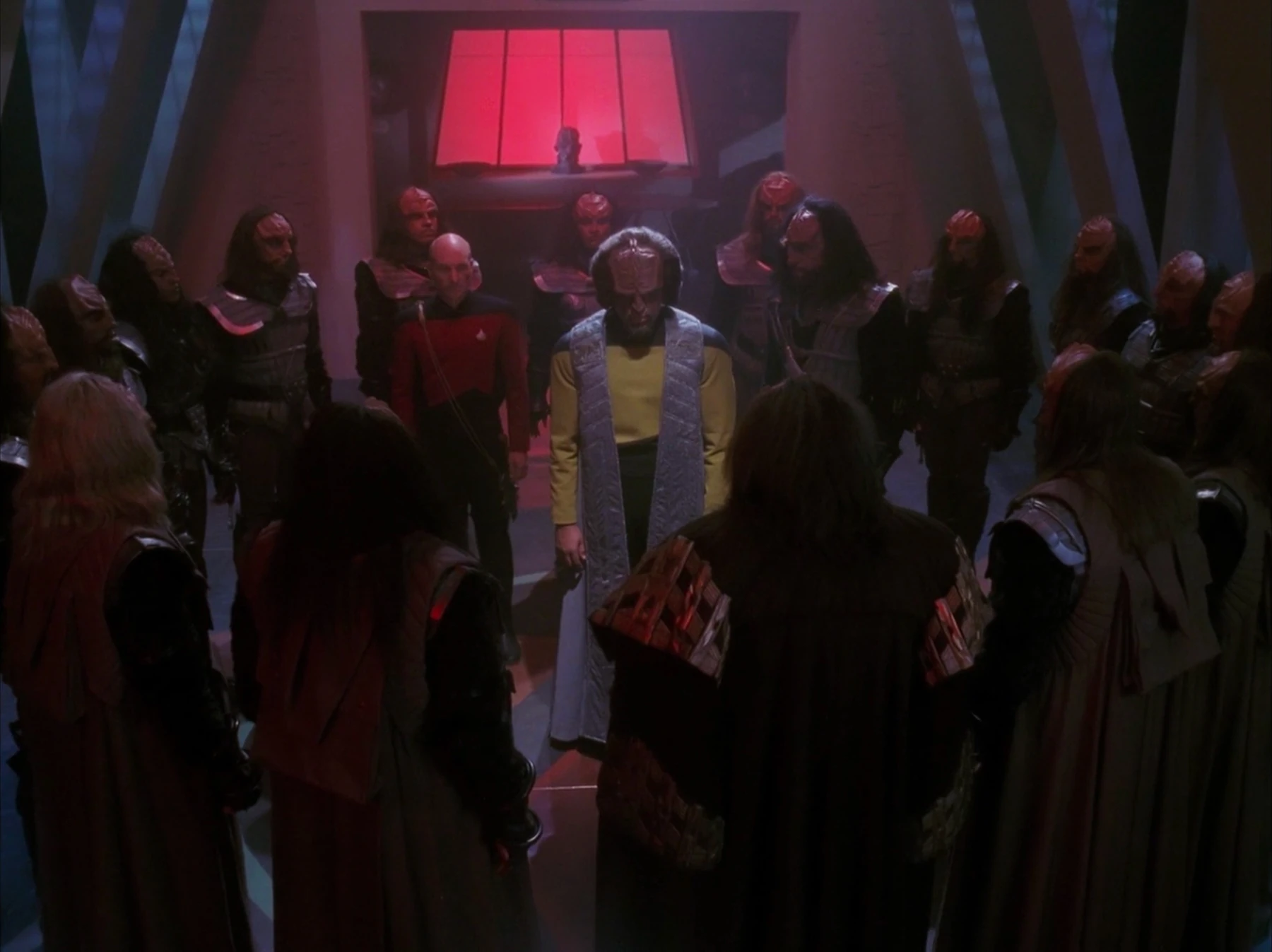
Any episode with Lt. Worf (Michael Dorn) as the lead protagonist is always intriguing. Here Worf must face potential death in defending his family honour against the Klingon High Council. Tony Todd appears as Worf’s brother and the chance to further explore Klingon culture amidst a conspiracy plot leads to a really good episode.


Image result for star trek sins of the father

THE BEST OF BOTH WORLDS – PART 1 – EPISODE 26

I can only imagine what emotions the Star Trek fans felt at the time when they witnessed Jean Luc Picard’s transformation into the Borg known as Locutus. In what must be one of the greatest cliff-hanger TV moments of all time, this episode had strong writing and incredible conflict. The addition of Elizabeth Dennehy to the crew of the Enterprise, as the ambitious and formidable, Lt. Commander Shelby, also added to the overall quality of this brilliant episode.


Image result for star trek best of both worlds

TO BOLDLY REVIEW #7 – STAR TREK: NEXT GENERATION – SEASON 2 (1988 – 1989)

TO BOLDLY REVIEW #7 – STAR TREK: NEXT GENERATION – SEASON 2

Based on Star Trek & Created by: Gene Roddenberry

Season 2 writers (selected): Richard Manning, David Assael, Melinda Snodgrass, Scott Rubenstein, Leonard Mlodinow, Maurice Hurley, Burton Armus, Robert Iscove, Kathryn Powers, Gene Roddenberry, Joseph Stefano, Terry Devereaux etc.

Season 2 directors (selected): Winrich Kolbe, Rob Bowman, Robert Becker, Les Landau, Robert Scheerer, Joseph L. Scanlan, Cliff Bole etc.

Main Cast: Patrick Stewart, Jonathan Frakes, LeVar Burton, Whoopi Goldberg, Colm Meaney, Michael Dorn, Marina Sirtis, Brent Spiner, Wil Wheaton, Diane Muldaur, John De Lancie, Lycia Naff etc.

Music/Composers: Alexander Courage, Jerry Goldsmith, Dennis McCarthy, Ron Jones, Jay Chattaway

Production Company(s): Paramount Television, CBS Television

**THIS REVIEW CONTAINS SPOILERS**


Thus, my ongoing viewing project of watching ALL the Star Trek series and films in order of release date continues. I have already covered the pro-genesis of STAR TREK: THE NEXT GENERATION here. So, I won’t cover the same ground again.

While the first season did a good job establishing the characters, action, plots, gadgets, themes and general formula, it was still finding its space feet, as it were. While we lost a couple of major characters, the second season transitioned into a very satisfying series of episodes.

Dr Pulaski (Diane Muldaur) replaced Beverley Crusher (Gates McFadden) for a season and she provided some stern opposition to Picard in certain narratives. But, the casting of Whoopi Goldberg as Guinan was a masterstroke. Goldberg is such an intuitive and classy actor, she added cinematic quality to some fine episodes.

I have to admit I am not so sure HOW they managed to produce so many good episodes. My understanding is shooting a twenty-plus episode season of television is an incredible feat of creativity. The rewards were certainly earned. The show would garner great viewing figures and also many Emmy nominations come TV awards season. Here are six of my favourite episodes from STAR TREK: THE NEXT GENERATION – SEASON 2.


ELEMENTARY MY DEAR DATA – EPISODE 3

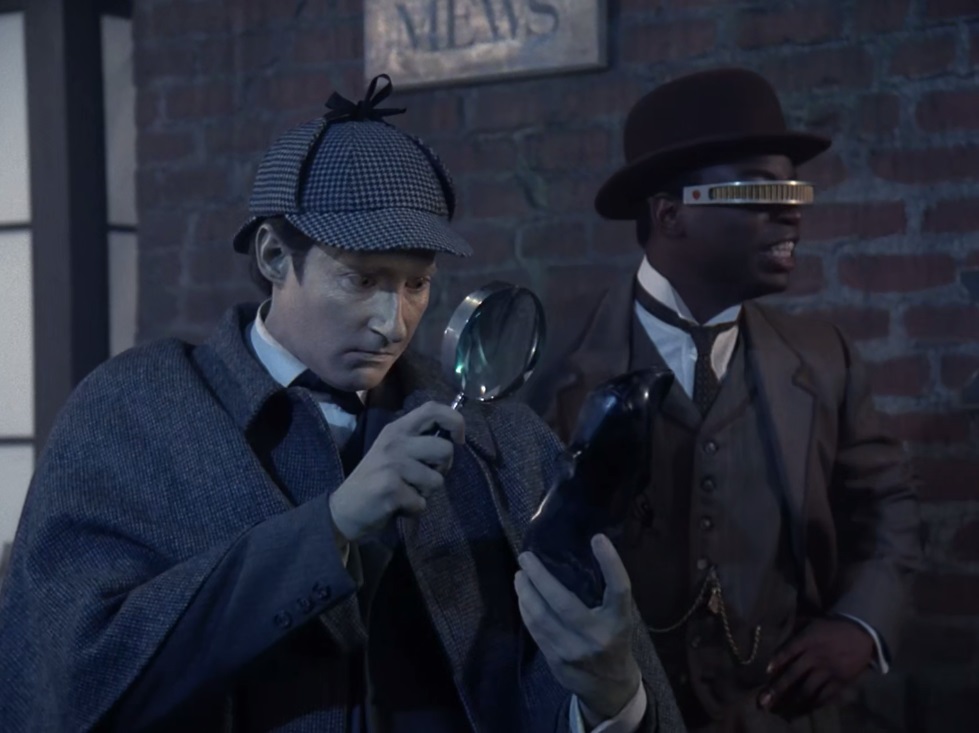
Data and Chief Engineer La Forge take on the roles of Holmes and Watson in another “holodeck-adventure-gone-wrong” narrative. I love Sherlock Holmes so this episode is fantastic to me. I also felt that the sentient Moriarty (Daniel Davis) brought much humanity to the classic nemesis. The La Forge and Data character dynamic is really fun too as La Forge attempts to outwit and challenge his android friend with dangerous results.


THE SCHIZOID MAN – EPISODE 6

Reminiscent of a classic Star Trek episode from the original series, and also a tribute to The Prisoner, this story contains the often used revered scientist gone rogue. More interestingly though, it explores themes of immortality and transference of human intelligence into a computer. Of course, it’s Data who finds his character split and battling an interloper seeking everlasting existence.


MEASURE OF A MAN – EPISODE 9

Sorry, another Data led episode. Data finds himself at a tug-of-war dispute over whether he can be determined as human or a mere piece of technology to be dismantled for science. A court case follows with Picard defending Data and Riker “prosecuting”. Spiner is superb as Data and Jonathan Frakes is especially good, having to carry out a duty he comes to hate. This episode has genuinely high class writing, acting, direction themes and narrative. Not to say most of the other episodes aren’t good, but this one is particularly great.


TIME SQUARED – EPISODE 13

I love doppelganger and time travel plots. This episode has both, as Picard must face a future version of himself and some incredibly difficult decisions to save the destruction of the Enterprise. Often time travel narratives will involve years or even decades difference, but this time it’s around six hours. This creates much drama and brings to life that always fascinating theme of the self having to face the self in a time of crisis.


Q-WHO – EPISODE 16

The irritating super-being Q (John De Lancie), rears his annoying head again. Although, he actually isn’t the most threatening enemy in this brilliant episode. That “honour” is bestowed upon the formidable Borg. Picard and the Enterprise crew find themselves challenged by these relentless machines and almost perish. The Borg remind me of Doctor Who‘s vicious rivals, the Cybermen, and make for impressive adversaries. The episode is also notable for the further development of Guinan’s character. Indeed, more of Whoopi Goldberg is always welcome.


THE EMISSARY – EPISODE 20

Promoting Worf (Michael Dorn) to Chief Security Office was a masterstroke of character development for the second season. The Klingon race is famed for its’ head-on approach to the fight and Worf would often find his inner Klingon battling Starfleet regulations. Here Worf is further conflicted with romantic feelings for a half-human-half-Klingon emissary, K’Ehleyr (Susie Plakson). She is sent to resolve a fascinating “Hell in the Pacific” side-plot; where a Klingon crew do not yet know the war is over. Dorn and Plakson share fantastic chemistry and it was compelling to find love and war themes combine so effectively.


TO BOLDLY REVIEW #6 – STAR TREK: NEXT GENERATION – SEASON 1 (1987 – 1988)

TO BOLDLY REVIEW #6 – STAR TREK: NEXT GENERATION – SEASON 1

Based on Star Trek & Created by: Gene Roddenberry

Season 1 writers (selected): John F. Black, Diane Duane, D.C. Fontana, Maurice Hurley, Robert Lewin, Richard Manning, Kathryn Powers, Gene Roddenberry, Joseph Stefano, Tracy Torme etc.

Season 1 directors (selected): Colin Bucksey, Rob Bowman, Cliff Bole, Les Landau, Kim Manners, Win Phelps, Mike Vejar etc.

Main Cast: Patrick Stewart, Jonathan Frakes, LeVar Burton, Denise Crosby, Michael Dorn, Gates McFadden, Marina Sirtis, Brent Spiner, Wil Wheaton etc.

Music/Composers: Alexander Courage, Jerry Goldsmith, Dennis McCarthy, Ron Jones, Jay Chattaway

Production Company(s): Paramount Television, CBS Television

**THIS ARTICLE CONTAINS SPOILERS**

“MAKE IT SO. . .”

So, my cultural journey beyond the stars continues with a review of the first season of Star Trek: Next Generation. It took some serious time for what was originally known as Phase II to take off. Indeed, they finally hit warp speed during the late 1980’s. Roddenberry, the original Enterprise crew, plus swarms of Paramount employees had kept themselves busy with the ‘Original Series’ cinema releases, but, in 1986, a new TV series was announced.

Then, almost a year later in September 1987, Star Trek: Next Generation was released. TNG featured: a new crew, a more advanced class of Enterprise, and a variety of new aliens, planets and galaxies to boldly explore. While there was an initial decree to avoid all the old enemies from the original series, the Klingons, Romulans and more, slowly bled into the show as it was further developed.

FIRST CONTACT

Much has been written about Star Trek in general and the internet is brimming with articles, features, interviews, podcasts, fan films and documentaries which would take an immortal’s lifetime to read. So, my approach to this piece is to concentrate on the characters, narratives, themes and concepts which leapt out while watching it.

Overall, I really enjoyed most of Star Trek: Next Generation – Season 1. I have read that die-hard fans were resistant to the idea their favourite show from the 1960’s was getting a makeover. However, Paramount/CBS Studios chucked $1.3 million at each episode and shot on 35MM film, thus demonstrating a commitment to a quality product.

Even watching it now I am impressed by the production values, cast, direction and science fiction concepts. Obviously some of the effects are a bit dated compared to what we experience today but I always prefer in-camera effects and prosthesis, anyway. Having said that Star Trek has always been about strong ideas and themes for me.

In terms of story and character there are some very strong episodes and some pretty weak ones. Gene Roddenberry, his producers and raft of writers were, reported to be consistently at loggerheads throughout the production. So much so very few of the original TNG writing team remained by the end. It’s a testament to the rock-solid formula of the show that such issues did not hinder the ultimate consistency of entertainment while I was watching.

My main criticism is that some episodes felt like first drafts. Plus, there was, on occasions, a few episodes which were top heavy in set-up and rushed toward the end. Nonetheless, Roddenberry’s original format is always fascinating and you could certainly feel that when they successfully married: the science fiction concepts, characters, tone and dialogue you got many great episodes.

THE FAMILY UNIT

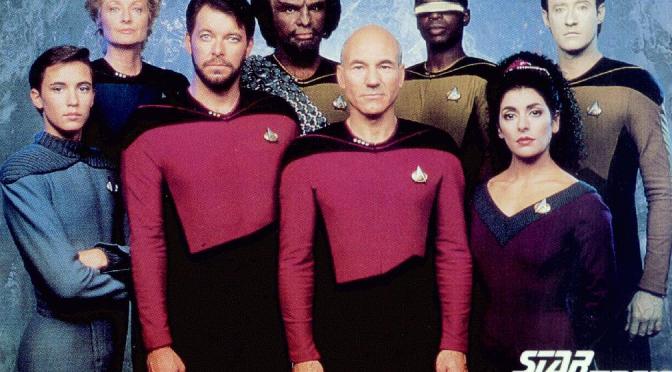
Holding the narratives and show together was an exceptionally brilliant set of actors. I mean, in the cold light of space, Star Trek: Next Generation could be deemed just men, women and aliens in silly outfits. Of course, we know it’s much more intelligent than that. So with acting heavyweight Patrick Stewart leading the way, all the cast were committed to their roles formidably. They had to be for it to work so well.

To me TNG was structured around a quasi-family unit, as opposed to the naval/military hierarchy of the ‘Original Series’. Captain Jean-Luc Picard majestically leads from the front with authority and a keen sense of fair play. Dr Beverly Crusher is the pseudo-matriarch, both professional and caring. Further, the other main members of the crew are, very loosely speaking, the children.

Riker I’d suggest is the first son and heir apparent, closely followed in the hierarchy by Geordi. The likes of data and Wesley are the younger, gifted children, full of intelligence and enquiry. The sensitive, Troi and tougher Yasha represent the older daughters, while I’m not quite sure how the Klingon, Worf, fits in. Perhaps, he’s a bastard son or long lost cousin seeking affirmation of the family unit. Thus, these characters as a ‘family’ support the spine of the show, all combining with varying strength and characteristics to form a whole that propels both drama and emotion.

THE REST IS HISTORY. . .

Star Trek: Next Generation consisted of TWENTY-SIX episodes!! While no doubt well paid, this remains an incredible workload for the cast and crew. Initially, the season got off to a difficult start in terms of ratings and reviews. Nonetheless, by the end of the season , the class of the production and format shone through. Furthermore, it would be nominated for seven Emmy TV awards. Ratings would also improve and it became the highest rated syndication series by the end of the run. To conclude, I would like to look at six episodes from season 1 which I felt stood out while I watched them.

THE BIG GOODBYE – EPISODE 12

The ‘Holodeck‘ plays a huge part in the series as a whole. It’s a fantastic way to marry the past and future together. In this clever episode Picard attempts to escape into one of his favourite film noir simulations but gets more than he bargained for. Then when the holodeck malfunctions, Picard and his crew find themselves in the midst of a simulated “real-life” and perilous gangster mystery.

DATALORE – EPISODE 13

I love a good Jekyll and Hyde story and this one explores the origin of much respected android, Data. Brett Spiner is such a good television actor and he nails both roles as Data and his “brother” Lore, who, as genre conventions require, is basically bad Data and hell-bent on taking control of the Enterprise.

HEART OF GLORY – EPISODE 20

Obviously the stories involving the Federation are always interesting but often I really enjoy the more personal narratives. In this episode Michael Dorn as Worf finds his allegiances between the Enterprise and fellow Klingons tested. It’s a fine character exploration as we get to see Worf’s warrior persona versus the more reasoned Starfleet side.

THE ARSENAL OF FREEDOM – EPISODE 21

War, or threat of war has always been at the heart of many great episodes. The concept that a planet of arms dealers who are killed by their own hi-tech product was a great idea. It also gave the crew and Enterprise major threats on the planet they visit and in space. The action, character development and suspense make this a very thrilling episode all-round.

SYMBIOSIS – EPISODE 22

Social commentary was a key component of the ‘Original Series’. Many episodes tapped into the zeitgeist of the 1960’s issues relating to war, race, religion and gender etc. TNG continued this tradition with Symbiosis which expertly explores the nature of narcotic addiction and how it can be exploited to negative effect by an alien race. I especially enjoyed the grey ending where the ‘Prime Directive‘ comes into play.

CONSPIRACY – EPISODE 25

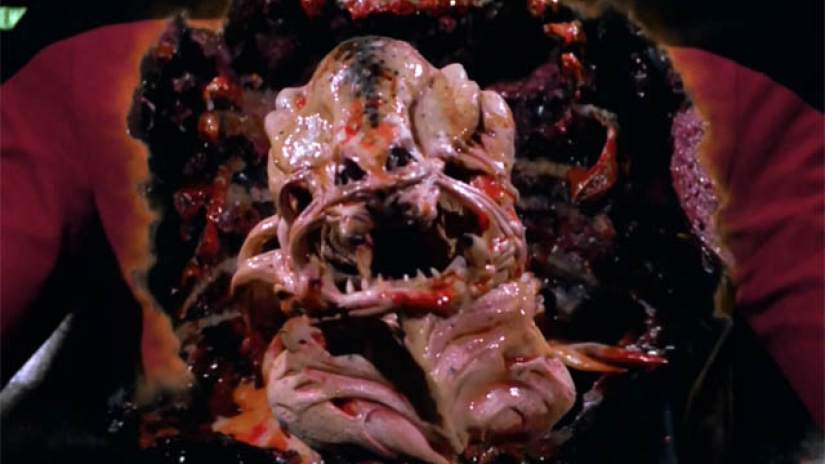
A major rule throughout Star Trek is that the Federation is not to be shown as corrupt. There have been exceptions to this in certain feature films and they get around this in Conspiracy with the Federation top brass invaded by parasitic aliens. The narrative was very strong and felt like a feature film story in scale. I also loved the David Cronenberg-style monsters appearance in the gory finale.

TO BOLDLY REVIEW #5 – STAR TREK – ‘ORIGINAL SERIES’ MOTION PICTURES

TO BOLDLY REVIEW #5 – STAR TREK – ‘ORIGINAL SERIES’ MOTION PICTURES

After watching and reviewing the first three original Star Trek series and the 1970s animated show on my blog, I moved straight onto the first season of Star Trek: Next Generation. I then realised I had forgotten the original series film franchise; six films which were released between 1979 and 1986.

Safe to say they were hugely popular among the army of Trek fans worldwide, especially for those desperate for the original show to return. The films were welcomed with a combination of critical acclaim and commercial success; plus a mixture of positive and some negative reviews. Anyway, here are my mini-reviews of each film with marks up to warp drive 11!

**THIS ARTICLE CONTAINS SPOILERS**

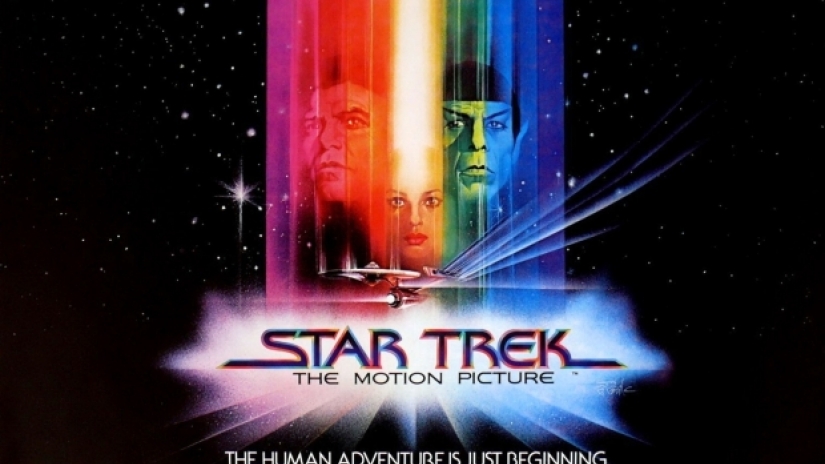
Star Trek: The Motion Picture (1979) – Director: Robert Wise

Unfortunately, time has not been kind to Star Trek: The Motion Picture, as it suffers when compared to other more successful sci-fi films of the era. While Robert Wise was an excellent film director he was arguably not quite right for the film and the script lacks warmth and humour also. Lastly, despite the story moving at a snail’s pace the film has some decent moments, with Jerry Goldsmith’s majestic score shining brightly too.

Mark: 6.5 out of 11

Star Trek II: The Wrath of Khan (1982) – Director: Nicholas Meyer

This is a direct sequel to the fantastic orginal series episode Space Seed. In it we find Ricardo Montalban’s uber-villain Khan Noonien Singh, relentlessly pursuing revenge against Kirk and the Enterprise crew. Meyer’s screenplay and direction capture the classic Trek approach to characterisation and sci-fi concepts, making this film great fun. Montalban and Meyer’s sharp script steal the show, with the allusions to sea-faring classics such as Moby Dick and Hornblower adding compelling thematic texture.

Mark: 8.5 out of 11

Star Trek III: The Search for Spock (1984) – Director: Leonard Nimoy

With Meyer having killed off Spock so heroically in the Wrath of Khan, this direct sequel spends most of its time trying to get out of that narrative black hole. With a terra-forming planet on the verge of destruction and those pesky Klingons wreaking havoc with their devious cloaking device, there’s a lot to keep the crew of the Enterprise busy. Chuck in Kirk’s secret son for emotional depth, plus seven ages of Spock (from baby to fully grown Vulcan), and overall you get a solid Trek yarn that has some memorable elements throughout.

Mark: 7 out of 11

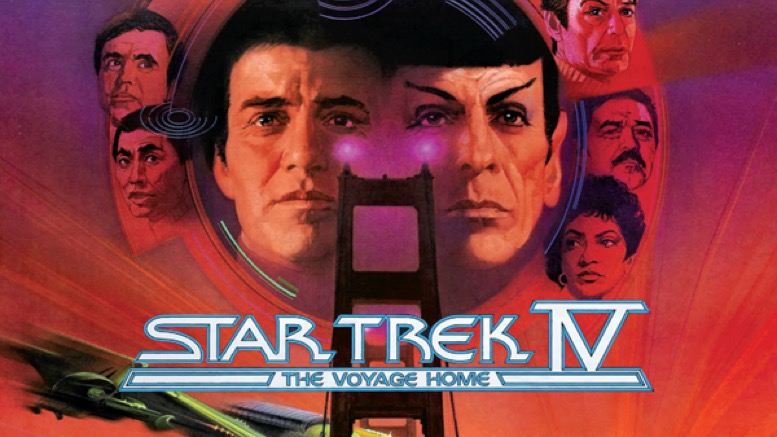
Star Trek IV: The Voyage Home (1986) – Director: Leonard Nimoy

This sci-fi romp is basically a Trek comedy which finds the Enterprise sling-shotting back in time to 1980s San Francisco, in order to rescue whales which can save Earth from destruction in the present/ future. How the Tribble they worked out whales were so vital is something only the screenwriters can explain, but clearly they are environmental symbols in the narrative. Indeed, Star Trek as allegory, has always been a major strength of the show. Overall, while the plotting is a little crazy, the film spins its time-travel-fish-out-of-water plots with enough energy, jokes and action to keep everyone entertained.

Mark: 7.5 out of 11

Star Trek V: The Final Frontier (1989) – Director: William Shatner

This film is often cited as the worst of the franchise due to a muddled story and tonal confusion throughout. Also, for all his star quality and iconic character work as Kirk, William Shatner probably took on too much to act and direct in the troubled production. Nonetheless, the themes of the film are very interesting. Kirk, McCoy and Spock et al are faced with the messianic plans of an evangelistic Vulcan called Sybok. His plan is to capture the Enterprise and take his followers on a mission to find God; as you do.

Lawrence Luckinbill stands out as Sybok, delivering a charismatic performance as the intergalactic cult leader. Moreover, much emotional power is derived from his scenes where he manipulates those to follow his will; McCoy’s scenes are particulartly memorable. If only they’d stuck to the seriousness of such themes instead of veering into patchy comedy throughout, then the film may have been, while incredibly dark, way more satisfying.

Mark: 6.5 out of 11

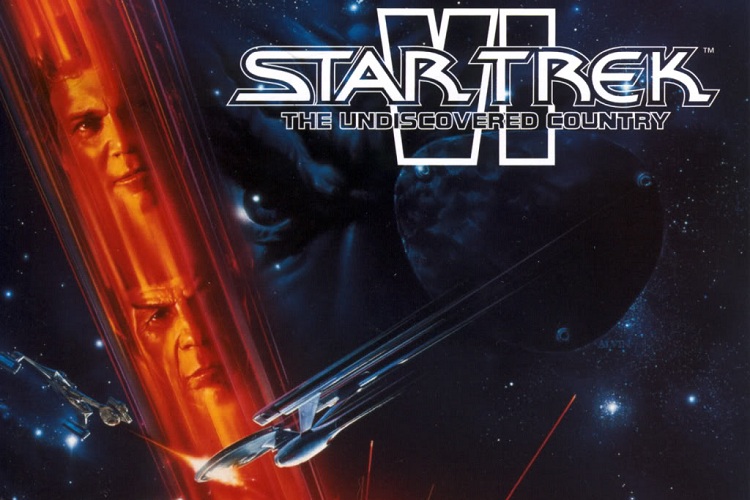
Star Trek VI: The Undiscovered Country (1991) – Director: Nicholas Meyer

Meyer returned to write and direct the final film in the franchise and very good it is too. Arguably it is the most satisfying of the series in term of complexity of plot, characters and action. With the Klingon Empire under threat an uneasy truce is declared between them and the Federation. Unsurprisingly there are those on both sides, including Kirk, who do not feel peace can ever be achieved. Thus, murder, intrigue, sabotage and treachery follow in a compelling narrative.

With the Shakespeare-favoured dialogue and ‘Cold War’ subtext there is a real political depth to the film. Plus, Kirk is back to his heroic best. Indeed, the scenes where he must escape from a Klingon jail are very enjoyable from a genre perspective. Best of all though is a cast that includes brilliant actors such as: Christopher Plummer, David Warner and Kirstie Alley. Plummer, especially, exudes consummate class as Kirk’s Klingon adversary, stealing every scene he’s in.

Mark: 8.5 out of 11

TO BOLDLY REVIEW #4 – STAR TREK – THE ANIMATED SERIES

STAR TREK – THE ANIMATED SERIES (1973 – 1974)

Created by: Gene Roddenberry

Directed by: Hal Sutherland (S1) and Bill Reed (S2)

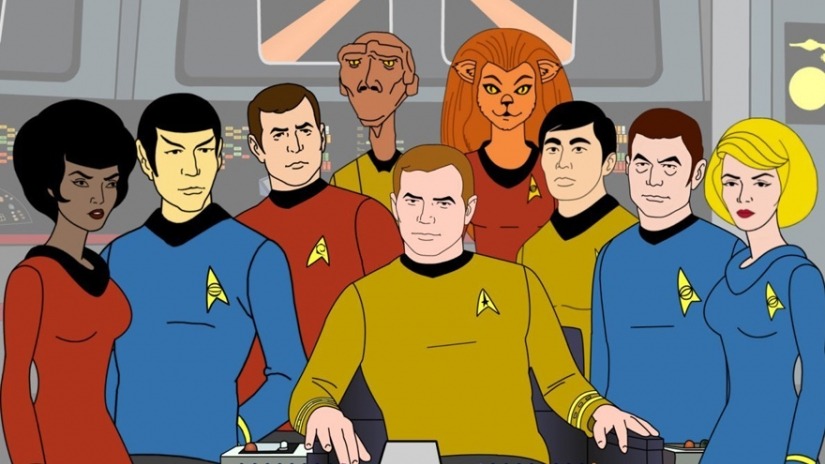
Starring voices of: William Shatner, Leonard Nimoy, DeForest Kelley, James Doohan, Nichelle Nichols, George Takei, Majel Barrett

Executive producers: Gene Roddenberry, D.C. Fontana

Production: Filmnation Norway, Paramount TV Service

**MAY CONTAIN SPOILERS**

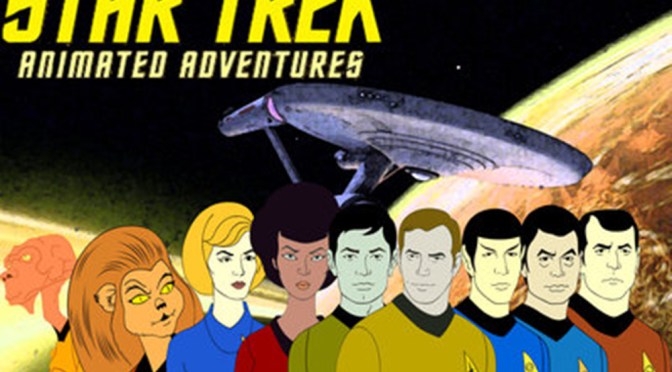
Running for a mere 22 episodes four years after the original Star Trek series was cancelled, the animated series can be seen as an unofficial fourth season to the live action show. While the animation was cartoon-like and rudimentary compared to the incredible CGI animation we have today, the scripts and stories were actually very sound. Many of the original cast members lend their voices too, so the show is not a mere cheap cash-in. Moreover, the stories featured the U.S.S. Enterprise boldly exploring space and beyond, capturing the dramatic essence of the original show.

While it was short-lived there some fantastic episodes in the animated series. The animation allowed for more expansive and weird-looking alien creatures, especially as the make-up and effects budgets would not be stretched as on the live action show. Some curiosities I noticed while watching were the inclusion in one episode of the “holodeck” or rec room. Plus, Kirk also referred to himself, rather weirdly, by his full name James Tiberius Kirk.

Many of the episodes had strong emotional and science fiction concepts. Although, given the twenty-four minute running time of each they often felt rushed to conclusion. Indeed, some of the stories could fit a feature film no problem and perhaps the recent reboot could have looked at some as a starting point; perhaps they did? Overall, I enjoyed the show but was surprised to read it won an Emmy in 1975 for Outstanding Entertainment – Children’s Series. Then again, it was certainly smarter than your average Hanna Barbera cartoon.

Of the twenty-two episodes I would say my favourite FOUR were:

Yesteryear (S1 – Ep. 2)

Spock must travel to the past to rescue his younger self from danger.

The Time Trap (S1 – Ep. 12)

The Enterprise and a Klingon battlecruiser are drawn into a space vortex and end up in a timeless dimension.

The Jihad (S1 – Ep. 16)

Kirk and Spock are summoned to retrieve a holy artefact which could ignite a galactic war.

The Counter Clock Incident (S2 – Ep. 6)

An unusual spaceship pulls the Enterpirse into a negative universe where time flows backwards.

TO BOLDLY REVIEW #2 – STAR TREK: THE ORIGINAL SERIES (SEASON 2)

TO BOLDLY REVIEW #2 – STAR TREK: OTS (SEASON 2)

Having written extensively about my love of Star Trek (The Original Series) in this article HERE – I have over the last few months completed the viewing of the second season.

My mission was to boldly watch every Star Trek episode ever made and report back with the findings. The second season, as a whole, compares favourably to the first in terms of writing and performance and concepts. One could say that season 2 drops slightly in quality toward the end. This could be explained by the uber-producer Gene L. Coon leaving as the day-to-day showrunner, plus Gene Roddenberry was less hands-on  too. Nonetheless, while the ratings continued to dip, the consistency of dramatic, comedic and science fiction or fantasy on show was in my view of an excellent quality. One notes that certain repetitions of format had obviously come to the fore in the format. I mean we still get Spock, Kirk, Bones and the rest of the crew fighting a slew of alien life forms or mad computers, yet such genre familiarity is also part of the major appeal.

With the budget (still sizable for its day) of each episode being lowered and NBC moving the second season to a later time slot on an unfavourable day the ratings suffered somewhat. So much so the show came perilously close to being cancelled. However, a core of Star Trek and science fiction fans protested physically and in writing to the studio and eventually they relented and gave the crew of the Starship Enterprise a third, and alas, final frontier season.

With regards to Season 2, there were some excellent episodes and I noted a move toward more comedic tones. Here are SIX episodes which captured my imagination in terms of narrative, drama and humour.

AMOK TIME – Episode 1

This classic episode is the only one of the Original Series to feature scenes on the planet Vulcan. It also is the first time the Vulcan hand salute is shown. It further marks the first appearance of the phrase which accompanies the Vulcan hand salute, “Live long and prosper.” The story finds Spock with a form of Vulcan heat and it demands he finds a mate to marry. Cue some wonderful acting from Leonard Nimoy and classic hand-to-hand combat between Spock and Kirk. The exploration of Vulcan culture adds a depth to Spock’s characterisation and this adds texture to an already fascinating character.

MIRROR MIRROR – Episode 4

The episode involves a transporter malfunction that swaps Captain Kirk and his companions with their evil counterparts in a parallel universe. It’s a wonderfully nifty sci-fi concept and has the cast stretching their acting chops playing nefarious versions of themselves with gleeful abandon. Moreover, the Trek theme of duality of psyche and split personalities is explored in a very entertaining fashion. When I first saw this it reminded me of the Red Dwarf episode ‘Parallel Universe’; but of course sci-fi is full of doubles, parallel and mirrored narratives within the genre.

THE DOOMSDAY MACHINEEpisode 6

This very cinematic episode is an absolute storming drama with echoes of Moby Dick and Jaws (1975) in space, as the crew of the Enterprise are caught within the path of a gigantic monstrous machine dubbed ‘the Planet Killer’!  All throughout the stakes are incredibly high because if they do not stop it whole galaxies could be destroyed.  The episode is intense and nail-biting with  Shatner absolutely nailing his performance, while guest actor William Windom brings an impressive mania to his role as Commodore Decker.

METAMORPHOSIS – Episode 9

This is a wonderful episode for a number of reasons.  Firstly, the photography by Jerry Finnerman was absolutely beautifully lit with warm hues, ambience and glow. The lighting compliments the gentle nature of the story which finds the Starfleet trinity of Kirk, Spock and McCoy pulled down to a planet by a mysterious alien force called “The Companion.” There they find a missing Starfleet scientist Zefram Cochrane (Glenn Corbett) and discover he has not aged at all; but the price is he cannot escape “The Companion”. The drama plays out gently and is assured in its thematic exploration of loneliness, romance and the curative powers of love.

JOURNEY TO BABEL – Episode 10

This multi-layered episode finds us meeting Spock’s parents for the first time as the Enterprise ferries an array of Ambassadors within the United Federations to the Babel conference. Throw into the mix Spock’s dispute with his father and a murderer on board attempting to derail an important mining contract between the planets, and you get a mature work of political science fiction writing. The screenplay from Star Trek stalwart DC Fontana is full of great dialogue and a suspenseful murder mystery. Having already appeared in Season 1, as a Romulan Starship Captain, Mark Lenard as Spock’s father Ambassador Sarek is the stand-out guest star.

THE TROUBLE WITH TRIBBLES – Episode 15

Aside from a wonderfully alliterative and fun title, The Trouble with Tribbles is often cited as one of the most entertaining and humorous Star Trek episodes ever. The episode was nominated for Best Dramatic Presentation at the 1968 Hugo Awards, with the award instead going to The City on the Edge of Forever. Tribbles are of course, hamster-like-rodents which mate like rabbits and through sheer mass cause havoc on the Enterprise. Shatner is on top comedic form as Captain Kirk, dealing with the furry pests and a raft of Klingons sharing an uneasy truce; that is until a right-royal bar-fight breaks out in this laugh-out-loud fifteenth entry of the season.

TO BOLDLY REVIEW #1 – STAR TREK: THE ORIGINAL SERIES (SEASON 1)

TO BOLDLY REVIEW #1 – STAR TREK: THE ORIGINAL SERIES (SEASON 1)

Having re-watched the whole of the new Doctor Who seasons a few years back I decided, this year, to boldly go and watch every season of the long-running Star Trek show from the original series onwards. There’s no time limit to this project as the original, Next Generation, Voyager, Deep Space Nine, Enterprise and Discovery seasons are all available on Netflix. So, save for the occurrence of World War 3, the Zombie Apocalypse or Netflix going bust, I expect this viewing pastime to last the next few years.

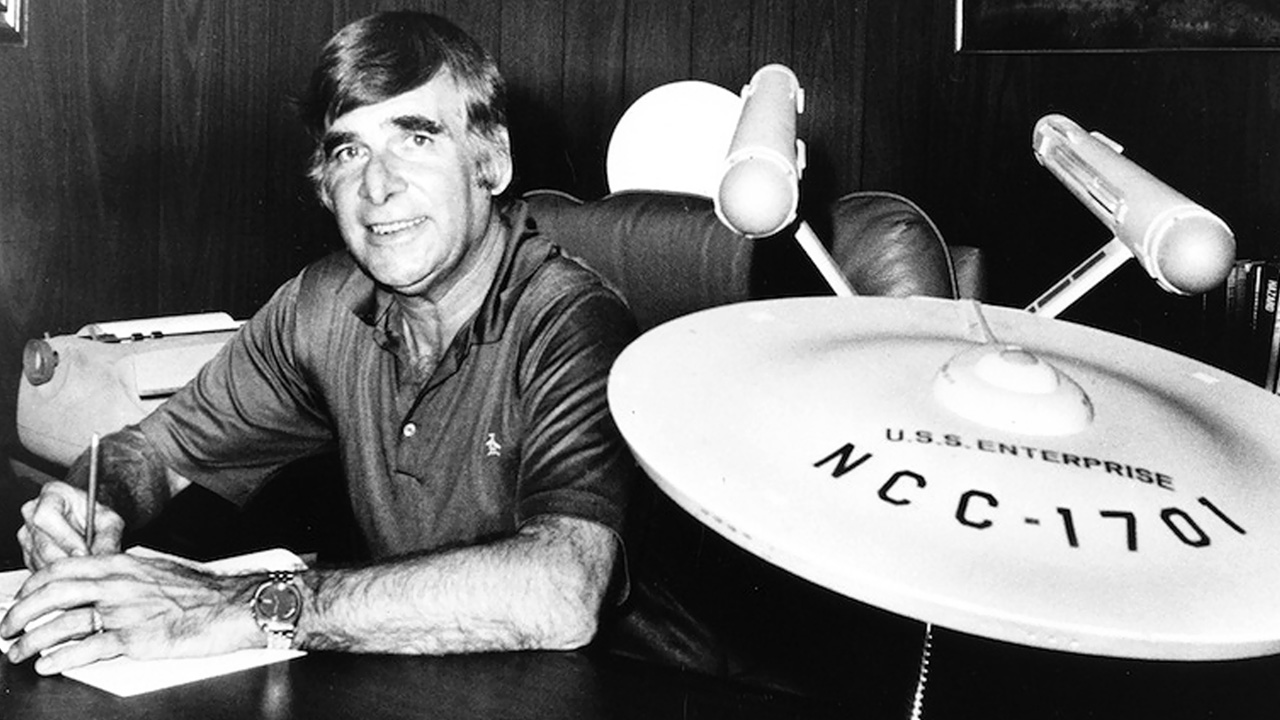
The show has given birth to all manner of prequels, sequels, sidequels, and cinema releases. Indeed, it continues to be a multi-billion dollar franchise today with festivals, exhibitions and conventions dedicated to this cultural phenomenon. This demonstrates the genius, long-standing quality and sustainability of Gene Roddenberry’s Wagon Train to The Stars. Episodes are deftly written with high concept sci-fi ideas, imaginative alien races and a zeitgeist approach to the themes of the day. Many of the episodes really shone and while the special effects are obviously dated the imagination and themes still maintain their power today.

star-trek-original-cast

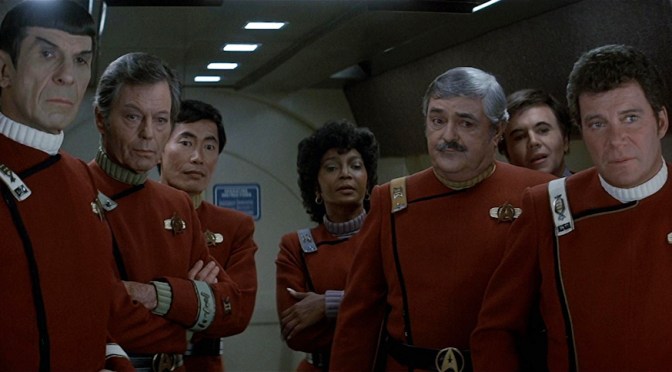
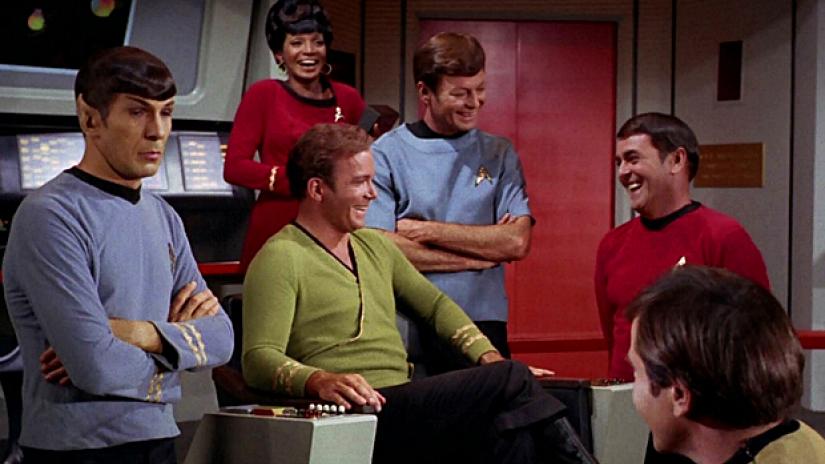
Watching the first season of Star Trek space adventures of Kirk, Spock, Uhuru, Bones, Sulu, Scotty etc. brought back interstellar memories from my youth. As entertainment now the show definitely stands the test of time (and space!). This, in no small part, is down to the solid premise, rules of the world, wonderful writing and committed performances by an awesome cast notably the Enterprise’s yin and yang; played perfectly by William Shatner and Leonard Nimoy. The storylines and characterisation are always intriguing and on reflection the show was pioneering in regard to representations of gender, race and sexuality.

Containing thirty episodes the first season is metronomic in its delivery and structure. Each show would begin with the Starship Enterprise continuing its core mission of travelling around the many galaxies and planets seeking out new life forms as well transporting supplies, equipment and people from planet to planet. Invariably encountering a new star system, colony, planet, race of aliens or an evil scientist would bring rise to a conflict with which Kirk and the crew must overcome. Many episodes are inspired from a genre perspective; while others are driven by powerful themes which reflect the socio-political, gender, race and psychological fears of the late 1960s. Many of these themes are still relevant today which is why the original series remains highly watchable and is not just kitsch sci-fi to be mocked.

roddenberry

Of course, a genre formula was followed closely with the Enterprise and crew always overcoming their various foes by the end of the show. The Enterprise would also more often than not sustain damage which would threaten the lives of the crew and “ticking time-bomb” plot device would up the narrative ante too. Kirk would usually show his bravery and physical prowess often finding his uniform ripped during physical combat. Simultaneously, the ever reliable and logical Spock would provide the mental strength to overcome any negative situation. While the status quo is always maintained by the end of an episode the crew would always learn something about themselves and Aliens such as the Romulans, Archons, Klingons etc. They would also make important scientific discoveries relating to: Artificial Intelligence, time and space travel and alien technologies. To keep the quality the show employed various writers of high renown to boost the narratives including: Robert Bloch, Theodore Sturgeon, Harlan Ellison, Jerry Sohl and Richard Matheson to name a few. Consequently the first season is full of exciting episodes with many fascinating storylines of excellent quality.

From a genre perspective Star Trek used science fiction, drama, horror, and at times where Kirk was concerned, romantic tropes throughout. Rogue Frankenstein-type scientists featured in episodes such as: Dagger of the Mind and What Little Girls Are Made Of.  In The Enemy Within, Kirk splits into two different personalities echoing Jekyll and Hyde; while in The Conscience of the King we witness a Shakespearean influenced drama dealing with the pursuit of an intergalactic war criminal. Balance of Terror is brilliantly shaped around the beats of a submarine war flick and Arena reflects the structure of Roman Gladiatorial films. Court Martial too, does what it says on the tin, with court room dramas used as the model for the episode.

st2

Thematically, as aforementioned, Star Trek was not shy of examining the scientific, political, consumer and sociological events of the time. For example: Mudd’s Women contains a damning critique of quick fix drug therapy and plastic surgery; Operation: Annihilate presents an alien invasion which could be interpreted symbolically as highlighting the threat of religious or political hysteria. Indeed, the dangers of the lust for war or invasion are featured also in Errand of Mercy; nuclear threat is critiqued in Taste of Armageddon; while the deadly potential of technological advancement features in The Return of the Archons. Of course, environmental threats are also prominent as seen in The Devil in the Dark; with plants threatening peril in the episode This Side of Paradise, where the warnings of recreational drug use are implicit within the subtext. Comedy is also used to support the drama as the Bones and Spock often lock metaphorical horns overs the latter’s lack of emotion.

Thus, Star Trek – Season one, original series – contains a wealthy of intriguing themes, ideas, narratives, worlds and characters within the thirty episodes. I personally enjoyed them all but to close this opening piece on my Star Trek voyage I would like to nominate my favourite six episodes of season one.

MIRI (1966) – EPISODE 8

A brilliant episode finds the Enterprise crew discovering an exact duplicate of Earth, where the only survivors of a plague are some of the planet’s children

THE MENAGERIE (1966) – EPISODES 11 & 12

A two-parter which expertly splices events from the original pilot called The Cage and finds Mr Spock going rogue, defying both logic and Starfleet orders.

TOMORROW IS YESTERDAY (1967) – EPISODE 19

A superb temporal paradox narrative finds the USS Enterprise travelling back to 1968 Earth and correcting damage they caused to Earth’s timeline.

Image result for star trek tomorrow is yesterday

SPACE SEED (1967) – EPISODE 22

Kirk and Spock et al meet an incredibly charismatic foe who threatens to take over the Enterprise; with Ricardo Montalban stealing the show as the deadly Khan.

ALTERNATIVE FACTOR (1967) – EPISODE 27

I loved the Sisyphean plot as the crew find “reality-jumper” Lazarus, a man trapped between parallel universes threatening the whole of existence itself.

CITY ON THE EDGE OF FOREVER – EPISODE 28

An incredible episode full of brilliant time-travelling concepts and a heartfelt love story, with Kirk finding he has an almost impossible choice to make.