Produced by: Michael Bay, Andrew Form, Brad Fuller, John Krasinski
Written by: John Krasinski
Based on characters created by Bryan Woods and Scott Beck
Cast: Emily Blunt, Cillian Murphy, Millicent Simmonds, Noah Jupe, Djimon Hounsou and John Krasinski
Music by: Marco Beltrami
Cinematography: Polly Morgan
*** MAY CONTAIN SPOILERS ***
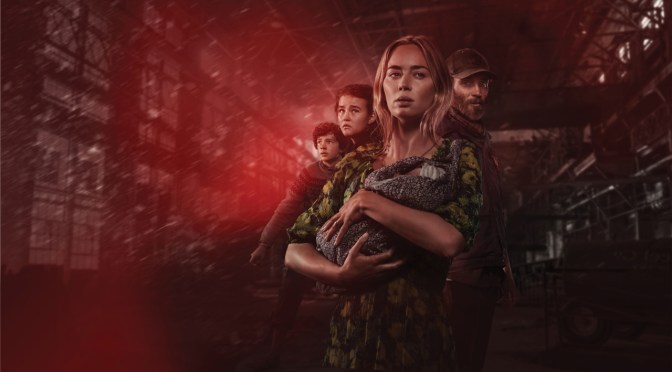
Ah, the difficult second album. Well, how do you follow up a genuine classic horror thriller such as A Quiet Place (2018)? I mean, it had everything, including a simple but devastating premise and an imaginative set of rules for the monstrous dangers facing the Abbott family. With hardly any fanfare or major marketing campaign the original film really got audiences flexing their “word-of-mouth” muscles. Throughout A Quiet Place (2018)my heart was literally living in my mouth, as my fingers and knuckles clenched and whitened during the whole tense escapade. Plus, Emily Blunt and John Krasinski’s “every-couple” and their three children brought a believable humanity to the characters, with Blunt especially on phenomenal form in her reaction and character work.
The sequel opens with a prequel sequence which illuminates how the world descended into chaos. Sadly, and not surprisingly, we only get a short time with John Krasinski’s action-dad, Lee Abbott, before he dives back behind the camera to direct this rattlingly good and highly tense horror/sci-fi mash-up. Thus, the weight of part two is left with Emily Blunt, Millicent Simmonds and the less effective, Noah Jupe character. Once again, the trio, plus baby, rely on dead silence in an attempt to remain uneaten by the blind-but-deadly alien creatures hellbent on making Earth’s inhabitants lunch. Along the way they bump into an apparent loner, Emmett, portrayed by Cillian Murphy. His jaded, shell of a man, hides a tragic secret and the last thing he wants is other people around to attract more devourers.
The story develops as the relationship between the Abbott’s and Emmett, while initially distrusting, becomes less hostile. However, he still wants them gone, much to Emily Blunt’s frustration. After all, any good mother wants to protect her children, as evacuating the factory setting could mean certain death. I have to admit I felt Emily Blunt’s major acting talents were not as well utilised as the first film. Indeed, it was Simmonds’ character, Regan, who had more development and heroic moments. It is Regan who is determined to discover a way out from the dark recesses of the filthy basement and clanking pipes. She may be foolhardy to some, but Regan has guts and makes important life-changing decisions for her family. Simmonds is compelling as she gives another mature performance in the role.
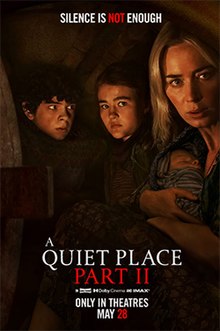
Overall, A Quiet Place – Part 2 (2021) is not as much as a surprise as the original film. How could it be?! I mean we now know what defeats the monsters, yet that doesn’t stop them being fierce predators and foes. Moreover, the use of sound design that was so brilliant in the first film is presented equally superbly in the sequel. While the film lacks for a decent plotline, as anyone who has their fill of zombie apocalypse films could testify, there remains some incredibly exciting chases and well directed set-pieces. Krasinski clearly had the Spielberg playbook to hand and that is certainly not a criticism, because I think he is definitely a talent to keeps tabs on. Thus, as my first film back at the cinema after yet another lockdown, I can definitely recommend A Quiet Place – Part 2 (2021), to take one’s mind off the horrors of real life for ninety-odd pulsating minutes.
Cast: Felissa Rose, Katherine Kamhi, Paul DeAngelo, Mike Kellin, Karen Fields, Desiree Gould, etc.
Music by: Edward Bilous
Cinematography: Benjamin Davis, David M. Walsh
***MAY CONTAIN SPOILERS***
Whatever you do please do not read anything about this cult classic horror film from 1983. It has one of the most shocking twists at the end and even on second watch my jaw dropped when I witnessed the final scene. You’ll be tempted to find out but just watch the whole film. It is on YouTube here!
So, if you’re NOT a fan of B-movies horror exploitation films then Sleepaway Camp (1983) will not be for you! A lot of the acting is by first-timers and the director, Robert Hiltzik, is also making his debut here. In fact, he didn’t make another film after this until many years later because he became a lawyer. But the film gained a cult following among horror fans and certainly deserves cult status. It may be badly acted in many scenes and verging on the hysterical, yet it is well filmed and edited on a meagre budget of $300,000. There’s also some fantastically imaginative murder set-pieces, with excellent make-up and prosthetics work employed.
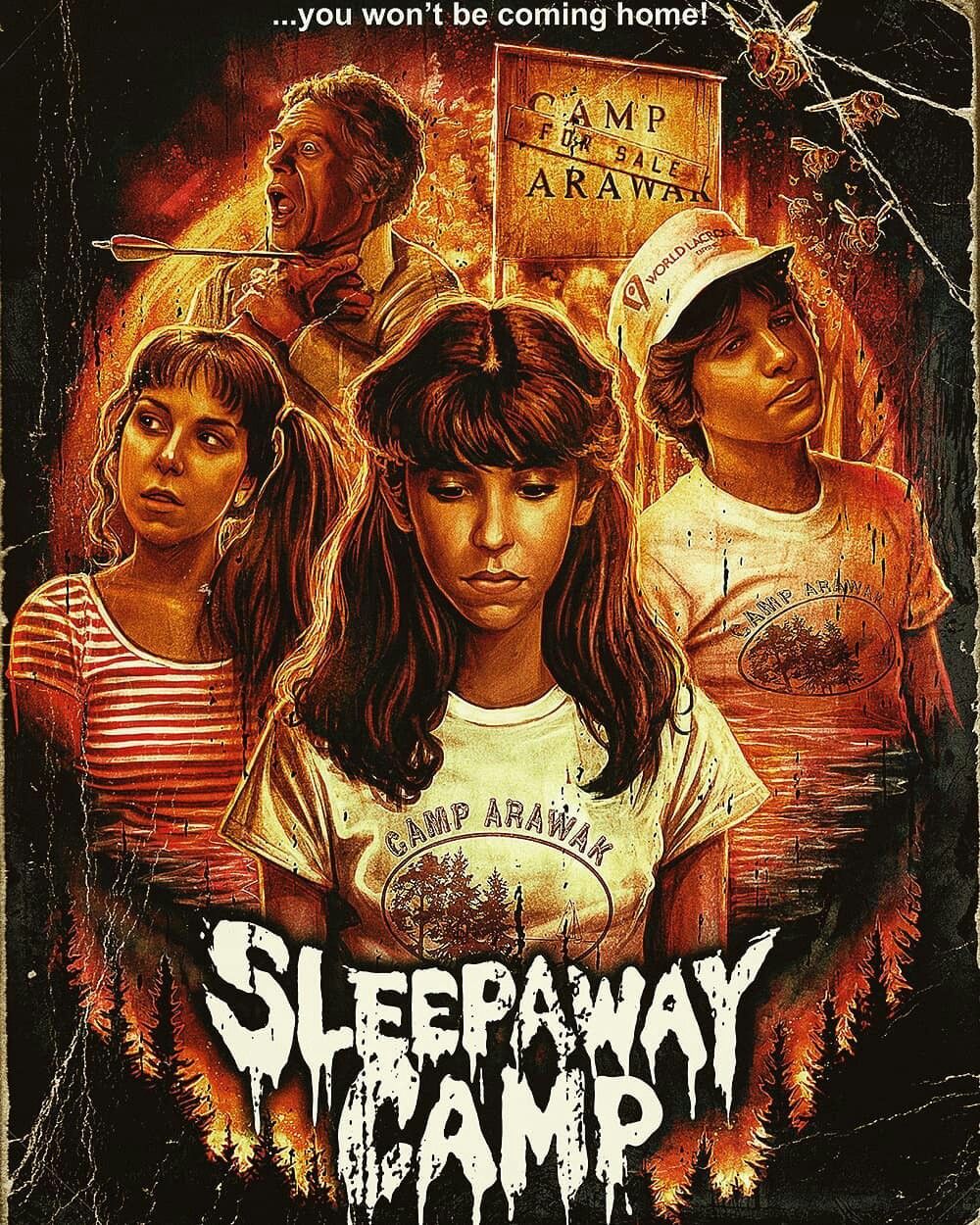
The story centres on the vulnerable teenager, Angela (Felissa Rose), who, having lost her father in an accident when younger, now lives with her Aunt Martha (Desiree Gould) and cousin, Ricky (Jonathan Tiersten). Her Aunt sends Angela and Ricky to Camp Arawak for the summer and due to her quiet demeanour she soon becomes a target for bullies. Ricky attempts to protect her, however, other than a budding romance with another teenager, Paul, Angela finds it very difficult to fit in. When dead bodies begin to turn up due to a number of grisly “accidents”, the kids and counsellors soon find themselves all in danger.
Amidst all the over-the-top acting, Felissa Rose gives a brilliant wide-eyed and subtle performance as Angela. For a film that could be classed as aFriday the 13th (1980) rip-off, her character arc throughout is both fascinating and quite unsettling. Indeed the film veers between being a strange hybrid of summer camp slice-of-life, rites-of-passage and slasher genre films. Yet despite all the uneven tone there is a decent story here with much emotional impact. Amidst all the death the film finds time to address bullying, sexual abuse and adult neglect to minors. Ultimately though, Sleepaway Camp (1983), has some fantastic gore and THAT quite astounding ending!
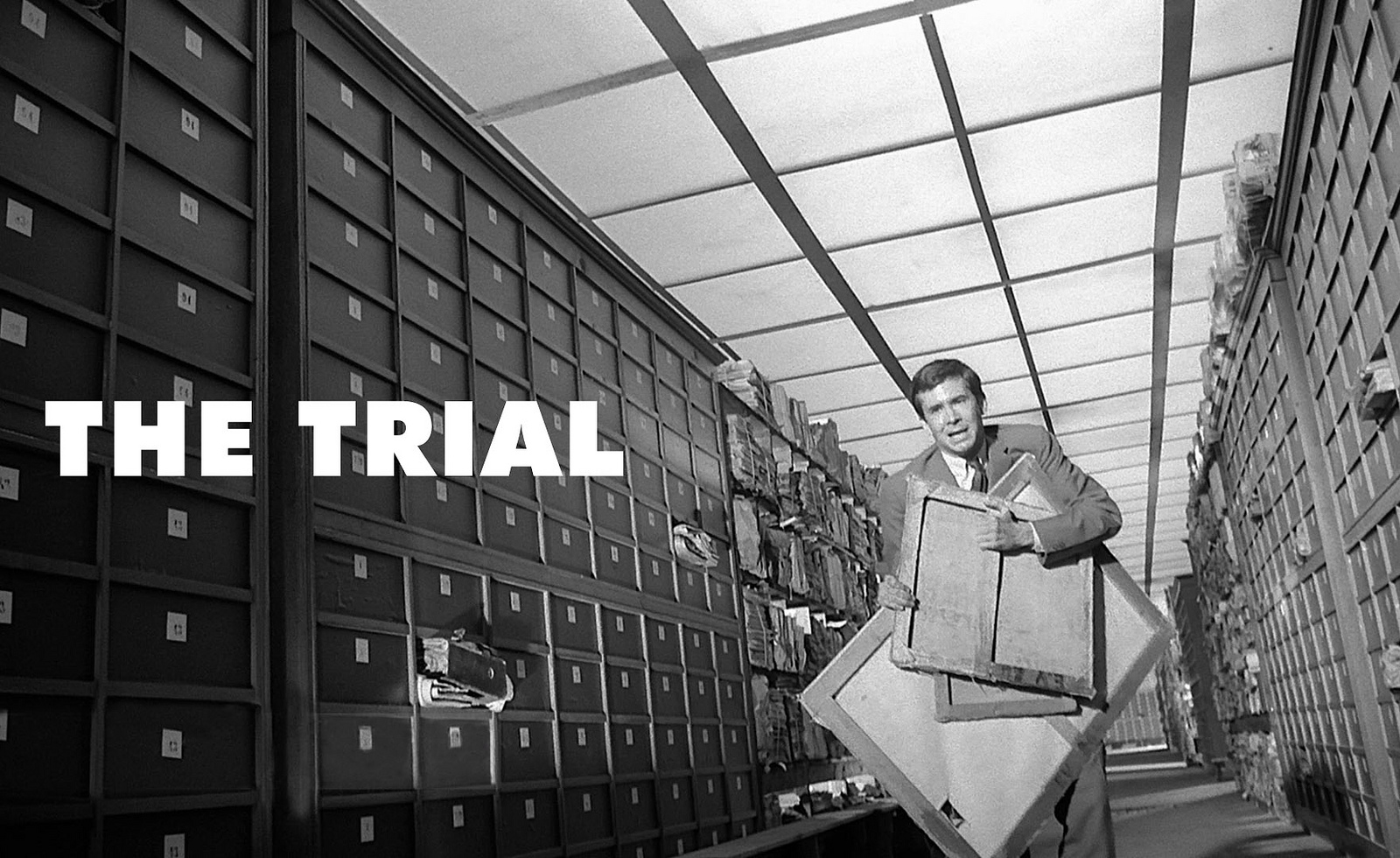
According to the Merriam-Webster online dictionary, to describe a book or film or life situation as Kafkaesquerelates to:
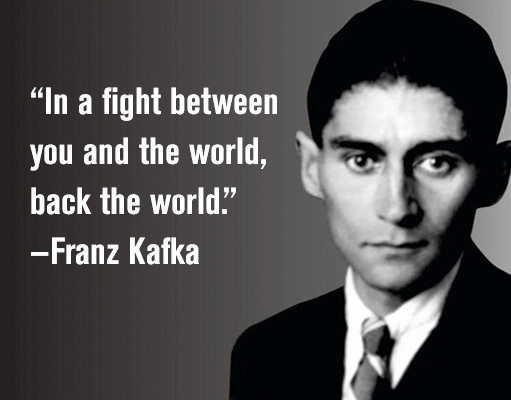
“Franz Kafka (1883-1924) – a Czech-born German-language writer whose surreal fiction vividly expressed the anxiety, alienation, and powerlessness of the individual in the 20th century. Kafka’s work is characterized by nightmarish settings in which characters are crushed by nonsensical, blind authority. Thus, the word Kafkaesque is often applied to bizarre and impersonal administrative situations where the individual feels powerless to understand or control what is happening.”
Moreover, it especially relates to characters and events which could be described as:
“. . . relating to, or suggestive of Franz Kafka or his writings, especially having a nightmarishly complex, bizarre, or illogical quality.”
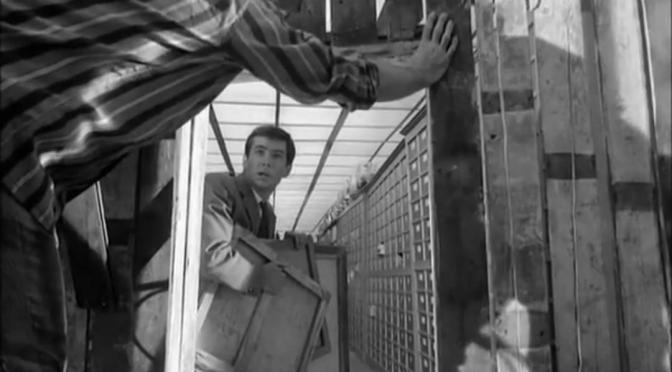
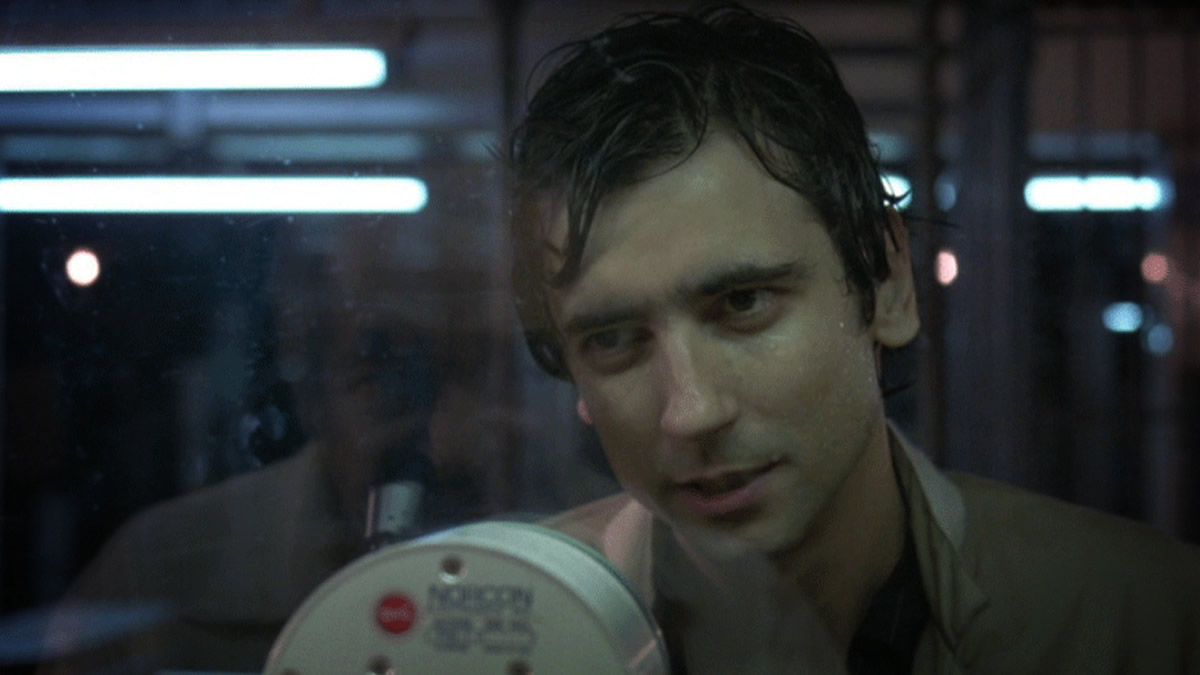
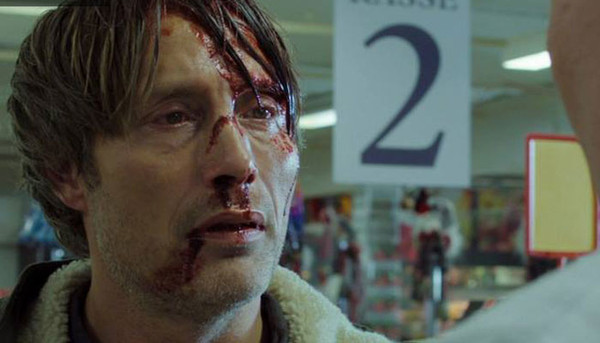
Such narratives are abundant throughout cinema history and in this occasional strand I would like to suggest six of the best films which could be described as ‘Kafkaesque.’ Interestingly, I have not selected the purer surrealist work of say David Lynch or Luis Bunuel, but concentrated on films dominated by characters utterly lost to a nightmarish fate, bureaucracy or a scenario entirely not of their making. I guess one could draw parallels with the world’s current situation in regard to COVID-19, as many of us have found ourselves powerless and at the mercy of bureaucracy, sickness and unknown external forces. However, I am not going to dwell on that; just keep going and hope we all get through safely to the other side of it.
Produced by: Jason Blum, Alix Madigan, Christopher Tricarico
Written by: Veena Sud
Based on: We Monsters by Marcus Seibert and Sebastian Ko
Cast: Mireille Enos, Peter Sarsgaard, Joey King, Cas Anvar, Devery Jacobs, etc.
Music by: Tamar-kali
**MAY CONTAIN SPOILERS**
It’s a difficult job writing a screenplay. There are a myriad of choices to be made and you can make good ones and also terrible ones. That’s why many film scripts go through many drafts and, in certain cases, many different writers. As a screenwriter myself I am always fascinated by the decisions that are made at script stage. More specifically, I often struggle with the choice of making characters empathetic or taking a risk and possibly making them unlikeable. I mean, why should the audience get involved in the story if the characters are loathsome or at the very least, there is little empathy for their situation? Sometimes the central premise is strong enough that the characters do not necessarily have to be likeable, as long as the conflict they face is compelling enough. But what if the characters make really bad decisions or the writer makes bad decisions for them? How long before the audience give up on the characters because they are just so stupid?
Centred on the Logan Family consisting of teenager Kayla (Joey King), her mother Rebecca (Mireille Enos) and estranged father, Jay (Peter Sarsgaard), The Lie (2018), poses the highly dramatic question: how far are you willing to go to protect your child? The film opens with Jay driving Kayla to a ballet retreat in the wintry Canadian woods. They pick up her friend Brittany (Devery Jacob), but during the trip a tragedy occurs and Kayla, after an argument, pushes Brittany off a bridge. Jay and Rebecca then decide, against all moral and legal judgement, to attempt to cover up Kayla’s crime. Clearly this decision is wrong, and their crimes are exacerbated by the fact that Kayla is either emotionally unhinged or socioopathic. Indeed, Joey King’s performance, while admirable, veers inconsistently from scene to scene. But I guess that’s the nature of her character. However, because of this and Kayla’s parents terrible life choices, I ultimately found the Logan’s very difficult to empathise with.
Based on a German film called We Monsters (2015), this Blumhouse production for Amazon takes a brilliant idea and kind of throws it away with a weak set-up and increasingly dumb decisions by the main characters. But, as I say, it’s a great premise that Hitchcock in his heyday would’ve had a ball with, such are the intriguing twists and turns present. But Hitchcock would have made you feel connected to the Logan family and given them even more powerful reasons to cover up the crime. Don’t get me wrong, I actually really enjoyed this B-movie thriller. I was able to shout at the television throughout with a high moral superiority over the characters. When the final act twist comes, and it’s a good one, I was genuinely laughing at the stupidity and tragedy of their actions. We are all prisoners of our own life choices and this entertaining but daft thriller certainly proves that.
Cast: Ike Barinholtz, Betty Gilpin, Amy Madigan, Emma Roberts, Ethan Suplee, Hilary Swank etc.
Music by: Nathan Barr
Cinematography: Darran Tiernan
*** MAY CONTAIN SPOILERS ***
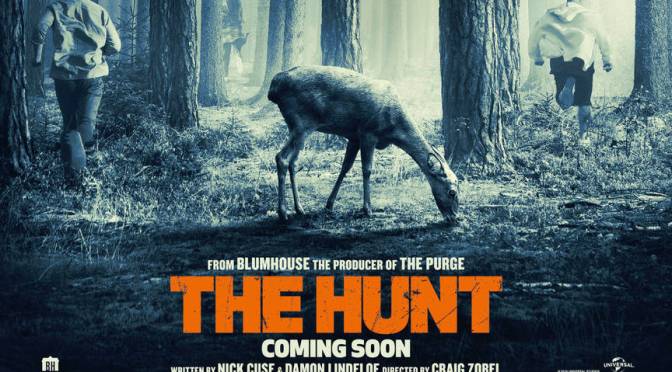
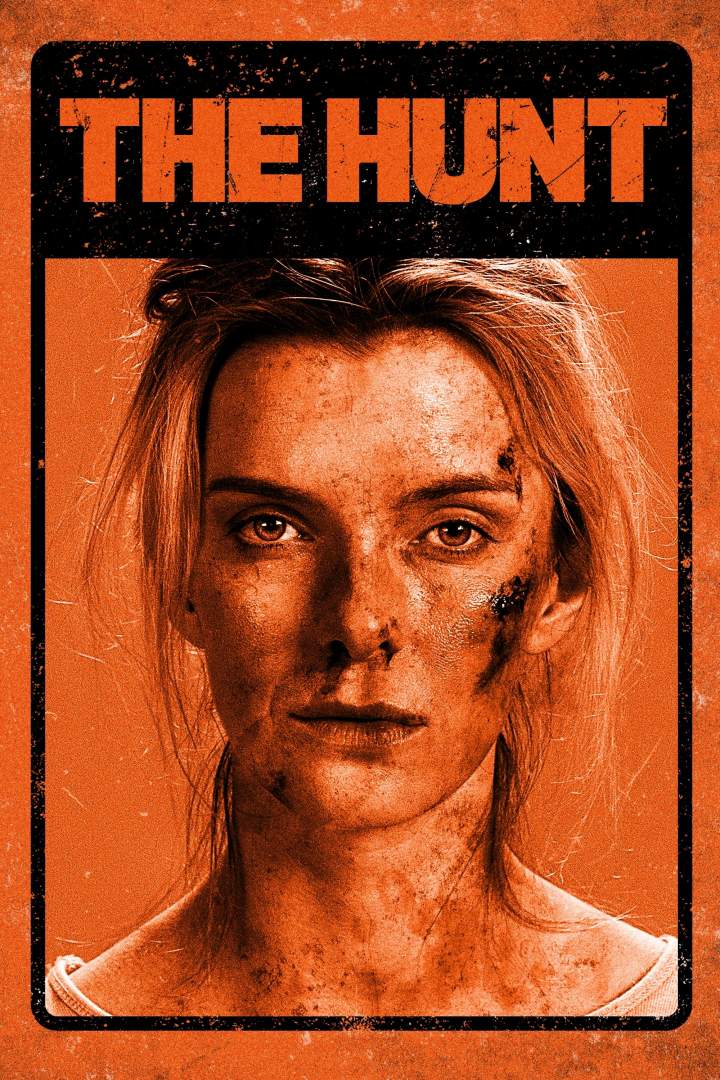
RKO’s movie, The Most Dangerous Game (1932), based on a short story by Richard Connell, is a genuine B-movie delight with a great villain named, Count Zaroff, plus solid lead performances from Joel McCrea and Fay Wray. The simple, but ingenious story involves the Count hunting shipwrecked humans on his remote island. This thrilling premise has been adapted numerous times over the years and the latest one, produced by Blumhouse Productions, is calledThe Hunt (2020). Arguably, the best version of this story is the Japanese classic, Battle Royale (2000), where high school kids are charged with killing each other to win a prize: their life!
Craig Zobel directs The Hunt (2020) from a screenplay by Damon Lindelhof and Nick Cuse. While The Most Dangerous Game (1932) had big-game hunting and murder-as-sport as a theme, and Battle Royale (2000) was essentially about the control of juvenile delinquents, The Hunt (2020) instils the mayhem, traps and violent deaths with a lean toward political commentary. Reflecting the division of Trump’s Presidency and the left/right and North/South divide allows the witty script to deliver gags damning both sides of the political strata. All from rich capitalists to the liberal elite and right-wing conspiracy theorists are satirised mercilessly. Having said that, none of this gets in the way of the breathless pace of shootings, explosions, stabbings and bloodletting.
Overall, what The Hunt (2020) lacks in characterisation and plot credibility, it more than makes up with several tense and funny scenes. You’re never too far away from a gory end or biting punchline or the surprise death of a relatively well known actor. The cast and director do not take this movie particularly seriously, but I must say Betty Gilpin as Crystal Creasey was brilliant. Energetic Gilpin takes a thinly written character and provides much personality, as well as an impressive physical presence in the many well-choreographed fight scenes. Ultimately, The Hunt (2020) will excite those who want something undemanding for their Saturday night movie entertainment. I particularly enjoyed several of the cartoon kills in this comedic action thriller. I could take or leave the social commentary, because for me politics is the most dangerous game of all.
Produced by: Aidan Elliott, Martin Gentles, Arnon Milchan, Ed King, Roy Lee
Screenplay by: Remi Weekes
Story by: Felicity Evans, Toby Venables
Cast: Wunmi Mosaku, Sope Dirisu, Matt Smith, etc.
Cinematography: Jo Willems
***MAY CONTAIN SPOILERS***
Similar in spirit to the Jacques Audiard directed film, Dheepan (2015), the latest Netflix film release, His House (2020), takes the migrant experience as a key narrative driver, then filters it through exciting genre style. While Dheepan (2015) started as a story of survival before crossing over into thriller territory, His House (2020) superbly combines social commentary with the horror genre. Moreover, a key plot reveal later in His House (2020) is extremely similar to that found in Dheepan (2015). Nonetheless, it is a powerful film, both unnerving and thought-provoking in equal measure.
His House (2020) introduces us to Bol (Sope Dirisu) and Rial (Wunmi Mosaku), a refugee husband and wife seeking asylum in Britain from South Sudan. Having survived a treacherous journey from this war-torn part of the world, their young daughter is not so lucky. Alas, Nyagak (Malaika Agibaka) dies during a stormy boat journey. This incident and their social status immediately garners sympathy and empathy for the protagonists. Allied to this, on achieving probational asylum status their jaded case worker, Mark (Matt Smith), brings them to a rundown council estate to live in. It is to Bol and Rial’s credit that they accept their new abode with gratitude. Bol especially is keen to mix with the locals and fit into the British way of living. However, the two soon encounter indifference, racism and prejudice.
As the narrative continues Bol and Rial have more to contend with than ignorant locals. Rial is resistant to integration as she desperately holds onto her Sudanese clothes and customs. While Bol is clearly trying to distract himself from the tragedy, Rial’s grieving takes the form of clinging onto the memory of her daughter and their Sudanese ways. This familial division is exacerbated by disturbing supernatural phenomena, as a strange dark spirit and the ghost of Nyagak both appear. Could it be grief and guilt manifesting such spectres? Or are they suffering from post-traumatic stress following their harrowing journey to Britain? Or has a genuinely evil spirit hijacked their attempts to build a home and find peace?
Declaring himself as a director to keep tabs on, Remi Weekes, has written and directed an excellent first feature film in, His House (2020). The pacing of the story is excellent as we get flashes of Bol and Rial’s past in Sudan, juxtaposed with their attempts to acclimatise in Britain. As someone whose life is extremely privileged when compared to that of such characters, I was both moved and fearful for the protagonists. This is not only down to an excellent script full of subtext, symbolism and dread, but also due to Sope Dirisu and Wunmi Mosaku’s compelling performances. Furthermore, you really feel the pain of the couple’s loss and suspense created by that which lurks within the stained walls of their apartment. While there are many tense moments, my one reservation with His House (2020) was there arguably wasn’t enough true horror moments. Having said that, the actual reality of Bol and Rial’s situation in losing a daughter, suffering British administrative red-tape and living amidst everyday prejudice, is far scarier than ghosts and monsters can ever be.
THANKS TO UNRESTRICTED VIEW HORROR FILM FESTIVAL 2020!
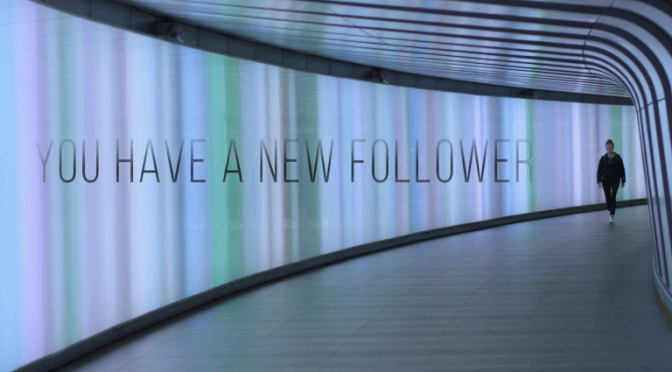
Just a quick post to say thank you to the Unrestricted View Horror Film Festival for screening my short film You Have A New Follower (2020). They screened it online as part of their Little Terrors programme on Tuesday 27th October 2020. Loads of great shorts and features were screened in an amazing programme. Further, in this period of COVID-19, it is a testament to their talents and enthusiasm they continue to support independent filmmakers.
If you didn’t know, Unrestricted View was set up in 1997 by Felicity & James Wren in order to produce exciting and innovative new theatre, comedy & film. In 1999 UV became the resident company at The Hen & Chickens Theatre and remains so to this day. UV was also resident company at Lowdown at The Albany on Great Portland Street 2003-2011 and The Vandella in Shepherds Bush in 2012. Subsequently, they continue to run the Unrestricted View Film Festival and a separate Horror Festival too. This year’s event ran online from 26-10-20 to 1st November 2020. Check out their website here.
Here is the brochure for the festival at this link.
You Have a New Follower (2020) is a psychological thriller/horror. The story concerns Astrid Nilsson, whose life begins to unravel when she is stalked by a mysterious hooded figure. It combines mystery, suspense and science fiction genres, while exploring themes of paranoia, anxiety and identity.
Cast: Jack Nance, Charlotte Stewart, Allen Joseph, Jeanne Bates, Judith Roberts etc.
Music by: David Lynch, Fats Waller, Peter Ivers
Cinematography: Frederick Elmes, Herbert Cardwell
***CONTAINS SPOILERS***
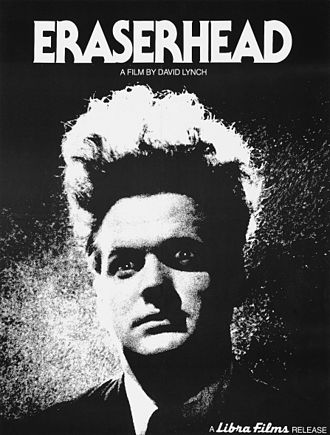
“In heaven everything is fine”, sings the ‘Lady in the Radiator’. Is it really, David, because during the course of your cinematic vision known as Eraserhead (1977), we witness all manner of things which demonstrate heaven is far from our reach. We see the scarred ‘Man in the Planet’, apparently controlling Henry Spencer’s (Jack Nance) fate with mechanical levers. There are also floating heads, blood-squirting chickens, weird alien-looking babies, an enigmatic femme-fatale, a shock-haired and shock-faced protagonist; all existing in an industrial abyss presented in bleak monochrome. If there is a heaven, no one’s getting there!
David Lynch’s debut feature film is a masterpiece of independent cinema. A surrealist, dystopian and anxiety-inducing collage of fantastic images and industrial sounds. Moreover, Eraserhead (1977) was a labour of love for the enigmatic filmmaker. Lynch took years to finish the production. So much so there is one scene where Nance’s character Henry, walks from a corridor through a door. While the edit is immediate, the filming dates were one year apart. Thankfully, Jack Nance didn’t get that famous quiff cut off. Moreover, money was tight. Lynch financed the film from doing part-time jobs, plus he received help from the American Film Institute, family members, and very good friends. There was no Kickstarter in those days.
While Eraserhead (1977) has many seemingly unconnected and bizarre images and freakish scenes, there are several powerful themes running through the film. Indeed, it is a Freudian classic with the nervous and anxious Henry, being lead from one challenging situation to another. The fear of responsibility and parenthood hangs heavy in Lynch’s psyche. Henry lacks confidence and sexual adequacy. Even when he attempts a relationship with Mary (Charlotte Stewart), his sanity is hanging on a thread. Mainly due to the fact their child is a sad, mutated monstrosity. But to Henry’s credit he attempts to love the child, even though such paternal care is doomed.
Lastly, given it had such a low-budget, took the best part of a decade to shoot and spent over a year in post-production, Lynch cinematic skills are meticulously represented in Eraserhead (1977). Kudos as well to the stark cinematography, Nance’s startling deadpan performance, plus Lynch’s incredible soundscape designed with Alan Splet. Ultimately, while it is a powerfully strange film, there is actually much method and heart in Lynch’s madness. The urban decay and freakish nature of Eraserhead (1977) taps into primal fears of bringing a child into a dark world. I, for one, can certainly identify with that.
NETFLIX FILM REVIEW: THE DEVIL ALL THE TIME (2020)
Directed by: Antonio Campos
Produced by: Jake Gyllenhaal, Riva Marker, Randall Poster, Max Born
Screenplay by: Antonio Campos, Paulo Campos
Based on: The Devil All the Time by Donald Ray Pollock
Cast: Tom Holland, Bill Skarsgård, Riley Keough, Jason Clarke, Sebastian Stan, Haley Bennett, Eliza Scanlen, Mia Wasikowska, Robert Pattinson, Harry Melling, etc.
Narrated by: Donald Ray Pollock
Music by: Danny Bensi, Saunder Jurriaans
Cinematography: Lol Crawley
***MAY CONTAIN SPOILERS***
Netflix’s latest major film release is a literary adaptation of Donald Ray Pollock’s psychological thriller, The Devil All the Time (2020). One has to believe it is a pretty faithful adaptation because the novelist himself narrates the tale to us via voiceover. Set in the years after World War II, the grim events unfold in the states of Ohio and West Virginia, respectively. While the action is not located in the deep South, the story has many of the tropes synonymous with the Southern Gothic genre, notably: religious fanaticism, explicit sexuality, flawed characters, sickening violence, poverty and human alienation.
The film, directed by Antonio Campos — who helmed the under-rated character study, Christine (2016) — starts extremely purposefully. Returning soldier, Miller Jones (Bill Skarsgard), meets a waitress on his bus journey home and eventually marries her. Both Skarsgard and Hayley Bennett, portraying his wife, inhabit empathetic characters working hard to bring up their son and saving for their own place. Jones, however, is haunted by a traumatic incident in the Pacific, and strives for solace in God and family. Indeed, the corrupt force of religious mania spreads like a cancer throughout The Devil All the Time (2020), becoming a constant threat and reason for many of the characters downfall.
Just as I was connecting with Jones’ life and becoming absorbed by Bill Skarsgard’s commanding performance, tragedy strikes and the narrative takes one of several jarring switches between characters. As such the film does not really have a strong plot, meandering from one character to another witnessing all manner of horrific events fate throws at them. Because, let’s be honest, The Devil All the Time (2020), is no way close to being a feelgood film. In fact, it revels in representing the evil acts of so-called human beings. Thus, throughout I felt a constant sense of dread and anxiety. Barely had Skarsgard misery ended and we are then introduced to the tragedies of characters portrayed by Harry Melling and Mia Wasikowska. Simultaneously, Jason Clarke and Riley Keough join the fray as two violent and sex-driven thrill-seekers. Yet, they are weakly written characters who again drive the mood of the film into pitch blackness.
The film gathers some strength and momentum n the middle act when Tom Holland’s son of Miller Jones comes of age. By focussing on his story we get more drama and emotion, especially where his relationship with his step-sister (Eliza Scanlan) is concerned. Holland gives an excellent performance as the young man attempting to make his way in this filthy and ungodly world. Similarly, Robert Pattinson’s oily Preacher oozes repugnant charm in another sterling piece of acting work. Alas, Sebastian Stan’s Sheriff and Douglas Hodge’s rural gangster are given short shrift in another crime subplot which goes nowhere.
Overall, Antonio Campos delivers an extremely solid thriller from an acting and thematic standpoint. Unfortunately, the fragmented screenplay should arguably have been given a more committed plotline. Of course, it has most likely shadowed the structure of the source novel so therein lies the rub. Having said that, despite the structural shortcomings, there are many shocking and violent set-pieces to satisfy horror fans. Ultimately though, The Devil All the Time (2020) lacks redemption, catharsis and even some decent suspense. By the end we are given few characters to care about and delivered the pessimistic vision that life is a belt of misery. Even a suggestion of sugar helps the poison go down and this film offers very little in the way of sweetness or light.
In keeping with my theme of branching out and watching different subscribers, last month I paid around £4.99 extra for the ARROW VIDEO CHANNEL via AMAZON PRIME. This gave me access to a whole host of good, bad and very weird films. There are some newish films on there, but mainly the channel contains vintage horror, arthouse and cult movies. This was a good old trip down memory lane for me as it meant I re-watched loads of films which were considered part of the 1980’s “video nasties” era. I also watched a number of films I had never seen before.
If you didn’t know ARROW FILMS is a leading independent entertainment distribution company. Established in 1991, it is dedicated to supporting upcoming and established filmmakers of dynamic new cinema and developing a slate of fantastic films from all around the globe. Moreover, they are also a leading restorer of classic and cult films and enjoy releasing anniversary celebrations of landmark titles. You’ll find some films of both incredible and dubious quality. Safe to say though, such releases are never boring. Lastly, ARROW are never frightened to distribute films previously banned, unreleased or heavily censored. They are true pioneers in the world of cinema. Check out their website here!
***MAY CONTAIN SPOILERS***
THE HORROR! THE HORROR!
If, like me, you love horror films then an Arrow subscription is essential. But before I get onto those, they also have a decent roster of world cinema films. Directors such as Krzysztof Kieślowski, Alejandro Jodorowsky, Susanne Bier, Thomas Vinterberg, Marjane Satrapi, Vittorio De Sica, David O. Russell, Hirokazu Koreeda, Richard Kelly, Bruce Robinson, Rainer Werner Fassbinder and Nagisha Oshima have many of their works distributed by Arrow online and via DVD or BLU-RAY. Indeed, I recently watched and loved Kieslowski’s BLIND CHANCE (1987) and Oshima’s MERRY CHRISTMAS MR LAWRENCE (1983). on the Arrow channel.
Yet, it was mainly the horror and cult movies I concentrated on during my month’s sojourn into Arrow’s back catalogue. Thus, here are some mini-reviews and marks out of eleven for the numerous films I watched.
THE BEYOND (1981)
Insane, surreal and with some incredibly gory deaths, this is perhaps Lucio Fulci’s most illogical, but brilliant film. The imagery and music collude to both sicken and chill in equal measures. It also has one of the most haunting final scenes in horror cinema. Mark: 8 out of 11
THE BLACK CAT (1981)
A truly dreadful adaptation of Edgar Allan Poe’s story which is contemporised badly by Lucio Fulci and his scriptwriters. I dislike cats generally and this revenge story does nothing to appease such negativity. Mark: 2.5 out of 11
THE BURNING (1981)
Pretty decent gore-fest which, while written before FRIDAY THE 13TH (1980), suffers mildly in comparison to that murdered-teenagers-at-camp classic. Famous for being produced by the Weinstein’s and early acting appearances from Jason Alexander, Fisher Stevens and Holly Hunter. Mark: 7.5 out of 11
CONTAMINATION (1980)
Truly terrible, but actually “so-bad-it’s-entertaining” mash-up of ALIEN (1979) and the 007 Bond franchise. Dodgy effects, acting and dubbing make this Italian B-movie laughably enjoyable. Mark: 5.5 out of 11
The Beyond (1981)
DON’T TORTURE A DUCKLING (1972)
An earlier Lucio Fulci film which actually has a decent plot and some disturbing, but compelling scenes and themes. Centred amidst a rural Italian setting, a murderer is running amok killing the village children. A reporter sets out to uncover the murderer as villagers begin to suspect the kids died at the hands of witchcraft. Mark: 7.5 out of 11
THE EXTERMINATOR (1980)
I used to revel in this nasty B-movie revenge film as a teenager. The school yard would have hives of thirteen-year olds chattering about the Doberman attack scene, pimps set on fire and the gangster killed in a meat grinder. Watching it back now, it truly is a terrible piece of filmmaking and an extremely lurid viewing experience. For all its derivative faults, I still loved it! Mark: 7 out of 11
HELLRAISER (1987)
Clive Barker’s cult horror classic is not so much about narrative coherence, but an assault on the senses. That damned mysterious and devilish “Rubik’s cube” is opened, giving way to a whole host of demonic monsters breaking Earth’s dimensions and threatening an Anglo-American family. Powerful visuals, incredibly effective prosthetics and brilliant nemeses in Frank and Pinhead, make HELLRAISER (1987) an extremely memorable low-budget horror cult classic. Mark: 8 out of 11
HELLRAISER II: HELLBOUND (1988)
A direct sequel to the original, but without Clive Barker directing this time unfortunately. HELLBOUND (1988) has some wonderful gore and monstrous moments as Kenneth Cranham’s mad doctor opens up the hellish gates to the beyond. But the surreal storytelling is so deranged and ridiculous I was just laughing by the end. Mark: 5.5 out of 11
Hellraiser (1987)
MANIAC COP (1988)
I love a lot of Larry Cohen’s work, but this is arguably only a minor B-movie script from him. The clue is in the title really as a vengeful cop goes on a kill crazy rampage in the dark recesses of the city. Notable for Bruce Campbell’s turn as a bemused cop suspected of the crimes, plus the impactful silent giant of a killer. Mark: 6 out of 11
THE NEW YORK RIPPER (1982)
While I do not agree with censorship as a rule, I can see why this Lucio Fulci United States shocker was banned in Britain for many years. It is disgustingly violent and misogynistic, verging on pornography in many scenes. The biggest crime is it’s so badly made from a capable filmmaker. Avoid at all costs! Mark: 1 out of 11
RAWHEAD REX (1986)
A gigantic phallic cock-monster called ‘Rawhead’ is woken near an Irish village and kills anyone who gets in his way. Another Clive Barker short story gets a film adaptation and this is awful in every way! Barker hated it and that led to him taking more control of HELLRAISER (1987). Lacking narrative context and even basic filmmaking skills, we are in the “so bad it’s hilarious” camp here. Mark: 3 out of 11
RED EYE (2005)
A rare diversion away from the horror genre finds Wes Craven directing Cillian Murphy, Rachel McAdams and Brian Cox in this fast-paced airplane-set thriller. I had never seen this film before as McAdams and Murphy provide committed performances while possessing excellent on-screen chemistry. Extremely suspenseful for the most part until it gives way to huge explosions and shootouts at the end. Great fun overall! Mark: 7.5 out of 11
Rawhead Rex (1986)
TENEBRAE (1982)
I have to admit that I am not a big fan of Dario Argento’s films generally. I find them imaginative, but mostly loud and nonsensical. Moreover, they have little in the way of suspense or actual scares. TENEBRAE (1982) is another empty Argento exercise in misogyny and style-over-substance as an American writer finds himself pitted against a vicious killer copying murders from his novels. There are some decent horror moments, but the twist is too self-knowing and ridiculous to not find laughable. Mark: 6 out of 11
THE WITCH THAT CAME FROM THE SEA (1976)
Now, this is a weird film. Part-revenge-part-feminist-part-porn-part-horror story that was also banned in Britain as a video-nasty. Millie Perkins gives a haunting performance as a psychologically damaged individual, who is so disturbed by a childhood trauma she kills when in sexual congress. It’s almost a really good film because the characterisation and motivation is well conceived. However, it’s also rather eccentrically acted and directed in places, so approach with great caution. Mark: 6 out of 11
ZOMBIE FLESH EATERS (1979)
This classic zombie exploitation from Lucio Fulci is one I’ve seen many times. While not quite as good as the Romero classics in terms of story and theme, it has so many unforgettably bloody scenes. The moment when a zombie attacks a shark is a horror set-piece you will never forget. As Fulci rips off Romero he spins the undead genre into a frenzy with relentless dirt, maggots, sinew, bone and guts on screen, all the while accompanied by a creepy score by Giorgio Tucci. Mark: 8 out of 11
ZOMBIE FOR SALE (2019)
The most contemporary film I watched from Arrow Video is a riotously funny and moving rom-zom-com from Korea. A rural family find a way of making money out of a zombie who has escaped a science laboratory, however, their get-rich-quick-scheme backfires with bloody hilarious results. While it is overlong, it benefits from a clever script and excellent acting, although it over-does the slow motion scenes and jarring narrative tonal switches. Mark: 8 out of 11












 The Cinema Fix presents