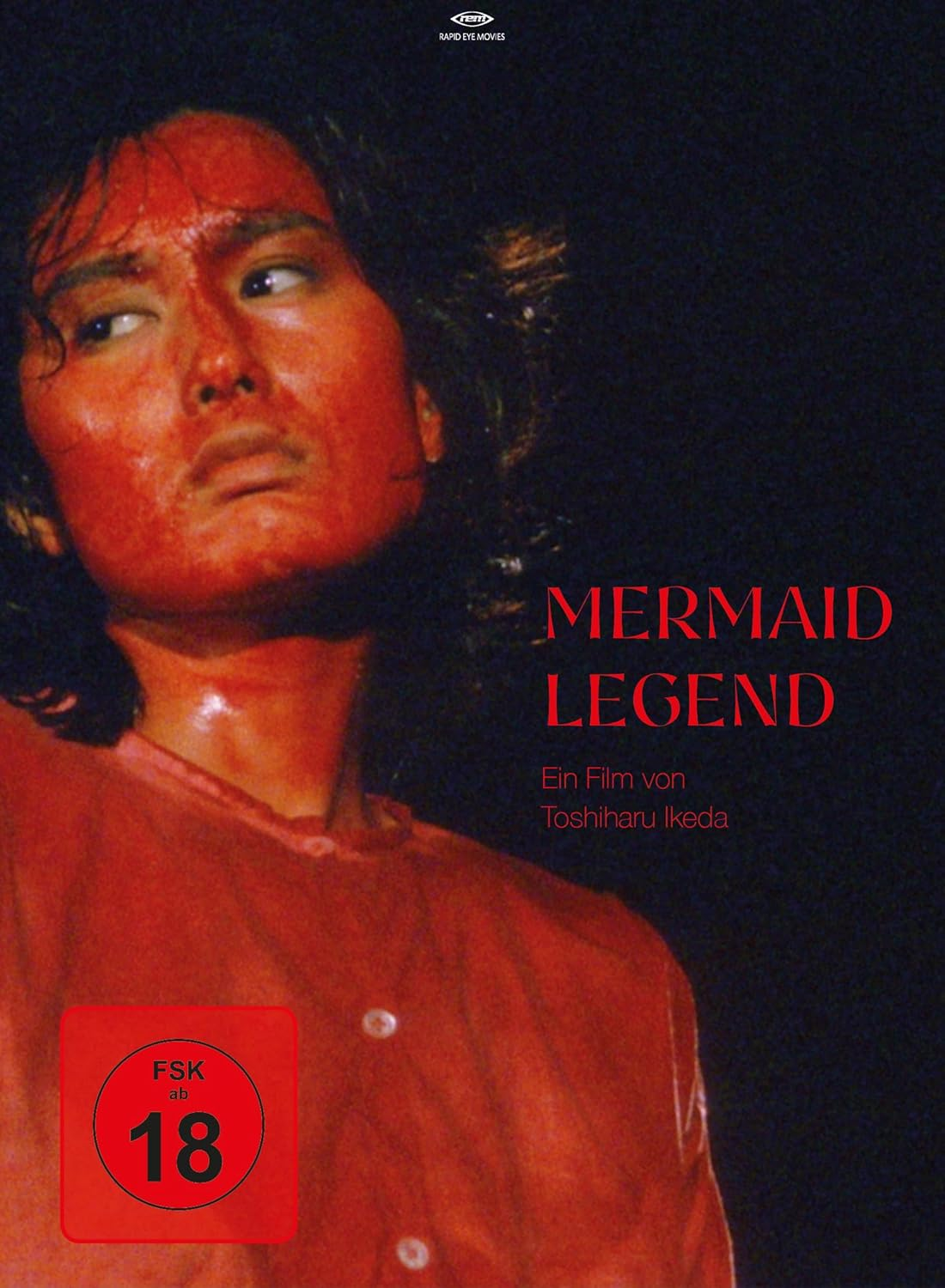
Main cast: Mari Shirato, Junko Miyashita, Kentarō Shimizu, Jun Etō, etc.
Cinematography by Yonezou Maeda
Music by Toshiyuki Honda
*** MAY CONTAIN SPOILERS ***
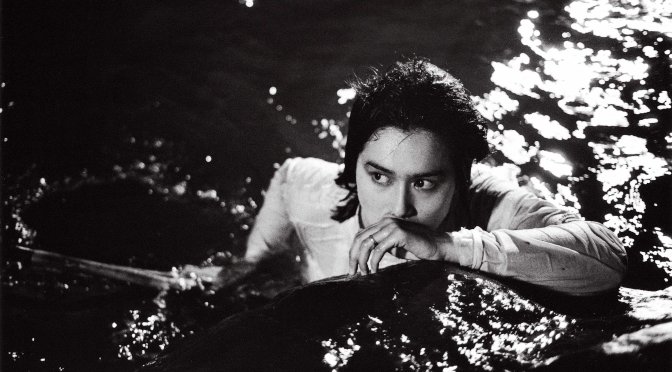
I took a gamble on an unknown Japanese film at the Nickel Cinema and walked out genuinely shaken. Mermaid Legend (1984) isn’t just a cult oddity—it’s a film that mutates before your eyes, seducing you with beauty before drowning you in blood. I was stunned by how something so lyrical could also be so brutally confrontational.
The story begins almost modestly, as a coastal drama about a fisherman and his wife, Migiwa. They bicker constantly, their marriage worn thin by poverty and exhaustion, yet there’s an undeniable bond beneath the arguments. That fragile domesticity is shattered when the fisherman stands in the way of an industrial development scheme. The business developers—faceless, polite, and utterly ruthless—have him murdered, disposing of his life as casually as industrial waste.
From there, Mermaid Legend (1984) transforms again. What starts as marital realism becomes a corporate espionage murder mystery, steeped in anger at nuclear energy, environmental destruction, and the cold machinery of corporate greed. Migiwa, a powerful-lunged pearl diver, initially hides, retreating into grief and the sea itself. But this is not a film about quiet mourning. When she decides to act, she does so with mythic force.
Played by the ethereal and astonishing Mari Shirato, Migiwa becomes something halfway between woman, avenging angel, and sea spirit. Shirato’s performance is magnetic—serene, sensual, and terrifying. As her vengeful pursuit begins, the film plunges headlong into extreme violence and explicit sexuality, reclassifying itself yet again as one of the most shocking exploitation epics I’ve seen from Japan in recent years. These scenes aren’t gratuitous in the lazy sense; they’re confrontational, weaponized, daring you to look away while refusing to let you feel comfortable for a second.
What makes Mermaid Legend (1984) so intoxicating is how its elements collide. Poetic underwater cinematography turns the ocean into a womb, a grave, and a cathedral. Religious, angelic, and environmental imagery blur together, as if Migiwa is both martyr and executioner. The music is heavenly—soaring, mournful, almost sacred—creating a surreal contrast with the carnage on screen. Beauty and brutality coexist in the same frame, each intensifying the other.
And then there’s the ending. The final, elongated pier stabbing rampage is completely off the chart—relentless, bloody, and hypnotic. It plays out like a ritual rather than an action sequence, stretching time until violence becomes abstraction, then meaning, then release. By the time the last body falls, Mermaid Legend (1984) has fully shed realism and entered the realm of legend, justifying its title in blood.
This is a film that shouldn’t work, yet does—furiously, defiantly. A genre-shifting fever dream that moves from domestic drama to political thriller to erotic exploitation to mythic revenge tragedy, Mermaid Legend (1984) is both beautiful and brutal, and I can’t stop thinking about it. Seeing it by chance at the Nickel Cinema felt like discovering a secret too powerful to stay hidden.
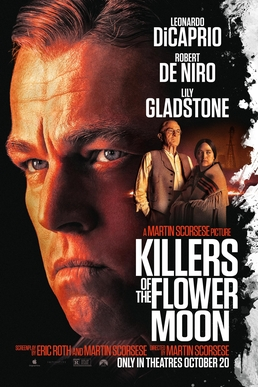
Based on: Killers of the Flower Moon by David Grann
Produced by: Dan Friedkin, Bradley Thomas, Martin Scorsese and Daniel Lupi
Main cast: Leonardo DiCaprio, Robert De Niro, Lily Gladstone, Jesse Plemons, John Lithgow, Tantoo Cardinal, Scott Shephard, etc.
Cinematography: Rodrigo Prieto
Edited by: Thelma Schoonmaker
*** MAY CONTAIN SPOILERS ***
Who can tell how the world and society as we know it would’ve evolved if Christopher Columbus, the explorer credited with finding the Americas in 1492, had not landed and begun the first steps toward colonising this uncharted part of Earth. Of course, there were existing natives in the Americas and over time they would experience first contact with Spanish, Portuguese, British and other European, predominantly white, settlers. It may be that the natives would have had equally difficult experiences, and colonists brought with them many positive things. But one has to surmise they would not have had their land and lives gradually taken from them over the centuries without the European invasion.
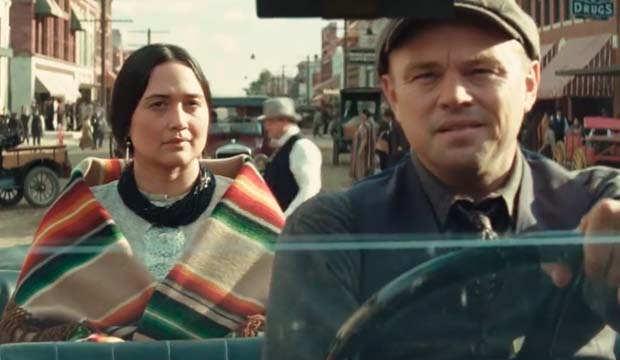
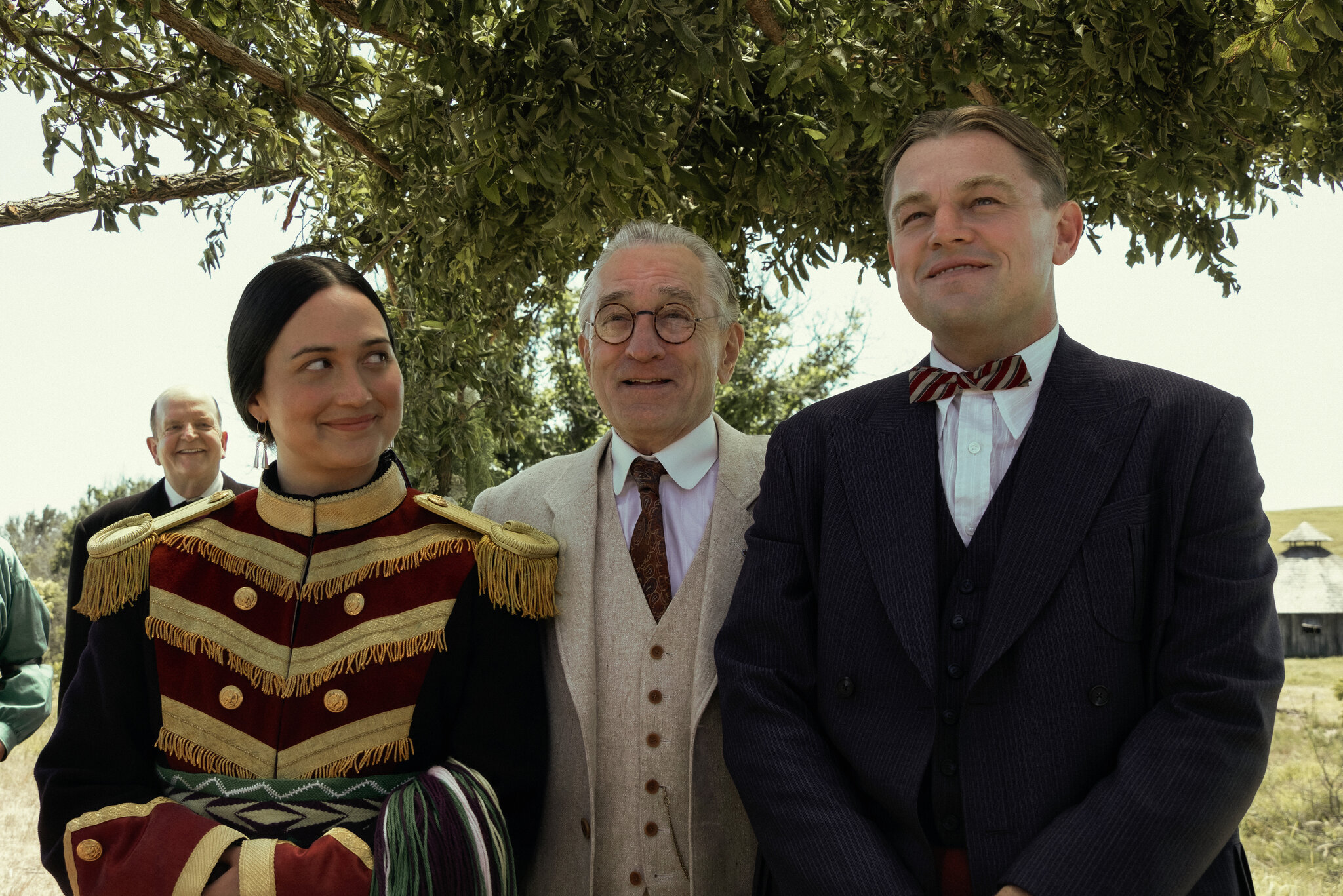
The violent theft of land and wealth from Native Americans forms the bedrock of the narrative of Martin Scorsese’s latest epic drama, Killers of the Flower Moon (2023). Adapted from David Grann’s critically acclaimed nonfiction book, the film centres on the series of murders of wealthy Osage people that occurred in Oklahoma in the early 1920s. The motive for the heinous culling was the greed of white men. Such individuals lusted after the richness present after big oil deposits were discovered beneath the Osage people’s land. Whereas Grann’s book is a monumental study of the murders, perpetrators, the Osage culture, politics of the era, and how the newly formed FBI delved into the crimes, Scorsese’s incredibly slow and long adaptation does all that, while also exploring the romance and murderous treachery between Osage native, Mollie (Lily Gladstone) and war veteran, Ernest Burkhart (Leonardo DiCaprio).
Opening by establishing how the oil erupted and blackened the green land, the film then firmly sets up how the American businessmen used the legality of the headright system to manipulate the flow of sudden wealth that came to the Osage people. One such man is William King Hale (Robert DeNiro) who presents himself as a benefactor to the Osage, but truly speaks with a forked tongue. Having left the infantry unit after World War One, Hale’s nephew Ernest joins him to work and ultimately do his bidding. Hale cajoles Ernest to romance wealthy Mollie and get further feet under the table and closer to that beloved black gold money. Yet, enough is never enough for the likes of Hale and driven by another formidable Scorsese directed performance, De Niro delivers a deviously evil characterisation.
DiCaprio here takes the less charismatic role as the doltish Ernest. As Hale urges him to do further misdeeds the banality of everyday evil is palpable in Ernest’s actions. Along with a litany of professional and thuggish cowboy types Ernest and Hale’s other minions wreak havoc on the Osage people, committing arson, murder, poisonings, robbery, and shootings. All just for more money. The tragedy is that Ernest clearly has feelings for Mollie, serenely portrayed by a revelatory Lily Gladstone, but he just cannot stand up for himself against his wicked uncle. So much so that I just wondered why the hefty runtime was concentrating on Ernest’s character. I mean, Scorsese and DiCaprio give us little in the way of anti-heroism to bounce off, or even some cathartic sense of redemption. Ernest starts out as a loser and finished the story the same. Over three hours spent with a gurning idiot left me frustrated.
Directed, as one would expect with a masterful hand, mind and eye by Scorsese, who once again surrounds himself with an incredibly talented cast and production crew. Not to forget the unbelievable $200 million budget. But Scorsese’s movement of late to ultra-long and methodical cinema is an artistic choice that requires much patience. While Killers of the Flower Moon (2023 is thematically very powerful, beautifully filmed, and contains a number of exceptionally impressive sequences, there was genuinely not enough story to justify such a long running time. Whereas The Irishman (2019) was slow, it was methodically thrilling and absorbing throughout. Killers of the Flower Moon (2023) on the other hand becomes repetitive in its reveals of greedy Cowboys breaking bad and raising hell to the cost of the Osage. The introduction of the FBI and their subsequent investigation comes way too late to save the over-bloated length and pace. However, there is no doubt, the film remains vital in highlighting the historial horror perpetrated upon the Osage land and people. Perhaps Apple TV should have just given the money to the Osage descendants as reparation?
“CINEMA” REVIEWS: FRESH (2022) + WHERE THE CRAWDADS SING (2022)
Two entirely different types of film on the surface, one a black comedy-horror and the other a romantic murder-mystery. Although both feature examples of the female outsider fighting against variant elements of toxic masculinity and the patriarchy. What they also have in common is impressive acting performances from rising star, Daisy Edgar-Jones. Thus, I thought it interesting to review said films side-by-side. With the usual marks out of eleven.
*** MAY CONTAIN SPOILERS ***
FRESH (2022)
Directed by Mimi Cave
Written by Lauryn Kahn
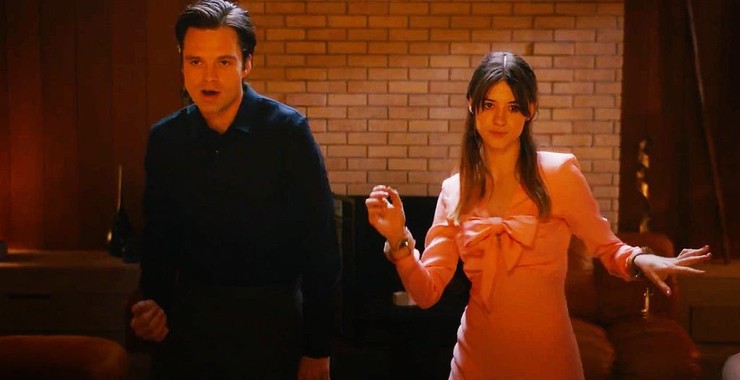
Main cast: Daisy Edgar-Jones, Sebastian Stan, Jonica T Gibbs, Charlotte Le Bon, Andrea Bang etc.
Essentially a beat-by-beat replica of Get Out (2017) as the main protagonist finds themself under threat from a nefarious force as their best friend desperately seeks to rescue them from grisly danger. Rather than raising important points about racism within the horror genre, Mimi Cave’s deliciously directed horror story with comedic elements, explores the precarious threat of singledom, toxic masculinity, gastronomy and relationships.
Daisy Edgar-Jones portrays cynical twenty-something, Noa, who is sick of the dating game and feels isolated where romance is concerned. I empathised with her decision to remain single, but then she has a meat cute with likeable charmer, Steve (Sebastian Stan), in the supermarket. They go on a date and more than hit-it-off. Before you can say “no-don’t-go-away-for-the-weekend-with-a-man-you-hardly-know!” Noa goes away with Steve and the plot ingredients really come to the boil.
Sebastian Stan and Daisy Edgar-Jones have fine chemistry throughout and are attractive protagonists. The first half of the film builds raw suspense, before the revelation arguably over-cooks the central relationship on the menu. Providing excellent support to the leads is Noa’s bestie, Mollie (Jonica T. Gibbs), who turns detective to locate Noa before the knives come out for her. Fresh (2022) runs out of steam toward the end as the plotting unravels with the characters making dumb horror movie decisions. However, I really want to see what writer, Lauren Kahn and director, Mimi Cave, deliver next as their debut feature Fresh (2022) is a very tasty starter.
Mark: 8 out of 11
WHERE THE CRAWDADS SING (2022)
Directed by Olivia Newman
Screenplay by Lucy Alibar (Based on Where the Crawdads Sing by Delia Owens)
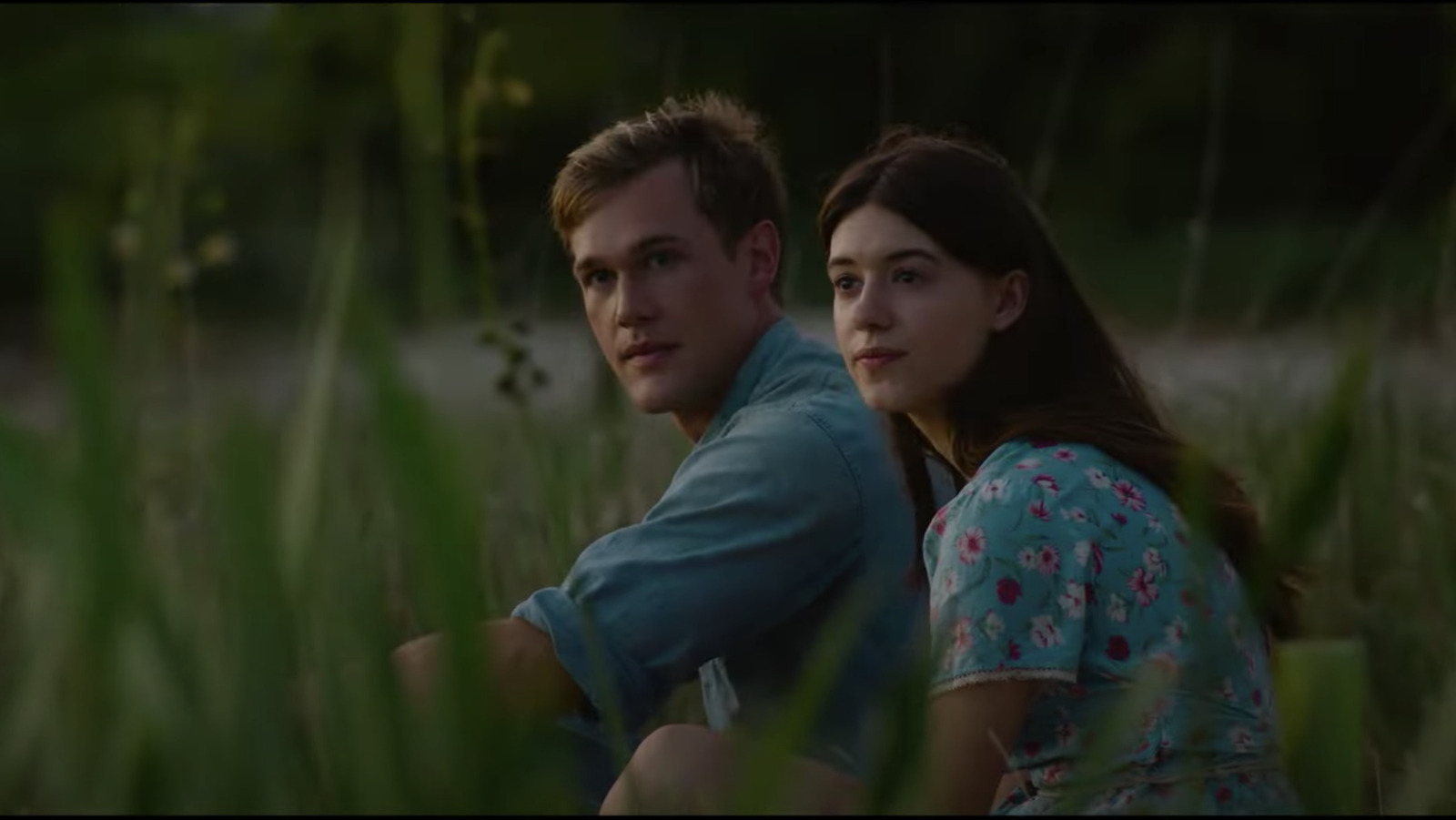
Main cast: Daisy Edgar-Jones, Taylor John Smith, Harris Dickinson, Michael Hyatt, Sterling Macer, Jr., David Strathairn etc.
Adapted from the best-selling phenomenon written by Delia Owens, I went into Where the Crawdads Sing (2022)cold without any prior knowledge of the story. I hadn’t read the novel and even the trailer, thankfully, didn’t give swathes of plot away when I saw it. But what’s it all about? Well, it’s a sprawling cake mix of genres including murder-mystery, court drama, period piece, romance, and rites-of-passage with a movie-of-the-week cherry on top feel.
Daisy Edgar-Jones sensitively portrays Kya Clark, a young girl living in the North Carolina marsh, dealing with all manner of drama and trouble throughout her life. Considered an outcast and weirdo by the town locals of Barkley Cove, the film quickly places Kya as the main suspect in the murder of a privileged jock, Chase Andrews (Harris Dickinson). Via flashbacks we are then introduced to the misery of Kya’s abusive childhood, with her father frightening away Kya’s mother and brothers with his drunken battery. When Kya is ultimately abandoned by everyone, she finds some solace in her fledgling romance with Tate Walker (Taylor John Smith) and her interest in wildlife and art.
There are many elements of Where the Crawdads Sing (2022)that felt extremely familiar, notably the Nicholas Sparks-inspired love triangle. Kya having to choose between generic good boy/bad boy types. However, it is integral to the character-driven aspect of Kya growing from a shy caterpillar and blossoming into a radiant butterfly. While the arguably patronising characterisation of the black characters did not convince, Kya’s character arc is certainly compelling, thanks to Edgar-Jones intelligent performance. Moreover, I enjoyed the locations and some wonderful scenery too. Overall, while it is undemanding and generic, I found Where the Crawdads Sing (2022)a pleasing diversion with a couple of obvious, but decent twists in the tale. The kind of film my mum would love.
Produced by: Ridley Scott, Kenneth Branagh, Judy Hofflund, Kevin J. Walsh
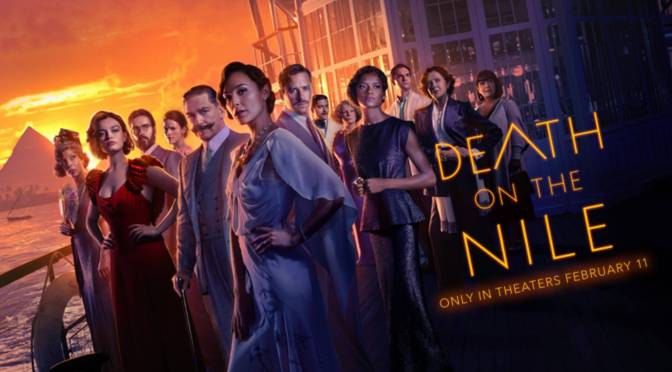
Cast: Tom Bateman, Annette Bening, Kenneth Branagh, Russell Brand, Ali Fazal, Dawn French, Gal Gadot, Armie Hammer, Rose Leslie, Emma Mackey, Sophie Okonedo, Jennifer Saunders, Letitia Wright etc.
Cinematography: Haris Zambarloukos
*** MAY CONTAIN SPOILERS ***
Following the box office success of MURDER ON THE ORIENT EXPRESS (2017), it comes as no surprise there is a sequel to the classy Hercule Poirot train-set murder mystery. Once again Kenneth Branagh directs and stars as the Belgian detective and he has also assembled a wonderful cast of A-listers and solid character actors within the ensemble. I was especially pleased to see Annette Bening lend some gravitas to the glamour and whether the ultra-talented Rose Leslie could break out into bigger film roles. Gal Gadot and Letitia Wright also leave behind recent comic book films for an altogether more period setting. Lastly, who doesn’t want to see French and Saunders reunited on screen.
I have always loved Agatha Christie’s work be it in literary, radio, television or film mediums. DEATH ON THE NILE (1978), while a bit of a guilty romp, is a favourite of mine, especially as it was the first Christie adaptation I saw at the cinema. I must have seen that particular film about twenty times over the years. So much so I know the plot backwards. I guess the nostalgia for watching a film as a child and familiarity with the story create a kind of comfort film. Thus, another positive reason why I was looking forward to the new adaptation.
Agatha Christie truly knows how to create a masterful detective plot. In fact, she was a genius. What we now consider to be a cliched genre, the “whodunnit”, was practically invented and reinvented by Christie and this story has a devious plot and surprising ending. While the genre is familiar, I enjoy watching all the players in one location conflicting with each other. Of course, Poirot is an eccentric and brilliant detective, so even though I know he will solve the crime and how, paradoxically I still love the journey of it all. But what of this latest iteration? Well, all throughout I kept channelling the fury of Annie Wilkes! If it’s not broken, why are they howdy-doody trying to fix it!
If you have never read Death of the Nile, it truly is a wonderful detective story, tightly plotted and full of biting wit and observations from Christie. There is subtle critique of English types abroad and the negative impact money, lust and envy have on the human condition. But having said that there is an exotic location, crafty humour, witty dialogue and bright sunshine illuminating the bloody murder in the novel. This is where Branagh and his screenwriter get Death of the Nile utterly wrong for me. From very off they gloom the mood and tone, lose much of the fun and introduce too many different subplots which do nothing to enhance Christie’s original work. Her novel did not need changing!
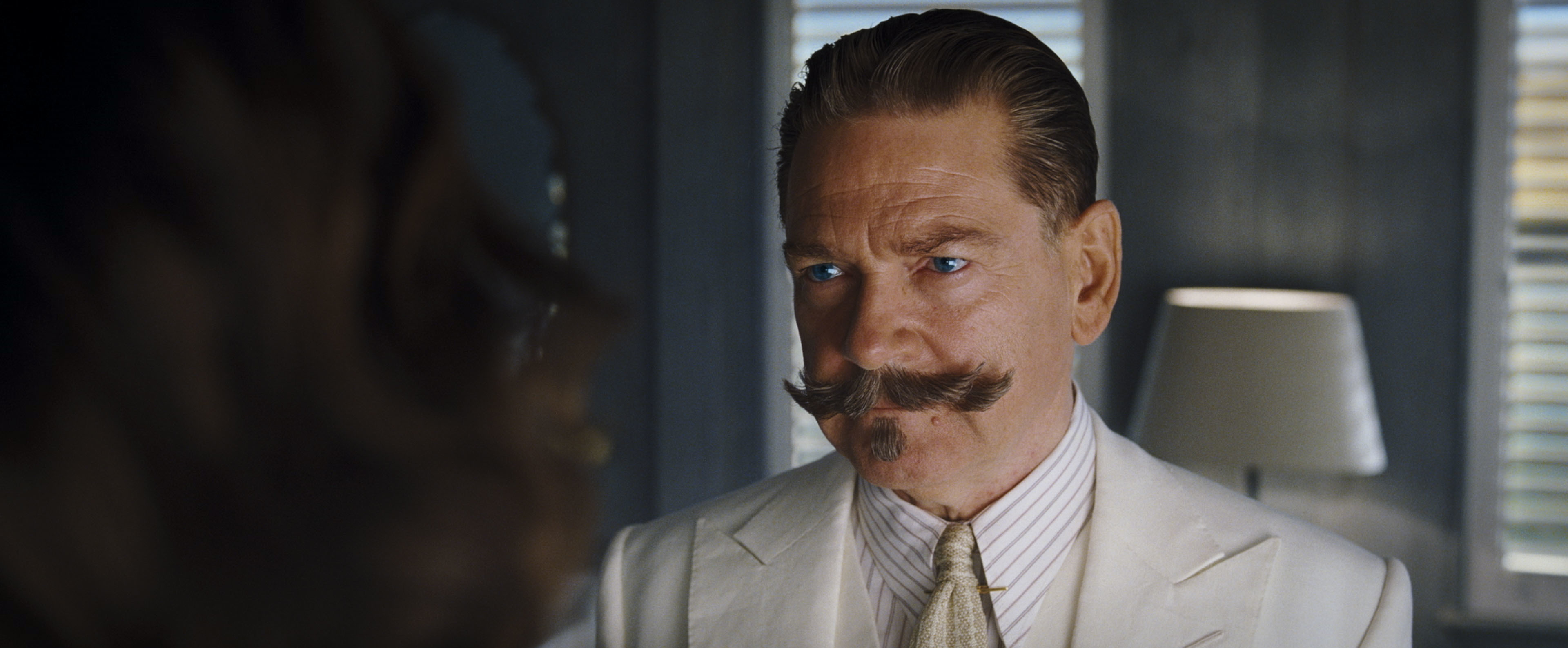
Perhaps I was just too familiar with the material or Branagh’s confident/arrogance got the better of him. Aside from some highly suspect CGI with Bouc (Tom Bateman) on the pyramids, Death of the Nile (2022), looked fantastic. But it felt hollow and drained of joy. I mean, does it matter why Poirot grew a moustache and moreover why has he suddenly become so existential and sad? Gal Gadot felt too modern as the rich victim of the story and Armie Hammer is handsome yet bland. I enjoyed Sophie Okonedo’s performance, but her character was enjoyable comic relief in the 1978 version. Otterbourne is now given unnecessary depth and musical filler as a sultry blues singer. Lastly, Emma Mackey has some fine moments as the vengeful Jackie, but I thought overall the script served the actors badly. My advice is to watch the David Suchet or 1978 version instead of this sinking cinematic vessel.
Cast: Agathe Rousselle, Vincent Lindon, Garance Marillier, Laïs Salameh, etc.
Cinematography: Ruben Impens
*** THE WHOLE FILM IS A SPOILER ***
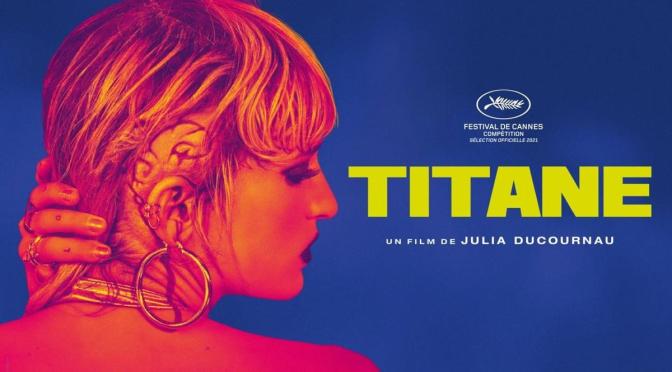
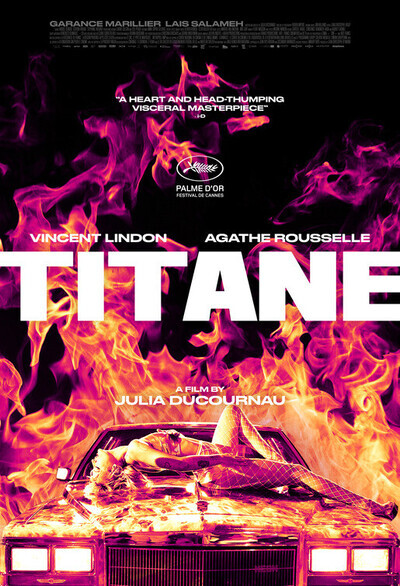
The difficult second album syndrome applies with Julie Decournau’s incredibly horrific, illogical and over-rated, Titane (2021). How the film won the Palm D’or at the Cannes Festival is beyond me. Maybe the jury were on the same acid as the ultra-talented writer-director when she created the script. Or, maybe the jury were belatedly rewarding her for the amazing contemporary horror film, Raw (2016).
Raw (2016) works on so many distinct levels with themes covered including: veganism, peer pressure, initiation, fitting in, animal cruelty, sexuality. lesbianism, same-sex attraction, animalism, sisterhood, hedonism, nature versus nurture, cannibalism, family, etc. It crosses genres effortlessly and has one of the greatest and disgusting scenes I have had the pleasure to see for some time. Raw (2016) is a shocking, intelligent and astounding modern-day masterpiece. Titane (2021) unfortunately is not.
Before I say why I did not enjoy Titane (2021), I must say that I constantly seek out challenging cinema that pushes boundaries. I love horror and want to be shocked, but also emotionally involved with the characters at the same time. Moreover, I am well prepared to commit to dream logic and surreal narratives, however, the filmmaker must also try not to over-indulge their artistic excesses, and respect the audience too. Of course, this is just my opinion, but I don’t feel Julie Decournau had a clear story path and rather went hell bent into delivering a variety of different ideas, none of which created a fulfilling emotional journey for the main protagonist, Alexia (Agatha Rouselle).
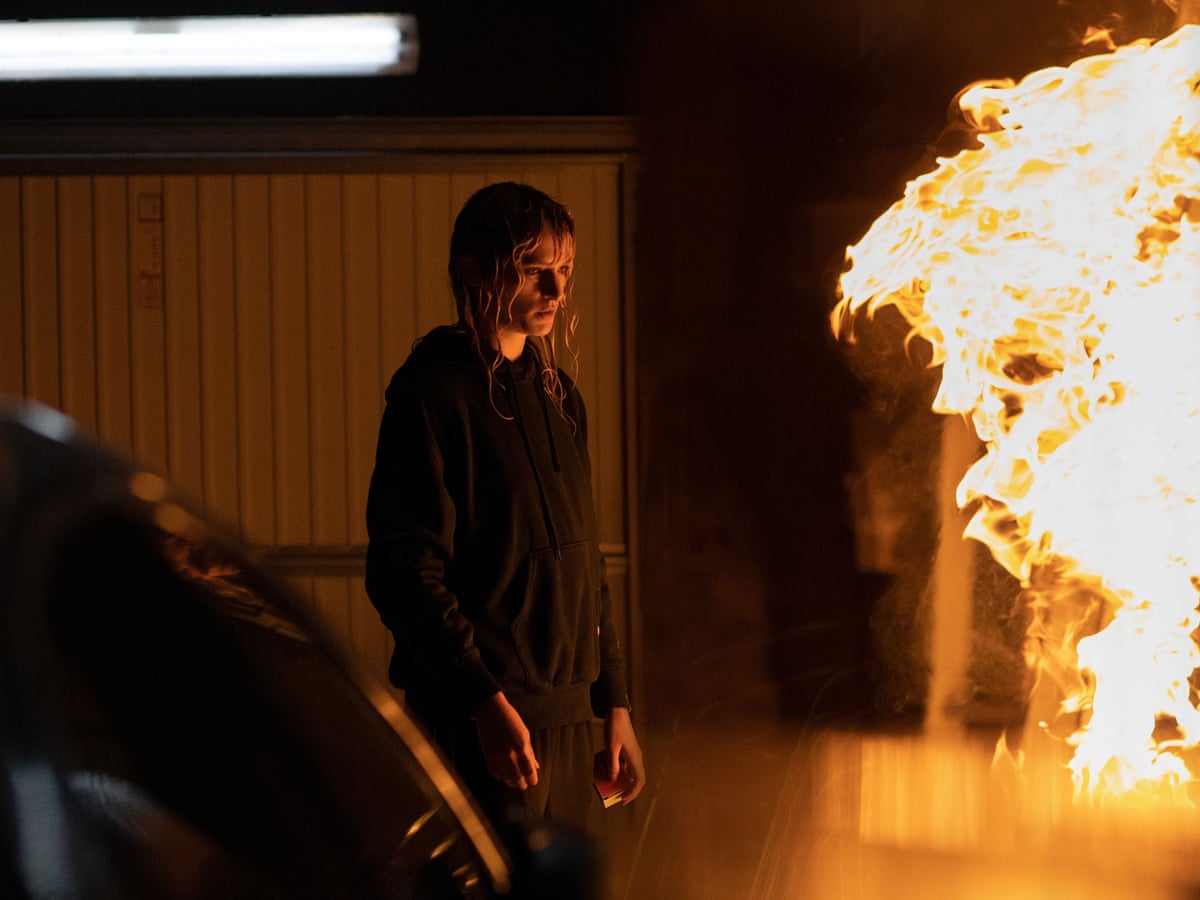
Rouselle, as the malevolent and tragic conduit of Ducournau’s twisted vision, does give a spectacularly brave performance. But her character is given so many complex set-ups at the beginning, I quickly gave up caring what happened to her. As a child she is badly injured in a car crash. This gives her a titanium plate in the skull. Alexia grows up and is an exotic dancer who either dreams of, or actually fucks cars. Oh, she is also a serial killer who violently kills for no apparent reason. Several gruesome set-pieces result in the goriest deaths ever seen in a Palm D’or winner. Indeed, by the time Alexia goes on the run and smashes her face into a sink to alter her features I was numbed by it all.
Titane (2021) at the midpoint then delivers one of the most dumb and insulting plot shifts I have seen in recent years. Yes-yes it’s an arthouse film and an expression of Julie Decournau’s vision of humanity, but I DID NOT CARE!! Not only did we get Alexia’s horrific behaviour, we are then introduced to another plot turn when she hides out with a bereaved and emotionally scarred firefighter, Vincent (Vincent Lindon). By this time I was actually laughing at certain scenes, finding it all tiresome and frankly embarrassing. I got the symbolism of human beings as machines and exploitation of females and that family represents death and blah-blah-blah! Yet, and I’m likely to be in the minority, Titane (2021) is one of the most narratively, emotionally and visually exhausting films I have seen in some time. Watch at your peril!
Based on: The House of Gucci: A Sensational Story of Murder, Madness, Glamour, and Greed by Sara Gay Forden
Produced by: Ridley Scott, Giannina Scott, Kevin J. Walsh, Mark Huffam
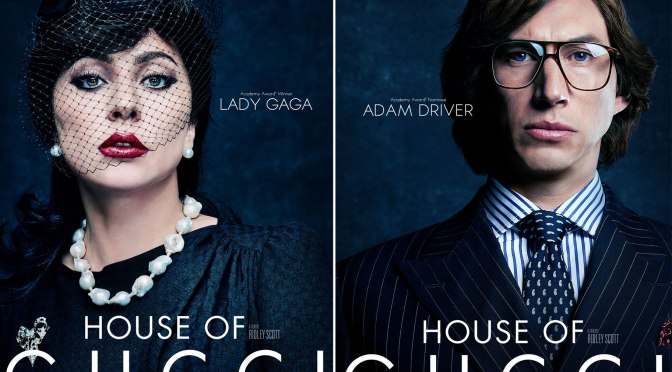
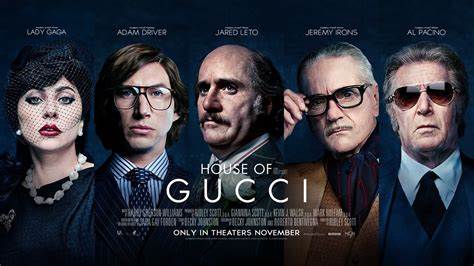
Cast: Lady Gaga, Adam Driver, Jared Leto, Jeremy Irons, Salma Hayek, Al Pacino etc.
Cinematography: Dariusz Wolski
*** MAY CONTAIN SPOILERS***
I’m not a fan of fashion. I wear clothes obviously and like to be smart and clean. Yet, the idea of believing one’s garments, shoes and accessories mean you are important, superior or worthy of adulation sickens me to be honest. However, fashion is a multi-billionaire industry and I get that people of variant social standing love it as a cultural phenomena. People either own or aspire to own over-valued garments and objects to inflate their ego or sense of importance is beyond me. Then again, I passionately enjoy watching human beings kick a ball into a net, so everyone has irrational passions. C’est la vie!
I didn’t go to see House of Gucci (2021) to look at the clothes though. My interest in this star-studded, big budget crime drama directed by the legend, Ridley Scott, was more because I did not know anything about the lives and personalities within the Gucci empire. Who would have thought that a wealthy family unit could have turned out so poisoned by greed and envy?
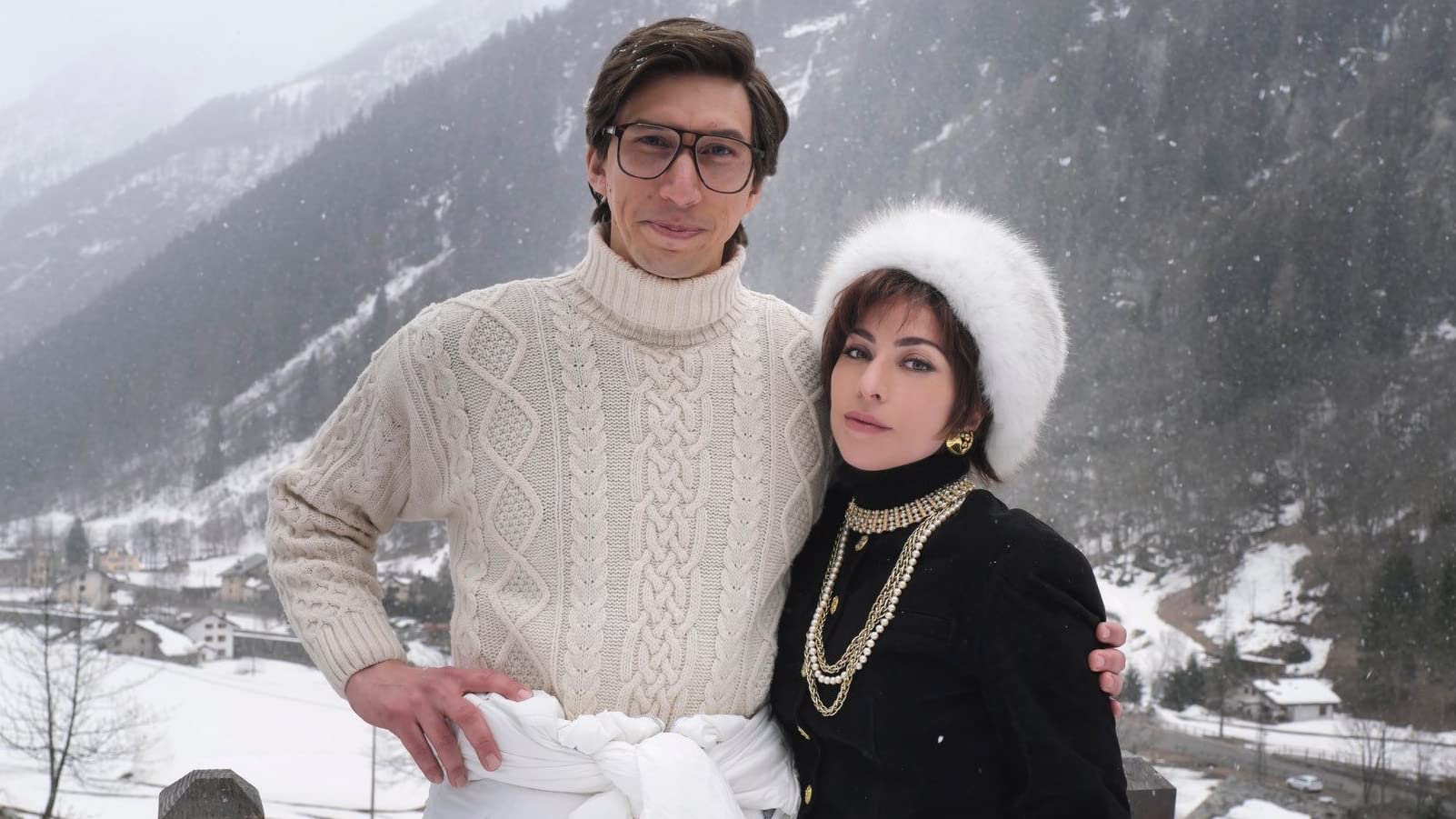
Covering a period of twenty or so years from the late 1970s into the 1990s, the story is structured around the relationship between Patrizia Reggiani (Lady Gaga) and Maurizio Gucci (Adam Driver). They fall passionately is lust, much to the chagrin of his spiteful father (Jeremy Irons) and marry against his will. Patrizia genuinely loves the sensitive Maurizio, but also has green eyes for the Gucci empire and the power that can bring. As her desire for influence in the family business grows, then so does cracks in their marriage. Crumbling relationships, business chicanery and family treachery dominate the narrative, all coming to a head with tragic results.
As a morality tale about how greed corrupts and drives human beings toward unnecessary tragedy, The House of Gucci (2021) is certainly worth a watch. Is there a sense the Gucci family were cursed by there wealth. Perhaps? But the film and screenplay as a whole present this theme without really drawing them out to full dramatic effect. However, the cast are absolutely fantastic throughout with Al Pacino, Adam Driver, and Lady Gaga on particularly exceptional form. Jared Leto dominates many scenes with his bald head, extra weight and screechy voice. While entertaining, the director could have reigned Leto in slightly to extract more pathos from the sad clown that is represented in Paulo Gucci.
I had a few issues with The House of Gucci (2021) inasmuch as it felt incomplete. At times it was as though I was watching a test screening version. The transitions between years were often confusing. What year is it, Ridley? Adam Driver’s arc from likeable young academic to selfish adulterer was rushed and unearned. I got the evocation of a Fredo and Michael Corleone dynamic between Maurizio and Paulo, but this really could have been developed further. The cinematography was grey and dull with the natural lighting style working against the expected colour and vibrancy of the 1980s era. I also wondered if the film had been graded?
While watching The House of Gucci (2021) I just kept thinking of more superior crime and gangster films. It is also mildly disrespectful to a genius like Ridley Scott to say Martin Scorsese would have knocked this story out of the park. I truly felt, while Lady Gaga was excellent in her role, her character could have been written and given a voice-over up there with that of Henry Hill’s. Nonetheless, I still enjoyed the film but wonder if there is a director’s cut out there which doesn’t feel rush released. Or even the possibility HBO or Showtime may adapt it into a longer drama series in time. Yet, does one want to spend more time with such avaricious and vain characters? Depends who is telling the story I guess.
Screenplay by: Edgar Wright and Krysty Wilson-Cairns
Produced by: Nira Park, Tim Bevan, Eric Fellner and Edgar Wright
Cast: Thomasin McKenzie, Anya Taylor-Joy, Matt Smith, Michael Ajao, Terence Stamp, Diana Rigg, Rita Tushingham, etc.
Cinematography: Chung-hoon Chung
*** MAY CONTAIN SPOILERS ***
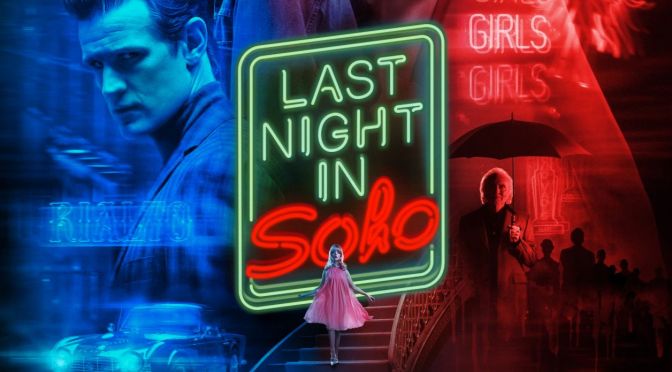
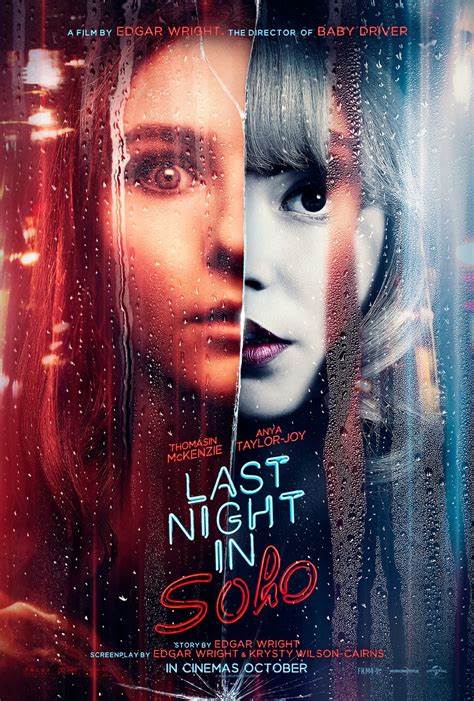
Edgar Wright is one of my favourite directors working today. His films possess an endless series of cinematic techniques such: long takes, quick cuts, swooping camera moves, canted frames, Steadicam, camera holds, frame switches, pans, scans, tilts, low-angles, metronomic editing, blurred dissolves, point-of-view and god’s-eye view shots. Moreover, Wright’s use of humour, music, colour, casting choices, and cross-genre collisions are spectacularly imaginative and entertaining. His latest film Last Night in Soho (2021) is no different. I was enthralled and excited throughout this ripping big-budget exploitation film, which juxtaposes influences such as Stephen King, Brian DePalma and Doctor Who, with a suggestion of Dario Argento and giallo cinema.
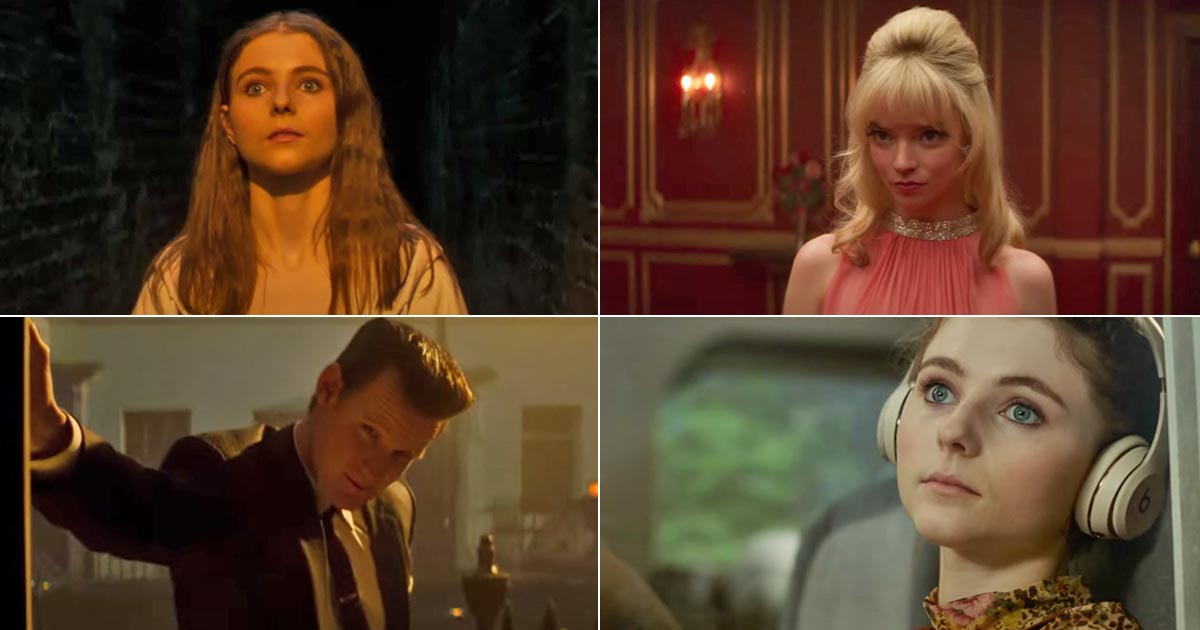
Last Night in Soho (2021) is both a love and hate letter to the Soho area of central London in the 1960’s and the now. If hate is too strong a word then at the very least the myriad of storylines collide to create a cautionary tale of one young person’s move from Cornwall to London to study fashion at the University of Arts. Major acting talent Thomasin Mackenzie is Ellie Turner, a passionate young woman who loves the sixties music and style, but also mourns the loss of her mother at an early age. Leaving her comfortable home she shares with her Grandmother (Rita Tushingham), Ellie experiences London and student life with initially mixed results. Finding it difficult to connect with her obnoxious room-mate, Jocasta, she moves into an antiquated bedsit, with imperious Diana Rigg as her landlady no less. All of a sudden her incredible journey into the glamorous and seedy past of Soho begins.
As with many of his films Wright establishes several storylines simultaneously. He brilliantly crosses rites-of-passage with period drama, romance, musical, detective and finally the horror genre. Ellie finds her feet at University, gets a job in a bar, receives praise for her initial designs and starts a budding romance with fellow student, John (Michael Ajao). At the same time her life becomes entwined in a surreal twist with that of Sandie (Anya Taylor-Joy), an engaging character desiring showbiz stardom who happens to live in Soho, but in the 1960’s. Ellie’s psychic link with Sandie brings her vivid dreams, but a striking empathic connection.
While Ellie is nervous and insecure within her London experiences, Sandie is the opposite. The theme of duality in their polar characters is both emotionally and visually breathtaking as their twin journey brings positive change and developing confidence in Ellie’s character. Yet, when Sandie’s career desires are exploited for nefarious gain by a local face called Jack (Matt Smith), both woman head for darker spaces in the shadows and smoke of the capital. Here the issue of mental health is intriguingly explored too. As Ellie is drawn further into Sandie’s nightmarish existence, she struggles to hold on to reality and the present.
Despite some minor wrinkles in the narrative and geographical London liberties taken, Edgar Wright has delivered one of the most thrilling and spectacularly energetic films of the year. The nostalgic and heavenly soundtrack is to die for, with so many songs I recall growing up listening to. Likewise, the cinematography and lighting design sparkle in hues of black, fluorescence, shadow and neon. Sure, Edgar Wright has his cake and eats it with mild virtue signalling relating to the “Me Too” movement. The male gaze eats up Anya Taylor Joy’s stunning charisma on screen, making us complicit in her downfall. Nonetheless, with issues relating to grief, mental health, sexual exploitation, identity, doppelgängers, urban breakdown and many more all enveloped into a craftily structured plot, you won’t find a more breathless cinematic experience all year.
Halloween is slowly creeping out of the fog and shadows. It’s a time of the year where horror films come to the fore. Personally, I watch horror all the year round, but it’s always fun when the genre pulls focus on the cultural calendar.
Rather than concentrate on current horror film releases, I thought it would be interesting to seek out chillers that are a tad less known. So, I had a scan through Amazon and Shudder screening platforms and unearthed several cult horror gems worth catching.
Some of these films come from the 1980’s period which encompassed the “video-nasty” era in the United Kingdom. With the advent of home video technology, the government suddenly got frightened about bloody and exploitational films and desired control. Censoring seventy-two titles and banning a flurry of films actually made people want to watch them more. This caused the government’s policy to backfire as people clamoured to watch “pirate” video versions of such films. In fact, it was in the living room watching forbidden films and the old Universal black-and-white classics where my true love of horror cinema began.
The following films may not have been banned at the time, but I was intrigued by how many of the titles I missed seeing on first release. Aside from Ben (1972), When A Stranger Calls (1979) and Phantasm (1979), I hadn’t seen the other titles. Therefore, if you’re looking for obscure horror films to watch then delve deep into the Amazon library. They have a fine feast of 1970’s and 1980’s fear inducing fare, many of them which were on the infamous “video-nasty” list. Dare you watch them!?
THE CAT OF NINE TAILS (1971)
An early Dario Argento giallo finds a blind puzzle-maker (Karl Malden) and dogged reporter (James Franciscus) investigating murders at a genetics lab. Aside from a couple of scary set-pieces, notably in a graveyard, it neither works as a detective nor horror story. It is however beautifully filmed with a vibrant restoration. (Mark: 6 out of 11)
CHUD (1984)
As the Nuclear Regulatory Commission track down missing toxic waste the New York homeless population are becoming victims to something monstrous in the sewers. An energetic sci-fi-horror hybrid combining a schlocky plot with socio-environmental themes. It’s not bad and actually quite funny, with early roles for John Heard and Daniel Stern whose acting raises the overall quality. (Mark: 6 out of 11)
CLASS OF 1984 (1982)
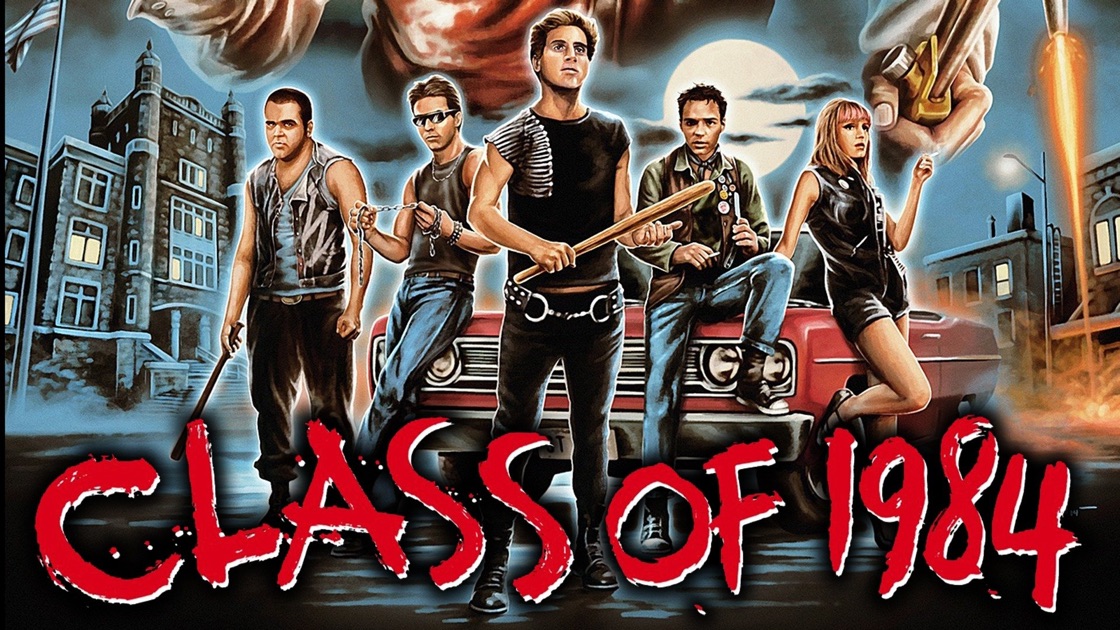
I remember school kids raving about this film when I was twelve. I really wanted to see it, but could never find it in the video shop or from the “pirate” video guy. The plot merges The Blackboard Jungle (1955) with Death Wish (1974), as Perry King’s music teacher attempts to soothe the savage beast of a gang of nasty punk students. He fails and the final act revenge-driven rampage is fantastically inventive and gory. Latterly famous director, a young Tim Van Patten, portrays the psychotic, Peter Stegman, with vicious zeal. A true exploitational classic. (Mark: 8 out of 11).
HELL NIGHT (1981)
This is one of those films I had never even heard of. With a sizeable budget of $1.4 million dollars for a slasher film, it concerns four college students, including a grown-up Linda Blair, spending the night in a creepy house as part of an initiation ritual. Unfortunately, there’s a psychotic killer about hellbent on hunting them down. We’ve seen it all before, but it was nicely filmed and had decent humour. Overlong but way better than I thought it would be. (Mark: 7 out of 11)
PHANTASM II (1988)
I reviewed the remastered version of Don Coscarelli’s low-budget masterpiece here, but only just got round to watching the sequel. Phantasm II (1988) had a bigger budget and suffers from some stodgy plotting. The re-casting of Mike with James Le Gros in the role throws you. Yet, once Mike and Reggie fight with the Tall Man (inimitable Angus Scrimm), the razor-sharp spheres and the hooded monsters, the film finds real pace. Coscarelli blows-up a lot of stuff and ramps up the weaponry, but the sequel lacks the twisted magic of the original must-watch horror fantasy, Phantasm (1979). (Mark: 6.5 out of 11)
TERROR TRAIN (1980)
Another unknown mini-gem I found on Amazon. This Canadian slasher film is, you guessed it, set on a train and finds, yes you guessed it again, college students getting picked off one-by-one by a vengeful psycho. Notable for a really good plot which gives the killer empathy and understandable motivation, it also stars everyone’s favourite final girl, Jamie Lee Curtis. With disguise and magic prevalent in the themes, David Copperfield also appears in a neat role. Highly entertaining with a killer twist. (Mark: 8 out of 11)
WHEN A STRANGER CALLS (1979)
Inspired by a famous urban legend, Fred Walton’s chilling suspense thriller has one of the most nail-biting opening twenty minutes in horror cinema. Carol Kane is the babysitter terrorized by a series of tense phone calls from a mystery ringer. From that terrifying start the story falters slightly as it focusses on Charles Durning’s obsessive search for the unhinged man. Only when Kane rejoins the film some years later does the horror rise up again in a truly frightening denouement. (Mark: 8.5 out of 11)
WILLARD (1971) / BEN (1972)
This was an odd one because I knew and seen the sequelBen (1972) when I was a younger. Little did I realise the original Willard (1971) had been released the year before and became a sleeper box-office hit. Bruce Davison is excellent as the introvert, Willard, who is bullied at work by his aggressive boss, Ernest Borgnine. Only when, and take a deep breath here, Willard trains an army of rats does he gain confidence to take on the world. It’s a weird film that actually works because of Willard’s fascinating character arc and Davison’s nuanced performance. (Mark: 8 out of 11)
The follow-up Ben (1972) focusses on Willard’s alpha rat, Ben, and his friendship with lonely kid, Danny. The sequel really raises the rat count and there appears to be thousands of them in their dirty lair. Danny is a likeable kid who suffers from a serious illness that prevents him from going out. Why he would make friends with a killer rat though is still frankly nuts! A lack of thrills and goofy premise make it difficult to recommend, and is more famous for the classic Michael Jackson hit called, surprisingly enough, Ben.(Mark: 6 out of 11)
Who doesn’t like a great movie death? Well, people who abhor violence and gore on the screen. But I am not one of those people. Thus, if done right in terms of combining emotional context and cinematic imagination, there’s nothing I like more than revelling or lamenting a character’s end in fine bloody fashion. Lastly, I hear you ask why no Zahler, Scorsese, Cronenberg, Miike, Peckinpah, Jackson, Fulci, Roth, Romero, Argento etc. on this list? So much death and only six make it, so please suggest any of the thousands I have missed off in the comments.
*** CONTAINS SPOILERS ***
ALIEN (1979) – “Do these eggs taste off?”
I think it may have been something Kane (John Hurt) ate or maybe something that ate him? Anyway, one of the most spectacularly surprising scenes ever still holds amazing power to this very day.
THE FURY (1978) – Separated at death!
This under-rated tele-kinetic thriller is a spiritual sequel to Carrie (1976). Adding a spy conspiracy plot to Amy Irving’s rites of passage character arc, it has a whip-cracking-pace and classic DePalma set-pieces. None more so than the explosive end of the baddie-in-black.
PSYCHO (1960) – Take a bath next time!
What more can be written about one of the most shockingly original scenes in cinema history? Not only did Hitchcock break all narrative rules killing off the main protagonist halfway through, he did it with one of the most ingenious uses of montage, music and murder ever.
PULP FICTION (1994) – The original “face-off!”
Marvin never saw it coming. But let’s face it – none of us did!
ROBOCOP (1987) – Toxic Wasted!
Whoever designed this action scene, no doubt Paul Verhoeven had much to say, delivered one of the most excessive demises in 1980’s cinema. The vehicle crash, the toxic waste, the melting bad guy, the steam coming off his body and the final disintegration are just cinematic perfection.
WILD AT HEART (1990) – Bobby Peru loses his mind!
David Lynch’s vibrant adaptation of Barry Gifford’s romantic thriller contains many colourful characters. Willem Dafoe’s Bobby Peru is a particularly nasty piece of work and he gets his comeuppance in an incredibly visceral and disturbing way!
Created and written by: Steve Pemberton & Reece Shearsmith
Directors (Season 6): Matt Lipsey, Guillem Morales
Original Network: BBC (available on BBC Iplayer)
No. of Episodes: 6
I have written exhaustively about how brilliant this television programme is, so much so I don’t think I can add any further other than I believe it deserves regaling as TV national treasure. Just when you think Reece Shearsmith and Steve Pemberton could be running out of creative steam they prove you wrong with another superb series of Inside No. 9. If you are interested, here are prior articles I have written about it.
However, to recap, if you have never seen Inside No. 9 I urge you to do so. It is an exceptional anthology series with six stand-alone episodes per series. Individual episodes feature a whole host of different characters and amazing actors each time led by the multi-talented Pemberton and Shearsmith. As per the prior seasons, the latest one is absolutely unforgettable. It again privileges tightly woven thirty-minute short narratives, which more often than not, feature a twist in the tale. Moreover, the events usually unfold in one location with rarely more than a handful of characters. This makes the narratives feel more focussed, intense and intimate. In series 6, there is even more growth within the anthology genre and much risk-taking where style and form are concerned.
So, here are my mini-reviews of each episode from Season 6 with marks out of nine (obviously).
*** BEWARE: POTENTIAL SPOILERS ***
EPISODE 1: WUTHERING HEIST
Main cast: Paterson Joseph, Gemma Whelan, Kevin Bishop, Reece Shearsmith, Steve Pemberton, Rosa Robson, Dino Kelly etc.
Not only are Pemberton and Shearsmith accomplished actors, writers and directors, they are also acutely aware how fans revel in their incredible work, devilishly mocking their own mythology and playing with audience expectations. They do this to dizzying impact in the puntastic opening episode, Wuthering Heist. Marrying elements from farce, crime, Commedia dell’arte and the plot of Reservoir Dogs (1992), the players wear masks, prat about and bleed over each other while attempting to pull off a diamond heist. Set in one location, a disused warehouse, Gemma Whelan is superb as the fourth-wall breaking narrator attempting to hold all the story innards together. Pretty soon though one realises that the flurry of puns, sight gags, plot contrivances and comical misunderstandings are intended as wondrous and silly fun. The lack of emotional depth is the joke here and the writers know this. Because Shearsmith and Pemberton’s script has a gag every four seconds, be it a sight jape or involve some sparky verbal dexterity. Lastly, not only do they know they are jumping the shark, but they revel in doing so during this hilarious meta-work.
Mark: 8 out of 9
EPISODE 2: SIMON SAYS
Cast: Reece Shearsmith, Steve Pemberton, Lindsay Duncan, Nick Mohammed
Among many of the recurring pleasures of watching Inside No. 9 is wondering what the number nine will refer to. It’s been a myriad of things including: a karaoke booth, a hotel room, a train sleeper car, a dressing room, a referee’s changing room, and even a shoe. In Simon Says it’s the name of a television epic called The Ninth Circle. This show is very similar to Game of Thrones in genre and scale, and likewise has a battalion of fans across the country who feel the final series undid the majesty of the prior seasons. The episode opens with immediate mystery as Steve Pemberton’s writer, Spencer, enters his flat with blood staining his clothes and conscience. Suddenly, Simon (Reece Shearsmith), is at the door saying he has evidence Spencer has committed a serious crime. Simon, a Ninth Circle uber-fan then blackmails Spencer into, among others things, rewriting the whole of the last season of The Ninth Circle into something more fan-friendly. Managing to be both funny and suspenseful in equal measures, Pemberton and Shearsmith’s characters play cat-and-mouse expertly, throwing in several big plot twists at the end of this compelling tale.
Mark: 8 out of 9
EPISODE 3: LIP SERVICE
Cast: Sian Clifford, Steve Pemberton, Reece Shearsmith
I watch some television series and films and am often struck at how much time is wasted in setting up the protagonists and story. Similarly, in unnecessarily long TV series you get either eight or ten episodes full of padding in the middle which destabilizes the momentum of the story. Nothing of the sort occurs in Inside No. 9. Stories are set-up with stylish economy and the situations immediately grab you by the throat and rarely let go. In Lip Service, Steve Pemberton’s downtrodden Felix is holed up in a hotel room waiting to liaise with a woman. But it’s not what you think. Sian Clifford’s Iris arrives and it turns out she is there to offer her services as a lip-reader. Felix suspects the woman he loves is having an affair and he requires Iris to read her and a possible lover’s lips at an adjacent hotel suite. I’ve now seen this episode three times and it truly is breathtaking. There’s empathy for Felix’s lost soul, some fine linguistic comedy, a potential romance, Clifford’s performance knocking it out of the park, Reece Shearsmith having great fun as an officious German hotel manager and THAT ending. The denouement, while totally believable, comes out of nowhere and leaves you genuinely speechless.
Mark: 8.5 out 9
EPISODE 4: HURRY UP AND WAIT
Cast: Adrian Dunbar, Steve Pemberton, Reece Shearsmith, Donna Preston, Bhavna Limbachia, and Pauline McGlynn
Quite possibly my favourite episode of the series, Hurry Up and Wait manages to achieve that difficult juxtaposition of being meta-textual and containing some real emotional power. Because it is one thing to be self-referential and satirise the creative process, in this case the making of a television police drama starring famous actor Adrian Dunbar, but it’s quite another to build in a murder mystery and empathetic characters who you root for. While Reece Shearsmith is always excellent playing angry characters, here he portrays James, a mild-mannered actor, who has got a break playing a scene with the precious talent, Dunbar. The TV drama they are in concerns a missing child and the “green room” happens to be a static caravan owned by a working-class family who may have important information about said grisly crime. Steve Pemberton and Pauline McGlynn play the parents of immature, Beverley – the brilliant Donna Preston – adding much comic relief, but all possibly hiding a dark secret. As James learns his lines he also plays detective seemingly discovering the truth until the truly chilling ending is revealed.
Mark: 9 out of 9
EPISODE 5: HOW DO YOU PLEAD?
Cast: Steve Pemberton, Reece Shearsmith, Derek Jacobi
Arguably the darkest tale, both in terms of the noir lighting and foreboding themes, it is difficult to discuss this tale of soul-searching guilt and justice without giving away too much of the story. Thus, I’ll talk about the actors and characters more. Derek Jacobi gives a deeply moving performance of a dying barrister who prides himself of, after an upturn in his early legal career, never losing a case in court until retirement. As he lies dying in bed, lungs heavy around his heart, he feels guilt about one case where he defended the indefensible. As he confesses his regret to Shearsmith’s cheery carer, it is soon revealed both men have sins they buried in the past which will soon come back to bite them. Watching these two fine actors spark off one another is as compelling as television drama can get, but there’s also comedy there too as Shearsmith delivers some spirited one-liners in between Jacobi’s grand screen gravitas. But where’s Pemberton I hear you ask? He’s sitting there waiting patiently in the shadows of this evocatively lit and thrilling tale.
Mark: 8 out of 9
EPISODE 6: LAST NIGHT OF THE PROMS!
Cast: Steve Pemberton, Reece Shearsmith, Julian Glover, Debra Gillett, Bamshad Abedi-Amin, Sarah Parish etc.
Are you aware of the work of Dennis Potter? He was one of the finest writers in British television from the 1960’s way into the early 1990’s. His scripts were always highly erotic, political and incredibly controversial. They skewered very British and human themes and burnt great sacred cows of the church, government, family, sex and marriage on the TV barbecue, leaving charcoal remains in their stead. Potter was a genius and with Last Night of the Proms, Pemberton and Shearsmith match him for bravado in deconstructing human nature and what it means to be British. Set in a well-to-do, middle-class household, a family of three generations sit down to watch the Last of the Proms on the BBC. It’s a big traditional classical music event and cultural celebration of what it means to be British. It makes me sick! Britain isn’t great. The British are racist, imperialistic and hardy murderers, who have a history and present (fucking Brexit!) they should be ashamed of. The thought-provoking screenplay here is heavy on compelling themes, memorable imagery and striking symbolism. This is a jarring and messy episode and what it lacks in precise plotting it more than makes up for in juxtaposing horror, satire, drama, surrealism, Jesus, social commentary and comedy to rather mesmerising effect. Potter’s ghost would have watched with glee and disgust and hate and love and pity and sadness; which is much how I felt witnessing Last Night of the Proms.