Tag Archives: Star Wars

JE T’AIME CINEMA by PAUL LAIGHT

JE T’AIME CINEMA by PAUL LAIGHT

I have a confession to make. I am a love cheat.  I love the cinema but, of late, I have been cheating on it with Television.  I couldn’t help myself. TV used to be cinema’s bastard child but now it’s all grown up and wow, has it matured! Gone are the past memories of four channels with some programmes of high quality yet limited choice. Now we have four thousand channels to choose from and while much of it is light bum-fluffery there has been some great product, notably dramas such as:  Game of Thrones, The Walking Dead, 24, The Sopranos, Hannibal, Boardwalk Empire, Breaking Bad, The Fall, Daredevil, Peaky Blinders, Doctor Who, True Detective, Band of Brothers and many more I have forgotten or just haven’t had time to watch. But never fear cinema I still love you.

old-skool-3d-cinema-audience

The moment I purchase a cinema ticket, in fact even before I leave the front door knowing I am about to leave for the cinema I get the charge, the buzz and the anticipation of getting a movie fix. Because for me going to the cinema does what television cannot: it takes me out of my home. It takes me off the street. It takes me out of THIS world. It takes me to a dark secluded spot sat staring at a gigantic silver screen waiting for the moment the projectionist feeds celluloid through light, well digital files though a computer and then a lens or something; anyway, you get the picture. Then the movie starts and for the next few hours I’m transported to another world featuring: places, times, characters, sounds, images, events etc. that are beyond my imagination. And when the movie ends there’s a rush of excitement, a reaction to the cinematic assault on the senses. But, alas, the fix cannot last. Reality is soon knocking on my door.

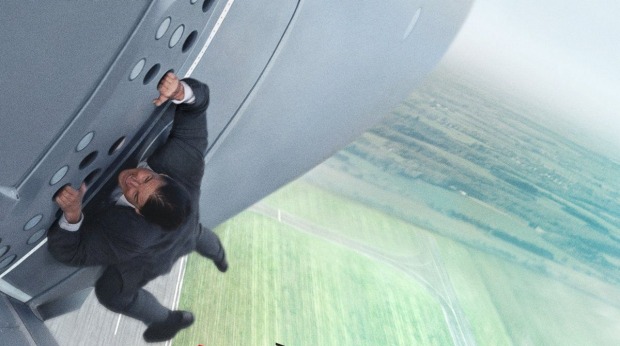
Cinema offers a wide-screen visual delight. Indeed, when television first came into people’s homes film producers were frightened that this new-fangled ‘radio with pictures’ would steal away audiences so Hollywood made bigger, though not necessarily better, movies; epics such as: The Robe (1953), The Ten Commandments (1956), Ben Hur (1959) and Cleopatra (1963). Obviously, the epics just keep coming notably in the raft of summer blockbusters which infest the screen. This year has been no different with films such as:  Ant-Man (2015), Avengers: Age of Ultron (2015), Jurassic World (2015), Fast and Furious 7 (2015), Mission Impossible: Rogue Nation etc. delivering with spectacular monsters, crashes and stunts.
mi5

While such blockbusters may lack depth of character than many TV dramas it’s the spectacle I crave at the cinema. That moment where you go giddy because you haven’t breathed for a minute until all the air rushes from your mouth as one simultaneously pushes your jaw back shut.  Good old TV cannot do this though. The television set traditionally occupies a foremost place in the ‘living room’; it’s small compared to the cinema screen and has kind of replaced the hearth that used to provide heat and light. The TV glows and is reminiscent of the old-fashioned campsite fire where families or scouts swap ghost stories while capturing the heat from the flames.

Cinema offer a short, sharp hit compared to TV.  Often, a longer running drama series on TV will require a six, ten, thirteen or even longer week commitment. Of course, the introduction of streaming or binge-watching has hacked this idea down to size but movies are still economical and quicker-paced, affording little in the way of fat to the storytelling. Cinema characteristically adopts a tight narrative organised around a particular problem or disruption that is resolved at the denouement where some TV shows, while resolving some plots, will hook us in with shocks to keep us watching and sometimes this can be frustrating as the two-hour or so closure and resolution that cinema offers is very satisfying to me. One of my favourite films Jaws (1975) is a great case in point. Here a shark terrorizes a local community in the United States and the cause-effect narrative takes us through a series of conflicts involving: shark attacks, pursuit of the shark and ultimately the killing of the shark. Thus, film is able to offer a satisfying conclusion to a thrilling story. Ultimately, film offers catharsis and the endings of films such as: Fight Club (1999), Chinatown (1974), The Godfather (1970) and Planet of the Apes (1968) all build to unforgettable climaxes.

jaws

Yet, the major concern I have with committing to a new TV drama is the length of time required to get in AND out of the story. I think long and hard about such a commitment but with film one knows it’s not going to be as such. Indeed, one of the reasons I have not watched Mad Men yet is the amount of seasons ahead of me. I’ve been married and I know how much hard work it is. I just don’t feel ready to commit just yet to Don Draper and his “crew”. Plus, with TV shows designed with advertisers in mind adverts can get on the nerves when in the midst of the narrative although the set-top box and Netflix revolution has put that issue aside as has the DVD box-set.  Despite this though Cinema is still the preferred mode of voyeuristic, narcissistic and vicarious pleasure though as you sit in a comfy seat eating over-priced confectionery and have a non-stop viewing experience with all adverts before the main presentation.  Of course, most films do have multiple examples of product placement, especially Tom “Dorian Gray” Cruise’s M:I franchise but that’s subliminally secreted within the narrative and action and thus not an issue for me.   Overall, TV’s episodic form lends itself perfectly to advertisers yet once the movie has started it remains a satisfying whole and is never interrupted with a word from the sponsor.

While I admit that TV stories are gaining more and more complexity notably in regard to depth of characterisation and emotional power they are intrinsically “talking heads” and dialogue lead. TV is still anchored by a lack of screen-size and scope. Rarely does the action on a TV show reach the heights of the cinema although in recent times 24 and Daredevil have featured some spectacular set-pieces and fight scenes. Moreover, Hannibal has to be the most exquisitely edited TV show I have ever seen.  But is it better than the cinema?  Boardwalk Empire showed flashes of narrative genius with its parallel storytelling from past and present but does it reach the stunning narrative expertise of say Memento (2000);the story of Leonard Shelby (Guy Pearce) – a man with no short-term memory – which presents the complex plot BACKWARDS!  Moreover cinema, unlike TV, is also able to breach huge temporal and spatial differences through editing. Perhaps the most famous single cut in cinema history appears in Stanley Kubrick’s 2001: A Space Odyssey (1968). Opening with the “Dawn of man”, apelike hominids learn how to use tools. As the ape/man smashes down the bone he then launches it into the air. One cut later and the audience are thrown thousands of years into the future and thousands of miles into space. Such vision demonstrates the power of cinema and takes the breath away.

The arch edict screenwriters should follow when writing for the screen is one should: “Show don’t tell.”  Dialogue is also a vital tool in the screenwriter’s box as filmmaker’s such as Quentin Tarantino and The Coen Brothers have demonstrated in movies such as: Reservoir Dogs (1991), Pulp Fiction (1994), The Big Lebowski (1997) and Fargo (1996). Nonetheless they have married quirky, stylish dialogue with strong visual flair. Indeed, the screenwriter must be aware that cinema represents a marriage of sound and vision. While TV traditionally favours dialogue to further the story and action, cinema uses a whole host of devices to tell the story including: cuts, dissolves, wipes, flash-cuts, voice-over, overlapping dialogue, close-ups, point-of-view shots, shot-reverse-shot, Steadicam shots, crane shots, moving shots, dolly shots, wide-screen panoramic views, black-and-white film, colour film, and use of diegetic and non-diegetic music. Indeed, for me there is nothing more cinematic than great music being placed over fantastic images. Filmmakers such as Tarantino, the Coens, and Martin Scorcese are all aware of this. Tarantino uses non-diegetic music expertly in the infamous ear-slicing scene in Reservoir Dogs (1991).


And so I conclude with a mild apology to cinema. I have been seeing a lot of Television these days I DO STILL LOVE YOU! I love your form, style and content and the way they combine to move me emotionally and physically in a way television cannot.  Movies will always reach the parts Television cannot. Something magical occurs when watching a film. A whole new world develops before my very eyes; heroes and heroines are thrown into adventure and conflict with events changing their lives forever. Be it falling in love, falling out of love, fighting for their lives or the lives of the ones they love, struggling against the odds to achieve their greatest desires or, tragically failing at the last obstacle. That for me is cinema.  It’s an escape from reality the moment one leaves the house. Saying goodbye to the box, not only knowing it will be there when one comes back home but also knowing that it will rarely change my life. While its heat may keep the living room warm at night it cannot compete with film. I have seen the light. Je t’aime cinema!

bluesbros

SAINTS AND WINNERS: A WEEKLY REVIEW

SAINTS AND WINNERS:  A WEEKLY REVIEW

Seasons greetings! Double busy leading up to Christmas with lots of cultural stuff going on so I’ve consolidated all my viewings, derring-dos and reviews of last week into one manageable post.  Enjoy!

**Contains mild spoilers**

 BILL BURR – I’M SORRY YOU FEEL THAT WAY (2014) – (NETFLIX)

The Massachusett’s born fortysomething everyman comedian is an absolute straight-talking joy.  He sails close to controversy on many occasions giving political correctness no mind at all. But it’s not shock for shock’s sake but rather well thought out and cutting rants covering domestic violence, plastic surgery, guns and the cult of celebrity.  I particularly love his cracking-take-no-prisoners-delivery and he is very adept at imaginary on-stage conversations which are relentlessly hilarious, hitting his targets full in the face.

DR WHO – THE MIND ROBBERS (1968)/SEEDS OF DEATH (1968)

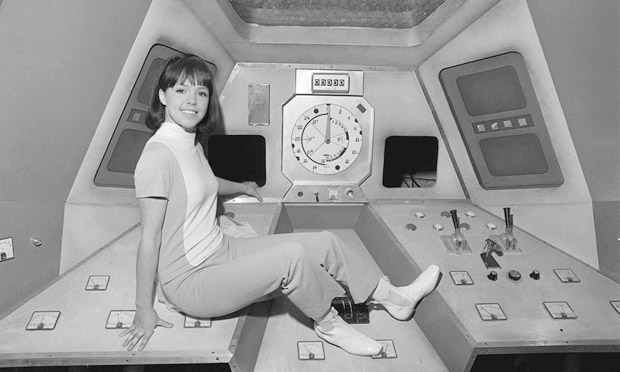
Wendy Padbury Zoe Doctor Who 1968

From the 6th season of the classic science-fiction serial, with Patrick Troughton as the eponymous time-traveller, these two episodic stories find PT on great form with Zoe and Jamie as his companions.  The villains of each piece are The Master (not that one) of the Land of Fiction and The Ice Warriors in Seeds of Death.  The latter foes are particularly nasty pieces of work although they do find themselves undone if you turn the heating up a bit. Troughton is a fantastic Doctor playing the fool while hiding a devious mind as he allows the enemy to think they have the upper hand before prevailing victorious.


DR WHO – SEASON 7 (inc. DAY OF THE DOCTOR)

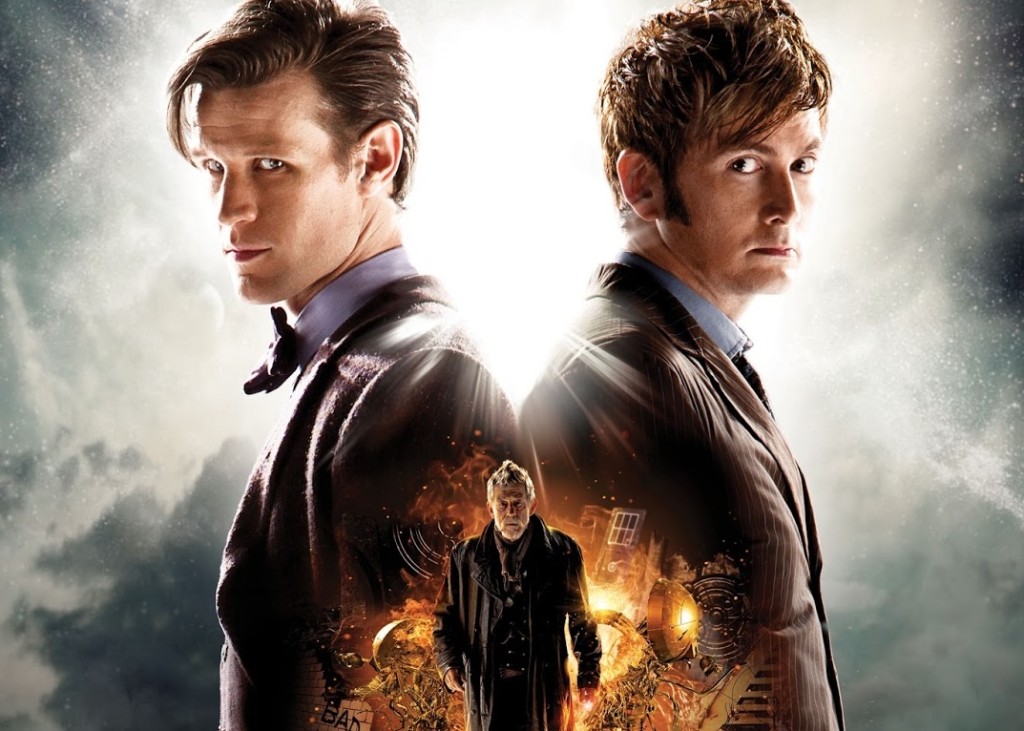
I’ve really enjoyed Matt Smith’s final season as the Doctor and some of the episodes have provided some cracking televisual entertainment.  Some of the concepts and plot twists, I must admit, I found initially baffling but that was because the writing was so fast-paced and spirited.  But overall Steven Moffat and his whole production team deserve credit for a fun, funky and very dark (where Amy and Rory were concerned) season which also introduced a sparkling new companion in Clara (Jenna Coleman).

day-of-the-doctor-Copy-1024x731

Personal highlights for me included:  Asylum of the Daleks, The Angels Take Manhattan, Cold War, Hide and the 50th Anniversary episode The Day of the Doctor which had THREE Doctors and a history-bending game changer.  Brilliant to see John Hurt appear as The War Doctor and Tennant return also.  I am very pleased too that I have watched the Time of the Doctor too and I am finally onto Peter Capaldi’s Time Lord; which is how this latest obsession began.


HESHER (2010)

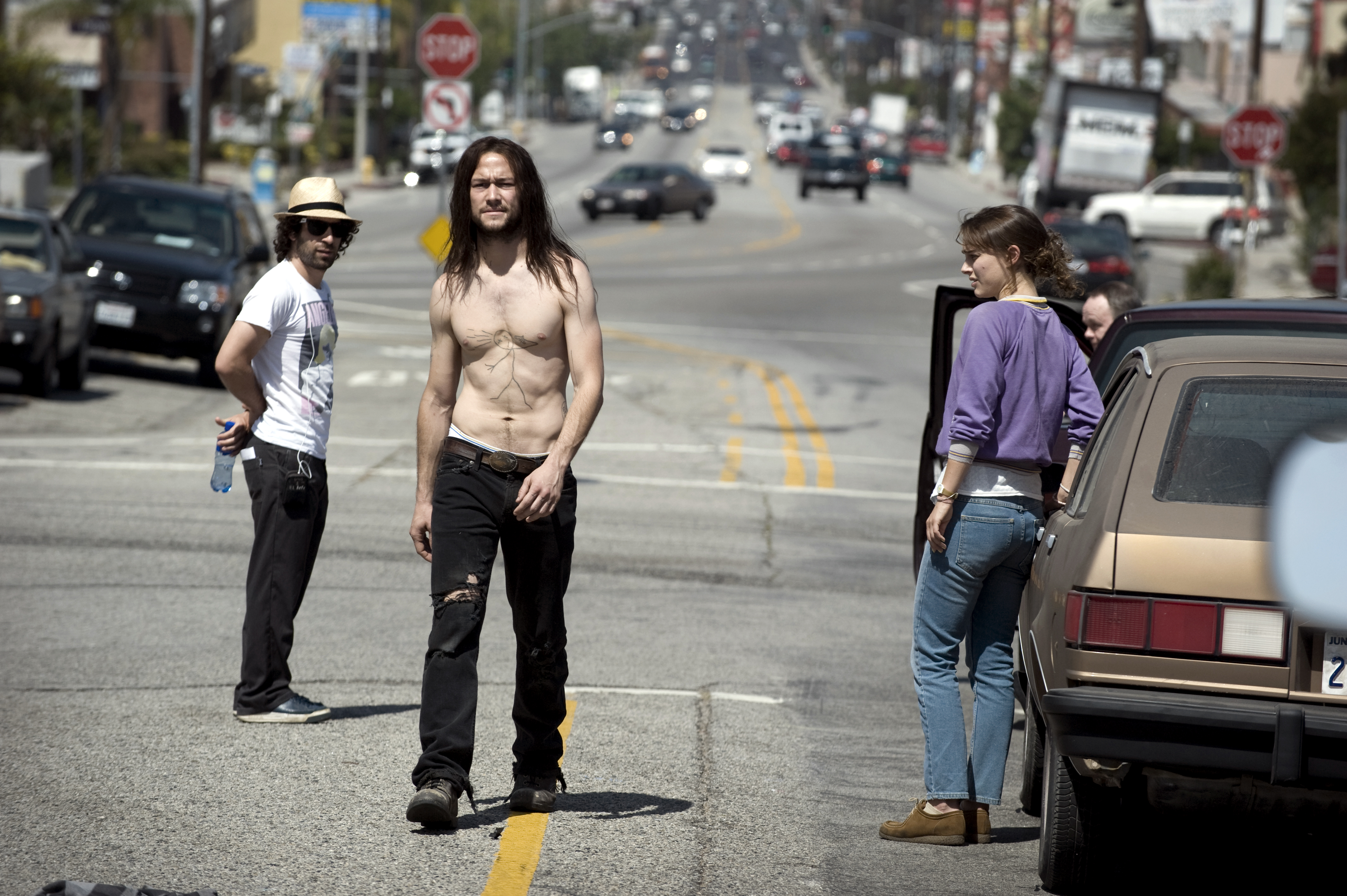
This obsidian painted comedy about family grief features Joseph Gordon-Levitt as Hesher:  a crazed-heavy-metal-anti-heroic-outsider-mentalist. Hesher crashes into the lives and the house of the Forney family as they attempt to get over a recent death.  And while he seems to be a negative reality void sucking the life out of them he kind of becomes an anti-angel providing some kind of weird and wonderful family therapy.

hesher_levitt

It’s a difficult film to get into initially as it’s quite bizarre but ultimately it’s got a great little black heart of gold showing that togetherness will overcome.  Despite an A-list cast including Natalie Portman it’s very much a low budget-under-the-radar gem with a loud heavy rock soundtrack.


PAUL FOOT – SECRET CHRISTMAS COMEDY SHOW 2014

Myself and Brett Sharpe have formed the Dr Who-Paul-Foot-Spurs-Supporters Fan Club. It’s very niche but inclusive club which anyone can join if they like those particular cultural phenomena. Our inaugural Christmas outing was to a secret location in London and involved seeing the master of merry mirth — Paul Foot — putting on his own little show for his fans or connoisseurs as he calls them.  It was an incredible show made all the more marvellous because it was in an intimate venue above a pub. I cracked up throughout as Foot treated us to some of his greatest comedy hits including: RADA story; EUROSTAR story and how to get REVENGE on BED & BREAKFAST LADY.


RETURN OF THE JEDI (1983) – BFI SCREENING

Here’s a surprise: I love Star Wars!  Not the prequels but the original films. I saw them all at the cinema and they are three of the most perfect piece of entertainment one could hope for. They captured the imagination of a wide-eyed seven, ten and thirteen year boy (that’s me!) when each of the trilogy was released. With their: spaceships, creatures, heroes, mercenaries, droids, monsters, light-filled swords, noble Knights protecting the Empire and rebels battling gigantic Death Stars – WHAT’S NOT TO LIKE!    I watched the final film in the trilogy at the BFI Southbank’s majestic cinema NFT1 and Return of the Jedi looked wonderful. I laughed, gasped and cheered in all the right places as Luke, Leia, Chewbacca, Han Solo etc. fight and defeat the Dark Side in a galaxy far, far away.


SPURS Vs NEWCASTLE – CAPITAL ONE CUP QUARTER FINAL

Christian-Eriksen-Tottenham-546907

I went to White Hart Lane to watch Spurs against Newcastle in the Capital One cup and what a terrific performance they put on. It was tight for a while against an under strength Toon – who had been in good form in the League – but a mistake from their young keeper allowed Bentaleb to score the first. Chadli made it 2-0 with a fine run and shot before Kane and Soldado finished the Northerners off!  The great news is we got Sheffield United in the semi-final so MUST have a positive chance of getting to the final at Wembley.  Since this game we also beat Burnley 2-1 at home so allied to our last-gasp win against Swansea the Pocchettino’s Spurs are on a grand roll for now.

ST VINCENT (2014) – FILM REVIEW

I love Bill Murray. The guy is a comedy legend and general all-round media eccentric.  He’s been in some terrible films and some classic movies. The one over-riding consistency in all his movies are he is ALWAYS brilliant.  In St Vincent he plays a curmudgeonly scoundrel who sleeps with hookers and drinks himself unconscious. When Melissa McCarthy’s single mother Maggie and her son Oliver move in next door Vincent becomes an unlikely babysitter to the boy.  It’s an okay film which promises much dark and bittersweet humour in the vein of Bad Santa (2003).

However, while Vincent starts off as a bit of a scumbag he is redeemed far too easily for my liking and while the script is very witty it runs out of steam just past halfway and even Murray cannot save an overly saccharine and sickening ending.  Also, Naomi Watts is wasted as an offensive stereotypical Eastern European prostitute while McCarthy is criminally underplayed given very little to do.  A disappointment overall as all the plot strands are resolved easily and without any real comic or dramatic thunder.

BOOK OF MORMON – MUSICAL THEATRE REVIEW

BOOK OF MORMON – THEATRE REVIEW

**YO!  SPOILERS!”

“Hey – Paul!  Do you want to see Book of Mormon? It’s a musical!”

“Oh – I can’t stand musicals! Apart from Grease maybe. Or a Sondheim one I can’t remember the name of.”

“But it’s made by the guys who did South Park!”

“Really? I love South Park. How much are tickets?”

“HOW MUCH?!”

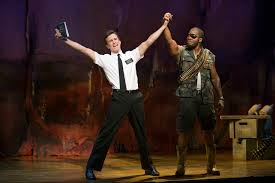
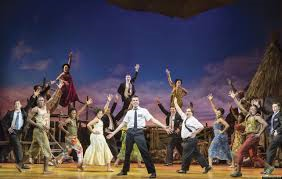
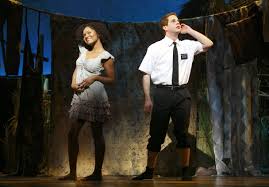
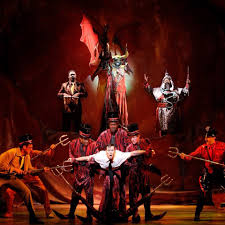
So on a cheaper Wednesday matinee showing myself and a friend ventured to the Prince of Wales Theatre to see Trey Parker and Matt Stone’s wonderfully irreverent and offensive (depending on your point-of-view) musical The Book Of Mormon. And a great time was had by all. It was funny, energetic and warm and of course very rude but strangely uplifting and like all great art (high or low) it got me thinking about my own values and spirituality.

I have never been what you would call a religious person.  I am not a believer or associate myself with a particular faith.  In fact since I was young I always held a staunch antagonism toward doctrines which remove free-thinking in the individual from birth.  Furthermore much of the world’s conflicts over history have been caused in the name of religion; that and greed and money and power.

BOM2

Having said that over the years my approach to religion has matured and I have become less didactic in my thoughts. Because you know what: religion or faith can be a positive thing and give people a true set of values with which to live their life. It’s not God’s fault that human beings use his or her name to commit acts of war and spread intolerance.  In fact, in recent times the move toward Atheistic and Scientific Fundamentalism (led by the Grand Wizard Richard Hawkins) itself has also caused intolerance to rear its ugly head too.

I prefer to believe in nothing; not a void as such but no particular deity or belief system. They provide great comfort for many but it’s not something I feel I need.  I believe in freedom of choice and speech and the basic human principle of just be tolerant of, and good to others.  Because as the song says: “Religion don’t kill people – humans do!”    Of course I just made that lyric up for humorous effect and that is precisely what occurs in the wonderful, hilarious and uplifting theatrical musical Book of Mormon.

The backstory tells us of Joseph Smith who “found” the sacred eponymous text on the gold plates of Nephi. After which he gave birth to a new religion in 1830 which went viral, spreading quicker than a dancing cat video on YouTube.   Flash forward loads of years and the Church of Latter Day Saints is one of the World’s largest cults; sorry, organised religions. And this is the starting point for the story.

BOM1

Our two main protagonists are Elder Price (Billy Harrigan Tighe) — a handsome, young go-getter — and Elder Cunningham (A.J. Holmes) who is, of course, his nerdier, less confident and insecure counterpart.  Cunningham is also a compulsive liar which gives the story an essential characteristic and running theme. Together they are sent from the Missionary Training Centre in Utah to of all places, Uganda to spread the word of Mormon. But Uganda is a godless place full of famine, disease and war and hardship so religion is a hard thing to see to those with no hope.

Humour is mined from the clashes between the two wildly different cultures as the songs compare the upbeat door-knocking optimism of the Mormons with the downtrodden, hungry, maggot-balled, AIDS-ridden, clitoris-castrated Africans; who are war-lorded over by hilariously named General Butt-Fucking Naked. As with South Park the writers use all manner of stereotypes with which to cram as many offensive jokes in as possible.

BOM3

However, there is heart to the story too as it is revealed that Elder Cunningham has joined the Mormons to try and fit in and find his place in the world and most importantly: friends.  He is particularly taken with the preening narcissistic Elder Price despite the latter’s obvious discouragement and dislike of Cunningham. It’s no surprise then that while Price is clearly the more talented “salesperson” yet it is Cunningham who becomes a hit with the natives.  Having said that he does so having “made-up” loads of stories from the Book of Mormon incorporating tales from Star Wars, Star Trek and Lord Of The Rings.  From his distortions from the text plus bravery in standing up to the General Cunningham becomes a beacon of hope in the village.

Stories and faith are at the core of the satire here as Book of Mormon both lampoons and deep-down admires the Missionaries. While what Elder Cunningham says seems completely stupid and ridiculous it gives the villagers hope and faith for the future. Overall, the word of Joseph Smith is arguably “fictional” yet the message is a positive one with togetherness being the way forward.  The show asks us: if something gives hope in a hopeless world does it matter if it’s real or not?

BOM4

I have no frame of reference with regard to musicals. The only one I’ve seen outside the movies was Fame – The Musical starring ‘H’ from Steps.  But this was an absolute joy with an incredible cast and songs to boot.  My personal favourites were: Two By Two, Making Thing’s Up Again and Spooky Mormon Hell Dream.   The shifting of sets, movement and pace were fast yet controlled and the show was clearly the result of a culmination of an incredible amount of creativity, rehearsal and hard work.  As a dynamite new season of South Park currently runs on Comedy Central – I can certainly say Matt Stone and Trey Parker have another work of genius to add to their incredibly offensive yet hilarious CV.  Thank God, Allah, Ganesh, Buddha, Jesus, Mohammed, Nephi, Joseph Smith et al  for them I say!

southpark_god

THE GUARDIANS OF THE GALAXY (2014) – FILM REVIEW

THE GUARDIANS OF THE GALAXY (2014) F

**THERE BE SPOILERS AHEAD**

“Hence, once again, pastiche: in which stylistic innovation is no longer possible, all that is left is to imitate dead styles, to speak through the masks and with the voices of the styles… means that one of its essential messages is… the failure of the new, the imprisonment in the past.” Frederic Jameson – POSTMODERNISM & CONSUMER SOCIETY (1983)

starwars

I loved this film for so many reasons.  It’s a nostalgic rush and push of music, action, fantastical creatures, space operatics, zinging one-liners, knowing humour, spectacular effects and in Chris Pratt — a new cinema star (lord) for the millennium is born.  Let’s be honest there isn’t an original bone in its body but the fleshy pastiche and meaty cultural references Guardians of the Galaxy wears proudly on its sleeves take the audience on one hell of a journey.

guardians4

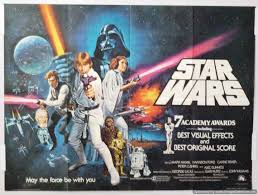
Marxist and cultural theorist Frederic Jameson spoke of the rise of the “Nostalgia” film and postmodernist movies such as Star Wars (1977) and American Graffiti (1973) in his seminal essay aforementioned above.  The Nostalgia film harks back and references the past drawing influences not from reality but rather cultural artefacts such as films, comics, radio, TV and music etc.  Guardians of the Galaxy involves an orphaned hero — with mysterious father — who must do battle against an evil empire, save a “damsel” in distress, all the while accompanied by a motley crue of intergalactic misfits.  Sound at all familiar?  Yes, finally the kids of today have their Star Wars. They have a new hope, kind of; a pastiche of a pastiche of a pastiche based solely on the cultural fossils of yesteryear.

guardians1

Watching this film on IMAX 3D at Wimbledon Odeon Screen 4 (my favourite cinema screen by the way) made me feel nostalgic in so many ways. It felt more like the comic books I read as a child than any film I’ve seen recently. Further, I felt a surge of history as the film opened taking me back to 1977 when my Dad took me to see Star Wars (1977).  I recall the massive queues waiting to go see Lucas’ classic and the giddiness and excitement I felt as a youth rushed through me; even more so when the film started and my consciousness was treated to one impressive set-piece after another.  I felt young again and all because of a movie!

In a major ironic twist I too felt nostalgic for my University days and my discovery of postmodern theorists such as Jameson, Baudrillard and Foucault while studying. While it served no purpose in the real world my academic life was a great time for me.  The knowledge of postmodernism I gained enhanced further this funky fusion of comic-book anti-heroes blowing stuff up to a 70s soundtrack. Indeed, I was at peace with the world.  A bomb could have hit the cinema and I would not have cared.  It was cinematic heroin. I was happy.

Guardians is the 10th Marvel Universe movie to be produced and is based on a lesser known product from the uber-comic overlords’ oeuvre. Young Peter Quill is not having the best day. At the beginning he suffers the loss of his mother. As he runs away from the hospital he is then kidnapped by a gigantic spaceship which airlifts him to a life with the Ravagers; a group of space cowboys and outlaws – led by Michael Rooker’s Yondu.  Flash forward some many years to a galaxy far, far far away and an older Quill (effortlessly charismatic Chris Pratt) is on the hunt for a mysterious orb in order to make a few intergalactic dollars.  Quill proves himself a decent dancer and well as fighter as he uses hi-tech weapons to outfox his foes.

guardians6

The opening action sequence is a sheer joy and essentially riffs on the opening of Raiders of The Lost Ark (1981) while using Blue Swede’s funky classic Hooked on a Feeling  also used in Reservoir Dogs (1992). Let’s be honest it is all very silly but I am not watching this as a fortysomething man but rather a young boy living in the warmth of the past bathing in the nostalgia of recalling Star Wars, Raiders, Reservoir Dogs and MIXTAPES!!   I used to do mixtapes and it was such fun before the devilish digital age took over.  Anyway, the orb Quill has stolen turns out to be one of those END OF THE WORLD plot McGuffin thingy’s and a whole host of benign and nefarious characters are after it notably evil Titan Thanos (Josh Brolin), Kree mentalist Ronan (Lee Pace) and the Collector (Benicio Del Toro) etc.

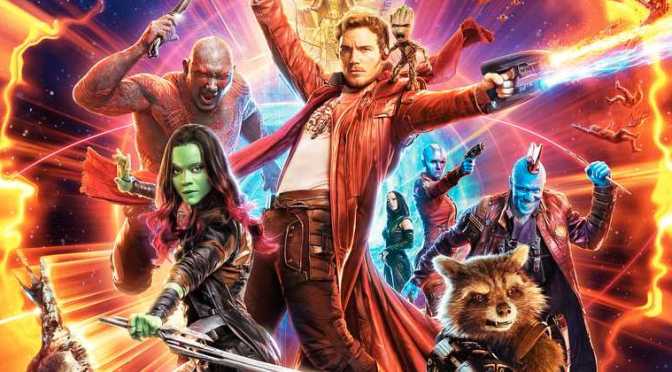
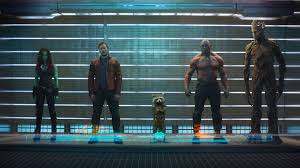
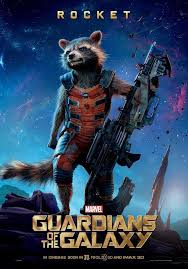
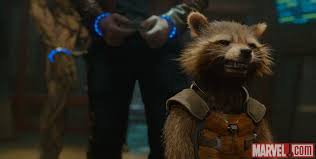
So, Quill consequently finds himself pursued and caught and thrown in prison by the Nova Corps (basically humans with funny hair.) He then unwittingly becomes part of a bunch of misfits including: Rocket (Bradley Cooper) – a feisty raccoon and weapons expert; Groot (Vin Diesel) – a tree-like humanoid; Gamora (Zoe Saldana) – Thanos’s adopted assassin daughter; and finally Drax (Dave Bautista) – a giant blue alien muscle guy. Together these unusual suspects form an uneasy but at times hilarious alliance as they fight and argue and bicker and eventually accept each other and combine to overcome the villains before them.

m7

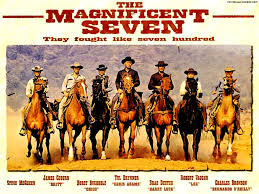
If The Avengers (2012) was a remake of The Magnificent Seven (1964) then this is a remake of the Dirty Dozen (1967) (minus seven). Moreover, the film follows the successful Marvel template of superheroes (or in this case anti-heroes) saving a very Earth-like world from destruction from said poisoned destructive orb (see Tesseract).  But what makes this Space-Western such fun is the oddball off-centre characters which director James Gunn and his fellow writers clearly gave a lot of time developing. While special effects reign over the production the likes of Quill, Rocket and Groot are given a humanity and humour which adds heart to story.  Indeed the script is full of empathetic backstories and themes including: fatherless, motherless and adopted children, genocide, slaves, nature v. technology, medical experimentation, grief, tyranny of dictatorship; all of which add some depth to the otherwise fluffy frivolity of the script.

Gunn was an interesting choice of director as he had written some mildly successful screenplays and directed two low-budget movies: the hilarious horror Slither (2006) and anti-super-hero oddity Super (2010).  But he marshals the army of cast and crew with a great sense of timing and while Guardians is generic in structure, the delight is in the incredible visuals and action, character detail and witty dialogue splashed throughout. The tone almost tipped over into farce in a dance off scene near the end and Del Toro is disappointing underused as The Collector. Plus Zoe Saldana’s character Gamora is gutsy and kick-ass until she turns to type and is saved by Quill. Although I forgave this stereotype because the scene was so memorably rendered and realised in a kind of space version of Jean Vigo’s poetic classic L’Atalante (1934).

The film finishes with a lovely post-credit kick in the nuts with an appearance of another comic-book-anti-hero. Marvel once again has delivered the goods and their standard template will continue to be a success if they choose off-centre directors such as Gunn, Whedon and the Russo Brothers. These are young (ish) guns like Lucas and Spielberg who while they wear their cultural influences proudly on their sleeves, jackets and underwear they paradoxically retain some originality amidst the pastiche and intertextuality. Thus, Frederic Jameson’s theories seem even more valid today. He himself argued that postmodernist culture was linked to the rise of late capitalism from the 1960s onwards and as the Marvel money-making monopoly marches on who can disagree with him.