Category Archives: Cinema

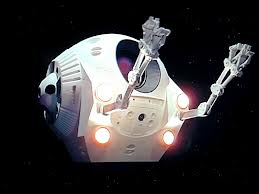
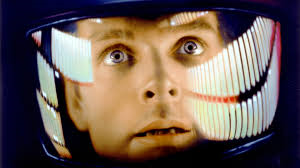
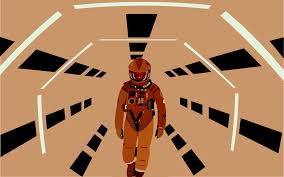
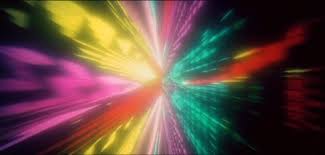
2001: A SPACE ODYSSEY (1968): STANLEY KUBRIK’S MASTERPIECE IN VISUALS

2001: A SPACE ODYSSEY:  A VISUAL REVIEW

A picture is worth a thousand words.” – Old Chinese Proverb**

spaceodyssey

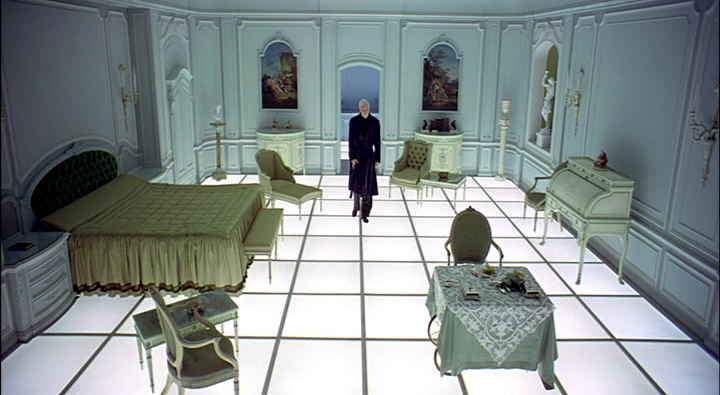
Thus, having seen Stanley Kubrik’s poetic space opera at the cinema last week I thought it unnecessary to write what can be said better with images.  It is a work of absolute art which gets better on every viewing.

An influence on pretty much EVERY science-fiction film since its inception this film MUST be seen at the cinema. It’s on at the BFI at the moment so go before their brilliant sci-fi season closes.

What does it all mean?  Something about life, death, future, past, present, humanity, aliens, peace, violence, Artificial Intelligence, technology, religion, heaven, hell and pretty much everything else.  It’s up to the viewer to decide.

apes

monolith1
moon1
pod

dave
spaceman
space-odyssey-computer2
space-odyssey-discovery-one
TRIP
space-odyssey-end
STARCHILD

**Although there is some doubt on the Internet as to whether it was Russian author Turgenev who invented this phrase or whether it was an early 20th copywriter Fred Barnard trying to sell cars who coined this phrase.  But who cares – just look at some pictures and be in awe to the genius of Stanley Kubrik and his filmmaking team.

THE IMITATION GAME (2014) – FILM REVIEW

 THE IMITATION GAME (2014)

**MASSIVE SPOILERS IN HERE. SORRY**

Films based on “true” stories are interesting to review as they will inevitably distort situations in the name of drama. I personally do not mind if a film compresses times, characters and incidents as I am interested firstly in my emotional response to the story and characters more than historical authenticity.  If I want accuracy I’ll rely on Wikipedia.

alanturing

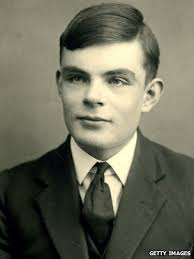
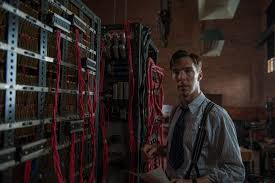
Yet, as films based on ‘real’ events go The Imitation Game (2014) is a creditable distillation of the WWII code-breaking heroics as well as being a high class theatrical tragedy in cinematic form.  Having said that while the film acts as an excellent tribute to the genius of Alan Turing (phenomenal Benedict Cumberbatch), the work of others in the field such as the Polish code-breakers, Tommy Flowers and many others must also be recognised. But perhaps that is for another film altogether.

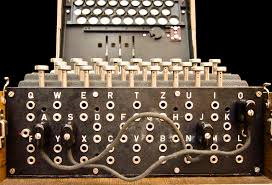
I didn’t know much about main protagonist Alan Turing prior to seeing this movie but having done some basic research one soon realises what a great British hero he was in terms of cracking the Nazi Enigma codes. Moreover, his incredible mind also contributed in some way to the invention of what you are reading this very review on right now. No, not http://www.wordpress.com but the actual computer itself.

enigma

The fact that one of humanity’s greatest minds was treated so badly because of his homosexuality is a genuine war crime.  It’s also a massive indictment AGAINST the Government and the Official Secrets Act that Turing is only just being truly recognised for his outstanding work in the last few years.  Indeed, one of the films main strengths — not forgetting Andrew Hodges’ book on which it is based —  in bringing Turing’s story to the screen is it acts as a thrilling monument to a man so cruelly destroyed by an intolerant 1950s society.

The narrative switches between Turing’s life pre-war, post-war and in-between.  Graham Moore’s screenplay is deftly written and well-paced; both personable and witty. In terms of genre we are in biography and war film territories with a sprinkling of espionage and suspense thrown in.  The code-cracking team at Bletchley Park are a kind of super-intelligent version of Marvel’s Avengers and include a handsome cast supporting Cumberbatch including: Matthew Goode (the next James Bond I reckon), always reliable Mark Strong and a commendable turn from Keira Knightley.

Firstly the team clashes with the prickly and arrogant Turing. Then, of course, over time they come to respect him. Meanwhile, idiosyncratic Turing finds his main ally in Joan Clarke (Knightley) as their “romance” becomes the heartbeat of the piece amidst the manipulation of machines.  Both hearts and minds are drawn to each other and the two get engaged. But Turing’s sexuality proves an obstacle to the marriage and there’s a wonderful scene which reflects this; beautifully played by Cumberbatch and Knightley and echoes — albeit more seriously — the classic “No one’s perfect” end-scene from Some Like It Hot (1959).

imitationgame7

There is so much heartache in the character of Turing.  The flashbacks to Turing’s school years when he was bullied and suffered personal loss garners further pathos. Moreover, the “peas and carrots” scene alludes to the possibility of Turing having Asperger’s or similar high-functioning autism.  And in Benedict Cumberbatch we have an actor who imbues Turing with a grandiose pain which I found genuinely moving. Here’s is an actor — who while cornering the market on misfit geniuses — once again shows terrific range and surely he will be nominated come Awards ceremony time.

This is a tremendous drama directed by Morten Tyldum which is arguably more televisual than filmic. Indeed, it reminded of those amazing BBC Play For Today productions I grew up watching when a young boy. It works mainly as a fine biopic of an incredible man so cruelly persecuted for just being born slightly different. Yet it is also has touching romance and high drama as shown when having  cracked the Enigma the team face the agony of having to hide the fact as a strategy to win the war. Ultimately, I left the cinema uplifted by the work these amazing code-breakers did and but also with anger in my heart; anger at the damned British Government for not rewarding Alan Turing for his miraculous contribution to the war effort. He deserved so much more.

MOCKINGJAY – THE HUNGER GAMES – PART 1 (2014) – FILM REVIEW

MOCKINGJAY – THE HUNGER GAMES – PART 1 (2014)

Dear Hunger Games Franchisers,

I really liked the first two films for the following reasons:

1)  Jennifer Lawrence – a wonderfully talented actress who proved her natural actoring ability in Winter’s Bone (2010),  was perfectly cast in the lead and has proven star quality.

2) Katniss Everdeen is a formidable character with great physical and emotional power as well as fight and determination. She is brave, loyal and it doesn’t hurt that she resembles a young goddess like Artemis (not the Kebab place on Garratt Lane.)

3) The films adhered to a convincing formula which built believable characters, trained them up and then pit them against each other in gladiatorial combat.

4) Powerful drama as children are exploited for the purposes of political purposes by an dictatorial capitalist machine.

5) Social commentary on the nature of “reality television” or physical sports such as boxing where humanity takes vicarious pleasure in watching individuals destroy themselves

6) The games’ themselves are exciting with theme of individual glory being pitted against the notion of teamwork acting as a microcosm for the District as a whole.

7) Capital City (i.e. Capitalism) being shown to be a nefarious force ruling over and exploiting the working classes for their own ends and thus the communistic ideals proffered appealed to my socialist  leanings.

8) The narcissistic and vain city dwellers shown to be preening peacocks only interested in themselves versus the noble working classes struggling against the richer scum.  The idea of revolution also appealed to my Bolshie side.

So, while Hunger Games – Mockinjay Part 1 is a very well constructed film you’ve ruined the franchise with a piss-taking split-into-two-parts-narrative which has completely lost all momentum to the story.  When you rest your head on your pillows stuffed with cash I hope — Hunger Games Franchisers — you sleep well because I feel like I’ve had to endure TWO HOURS at the cinema of fluffing. Because aside from a bit of action this film was very boring. It was ALL fluff and no money shots!

As your servant brushes your teeth with diamond encrusted toothbrush I note the excellent performances of Lawrence, Julianne Moore, Philip Seymour Hoffman (RIP), Jeffrey Wright and I completely get the political and social satire of using Katniss and Peter (excellent Josh Hutcherson) as propaganda tools BUT you made that point over and over again. There was not enough drama for me. It was all fluff and set-up and I want more for my money.

The film speaks of socialist values and revolution all the while the capitalist machine rakes in the dough. But I felt cheated I tell you – cheated.  The character of Katniss was kept in a hospital bed or underground and generally a bystander in the action. I don’t usually complain that a blockbuster is too cerebral but the first two films were great and set-up certain expectations in my mind; so it’s probably MY fault.  Of course I’m not stupid I realise you’re keeping something back for the finale but it had better be good guys – it better be good!!

INTERSTELLAR (2014) – FILM REVIEW

INTERSTELLAR (2014) – FILM REVIEW

**IF YOU CAN WORK OUT THE PLOT – THERE ARE SPOILERS**

So, Paul – what’s Interstellar (2014) all about?

Well, the film is a science-fiction epic about the end of the world. Some astronauts are sent on a deadly mission – led by Matthew McConaughey’s ‘Coop’ – farmer – to try and find habitable existences in outer-space.  To do so they must travel into the unknown across the heart of darkness; through worm-holes; through black-holes; crossing temporal and spatial dimensions to find a solution to save the human race.

Meanwhile, the emotional meat of the story is supplied by McConaughey/Cooper’s relationship with his daughter portrayed by Mackenzie Foy/Jessica Chastain.  He had a son as well but apparently he didn’t matter as much and was ultimately used as weak final act plot point.

Sounds complicated?

Yes. It is. And also very very long. So load up on popcorn.

Interstellar_poster3

What did you like?

This is a visually stunning experience with some incredible set-pieces on Earth, in Space and on other planets.  But from a visual and conceptual genius such as Christopher Nolan I expected as much.  The “wave” sequence on ‘Miller’s Planet’ is an oxygen-stealing delight and I was gasping at the awe of it all.

Moreover, space has never looked so beautiful and dangerous and Nolan — clearly inspired by Stanley Kubrik’s  seminal 2001: A Space Odyssey (1968) — delivered a truly spectacular experience when Cooper’s craft hurtles through the black hole Gargantua at the end of the lengthy middle act.

The film also has some wonderful science-fictional ideas relating to time and space and being a big Doctor Who fan I almost got my head around them; sort of.  Such concepts will of course solidify on further viewings once the blood in my buttocks begins to re-circulate. Did I say it was a very long film?

Yes. Yes you did. So, Paul, what didn’t you like about the film?

Well, I think there is an Alfred Hitchcock quote – which I’m paraphrasing now – where the Master said “if the audience is thinking too much they’re not feeling.” Something like that.

Oh, that’s clever. Using another director’s words to critique another.

Yeah – it is. And my main problem with the film was that I was so busy trying to get my head around the plethora of concepts in the screenplay that I didn’t feel ANYTHING for the characters.  I would have been happy with the film on a visual and poetic level if ALL the dialogue had been removed and emotion allowed to arrive between the spaces. But by over-reaching it dragged the whole film itself into a black hole of incomprehension.

To me the best science fiction marries concept with emotion.  Some of the acting was fantastic notably from McConaughey but – like the superior Inception (2010) – many of the characters are reduced to mere expositional tools – Anne Hathaway’s Brand being an example of this.  Inception worked better because it was grounded in the heist movie genre where Interstellar is all over the shop from: disaster-movie-to-space-opera-to-thriller-to-art-cinema-genres.

There were numerous plot-holes throughout beginning with the awful first act which set up the characters badly and then ran with poor characterisation throughout the film. Many of the cast, notably Jessica Chastain, Casey Affleck and Matt Damon, were given a bit to do but far too late in the narrative.  And the speed with which concepts are thrown at us in the last 40 minutes are just damn confusing.

Interstellar_poster2

What did you think of the film overall?

Watching Christopher Nolan’s over-expensive and humourless folly was like eating your favourite cake for 3 hours on a rollercoaster. I loved it – then I hated it – then I loved it – then I hated it – then I felt horrifically sick and wanted to get off. By the end – like life itself – I wondered whether it was all worth it.

It felt like a big-budget apology to his family for perhaps being an absent father. Perhaps it’s a film to watch with the sound off and classical music on; although I did enjoy Hans Zimmer’s score .  Yet, the over-loaded plot-lines and weak-movie dialogue ruined the stunning visuals and action set-pieces for me.  Indeed, I watched Nightcrawler (2014) on the same night and that took a simple premise with one major character and rinsed that idea for all the suspense and drama it could.

Nolan has made some great films with clever ideas such as:  Memento (2000), The Prestige (2006) and aforementioned Inception (2010) which retain their emotional impact while delivering some mind-bending concepts. Moreover, he breathed life into the Batman franchise with his brilliant take on the Caped Crusader. However, Interstellar is a fail for me. It’s a magnificent looking jigsaw but if the maker doesn’t give you all the pieces, or the bits you do have don’t seem to fit properly; all you’re left doing is banging the table in frustration.

Who do you think you are slagging off one of the great filmmaker’s of our time?

I am no one. I work in a Scrap Metal Yard. But I paid my £11 entry fee and thus feel like I am entitled to an opinion. My feeling after watching Interstellar – and following his involvement in the dire Man of Steel (2013) – is that Nolan the  director should sack Nolan the screenwriter.  Perhaps he’s spread himself too thin producing and directing several big budget films in a short period of time?  Nonetheless there is no doubt Nolan is a genius filmmaker creating marvellous blockbusters-with-brains. But, as a storyteller he is losing the plots somewhat and in danger of disappearing up his own black hole.


NIGHTCRAWLER (2014) – FILM REVIEW

NIGHTCRAWLER (2014) – FILM REVIEW

***SPOILERS?  HELL YEAH!***

This is a sensational pitch black character piece that allies a powerful script with violent social satire; all glued together by an Oscar-worthy lead performance from the ever-excellent actor Jake Gyllenhaal.

nightcrawler2

It’s about monsters.  The monster of ambition. The monster of obsession. The monster of humanity. The monster of the Media. The monster of a bloodthirsty public searching for the next violent clip to trend or share on Twitter or Facebook over their morning coffee. Gyllenthaal plays the main monster: Lou Bloom. He’s an anti-anti-anti-hero of our times. A personification of capitalist evil.

Dan Gilroy’s cutting script makes no attempt to make him likeable or even sympathetic. We first meet him stealing scrap metal and beating the crap out of a Security Guard. He then has the balls to try and get a job at the yard he’s selling stolen goods to.  So why was I immediately enthralled by Lou Bloom?  Well, he has ambition. He has drive. He has linguistic charisma.  He has a thirst for success. A thirst for money. And a thirst for blood.

Lou Bloom is a vampire – a night creature creeping between the shadows and he finds the perfect vehicle for his nefarious wants. He discovers he can make money filming car wrecks and violent crimes on the streets of Los Angeles and sell them to a local News station.  His TV handler Nina (Rene Russo) takes him under her wing but it’s not long before Bloom is taking flight and manipulating her to his own needs.

With the smooth patter and greasy complexion of a snake-oil salesmen Bloom extends his operation by taking on down-on-his-luck Rick (Riz Ahmed) and competes on the dark, mean streets of LA with veteran ‘crawler’ Joe Loder (Bill Paxton).  Bloom will stop at nothing to achieve his expansion goals.  The drama really cranks up as he races to record one gut-churning tragedy after another eventually manufacturing violence to his own gain. These guys are filming and selling death – with echoes of Michael Powell’s classic horror film Peeping Tom (1956) – and WE the voyeuristic public are buying it.

I enjoyed the fact that Bloom was a ghost; a shell of a man with little in the way of backstory and yet through his actions we absorb the horror of his character. I was drawn in so much by Gyllenthaal’s magnetic performance as well as a fine supporting cast. Incredibly this is a DEBUT film from respected Hollywood screenwriter Dan Gilroy. However, he directs with aplomb and the end shoot-out and car-chase was a memorable piece of filmmaking –  full of tension –  with a quite breath-taking pay-off.

I loved this film.  It takes the idea of the News Media as not merely objective representatives of fact but rather sensationalist manipulators where murder has become a natural by-product of their lust for ratings.  Films such as Gone Girl (2014) and Anchorman 2 (2013) have examined darkly and humorously the role of TV News in society recently but the stylish neo-noir Nightcrawler trumps them. Through Bloom the parasitic press and public are shown to both be vampires draining the life out of humanity. WE ARE ALL MONSTERS AT HEART!


THE PRESTIGE – CLASSIC FILM REVIEW

THE PRESTIGE (2006) – CLASSIC FILM REVIEW

**YOU KNOW THE DRILL – SPOILERS!**

ThePrestige4

With Christopher Nolan’s Interstellar (2014) orbiting the cinemas this week I thought I’d look back at the film which he made in between breathing life into the Batman franchise.   No doubt Nolan is an important genre filmmaker and as his budgets have got more grandiose then so have his ideas.  I just love that he is interested in attempting to make intelligent blockbusters where ideas, character and theme lead the story rather than rely simply on action, explosions and special effects (no offence Michael Bay.)

thePrestige1

Memento (2000) was a stunning and complex low-budget noir which dealt with obsession, murder and memory and Nolan continued these themes in superior cop thriller Insomnia (2002). Having delivered a cracking origins film in Batman Begins (2005) the director followed this up with a story about battling magicians based on Christopher Priest’s novel called The Prestige (2006).  For me it confirmed him as a force-to-be-reckoned with director. Following on the themes and tropes established in his prior films, The Prestige is centred around two obsessives brilliantly portrayed by the always excellent Christian Bale as Alfred Borden and the never-been-better (until Prisoners (2013), Hugh Jackman, playing his bitter rival, Robert Angier. The story starts at the end with Borden facing the hangman for Angier’s murder. After which the narrative flashes back to a time when the pair were freshman trick-smiths learning the ropes from mentor Cutter (always solid Michael Caine). When the cockney and cocky Bordens’ actions accidentally lead to the death of Angiers’ wife (Piper Perabo) – during a particularly complex and dangerous trick – the two go their separate ways. This sets in motion a story full of bitter twists of active and reactive vengeance. Each protagonist becomes so obsessed outdoing the other –  with the ultimate trick – they are prepared to sacrifice the ones they love in doing so.

The film is rich in plot, character and theme and investigates thoroughly the very human aspects of obsession and revenge. The double or doppleganger trope is also integral to the story as the writers Jonathan and Christopher Nolan literally dissect the characters’ souls. The gritty, dirty period of Victorian London is wonderfully evoked and the fascinating world of magicians and their mysterious secrets is expertly represented. At it’s heart the story begins by showing us the cons of the magicians and the lengths they will go to amaze and astound an audience. By the end though the film becomes something much different with a chilling and fantastic turn which you think you see but ultimately don’t see coming.

Brilliantly directed by Christopher Nolan The Prestige is inventive, intelligent and ingenious. His cast does not let the magical screenplay down with the gorgeous Scarlett Johannson and – albeit briefly – pretty Piper Perabo bringing some glamour to the gritty proceedings. Rebecca Hall is also on commanding form bringing a subtle pain to the role of Borden’s wife.

Overall, it’s a challenging big-budget tale in which you never quite know what is real or what is a con. It keeps you guessing to the end, leaving you with a jaw-dropping final act as the story moves from sleight-of-hand tricks to science fact and finally science fiction. Ultimately, the film successfully combines fantastical, existential, and scientific elements. The film gives us a kind of magic but asks whether it’s worth the damage it causes to lives? THAT, for me, is The Prestige’s greatest trick.

GONE GIRL (2014) FILM REVIEW

GONE GIRL (2014) – FILM REVIEW

**BEWARE – SOME SUGGESTIVE SPOILERS**

Gillian Flynn, David Fincher, the cast and production team have carved out a superlative, rug-pulling, amoral, misanthropic and bloody suspense thriller which ghosts between several genres from romance to police procedural to thriller to Grand Guignol splatter film. Given the nature of the well-orchestrated and devious plot I will not be giving anything away other than it is essentially about a marriage in crisis and then some.

gone_girl_6


We begin in North Carthage, a picturesque town in Missouri as our anti-heroes Nick (Ben Affleck) and Amy Dunne (Rosamund Pike) are established. Flashbacks reveal a lustful romance but as money troubles affect them they are forced to leave New York and move back to Nick’s hometown. The story kicks off with a weary Nick bemoaning his lot to his supportive sister (excellent Caroline Coon) before he finds out Amy has gone missing. Then the fun really starts.

gone_girl_2

As the plot unfolds we are led a merry dance as to where sympathies lie as the story twists and turns allegiances from Nick to Amy and back again. Having lived through a couple of acrimonious relationship breakdowns myself I felt the pain of the characters trapped in a marriage where the spark has been dampened by familiarity, financial worries and narcissistic deficiencies. Although, given the size of the house they live in I didn’t feel too bad for these over-privileged sociopaths.

gone_girl_3

Ben Affleck is very effective as the trouble-plagued yet spoilt WASP, however, Rosamund Pike steals the acting honours with a sparkling star-turn. Throughout she demonstrates the many facets of an emotionally complex, intelligent and physically adept human. I sensed this was writer Gillian Flynn’s fantasy; acting out her devilish desires on page through this beautiful yet dangerous character. Pike’s Amy took me back to the age of fantastic ’40s femme fatales played with aplomb by: Barbara Stanwyk, Rita Hayworth, Ava Gardner et al.

gone_girl_7


David Fincher, with his wonderful pallet and great eye for a script, is carving himself out a terrific raft of movies which look into the dark recesses of the American dream. He dissects and delivers a scathing commentary on the flaws and weaknesses of the middle, upper and wealthy classes. He not only incorporates obsessive characters but also muddies waters between good and evil and hero and heroines as witnessed most recently in The Social Network (2010), Zodiac (2007) and The Girl with the Dragon Tattoo (2012).  While Gone Girl could have been shaved of 10 minutes to make it punchier, for me, Fincher is a post-modern Hitchcock; making fine films about damned unlikeable characters but somehow pulling us into their tawdry lives.

gone_girl_5

There’s a fantastic episode of South Park from season 17 called ‘Informative Murder Porn’ which satirises the rise of scurrilous, scandal-mongering TV shows which “celebrate” salacious murders, crumbling marriages and missing people. Gone Girl is essentially a high-end version of such shows; the likes of which feature cleverly within the film’s plot. Indeed, the film also condemns the poisonous nature of such programmes which take joy in other’s misery.

Overall, Gone Girl is a masterful B-movie which is very gruelling to watch from an emotional perspective. Aside from the cops investigating (Kim Dickens and Patrick Fugit) Amy’s disappearance and Nick’s sister the majority of the characters are borderline sociopaths. Indeed, when one of the more likeable characters is the media-hungry-lawyer-snake-oil-salesmen-come-showman (Tyler Perry) then you know you’re dealing with an extremely opaque vision of humanity.

THE EQUALIZER (2014) – FILM REVIEW

THE EQUALIZER (2014) – FILM REVIEW

**MASSIVE SPOILERS AHEAD**

This pulpy, yet efficient remake of the 1980s ITV “classic”  features Denzil Washington on decent form as a humble blue-collar worker with both a conscience and mysterious past. It’s a brutal and fun film which runs the gamut of film clichés featuring:

  1. Russian gangsters called Sergei and Vladimir sporting more tattoos than skin.
  2. Young tart-with-a-heart in distress.
  3. The “hero-surveys-the-scene” POV shots before a fight as seen in Downey Jnr’s Sherlock Holmes.
  4. Aerial and time-lapse shots of the city to a brooding guitar soundtrack.
  5. Corrupt cops, politicians and Russian Oligarchs as nemeses.
  6. Hero attempts to overcome the loss of a loved one by turning his back on his violent past.
  7. Hero with insomnia reads Hemingway and drinks tea in the same café every night.
  8. Hero with OCD turns out to be a shit-hot former CIA operative who decides he can’t change and kicks some gangster’s arse!
equalizer2

Despite such bog-standard features genre director Antoine Fuqua    and Denzil Washington deliver a bone-crushing and tense thriller. It contains some cracking over-the-top violence notably in the final showdown where Denzil takes down the bad guys at the B & Q where he works.

Special mention though goes to Martin Csokas who gave his Russian villain a breathtaking menace which lit up the screen whenever he appeared. He was a highlight along with some very well-orchestrated action.

equalizer4

Denzil Washington is probably the best movie actor around as he has a knack of turning average scripts into something very watchable and this is no different. I can see why he was attracted to this character: a Robin Hood type who uses his special training to assist those in the neighbourhood and eventually turns his brutal killing abilities to something more global.

equalizer3

This is nowhere near as good as the Fuqua/Washington double-teamed Training Day (2001) for which the actor received the Oscar for Best Actor or the equally brutal Man On Fire (2004) which is something of an underrated classic in my view but while instantly forgettable it’s still unashamedly entertaining and had me gripped throughout the slightly overlong running time.


MY CINEMATIC ROMANCE #2 – JULIANNE MOORE

MY CINEMATIC ROMANCE #2  – JULIANNE MOORE

**SPOILERS AHOY**

Following my tribute to Ryan Gosling a while ago the second in my little paeans to cinematic people I admire is the wonderful Julianne Moore.  Here I pick out seven memorable performances which make me fall in love with her over and over again.

SHORT CUTS (1993)

Moore is a versatile actor who, along with appearing in some cinematic classics,  has been in some right old tosh over the years. However, SHE is ALWAYS great in EVERYTHING!  She can do vulnerable. She can do funny.  She can do romance. She can do sexy.  She can do sweet. She can do evil.  And boy can she do neurosis!  My earliest memory of her was from Robert Altman’s fractured ensemble classic Short Cuts where she spends a lot of time naked from the waist down.  It certainly took er… balls for Moore to take on such a role and she is a stand-out as an artist on the edge of a nervous breakdown.

BOOGIE NIGHTS (1997)

I still think this is Paul Thomas Anderson’s best film. Well, it’s my favourite of his brilliant oeuvre. I mean it takes some kind of genius to make a film about the porn industry and imbue it with heart, humour, sexuality, Oedipal tragedy and humanity without poking fun and merely relying on smut or underlying sleaziness.  Moore portrays “Amber Waves” the tragic mother-figure of the porn “family” who, estranged from her own young son, provides emotional support to the young porn actors such as Rollergirl and Dirk Diggler. She is wonderful as a pained addict trying but failing to achieve a conventional lifestyle, instead finding comfort and solace with Burt Reynolds’ led dysfunctional troupe of sex actors.

Image result for BOOGIE NIGHTS JULIANNE MOORE

THE BIG LEBOWSKI (1998)

Much has been made of Jeff Bridges wonderfully comic and laconic i.e. stoned-off-his-nut performance in the Coen Brothers’ much-adored cult classic The Big Lebowski, but the many idiosyncratic supporting characters deserve praise too.  The film is a delightful patchwork of eccentricity and none more so than Moore’s Maud Lebowski – a privileged, upper class artist who seduces The Dude in a strange side-story to already hyper-convoluted kidnapping-gone-wrong-right plot.  The Coens’ satirise rich artistic types via Maud as she too as uses The Dude to her own ends.  Moore dominates the screen with her witty portrayal and even ends up in one of The Dude’s hallucinogenic dreams as a Viking goddess of some sort.

MAGNOLIA (1999)

Paul Thomas Anderson’s does Altman’s Short Cuts  up to eleven with a modern mosaic of human dysfunction, loneliness and tragedy.  It’s a difficult but compelling watch as Anderson removes the humour palette, so richly used in Boogie Nights,  to present a cross-section of characters each struggling with existential and familial estrangement.  Moore role is a risky one inasmuch as she is a self-confessed adulterer who married for money and only now — with her elderly husband (Jason Robards) about to die — does she feel any kind of remorse.  It’s a complex character who you feel little sympathy for — even when she attempts suicide — but as car-crash humanity and drama go it’s difficult not to be drawn in by her incredible performance.

Image result for MAGNOLIA JULIANNE MOORE

END OF THE AFFAIR (1999)

An amazing feat of literature from Graham Greene is adapted into a heart-cracking film by Neil Jordan; full of eroticism, stellar cast, lingering looks, exquisite photography and elegant Michael Nyman score.  I watch a lot of films and am not often moved emotionally but the doomed love affair between Moore and Ralph Fiennes really gets my tear ducts on the go.  Love is very difficult thing to get right on the silver screen but the intensity of the acting really is a thing of beauty.  There’s been some amazing love stories set during wartime down the years but this has to be one of the most memorable. Moore was deservedly nominated for an Oscar but lost out to Hilary Swank.

FAR FROM HEAVEN (2002)

Todd Haynes pristine Sirkian melodrama is a honourable pastiche of 1950s films in both form, setting and content.  It sees Moore wearing the skin of Cathy, a neglected American rose, who ventures into a forbidden love affair with local gardener Raymond Deagen, (Dennis Haysbert).  Once again, Moore is drawn to a character who is pushed to the outside of society, her character becoming a victim of gossip and recrimination within a closely knit bigoted community. American small-town attitudes to race and sexuality are critiqued with director Todd Haynes beautifully designed colour palette and cinematography contrasting the dark subtext at work. Moore was rightly nominated for another Oscar but lost out to Nicole Kidman’s prosthetic nose.

Image result for FAR FROM HEAVEN JULIANNE MOORE

THE KIDS ARE ALRIGHT (2010)

This was a laidback, fun kind of movie which found Julianne Moore in a relationship with Annette Bening’s obstetrician.  It’s a lower-budget independent gem with a fine cast including: Mark Ruffalo, Mia Wasikowska and Josh Hutcherson.  The story finds Moore and Bening’s sperm donee children searching for their father (Ruffalo) and the ensuing first world drama and “chaos” this brings.  Moore’s budding landscape gardener plays a relatively sane character as she argues with the children and the more dominant Bening, before falling into bed with the more Bohemianesque character of Ruffalo.  Moore ‘s character suffers a minor mid-life crisis compared to other cinematic meltdowns in her oeuvre. Nonetheless, her kind, natural, earth-mother performance is very enjoyable. Fear not though it would appear in her latest film — David Cronenberg’s Map to the Stars (2014) — finds her back on full neurotic alert as an actress flailing in the age-conscious, superficial Hollywood system.

THE GUARDIANS OF THE GALAXY (2014) – FILM REVIEW

THE GUARDIANS OF THE GALAXY (2014) F

**THERE BE SPOILERS AHEAD**

“Hence, once again, pastiche: in which stylistic innovation is no longer possible, all that is left is to imitate dead styles, to speak through the masks and with the voices of the styles… means that one of its essential messages is… the failure of the new, the imprisonment in the past.” Frederic Jameson – POSTMODERNISM & CONSUMER SOCIETY (1983)

starwars

I loved this film for so many reasons.  It’s a nostalgic rush and push of music, action, fantastical creatures, space operatics, zinging one-liners, knowing humour, spectacular effects and in Chris Pratt — a new cinema star (lord) for the millennium is born.  Let’s be honest there isn’t an original bone in its body but the fleshy pastiche and meaty cultural references Guardians of the Galaxy wears proudly on its sleeves take the audience on one hell of a journey.

guardians4

Marxist and cultural theorist Frederic Jameson spoke of the rise of the “Nostalgia” film and postmodernist movies such as Star Wars (1977) and American Graffiti (1973) in his seminal essay aforementioned above.  The Nostalgia film harks back and references the past drawing influences not from reality but rather cultural artefacts such as films, comics, radio, TV and music etc.  Guardians of the Galaxy involves an orphaned hero — with mysterious father — who must do battle against an evil empire, save a “damsel” in distress, all the while accompanied by a motley crue of intergalactic misfits.  Sound at all familiar?  Yes, finally the kids of today have their Star Wars. They have a new hope, kind of; a pastiche of a pastiche of a pastiche based solely on the cultural fossils of yesteryear.

guardians1

Watching this film on IMAX 3D at Wimbledon Odeon Screen 4 (my favourite cinema screen by the way) made me feel nostalgic in so many ways. It felt more like the comic books I read as a child than any film I’ve seen recently. Further, I felt a surge of history as the film opened taking me back to 1977 when my Dad took me to see Star Wars (1977).  I recall the massive queues waiting to go see Lucas’ classic and the giddiness and excitement I felt as a youth rushed through me; even more so when the film started and my consciousness was treated to one impressive set-piece after another.  I felt young again and all because of a movie!

In a major ironic twist I too felt nostalgic for my University days and my discovery of postmodern theorists such as Jameson, Baudrillard and Foucault while studying. While it served no purpose in the real world my academic life was a great time for me.  The knowledge of postmodernism I gained enhanced further this funky fusion of comic-book anti-heroes blowing stuff up to a 70s soundtrack. Indeed, I was at peace with the world.  A bomb could have hit the cinema and I would not have cared.  It was cinematic heroin. I was happy.

Guardians is the 10th Marvel Universe movie to be produced and is based on a lesser known product from the uber-comic overlords’ oeuvre. Young Peter Quill is not having the best day. At the beginning he suffers the loss of his mother. As he runs away from the hospital he is then kidnapped by a gigantic spaceship which airlifts him to a life with the Ravagers; a group of space cowboys and outlaws – led by Michael Rooker’s Yondu.  Flash forward some many years to a galaxy far, far far away and an older Quill (effortlessly charismatic Chris Pratt) is on the hunt for a mysterious orb in order to make a few intergalactic dollars.  Quill proves himself a decent dancer and well as fighter as he uses hi-tech weapons to outfox his foes.

guardians6

The opening action sequence is a sheer joy and essentially riffs on the opening of Raiders of The Lost Ark (1981) while using Blue Swede’s funky classic Hooked on a Feeling  also used in Reservoir Dogs (1992). Let’s be honest it is all very silly but I am not watching this as a fortysomething man but rather a young boy living in the warmth of the past bathing in the nostalgia of recalling Star Wars, Raiders, Reservoir Dogs and MIXTAPES!!   I used to do mixtapes and it was such fun before the devilish digital age took over.  Anyway, the orb Quill has stolen turns out to be one of those END OF THE WORLD plot McGuffin thingy’s and a whole host of benign and nefarious characters are after it notably evil Titan Thanos (Josh Brolin), Kree mentalist Ronan (Lee Pace) and the Collector (Benicio Del Toro) etc.

So, Quill consequently finds himself pursued and caught and thrown in prison by the Nova Corps (basically humans with funny hair.) He then unwittingly becomes part of a bunch of misfits including: Rocket (Bradley Cooper) – a feisty raccoon and weapons expert; Groot (Vin Diesel) – a tree-like humanoid; Gamora (Zoe Saldana) – Thanos’s adopted assassin daughter; and finally Drax (Dave Bautista) – a giant blue alien muscle guy. Together these unusual suspects form an uneasy but at times hilarious alliance as they fight and argue and bicker and eventually accept each other and combine to overcome the villains before them.

m7

If The Avengers (2012) was a remake of The Magnificent Seven (1964) then this is a remake of the Dirty Dozen (1967) (minus seven). Moreover, the film follows the successful Marvel template of superheroes (or in this case anti-heroes) saving a very Earth-like world from destruction from said poisoned destructive orb (see Tesseract).  But what makes this Space-Western such fun is the oddball off-centre characters which director James Gunn and his fellow writers clearly gave a lot of time developing. While special effects reign over the production the likes of Quill, Rocket and Groot are given a humanity and humour which adds heart to story.  Indeed the script is full of empathetic backstories and themes including: fatherless, motherless and adopted children, genocide, slaves, nature v. technology, medical experimentation, grief, tyranny of dictatorship; all of which add some depth to the otherwise fluffy frivolity of the script.

Gunn was an interesting choice of director as he had written some mildly successful screenplays and directed two low-budget movies: the hilarious horror Slither (2006) and anti-super-hero oddity Super (2010).  But he marshals the army of cast and crew with a great sense of timing and while Guardians is generic in structure, the delight is in the incredible visuals and action, character detail and witty dialogue splashed throughout. The tone almost tipped over into farce in a dance off scene near the end and Del Toro is disappointing underused as The Collector. Plus Zoe Saldana’s character Gamora is gutsy and kick-ass until she turns to type and is saved by Quill. Although I forgave this stereotype because the scene was so memorably rendered and realised in a kind of space version of Jean Vigo’s poetic classic L’Atalante (1934).

The film finishes with a lovely post-credit kick in the nuts with an appearance of another comic-book-anti-hero. Marvel once again has delivered the goods and their standard template will continue to be a success if they choose off-centre directors such as Gunn, Whedon and the Russo Brothers. These are young (ish) guns like Lucas and Spielberg who while they wear their cultural influences proudly on their sleeves, jackets and underwear they paradoxically retain some originality amidst the pastiche and intertextuality. Thus, Frederic Jameson’s theories seem even more valid today. He himself argued that postmodernist culture was linked to the rise of late capitalism from the 1960s onwards and as the Marvel money-making monopoly marches on who can disagree with him.