Story by Rich Peppiatt, Liam Óg Ó hAnnaidh, Naoise Ó Cairealláin, JJ Ó Dochartaigh
Produced by Jack Tarling and Trevor Birney
Main cast: Naoise Ó Cairealláin, Liam Óg Ó hAnnaidh, JJ Ó Dochartaigh, Josie Walker, Fionnuala Flaherty, Jessica Reynolds, Adam Best, Simone Kirby, Michael Fassbender, etc.
Cinematography by Ryan Kernaghan
*** MAY CONTAIN SPOILERS ***
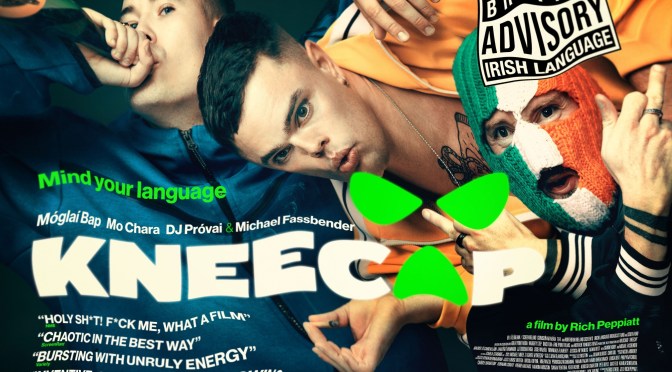
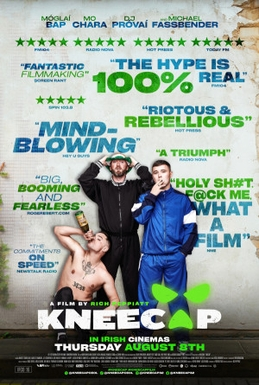
The 2024 film Kneecapis a riotous, politically charged portrait of youth in revolt, channeling the raw energy of punk and hip-hop into a uniquely Irish-language rebellion. Starring the real-life Belfast rap trio—Mo Chara, Móglaí Bap, and DJ Próvaí—as fictionalized versions of themselves, the film blends anarchic humour, biting satire, rites of passage, and cultural defiance to tell the story of how a group of working-class misfits wove their frustrations into musical gold.
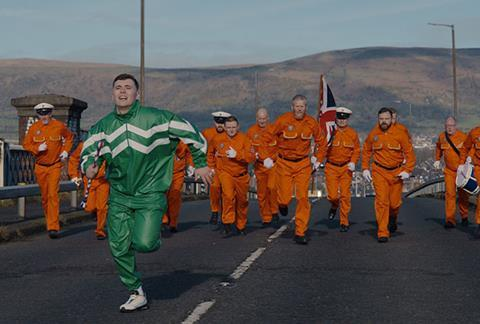
Set in post-Troubles West Belfast, the film captures the lingering scars of British occupation and the generational trauma it left behind. Liam (Mo Chara) and Naoise (Móglaí Bap) are introduced as small-time drug dealers navigating poverty, police harassment, and fractured families. Their lives take a turn when JJ Ó Dochartaigh, a disillusioned Irish-language teacher, discovers their lyrical talents and joins them as DJ Próvaí. Together, they form the eponymous group, an Irish-language rap group that weaponizes music as a form of cultural resistance.
The film is unapologetically rebellious, using the Irish language not just as a means of communication but as a symbol of defiance. Arlo (Michael Fassbender), Naoise’s father and a former republican paramilitary, encapsulates this sentiment when he declares, “Every word of Irish spoken is a bullet fired for Irish freedom” . This philosophy permeates the group’s music, which tackles issues like British colonialism, drug culture, and the complexities of identity in a divided society.
Kneecap (2024), while a bold and electric celebration of youth rebellion arguably overstretches itself emotionally by attempting to cover too many themes at once. In its ambition to be both a political statement and a coming-of-age tale, a musical odyssey and a generational cry for recognition, the film occasionally dilutes its emotional impact. As the film juggles a multitude of weighty themes: the trauma of post-Troubles Northern Ireland, the fight for Irish-language preservation, the drug culture plaguing working-class communities, the fractured nature of family life, absent fathers and mothers, and the burden of political legacy. Add to this the rise of a rap group in an unexpected cultural context, and the film becomes a whirlwind of ideas competing for attention. The result is a film that sometimes feels like it’s racing to say everything at once, rather than letting its most resonant emotional threads breathe.
Nonetheless, director and co-writer, Rich Peppiatt, displays strong visual flair evoking the urban vibrancy of Trainspotting (1996) and underdog musical joy of The Commitments (1991). It helps that the film is often fucking hilarious. Plus, I realise it’s a raw reflection of their life choices, I could take or leave the perpetual scenes of gratuitous drug-taking. At the same time, the film doesn’t shy away from the gritty realities of its setting. It portrays the trio’s clashes with radical republican groups, their run-ins with the police, and the family and romantic struggles that come with their newfound fame.
Amidst the chaos, Kneecap (2024) maintains a sense of humour and humanity, offering a nuanced look at the power of art to challenge the status quo and inspire change. In essence, Kneecapis a ballsy and risk-taking celebration of rebellion, a testament to the enduring power of language and music as tools of resistance, and a vivid portrayal of youth challenging the remnants of a colonial past and a country attempting to find peace and identity after centuries of conflict.
Produced by Jacques Audiard, Pascal Caucheteux, Valérie Schermann, Anthony Vaccarello
Main Cast: Zoe Saldaña, Karla Sofía Gascón, Selena Gomez, Adriana Paz, Mark Ivanir, Édgar Ramírez etc.
Cinematography by Paul Guilhaume
*** MAY CONTAIN SPOILERS ***
“There’s such a thing as having too much going on.” Howard Moon from The Mighty Boosh.
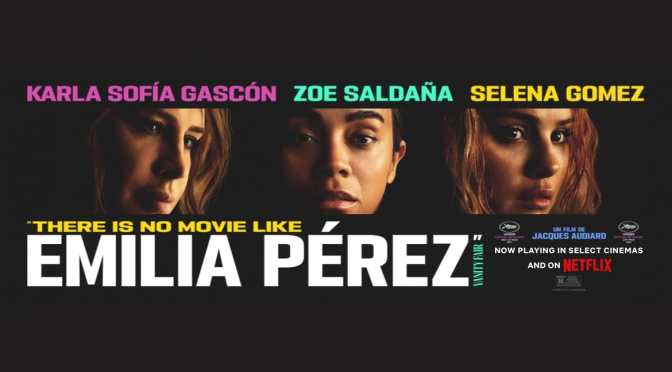
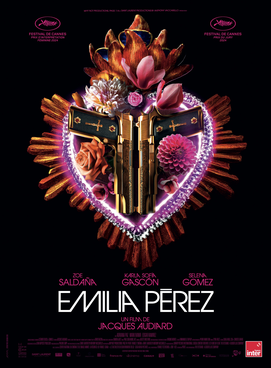
I am a big champion of the films of Jacques Audiard. When his eccentric Western, The Sisters Brothers (2018), was released I wrote a positive review and tribute to several other fine films he has directed here. Audiard likes to take risks representing human beings on the edge of society and perhaps struggling with life; people who often make left-field decisions to improve or escape their existential plight. With his latest film Emilia Perez (2024) the filmmaking master challenges the audience again with a multi-blended genre film that also contains powerful themes of transformation, redemption, violence, crime and family values. Oh and there are songs too.
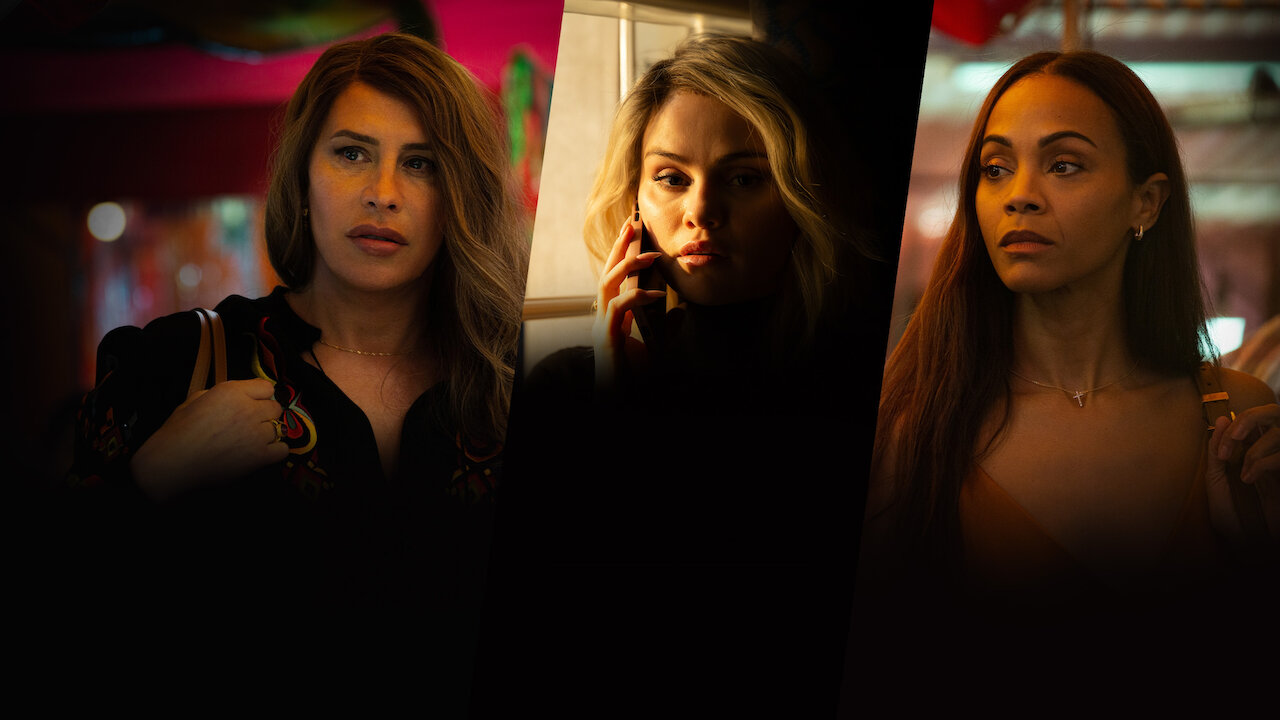
The narrative begins strongly as Rita Mora Castro (Zoe Saldana), a fiercely talented yet overlooked lawyer in Mexico City, finds herself thrust into the spotlight when she defends the wife of a prominent media mogul in a controversial murder trial. Despite her misgivings, Rita crafts a chillingly persuasive argument that frames the death as a suicide, securing an unexpected victory in the case—one that leaves her both celebrated and haunted.
As the dust settles, Rita’s restless dissatisfaction with her life grows louder. Then comes an anonymous phone call: an enigmatic voice offers her a chance at something extraordinary—and extraordinarily dangerous. Intrigued and desperate for change, she agrees to a clandestine meeting. The mysterious client turns out to be none other than Juan “Manitas” Del Monte (Karla Sofía Gascón), a ruthless and feared cartel kingpin. But the request they make isn’t what Rita expects from a crime-lord. Manitas dreams of living authentically by undergoing gender-affirming surgery and becoming a woman. Rita must decide: will she help Manitas rewrite their story, or will she risk becoming the next chapter in a tale of betrayal and bloodshed?
This fascinating set-up draws you in and I believe if Audiard’s narrative had concentrated mostly on the relationship between Rita, the transitioned, Emilia, then the film would have retained much emotional and thematic power. Yet, after Emilia’s operation the screenplay introduces several other story strands and characters to take in, including Selena Gomez’ feisty Jessi Del Monte, Manitas’ ex-wife who thinks “he’s” dead. This development works initially but then Audiard hurls so many more ideas and genres at the audience wall, not all of them sticking.
Admittedly, the film’s audacious blend of melodrama, crime, thriller, musical, and comedy creates an unpredictable and frenetic narrative that keeps viewers on their toes. However, this constant genre-shifting can undermine the weight of its core themes—gender and identity—by overshadowing them with spectacle and tonal inconsistency. The story’s rapid turns and refusal to settle into a single emotional or narrative groove risk, arguably trivializing the profound struggles and triumphs of its trans-protagonist. Moments that could serve as deeply reflective or cathartic explorations of gender identity are sometimes undercut by abrupt pivots into slapstick humor or hyper-stylized action. While these shifts might aim to reflect the disarray and fluidity of identity in a chaotic world, they can also dilute the thematic resonance.
At the same time, it’s clear Audiard is deliberately embracing this chaos and analysis of human flaws. The fractured tone might symbolize a world where stability and clarity are illusions, mirroring the internal and external conflicts of someone navigating personal transformation in an unyielding environment. This approach, while conceptually intriguing, can feel alienating. Nonetheless, the cast’s stellar performances anchor the film, ensuring that the characters remain compelling even when the story spirals into excess. Lastly, Emilia Perez‘ (2024) relentless energy often leaves little room for introspection, and whether this genre-chaos enriches or undermines the narrative depends largely on the viewer’s tolerance for Audiard’s embrace of choral disorder in a world seemingly allergic to calm and pattern.
Produced by: Anthony Bregman, John Carney, Peter Cron, Rebecca O’Flanagan and Robert Walpole.
Main Cast: Eve Hewson, Jack Reynor, Orén Kinlan and Joseph Gordon-Levitt.
Cinematography: John Conroy
Edited by: Stephen O’Connell
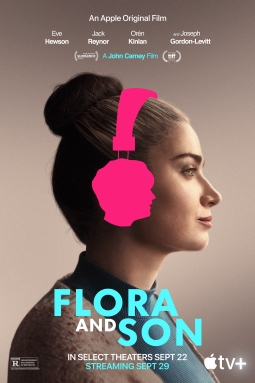
John Carney is a brilliant and honest filmmaker who is attracted to outsiders and people with real emotional turmoil. They tend to be at crossroads in their lives and are struggling with their dreams and relationships. He also loves musicians, flaws and all. In Begin Again (2013), a washed-up musical executive, portrayed by Mark Ruffalo, meets unhappy singer-songwriter, Keira Knightley and their first-world romance is played out to bittersweet consequences. Similarly, in Sing Street (2016), a troubled teenager comes of age through his 1980’s pop band and bittersweet romance with a rebellious and equally-troubled schoolgirl. Notice a pattern? Well, this style of music, gritty city backdrops and salty romances were established in Carney’s breakout hit, Once (2007) and are continued in his current underdog musical comedy, Flora and Son (2023).
Flora and Son (2023), believe it or not, is set in Dublin and centres around a single mum, Flora and her delinquent teenage son, Max (Oren Kinlan). Eve Hewson is the foul-mouthed-council-estate-joker, who uses anger and black humour to hide her feelings of insecurity and loss. A mourning for the loss of youth having brought up a child virtually single-handed. Her relationship with Max’s father, Ian (Jack Reynor) is fractured to say the least and they spit sarcastic barbs at each other as shared custodians of disaffected Max. While leaving her cleaning job at a middle-class household, Flora finds a battered guitar in a skip. Attempting to bond with Max, by giving him the guitar, Flora finds herself shunned. She then opens another bottle of wine, picks up the guitar and gives it a crack herself.
Taking online guitar lessons from charming and chilled American musician, Jeff (Joseph Gordon-Levitt), Flora initially flirts but then knuckles down to learn the plucking instrument. The stakes aren’t particularly high here, but the feelgood acoustic numbers from Carney and co-composer, Gary Clark, certainly breeze along nicely and breath gold onto the screen. Max’s white-rap-Irish-hip-hop tracks are pretty good too and the video he and Flora make is really funny. Thus, you get the theme again from Carney that music helps to connect and heal and provide salvation to the most troubled of human situations. Overall, Flora and Son (2023), is a slight but enjoyable film with enough earthy humour, strumming harmony and kicking beats to please most.
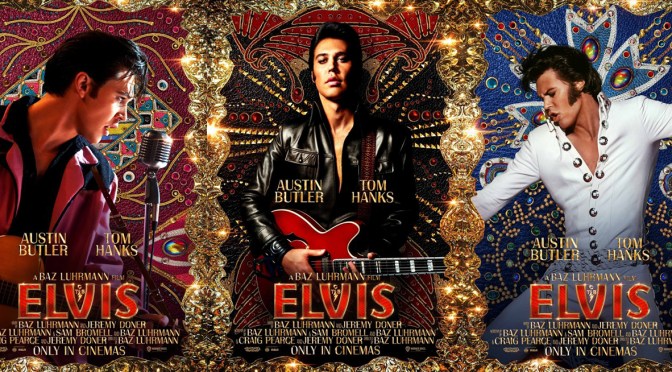
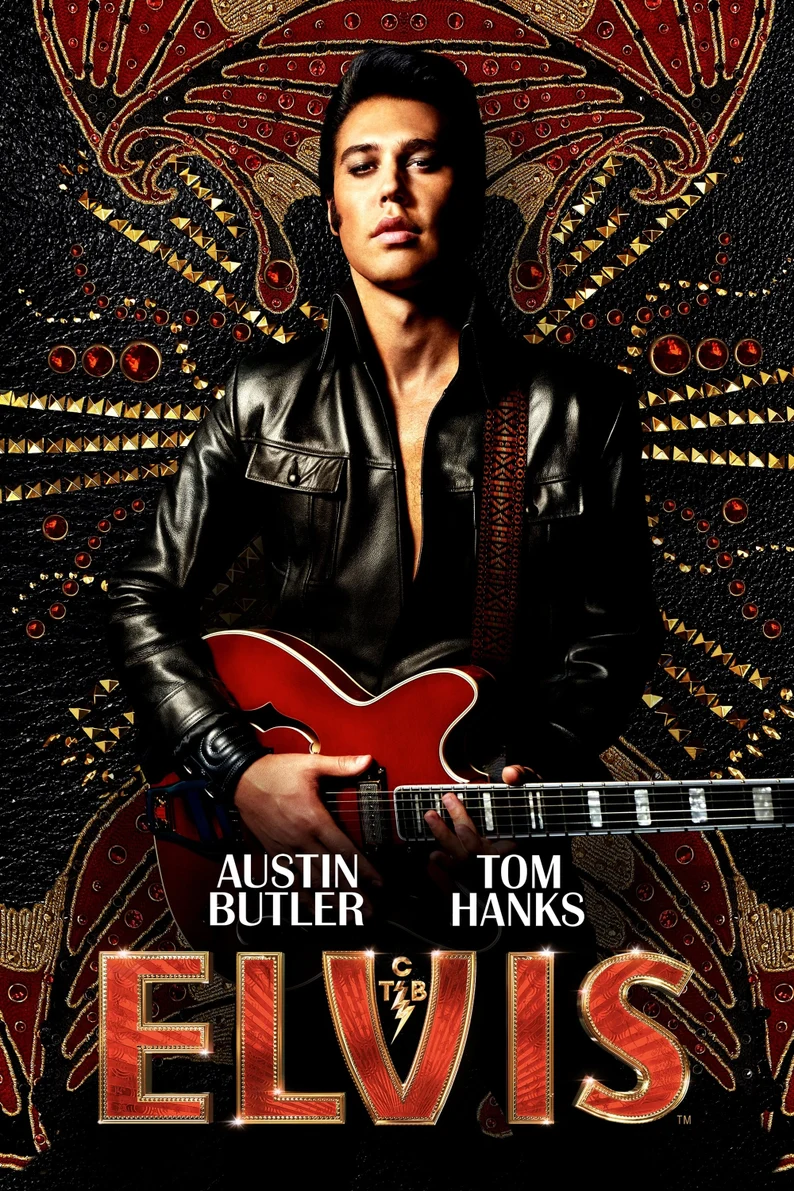
Screenplay by: Baz Luhrmann, Sam Bromell, Craig Pearce, Jeremy Doner Story by: Baz Luhrmann, Jeremy Doner
Produced by: Baz Luhrmann, Catherine Martin, Gail Berman, Patrick McCormick, Schuyler Weiss
Cast: Austin Butler, Tom Hanks, Helen Thomson, Richard Roxburgh, Olivia DeJonge, Kelvin Harrison Jr., Xavier Samuel, David Wenham , Kodi Smit-McPhee etc.
*** MAY CONTAIN HISTORICAL SPOILERS ***
Since 1992, Baz Luhrmann has directed only six feature films. Each of them, aside from the lower-budgeted, Strictly Ballroom (1992), is a gigantic and epic extravaganza, full of colour, imagination, verve, energy, music, poetry and larger-than-life characters. Even Strictly Ballroom contains many of the stylistic and formal elements which would become part of Luhrmann’s oeuvre. I pretty much feel this auteur’s excessive approach to filmmaking including the fast-cutting, opulent settings, big musical numbers, all-star casts, plus grandiose and melodramatic narrative delivery are always a wonderful spectacle to experience.
Arguably, adapting the American novel, The Great Gatsby (2013), in this periphrastic packaging, took away from the enigma and majesty of Fitzgerald’s classic. However, with Elvis (2022), Luhrmann and his incredible production team, marry such genius excessive style with the perfect subject matter: the King of Rock and Roll! Because in colliding the life, music and films of Elvis Aaron Presley with Luhrmann’s stunning methodology brings to the screen one of the best films of the year Indeed for Luhrmann, Elvis (2022), is evidently a stylistic, subjective and thematic labour of love, marking it as his best film to date.
I wasn’t even going to watch Elvis (2022) at the cinema. I’d recently seen Spencer (2021) on Amazon Prime and was happy to have streamed that. While that eerie adaptation was a valiant attempt to breathe life into the ghost of Diana. An elegiac attempt to explain the oppressive result of her naïve choice to land her Princess dream. With Kristen Stewart’s exceptional impression rescue breathing Diana’s tragic existence, I knew the story. I knew enough to care for someone whose mental health was discarded by the heartless Windsor’s. But the monarchy have been killing the working class for years, so why should I care deeply for one singular spoilt individual? Similarly, I pondered whether I wanted to watch another film about Elvis Presley. A God-given talented singer, heartthrob, actor, musician and legendary performer had a story I was already familiar with. But, I am so happy I overcame my ignorant prejudice because Elvis (2022) is a humdinger of a part-musical-part-biopic-part-drama-part-American tragedy.
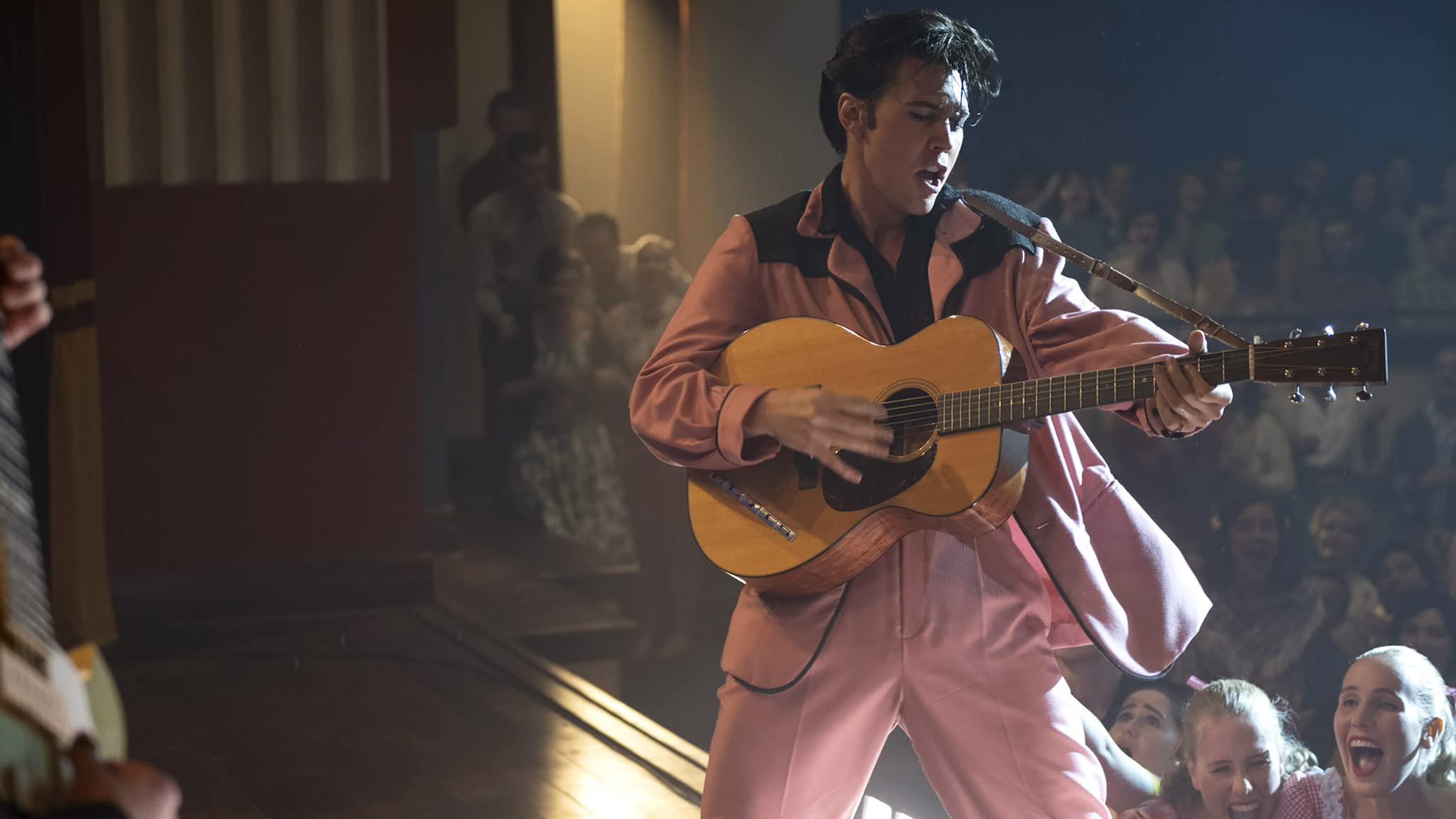
Elvis (2022) is structured around the memories of shadowy manager, Colonel Tom Parker (Tom Hanks). He is suffering illness in his old age, close to hospital demise. Parker is a grotesque in a billowing gown, drifting around the nightmarish Vegas slot-machines as Elvis’ voice echoes within his mind. Is it the guilt or the morphine? The story flashes back to a younger Parker promoting country singers at a travelling Carny. Until that fateful day when he hears a miracle on the radio, a young singer who everyone thinks is Black. But he isn’t. In the markedly racist times of 1950s America (has it really changed in certain States or Police departments?), a Black singer won’t sell records like this white dude will. Seizing his chance Parker attends Elvis’ first gig and witnesses a phenomenon. An attractive, sexual, gyrating and angelic powerhouse with an incredible voice who sends sex-waved into the audience, especially the teenage girls.
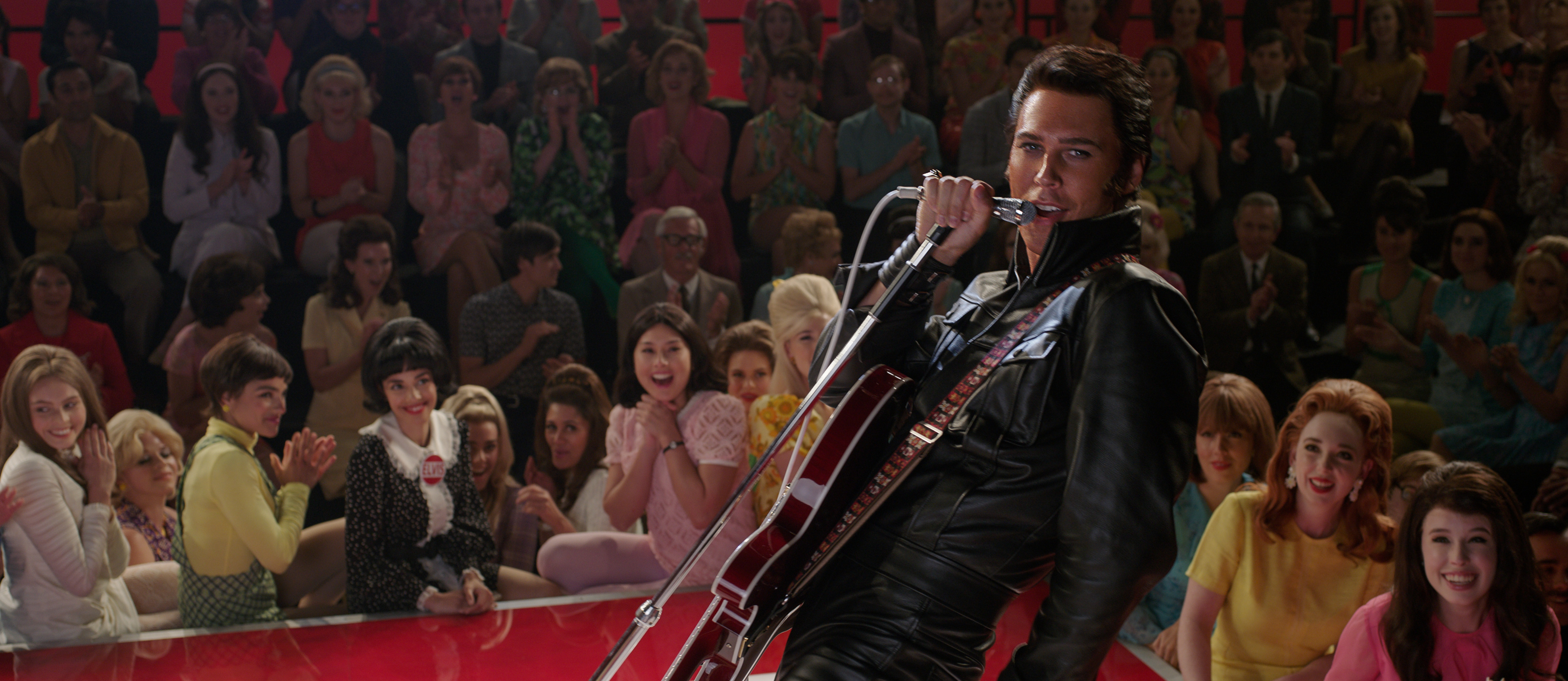
A star is born, and it takes a star to play a star. Take as many bows as you want, Austin Butler. He is a genuine phenomenon in Elvis (2022). Of course, the wardrobe, postiche and make-up artists work wonders to help recreate Elvis’ iconic looks as the narrative flashes through various stages of Presley’s devastatingly successful career, Yet, Butler just lights up the screen, producing acting fireworks in a physically, spiritually, emotionally and musically astounding screen presentation. It is not an impression, but a tour-de-force for a relatively unknown actor who has jettisoned his career to glory.
Butler, lives and breathes the King. This rendition and great direction from Luhrmann make you feel tragic empathy for a career which was manipulated and controlled by grubby gambling addict, Parker. Hank’s portrayal of the Colonel feels unnatural and theatrical compared to Butler’s organic turn. Perhaps that was the intention? Deliver a pantomime villain to boo and hiss at. Although, Hanks’ cigar-chomping and jowly make-up made me think the evil touch of Orson Welles’, Captain Hank Quinlan, had somehow been resurrected.
I cannot praise Elvis (2022) enough as a cinematic biopic and musical spectacle. While the choppy editing style is jarring at the start, once the film settles down into a groove, Butler’s stunning incarnation shines through. Overall, I was enlivened by, not only the constant remixing of Elvis Presley hits, but Luhrmann’s choice to alloy gospel, rhythm and blues, rap, rock, pop, ballad and protest songs throughout the scintillating soundtrack. Much, quite rightly, is made of how much diverse music influenced Elvis’s formative life and how he connected with Black musicians of the era. Luhrmann also ensures we are aware of how much of a threat Presley was seen by the establishment due to the sexual nature of his sang satanic verses. Sent to Germany to prevent him demonising America, his comeback special after seven years in movies is one of the finest movie set-pieces I have seen in many a year. Funny, rocking, poignant, effervescent, beautiful and astounding, just like Elvis, the man and myth, and Elvis (2022) the film.
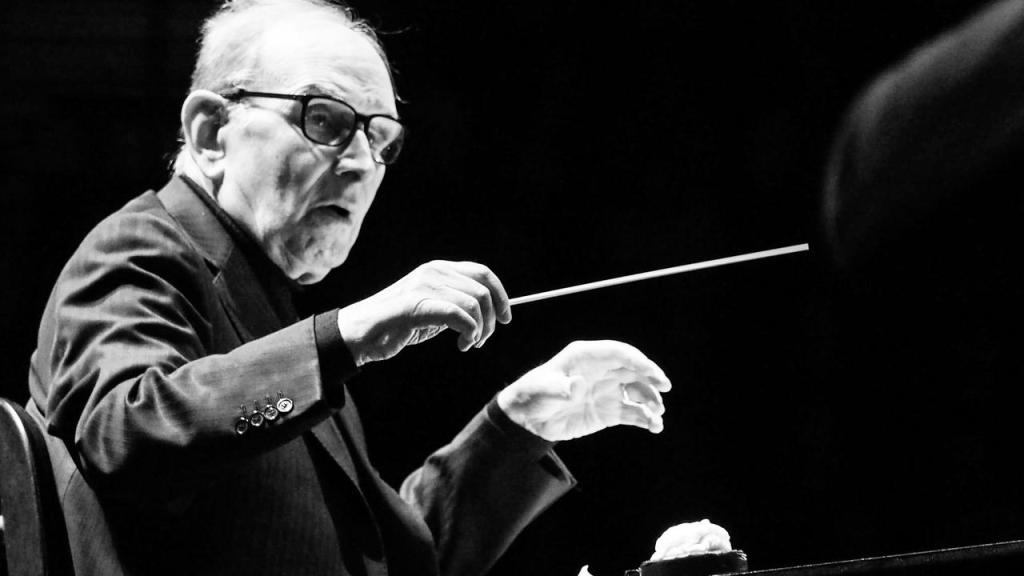
SIX OF THE BEST #26 – ENNIO MORRICONE – (R.I.P – 1928-2020)
“If you scroll through all the movies I’ve worked on, you can understand how I was a specialist in westerns, love stories, political movies, action thrillers, horror movies, and so on. So, in other words, I’m no specialist, because I’ve done everything. I’m a specialist in music.”Ennio Morricone
As if 2020 couldn’t get any more dramatic, one of the greatest musical composers and dramatists ever known has passed away. Ennio Morricone, rather incredibly, wrote the scores for over four hundred films and television works. He also managed to write well over one hundred classical pieces. To say Ennio Morricone was a prolific genius is somewhat of an understatement.
Morricone won six BAFTAs, eleven Nastro d’Argento, three Grammy Awards, three Golden Globes, six BAFTAs, ten David di Donatello, two European Film Awards, the Golden Lion Honorary Award and the Polar Music Prize. In 2007, he received the Academy Honorary Award for his outstanding commitment to cinema. Moreover, he was also nominated for a further six Oscars. Lastly, Morricone had to wait until 2016 to receive his only competitive Academy Award for the haunting score to Quentin Tarantino’s The Hateful Eight (2016). For Morricone to receive only one Oscar for musical composition is astounding and proves once again there is no justice in the world.
A meagre blog piece from a London-based hack will never be enough of a tribute to a composer who worked in every cinematic genre and with an incredible array of famous and infamous filmmakers. Notables include: Sergio Leone, Oliver Stone, Warren Beatty, John Carpenter, Quentin Tarantino, Sergio Corbucci, Dario Argento, Duccio Tessari, Sergio Sollima, Henri Verneuil, Bernardo Bertolucci, Mauro Bolognini, Giuliano Montaldo, Roland Joffé, Don Siegel, Mike Nichols, Brian De Palma, Barry Levinson and many more companies including advertisers, singers, recording artists and fashion designers. Morricone even found time to compose the 1978 World Cup theme song.
Thus, as a tribute to one of the greatest cinematic artists I have selected six of Morricone’s best film orchestrations. Although given his brilliance and spectacular output, one could certainly pick many more; even sixty of the best!! Riposa in pace, Ennio, il maestro!
Original songs by: Glenn Hansard, Marketa Irglova and Interference.
Cinematography: Tim Fleming
**** MAY CONTAIN SPOILERS ****
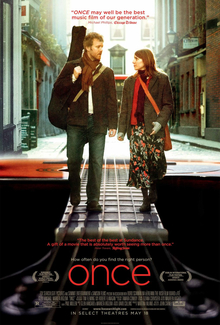
I am not sure why I missed this film first time around, however, it’s most likely due to prior prejudices against musical or music-based films. Yet, since I married in 2016, I have began to watch and enjoy more musicals. This is mainly due to my wife being a massive fan of musical cinema and theatre. While it’s still not necessarily my favourite genre, every now and then an utter gem of a musical will emerge. John Carney’s beautifully moving love story between a hoover repair guy and a flower-selling girl, Once (2007), is certainly one of those.
John Carney is an honest filmmaker who is attracted to outsiders and people with real emotional turmoil. They tend to be at crossroads in their lives and are struggling either with their dreams or their relationships. He also loves musicians, flaws and all. In Begin Again (2013), a washed-up musical executive, portrayed by Mark Ruffalo, meets unhappy singer-songwriter, Keira Knightley and their first-world romance is played out to bittersweet consequences. Similarly, in Sing Street (2016), a troubled teenager comes of age through his 1980’s pop band and bittersweet romance with a rebellious and equally-troubled schoolgirl. Notice a pattern? Well, this style of music, gritty city backdrops and salty romances were established in Carney’s breakout hit, Once (2007).
Made for a ridiculously low budget of around $150,000, this ultra-realistic musical contains songs that burst with love and pain from the characters of Guy (Glenn Hansard) and Girl (Marketa Irglova). The two meet and connect, but this is no conventional romance as they both have powerful emotional histories between them. It’s the beautiful music and their authentic dialogue exchanges which drive the story. Hansard’s singing and guitar playing are so powerful and moving. Their duet in the music shop of the song, Falling Slowly is a tour-de-force. I was not surprised when I saw it had won the Oscar for best original film. Overall, Once (2007) is a surprisingly brilliant no-budget feature, shot on the streets of Dublin, which deservedly became a big hit.
2017 EDINBURGH FRINGE FESTIVAL – CULTURAL ROUND-UP
You may or may not know this but the comedy you see on television via the sitcoms, panel shows, live performances etc. plus the Netflix or Amazon specials which are streamed online are just the tip of the iceberg in regard to stand-up, sketch and narrative comedy shows. Because, underneath is a huge population of individuals writing, rehearsing, directing, editing and performing their works live across the clubs, theatres, pubs, basements and attics of the world.
These unsung creative heroes and the occasional lunatic are, on the whole, slogging their guts out following a dream to hit the big time in their chosen stage craft. Either that or they simply revel in performing and delivering their stories, jokes or narratives to the public live. It’s a cathartic experience to release their heart and soul to the world in comedic, theatrical or musical form and most of these people should be saluted for their creativity.
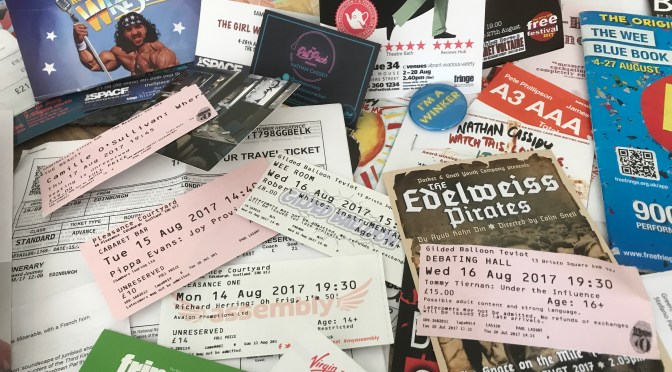
One of the best places to find these purveyors of dance, comedy, performance, mime, acting, music and sometimes science is at the annual Edinburgh Fringe Festival. This year I went, with my wife, on holiday there for a week to check out some shows and sites and lovely restaurants and pubs! Here’s a uncritical round-up of some of the things we caught up with. Amazing fun it was too!
LODGINGS
Like many cities Edinburgh has many great places to spend the night including hotels and other bed and breakfast digs. Many of the acts performing at the Fringe have budgets so will use rented accommodation, hostels, vehicles and ditches too to sleep in. My wife likes some comfort when we stay places whereas I have been happy in the past with the gutter; well, a cheap B & B. So she chose Millers 64 on Pilrig Street and what a lovely place it was too. Run by Louise and Shona Clelland, we experienced some of the best hospitality we have ever had so they are highly recommended. Check out their website here.
FOOD
Scotland and the North in general has been the focus of stereotypical gags at the expense of unhealthy living including: bad diet, alcoholism and drug abuse. I guess characters such as Rab C. Nesbitt and novels/films like Trainspotting only serve to strengthen such ideas. Of course, if you search it out you will find junk food and drink in any place the world over but I actually ate pretty healthily during my week in Scotland.
Of the places we visited I can definitely recommend La Favoritapizza place on Leith Walk. Moreover, the tasting menu at the Gardiners Cottagewas beautifully presented and I very much enjoyed the Indian cuisine at Mother India. There are also hundreds of pubs, cafes and burger restaurants all over Edinburgh.
I enjoyed watching Tottenham Hotspur FC defeat Newcastle FC in the Kilted Pigon the Sunday but my favourite pub was probably The Pear Tree Houseon West Nicolson Street. It had great beer, food, a massive garden and a constant stream of lively entertainment and music.
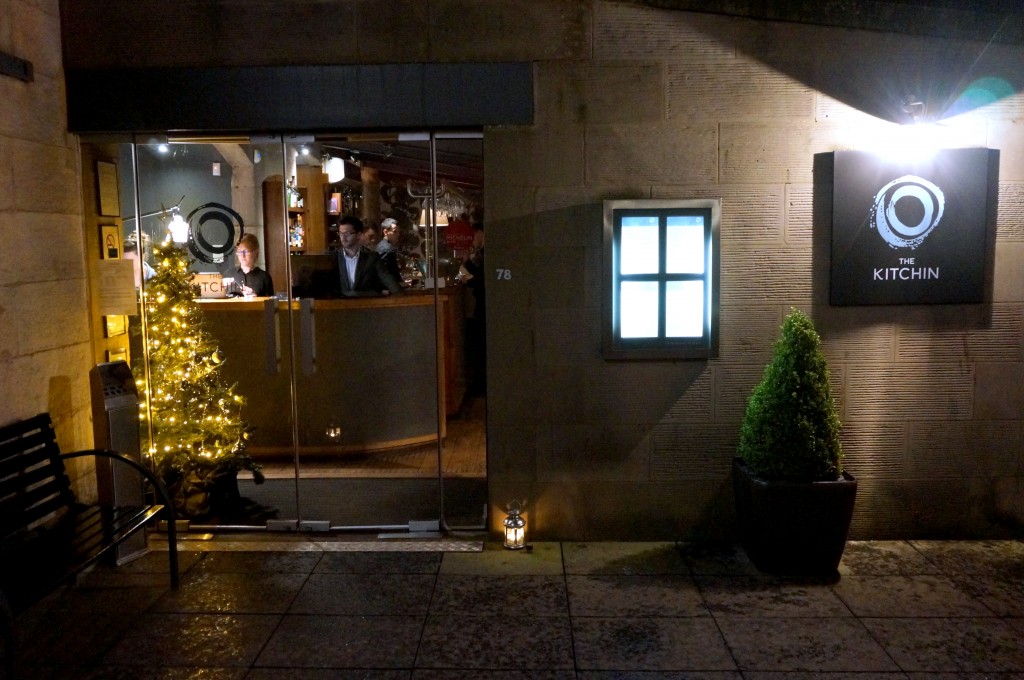
Having said that the greatest epicurean treat I had was on my birthday at The Kitchin. The food was absolutely exquisite and what made it all the more amazing was my wife treated me to the meal just for getting a year older. I imagine it was very expensive but the whole experience was fantastic as we also visited the kitchen and met the aptly named owner/chef Tom Kitchin.
MUSIC
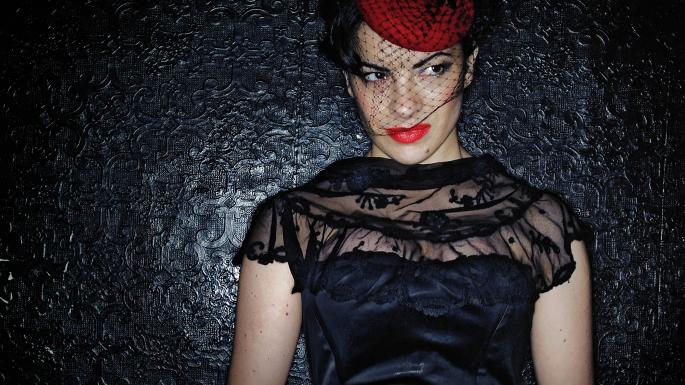
As I only had a week and there is SO much going on at the Edinburgh Fringe Festival I did not see any theatrical presentations, which, if I’d been there for another week would certainly have been on my cultural agenda. Similarly with musical performances I chose the more comedic acts over others but enjoyed an excellent set by jazz guitarist Graeme Mearns despite this. However, the real humdinger of a show I could not miss was the one by gothic chanteuse Camille O’Sullivan. She is a dark storm of a performer who hails from Ireland and sings haunting and very dramatic versions of tunes written by Leonard Cohen, David Bowie, Arcade Fire and Nick Cave. In the elegant tent where I saw her show I was bewitched by the spine-tingling performance borne of fire, shadow, light and ice.
COMEDY
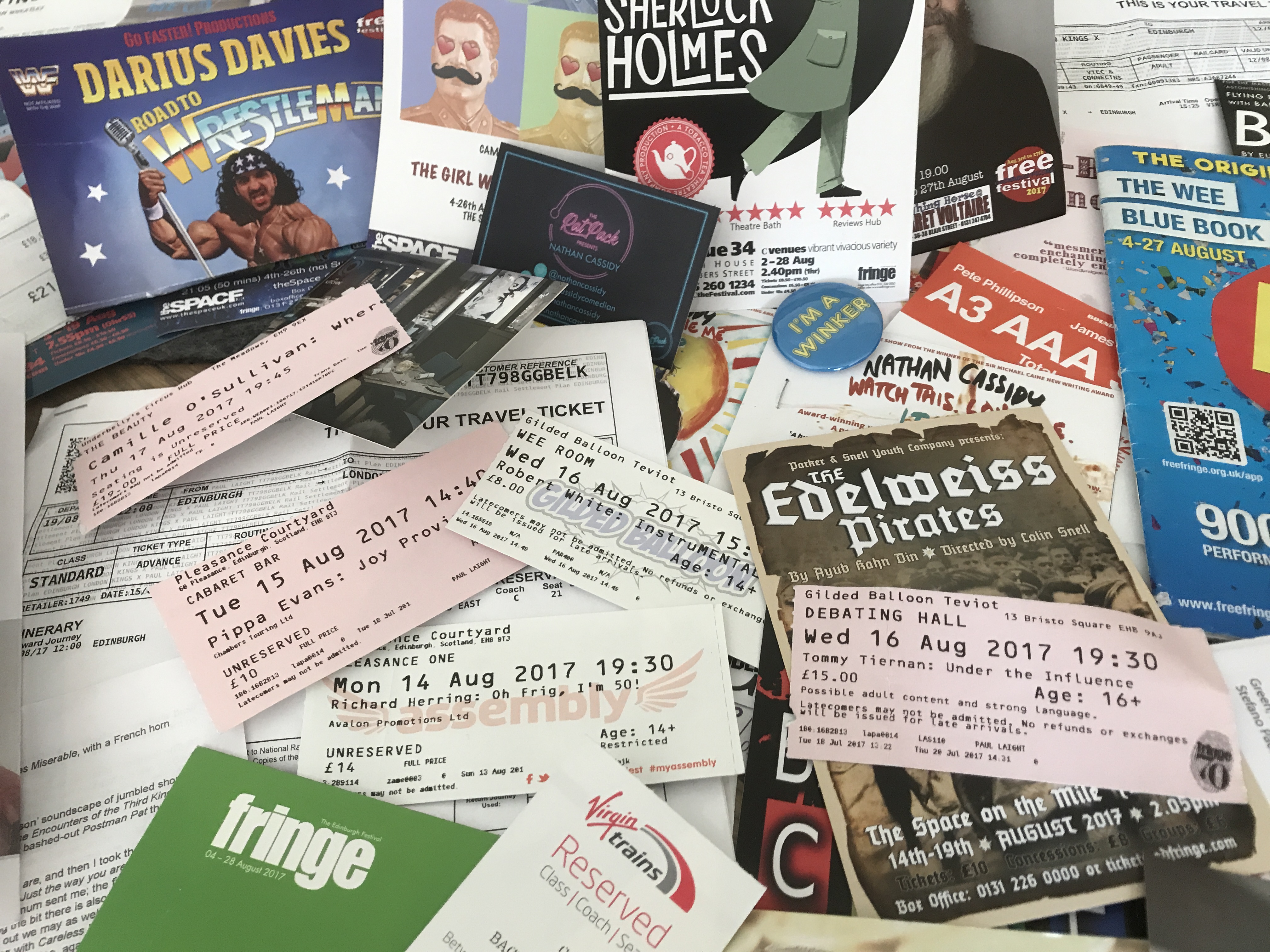
I love comedy. It is a noble craft which on occasions can be propelled to the heights of art and was to the fore of my cultural menu in Edinburgh. In fact, on Monday 14th August I watched SEVEN shows beginning at 11am with the last one finished at 10.30pm. It was a brilliant day and encapsulated all that is great about the Fringe Festival. This is NOT a review of the comedians I saw during the week as all the shows I witnessed were BRILLIANT! I don’t believe in comedy competitions or star ratings as comedy is too subjective for that. But rather, it’s a round-up of and a shout out to a very talented bunch of individuals I saw; and there were thousands I missed too but there was just not enough time alas.
Musical comedy is something I have been really getting into and the alternative genius Robert White presented an exhilarating off-kiltered-joke-a-second-Gershwin-inspired operetta of his life in a show called Instru-mental. Equally energetic was the wonderful Pippa Evans in Joy Division; while the very talented Harriet Braine delivered some excellent cover songs which also educated us about the history of Art!
I also saw some excellent club and storytelling comedians such as: free-wheeling Russell Hicks; Irish mirth-maker Rory O’Hanlon; Cheetah Adam Greene; intelligent Scot Stephen Carlin; conspiracy theorist Don Biswas; witty and frantic Nathan Cassidy; the brilliant comedy-swap laughs of Sketch Thieves; the crafty humour of Ben Clover; plus the ferocious, clever and frantic comedy of Fringe stalwart Richard Herring.
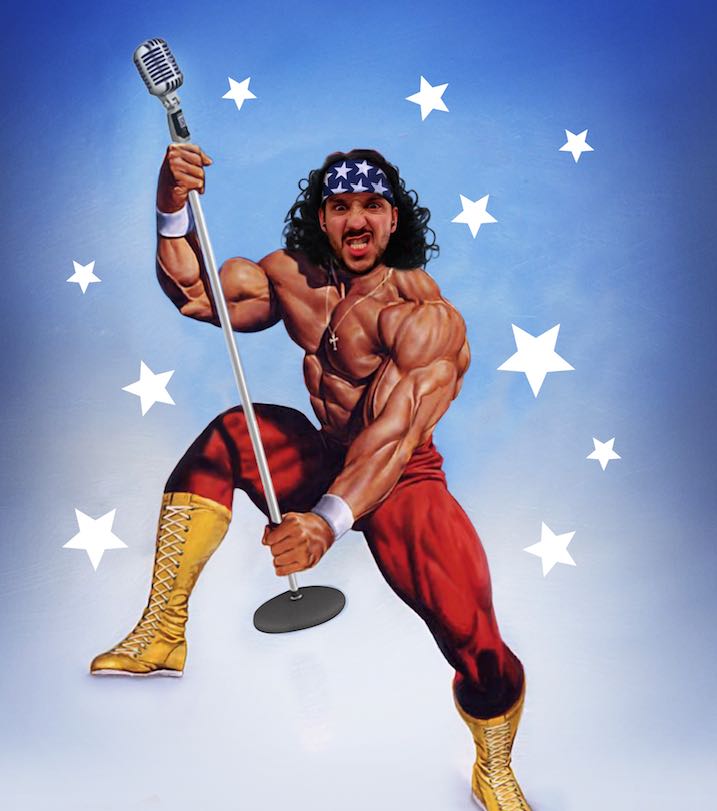
Of the shows that arguably had longevity in terms of their narratives then Darius Davies’ Road to Wrestlemania was really funny. It’s a fast-paced narrative of how, when a naïve teenager, he tried to become a World Wrestling star. Successfully employing multi-media, costumes and music to tell the story it made me laugh (and almost cry) throughout. I also really enjoyed Dominic Holland’s very funny and touching Eclipsed. Holland, who has been a very successful author and comedian found his career eclipsed by his son Tom Holland who last year became the new Spiderman! It’s a brilliant story about success and family togetherness amidst some excellent comedic observations of everyday life.
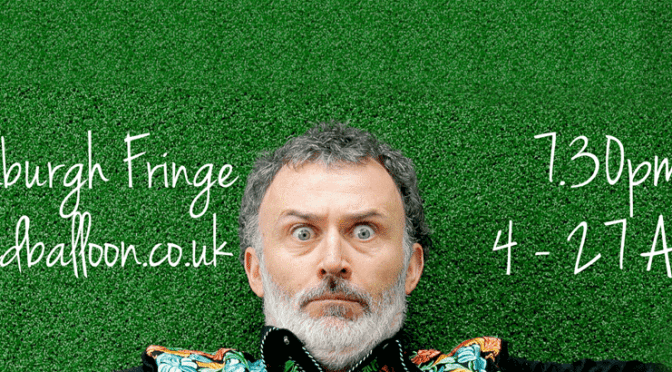
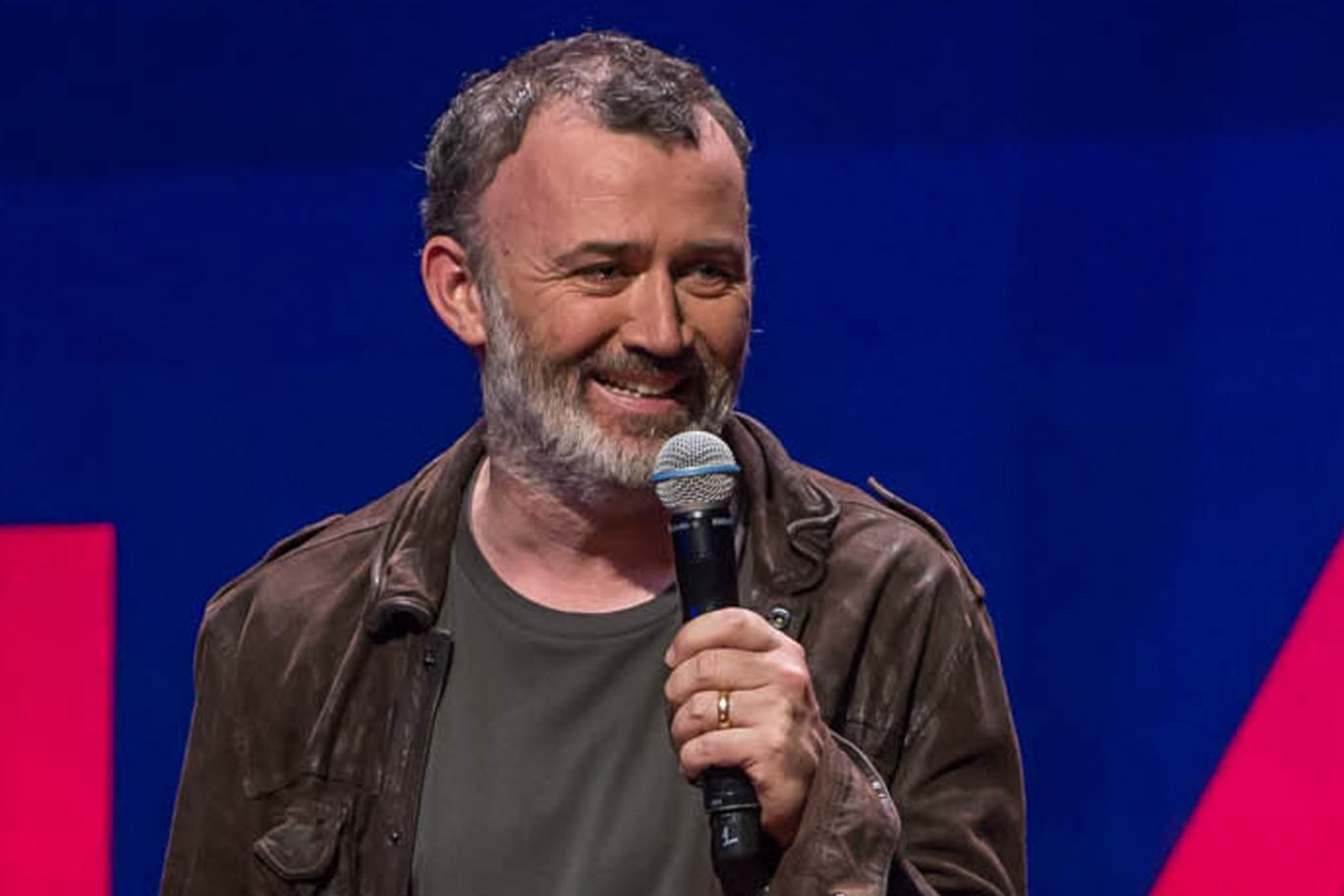
Of all the comedians I saw I was transfixed by the mercurial delivery and off-centre ideas of Tommy Tiernan. A comedy veteran and Grandmaster of the comedic dark arts, he flits around the stage nimbly while his rich Irish brogue delivers a stream of jokes, observations, non-sequiturs and the occasional barmy rant. He covers many subjects such as: life, death, religion, sex, family, immigrants, football, age and so on. An hour in his company is not enough as I could have listened to him for hours.
OVERALL
So, that was my first Edinburgh Fringe Festival. The whole experience was fantastic to me as I was around the things I love such as comedy, music, food and booze for an intensely concentrated week of pure culture. If you’re like me and hanging around watching shows and feeding off the energy of a cultural oasis then I highly recommend it. I would say a week is definitely not enough for what’s on offer in bonnie Scotland during the month of August!
EDINBURGH FRINGE FESTIVAL 2017 – PICTORIAL GALLERY
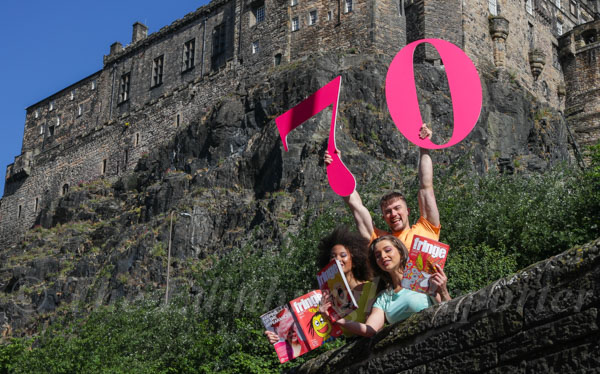
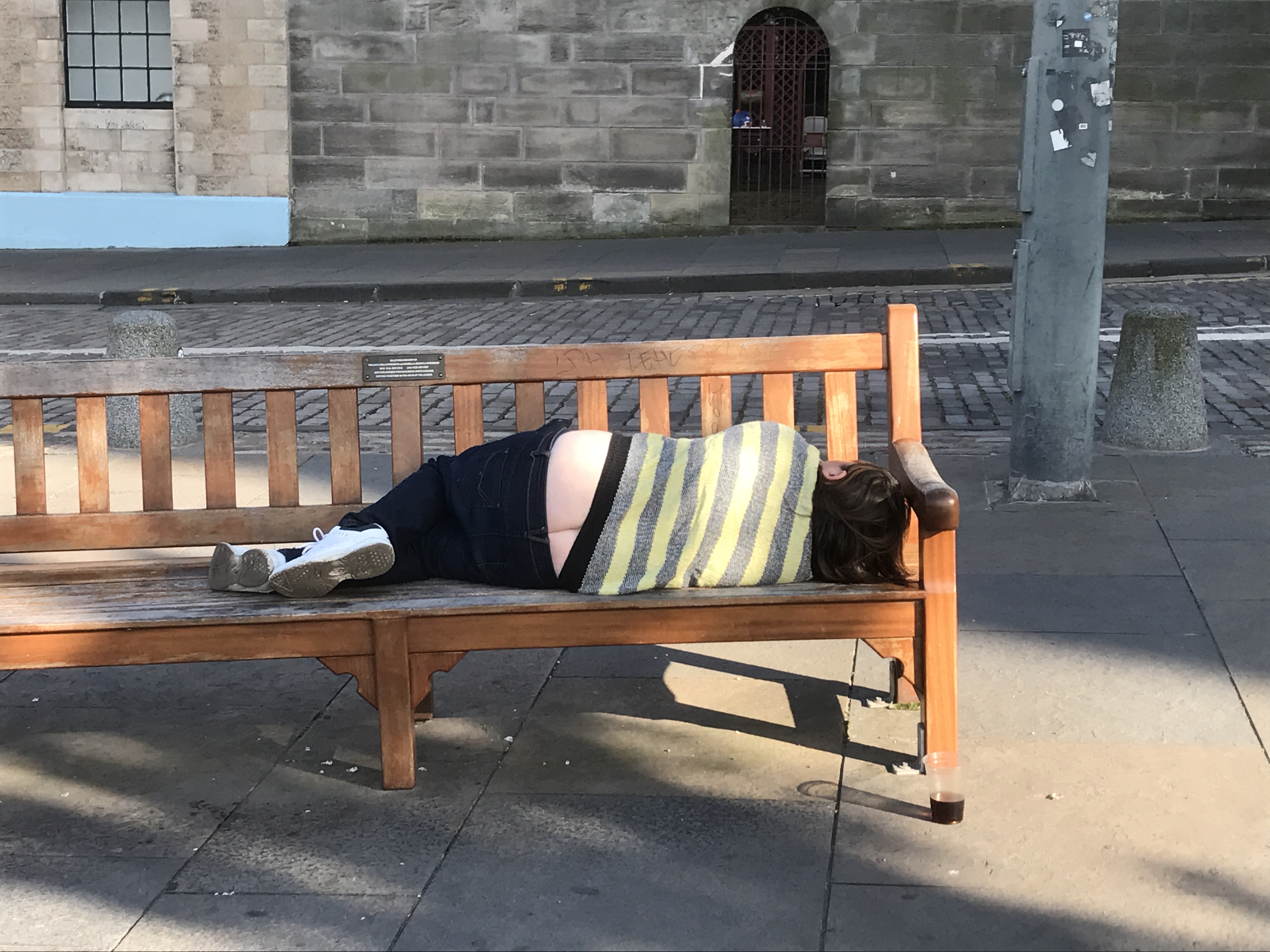
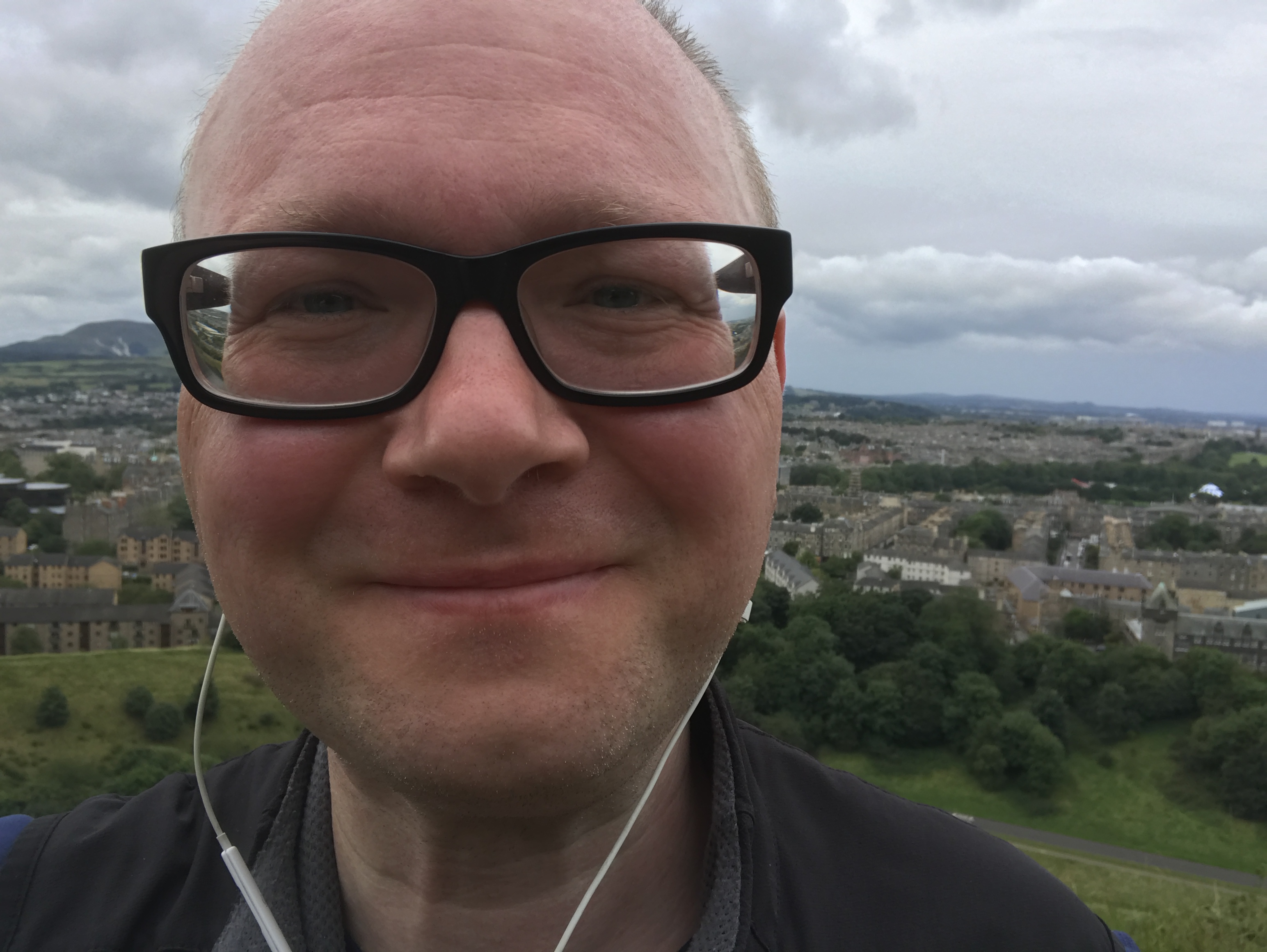
I attended the Edinburgh Fringe Festival last week for a holiday and had a brilliant time. I saw loads of comedy shows, ate at some great restaurants, witnessed some great architecture, experienced some fine nature and drank a fair amount of fermented water i.e. booze!
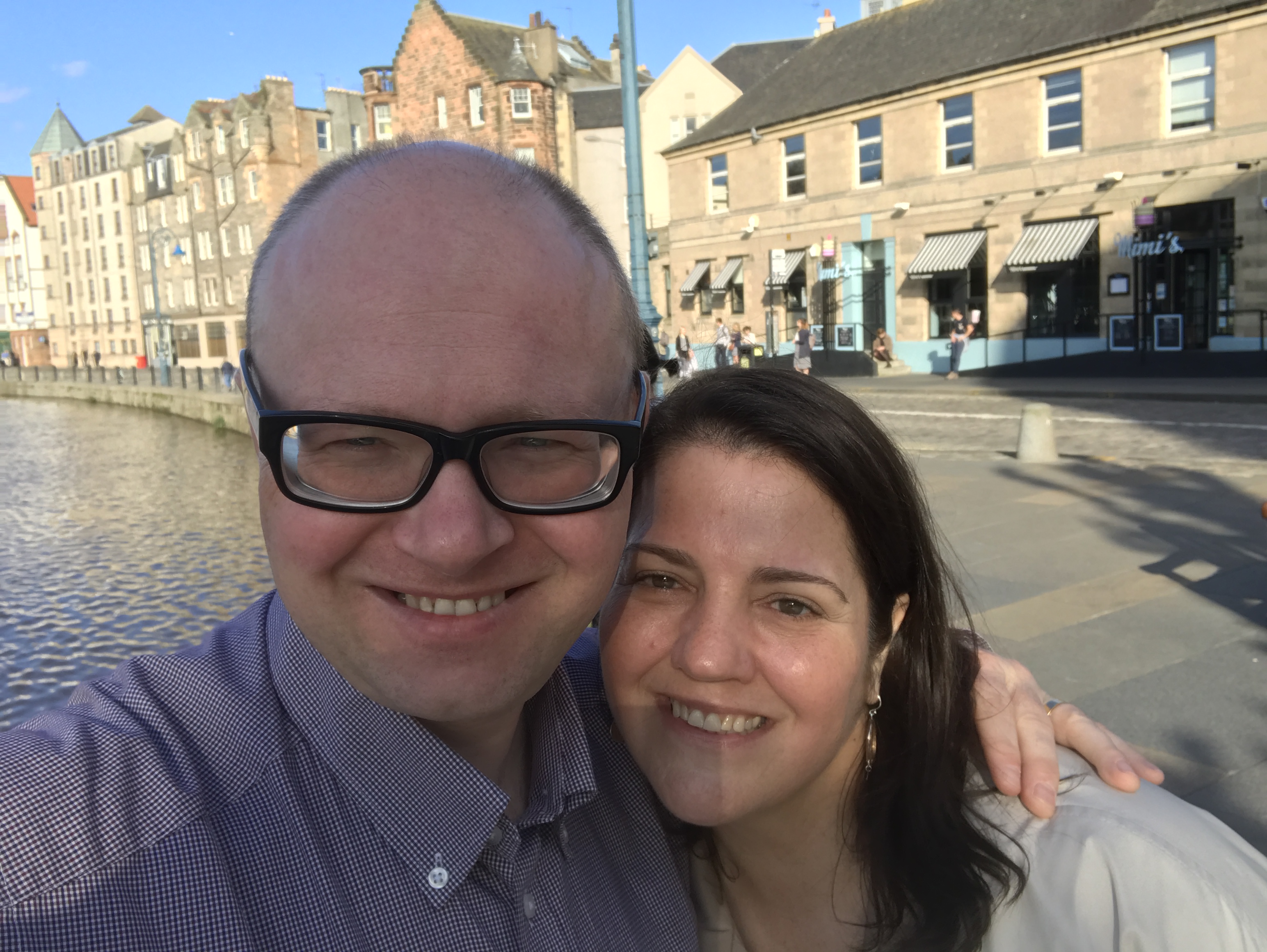
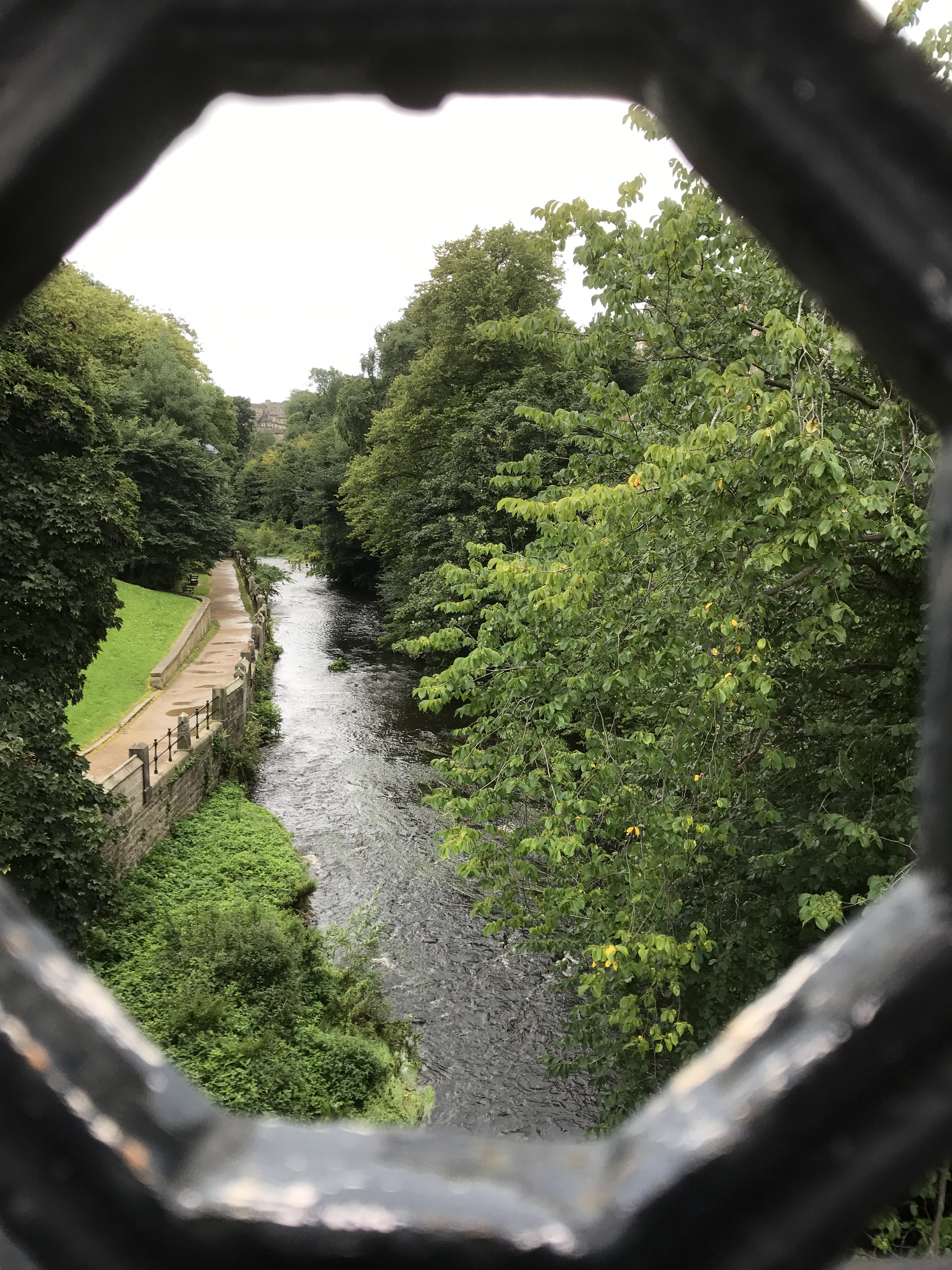
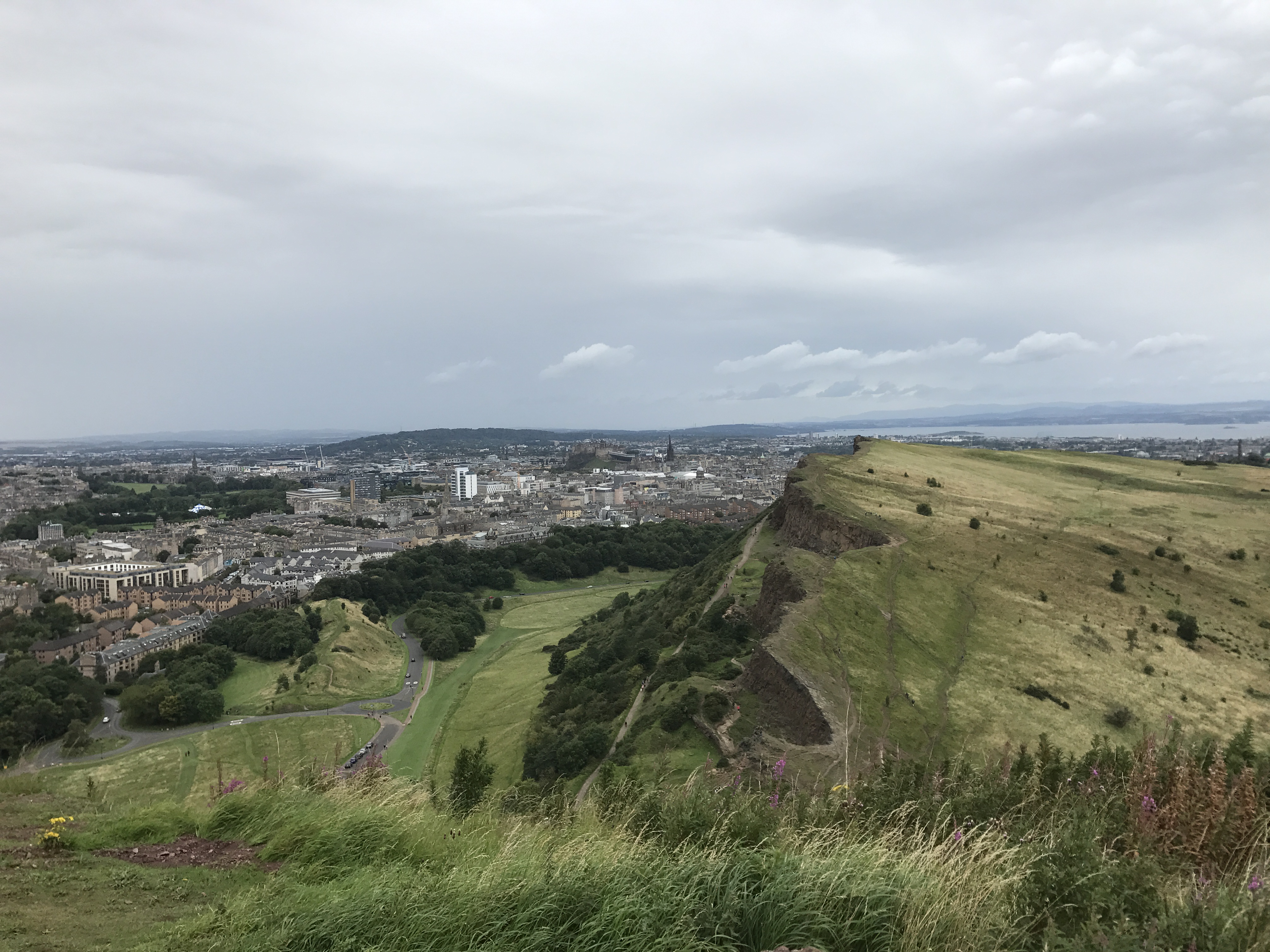
I will doing a little write-up of some of the shows I saw and places I went but for here a just a few of the photos I took while there. I would definitely recommend visiting Edinburgh in general and during the Fringe Festival as it a culturally rich city. Here are just a few images to support that view.
As I say, it’s a fantastic time to go and a week just was not enough!! There are so many talented people there and some lunatics too but all told a great time was had by all!
To continue the My Cinematic Romance series of filmmakers, genres, actors who I absolutely love, I give you my praise to composer Carter Burwell. His soundtracks are usually SO good I can watch a film that I don’t even like if it has Burwell’s music. He has a knack of not only capturing the emotion of the characters and story but also being intelligent; using the genre and style of the film to infuse the soundtrack.
Burwell has provided the score to many films including: Conspiracy Theory (1997), Hamlet (2000), The Spanish Prisoner (1997), Before the Devil Knows You’re Dead (2007), The Blind Side (2009), Rob Roy (1995), The Chamber (1996), Being John Malkovich (1999) Gods and Monsters (1998), This Boy’s Life (1993), Wayne’s World 2 (1993), Airheads (1994), Before Night Falls (2000), A Knight’s Tale (2001), Intolerable Cruelty (2003), The Alamo (2004), Legend (2015), The Kids Are Alright (2010), Mr Holmes (2015), Hail Caesar (2016), No Country For Old Men (2007) etc.
I don’t know much about music, other than playing the guitar to a very average level; however, I know what I like. And I love Carter Burwell. Moreover, having worked consistently in all kinds of genres from big Hollywood productions to auteurs’ and arty films, Burwell is held in the highest regard within the industry. Esteemed filmmakers like: Spike Jonze, Charlie Kaufmann, Todd Haynes, David O. Russell and the Coen Brothers have all employed his fine musical abilities. Thus, here are seven breathtaking compositions which really stand out. Indeed, his work with the Coen Brothers is legendary so I have limited those choices to just two films; just to make the piece more of a challenge.
CAROL (2015) – TODD HAYNES
Burwell finally won a well-deserved Oscar for this beautifully constructed score. It captures perfectly the emotion and period and the light and dark of this “forbidden” fifties romance story.
FARGO (1996) – THE COENS
As the music rises to crescendo the hairs on the back of my neck stand on end. The mood and atmosphere are literally chilling. When I see this I think of snow, cold, blood and murder.
THE GENERAL’S DAUGHTER (1999)
While this army-police procedural drama is not a classic the music is haunting and beautiful adding a fragile counterpoint to the violent nature of the content.
IN BRUGES (2006)
Burwell does death exceedingly well. This score is less orchestral with a pared down piano and cello to the fore, prior to launching into an alt-rock guitar sound. The notes skip and rip about giving us a dark insight and backing to the off-centre characters and setting.
MILLERS CROSSING (1990)
This lyrical Irish-tinged score is another beautiful score. While the Coens’ superb gangster drama had its fair share of blood, the music pushes against the grain somewhat providing light and uplift amidst the plotting, double-crosses and chaos.
THE FINEST HOURS (2016)
This Disney disaster movie set in the 1950s is a very watchable human drama sensitively directed by Craig Gillespie. It flopped at the box office, yet as soon as I heard the score I knew it was Burwell. This is epic music of the highest order for a film which deserved a bigger audience.
TWILIGHT (2008)
I haven’t seen any of these films although I know the Twilight saga is a cultural phenomenon. Yet, I found this piece called Bella’s Lullaby on YouTube and it is just exquisite; it even makes me want to watch the films!
PRIMAL SCREAM: A RETRO-PERSPECTIVE Inc. PALLADIUM GIG REVIEW
“I was blind. Now I can see. You made a believer – out of me!” Primal Scream
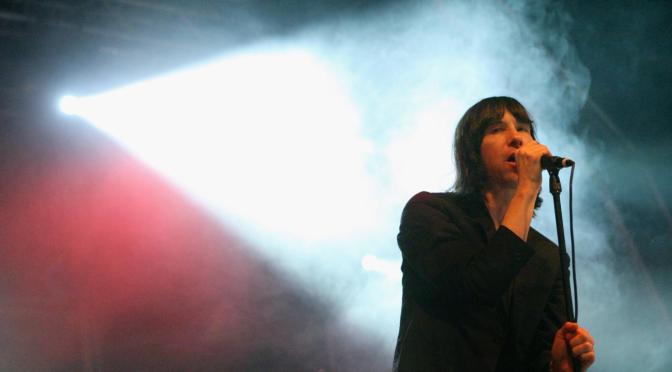
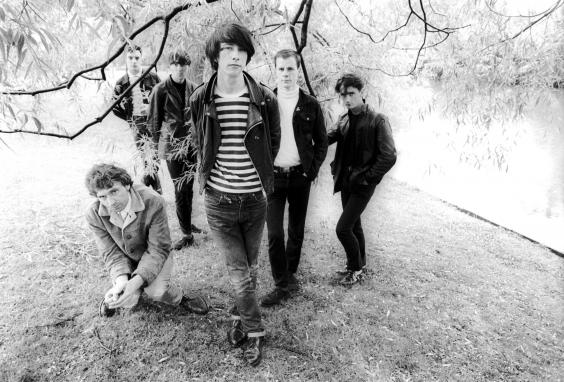
My very first discovery of Bobby Gillespie was when I, as a teenage idiot working in a dead-end office job, saw a video by the fuzz-bombing, guitar anarchists Jesus and Mary Chain on the telly for their spectacular single Never Understand. I recall thinking who the hell is that twig-skinny-black-mop-haired-bastard-with-sunglasses smashing hell out of a snare drum? He’s cooler than fuck! Plus, THAT band is phenomenal too! As punk rock was just out of my age range here was loud, noisy and tuneful rock and roll I could really get into. In fact, the 1980s gave birth to so many great independent-minded-guitar-based bands that I was in my element! While the “indie” scene eventually got assimilated into the mainstream a main flagbearer of these halcyon times continues with much creative passion and – based on the gig I went to last Friday – Bobby Gillespie is still as relevant and cool as ever. He’s rock and roll’s Dorian Gray who shows no sign of aging OR dying! Gillespie is one of the great frontmen and true a rock and roll immortal!
Primal Scream are one of my favourite bands of all time! I have literally grown up watching them from virtual birth and any release of theirs is welcomed with heart-stopping brain joy. After Gillespie left the Jesus and Mary Chain to front them they released a series of jangle-pop records and Peel Sessions in the 1980s, notably the wonderful It Happens and Velocity Girl. Subsequently they released their debut album Sonic Flower Groove to a lukewarm critical reception and were swiftly dropped by their major record label. I LOVED their first album. It was a heady mix of jangle guitars, power-pop riffs, flowery lyrics and dreamy vocals from Gillespie. Listening to it today I still recall the beauty of those chiming twelve-strings reverberating around my Roehampton bedroom as Bobby Gillespie’s Scottish falsetto sang melodies such as: Sonic Sister Love, Imperial, May the Sun Shine Bright for You and other classics.
Alas the album flopped but Bobby’s comrade and compatriot Alan McGee signed them to his own label Creation and the band set about, not for the first time, changing their sound and look, for their second album. McGee deserves praise for championing passionate-alternative-young-musicians-with-attitude with a desire to see the underdogs challenging the ruling classes. His ardour and eye for talent meant McGee would be rewarded with chart success with Primal Scream and a little known Manchester band called Oasis; who are now the Guinness World record holders for the most successful band of the 1990s.
Second album Primal Scream was a ballsy-Stooges-inspired rock-out full of dirty guitar riffs and basslines to match. Arguably, Gillespie was still looking for a musical identity and worked further through the rock and roll menu with their sophomore release. While it suffered mixed reviews I love it! It has some right royally rocking tracks including one of my favourite songs of theirs: the mercurial I’m Losing More Than I’ll Ever Have. This song and Primal Scream’s fusion with the acid and rave culture of the early 1990s would shoot the band into the mainstream. Loaded was a bastardized version of I’m Losing More Than I’ll Ever Have and with Andrew Weatherall’s ingenious production and quotes from Peter Fonda and sparse vocals from Gillespie, the band had a massive hit record. Furthermore the wonderfully titled Screamadelica would be a global hit and win them the Mercury award for that year.
Further hit singles from Screamdelica would follow, notably the sublime Movin’ on Up, Come Together and Higher the Sun. The album was a triumphant fusion of dance, electronica and rock and critical acclaim followed the commercial success. Personally, I’m not a fan of Loaded as it lacks the heart of the original song it’s taken from, but the track and subsequent album had summer and zeitgeist stamped all over it. Primal Scream were suddenly riding the crest of a wave and much was expected of their next album Give Out but Don’t Give Up!
When the single Rocks soared to number seven in the charts in 1994 the band once again had a hit. However, this slice of bluesy, Stones-influenced rock wasn’t welcomed by all music critics; some even stating the Scream had sold out their dance roots. This though is a fucking ridiculous idea because first and foremost they are a rock and roll band and secondly they’ve never followed trends. In fact, one of the major reasons I love this band so much is they do what the hell they want. I loved their third album and despite its mildly derivative underbelly, songs like Jailbird and the beautifully written I’m Gonna Cry Myself Blind are bona fide classics which still sound fresh today. Overall, Give Out but Don’t Give Up is a funky party album which doesn’t take itself too seriously and will lift even the most sullen of moods. Yet, the party mood was soon to shift as Primal Scream were about to move into much darker territory.
Vanishing Point was Primal Scream finally finding, amidst the postmodern machinations of their rock and roll brain, a signature sound. The record is drenched in amphetamine and smacked-up tunes and with the introduction of Mani from Mancunian legends Stone Roses, the speed-freak awesomeness of the album was one to behold. Gillespie stated it was an alternative soundtrack to the 1970s counter-cultural-narco-road movie of the same name and dub-punk tracks such as: Burning Wheel, Kowalski, Medication plus the trance melody of Star proved him right. It’s a cracking album which sounds both original and dunked in the blood of Lemmy; there’s even a song called Motorhead on the damn thing! Vanishing Point’s brutal, poetic, cinematic, dirty, thudding basslines, drum loops, guitars and lyrics make it one of their most complete and fresh sounding releases.
If Vanishing Point was a classic then their next album XTRMNTR is, in my view, their masterpiece. It takes the speed-ball from its predecessor and jams it into the brain with a burning syringe; and you’re left in no doubt this is a group at the top of their game. I think the band’s drug use and abuse is well documented and of course narcotic addiction will rip a hole in the soul of one’s humanity; however, the mixture of hedonism, anger, guts, passion and despair you get from being on drugs can give us great art such as this. Because instant classics such as Kill All Hippies, Accelerator, Shoot Speed/Kill Light and the majestic industrial disco epic Swastika Eyes proved that Primal Scream had written and produced one of the finest albums of all time. It’s angry, political, personal, dark and desperate, but also amidst the vampires and shadows there’s some incredible rock tunes in there and it remains for me their finest sixty minutes and twenty-four seconds.
After XTRMNTR the band toured the world. I caught them at a particularly blurry gig at the Hammersmith Palais, which was one of those nights I’ll never forget; mainly because I can’t remember too much about it. I recall dancing and falling over joyous and drunk on: life, music and chemicals. It was a stunning culmination for me of a band and die-hard fan coming together in perfect ecstasy. But how do you follow not one but TWO classic smashed-up tour-de-force albums?
I think in all honesty Primal Scream’s creative purple-patched hearts dipped in the next few years. Evil Heat from 2002 and Riot City Blues (2006) were punctuated by the royal remixed release of “Best of” album called Dirty Hits. Having said that any Primal Scream album is better than no albums at all and songs including: Autobahn 66 from Evil Heat and Country Girl, Hell’s A Comin’ Down and the touching Sometimes I Feel So Lonely demonstrated the band’s continued ability to write a cracking tune. But overall these two albums were inconsistent and unfocussed compared to the manic genius of their predecessors. Having said that Country Girl was another chart hit and it was great seeing the Scream in the charts, appealing to the globby masses again.
Released in 2008 Beautiful Future was a marked improvement in terms of songwriting consistency. The powerful pop electronica of the first seven tracks suggested a classic-in-the-making; however, the quality dips slightly toward the end. Nonetheless, it is a wonderful poppy soufflé drenched in pathos with grandstanding tracks including: Uptown, Zombie Man, Can’t Go Back and Beautiful Summer. In fact Beautiful Future is indeed a bright temporal glimpse forward as the band’s current album Chaosmosis is an even sharper sonic pop album and brimming with startling positivity in songs like: Tripping on your Love and the exquisite When the Light Comes In.
Sandwiched in between these two albums is the experimental, jazzy offerings of More Light, which found Bobby Gillespie clean and sober for the first time forever. He opined when the album was released:
“We are trying to create transcendent, euphoric, ecstatic experiences. That’s always going to be part of our aesthetic. We like making druggy-sounding psychedelic music. It’s just that since we stopped taking drugs we got better at it.”Bobby Gillespie (2013)
Unlike the delectably titled Chaosmosis – which isn’t chaotic sounding at all – More Light is the blended process of Primal Scream shedding their rock and roll skin once again. The scales that scatter in the wind find the music all over the shop; psychedelic 2013 and bluesy-pop of Its Alright, I’m OK meld with punk bursts of Culturecide and Hit Void, and the moody ballad Walking with the Beast. What the album lacks in discipline it makes up with some cracking songs and a mass collection of musical personnel producing an artistically satisfying smorgasbord spikily overseen by uber-producer David Holmes.
To celebrate the release of the sparky power-pop classic Chaosmosis, the Scream booked themselves into the London Palladium for one night only. I was surprised by their choice of venue as the Palladium is historically a home for Royalty, middle-of-the-road entertainment and the bourgeoisie. Plus, it was April Fool’s Day so I wondered if perhaps it was some grand prank and the gig would be prove a sham. It was anything but as Bobby Gillespie and his crew of old stalwarts such as keyboardist Martin Duffy and Andrew Innes on guitar were ably backed up by young bassist Simone Butler and Hannah Marsden on support vocals. When you have almost thirty years of material to choose from then karmic chameleons such as the Scream are a banker to deliver the rock and roll goods. Every song was beautifully rendered as crisp light and video show melded pristinely with the soaring choir in the shadows; all the while sonic brother Gillespie begging the crowd to come together toward the light.
Movin’ On Up was an incredible opener and the hits just poured out from the stage and my personal favourites were Tripping’ On Your Love, Shoot Speed/Kill Light, Rocks, Swastika Eyes, Kill All Hippies and the rarely heard original Come Together replete with acid-dance remix of course. The whole night was a cascade of nostalgia and cracking showmanship and I felt at one with the world and a group of musicians who are part of my psyche and who I consider, culturally speaking, part of the family. I was blind. I can see. Primal Scream made a believer out of me. We’re MOVING ON UP!!
Dedicated to the memory of Robert Young (1965 – 2014)









 The Cinema Fix presents