Based on Frankenstein; or, The Modern Prometheus by Mary Shelley
Produced by: Maggie Gyllenhaal, Emma Tillinger Koskoff, Talia Kleinhendler, Osnat Handelsman-Keren, etc.
Main cast: Jessie Buckley, Christian Bale, Peter Sarsgaard, Annette Bening, Penelope Cruz, Jake Gyllenhaal, etc.
Cinematography by Lawrence Sher
** May Contain Spoilers **
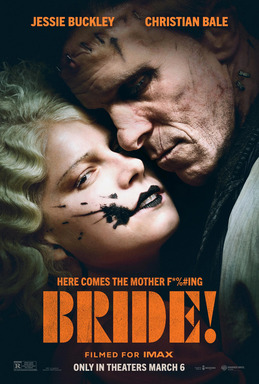
Maggie Gyllenhaal’s THE BRIDE! (2026) is a film bursting with ideas—sometimes thrillingly so, sometimes to its own detriment. Drawing inspiration from Bride of Frankenstein (1935) and ultimately Mary Shelley’s seminal novel, Frankenstein, Gyllenhaal transplants the myth into a Gothic vision of 1930s Depression-era America, filtered through the anarchic spirit of outlaw cinema like Bonnie and Clyde (1967) and Natural Born Killers (1994). The result is frequently intoxicating. The film opens with an inspired flourish—Mary Shelley herself narrating from beyond the grave—immediately signalling the director’s playful ambition. Visually, the film is extraordinary: lavish period design, smoky Gothic textures, and a lurid romanticism that feels both classic Hollywood and defiantly post-modern.
At the centre of the mayhem is Jessie Buckley, delivering yet another unforgettable performance. Her ‘Bride’ is feral, seductive, and volatile—an electrifying feminist creature of impulses and contradictions. Buckley plays her with a kind of joyous unpredictability, veering between danger, sexuality, and sudden jolts of manic dialogue that feel almost Tourette-like in their intensity. Opposite her, Christian Bale lends gravitas as her monstrous partner, and together they rampage across a mythicised America in a lovers-on-the-run narrative that often feels gleefully unhinged.
Yet for all its invention, THE BRIDE! (2026) often collapses under the sheer weight of its ambitions. Gyllenhaal’s screenplay seems determined to juggle too many ideas at once—meta-narration, Gothic tragedy, outlaw romance, and genre pastiche—without giving any one of them the structural discipline they require. The direction follows suit, veering between tones so abruptly that the film begins to feel atonal rather than daring. Key twists arrive with little groundwork, leaving major emotional beats feeling strangely hollow.
By the final act, the film’s wild energy begins to resemble narrative confusion. Plot holes emerge, character motivations blur, and revelations arrive as pure payoff without the careful setup that might have made them land. It leaves an odd lingering question: was this an $80 million piece of audacious cinematic art, or an extravagant misfire? Perhaps it is a little of both—a fascinating, chaotic vision whose brilliance flashes intermittently through the fog of its own excess.
Cult Film Review: Thriller – A Cruel Picture (1974)
Directed by Alex Fridolinski
Screenplay by Alex Fridolinski
Produced by Bo Arne Vibenius
Main cast: Christina Lindberg, Heinz Hopf, Despina Tomazani, etc.
Cinematography by Andreas Bellis
Edited by Brian Wikström
**Viewer discretion is advised – this film contains scenes that many will find disturbing**
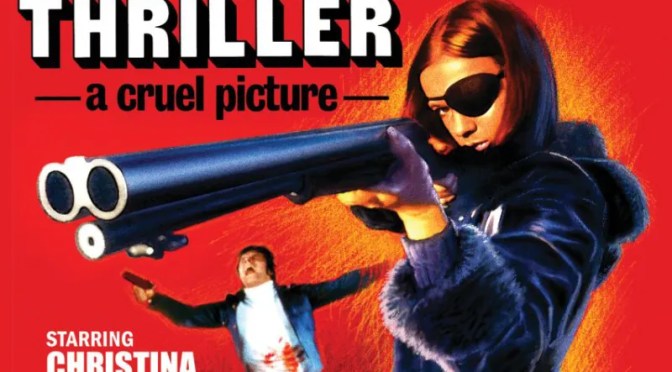
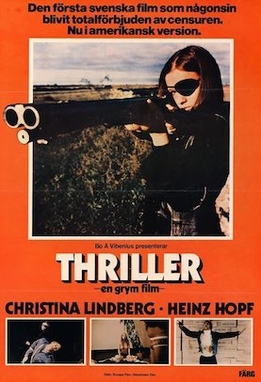
Thriller – A Cruel Picture (1973) (Swedish: Thriller – en grym film) is a 1973 Swedish exploitation film from writer-director Bo Arne Vibenius, working under the pseudonym Alex Fridolinski, starring Christina Lindberg and Heinz Hopf. Infamous for its unflinching depictions of sexual violence, drug abuse, and degradation, the film charts the ordeal of a mute young woman who is coerced into heroin addiction and forced into prostitution before embarking on a brutal campaign of revenge against her tormentors.
Released in the United States in a heavily cut version by American International Pictures—under lurid alternate titles such as They Call Her One Eye, Hooker’s Revenge, and The Swedish Vice-Girl—the film has earned a reputation as a deeply disturbing and confrontational work. Its graphic content and relentless tone make it a challenging and potentially distressing viewing experience, best avoided by those sensitive to extreme subject matter.
Unsurprisingly, due to the violent scenes, on-screen drug use, nudity and also inclusion of hardcore pornography, Thriller – A Cruel Picture (1973) was either banned outright or heavily censored on release. I had heard so much about this film on various YouTube videos expounding the shocking nature of the themes and scenes. Allied to this, Quentin Tarantino has also “championed” the movie and it’s star, Christina Lindberg. With this in mind the film I got tempted and purchased the recent Blu Ray version released in the UK. This version DOES NOT, thankfully, include the pornographic scenes which were filmed by the director with a Swedish couple who did live sex shows.
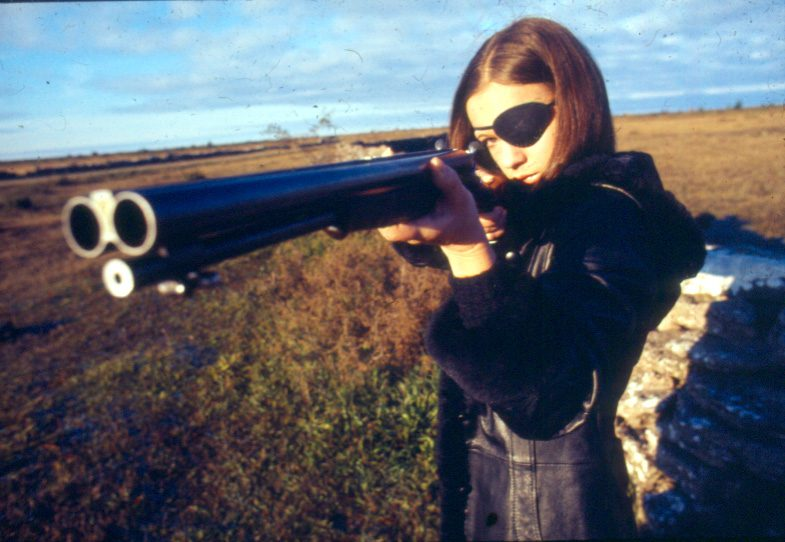
So, is Thriller – A Cruel Picture (1973) actually any good? Well, it is safe to say that it is a relentlessly harsh watch. That said, it would be unfair to dismiss the film outright as mere grindhouse provocation. Vibenius employs striking stylistic flourishes that elevate certain sequences into something oddly hypnotic. Most famously, the extended slow-motion shotgun reprisals—henchmen blasted backwards in balletic, almost operatic fashion—are staged with a visual patience that borders on the surreal. These, as well as the lengthy final act car pursuit sequence, are technically memorable, even as their brutality remains confronting.
Where the film becomes almost nightmarish is in its internal logic. Once Madeline (Christina Lindberg) is captured and brutalized by the sadistic drug dealer Tony (Heinz Hopf), the narrative takes on a dreamlike, disjointed quality. Despite being forcibly addicted to heroin, she somehow manages to train herself in hand-to-hand combat, driving, and sharpshooting—preparing an elaborate revenge while still under the grip of addiction. The plotting feels less realistic than hallucinatory, as though the film operates on the logic of trauma and fantasy rather than grounded cause and effect.
A great deal of the film’s lasting impact rests on the striking screen presence of Christina Lindberg, as well as her character’s grim journey.Already known internationally in the late 1960s and early 1970s for her work as an erotic actress and glamour model, Lindberg brings an arresting, almost statuesque quality to the role. Her icy stare—especially once framed by the now-iconic eyepatch—gives the character a mythic, comic-book intensity. At the same time, the creative decision to render her character mute inevitably shapes how that performance is perceived. Silence becomes a stylistic device, amplifying the film’s cold and detached tone. The director’s choice to sidestep the demands of more dialogue-heavy dramatic scenes actually works in the film’s favour.
Overall, Thriller – A Cruel Picture (1973) is a film that oscillates between exploitation rawness and stark, almost avant-garde stylization. For hardened genre enthusiasts, it may be a grim curiosity with undeniable visual audacity. For many others, however, its graphic content and relentless tone will make it a deeply uncomfortable, even distressing experience. Proceed carefully.
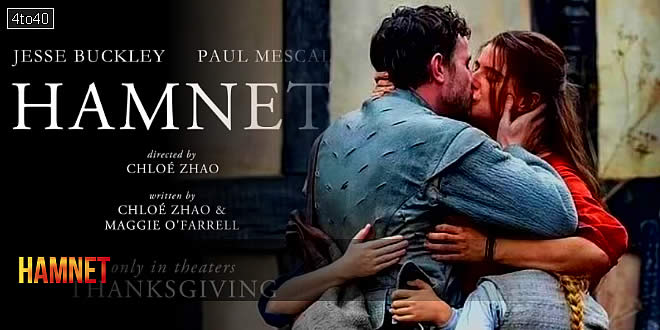
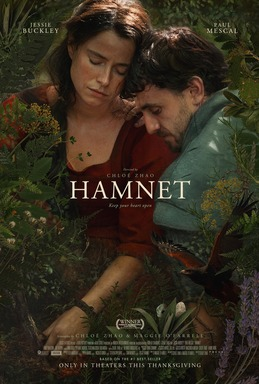
Screenplay by Chloé Zhao & Maggie O’Farrell – Based on Hamnet by Maggie O’Farrell Produced by Liza Marshall, Pippa Harris, Nicolas Gonda, Steven Spielberg & Sam Mendes Main cast: Jessie Buckley, Paul Mescal, Emily Watson, Joe Alwyn, David Wilmot, Jacobi Jupe, Olivia Lynes, etc.
Cinematography by Łukasz Żal
There are actors who impress, and then there is Jessie Buckley, who seems to detonate the screen every time she appears. From the feral menace and vulnerability of Beast (2017) to the raw, soul-baring musical grit of Wild Rose (2018), Buckley has proven herself fearless; from the existential unravelling of I’m Thinking of Ending Things (2020) to her razor-sharp, unclassifiable turn in Fargo (2020) – Season 4, and the aching restraint of Fingernails (2023), her work consistently redefines what emotional truth on screen can look like. Now, with an earth-shattering rendition of Agnes Shakespeare in Hamnet (2025), Buckley doesn’t just command attention—she claims her place as one of the most electrifying actors of her generation.
Hamnet (2025) is an adaptation of Maggie O’Farrell’s critically acclaimed novel is a quietly thunderous piece of cinema—one that chooses intimacy over spectacle and emotion over mythology. At its core is the relationship between Agnes and William Shakespeare, charted from their first, tentative connection through marriage, parenthood, and the fractures that emerge when love collides with loss and ambition.
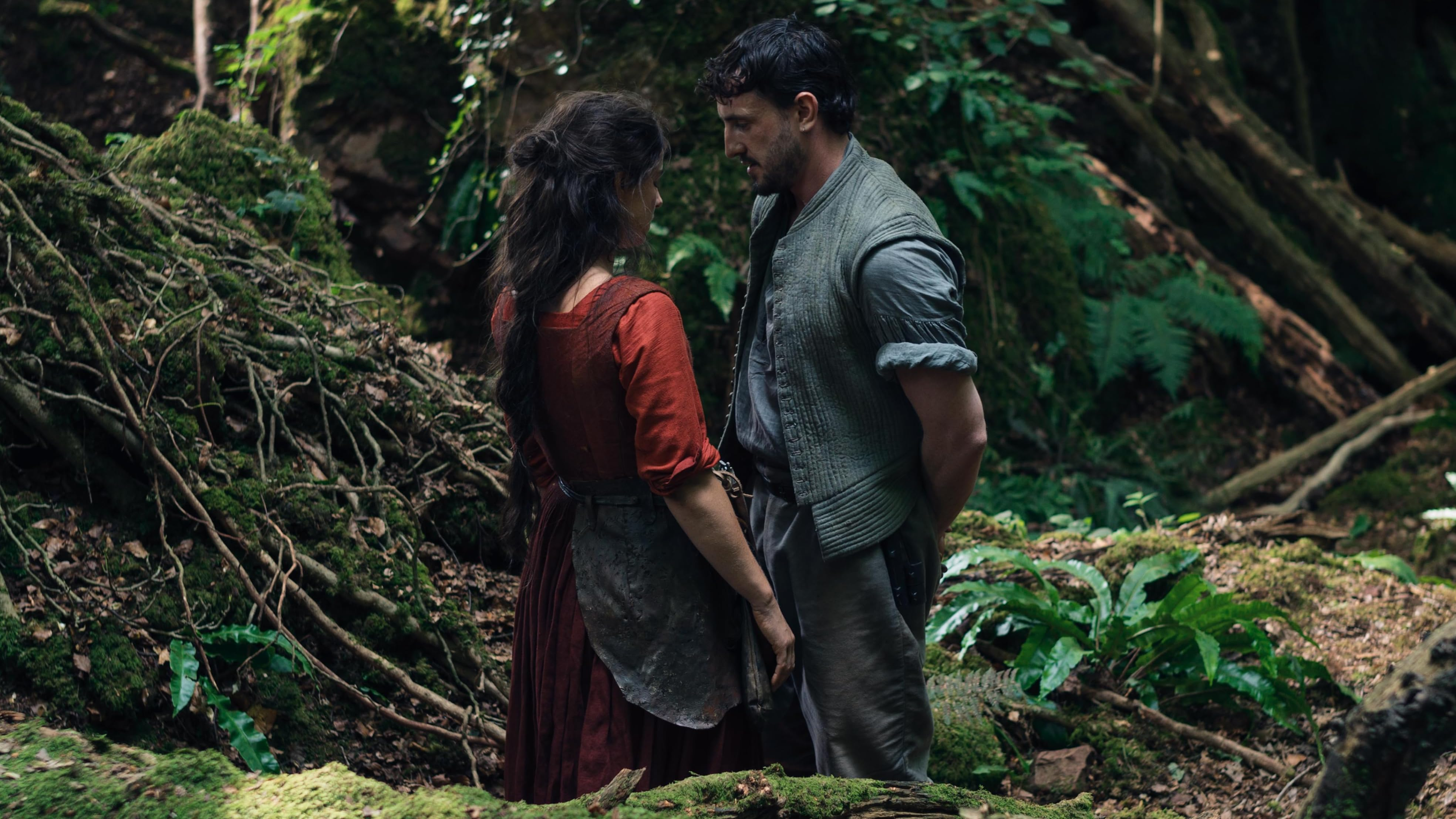
The film is less concerned with the legend of Shakespeare than with the human beings behind it: a scholar and poet struggling to find his literary voice, set against Agnes, a woman of the land and forest, spiritually attuned to nature, instinct, and ritual. Their romance blooms in the space between these worlds, with Agnes’s chanting communion with the natural world acting as an unspoken counterpoint to Will’s search for language and form.
Director Chloé Zhao brings her signature elegance and patience to the material, allowing moments to breathe and emotions to surface organically. Her collaboration with cinematographer Łukasz Żal results in imagery that feels almost painterly—soft, natural light spilling across interiors and fields, rendering the English countryside as something tactile and alive. Every frame seems steeped in earth, wind, and time, reinforcing the film’s grounding in the physical and the elemental.
At the centre of it all is Jessie Buckley, delivering a stunningly embodied performance as Agnes. Her work is raw, intuitive, and deeply moving—she plays grief not as a single rupture but as a living force that reshapes the body and spirit. Paul Mescal brings a quiet intelligence and aching restraint to William, capturing the tension between domestic devotion and creative restlessness, while the incredible, Jacobi Jupe, as the young son, Hamnet, adds genuine emotional resonance, grounding the family dynamic with heart-breaking sincerity.
Hamnet (2025) is ultimately a powerhouse drama about family, grief, and the curative—often painful—power of the creative process. It understands art not as triumph but as transformation, something born from love and loss in equal measure. My one reservation is a personal one: I found myself wanting more of Shakespeare’s journey in London and his struggle toward theatrical success and subsequent writing on the classic, Hamlet. But this absence is deliberate and understandable. The film is weighted toward the emotional interiority of Agnes’s experience, and in centring her perspective—so exquisitely rendered by Buckley—Hamnet (2025) finds its true, devastating strength.
Main cast: Mari Shirato, Junko Miyashita, Kentarō Shimizu, Jun Etō, etc.
Cinematography by Yonezou Maeda
Music by Toshiyuki Honda
*** MAY CONTAIN SPOILERS ***
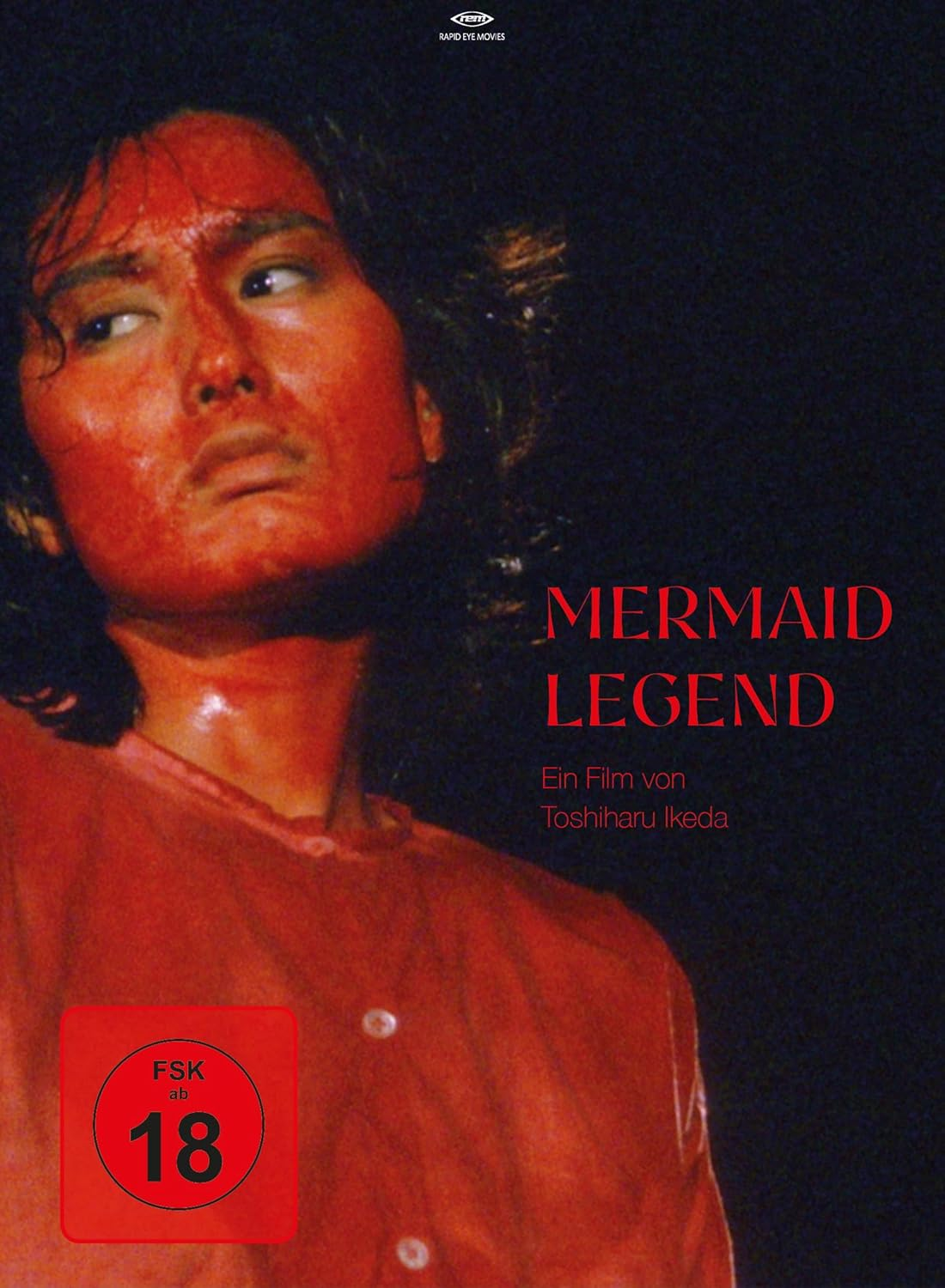
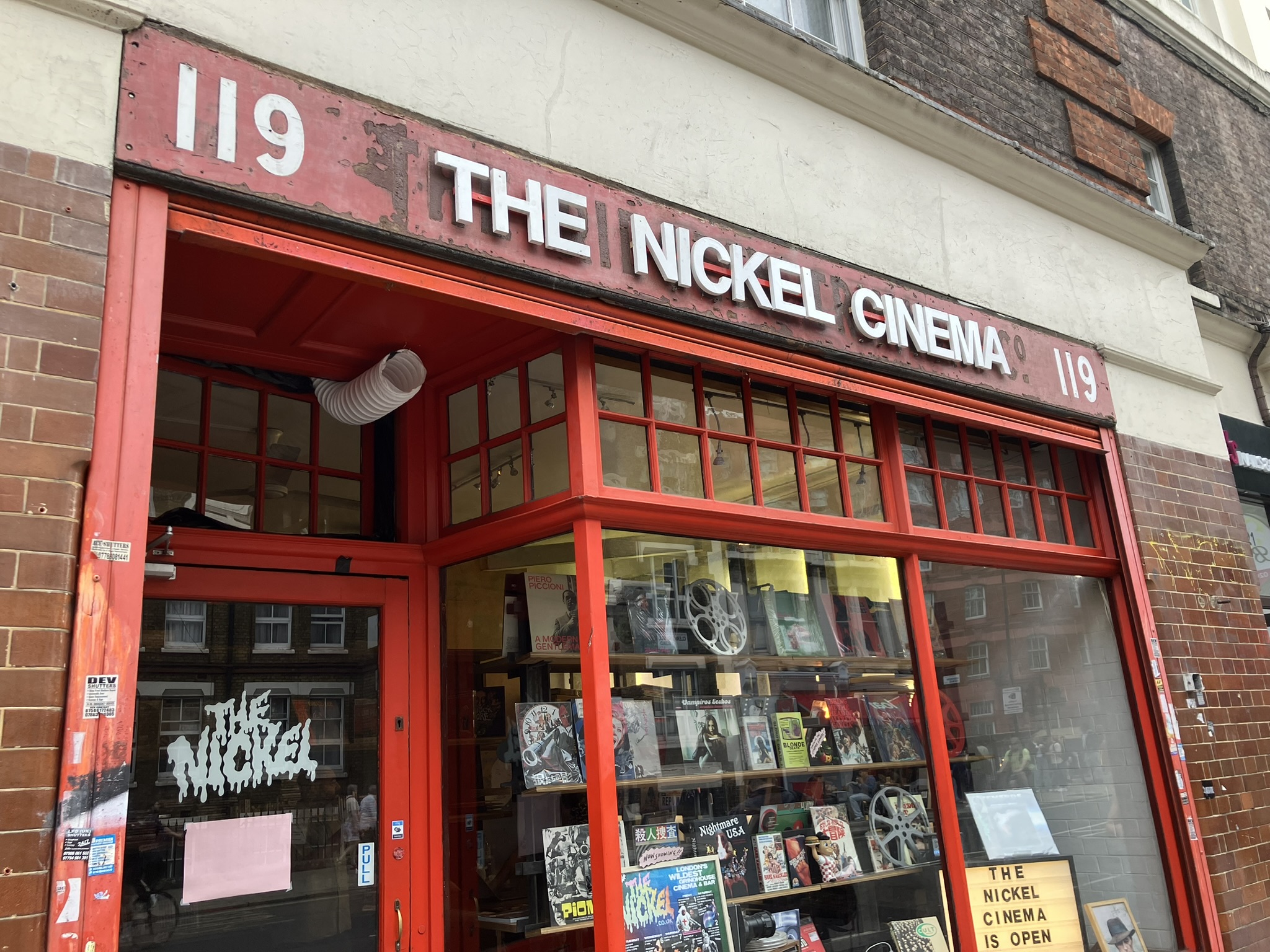
I took a gamble on an unknown Japanese film at the Nickel Cinema and walked out genuinely shaken. Mermaid Legend (1984) isn’t just a cult oddity—it’s a film that mutates before your eyes, seducing you with beauty before drowning you in blood. I was stunned by how something so lyrical could also be so brutally confrontational.
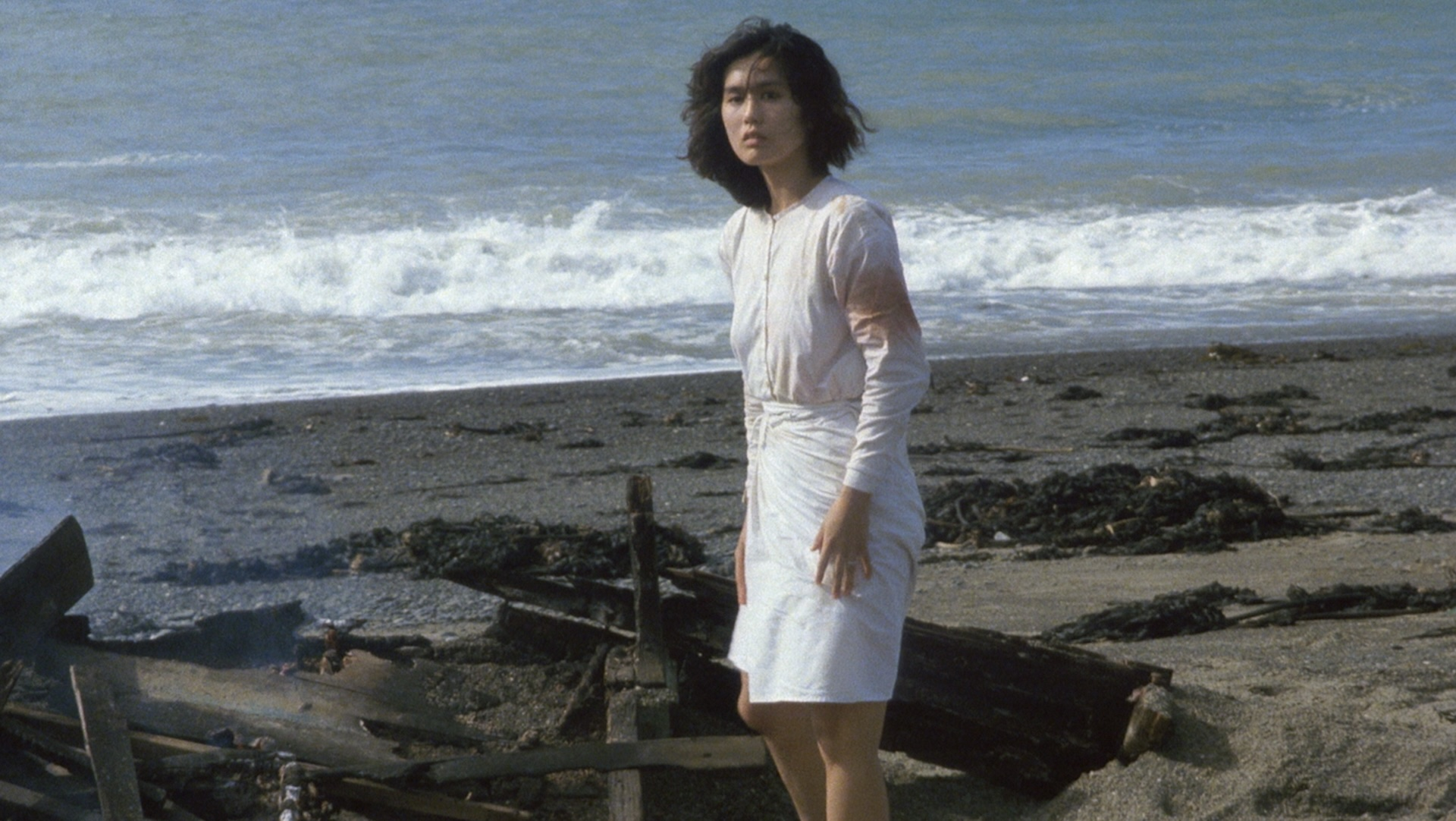
The story begins almost modestly, as a coastal drama about a fisherman and his wife, Migiwa. They bicker constantly, their marriage worn thin by poverty and exhaustion, yet there’s an undeniable bond beneath the arguments. That fragile domesticity is shattered when the fisherman stands in the way of an industrial development scheme. The business developers—faceless, polite, and utterly ruthless—have him murdered, disposing of his life as casually as industrial waste.
From there, Mermaid Legend (1984) transforms again. What starts as marital realism becomes a corporate espionage murder mystery, steeped in anger at nuclear energy, environmental destruction, and the cold machinery of corporate greed. Migiwa, a powerful-lunged pearl diver, initially hides, retreating into grief and the sea itself. But this is not a film about quiet mourning. When she decides to act, she does so with mythic force.
Played by the ethereal and astonishing Mari Shirato, Migiwa becomes something halfway between woman, avenging angel, and sea spirit. Shirato’s performance is magnetic—serene, sensual, and terrifying. As her vengeful pursuit begins, the film plunges headlong into extreme violence and explicit sexuality, reclassifying itself yet again as one of the most shocking exploitation epics I’ve seen from Japan in recent years. These scenes aren’t gratuitous in the lazy sense; they’re confrontational, weaponized, daring you to look away while refusing to let you feel comfortable for a second.
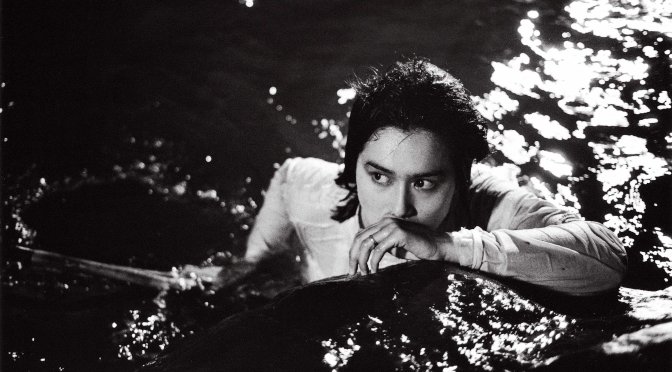
What makes Mermaid Legend (1984) so intoxicating is how its elements collide. Poetic underwater cinematography turns the ocean into a womb, a grave, and a cathedral. Religious, angelic, and environmental imagery blur together, as if Migiwa is both martyr and executioner. The music is heavenly—soaring, mournful, almost sacred—creating a surreal contrast with the carnage on screen. Beauty and brutality coexist in the same frame, each intensifying the other.
And then there’s the ending. The final, elongated pier stabbing rampage is completely off the chart—relentless, bloody, and hypnotic. It plays out like a ritual rather than an action sequence, stretching time until violence becomes abstraction, then meaning, then release. By the time the last body falls, Mermaid Legend (1984) has fully shed realism and entered the realm of legend, justifying its title in blood.
This is a film that shouldn’t work, yet does—furiously, defiantly. A genre-shifting fever dream that moves from domestic drama to political thriller to erotic exploitation to mythic revenge tragedy, Mermaid Legend (1984) is both beautiful and brutal, and I can’t stop thinking about it. Seeing it by chance at the Nickel Cinema felt like discovering a secret too powerful to stay hidden.
Production companies: Paramount Network Television, Braga Productions & Rick Berman Productions
Selected writers: Brannon Braga, Rick Berman, Manny Coto, Mike Sussman, Phyllis Strong, Judith Reeves-Stevens, Garfield Reeves-Stevens, André Bormanis, Chris Black, David A. Goodman, Fred Dekker, and more.
Selected directors: Roxann Dawson, LeVar Burton, Robert Duncan McNeill, Allan Kroeker, David Livingston, Winrich Kolbe, James L. Conway, Mike Vejar, Michael Grossman, Marita Grabiak, Brennan Spencer, Michael S. Watkins, Vincenzo Natali, and more.
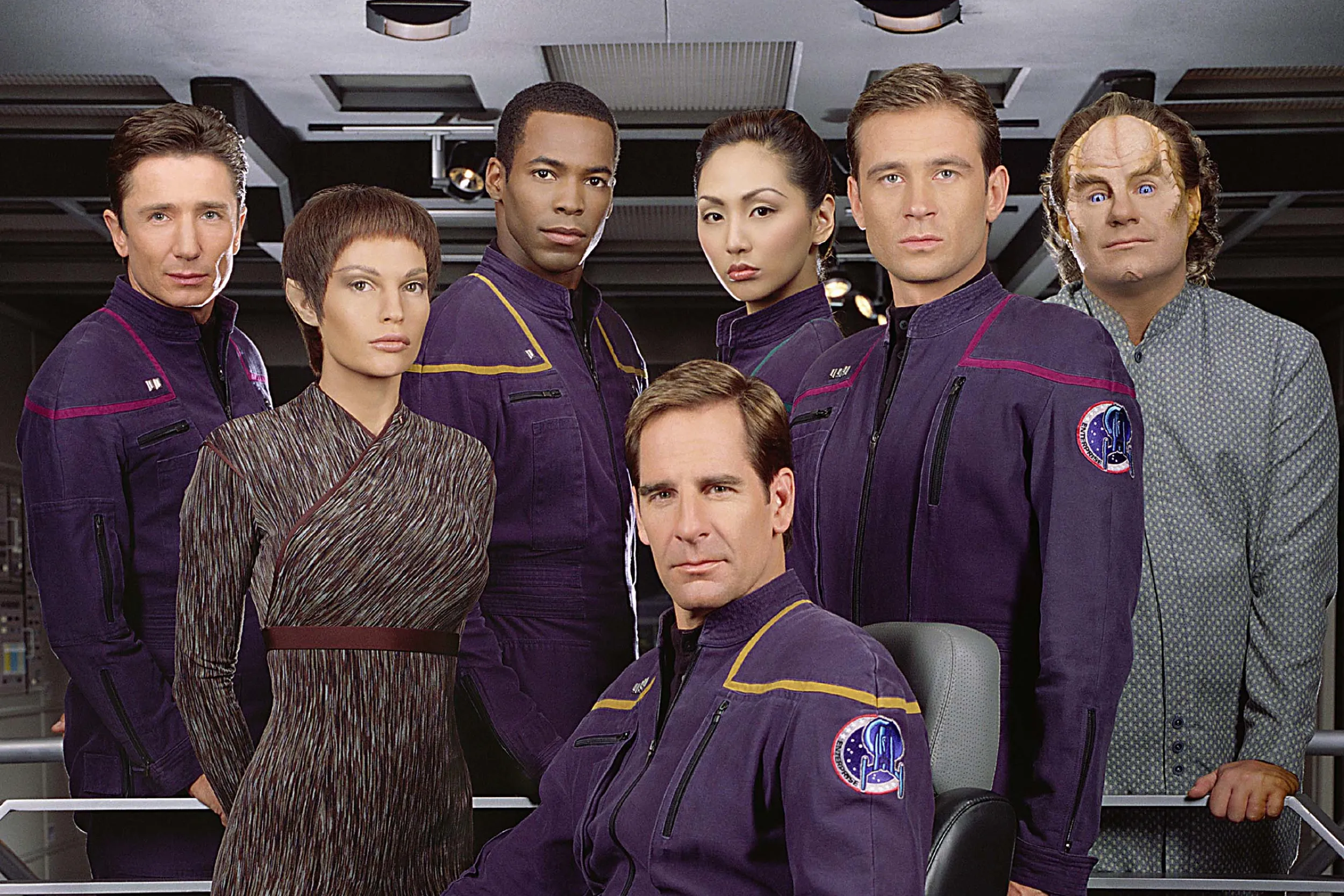
Main cast: Scott Bakula, John Billingsley, Jolene Blalock, Dominic Keating, Anthony Montgomery, Linda Park, Connor Trinneeretc.
Notable guest actors: Jeffrey Combs, Vaughn Armstrong , Gary Graham, Matt Winston, Randy Oglesby, James Cromwell, Brent Spiner, Daniel Dae Kim, Fionnula Flanagan, Robert Picardo, Tony Todd, Bruce Davison, Seth MacFarlane, Steven Culp, Noa Tishby, Rene Auberjonois, Peter Weller, Dean Stockwell etc.
Composer(s): Dennis McCarthy, Jay Chattaway, Brian Tyler, John Frizzell, Mark McKenzie, David Bell, Velton Ray Bunch, Kevin Kiner & Paul Baillargeon
*** MAY CONTAIN SPOILERS ***
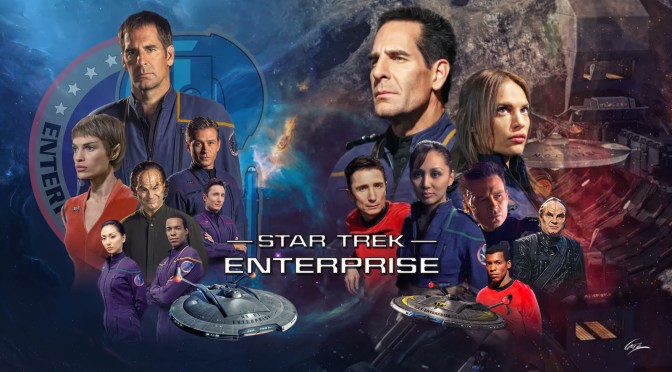
It’s been a while since I reviewed Star Trek on the site. But I have now finally completed the task I set myself to watch and review all the legacy Star Trek series. I am currently on the fence regarding the more recent Star Trek offerings. Anyway, having reviewed Voyager (see below) last year, I can now provide a detailed report back on Enterprise.
Star Trek: Enterpriseoccupies a fascinating corner of the franchise’s sprawling canon. Set a century before Kirk and more than a century after humanity’s first steps into spaceflight, the series charts the formative years of Starfleet—before there even was a “Starfleet” in the sense fans recognize. Its premise alone is rich: a pre-Federation frontier where humanity is inexperienced, unsteady, and often outmatched, yet eager to join a much larger galactic community. In this sense, Enterprise is both a prologue and a missing link, retrofitting the swaggering optimism of The Original Series with a more grounded, early-21st-century sensibility.
The show’s commitment to exploring those transitional years is what secures its place in canon. Enterprise seeds the diplomacy, technology, and interspecies tensions that future shows build upon—from the first warp-5 engine, to early encounters with Vulcans, Andorians, and the ever-shadowy Temporal Cold War. Watching Captain Jonathan Archer and his crew stumble toward the ideals later embodied by the Federation gives the series a distinctive historical weight. It doesn’t merely fit into Star Trek continuity; it actively sculpts the bedrock beneath it.
Central to the show’s appeal is Scott Bakula, whose performance as Captain Archer blends warmth, stubbornness, and a palpable sense of moral growing pains. Bakula gives Archer a grounded humanity that stands apart from the polished command styles of Picard or the passionate Sisko, yet his sincerity and resolve make him every bit their equal. When the writing rises to meet his talent—as in standout episodes like “Cogenitor,” “The Andorian Incident,” “Carbon Creek,” or the Xindi arc’s best moments—the show can reach the emotional and thematic heights of The Original Seriesand The Next Generation.
But Enterprise is also a series defined by uneven execution. For every episode that lands with classic-Trek resonance, there are others hampered by muddled plotting, bland direction, or creative decisions that feel more reactive than visionary. The show often struggled to decide whether it wanted to be a rough-edged prequel, a 2000s-era action drama, or a traditional episodic Trek—frequently trying to be all three at once. While it contains genuinely excellent science-fiction storytelling, its overall writing and directorial cohesion never consistently matched the clarity, ambition, or confidence of its most celebrated predecessors.
Yet despite its flaws, Star Trek: Enterprise remains an essential and often underrated part of the canon—a show whose best moments remind us exactly why Trek endures, and whose imperfections make its aspirations feel all the more human. Here are eight of the best episodes I watched – two per series.
Series 1 – The Andorian Incident (Episode 7)
This episode is the first truly great hour of Enterprise—the point where the show proves it can handle nuanced political storytelling within the Trek universe. The introduction of Jeffrey Combs as Shran is a masterstroke; he immediately brings depth, wit, and volatility to the Andorians. The plot, centered on Archer and his crew discovering that a supposedly pacifist Vulcan monastery is hiding darker secrets, reshapes our understanding of Vulcan–Andorian tensions. Strong direction, tight pacing, and a morally thorny reveal make this the first episode that feels essential to larger Star Trek canon.
Series 1 – Dear Doctor (Episode 13)
A thoughtful, character-driven story told through Dr. Phlox’s personal logs, “Dear Doctor” represents Enterprise at its most philosophically ambitious. It confronts the ethics of medical intervention, cultural evolution, and the limits of humanitarian aid—classic Trek territory handled with sensitivity and restraint. John Billingsley delivers one of the best performances of the season, infusing Phlox with curiosity, compassion, and unsettling pragmatism. The episode’s controversial ending also resonates, sparking debate among fans and critics alike. It’s a quietly powerful hour that demonstrates the series’ potential for moral complexity.
Series 2 – Carbon Creek (Episode 2)
Widely regarded as the highlight of Season 2—and for many, the best Enterprise episode of its first two years—“Carbon Creek” is a charming, unexpectedly heartfelt detour into Trek history. Told by T’Pol as a possibly-true, possibly-mythic story, it follows a stranded Vulcan survey team living incognito in 1950s Pennsylvania. The fish-out-of-water premise is handled with warmth, humour, and subtle social commentary, while Jolene Blalock shines in a dual role that lets her explore a softer, more playful Vulcan persona. It’s imaginative, character-rich, and quietly profound—the kind of tonal experiment that pays off beautifully.
Series 2 – Regeneration – (Episode 23)
A tense, surprisingly effective prequel to The Next Generation’s Borg storyline, “Regeneration” threads a tricky needle: introducing Borg elements without breaking canon. The episode smartly uses the wreckage from Star Trek: First Contact as its entry point, turning the narrative into a chilling, atmospheric thriller. The direction is sharp, the pacing taut, and the danger feels unusually real for this era of Trek. The crew’s desperation—fighting an enemy they can’t possibly understand—creates some of the season’s most gripping moments. It’s both fan-pleasing and genuinely suspenseful.
Series 3 – Twilight – (Episode 8)
Often cited as the masterpiece of Season 3, “Twilight” is a time-bending character drama that blends emotional storytelling with classic Trek sci-fi ingenuity. When Archer becomes afflicted with a neurological condition that erases his short-term memory, the episode jumps forward into an alternate future where humanity has been nearly wiped out by the Xindi. What follows is a surprisingly intimate exploration of Archer and T’Pol’s relationship, played with sincerity and restraint by Scott Bakula and Jolene Blalock. The script balances tragedy, hope, and big ideas without feeling gimmicky. It’s moving, tightly written, and stands alongside the franchise’s finest “what-if” stories.
Series 3 – Azati Prime – (Episode 18)
“Azati Prime” is the moment Season 3’s slow-burn storytelling snaps into urgent, high-stakes clarity. The episode follows Archer’s attempted suicide mission to destroy the Xindi superweapon, giving Scott Bakula one of his strongest performances in the entire series. The moral weight is heavy, the action tense, and the pacing relentless. Crucially, this is where the Xindi cease being abstract antagonists and become three-dimensional political factions torn between fear and diplomacy. The episode’s final act—Enterprise under brutal assault—is among the most cinematic sequences the series ever produced, setting up the endgame of the season with real emotional gravity.
Series 4 – United – (Episode 13)
“United” is Enterprise finally fulfilling its prequel potential—showing the messy, reluctant, and hard-fought beginnings of what will eventually become the United Federation of Planets. The political maneuvering is smart and grounded, the Andorian–Tellarite tension is played with grit and humor, and Jeffrey Combs delivers another magnetic performance as Shran. The episode’s centerpiece—the Andorian duel where Archer must fight to prevent a larger war—is tense, dramatic, and deeply character-driven. It’s classic Trek diplomacy mixed with riveting conflict, all while pushing the franchise’s history forward in meaningful ways.
Series 4 – In a Mirror, Darkly – (Episodes 18–19)
One of the most stylish and purely fun stories Enterprise ever told, this two-parter fully embraces the decadent brutality of the Mirror Universe. The production team goes all-in: redesigned sets, re-imagined uniforms, a pulpy remixed title sequence, and a stunning recreation of the USS Defiant from The Original Series. The cast seems to relish the opportunity to play villainous, unhinged versions of their characters—especially Jolene Blalock and Connor Trinneer. Visually bold, lore-rich, and brimming with dark humour, “In a Mirror, Darkly” is a love letter to both TOS and long-time Trek fans.
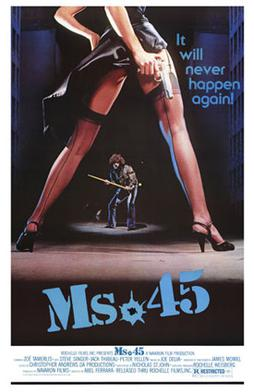
Cult Film Review: Ms. 45 / Angel of Vengeance (1981)
Directed by Abel Ferrara
Written by Nicholas St. John
Produced by: Richard Howorth, Mary Kane
Main cast: Zoë Tamerlis (Lund), Albert Sinkys, Steve Singer, Jack Thibeau, Peter Yellen, Darlene Stuto, Helen McGara etc.
Cinematography by James Momel
In its latest 4K restoration, Ms. 45—Abel Ferrara’s 1981 revenge thriller—has never looked more electrifying, or more disturbing. A stunning new rendering of Ferrara’s gritty vision, Ms. 45 showcases New York City in all its stark, seething chaos: a place of beautiful ugliness, where the streets pulse with danger, desperation, and decay. The film, originally shot on 16mm, feels both of its time and eerily timeless, especially now in ultra-high-definition, where every grainy detail of Ferrara’s oppressive, neon-lit streets shines in a raw, unapologetic manner.
At the heart of this urban nightmare is Thana (Zoë Lund, credited as Zoë Tamerlis), a mute seamstress whose world shatters after she is brutally assaulted by a man on her way home, then attacked again in her home. Her muteness is both a powerful thematic element and an artistic choice, amplifying her trauma, her rage, and her vengeance in a way that spoken words never could. Thana’s descent into violence is stark, visceral, and unrelenting, making her a strange kind of anti-hero in this world of moral decay. Ferrara’s direction is clinical, cold, and absolutely uncompromising—each frame holds a sharp, almost surgical precision, magnifying the madness of her mind and the city itself.
What truly elevates Ms. 45 beyond its genre limitations is the electric performance of Zoë Tamerlis/Lund. At just 17 years old when the film was made, Lund’s portrayal of Thana is nothing short of revelatory. She is the beating heart of this disturbing narrative, lighting up the screen with a fierce, magnetic presence that could have easily made her a Hollywood star—had the industry been ready for her. While many of the supporting cast either cannot act or over-act, Lund’s both vulnerable and terrifying, her expression often the only indication of her character’s state of mind. Her journey from victim to vengeful force is tragic, yet always compelling.
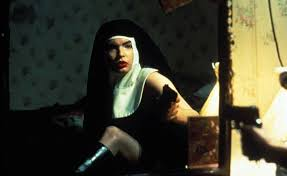
Had Lund chosen to pursue a more conventional career, she would likely have ascended to Hollywood’s A-list—her look was captivating, her screen presence undeniable—but the indie, underground scene was where she truly thrived. In Ms. 45, she is a tragic figure of youth lost to the violence of the world around her, and in the midst of it all, she shines, her performance capturing the raw, cathartic essence of a girl pushed too far. Further, Lund’s performance peaks in one of the most iconic sequences of the film—Thana’s nun fancy-dress shootout. Drenched in blood and surrounded by chaos, she dissects the partygoers in slow-motion with a terrifying calm, her eyes wide with cold sorrow. It’s a juxtaposition of innocence and savagery, like a child playing with fire and discovering its destructive power. Kudos to the deranged soundtrack here which really ramps up Ferrara’s nightmarish vision.
Ms. 45 is NOT a film for the faint of heart or the easily offended. It’s violent, raw, and unapologetically brutal, with moments that will leave you questioning your own reaction to Thana’s vengeful spree. There is something deeply primal about the film—the way it feeds off its viewers’ discomfort, forcing them to confront Thana’s rage. It’s a film that revels in its own madness, and yet somehow, Ferrara and Lund manage to make revenge feel like an art form. It’s as stylish as it is savage, as haunting as it is exhilarating.
In conclusion, Ms. 45 is a genre-defining thriller, a masterpiece of violent cinema that has lost none of its power with time. The 4K restoration is a perfect showcase for Ferrara’s vision, and Zoë Lund’s performance is a revelation—her beauty and intensity burn through the screen, making you wonder what might have been had she chosen a different path. But for those of us lucky enough to witness this film in all its gritty glory, it’s impossible not to see her as a true underground legend. Whether or not you’re ready for it, Ms. 45is visceral, stylish, and uncompromising cinema—one that will stay with you long after the credits roll and that evil saxophone soundtrack beat fades out.
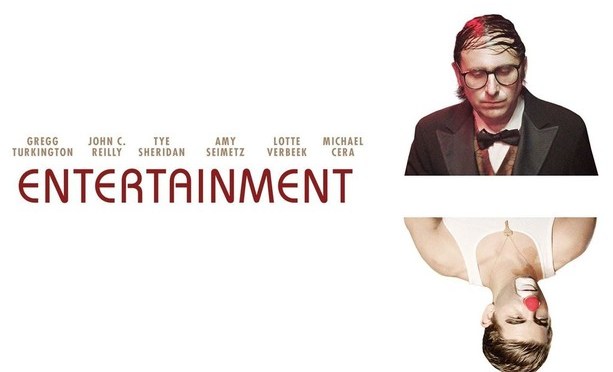
Cult Film Review: Entertainment (2015) at The Nickel Cinema
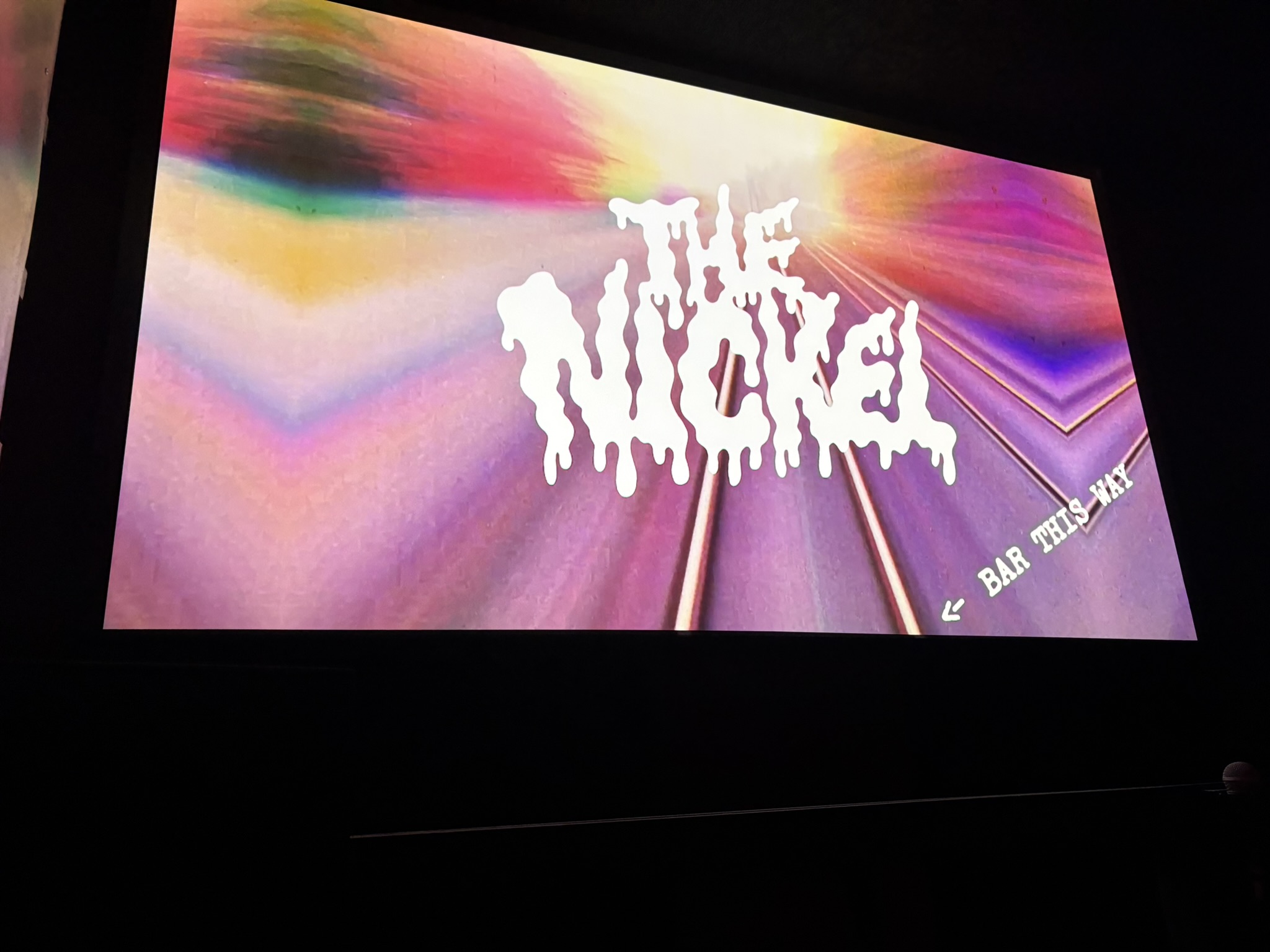
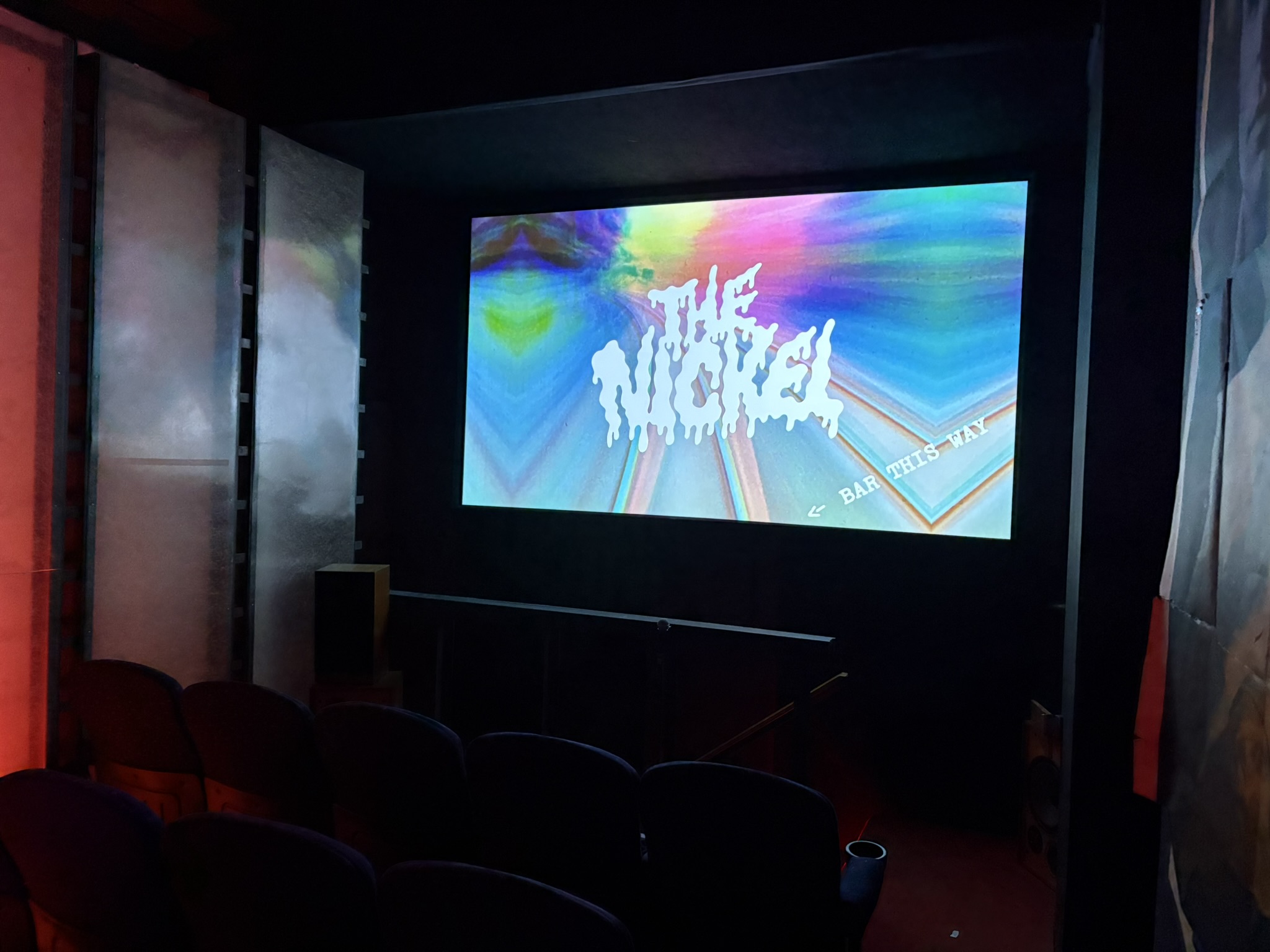
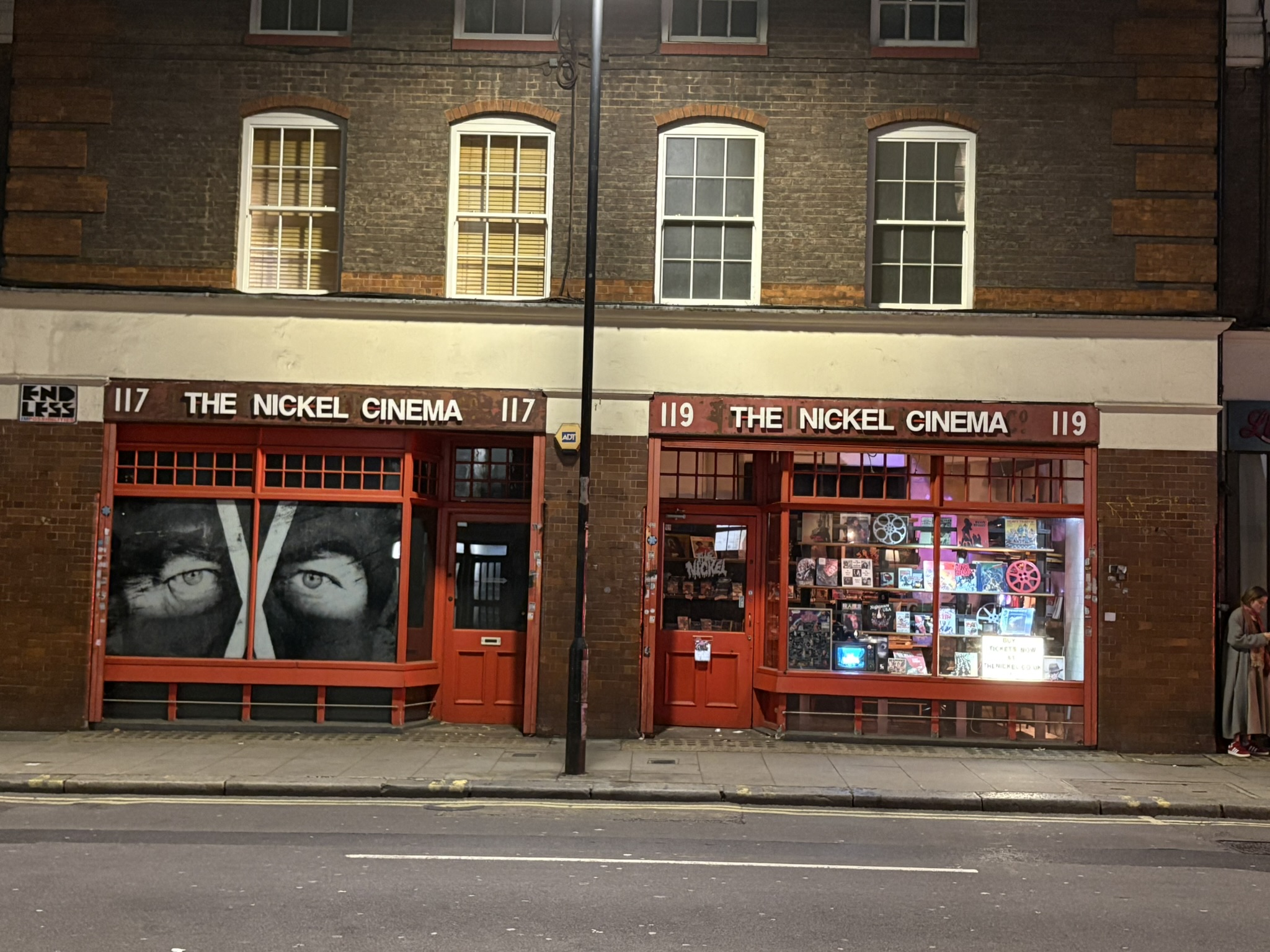
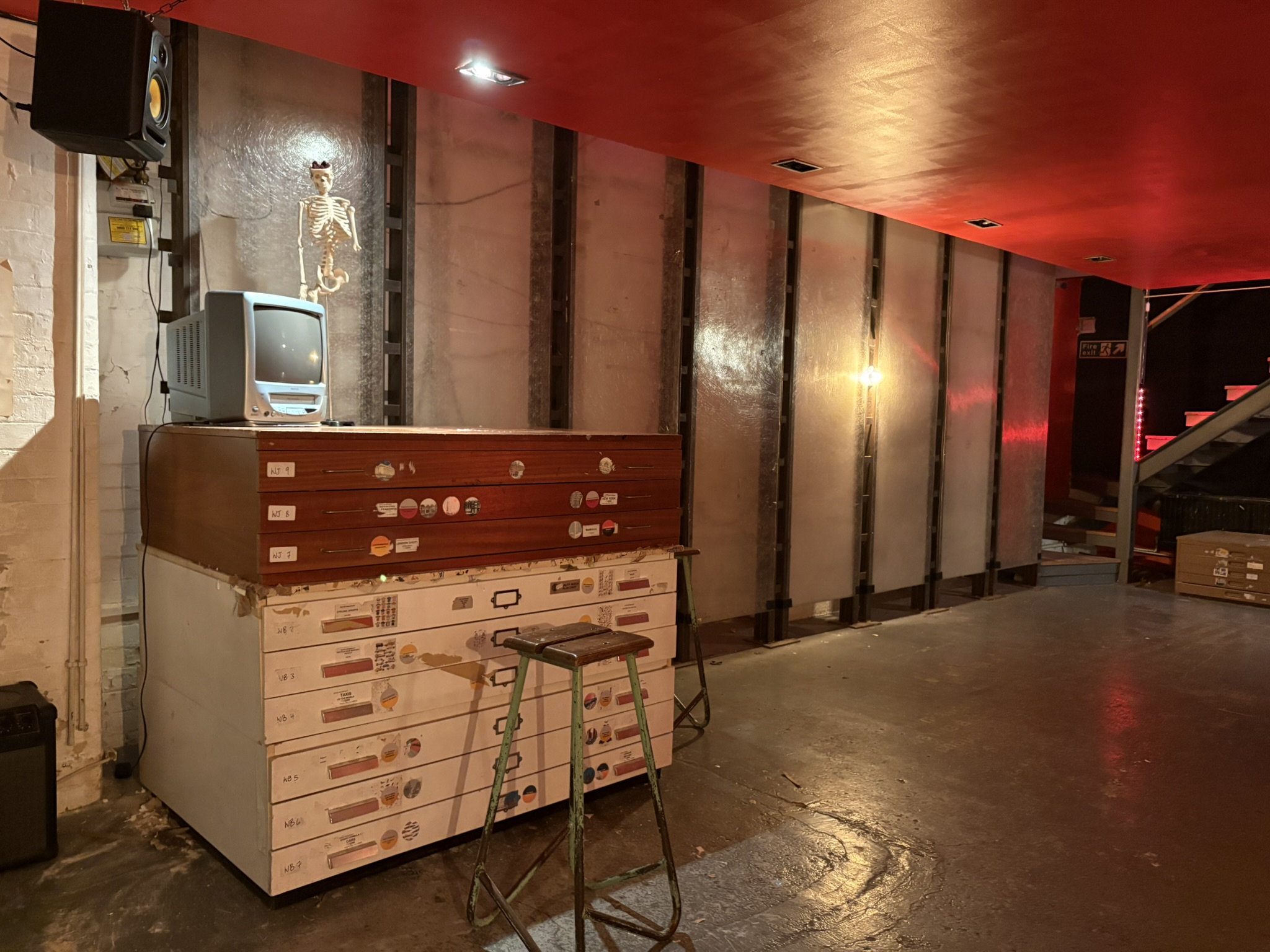
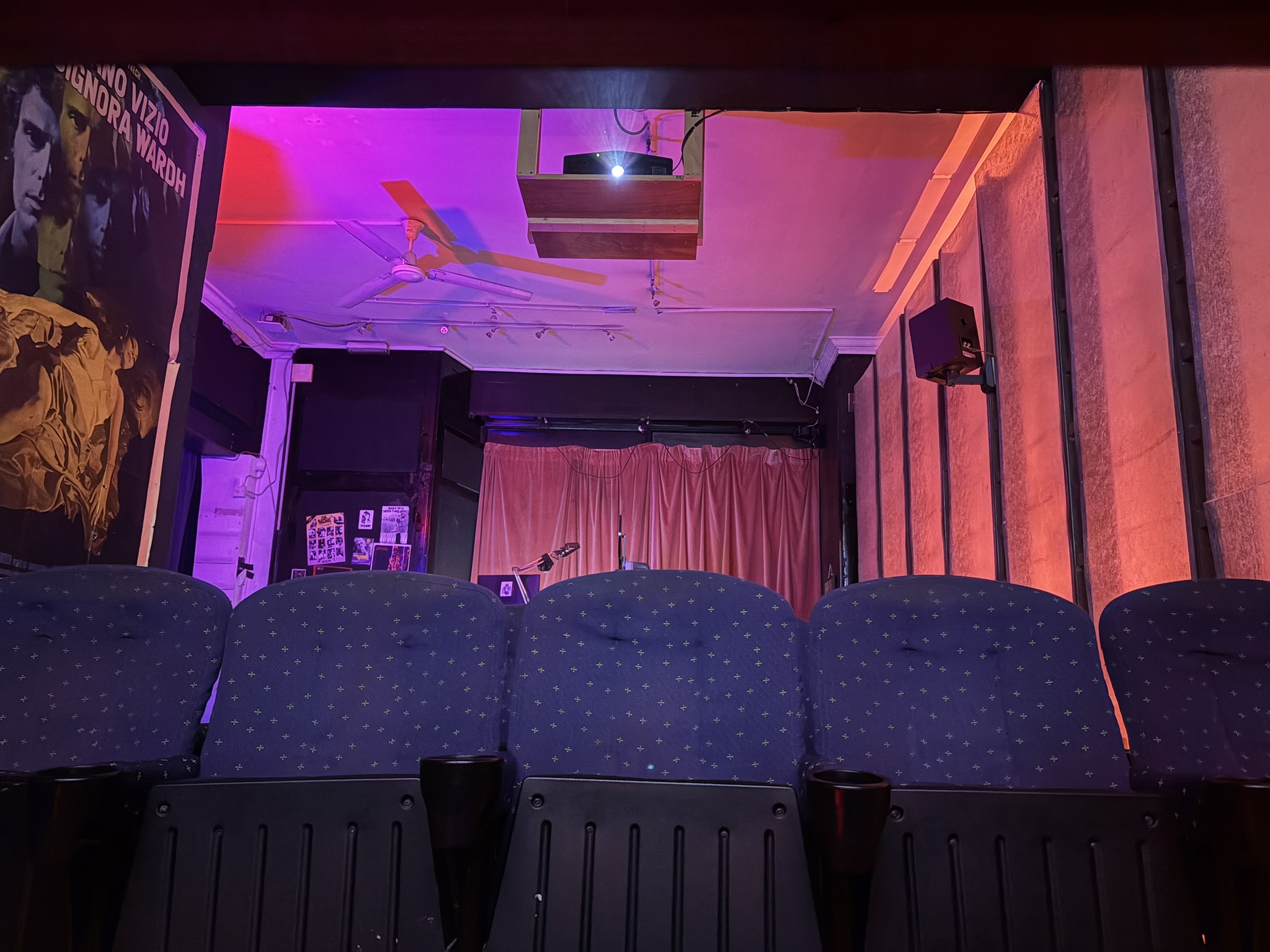
The Nickel Cinema in Clerkenwell feels like a hidden temple for London’s true film obsessives — a grindhouse gem tucked into the city’s polished heart. It’s the kind of place where the air hums with cigarette ghosts and celluloid dreams, where the screen flickers with everything from outlaw art films to midnight slashers and sleazy euro-thrillers. The décor has that lived-in, clandestine vibe — red velvet worn thin, neon bleeding through the dark, and an underground bar serving the kind of cocktails that taste like trouble.
It’s not just a cinema — it’s a refuge for the subversive, the cultish, the weird and the wonderful. You’ll find Anger next to Fassbinder, Fulci, Lynch, Jodorowsky, Korine, Ferrara, Argento, Waters, Kern, Miike, Ferrara, Korine Noe, Cohen, Breillat, Refn and many more bleeding into audiences who actually cheer when the projector rattles. The Nickel doesn’t chase trends; it worships the offbeat, the forgotten, and the dangerous. While feeling still quite new, the place somehow still feels gloriously dirty — and absolutely right up your alley. If not there is a strip club next door if that kind of business takes your fancy.
Last month I watched Rick Alverson’s Entertainment (2015) at The Nickel Cinema.
Entertainment is like watching the American dream rot in real time — a hypnotic, desolate odyssey through the dust and despair of the open road. Gregg Turkington is excellent as he plays “The Comedian,” a hollowed-out version of his Neil Hamburger persona, trudging through a series of soul-scorching stand-up gigs in half-empty bars, bowling alleys, and desert motels. Each performance is a small act of self-immolation — jokes that fall flat, laughter that curdles, a man dissolving behind the microphone as his identity blurs into the toxic sludge of showbiz delusion.
Director Rick Alverson shoots it all with a slow, clinical beauty — wide, frozen frames that turn America’s forgotten corners into alien landscapes. “The Comedian” drifts from neon-soaked diners to sulfurous desert plains, to prisons, to dead Western towns. Further, it contains some incredible locations including an unforgettable sequence at an aircraft graveyard — rows of dead machines basking in the sun, like monuments to ambition and decay. While low in budget the film makes use of such stunning locales, plus impactful acting interludes from John C. Reilly, Michael Cera and Tye Sheridan.
The film is not a comedy, not really — more anti-comedy or like an autopsy of one. Entertainment (2015) is a brutal, mesmeric study of loneliness, alienation, and the sick joke at the heart of performance itself. It’s the road movie as existential purgatory — unbearably awkward, strangely poetic, and utterly unforgettable. It doesn’t so much as have a beginning, middle and end, but a series of events which we are dropped into and experience until the credits suddenly roll. I like to ponder “The Comedian” is still out there, living and dying, on and off stage.
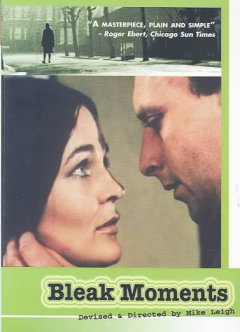
Written by Mike Leigh – Based on 1970 stage play by Mike Leigh
Produced by Leslie Blair
Cast: Anne Raitt, Sarah Stephenson, Eric Allan, Joolia Cappleman, Mike Bradwell, Donald Sumpter etc.
Cinematography by Bahram Manocheri
Camera Assistant: Roger Pratt
Edited by Leslie Blair
One of the quiet yet profound joys of cultural life is finding a creative or sporting figure—or team—whose journey you follow from an early age, growing alongside their work as it evolves. Whether it’s the cinematic brilliance of the Coen Brothers or Mike Leigh, the ever-shifting energy of Primal Scream, or the lifelong, often agonising commitment to Tottenham Hotspur FC, these long-term relationships offer a deep sense of continuity. They become personal landmarks in our emotional and cultural landscapes, threading through decades of change and grounding us with shared history, joy, and—especially in Spurs’ case—a touch of heartache.
I was born just a year before Mike Leigh’sBleak Moments debuted in 1971, and it became a defining cultural touchstone for me. First encountering it in the early 1980’s, I was captivated by its raw honesty and quiet power—a film I returned to again and again on that solid-format VHS tape over the years. It marked the beginning of a lifelong relationship with Leigh’s work, a body of cinema that has shaped and shadowed my own personal and cultural journey. That connection endures to this day, most recently renewed with his 2025 release, Hard Truths—a testament to a career and vision that continue to evolve with undiminished integrity.
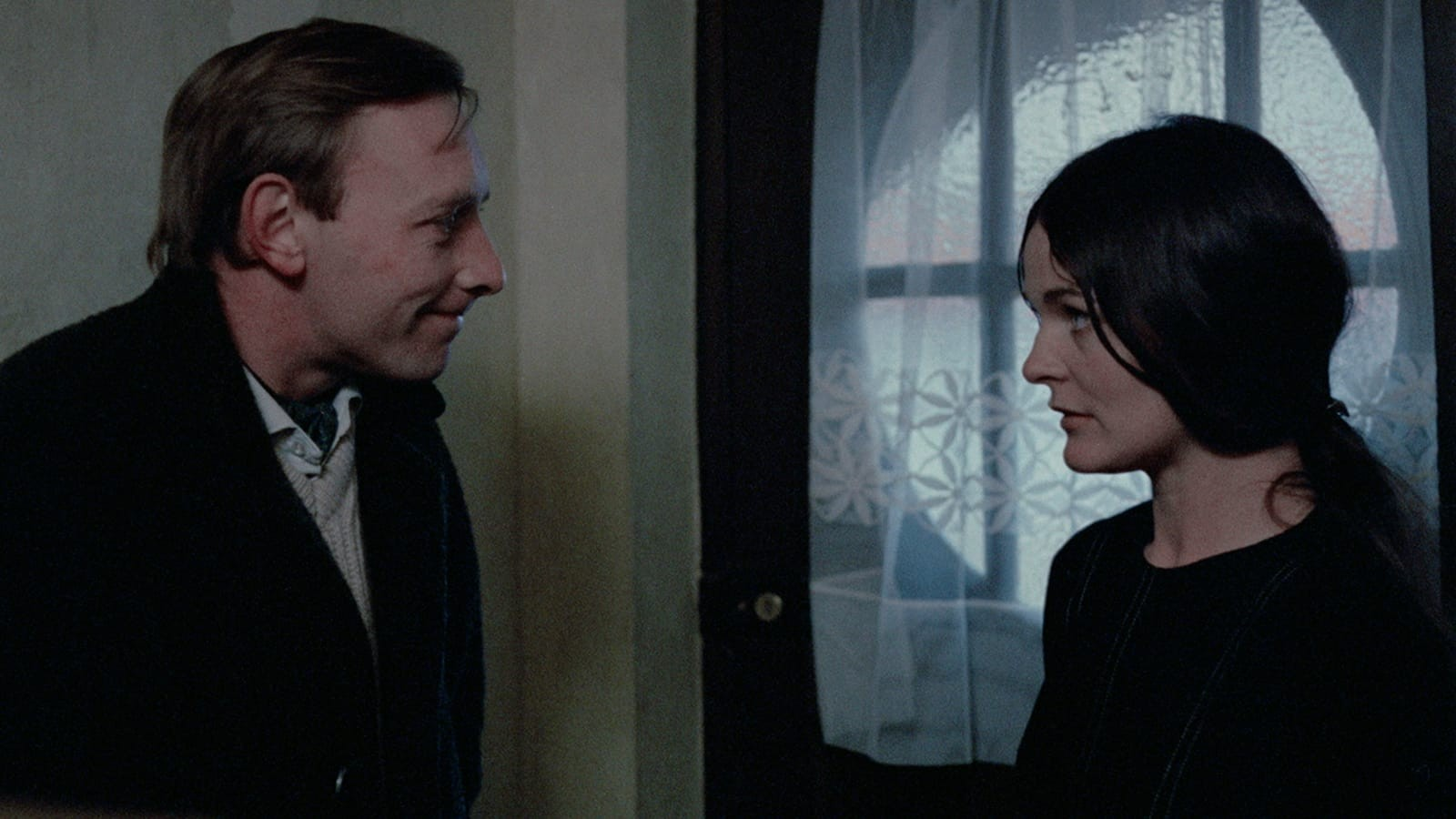
Bleak Moments centres on Sylvia (Anne Raitt), a lonely, introspective young woman navigating the quiet desolation of her suburban life while caring for her mentally challenged sister, Hilda (Sarah Stephenson). Trapped between duty and desire, Sylvia reaches tentatively toward human connection—most notably with a shy schoolteacher—yet every encounter is marked by awkward silences and emotional hesitations. Mike Leigh crafts a delicate, unflinching portrait of isolation and unmet longing, where the most powerful moments are found in what remains unsaid. Indeed, I would say it would have a powerful influence on awkward cinema or television such as Gervais and Merchant’s, seminal show The Office.
I hadn’t seen the film for twenty years and in a packed Prince Charles Cinema, what struck me was how Bleak Moments, while raw and unvarnished in style, unfolds with a beautifully episodic structure that gently accumulates emotional weight. Each scene offers a quiet vignette—moments of everyday awkwardness, tentative exchanges, and domestic stillness—that together create a deeply human portrait of loneliness and restraint. Despite its sombre tone, the film is laced with dry, observational humour and a deep sense of pathos, revealing the absurdity and ache of unspoken lives.
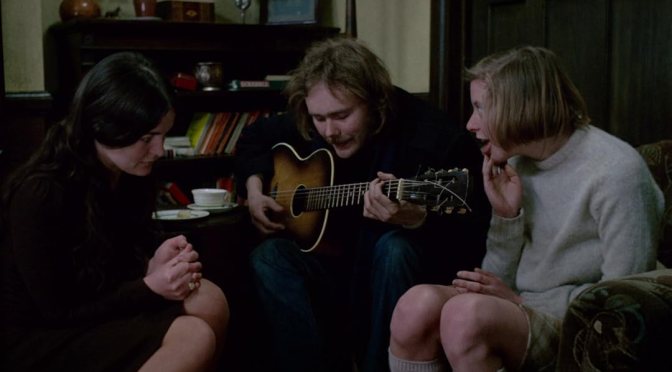
Mike Bradwell’s Norman and his dryly hilarious songs, and the most awkward of “romantic” dinner scenes in the Chinese restaurant just stood out to me as deeply funny. Raitt’s performance too is a masterclass of comedic understatement. Overall, these qualities—emotional nuance, character-driven storytelling, and a commitment to realism—would become defining hallmarks of Mike Leigh’s oeuvre, already fully formed in this striking debut. Finally, it was great to see and hear from Leigh, now in his eighties, answering some great questions with sharp wit and batting away some stupid ones too with his usual intelligence and droll honesty. Leigh remains a hero in my life’s cultural journey.
Produced by Emerald Fennell, Josey McNamara and Margot Robbie
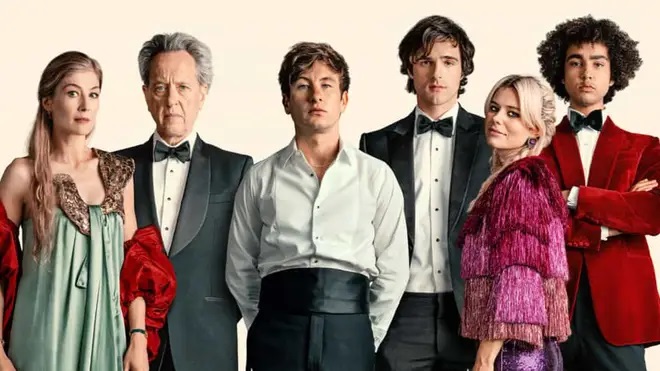
Cast: Barry Keoghan, Jacob Elordi, Rosamund Pike, Richard E. Grant, Alison Oliver, Archie Madekwe, Carey Mulligan, Paul Rhys, etc.
Cinematography by Linus Sandgren
*** MAY CONTAIN SPOILERS ***
As the awards garnered upon Emerald Fennell’s brilliant Promising Young Woman (2020) will testify, she is clearly a major talent. Fennell has also acted in TV shows such as Call the Midwife and The Crown, as well as writing and producing the second series of Killing Eve. Not only is Fennell an excellent actress, writer, director and producer, but is also now an Oscar and BAFTA winner. Thus, Fennell’s “difficult second film” arrives in the guise of the pitch black comedy,Saltburn (2023). Although to describe this hilarious, bleak, sexy, and often twisted exploration of the British class system as such evidently tests the very definition of comedy.
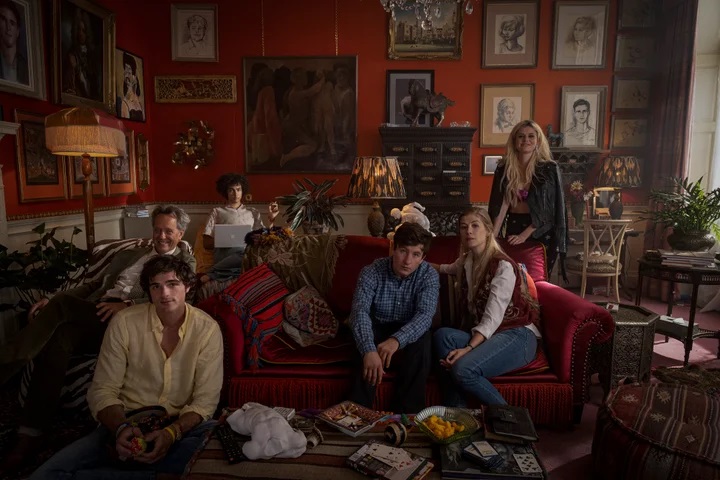
Saltburn (2023) is set in 2006. Oliver Quick (Barry Keoghan) attends Oxford University as a naive fresher with an inferiority complex and desire for company. While he is incredibly intelligent, coming from a lower class background places bookish Oliver as a very small fish in big water. Especially when compared to the so-called Oxford elite including handsome and wealthy, Felix Catton (Jacob Elordi) and his cousin, the handsome and not-as-wealthy, Farleigh Start (Archie Madekwe). While Farleigh is suspicious of Oliver, Jacob soon befriends him and takes the Northerner under his wing. The two connect and form an “odd couple” bromance, with Felix even going so far as to invite Oliver to his stately home, Saltburn, for the summer. There we meet the rest of Felix’s family including his flaky sister, Venetia (Alison Oliver), eccentric father, Sir James (Richard E. Grant) and effervescent mother, Lady Elspeth (Rosamund Pike).
After building Oliver and Felix’s characters carefully during their time at Oxford, Fennell’s savage and satirical screenplay gathers pace in the second act at Saltburn. Here Oliver tries to fit in and ingratiate himself into the Catton family, but it soon becomes clear that however friendly they may be, he will only ever be an outsider to them. Simultaneously, Farleigh sees Oliver as a rival for the Cattons’ emotional and financial affections and the two begin a retaliatory personal war amidst the balmy summer days, breakfasts, dinner parties and social gatherings. Oliver’s main journey is to connect as much with Felix as possible, so much so his passion veers toward obsession. But Felix is a roaming spirit and a hedonist and does not quite requite Oliver’s feelings. Yet, Felix does show compassion for Oliver, as illustrated when he drives him on a mercy mission to visit Oliver’s family. This is where the story takes an intriguing and ever deadly turn.
I cannot recommend Saltburn (2023) enough for its fantastically witty script, devastatingly brilliant cast and some quite disgustingly explicit, but contextually justifiable, character moments and scenes. Fennell takes the setting and structure of Evelyn Waugh’s Brideshead Revisited and turns it upside down, spinning a devious tale of infatuation, love, privilege and social climbing. Through the character Oliver Quick, and I really don’t want to give anything away, there is a powerful and jaw-dropping character arc of upward mobility. Rosamund Pike’s and Keoghan’s performances are both amazing and award-worthy. While the final act twists certainly do shock and surprise they arguably are rushed when compared with the more effective pacing of the opening and middle acts. Moreover, I am also unsure why the exquisite cinematography and stunning locations were presented in the 4:3 (1:33:1) aspect ratio. Why squeeze in Linus Sandgren’s light and framing and not expand them to the widescreen format?
Ultimately, Emerald Fennell proves herself an important voice in British cinema. Unafraid to test the boundaries of taste, genre, and audience expectations, she has crafted one of the most consistently challenging films of the year with Saltburn (2023). One could easily describe the themes presented here as a critique of the upper classes and how the uber-rich are bad people to be brought down to their knees. However, Fennell’s script is not that simplistic. It cleverly careers between love/hate for the characters and irony-bombing the class system, before becoming a damning indictment on the darkest flaws of humanity. Lest one forget the indelible one-liners throughout and THAT final dance sequence, which are both to die for!
Written by: Wim Wenders, Peter Handke, Richard Reitinger
Produced by: Wim Wenders, Anatole Dauman
Cast: Bruno Ganz, Solveig Dommartin, Otto Sander, Curt Bois, Peter Falk, Nick Cave, etc.
Cinematography: Henri Alekan
*** MAY CONTAIN SPOILERS ***
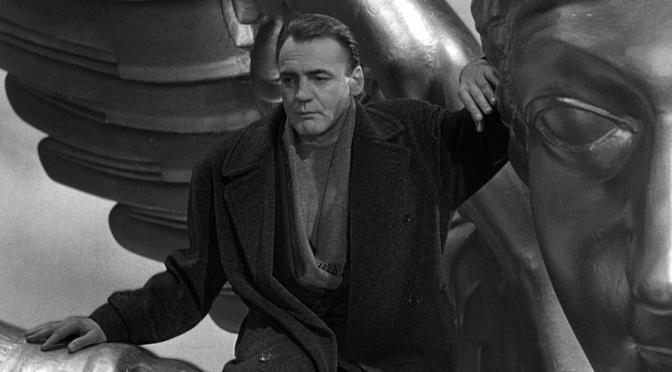
I hadn’t seen Wim Wenders cinematic masterpiece,Wings of Desire (1987), for many years. Probably thirty-three years. I’m glad I waited so long because I think I am mature enough now to appreciate the poetry of the filmmaking style and the soulful gravity of the characters and themes on display.
I am of the belief that cinema is a collaborative craft in general. Yet, on fleeting occasions a film will be released that transcends the craft of the medium and become art. Wings of Desire (1987) is such a film. Moreover, while I am not a religious person watching Wings of Desire (1987) is as close to experiencing a spiritual filmic happening as I could have. It truly is a thing of transcendent beauty concerned as it is with the afterlife, the soul, humanity, angels, life, love, death and rebirth.
Angels walk amongst the living in a Berlin separated by the wall. Voices reveal their inner most thoughts as said Angels listen, watch, witness and gather human experience, thoughts and emotions. The Angels led by Damiel (Bruno Ganz) and Cassiel (Otto Sander) inhabit Berlin aiming to assemble, preserve and testify reality. In a stunningly beautiful opening sequence the gliding camerawork, chiming harps, poetic voiceovers and sublime photography introduces both a majestic world and compelling characterisations. The monochrome film sets a moody glow illuminating and beautifying the urban locales. If you didn’t know, the black & white sequences were shot through a filter made from a stocking that belonged to cinematographer Henri Alekan’s grandmother.
Wim Wenders directs Wings of Desire (1987) with an assured confidence throughout. Every stylistic and formal choice is driven by the characters’ hearts and an imaginative vision of both reality and the afterlife. It is incredible that Wenders and his production team did not have a traditional script when filming began. Thus, the poetic feel of the film derives from a series of experimental concepts and improvisatory creative choices. Having said that, there is a strong narrative spine amidst the seemingly loose narrative and episodic bones. The anchor amidst these hypnotic vignettes is Damiel’s journey of falling in love, ceasing to be immortal and becoming human.
As Damiel experiences the pain of existing outside human life, Bruno Ganz’s performance is heartbreakingly moving. Damiel also finds love too for Solveig Dammartin’s circus artist. His romantic longing and empathy for her and humanity overall is unforgettable. I mean this celestial and immortal being desires the opportunity to feel, taste and love. There is also humour amidst the pathos too, with a supporting story that follows the actor, Peter Falk, working on a film in Berlin. His brilliant scenes provide a quirky counterpoint to Damiel’s celestial crisis and fledgling romance. Indeed, Peter Falk called his role in Wings of Desire (1987) “the craziest thing I was ever offered”. When Wenders told him his part had not been developed yet, Falk responded, “I’ve worked that way with John Cassavetes. I prefer working without a script.”
Wings of Desire (1987) is deservedly acclaimed as one of the best films ever made. I couldn’t agree more, such is its cinematic power and beauty. It combines both visual, aural and literary styles almost to perfection. Thematically it is just as impressive. While it is a universal story about life, death, love and sacrifice, the fact it is set in Berlin adds an incredible gravitas. The politics and separation caused by the Cold War course through the veins of the film like ice. Nevertheless, Wim Wenders and his creative team wholly reject the gloom of oppression, choosing hope, life and love over said deathly wall.*
Mark: 10 out of 11
(*Note: Interestingly, filming the actual Berlin Wall was prohibited, so a replica of the wall twice had to be built close to the original. The first fake wall warped in the rain because the contractor cheated the producers and built it from wood.)







 The Cinema Fix presents