Movie stars are usually the Kings and Queens of a film! They propel the narrative and guarantee bums on seats when a film opens. They also create expectation and word of mouth buzz thus studios have invested heavily over the decades in icons such as: Al Pacino, Harrison Ford, Clint Eastwood, George Clooney, Julia Roberts, Tom Cruise, Arnold Schwarzenegger, Marilyn Monroe, Meryl Streep, Sylvester Stallone, James Cagney, Mel Gibson to name but a few.
I love movie star driven cinema, however, I’m also a big fan of the ensemble casts seen in genre films such as: comic book epics, crime thrillers, war films and Westerns. What an ensemble cast offers is a diverse set of characters and actors bouncing off one another to powerful effect. Most recently the mountain disaster film Everest (2015) had fine actors including: Jake Gyllenhaal, Jason Clarke, Michael Kelly, Emily Watson, Josh Brolin, John Hawkes and more. Thus, just for the hell of it I’ve picked out some of my favourite films which contained not just one big star but lots of fine actors who all combined to make a fantastic movie experience.
12 ANGRY MEN (1957)
Bona fide classic movie adapted from the TV play by Reginald Rose and directed by the legendary filmmaker Sidney Lumet. The claustrophobic nature of a jury arguing over a murder case is brought to the boil by a superlative Henry Fonda and sterling character actors such as: Jack Klugman, Lee J. Cobb, Martin Balsam and Robert Webber. It’s a real festival of acting full of sweat, anger, conscience, guilt and doubt.
AVENGERS ASSEMBLE (2012)
Joss Whedon’s Marvel behemoth broke all kinds of box office records across the world! It’s a humdinger of a movie with a cracking cast that included: Robert Downey Jnr, Scarlett Johansson, Mark Ruffalo, Jeremy Renner, Samuel L. Jackson, Chris Evans, Chris Hemsworth, Tom Hiddleston and many more! In fact, I’m surprised the set didn’t collapse under the weight of all the egos in front of camera.
GRAND BUDAPEST HOTEL (2014)
It’s cameo cast central in Wes Anderson’s fast-paced eccentric comedy with Ralph Fiennes leading the line-up with a terrific central performance. Also, tagging along for the quirky and colourful ride are such acting luminaries as: F. Murray Abraham, Willem Defoe, Tilda Swinton, Jeff Goldblum, Bill Murray, Jude Law, Edward Norton, Mathieu Amalric, Adrien Brody, Saoirse Ronan, Jason Schwartzman, Tom Wilkinson and Owen Wilson. Blink and you’ll probably miss some of them!
INCEPTION (2010)
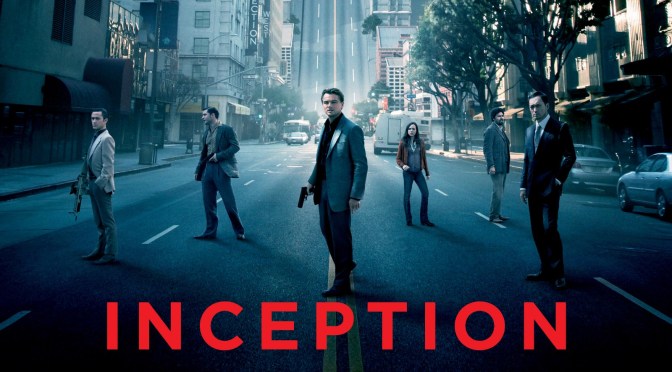
Christopher Nolan’s mind-bending heist thriller features a dream cast. Or does it! Yes – it does! It’s a Hollywood pot-pourri of movie stars such as Leonard DiCaprio, Oscar winner Marion Cotillard, star-in-the-making Tom Hardy, veteran character actors like Tom Berenger and Michael Caine and feisty starlet Ellen Page.
LA CONFIDENTIAL (1997)
While the careers of Russell Crowe, Guy Pearce and Kevin Spacey have gone up and down in various measures recently this brilliant crime film found them on the rise up the Hollywood ladder. Here they play a trio of very different detectives investigating movie lookalikes, murder and police corruption in Los Angeles. Throw in the likes of Kim Basinger, James Cromwell and Danny Devito and you have a cast to literally die for.
THE MAGNIFICENT SEVEN (1960)
The cast of this classic Seven Samurai remake is remarkable as in, aside from Yul Brynner, they were all pretty much unknown at time of filming. So, kudos to the casting team who recruited such a charismatic troupe including: Steve McQueen, Charles Bronson and James Coburn; who would all become stars in their own right.
Not a large ensemble cast but a brilliant one nonetheless. In Mike Leigh’s quintessentially British council estate film we get three young British stars in Gary Oldman, Tim Roth and Phil Daniels plus Alfred Molina and Pam Ferris too. Each character drowns in depression, awash in concrete, unemployment and the stench of piss-stinking lifts and cigarette-stained wallpaper. This is a sad, funny, low-budget 1980s kitchen-sink classic.
THE OUTSIDERS (1983)
Similar to The Magnificent Seven this is a “before they were famous deal” with an incredible cast who would come to known in the 1980s as The Brat Pack. C. Thomas Howell, Rob Lowe, Emilio Estevez, Matt Dillon, Tom Cruise, Patrick Swayze, Ralph Macchio, and Diane Lane all starred in this tragic rites of passage story about teenage gangs and friendship. All the actors when on to have decent careers; but what ever happened to that Tom Cruise guy though?!?
PULP FICTION (1994)
Tarantino, of course, is not only about the cracking dialogue and violence and homages to other movie styles and genre but he also knows how to cast a movie. He rarely has a big film star at the helm of his films but rather relies on a mixture of known stars in supporting roles, character actors, plus fading or B-movie journeymen. Often, actors are cast on ability and suitability rather than saleability such as Pam Grier and Christophe Waltz. His keen casting eye gave us a wonderful Samuel L. Jackson – up until then limited to mainly supporting roles – and also relaunched John Travolta’s flagging career in the imperious ensemble crime film Pulp Fiction.
SHORT CUTS (1993)
Robert Altman is the “King” of the ensemble drama as demonstrated with Nashville (1975), Mash (1970 and The Player (1993). His films often poked into the American underbelly psychoanalysing the mores of the various classes. His work would have a massive influence on Paul Thomas Anderson and actors clearly considered it a badge of honour to act for him. Short Cuts was adapted from Raymond Carver’s work and the cast included: Julianne Moore, Fred Ward, Anne Archer, Jennifer Jason Leigh, Robert Downey, Jr., Madeleine Stowe, Chris Penn, Jack Lemmon, Frances McDormand, Andie MacDowell, Lily Tomlin and many more.
TINKER, TAILOR, SOLDIER, SPY (2011)
This spy thriller contains a “Who’s-Who” of British acting talent. We have Commissioner Gordon, Bane, Sherlock Holmes, King George VI, Doctor Who, Truman Capote and even Trigger from Only Fools and Horses acting in between the shadows of murky British Intelligence espionage. It’s a tricky watch as the director goes for atmosphere over exposition but the sheer style and quality of the performances ensure espionage has never been so intriguing.
Directors and actors often hog the limelight and get the kudos for the movies they made but how about giving the screenwriter some credit too. Don’t forget some poor writer slaved over these words and probably didn’t get the praise they deserved. Thus, here are some more funny, dramatic and sad dialogues scenes I have picked out for mine and your amusement. Hail the writer!
**OF COURSE THERE’S SPOILERS!**
BAD SANTA (2003) – “YOU NEED MANY YEARS OF THERAPY”
This is the greatest Christmas film ever and one of the best comedies EVER! So much quotable dialogue and this scene is up there with the best of them! I love the dark humour here which basically finds low-level scumbag Billy Bob Thornton believing he’s “turned a corner” spiritually AFTER beating some kids up. Priceless!
BEAUTIFUL GIRLS – “IT’S NOT REAL!”
This is a brilliant monologue that cuts to the bone when it comes to the objectification of women in the Media and the false promises that are created for the male gaze. Rosie O’Donnell is pitch perfect delivering some cracking one-liners and a damning indictment of media representations and moronic men. Great dialogue from writer Scott Rosenberg!
THE BIG LEBOWSKI (1998) – “I’M SORRY – I WASN’T PAYING ATTENTION”
The Dude is the worst detective in the world and this makes him the funniest too. In his pursuit of Bunny Lebowski he ends up at the pornographer Jackie Trehorn’s abode. Drugged and dumped on the Law Enforcement Officers this scene is just too hilarious for words.
LA CONFIDENTIAL (1997) – “WHY’D YOU BECOME A COP?”
Sometimes the best dialogue scenes are the subtle ones which the writer has included and you think: “Mmmm… what was that all about?” In this superlative crime-noir-thriller THIS is one of those quiet incendiary scenes which explodes with a gripping payoff later in the movie.
NETWORK (1976) – “MAD AS HELL!”
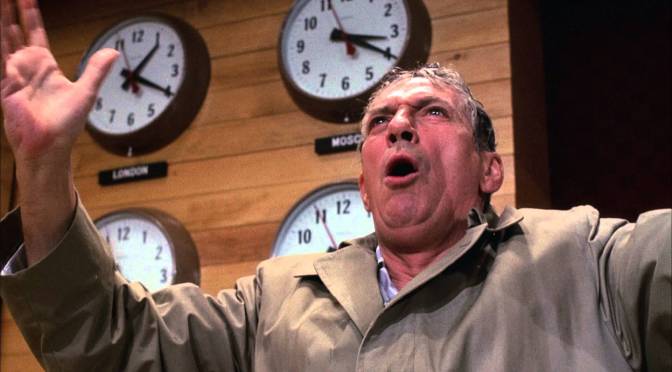
You go into work and you feel disillusioned with your lot. You ask yourself: “why are we here?” “What’s it all about?” “Why do bad things happen all the time?” “This WORLD sucks!!” And you get angry? You get mad as hell and the biggest problem there’s no solution! You just don’t know what to do! This cracking speech from Paddy Chayefsky sums that all up as Peter Finch scores an Oscar for a man-on-the-edge-who-just-cannot-take-anymore!!
NIL BY MOUTH (1997) – “YOU MUST REALLY HATE ME!”
This is a raw, gritty and heartfelt scene where Val rejects Ray and his violent ways via some incredible acting from Kathy Burke and Ray Winstone. I connected with this scene as Val’s humanity is wrought bare by the abuse she has suffered over the years and she just cannot take anymore! Gary Oldman wrote directed ONE film and THIS was it. Amazing!
ON THE WATERFRONT (1954) – “I COULDA BEEN A CONTENDER!”
Need I say more?! Just a heart-wrenching monologue from writer Budd Schulberg perfectly delivered by Brando with Rod Steiger providing great opposition in this legendary scene. This is a film about brotherhood and corruption and Terry and Charley’s relationship is a powerful microcosm of such themes. Unforgettable!
THE TERMINATOR (1984) – “IT ABSOLUTELY WILL NOT STOP – UNTIL YOU ARE DEAD!”
James Cameron’s incredible sci-fi-time-thriller-killer remains one of my favourite films ever! Aside from a star-making turn from Arnie, awesome action and mind-bending plot it manages to collapse a lot of complex exposition in a very economic fashion. It does so brilliantly when Kyle Reese gives the lowdown during a frenetic high-speed car chase. Indeed, his summary of the Terminator’s deadly intentions is just punchy as hell; raising the stakes for Sarah Connor right up to 11!
TRAINING DAY (2001) – “TELL ME A STORY!”
Dialogue establishes character and the dynamism between characters that will occur throughout the film. In this scene from the fantastic crime thriller Training Day, Hawke’s Hoyt is very nervy as he meets his boss, the arrogant Alonzo Harris, for the first time. The dialogue just zings from Washington’s mouth as he pulls Hoyt one way and then the other in a great scene which foreshadows the brilliant drama yet to come.
This is just A-grade dirty street talk that’s just vile and offensive but delivered with perfection by two great actors in Hopper and Walken. The gangsters are trying to track down their drugs that Clarence has and his father knows where he may be. Not only does Hopper’s character know where his son is he KNOWS he will die anyway whether he gives his son up, so he delivers one of the most disgusting insults he can think of. This is a brutal yet compelling scene from Tarantino that crackles with hard-boiled testosterone, gristle and sickening masculine evil.
On top of the Netflix and documentary purge I watched quite a few films this month. Thus, here for your consideration, are some little reviews with marks out of eleven!
***MAJOR SPOILERS**
A MOST WANTED MAN (2014) – NETFLIX
One of Philip Seymour Hoffman’s final films and a pretty decent espionage thriller set in Germany. Despite an excellent cast and decent atmosphere I didn’t care much for the characters and it fizzled out for me by the end. (Mark: 6 out of 11)
COBAIN: MONTAGE OF HECK (2014) – BLU RAY
This is a very moving, filmic scrapbook documentary about an absolute musical legend who alas suffered both from mental and physical pain hence why he took his own life. Not sure if it was deliberate but toward the end his Mother and Wife were lit in a very similar way and resembled each other. While it was kind of objective allowing the sounds, videos, photos, recordings, interviews, cuttings and text to tell the story there a subconscious attempt by the director to link these two individuals. I loved the animated stuff which visualized the monologues Cobain recorded during his short life. I highly recommended this to fans of the troubled rock-poet and of course his amazing music. (Mark: 8.5 out of 11)
CREEP (2014) – NETFLIX
Not the British horror film directed by Christopher Smith ten or so years ago but a found footage film about a videographer who answers an advert to film a diary of weirdo played by the disarmingly dangerous Mark Duplass. I hated this at the start but it grew on me and the subtle horror was very well done and the ending is great. (Mark: 6.5 out of 11)
ENEMY (2014) – SKY
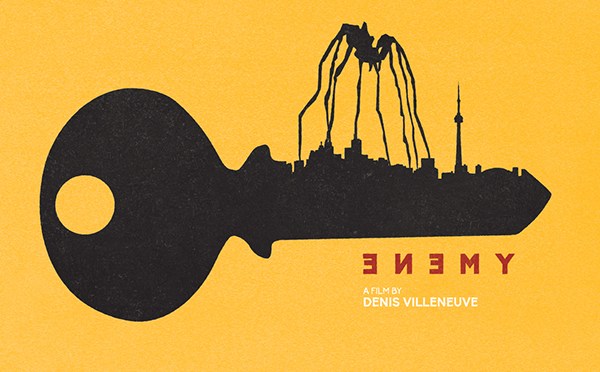
Doppelganger thriller Enemy is an enigmatic and weird treat full of fantastical images and brooding fear; featuring the ever brilliant Jake Gyllenhaal playing dual roles. His struggling actor and anxious teacher meet by chance and what follows is a mysterious game of cat and mouse. Both startling and unsettling from formidable genre director Denis Villeneuve. (Mark: 8.5 out of 11)
HECTOR AND THE SEARCH FOR HAPPINESS (2014) – NETFLIX
This is one of the worst-middle-class-first-world-problems-monstrosities-of-a-film I have ever seen. I like Simon Pegg but I switched this film off forty-five minutes in. Hector isn’t happy? No one’s happy, Hector! Happiness is an illusion, Hector! Do you have your health, Hector? Your girlfriend is Rosamund Pike, Hector? You have a home and food on the table, Hector? Count your blessings, Hector and piss off!! (Mark: 0 out of 11)
HYENA (2014) – NETFLIX
This is a sturdy and compelling British crime drama with a fantastic lead performance from Peter Ferdinando as a bent copper trying, yet failing, to stay ahead of the dangerous games he’s playing. It’s a brutal and nasty film; very reminiscent in style of Nicolas Winding Refn or Alan Clarke and is mostly gripping but slightly overlong. If you like your drama meaty, earthy and realistic then this is a movie for you. (Mark: 7 out of 11)
COCO CHANEL & IGOR STRAVINSKY (2009)
This was a sumptuous and stylish film with one of my favourite actors Mads Mikkelsen portraying composer Igor Stravinsky. I have to admit that I found it pretty boring though in terms of the drama and while it looked great I just did not care about the lives of rich and spoilt artists in 1920s France. (Mark: 5.5 out of 11)
THE MAN FROM UNCLE (2015) – CINEMA
Amidst the spy genre pastiche, muscular bromance and triple crosses there’s some cinematic gold enjoyment to be had in watching The Man From Uncle. Guy Ritchie is a very reliable genre director and during some of the set-pieces I actually sensed there’s a proper auteur trying to get out. While I liked Skyfall (2012) and look forward to Spectre (2015) this was reminiscent of the old Bond films from the 1960s as it makes espionage sexy again. Overall, this is an ultra-stylish spy eye candy with a cracking soundtrack. (Mark: 8 out of 11)
MAN WITH A MOVIE CAMERA (1920) – BFI CINEMA
Classic formalist documentary from Dziga Vertov is both an extravagant experiment in montage-making plus an intriguing look back at Soviet life post-Revolution. Dismissed as folly at the time of release it is now considered a masterwork, not only as a documentary, but as a film itself. It is humbling and intriguing viewing and makes you realise that the Soviet life is no different to ours as we witness births, marriages, deaths, work, rest and play. It’s a genuine historical and filmic masterpiece. (Mark: 10 out of 11)
MAZE RUNNER (2014) – SKY
This is a surprisingly entertaining addition to the recent raft of teenage-action-hero-in-dystopic-future-world-peril-films. I enjoyed the existential mystery set up in the premise as our hero Thomas (Dylan O’Brien) is thrown into a Lord of The Flies land inhabited only by young men, trapped by a massive maze. Plot-wise and action it’s very strong, however, the theme of humanity-accepting-one’s-fate-versus-escaping-while-testing-authority gave the story a richness making it very watchable indeed. (Mark: 7.5 out of 11)
MISSION IMPOSSIBLE: ROGUE NATION (2015) – CINEMA
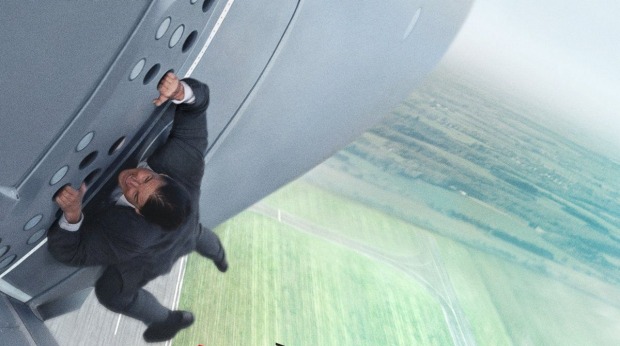
M: I5 was a blast! Tom Cruise and the IMF team up to their usual breathtaking pyrotechnics! Good to see Sean Harris get a prominent role as he’s a formidable character actor. Phillip Seymour Hoffman – from M:I3 – is easily the best baddie though. I just wish the trailers wouldn’t show virtually ALL the stunts especially HOW Tom did the “hang to the plane” thing. I don’t watch these films for the story – it’s the action. Please leave some for the film next time trailer people! Rebecca Ferguson kicks serious ass and the scene at the Opera is pure Bond and pure cinema of the highest quality. (Mark: 8 out of 11)
NO ONE LIVES (2014) – SKY
A stylish, yet empty exploitation serial-killer flick which would go straight to video if Blockbusters had any stores left. Luke Evans is a handsome actor looking for a decent role since finishing Fast and Furious 6 and The Hobbit trilogy but this isn’t it. The film itself is saved by some extravagant violence and bloodletting but as a story it’s hollow like (Mark: 3 out of 11)
SOUTHPAW (2015) – CINEMA
If you like films about boxing then you’ll love Southpaw: a brutal and quality action-melodrama with another fine performance by Jake Gyllenhaal. The story is very simplistic and structured around a riches-to-rags-to-redemption narrative but I found the soap operatics and bombastic direction a real adrenaline-pumped belt to the senses. Gyllenhaal is ripped, torn and lean like a prime piece of beef as life deals him body blow after blow. Can his on-the-ropes boxer bounce and make a come-back? While somewhat predictable I found Antoine Fuqua’s punchy movie a real knockout! (Mark: 8 out of 11)
STRAIGHT OUTTA COMPTON (2015) – CINEMA
This is a tremendous biopic of seminal hip-hop legends NWA, who came to the fore of world music in the late 1980s. Performances and direction are excellent as Ice Cube, Dr Dre, Eazy-E, DJ Yella and MC Wren – AKA NWA – exploded onto the scene like a bomb and delivered anger, power and beats that propelled them straight out of Compton and into the charts! They are a perfect example of sociological, political and cultural forces converging to create a superlative brand and the film perfectly captures the age, the music, the look and the camaraderie of being the group. The film illuminates the spirit of the hip-hop scene and the problems the group had with the law while dramatically portraying the bitter in-fighting over royalties which split the band apart. Goes without saying the soundtrack is brilliant too! (Mark: 8.5 out of 11)
THEY CAME TOGETHER (2014) – NETFLIX
This starred two of my favourite comedic actors in Paul Rudd and Amy Poehler and is a broad parody of romantic comedies with a very high joke-rate. He stars as a corporate confectionary executive and tries to take over her small independent sweet-hearted business and at first they hate each other but then… Yes, they have sex! Pitched somewhere between Naked Gun and Anchorman this is very, very silly but also an absolutely hilarious comedy. Short, sweet, ridiculous and as infectious as diabetes. Is diabetes infectious – oh, who cares! Just watch the movie! (Mark: 8.5 out of 11)
I have a confession to make. I am a love cheat. I love the cinema but, of late, I have been cheating on it with Television. I couldn’t help myself. TV used to be cinema’s bastard child but now it’s all grown up and wow, has it matured! Gone are the past memories of four channels with some programmes of high quality yet limited choice. Now we have four thousand channels to choose from and while much of it is light bum-fluffery there has been some great product, notably dramas such as: Game of Thrones, The Walking Dead, 24, The Sopranos, Hannibal, Boardwalk Empire, Breaking Bad, The Fall, Daredevil, Peaky Blinders, Doctor Who, True Detective, Band of Brothers and many more I have forgotten or just haven’t had time to watch. But never fear cinema I still love you.
The moment I purchase a cinema ticket, in fact even before I leave the front door knowing I am about to leave for the cinema I get the charge, the buzz and the anticipation of getting a movie fix. Because for me going to the cinema does what television cannot: it takes me out of my home. It takes me off the street. It takes me out of THIS world. It takes me to a dark secluded spot sat staring at a gigantic silver screen waiting for the moment the projectionist feeds celluloid through light, well digital files though a computer and then a lens or something; anyway, you get the picture. Then the movie starts and for the next few hours I’m transported to another world featuring: places, times, characters, sounds, images, events etc. that are beyond my imagination. And when the movie ends there’s a rush of excitement, a reaction to the cinematic assault on the senses. But, alas, the fix cannot last. Reality is soon knocking on my door.
Cinema offers a wide-screen visual delight. Indeed, when television first came into people’s homes film producers were frightened that this new-fangled ‘radio with pictures’ would steal away audiences so Hollywood made bigger, though not necessarily better, movies; epics such as: The Robe (1953), The TenCommandments (1956), Ben Hur (1959) and Cleopatra (1963). Obviously, the epics just keep coming notably in the raft of summer blockbusters which infest the screen. This year has been no different with films such as: Ant-Man (2015), Avengers: Age of Ultron (2015), Jurassic World (2015), Fast and Furious 7 (2015), Mission Impossible: Rogue Nation etc. delivering with spectacular monsters, crashes and stunts.
While such blockbusters may lack depth of character than many TV dramas it’s the spectacle I crave at the cinema. That moment where you go giddy because you haven’t breathed for a minute until all the air rushes from your mouth as one simultaneously pushes your jaw back shut. Good old TV cannot do this though. The television set traditionally occupies a foremost place in the ‘living room’; it’s small compared to the cinema screen and has kind of replaced the hearth that used to provide heat and light. The TV glows and is reminiscent of the old-fashioned campsite fire where families or scouts swap ghost stories while capturing the heat from the flames.
Cinema offer a short, sharp hit compared to TV. Often, a longer running drama series on TV will require a six, ten, thirteen or even longer week commitment. Of course, the introduction of streaming or binge-watching has hacked this idea down to size but movies are still economical and quicker-paced, affording little in the way of fat to the storytelling. Cinema characteristically adopts a tight narrative organised around a particular problem or disruption that is resolved at the denouement where some TV shows, while resolving some plots, will hook us in with shocks to keep us watching and sometimes this can be frustrating as the two-hour or so closure and resolution that cinema offers is very satisfying to me. One of my favourite films Jaws (1975) is a great case in point. Here a shark terrorizes a local community in the United States and the cause-effect narrative takes us through a series of conflicts involving: shark attacks, pursuit of the shark and ultimately the killing of the shark. Thus, film is able to offer a satisfying conclusion to a thrilling story. Ultimately, film offers catharsis and the endings of films such as: Fight Club (1999), Chinatown (1974), The Godfather (1970) and Planet of the Apes (1968) all build to unforgettable climaxes.
Yet, the major concern I have with committing to a new TV drama is the length of time required to get in AND out of the story. I think long and hard about such a commitment but with film one knows it’s not going to be as such. Indeed, one of the reasons I have not watched Mad Men yet is the amount of seasons ahead of me. I’ve been married and I know how much hard work it is. I just don’t feel ready to commit just yet to Don Draper and his “crew”. Plus, with TV shows designed with advertisers in mind adverts can get on the nerves when in the midst of the narrative although the set-top box and Netflix revolution has put that issue aside as has the DVD box-set. Despite this though Cinema is still the preferred mode of voyeuristic, narcissistic and vicarious pleasure though as you sit in a comfy seat eating over-priced confectionery and have a non-stop viewing experience with all adverts before the main presentation. Of course, most films do have multiple examples of product placement, especially Tom “Dorian Gray” Cruise’s M:I franchise but that’s subliminally secreted within the narrative and action and thus not an issue for me. Overall, TV’s episodic form lends itself perfectly to advertisers yet once the movie has started it remains a satisfying whole and is never interrupted with a word from the sponsor.
While I admit that TV stories are gaining more and more complexity notably in regard to depth of characterisation and emotional power they are intrinsically “talking heads” and dialogue lead. TV is still anchored by a lack of screen-size and scope. Rarely does the action on a TV show reach the heights of the cinema although in recent times 24 and Daredevil have featured some spectacular set-pieces and fight scenes. Moreover, Hannibal has to be the most exquisitely edited TV show I have ever seen. But is it better than the cinema? Boardwalk Empire showed flashes of narrative genius with its parallel storytelling from past and present but does it reach the stunning narrative expertise of say Memento (2000);the story of Leonard Shelby (Guy Pearce) – a man with no short-term memory – which presents the complex plot BACKWARDS! Moreover cinema, unlike TV, is also able to breach huge temporal and spatial differences through editing. Perhaps the most famous single cut in cinema history appears in Stanley Kubrick’s 2001: A Space Odyssey (1968). Opening with the “Dawn of man”, apelike hominids learn how to use tools. As the ape/man smashes down the bone he then launches it into the air. One cut later and the audience are thrown thousands of years into the future and thousands of miles into space. Such vision demonstrates the power of cinema and takes the breath away.
The arch edict screenwriters should follow when writing for the screen is one should: “Show don’t tell.” Dialogue is also a vital tool in the screenwriter’s box as filmmaker’s such as Quentin Tarantino and The Coen Brothers have demonstrated in movies such as: Reservoir Dogs (1991), Pulp Fiction (1994), The Big Lebowski (1997) and Fargo (1996). Nonetheless they have married quirky, stylish dialogue with strong visual flair. Indeed, the screenwriter must be aware that cinema represents a marriage of sound and vision. While TV traditionally favours dialogue to further the story and action, cinema uses a whole host of devices to tell the story including: cuts, dissolves, wipes, flash-cuts, voice-over, overlapping dialogue, close-ups, point-of-view shots, shot-reverse-shot, Steadicam shots, crane shots, moving shots, dolly shots, wide-screen panoramic views, black-and-white film, colour film, and use of diegetic and non-diegetic music. Indeed, for me there is nothing more cinematic than great music being placed over fantastic images. Filmmakers such as Tarantino, the Coens, and Martin Scorcese are all aware of this. Tarantino uses non-diegetic music expertly in the infamous ear-slicing scene in Reservoir Dogs (1991).
And so I conclude with a mild apology to cinema. I have been seeing a lot of Television these days I DO STILL LOVE YOU! I love your form, style and content and the way they combine to move me emotionally and physically in a way television cannot. Movies will always reach the parts Television cannot. Something magical occurs when watching a film. A whole new world develops before my very eyes; heroes and heroines are thrown into adventure and conflict with events changing their lives forever. Be it falling in love, falling out of love, fighting for their lives or the lives of the ones they love, struggling against the odds to achieve their greatest desires or, tragically failing at the last obstacle. That for me is cinema. It’s an escape from reality the moment one leaves the house. Saying goodbye to the box, not only knowing it will be there when one comes back home but also knowing that it will rarely change my life. While its heat may keep the living room warm at night it cannot compete with film. I have seen the light. Je t’aime cinema!
The last month or so I have been out and about doing bits and pieces from a cultural perspective and jolly good fun was had by all. Here are some of the highlights.
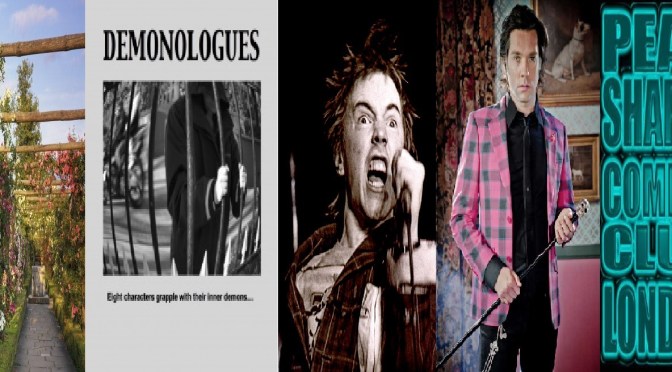
DEMONOLOGUES – COURTYARD THEATRE
Having tasted the greasepaint of such theatrical productions, Oppenheimer and View From The Bridge earlier this year I took in a lower-budget- off-off-Fringe production written and directed by Wendy Metcalf. It was performed by a talented cast of the Boxroom Theatre Company including such thespians as: Rosie Angeni, Tyrone Atkins, Asif Channa, Enid Gayle, Kim White, Mike Stewart and Rob Widdicombe.
Structured within seven magnificent monologues the piece was delivered with palpable conviction by each performer as they embodied the various characters with impressive commitment. One hears of horror stories of indulgent plays which go on for what seems like days but this theatre production rattled by with energy, humour and pathos in equal measure. I would have loved each monologue to somehow be linked in a narrative sense; however, thematically it was very powerful as a series of outsiders contend with matters relating to: death, obsession, performance, existential crisis, age, abuse, homelessness and rather peculiarly boxes. Overall, the writer conjures up some memorable dialogue and characters as the piece delivers moments of humanity which stay with you long after the stage lights have dimmed.
ROTTEN: NO IRISH, NO BLACKS, NO DOGS (1994) – JOHN LYDON (with KEITH & KENT ZIMMERMAN)
John Lydon AKA Johnny Rotten WAS and still IS one of my heroes. The working class lad from the deepest darkest London would emerge from the crumbling council houses of Finsbury Park and wreak havoc on the “Establishment” and sacred cows of Western Capitalism; firing a rocket into the cultural vacuum of the late 70s music industry. This book charts — in his own and other individuals’ words — Lydon’s progress from sick young child to enfant terrible as he became the face and guts of the movement that would become known as PUNK! No Irish, No Blacks, No Dogs is structured in linear fashion via a set of interview transcripts as Lydon and the likes of Paul Cook, Steve Jones, Billy Idol, Chrissie Hynde, Richard Branson and many more give their perspectives of the lies and times of the era.
Lydon doesn’t mince his words in attacking those — notably The Sex Pistols manager Malcolm Mclaren — who he feels done him wrong and that anger propels the book. What struck me was the fragmented set of events and shattered points-of-view which spat and crackled at the time; making one realise that punk rock was not a movement of harmony. Instead it was a splintered faction of ideas, styles, influences that exploded from the depressing financial and social climate of the United Kingdom. There was no fixed plan or collective movement or love or heroes but a detonation of unrest and youth in revolt and above all else a spark; and the chief spark being Lydon. You may not agree or even like the warts-and-all personality he presents in the book but one must respect Lydon for his vicious honesty. He’s forever the angry iconoclast and one of the great heroes/anti-heroes of British culture; at times infuriating but above-all-else bloody entertaining.
This comedy night mixing pros, semi-pros, newcomers and general nutters has been going for donkey’s years and proclaims itself to be the “London’s 2nd worst comedy club”! Despite this P-S has always been one of my favourite and dreaded places to perform comedy. I have been funny there and also died a few comedy deaths as well but that was part of the fun too. Run by the legendary comedy duo Brian & Krystal, Antony Miller and a whole host of comedians down the years it came to an end at its current home: The Fitzroy Tavern in Charlotte Street. I went along to say goodbye and thank the club for supporting my comedy ramblings over the years. Safe to say it was all done it the best possible taste and it was a brilliant send-off. There have been some desperately empty times in that room but this was not one of them as hosts, performers and audience (yes – it had an audience!) all joined together for a fantastic last hurrah. Well, until it starts up again in another room (here’s hoping!)
This gem of a place has all the desires of a lovely afternoon out: beautiful grounds; pretty gardens; impressive stately home; and over-priced gift and coffee shop. It’s also got some leg-stretching walks where you can almost taste the serenity. What’s great too is it’s not that far from London either. So you can drive a reasonable distance from the fuel-spluttering-gaseous-urban-corporate-city-poisoned-capital and find yourself in a place of relaxation and historical value. My teenage son said it was “gay” so clearly not a place aimed at kids of his age but younger children, adults, ramblers and history buffs will find something pleasant in this beautiful space lovingly maintained by the National Trust.
RUFUS WAINWRIGHT – ROYAL HOSPITAL CHELSEA
I knew very little about Rufus Wainwright when my American girlfriend suggested we go to his live concert. I had heard of his musician-father Loudon Wainwright III and became aware that he was a young musical protégée and in a way a member of American musical royalty, so to speak. Thus, having brushed up with a “Best-of” album bought on ITunes we headed to the impressively staged outdoor venue set-up at the home of the Chelsea Pensioners: Royal Hospital Chelsea.
Despite the heavens opening and rain bleeding onto a sea of plastic-covered bodies Mr Wainwright delivered a sterling set of beautifully constructed songs from his current and back catalogue. He’s a nervy, neurotic character with a wicked laugh, eager to please and a divine twang in his voice which would suggest he could probably be a great musical comedian too. While containing humour, lyrically, his songs bare his soul while wrapped in a mournful voice which quivers with emotional depth. Safe to say his piano sings a haunting melody although Mr Wainwright certainly picks up the pace with his faithful guitar in hand.
It was a fantastic and memorable performance in the London rain which had scattered by the time he sang the trusty classic Hallelujah. I have since found out Mr Wainwright’s life had it’s fair share of troublesome situations including drug addiction and while I didn’t not know this at the time, the way this soulful troubadour sang his heart out you knew. You just knew.
I’ve kind of cheated a bit with the title of this little cultural review as technically there are only TWO proper doctors Dr Who and Dr J. Robert Oppenheimer. However, for me the mastermind behind The Prodigy — Liam Howlett — is a Professor of hard-beat-dance-music. Plus, there’s always a lot of medication knocking around PRODIGY gigs, I imagine, so there you go,THREE DOCTORS! Of course, Dr Who is NOT a medical Doctor either but he has cured the end of the Earth many times before so that counts as well. Even though he isn’t real. But, who cares!
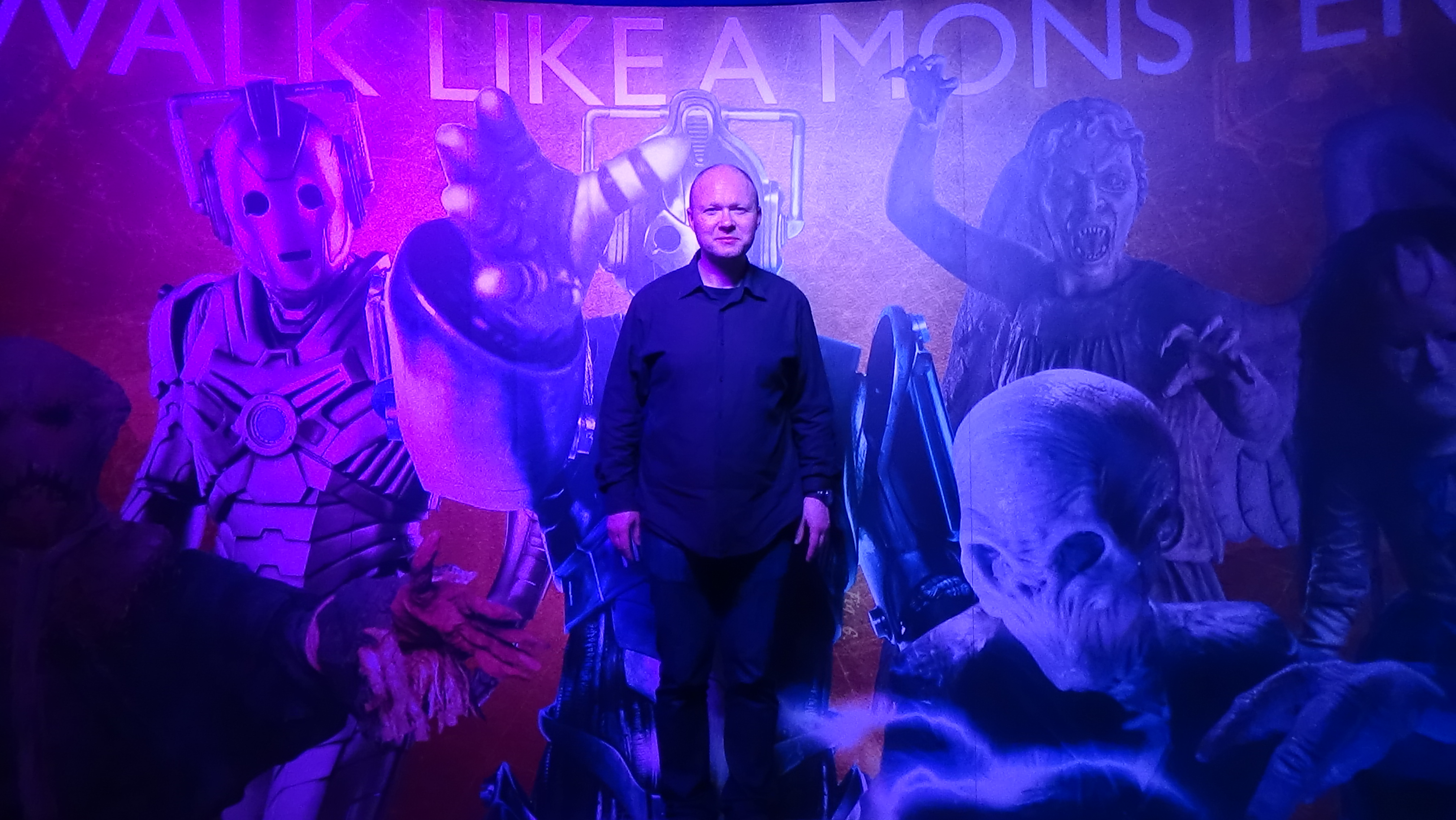
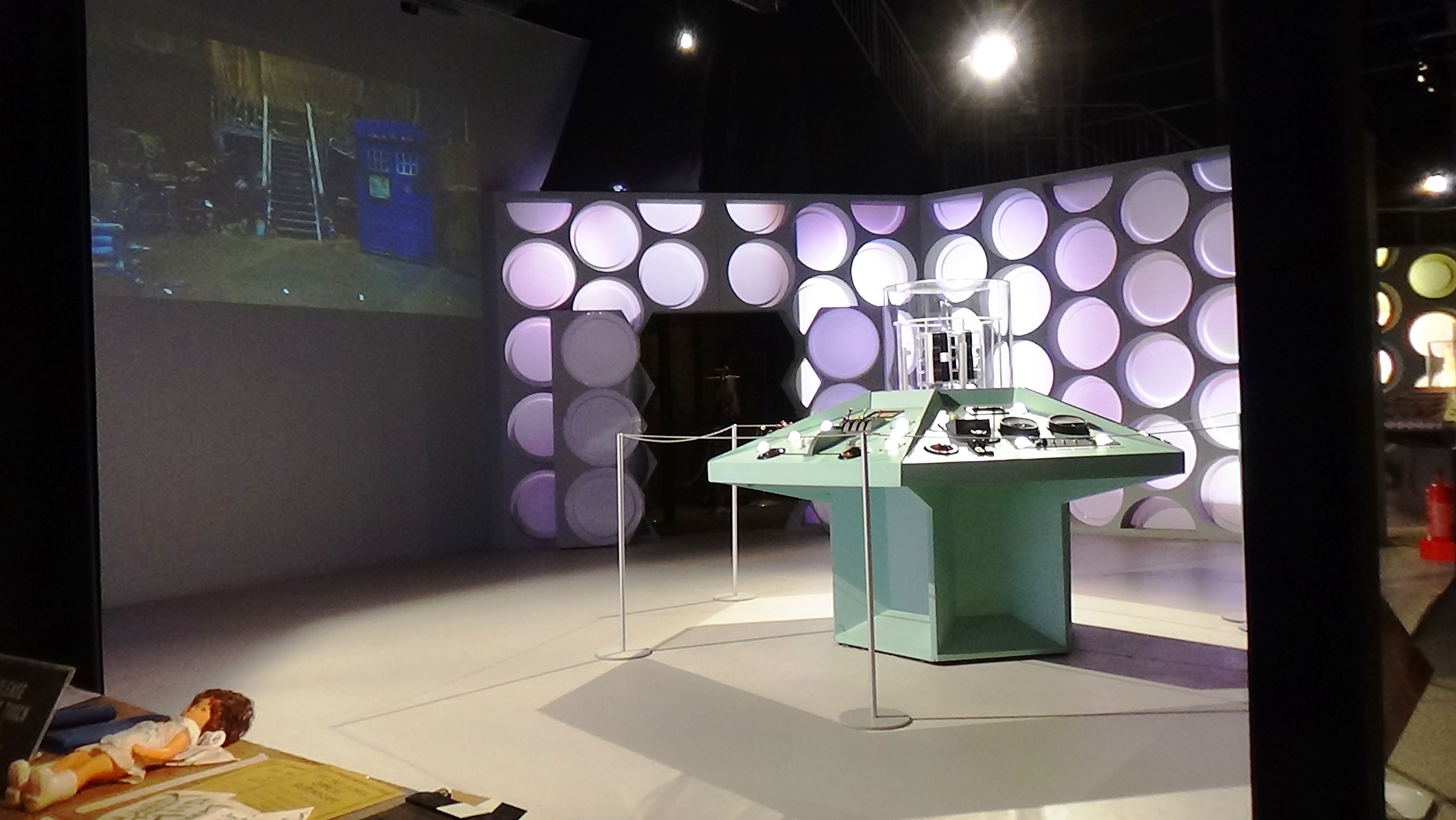
THE DOCTOR WHO EXPERIENCE – CARDIFF
Doctor Who is a cultural phenomenon. The character and show have been on BBC Television (aside from the mild 90s hiatus) for 50 years, yet, in between that there were still audio recordings and novelisations of his adventures. Over half-a-century he has become a worldwide sensation and one of the most adored and recognised cultural icons; and he’s completely fictitious. Dr Who does NOT exist! He is a story; a myth; a character who has risen and regenerated from the grave many times; a character who performs miracles; has disciples and is an imagined hero who is worshipped by many followers all around. Now, Dr Who has a Church! It’s in Cardiff. Who knows how Dr Who will be seen in 2000 years? Stranger things have happened.
The Doctor Who Experience in Cardiff Bay is a wonderful pilgrimage for fans of the show. I heartily recommend it if you want to see a plethora of old Tardis’, sets, costumes, monsters etc. The setting is a huge aircraft hangar which houses everything Whovian from past to present and I just felt a wonderful sense of nostalgia plus wonder at the imagination and work which has gone into creating the TV show and Whoniverse as a whole. I heartily recommend the Dr Who Experience if you love the show. Even the silly, little interactive tour you get at the start where Peter Capaldi’s Doctor himself guides you through a perilous journey is a laugh. Great fun for big and small kids of all ages!
OPPENHEIMER – VAUDEVILLE THEATRE
Dr J. Robert Oppenheimer: a father of peace or maker of death? One would argue that he’s both! Indeed, this wonderful piece of theatre attempts to answer this complex and many other fascinating questions about the man whose work led to the United States unleashing nuclear hell on Japan during World War II. Being about physics and science stuff this could have been a very dry and dusty play but it was produced with such verve and energy as it collapsed a key period of Oppenheimer’s life into a brisk few hours of performance. But it wasn’t; quite the opposite in fact.
The production bounced and sang with some wonderful scenes explaining the physics, politics and personalities of the time. The many Scientists and Military personnel are shown struggling with the logistics and ethics of the time; none more so than Oppenheimer himself. I mean he wanted to be remembered as a pioneer but he knew it would be to some cost; and so it proved. On the other hand, from another perspective, his and his teams’ actions COULD have saved lives. John Heffernan as the genius, philanderer and bon vivant Oppenheimer is incredible. He lights up the stage like a firework bursting with sparkle then darkens it with shadow as he battles both his doubt and demons. Of course, I know the physics were far more complex but I congratulate the writer for making the subject interesting again and hanging it all on such an intriguing and complex character and period of time.
THE PRODIGY – ALEXANDRA PALACE, LONDON
Life is an interesting experience. I’m not looking forward to death. And I certainly won’t be able to look back on it. Also, some people don’t like the idea of getting old. I don’t mind it. Because as I have got older I have started to like loads of things I didn’t used to like OR was indifferent of. Coffee is one of those things. I love coffee. The Theatre is another thing I really enjoy now. And the dance-electronica-hard-beat-kings-of-Essex The Prodigy are another cultural phenomenon I used to dismiss but now recognise as great music!
I have my son to thank for my new found admiration of The Prodigy. He started listening to them a few years ago and while I knew of their existence I have firmly — aside from a couple of Chemical Brothers albums — been a straight guitar-based-indie-listener as a rule. But having bought Their Law: The Singles, The Day is My Enemy, Invaders Must Die and the under-rated Always Outnumbered – Never Outgunned I became very impressed by the group. To create pulsating, punkish and heart-racing music of their kind and last from the late 80s to now I think shows a great level of ability and commitment to creation.
The gig at Ally Pally itself rocked and the crowd loved every moment of the brilliant lightshow, crunching guitars, pounding drums/beats, driving basslines and frontmen Keith Flint and Maxim screaming and goading the crowd into euphoric submission. Special praise for the architect of the operation — Liam Howlett — who has found a very successful formula and has a tremendous back catalogue of tracks to work with. Howlett bleeds, sutures and threads the sounds together with the skill of a musical surgeon. If that doesn’t make him a kind of Doctor I don’t know what does!
I didn’t watch that many movies in May as I have been theming my viewing to British TV productions, so it was quality rather than quantity this month and with a big Antipodean feel.
As usual Marks out of Eleven follow the little review.
***MASSIVE SPOILERS AHEAD***
BLACK SEA (2014) – SKY MOVIE STORE
Jude Law, Ben Mendelsohn, David Threlfall, Scoot McNairy, Michael Smiley and a motley crew of Russians go down into the deep, dark recesses of the black ocean in search of Nazi gold. This effective B-movie is essentially The Treasure of Sierra Madre (1948) set underwater. The cast are excellent plus there are some thrilling and suspenseful scenes as greed and nationalist rivalry poisons the water amidst a series of disasters which strike the crew. This is perfect viewing for a damp Tuesday evening while eating pizza and drinking a beer. (Mark: 7/11)
CLOUDS OF SIL MARIA (2014) – SKY MOVIE STORE
This is the kind of intellectual-artsy-actor-fest that middle-class viewers and critics wank themselves lyrical about in the broadsheet press and online. Don’t get me wrong I enjoyed the triptych of performances from Juliette Binoche, Kristen Stewart and Chloe Grace Moritz and the filmmaker Olivier Assayas tackles some interesting themes about identity, modern culture, death, aging, and the nature of performance. However, it’s pretty one-paced and has a head-scratching Bunuelian turn at the end of the second act which made no sense; I imagine that was the point. I didn’t even care enough to be perplexed as it just washed over me on the main with neither enough drama or comedy to get my teeth into. Some beautiful vistas and scenery though. (Mark: 6.5/11)
FAR FROM THE MADDING CROWD (2015) – CINEMA
Apart from the moron-head who decided to eat crisps really loudly in the seat near me during the opening 10 minutes, I really enjoyed this wonderfully shot romantic drama from impressive filmmaker Thomas Vinterberg. Based on Thomas Hardy’s classic novel it stars Carey Mulligan as the fiercely independent Bathsheba who goes against the social tide of the time and attempts to run a successful farm despite the backward sexual politics.
This is a romantic period drama that even blokes can enjoy as the subject matter eschews the fluffery of Jane Austen for the harsher side of rural life. It’s Thomas Hardy-light with a brisk 120 minutes run through the narrative as Bathsheba is courted by three men of varying social standing and characterisation. Performances are top notch, notably from Michael Sheen as the pained William Boldwood and ever-sparkling Carey Mulligan. Matthias Schoenaerts, a striking Belgian actor, is also outstanding as the sturdy Gabriel Oak. (Mark: 8/11)
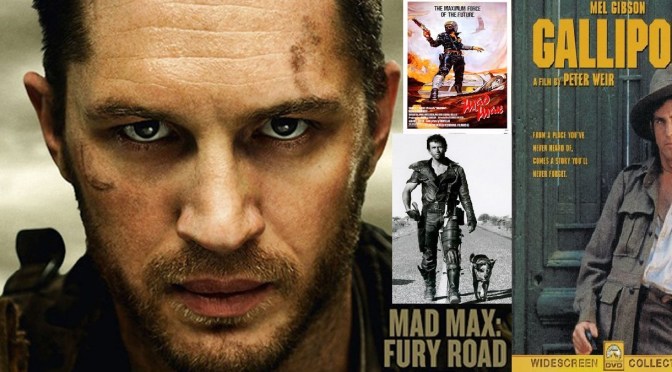
GALLIPOLI (1981) – BFI – CINEMA
I grew up watching this film; usually on a Sunday evening on BBC2 and when I saw it was screening at the BFI I jumped at the chance to watch it. It is a heart-wrenching World War One story concerning the Western Australian men who left their families to fight against the Turkish army during the brutal conflict. It follows two lads portrayed by Mark Lee and cusp-of-stardom Mel Gibson who at first are rival sprinters and then brothers-in-arms as they venture overseas to fight.
The screenplay is sinewy and powerful yet with much humour, as it builds their friendship from the outback to the trenches culminating in a truly tragic final reel. Peter Weir announced further his credentials as a filmmaker of high quality and the cinematography by Russell Boyd is a wonder. I also loved the use of music here which employs both modern synthesized pieces from Jean-Michel Jarre and marries it to more classical compositions by Strauss and Giazotto/Albinoni’s Adagio in G minor. This is up there with my favourite Anti-War films of all time; majestic cinema at its peak. (Mark: 11/11)
MAD MAX (1979)/MAD MAX: ROAD WARRIOR (1981) – NOW TV
I watched these kinda back-to-back with my teenage son and despite their age and low budgets both films stand up to further viewings. In fact, George Miller’s seminal violent-explosive-car-chase-revenge-punk-urban-westerns are best watched as a double bill.
In the first film Max is a hardened road cop who wants out so he can be with his young family. The roads have become a deadly place full of psychotic punks and sociopathic maniacs who rail against society without cause or reason. When Max is left a shell-of-a-man he goes after the gangs which done him wrong with rage-in-his-eyes and hell in his soul. This is an awesome film with more imagination, energy and pace than most bigger-budget blockbusters.
With Max’s character established so well the second film Miller throws an Apocalyptic curveball into the mix as we find future Max — a lone road warrior (aside from his Dog) — fighting even crazier road punks over ever-decreasing amounts of petrol. Mel Gibson really shines as the amoral leather-bound-petrol-head who gets dragged into the outback carmegeddon between a group of settlers and baddies led by the helmeted Lord Humungus. This film rocks big-time and is one of the greatest action-come-road movies ever and one which confirmed Gibson as a major movie star of the 80s! (Double-bill Mark: 10/11)
MAD MAX: FURY ROAD (2015) – CINEMA
Tom Hardy takes on the iconic Max Rockatansky role in this revved-up-mega-budget-future-shooting-guitar-flame-throwing-blood-draining-crash-smash-and-burn epic. Haunted by past failure Max drives round the wasteland trying to survive. Suddenly he’s whisked away to be a mobile blood-bank at The Citadel and used to keep the cancerous War Boys alive with his pure blood. Enter Charlize Theron’s kick-ass Furiosa who is on a mission of her own to protect those she cares for from nefarious Immortan Joe; the Citadel Overlord!
There isn’t really any plot to speak of on the Fury Road but what you get is an incredible visual feast with carnage galore and some incredible stunts in a barren yet beautiful desert setting. Hardy and Theron share great chemistry within the action and Miller executes some mesmerising moments of dialogue-free pure cinema. One may argue that it is style-over-substance but the style IS the substance. The concepts on show such as the flame-throwing guitar; moving blood-banks; mud-people on stilts; assorted pimped-up cars and souped-up weapons are what impresses. As such George Miller proves himself a visionary filmmaker who owns the post-apocalypse on screen making it a terrifying and stunning experience. (Mark: 9.5/11)
MR TURNER (2014) – BLU RAY
I love Mike Leigh films. Most of them anyway. His unique slice-of-life style is quietly confident and steady and even if not much is happening one is often awestruck by colour, mood, composition, character and performance in his work. Indeed, Timothy Spall is on terrifically grouchy form as celebrated painter J. M. W. Turner and the supporting cast is equally brilliant.
I was mesmerized by the film’s composition and the glacial pace worked in the films’ favour as Leigh paints (sorry) an honest picture of Turner’s later years, artistic process and his relationships. I was surprised that the old dog was quite a philanderer but then again I didn’t know much about Turner if I’m honest. This is like walking round a beautiful-looking moving gallery and just breathing in the genius of Turner, Spall and Leigh. (Mark: 8/11)
But to recap: this is a sensational pitch black character piece that allies a powerful script with violent social satire; all glued together by an Oscar-worthy lead performance from the ever-excellent actor Jake Gyllenthaal. Indeed, he should have got AT LEAST a nomination for his performance as news-media-ladder-crawler sociopathic Lou Bloom. On re-watch this film is just as powerful and I was in awe of the incredible script, great acting, cutting direction and black humour throughout. Highly recommended. (Mark: 10/11)
OUIJA (2014) – BLU RAY
This film is a terrible movie; probably the worst I’ve seen all year. It follows a vague Final Destination structure as a series of college kids are wiped out by a demonic force that has “escaped” a Ouija Board. There are no redeeming qualities whatsoever and the most interesting fact I can tell you is that the original Ouija Board was in fact a game. No, I didn’t know that either. Yeah, and the rights to the board game were owned by Parker Brothers and now Hasbro. It was only in 1930s/40s onwards America that it was used by occultists and spiritualists. Who knows: perhaps people will one day be contacting the ‘other side’ using Transformers? You never know on this crazy planet! (Mark 1/11)
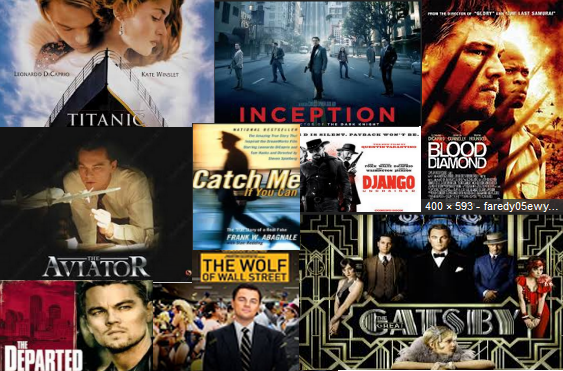
In this occasional series I regale my favourite actors and select some of their memorable performances. Leonardo DiCaprio is an actor who has just got better and better in each role he’s been in. I admire his craft because he has seamlessly moved away from star-crossed heartthrob roles such as Titanic (1997) shifting to meaty, dramatic roles the likes of which I will list here. DiCaprio has good looks, charisma and a sparkling smile yet doesn’t avoid the darkness and can easily play the good guys, bad guys and – where humanity is concerned – the ugly guys too. Here are five great roles he’s played and I could quite easily have chosen five others such is the quality of his acting CV.
**THERE BE SPOILERS AHEAD**
BLOOD DIAMOND (2006)
Aside from this one and Titanic (1997) DiCaprio doesn’t do enough action type movies with big explosions and mayhem. Perhaps he doesn’t like running around and prefers the meatier roles? Then again, his character Danny Archer had an impressive character arc amidst the fireworks within this Edward Zwick directed anti-war film. Initially, he is a selfish mercenary only out for the money until he comes into contact with Djimon Hounsou and his desperate search for his son. Together they hunt for a priceless diamond in war-torn Sierra Leone and in the process Archer/DiCaprio learns some humanity along the way. It takes a broad approach politically but, amidst the well-stage battle sequences it successfully highlights the horrific attitude of Western capitalism to Africa: a place to be plundered for wealth and damned the consequences. Yet, for me, this works best as a classic war film with DiCaprio’s anti-heroic soldier ultimately finding redemption by the end.
DJANGO UNCHAINED (2012)
DiCaprio’s turn as ‘The Kid’ in Sam Raimi’s Leone Western homage The Quick and The Dead (1995) almost made this list as he was just so young and cheeky and his death scene was very touching; but I’ve gone with his badass rendition of nefarious plantation owner Calvin Candie instead. It’s an over-the-top and theatrical ripper of a performance as he takes great glee playing the baddest, racist, capitalist pig around. Indeed, Tarantino cast him perfectly as he used DiCaprio’s charisma to counteract the murderous psychosis of the devilish Candie. In the hands of another actor the whole film could have been just damned nasty but with his Southern accent, golden glint in his eye and finger-twiddling moustache-come-beard he almost steals the show. The mercurial Christophe Waltz won the best supporting Oscar for his role and deservedly so, however, DiCaprio must have been close to breaking his Academy cherry here with this grandstanding and dastardly turn.
THE AVIATOR (2004)
I hated this film the first time I saw but soon realised I was an idiot; on 2nd and 3rd viewing the pure genius of the Scorcese and DiCaprio combination shone through every time. With a brilliant John Logan screenplay it depicts the early years of Howard Hughes’ flamboyance, follies and failures. DiCaprio has often portrayed characters on the edge of a nervous breakdown or full-blown mentalists like Teddy Daniels in Shutter Island (2010) and here he captures Hughes at the height of his film and aviation glories only to find his obsessive-compulsive disorder swallowing him up and dragging him into the pits of hell. This step-by-step disintegration is portrayed with such intelligence and impact I felt this was the role DiCaprio should have won Best Oscar for. It’s a brash and loud performance with Hughes’ big personality to the fore, however, underneath the mental issues which would make him a recluse in later years are beginning to show through and the actor draws out these subtleties in a devastating and very sad way.
CATCH ME IF YOU CAN (2002)
This was a just a humdinger of a film which had everything: humour, romance, drama, crime, cat-and-mouse chases, pathos, brilliant cast, sex and at its heart DiCaprio playing a teenage con-boy to perfection! Once again he is perfectly cast as the little-boy-lost who is devastated by his parents’s break-up and goes on the lam perfecting his counterfeiting skills on the way. Frank Abagnale Jnr is arguably the role which finds DiCaprio grow on-screen from a lad to a man. In it he imbues the arrogance of youth yet also reveals the pain and drive of a child attempting to come to terms with his feelings. His instinct is to run as fast as he can and his crimes such as: impersonating a pilot; faking cheques; practising law and medicine are presented as a means of escaping his internal turmoil. Steven Spielberg illustrates this incredible story with style and pace and DiCaprio is just a treat as he lies and cheats and cons his way into and out of the most entertaining of scrapes with Tom Hanks’ dogged agent never far behind him.
THE WOLF OF WALL STREET (2014)
DiCaprio doesn’t DO superheroes. He does anti-superheroes; and none more so than in this memoir by disgraced human scum Jordan Belfort – a drug-addicted-sex-addicted-thieving-stockbroker-par-excellence. The Wolf of Wall Street follows the same rise-and-fall structure of mafia classic Goodfellas (1990) as DiCaprio’s Belfort schemes and sells his soul to power up through the snakes and ladders of Wall Street. This is NOT a heavy analysis of socio-economic morality and values but rather a bullet-paced black comedy filled with cracking scenes and razor-sharp one-liners delivered by a stellar cast. This is DiCaprio and Martin Scorcese’s film and as they demonstrated in The Aviator, The Departed, Shutter Island etc. they are a formidable team. What DiCaprio does incredibly well is making this Wall Street monster likeable, funny, believable and human. Indeed, I felt DiCaprio deserved an Oscar but the Belfort character has already had enough success in his lifetime and threw it all away because of greed. Surely awarding an Oscar to such a heinous character would be TOO MUCH wouldn’t it? But as this film demonstrates TOO MUCH is never enough!
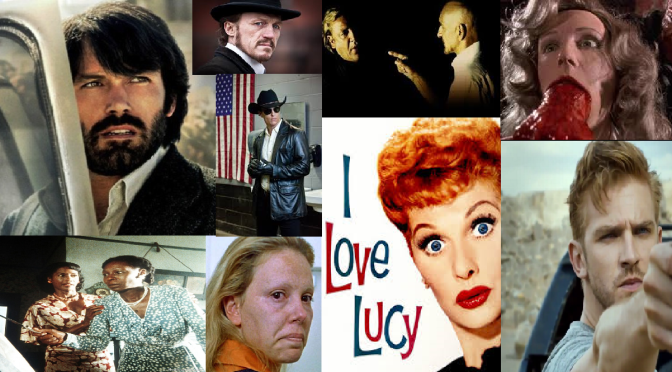
The excellent intellectual comedy BIRDMAN (2014) is about — among many themes — a movie star attempting to gain artistic credibility and shift his career from the commercial side to the more critically acclaimed. Using this as inspiration I decided to take a look at some musicians, actors and a filmmaker who in some way have began at one end of the creative spectrum and successfully careered to another. At the same time as changing creative lanes they surprised the audience, improved their critical kudos or at the very least shifted perception of their oeuvre. Please do suggest others if I have missed them; which I imagine I have. They’re in no particular order either.
PETER JACKSON – FILMMAKER
Peter Jackson is one of my cinematic heroes. The reason being is he began his career from scratch in New Zealand making the no budget horror film Bad Taste (1987) before subsequently going on to make some of the biggest grossing blockbusters ever committed to celluloid. My favourite film of his remains the hilarious gorefest Braindead (1992) and therefore his career shift to the haunting Heavenly Creatures (1994) was an incredible leap. Personally, I liked his bloody horror films better but of course his Tolkien trilogies contain some amazing filmmaking too.
DAN STEVENS – ACTOR
I don’t watch Downton Abbey so had never heard of the handsome actor Dan Stevens. The first I met him was watching the low budget actioner The Guest (2014) and he is absolutely brilliant. It’s a smart, funny and violent B-movie which makes merry hell of its’ “cuckoo in the nest” plot. Stevens is brilliant and has all the charm and looks of a bona fide movie star in the making.
BEN KINGSLEY – ACTOR
Kingsley stunned me when he appeared in Jonathan Glazer’s excellent debut feature Sexy Beast (2000) as the foul-mouthed cockernee monster Don Logan; sent to wreak havoc on Ray Winstone’s feng shui and chi. It was an incredible performance which completely shifted perception away from the archetype RSC trained actor of stage and screen. His portrayal of Gandhi put Kingsley very much on the cultural map whereas the visceral brutality of Logan pissed all over it!
LUCILLE BALL – ACTOR
Lucille Ball was a pioneering actress, comedienne and film studio executive. She was the star of many sitcoms notably I Love Lucy. Early doors though she performed in many small movie roles in the 1930s and 1940s, being dubbed the “Queen of the B-movies”. In 1951, Ball helped create the television series I Love Lucy with husband Desi Arnaz and during a prolific career Ball was nominated for Emmy thirteen times and won four of the beauties.
CLINT MANSELL – MUSICIAN
Clint was the frontman for Black Country-bassed-hip-hop-funny-as-fuck-politically-incorrect-grebo-groovesters Pop Will Eat Itself! Along with The Wonderstuff they were one of my favourite bands from the late 80s/90s. Songs like: Beaver Patrol, Grebo Guru, Can U Dig It, Wise Up Sucker etc.smacked the arse of the charts with a flurry of non-sensical lyrics and pilfered samples. Years later Mansell rose from the spunky ashes of PWEI to become a respected film composer. His most memorable score is for the grim, yet awesome Aronofsky helmed Requiem For A Dream (1996) and since then he has consistently written for the same director. His classical piece Lux Æterna has become a ubiquitous soundtrack for many a film trailer!
JEROME FLYNN – ACTOR
To be honest Jerome Flynn has always been a decent TV character actor ever since he starred in Soldier Soldier in the 1990s. But we also have him to thank for giving producer Simon Cowell some of his early hit records when, along with Robson Greene, he butchered a series of singalonga ‘classics’ including Unchained Melody. He’s forgiven though for his musical crimes as his cultural slate has been wiped clean via his tough and gritty appearances in the phenomenal Game Of Thrones plus the excellent Ripper Street.
MATTHEW McCONAUGHEY – ACTOR
McConaughey has always had star appeal ever since his appearance in Richard Linklater’s Dazed and Confused (1993) and always stood out as an actor to watch. His career choices, however, in romantic comedies such as: The Wedding Planner (2001), How to Lose a Guy in 10 Days (2003), Failure to Launch (2006), Fool’s Gold (2008) and Ghosts of Girlfriends Past (2009) made him a shedload of dough but had many thinking he’d thrown away his ability on fluff. But then the “McConaissance” occurred and since 2010 he has eschewed the mortgage-paying unchallenging work and starred in some intense, transformative and often brutal roles including: Killer Joe (2011), The Paperboy (2012), Mud (2012), Magic Mike (2012), The Wolf of Wall Street (2013), Dallas Buyers Club (2013), and stunning HBO series True Detective (2014).
CHARLIZE THERON – ACTOR
When Theron appeared in some decent but unspectacular early roles you would not have been wrong to suspect she was just another model-turned-actress wannabe who had got her break due to her cracking good looks. However, THAT is definitely NOT the case as her acting prowess was proven in the Oscar-winning role of female serial-killer Aileen Wuornos. Tragic film Monster (2003) flipped career perception on it’s head as she imbued Wuornos with an anger, pain and humanity which never fails to rabbit-punch the emotions. It was an incredible lane change in Theron’s career and proved she was no blonde bimbo. She was also fantastic as a twisted neurotic suffering from a severe case of arrested development in Young Adult (2011).
BEN AFFLECK – ACTOR/DIRECTOR
Is Ben Affleck a good actor? I had this discussion with a friend and we decided he was a solid if unspectacular presence who can be impressive at times with his professionalism in Good Will Hunting (1997), Changing Lanes (2002), Hollywoodland (2006) and Gone Girl (2014). However, let’s be straight he has also appeared in some right old garbage such as Daredevil (2003) and the critically panned Gigli (2003). But Affleck’s cultural redemption has occurred as a director in which he has hit three cinema home runs with the excellent Gone Baby Gone (2007), The Town(2010) and the political thriller Argo (2012). These are three proper movies with the assured directorial touch of the great genre filmmakers such as John Ford or Huston. In some ways his career mirrors that of Clint Eastwood’s; as in he’s appeared in some great films, some rubbish films and is now becoming a formidable director to boot!
WHOOPI GOLDBERG – COMEDIAN/ACTOR
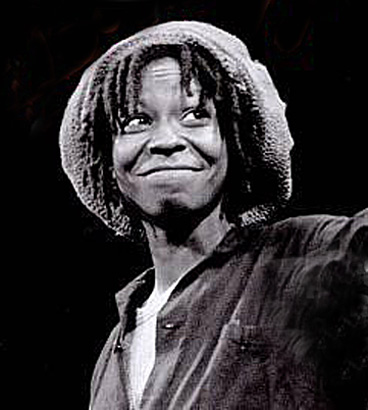
Multi-talented Emmy, Oscar, Tony winner Goldberg is one of the most versatile comedian/actors to grace the stage and screen. She developed her abilities at the Blake Street Hawkeyes Comedy troupe and would then be cast in Spielberg’s The Color Purple (1985). Goldberg’s Celie Johnson is a character battered by life but whom amidst the abuse retains a strength to not let life destroy her. All the more amazing given it was Goldberg’s first dramatic film role. Goldberg would go on to prove both her dramatic and comedic mettle in a number of roles eventually winning an Oscar in the supernatural-thriller-romance-weepieGhost (1990).
ANDREA BOCELLI – SINGER
I don’t know much about Opera or classical music to be honest but I do know what I like when I hear it. Thus, Andrea Bocelli’s pop-opera classic Con te partiròis an obvious favourite ever since I heard it in The Sopranos.Andrea Bocelli himself had always immersed himself in singing since a boy but had to work his way up from the bottom, sort of. He was a qualified lawyer and playing piano in the bars when ‘discovered’ by goalkeeper-turned-singer Luciano Pavarotti. The rest they say is history! Time to say goodbye reader; au revoir!
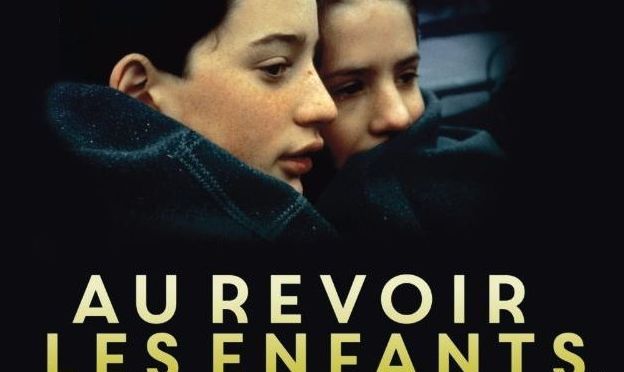
AU REVOIR LES ENFANTS (1987) – CLASSIC MOVIE REVIEW by Paul Laight
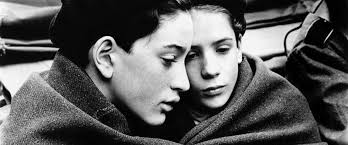
Louis Malle’s brilliant wartime drama set in a French Boarding school is a subtle, yet somehow brutal drama which perfectly captures the horrors of war during 1944 Occupied France.
It centres on the relationship between the children who were sent from the cities of France out to the countryside to avoid the Allies bombing. More specifically it looks at the relationship between Julien Quentin and new boy at the school Jean Bonnet.
The adult characters throughout the film such as the parents, priests and teachers all do their utmost to protect the children from the fact that a war rages on. This is demonstrated by the fact the children are sent away from the city where the Allies are bombing non-stop as heard in one of Madame Quentin’s letters. Moreover, Julien’s mother is clearly a loving woman committed to protecting her sons showing this in the opening scene. On the platform Julian is quite vicious to her but she knows this is from fear and being upset at being sent away. The way she hugs him and reassures him tells us she cares very much.
Certainly, the Church and school grounds are both physically and figuratively seen as the main shelter for the children during the film. The location of the school in the countryside away from the main ally bombings also illustrates the desire to protect the children from the war. In addition, so does the blackout curtains and placing the children in the catacombs while an air raid takes place. The fact that Catholicism features heavily in the film offers religion and God as more symbolic protector of the boys.
But as the narrative progresses the world outside and events prick the temporary and flimsy protective bubble. Despite their efforts the adults cannot protect the children fully from the harshness of war with German soldiers, French Military Police and eventually the Gestapo converging on the school.
The colours throughout the film are washed out and somewhat drab with darker hues such as brown, navy blues, black and greys dominating the clothes, curtains and mise-en-scence generally. Married to these colours is a bleached, pared down cinematographical style which combine to create a cold, oppressive feeling during the film. There is a sense the characters are not only trapped by the ongoing war and in the boarding school but also by the weather. Indeed, it appears that a permanent winter hangs over the characters. Moreover, the lighting is served as naturalistic emanating from windows, candles and skylights.
Altogether, this tells the audience that the filmmakers are portraying events as realistic and this is confirmed by the knowledge the narrative comes from a real event in Louis Malles’ childhood. As such the colours, lighting and design combine to create a bleak and stifling environment for the characters; a feeling that war is a difficult climate to exist in with little in the way of bright colours or sunshine to provide escape.
As aforementioned, Jean and Julien’s relationship propels the narrative. Jean Bonnet is portrayed as a studious boy who excels at most subjects notably music and mathematics and is singled out for praise by the teachers. Initially, he attempts to keep himself to himself not forging close ties with any other children other than those he knows. The reaction from the other children is mixed. Some ignore him but others tease him about his name. Julien is indifferent until he is asked by Father Jean to keep an eye on him.
My feeling was there was a real tragedy surrounding Jean and this is testament to the director and the casting of the boy who portrayed him. While many of the children are pale in colour Jean was paler almost ghostlike. The kiss Father Jean places on his head at the beginning of the film seems innocent but becomes portentous by the films’ end. Being Jewish also lends his character a real sense of adversity and there is much suspense to be derived as to when he will be discovered.
Initially, their relationship is strained with Julien not reckoning Jean but over time they slowly begin to bond. Father Jean requests Julien becomes a ‘guardian’ to Jean and Julien takes on this responsibility. He is also naturally curious about the new boy and his background having discovered him praying in Hebrew at night.
Aside from their close proximity in the bedroom area events conspire to bring the children closer together. Julien’s bed-wetting not only causes him distress but also leads to the discovery of Jean’s religious background. Moreover, a mutual interest in playing of the piano provided common ground between the two characters as echoed in a lovely scene later in the film showing them playing together despite the air-raid going on. Indeed both music and film (Chaplin’s ‘The Immigrant’) are shown to be provide a form of escape from the horrors of the outside world.
Julien is a naturally inquisitive boy and when he sees Jean praying at night he becomes intrigued. His interest is piqued further when Father Jean asks him to look after him. This separates Jean Bonnet as different. Moreover, the way they are integrated into the school is different also. Many of the other boys arrive on the train from the city while the Jewish children arrive separately almost in secret from a mystery place.
Julien’s detective work is initially done clandestinely. He searches Jean’s locker at night and finds books with his actual name in them: Kippelstein. This gives him the impetus to begin asking his brother questions about the Jewish people and why they are disliked so. His brother reveals a lack of knowledge and thus Julien also asks his Mother too. As his ‘investigation’ continues and he gains Jean’s trust he then asks him directly about his parents and where he comes from. Over time he gains Jean’s trust and Julien finds out about him personally as well as his background. As such a bond is built via Jean’s secret.
The key event which brings them together is when they get lost in the woods. The scene separates the boys from the rest of the school and shows they support each other in their plight. Julien doesn’t dream of giving Jean up to the German soldiers in the woods and their friendship is confirmed from that moment onwards. However, there’s a sense that it is Julien who gives Jean away to the Gestapo at the end because of their bond but this is a harsh assessment.
Ultimately, it is the crippled Joseph who gives the Jewish children away. While the capture of Jean and the other boys is certainly a tragedy I find Joseph to be the saddest character in the whole film. This is a character who has been dealt a really bad hand in life. He appears to be an orphan, is disabled and is also of lower social standing compared to the richer kids who surround him. Furthermore, he is bullied mercilessly by the other children despite the fact he actually helps them get cigarettes and stamps through his racketeering on the black market.
The biggest tragedy is that he is the one who must pay for the whole ‘black market’ affair with the privileged children being castigated but essentially unpunished for their roles in breaking the rules. Even Father Jean admits as much that Joseph is the scapegoat in the event. My emotions empathised with Joseph at this point and felt maybe he could have been forgiven or at least asked to forgive his sins. But no, he is cast aside and this causes the downfall of Father Jean and the Jewish children.
There is no justification for Joseph’s actions but he’d been forced into a corner like a gutter rat and came out fighting. While his actions are reprehensible he had revenge and spite in his mind as he had lost everything. It was a decision based not only on retribution but also a desire to gain power. At the end as he smokes what he believes to be a victory cigarette the audience knows the Germans will eventually lose the war and poor Joseph has chosen the wrong side.
But does Julien betray Jean in the classic end scene where for one brief second he looks back at his new friend? No. My understanding of the meaning of betrayal is an individual going out of their way vindictively to divulge a secret or secrets for personal gain or self-preservation. And while it’s Julien’s turn and look around which gives Jean away to the Gestapo I don’t believe he has betrayed him. The look around is out of fear for his friend and is an instinct rather than a decisive move. There is no malice aforethought but rather a reaction due to the nervousness of the situation.
There’s also a question of motive. By the end Julien and Jean have become good friends so there is no real reason why he would betray Jean. Moreover, he could have given Jean up many times before that, notably when they get lost in the woods and taken back to school by the soldiers. Overall, I think it’s the Nazis who betray Jean. Their actions have ultimately led to the horror of war and moments such as these in the classroom. Thus, every innocent in this film is betrayed, not just the Jewish children and Father Jean.
Some critics have argued that Au Revoir Les Enfants is as much about childhood and a loss of innocence as it is about the Second World War. It too could be seen as a universal film about life in a boys’ boarding school. I agree with this to some extent it could be seen as a universal film about life in a boys’ boarding school. The film shows the sadness of children being separated from their parents and the closed off nature of the boarding school. It shows the rough and tumble of boys playing in the grounds and how they make fun of each other’s looks and names. Also, there is a real sense of sadness in the isolation of being away from their families and the joy provided when the parents come to visit the children. We indeed see the children cared for by the teachers and Priests so in effect there is a sense of them being orphaned but they are not deprived in any way and their childhood is nowhere near as bad as say an Oliver Twist character.
Thus, in my view, we must view the film as predominantly a film about Second World War. Without it we would have none of the major themes prevalent throughout notably the loss of innocence and childhood. WWII and its’ events give the story a real gravitas and dramatic walls to bounce off. It gives the whole film subtext and tragic events of the narrative making it difficult to view the film solely about life in a boarding school.
The film is microcosmic and analogous using the characters – in a similar way Casablanca (1942) – to represent certain groups present during WWII. One could argue Father Jean represents the Resistance; Julien represents the French nation awakening to the horrors of war; Joseph represents the colluding Vichy government; and more unambiguously Jean is the Jewish people and the Germans the Germans. Therefore, the film offers a positive portrayal of the French when Father Jean and Julien are shown both befriending and protecting Jean.
This film is what I would describe as a quiet tragedy. Big events occur almost incidentally with emotional scenes unfolding and ending before you’ve had a chance to take in the enormity of what has occurred. Louis Malle does this with a very unobtrusive and subtle filmmaking style. The camera positions are relatively neutral throughout shooting in a medium shot on the whole with hardly any close-ups or extreme long shots. The music is also very subtle and another filmmaker may have had a rousing score to deliver emotions but much of the music in the film is diegetic either from piano or violin playing during the Chaplin screening.
The filmmakers’ style allows the audience to make up their own mind about events and bring their own emotions to the scenes. This also occurs with the characters throughout the narrative. These are very human characters and aside from the Germans and the French collaborators who are seen as the enemy there are certainly many grey areas where the children are concerned. Having said that even the Germans are shown to be humans such as when the German soldier asks to provide a confession.
The beauty of this film is the subtle way it conveys its story and meaning. So, when discussing the potential legacy of guilt it is important to look at the characters and their place in the story. There are clearly defined antagonists in the Germans and positive protagonists in the children, Father Jean and his teaching staff. Moreover, in Julien and Joseph we have, in my view, the most complex characters of the film. Joseph is the anti-hero and where much of the legacy of guilt could be fed through. Additionally, there is the suggestion of guilt in Julien’s turn and look that gives Jean away. But guilt here is not necessarily overt and is conveyed between the lines in keeping with the masterful direction Malle provides throughout.
Similarly, the film does not show the French as anti-semitic throughout; quite the opposite in fact. While the children show ignorance of Judaism this is not through prejudice but rather a lack of knowledge and when given the chance to betray the Jewish children the French display grit and resistance against the Germans; something to feel proud rather than guilt about.
So, in conclusion, underneath the surface there is a sense of guilt that pervades the characters and film in general but it is subtle and underplayed and the film is all the more brilliant for it. It does not smash home any singular messages regarding a legacy of guilt but shows all facets of the French people at wartime. Both the positive and negative and the result is not a simple case of black and white but instead a powerful grey like the colour of the Nazi uniform itself.











 The Cinema Fix presents