I celebrated my fiftieth birthday last week. So, for a bit of fun I set myself a cinema game involving the theme of fifty. I gave myself no more than five minutes to list fifty favourite films. The rules are simple:
Pick 50 favourite films off the top of your head.
Take no longer than 5 minutes.
No checking Imdb.com or other cinema sites.
One film per franchise.
Go with your instinct – don’t overthink it!
Once you have written fifty down – you cannot change any.
Of course, these aren’t necessarily the best films ever, but instinctively films I love. Obviously, I am now kicking myself for the many great works of cinema I have missed. But, it’s just a bit of fun! So, here we go! In alphabetical order – FIFTY FAVOURITE FILMS chosen in FIVE MINUTES to celebrate FIFTY YEARS alive!
ALL 4 TV REVIEW – FRIDAY NIGHT DINNER (2011 – 2020)
Created and written by: Robert Popper
Directors: Steve Bendelack, Martin Dennis
Cast: Tamsin Greig, Paul Ritter, Simon Bird, Tom Rosenthal, Mark Heap, Tracy Ann Oberman, etc.
Number of Seasons: 6 (37 episodes)
Original Network: Channel 4
*** MAY CONTAIN SPOILERS ***
I decided to take a break from watching the usual murder, drama, time-travel, fantasy and crime-based TV shows I gravitate toward, by bingeing all six seasons of the Channel 4 (also available on Netflix) family situation comedy, Friday Night Dinner. Created and written by Robert Popper, this hilarious, energetic and feelgood show is set within the Goodman family household in North London. While recent British comedies such as The Mighty Boosh, Spaced and Psychoville tended toward the meta-fictional and surreal genre of humour, Friday Night Dinner is very much a traditional family-based programme. The laughs come thick and fast from the characters and events that unfold during a traditional Jewish Friday night meal.
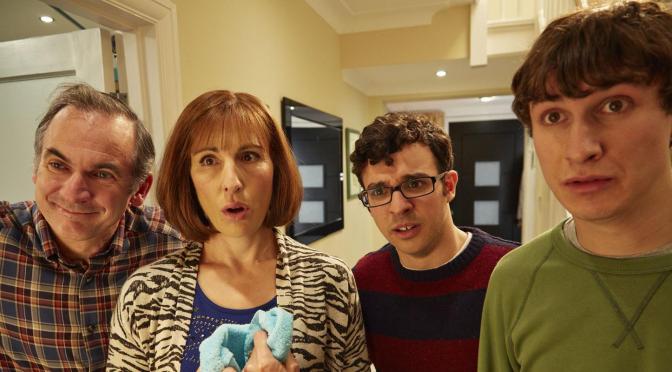
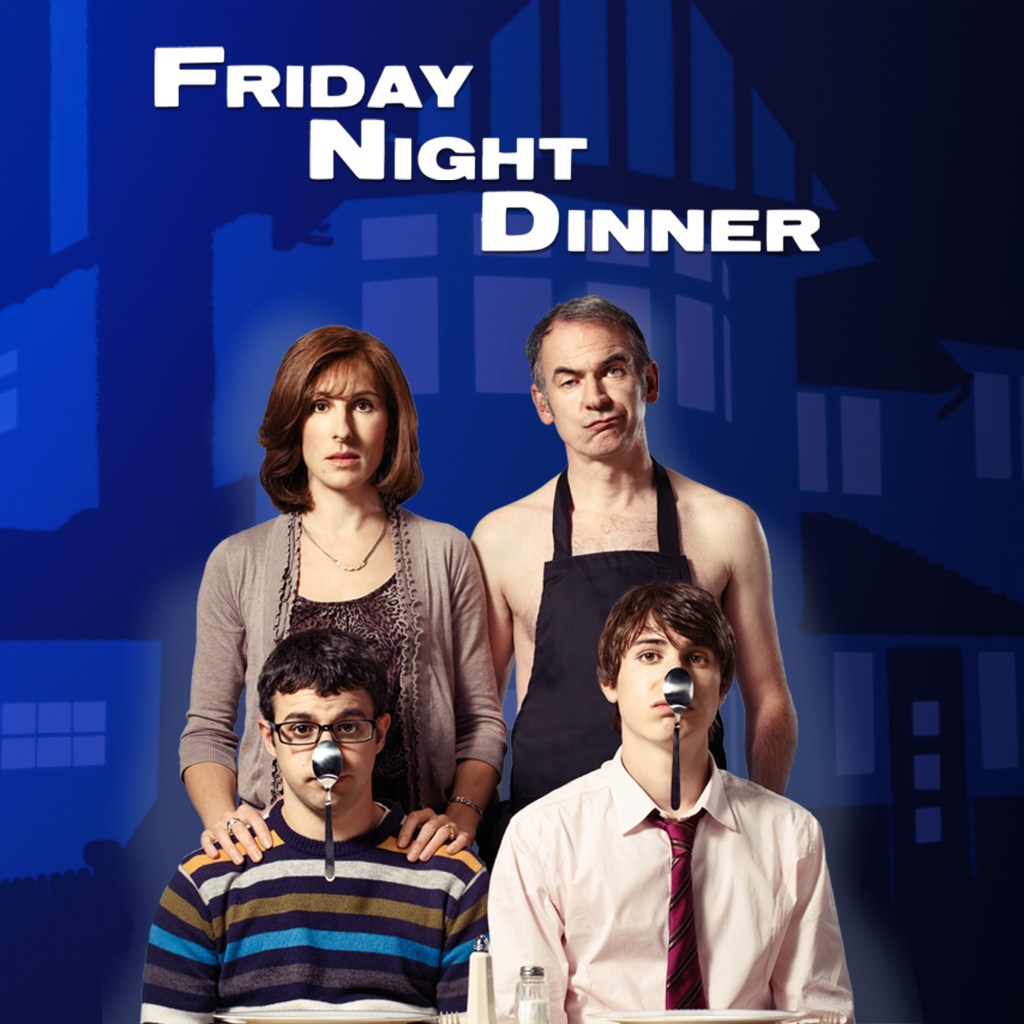
Friday Night Dinner establishes a very structured formula and sticks to it pretty much through all the six seasons. Each episode usually opens with the “bambinos” or “the boys”, Adam (Simon Bird) and his younger brother, Jonny (Tom Rosenthal), arriving at their parent’s home. There they are greeted by half-dressed father, Martin (Paul Ritter) — who often has his shirt off because he is “boiling” — and their doting mother, Jackie (Tamsin Greig). Several story strands then quickly unravel as dinner, more often than not, descends into chaos and farce. Dinner table conversation usually revolves around Mum and Dad asking if their sons have any “females” or romantic entanglements. Moreover, the parents often embarrass their kids by over-sharing details of their own sex life, or “nippy-nippy”, as they call it.
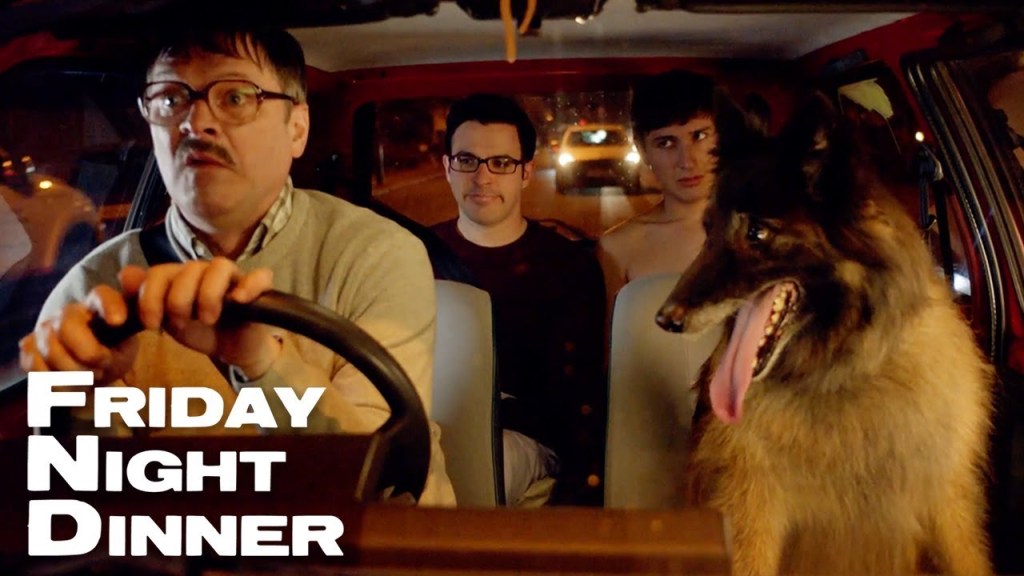
The humorous dialogue, family squabbles and constant banter is augmented by Jonny and Adam’s consistently hilarious prank pulling, plus the appearance of the Goodman’s very strange neighbour, Jim (Mark Heap) and his dog, Wilson. Where comedy series like Taxi had Latka and Seinfeld had Kramer, Jim is a similar oddball whose weird behaviour makes the rest of the family almost seem normal. I mean, the father Martin, while very eccentric in his ways, is positively sane when compared to Jim. Actually, I very much enjoyed Jim’s ridiculous attempts to “understand” the Jewish culture. His hapless ignorance often sees Jonny and Adam Goodman giving him false information about their traditions, leading to all manner of ridicule and misunderstanding. This is one of the many running gags the writer, Robert Popper, entwines throughout the six series. Such repeated jokes and funny catchphrases are the comedic fabric of a very well written and constructed show.
If you’re looking for a comedy that reinvents the wheel, then award-winning Friday Night Dinner is probably not for you. However, if you like traditional farcical comedy with fast-paced gags, physical slapstick and relatable everyday situations, then you should definitely check it out. The cast are absolutely brilliant, and all imbue their characters with likeability, empathy and just a touch of insanity. Tamsin Greig shines as the put-upon mother having to deal with her bickering sons, and hard-of-hearing husband, Martin, who is never far from causing a home disaster. I loved Paul Ritter as the in-his-own-world-hoarder, Martin, while Simon Bird and Tom Rosenthal add to the fun with their sharp comedy timing and physical hilarity. Above all else, the series works fantastically well as a comedy of errors about a warm-hearted, loving, if hopelessly dysfunctional family unit.
SIX OF THE BEST FRIDAY NIGHT DINNER EPISODES (ONE PER SERIES)
The Date – Series 1 – Episode 6 – Jackie invites a girl around for date with Adam. The only problem is Adam knows nothing about it, and he is mortified with embarrassment. At the same time, Jonny revels in Adam’s horror.
Mr Morris – Series 2 – Episode 2 – Jackie’s mother has a new gentleman friend and he has come to dinner. Mr Morris though, turns out to be very aggressive and ruins the night for everyone.
The Fox – Series 3 – Episode 3 – Martin has a dead fox in the freezer, which he intends to stuff. He asks the boys to help him extricate it to the shed without Jackie noticing. Safe to say things don’t go according to plan.
The Funeral – Series 4 – Episode 5 – Martin’s Uncle Saul has unfortunately passed away meaning they must spend the day at a funeral, and even worse, spend time with Martin’s mother AKA “Horrible Grandma.”
The Tin of Meat – Series 5 – Episode 2 – Aunty Val has been staying with the family as she is getting a divorce. Martin despairs as Val keeps throwing away all of his stuff. Finally, Martin and Val clash big time over a twenty-year old tin of meat.
The Caravan – Series 6 – Episode 1 – Martin purchases a crappy old caravan and, to Jackie’s dismay, parks it outside the house. Meanwhile, Jim has a new addition to his household, but becomes obsessed with the caravan toilet.
Based on articles and podcast: Dirty John by Christopher Goffard
Directed by: Jeffrey Reiner
Writers: Alexandra Cunningham, Christopher Goffard, Sinead Daly, Lex Edness, Kevin J. Hynes, Evan Wright, Diana Son, etc.
Producer(s): Melinda Whitaker, Christopher Goffard, Nan Bernstein Freed, Jonathan Talbert, etc.
Cast: Connie Britton, Eric Bana, Juno Temple, Julia Garner, Jean Smart, Shea Whigham, Alan Ruck, Kevin Zegers, etc.
Composer: Mark Mothersbaugh
Original networks: Bravo (USA) and Netflix (UK)
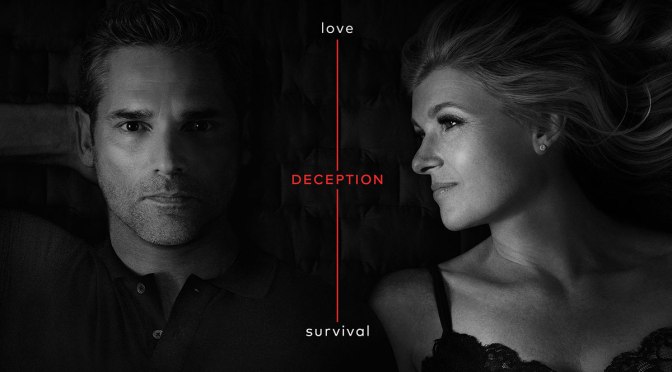
Such is the veracious appetite journalists, writers, filmmakers, TV producers, podcasters and the audience have for true crime stories, it’s no surprise that the life of con-man, John Meehan, and his victims, was turned into a thrilling eight-part drama shown on Bravo and Netflix respectively. After decades of cons, fakery, impersonations, drug addiction, robberies, lawsuits, insurance scams, harassment, spying, stalking and consistent lying, Meehan’s criminal activities came to an end as recently as 2016. Meehan had been trained in the “art” of the con by his father from a young age. Alas, his nature could not, unlike his sister, overcome such spurious nurture and Meehan was destined for a life of crime. They say truth is stranger than fiction and that is very much the case here with some of his venomous antics quite unbelievable. However, Meehan must have had so much charm and confidence to trick the many women he deceived, his character sadly stands as a heinous example of toxic masculinity.
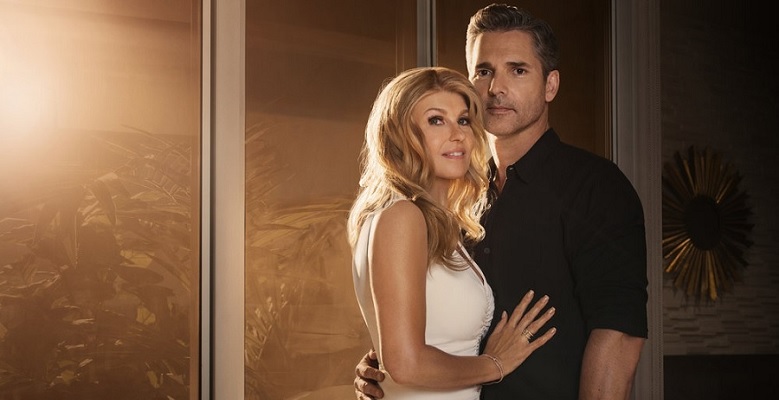
Eric Bana portrays John Meehan inDirty John (2018). Bana is an excellent actor and arguably, based on his breakthrough performance in the film, Chopper (2000), one who I thought would achieve possibly more critical acclaim. His career is full of sterling work though and his handsome looks and rugged charisma are perfectly utilised as John Meehan. Indeed, when we first encounter him he is meeting Debra Newell (Connie Britton) for a date. After a sticky start the romance develops very quickly. Debra is a wealthy interior designer with her own business, and her character is exceptionally kind, but somewhat gullible. Even when her kids, Veronica (Juno Temple) and Terra (Julia Garner), warn her that something is rotten about John, her desire for John overcome any doubts she may harbour. As Debra, Connie Britton gives a brilliant representation of a woman who is desperate for love and companionship. Having said that, Juno Temple steals every scene as the mouthy daughter, Ronnie, someone who is certainly way more suspicious of John than her good-natured mother.
Structured around John and Debra’s developing romance are flashbacks to John’s prior relationships and crimes. While he is shown to be a really bad man, context is given during scenes from his youth. His father, portrayed by the excellent character actor, Shea Whigham, has young John eating a Taco with glass placed in it, so he can scam the restaurant. Such twisted examples of dire parenting give reason to John’s later behaviour, however, they should not excuse his actions in adulthood. They also explain John’s dependency on narcotics. This addiction to opiates, as well as a sociopathic desire to lie and cheat, drive the character and narrative powerfully. In the scenes where Debra, having incredibly given John another chance, helps him go cold turkey, Bana’s acting levels are most impressive.
As the drama proceeds and Debra and her daughters begin to discover the crimes of John’s past they themselves become targets of his malevolence. John is a beast Debra has alas invited into her life and one feels so much empathy for her and his other victims. Moreover, even when cornered and accused John Meehan is at his most dangerous. He often savagely attacked his accusers and their family members with severe vengeance. But, the scariest part for me was that he was “qualified” to be a Certified Registered Nurse Anaesthetist; a profession he exploited to rob and feed his drug addiction. Ultimately, I can recommend Dirty John (2018), to those who enjoy absorbing crime dramas. Some shows, with such “real life” narratives, can be exploitational in tone. However, this is a high quality production with excellent acting, writing and directing throughout. It really was edge-of-your-seat viewing, with Eric Bana’s multi-dimensional acting delivering a true monster for the millennium.
UNDER-RATED CLASSICS #8 – THE NINTH CONFIGURATION (1980)
Directed, written and produced by: William Peter Blatty
Based on The Ninth Configuration by William Peter Blatty
Starring: Stacy Keach, Scott Wilson, Jason Miller, Ed Flanders, Robert Loggia, Moses Gunn, Joe Spinell, Neville Brand etc.
Music by: Barry De Vorzon
Cinematography: Gerry Fisher
*** MAY CONTAIN SPOILERS ***
“I became insane, with long intervals of horrible sanity.” ― Edgar Allan Poe
Sparked by uber-film critic Mark Kermode waxing lyrical about The Ninth Configuration (1980) in one of his cinema books, I was extremely pleased when I found a remastered 2016 reissue streaming on Amazon Prime. I don’t always agree with Kermode’s effusive praise of certain films, however, his opinion should always be respected. Having watched the film I can concur that it is indeed an under-rated classic. Just to clarify, for me, an under-rated classic can be a film I love, plus satisfy the following criteria:
Must not have won an Oscar.
Must not have won a BAFTA.
Must not appear in the AFI Top 100 list.
Must not appear in the IMDB Top 250 list.
Must not appear in the BFI 100 Great British films.
Must not appear in the all-time highest grossing movies of list.
While the writer and director, William Peter Blatty, won a Golden Globe for best screenplay, I feel that The Ninth Configuration (1980) is somewhat of a lost masterpiece. It was released at the same time as Ordinary People (1980) , The Elephant Man (1980) andRaging Bull (1980) and rarely seems to be discussed or praised at all these days. Well, aside from Mark Kermode’s gratefully received validation. Thematically, it is very strong as it deals with mental breakdown and illness amidst soldiers post-Vietnam. Moreover, it also contains memorable iconography within a curiously foreboding setting.
Based on Blatty’s 1978 novel, which in itself was a reworking of an earlier story called, Twinkle, Twinkle “Killer” Kane, The Ninth Configurationcentres the action in a grand chateau located, rather weirdly in America somewhere. The dark, shadowy castle (which was actually in Germany), is surrounded by deep forestation and is used by the U.S. government as an insane asylum for military personnel. Spring-boarding themes and ideas from movies such as: One Flew Over The Cuckoo’s Nest (1975), Mash (1970) and, in regards to its exploration of P.T.S.D., The Deer Hunter (1978), the narrative features a whole host of eccentric and over-the-edge characters. They include an Astronaut, Captain Billy Cutshaw (Scott Wilson), who went mad and sabotaged a space launch, Jason Miller as Lieutenant Frankie Reno, a soldier attempting to direct Hamlet with a cast of dogs; and the recently arrived, new psychiatrist, Colonel Vincent Kane (Stacey Keach). It is Kane’s and Cutshaw’s developing relationship which powers many of the philosophical and existential debates within the film’s incredible script.
For a film set in an asylum Blatty unsurpisingly uses dark humour, hysterical personalities and some incredibly funny lines of dialogue to propel an absurd first half. However, as Cutshaw and Kane’s connection grows deeper, the two men push each other into some very dark places. Exploring the slight gap between insanity and sanity is a tricky thing to get right in terms of tone, however, Blatty, is a brilliant writer and succeeds with a script that zig-zags the line between chaos and structure. He also benefits from an amazing ensemble cast of character actors who throw themselves heartily into the chaos on show. Scott Wilson and Stacey Keach are especially memorable in their intense and honest portrayals of soldiers pushed too far by their respective commands.
Overall, The Ninth Configuration (1980) is a forgotten masterpiece which deserves revisiting. I was blown away by the endlessly quotable dialogue and the risks Blatty took as a director. I mean, he opens with an incongruous Country and Western song-backed montage before the credits. This pop video beginning is jarring, but somehow makes sense in the end. Blatty then veers between farcical humour, crazed episodes involving the lunatics taking over the asylum, and philosophical and theological discourse within the therapy sessions. Finally, the film finishes with a violent and cathartic denouement, yet one which, given the dark existentialism that has unfolded, is amazingly full of hope, faith and optimism.
NETFLIX TV REVIEW – BETTER CALL SAUL (2020) – SEASON 5
Created by: Vince Gilligan, Peter Gould
Executive producer(s): Vince Gilligan, Peter Gould, Mark Johnson, Melissa Bernstein, Thomas Schnauz, Gennifer Hutchison,
Producer(s): Bob Odenkirk, Nina Jack, Diane Mercer, Robin Sweet, Gordon Smith, Jonathan Glatzer,
Directors: Bronwen Hughes, Norberto Barba, Michael Morris, Gordon Smith, Jim McKay, Melissa Bernstein, Vince Gilligan, Thomas Schnauz, Peter Gould,
Writers: Vince Gilligan, Peter Gould, Thomas Schnauz, Gordon Smith, Alison Tatlock, Heather Marion, Ann Cherkis,
Cast: Bob Odenkirk, Jonathan Banks, Rhea Seehorn, Patrick Fabian, Michael Mando, Tony Dalton, Giancarlo Esposito, etc.
Cinematography: Arthur Albert, Marshall Adams
Production company(s): High Bridge Productions, Crystal Diner Productions, Gran Via Productions, Sony Pictures Television
Original network: AMC
UK Release: Netflix
***MAY CONTAIN SPOILERS***
“We all make our choices. And those choices, they put us on a road. Sometimes those choices seem small, but they put you on the road. You think about getting off. But eventually, you’re back on it.” Mike Ermantraut – Better Call Saul (S5 – Episode 9)
One thought, of many, that I will take to my dying day is in regard to the business of the war on drugs. I get that people want to strive for intoxication in order to medicine themselves against the pain and struggle of everyday life. I get that humans love to get high and have a party. I get that people unfortunately get addicted to substances, so much so they turn into junkies existing only for their next fix. It may not make it right, but I get why people do drugs.
I also understand the business of making money selling drugs. The drug dealers and Cartels across the world earn a fortune farming, creating, distributing and selling narcotics. Moreover, Governments, across our civilisation, attempt yet fail, to stop them. I get all this. What I don’t understand though is when the Cartels make SO much money, and wall it up in safehouses, farms and apartments — why don’t they stop!! They have enough! Just retire. It’s a naive question, obviously. Because the money, drugs, lifestyle and power are also an addiction. It’s an insane game. It’s a bad road. It’s another indictment against the evil of humanity and our greed-driven society. Having said that the conflict with drugs and more specifically that of the Mexican drug Cartels is also providing the masses with some fine television drama.
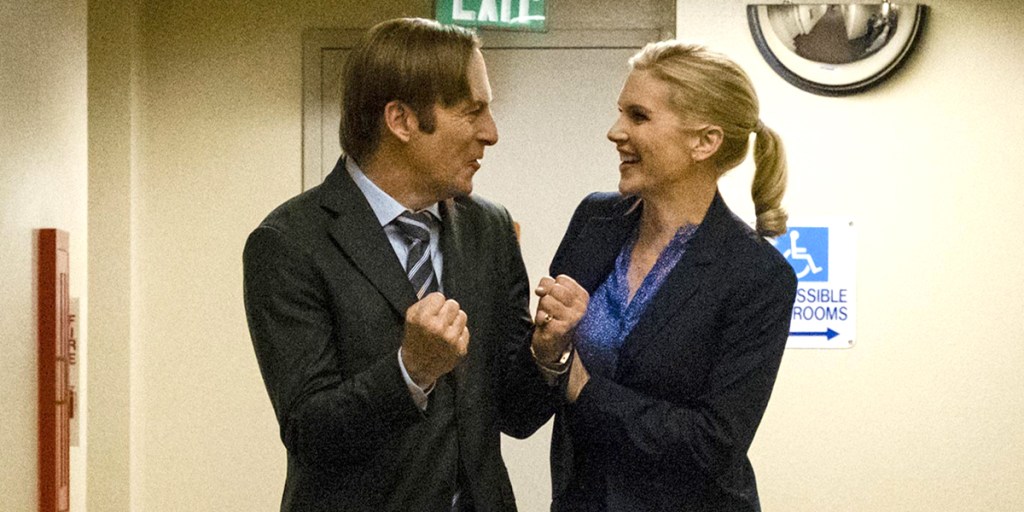
Bob Odenkirk as Jimmy McGill, Rhea Seehorn as Kim Wexler – Better Call Saul – Photo Credit: Nicole Wilder/AMC/Sony Pictures Television
Following hot on the heels of the gripping Season 3 of Cartel-driven thriller, Ozark (2020), comes Season 5 of Vince Gilligan and Peter Gould’s crime prequel to Breaking Bad — the brilliant, Better Call Saul. Once again, it proves itself an incredibly well written character drama, containing some of the finest acting around. I mean, some shows you watch, and they can be a struggle. But Better Call Saul is like digital silk, so smooth in its presentation. The overall style, colour scheme, imaginative camera angles and framing make the show a joy to experience. The story isn’t too bad either.
Having worked through his conflicts with his brother, Chuck (Michael McKean), in the previous sterling seasons, Jimmy McGill finally embraces the ‘Saul Goodman’ legal name and persona. In this season though, in attempting to create a niche making a living helping the lower level criminal element, Jimmy/Saul, eventually finds his legal skills being employed by the Salamanca drug Cartel. Here Saul makes decisions which drag him, and his partner, Kim Wexler (Rhea Seehorn), into a series of dangerous drug-related situations in and out of court. Indeed, episode 8, Bagman, is as good as crime drama gets in terms of narrative, conflict, characterisation and dialogue.
While Bob Odenkirk again sparkles as the cheeky ducker-and-diver-lawyer, Saul Goodman, it’s Rhee Seehorn as Kim Wexler who steals the show. The development of her character from corporate legal player to something more than a money-driven suit is fascinating. In addition, her shifting attitudes also reflect a possible adrenaline addiction to the danger that Saul’s questionable choices bring. Meanwhile, Jonathan Banks as experienced fixer, Mike Ermantraut; Giancarlo Esposito as drug boss, Gustavo Fring; and new cast member, Tony Dalton as Lalo Salamanca, all add to sheer acting charisma and talent on screen. Ultimately, the war on drugs will never be won because there is an insatiable demand for narcotics, and a more fervent demand to supply them. I’m just so happy I am very far removed from the ‘Badlands’ of the Mexican drug Cartels. No doubt after the latest season of Better Call Saul, Saul Goodman, will be feeling very much the same. After all, we are all eventually a prisoner of our own bad choices.
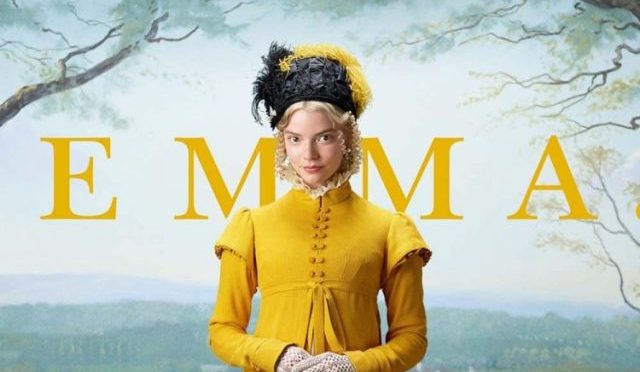
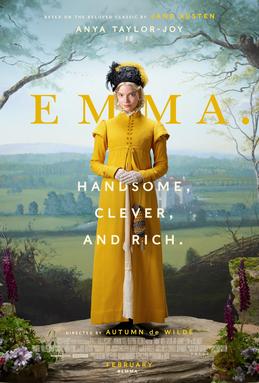
Produced by: Tim Bevan, Eric Fellner, Graham Broadbent, Pete Czernin
Screenplay by: Eleanor Catton
Based on: Emma by Jane Austen
Cast: Anya Taylor-Joy, Johnny Flynn, Josh O’Connor, Callum Turner, Mia Goth, Miranda Hart, Bill Nighy, etc.
Music by: Isobel Waller-Bridge, David Schweitzer
Cinematography: Christopher Blauvelt
**** MAY CONTAIN SPOILERS ****
With society and humanity constantly battered by recessions, pandemics, stock market crashes, famine, war, greed, prejudice, hatred, social media conflict, computer hacking, crime, exploitation, depression, addiction and any other number of apocalyptic threats, you can always rely on a good old-fashioned Jane Austen adaptation to create an escape from such woes. While I’m not a huge fan of Ms. Austen’s literary works, due mainly to ignorance on my part, I certainly recognise her genius as a storyteller. Indeed, she virtually single-handedly created, way back in the early 19th century, her own genre of romantic comedy in the Georgian-Regency period.
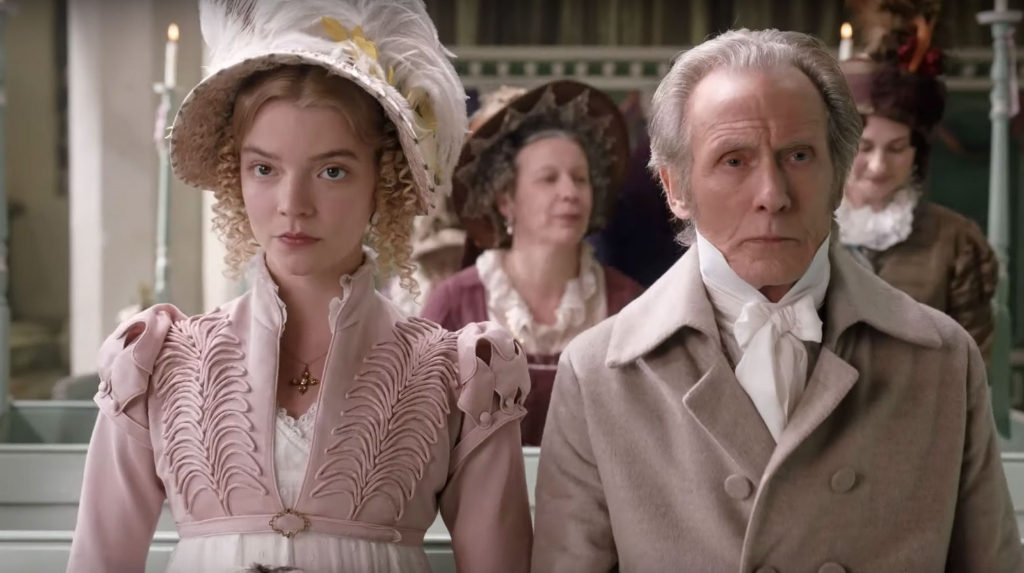
Emma was her fourth completed novel and released in 1815. It concerns the titular heroine, Emma Woodhouse. She is well-off, clever and someone who enjoys matchmaking and manipulating affairs of the heart. There have been many adaptations of the book on TV and film and aside from the loose Hollywood remake, Clueless (1995), I had not seen any of them. I only got roped into watching the latest version of, Emma (2020), directed by Autumn De Wilde, with Anya Taylor-Joy and Johnny Flynn in the leads, because my wife insisted on it. In marriage one must make sacrifices and compromises, so as it was our anniversary, I agreed to watch the film at home under “Cinema Rules.” I’m most glad I did too as I found it an extremely light but frothy work of entertainment.
As I had little knowledge of the book I went into the narrative of Emma (2020) unburdened by scanning the differences between novel and film. At two hours in length one expects there to be some omissions, however, I would not have noticed. What I did gather was that this was a bright and very attractive looking production. The costumes, props, landscapes and interior locations were all deftly presented with vibrant colour design. Likewise, the cinematography, camera movement and editing are also delivered very sharply. This lends the literary adaptation a cinematic pace, splendour and verve which I wholly enjoyed. Furthermore, the appealing cast are wrangled impressively too. Anya Taylor-Joy, as the energetic schemer Emma, is technically very gifted. She brings a metronomic pulse to the screen and her chemistry with Johnny Flynn really resonates. Flynn, who I really rate as an actor, imbued his character, Knightly, with both warmth and likeable fortitude. In supporting roles Bill Nighy brings his usual class to proceedings, while Josh O’Connor steals the early scenes with his hilarious turn as an eccentric young vicar.
Let’s be honest though, the story and characters are a bit of a lightweight soufflé that could collapse under close scrutiny. I mean we are really in first world problems throughout as Emma attempts to pair her young ward, portrayed by the lovely Mia Goth, with the vicar, only to find such attempts backfire, ultimately spiralling out of her control. As such one could find Emma quite annoying, immature and emotionally stunted. That, though, is where Austen’s strength of writing memorable characters really shines through. Because Emma is someone who, while potentially unlikeable, eventually learns her lesson and changes her controlling ways. Lastly, with a tremendously attractive cast and production, some mild complexity of character and finally Jane Austen’s singing wit and dialogue, Emma (2020), overall, offers a delectable frisson of escapist cinema.
Produced by: Jon Kilik, Spike Lee, Beatriz Levin, Lloyd Levin
Written by: Danny Bilson, Paul De Meo, Spike Lee, Kevin Willmott
Cast: Delroy Lindo, Jonathan Majors, Clarke Peters, Norm Lewis, Isiah Whitlock Jr., Mélanie Thierry, Paul Walter Hauser, Jasper Pääkkönen, Jean Reno, Chadwick Boseman etc.
Music by: Terence Blanchard, Marvin Gaye
Cinematography: Newton Thomas Sigel
Distribution: Netflix
***MAY CONTAIN SPOILERS***
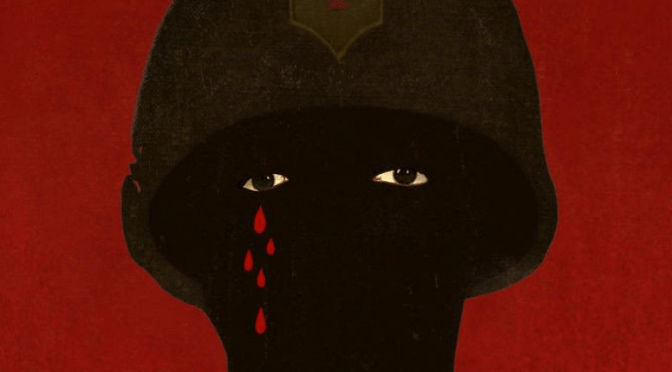
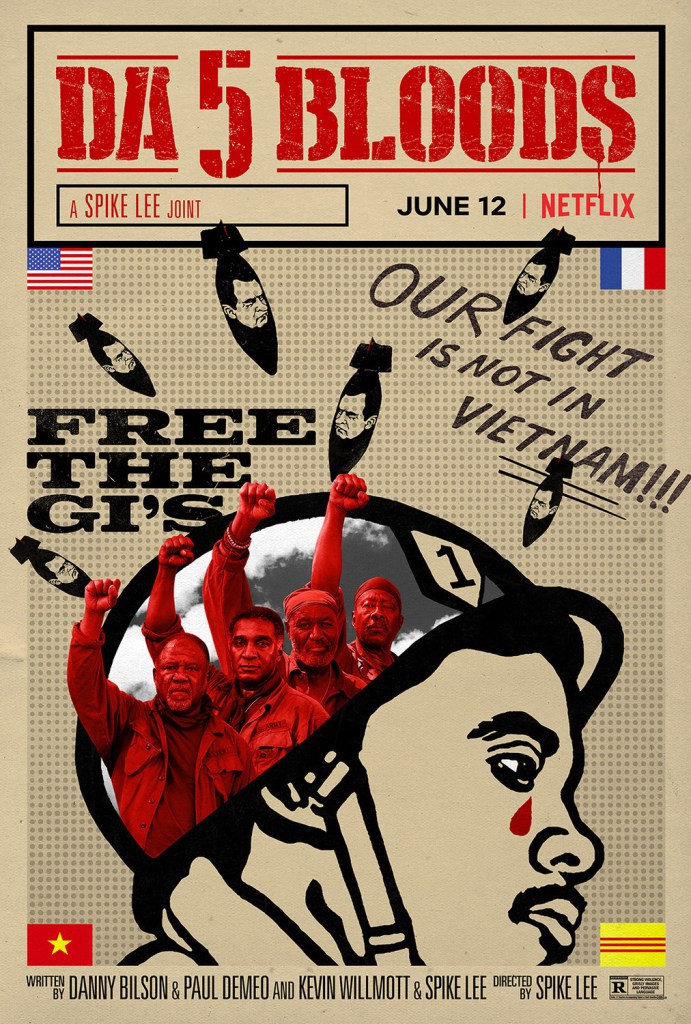
Shelton Jackson “Spike” Lee has been a prolific actor, director, producer and polemicist for some time now. An ultra-talented and outspoken cinematic artist, he has directed thirty fiction and documentary films since his debut feature film She’s Gotta Have It (1986). Plus, all manner of promos, commercials, music videos, short films and television series. An energetic firebrand of a director he has made films in many genres and is a risk-taker in subject, theme and style. Whether you agree with what he has to say he is a filmmaker who is always creating situations and characters who must be heard.
His latest film, Da 5 Bloods (2020), is a timely Netflix film release which encapsulates crime, heist, political, war, drama, Blaxploitation, comedy, documentary, love and experimental film genres. Lee has never been afraid of taking risks and sometimes his films have not worked because of it. However, with BlacKKKlansman (2018) he succeeded in making one of the best films of 2018 and should have won Best Film Oscar in my view. Da 5 Bloods (2020) grabs the power baton of Lee’s prior film and runs with it, delivering an entertaining, funny, thought-provoking, stylish and brilliant genre-blending story full of sustainable socio-political arguments in the era of the Black Lives Matter movement.
The narrative begins by establishing four aging Vietnam veterans, portrayed by the magnetic ensemble of Delroy Lindo, Clarke Peters, Norm Lewis and Isiah Whitlock Jr. They meet in Ho Chi Minh City in order to venture into the jungle and locate the remains of their squad leader. During some very stylised, richly colour-saturated and impactful flashbacks, it is revealed their friend, “Stormin Norman” (the charismatic, Chadwick Boseman), was killed in combat. Furthermore, and this is the money reason they are back in ‘Nam – there is army gold in those hills. Thus, the comrades set out to locate their friend’s body, and the gold, in order to find reparation and hopefully some form of redemption.
The film begins warmly as we enjoy the company of these great actors portraying reunited friends on an old boys outing. However, the film, as it introduces further subplots involving Jean Reno’s suspicious businessmen, Desroche and Delroy Lindo’s Paul crumbling mental state, moves into far darker territory the further the men get into the jungle. Lindo himself gives arguably the best performance of his career as a soldier grieving for his lost friend and desperate to get compensation for the unjust loss of so many lives in Vietnam. His character’s downward mental trajectory is one of the most powerful elements of Da 5 Bloods (2020). No doubt Lindo will be nominated come awards time and so he should be.
The cinematic excellence on show too from Spike Lee and his production crew is to be applauded too. Lee’s box of magic tricks includes: jump cuts, aspect ratio switches, colour saturation, Shakespearean soliloquies, documentary footage, flashbacks, conveyor-belt camera tracks, stills photography, slow-motion, direct address and many other devices. The exceptional cinematography is drenched in an opulent score from Terence Blanchard and the incredible voice of Marvin Gaye. I guess my main reservations about the film would be the elongated running time, with some scenes indulgently over-running. Moreover, there were also a couple of convenient plot coincidences which could have been ironed out. Nonetheless, with Da 5 Bloods (2020), Spike Lee has delivered another bravura mix of genre and socio-political filmmaking which, like classics such as The Treasure of Sierra Madre (1948) and Apocalypse Now (1979), stare into the dark heart of humanity and find greed, war and death there. Unlike those two films though, Da 5 Bloods (2020), also contains hope, light in the tunnel, and the idea that togetherness brings strength in the face of adversity.
FILMS THAT GOT AWAY #10 – CAPTAIN FANTASTIC (2016)
Written and directed by Matt Ross
Produced by: Nimitt Mankad, Monica Levinson, Jamie Patricof, Shivani Rawat, Lynette Howell Taylor
Cinematography: Stephen Fontaine
Music: Alex Somers
Cast: Viggo Mortensen, Frank Langella, Kathryn Hahn, Steve Zahn, George MacKay, Samantha Isler, Annalise Basso, Nicholas Hamilton, Shree Crooks, Charlie Shotwell, Trin Miller, Elijah Stevenson, Teddy Van Ee, Erin Moriarty, Missi Pyle, Ann Dowd,
***MAY CONTAIN SPOILERS***
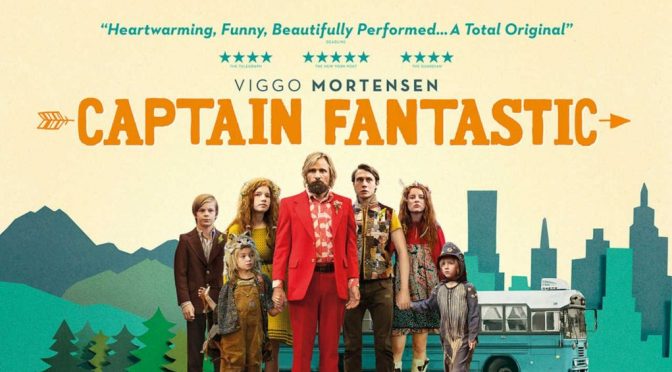
Have you ever thought about living “off the grid?” Maybe you already do. It’s something I have considered from time to time. Get out of the rat race and stop punching the clock. I don’t think I have the abilities or desire to do so though ultimately. Moreover, I would probably miss my television and home comforts like baths and central heating. Having said that, it’s always fascinating to watch films or TV programmes about characters or people who have tried to live outside conventional societal rules. Films like: Together (2000), The Commune (2016), Leave No Trace (2018) and Into the Wild (2007) are all excellent narratives which represent characters who, to varying degrees of failure and success, have eschewed civilization. Matt Ross’ excellent recent release, Captain Fantastic (2016), is another darkly humorous and poignant movie to add to that list.
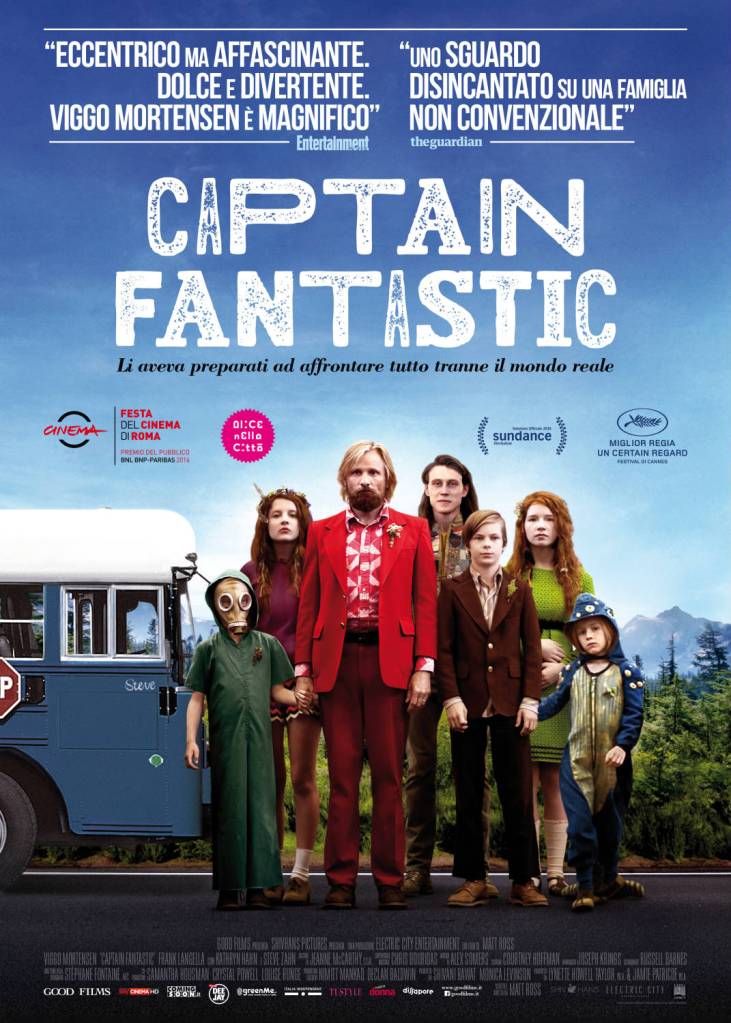
I’m not sure why I missed seeing Captain Fantastic (2016) first time round at the cinema, but I am so glad I caught up with it on Netflix. It stars the ever-brilliant Viggo Mortensen as Ben Cash, the father-of-six children, ages ranging from seven to late teens. Their mother, Leslie, alas, has suffered long bouts of depression linked to bipolar disorder and is currently in a mental health facility. Having established Ben and the children’s unorthodox living arrangements in a forest dwelling, the script throws them the tragic curveball of Leslie’s suicide. The family leave behind their strict hunting, education and exercise routine, as well as their self-built huts, shacks and wooden dens, to drive cross-country on their transformed mobile home, a bus called Steve, to attend Leslie’s funeral.
While grief and sadness hang heavy over the family unit, Matt Ross’ brilliant screenplay structures the film around that great American film genre — the road movie. As the bus, Steve, carries them away from the wilderness into civilisation, the clashing of the Cash’s alternative lifestyle and socially eccentric behaviour with society, provides a rich vein of comedic and dramatic moments. For example, Viggo Mortensen eating breakfast naked at a campsite while people pass by, and oldest son, Bodevan (George Mackay), romantically declaring his love to Claire (Erin Moriarty), who was just expecting a random hook-up, are both hilarious scenes. Similarly, Ben and Leslie, having tutored their kids at home quite impressively, have not factored in their apparent lack of socialisation in the outside world. Lastly, Ben’s candidness in matters of sex is shocking too and he conflicts with his sister, portrayed by Kathryn Hahn, who believes the children should have a more “normal” life.
Amidst the humour and hilarious culture clash punchlines, the director, Matt Ross, expertly weaves some heartfelt drama in their too. Ben fights with his father-in-law, Jack (Frank Langella) over Leslie’s funeral arrangements. Jack then attempts to take the children off him via legal means. Throughout all this Viggo Mortensen’s majestic acting performance anchors the film with searing emotional depth. His character must deal with the death of his wife and whether he has made the right decisions for his family. I mean, the kids have cuts and bruises from hunting exploits, possess strange invented names, wear unconventional clothes and do not celebrate Christmas at all. Furthermore, they eschew all organised religion in favour of celebrating academic philosopher, Noam Chomsky’s birthday. With the death of his wife and pressure from her family, it’s no surprise Ben feels cornered. However, Matt Ross’ film, Captain Fantastic (2016), lives up to the positive title and overall gives us a sense of warmth, community and love, proving that family unity is often an impossible bond to break.
Cast: Richard E. Grant, Paul McGann, Ralph Brown, Richard Griffiths
***CONTAINS SPOILERS***
“We want the finest wines available to humanity. And we want them here, and we want them now!” Withnail
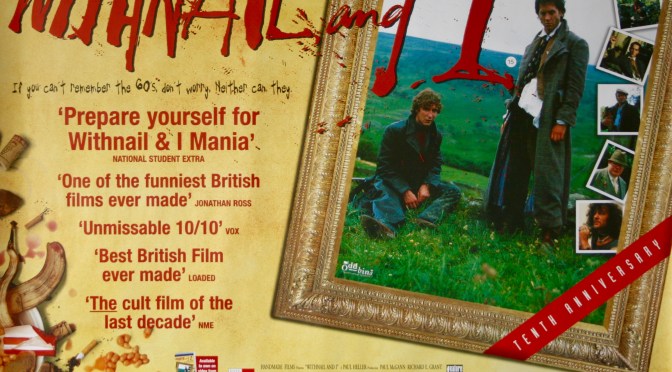
I am not one to believe in fate, but there has to be something magical about the random moment, at the age of seventeen, I was perusing my local video shop looking for a film to rent, and the cover of low-budget, British independent character drama, Withnail and I (1987), shone amidst the variety of Hollywood produced fodder. I picked up the box and for some reason the story of two unemployed actors mooching about at the fag end of the 1960s called to me. Perhaps it was the front cover featuring the debauched and worse-for-wear looking character of Withnail which drew me in? Or was it the casting of Paul McGann as the eponymous ‘I’, an actor I recognised from excellent TV drama, The Monocled Mutineer. Whatever the reasons, I rented the film and a special bond was formed forthwith. It lasts to this day.
Firmly in my top-ten-line-for-line-best-dialogue-ever-movies, Withnail and I (1987) simply bursts with memorable spats, insults, one-liners, and speeches. Another major strength of Bruce Robinson’s elegantly profane screenplay is the relationship between permanently inebriated and cowardly ‘thespian’, Withnail (Richard E. Grant) and his buddy, ‘I’ (McGann). It is a strange friendship full of mutual disrespect, petty bickering, and envy, but by the end of the film a kindly form of love is revealed. Withnail may seem an angry man, but ultimately, he’s using that ire to hide pain, sadness, and disappointment.
“I feel like a pig shat in my head.” Withnail
Richard E. Grant is incredible as the paralytic, pathetic and cowardly Withnail, who, along with ‘I’, laments a lack of career opportunities. Such bitterness, jealousy and ranting make him hugely obnoxious. However, Robinson’s exquisite writing and Grant’s subtly empathetic performance actually create an incredibly poignant character. Well, that and he’s absolutely hilarious, Indeed, it’s a hedonistic joy witnessing Withnail drinking every liquid known to humanity as he attempts to obliterate the now and tomorrow. Unbelievably, Richard E. Grant was teetotal, so director Bruce Robinson had to get him very, very drunk in preparation for a role he never bettered in his whole career.
Bruce Robinson, arguably, never reached the heights of Withnail and I (1987) again, although he does have other impressive writing credits. But this screenplay is one of the greatest ever written; conversely making it one of the funniest and tragic films of all time. Lastly, his often quoted but rarely bettered work is one of the greatest I have ever read, brimming with towering poetry, bilious insults, and drunken repartee. I mean there is little plot to the story of two actors getting drunk, going to the country, getting drunk and coming back. However, it remains one of my favourite films of all time, with one of the most memorable characters in Withnail.
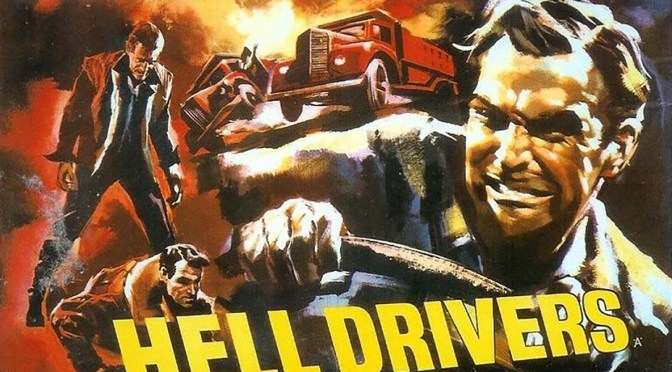
GREAT ENSEMBLE FILM CASTS #4 – HELL DRIVERS (1957)
Directed by: Cy Endfield
Produced by: Benjamin Fisz and Earl St John
Written by: Cy Endfield and John Kruse
Cast: Stanley Baker, Peggy Cummins, Patrick McGoohan, Herbert Lom, Sean Connery, William Hartnell, Alfie Bass, Sid James, David McCallum, Gordon Jackson, Jill Ireland etc.
**** CONTAINS SPOILERS ****
Often on this blog I will write about very well-known actors or films, however, sometimes it’s good to explore more forgotten cinematic gems. Hell Drivers (1957), is one such film from the past that certainly deserves revisiting. Not simply because it is an excellent action drama, but because it contains an incredible cast, with most of the players going on to have major parts in some iconic screen roles. I caught the film again on the cable channel, Talking Pictures, and it’s a really gripping low-budget British thriller.
The plot of Hell Drivers (1957) is quite simple. Tom Yateley (Stanley Baker), a drifter with an unknown past, turns up looking for work at Hawlett’s truck yard. Their group of drivers carry gravel/ballast from a quarry to site. The drama derives from the fact they must meet a certain quota per day, and this involves driving like maniacs to achieve this. Let’s just say that the Health and Safety executive would have a field day now. But that’s one of the strengths of the script. In post-war Britain men and women were desperate for work and money and therefore prepared to do anything to survive. Thus, the film, amidst the helter-skelter driving action, contains a strong social commentary in regard to the exploitation of the workers. There is of course camaraderie among the men, but fierce rivalries also develop. Such competitiveness drives the conflict within the film.
Cy Endfield, a solid American genre filmmaker, directs the ensemble cast brilliantly. What a cast it is too! It’s essentially a “who’s who?” of “before they were famous” actors, all combining to incredible effect. Stanley Baker as Tom carries the lead role. Baker would gain further success in Endfield’s war epic Zulu (1964), and become a renowned lead until his death at the age of 48. The supporting cast though, is something else. Patrick McGoohan, who plays the bruising antagonist, Red, would cement his fame in the incredible 1960’s cult classic, The Prisoner. Furthermore, we have the first Doctor Who in William Hartnell and of course, James Bond himself, Sean Connery. If that wasn’t all, The Man From Uncle star, David McCallum, features in an early role. So does the already established comedic actor Sid James. James would become synonymous with the quintessentially English, Carry On…, film series. Throw in great characters actors Herbert Lom, Gordon Jackson, Alfie Bass and a very young, Jill Ireland, and you have one hell of a cast; all starring in this excellent British film gem.









 The Cinema Fix presents