Tag Archives: drama

CINEMA REVIEW: ANOTHER ROUND (2020)

CINEMA REVIEW: ANOTHER ROUND (2020)

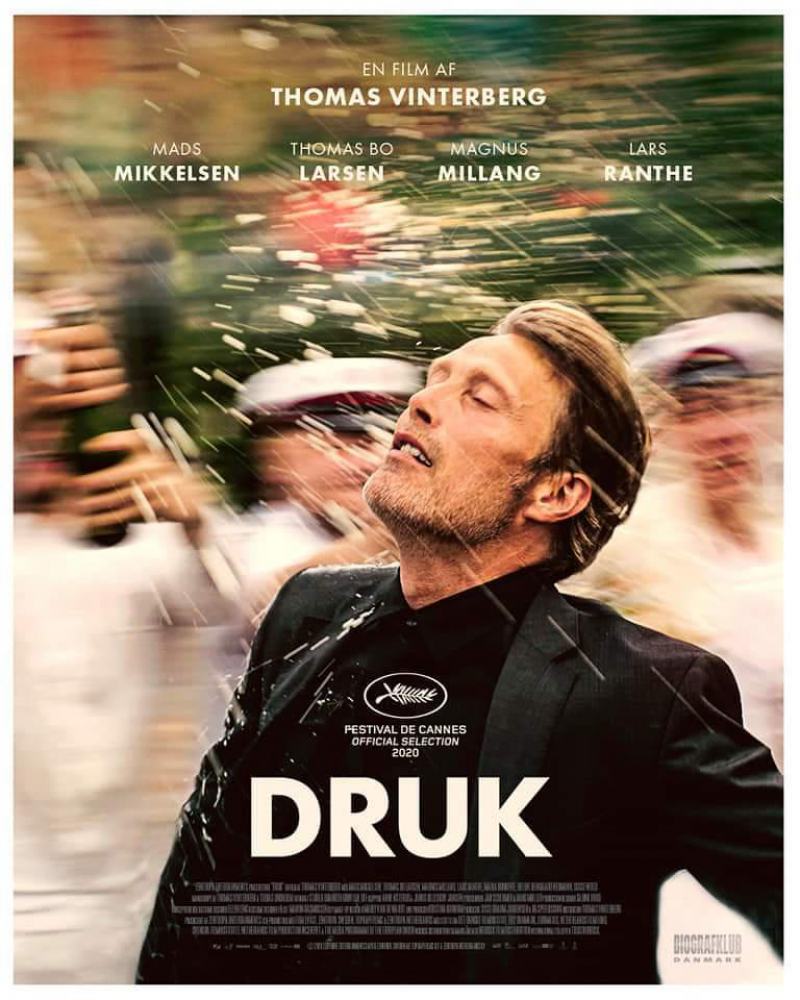
Danish: Druk (2020)

Directed by: Thomas Vinterberg

Produced by: Sisse Graum Jørgensen, Kasper Dissing

Written by: Thomas Vinterberg, Tobias Lindholm

Cast: Mads Mikkelsen, Thomas Bo Larsen, Magnus Millang, Lars Ranthe

Music by: Janus Billeskov Jansen

Cinematography: Sturla Brandth Grøvlen

***MAY CONTAIN SPOILERS***


See the source image

“First you take a drink, then the drink takes a drink, then the drink takes you.” – Francis Scott Key Fitzgerald


I love drinking alcohol. Perhaps TOO MUCH at certain periods of my life. Indeed, for many years I bordered on addictive reliance or at the very least some form of functioning alcoholism. I’ve binge drunk in my life, abstained for weeks and months on what one would call being “on the wagon”, and in a personal experiment I gave booze for almost twelve months in 2019. It was the longest year of my life. Thus, the old adage of doing everything in moderation certainly works for me where alcohol is concerned. It is all about balance.

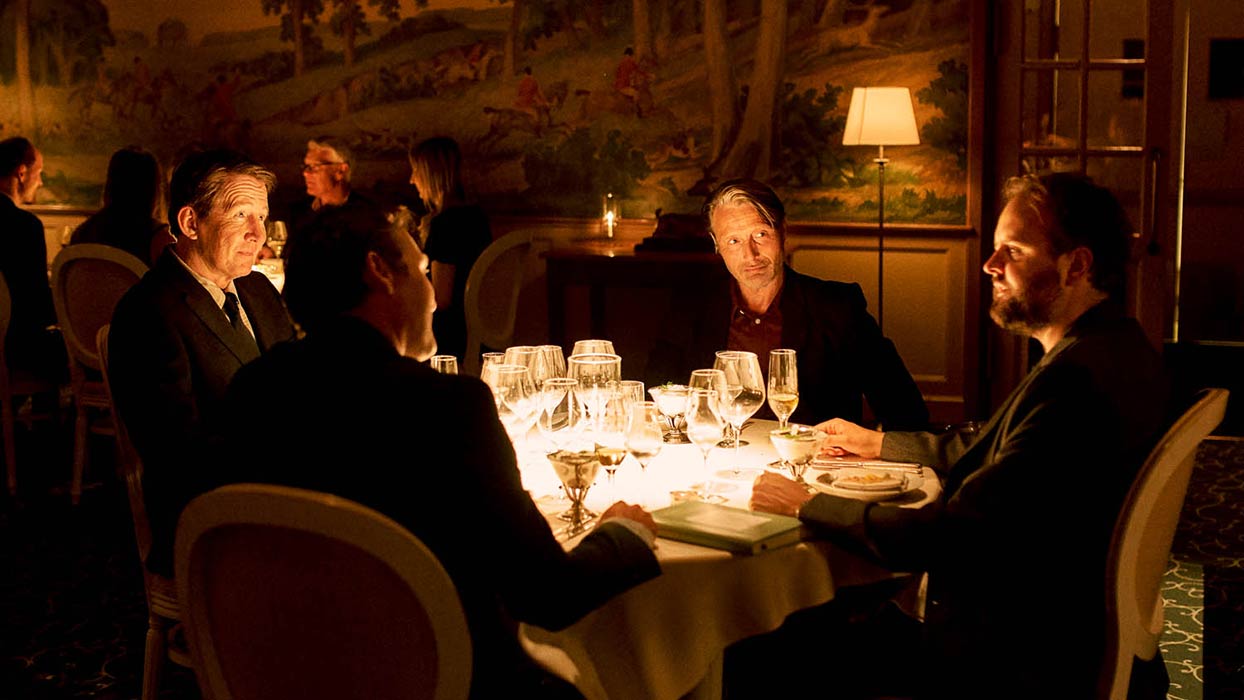
In the Danish film, Druk (2020), four middle-aged Danish men attempt their own experiment with alcohol. Apparently, stuck in a rut and suffering inertia where work, family and relationships are concerned, they decide to follow a theory by psychiatrist Finn Skårderud, who has posited that having a blood alcohol content of 0.05 makes you more creative and relaxed. So, the rules are put in place as Martin (Mads Mikkelsen), Tommy (Thomas Bo Larsen), Peter (Lars Ranthe) and Nikolaj (Magnus Millang) — all teachers of variant levels at the same school — set about drinking a specific amount of booze to see if their lives improve over time. Fun and games are certainly had as they begin their “theorizing”, with Martin especially finding his teaching and home life improving. Have the four friends found the secret to happiness, or are these just false victories, with alcohol providing a screen to hidden existential pain?


See the source image

The film is structured well in establishing the various, admittedly privileged, white males in crisis. Martin’s marriage is crumbling, and his students hate his teaching methods. Tommy lives alone, seemingly overcoming the loss of his partner. Peter appears the most together, but he suffers from a lack of love, while the more academic, Nikolaj, struggles with being an adequate father and husband. As their drinking increases the relative first world problems are not really solved, but become exacerbated as the alcohol exerts a tight grip on them. There are some hilarious scenes where the four get blind drunk and make fools of themselves. However, as they take drink after drink, the demon liquor begins to take them. As the film moves toward the final act, their previous drunken joy leads to both emotional and physical pain. In fact, tragedy is not far away for the friends.

It’s not surprising there are reports of a Hollywood remake because Druk (2020), has a perfect hook and set-up for a classic mid-life crisis comedy. However, with Thomas Vinterberg’s expert direction, evocative natural cinematography, and Mads Mikkelsen giving yet another acting masterclass, the humorous narrative soon leaves the laughs behind to become a bittersweet, yet still uplifting, work of Nordic cinema. I must admit I was slightly disappointed there wasn’t more debate and exploration of the alcoholic experimentation. Because ultimately the theory is used as more of a springboard for the examination of men, friendship and their issues. While Martin is a fine character to lead the journey, overall his story dominance meant the other three, especially Tommy’s arc, were mildly undercooked. Yet, I am nit-picking here, as overall I really enjoyed going a few rounds with my Danish peers and one probably won’t see a more joyous end to a film in many a year and many a beer!

Mark: 8.5 out of 11


MY CINEMATIC ROMANCE #23 – CHRISTIAN BALE

MY CINEMATIC ROMANCE #23 – CHRISTIAN BALE

“Essentially, I’m untrained, so I just go with my imagination and try to put myself as solidly as I can into the shoes of whatever person I’m going to be playing.” Christian Bale


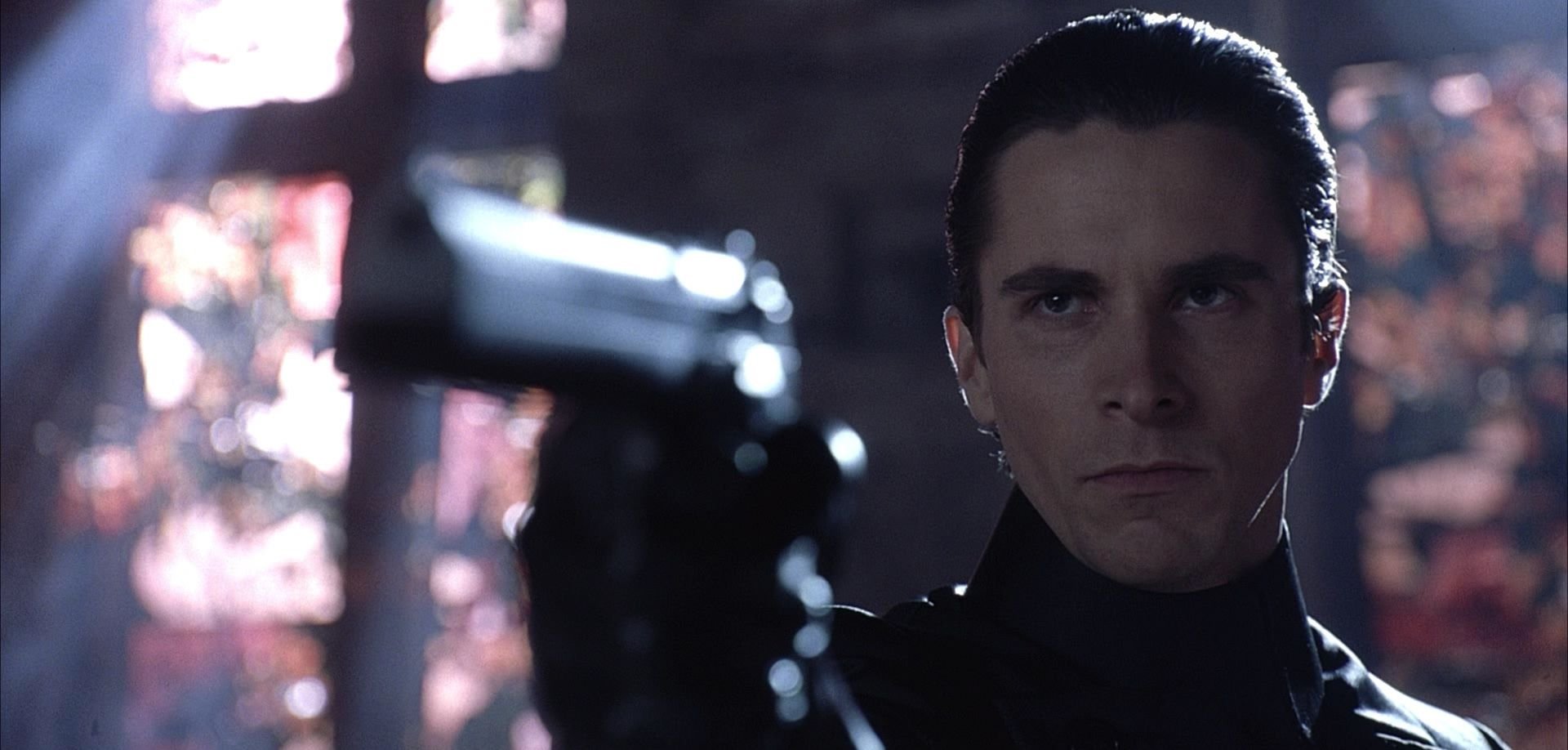
It’s easy to forget that Christian Charles Philip Bale was only thirteen years old when he was chosen out of thousands of young actors for a starring role in Steven Spielberg’s war drama, Empire of the Sun (1987). From there on in he has become one of the most formidable actors of a generation. Unlike many young actors he has not fallen by the wayside, but rather delivered a series of tour-de-force and award-winning performances in both independent and big budget Hollywood blockbusters.

So, for my occasional look at the major talents of cinema I have turned to one of the greatest actors of the last twenty-something years, and chosen five of his best roles to illustrate that. An intense and natural talent he has been in many outstanding films and some not so good. However, whatever role Christian Bale chooses he is usually never less than powerfully magnetic. I must say, I have not selected any of his portrayals of Bruce Wayne and that very fine Batman performance, notably from a physical perspective. Even though in, Batman Begins (2005), he created a stirring existential vision of a wealthy child growing out of grief into the dark saviour of Gotham City. I just think he has given five better acting transformations on screen. Here they are.

***CONTAINS FILM SPOILERS***


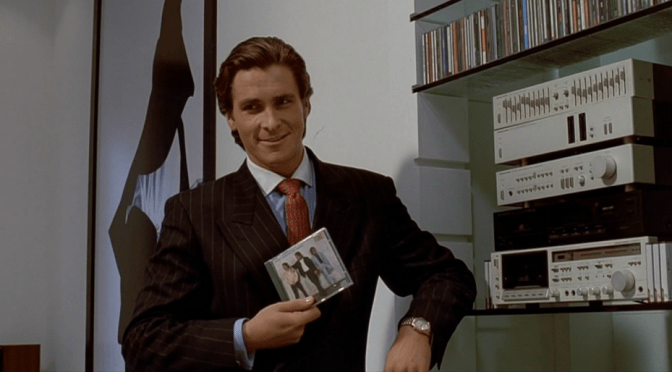
AMERICAN PSYCHO (2000)

Having tread water in a career-sense attempting to traverse the difficult bridge from child actor to the leading man we have come to know, Christian Bale got a break in Mary Harron’s adaptation of Bret Easton Ellis’s notorious novel, American Psycho. And boy – did he make the most of it! I watched the film again recently and I have to say, other than perhaps Leonardo DiCaprio (who was originally cast in the role), no other actor could have delivered such an unhinged, evil and funny (yes he’s hilarious) portrayal of the Wall Street banker-turned-serial killer, Patrick Bateman. It’s a dangerous and sick character who Bale somehow manages to make you despise, yet simultaneously humanise.


THE MACHINIST (2004)

Possibly the greatest Christian Bale performance that hardly anyone has seen. Oh you have seen it? Wow, what an intense performance Bale gives as lonely blue collar worker, Trevor Reznik. Reznik is a haunted man who cannot sleep. He is also anorexic as Bale reduced his weight to 62kg for the role, demonstrating, not for the last time, a dangerous method of obsessive physical transformation. It works too as the skeletal Reznik struggles to overcome a slow descent into madness, with Bale, once again, showing incredible commitment to his craft in this under-rated and haunting noir nightmare of a film.


THE FIGHTER (2010)

While Mark Wahlberg was excellent as the lead actor in David O. Russell’s profile of tough Massachusetts fighter, Micky Ward, Bale absolutely steals the thunder with an incredible acting performance as Ward’s half-brother, Dicky Eklund. As a study of the nefarious curse of addiction, Bale makes the charismatic, but unreliable, Ekland both a loathsome and somehow empathetic character. Because while his crack cocaine addiction drives him to make bad choices for both him and his brother, there is at his heart a loving person battling to win over his illness and make his brother a champion. A story about family and human beings overcoming the odds, Bale punches out another memorably flawed individual in The Fighter (2010), deservedly winning an Oscar in the process.


HOSTILES (2017)

This revisionist Western did not get nearly enough attention on release. Yet buried in here is another quietly intense acting performance from Christian Bale. His other Western, 3:10 to Yuma (2007) is the more entertaining film, but in Hostiles (2017), he gives a much more complex characterisation as Captain Joseph Blocker. The weight of guilt and pain and death hang heavy on Blocker following years of brutal conflict. Scott Cooper’s film conveys the depressing murderous times borne out of the greedy need for progress. Hatred and white man’s guilt drives his character as Bale’s soldier initially refuses to take Chief Yellow Hawk back to his homeland. Is it more because of the deaths of his own men on the battlefield or because he does not want to face up to his own crimes against the Native Americans? The film explores this question superbly with Bale at the heart of the conflict from savage beginning to bloody end.


VICE (2018)

While I agree with critics of Vice (2018), that it is cartoonish and simplistic, it is also a brilliant and scabrous work of satire. Yes, sure it’s preaching to the liberal and left-winged Hollywood choir, but it definitely presents a fascinating snapshot of Dick Cheney’s rise from alcoholic wastrel to powerful political figure. I mean let’s face it, Cheney, based on his reign in U.S. politics, is arguably one of the most dangerous men who ever existed. In Adam Mckay’s black political comedy Cheney is shown to be a manipulative puppet-master to Bush’s marionette President. McKay’s film, while certainly one-tracked, powers along picking apart one of the most shadowy political figures of recent years. But what about, Bale? Why take a role where he had to live on doughnuts for year to gain the weight required for the film? Well, because he likes to challenge himself and Bale should have won the Best acting Oscar! Rami Malek was decent as Freddie Mercury, but Christian Bale is astonishing. Fair enough, he takes a real person and delivers an emulation performance, but he also brings to Cheney to life with such intelligent style. Of course, the physical transformation takes the headlines, but in terms of emotion and mentality he really raises the bar. Cheney may be an enigmatic character but Bale brings menace, whispers and evil to the role. There is also a sly humour there too which makes Bale’s Cheney another unforgettable monster he’s brought to the screen.


AMAZON FILM REVIEW: THE MAURITANIAN (2021)

AMAZON FILM REVIEW: THE MAURITANIAN (2021)

Directed by: Kevin Macdonald

Produced by: Adam Ackland, Michael Bronner, Benedict Cumberbatch, Leah Clarke, Christine Holder, Mark Holder, Beatriz Levin, Lloyd Levin, Branwen Prestwood-Smith, etc.

Screenplay by: M.B. Traven, Rory Haines, Sohrab Noshirvani

Based on: Guantanamo Diary by Mohamedou Ould Slahi

Cast: Jodie Foster, Tahar Rahim, Shailene Woodley, Benedict Cumberbatch, Zachary Levi etc.

Music by: Tom Hodge

Cinematograph: Alwin H. Kuchler

***CONTAINS MASSIVE SPOILERS***


“…a writ requiring a person under arrest to be brought before a judge or into court, especially to secure the person’s release unless lawful grounds are shown for their detention.” — Basic definition of Habeus Corpus


Mohamedou Ould Slahi is a Mauritanian man who was held for fourteen years from 2002 to 2016 without charge in the Guantanamo Bay detention camp. FOURTEEN YEARS without a trial. Let that sink in.

If ever there was a living embodiment of a Kafkaesque experience then this is that. Surely, whatever crime you have or haven’t committed you should be presented to a court of law and evidence be brought to try you for the alleged crimes. Clearly, the United States have, in this singular case against Mohamedou Ould Slahi, by denying him a trial — plus torturing him for years too — committed a heinous war crime. Yes, the 9/11 atrocities were abominable acts of violence, but that does not give anyone the right to wreak revenge against other human beings without concrete evidence to justify such acts. It’s a basic tenet of existence that separates us from the beasts in the jungle, every person deserves a fair trial! To be honest the U.S. administration who were responsible for this and and many other crimes are worse than animals.

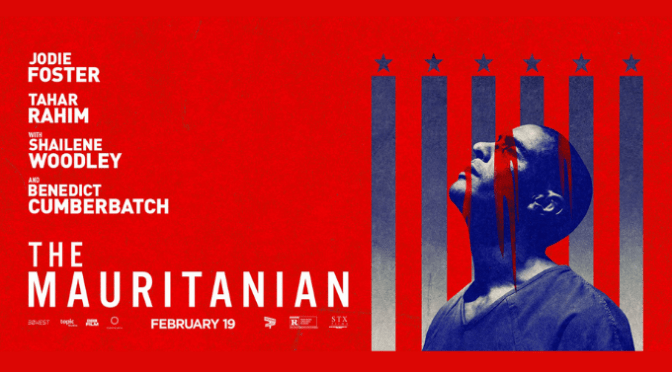
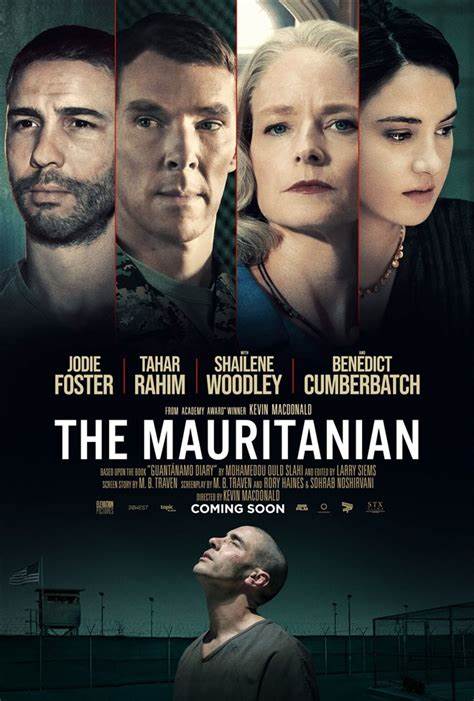
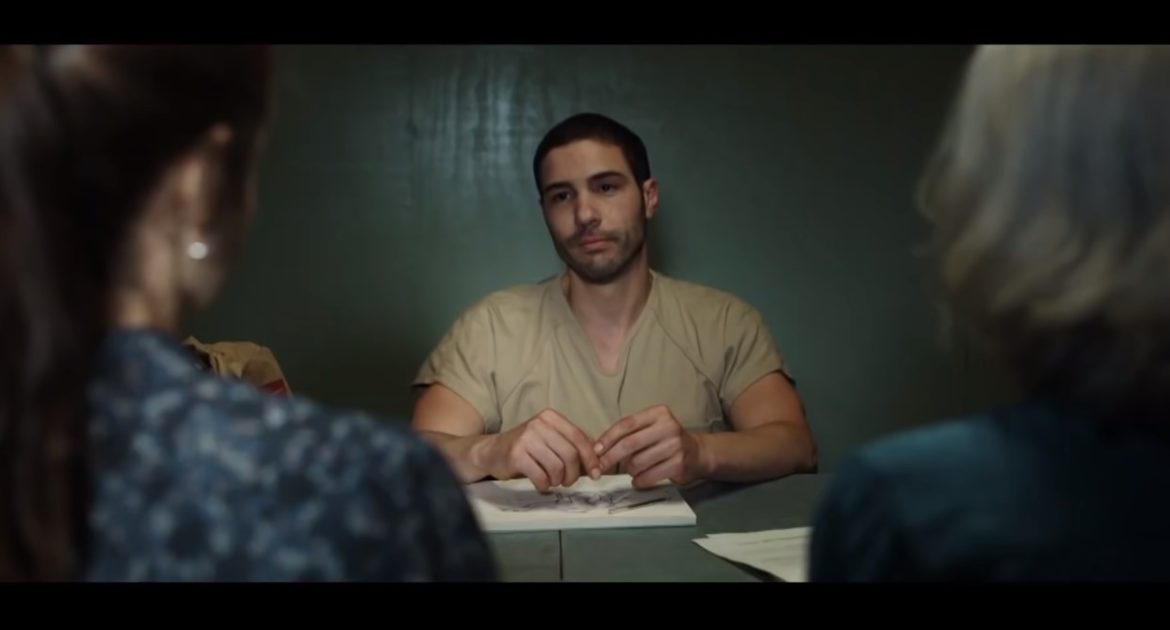
The Mauritanian (2021) is an adaptation of Mohamedou Ould Slahi’s best selling memoir, Guantanamo Diary. It opens with Ould Slahi (Tahar Rahim) attending a wedding in his place of birth. He is then picked up by local Mauritanian police and after that is imprisoned indefinitely, unknown to him, by the American military. The structure of the film compellingly builds his experiences in jail and the brutal torture he endures as the Americans attempt to gather intelligence to prove that he is a key member of the terrorist cells who organised the 9/11 attacks. As the story reveals his horrendous ordeal, lawyers represented by Nancy Hollander (Jodie Foster) and Teri Duncan (Shailene Woodley) take up his case to, at the very least, enable Ould Slahi to get a fair trial.


As well as highlighting the horrors of how Ould Slahi was treated this film is a damning indictment of American foreign policy, notably under the George Bush administration. The fact that Ould Slahi and his lawyers were successful in achieving a win against his imprisonment was not the end of his entrapment. You honestly won’t believe what occurred even after he won his case. But what about the film you may be asking? Well, I am just staggered this and many other sitautions occur in the world so this is more of an emotional review than a cinematic appraisal.

Overall, The Mauritanian (2021) is an exceptional drama which is directed effectively by seasoned filmmaker, Kevin Macdonald. As Ould Slahi, Tahar Rahim is absolutely exceptional. He brings a humanity and humour to the character’s struggle. What I absorbed most from his portrayal, and this is reflected in a moving credits sequence excerpt, is how Ould Slahi retained his humour even in the most trying times. Furthermore, while their character’s smack of white saviour personalities, the legal team — based on the real people — are expertly represented by Jodie Foster and Shailene Woodley. Foster especially shows her usual sterling gravitas in the role. Benedict Cumberbatch, arguably miscast as the military lawyer suffering a crisis of conscience, gives his usual excellent performance.

Lastly, The Mauritanian (2021), because of a slightly choppy screenplay, I felt the book deserved a longer telling via a television series. Yet, the film remains an important narrative about how bloodlust, greed and desire for revenge means humans commit horrific acts in the name of war. Mohamedou Ould Slahi was denied his freedom and human rights for crimes never proved. How he survived is an incredible feat of human endurance. Thus, whether he was innocent or guilty his freedom was earned and then some.

Mark: 9 out of 11


“CINEMA” REVIEWS: NOMADLAND (2020) & SOUND OF METAL (2019)

“CINEMA” REVIEWS: NOMADLAND (2020) & SOUND OF METAL (2019)

Due to the being very busy at my day job I have fallen slightly behind with my film reviews. Thus, I am consolidating two quality dramas I have watched in a double bill review presentation. In fact, it is quite apt that these two films are critiqued together as they are both Oscar winners, both focus on an individual’s struggle against difficult personal trauma, both films represent an alternative vision of America and are told in a meditative and absorbing style.


NOMADLAND (2020)

Directed and written by: Chloé Zhao

Produced by: Frances McDormand, Peter Spears, Mollye Asher, Dan Janvey, Chloé Zhao

Based on: Nomadland: Surviving America in the Twenty-First Century by Jessica Bruder

Cast: Frances McDormand, David Strathairn, Linda May, Swankie etc.


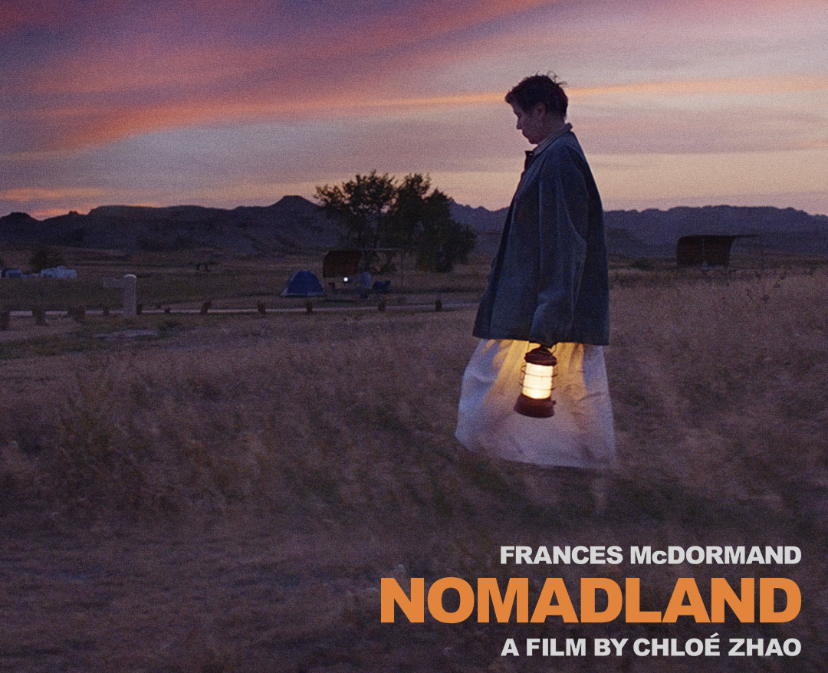
Winning the Oscar for Best Picture, Best Director and Best Actress in a leading role, perhaps upsold my expectations for Nomadland (2020). It is an example of amazing filmmaking without being a particular brilliant film. I get why it won Best Picture, but that was more to do with there not being one specifically superb standout film among the nominees. Frances McDormand isn’t even very memorable as the lead protagonist, Fern. Don’t get me wrong she is highly empathetic and admirable in her resilience to stick to the road, living in her van and scrapping by independently. However, the film is one-paced. It is all set-up and little pay-off, with the odd flat tyre, van breakdown and Fern having to shit in a bucket providing occasional spikes in the drama.

Much praise though goes to the incredible cinematography and Chloe Zhao’s intelligent and naturalistic direction. She really gets into the weeds of the flailing American dream, as well as providing insight into the lives of working-class people disenfranchised by American capitalism. Moreover, Zhao’s use of non-professional actors is quite astounding, as at times you feel like you are watching a pseudo-documentary. Ultimately, Nomadland (2020) though, is arguably too meditative and glacially paced. It remains a brave and quietly powerful film, but it’s just too quiet for my dramatic needs.

Mark: 8 out of 11


SOUND OF METAL (2019)

Directed by: Darius Marder

Produced by: Bill Benz, Kathy Benz, Bert Hamelinck, Sacha Ben Harroche

Screenplay by: Darius Marder, Abraham Marder

Cast: Riz Ahmed, Olivia Cooke, Paul Raci, Mathieu Amalric etc.


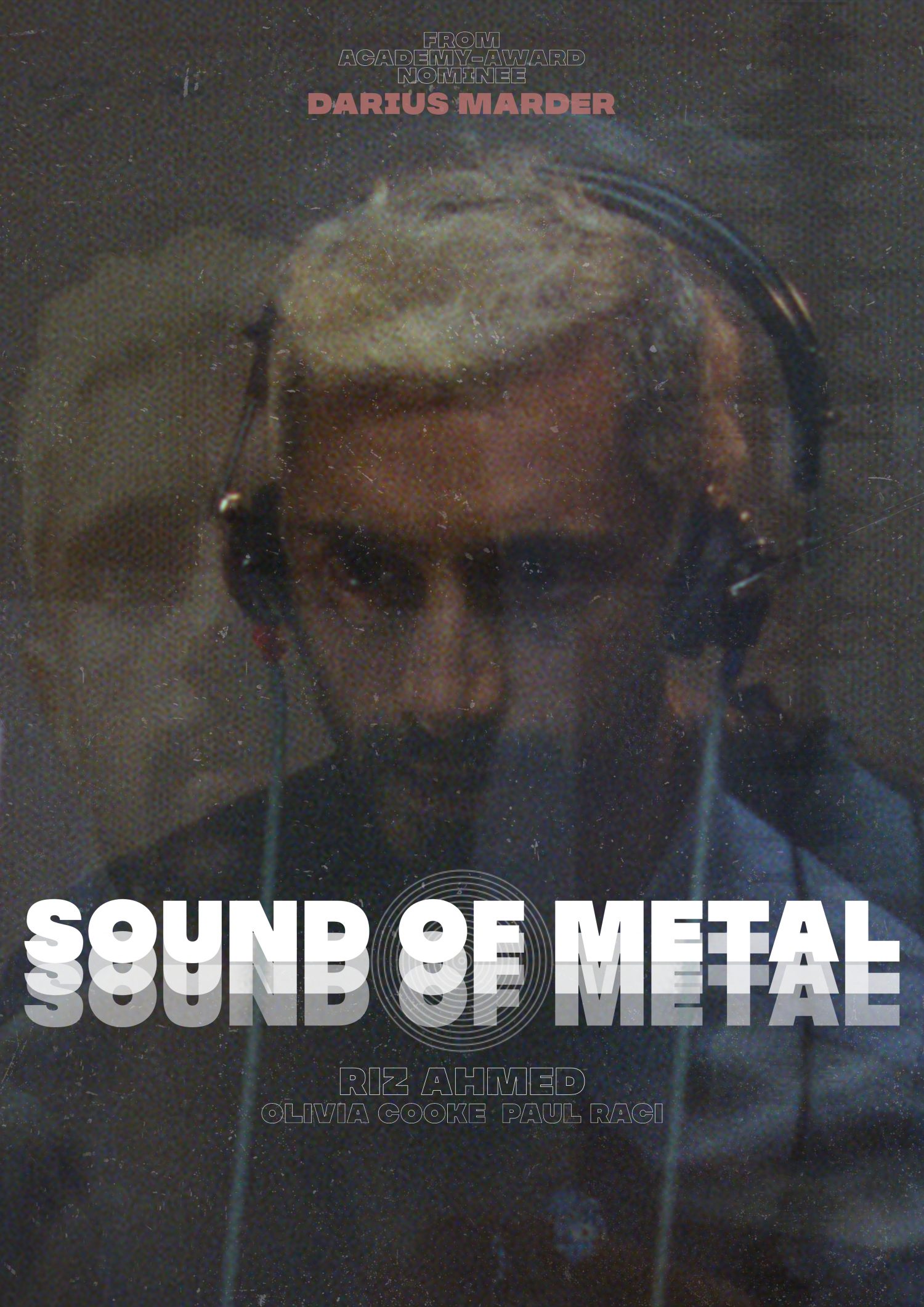
Sound of Metal (2019) is another quiet drama, however, it really begins with a load of noise. It derives from Riz Ahmed’s drummer, Ruben, thrashing on stage with his girlfriend, Lou, as she fronts their heavy metal band giving an energetic performance to a lustful crowd. Ruben and Lou live out of their R.V. travelling and gigging around America, but he soon discovers his hearing has been severely damaged. Doctors offer hope in the form of an operation, but it’s extremely expensive. As Ruben is an addict, he also seeks spiritual help at a shelter for deaf people in recovery. There he meets, Joe (Paul Raci), the facilitator at the shelter and Ruben’s slow road to recuperation begins.

Riz Ahmed is outstanding as Ruben, a talented, bright and strong-willed individual who finds himself tested by a loss of hearing. His journey is a slow-moving but compelling one. I especially enjoyed the process where Ruben learns to cope, sign and believe that deafness should not be considered a disability. Indeed, the scenes Ruben shares with the wiser Joe are incredibly moving and thought provoking. Further, Darius Marder directs with a sure hand and really uses the sound effects powerfully, getting us into Ruben’s head both literally and figuratively. Overall, Sound of Metal (2019) beats along steadily but with incredible purpose and rhythm. It teaches us that losing a major sense need not be the end of one’s life, but rather the beginning of an altogether different one.

Mark: 9 out of 11


NETFLIX FILM REVIEW: PIECES OF A WOMAN (2020)

NETFLIX FILM REVIEW: PIECES OF A WOMAN (2020)

Directed by: Kornél Mundruczó

Produced by: Kevin Turen, Ashley Levinson, Aaron Ryder

Screenplay by: Kata Wéber

Based on the play: Pieces of a Woman by Kornél Mundruczó and Kata Wéber

Cast: Vanessa Kirby, Shia LaBeouf, Ellen Burstyn, Molly Parker, Sarah Snook, Iliza Shlesinger, Benny Safdie, Jimmie Fails etc.

***THIS REVIEW CONTAINS SPOILERS***


Every human being has been present at one birth at least – namely their own. Not that one can remember or recall the experience, however, it is something all of us have in common. Many more people, either as parents, or life partners, or medical staff, or relatives and friends have also witnessed a child being born into the world. Birth is both a magnificent and tumultuous wonder of nature. Moreover, it can, while delivering a miracle into the world, be extremely painful for the person giving birth. The incredible progress of medical science means that it has never been safer. However, as my partner experienced when our son was born, it can be traumatic if the procedure has issues. Thankfully, our son was fine after the birth, but almost eighteen-hours in labour on an under-staffed and chaotic maternity ward was stressful. Thus, I was able to identify very much with the characters in the searing grief drama, PIECES OF A WOMAN (2020).

When I say identify, I mean I felt like I was really with the couple, Martha (Vanessa Kirby) and Sean (Shia LaBeouf) as prospective parents. Martha is heavily pregnant and when Sean returns from work as an engineer she goes into labour. Sean works on building huge bridges. Yet, as events unfold within Pieces of a Woman (2020), bridges are the last thing built metaphorically and emotionally. The opening scene is a cinematic tour-de-force which portrays the couple’s home birth in one long moving and harrowing take. Brilliantly filmed and acted, by Kirby and LaBeouf, the one-take device is employed to devastating effect as it impacts emotional power rather being a filmic gimmick. When their first-choice midwife cannot attend, the replacement, Eva (Molly Parker) arrives. The birth is not without problems and the sequence is both intense and suspenseful. The filmmakers really put you in the heart of the trauma. Quickly concern for the new-born child becomes relief when it is born alive. Alas, Martha and Sean’s joy suddenly turns to misery when nature deals the couple a fateful blow.


After the relentless tension of the opening act, Pieces of a Woman (2020), along with Sean and Martha, enters a redoubtable period of grieving. Martha’s personality prior to the event seemed outgoing and confident. After the death of her child she, unsurprisingly, transitions into an insular and hollow shell. Sean, on the other hand, is more explosive. He openly cries and shouts and self-harms by relapsing back into drug and alcohol addiction. Sean, more than Martha, attempts to fix their broken relationship, but Martha’s pain is too great and the distance between them only increases. Martha’s mother, Elizabeth Weiss (Ellen Burstyn), attempts to get some control back by taking court action again the midwife, Eva. Further, she desperately attempts to thwart her daughter from allowing the child’s body to be donated to medical science. In such moments Ellen Burstyn’s performance is absolutely formidable. Indeed, the scenes she shares with Vanessa Kirby are some of the best in the film.

Based on the play of the same name, Pieces of a Woman (2020), is overall an utterly gruelling emotional experience. I must admit I found it difficult to reach Martha’s character as she was so isolated for much of the film. However, that is exactly what the writer, Kata Wéber, and director, Kornél Mundruczó want you to feel. The loss of a child is never going to be an easy experience and it is something an individual will never get over. As I followed Martha’s journey intensely the smallest incremental shift in her personality is felt massively. Personally, I would have preferred more focus on Molly Parker’s character during the second act and more outwardly emotional scenes. Because those within the film featuring LaBeouf, Kirby and Burstyn are so compelling. Vanessa Kirby, in particular, is stunning as a woman cut-off from the world by this devastating grief, making Pieces of a Woman (2020) a memorable human drama that makes you feel fortunate to be alive.

Mark: 9 out of 11


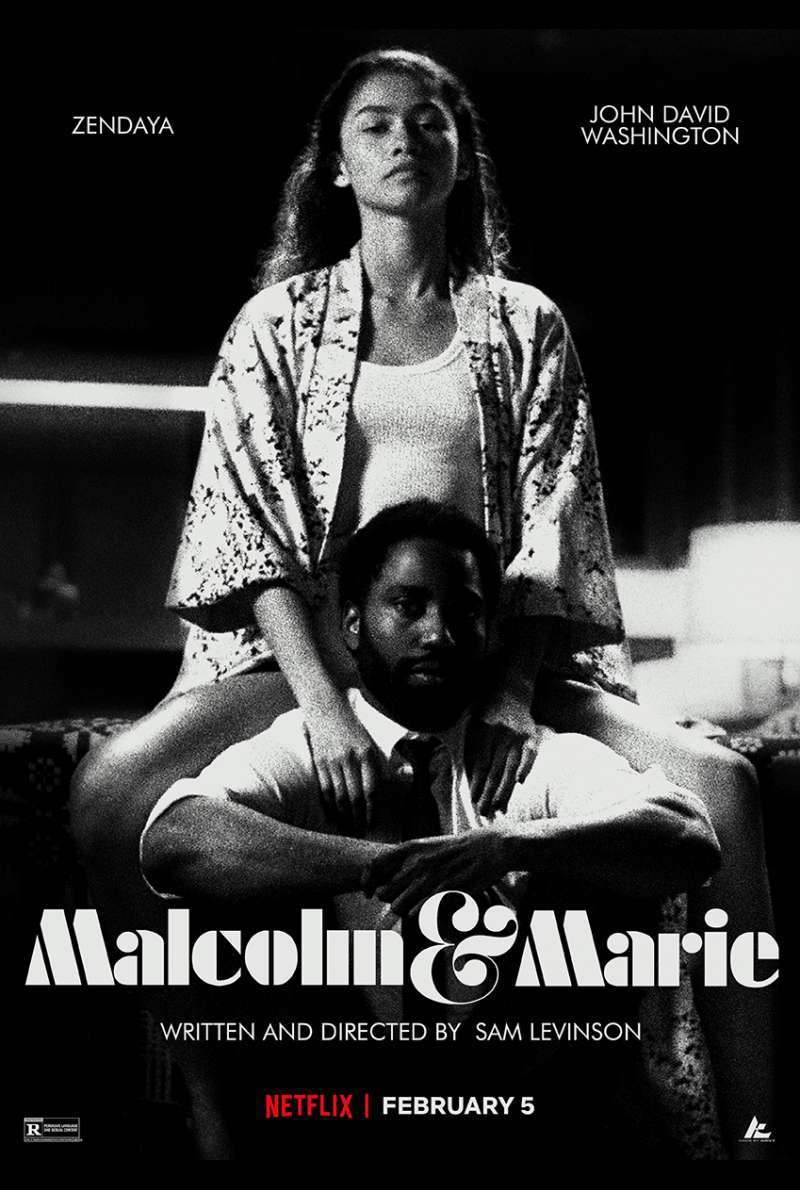
NETFLIX FILM REVIEW: MALCOLM AND MARIE (2021)

NETFLIX FILM REVIEW: MALCOLM AND MARIE (2021)

Directed by: Sam Levinson

Produced by:  Kevin Turen, Ashley Levinson, Sam Levinson, Zendaya, John David Washington

Written by: Sam Levinson

Cast: Zendaya, John David Washington

Music by: Labrinth

Cinematography: Marcell Rév

*** MAY CONTAIN SPOILERS ***


The Oscar nominations came out this week and due to the ongoing pandemic situation and consequent lockdowns, there are a number of films on the esteemed list which have yet to reach these shores, either at the cinema or via streaming platforms. Having said that, and I am aware space for nominees are limited and it has been a pretty strange year for cinema, but I was extremely surprised that Delroy Lindo did not receive an acting nomination in lead or supporting category. Similarly, I was also bewildered that Sam Levinson’s striking romantic drama, Malcolm and Marie (2021), had not received nominations in either screenplay or acting categories. Further, I was utterly shocked that critic’s reviews for the intense two-hander had been pretty mixed. Hey, it’s just opinions but I was really gripped by this highly theatrical and gorgeously cinematic two-hour argument in black-and-white. Personally, I think most of the deriders are wrong. But that’s just my view.

Maybe the film wasn’t liked because John David Washington’s, Malcolm, an up-and-coming filmmaker celebrating a successful premiere that evening, launches into a wonderfully eloquent rant about a review which he feels pigeonholes and patronises his film in purely political terms. I mean it’s actually a positive review, but who doesn’t enjoy ire toward professional critics. I mean, everyone has an opinion, or a view and the Internet has caused a mass proliferation and gaping spew of words and views and brain-thoughts in extremis. But Levinson’s script and Washington’s grandstanding acting spits that if you earn a living as a critic then you are essentially Satan! Perhaps some reviewers took umbrage with this? I loved the whole scene’s energy and Malcolm’s savage attack had me applauding throughout.


But Malcolm and Marie (2021) is more than Levinson getting back at those individuals who gave him bad reviews. It’s a sharp, funny, sexy and poignant exploration of a relationship close to breaking point. Malcolm and Marie may be different fighting weights, but they both punch hard and often. He is on a high after his film premiere success, but Marie is upset because he did not thank her during his speech. From there the conflict rises from light sparring to harsh emotional knockout blows. Both Malcolm and Marie tear at each other’s skin and flesh and figurative organs in an attempt to resolve the ever-increasing divide between them. Malcolm and Marie (2021), may not be for everyone, but any person who has been in a heated war of words with a partner or spouse, will identify with the inescapable tension on display. Levinson’s expert screenplay rides a rollercoaster journey of emotions as one moment you side with Marie and the next you’re with Malcolm. Yet, before you know it, you’re disliking both these complex, narcissistic, egotistical and infuriating humans.

Both Zendaya and John David Washington deserve so much praise for their performances in, Malcolm and Marie (2021). Washington has already demonstrated his massive talent in BlacKkKlansman (2018), while Zendaya excelled in recent HBO drama, Euphoria (2019). Levinson too directs with a deft skill. I was especially impressed by the way he balances the comedy and drama of these flailing humans, poking and picking at the scabs of each other’s past behaviour. Indeed, as well as containing some brilliant dialogue, the erudite script really sang to me. At times the coruscating repartee reminded me of Edward Albee’s acclaimed play, Who’s Afraid of Virginia Wolf. Nonetheless, for a dialogue and performance driven film, the precise framing and sumptuous black-and-white photography by Marcell Rév render the visuals wholly cinematic.

Sure, by the end of Malcolm and Marie (2021) is anything really resolved? And who is ultimately interested in this couple’s first world problems? Well, I’ve witnessed my parents fighting and also experienced such exhausting relationship arguments before. So, I must say that overall, I thoroughly enjoyed witnessing Malcolm and Marie’s nocturnal battle. Especially because I watched it all from the safety, warmth and comfort of my own home.

Mark: 8.5 out of 11


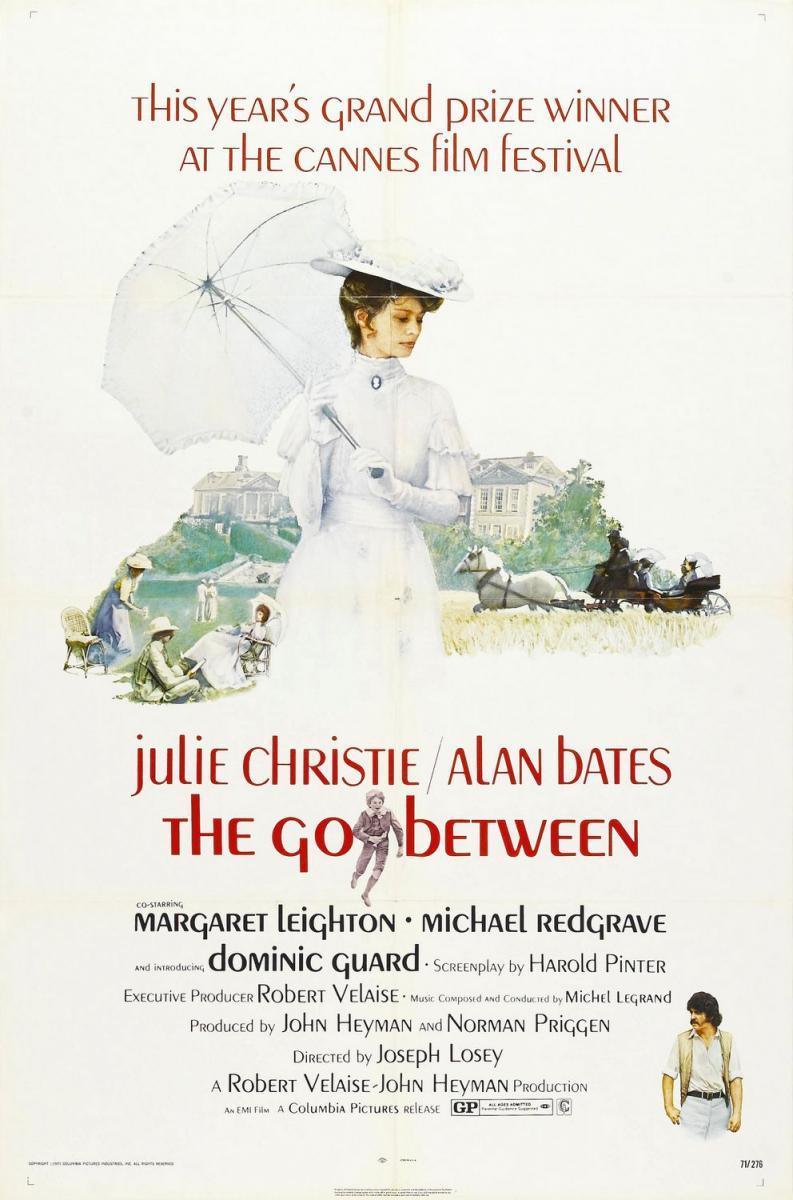
CLASSIC FILM REVIEW – THE GO-BETWEEN (1971)

CLASSIC FILM REVIEW – THE GO-BETWEEN (1971)

Directed by: Joseph Losey

Produced by: John Heyman, Denis Johnson, Norman Priggen

Screenplay by: Harold Pinter

Based on: The Go-Between by L. P. Hartley

Cast: Julie Christie, Alan Bates, Margaret Leighton, Edward Fox, Dominic Guard, Michael Redgrave, etc.

Music by: Michel Legrand


The Go-Between (1971) is one of those expert works of understated cinema which I was sure I had seen before. Yet, I would come to discover I had never seen it when I caught it on the rather marvellous digital channel, Talking Pictures. But then I love that when you find a period classic and watch it for the first time. It’s like unearthing gold in your living room. Because the film is a heartfelt rites-of-passage drama which subtly pulls at the loose end of the knitted cardigan that is the British class system. Nevertheless, while the romance, lies and regret unfold under the surface, The Go-Between (1971) certainly retains much dramatic power.

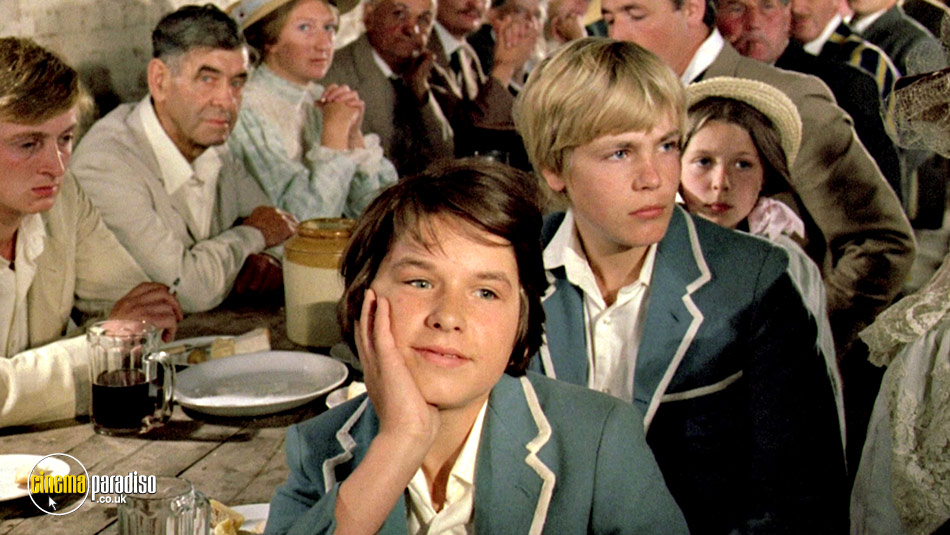
Adapted by acclaimed playwright, Harold Pinter, from the esteemed novel by L.P. Hartley, The Go-Between (1971) stars Julie Christie and Alan Bates as secret lovers separated by the chasm of class and tradition. Bates’ Ted Burgess is a charismatic and muscular farmer with a reputation as a ladies man. Christie is the beautiful and slyly rebellious daughter of the Lord of the Manor, Marian, promised in marriage to Edward Fox’s Viscount Hugh Trimingham. With peering eyes and suspicion coming from Marian’s mother, the lustful affair requires stealth, thus they enlist the help of Dominic Guard’s intelligent but less-privileged, Leo Colston. He is there as guest of Marian’s young brother as both attend the same boarding school; Leo there on a scholarship. The narrative develops very much through Leo’s sweet innocent eyes. The outsider’s point-of-view is expertly presented as it is both objective and allows the audience to make up their own mind about the characters.


Leo is pure of heart and believes he is helping by running notes back and forth between Burgess and Marian. He also makes friends with the cuckolded Viscount, as Fox gives a fine performance of a man who may or may not know whether his potential wife is being unfaithful. I think that is one of the strengths of the book and film, in that it explores the theme of duty versus passion. Burgess and Marian represent freedom, lust and nature, which are opposite to the “doing your duty” arrangements of the upper classes. Of course, dramatically speaking something has to give where the love affair is concerned. Sadly, tragedy intervenes, resulting in the loss of Leo’s innocence, and adding a layer of guilt which gravely haunts him in his later years.

Everything about The Go-Between (1971) reeks of quality. From the production design, locations, costumes, score by Michel Legrand and Gerry Fisher’s exquisite cinematography. Unsurprisingly, Harold Pinter would receive an Academy Award for his confident adaptation. Further, Joseph Losey is not a filmmaker whose work I am not particularly well acquainted with, but the performances from Fox, Bates, Christie and young Dominic Guard are assured testament to his stellar ability to convey meaning and emotion between the lines. Indeed, while some films smash you over the head with emotional melodrama, something I love too, The Go-Between (1971) instead slowly squeezes at your heart and mind. Lastly, this is not simply a damning indictment of the class system, but a lament for loss of innocence, illustrating how monolithic tradition dictates love, fate and tragedy are inextricably entwined.


NETFLIX FILM REVIEW – MA RAINEY’S BLACK BOTTOM (2020)

NETFLIX FILM REVIEW – MA RAINEY’S BLACK BOTTOM (2020)

Directed by: George C. Wolfe

Produced by: Denzel Washington, Todd Black, Dany Wolf

Screenplay by: Ruben Santiago-Hudson

Based on: Ma Rainey’s Black Bottom by August Wilson

Cast: Viola Davis, Chadwick Boseman, Glynn Turman, Colman Domingo, Michael Potts etc.

Music by: Branford Marsalis

Cinematography: Tobias A. Schliessler

*** MAY CONTAIN SPOILERS ***


The spectre of death hangs over us all as time effortlessly drains the life from us. It is an unstoppable force that will quicken on occasion to take a human being way before they deserve. What if said individual has knowledge of their end? Aside from the fear they must be feeling, there is clearly a moment of clarity and strong focus. Something that makes their work gather an altogether unique power. Both player and audience feel such power palpably. This is most certainly the case where Chadwick Boseman’s acting performance is concerned in the screen adaptation of August Wilson’s powerful play, Ma Rainey’s Black Bottom (2020). As talented, hustling and arrogant musician and songwriter, Levee Green, Boseman is a charismatic vision of drive, confidence, energy and naivety, ready to take on the world, not quite knowing the odds are stacked against him.

Boseman steals the film from under the lungs of the formidable Viola Davis as the titular blues legend, Ma Rainey. Her laconic singer with a voice that stops the clocks is being paid to record a series of songs at a Chicago recording studio in the year 1927. Much conflict is derived from Levee Green’s desire to spice up Ma Rainey’s more traditional blues arrangements. Ma Rainey will not give in to what she perceives as ideas of populism and selling out to white producers who want to water down the blues for a white audience. As Ma Rainey, Viola Davis, excels as this irascible and world-weary diva, fighting off her exploitative manager and record producer. Rainey and the other band members try to dampen Levee Green’s enthusiastic ardour, however, the younger trumpeter will not listen to the advice of more experienced musicians. This eventually comes at a grave cost to those within the play.


Events of Ma Rainey’s Black Bottom (2020) are set mainly within a day and in the confines of the recording studio. The mix of a hot day, tempestuous characters and colliding personalities all combine in the enclosed space to create much dramatic tension. Given the screenplay is based on August Wilson’s acclaimed play, what the film loses in cinematic visuals, it more than makes up with sensational dialogue and stellar acting performances. Indeed, the supporting cast including: Colman Domingo as Cutler, Glynn Thurman as Toledo and Michael Potts as Slow Drag provide sterling contributions as Ma Rainey’s band. They banter and battle and spar, especially with the argumentative Levee, desiring to simply play the music and get paid. Safe to say therefore the wonderful blues songs performed are beautifully played. They fill the screen with humour and pathos, puncturing the fizzing dialogue of Wilson’s many fine soliloquys with poignant joy.

Amidst the conflict and music, August Wilson’s original text also contains great thematic power within the words. At the heart of the drama and eventual tragedy there is the underlying critique of the black musicians’ songs and style being stripped away from them by unscrupulous record producers. Ma Rainey stands strong rejecting attempts to assimilate her work and personality and voice into the mainstream. Those songs are her lifeblood, and she refuses to entirely sell her soul. Levee Green does not see the bigger picture and is sucked in by the promise of money, women and fame. He is blinded by the bright city lights and the closer he gets to them the easier it is for the record producers to pick his pocket. In such a tragic character August Wilson has created a memorably complex persona, perfectly rendered by the acting genius, Chadwick Boseman.

Mark 9 out of 11


BBC FILM REVIEWS: SMALL AXE ANTHOLOGY (2020)

BBC FILM REVIEWS: ‘SMALL AXE’ ANTHOLOGY (2020)

Director by: Steve McQueen

Producers by: Anita Overland, Michael Elliot

Writers: Steve McQueen, Courtia Newland, Alastair Siddons

Composer: Mica Levi

Cinematographers: Shabier Kirchner

Original Network: BBC and available on Amazon Prime.

*** CONTAINS HISTORICAL SPOILERS ***


Small Axe could also be described in the vein of ‘Small Acts’. Dramatized and rich slices-of-life that reflect significant historical figures and events from black culture in the 1960s, 1970s and 1980s.  MANGROVE (2020) was the first in a set of five films devised, written and directed by Steve McQueen. It premiered at the London Film Festival in 2020, before being released on the BBC television network. I reviewed the film MANGROVE (2020) here. Such was its power, the searing drama would make my list of favourite films of 2020.

Ultra-talented McQueen was not satisfied with one amazing work. He, his incredible cast and production team also delivered four more high quality dramas called LOVERS ROCK (2020), RED WHITE & BLUE (2020), ALEX WHEATLE (2020) and EDUCATION (2020). I had the privilege of viewing these films via the BBC over the New Year period and provide short reviews here.


LOVERS ROCK (2020)

Main Cast: Micheal Ward, Amarah-Jae St. Aubyn, Kedar Williams-Stirling, Shaniqua Okwok, Ellis George, etc.

As well as alluding to the main love story within the narrative, Lovers Rock also makes specific reference to a style of reggae music with a romantic sound and content. Set over one night during a London-based birthday party, the film opens with the setting up of a sound system, making of food and preparation of the large house. While mostly an ensemble piece, the story narrows its focus on prospective lovers, Franklyn and Martha, who fall for each other amidst the thumping bass and hearty vocals of the music. Surely, Lovers Rock is a testament to the power of harmony and community and love. There are brief moments of drama to spike the party mood, but ultimately this is about the joy of being alive and drunk on song and romance. Lastly, it’s arguably as close to feelgood as McQueen’s intense filmmaking style gets in this amazing anthology.

Mark: 9.5 out of 11


LOVERS ROCK (2020)

RED, WHITE AND BLUE (2020)

Main Cast: John Boyega, Steve Toussaint, Neil Maskell, Joy Richardson, etc.

As well as evoking the socio-political landscape of the era so well, the costumes, hair, make-up and location work feel so authentic in all of the Small Axe films. Such authenticity serves the stories well, as does the virtually perfect casting too. Fresh from his energetic portrayals of Finn in the Star Wars trilogy, John Boyega’s performance as Leroy Logan in Red, White and Blue (2020), brings his character into conflict with a whole different kind of dark side. Logan was one of the first prominent black police officers in the Metropolitan police. He subsequently founded the Black Police Association and attempt to reform the police from within. No two ways around it, based on the early part of his police career, Logan is represented as a trailblazing hero. He is intelligent and tough and ready to face up to the barbaric language and violence from both white police officers and members of the black community who saw him as a traitor. Boyega is spellbinding as Logan, navigating his way up the ranks facing rancour and rejection from within the police and his own father too, who was understandably unhappy at Leroy’s controversial choice of career.

Mark: 9.5 out of 11


RED, WHITE & BLUE (2020)

ALEX WHEATLE (2020)

Main Cast: Sheyi Cole, Robbie Gee, Johann Myers, Johnathan Jules, etc.

What Steve McQueen deserves praise for with Small Axe, among many other things, is bringing to the fore individuals one may not have heard of, or reminding us of important events from within recent British history. In Alex Wheatle (2020), McQueen weaves the early years of now famous author, Alex Wheatle, with circumstances relating to the Brixton riots and the New Cross fire tragedy of 1981. The latter took the lives of fourteen young black people and fuelled much anger at the time in regard to racist attacks on the black community. Alex himself was brought up in care and grows up an angry young man. He finds solace in music and expressing lyrics in a political and combative style. We first meet him in a prison cell sharing with Rastafarian, Simeon (Robbie Gee). The fractious scenes between the two, with both Gee and Sheyi Cole giving fine performances, are full of anger and humour. Far from being a comedy, there remains both witty banter and pathos fizzing around this profile of Wheatle’s formative years. This fine profile finds a young rebel discovering his voice and identity amidst the urban decay, racism and police brutality of the mean streets of London.

Mark: 10 out of 11


ALEX WHEATLE (2020)

EDUCATION (2020)

Main Cast: Kenyah Shandy, Sharlene White, Josette Simon, Tamara Lawrence, Daniel Francis, etc.

Having addressed social and cultural issues relating to civil liberties, law, music, work and identity, Steve McQueen focussed specifically on educational themes within the black community in the aptly named, Education (2020). The highest praise I can give Education (2020) and all the films in the Small Axe anthology is that I felt genuine emotion for all of the characters and the situations they were in. They may not have been perfect and had their flaws, but ultimately all five of these narratives made me feel and care about the characters. Because they were up against an unfair system which demanded to be challenged and changed to stop the systematic prejudice of the time. Education (2020) feels extremely personal to Steve McQueen as one senses the lead character, twelve-year-old Kingsley Smith (Kenyah Sandy) experiences much of the grief he may have when younger. Considered disruptive at the local Comprehensive, Kingsley is dumped into a “Special School” where he becomes lost and ill-educated. One absurd scene simply shows a teacher playing House of the Rising Sun as part of a lesson. Kingsley’s formidable mother, with help from political forces within the black community, strive to right these educational wrongs in a powerful and moving final chapter to the Small Axe anthology.

Mark: 9.5 out of 11


NETFLIX FILM REVIEW: THE TRIAL OF THE CHICAGO SEVEN (2020)

NETFLIX FILM REVIEW: THE TRIAL OF THE CHICAGO SEVEN (2020)

Directed by: Aaron Sorkin

Produced by: Stuart M. Besser, Matt Jackson, Marc Platt, Tyler Thompson

Written by: Aaron Sorkin

Cast: Yahya Abdul-Mateen II, Sacha Baron Cohen, Daniel Flaherty, Joseph Gordon-Levitt, Michael Keaton, Frank Langella, John Carroll Lynch, Eddie Redmayne, Noah Robbins, Mark Rylance, Alex Sharp, Jeremy Strong, etc.

Music by: Daniel Pemberton

Cinematography: Phedon Papamichael

***CONTAINS HISTORICAL SPOILERS***


In 2006, screenwriter Aaron Sorkin met Steven Spielberg met to discuss a film project which would focus on the 1968 riots at the Democratic National Convention, which occurred in Chicago. After the meeting Sorkin has admitted he had no knowledge of said riots or the infamous trial which took place afterwards. Sorkin would remedy this with much research and complete his screenplay in 2007. Having been in development for some time eventually Sorkin himself has directed, The Trial of the Chicago 7 (2020). Part-historical drama, part courtroom-thriller and part political satire, the film illustrates skilfully the shocking attempt by the U.S. Government to convict, initially eight, then latterly seven individuals believed to have conspired to cross state lines with the desire to incite violence and mayhem in Chicago.

I, like Sorkin back in 2006, knew nothing of this huge legal and political event from the late 1960’s. But, The Trial of the Chicago 7 (2020), while obviously taking narrative liberties with the temporal order and specificity of certain events, provides an entertaining and insightful flavour of the before, during and aftermath of the incendiary trial. Opening stylishly and rapidly, Sorkin establishes the major characters who will be charged with causing violence on the streets of Chicago. Notable amongst these are civil rights and counter-culture figures such as: Abbie Hoffman ( Sacha Baron Cohen), Jerry Rubin (Jeremy Strong), Tom Hayden (Eddie Redmayne), Bobby Seale (Yahya Abdul-Mateen II), David Dellinger (John Carroll Lynch et al. Swiftly, Sorkin then takes us into the trial itself, which took place in 1969, and structures the narrative around flashbacks from witnesses on the stand to events leading up to conflict between police and demonstrators.


Given the gravity of the socio-political importance of this trial, I was surprised how much I was laughing during, The Trial of the Chicago 7 (2020). The humour, and later pathos, comes from both the absurdity of certain events and behaviour of the characters on trial. Indeed, in a trial which lasted an incredible five months, there was clearly an abundance of rich material for Sorkin to mine. Thus, we get a greatest “hits” summation of this politically driven farce, explained as being influenced by, U.S. Attorney General John Mitchell’s ire, at being snubbed by his predecessor. Moreover, the trial itself escalates into further absurdity as Judge Hoffman (Frank Langella) takes exception with the majority of the defendants and their lawyers, bringing most of them up on charges of contempt, notably the attention-seeking Hoffman and Rubin. It was not surprising as there were often mocking and zinging one-liners from them and even more vociferous protests from Bobby Seale. Nonetheless, that does not excuse what Judge Hoffman did to Bobby Seale in court. That remains a low in the history of the American justice system.

As The Trial of the Chicago 7 (2020) progresses, the comedic elements transition to a more serious tone and many heartfelt speches are given. The demonstrations and violent scenes from the riots bleed through to the fore also. My understanding is that in the United States there is such a thing as freedom of speech and the demonstrators were attempting to have their say on the war in Vietnam. They wanted their voices heard against what they considered to be an unjust war. Of course, I cannot possibly know what occurred that day as I was not there, however, given the U.S. Government’s fear of opposing views, as demonstrated by their handling of race issues and the McCarthy-led investigation into the Communist threat, one must surmise they were scared of anyone protesting a different perspective from theirs. From such fear comes a desire to wield power and suppress such voices; something which the Chicago Police Department appeared to do during the fateful Democratic National Convention.

Aaron Sorkin and his incredibly adept ensemble cast deserve much praise for taking such a complex case and distilling it into such an enlightening work of cinema. Sacha Baron Cohen and Jeremy Strong stand out as a fine double act, while Mark Rylance attends his usual intelligence and class to the role of defence lawyer, William Kunstler. In fact, all the cast are exceptional in bringing to life Sorkin’s witty and storming screenplay. Ultimately, one could argue though that The Trial of the Chicago 7 (2020), is simplistic fodder, designed to spoon-feed the liberal left and preach to the millennial choir. In all honesty, it is that and arguably full of caricatures and one-dimensional storytelling. However, given the United States, and the world, have suffered recent and extreme political dumbing down from one of the worst U.S. Presidents of all time, Sorkin’s one-dimension is still more nuanced and deep than those in power could ever be.

Mark: 9 out of 11