Original songs by: Glenn Hansard, Marketa Irglova and Interference.
Cinematography: Tim Fleming
**** MAY CONTAIN SPOILERS ****
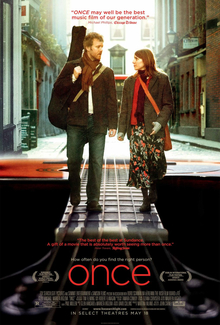
I am not sure why I missed this film first time around, however, it’s most likely due to prior prejudices against musical or music-based films. Yet, since I married in 2016, I have began to watch and enjoy more musicals. This is mainly due to my wife being a massive fan of musical cinema and theatre. While it’s still not necessarily my favourite genre, every now and then an utter gem of a musical will emerge. John Carney’s beautifully moving love story between a hoover repair guy and a flower-selling girl, Once (2007), is certainly one of those.
John Carney is an honest filmmaker who is attracted to outsiders and people with real emotional turmoil. They tend to be at crossroads in their lives and are struggling either with their dreams or their relationships. He also loves musicians, flaws and all. In Begin Again (2013), a washed-up musical executive, portrayed by Mark Ruffalo, meets unhappy singer-songwriter, Keira Knightley and their first-world romance is played out to bittersweet consequences. Similarly, in Sing Street (2016), a troubled teenager comes of age through his 1980’s pop band and bittersweet romance with a rebellious and equally-troubled schoolgirl. Notice a pattern? Well, this style of music, gritty city backdrops and salty romances were established in Carney’s breakout hit, Once (2007).
Made for a ridiculously low budget of around $150,000, this ultra-realistic musical contains songs that burst with love and pain from the characters of Guy (Glenn Hansard) and Girl (Marketa Irglova). The two meet and connect, but this is no conventional romance as they both have powerful emotional histories between them. It’s the beautiful music and their authentic dialogue exchanges which drive the story. Hansard’s singing and guitar playing are so powerful and moving. Their duet in the music shop of the song, Falling Slowly is a tour-de-force. I was not surprised when I saw it had won the Oscar for best original film. Overall, Once (2007) is a surprisingly brilliant no-budget feature, shot on the streets of Dublin, which deservedly became a big hit.
One of the main reasons I watch films is because I love a good story. I especially like working out the ins and outs of the plot lines too. So, it stands to reason that some films may have inconsistencies in their story or even plot holes. I would define a plot hole as a gap in the story which remains unexplained by the writer or writers. Sometimes these can spoil the film, but more often than not it can add to the enjoyment. They may in fact be known to the writers, however, they may have left it as an enigma for the audience to work out. Either that or the writers made a mistake or they could not be bothered to, or were unable to close the hole. In fact, they may be hoping we don’t notice or care.
There are so many films out there and I’m sure one could nitpick holes in most stories. Here I have picked out six of my favourites. I have chosen well known films so as to differentiate between good and just plain bad storytelling. Moreover, I have also omitted horror films where people just make stupid decisions. Likewise fantastical, surreal and dream logic narratives are avoided. Lastly, the major Marvel franchise plot hole is skimmed. You know the narrative hole that occurs in the stand alone entries. E.g. in Spiderman: Far From Home (2019), if the world is being threatened why don’t the other Avengers help poor Peter Parker? Oh, they’re conveniently busy. . . hmmm. Anyway, here are six of the best plot holes I like. If you can think of more please let me know.
***CONTAINS MASSIVE SPOILERS***
KING KONG (1933 / 1978 / 2005) – how did they get King Kong back to New York?
This question is not always one that is brought up as an obvious plot hole. However, think about it. Kong is captured on Skull Island, but is suddenly revealed in New York. How did they manage to find a boat big enough to carry him to America? And what if he woke up? He would destroy any ship carrying him with a yawn and stretch. Plus, because we do not SEE him being transported a massive hole in the narrative occurs.
HALLOWEEN (1978) – who taught Michael Myers how to drive?
It chills the bones when Donald Pleasance’s Dr Samuel Loomis finds on a dark evening on October 30th, the day before Halloween, his most feared patient, Michael Myers has escaped from a maximum security facility. Myers has stolen a car and sped off into the night. The big question is, given Michael was six when he committed the murder, how the hell did he learn to drive? Obviously given Myers is a manifestation of pure evil, he somehow mastered driving through psychic force.
STAR TREK: THE MOTION PICTURE (1979) – the V’Ger probe would be coded as Voyager!
Talking of William Shatner masks, Star Trek is a wonderful science fiction television series and film franchise. It’s loved by many and given the numerous narratives involving time travel and alien species there are no doubt more plot holes in there. I mean the number of aliens who talk English and look human is quite something. However, in Star Trek: The Motion Picture (1979), there is a major plot hole involving the “V-Ger” probe. Indeed, the entire twist of the plot centers around “V-Ger” actually being “Voyager,” as demonstrated by the corroded name plate on the probe. It seems weird though that nowhere in its programming (or anywhere else) did Voyager have its name recorded. It would be like if a label of a computer, say “Dell”, had the “D” covered up, the boot-up screen would not read, “ell” during post, it would still read, “Dell”! Thus, the plot hole is entirely illogical, Captain.
THE TERMINATOR (1984) – why not just destroy the time machine and stop Kyle Reese going back?
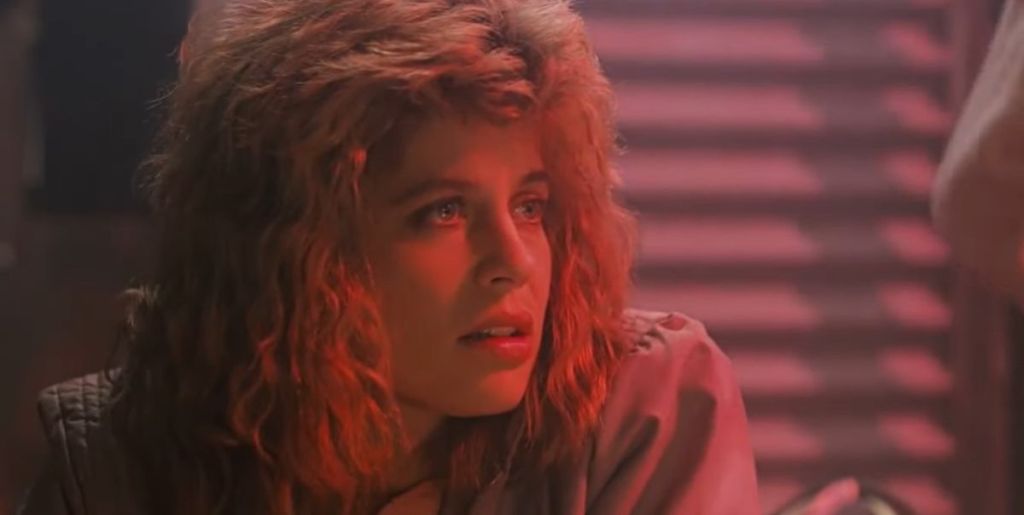
There are loads of plot queries in James Cameron’s classic sci-fi thriller. The one I like the most is more paradoxical than plot hole, but similarly this illustrates flaws in Skynet’s overall plan. Given Skynet and The Terminator have detailed files on everyone, why didn’t they know Kyle Reese was John Connor’s father? If so, just destroy the time machine to stop him going back. If killing Sarah Connor in the past stops John from ever being born, perhaps killing Kyle or stopping him time travelling would have the same effect.
SHAWSHANK REDEMPTION (1994) – when Andy escapes, how does he put the poster back so perfectly?
This is one plot hole I love and is in fact, given Andy Dufresne’s incredible struggle to escape, one you can certainly understand. I mean, thematically speaking, Andy is coded as a spiritual Christ-like figure throughout the film. It’s very subtle, but it is there. Thus, perhaps, he had some divine intervention during his escape. He definitely earned it. Lastly, I also love that it is literally a plot hole and Andy escaped right through it.
SIGNS (2002) – why did the Aliens raid a water-based planet when it hurt them?
While the director has had his fair share of critics, I generally enjoy most of his early films and some of the more recent ones. Signs (2002) is a fantastic sci-fi thriller with themes of faith, family and alien incursion. The major hole is the aliens have to be incredibly stupid to want to invade a planet that is 70% their biggest weakness. However, as some have pointed out, it wasn’t an invasion, but a raid to get some people. However, given people are made up of water and water is in Earth’s atmosphere, perhaps Shyamalan should have made their weakness alcohol or even actual acid. Still a very entertaining film though.
GREAT ENSEMBLE FILM CASTS #4 – HELL DRIVERS (1957)
Directed by: Cy Endfield
Produced by: Benjamin Fisz and Earl St John
Written by: Cy Endfield and John Kruse
Cast: Stanley Baker, Peggy Cummins, Patrick McGoohan, Herbert Lom, Sean Connery, William Hartnell, Alfie Bass, Sid James, David McCallum, Gordon Jackson, Jill Ireland etc.
**** CONTAINS SPOILERS ****
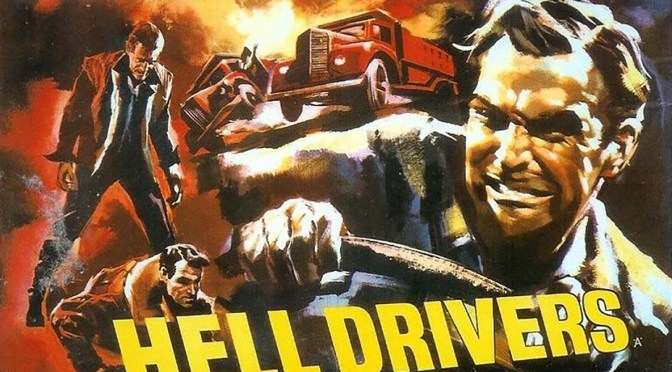
Often on this blog I will write about very well-known actors or films, however, sometimes it’s good to explore more forgotten cinematic gems. Hell Drivers (1957), is one such film from the past that certainly deserves revisiting. Not simply because it is an excellent action drama, but because it contains an incredible cast, with most of the players going on to have major parts in some iconic screen roles. I caught the film again on the cable channel, Talking Pictures, and it’s a really gripping low-budget British thriller.
The plot of Hell Drivers (1957) is quite simple. Tom Yateley (Stanley Baker), a drifter with an unknown past, turns up looking for work at Hawlett’s truck yard. Their group of drivers carry gravel/ballast from a quarry to site. The drama derives from the fact they must meet a certain quota per day, and this involves driving like maniacs to achieve this. Let’s just say that the Health and Safety executive would have a field day now. But that’s one of the strengths of the script. In post-war Britain men and women were desperate for work and money and therefore prepared to do anything to survive. Thus, the film, amidst the helter-skelter driving action, contains a strong social commentary in regard to the exploitation of the workers. There is of course camaraderie among the men, but fierce rivalries also develop. Such competitiveness drives the conflict within the film.
Cy Endfield, a solid American genre filmmaker, directs the ensemble cast brilliantly. What a cast it is too! It’s essentially a “who’s who?” of “before they were famous” actors, all combining to incredible effect. Stanley Baker as Tom carries the lead role. Baker would gain further success in Endfield’s war epic Zulu (1964), and become a renowned lead until his death at the age of 48. The supporting cast though, is something else. Patrick McGoohan, who plays the bruising antagonist, Red, would cement his fame in the incredible 1960’s cult classic, The Prisoner. Furthermore, we have the first Doctor Who in William Hartnell and of course, James Bond himself, Sean Connery. If that wasn’t all, The Man From Uncle star, David McCallum, features in an early role. So does the already established comedic actor Sid James. James would become synonymous with the quintessentially English, Carry On…, film series. Throw in great characters actors Herbert Lom, Gordon Jackson, Alfie Bass and a very young, Jill Ireland, and you have one hell of a cast; all starring in this excellent British film gem.
CLASSIC MOVIE SCENES #13 – BLADERUNNER (1982) – “TEARS IN THE RAIN.”
Directed by: Ridley Scott
Produced by: Michael Deeley
Screenplay by: Hampton Fancher and David Webb Peoples – based on the novel, Do Androids Dream of Electric Sheep by Philip K. Dick
Cast: Harrison Ford, Rutger Hauer, Sean Young, Daryl Hannah, James Edward Olmos etc.
Cinematography: Jordan Cronenworth
Music: Vangelis
*** CONTAINS MASSIVE SPOILERS ***
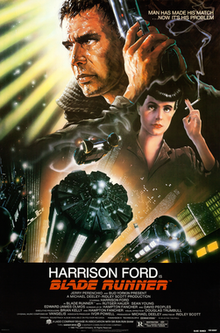
Philip K. Dick’s dense, dystopic and futuristic novel, Do Androids Dream of Electric Sheep (1968), is an ugly, beautiful, depressing, obtuse, hypnotic skip-through-treacle read full of incredible concepts relating to: Artificial Intelligence; robot technology; android simulacra; animal husbandry; apocalyptic disease; virtual reality/empathy mood tech; extinguished humanity; and ultimately, of course, mortality and death. The fact that Hampton Fancher and David Webb Peoples were able to fashion a workable screenplay for Ridley Scott to direct is a creative miracle. Moreover, it is testament to the writing and Scott’s incredible production team that, Bladerunner (1982), is held in such high esteem among cinema fans now.
The original Bladerunner, despite bombing at the box office and subsequently going through a number of cuts, re-cuts, final cuts and re-re-re-releases, has become a bona fide science fiction cinema classic. I watched the original theatrical version recently and despite the deadpan Harrison Ford voiceover and spurious, tacked on “happy” ending, it actually has a lot going for it. Obviously the ‘Unicorn Dream’ re-edits released under the guidance of Ridley Scott are the purer versions but the film holds up notably because of Ford’s gruff, depressive and world-weary performance as Rick Deckard; the imperious psychopathy of Rutger Hauer as android assassin Roy Batty; Scott’s glorious tech noir rendition of our desecrated future; as well as the evocation of Philip K Dick’s thematic existential power.
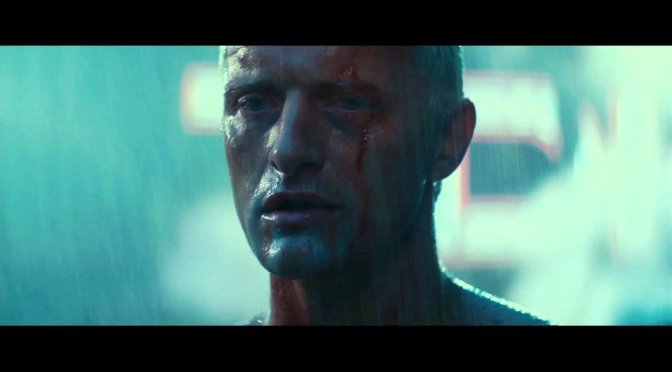
Such existential power is demonstrated in one of the final scenes where Batty has pushed Deckard to the edge of a building and death. The rain falls and the majestic soundtrack swells. A stripped down Batty, rather than let Deckard die, saves his life. It’s an ambiguous decision, but one of redemption for a replicant that is more used to delivering death. Perhaps, it proves that Batty does indeed have human qualities and Deckard will take up the cause. Delivering one final heartfound speech, Batty regales and laments the beautiful things he has seen. But they are gone – just like tears in the rain. It is a moving epitaph and amazing end to an incredible science-fiction classic. Batty closes down for good, but his demise and Hauer’s incredible performance will live long in the memory.
Created and written by: Steve Pemberton & Reece Shearsmith
Directors (Season5): Matt Lipsey, Guillem Morales, Steve Pemberton
Original Network: BBC (available on BBC Iplayer and Netflix)
No. of Episodes: 6
***CONTAINS PROPER SPOILERS***
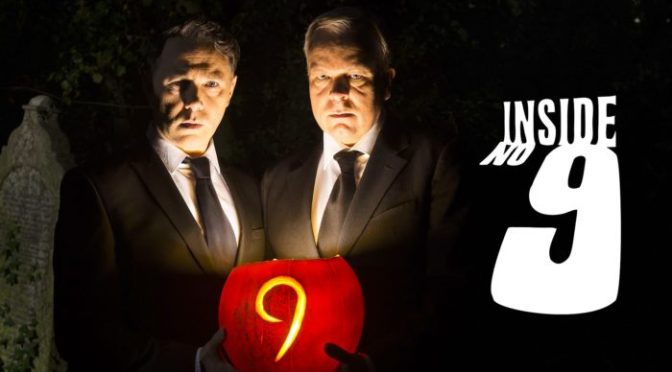
Inside No. 9is written by and stars Steve Pemberton and Reece Shearsmith. Both are brilliant comedic and dramatic actors, having appeared in many TV shows and films down the years. They are arguably most famous for beginning their careers in amazing comedic troupe The League of Gentlemen; however, their work on Inside No. 9 surpasses the ‘League’ in my view.
If you have never seen Inside No. 9 before, I urge you to do so. It is an exceptional anthology series with six standalone episodes per season. Individual episodes feature a whole host of different characters and actors each time. As per the prior seasons, the latest one is absolutely brilliant. It privileges tightly woven thirty-minute short narratives, which more often than not, feature a twist in the tale. Moroever the events usually unfold in one location with never more than a handful of characters. This makes the narratives feel more focussed, intense and intimate.
Inside No. 9 is also a surprising delight because you never know what kind of genre you will get. One week you could get comedy, horror, drama, crime, romance or musical; and sometimes a combination of all of them. They also take chances with their use of form and structure, with many episodes either paying homage or parodying different genre styles. So, here are some short reviews of each episode from Season 5. Usually, I mark my reviews out of eleven (in homage to This is Spinal Tap (1984)), however, for obvious reasons, I will be marking these reviews out of NINE.
EPISODE 1 – THE REFEREE’S A W**NKER
Cast: David Morrissey, Ralph Little, Steve Pemberton, Reece Shearsmith
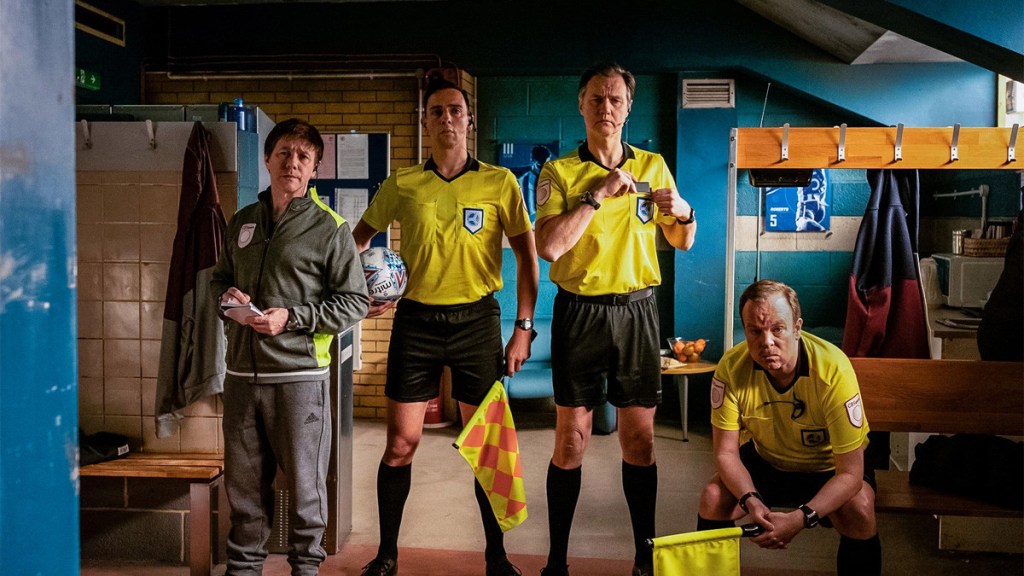
The number 9 of this episode occurs in a football referees’ changing room before, during and after a critical final game of the season. Tensions rise between players, mascots and officials in what is the referee’s last game before retirement. David Morrissey is brilliant as the ultra-professional ref attempting to keep control amidst the chaos. Ralf Little also excels as the vain referee’s assistant, with Shearsmith and Pemberton offering fine comedic support. On the main this plays out as a comedy, but there are also serious moments. Indeed, The Referee’s a Wanker explores themes of corruption, gay footballers, and the obsessive win-at-all-costs nature of football fanatics. Fast-paced, funny and containing a great twist, this episode kicked off the season very positively.
Mark: 8 out of 9
EPISODE 2 – DEATH BE NOT PROUD
Cast: Jenna Coleman, Kadiff Kirwan, Steve Pemberton, Reece Shearsmith, Sarah Solemani
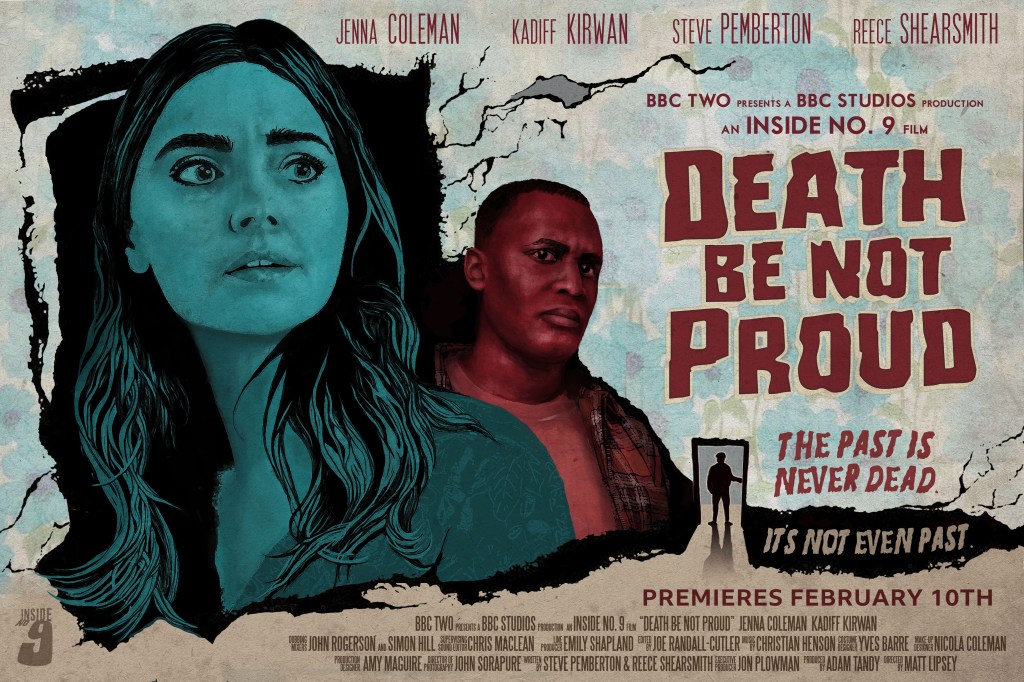
This episode was a joy on many levels. Firstly, it was a fantastic mixture of dark comedy and bloody horror. Most significantly, it contained a wonderful series of meta-cultural call backs to Shearsmith’s and Pemberton’s prior work called Psychoville. A grotesque and demented sitcom, Psychoville contained a gallery of crazed characters with many portrayed by Pemberton and Shearsmith. In Death Be Not Proud the opening is quite conventional. Young couple (Jenna Coleman and Kadiff Kirwan) get what they think is a property bargain. However, the flat was host to a grisly murder and something from beyond the grave is tormenting the new tenants. When the previous owner, David Sowerbutts returns things get even weirder. Only then do we learn about the horrific history of this murder home, to sick and hilarious effect.
Mark: 8.5 out of 9
EPISODE 3 – LOVE’S GREAT ADVENTURE
Cast: Steve Pemberton, Debbie Rush, Gaby French, Bobby Schofield, Reece Shearsmith.
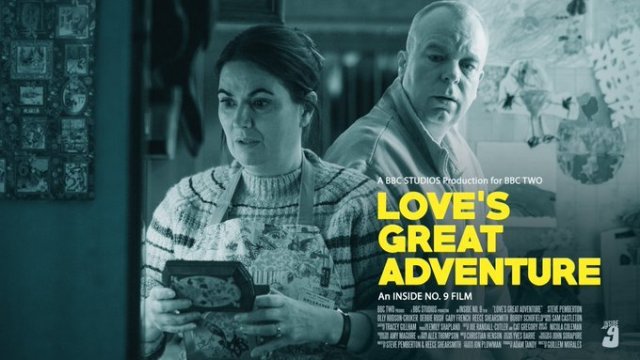
Once again displaying fine writing and actorly versatility, Love’s Great Adventure plays out as a straight family drama. It’s of such high quality and hits such emotional and dramatic peaks, TV writers like Paul Abbott, Jimmy McGovern and Jed Mercurio would have been proud to have written it. Cleverly structured around an advent calendar, the Christmas setting adds texture to the financial struggles of one working class family. Trevor (Pemberton) and Julia (Debbie Rush) are devoted to each other, their teenage daughter and grandson who lives with them. They are even prepared to forgive their self-destructive addict son. Set mainly in the kitchen on various days leading up to Christmas day, the events unfold in a subtle, but powerfully realistic manner. These are ordinary, but compelling characters, who prove there is nothing stronger than family love.
Mark: 8.5 out of 9
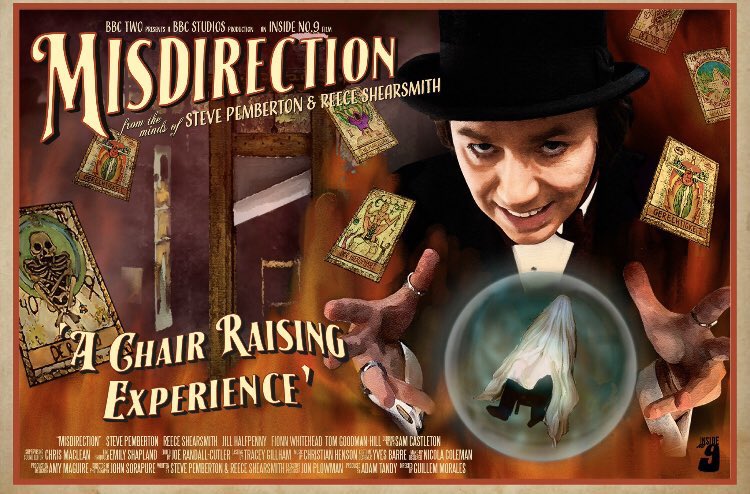
EPISODE 4 – MISDIRECTION
Cast: Reece Shearsmith, Steve Pemberton, Jill Halfpenny, Fionn Whitehead
One of my favourite ever TV shows is Tales Of The Unexpected and Inside No. 9 certainly owes a debt to that series of twisted genre narratives. Misdirection is a case in point. It is up there with the best Pemberton and Shearsmith plots, as a young student journalist, Fionn Whitehead, interviews Reece Shearsmith’s famous magician. Safe to say that as this is about magic there is much in the way of tricksy turns, bluffs and diversionary tactics. Shearsmith is on brilliant form as the arrogant traditionalist with a dark secret. He criticizes the inelegance of street magicians while a battle of wits ensues with Whitehead’s seemingly naive novice. Echoing the structural and stylish dexterity of Peter Schaffer’s brilliant Sleuth (1972), Misdirection holds all the cards when it comes to being a deviously clever and totally unexpected tale.
Mark: 9 out of 9
EPISODE 5 – THINKING OUT LOUD
Cast: Maxine Peake, Phil Davis, Ionna Kimbrook, Sandra Gayer, Sara Kestelman, Reece Shearsmith, Steve Pemberton
Before reviewing this season, I watched every episode twice. I’m glad I did because Inside No. 9 can be complex and pack a lot in thirty minutes. So, it proves in Thinking Out Loud, as we get seven seemingly disparate characters all unconnected. Or so we are led to believe. The episode uses the video diary format, which was something of a popular phenomenon in the 1990s, plus it echoes the “talking heads” style of Alan Bennett. Thus, we get a character in therapy, her therapist, a criminal on death row, a singer, a man suffering from cancer, a man looking for love and an Instagram influencer. All directly address the camera and as we cut between them, their connection slowly filters through until the incredible reveal. Owing much to films like Identity (2003) and Split (2017), this psychological thriller is very crafty with many chilling moments that bear up to multiple viewings.
Mark: 8 out of 9
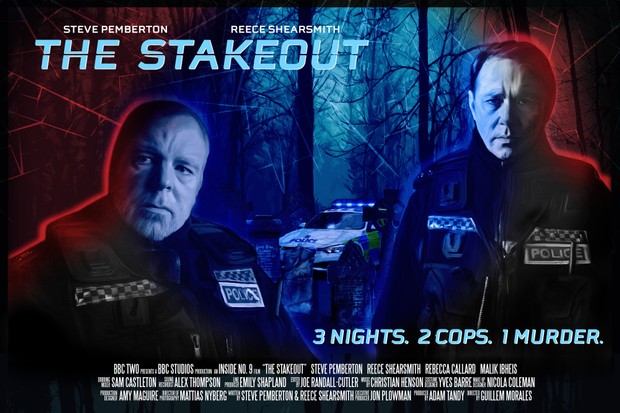
EPISODE 6 – THE STAKEOUT
Cast: Steve Pemberton and Reece Shearsmith
This virtual two-hander concentrates all of the action within the confines of a police car. Steve Pemberton portrays the jaded and experienced police officer obsessed with finding out who killed his partner. Joining him in the vehicle is new partner, played by Shearsmith. The latter’s character is a Special Constable who seeks to follow the book causing tension on a stakeout during a literal graveyard shift. The two clash over diet, riddles, word-games and police procedure, but over three nights they eventually find mutual respect. The bulk of the episode’s enjoyment comes from Pemberton and Shearsmith’s sparring and their performances are exemplary. The writing is also impressive as it plays with the tropes of the police procedural genre. Finally, it also sets up a suspenseful opening only to confound us by the bloody fiendish denouement.
As you know The Cinema Fix is a website for all film and TV lovers everywhere. It’s a mix of reviews, articles, essays, news and thoughts on new and classic releases. It is intended to be honest, irreverent, funny and hopefully intelligent.
In this period of social distancing I have now found the time to make some short video film review content. This video article is a fun piece highlighting our favourite films set on a train.
Written by: Paul Laight Narrated by: Melissa Zajk Music: Classic Train – Simple Sound – No Copyright Check out our YouTube site: www.youtube.com/c/FixFilmsLtd
Film/Trailer credits:
1) The Cassandra Crossing (1976) – AVCO Embassy Pictures
2) The Lady Vanishes (1938) – United Artists
3) Murder on the Orient Express (1974) – EMI Film/Paramount Pictures
4) Snowpiercer (2013) – Radius TWC/CJ Entertainment
5) The Taking of Pelham 123 (1974) – United Artists
6) Train to Busan(2016) – Next Entertainment World
Cast: Tom Berenger, Glenn Close, Jeff Goldblum, William Hurt, Kevin Kline, Mary Kay Place, Meg Tilly, JoBeth Williams
***CONTAINS SPOILERS***
I started this particular series a while ago and posted a few times here and here with multiple entries. However, I have now decided to make it a feature, like Classic Movie Scenes and Under-Rated Film Classics. Like those I will now that concentrate on singular films rather than a group. This enables me to be more focused and detailed with the articles.
The Big Chill (1983) was co-written and directed by Lawrence Kasdan. It concerns a group of seven former college students who gather for a weekend reunion after the funeral of one of their friends. Joining them is their friend’s girlfriend, who also mourns the loss. Having moved to different areas of the country and taken different roles in society, the friends catch up, reminisce, regret, plan, argue, laugh, cry, make love, get high, and try and work out why Alex took his own life.
Kasdan had directed neo noir thriller Body Heat (1981) and co-written screenplays for The Empire Strikes Back (1980) and Raiders of the Lost Ark (1981). He also got industry notice for writing the original screenplay of The Bodyguard (1992); eventually made years later. Thus, his stock was very high. But rather than go for a big budget production he wrote and directed The Big Chill (1983). It’s a more intimate story of grief and nostalgia with an ensemble cast, character led script and incredible soundtrack. It was a big hit on a lowish budget and the terrific mix of songs from the 1960’s and 1970’s became one of the best-selling soundtracks ever. It’s funny, smart, sad and brilliantly acted film with an amazing cast!
Glenn Close and Kevin Kline were relatively well known for their stage endeavours and William Hurt had established himself as a prominent film actor, so they, along with TV Emmy winner Mary Kay Place, were probably the most well known of the ensemble. Having said that, along with Tom Berenger, Meg Tilly, JoBeth Williams and Jeff Goldblum they were very much more toward the start of their respective careers. If you take a look back now over the last thirty-seven years since the film was made, you will now see a whole host of Oscar, Emmy and Tony award winners. Plus, they are a group of actors who have been in some of the biggest grossing films of all time. Not forgetting that Hollywood cinema giant Kevin Costner, in a very early role as the deceased friend, was edited out of the final cut. Thus, it truly is an incredible work of casting.
Having watched the film again recently I have to say that while it is definitely in the “first world problems” territory, the universal themes of grief, love, relationships and existential reflection resonated with me. Also, having lost a friend to suicide I very much connected with the group’s emotions. On reflection, through millennial eyes, the film also severely lacks diversity. However, Kasdan and his amazing cast are witty, warm, annoying, joyful and intelligent company. Moreover, that soundtrack is an absolute blast, with many memorable musical montages to counter the heavier moments of soul searching. Oh, interesting note, the house used in the film is apparently the same one used in Forrest Gump (1994).
Now I would like to broaden the subject and have a go at defining some basic film character archetypes. My definition of this has some crossover with personas, but archetypes are not necessarily the component which make up the character – they ARE the character!
Archetypes are a common or typical shorthand; a tool writers, directors and actors can use to define character during the creative process. They are not stereotyping though. They are standardized models and structures that can be built upon to fully flesh out a character.
The archetypes I would like to consider are: Everyman/Woman, Hero, Super-Hero, Anti-Hero, Nemesis, Mentor, Sidekick and Lover/Romantic Interest. Obviously, many of these archetypes can combine, especially in more complex films, plus I’m sure there are loads of others. However, I will limit myself to these for now.
EVERYMAN / WOMAN
The staple for many, many movies is an everyman or woman or boy or girl (or gender fluid) character who is easy to relate to for the audience. It could be Tom Hanks in Castaway (2000), or Tom Hanks in Sully (2016), or Tom Hanks in basically everything – even Toy Story (1995). They tend toward the working or ordinary class with regular jobs and family units. Their stories will be everyday, or they will find themselves facing incredible situations. Alfred Hitchcock favoured everyman and woman characters who would be thrown into dangerous situations. Actors who excel in such roles include: Hanks, James Stewart, Meryl Streep, Amy Adams, Francis McDormand, Jack Lemmon and many more.
HERO
Many characters can begin ordinary or everyday, but over the course of a film become heroes. Luke Skywalker for instance is an bright farm kid with dreams of joining the academy. A series of contrasting events then cause his rise to discovery and heroism. On the other hand, some heroes are fully formed such as James Bond and Indiana Jones. The everyman character and hero are often combined, like with John McCLane or underdog characters such as Rocky Balboa. My favourite hero arcs are stories where the character starts in lower status such as The Terminator (1984), Django Unchained (2012) and Harriet (2019).
SUPER-HERO
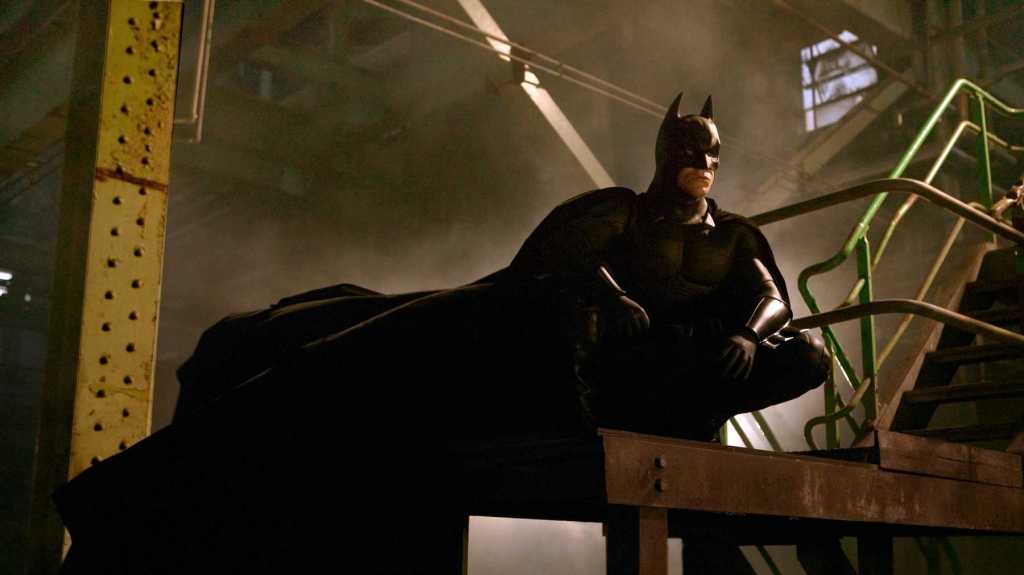
So what’s the difference between a hero and a super-hero? For me the hero may be capable of incredible feats of action and endeavour, yet he or she is ultimately mortal. Thus, while they may be a super-hero on the surface, Batman and Iron Man are heroes to me; albeit mechanically improved ones. Superman, Wonder Woman and Thor, for example, have god-like powers, thus defining them as SUPER! Obviously, there are crossovers as illustrated by Peter Parker, Captain America and Captain Marvel. All of them begin as everyboy/man/woman characters and become super-heroes due to military experimentation or being impacted by incredible events which cause physical transformation.
ANTI-HERO
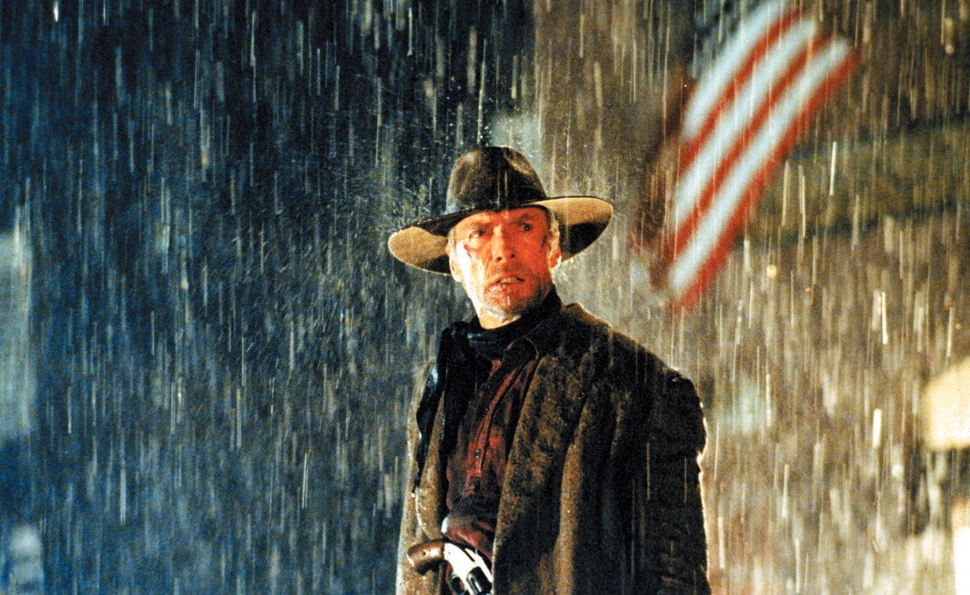
I love a good anti-hero. I think they are my favourite character archetype. They can be charismatic and just on the side of the righteous, but misanthropic and sarcastic like say, Wolverine or Blade. They can be on the wrong side of the law, but redeem themselves at the end of a film like Danny Archer and Han Solo. They can be outsiders or loners like Travis Bickle. They can be hard on the outside and soft on the inner like Juno. Moreover, certain actors have cornered the market on anti-heroes such as Jack Nicholson, Ellen Page, Leonardo DiCaprio and Clint Eastwood. My favourite anti-heroes are often cursed with supernatural forces causing them to be trapped by certain powers. The ‘Wolfman’, Lawrence Talbot, and Carrie White are fine instances of this.
NEMESIS
Given it is pantomime season there’s no harm is looking at villains! For me the greatest villains are the ones which actually have a valid cause or point. Of course, I don’t agree with their actions as they will generally involve killing people or destroying the Earth or Universe. However, villains such as Robert DeNiro’s heinous Max Cady had valid motivation. Likewise, Thanos’ plan to wipe out half of everyone was founded on sound environmental ideology. This doesn’t make it right though. Sympathetic nemeses are also interesting like Marvel’s Erik Killmonger. Moreover, King Kong for example, begins life as a threatening monster, but ultimately ends up being sympathetic compared to man. Nonetheless, you cannot beat a good old fashioned baddie like Hannibal Lecter, The Terminator, Hans Gruber, Nurse Ratched and one of my favourites, The Wicked Witch of the West.
MENTOR
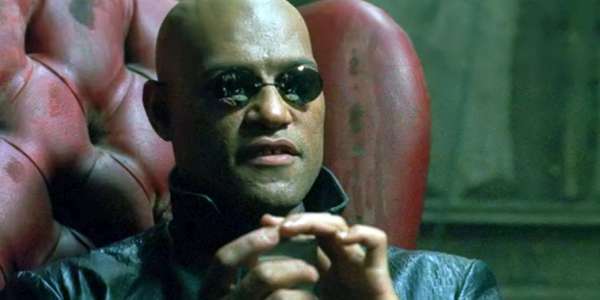
The Mentor character can take many forms. They are very valuable in supporting a hero or heroine on their adventures, plus providing vital exposition or the rules of the world information. The archetypal mentor archetype is a wise, older character like Morpheus, Alfred Pennyworth, Gandalf, Mr Miyagi, or Obi Wan Kenobi. Moreover, they will often have powers and magically assist those around them. The wonderfully helpful Mary Poppins is a great example of this. Every so often mentoring is rejected by the younger partner. A case in point being Brad Pitt’s Detective Mills eschewing Morgan Freeman’s Somerset’s sage advice with deadly results. Then again, mentoring can take a more twisted and controlling turn as seen with The Devil Wears Prada’s (2006), Miranda Priestly, and in Paul Thomas Anderson’s recent arthouse classic, The Phantom Thread (2017).
SIDEKICK
The sidekick is a lower status character that can be an ally, helper, friend or even enemy that also provides comic relief or dramatic tension. Different from the bromance or traditional buddy character, because that double-act dynamic is on an equal level of status. Great sidekicks include: Hermione Granger, Short Round, Robin, Chewbacca, Dr Watson and many more. Often, the sidekick actually becomes more interesting, funny and memorable than the lead protagonist. Examples of this include the brilliant Hit Girl, Igor, Donkey and the aforementioned Hermione. Sometimes the sidekick takes a darker route such as Loki and Lady Macbeth, who use their influence for evil rather than good.
THE LOVER / ROMANTIC INTEREST
So, the love interest can be a romantic extension of the sidekick but can also be a mentor and even a villain. I would differentiate the love interest character from traditional romantic comedies or dramas. For instance, in When Harry Met Sally (1989), Sally and Harry are of equal status and classed as everyman and woman archetypes. However, in James Bond films the love interest is traditionally a female conquest. More in depth love interest characters are those that are not just trophies; they become equal in the story. Princess Leia is a heroine and love interest, likewise Marion Ravenwood in Raiders of the Lost Ark (1981). Most recently, and a reflection of our progressive times, Diana Prince/Wonder Woman found a fine love interest in Chris Pine’s heroic Steve Trevor. Thankfully, the outdated “damsel in distress” stereotype is being consigned to the past and now we have characters of all backgrounds and gender represented on an equal basis.
CONCLUSION
As I said earlier this list is just an exploration of archetypes. There are a number I could have included. That stock character the wife or husband is one which always appears regularly in films. Often, they are waiting by the phone or television screen as some disaster befalls their partner. Lastly, I could have included the double-act, the team or the ensemble archetype; where one or more characters combine to create a whole. But, I think I’ll save that for another essay.
Produced by: Michele Bennett, nash Edgerton, Danny Gabai
Cast: Mia Wasikowska, Damon Herriman, Benedict Hardie, Gillian Jones, Virginia Gay etc.
**MAY CONTAIN SPOILERS**
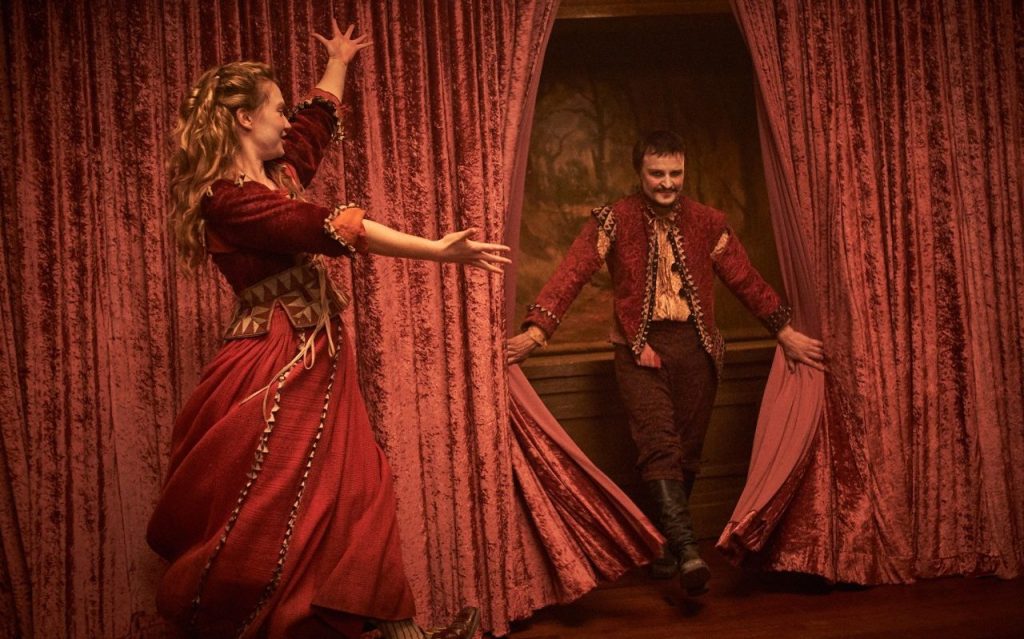
If you’re not aware of the good, old-fashioned Punch and Judy puppet show, then it was basically a seaside attraction that has its origins in 16th century Italian commedia dell’arte. Over the decades it thrived and would move from marionette stylings to a mobile glove puppet show. Punch would batter various characters including his wife, Judy, a crocodile, a police officer, a dog, a blind man and the Devil. He would be a very bad parent; often drunk and violent in charge of his own baby. Incredibly, this rather unsavoury character would become very popular with children, appearing at carnivals, fairs and coastal shows.
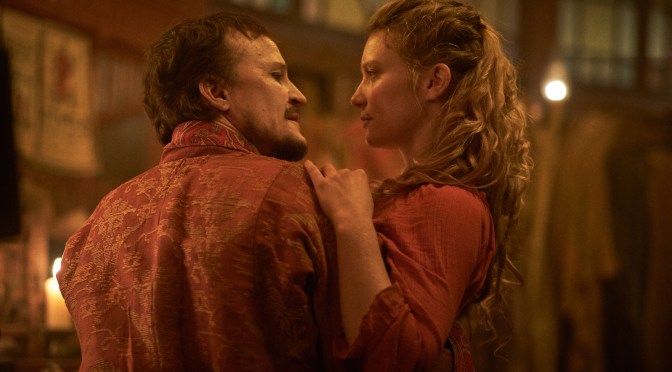
With Disney cornering the market adapting myths, fairy tales and Theme Park rides over the years, I’m surprised they did not have a go at Punch and Judy. How they would reconcile this brightly coloured, but despicable character would have been fascinating. Yet, it is Australian filmmaker Mirrah Foulkes, who has written and directed this arthouse drama starring Mia Wasikowska as the harassed Judy, and Damon Herriman as the drunken puppeteer. Set during the Dark Ages in the town of Seaside, the plot follows the traditional narrative of the original puppet show. Except, this time Judy is very pissed off and about to go medieval on Punch’s arse!
Part revenge thriller, part-black comedy and part mythical origins drama, Judy and Punch (2019) is full of fantastic and gritty detail. The reconstruction of the theatrical puppet shows are brilliant, and evocation of the era is very realistic. The film performs well as a savage denouncement of toxic masculinity in the #MeToo era. But, despite the excellent performances from Wasikowska and Herriman, the characters were a bit too one-dimensional to really grip me. Yet, Wasikowska is especially memorable as Judy, eliciting an inner strength to overcome the cruelty of her husband and the town she lives in.
Lastly, the story also felt a little flat and lacked surprise in places, but that may be because the trailer gave a lot of the narrative away. It’s also because I am very familiar with the original Punch and Judy show, as I watched loads of them as a kid. Having said that, Mirrah Foulkes has delivered a stylish film curiosity which is destined for cult status. Moreover, she deserves much praise for attempting to give a children’s puppet show story depth. The visual iconography is powerful, as is the exploration of themes relating to domestic violence, child neglect, witch hunts; and the exclusion of the outsider or other by petty townsfolk mentality.
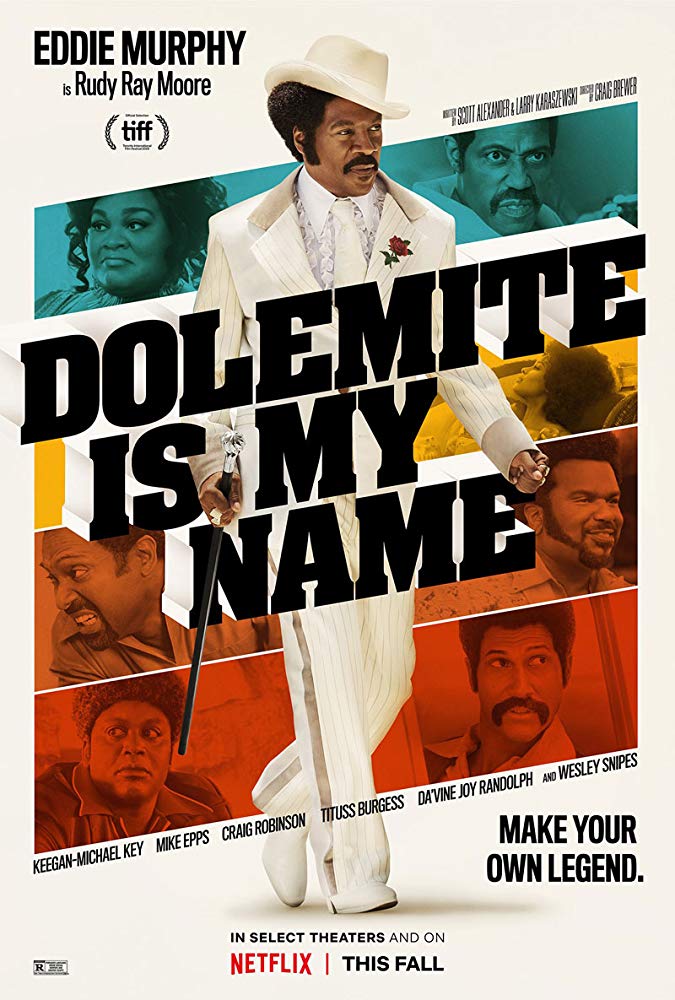
Cast: Eddie Murphy, Da’Vine Joy Randolph, Keegan-Michael Key, Mike Epps, Wesley Snipes, Titus Burgess, Craig Robinson etc.
Music: Scott Bonnar
Distribution: Netflix
**MAY CONTAIN SPOILERS**
DOLEMITE IS MY NAME (2019)
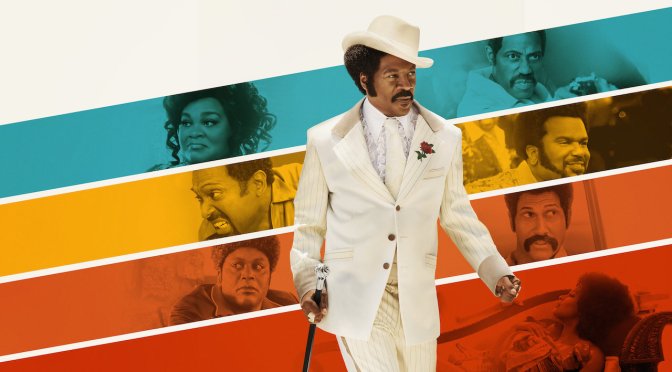
It’s obvious to say that as I, like many others, love watching films, love writing about films and love talking about films with other film lovers. But, does that mean one also loves films that are actually about making films? Yes, of course it does! I love watching and writing about films that are about filmmaking. Therefore it stands to reason I would love Eddie Murphy’s latest role as comedian/actor/filmmaker/singer, Rudy Ray Moore.
Having burst on the cinema screen in the early 1980’s in a series of classic hits, notably 48 Hrs. (1982), Trading Places (1983) and Beverley Hills Cop (1984), Murphy became one of the most bankable movie stars in the world. His talent, stamina and comedic genius have meant his career is still going strong, despite many career ups and downs. However, it’s a bit disappointing that Murphy hasn’t stuck with more dramatic roles or character driven roles, as he cast himself in more family and light comedy-oriented films. This is because Murphy is an incredible actor, as demonstrated once again in Dolemite is My Name (2019).
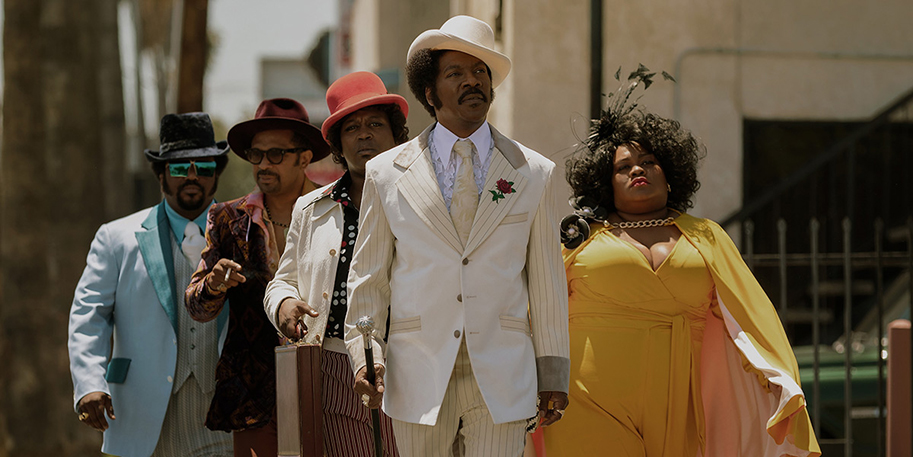
Set in 1970’s Los Angeles, Dolemite is My Name (2019) finds Rudy as a struggling comedian, compere and record shop manager still trying to crack his dream of becoming famous. Time and opportunity have knocked him back for years, but he still has the energy and drive to continue. I identified with Rudy as I have a dream of being a successful filmmaker, but if I’m honest that ship has not just sailed, it’s crashed on the rocks. But I will carry on. Because I really enjoy it.
Inspiration comes to Rudy when he creates a new character and begins rapping routines in the clubs as flamboyant pimp, “Dolemite.” Recording his own comedy albums and selling them out of the trunk of his car slowly brings dividends, and Moore becomes a cult hit. Then the fun really starts as Rudy decides he wants to make a movie. But he has no money, crew or equipment. Cue many fantastic filmmaking scenes that make fun and pay homage to Moore’s energy as a producer/actor/writer and kung-fu “artist”.
Accompanying Murphy as Moore in this delightful and hilarious film is a stellar ensemble cast that includes: Titus Burgess, Da’Voy Joy Randolph, Keegan-Michael Key and Craig Robinson. Not forgetting a scene-stealing turn by Wesley Snipes as a wide-eyed drunken movie actor-turned-director, D’Urville Martin. The cast, given energetic direction by Craig Brewer, fashion likeable characters and performances. Moreover, the funky music, colourful costumes, wicked dancing and comedy timing hit their marks constantly.
Overall, I’m a sucker for films about filmmaking and this one is highly recommended. Dolemite is My Name (2019) could have been a bit more dramatic in places and perhaps commented more on the socio-politics of the era and Blaxploitation film genre. However, as a film about Rudy Ray Moore’s energy, passion and never-say-die attitude it is a fine cinematic tribute. Above all else, it’s a testament to the ability, talent and infectiousness of Eddie Murphy. Rudy Ray Moore is a part he was born to play and he smashes it out of the park.













 The Cinema Fix presents