FIVE REASONS THIS COULD BE GOOD: COCAINE BEAR (2023)
Every now and then a film title hooks you in immediately. Snakes on a Plane (2006) anyone? Now, another beast driven movie comes along and says, “Hold. . . My. . . Bear!”Enter the thrill-a-second trailer for – Cocaine Bear (2023)!
So here are five reasons, Cocaine Bear (2023) could be good!
The title of the film is Cocaine Bear (2023)!
It has a kill crazy bear high on cocaine in it!
It is amazingly inspired by a TRUE story!
It’s Ray Liotta’s R.I.P, final film.
The trailer is amazing – check it out here:
Cocaine Bear(2023) releases on February 24th 2023 in the US, UK and most of the world exclusively in movie theatres.
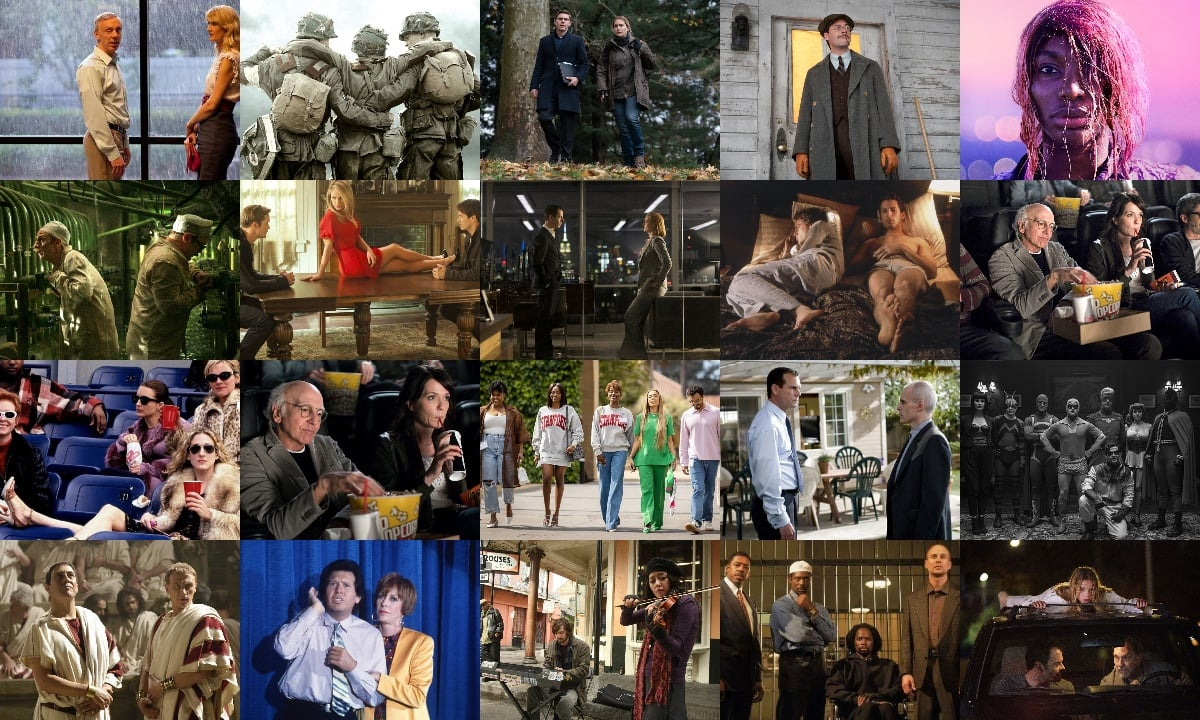
Directing Great Television: Inside TV’s New Golden Age – by Dan Attias – Review by Paul Laight
The opening quotes of praise from a myriad of industry colleagues will make my little review pale into insignificance, as there is no doubt that Dan Attias is a director of some repute, expertise, and experience. Here is an Emmy-nominated director who has worked on an incredible list of amazing television shows such as: Miami Vice, Beauty and the Beast, Wolf, It’s Always Sunny in Philadelphia, The Sopranos, The Wire, House, Homeland, Witness (Peter Weir), Northern Exposure, Penny Dreadful: City of Angels, The Americans, The Killing, The Boys, Six Feet Under, The Wire, Marvellous Mrs Maisel, Friday Night Lights, etc.
With such a breath of experience Dan Attias therefore offers much to those seeking insight into the world of directing high quality TV. Moreover, it will also give priceless advice to those seeking a career in directing for all forms of creative media. It is structured and presented eloquently in a language that doesn’t blind the reader with techno-speak either.
The author began as an actor before moving into directing. In fact he states that the best training he had for directing was being an actor. Dan Attias moved from in front of the camera to behind it as assistant director for Steven Spielberg and Francis Ford Coppola before directing the feature film Silver Bullet (1985). After which he moved into directing episodic television.
Throughout the book, the author shares his wealth of experiences, highs, lows, and scars got from directing many great TV shows of recent years. Dan Attias does not glamorise the industry but illustrates that the craft of television production is all about the hard work and harder knocks. He advises honing one’s craft through being prepared, with collaboration also being vital. It’s a fast-paced endeavour where choices can often go wrong. But learning from those mistakes builds one’s directorial nous. Preparation is invaluable. Even if episodic television does not always allow it. The director will often arrive late to the party as it were with the showrunners, writers, actors, and pre-production crew having worked months developing a project.
I was seriously inspired by many of Dan Attias’ informative anecdotes. Having worked in both drama and comedy it is clear he is not just a point-and-shoot director. One senses a burning desire on his part to tell stories an imaginative, creative, and emotionally interesting style. Moreover, the book provides key insight into the rehearsal process, positioning actors, use of lenses, shifting points-of-view within scenes, framing, background mise-en-scene and of course lighting. For Attias, above all else, engaging with the environment is imperative as, “Each scene is staging a journey.”
As well as the technical knowledge delivered, the author continually promotes the idea that coordinating positively with showrunners and writers is integral when creating the best work. That does not mean there won’t be disagreements or having to overcome material which appears dramatically unpromising. It is the director’s job to be creative and collaborative while breathing new life into well-known characters within long running shows.
The final chapters share excellent scene breakdowns from the author’s experience of working on three different TV shows, Snowfall, Manhattan, and Good Girls Revolt. Here he delivers a fine perspective of a director’s vision, using the camera and stylistic choices to tell the story, both following and breaking the rules. If you’re breaking the rules you may face conflict from certain crew members, but it is all about staying confident in one’s vision for the storytelling. Overall, Attias’ honesty in overcoming difficult creative moments is to be admired.
Some may think that television was always the lesser cousin, locked in the artistic attic when compared to the noble art of cinema. No more though as programmes such as Game of Thrones, The Wire, The Sopranos, Homeland, Breaking Bad, and many more have proved. Such classic television finds the writing, cinematography, acting and increased production values, elevating their status to the cinematic. The old-school image of a 1970’s TV director shouting at a bank of monitors giving orders to the beleaguered floor manager and cast in a studio is now gone. Dan Attias and his book are testament to that.
Michael Wiese Productions (MWP) was launched in San Francisco in 1976 primarily to produce films. Today, the company is known worldwide having published some 200 books. Some of the bestsellers have been translated into 18 languages, are used in over 700 film courses, in the Hollywood studios and by emerging filmmakers.
Paul Laight is a screenwriter, filmmaker, and blogger. In 2005, he formed Fix Films and has written and produced many shorts and other promos. Many of his films have been screened all over the world at various film festivals.
Paul is currently working on feature and short film scripts for future productions. His work can be found here:
Produced by: Graham Broadbent, Peter Czernin & Martin McDonagh
Main Cast: Colin Farrell, Brendan Gleeson, Kerry Condon, Barry Keoghan, etc.
Cinematography: Ben Davis
Edited by: Mikkel E. G. Nielsen
Music by: Carter Burwell
*** MAY CONTAIN SPOILERS ***
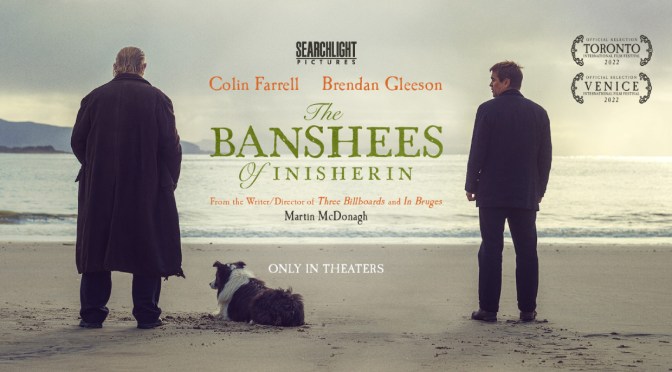
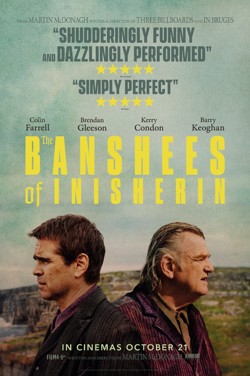
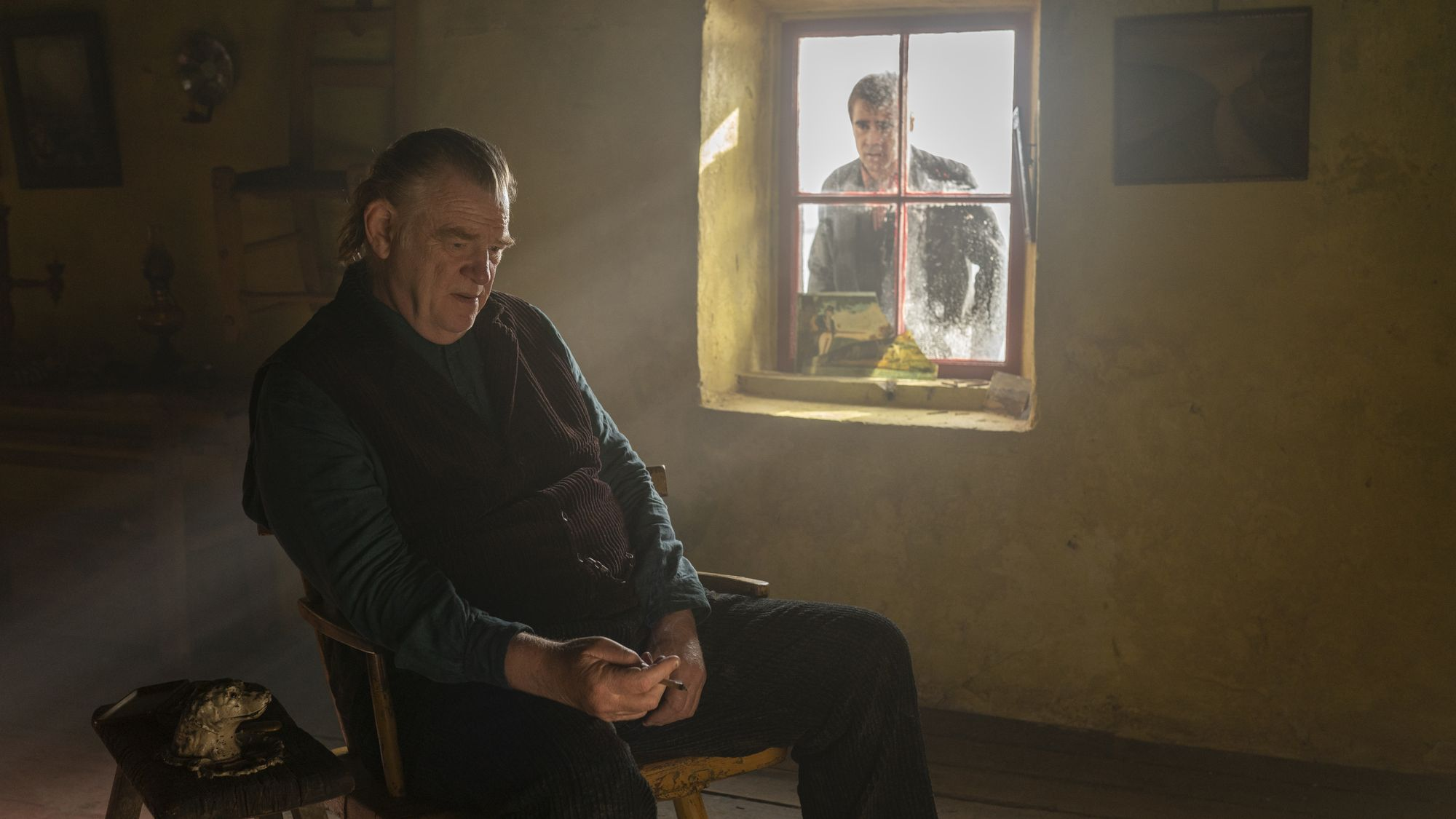
The Banshees of Inisherin (2022) is Martin McDonagh’s latest cinematic masterpiece. Not only is it one of the best films of the year he has, as with Three Billboards Outside Ebbing, Missouri (2017), constructed one of the most formidable screenplays of many a year. As a playwright McDonagh has won many awards for his works. His debut film, In Bruges (2008), was a deceptively simple story of two hitmen on the run which, with rich thematic power, became a darkly hilarious existential cult classic. His follow-up Seven Psychopaths (2012), a heady mix of criminals versus writers in a meta-fictional Hollywood-based narrative was brilliantly written and acted, if slightly lacking thematic clarity. Like Three Billboards Outside Ebbing, Missouri (2017), The Banshees of Inisherin (2022) is a highly emotional human drama which contains intelligent allegory, incredible characterization, and cracking dialogue.
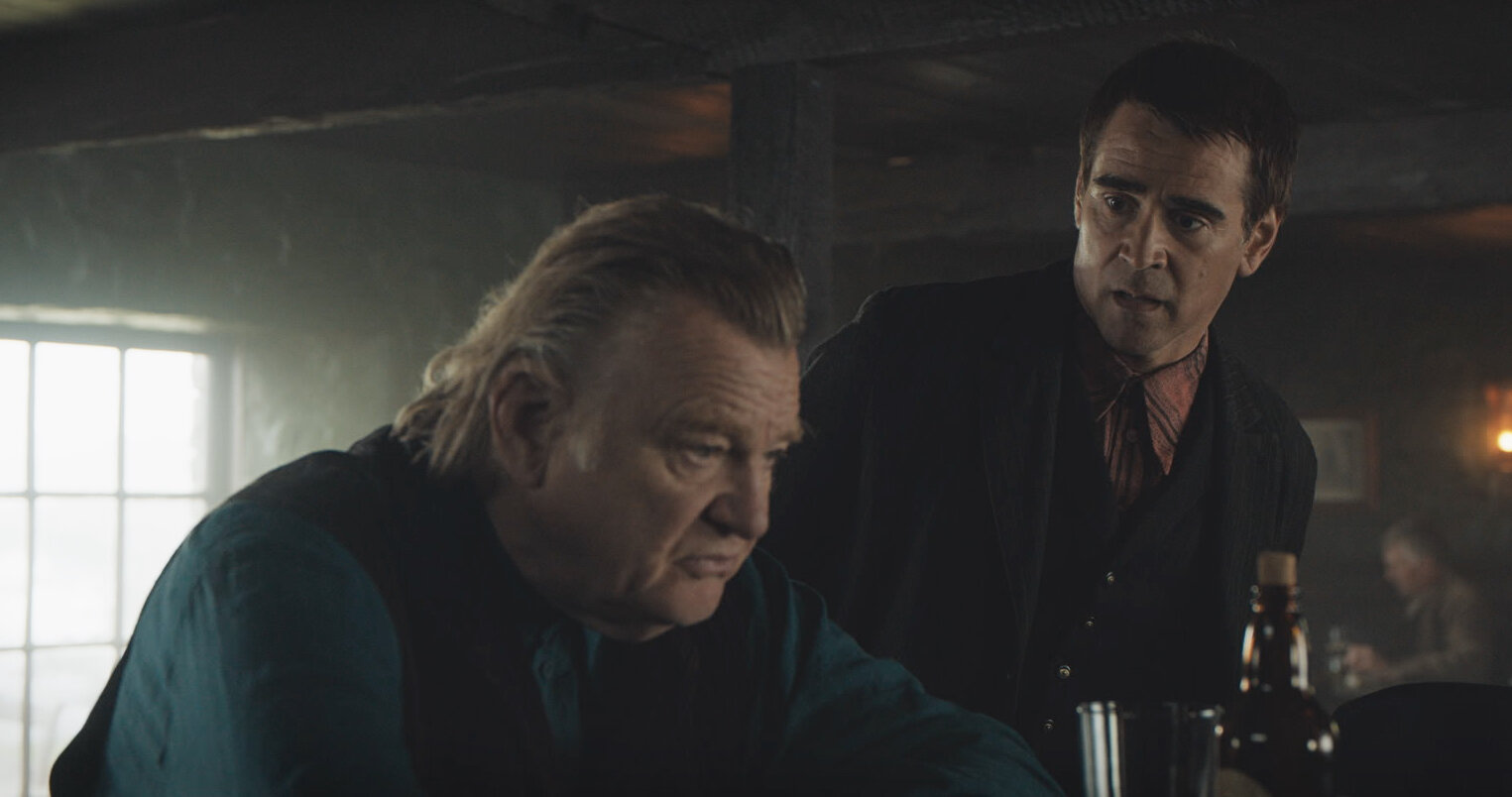
Set in 1923 on an island off of Southern Ireland called aptly Inisherin, the film opens by focussing on genial everyman farmer, Pádraic Súilleabháin (Colin Farrell) and his daily routine. After tending to his animals, he usually calls for his friend, Colm Doherty (Brendan Gleeson) to go to the island pub, the J.J. Devine or Jonjo’s. In England there is an idiom called, “sending someone to Coventry.” This means to ignore or ostracize an individual or individuals. So, basically Colm chooses to do this to his long-standing friend, Pádraic. This shunning completely bemuses Pádraic and despite Colm’s pleading for Pádraic to respect his wishes, he continually seeks an answer to his former friend’s decision.
After this intriguing premise is established, what follows is a tremendously original, darkly funny and emotionally penetrating succession of scenes. The exchanges between the two characters begins as bickering but then descends into some seriously disturbing acts of recrimination. Attempting to make them see sense are various eccentric characters on the island who provide many witty and absurd exchanges that McDonagh specialises in. Further, Pádraic’s sister Siobhán (Kerry Condon) is almost the one voice of reason as the feud escalates. As she tries to diffuse the conflict, even Barry Keoghan’s young idiot, Dominic Kearney, the initial comic relief in the film, attempts to make these two men see sense.
Visually, The Banshees of Inisherin (2022), is incredibly rich. The territory displays gorgeously photographed shots of the rocks, the sea, the stone roads and the lush green countryside. But while there is a sense of expanse and freedom initially, the feeling of isolation pervades. As the story continues the characters feel more and more segregated by the sea and their own or other’s decisions. None more so than Farrell’s Pádraic. A simple man who just wants to do his work and get drunk with his friend, he finds he is sequestered by Colm’s desire to self-isolate and concentrate on his music. Here, Farrell and Gleeson give tremendous character work. Farrell especially has rarely been better as Pádraic’s attitude turns initially from shock to bitterness over the journey of the narrative.
A film director’s job is for me about making key creative choices. Martin McDonagh makes brilliant choices while working from his own exceptional script. I loved everything about The Banshees of Inisherin (2022). The look, the performances, the pacing, the locations and Carter Burwell’s phenomenal score are absolutely first class. I haven’t even mentioned Barry Keoghan’s memorable supporting turn. He surely is one of the most naturally gifted actors of his generation. Not to forget other striking characters in the ensemble such as the creepy, Mrs McCormick (Sheila Flitton), an old harridan who acts as a portent for death on the island.
Martin McDonagh expertly combines a superb ear for dialogue, a psychologically absorbing analysis of the human condition with elements from Waiting For Godot and Channel Four situation comedy, Father Ted. Above all else, The Banshees of Inisherin (2022) is a darkly, spectacular cinematic experience which works on many levels. On one level it is about the isolation of island life and its inhabitants. On another it’s about the death of a friendship. While on yet another level it is about the analogous absurdity of civil war and how conflict can start for the merest of reasons. While the best cinema is certainly about showing and not telling, McDonagh proves again that dialogue-driven films can produce cinematic theatre, comedy and tragedy of the highest order.
Produced by: Marty Bowen, Wyck Godfrey, Isaac Klausner, Robert Salerno, Gabby Olivera
Cast: Sosie Bacon, Jessie T. Usher, Kyle Gallner, Caitlin Stasey, Kal Penn, Rob Morgan, etc.
Cinematography: Charlie Sarroff
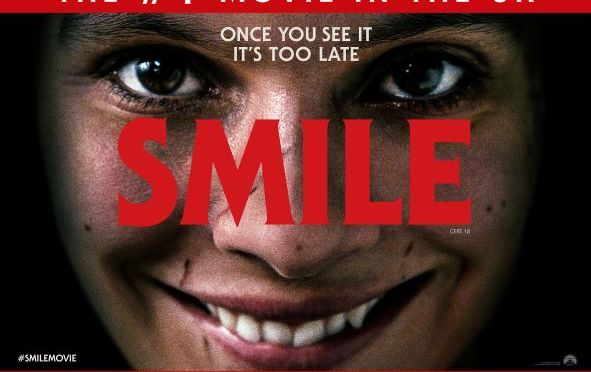
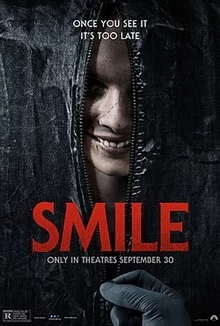
If you search YouTube by typing ‘short horror film’ you will find hundreds of really good and often scary, surprisingly enough, short horror films. A great majority of them will have a lengthy suspenseful set-up, before ending on a startling jump scare. The model itself is arguably overdone, however, it is an excellent set-up-punchline structure for new filmmakers to learn film techniques and scare the viewers. Many such short videos go viral and, in the case of Laura Hasn’t Slept by Parker Finn, get picked up for feature development. Hence, we have Parker Finn’s film debut, Smile (2022).
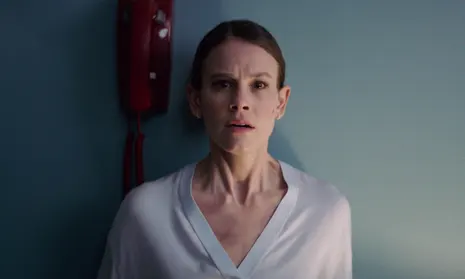
Smile (2022) opens with a suggestion of childhood trauma for lead protagonist, psychiatrist Doctor Rose Cotter when a child. The action then moves to the present day and brings us Rose’s confrontation with the disturbed patient, Laura. What follows is an expertly crafted and incredibly disturbing sequence, which plunges Rose into major threat from a nefarious force. Parker Finn then slowly builds Rose’s psychological breakdown as she experiences hallucinations, frights and memory loss as her partner, family and friends find her behaviour to be disturbing to say the least. A particularly grisly scene at a child’s birthday party was especially deadly and memorable.
As the film continues, I could not help but be reminded of both The Ring (1998/2002) andIt Follows (2014) in terms of the story beats. Rose, while being pursued by some unknown demon, faces a race against time to avoid death. Both the aforementioned films are far superior as they have more plot and characterisation to propel the running time. Indeed, one of the major issues with Smile (2022) is that 115 minutes are too long for the character arc Rose Cotter is given. By the time her character revelation is complete it has taken an eternity to get there. Moreover, I was suffering jump-scare fatigue by the end, thus rendering the scarily horrific monster reveal to feel fearfully redundant.
Yet, Smile (2022) has an impactful thematic spine. While It Follows (2014) dealt with the threat of sexual disease within the subtext, Parker Finn’s debut powerfully delves into the impact of grief, guilt and mental health. Having said that, the narrative could have dug more into Rose’s past to really reveal the trauma she suffered as a child. Personally, I think a longer set-up of her character while growing up would have increased the drama. But Parker Finn gets an excellent performance from Sosie Bacon throughout, even if her perpetual appearance on screen as the harassed and troubled victim eventually promotes further fatigue. A scene-stealing exchange between Bacon and the electric Rob Morgan suggests his character should be lead in the inevitable horror sequel.
Screenplay by: Katie Silberman – Story by Carey Van Dyke, Shane Van Dyke and Katie Silberman
Produced by: Olivia Wilde, Katie Silberman, Miri Yoon, Roy Lee
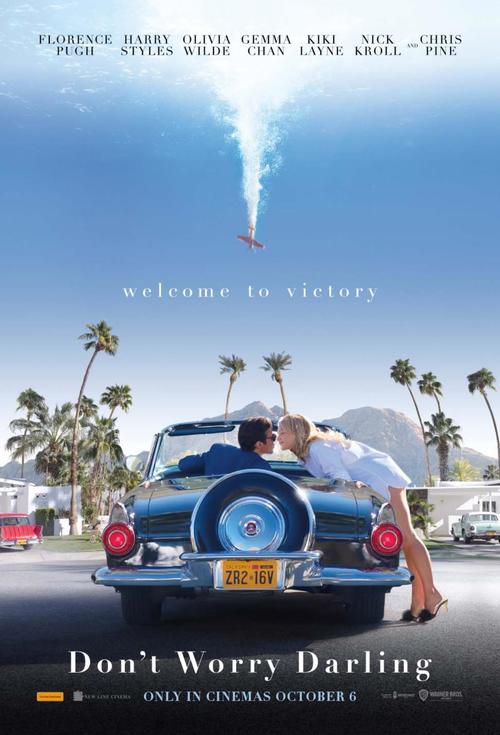
MainCast: Florence Pugh, Harry Styles, Olivia Wilde, Gemma Chan, KiKi Layne, Nick Kroll, Chris Pine etc.
Cinematography Matthew Libatique
*** MAY CONTAIN SPOILERS ***
Part arthouse character study, part science fiction social satire and eventually a rushed concertinaed thriller, the Olivia Wilde directed, Don’t Worry Darling (2022) is a visual feast, anchored by Florence Pugh’s devastatingly brilliant performance. However, the ambition of the themes remains hamstrung by pacing and structure which fails to serve the story to its full potential.
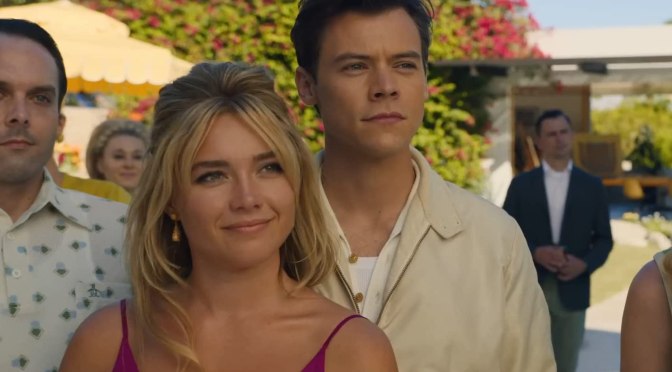
Set within a utopian 1950’s sun blanched town called Victory, Wilde and her writers throw us straight into the hedonistic lives of a set of youthful and dynamic couples, drinking, partying and sexing. They work and play hard. Well, the husbands work as the dutiful women stay at home cleaning and churning out kids. So far-so-Stepford Wives! At the heart of Don’t Worry Darling (2022) is Pugh as the loyal but inquisitive, Alice. Her husband, Jack (Harry Styles) is ambitious, seeking the approval of big boss, the hubristic Frank (Chris Pine). When Alice begins to experience Kafkaesque dreams of feeling trapped by her daily life, she slowly realises all is not quite perfect in paradise.
No one does anguish and anxiety on screen like Florence Pugh. As Alice falls deeper down the rabbit hole of despair, Pugh produces true cinematic power once again. Olivia Wilde also brings a compelling image system to fully visualise Alice’s hellish descent. In comparison, the male characters are far less developed and the exchanges between Pugh and Styles, especially in the final act, are really lacking in dramatic punch. Styles himself I felt was miscast, but he does have an engaging screen presence. It’s just I didn’t feel enough threat from him.
Structurally, Don’t Worry Darling (2022) is also flawed. The major reveal comes way too late to assuage the pacing issues. While the narrative contains some striking visual set-pieces there are too many parties, barbecues and social events getting in the way of the potential thrills that could have occurred if Alice had discovered her plight much earlier. Overall, there is too much set-up and not enough punch. The longer you wait to reveal the twist, the bigger the revelation needs to be. The Outer Limits and The Twilight Zone have done this style of story with more emotional impact and better economy. Pugh and Wilde though prove once again they are major talents and thematically speaking it’s good that men get another kick in. Men are fast becoming the go-to villains of this century and long may it continue.
Cast: Daniel Kaluuya, Keke Palmer, Steven Yeun, Michael Wincott, Brandon Perea, Wrenn Schmidt, Barbie Ferreira, Keith David, etc.
Cinematography: Hoyte van Hoytema
*** MAY CONTAIN SPOILERS ***
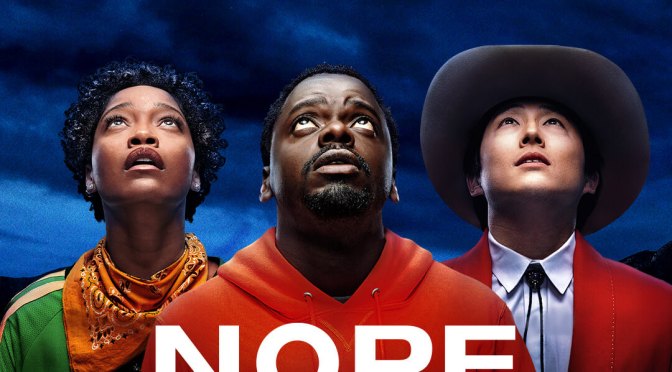
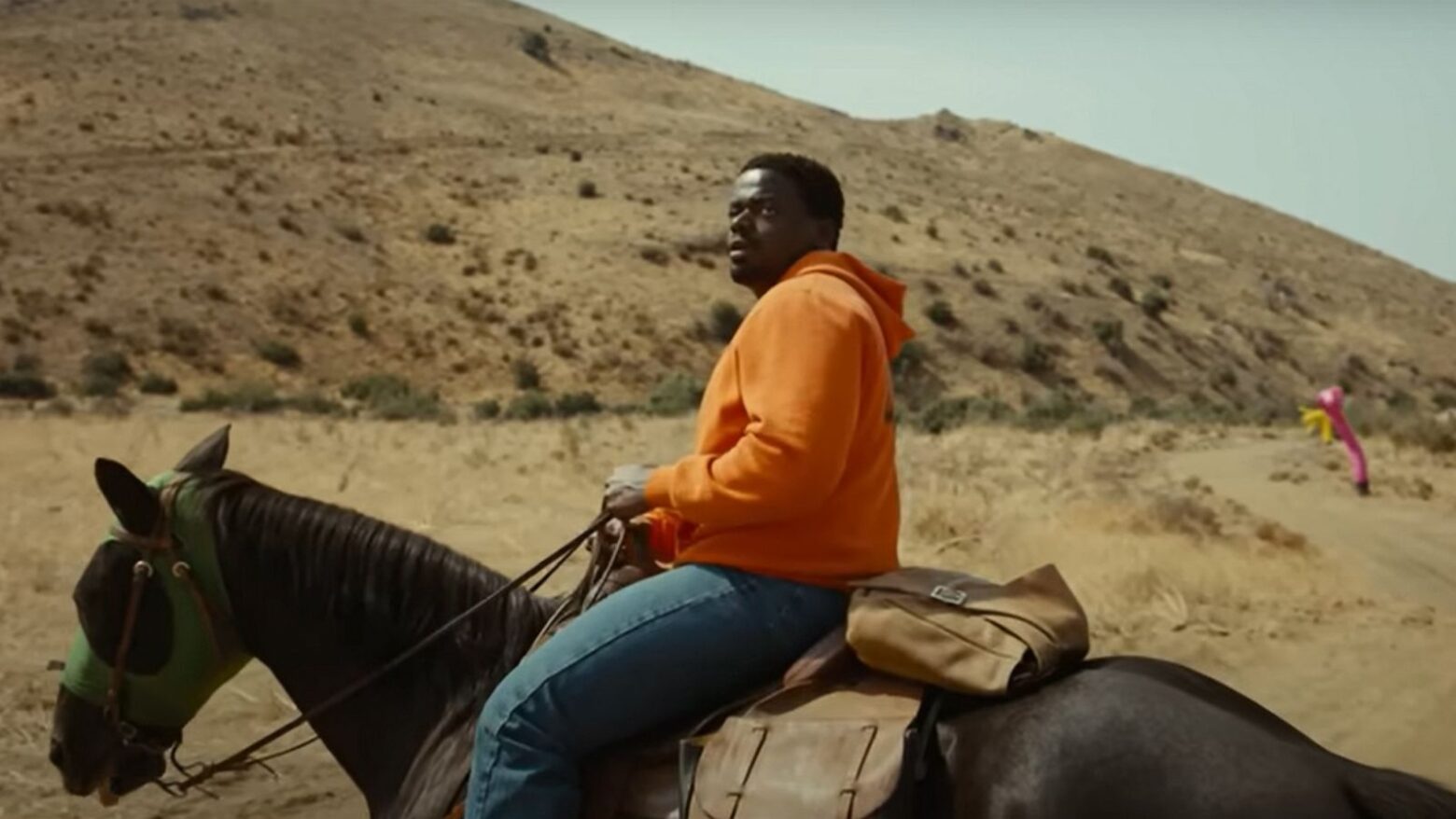
Following on from the Oscar winning, Get Out (2017), and the should-have-won-an-Oscar-for-Best-Actress-in-Lupita-Nyong’o, Us (2019), Jordan Peele is back with the enigmatically titled, and equally ambiguous sci-fi-Western-horror film, NOPE (2022). Taking on writing and directing duties again, Peele has delivered a majestic looking cinematic feast, brimming with incredibly memorable images involving horses, chimpanzees, cinema, waving inflatables, surveillance cameras, carnival shows, and something very large that comes from beyond the clouds.
So, what’s Nope (2022) actually about? Well, put simply it’s all about cowboys and girls overcoming a monster. But it is much more than that. Because, narratively speaking it is difficult to sum up in a few sentences. Peele builds his most complex film to date by delivering a series of visually powerful set-pieces throughout. He also challenges the audience with an intelligent visual system which thematically links television, cinema, cameras, Hollywood, animals and a spectacular eye in the sky. Like Tarantino’s Once Upon a Time in Hollywood (2019), Joel Coen’s The Tragedy of Macbeth (2021) and Martin Scorsese’s religious epics, Nope (2022), is what I consider to be a big-budget, arthouse blockbuster.
The film, which is divided into chapters, establishes brother, OJ (Daniel Kaluuya) and sister, Emerald (Keke Palmer), trying valiantly to keep the family ranch from going under. Once thriving under their father’s management, the ranch would supply horses to the Hollywood conveyor belt of A-list and B-movie Westerns. With such work now in short supply, OJ is forced to sell horses to local theme park owner, Ricky “Jupe” Park (Steven Yeun), however, he vows to get them back when business improves. But a bigger threat is soon looming over the ranch.
Kaluuya’s performance as OJ is laconic, invoking pure Robert Mitchum. Did I like and root for OJ? Sort of. Keke Palmer as Emerald brought the energy to the screen, but I never felt the two characters really gelled with the themes successfully. Peele’s intellectual leaps, while thought-provoking, barriered an emotional connection within Nope (2022). Likewise, Yuen’s Jupe is given a tremendously imaginative and powerful backstory which brings us into his character, but ultimately fails to pay off dramatically. In fact, these scenes felt like they were from a different film altogether. Indeed, Peele uses the sci-fi monster genre to hang his view of the world on, not always to maximum impact.
While the characterisations and themes arguably fail to gel within the screenplay, it is visually where Nope (2022) really soars. Hoyte van Hoytema should sweep the board come awards time. Further, Peele creates an optical banquet by juxtaposing the majestic vistas of the Californian landscape with modern camera and surveillance equipment, plus those colourful inflatable dummies. Then there’s the thing that is “Not Of Planet Earth”. What is it and what does it represent? Who is watching and controlling and feeding on us? Peele’s challenging concepts are to be applauded within the genre blockbuster, but I just wanted to be scared and care a bit more. On additional viewings, Nope (2022), may be considered a masterpiece, but at the moment it could be one of those great films which I kind of didn’t like. As discussed previously here.
Screenplay by: Scott Derrickson & C. Robert Cargill
Based on “The Black Phone” by Joe Hill
Produced by: Jason Blum, Scott Derrickson, C. Robert Cargill
Main cast: Mason Thames, Madeleine McGraw, Jeremy Davies, James Ransone, Ethan Hawke
Cinematography Brett Jutkiewicz
** MAY CONTAIN SPOILERS **
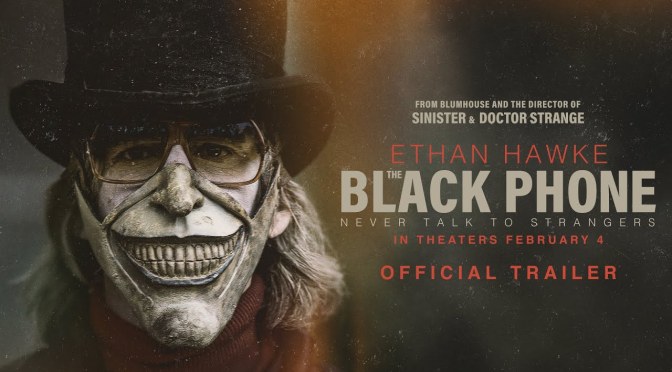
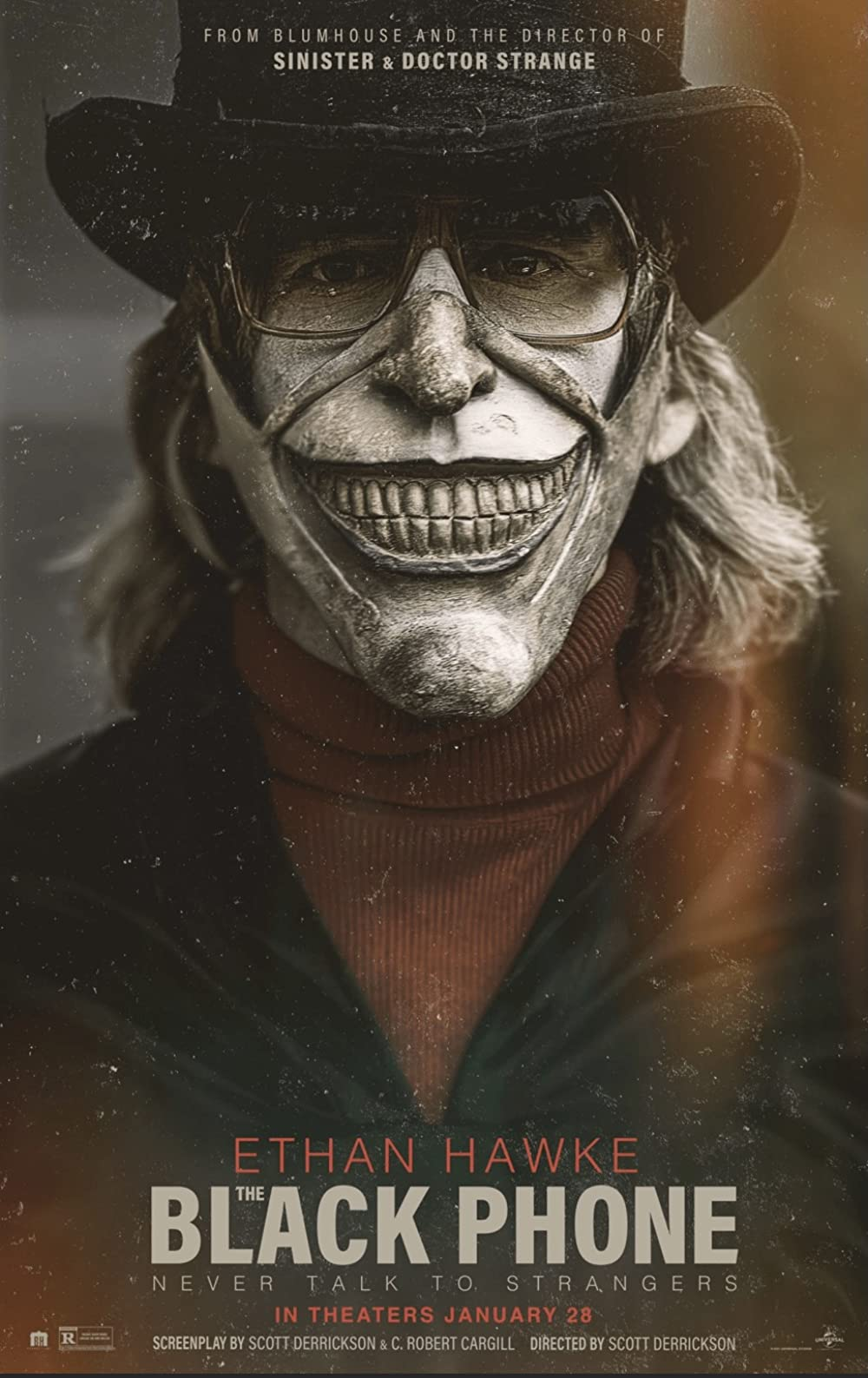
Halloween party-goers now have a new mask to wear on their faces in the guise of The Black Phone (2021) villain daubed, “The Grabber”. Although one must point out the mask is highly influenced by Japanese classic horror, Onibaba (1964). Anyway, the Grabber is a sick individual who prowls and abducts kids from the Denver suburbs in the 1970s, using black balloons and a creepy van as his signature. Portrayed by Ethan Hawke, he isn’t most subtle or interesting of killers, but his chilling behaviour drives this effective horror film from director Scott Derrickson.
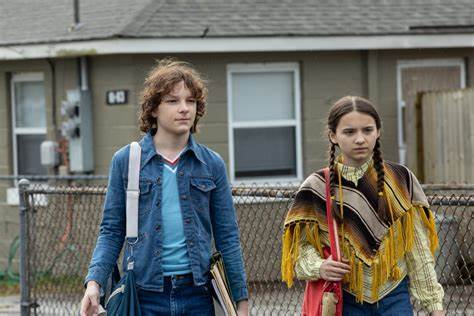
The story is the essence of every parent’s living nightmare. Their child goes missing having been snatched off the street in broad daylight. The film takes the time to establish many of the children’s characterisations so we have time to bond with them and feel the horror of their plight. Central to the story are teen brother, Finney (Mason Thames), and younger sister, Gwen (Madeline McGraw). Even without the threat of the murderer, their mother has passed and they are brought up by abusive and alcoholic father (Jeremy Davies). To add further woe, Finney, finds himself bullied by older kids at school. Could things get any worse? Of course! Finney finds himself the next victim of the evil Grabber!
Plunged into a gloomy and sound-proofed basement, Finney, is trapped with no way out from the Grabber’s nefarious plans. Ah, but Finney suddenly gets assistance from, not one, but two supernatural sources. Firstly, the titular black phone which hangs on the wall of the basement and scares us half to death when it rings. Who is on the other end? Well, lets just say they are not of the living. The second magical helper for Finney is that Gwen has the second sight in her dreams. Over time she is able to conveniently assist the police at significant stages of the narrative. Much suspense is raised from Finney’s attempts to escape as time begins to run out for him. His conversations on the black phone are imaginatively delivered as he reaches some weird dimension beyond life and death.
The Black Phone (2021) is both a suspenseful and silly ride, efficiently directed by expert genre filmmaker, Scott Derrickson. The characters are nicely written and you really root for them as the kids deal with all manner of terror. Themes relating to sibling community, stranger-danger, and sticking up for yourself against bullying are intelligently explored also. However, I must say the film has, for all the emotional depth felt and evocative 1970s locations and costumes displayed, a number of serious plot-holes struck me as incredibly questionable. I also thought Ethan Hawke’s villain while visually striking, lacked intelligence and a proper characterisation. I get that he is masked symbol of evil, but a great actor like Hawke was wasted in such casting. Overall though, The Black Phone (2021) is definitely a cinematic call worth answering.
“CINEMA” REVIEWS: FRESH (2022) + WHERE THE CRAWDADS SING (2022)
Two entirely different types of film on the surface, one a black comedy-horror and the other a romantic murder-mystery. Although both feature examples of the female outsider fighting against variant elements of toxic masculinity and the patriarchy. What they also have in common is impressive acting performances from rising star, Daisy Edgar-Jones. Thus, I thought it interesting to review said films side-by-side. With the usual marks out of eleven.
*** MAY CONTAIN SPOILERS ***
FRESH (2022)
Directed by Mimi Cave
Written by Lauryn Kahn
Main cast: Daisy Edgar-Jones, Sebastian Stan, Jonica T Gibbs, Charlotte Le Bon, Andrea Bang etc.
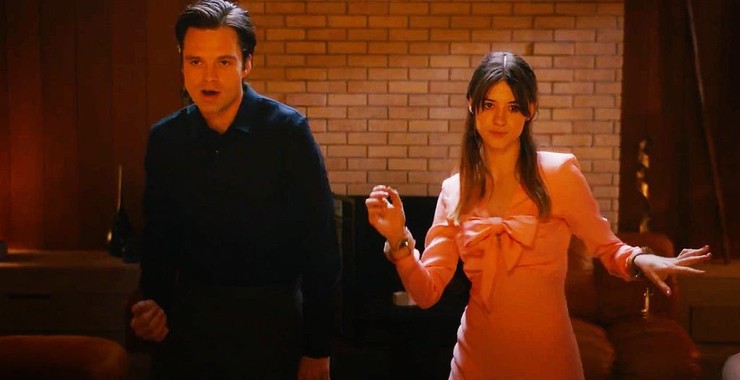
Essentially a beat-by-beat replica of Get Out (2017) as the main protagonist finds themself under threat from a nefarious force as their best friend desperately seeks to rescue them from grisly danger. Rather than raising important points about racism within the horror genre, Mimi Cave’s deliciously directed horror story with comedic elements, explores the precarious threat of singledom, toxic masculinity, gastronomy and relationships.
Daisy Edgar-Jones portrays cynical twenty-something, Noa, who is sick of the dating game and feels isolated where romance is concerned. I empathised with her decision to remain single, but then she has a meat cute with likeable charmer, Steve (Sebastian Stan), in the supermarket. They go on a date and more than hit-it-off. Before you can say “no-don’t-go-away-for-the-weekend-with-a-man-you-hardly-know!” Noa goes away with Steve and the plot ingredients really come to the boil.
Sebastian Stan and Daisy Edgar-Jones have fine chemistry throughout and are attractive protagonists. The first half of the film builds raw suspense, before the revelation arguably over-cooks the central relationship on the menu. Providing excellent support to the leads is Noa’s bestie, Mollie (Jonica T. Gibbs), who turns detective to locate Noa before the knives come out for her. Fresh (2022) runs out of steam toward the end as the plotting unravels with the characters making dumb horror movie decisions. However, I really want to see what writer, Lauren Kahn and director, Mimi Cave, deliver next as their debut feature Fresh (2022) is a very tasty starter.
Mark: 8 out of 11
WHERE THE CRAWDADS SING (2022)
Directed by Olivia Newman
Screenplay by Lucy Alibar (Based on Where the Crawdads Sing by Delia Owens)
Main cast: Daisy Edgar-Jones, Taylor John Smith, Harris Dickinson, Michael Hyatt, Sterling Macer, Jr., David Strathairn etc.
Adapted from the best-selling phenomenon written by Delia Owens, I went into Where the Crawdads Sing (2022)cold without any prior knowledge of the story. I hadn’t read the novel and even the trailer, thankfully, didn’t give swathes of plot away when I saw it. But what’s it all about? Well, it’s a sprawling cake mix of genres including murder-mystery, court drama, period piece, romance, and rites-of-passage with a movie-of-the-week cherry on top feel.
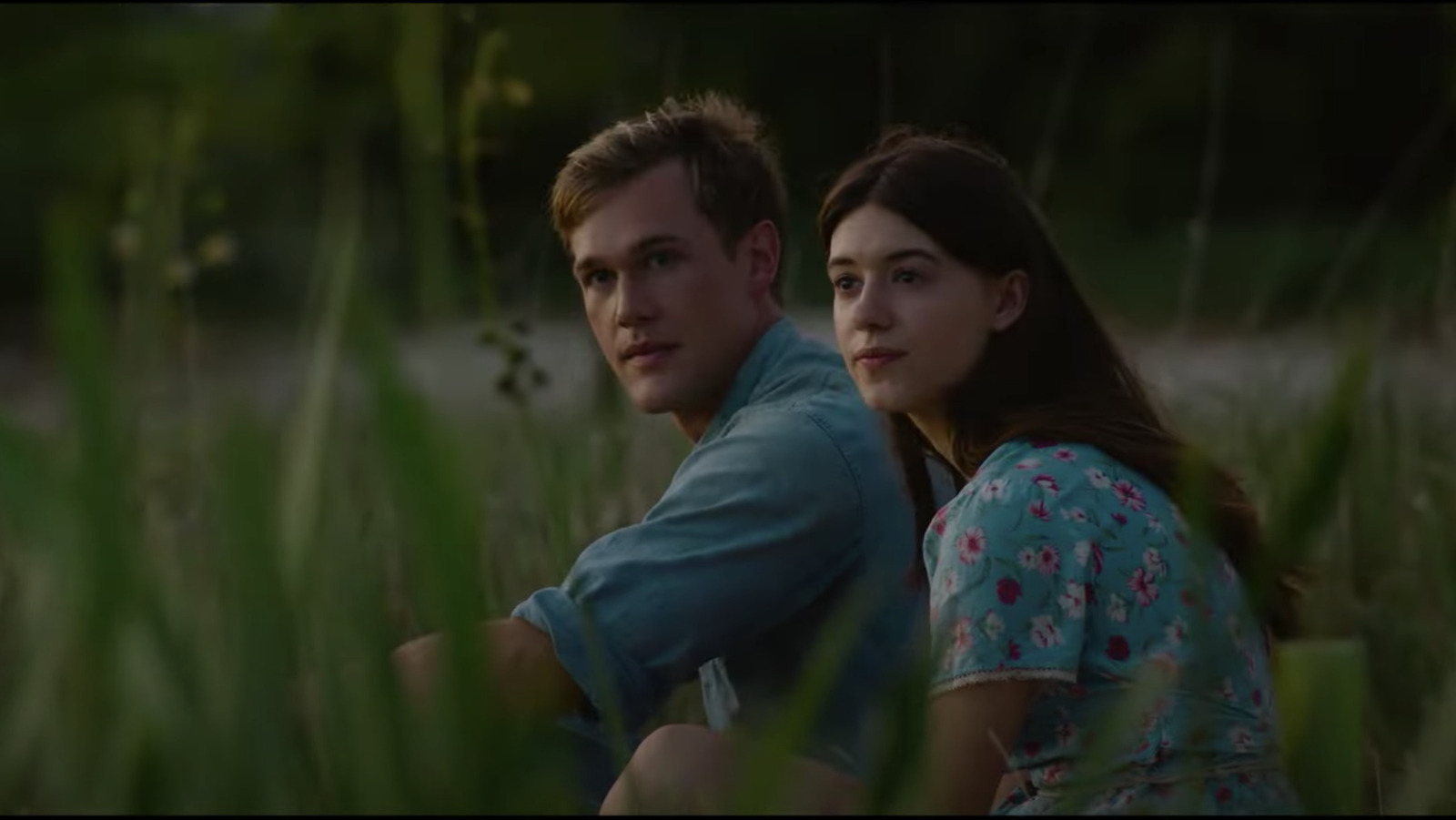
Daisy Edgar-Jones sensitively portrays Kya Clark, a young girl living in the North Carolina marsh, dealing with all manner of drama and trouble throughout her life. Considered an outcast and weirdo by the town locals of Barkley Cove, the film quickly places Kya as the main suspect in the murder of a privileged jock, Chase Andrews (Harris Dickinson). Via flashbacks we are then introduced to the misery of Kya’s abusive childhood, with her father frightening away Kya’s mother and brothers with his drunken battery. When Kya is ultimately abandoned by everyone, she finds some solace in her fledgling romance with Tate Walker (Taylor John Smith) and her interest in wildlife and art.
There are many elements of Where the Crawdads Sing (2022)that felt extremely familiar, notably the Nicholas Sparks-inspired love triangle. Kya having to choose between generic good boy/bad boy types. However, it is integral to the character-driven aspect of Kya growing from a shy caterpillar and blossoming into a radiant butterfly. While the arguably patronising characterisation of the black characters did not convince, Kya’s character arc is certainly compelling, thanks to Edgar-Jones intelligent performance. Moreover, I enjoyed the locations and some wonderful scenery too. Overall, while it is undemanding and generic, I found Where the Crawdads Sing (2022)a pleasing diversion with a couple of obvious, but decent twists in the tale. The kind of film my mum would love.
Why the canine is considered to be the appropriate animal to represent a character who overcomes great loss and adversity is fascinating. On further digging one will find that etymological history of the term, Underdog, derives from the second half of the 19th century, where its first meaning was “the beaten dog in a fight”. Two dogs fight and the losing one is the underdog. Quite simple and obvious really. It makes sense then that the term has also been used in sporting and filmic language down the years. Here the underdog is a team or individual who faces an insurmountable opponent where defeat is most likely. To then gain victory against the odds makes the winning oh so much sweeter and glorious.
So, for my occasional Six of the Best series I’d like to explore and list some of the finest underdogs from cinema. I’d also like to consider certain conventions from within this subgenre. Clearly, I could just choose six films about sport, so I am going to work a bit harder and provide some less obvious choices too. Hope you agree.
** MAY CONTAIN SPOILERS **
ROCKY (1976) – The individual underdog!
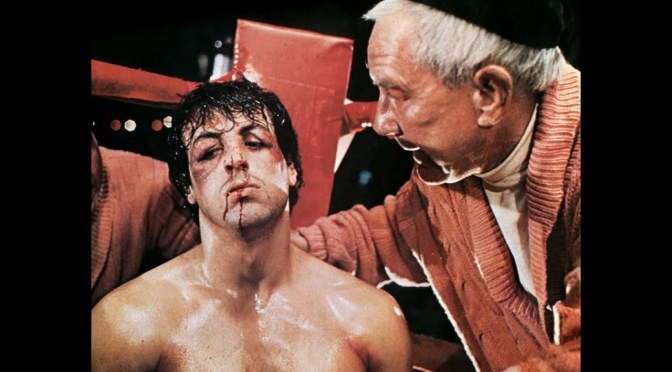
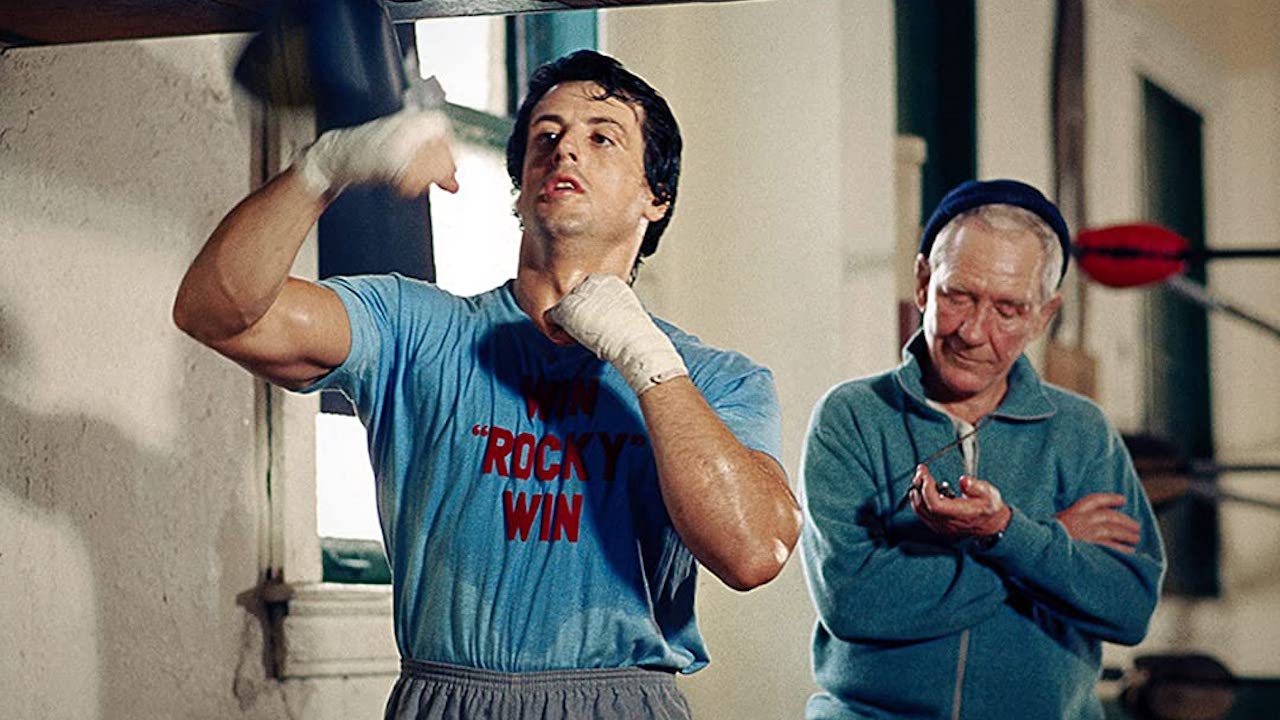
The individual underdog is synonymous with sporting films.Cinderella Man (2005), Eddie the Eagle (2015), Rudy (1993) and The Karate Kid (1984) are just some of the fine narratives which have used the individual overcoming the odds to triumph. Obviously, though the greatest of all time is Stallone’s working-class journeyman, Rocky Balboa, rising up from the gutters of Philadelphia to seeing stars and finding love in the ring. Reflected in Rocky’s incredible journey is Stallone’s own underdog story of a struggling actor, who had to sell his dog, wrote a brilliant script, determined to play the lead, earned his break and became one of the biggest film stars of a generation.
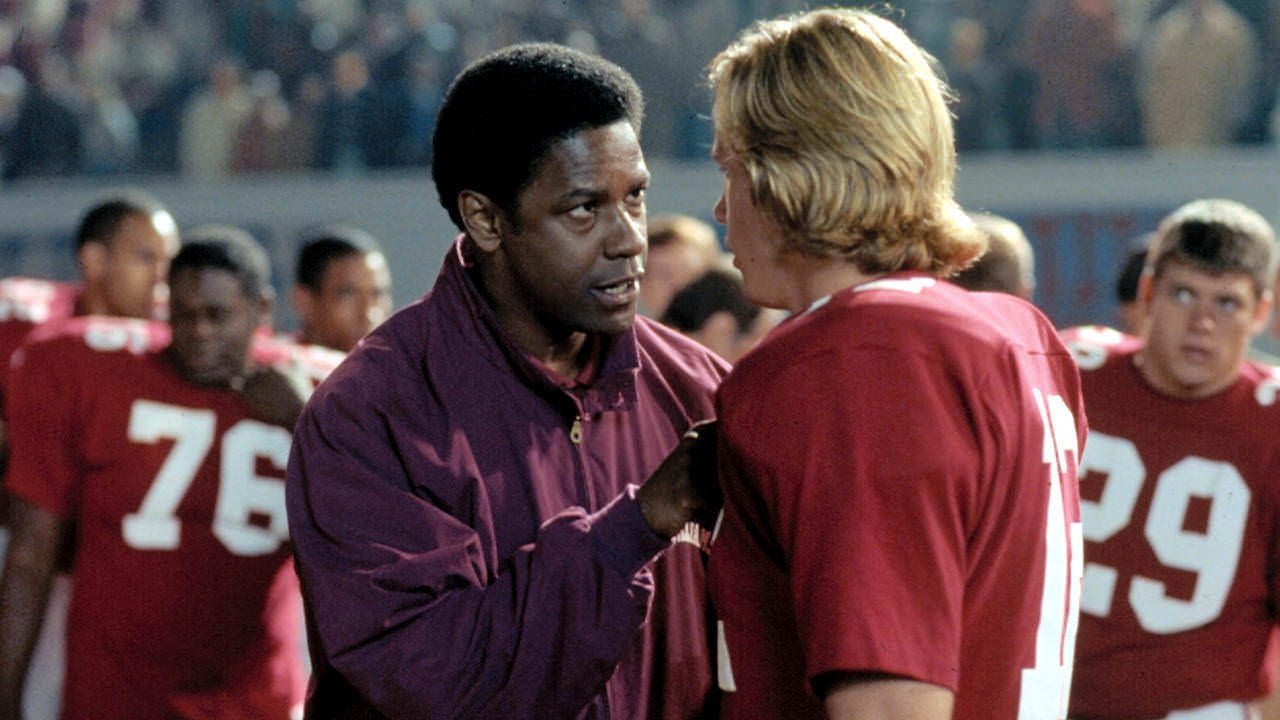
REMEMBER THE TITANS (2000) – the team underdog!
Like the individual underdog sports film, cinema is brimming with crowd pleasers about a bunch of unlikely oddballs or losers joining forces to steal victory from the jaws of defeat. Usually, the team underdogs will overcome singular divisions, while learning about themselves to find formidable communal fighting spirit. The Bad News Bears (1976), The Mighty Ducks (1990), The Longest Yard (1974/2005), Miracle (2004) and the aptly named Dodgeball: A True Underdog Story (2004) are but a few of these excellent team films. However, Remember the Titans (2000) is one of the most powerful sporting team movies featuring Denzel Washington as T. C. Williams High School coach, Herman Boone, whose team not only overcomes sporting obstacles, but political ones including institutional racism and widespread bigotry outside and within the school system.
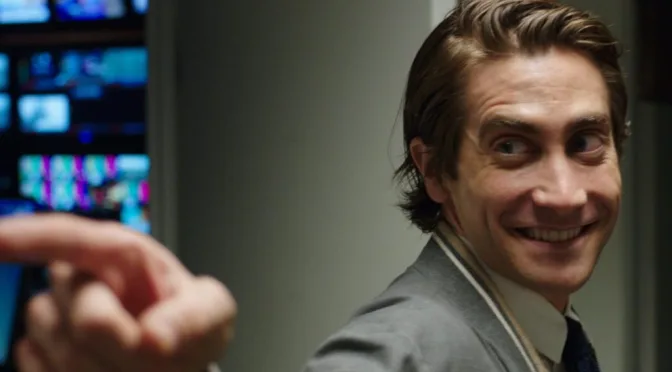
NIGHTCRAWLER (2014) – the villain as underdog!
Here’s a character which is incredibly difficult to write and even more problematic to define due to the paradoxical nature of their personality. If you’re doing bad things can you be considered an underdog? I mean is the underdog’s victory earned and can an audience root for the villain? I think one of the greatest underdogs and most unreliable of protagonists is Verbal Kint in The Usual Suspects (1995). But he was a trickster, genius and fake underdog. Jake Gyllenhaal’s Lou Bloom tops Verbal for me. At the start of the film, Nightcrawler (2014), he has absolutely nothing. But his conniving, planning and preparedness to go the extra mile and expand his media business via sabotage and eventually murder are an unforgettably dark underdog journey.
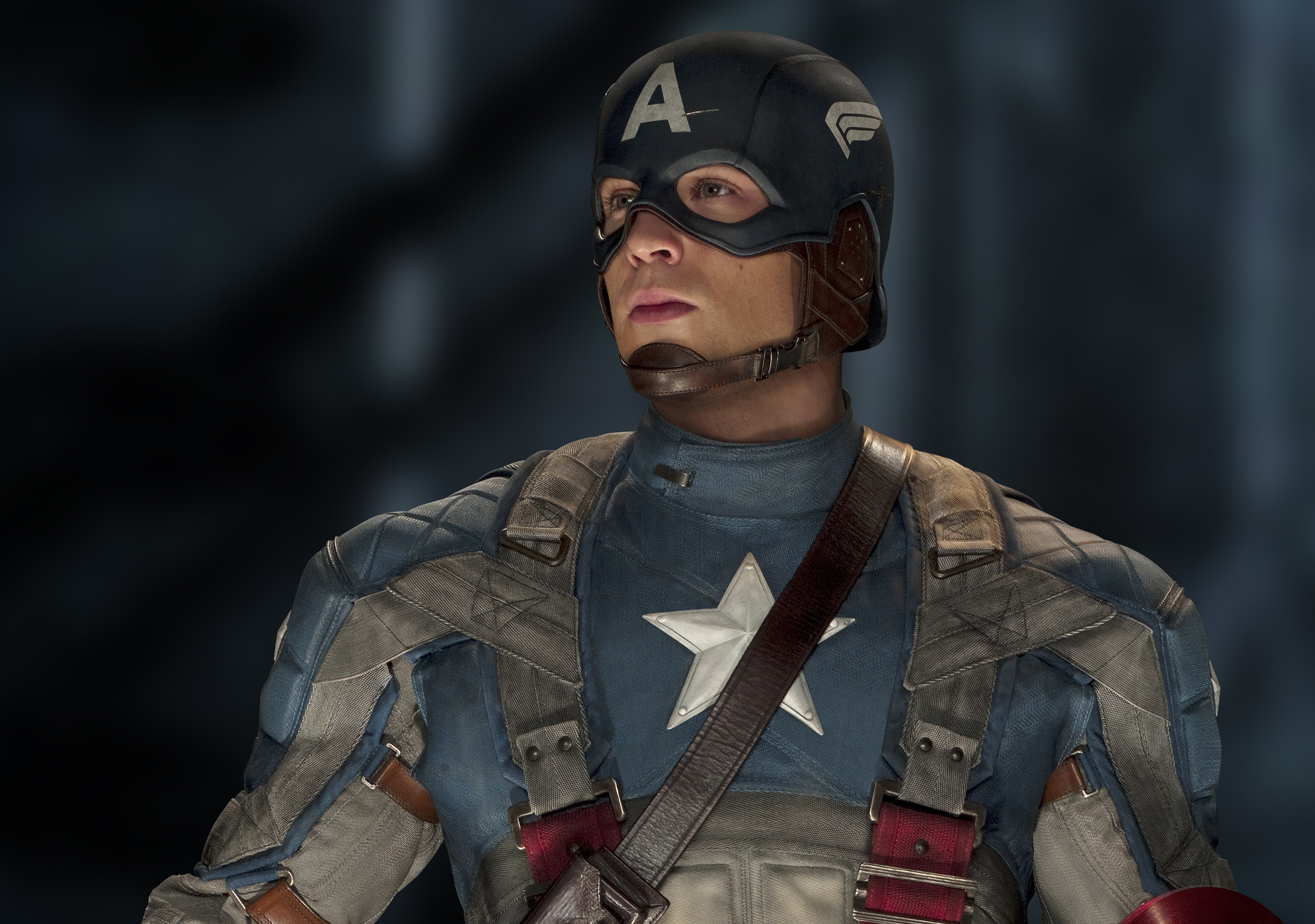
CAPTAIN AMERICA: THE FIRST AVENGER (2011) – the superhero underdog!
The superhero genre staple for both heroes and villains often finds a character acquiring by accident, fate or design abilities which transform them into beings of immense and fantastic power. The likes of Superman, Thor, and Wonder Woman are god-like superheroes, however, the likes of Steve Rogers, as Captain America, grew from humbler beginnings. Rogers is an admirable underdog because he doesn’t like bullies, his character never knew when he was beaten, he comes from working-class stock and he’s an anachronism as character tension comes from not fitting into the present. Rogers is not a god or scientist or billionaire, but the little guy with a big heart who becomes a hero.
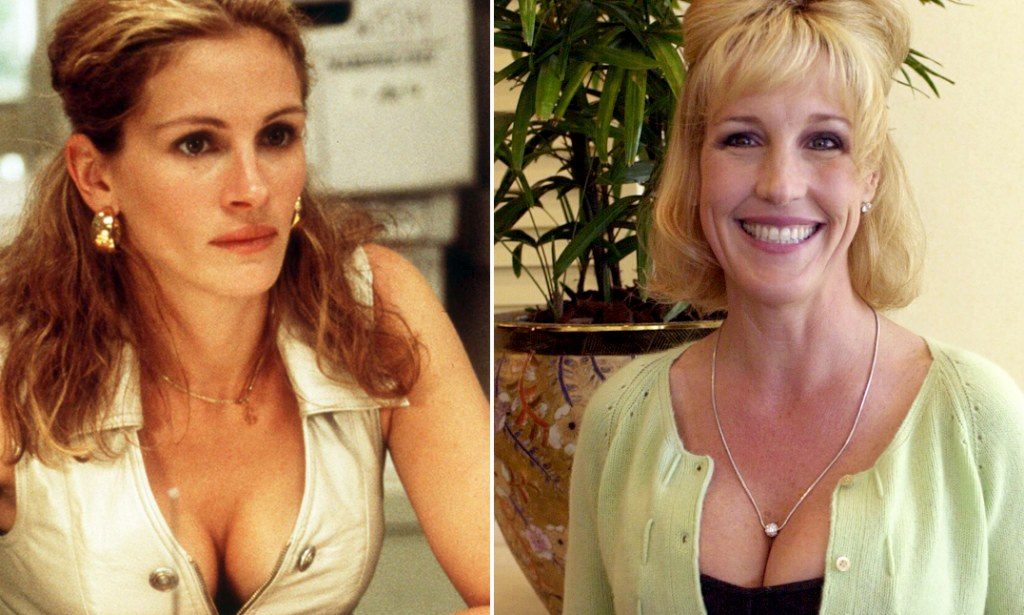
ERIN BROCKOVICH (2000) – the legal underdog!
It’s a sad indictment of humanity and the capitalist system that there are so many films showing the evil wrongs corporations have perpetuated against people and the environment. Dark Waters (2019), Silkwood (1983),Class Action (1991) andErin Brockovich (2000) are but a few of such stories where individuals fight against an unjust legal system which strives to protect the rich and powerful from accepting responsibility for the heinous damage they have wreaked. Erin Brockovich is an especially positive example of an individual who, despite her lack of education in the law, was instrumental in building a case against Pacific Gas & Electric Company (PG&E) involving underground contamination. Brockovich also overcame sexist attitudes in the workplace too which placed certain judgements on the way she behaved and dressed. Brilliantly portrayed by Julia Roberts in the film, Erin Brockovich is a true underdog hero of a generation.
SPARTACUS (1960) – the epic underdog!
Having recently read Kirk Douglas’ enlightening memoir, I Am Spartacus!: Making a Film, Breaking the Blacklist, I have to say it is one of the most excellent books about filmmaking and politics I have experienced. Douglas took up the cause of underdog screenwriter Dalton Trumbo, who having served prison time for refusing to name names to the Joseph McCarthy led House of Un-American Activities Committee, was blacklisted in Hollywood. Writing under a series of fake names, Trumbo scribed the screenplay to the epic Spartacus (1960), with Douglas as the eponymous hero who rises up from slave to Gladiator to leader, defeating the Romans in many battles before dying a martyr. One can see Trumbo’s underdog fight reflected in Spartacus’ epic journey and the fact that Douglas eventually placed Trumbo’s name in the credits of the film was testament to his powerful writing and unjust treatment by the nefarious American government.
Two fascinating genre films I saw this month had virtually the same narrative set-up within the horror genre. Both have lead characters who lost their partner to violent suicide, prior to being propelled into a journey of psychological trauma, mystery and devastating enigmatic danger.
Also, both the arthouse horror of Men (2022) and psychological horror of The Night House (2021) are intelligent offerings within the genre, eschewing easy solutions while exploring themes relating to grief, domestic violence and toxic masculinity. Moreover, while both films are expertly made there are many frustrations to be had while watching them. Nonetheless, both deserve praise for challenging the audience and genre conventions while telling their twisted tales.
Here are my reviews with the usual marks out of eleven.
*** MAY CONTAIN SPOILERS ***
Jessie Buckley as Harper Marlowe in Men, directed by Alex Garland.
Photo: Kevin Baker.
Copyright: Men Film Rights LLC. All Rights Reserved.
MEN (2022)
Written and directed by Alex Garland
Main cast: Jessie Buckley, Rory Kinnear, Gayle Rankin, Paapa Essiedu
Would you “Adam and Eve it?” – after delving into ideas relating to men playing god with artificial intelligence in both the brilliant Ex Machina (2015) and genius of Devs (2020), Alex Garland returns with this surreal horror where men are very much cast as the devil in the garden of England. It’s a disturbing experience. So, be warned if you are faint of heart. Moreover, there are no simple answers as Garland births a succession of thought-provoking themes which occasionally baffled, and at times frustrated the hell out of me.
The always superb Jessie Buckley portrays Harper Marlowe who, after a tragic but visually shocking incident involving her husband, seeks solace in the countryside to process her trauma and grief. There she encounters a series of male figures, all portrayed by Rory Kinnear, who all exert negative thoughts, words, looks, and energy toward her. Is this all a dream or a fractured reality? Is Harper going mad? Do we care? Further, Garland drip feeds in flashbacks to Harper’s toxic relationship with her husband in several hard-hitting scenes. How this is connected with the many faces of Kinnear’s characters I could not quite work out. Well, other than the theme that all men are bastards, with little in the way of nuance to the contrary.
Alex Garland is an incredible writer and director and I have enjoyed most of his work. However, while Men (2022) has an incredible dénouement with body horror scenes Cronenberg would be proud of, I never really felt scared throughout. Moreover, despite Buckley’s absorbing performance I ultimately felt disconnected from her story as many ideas and moments, such as the scene in the tunnel lacked a real punchline. Similar to Ben Wheatley’s In the Earth (2021) – with the sparse cast and seemingly shot during lockdown, Men (2022) has some fantastic ideas and fascinating themes relating to grief and gender politics. Unfortunately, they didn’t all gel to create a satisfying whole. But maybe I am the one to blame. I am a man after all.
Mark: 6.5 out of 11
THE NIGHT HOUSE (2021)
Directed byDavid Bruckner
Written by: Ben Collins & Luke Piotrowski
Main cast: Rebecca Hall, Sarah Goldberg, Vondie Curtis Hall, Evan Jonigkeit
Like Jessie Buckley, Rebecca Hall is always never less than brilliant and here she gives a complex rendering of a character, Beth, reeling from her husband’s violent suicide and secrets from the past which literally come back to haunt her. Alas, Beth is a shell of a person who drinks constantly but pretends everything is okay. She has strange dreams or waking nightmares which propel her to investigate further why her beloved husband shot himself. While I empathised fully with Beth’s mourning, I found the edge and antagonism, Hall, under Bruckner’s direction is given undermined the fear factor for me. Some slight vulnerability may have raised the heart rate even higher during the expertly crafted plot.
Nonetheless, when Beth really digs into the past and begins to find mysterious and hidden places in the woods, plus evidence of her husband’s potential infidelities, the film really grips you. Is the figure that plagues her real or a psychosomatic vision of grief. But Beth is determined to find out what her husband was up to with a variety of women. When it is revealed it is a exquisitely delivered twist. It’s really tough to come up with something original in the horror genre, but the revelation was extremely horrifying and ingenious.
Bruckner gives the film a terrifically creepy atmosphere as the lakeside property is enveloped with shadows, fleeting figures, light and reflection colluding to trap Beth in the haunted space. Indeed, the finale in the woods, house and on the boat create palpable and clinging dread. But then it ends and deflation occurs as questions and loose ends remain unanswered. The script also suffers from back story overload. I mean major events which occur before the film starts have a strong bearing on the narrative as a whole and should have been shown in flashback. Overall though, The Night House (2021) is well worth a watch due to the clever plotting, creepy locations and powerful suspense throughout.

![[BOOK REVIEW] Directing Great Television: Inside TV’s New Golden Age – by Dan Attias](https://thecinemafix.com/wp-content/uploads/2022/11/thesopranos.jpg?w=672&h=372&crop=1)